


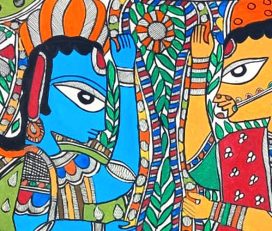
Madhubani/Mithila Pa...
Mithila painting, is a vibrant and deeply symbolic folk art tradition originating from the Mithila region of Bihar, India, and adjoining parts of Nepal.
Madhubani, Bihar, India...
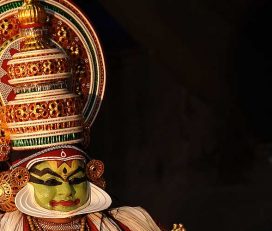
 Vellinezhi, Palakkad, Kerala, ...
Mithila painting, is a vibrant and deeply symbolic folk art tradition originating from the Mithila region of Bihar, India, and adjoining parts of Nepal.
Madhubani, Bihar, India...
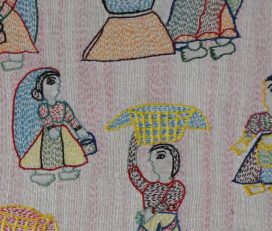
Sujani is a distinctive embroidery tradition of Bihar, particularly practised in Muzaffarpur district and surrounding villages.
Bhusra, Bihar, India...

Arani silk, also known as Arni silk, is a celebrated handloom tradition of Tamil Nadu, produced primarily in Arani, Tiruvannamalai.
Arani, Tamil Nadu, India...
Let us talk… if you feel the same love for handmade, and would like to support us by sharing your research or by contributing financially to our documentation efforts.
Reach us at [email protected]

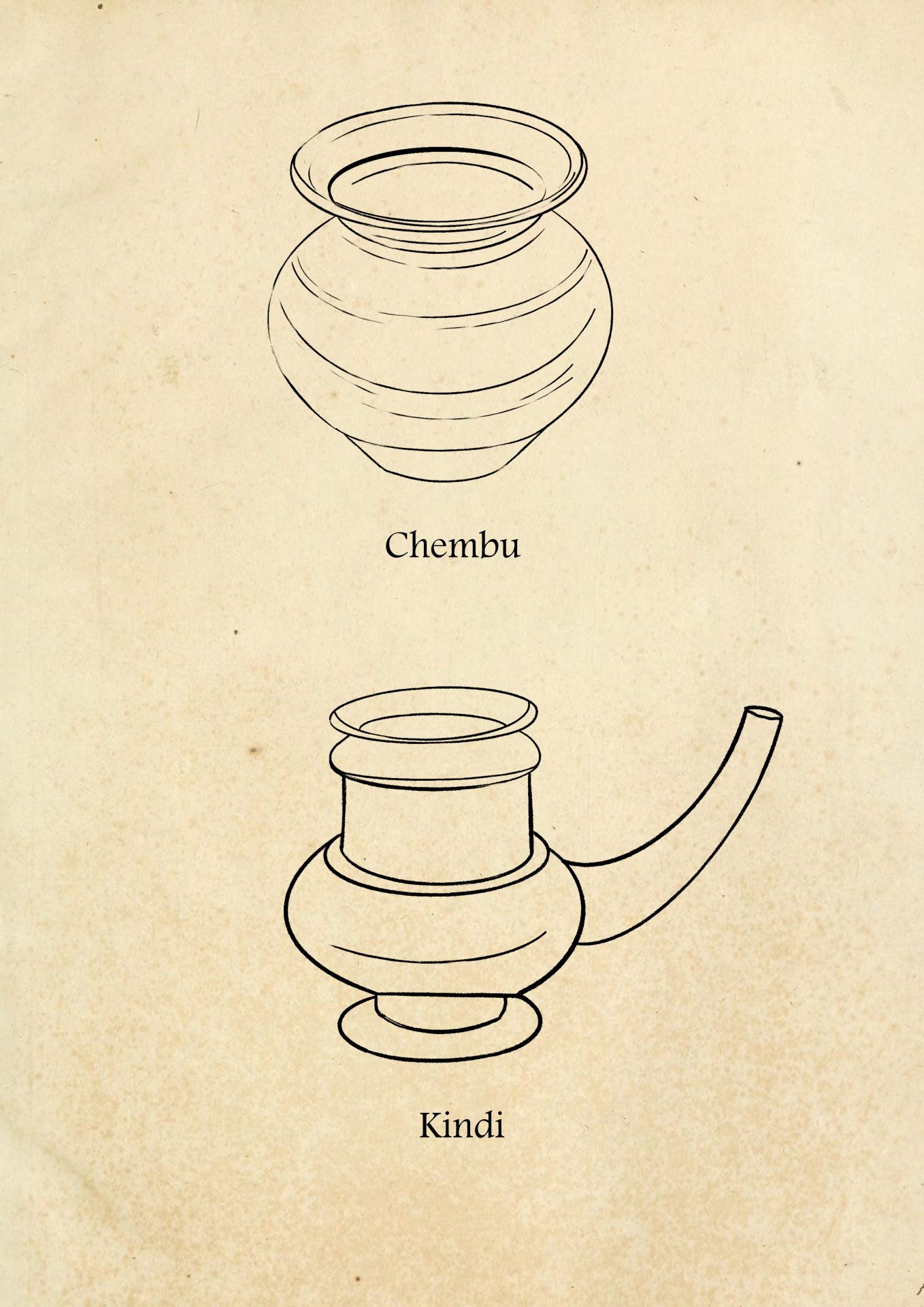
For creating metal bells and other traditional lamps, craftsmen work in aalas i.e in forges. The traditional products which were earlier very famous are still being made like: Uruli (a large-wide mouthed vessel), Nilavilakku (a wick lamp usually kept on the floor) and Kindi (a spouted pitcher).
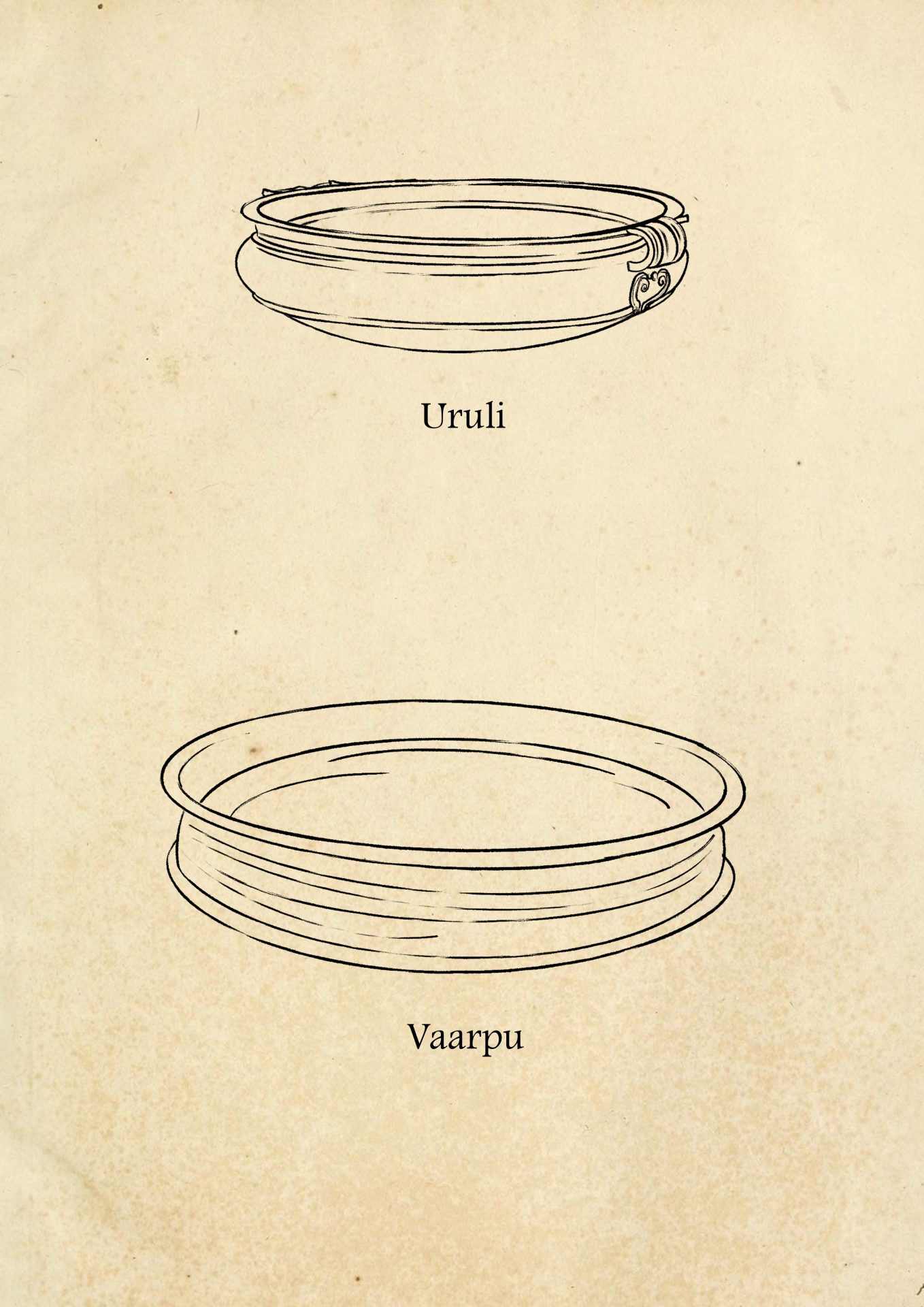
Uruli has a deep relationship with the kitchens and cultures of kerala. When you take out the uruli from your storerooms, which is usually majestic in comparison to the daily utensils, one knows it is the time of celebration. It is still used to make payasam, sambar and various dishes, especially during marriages and festivals like onam, when cooking for a huge crowd. Which shows its peculiar significance as a cooking utensil, whether it be in the flavour of the food or in terms of its utility. Every house in Kerala has a uruli. Apart from cooking it is used for filling water and keeping flowers as decoration at homes, as these urulis come in various sizes. Another important use of this vessel comes during the Vishu festival, where keralites prepare the ‘Vishukani’, a symbol of prosperity and luck where they keep all kinds of fruits, vegetables, konnapoo (golden shower flower), kasavu saree or mundu and silvers in a uruli, which is kept along with the idol of Lord Krishna.
Kindi, a spouted pitcher, used to be a symbol of cleanliness in the olden times, as it was the first thing your eyes would reach out when you entered a house. As these Kindi used to be kept at the entrance porch filled with water, so those who were coming from outside could wash their feets before entering. Also it has a religious link to hinduism where they believe evil forces or negative energies also enter the house through unclean feet. Although the advent of pipes have made its use in houses irrelevant in the present time, it is still widely used in temples for poojas and other ritualistic ceremonies in Kerala.
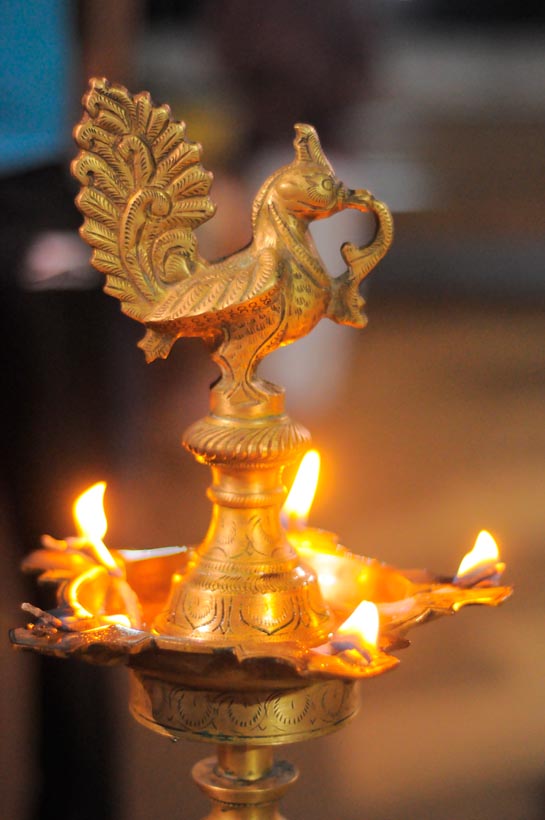
Among all the bell metal products, lamps might be one of the most used and the least outdated products. They come in quite a variety of sizes and designs, and each house usually used to have multiple of these lamps. On a regular day in a hindu malayali family, lighting a lamp in front of their gods after a morning shower and lighting two wicked lamp on their porch mostly by women during the dusk, and children sitting around this lamp reading their lessons loudly in unison or sometimes grannies chanting scriptures or slogans near the lamp was quite a normal scene. Now all these are gradually fading because of the changes triggered by time, but still lamps remain an indispensable item. there are varieties of such lamps depending on their shapes and uses. A Changalavattais a distinctive peacock-shaped bronze lamp traditionally carried in temple processions and ceremonial festivals. Today, it continues to be used in temples as both a ritual and decorative lamp symbolising auspiciousness and divine presence. An arati dipa is a type portable ritual lamp used during arati, in which light is ceremonially offered to the deity through circular movements. It symbolises the removal of darkness and the invocation of divine blessings. And an Archana Lamp is a votive lamp lit during archana as part of devotional offerings made to a deity in temples. It represents faith, purity, and the devotee’s reverence during daily worship and special rituals.
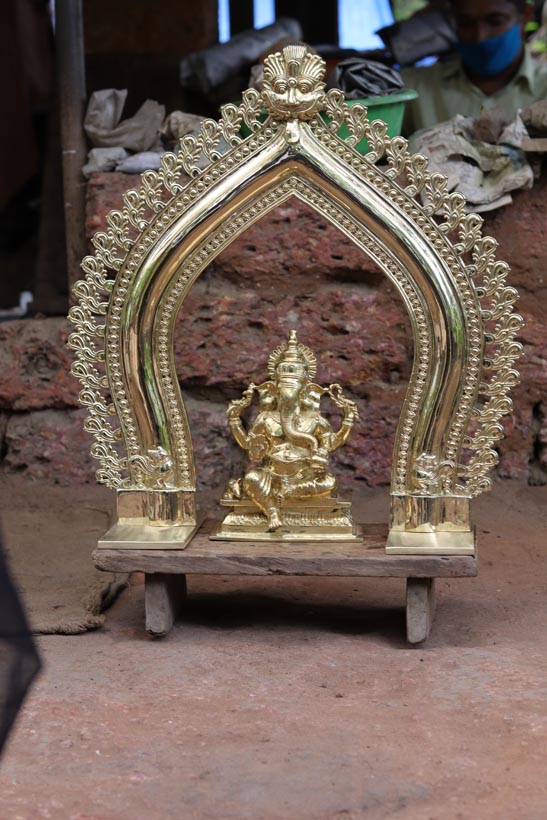
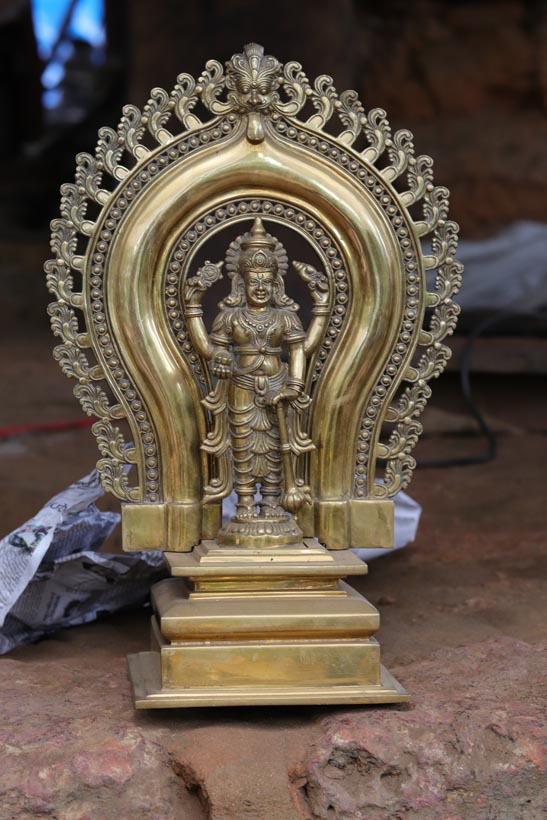
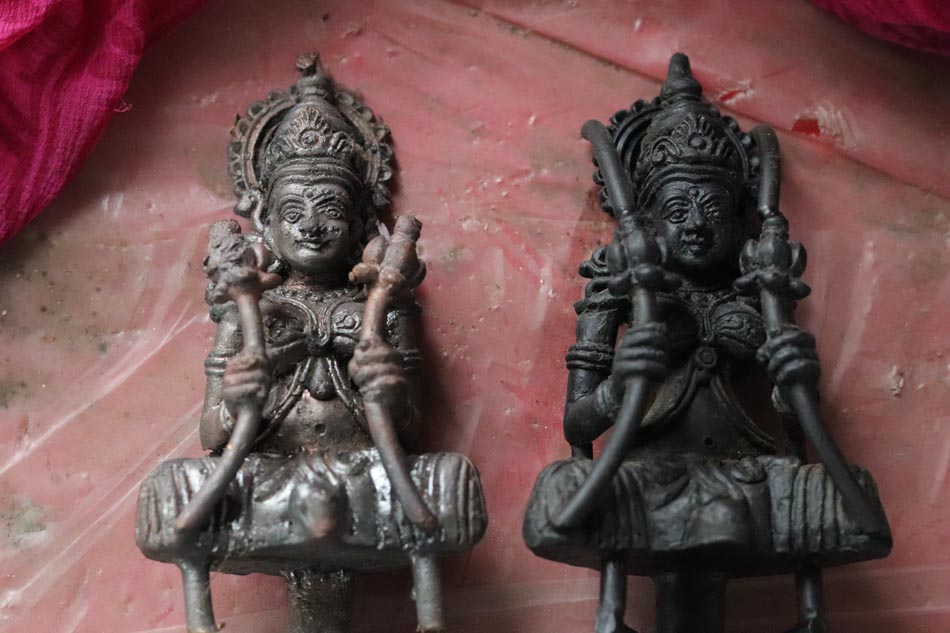
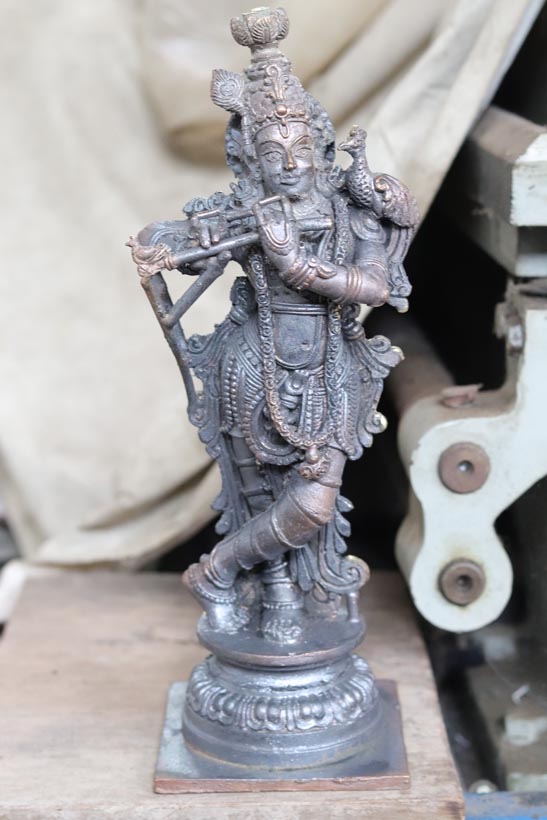
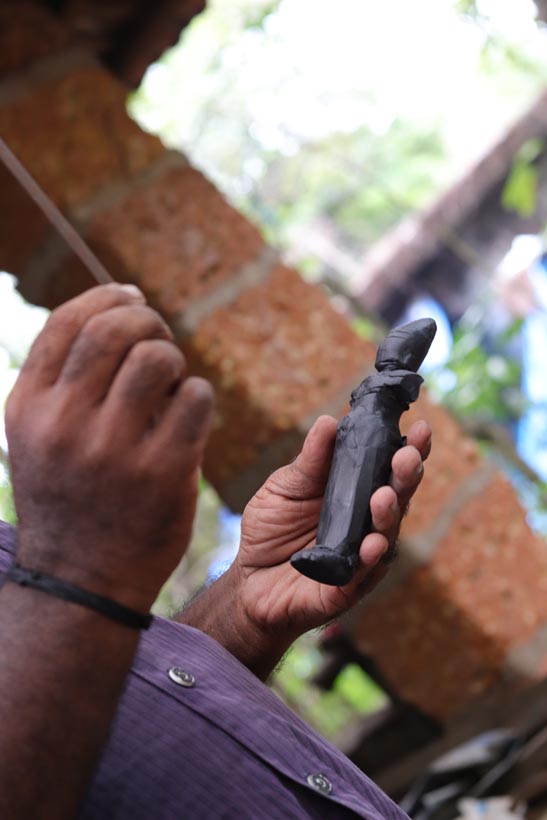
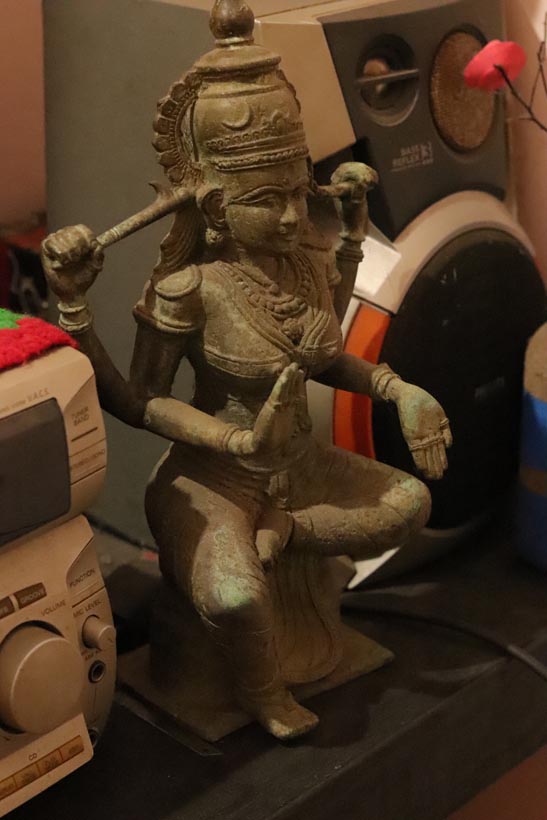
Panchaloha idols crafted in Kunhimangalam are installed in temples across Kerala and beyond, reflecting the region’s renowned bronze-casting tradition. Besides Panchaloha, artisans also cast idols in other metal alloys using the traditional lost-wax technique, where each sculpture is cast in a single pour and every mould is broken after use, making each idol unique.
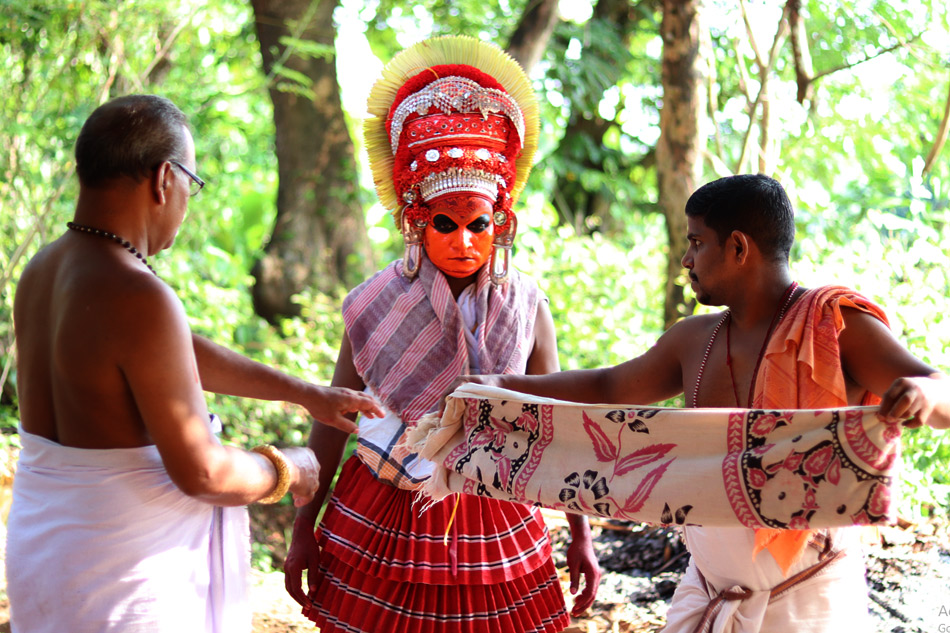
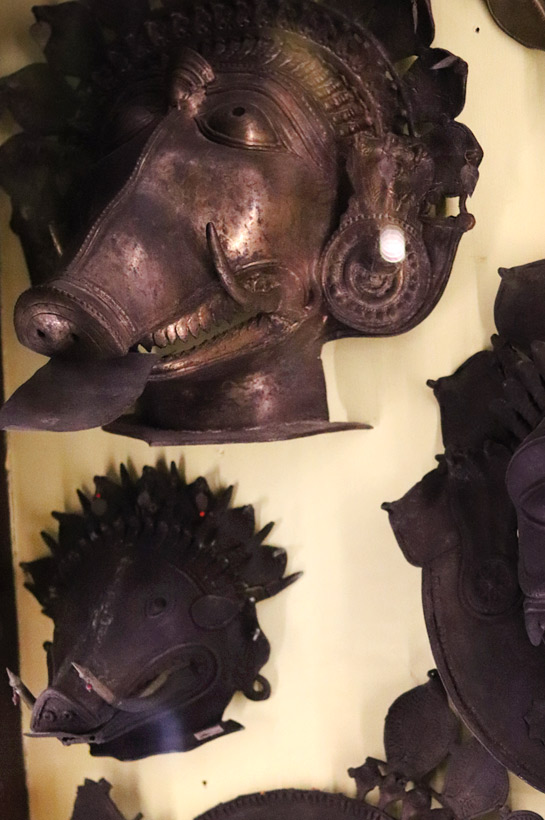
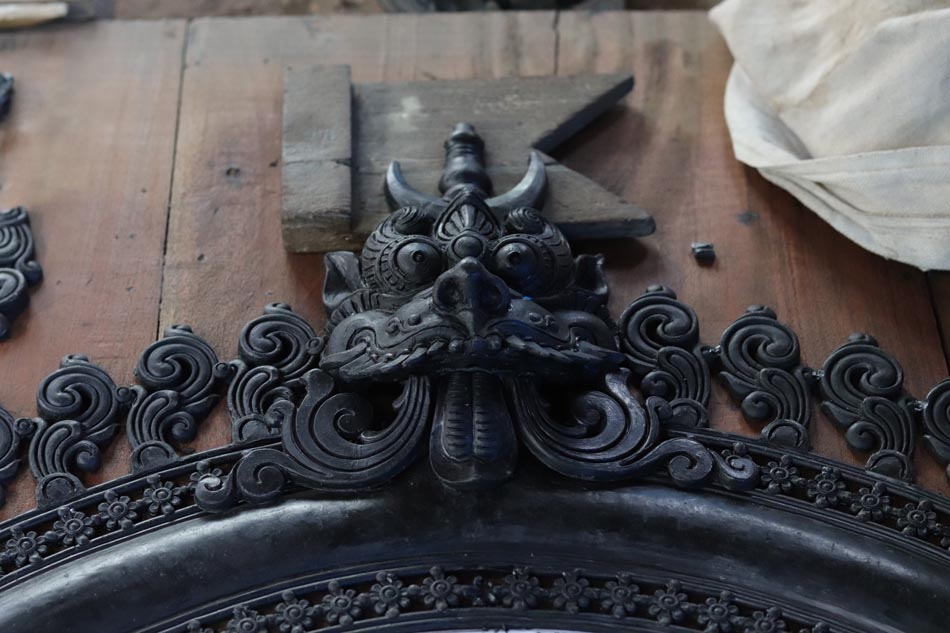
Cymbals, is a musical instrument made using bell metal, especially because of its sonorous property. They are an integral part of the Chenda Melam instruments and are also part of many temple art forms of Kerala, including kathakali etc. They are known to also produce a variety of ritual and ceremonial objects in brass and bell metal, demonstrating the versatility of the region’s metalworking tradition. Among these are the chilambu, a traditional anklet or ankle ornament associated with temple rituals and performance traditions, and the thalappali, the sacred forehead ornament worn by Theyyam performers during ritual enactments. These objects are valued not only for their decorative beauty but also for their deep cultural and religious significance, forming an integral part of Kerala’s temple and Theyyam traditions.
There is no major change seen in the craft with respect to its shape and the product itself. As mentioned above, the products which were made earlier are still in use and majority of the craftsmen make these traditional products along with few customised contemporary products. In the state of Kerala, it is said that every temple and church has the metal crafted bells and lamps respectively made. It should be noted that the products made for temples and churches are significantly large in size and shape. Many temples are built in such a way that they have Chuttuvilakku (all around lamps), these hundreds of small lamps are usually lit as part of certain rituals and also during temple festivals and auspicious occasions.
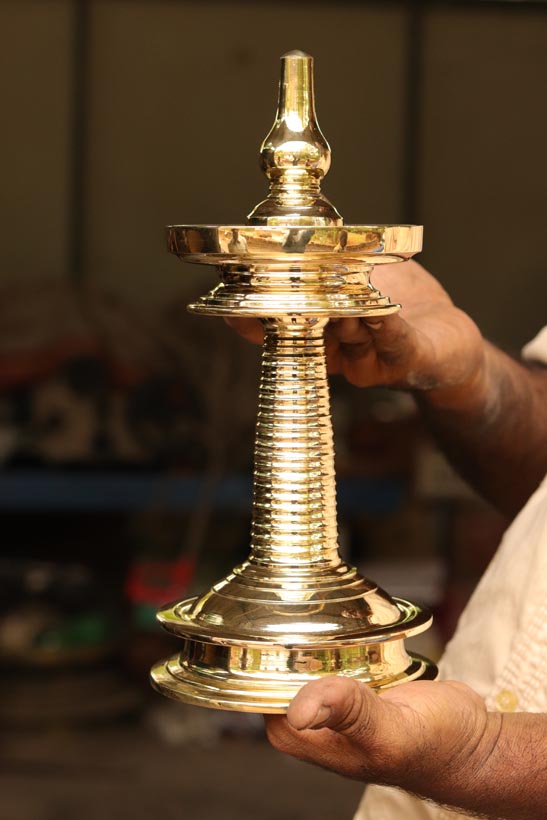
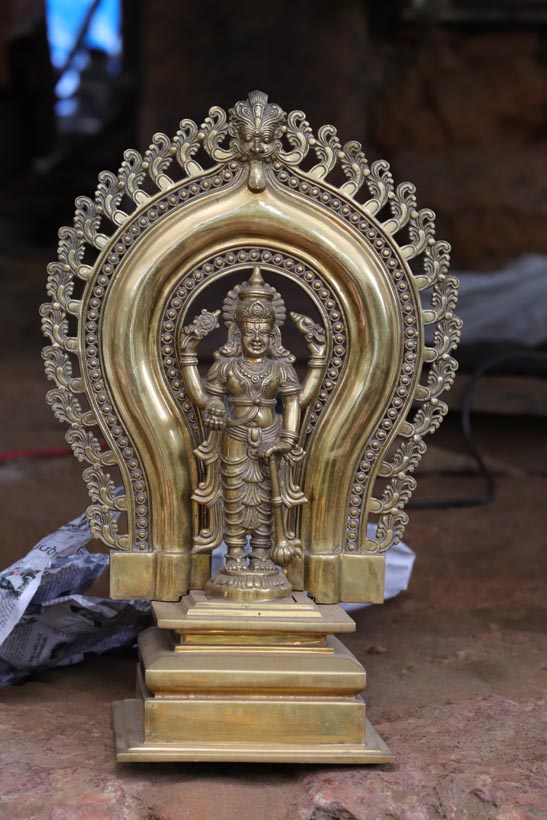
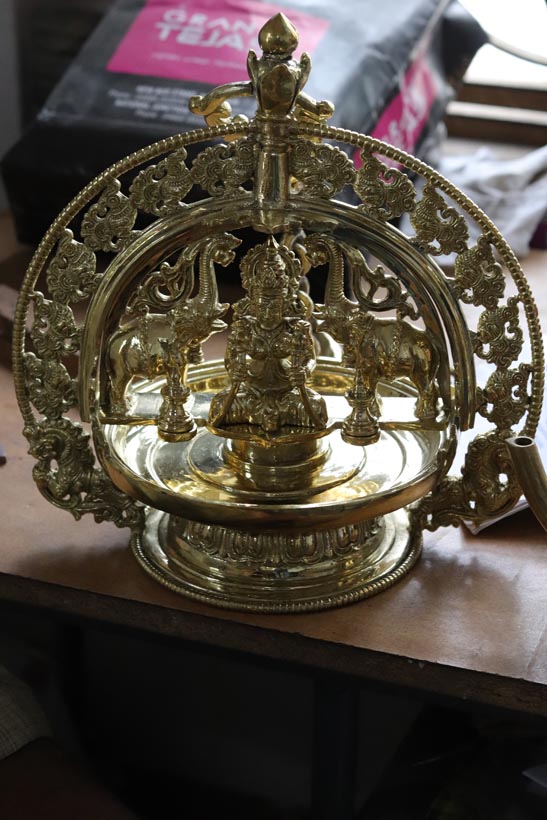
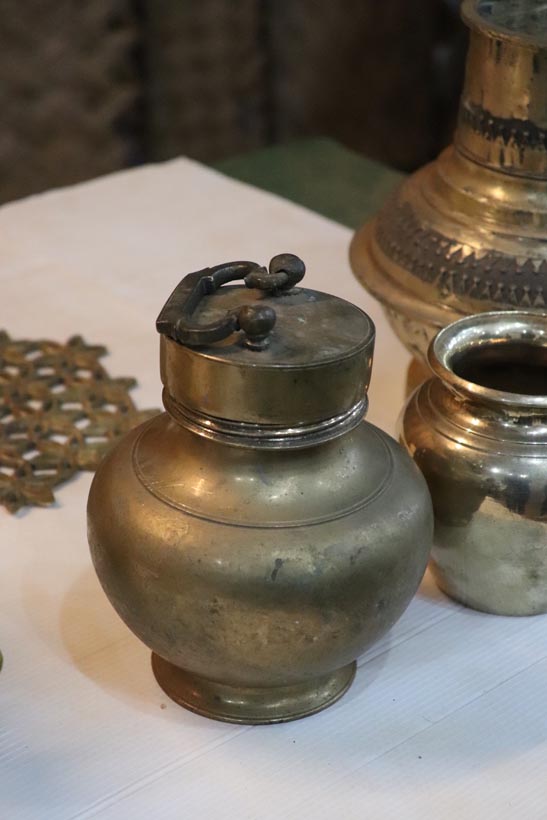
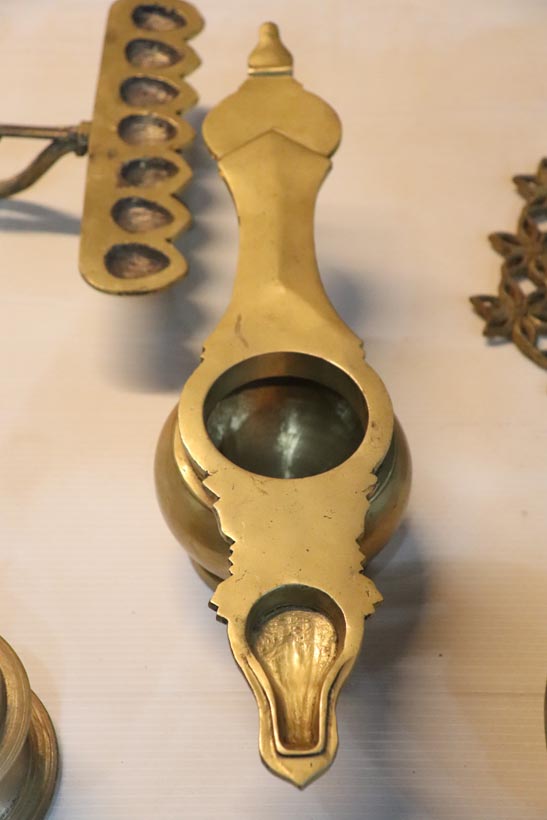
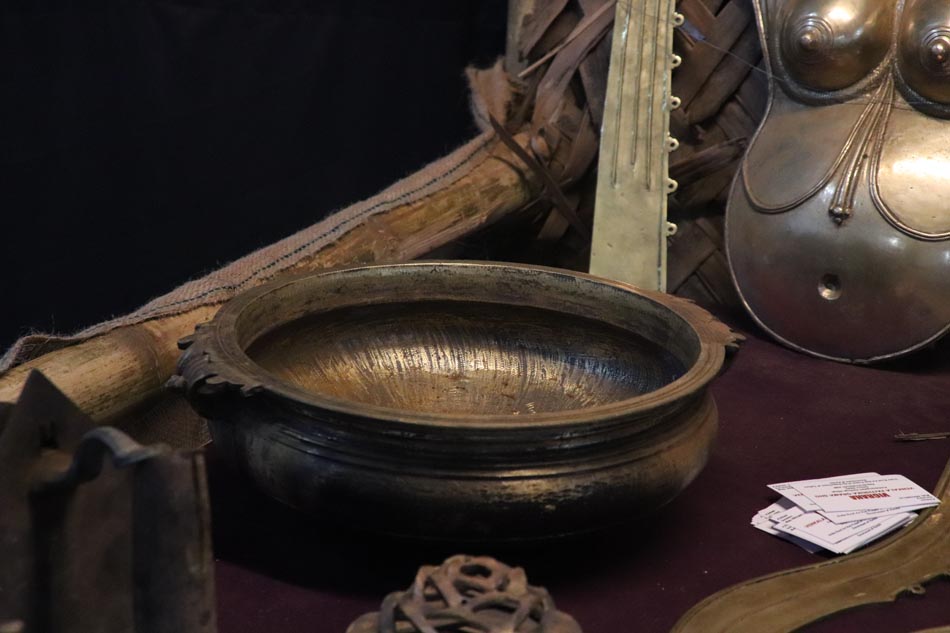
Bell metal craftsmanship of Kunhimangalam represents far more than a tradition of metal casting; it embodies centuries of technical knowledge, cultural continuity, and sustainable craftsmanship. Produced from a harmonious alloy of copper and tin, bell metal is valued for its strength, durability, and distinctive resonant sound, making it an ideal medium for both sacred objects and domestic utensils. Household vessels such as lotas, cooking utensils, and serving ware are often passed down through generations, reflecting not only their durability but also their sentimental and cultural value within families.
The craft occupies a particularly important place in Kerala’s religious and ceremonial life. Traditional lamps cast by Kunhimangalam artisans remain indispensable to temple rituals and ceremonial occasions. The lighting of the lamp marks the beginning of religious ceremonies, cultural programmes, and public functions, symbolising the triumph of knowledge over ignorance and the invocation of divine blessings. During Hindu marriage ceremonies, a bride traditionally enters her new home carrying a lighted lamp, signifying prosperity and the arrival of new light into the household. Beyond Hindu traditions, these lamps have also found a place in churches and mosques with minor adaptations in design, while numerous classical art forms including Kathakali, Koodiyattam, Mohiniyattam, Thiruvathira, Padayani,Margam kali and Theyyam are traditionally performed in the presence of an illuminated lamp, reinforcing its enduring cultural significance.
The craft also reflects remarkable technical mastery. Even seemingly simple objects, such as the traditional lota, require exceptional precision during the lost-wax casting process. A perfectly uniform layer of wax must be applied over the clay core to determine the final thickness of the vessel; any variation can affect its strength, weight, and overall form. Since each mould is used only once and broken after casting, the entire object must be executed accurately on the first attempt, demonstrating the high level of skill and experience possessed by Kunhimangalam’s craftsmen.
Equally significant is the craft’s sustainable character. The primary raw materials are naturally derived, while most tools are traditionally manufactured by local blacksmiths, creating a self-sustaining network of interdependent crafts. This reliance on local resources, combined with largely manual methods of production, minimises environmental impact while supporting the livelihoods of artisan families and contributing to the cultural and economic vitality of Kunhimangalam. The continued practice of bell metal casting therefore preserves not only an exceptional artistic tradition but also a living system of indigenous knowledge, craftsmanship, and community resilience.
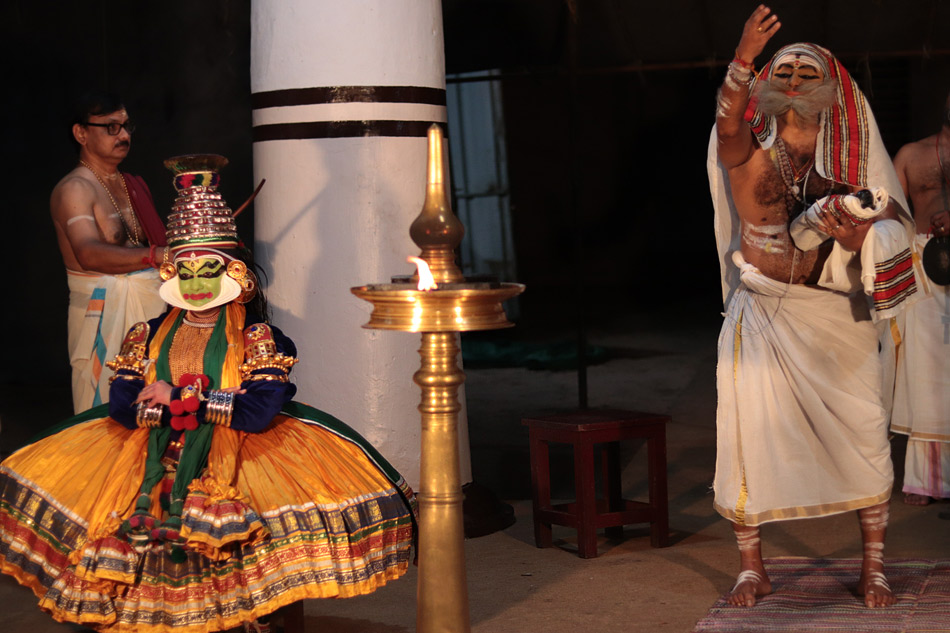
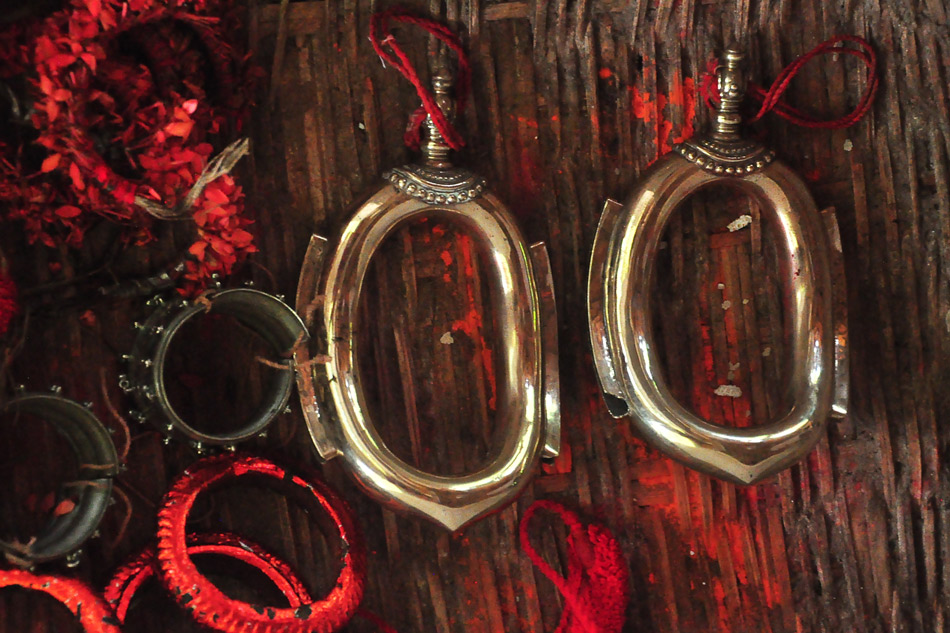
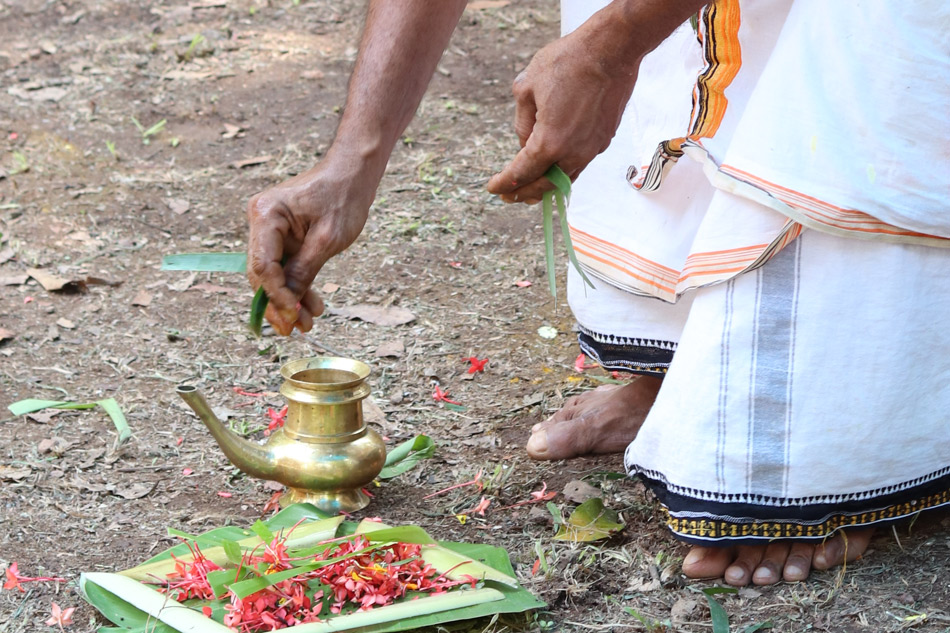
Kunhimangalam, a town in Kerala is well known for its bell metal craft. It is one of the crafts in Kerala that has religious and cultural roots. The bell metals are considered for casting various mythological stories like Tandava Dance, popularly known as ‘Gaja Tandava’ or Gajasamhara’ in beautiful intricate forms. One can even find these specific trademarks at Thiruvananthapuram, Payyanur and Kasargod.
Vishwakarma community since the origin and still today make this beautiful and intricate craft. It is thought that Lord Vishwakarma’s ancestors were called Vishwakarmas. In Hindu mythology, Lord Vishwakarma is revered as the celestial architect and engineer. He is said to have had five heads at birth. Three of his faces, the blacksmith, copper or bronze smith, and the goldsmith, were made of the three metals—gold, copper, and iron. The stone mason or stone smith and the carpenter were represented by the other two faces. The five categories Achary, Mooshary, Thattan, Kallashary, and Kollan currently make up this community. At first, Thattans made jewellery out of gold and silver, Moosharies worked with metals, while Acharies specialised in woodwork. Kallasharis had a talent for crafting intricate stone carvings. And finally the Kollans or blacksmiths were the ones proficient in metal works.
Many scholars and people believe that epics like Ramayana, Mahabharata and Vedas believe that use of metals and their alloys can control the forces like hunger, sleep, thirst positively. These myths and legends have been followed and carried out with generations and are still believed.
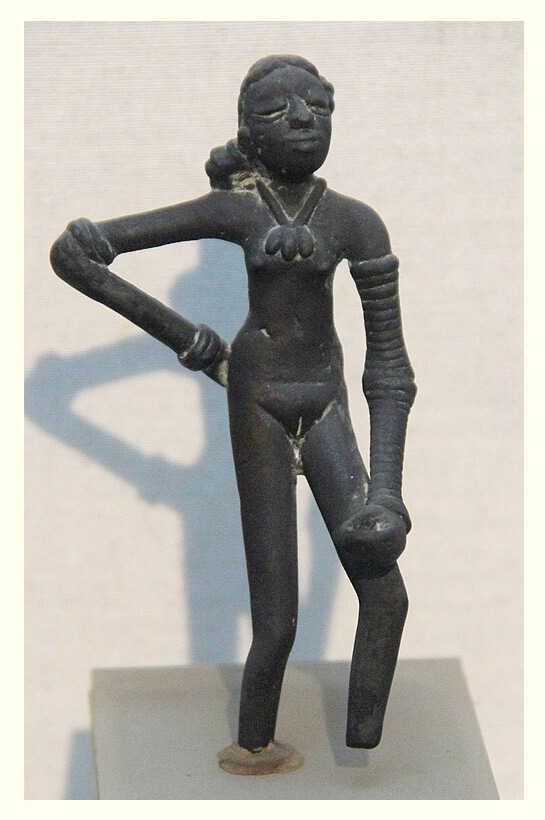
The history of bell metal casting in India extends back several millennia, rooted in the country’s long tradition of metallurgy and metal sculpture. From the time of the Harappan Civilization, Ancient Indian craftsmen possessed sophisticated knowledge of alloy preparation, casting, and metal finishing, producing ritual objects, household utensils, and temple sculptures through techniques that have survived with remarkably little change. Among these, the lost-wax casting process emerged as one of the most refined methods of metalworking, enabling artisans to create intricate bronze and bell metal objects through a single casting, with each mould used only once.
In southern India, this tradition reached exceptional levels of artistic excellence under the Pallava and Chola dynasties, whose bronze icons became celebrated for their technical perfection and spiritual expression. The temples of Tamil Nadu developed into important centres of bronze casting, where hereditary craftsmen refined the lost-wax technique to create sacred images that remain among the finest achievements of Indian metal art. Through centuries of religious patronage, artisan migration, and close cultural exchange, these bronze-casting traditions gradually spread into neighbouring Kerala, where they were adapted to local ritual practices and artistic preferences.
The custodians of this knowledge belonged largely to the Kammalar or Vishwakarma community, one of South India’s oldest hereditary artisan groups. The term Kammalar is traditionally understood to mean “one who creates objects pleasing to the eye,” reflecting the community’s long association with skilled craftsmanship. Historical records from as early as the ninth century mention the Kammalars in Kerala, where they were recognised as highly specialised artisans responsible for producing agricultural implements, temple objects, household utensils, jewellery, and architectural components. Within this larger community, the Moosaris emerged as the hereditary bronze and bell metal casters, preserving the specialised knowledge of alloy preparation and lost-wax casting through generations of apprenticeship. Traditional belief traces their lineage to Vishwakarma, the divine architect of Hindu mythology, reinforcing the perception that metal casting was not merely an occupation but a sacred vocation combining artistry, technical mastery, and spiritual responsibility.
Although the broader tradition is ancient, the organised bell metal craft centres of northern Kerala are believed to have developed nearly nine centuries ago. Bell metal objects, particularly temple bells and ritual utensils, were once closely associated with royal households and major temples, where their durability and resonant sound made them indispensable for religious and ceremonial use. A widely preserved local tradition attributes the growth of the craft in Kerala to the migration of Vishwakarma artisans from Sankarankovil and Thanjavur in Tamil Nadu around two centuries ago. These craftsmen were invited by local rulers to construct temples, but after completing their commissions many chose to settle permanently, establishing workshops that gradually expanded from temple sculpture to the production of bells, idols, lamps, ritual objects, and domestic utensils.
The abundant natural resources of Kerala further supported the development of the craft. Fine alluvial clay collected from riverbanks proved particularly well suited for preparing the moulds required in the lost-wax process, while successive migrations of Moosari and Achari artisans from Tamil Nadu enriched the region’s technical knowledge and strengthened its reputation as an important centre of traditional metal casting. Over time, the inherited Tamil bronze-casting techniques evolved to suit Kerala’s distinct ritual culture, giving rise to a rich repertoire of Panchaloha idols, temple lamps, ceremonial ornaments, bells, and household vessels that continue to define the region’s metalworking tradition.
The choice of bronze and bell metal alloys also reflects centuries of practical understanding. Typically composed of approximately seventy-eight percent copper and twenty-two percent tin, the alloy produces the clear, resonant sound required for temple and church bells while offering exceptional strength and casting properties. As the molten alloy cools, it expands slightly before contracting, naturally filling minute fissures within the mould and allowing intricate details to be reproduced with remarkable accuracy. Although this alloy is comparatively expensive and demands considerable skill during finishing, its acoustic qualities, durability, and aesthetic appeal have ensured its continued preference for both ritual objects and finely crafted domestic utensils.
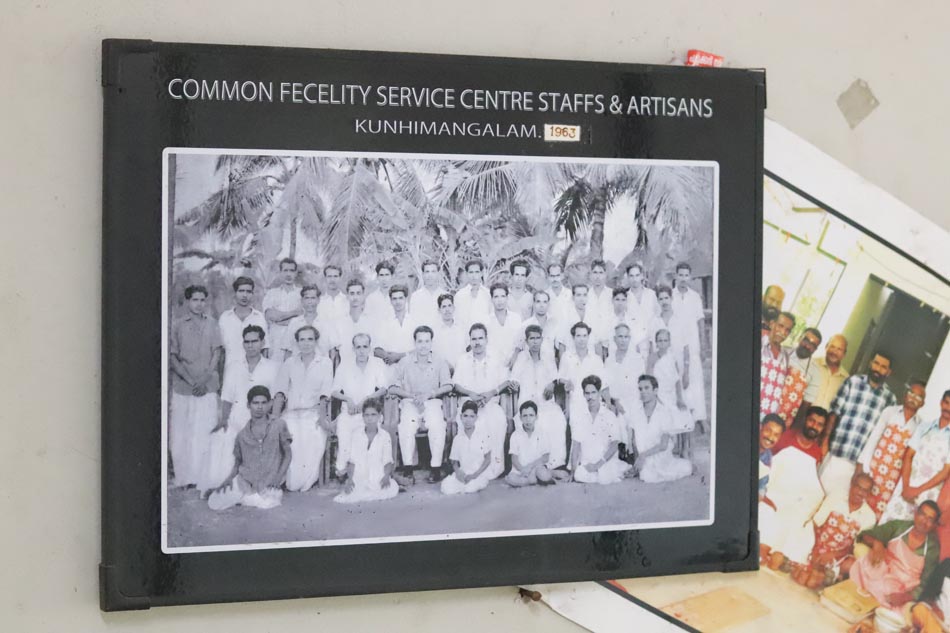
For generations, the Vishwakarma artisans enjoyed considerable patronage from rulers, temples, and wealthy households, enabling numerous independent family workshops to flourish. Earlier, more than fifty artisan families are believed to have practised the craft independently within the region. Over time, however, changing economic conditions transformed this traditional structure. Many hereditary craftsmen now work within larger foundries and workshops on daily wages rather than operating family-owned enterprises, while only a limited number of independent Vishwakarma households continue to practise the complete craft. Nevertheless, Kunhimangalam has retained its identity as one of Kerala’s foremost centres of traditional bell metal casting. Its long-established marketplace, family workshops, and generations of practising artisans continue to preserve a lineage of craftsmanship that links the ancient bronze traditions of Tamil Nadu with Kerala’s enduring ritual and cultural heritage.
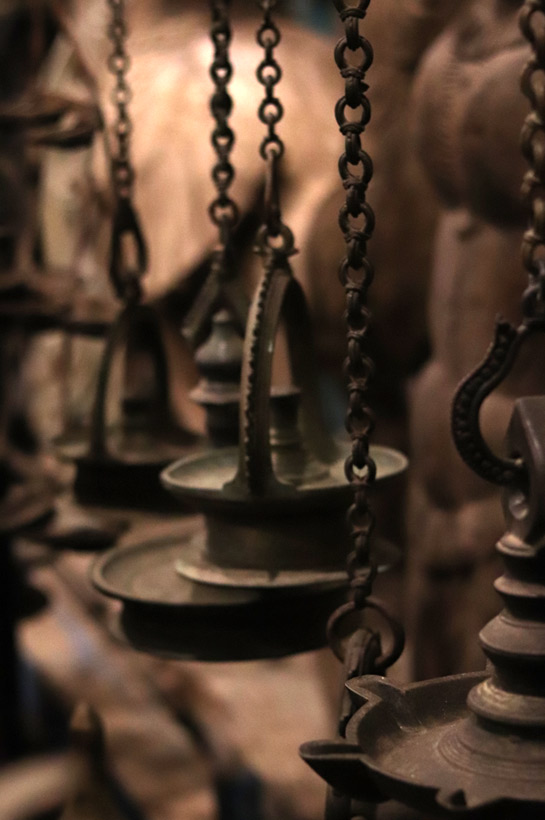
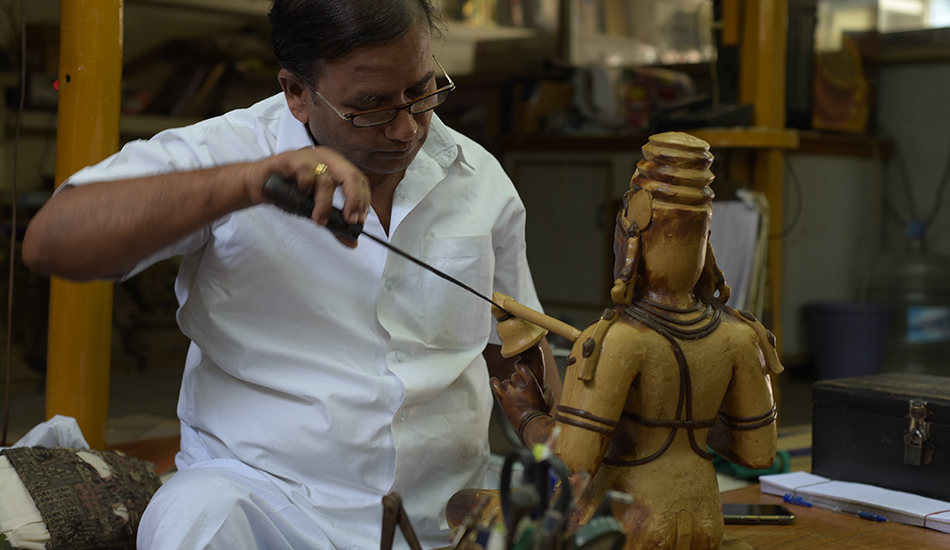
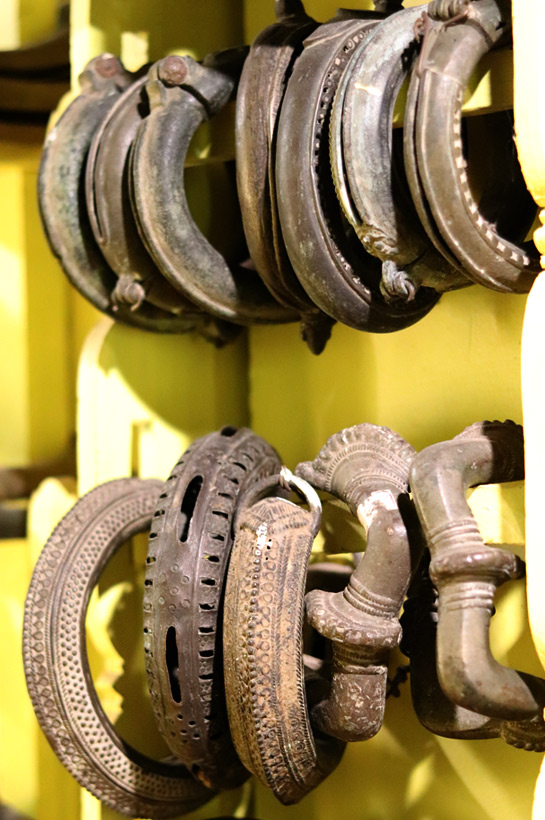
Apart from the bells, the craftsmen also make different types of traditional lamps, vessels, bells, statues of gods and goddesses. They have recently started making different contemporary household and lifestyle items.
However, most of the important traditional household products which are made on regular basis are mentioned below:
Kinnam Plates- Used for taking foods like kanji and boiled rice.
Uruli- Used as an integral cooking utensil especially for dishes like payasam, sambhar etc. Also used as a vessel used for decoration and to keep Vishukani for Vishu festival.
Chembu- Used for boiling paddy.
Kindi- Used as a vessel for taking water for washing.
Naazhi- Used as a hollow cylindrical vessel used for measuring grains.
Sevanazhi- It is a cylindrical shaped vessel, with a rotating handle on the top and small holes at the bottom. The product is used for making idiyappam, murukku dishes.
Vaarpu- It is a large bowl made from bronze. This product is used for making mostly ayurveda medicines and meals during festivals in homes and temples.
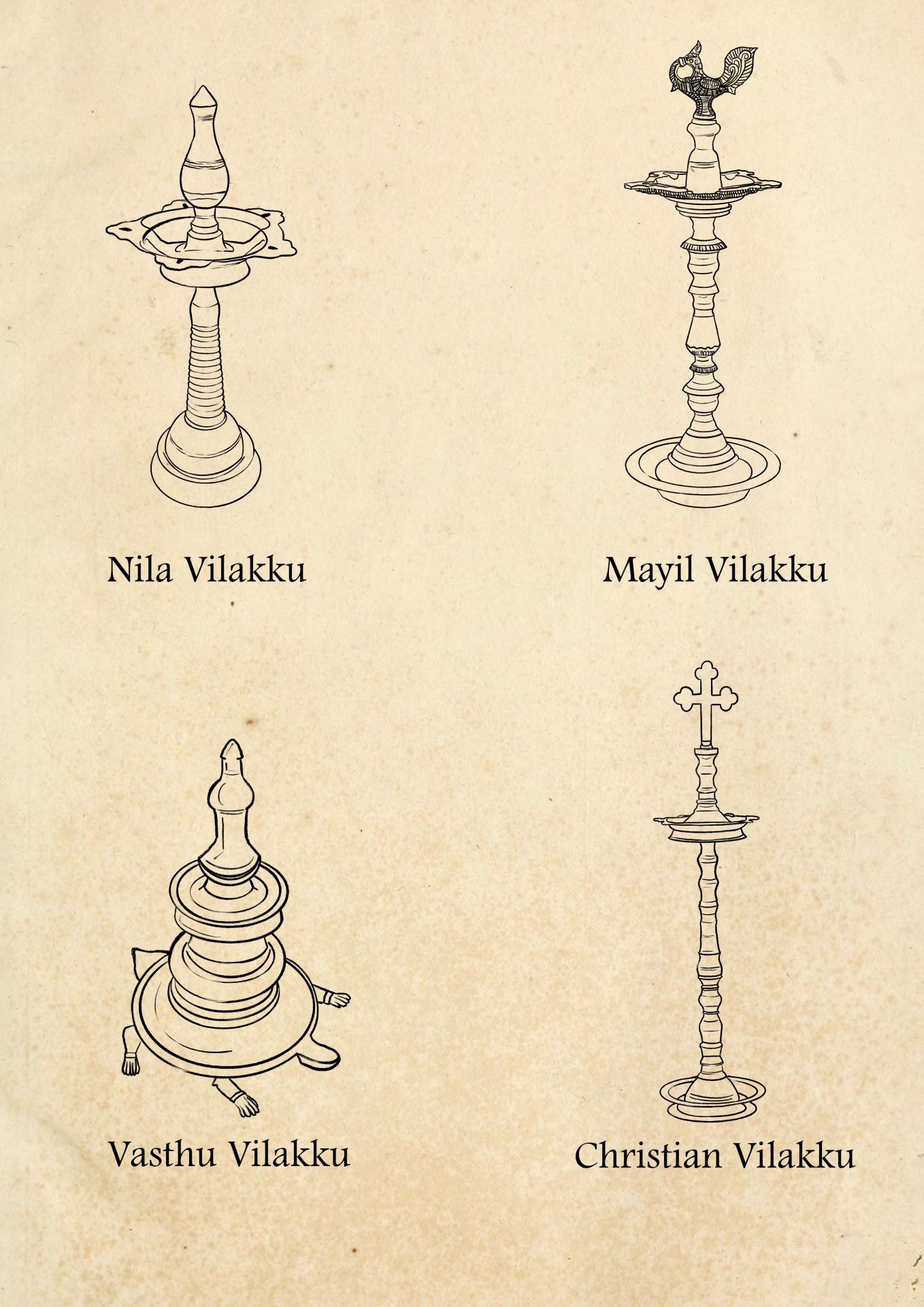
Apart from the bells, craftsmen also make beautiful lamps like Aaluvilakku, Vaasthuvilakku, Thookuvilakku, Ashtamangalyavilakku, Lakshmivilakku, Aamavilakku, Mayilvilakku and Nilavilakku.
Some of the products of Kunhimangalam have entered into record books. For instance, in Ernakulam district, a huge lamp in 9 layers where 1000 wicks can be lit: has an entry in Limca Book of Records in the year of 2007. The lamp is 24.5 feet in length and 6000 kg in weight.
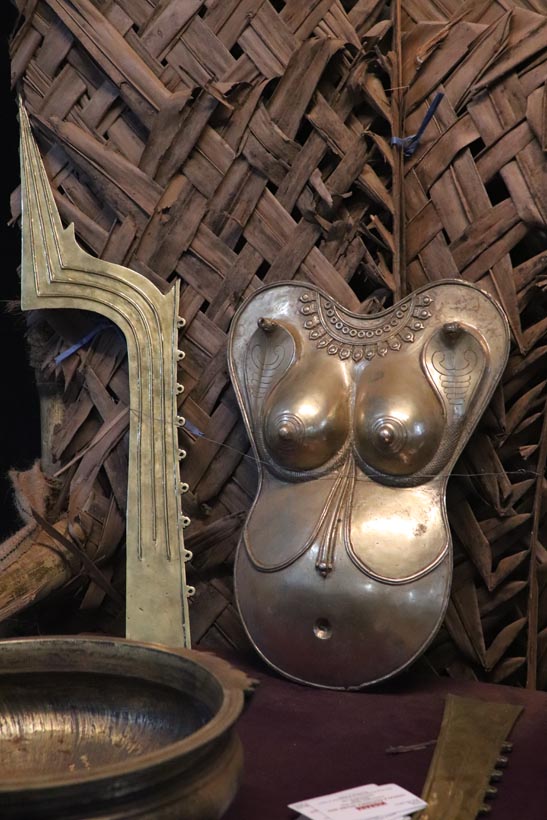
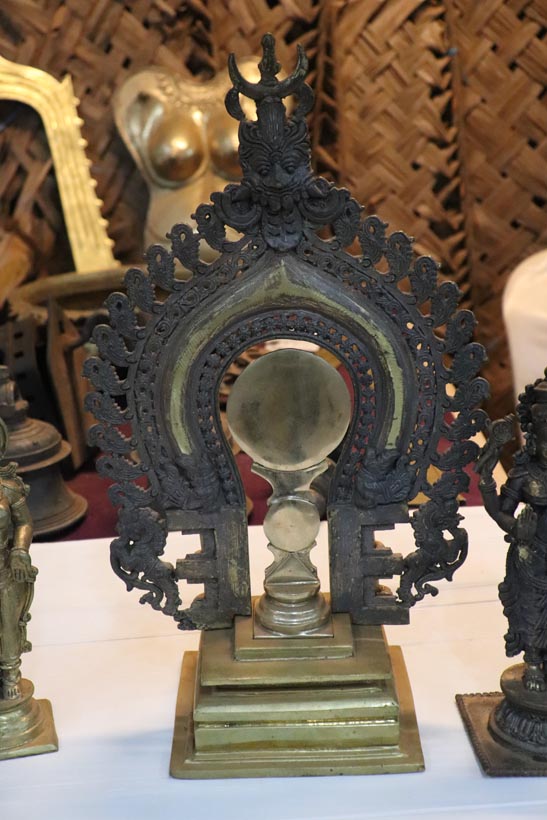
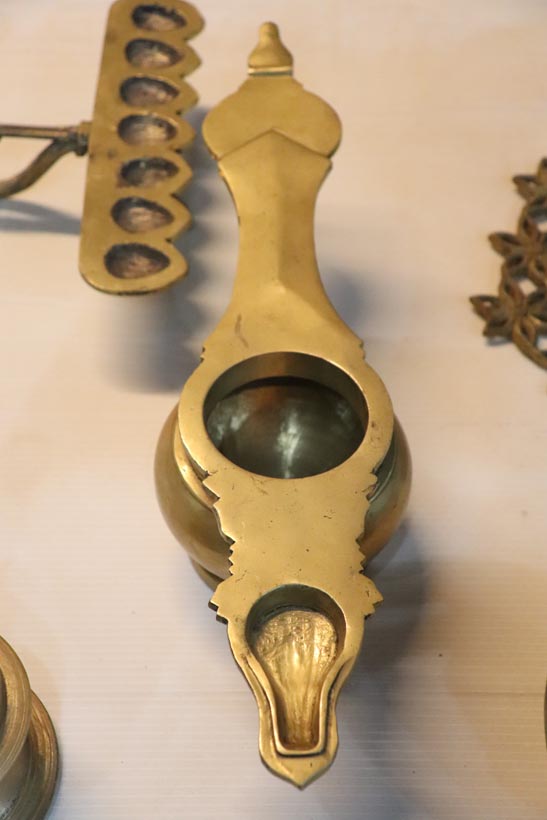
In bell metal craftsmanship, artisans struggle with numerous challenges that shape both their working conditions and market dynamics.
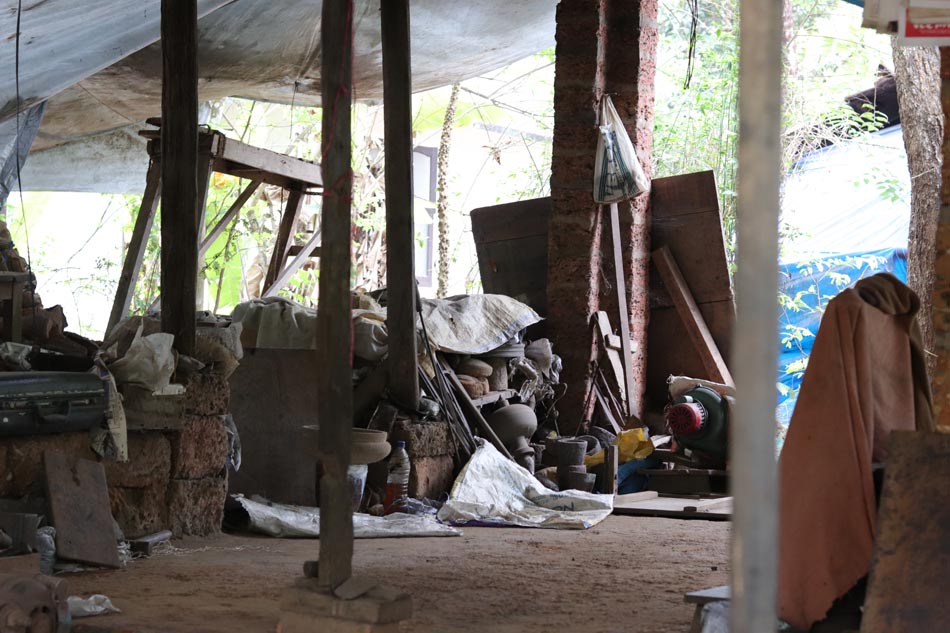
Ergonomics ~ This is a problem that is not thought about. The workers doesn’t have a good environment to work on, they adjust themselves within the available space. Artisans work in single and uncomfortable positions for more hours which can create various physiological problems later.
Lighting ~ This is another factor to be discussed. There is no proper lighting in forges for the workers to work. It is really difficult to work in such a condition. Most of the workers have been habitual to this condition so they don’t realize it but any newcomer can spot this instantly.
Smoke and Metal Dust ~ Since the worker do metal cutting and grinding jobs also it can leads to health problems. They even don’t wear a mask. And especially while burning metals the smoke that is emitted, metal dust can cause serious health problems.
Recognition ~ Earlier the artisans used to work individually at their home and now these people work under a shop. So whenever any famous or unique product (in terms of quality, size and weight) is made by them and sold by the shopkeeper; the entire credit goes to the shop and not to the artisans. They don’t get any recognition for their work. The shopkeeper gets all the privileges.
Competition from Moradabad Products ~ The bell metal products have got recognized always and they have a good market. But nowadays Moradabad products are also gaining the market share as they are very cheap and highly finished when compared to Kunhimangalam products. The price difference is due to the light weight of the product. Moradabad products are available at almost half the price of a similar Kunhimangalam product. Those products weigh almost half of the similar Kunhimangalam product.
Competition from Aluminum/ Plastics/ Steel and Ceramic Products in Similar Categories ~ Items in these materials are really cheap and readily available which makes them a favourite choice for purchasing. They are very light weight when compared to Kunhimangalam product. –
The process used for making bell metal craft is known as the lost-wax method. A distinctive feature of this technique is the artisan’s remarkable skill in shaping wax models on a simple hand-operated lathe. This approach is especially suitable for producing symmetrical forms such as diya stands, lotas, and similar vessels. The raw materials, tools, and manufacturing process are described below.
The raw materials used for making this craft are mentioned below:
Honeybee Wax: Used to make the model and is also collected and reused.
Clay: Use for making moulds.
Rubber Tree Wood and Coconut Husk: Used as a fuel to generate the heat for the casting process.
Brass: Alloy of copper and zinc in ratio of 60% and 40% is used respectively. The melting point is 900˙C and the density is 8.4 g/cm3.
Bronze: Mixture of copper, zinc and tin used in a ratio of 85%, 5% and 5% respectively. The metal is a reddish colour having higher melting point of 950˙C than brass because of the presence of tin. The density is 8.6 gm/cm3 which helps to give a clear ringing sound.
Copper: A metal with reddish orange in colour. The melting point of this metal is 1084˙C. Copper is highly malleable, soft and ductile and is a good conductor of electricity. The density of copper is 8.9 gm/cm3.
Zinc: Lustrous metal silvery grey in color and have a melting point of 919˙C. Its density is 7.14gm/cm.
Tin: Tin metal is hard in nature, which is a silvery white in colour having melting point of 231˙C. The density is 7.36gm/cm3.
There are various tools used for making bell metal. The main tools are mentioned below:
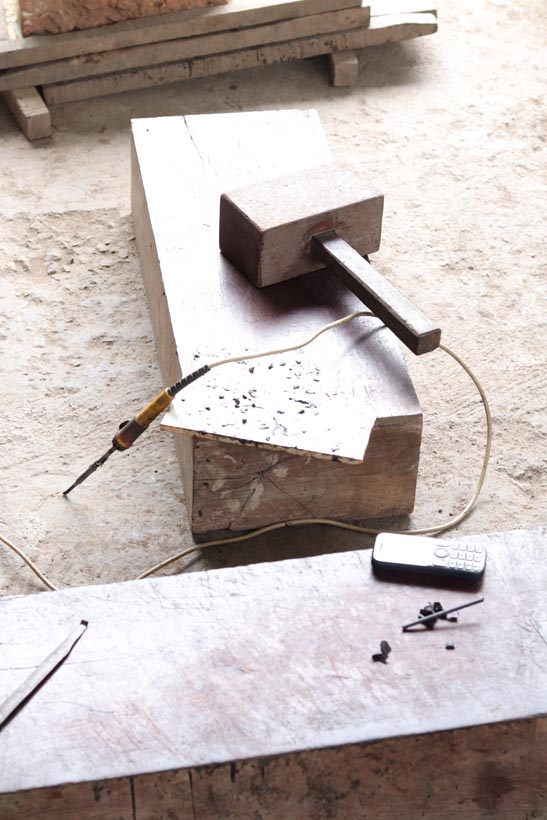
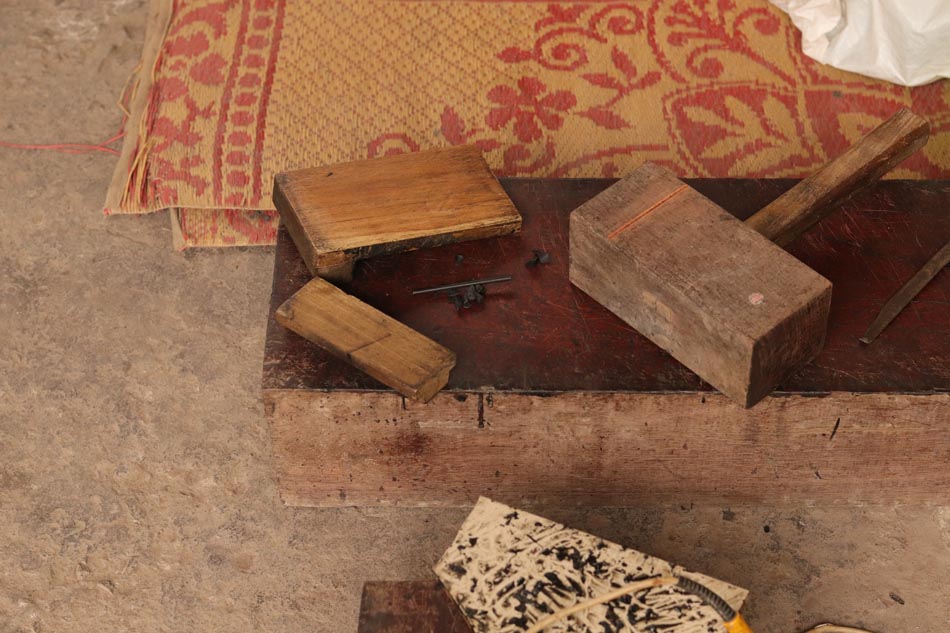
Hammer: Iron hammers are used in chiselling methods for engraving and finishing purposes, breaking big chunks of raw materials including metals and clay. The wooden hammer is used for beating and smoothen the wax before it is applied on the mould.
Files: It is used for smoothening the irregular surface and edges of any surface.
Blower: It is used to provide air in the furnace while melting the wax or metals in the crucible.
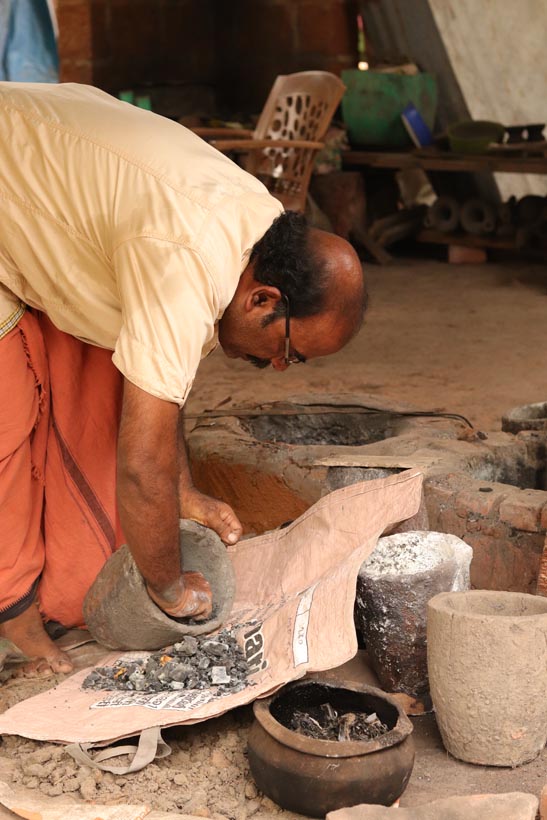
Crucible: It is a mud pot, which is used to heat and melt specific metals.
Pincers: It is used as a gripping tool for holding crucibles and is very much similar to a normal plier in that its handles are very long comparatively.
Drilling Machine: It is used as an electric device used for making holes on the metal.
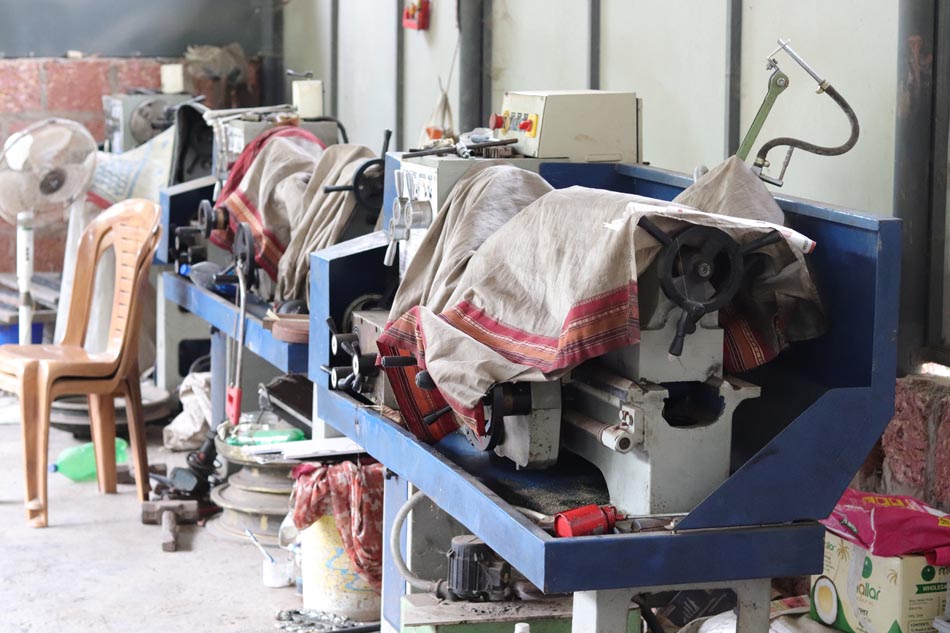
Lathe: It is a machine tool that helps to rotate the workpiece on its axis to perform various operations like cutting, drilling, facing and turning with tools that are applied to the workpiece to create an object with symmetry about an axis of rotation.
Chisels: It is a hand-held flat blade. It comes in various shapes. The small ones are used for shaping the edges and bigger ones are used with a hammer for engraving designs.
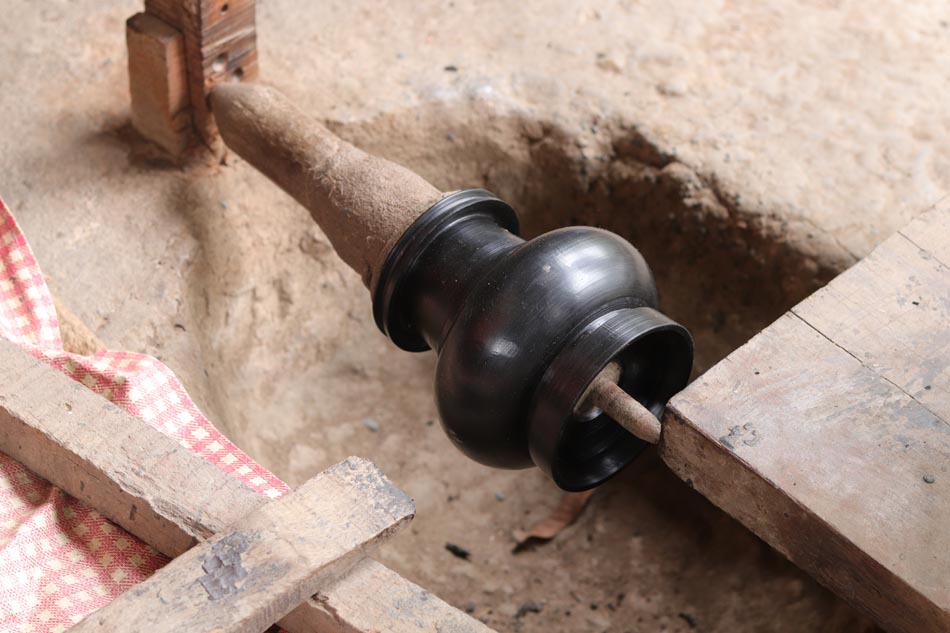
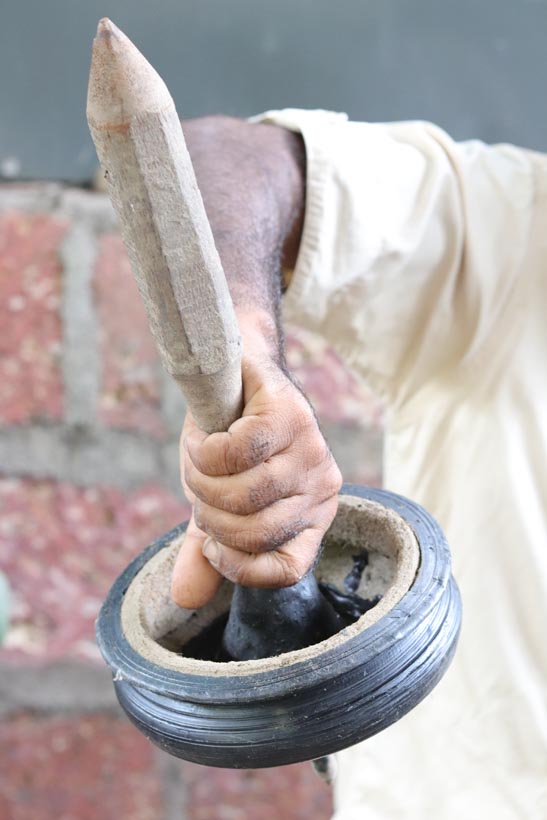
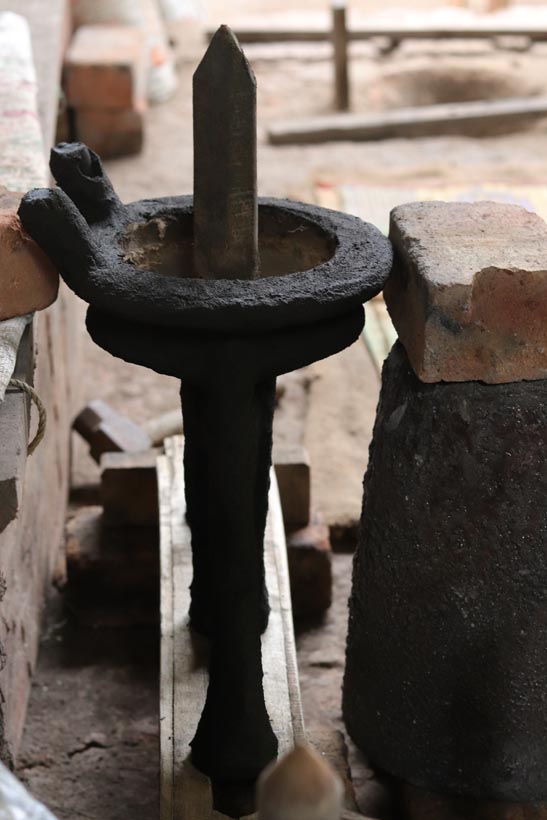
Narayam: This tool is made up of iron and has a wooden handle. It is a wooden piece on which smaller moulds are made by hand and after making moulds these are kept in a pit for waxing. This tool works as the central axle while turning the mold in that pit.
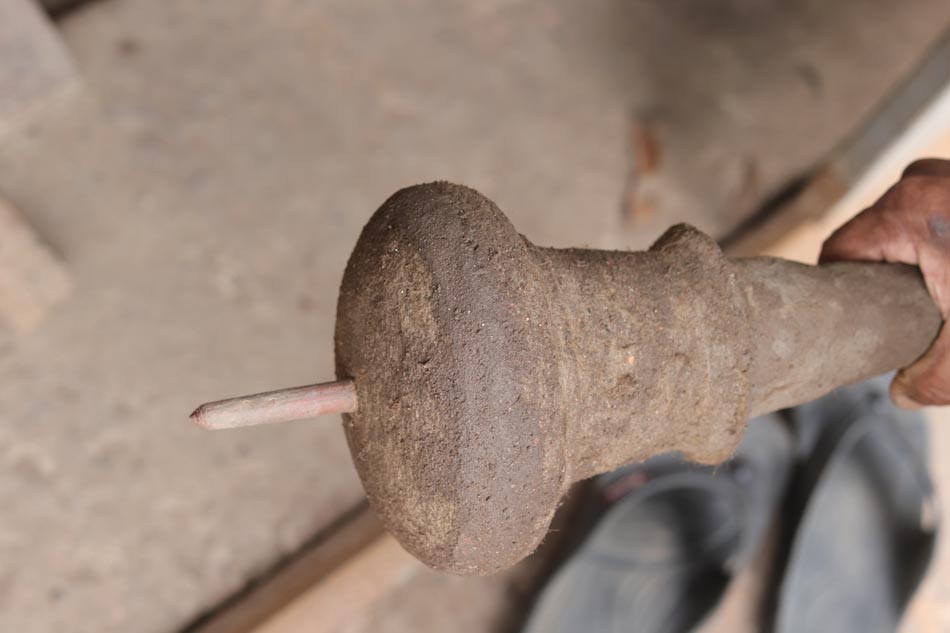
Achukol: This tool is made from the wood of the Poovan tree. It is big in size and is used for making the bigger moulds manually.
Arippa: It is a sieve used to filter the finely powdered sand.
Barzing Machine: Used to join different pieces of the brass using a flame and a filler material.
Chopper: Chopper is a special heavyweight knife made up of iron used for chopping jute sacks into smaller pieces which are added into clay to provide fibrous structure to the mould. It helps to make the mold strong to withstand the heat while melting the wax.
Kada Irumbu: Tool used for smoothening the wax which is applied on the mould.
Spade: It is used to remove the mud or material from a place.
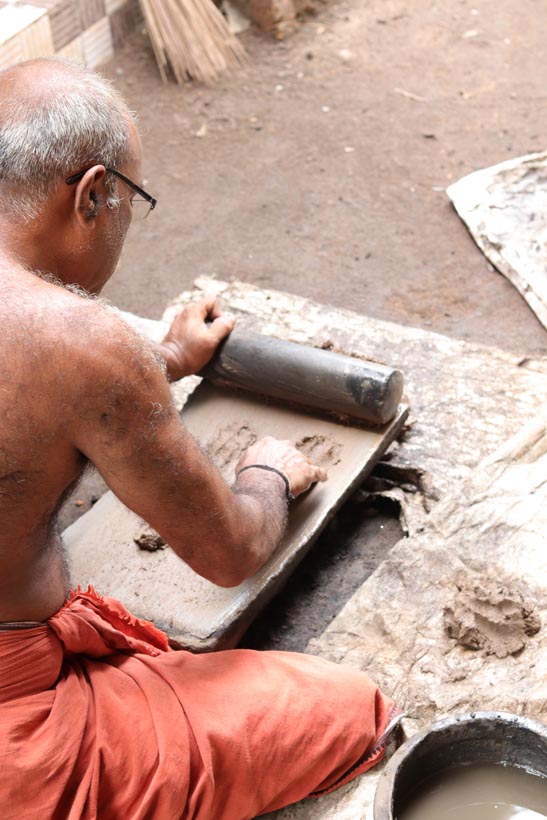
Roller Stone: This tool is a hand operator grinder used for grinding the baked-broken mould clay pieces into powder.
Compass: Used for making the measurements and for making a circle wherever needed.
Thadi: Used for flattening the wax.
Mattam: It is a ‘L’ shaped perpendicular ruler used for measuring perpendicularity of two surfaces.
Cutting and Grinding Blades: Used to cut the unwanted pieces from the edges and surface of the product.
Sander Blade: Used to smooth the rough areas of the object.
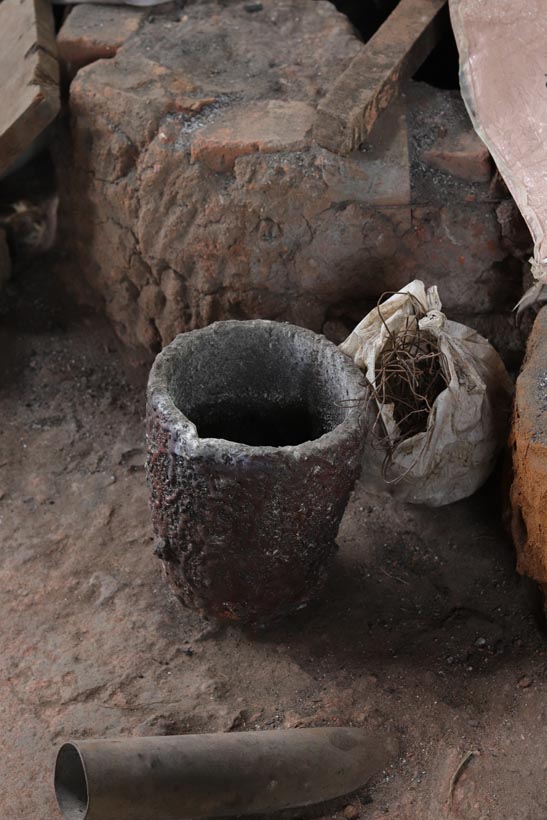
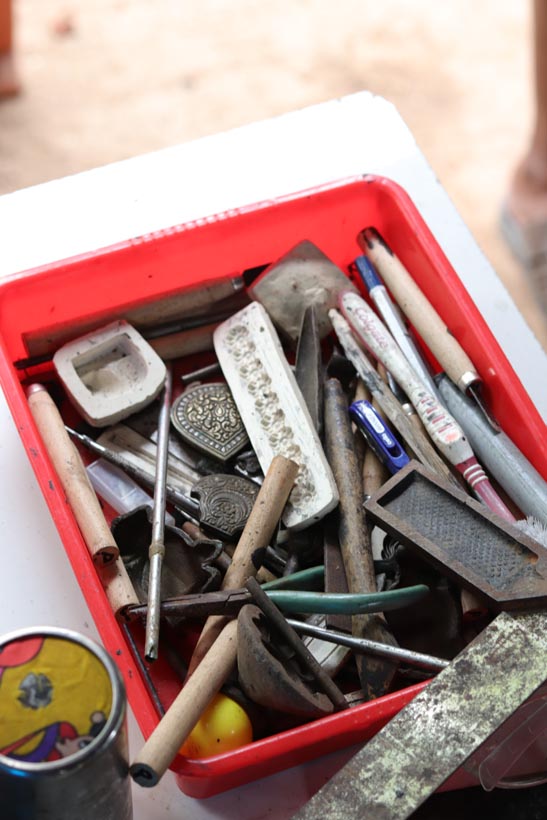
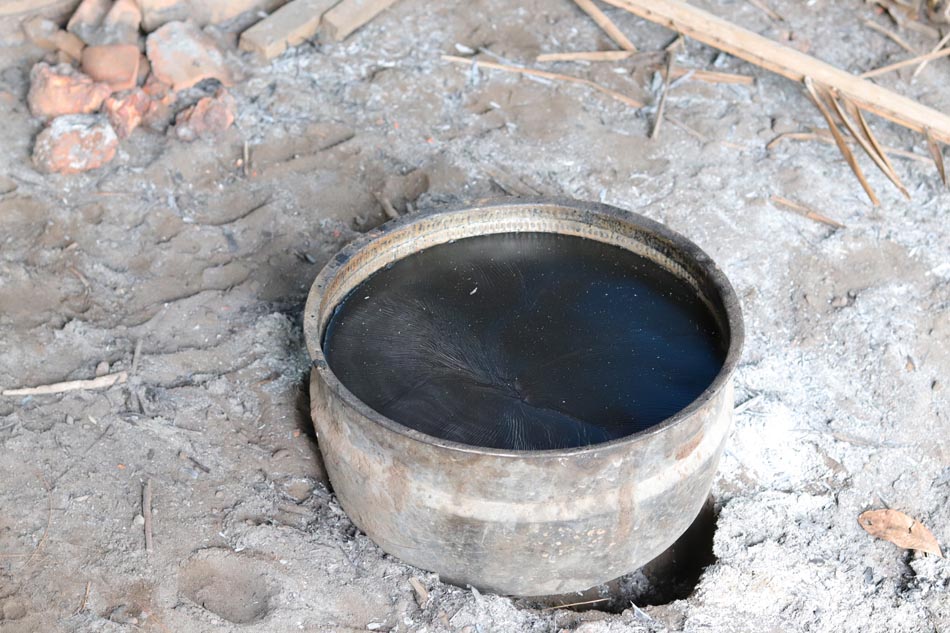
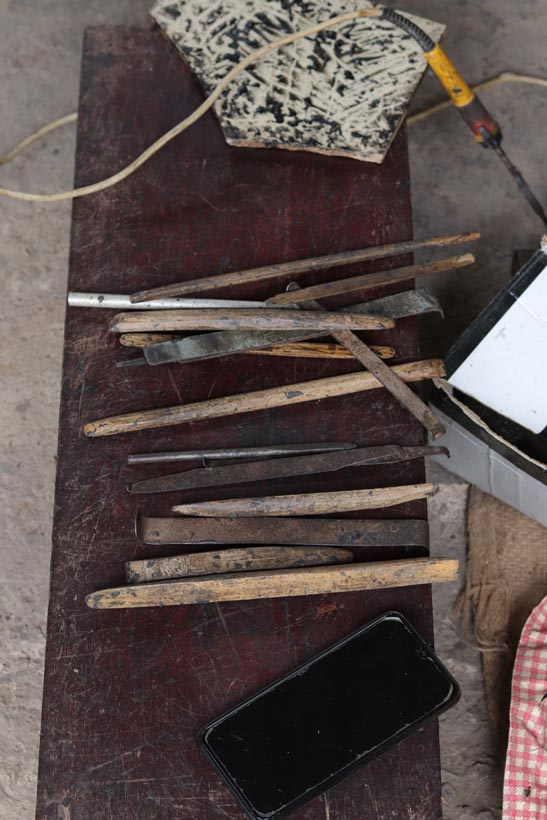
Although the process of bell metal casting itself is not governed by elaborate craft-specific rituals, it remains deeply connected to Kerala’s religious traditions through the objects it produces. Before commencing important commissions, many Moosari artisans offer prayers to Lord Vishwakarma, the divine architect and patron deity of craftsmen, seeking skill, precision, and the successful completion of the casting.
The finished objects occupy an essential place in temple worship and domestic ritual. Nilavilakku lamps are lit at the beginning of religious ceremonies, festivals, and cultural performances as symbols of purity, prosperity, and divine presence. Panchaloha idols undergo prana pratishta (ritual consecration) before installation in temples, transforming them from crafted objects into sacred deities. Temple bells, arati lamps, changalavatta lamps, and other ritual objects are similarly consecrated before entering worship, reinforcing the intimate relationship between the craft, faith, and Kerala’s enduring ritual traditions.
The bell metal craft of Kunhimangalam is produced using the traditional lost-wax casting (cire perdue) technique, a method that has been practised for centuries and remains largely unchanged. Every artefact is individually created, making each casting unique, as the mould is destroyed after use. The process combines traditional knowledge, scientific precision, and artistic skill through the following stages.
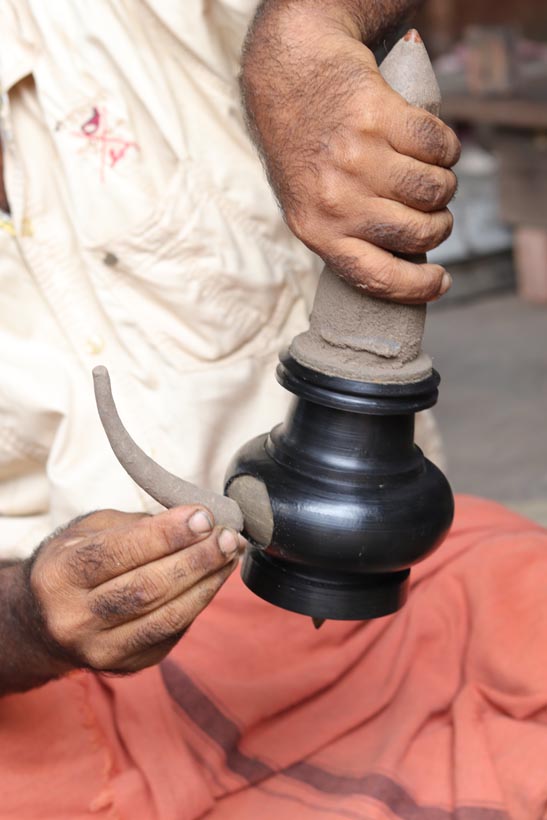
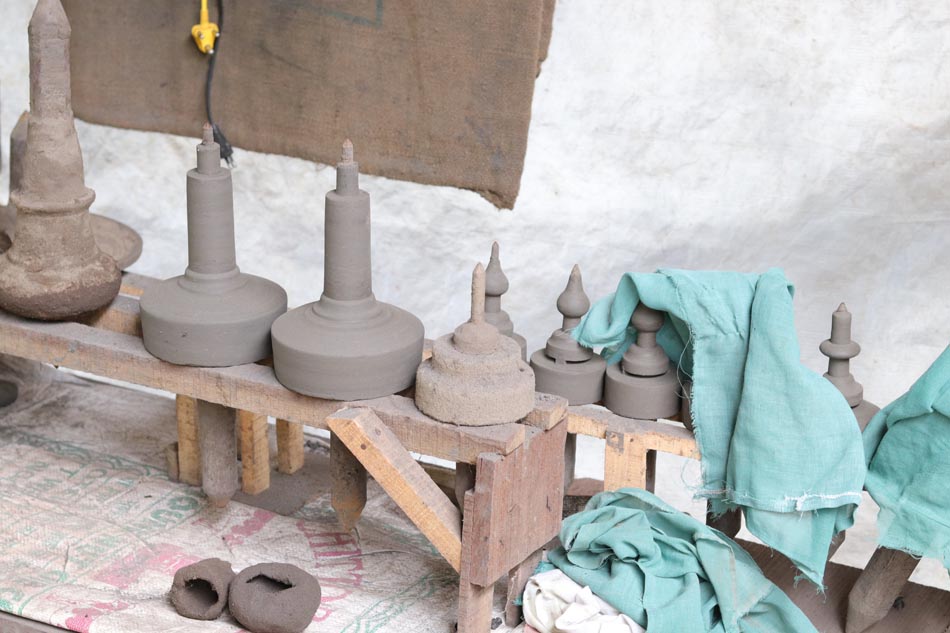
Clay Base: The process begins with the preparation of a clay core, which serves as the base for the wax model. This core is particularly used for products such as lotas, diya stands, and other hollow or symmetrical forms.
The clay base provides a stable surface on which the wax can be applied. It also helps maintain the consistency of the shape while allowing the artisans to apply only a thin layer of wax. This not only ensures uniformity but also reduces the amount of metal required, resulting in lighter finished objects.
Wax Modelling: The journey of every bell metal object begins with a wax model, which serves as the exact prototype of the final artefact. The wax used, locally known as sculpture wax, is specially prepared for casting sculptures and ritual objects.
Although the composition varies slightly among artisan communities, craftsmen in Kunhimangalam generally prepare the wax using 85% resin, 15% yellow beeswax, and approximately 250 ml of coconut oil. Coconut oil increases the elasticity of the wax, allowing it to be moulded without cracking. The mixture is heated for four to five hours, after which it is filtered to remove impurities. Once it cools to a leather-hard consistency, neither completely liquid nor fully solid, it becomes suitable for modelling.
Timing is critical during this stage. The wax must remain warm and pliable while being shaped, as it quickly loses its elasticity on cooling. Every decorative motif, contour, and ornamental detail is meticulously sculpted by hand, since the final metal casting reproduces every feature of the wax model with remarkable accuracy.
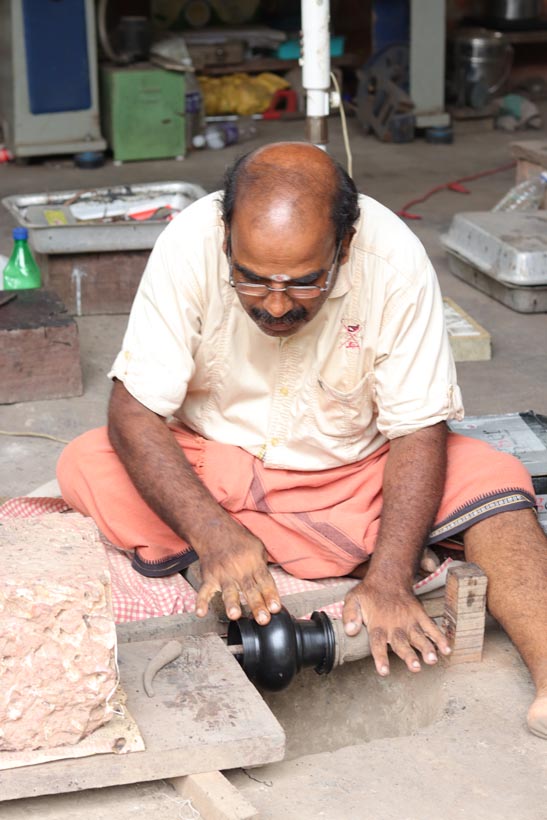
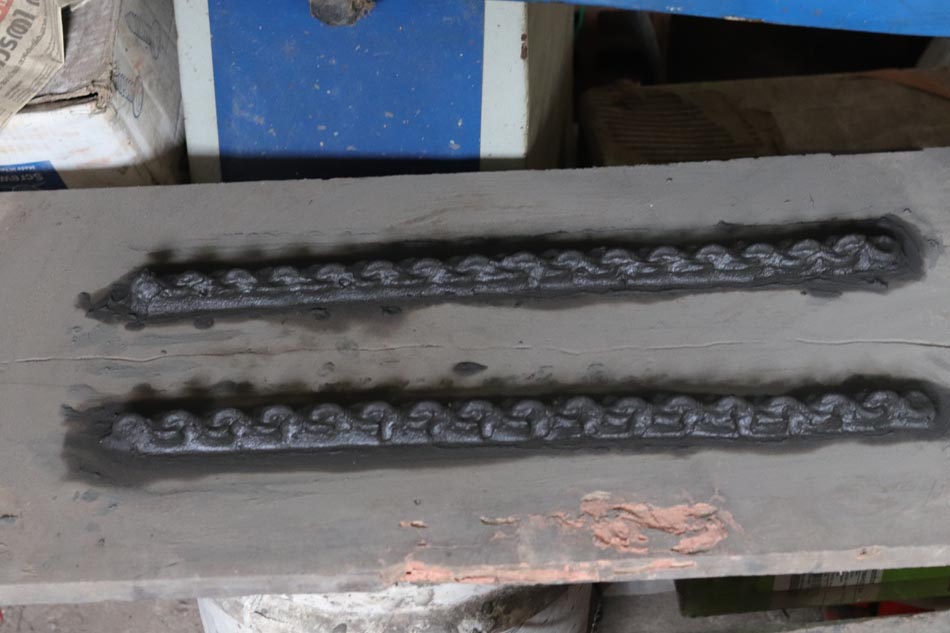
The artisans employ three principal techniques to create wax forms. The first is completely hand-modelled construction, used for unique sculptural forms. The second involves simple moulds, which help produce repeated decorative details such as borders and ornamental patterns. The third technique makes use of a simple hand-operated lathe.
One of the most interesting aspects of the process is the artisans’ remarkable skill in shaping wax on this simple hand-operated lathe. This technique is especially useful for creating circular forms such as lotas, diya stands, and similar vessels. Wax modelling is one of the most critical stages of the entire process, as the quality of its finishing directly determines the precision and appearance of the final metal casting.
Clay Covering: Once the wax model is completed, it is carefully encased in successive layers of clay to create the casting mould. This stage determines the strength and quality of the final casting.
The first coating consists of fine clay, which captures even the smallest details of the wax surface. It is followed by progressively coarser layers that strengthen the mould. Each layer, locally known as Paru Mannu, is allowed to dry completely before the next is applied.
When the mould reaches a leather-hard stage, small pieces of broken pottery are embedded into the outer surface. These act as reinforcements, preventing the mould from cracking or collapsing during firing and casting.
A final outer layer of clay, known as Maadodu Mannu, is then applied. A small opening is intentionally left to allow the molten wax to drain out during firing. Depending on weather conditions, the complete mould-making process generally takes around seven days.
De-waxing: Once the mould has dried completely, it is heated to remove the wax enclosed inside. As the temperature rises, the wax melts and drains out through specially created channels, leaving behind a hollow cavity that perfectly mirrors the original model.
This stage, known as de-waxing, gives the process its name, lost-wax casting, because the original wax model is sacrificed to create the mould. The heating process takes approximately two hours and traditionally uses coconut shells and coconut husks as fuel, reflecting the artisans’ reliance on locally available natural materials.
Metal Preparation: While the mould is being heated, the metal is prepared separately. Recycled brass scrap is placed in a crucible and heated for approximately two and a half hours until it becomes completely molten.
The artisans continuously monitor the temperature and consistency of the metal, ensuring that it remains fluid enough to fill even the finest details within the mould. The use of recycled brass reflects both the practicality and sustainability of this traditional craft.
Casting: Casting is the most critical stage of the process. The heated moulds and molten brass are prepared simultaneously in separate furnaces. Once both reach the required temperature, the moulds are placed upright in a pit with their pouring channels exposed.
The molten brass is then poured into the mould through a carefully designed system of sprues, runners, and gates.
A sprue is the main channel through which the molten metal enters the mould.
Runners are smaller channels that distribute the molten metal evenly throughout the mould cavity.
The gate is the final opening through which the metal enters the actual form of the object.
This channel system ensures that the molten brass flows smoothly into every part of the mould, accurately reproducing the intricate details of the wax model. After pouring, the mould is left undisturbed to cool naturally, usually overnight, allowing the metal to solidify gradually.
Breaking the Mould: Once the casting has cooled completely, the clay mould is carefully broken away to reveal the finished metal object.
Because the mould is destroyed during this process, it cannot be reused, making every casting a unique artefact. The freshly cast object initially appears rough and blackish due to oxidation and the residue of the mould. Its characteristic golden-brassy appearance emerges only after extensive finishing and polishing.
Chiselling and Polishing: The final stage transforms the raw casting into a refined work of craftsmanship. First, the artisans remove the excess metal formed by the sprues and runners through chiselling. This stage also involves refining contours, sharpening decorative features, and correcting minor imperfections.
The object is then polished repeatedly until it develops the smooth, lustrous finish characteristic of Kunhimangalam bell metal. While machine polishing is commonly used for larger surfaces, intricate carvings and delicate details continue to be finished through hand filing and manual polishing, ensuring that the craftsmanship and artistic quality of every piece are preserved.
The process follows total 18 main steps mentioned below:
Step 1: The first step of this process starts with preparation of the mould for the casting process.
Step 2: A combination of cow dung, clay and recycled clay from the previously used and broken moulds are mixed together.
Step 3: The mixture made in step 2, is made to a dough consistency and then applied around the achukol of desired shape to make utensils, idols and figurines.
Step 4: After the mould is made into the desired shape and dried, the honey bee wax is then applied around the mould for desired thickness. In the case of idols, a mixture of clay, finely cut jute sack and recycled clay is applied on the wax.
Step 5: For easy and even application of the wax, the achukol is mounted in a pit so that it can be rotated.
Step 6: The desired shape after even application of wax, is kept in the sun for drying.
Step 7: In step 4, as mentioned, the mixture of clay, finely cut jute sack and recycled clay is applied on the wax applied, now here in this step the same mixture is applied on the mould after the wax is completely dried up.
Step 8: In this step, in order to pour the molten metal and drain the molten wax and gases formed during the casting, orifices are made on the mould.
Step 9: In order to fix the small tile pieces of broken moulds to provide required strength to withstand the high temperature while melting the wax in the furnace, these tiles are fixed on the outer surface of the mould.
Step 10: The mould is then completed and now it is kept for drying for 4 days under the sun.
Step 11: After the mould is completely dried, it is kept on fire for melting wax inside and the remaining molten wax is then collected using a vessel, which is generally re-used. It is considered that, in this process at least 50% of the wax is lost. Earlier, the wax used was not collected and it was used to evaporate with fumes and gases, hence the process used was termed as ‘lost-wax method’.
Step 12: In order to keep the mould on fire, the furnace is constructed all around the mould without allowing even a small gap around it and it is placed slightly elevated from the ground. It is said that, just by looking at the colour of the flame in the fire vent, craftsmen easily identify whether the raw material is molten or not. The normal flame is reddish yellow but the flame coming out from the molten metal is prominently seen as greenish blue in colour.
Step 13: Simultaneously, during this process the raw materials or alloys are weighted according to the desired alloy for casting and filled in crucibles. For making the bell, the ratio of copper to tin usually follows is 4:1. For casting the product, the ratio of weight of wax and alloy required to cast is usually followed in the ratio of 1:10, meaning if its wax model weighs 1 kg, then casting will weigh around 10 kg.
Step 14: After the molten wax is completely drained, the mould is then moved to a new pit which is made to accommodate the mould for casting.
Step 15: Here, the drain holes are plugged and the mould is placed in a pit covered with sand all around firmly. It should be noted here that, only the holes for pouring the molten metal and vent holes are spread and the rest of them are covered completely with the sand. The crucible is then removed from the furnace and the molten metal is then poured into the mould through the holes provided.
Step 16: During the time of pouring molten metal, a wet jute sack is used as a shield from flames and spilling of molten metal onto the feet of the craftsmen.
Step 17: This casting is then allowed to cool and set for at least 12 hours and the mould is then removed from the pit and the casting is taken out of the mould after completely dried.
Step 18: This casting obtained after the drying process, is usually unfinished and thus further finishing process is carried out. The clay sticking to it is scraped and the extra projections are cut off with the help of a hand grinding machine. Any rough edges are also removed and the polishing is done with liquid metal polish.
These bell metal products may undergo oxidation to form green patterns. They are traditionally maintained by washing with charcoal ash or lemon using coconut fibre due to their abrasive nature, doing it helps regain the lustre of the metal.
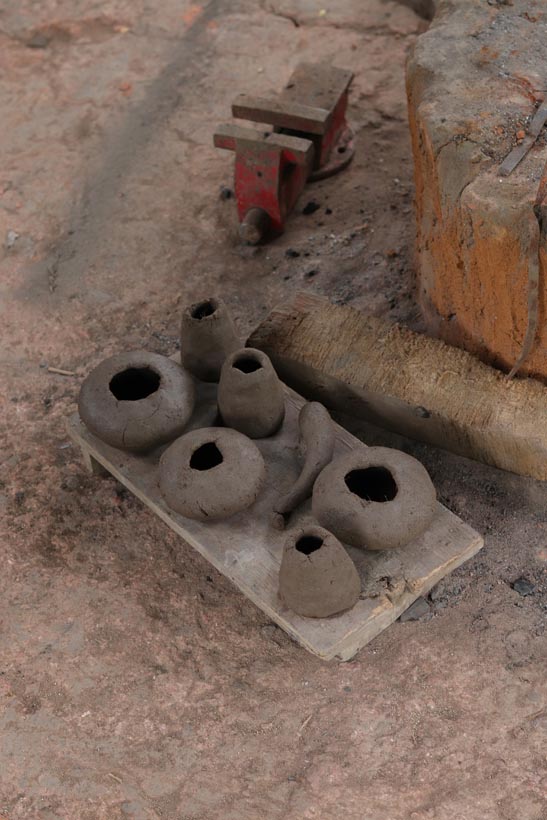
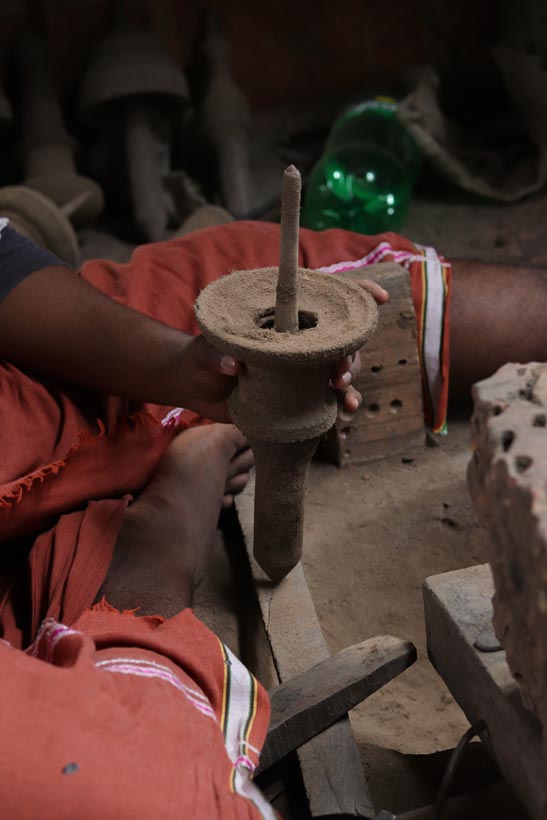
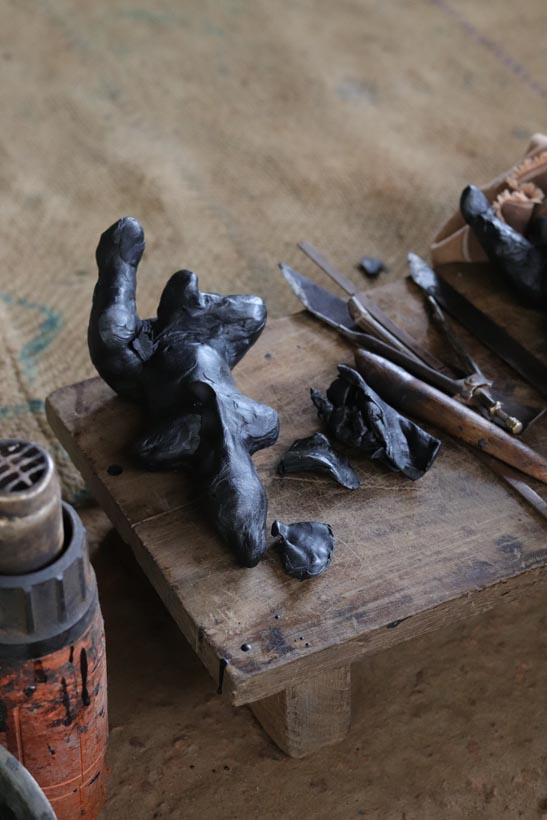
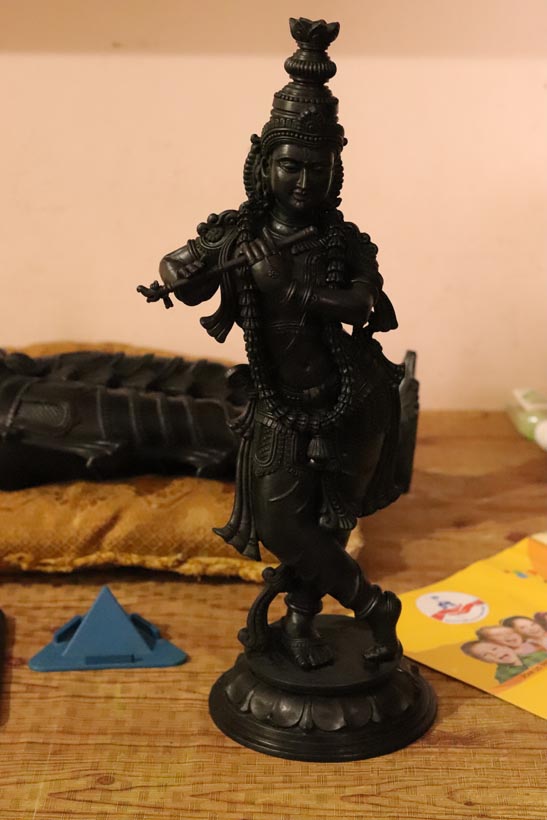
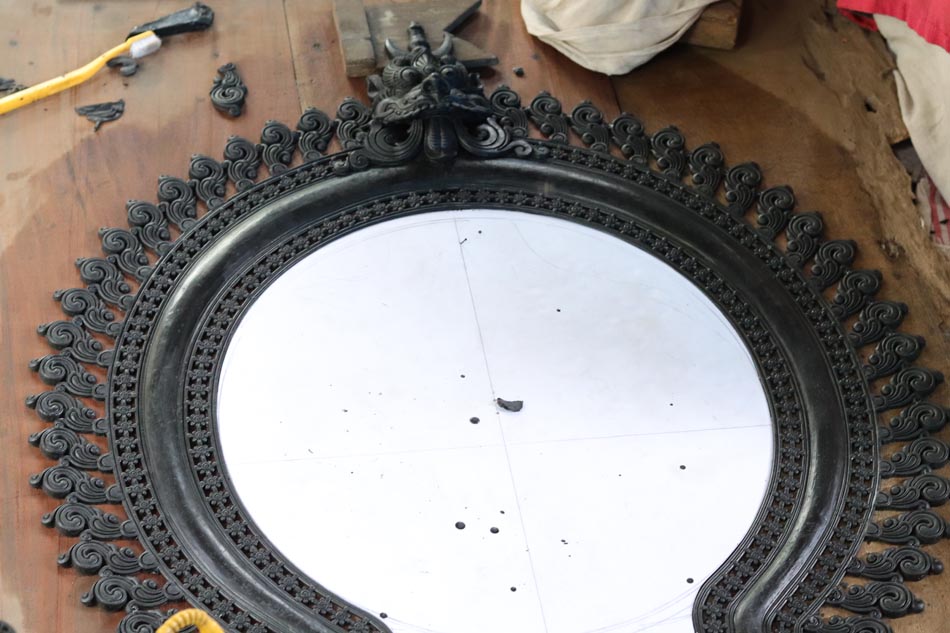
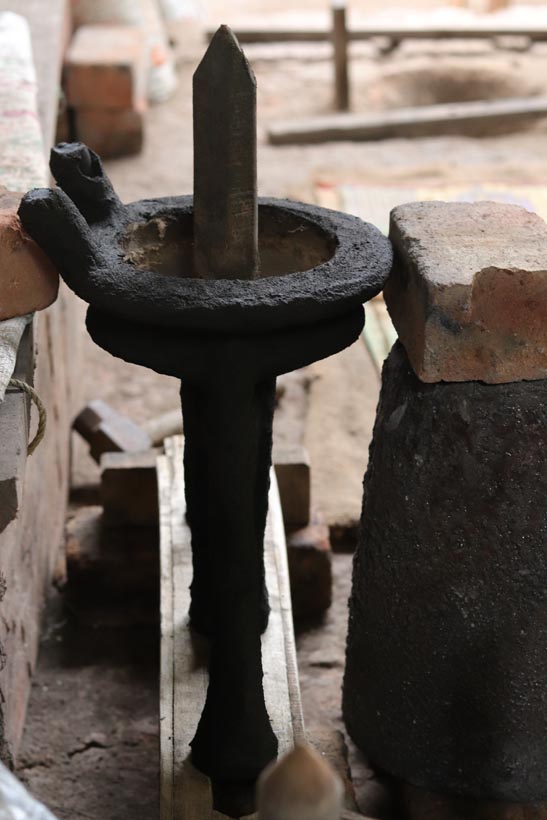
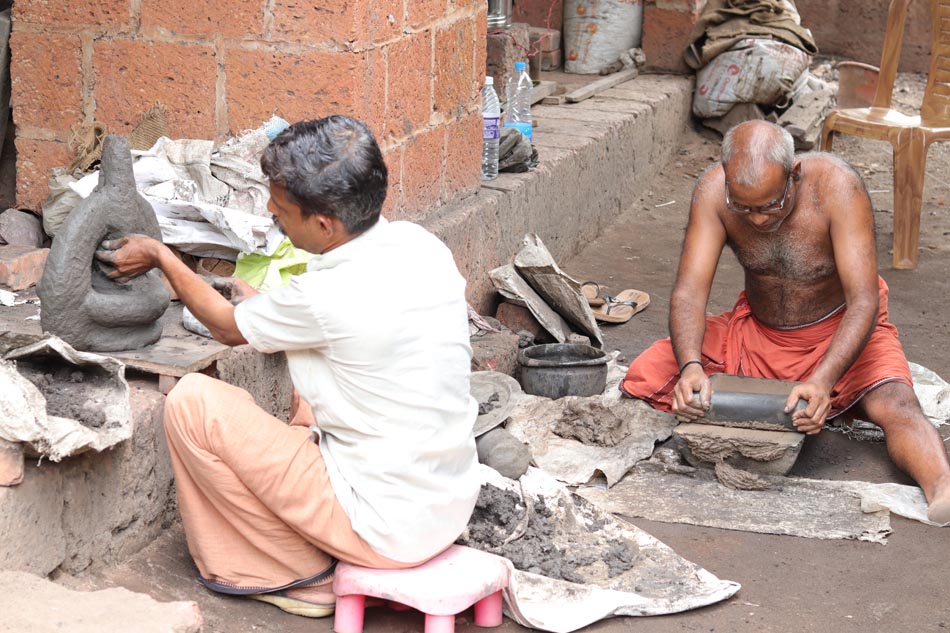
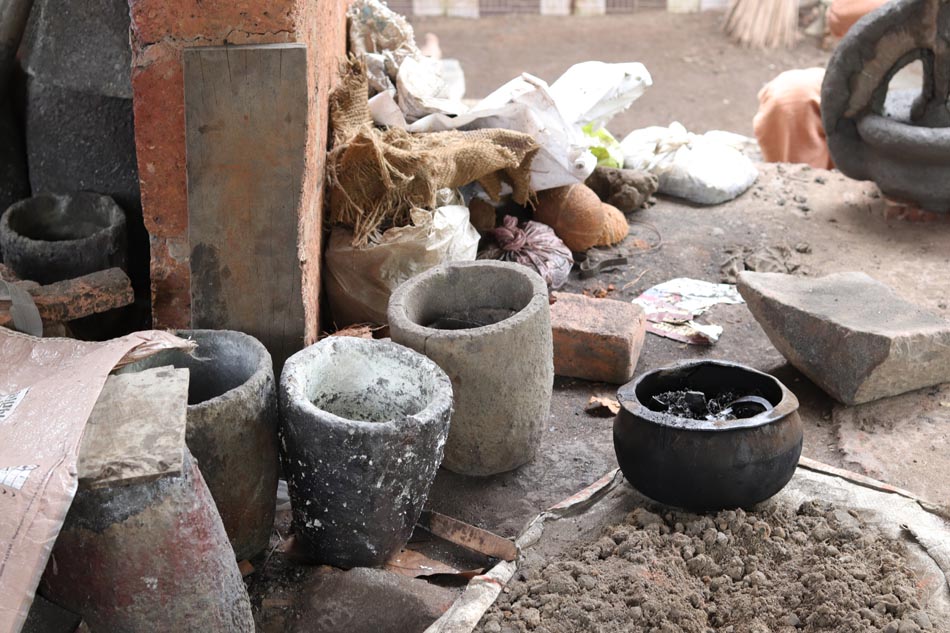
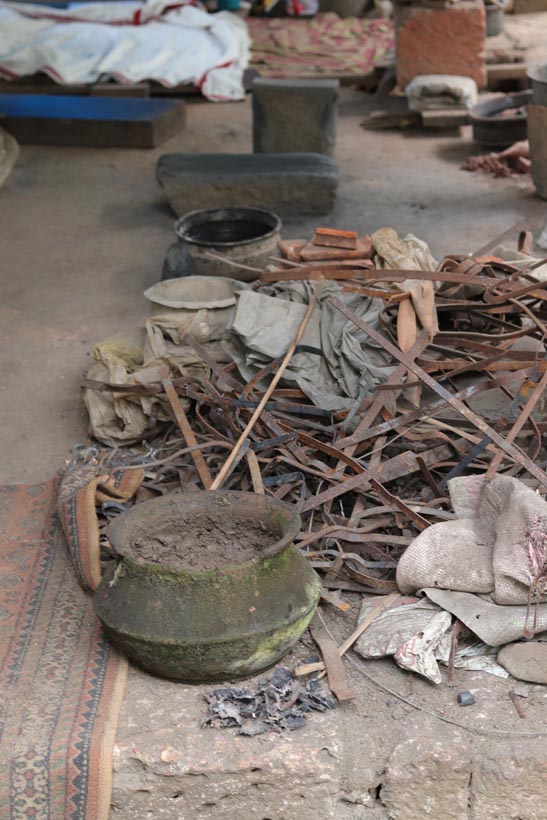
There is no such wastage or unutilized by-products caused in this craft. The old moulds or the scrap ones are recycled again which helps the forges and the customers and also scrap owners in smooth transactions of material and money.
Kunhimangalam possesses a rich and layered history that spans from the Megalithic period to the present day. Archaeological remains—including umbrella stones (Thoppikkallu), rock-cut caves, megalithic burial sites, and other early settlement evidence—indicate that the region was inhabited between 300 BCE and the 1st century CE. These findings establish Kunhimangalam as one of the oldest known settlement landscapes in northern Kerala, reflecting a long continuum of human habitation and cultural development.
The village derives its name from the Malayalam words Kunhi (small) and Mangalam (prosperity or auspicious settlement), together conveying the meaning of a "small prosperous village." Over the centuries, it evolved from a modest settlement into an important cultural centre shaped by trade, religion, and local traditions.
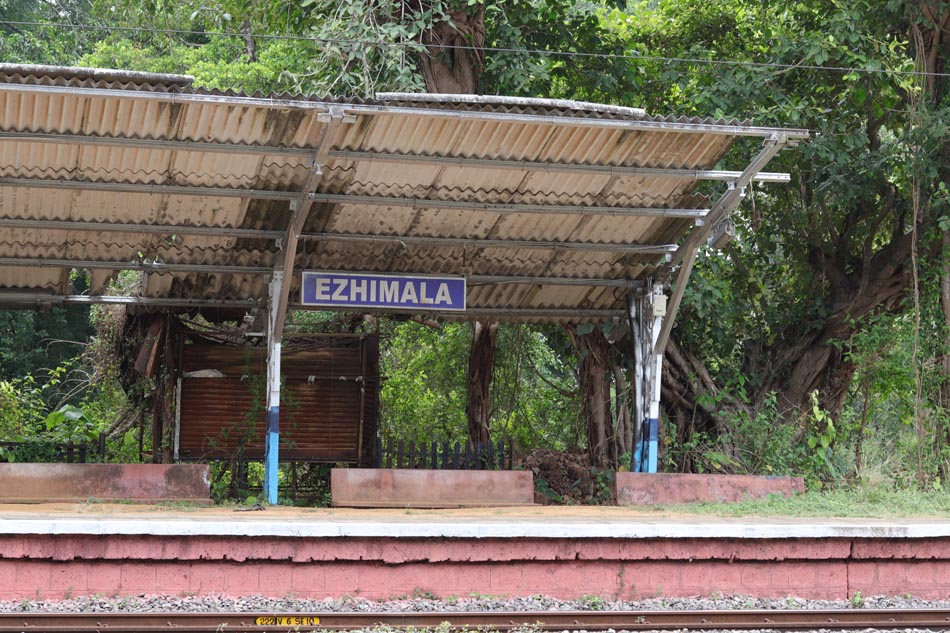
Historically, Kunhimangalam formed part of the ancient Ezhimala Kingdom, a powerful maritime polity that played a significant role in the political and commercial networks of the Malabar Coast. Following the decline of Ezhimala, the region came under the rule of the Kolathiri Rajas of Kannur, whose administration influenced its social, religious, and economic life. The village is also recognised in the Keralolpathi as one of the thirty-two original Tulu Brahmin settlements, underscoring its enduring importance in Kerala's cultural and religious history.
In the twentieth century, Kunhimangalam emerged as a centre of political awareness and social reform. The village actively participated in the Khilafat Movement, temple entry campaigns, and agrarian struggles, reflecting the broader movements for independence, social equality, and agrarian justice in Kerala. Local leaders such as Vishnu Bharatheeyan and K.A. Keraleeyan played a key role in mobilising the community, while the influence of national figures including A. K. Gopalan, E. M. S. Namboodiripad, and Jayaprakash Narayan strengthened the region's spirit of political activism and social transformation.
Today, Kunhimangalam's identity is shaped by this remarkable historical continuum. Its archaeological heritage, religious traditions, social reform movements, and celebrated bell metal craft together reflect a village where history is not merely preserved in monuments, but continues to thrive through living traditions, community memory, and cultural practice.
Kunhimangalam is a heritage village in Kerala's Kannur district, celebrated for its rich natural environment and enduring cultural traditions. Situated about 35 km north of Kannur and close to Payyanur, the village lies along the banks of the Perumba River, near its confluence with the Kavvayi Estuary. This unique location has shaped a distinctive landscape where rivers, wetlands, and coastal ecosystems merge, creating an environment of exceptional ecological and cultural significance.
The village is widely known as "Kandal Gramam" (Mangrove Village) owing to its extensive mangrove forests, among the largest and best-preserved in Kerala. These mangrove ecosystems support a remarkable diversity of flora and fauna, protect the riverbanks from erosion, and play a vital role in maintaining the region's ecological balance.
Beyond its wetlands, Kunhimangalam is characterised by lush paddy fields, coconut groves, laterite outcrops, and traditional artisan settlements that reflect the close relationship between the landscape and local livelihoods. For generations, the availability of natural resources and the presence of skilled brass and bell metal artisans have enabled agriculture and craft traditions to flourish side by side.
Today, Kunhimangalam stands as a landscape where nature, heritage, and craftsmanship exist in harmony. Its fertile environment, thriving mangrove ecosystem, and centuries-old artisan communities together create a living cultural landscape that continues to define the village's unique identity.
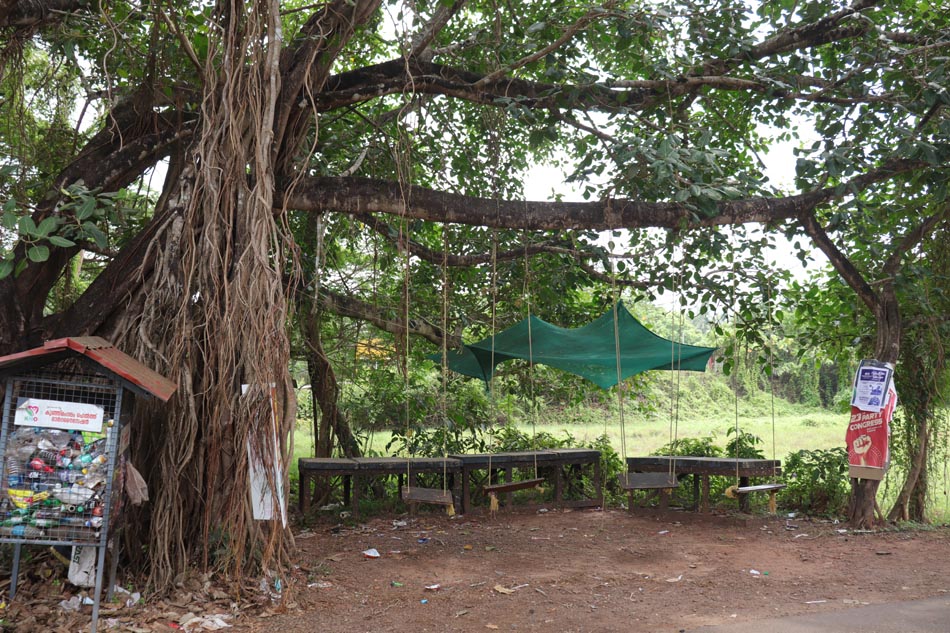
The natural environment of Kunhimangalam plays an important role in sustaining both its cultural and craft traditions. The village contains numerous sacred groves (Kavu), which serve as ecological and spiritual spaces. Local vegetation provides materials such as coconut leaves, wood, and natural pigments that are traditionally used in Theyyam costumes and ritual objects. The close relationship between the community and its natural surroundings reflects a sustainable way of life in which locally available resources continue to support traditional occupations and religious practices.
Kunhimangalam's traditional economy is centred on family-run bronze and bell metal workshops where artisanal knowledge is passed down through generations. The village also houses historic Kalari training centres and temple complexes that continue to function as important cultural institutions. Despite its rich heritage, the traditional craft industry faces several contemporary challenges, including declining interest among younger generations, economic constraints, and limited institutional support. Efforts to strengthen education, policy interventions, and heritage conservation are increasingly viewed as essential for sustaining the village's traditional industries.
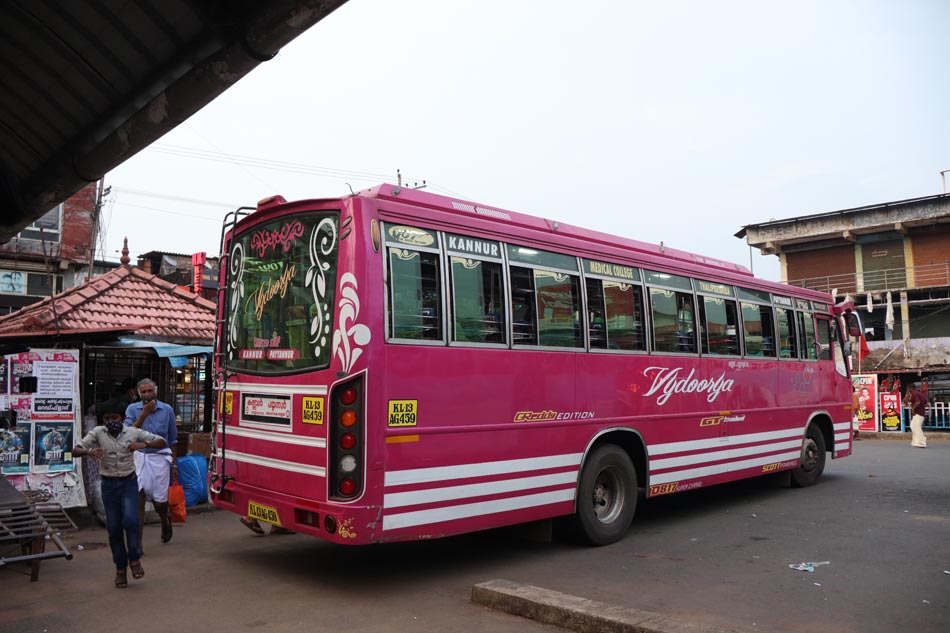
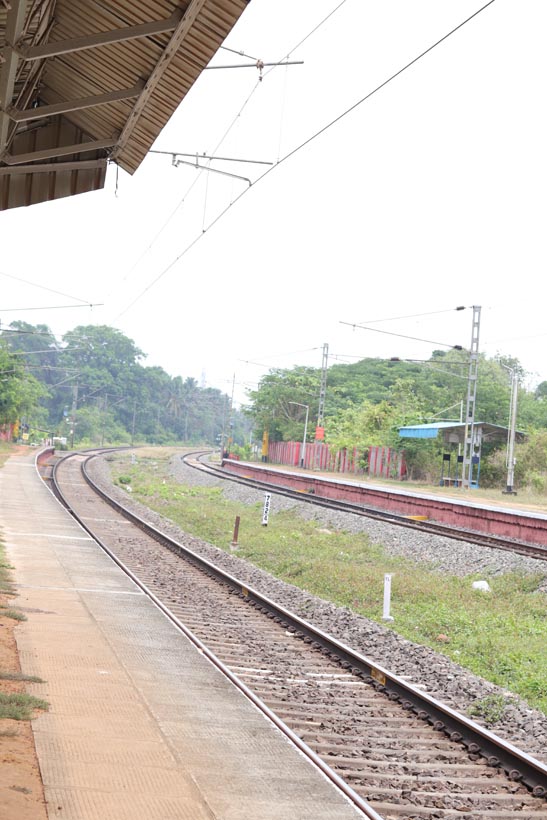
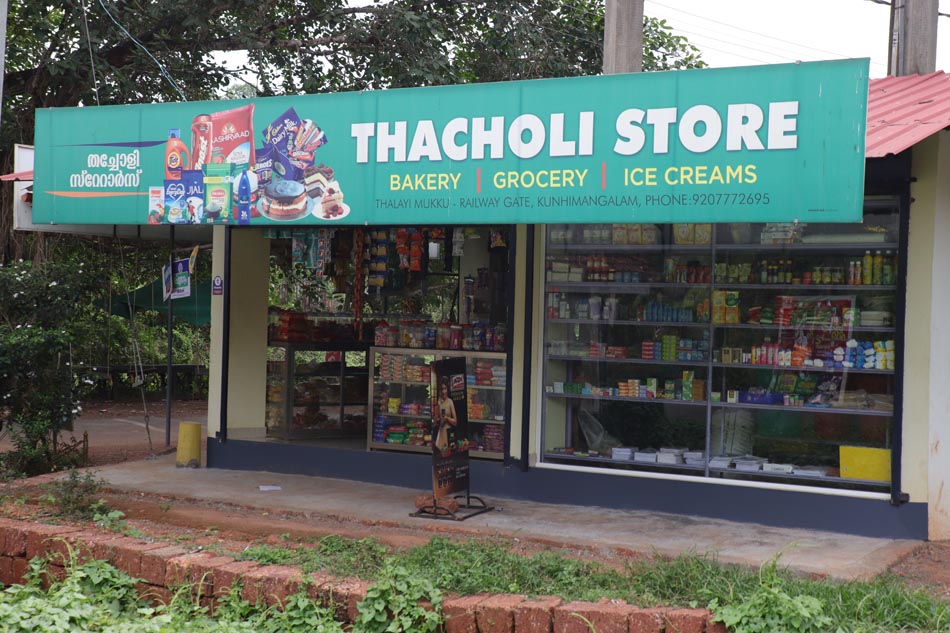
The architectural landscape of Kunhimangalam reflects its religious and cultural heritage through its temples, sacred groves, and traditional Kalari structures. Important temples such as the Thrippanikkara Shiva Temple and the Sri Veera Chamundeswari Temple serve as major centres of worship and community life. The village's Kalari institutions, including the Muthuvadath and Araambath Kalaris, incorporate temple spaces dedicated to guardian deities, illustrating the close relationship between martial traditions and spiritual practices. Sacred groves further enrich the architectural and ritual landscape by preserving traditional forms of worship within natural settings.
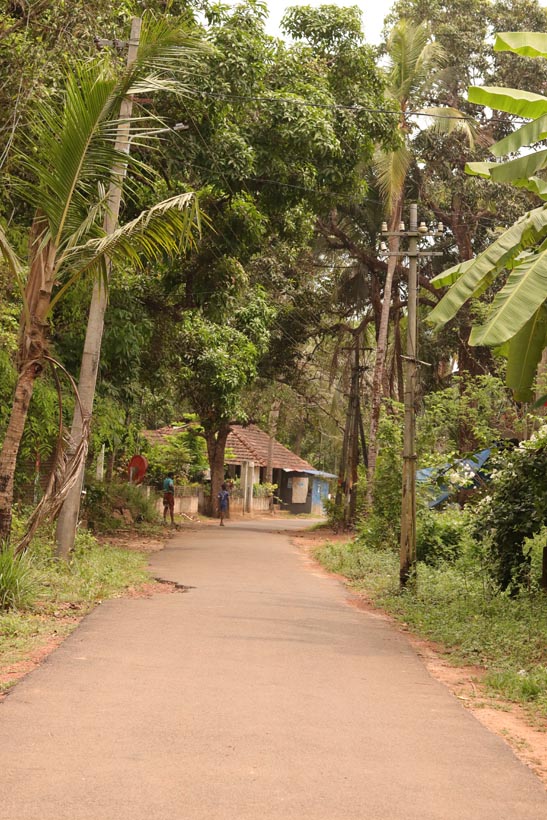
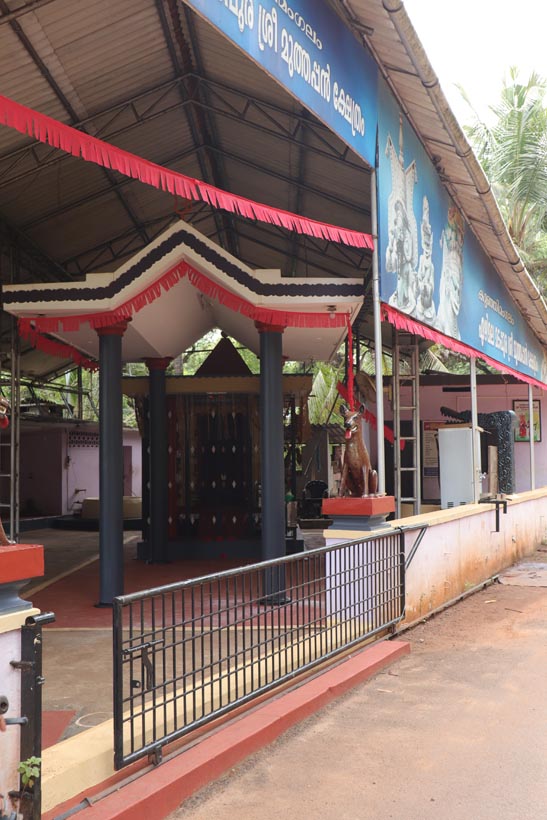
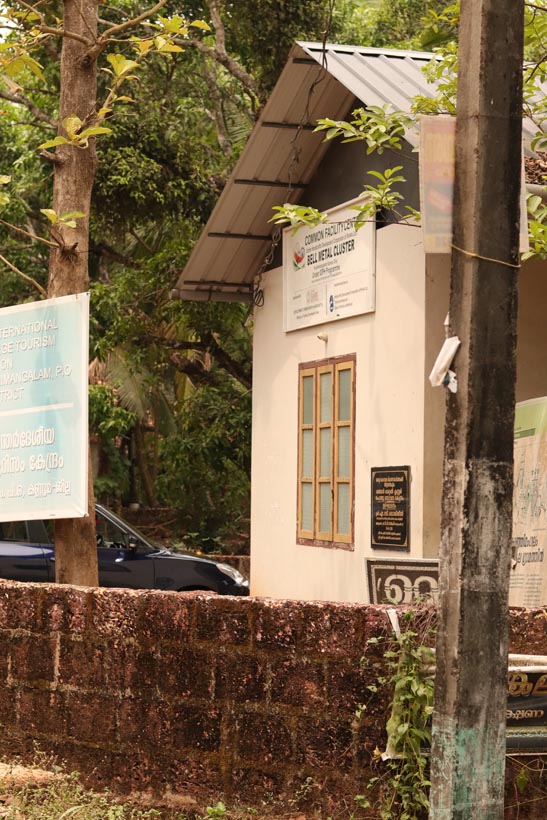
Kunhimangalam is widely recognised as the "Land of Theyyam," where ritual performance forms the heart of the village's cultural identity. More than a folk art, Theyyam is a sacred tradition that embodies the worship of local deities, ancestral spirits, and heroes, serving as a living link between faith, history, and community. Characterised by elaborate costumes, intricate face painting, rhythmic drumming, and vigorous dance, Theyyam also reflects the community's close relationship with nature through its use of locally sourced and eco-friendly materials.
Alongside Theyyam, Kunhimangalam preserves a rich repertoire of traditional performing arts, including Poorakkali, Kolkkali, and Alamikkali. Poorakkali and Kolkkali celebrate teamwork, rhythm, and festive spirit through coordinated dance and movement, while Alamikkali represents the cultural traditions of the local Muslim community. Together, these art forms illustrate the village's long-standing spirit of communal harmony and shared cultural heritage.
The village is also known for its Kalari tradition, where the practice of Kalaripayattu combines martial training with discipline, spirituality, and physical well-being. In Kunhimangalam, these traditions are woven into everyday life, where ritual, performance, education, and community celebrations continue to reinforce a strong sense of cultural identity.
Together, these living traditions make Kunhimangalam an important cultural landscape, where devotion, craftsmanship, martial heritage, and community participation continue to be preserved and celebrated across generations.
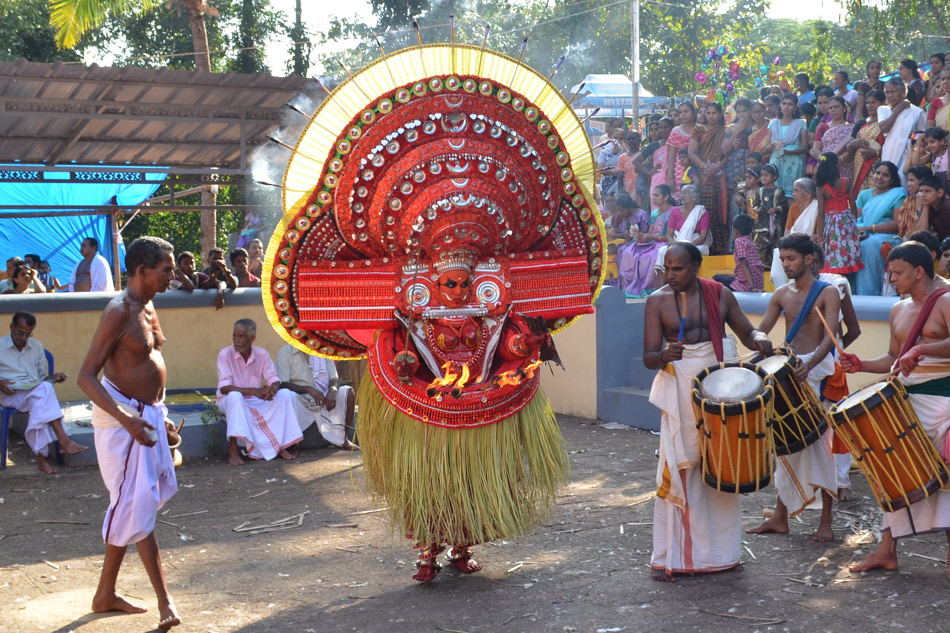
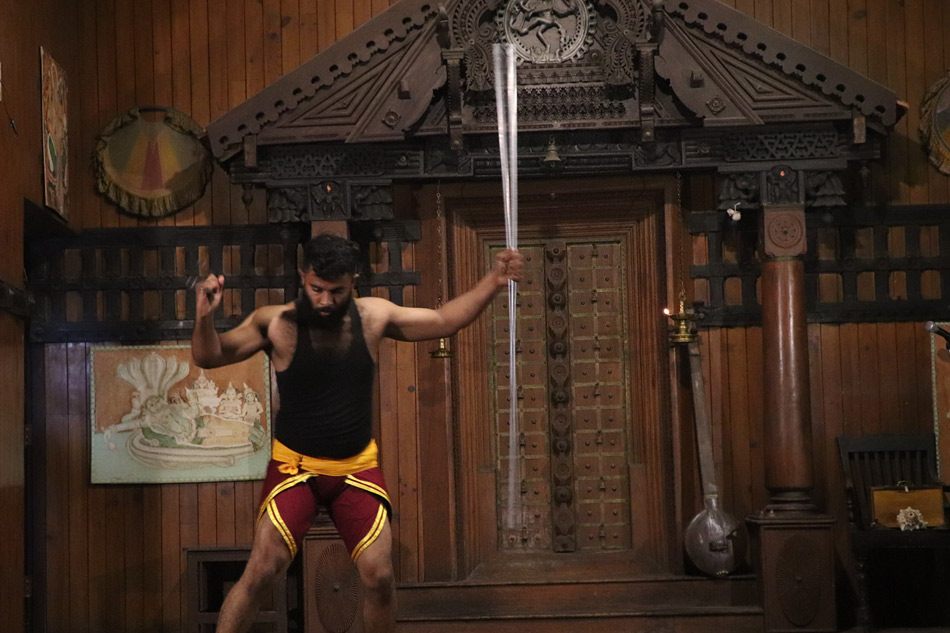
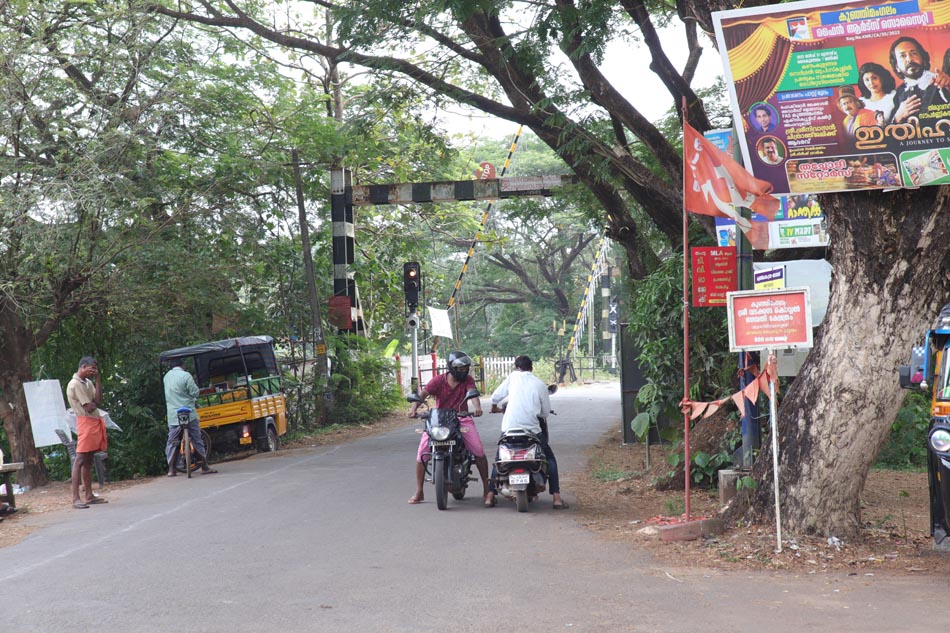
The Vishwakarma community forms the backbone of Kunhimangalam's bronze and bell-metal industry, preserving specialised metallurgical knowledge through hereditary transmission. Alongside the artisan families, temple priests, Theyyam performers, Kalari practitioners, and folk artists collectively contribute to the preservation of the village's cultural identity. The community reflects a strong tradition of cooperation, where occupational skills, ritual knowledge, and social customs continue to be shared across generations.
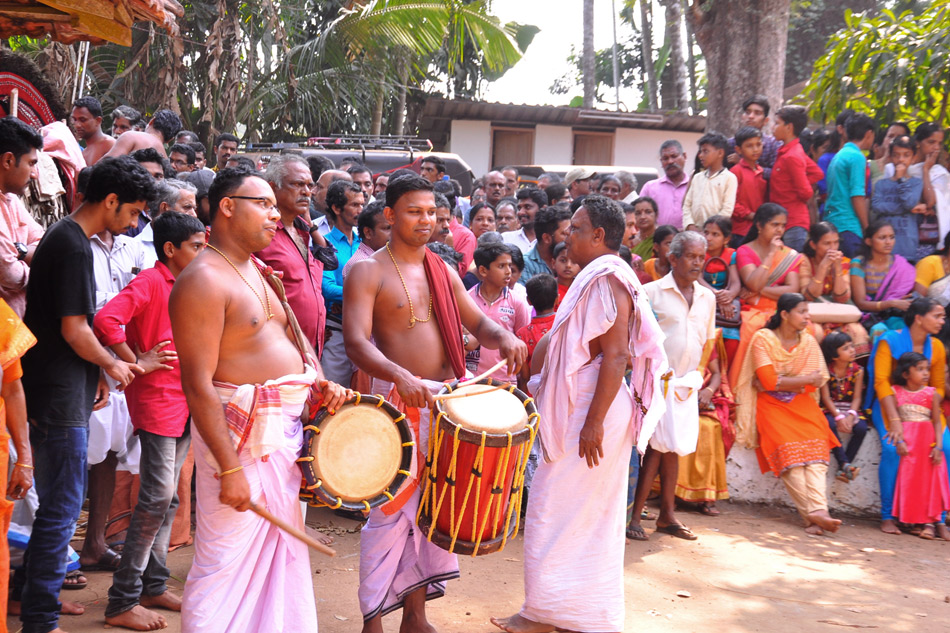
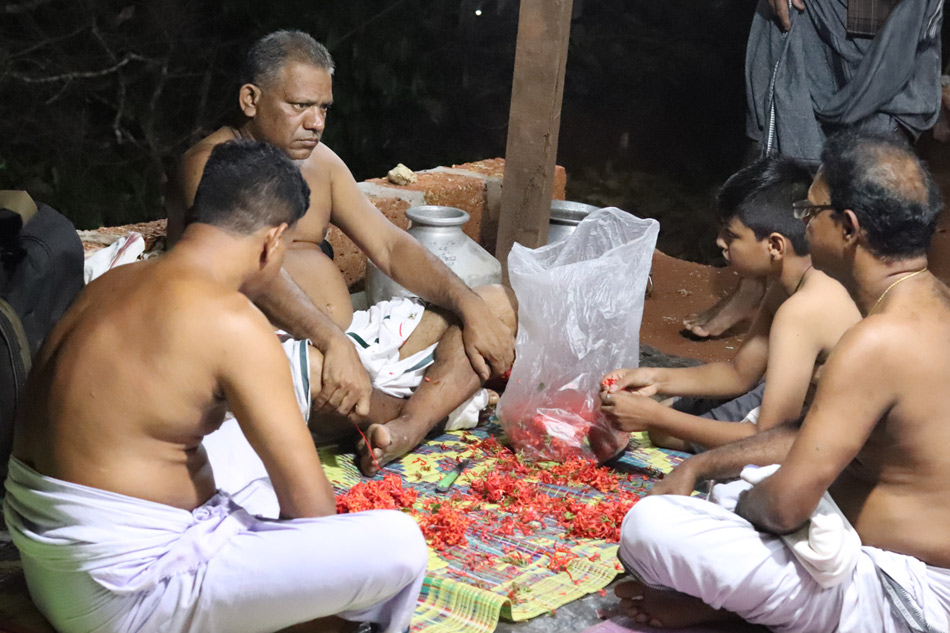
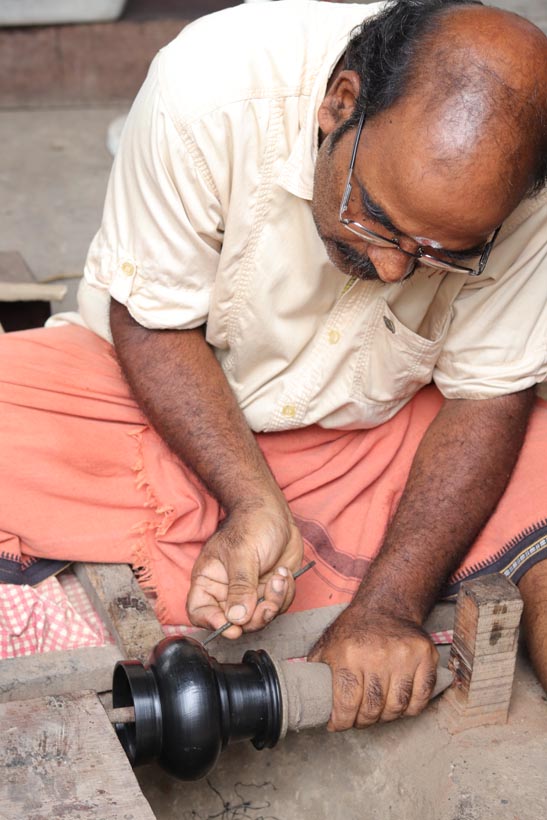
Kunhimangalam is internationally renowned as Kerala's Bronze Heritage Village, celebrated for its centuries-old bronze and bell-metal casting tradition practiced by the Vishwakarma community using the ancient lost-wax technique. The village is equally known for its vibrant Theyyam performances, historic Kalari traditions, sacred groves, and temple-centred cultural life. In recent years, it has also gained recognition for its indigenous Kunhimangalam (locally called "Kunyangalam") mangoes, which attract visitors during the summer season for their distinctive flavour and aroma. Located close to the home of the GI-tagged Kuttiattoor mango, the village has emerged as a seasonal agro-tourism destination, with guided mango walks, community-led conservation initiatives, and local mango collectives promoting its rich horticultural heritage alongside its traditional crafts.
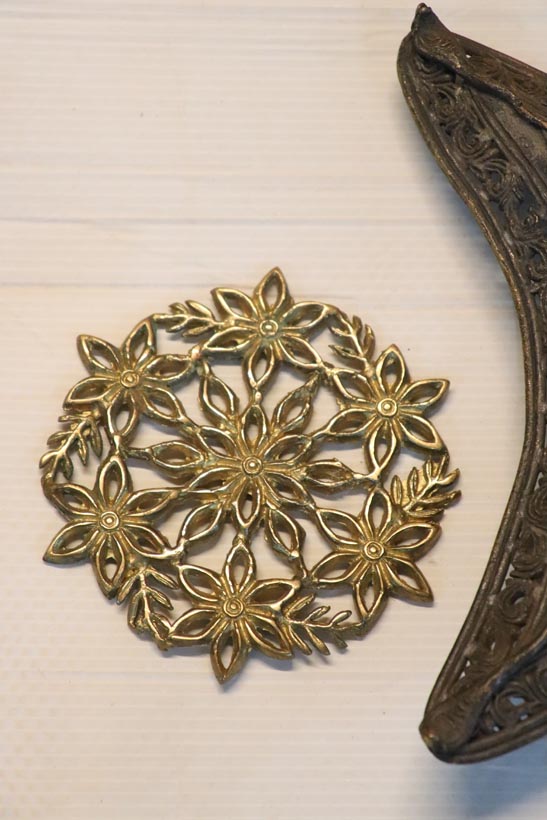
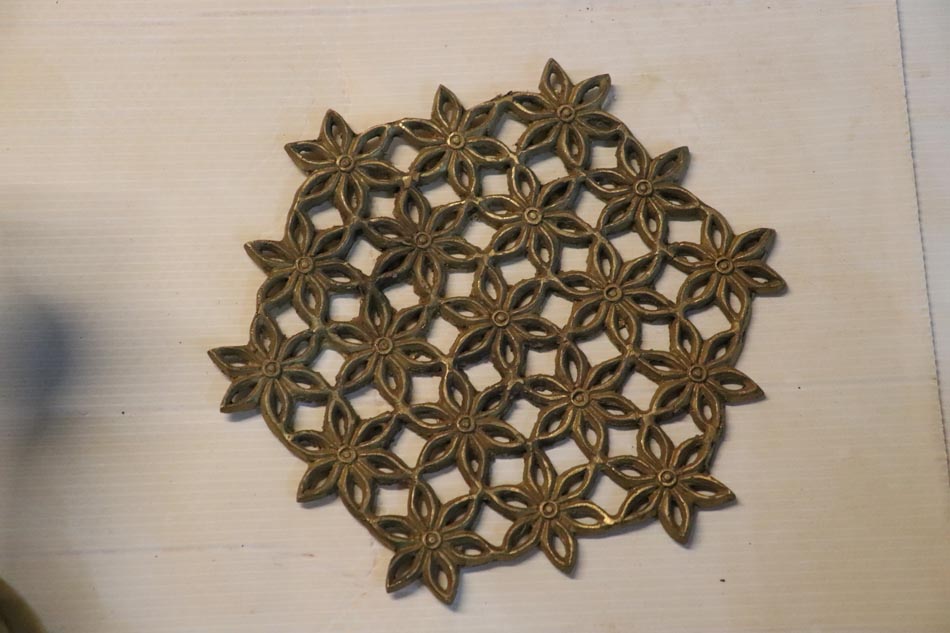
List of craftsmen.
Team Gaatha
Anonymous, “Bell Metal of Kerala”, Kerala tourism.com website.
Bell metal of Mannar, Enchanting Kerala, Newsletter, Kerala Tourism | Kerala Tourism
Kunhimangalam and Its Bronze Legacy: Metallurgical Knowledge, Practice, and Preservation by Thwahir P.H, Navas Mannan
Heritage and Culture in a Creative Economy: The Vishwakarma Craftsmanship in Kerala, India
Akshara R., Aneena A., Singh G., Krishnan V. K,, “Metal Handicrafts of Mannar”, Environmental Exposure Course of KSID’s foundation year, (2018), pp. 1-51.
my report (ksid.ac.in)
Baral B., and Hariharasudan T., “Brass Metal Casting-Mannar, Kerala”, D’scource website.
https://www.dsource.in/resource/brass-metal-casting-mannar-kerala/introduction
Sajit C.P., “Bell metal craftsmen struggling for survival”, The Hindu, (September 20, 2021).
Bell metal craftsmen struggling for survival – The Hindu
Priya L., “Kerala’s Traditional Bells to Ring on Thanks to Union, State Gov. Initiative”, The Better India, (April 13, 2018).
Kerala’s Traditional Bells to Ring on Thanks to Union, State Govt. Initiative (thebetterindia.com)
Kuriakose B., “Preserving the Bell Metal Craft of Mannar”, Benny Kuriakose and Associates website, (March 19,2018). https://www.bennykuriakose.com/post/preserving-the-bell-metal-craft-of-mannar
https://www.keralatourism.org/destination/kunhimangalam-heritage-village-kannur-unique/706/
