


Madhubani/Mithila Pa...
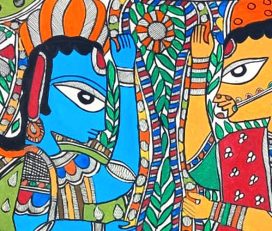
Mithila painting, is a vibrant and deeply symbolic folk art tradition originating from the Mithila region of Bihar, India, and adjoining parts of Nepal.
Madhubani, Bihar, India...
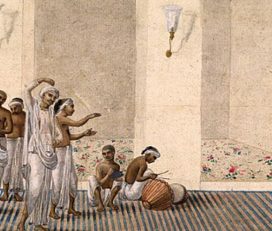
 Patna, Bihar, India...
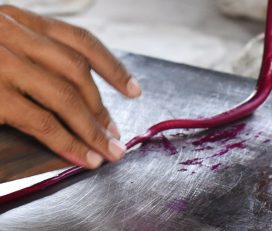 Muzaffarpur, Bihar, India...
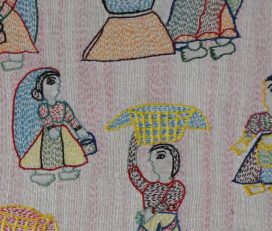 Bhusra, Bihar, India...
Mithila painting, is a vibrant and deeply symbolic folk art tradition originating from the Mithila region of Bihar, India, and adjoining parts of Nepal.
Madhubani, Bihar, India...
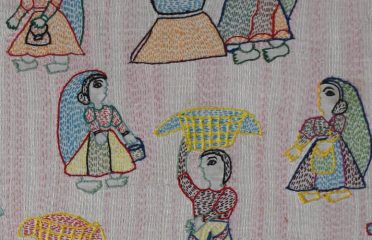
Sujani is a distinctive embroidery tradition of Bihar, particularly practised in Muzaffarpur district and surrounding villages.
Bhusra, Bihar, India...

Arani silk, also known as Arni silk, is a celebrated handloom tradition of Tamil Nadu, produced primarily in Arani, Tiruvannamalai.
Arani, Tamil Nadu, India...
Let us talk… if you feel the same love for handmade, and would like to support us by sharing your research or by contributing financially to our documentation efforts.
Reach us at [email protected]

Chaapa is much more than a decorative textile tradition. Within the Muslim communities of Bihar, especially in the districts of Gaya, Nalanda, Nawada and Aurangabad, it forms an important part of ceremonial life. The craft is closely associated with major family events and is valued not only for its visual appeal but also for its cultural meaning. A Chaapa garment often represents family heritage, social identity and participation in long-standing community traditions. For many families, wearing Chaapa is not simply a matter of personal choice but an expression of belonging and continuity.
A. Historical Usage : Historically, Chaapa was associated with wealthy households and regional elites. Older artisans recall that garments were once printed using genuine silver foil, which gave the textiles both prestige and monetary value. Over time, silver was gradually replaced by aluminium foil, making the craft more affordable while preserving its characteristic metallic shine. This shift allowed Chaapa to move beyond elite patronage and become accessible to ordinary families. Before the widespread availability of factory-made clothing, families often commissioned Chaapa garments directly from artisans. Sarees, dupattas and ceremonial textiles were prepared weeks or even months before important occasions. Their value lay not in durability but in the beauty and cultural significance they brought to a particular event.
B. Chaapa in Wedding Ceremonies: The strongest association of Chaapa remains with marriage rituals. Among many Bihari Muslim families, a wedding is considered incomplete without at least one Chaapa garment. Regardless of economic status, families often make special efforts to include Chaapa as part of the wedding preparations.
Manjha Ceremony: During the Manjha ceremony, female relatives including the bride, sisters, aunts and close family members commonly wear Chaapa-printed garments. The metallic motifs contribute to the festive atmosphere while reinforcing shared cultural traditions.
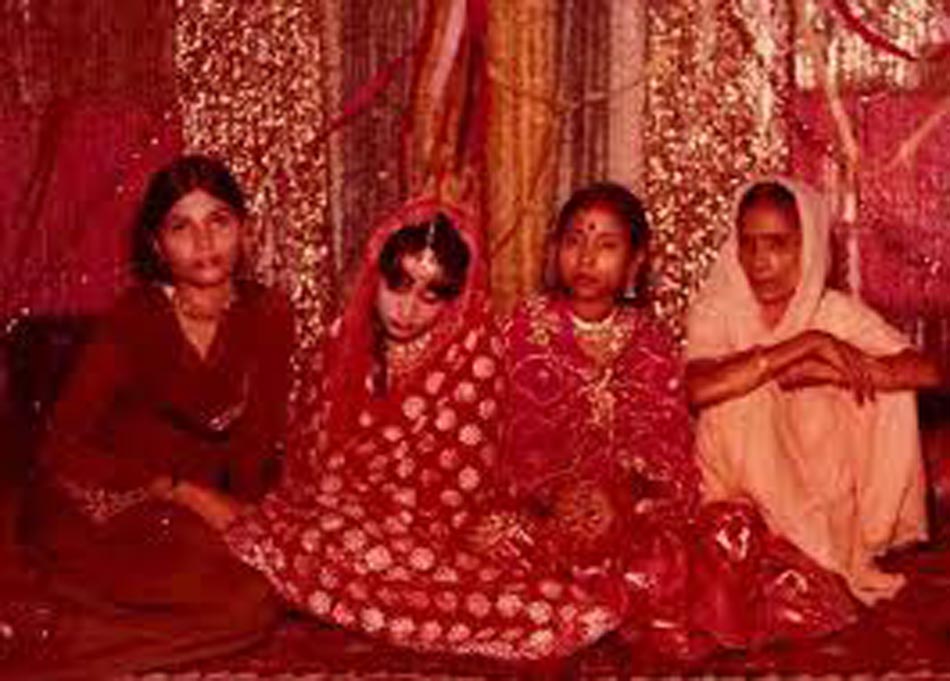
Nikah Ceremony: The Nikah is the most important occasion for Chaapa attire. Brides frequently wear specially commissioned sarees, ghararas, shararas or dupattas decorated with elaborate metallic designs. Bridal garments often feature larger floral motifs, heavily printed borders and densely decorated surfaces. Even when modern bridal fashions are available, many families continue to choose Chaapa because it carries emotional and cultural significance that newer styles cannot easily replace.
Groom’s Attire: Although the craft is most strongly associated with women’s clothing, men also participate in the tradition. The most common example is the groom’s Chaapa-printed rumal, which forms part of several wedding rituals. In some communities, additional decorative elements may also be added to ceremonial male garments.
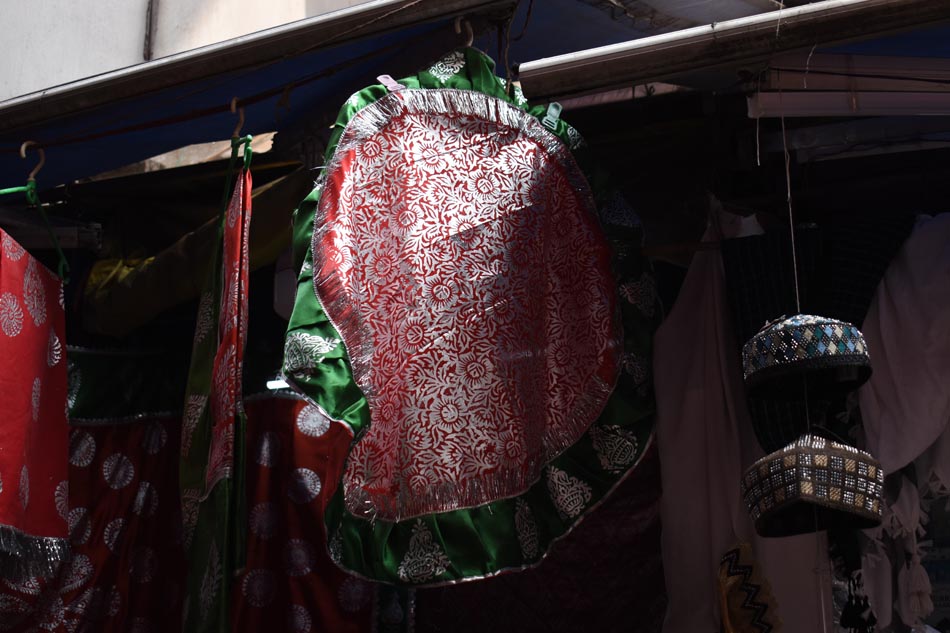
Dala and Gift Exchange Traditions: An important but less frequently discussed use of Chaapa appears in the wedding gift exchange system known as Dala. Gifts presented by the groom’s family are arranged in ceremonial baskets that are covered with decorative cloths called Daldhakkan. These coverings are often embellished with Chaapa printing. The craft extends beyond clothing and becomes part of the ceremonial environment itself. The decorated coverings transform ordinary objects into symbols of respect, generosity and family honour.
Chhathi Chilla and Life-Cycle Rituals: Chaapa is also used during Chhathi Chilla, the naming and celebration ceremony held after the birth of a child. Families may commission printed garments or ceremonial textiles for the occasion. The use of Chaapa in both weddings and birth celebrations reflects its connection to important moments of transition within family life. In some local traditions, Chaapa garments may also appear during Muharram-related gatherings, although this practice varies considerably between communities and households.
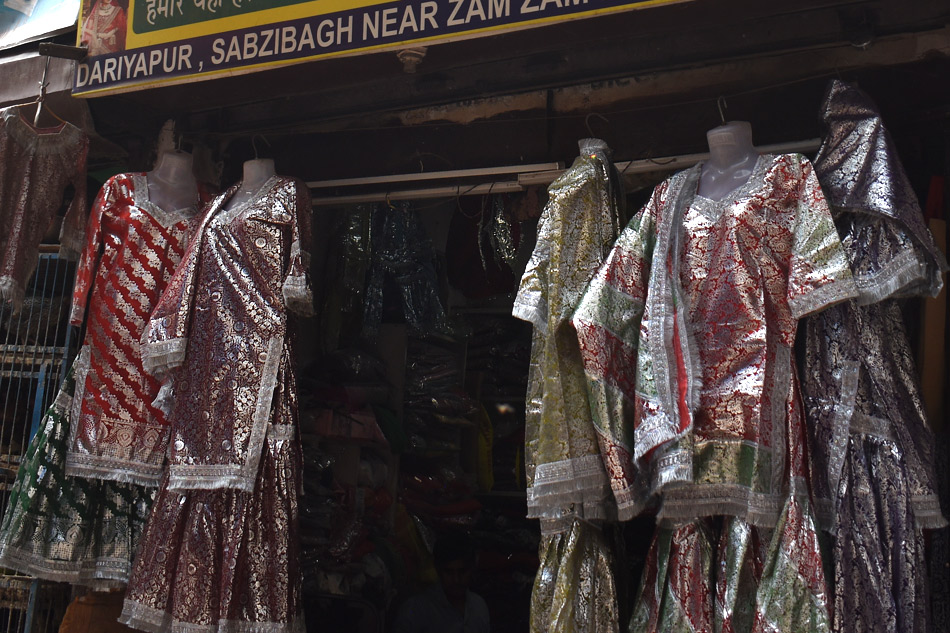
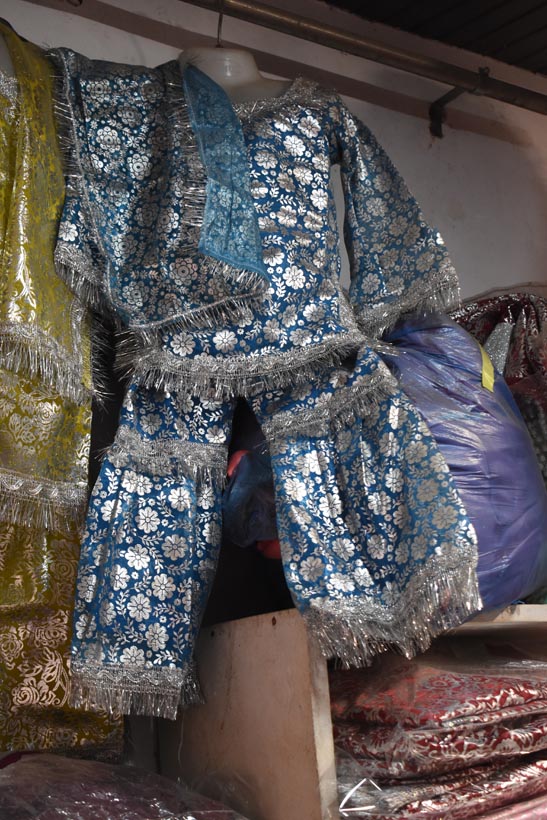
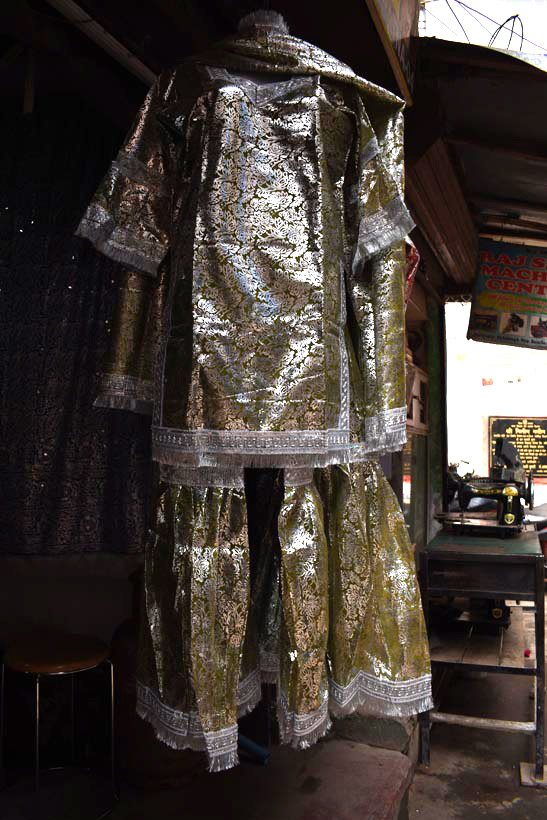
C. Household and Decorative Uses: Artisans decorate dupattas, sarees, shalwar kameez, ghararas, shararas and bridal chadars, as well as household items such as pillow covers, bed covers and curtains. The craft is also used to embellish objects that play a role in wedding rituals, including the Nikah pardah, Daldhakkan basket covers used during gift exchanges and the groom’s ceremonial rumal. Through its presence on both personal attire and ceremonial furnishings, Chaapa helps create a visually unified ritual setting. These textiles are valued not only for their decorative appeal but also for the cultural meanings they carry, reinforcing family traditions and marking important moments in the social and ceremonial life of the community.
The significance of Chaapa extends far beyond its visual appeal as a decorative textile. For the Muslim communities of Bihar, particularly those of the Magadh region, Chaapa functions as a powerful symbol of cultural continuity, communal identity and familial belonging. It embodies inherited traditions that have survived political upheavals, migration, economic transformations and changing fashions.
Marker of Regional and Community Identity: Among Bihari Muslims, Chaapa serves as a distinctive cultural identifier. The craft is closely associated with the historical Muslim settlements of southern Bihar, especially the districts of Gaya, Nalanda, Nawada and Aurangabad. Within these communities, Chaapa garments are immediately recognisable as symbols of a shared regional heritage and collective memory. The continued use of these garments allows families to publicly express their connection to ancestral traditions. Unlike many textile traditions that have become detached from their original social context and entered commercial fashion markets, Chaapa remains deeply embedded within the cultural practices of the community that created it. Even families who have adopted modern lifestyles continue to preserve the custom of wearing Chaapa during important ceremonies because it signifies continuity with previous generations.
Symbol of Matrimonial Tradition: In many Bihari Muslim households, a wedding is traditionally considered incomplete without the presence of Chaapa attire. Regardless of social or economic status, families often ensure that at least one Chaapa garment is included in the wedding ceremonies. This expectation transforms the craft from a decorative object into a cultural obligation. The importance attached to Chaapa illustrates how textiles can function as repositories of social meaning. The garments communicate participation in a shared tradition and reinforce bonds between families, generations and communities. The bride’s Chaapa attire, the groom’s printed rumal and the Chaapa-covered Dala baskets together create a ceremonial environment that reflects long-standing matrimonial customs. For many families, the emotional value of Chaapa far exceeds its material worth. The garments are often remembered through photographs, family stories and inherited memories long after the metallic print itself has faded away.
Preservation of Rangrez Heritage: The survival of Chaapa is inseparable from the history of the Rangrez community. Traditionally known as dyers and printers, the Rangrez occupied a specialised place within the textile economy of Bihar. Through their knowledge of colouring, printing and fabric finishing, they supplied ceremonial textiles to local populations for generations. Although industrialisation and mechanised textile production severely reduced the economic importance of hereditary dyeing occupations, Chaapa continues to preserve elements of Rangrez cultural heritage. Each printed garment represents not only the continuation of a craft tradition but also the survival of knowledge accumulated over centuries within artisan families. The decline of the Rangrez profession has therefore heightened the significance of Chaapa. As the number of practising artisans decreases, the craft increasingly serves as one of the last visible reminders of a once-thriving occupational community.
Literary and Cultural Recognition: The cultural importance of the Rangrez community finds expression in South Asian literary traditions. The celebrated poet and musician Amir Khusrau referred to Rangrez artisans in his verses, employing the imagery of colour and dyeing as metaphors for spiritual transformation and divine love. One of the most frequently cited verse reads:
“Chaap tilak sab chheeni re mose naina milaike,
Prem bhati ka madva pilaike,
Bal bal jaun main tore rang rajwa,
Apni si rang deeni re mose naina milaike.”
The verse is significant because it reflects the longstanding cultural visibility of Rangrez artisans within Indo-Islamic society. Although Khusrau was not writing specifically about Bihar’s Chaapa tradition, his invocation of the Rangrez demonstrates the historical prestige attached to communities engaged in textile colouring and printing.
This literary association enriches the symbolic value of Chaapa by linking contemporary practitioners to a broader cultural and artistic legacy extending across centuries.
Symbol of Diasporic Memory: Following the Partition of India in 1947, large numbers of Bihari Muslims migrated to East Pakistan and West Pakistan. Along with language, food and family customs, they carried Chaapa garments and the traditions associated with them. Historical accounts suggest that families concealed valuable Chaapa garments within quilts known as Phaliya or Gendra while travelling across borders. These garments became treasured reminders of home and continuity during a period of profound displacement. The significance of Chaapa within migrant communities is evident from the persistence of the tradition in Karachi, where artisans continue producing authentic Bihari Chaapa despite the craft’s decline in many parts of Bihar. Reports from Pakistan indicate that Chaapa remains an essential component of wedding ceremonies among descendants of Bihari migrants. Similar practices continue among diaspora families in Bangladesh, Canada, Australia and the United States. Through these transnational networks, Chaapa has evolved from a regional craft into a symbol of diasporic belonging. It enables families separated by thousands of kilometres to maintain a tangible connection to their ancestral homeland.
Resistance to Cultural Homogenisation: The continued use of Chaapa reflects resistance to the homogenising effects of mass-produced fashion. Modern bridal markets increasingly favour machine embroidery, synthetic embellishments and nationally popular wedding styles. Despite these pressures, many Bihari Muslim families continue to commission Chaapa garments because they represent a distinctly local tradition. The persistence of the craft demonstrates how communities actively preserve regional identities through material culture. In an era when global fashion trends often overshadow local traditions, Chaapa remains a visible assertion of cultural specificity.
Intangible Cultural Heritage: Chaapa represents a form of intangible cultural heritage because its value lies not solely in the finished object but also in the knowledge, techniques and social meanings associated with its production and use. The craft encompasses specialised skills, inherited design vocabularies, ritual customs, occupational histories and community memories that cannot be fully captured through the physical garment alone. The transmission of these skills traditionally occurred through apprenticeship within artisan families, making the survival of the craft dependent upon the continuation of intergenerational learning. The decline in the number of practitioners therefore threatens not only a textile technique but also an entire body of cultural knowledge.

One of the most unusual aspects of Chaapa is the absence of myths or legendary origin stories. Many traditional crafts in South Asia are linked to tales of divine blessings, revered saints or miraculous discoveries that explain how a particular skill first came into existence. Chaapa, however, has no such narrative tradition. Artisans and community elders do not associate the craft with any deity, saint, supernatural event or legendary founder. Instead, Chaapa is understood as an inherited craft tradition that has been passed from one generation to the next through practice and experience. When artisans speak about the origins of their work, they usually refer to their fathers, grandfathers and earlier members of the Rangrez community who taught them the skills required for printing. The craft derives its legitimacy from continuity and craftsmanship rather than from sacred stories or religious authority.
The Memory of the Rangrez Community: Although Chaapa lacks formal myths, the history of the Rangrez community serves as an important source of identity and collective memory. In many artisan households, stories centre on ancestors who maintained workshops, supplied garments for weddings and preserved the craft during difficult economic periods. These family histories are not presented as legends but as lived experiences passed down through conversation. Through such narratives, younger generations learn about the dedication and labour of those who came before them. As a result, the memory of past artisans’ functions as a form of living heritage, creating a sense of continuity between earlier generations and contemporary practitioners.
Migration and Community Memory: Another important part of Chaapa’s oral tradition is found in stories of migration. Many families recount how their ancestors moved from one place to another while carrying the craft with them. These accounts are especially significant in relation to the Partition of India in 1947, when large numbers of Bihari Muslim families migrated to Pakistan. Artisans and community members often recall how garments, printing blocks and other valuable possessions were carefully protected during the journey. Some families remember carrying Chaapa textiles hidden inside quilts known as – These stories are not myths in the conventional sense, yet they occupy an important place within community memory because they highlight the emotional and cultural value attached to the craft.
Explanations of Origin: While no legendary accounts exist, several historical explanations have been suggested regarding the development of Chaapa. Some community members connect the craft with the arrival of Muslim settlers in eastern India during the medieval period. Others believe it may have developed through the movement of artisans and courtly communities during later phases of political upheaval and migration. What is notable about these explanations is that they remain grounded in history rather than folklore. They do not involve miraculous events or heroic figures. Instead, they attempt to understand the craft through patterns of migration, settlement and cultural exchange. Even where certainty is lacking, the discussion remains historical rather than mythical.
Absence of Ritual Beliefs and Taboos: Chaapa is also distinctive because it is not accompanied by elaborate ritual practices. In many craft traditions, artisans follow specific taboos, observe auspicious days or perform ceremonies before beginning work. Such practices are largely absent in Chaapa workshops. Artisans generally do not perform special rituals for their wooden blocks, adhesive mixtures or printing tools. There are no widely recognised beliefs concerning protective spirits, sacred motifs or supernatural consequences associated with mistakes in the printing process. The emphasis remains firmly on skill, patience and manual expertise. Success is understood to result from experience and careful workmanship rather than divine intervention.
Although Chaapa lacks myths, it possesses a rich body of cultural memory rooted in everyday life. For many Bihari Muslim families, the stories associated with Chaapa are stories of weddings, family gatherings and important life events. Grandmothers remember the garments they wore during their marriages; parents preserve photographs from earlier ceremonies and migrants recall carrying these traditions across borders and generations. Over time, these personal memories have become part of a larger collective narrative. They give meaning to the craft and help explain why it continues to hold an important place within community life. In this sense, remembered experiences perform many of the social functions that myths fulfil in other traditions.
The absence of myths is itself significant. It reflects the origins of Chaapa within an occupational community whose identity was shaped by specialised labour rather than religious authority. The craft survives because it continues to be practised, taught and valued within families and communities. For this reason, the most important story associated with Chaapa is not a legend from the distant past but the continuing history of the people who sustain it. Every printed garment represents a link in a chain of transmission stretching across generations. The tradition endures not because of a sacred narrative but because artisans continue to create, families continue to wear and communities continue to remember.
The history of Chaapa is intertwined with the broader social and cultural history of Muslim settlement in Bihar. Although the craft is today recognised as a distinctive feature of Bihari Muslim wedding traditions, its precise origins remain difficult to establish because of the absence of extensive written records. Most knowledge regarding its development survives through oral traditions, artisan narratives and scattered historical references.
The Rangrez Community: The tradition of dyeing in India is as old as its civilisation itself. Indian dyes were recognised in international trade as early as c. 3000 BCE, demonstrating the subcontinent’s long-standing expertise in textile colouring. In Indian terminology, colouring substances are expressed through words such as ranga, rāga, and rakta, all derived from the Sanskrit root √rañj, meaning “to colour” or “to change from one colour to another.”
Ancient texts provide valuable evidence of this knowledge. The Atharvaveda mentions several vegetable dyes, including kala or asikni (indigo), mahāranjana (safflower), mañjisthā (madder), lodhra (Symplocos racemosa), and haridrā (turmeric). Lac was among the important animal-derived colourants used in early India.
The medieval period witnessed significant advances in dyeing technology. Artisans discovered the colour-fixing properties of tuvari (alum) and refined techniques for extracting colouring principles from natural dye materials. By the eighteenth century, the use of iron mordants for fixing blue, green, and violet shades had become widespread, while aluminium mordants were commonly employed for producing rich red colours.
The profession of dyeing has been recognised since ancient times. During the Mauryan period, artisans engaged in dyeing fabrics and threads were known as Rajakas. They functioned not only as dyers but also as washers, cleaning textiles before treating them with natural dyes and perfuming the finished cloth. Over the centuries, India’s highly evolved traditions of dyeing and textile finishing gave rise to specialised occupational communities, each developing distinctive regional techniques and skills.
The origins of Chaapa are closely associated with the Rangrez community, a hereditary group traditionally engaged in dyeing, colouring, and printing textiles. The term “Rangrez” itself derives from Persian roots meaning “one who colours” or “dyer”, reflecting the community’s historic role within the textile economy of the Indo-Islamic world. In Bihar, the Rangrez are predominantly Sunni Muslims and have historically occupied a specialised occupational niche. Their expertise extended beyond simple dyeing to encompass a variety of decorative textile techniques, including the metallic printing methods that eventually evolved into Chaapa. According to Bihar’s caste survey data, the Rangrez population remains relatively small and is currently classified within the Economically Backward Classes (EBC). The decline of traditional textile occupations during the colonial and postcolonial periods significantly affected the community’s economic position. While the exact moment when metallic foil printing emerged among Bihar’s Rangrez artisans cannot be determined with certainty, the craft likely developed within this broader tradition of textile finishing and ornamentation.
Muslim Settlement in Bihar: One explanation for the emergence of Chaapa connects the craft to the establishment of Muslim communities in Bihar during the medieval period. Patna-based historian Md Umar Ashraf argues that the roots of the tradition may be linked to demographic and cultural transformations that followed the campaigns of Bakhtiyar Khilji in the late twelfth and early thirteenth centuries. Bakhtiyar Khilji’s conquest of Bihar and Bengal facilitated the settlement of Muslim administrators, soldiers, scholars, traders and artisans throughout eastern India. Over time, these communities developed distinctive regional cultures that combined local traditions with influences from Persianate and Indo-Islamic artistic practices. According to this interpretation, Chaapa may have emerged as part of this process of cultural synthesis, eventually becoming embedded within the ceremonial life of Muslim communities in the Magadh region. Although documentary evidence for this theory remains limited, it provides an important framework for understanding why the craft became so strongly associated with Muslim populations in southern Bihar.
Connections to Nadir Shah and Ahmad Shah Abdali: Another theory links the development of Chaapa to political upheavals in eighteenth-century North India. According to local historical interpretations recorded by Umar Ashraf, the craft may have been influenced by elites, nobles and artisan groups who migrated eastward after the invasions of Nadir Shah in 1739 and Ahmad Shah Abdali during the mid-eighteenth century. These invasions devastated major urban centres such as Delhi and contributed to significant population movements across northern India. Many aristocratic and artisan families sought refuge in relatively stable regions, including parts of Bihar. The concentration of Chaapa traditions in areas where some of these migrant populations settled has led historians to propose two possibilities.
First, migrant artisans may have directly introduced metallic printing techniques from Delhi, Awadh or other cultural centres. Second, displaced elites may have encouraged local artisans to experiment with new forms of textile decoration, eventually giving rise to the distinctive Chaapa tradition found in Bihar today. Although definitive proof remains elusive, this theory is significant because it situates Chaapa within larger networks of migration, patronage and artistic exchange that shaped eighteenth-century South Asia.
The Earliest Documentary Evidence: The first known written reference to Chaapa-related artisans appears in the travel accounts of Francis Buchanan, a Scottish physician and surveyor employed by the East India Company. During his survey of Bihar and neighbouring regions between 1811 and 1812, Buchanan documented numerous occupational groups and local industries. Among these observations, he referred to “chhapagars” or block printers operating in the regions of Gaya and Bihar. Although Buchanan did not provide a detailed technical description of contemporary Chaapa printing, his account constitutes the earliest documented evidence for the organised existence of block-printing communities in the area. This reference is historically important because it demonstrates that the craft, or a closely related predecessor, was already well established by the early nineteenth century. If the technique was sufficiently widespread to be recorded by Buchanan, its origins likely predate his visit by several generations. For this reason, many researchers estimate that the tradition is at least 250–300 years old and possibly older.
EChaapa Under Elite Patronage: Prior to the twentieth century, Chaapa appears to have enjoyed patronage from wealthier households and regional elites. Oral histories collected from artisans indicate that silver foil was once used in place of modern aluminium sheets. These luxurious garments were expensive and largely restricted to affluent families. The use of silver reflected the high status attached to ceremonial clothing within Muslim society. Wedding garments were intended not only for adornment but also for the public display of family prestige, prosperity and social standing. The intricate floral and geometric motifs associated with Chaapa complemented broader aesthetic traditions of Mughal and Indo-Islamic decorative culture. As economic conditions changed and the craft became more widely accessible, artisans gradually replaced silver with aluminium. This innovation preserved the visual effect of metallic brilliance while reducing production costs, allowing ordinary families to participate in the tradition.
Colonial and Early Modern Transformations: The nineteenth and early twentieth centuries witnessed significant changes in India’s textile economy. Industrial production, imported fabrics and mechanised printing techniques increasingly challenged traditional artisan industries. Despite these transformations, Chaapa survived because its importance rested not solely on market demand but also on its role within ceremonial culture. Unlike ordinary clothing, Chaapa garments remained tied to weddings, naming ceremonies and other life-cycle rituals. This ritual function insulated the craft from some of the pressures that affected other forms of artisanal production. The persistence of the tradition during this period reflects the resilience of community-based cultural practices even amid broader economic change.
Partition and the Migration of Chaapa: One of the most significant moments in the history of Chaapa occurred during the Partition of India in 1947. Large numbers of Bihari Muslims migrated to East Pakistan and West Pakistan, carrying with them their language, foodways, marriage customs and textile traditions. According to oral histories preserved within the community, families often concealed valuable Chaapa garments inside traditional quilts known as Phaliya or Gendra while travelling across borders. This practice protected the garments from theft and ensured that important elements of cultural heritage survived the upheaval of migration. The transportation of Chaapa garments during Partition demonstrates the emotional significance attached to the craft. Families viewed these textiles not merely as clothing but as tangible representations of home, ancestry and cultural continuity.
Chaapa in Pakistan: Following migration, Bihari communities established themselves in several Pakistani cities, particularly Karachi. There, Chaapa continued to be produced and worn despite the geographical distance from Bihar. Over subsequent decades, Karachi developed a small but active network of artisans who specialised in authentic Bihari Chaapa. Community demand ensured the continuation of wedding customs, allowing the craft to survive even as its practitioner base declined in parts of India. Contemporary reports suggest that Chaapa garments remain important components of marriage ceremonies among Pakistani Biharis and continue to be commissioned for special occasions. A notable example of the tradition’s persistence is the celebrated Urdu poet Parveen Shakir, whose family traced its origins to Bihar. Accounts indicate that she wore a Chaapa saree during her wedding, illustrating the continued prestige of the craft among diaspora communities.
Globalisation and Diaspora Continuity: During the late twentieth and early twenty-first centuries, migration carried Bihari Muslim communities far beyond South Asia. Families settled in Bangladesh, North America, Australia and the Middle East while maintaining connections to ancestral customs. As a result, Chaapa entered global circulation. Artisans in Bihar began receiving orders from overseas communities seeking garments for weddings and family ceremonies. In many cases, diaspora families considered Chaapa an indispensable element of matrimonial traditions, leading to the continued international demand for the craft. This global expansion transformed Chaapa from a regional craft into a transnational cultural tradition sustained through networks of kinship, memory and migration.
Contemporary Centres of Production: Historically, Chaapa was practised across a wider geographical area than today. At present, production is concentrated in a limited number of surviving clusters. The most important centres include Biharsharif in Nalanda district, parts of Nawada, Gaya and Aurangabad, as well as neighbourhoods within Patna such as Sabzibagh, Shahganj and Sadar Gali. While some contemporary practitioners continue to belong to traditional Rangrez families, others have entered the profession independently, attracted by market demand rather than hereditary occupation. The shrinking geographical distribution of the craft reflects both its vulnerability and its resilience. Although practitioner numbers have declined significantly, the remaining centres continue to sustain a tradition that has survived for centuries.
The visual identity of Chaapa is defined by its distinctive metallic motifs, carefully arranged patterns and characteristic floral ornamentation. Although the craft appears simple at first glance, its design vocabulary reflects centuries of interaction between local traditions, Islamic aesthetics and Mughal decorative influences. The motifs used in Chaapa are not random embellishments but elements of a highly structured visual language shaped by community preferences, ritual requirements and artisan expertise. Unlike many commercial textile traditions that continuously adapt to changing fashion trends, Chaapa has retained a remarkably stable design repertoire. This continuity is largely due to the craft’s close association with wedding customs, where consumers generally favour familiar motifs that evoke tradition and cultural authenticity.
One of the most defining characteristics of Chaapa design is the absence of animate imagery. Human figures, animals and birds are generally excluded from the decorative vocabulary. Instead, artisans rely heavily on floral, vegetal and geometric motifs. This preference reflects broader aesthetic traditions associated with Islamic art, where decorative expression has historically emphasised geometry, arabesques and stylised plant forms. While regional interpretations vary across the Islamic world, the predominance of non-figurative ornamentation in Chaapa aligns closely with these artistic principles. The resulting designs possess a rhythmic and symmetrical quality that distinguishes them from many neighbouring textile traditions.
A. Motifs
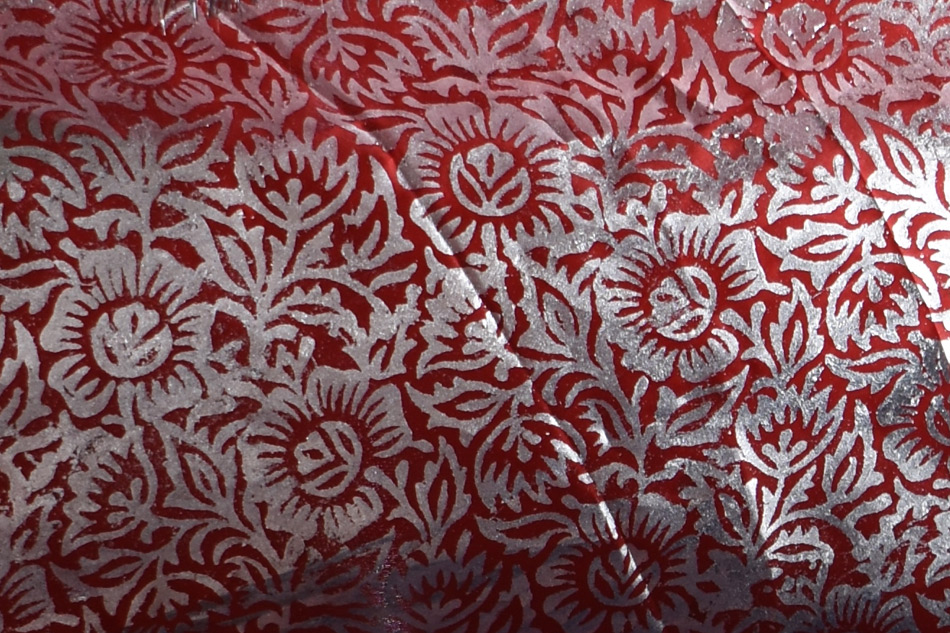
Floral imagery constitutes the heart of Chaapa design. Among the numerous patterns employed by artisans, flowers remain the most frequently requested and widely recognised motifs.
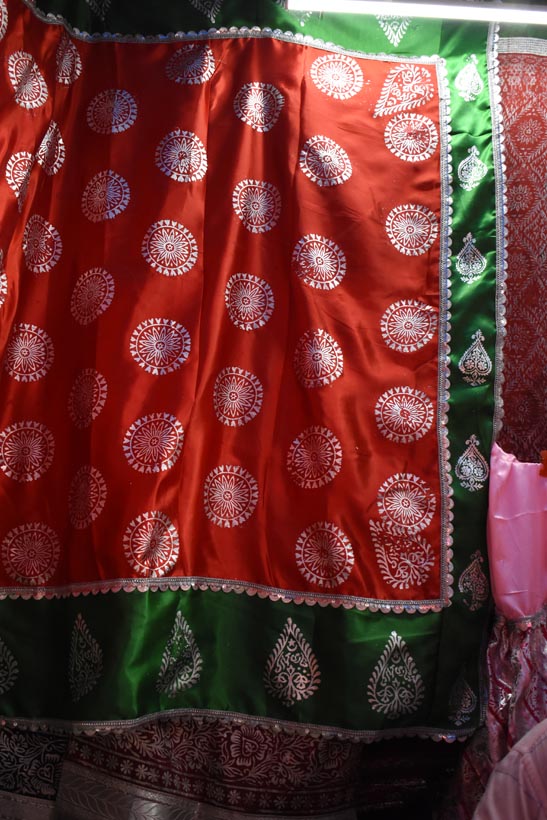
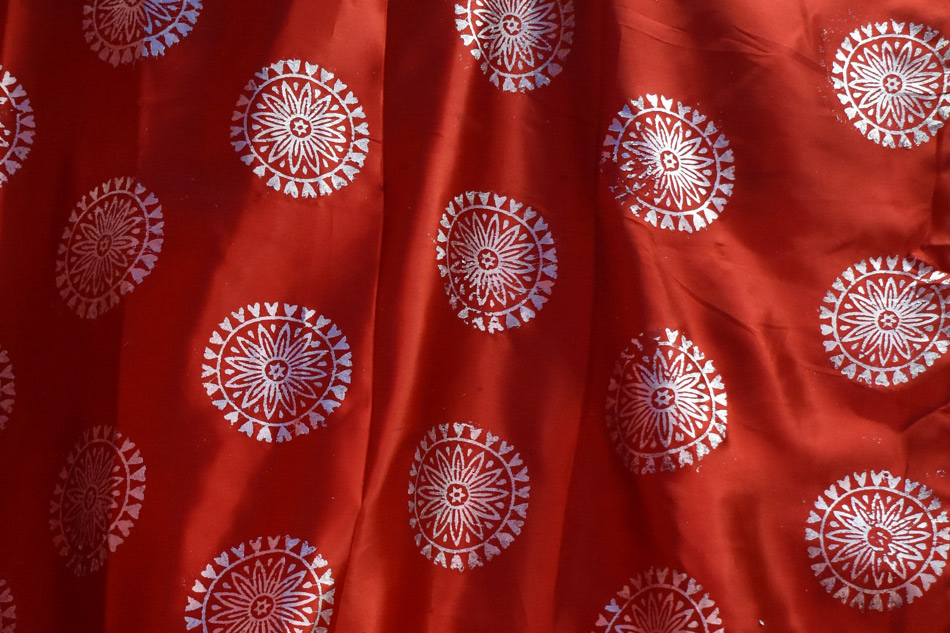
Marigold (Genda)– The marigold is perhaps the most iconic motif found in Chaapa. Large circular marigold forms often occupy central positions within bridal chadars, sarees and ceremonial textiles. These motifs may appear individually or in repeating arrangements across the fabric surface. The popularity of the marigold reflects its broader significance within South Asian ceremonial culture, where the flower is associated with celebration, festivity and social gatherings. In Chaapa, the genda motif often serves as a focal point around which other decorative elements are organised.
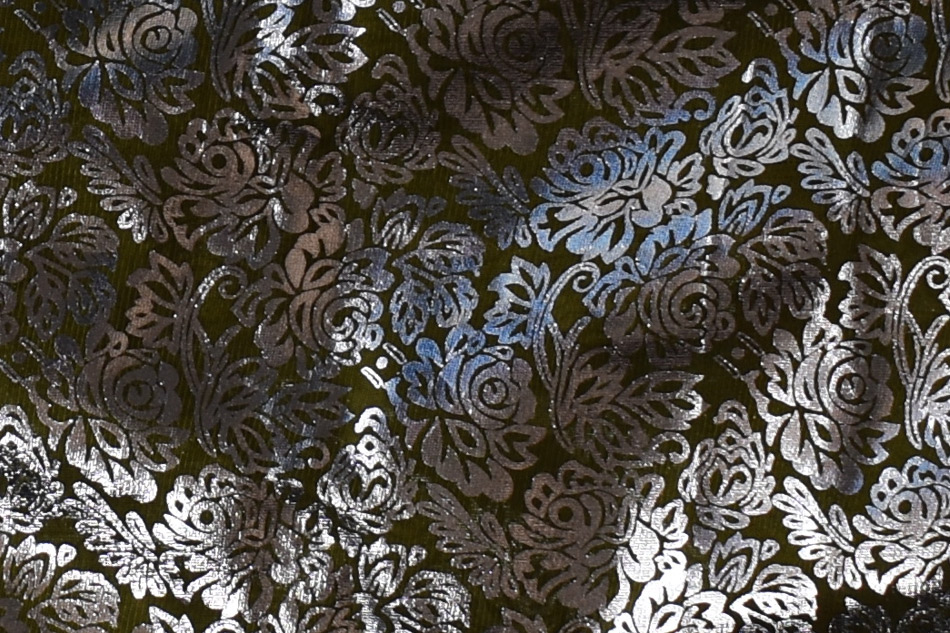
Rose Motifs– The rose represents another important component of the design vocabulary. Often rendered in stylised form, rose motifs reveal strong Mughal influences and contribute to the elegance associated with traditional wedding garments. Artisans frequently combine rose and marigold designs within the same composition, creating complex floral arrangements that balance density with visual harmony.
Creepers and Floral Vines– Many blocks incorporate elongated floral vines and interconnected vegetal forms. These motifs are particularly common in borders, dupattas and ceremonial cloths where continuous decorative movement is desired. The flowing nature of these designs allows artisans to create visual continuity across large surfaces while maintaining symmetry and balance.
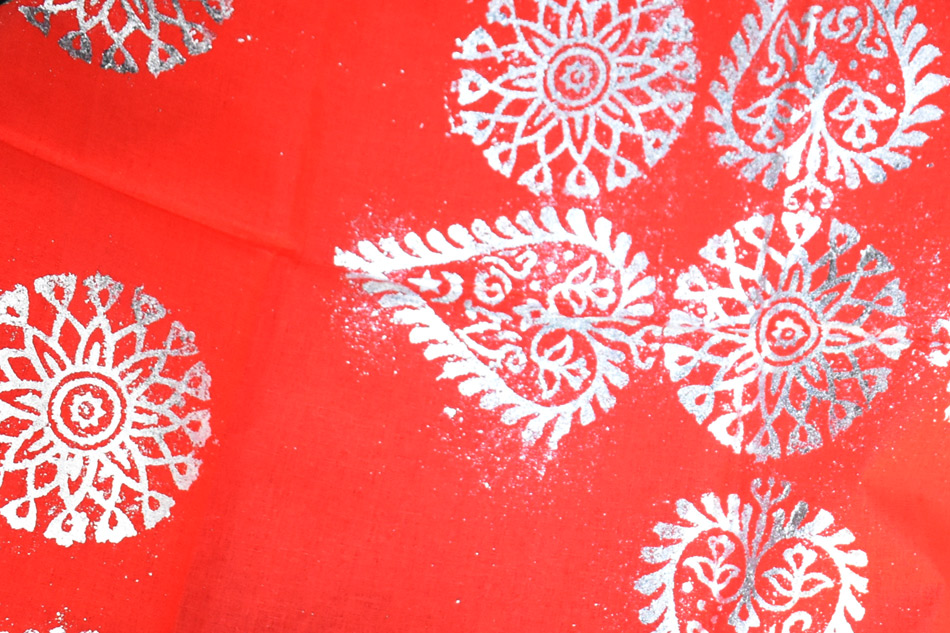
Paisley Motifs- Paisley, locally recognised in various stylised forms, occupies an important place within Chaapa ornamentation. Characterised by its curved teardrop-like shape, the motif has a long history across Persian, Central Asian and South Asian textile traditions. In Chaapa, paisleys frequently appear alongside floral elements and geometric fillers, contributing to the layered complexity of the overall composition. Their enduring popularity reflects the persistence of Indo-Persian decorative influences within regional craft traditions.
B. Geometric Patterns- Alongside floral imagery, geometric designs form a major component of the Chaapa visual repertoire. Artisans employ repeating arrangements of circles, diamonds, stars, grids and interlocking forms to create intricate decorative fields. These patterns are particularly important because the metallic foil enhances their visual precision. When sunlight or artificial illumination strikes the printed surface, the geometric arrangements produce a striking reflective effect that contributes significantly to the ceremonial appearance of the garment. Many geometric motifs are also easier to combine and repeat across large areas, making them particularly useful for sarees, bed covers and decorative cloths.
C. Mughal Influence- The influence of Mughal aesthetics is evident throughout Chaapa design. The preference for floral ornamentation, symmetrical arrangements and repetitive surface decoration closely resembles decorative principles found in Mughal architecture, manuscript illumination, textiles and decorative arts. The dominance of roses, floral sprays and carefully balanced compositions suggests a long history of interaction between local craft traditions and broader Indo-Islamic artistic culture. Scholars and artisans alike often identify these Mughal influences as one of the defining characteristics of authentic Chaapa work.
D. Traditional Pattern Layouts
Beyond individual motifs, Chaapa artisans employ several established compositional layouts that determine how designs are distributed across a garment.
Laheria: Laheria consists of diagonal arrangements that create a flowing visual rhythm across the textile surface. The pattern is especially effective on sarees and dupattas because it introduces movement and dynamism into the design.
Aari Patterns: Aari-style arrangements involve organised decorative sequences that guide the viewer’s eye across the fabric. These layouts are frequently used when artisans wish to emphasise symmetry and balance.
Jaal Designs: Jaal refers to dense network-like arrangements that cover substantial portions of the textile. These intricate compositions create an impression of richness and abundance, making them especially popular for bridal garments and ceremonial textiles.
E. Product-Specific Design Variations
The design density and arrangement vary considerably depending on the intended object. Bridal chadars generally receive the heaviest decoration. They often feature large central marigold motifs, broad borders and densely printed surfaces requiring extensive foil application and pressing. Sarees may incorporate combinations of border work, repeated floral motifs and jaal patterns distributed across the body of the garment. Dupattas frequently emphasise border ornamentation combined with lighter central decoration, while pillow covers, curtains and daldhakkan cloths often utilise compact geometric or floral arrangements suited to smaller surfaces. Thus, the same motif may be interpreted differently depending on the object’s ceremonial function and scale.
F. Colour Traditions
Historically, Chaapa was associated primarily with red and green textiles. These colours dominated traditional wedding attire and became deeply embedded within community expectations.
Red: Red occupies a particularly important position because of its long-standing association with marriage and bridal identity. For generations, red Chaapa garments represented the preferred choice for wedding ceremonies and remain highly popular today.
Green: Green also enjoyed considerable popularity due to its cultural significance within many Muslim communities and its compatibility with metallic ornamentation.
Contemporary Colours: Modern consumer preferences have encouraged artisans to expand their colour palette. Contemporary Chaapa garments now appear in shades of pink, violet, blue, yellow and other fashionable colours. Despite these innovations, traditional red and green continue to dominate wedding orders.
H. Wooden Blocks and Design Transmission
The preservation of Chaapa’s visual vocabulary depends heavily upon its wooden printing blocks, known as theppa. These blocks are hand-carved from Sheesham wood and sourced from the Dalmandi area of Banaras, a historic centre of block production. Many artisans continue to use blocks inherited from fathers and grandfathers, some of which have remained in use for decades. These inherited tools function as repositories of design history, preserving motifs that might otherwise disappear. At the same time, the design repertoire is not entirely static. Block makers regularly introduce new floral and geometric patterns, often sharing designs with artisans through digital platforms such as WhatsApp. Artisans selectively adopt these innovations while ensuring that new motifs remain compatible with community expectations and ceremonial traditions.
I. Customisation and Consumer Preferences
Most artisans focus on traditional wedding garments because they constitute the most reliable source of demand. Nevertheless, custom orders allow clients to request specific motifs, pattern densities and decorative arrangements. Before beginning work, artisans typically discuss design requirements with customers, deciding on motif combinations, border styles and overall visual composition. This collaborative process ensures that each garment satisfies both ceremonial requirements and personal preferences.
The enduring popularity of Chaapa owes much to the stability of its design vocabulary. Floral motifs, geometric arrangements and metallic brilliance continue to resonate with consumers because they evoke memories of earlier generations and established wedding traditions. Although colours, fabrics and certain decorative details have evolved, the essential visual language of Chaapa remains remarkably consistent. Through its motifs and patterns, the craft preserves a centuries-old aesthetic heritage while continuing to adapt to contemporary tastes and market realities.

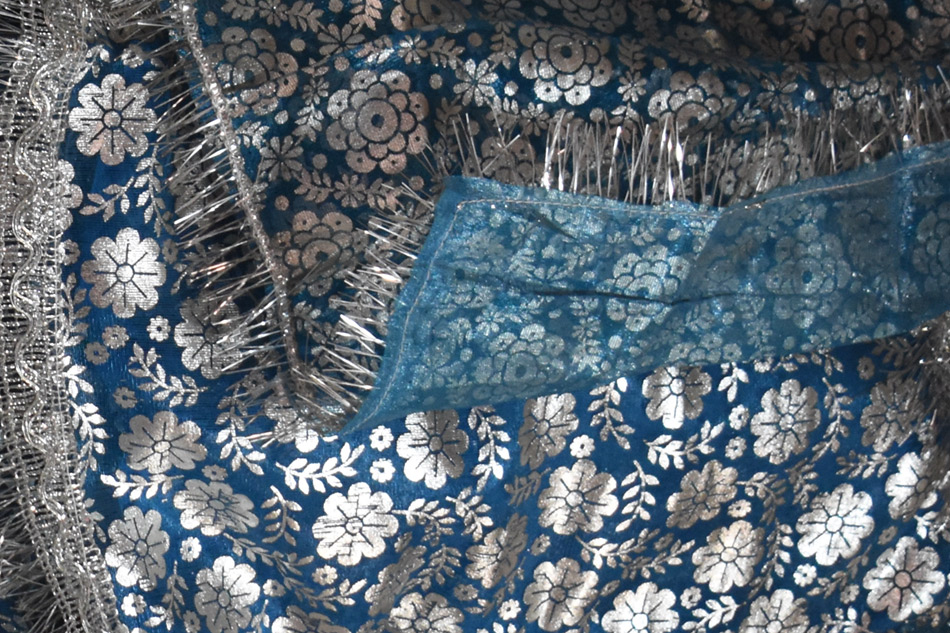
Despite its deep cultural significance and continued presence in matrimonial traditions, Chaapa today faces an uncertain future. The craft survives within a shrinking network of artisans who struggle against economic insecurity, hazardous working conditions, declining social prestige and competition from mechanised alternatives. While community attachment has prevented its complete disappearance, the cumulative effect of these challenges has placed the tradition in a state of gradual decline. Several artisans interviewed during fieldwork expressed concern that their generation may be the last to practise the craft professionally.
Economic Insecurity and Low Earnings
The economic returns from Chaapa production are remarkably modest considering the skill, labour and time involved. Most artisans earn between ₹300 and ₹800 per day depending on the volume of work available and the complexity of the orders received. On average, a skilled artisan completes only three or four standard sarees in a full working day lasting ten to twelve hours. Even during periods of high demand, earnings often remain insufficient to support large families. As a result, many artisans struggle to achieve economic stability despite decades of experience. The situation becomes particularly difficult during the off-season, when income may disappear almost entirely . Because Chaapa alone rarely provides sufficient income throughout the year, many artisans are compelled to seek alternative employment. Field interviews indicate that printers frequently work as construction labourers, pandal makers or daily wage workers when wedding orders decline. This necessity reflects the fragile economic foundation upon which the craft currently rests. The need to alternate between artisanal and manual labour also reduces the time available for innovation, training and transmission of traditional knowledge.
Declining Intergenerational Transmission
Perhaps the most serious long-term challenge is the reluctance of younger generations to enter the profession. Many artisans openly acknowledge that they discourage their children from pursuing Chaapa because they perceive little economic future in the craft. Parents who have spent decades struggling with unstable income often prefer that their children seek employment in education, government service, business or other occupations offering greater security. Consequently, the traditional father-to-son transmission system that sustained the craft for generations is steadily weakening. Several practitioners interviewed during recent documentation projects expressed the belief that the current generation may be among the last to possess comprehensive knowledge of the technique.
Fragility of the Finished Product
The temporary nature of Chaapa, once regarded as part of its unique character, has increasingly become a commercial disadvantage in a market shaped by consumer expectations of durability. Traditional aluminium foil prints typically fade after one or two washes. In some cases, excessive perspiration can also weaken the adhesion and cause the metallic surface to deteriorate. While earlier generations accepted this impermanence as inherent to the craft, many contemporary consumers compare Chaapa unfavourably with more durable machine-produced alternatives. The challenge is particularly acute because modern buyers often expect ceremonial garments to remain usable for extended periods.
Problems Associated with Saresh Adhesive
The traditional adhesive known as saresh presents additional difficulties. Made from animal-hide derivatives, the glue produces a strong and often unpleasant odour. Historically, the smell was so intense that some brides reportedly experienced discomfort, nausea or headaches while wearing freshly printed garments. Families therefore developed the practice of purchasing Chaapa clothes months before a wedding to allow the odour to dissipate gradually. Perfumes and attars were also applied to make the garments more comfortable to wear. Although some artisans now incorporate chemical additives to reduce the smell, the issue remains a persistent concern.
Competition from Screen Printing
The emergence of screen-printed alternatives represents one of the most direct threats to traditional Chaapa. Factory-produced textiles can replicate many of the visual features of hand-printed Chaapa while offering several advantages from a consumer perspective. Screen-printed garments are generally cheaper, more uniform and significantly more durable. Unlike authentic Chaapa, the printed designs do not peel away after washing. Many shops now sell machine-produced versions alongside handcrafted products, allowing customers to choose according to budget and preference. While this expands market access, it also reduces demand for labour-intensive hand printing. The resulting competition places traditional artisans at a substantial disadvantage.
Occupational Health Hazards
The production process exposes artisans to a variety of health risks. One of the most serious concerns arises from the fine aluminium dust generated during printing and cleaning. As excess foil flakes away from the fabric, microscopic metallic particles become airborne and settle on the artisan’s skin, clothing and face. These particles are frequently inhaled during long hours of work. Because workshops are often hot and poorly ventilated, wearing protective masks is uncomfortable and therefore uncommon. Over time, repeated exposure raises concerns regarding respiratory health, although comprehensive medical studies of Chaapa artisans remain limited.
Governmental Neglect and Institutional Weakness and Lack of Geographical Indication Protection
Many artisans feel that governmental support for the craft has been inadequate. Although efforts have been made to improve conditions, implementation has often fallen short of expectations. In 2019, the Bihar government announced the establishment of the Rangrez Artisan Development Committee with the aim of supporting members of the community and strengthening traditional occupations. However, administrative obstacles reportedly prevented the initiative from becoming fully operational. Many artisans therefore saw little practical benefit from the programme. The resulting disappointment has contributed to widespread scepticism regarding official assistance. Unlike several well-known Indian textile traditions, Chaapa has not received Geographical Indication (GI) status. The absence of such recognition limits opportunities for branding, market expansion and legal protection against imitation products. Many crafts have experienced increased visibility and commercial value after receiving GI recognition. The absence of comparable status for Chaapa has left artisans without an important mechanism for promoting authenticity and protecting cultural heritage.
Shrinking Artisan Population
Perhaps the clearest indicator of the craft’s vulnerability is the decline in the number of practising artisans. Field documentation suggests that the workforce has decreased dramatically during the past decade, with some estimates indicating that artisan numbers have fallen by nearly half. This decline affects not only production capacity but also the transmission of specialised knowledge. As experienced practitioners leave the profession without successors, techniques, motifs and workshop practices risk disappearing permanently.
Cultural Persistence Amid Crisis
Despite these challenges, Chaapa has not vanished. Its continued survival demonstrates the strength of cultural attachment within Bihari Muslim communities and among diaspora populations abroad. Families continue to commission garments because they view Chaapa as an indispensable component of weddings and life-cycle ceremonies. Yet cultural significance alone may not guarantee long-term survival. Without economic sustainability, institutional support and renewed interest among younger generations, the future of the craft remains uncertain. The challenges confronting Chaapa therefore extend beyond individual artisans and raise broader questions concerning the preservation of intangible cultural heritage in a rapidly changing world.
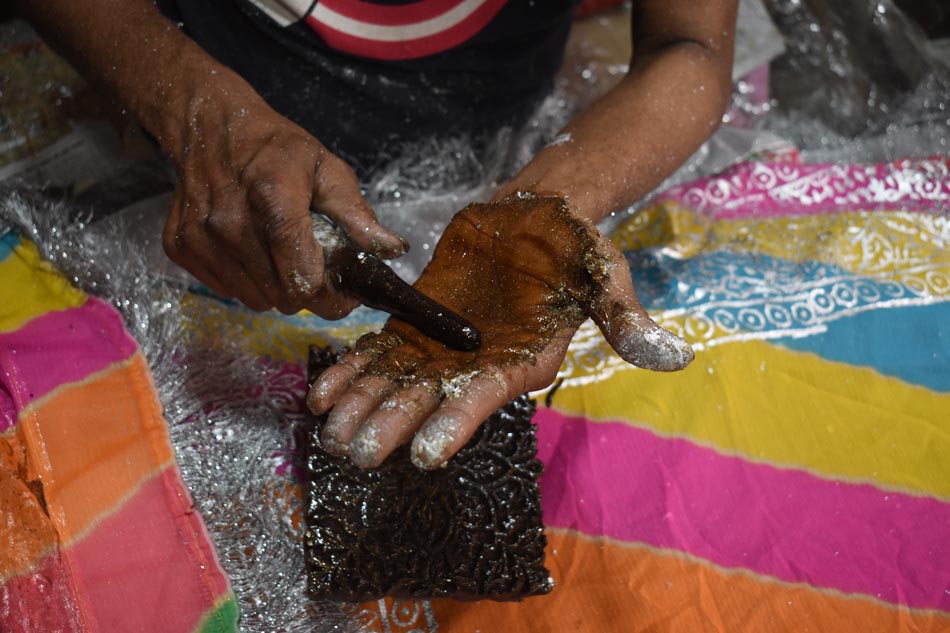
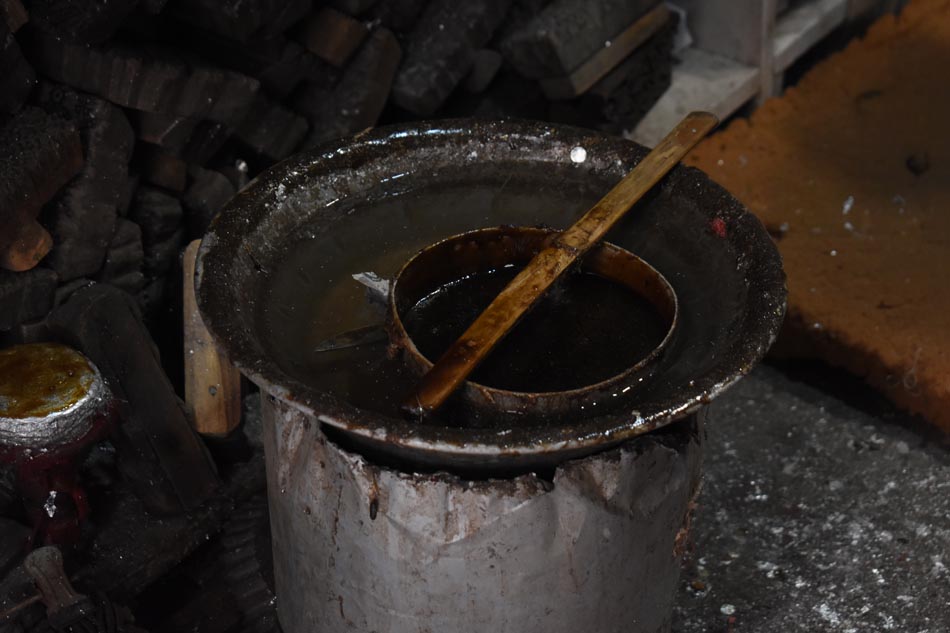
Unlike conventional textile printing, where dyes are absorbed into the fabric, Chaapa involves transferring metallic foil onto cloth using a traditional adhesive known as saresh. The process demands precision, speed and extensive practical experience because the adhesive must be worked with before it dries.
The material foundation of Chaapa distinguishes it from most other block-printing traditions in South Asia. Unlike textile-printing practices that rely on pigments or dyes, Chaapa is based on the interaction of three essential components: metallic foil (tabak), adhesive (saresh or gond) and a prepared textile base. Its distinctive appearance is achieved through the bonding of metallic foil onto the fabric rather than the absorption of colour. Although the materials have evolved over time in response to changing technologies and economic conditions, the fundamental relationship between foil, adhesive and cloth has remained central to the craft and continues to define the Chaapa printing process.
A. Tabak (Metallic Foil)
Tabak constitutes the defining material of Chaapa and is responsible for the characteristic metallic appearance that distinguishes the craft from other textile traditions. The word refers to an extremely thin sheet of metal applied over the adhesive-coated design during printing. According to artisan accounts and historical recollections, early Chaapa garments produced for aristocratic households utilised silver foil rather than aluminium. Such garments were associated with wealthy patrons, landed families and elite wedding ceremonies. Silver not only enhanced the visual richness of the textile but also functioned as a visible indicator of social prestige. The reflective surface communicated wealth and ceremonial importance in a manner similar to precious jewellery or embroidered gold thread. The gradual replacement of silver with aluminium during the twentieth century represented one of the most significant technological transformations in the history of the craft. Aluminium provided a similar visual effect at a fraction of the cost, allowing Chaapa to become accessible to a much broader section of society. This shift effectively democratised the tradition and contributed to its survival beyond elite circles.
Physical Characteristics–Contemporary tabak consists of wafer-thin aluminium sheets measuring approximately ten to twelve square centimetres. The foil is extraordinarily delicate and can be damaged by slight mishandling, strong airflow or excessive pressure. Its thinness is essential because it enables the metal to adhere closely to the contours of the adhesive pattern, creating the illusion that the design has been integrated directly into the textile. Artisans frequently describe tabak as being almost weightless. During the printing process, a single careless movement can tear the foil or cause it to fold upon itself, rendering it unusable. Consequently, the handling of tabak requires a level of dexterity developed only through years of experience.
Production and Procurement–Historically, Bihar sharif maintained local production units capable of manufacturing tabak for regional artisans. This local supply chain reduced transportation costs and ensured immediate availability of materials. However, changes in labour availability and declining economic viability have largely eliminated local production. Contemporary artisans now obtain factory-produced aluminium foil from suppliers based in Patna. The disappearance of local tabak manufacturing reflects broader patterns of artisanal decline affecting associated industries connected to Chaapa production.
The cost of tabak constitutes one of the largest material expenses incurred during production. A bundle containing approximately four hundred sheets costs around ₹800, and a heavily decorated saree may consume an entire bundle. A kilogram of saresh generally costs between ₹100 and ₹150. Although relatively inexpensive compared with tabak, glue quality directly influences production success. For this reason, artisans often prefer trusted suppliers even when cheaper alternatives are available. Consequently, fluctuations in aluminium prices directly affect artisan profitability. Because profit margins are already narrow, increases in raw material costs can substantially reduce earnings. Several artisans interviewed during field research identified rising material expenses as one of the factors contributing to the economic vulnerability of the craft. The metallic sheen produced by aluminium serves as a visual marker of festivity, celebration and ceremonial distinction. The reflective surface catches sunlight and artificial illumination, enhancing the visual impact of the garment during weddings and communal gatherings.
B. Saresh or Gond (Traditional Adhesive)
If tabak provides Chaapa with its visual identity, saresh provides its structural foundation. Without this adhesive, the metallic foil cannot bond to the fabric and the design cannot exist. Saresh is a traditional organic glue prepared from animal hide. For generations, artisans have relied upon this material because of its exceptional adhesive strength and its ability to remain workable for a brief yet critical period during printing. The use of animal-derived adhesives reflects older technological traditions widespread across South Asia before the introduction of synthetic industrial glues.
The success of Chaapa printing depends largely on the quality and consistency of the saresh. The adhesive must be strong enough to hold the metallic foil firmly to the fabric while remaining smooth enough to capture the fine details carved into the wooden block. Artisans therefore pay close attention to its texture and temperature throughout the printing process. The glue is kept warm continuously, as it begins to thicken when it cools, making it difficult to achieve a clean impression. A well-prepared saresh allows the foil to adhere evenly and produces sharp, clearly defined motifs. If the mixture becomes too thick, the printed design loses its clarity, while a thin or weak mixture prevents the foil from bonding properly to the cloth. Achieving the correct balance is a matter of experience and is regarded by artisans as one of the most important skills in the craft.
Manufacture and Supply Networks-The glue reaches artisans in the form of hard flakes purchased from local markets. Much of the supply originates from factories located in Barh, a town situated along the Ganges in Patna district. These factories process animal hides into adhesive material through specialised manufacturing techniques. The existence of this supply chain demonstrates how the continuation of Chaapa depends upon several interconnected industries extending beyond the workshop itself.
Material Challenges–One of the most frequently discussed characteristics of saresh is its strong smell. Traditional formulations emit an intense odour that many wearers find unpleasant. Historical accounts collected from artisans indicate that families often purchased wedding garments months before ceremonies to allow the smell to dissipate naturally. In some cases, attar and perfume were applied directly to garments before use. Earlier generations reportedly considered this practice a routine part of wedding preparations. Contemporary artisans increasingly modify the adhesive through the addition of chemical agents designed to reduce odour and improve workability. These modifications reveal the ongoing adaptation of traditional knowledge to modern consumer expectations.
C. Base Fabrics
Historical Fabric Traditions
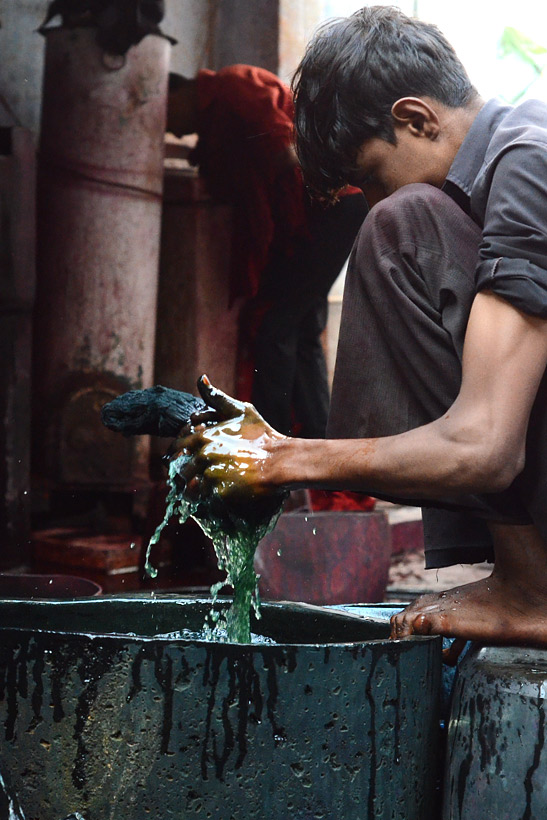
The textile foundation upon which Chaapa is executed has evolved significantly over time. Historically, Rangrez artisans not only printed garments but also participated in the dyeing process. Cotton fabrics were dyed locally before receiving metallic decoration. This integrated production system enabled artisans to control multiple stages of manufacture. Over time, however, changing market structures and the decline of traditional dyeing activities led to the separation of these processes.
Contemporary Fabric Choices
Most Chaapa artisans purchase ready-dyed fabric from local wholesalers rather than dyeing the cloth themselves. A variety of materials are used, including cotton, satin, silk, net and synthetic fabrics, with the choice largely determined by the type of garment being made, the customer’s preference and the available budget. For everyday ceremonial wear, cotton and blended fabrics are often preferred because they are affordable and easy to work with. Bridal garments, however, are commonly made from satin or silk, as their smooth surface and natural sheen enhance the brilliance of the metallic print and give the finished garment a richer appearance.
The relationship between fabric colour and metallic decoration plays an important role in the visual effect of the finished product. Traditional red and green textiles remain particularly popular because they create strong contrast with the silver-toned aluminium foil. Dark backgrounds tend to intensify reflectivity, while lighter colours produce a softer visual effect. Artisans therefore select fabrics with careful attention to how the metallic motifs will appear under ceremonial lighting conditions.
Material Limitations
Not all fabrics are suitable for Chaapa. Organza, for example, is generally avoided because its stiffness prevents proper bonding and increases the likelihood of print failure. Fabrics that are excessively smooth, rigid or loosely woven also present difficulties during production. The selection of appropriate cloth therefore represents an important technical decision rather than a purely aesthetic choice.
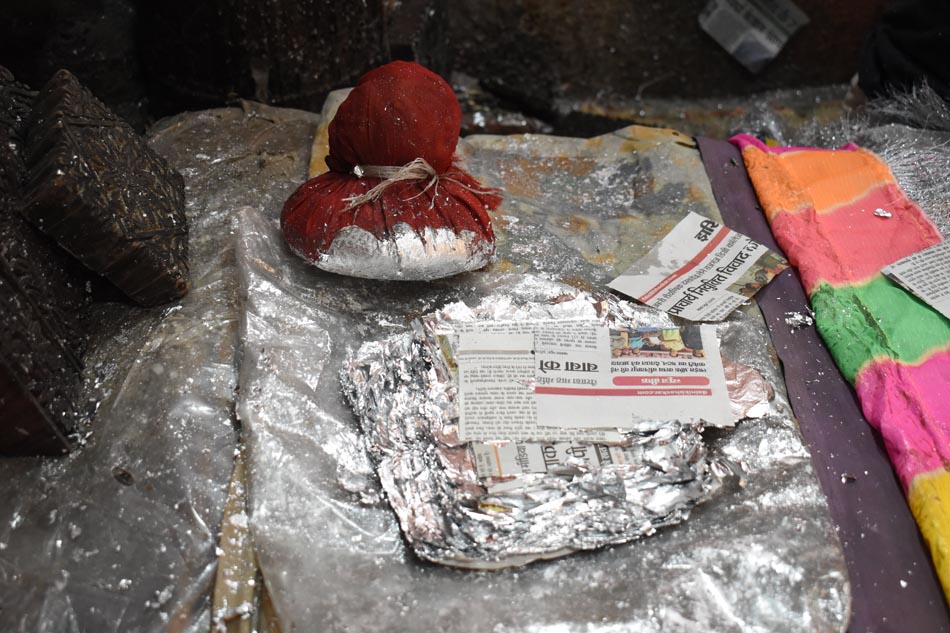
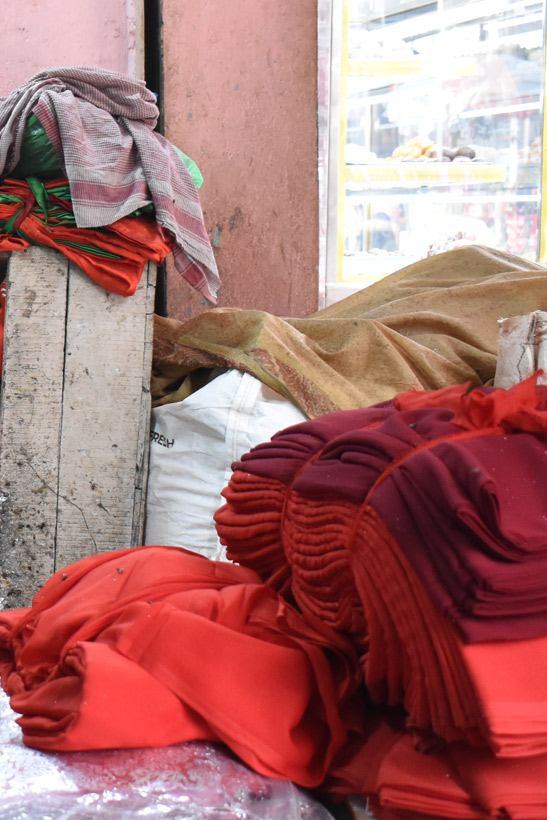
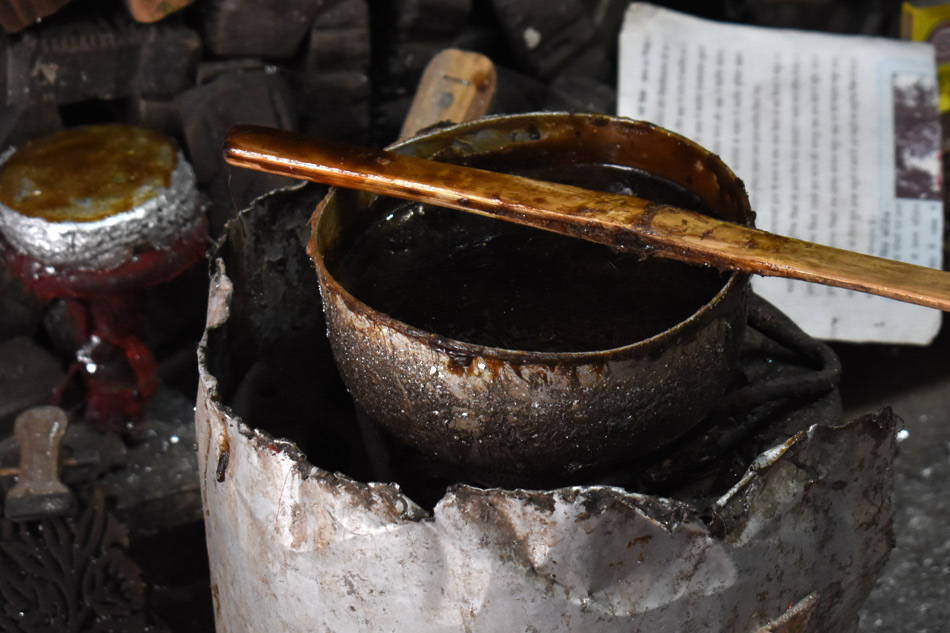
The tools used in Chaapa production appear simple when compared to the machinery employed in modern textile industries. However, the success of the craft depends not on technological complexity but on the artisan’s skill in handling a small set of specialised tools with precision and speed. Most of these tools have remained largely unchanged for generations, reflecting the continued importance of manual knowledge and traditional techniques within the craft. Each tool performs a specific function, and together they form an integrated system that enables the production of Chaapa prints.
Theppa (Wooden Printing Block)
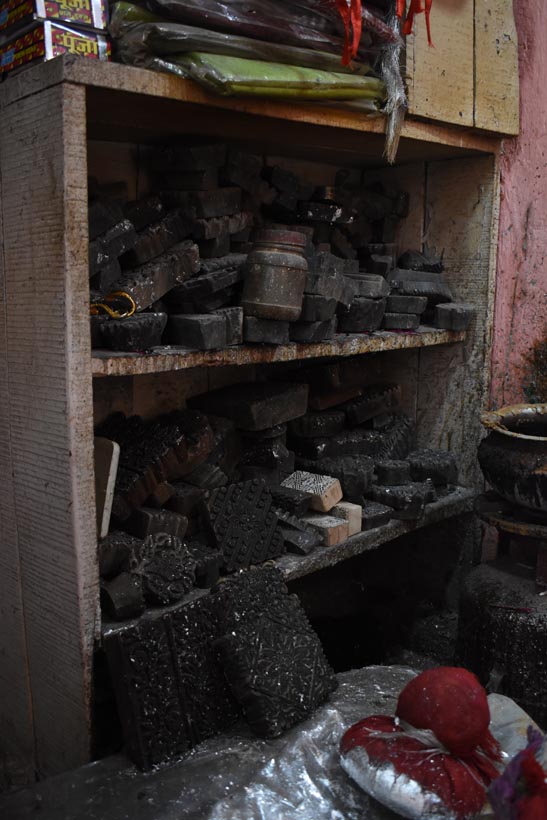
The theppa is the most important tool in Chaapa production. It serves as the medium through which designs are transferred onto the fabric and acts as the primary carrier of the craft’s visual traditions. Floral motifs, geometric patterns, paisleys and decorative borders all originate from the carved surface of these wooden blocks. Unlike blocks used in dye printing, Chaapa blocks are specifically designed to transfer adhesive. Their carved relief patterns ensure that the glue spreads evenly across the fabric without accumulating in recessed areas, which could otherwise blur the design. The precision of the block directly affects the clarity and quality of the final print.
Most theppas are carved from Sheesham (Indian Rosewood), a hardwood valued for its durability and ability to retain intricate details over long periods. The wood withstands repeated exposure to heated adhesive; resists warping caused by humidity and remains functional for decades when properly maintained. Its density allows artisans to create highly detailed motifs while ensuring structural stability during continuous use. These blocks are generally sourced from Dalmandi in Banaras (Varanasi), a historic centre known for specialised wood carving and textile-related crafts. Many Chaapa artisans maintain long-standing relationships with block makers, commissioning new designs, repairs and replacements whenever required. Depending on their size and complexity, individual blocks typically cost between ₹1,400 and ₹2,000. Since they represent a significant investment, workshops carefully preserve them, often passing them down through generations.
Potri or Potli (Pressing Pad)
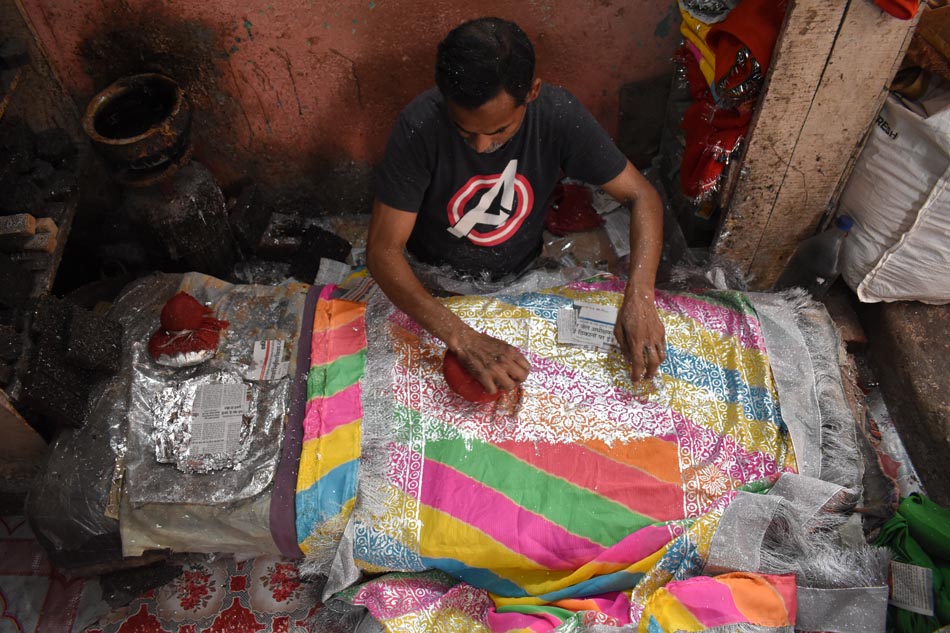
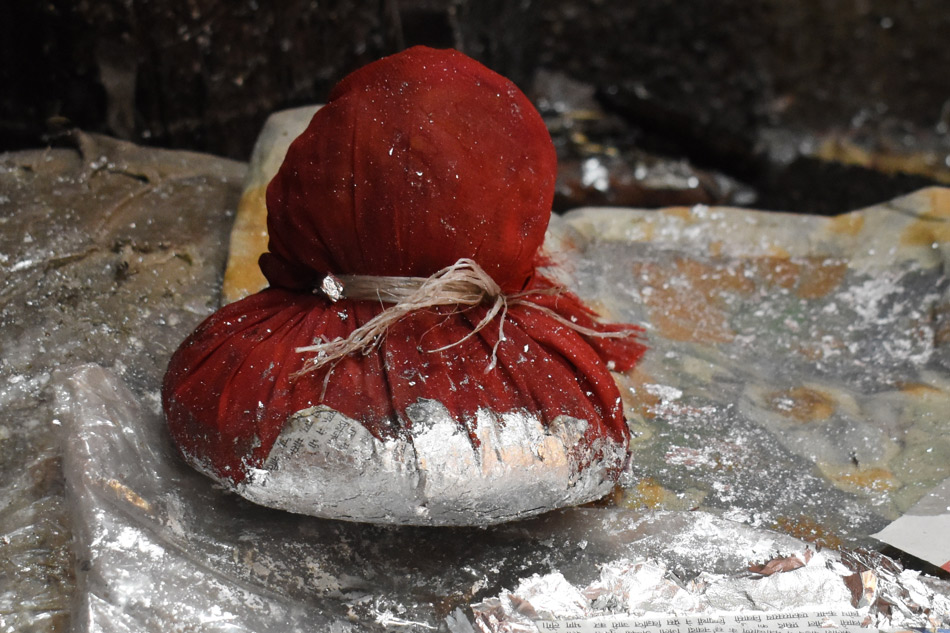
The potri, also known as the potli, is a handmade padded bundle used during the foil transfer stage of the process. After the metallic foil, known as tabak, is placed over the adhesive-coated design, the artisan repeatedly presses and rubs the surface with the potri. This action ensures that the foil bonds completely with the adhesive and transfers cleanly onto the fabric. The tool is typically made from cotton, old cloth scraps and other soft padding materials tightly wrapped within layers of fabric. Its cushioned structure allows pressure to be distributed evenly without tearing the delicate foil. Although simple in appearance, the potri plays a crucial role in determining the quality of the finished print.
Successful foil transfer depends heavily on the artisan’s judgement. Insufficient pressure can leave portions of the design incomplete, while excessive force may distort motifs or damage the foil. Through years of practice, artisans develop an instinctive understanding of the rhythm, force and duration required for different fabrics and patterns.
Gadda (Printing Base)
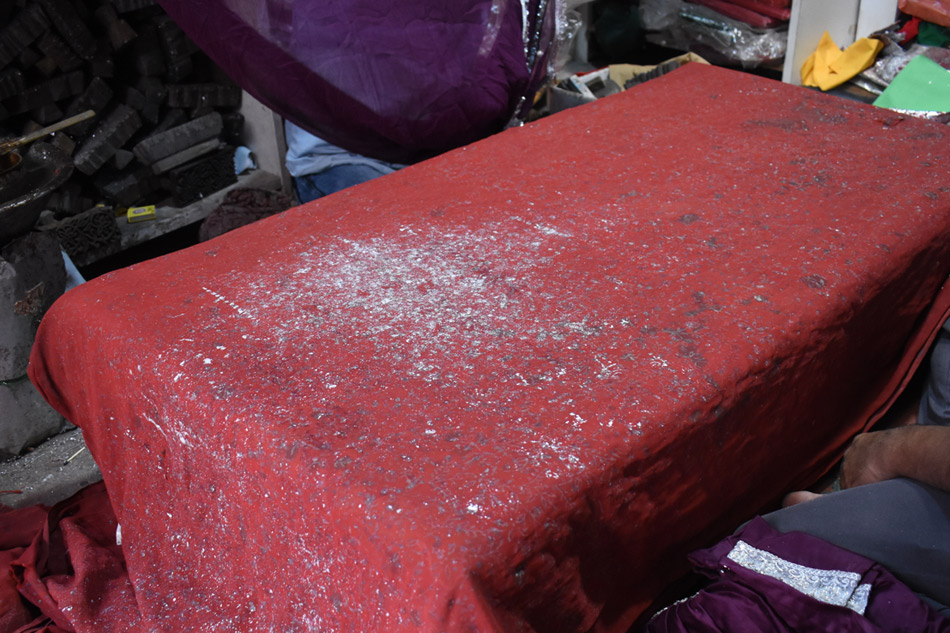
The gadda functions as the primary working surface on which printing takes place. It consists of a flat platform covered with layers of padding and fabric, creating a slightly cushioned base that supports the textile during the printing process. This cushioning is essential because it allows the printing block to make uniform contact with the fabric. A completely hard surface would result in uneven pressure distribution and incomplete transfer of the adhesive. The padded structure helps compensate for minor variations in force, producing clearer and more consistent impressions.
During printing, artisans carefully stretch and adjust the fabric across the gadda to prevent wrinkles and distortions. Much of the workshop activity revolves around this workspace, making it the central area where designs are printed, foil is applied and finished textiles are inspected before drying.
Dekchi (Heating Vessel)
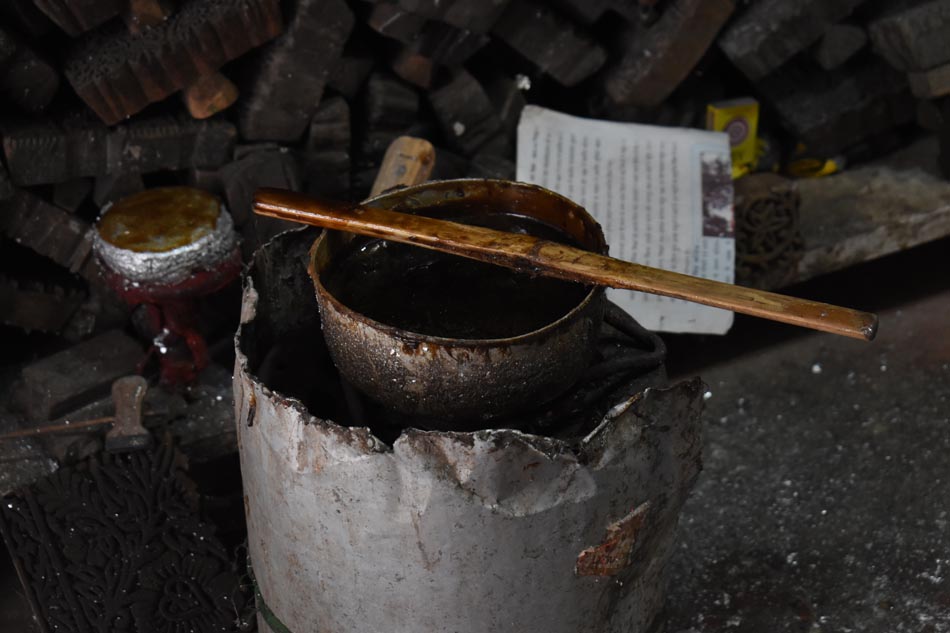
The dekchi is a specialised aluminium vessel used to heat and maintain the adhesive required for printing. Since the adhesive thickens rapidly as it cools, maintaining a stable temperature is essential throughout the production process. Rather than heating the glue directly over a flame, artisans place the adhesive container inside a larger vessel filled with boiling water, creating a simple double-boiler arrangement. This method prevents the adhesive from burning while ensuring a consistent temperature and texture. It also reduces material wastage and allows the glue to remain usable for extended periods.
The dekchi remains in operation throughout the working day. Artisans repeatedly return to it between successive impressions to replenish the adhesive on their blocks. Without continuous heating, production would quickly come to a halt as the glue hardens and becomes unsuitable for printing.
Cylinder-Top Stove
The cylinder-top stove represents one of the most visible examples of technological adaptation within contemporary Chaapa workshops. Earlier generations relied primarily on coal-fired systems, which required considerable preparation time and produced significant amounts of smoke. Today, many artisans use compact LPG-powered stoves mounted directly onto gas cylinders. The adoption of these stoves has improved working conditions in several ways. They heat the adhesive more quickly, provide greater temperature control and reduce smoke exposure within the workshop. They also minimise fuel preparation time and contribute to a cleaner working environment. Using LPG stoves, artisans can prepare adhesive in approximately thirty minutes, making the production process more efficient without altering its traditional character.
The cylinder-top stove demonstrates how the craft selectively incorporates modern innovations while preserving its essential techniques. Although certain supporting technologies have changed, the core printing process continues to rely on manual skill and traditional knowledge.
Auxiliary Workshop Objects
Alongside the primary tools, artisans use a variety of smaller objects that support the production process. These include paperweights for securing sheets of foil, cloths for cleaning printing blocks, containers for preparing and transporting adhesive, water vessels, storage racks for drying printed textiles and brooms for removing excess metallic dust from the workspace. While these objects rarely attract attention in discussions of the craft, they contribute significantly to the smooth functioning of daily workshop activities. Together they form part of the wider material culture that surrounds Chaapa production.
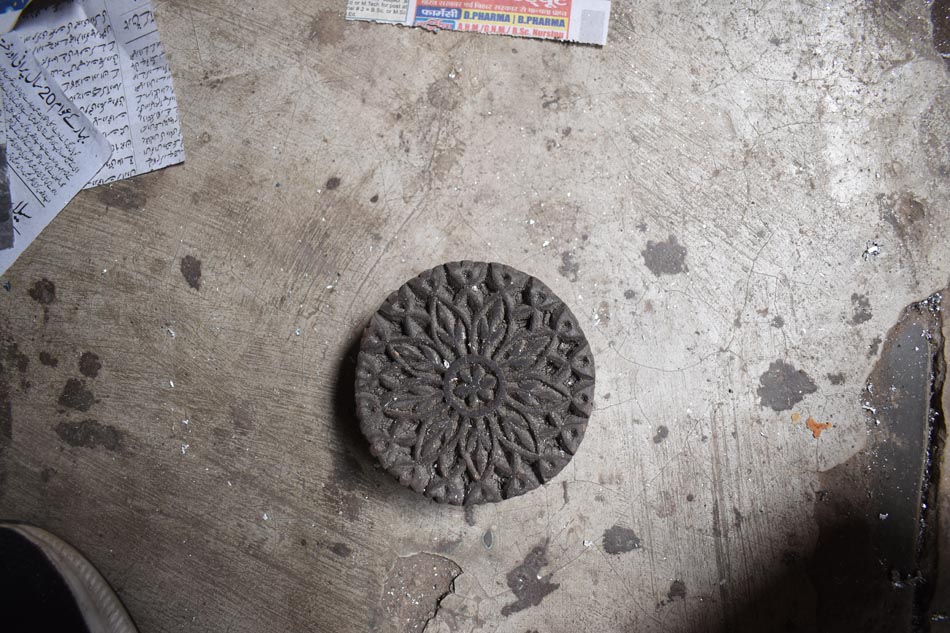
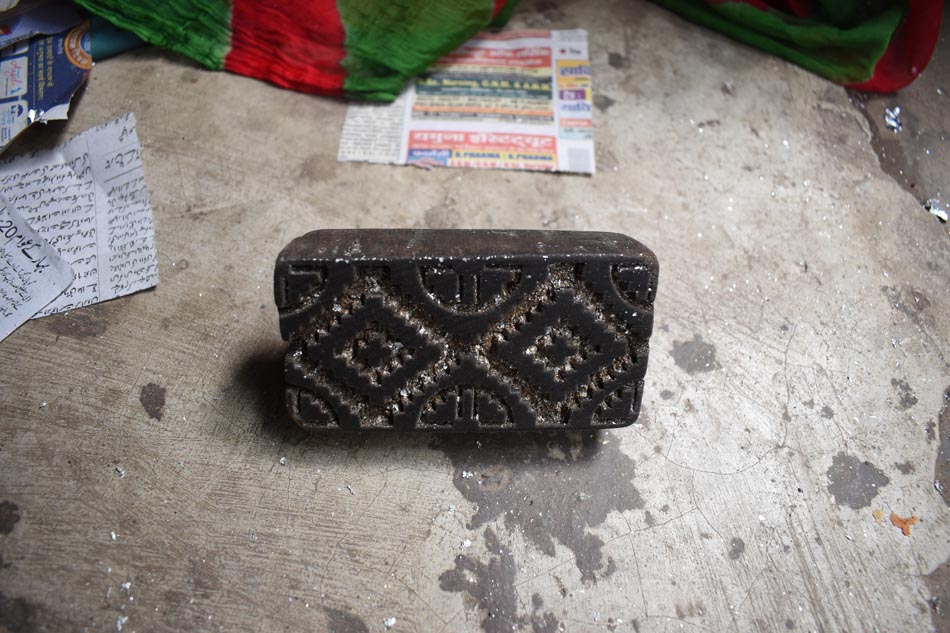
Although Chaapa is closely associated with important occasions in Bihari Muslim society, it is not a religious craft in the conventional sense. There are no sacred texts, religious obligations or formal doctrines that require its use. Its significance emerges instead from community customs, family traditions and the role it plays in marking important moments in life. In this sense, Chaapa occupies a unique position where the process of making remains largely secular while the act of wearing becomes deeply ceremonial. For generations, Chaapa garments have been associated with weddings, birth celebrations and other family occasions. Through repeated use at these events, the craft has acquired a powerful symbolic value that extends far beyond decoration. It has become a visible expression of belonging, continuity and cultural identity.
Workshop Practices and Artisan Traditions
One of the most distinctive features of Chaapa is the absence of elaborate workshop rituals. In many traditional crafts, artisans perform prayers before beginning work, seek blessings for their tools or observe auspicious days for production. Such practices are generally absent in Chaapa workshops. Artisans do not regard the theppa (wooden printing block), adhesive or other tools as sacred objects requiring worship. The craft is viewed primarily as a hereditary occupation that depends on skill, patience and experience. Knowledge is passed from one generation to the next through observation and apprenticeship. Young family members learn gradually by assisting elders and participating in everyday workshop activities rather than through formal initiation ceremonies.
Ramadan
While the craft itself is not governed by ritual practices, religious observance often influences the organisation of labour. During Ramadan, artisans commonly adjust their working hours to accommodate fasting. Many workshops close earlier in the evening so that workers can prepare for Iftaar and spend time with their families. Ramadan also affects the flow of orders. Since weddings are often planned around the fasting month, demand for Chaapa garments may increase before Ramadan or shortly after it concludes. In this way, religious observance shapes the rhythm of production even though it does not directly alter the printing process.
Stage I: Fabric Preparation
The production of a Chaapa textile begins with the careful preparation of the fabric that will receive the metallic print. Historically, Rangrez artisans managed the entire process themselves, including dyeing the cloth before decoration. This gave them complete control over colour, texture and the final appearance of the textile. Today, however, most artisans purchase ready-dyed fabrics from wholesale markets or specialised dyeing centres in cities such as Patna. This shift reflects broader changes in Bihar’s textile economy and the increasing specialisation of different stages of production. The choice of fabric depends on the nature of the garment, the preferences of the customer and the intended use of the finished product. Cotton remains popular because of its affordability and durability, while satin and silk are preferred for wedding garments and festive clothing due to their lustrous appearance. Net fabrics and synthetic blends are also frequently used, particularly for contemporary styles. Since Chaapa is largely a custom-based craft, artisans often work with fabrics supplied directly by customers.
Unlike many block-printing traditions where decoration takes place on unstitched cloth, Chaapa is generally applied after the garment has already been tailored. Sarees, salwar suits, ghararas, shararas, dupattas and ceremonial textiles arrive at the workshop in their finished form, ready for embellishment. This practice allows customers to select specific garments for weddings, festivals and family celebrations, making each commission highly personalised.
Before printing begins, the garment is spread carefully across a padded working surface known as the gadda. The artisan smooths out wrinkles, removes folds and adjusts the tension of the cloth to create an even printing surface. Although seemingly simple, this preparatory stage is essential because the accuracy of every subsequent impression depends upon the proper alignment of the fabric.
Stage II: Preparation of Saresh
Once the textile has been prepared, attention shifts to the making of saresh, the traditional adhesive that enables metallic foil to bond permanently with the fabric. The adhesive is prepared by heating hard flakes of glue in water over a controlled flame. Depending on weather conditions and the quantity being prepared, this process usually takes between thirty minutes and an hour. As the mixture heats, the flakes gradually soften and dissolve, transforming into a thick, sticky liquid with a distinctive reddish colour. The preparation of saresh requires considerable experience because its effectiveness depends upon achieving the correct consistency. If the mixture is too thin, it will fail to hold the metallic foil securely. If it becomes too thick, the printed impressions may lose clarity and produce uneven results.
Rather than relying on measuring instruments, artisans judge the readiness of the adhesive through observation and touch. They examine its texture, viscosity and appearance, drawing upon years of practical knowledge passed down through generations. Some contemporary practitioners add chemical thickeners to modify the mixture or reduce its odour, but these additions must be used carefully because excessive alteration can affect adhesion and compromise the quality of the print.
Stage III: Preparing the Printing Block
One of the most distinctive features of Chaapa printing is the method used to transfer adhesive onto the printing block. Unlike conventional block-printing traditions, where the block is dipped into a tray of colour or pressed against an ink pad, Chaapa relies upon direct contact between the artisan’s hand and the adhesive. This technique reflects the highly tactile nature of the craft and the intimate relationship between the artisan’s body and the production process.
After the saresh reaches the desired consistency, the artisan takes a small quantity of the warm adhesive and spreads it evenly across the palm of the left hand. The adhesive must be distributed carefully to create a thin, uniform layer. At this stage, the hand temporarily becomes a working surface through which the adhesive is transferred to the printing block. Achieving the correct thickness is essential because an uneven coating can affect the clarity and precision of the final impression. The artisan then takes the carved wooden block, locally known as the theppa, and gently rubs its raised surface against the adhesive-coated palm. This action allows the glue to adhere only to the elevated portions of the design while preventing excess adhesive from collecting in the recessed areas of the carving. The technique requires considerable control and sensitivity. Too much adhesive can cause motifs to spread beyond their intended boundaries, while too little may result in incomplete transfer of the metallic foil during later stages.
The process is repeated continuously throughout printing, requiring the artisan to maintain a careful balance between speed and precision. Because the adhesive gradually cools and loses its tackiness, the block must be coated and used without delay. Experienced practitioners develop a rhythm that allows them to regulate the quantity of adhesive, monitor its consistency and prepare the block for repeated impressions without interrupting the flow of work. Through years of practice, they learn to judge the correct amount of adhesive by touch alone, ensuring that each impression remains sharp and uniform.
Stage IV: Block Printing the Motif
Once the theppa has been coated with adhesive, the artisan must act quickly before the glue begins to lose its effectiveness. The block is positioned carefully over the prepared textile and pressed firmly onto the fabric surface. This action, known among practitioners as the Chaapa strike, transfers the adhesive pattern from the block onto the cloth and creates the foundation upon which the metallic design will later emerge.
Although the movement appears simple, it requires a high degree of concentration and control. The artisan must simultaneously maintain correct alignment, apply consistent pressure and ensure that the impression follows the intended direction of the pattern. Any error at this stage can affect the overall composition and may be difficult to correct once the foil has been applied. The challenge becomes even greater when working on elaborate garments where motifs must continue seamlessly across large areas of fabric. Most Chaapa textiles are created through a series of repeated impressions rather than a single stamp. The artisan carefully positions the block again and again, gradually constructing borders, floral arrangements, geometric motifs and intricate jaal patterns. Each impression must align precisely with the previous one in order to maintain visual continuity. The process demands patience, spatial awareness and an experienced eye for pattern placement.
For ceremonial garments such as bridal wear, the number of impressions required can be substantial. Large sections of fabric may be covered with dense decorative patterns, requiring hundreds of carefully aligned strikes before the printing stage is complete. Throughout this process, the artisan works against time, continually balancing speed with accuracy so that the adhesive remains active for the subsequent application of metallic foil.
Stage V: Application of Tabak
Immediately after the adhesive design has been stamped onto the fabric, the artisan proceeds to one of the most delicate stages of the Chaapa process: the application of tabak, the metallic foil that gives the craft its distinctive brilliance. This stage must follow the printing process without delay because the adhesive begins to dry as soon as it comes into contact with the air. Any interruption can reduce its ability to bond effectively with the foil and compromise the quality of the finished design.
The tabak is stored in carefully protected stacks, often secured beneath a paperweight or covered to shield it from air currents. The metallic sheets are extremely thin and lightweight, making them vulnerable to tearing, folding or displacement during handling. Before application, the artisan gently lifts a single sheet and positions it over the freshly stamped adhesive pattern. This operation demands a steady hand and considerable patience, as even minor wrinkles can affect the appearance of the final motif. Once placed on the fabric, the foil must completely cover the adhesive impression. The artisan carefully smooths the sheet to ensure that it lies flat against the textile surface without creases or air pockets. Unlike ordinary decorative materials that can be repositioned repeatedly, tabak allows very little room for correction. A misplaced sheet can distort the design and reduce the clarity of the metallic impression that will later emerge.
The successful application of tabak depends largely upon timing and coordination. The artisan must work quickly enough to take advantage of the adhesive’s tackiness while remaining sufficiently careful to avoid damaging the fragile foil. Only after pressing and bonding will the decorative motif gradually reveal itself. The application of tabak therefore represents a transitional moment in the process, bridging the adhesive printing stage and the final emergence of the metallic design.
Stage VI: Pressing and Bonding
After the tabak has been positioned over the adhesive impression, the artisan begins the process of bonding the metallic foil to the fabric. This is accomplished using a padded tool known as the potri, which is repeatedly pressed and rubbed across the foil-covered surface. Through a combination of pressure and movement, the metallic layer is encouraged to adhere firmly to the adhesive pattern beneath. The pressing process serves several important functions. Most importantly, it ensures direct contact between the foil and the adhesive, allowing the metallic layer to bond securely with the fabric. At the same time, the repeated rubbing helps sharpen the outlines of the design, remove trapped air and improve the durability of the final print. The artisan carefully regulates the amount of pressure applied, since insufficient force can result in incomplete transfer while excessive pressure may damage the foil or distort delicate motifs.
As the potri moves across the surface, the adhesive begins to capture the metallic layer only where the block impression was originally placed. Areas of fabric that contain no adhesive remain unaffected. Although the pattern is not yet fully visible, the bonding process gradually establishes the contrast that will later define the finished design.
In larger workshops, this stage may be carried out through a division of labour. One artisan continuously stamps adhesive patterns while another follows closely behind, applying foil and performing the pressing process. Such coordination increases efficiency and reduces the risk of the adhesive drying before the foil can be properly bonded. This collaborative approach is particularly useful when working on large orders or highly decorated ceremonial garments that require extensive printing.
Stage VII: Cleaning and Revealing the Design
Once the pressing process is complete, the artisan begins removing the excess metallic foil that remains on the surface of the fabric. Although the entire printed area is still covered by tabak, only the portions that came into contact with the adhesive have formed a permanent bond. The remaining foil rests loosely on the cloth and can be separated without disturbing the attached design.
Using gentle hand movements, the artisan carefully lifts and brushes away the unattached fragments of foil. As these excess pieces are removed, the metallic motif gradually emerges from beneath the surface. Floral forms, geometric arrangements and decorative borders that were previously hidden become visible for the first time, revealing the results of the preceding stages. The contrast between the reflective metallic pattern and the coloured fabric creates the distinctive visual effect for which Chaapa is known.
This stage demands patience and attention because careless handling can damage freshly bonded areas or dislodge portions of the design that have not yet fully settled. The artisan therefore proceeds slowly, ensuring that only loose foil is removed while the bonded sections remain intact. Through this process, the clarity and sharpness of the motif become evident, allowing the artisan to assess the quality of the impression and identify any imperfections that may require correction. Many practitioners regard this as one of the most satisfying moments in the entire production process. Throughout the earlier stages, the final outcome remains largely concealed beneath layers of adhesive and metallic foil. It is only during cleaning that the completed design reveals itself in its full form. The emergence of the pattern serves as an immediate indication of the artisan’s skill, reflecting the accuracy of the block impressions, the quality of the adhesive preparation and the effectiveness of the bonding process.
Stage VIII: Drying and Curing
After the excess foil has been removed and the metallic design has been revealed, the printed textile enters the final stage of production: drying and curing. Although the decorative pattern is now visible, the adhesive beneath the metallic layer has not yet fully hardened. Proper drying is therefore essential to ensure the durability and longevity of the finished print. The garment is carefully transported outdoors and placed in direct sunlight. Depending on weather conditions, fabric type and the thickness of the adhesive, drying may continue for approximately one hour or longer. During this period, the saresh gradually hardens and establishes a firm bond between the metallic foil and the textile surface. This curing process determines how well the design will withstand handling and regular use.
Environmental conditions play a significant role in the success of this stage. Bright sunlight, moderate humidity and stable temperatures provide the most favourable conditions for drying. Excessive moisture in the atmosphere can slow the curing process and weaken adhesion, while sudden rain or overcast weather may interrupt production altogether. For this reason, artisans often plan their work according to seasonal and daily weather patterns, adjusting their schedules to take advantage of suitable drying conditions.
The dependence on natural drying reflects the continued importance of environmental knowledge within the craft. Even after the printing has been completed, artisans must remain attentive to factors beyond their immediate control. Successful production therefore requires not only technical expertise but also an understanding of local climatic conditions and their effect on materials. Once the adhesive has fully cured, the metallic design becomes securely attached to the fabric and the garment is ready for use. The completed textile displays the characteristic brilliance of Chaapa, with reflective motifs standing out against the coloured surface of the cloth.
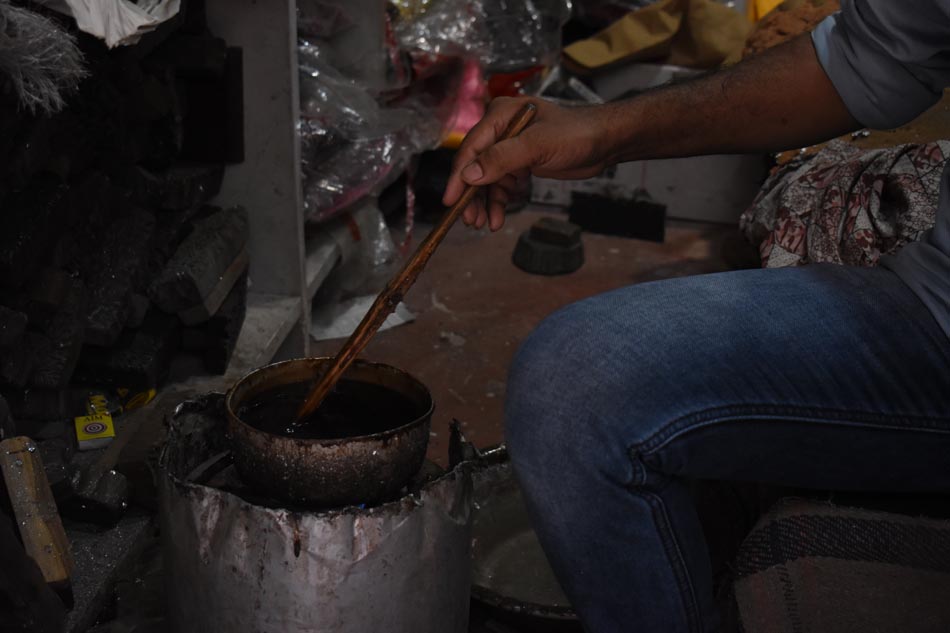
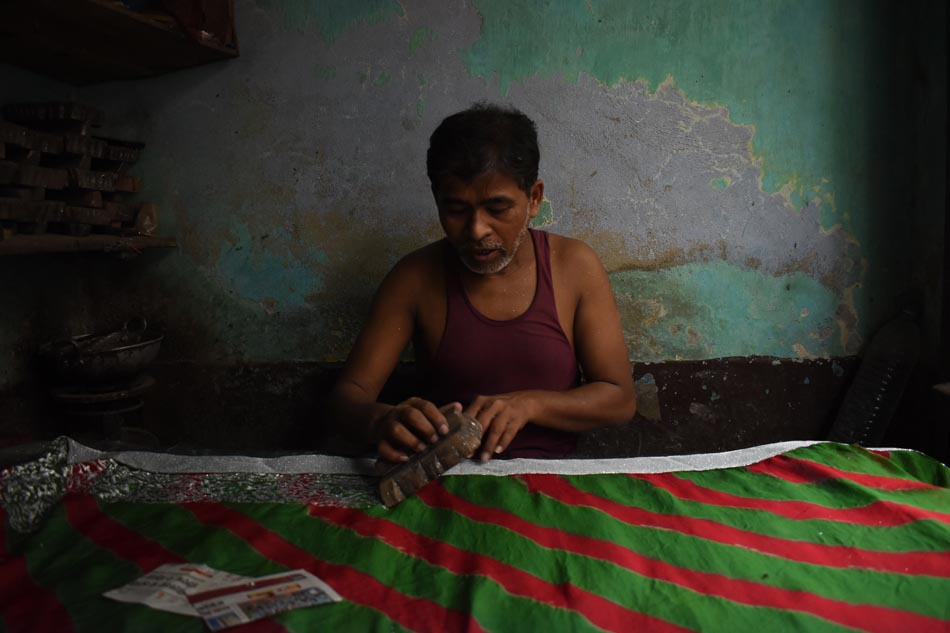
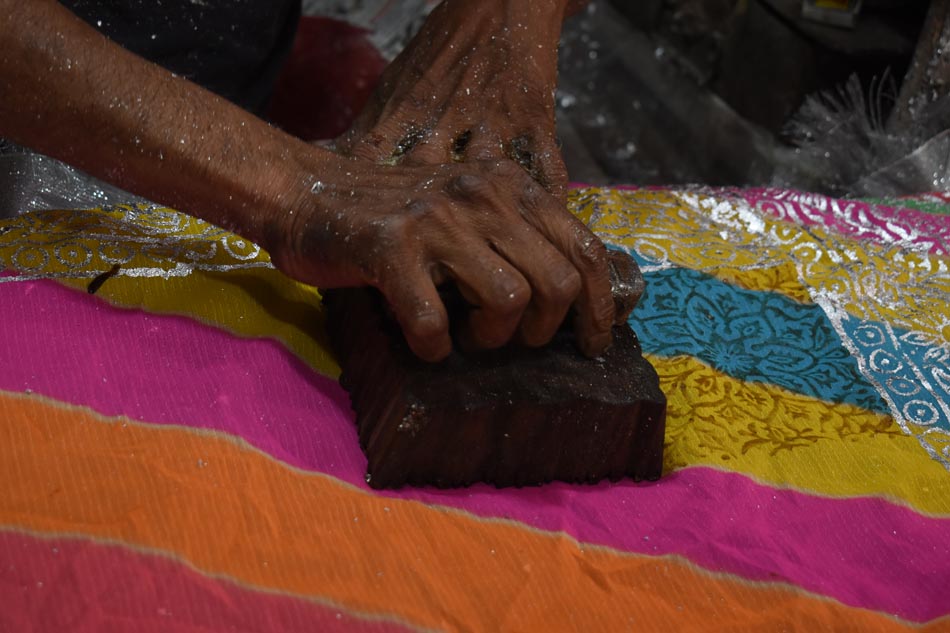
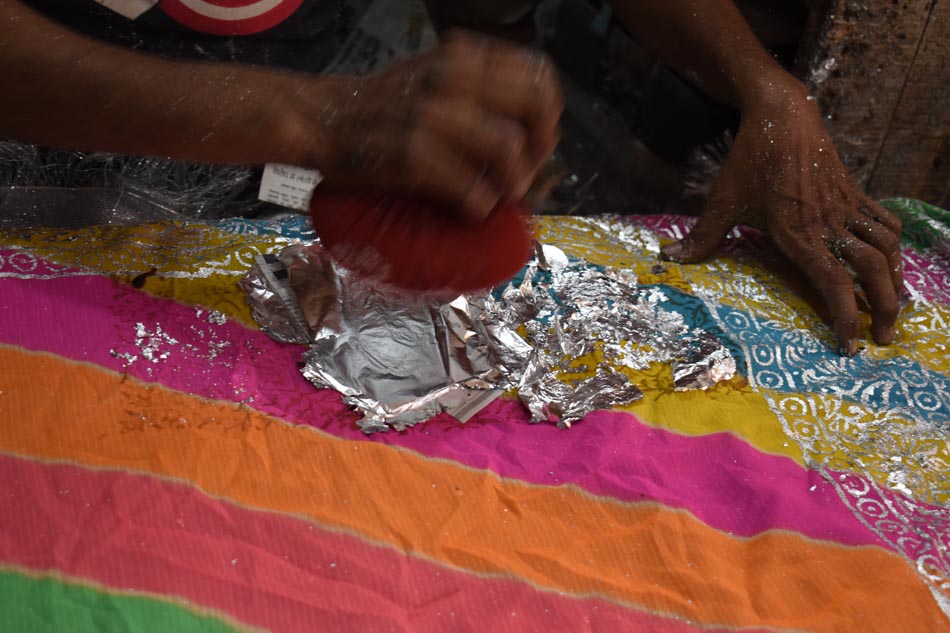
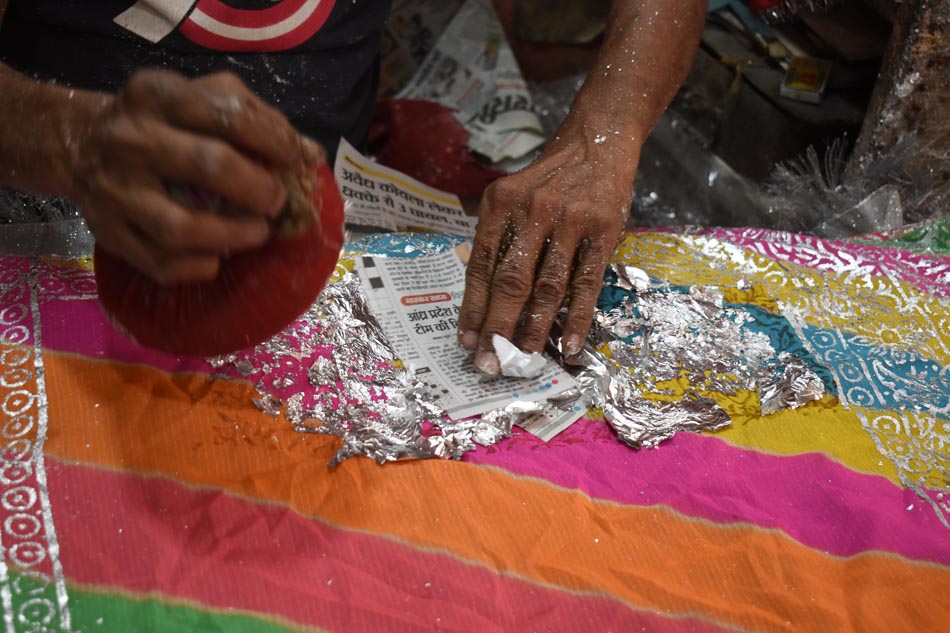
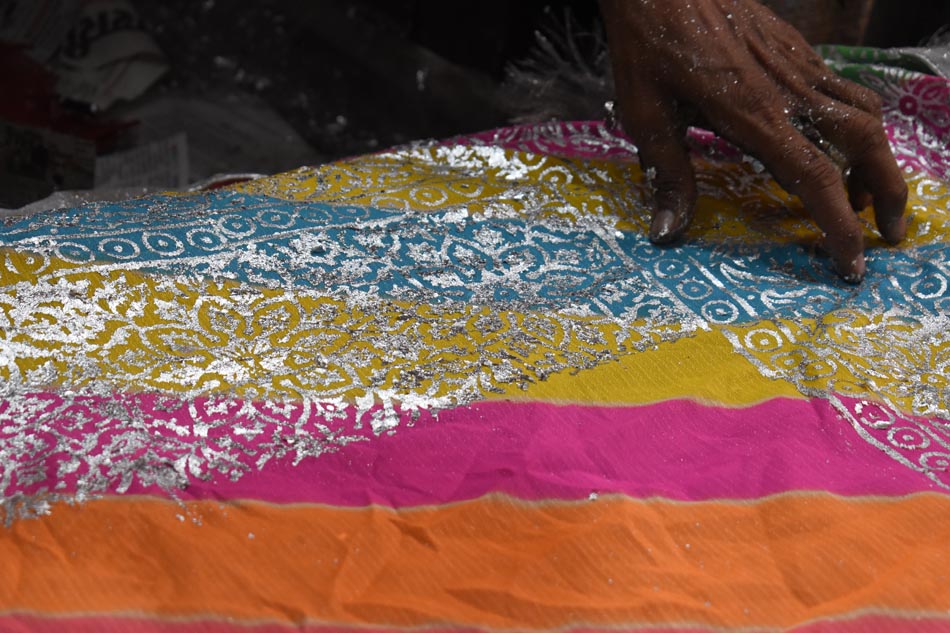
Although Chaapa produces relatively little textile waste, the process generates a considerable amount of metallic residue. During the pressing and brooming stages, excess aluminium foil flakes away from the fabric, creating fine particles that settle on work surfaces, tools, clothing and the workshop floor. This aluminium dust forms the most significant waste stream associated with the craft. In earlier times, when genuine silver foil was used for royal and ceremonial garments, even the smallest particles were carefully collected, melted and reused because of their economic value. Today, aluminium residue has no practical resale value and is usually swept up and discarded with ordinary waste. Small quantities of adhesive residue are also produced during printing, particularly when leftover saresh hardens on tools or containers after use.
One of the most sustainable features of Chaapa is the ability to correct mistakes without discarding the entire garment. If a print becomes smudged or misaligned, the artisan can wash away the foil and adhesive from the affected area while the saresh remains water-soluble. The fabric is then dried and the design is reapplied, allowing the garment to be restored with minimal material loss. This repair-oriented approach reduces textile waste and contrasts with many industrial production systems where defective items are often discarded.
The craft also encourages reuse beyond the production stage. Since the metallic decoration naturally fades after repeated washing, garments are frequently brought back to artisans and printed again for future ceremonies. This extends the life of the textile and reduces the need for new purchases. At the same time, environmental concerns remain, particularly regarding the disposal of aluminium dust and the growing use of chemically modified adhesives. More broadly, the long-term sustainability of Chaapa depends not only on managing material waste but also on preserving the specialised knowledge and skills of the artisans who continue to practise the craft.
The history of Patna is rich with ancient empires, spiritual growth, and trade. The city was originally founded by Ajatashatru, the king of Magadha. He built a fort at the village of Pataligrama in 490 BCE to fight the Licchavis of Vaishali. He chose this spot because of its strategic location on the banks of the river Ganga.
Around 300 BCE, during the Mauryan period, the city was called Pataliputra. It became the main centre of power for the Indian subcontinent and had about 400,000 people. Megasthenes, a Greek ambassador, called it the greatest city on earth. It was a huge centre for education, home to famous scholars like Aryabhata and Chanakya. Emperor Ashoka greatly improved the city's buildings, adding stone walls and structures. He also made it a main base for spreading Buddhism. The city stayed successful during the Gupta Empire. In 400 CE, the Chinese traveller Fa-Hien wrote about its wealthy society and free hospitals for the poor.
During the Medieval Period, the city faced many changes. After several invasions and a time of decline, the Afghan emperor Sher Shah Suri revived Patna in the 16th century and got a fort constructed there. Later, in the early 18th century, the Mughal prince Azim-us-Shan served as the local governor. He worked to make the capital a beautiful and great city, second only to the imperial capital, Delhi. He got permission from Emperor Aurangzeb to change Patna’s name to Azimabad. However, the local people continued to call it Patna.
When European powers arrived, Patna became a very important centre for global trade. In 1620, the English East India Company set up a factory here to trade silk and calico cloth. The area became famous worldwide for saltpetre (an ingredient used in gunpowder), which was shipped down the Ganga river. Patna also played a major part in the 1857 war for Indian Independence. Local leaders, like the bookseller Pir Ali, planned actions to fight against British rule. This made the district a key area for the freedom struggle. Finally, when the Bengal presidency was split in 1912, Patna regained its status as a capital for the new province of Bihar and Orissa.
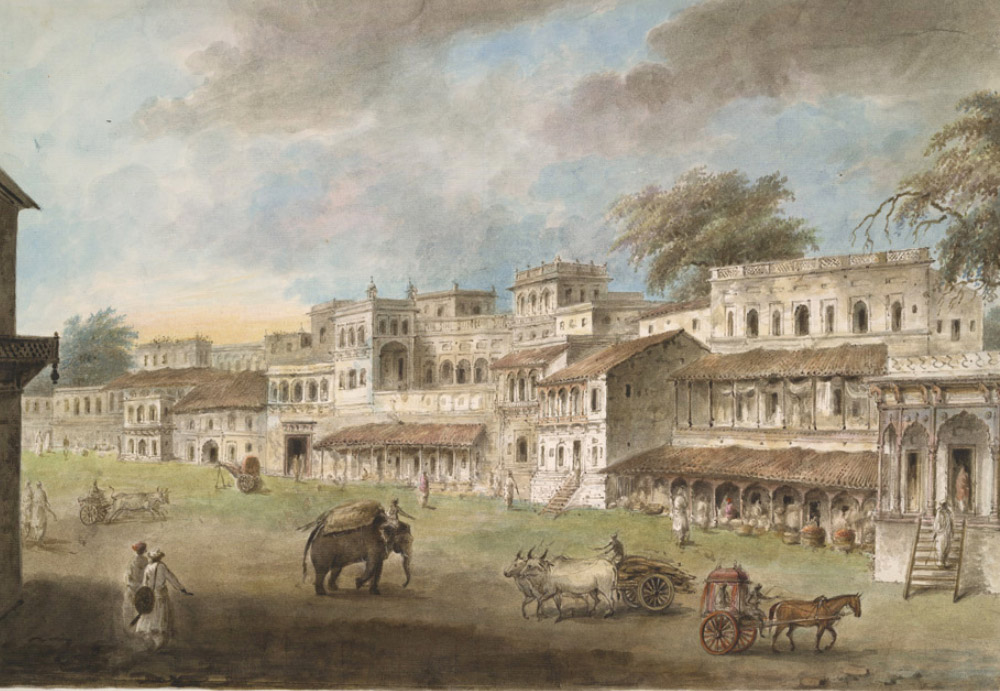
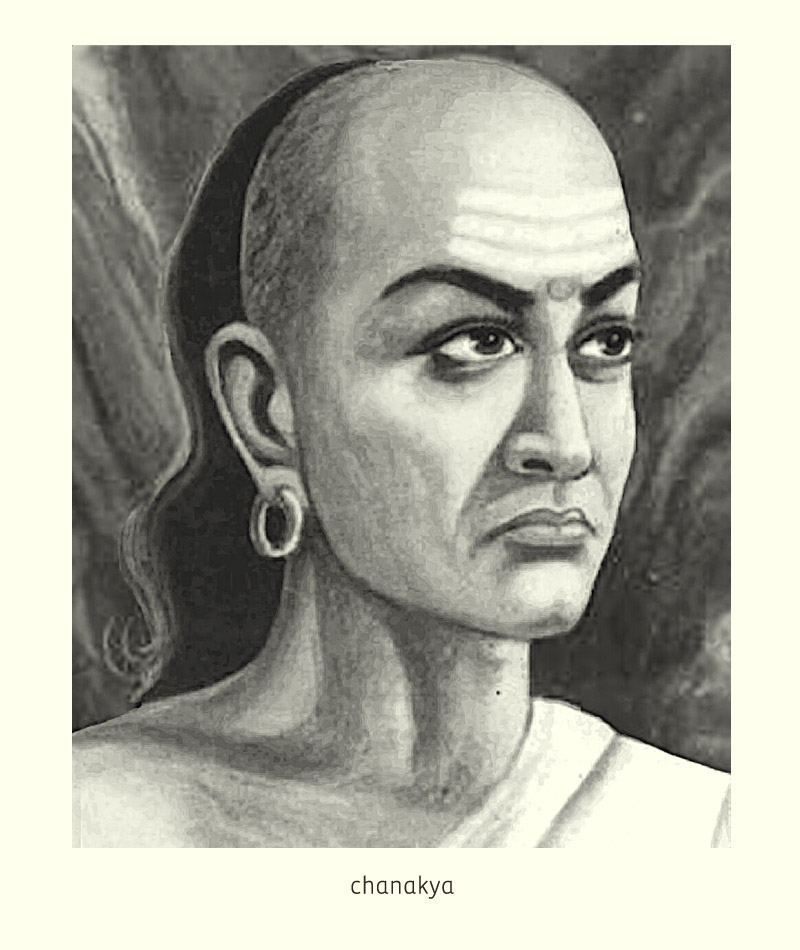
Patna’s geography is mostly flat and defined by its many rivers.
The city of Patna sits on the southern bank of the river Ganga, right where major rivers like the Sone, Gandak, and Punpun meet. The total area of Patna is 250 km2. The city is about 35 kilometres long and 16 to 18 kilometres wide. The city's land is shaped somewhat like a saucer and sits about 53 meters above sea level.
During the British era, Patna was part of the massive Bengal Presidency. Its modern borders took shape much later. The whole district covers 3,202 square kilometres. The land here can be split into two main parts. First, there is a narrow, raised strip of very fertile land along the Ganga that is about 8 kilometres wide. Second, there are huge, flat farming plains that make up the rest of the area. In 1976, the Nalanda district was separated from Patna. After the creation of the new district, there are no hills or forests anywhere in the Patna. Geographically, Patna sits in India's Seismic Zone-IV. This means it is vulnerable to large earthquakes, although major ones have been very rare in recent times. Due to its flat, river-heavy landscape, the area is also at high risk for floods and cyclones.

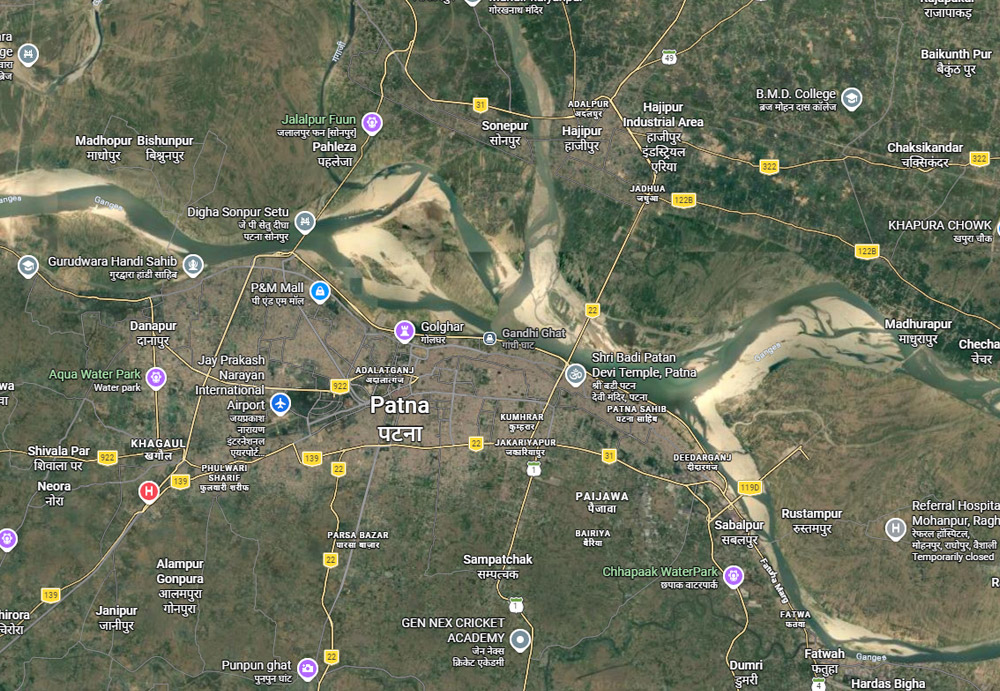
Patna’s weather changes drastically with the seasons, which deeply affects how local people live and work. The region has a humid, subtropical climate that follows three main seasons:
- Summer: The hot, dry summer starts in April and peaks in May and June. During this time, a harsh, hot wind called the loo blows across the plains. Temperatures can get extremely high, once reaching a record 46.6°C.
- Monsoon: The rains arrive in late June and last until September, bringing much-needed relief from the heat. The area gets about 80% of its yearly rain (around 1,110 mm) during these months. Sometimes, heavy rains cause the Ganga river to overflow and flood the nearby riverbank areas.
- Winter: From November to February, the weather turns cold. The nights are chilly, and temperatures can drop as low as 1.1°C. The days are usually sunny or foggy, but thick winter smog often causes delays for flights and trains. It is followed by the arrival of spring, which brings the weather to a full cycle.
Flora and Fauna: Because most of the land in the wider Patna district is used for farming, there are no large forests left. The rich, flat farming lands produce crops like rice, sugarcane, and other grains. In the fields right next to the river, specific wild water plants grow naturally. Closer to the villages, one can easily spot bamboo clusters, date palms, and mango orchards. Across the district, some of the most common native trees are the neem, bel, siris, jackfruit, and the red cotton tree. Because of the heavy farming, there is not much wildlife, but a few small animals like jackals, foxes, and wild cats can still be found.
While the district relies on farming, the capital city faces problems from fast modern growth. Dust from construction, along with heavy smoke from cars and factories, has made the air quality dangerously poor. This severe pollution heavily affects public health and causes breathing problems for many residents in the city.
Patna's infrastructure is a mix of ancient trade routes that have grown into modern transport networks.
The Patna Municipal Corporation (PMC) manages basic city needs, like water and drainage, across 75 wards. The city gets most of its water from the ground, pulling it up through 98 tube wells. While the city's original sewer system is very old (from 1936), new efforts like the Nirmal Ganga project are upgrading waste treatment plants to stop dirty water from flowing into the river. In terms of technology, Patna took a big step by setting up a 20-kilometre free WiFi zone, one of the longest in the world, stretching from NIT Patna to Danapur.
The district acts as a massive hub for travel and transport:
- Roads: Several National Highways cross the region. The famous Mahatma Gandhi Setu, built over the Ganga river in 1982, connects Patna to Hajipur. Today, a newer six-lane bridge runs right next to it to help with heavy traffic.
- Railways: The main railway line runs along the river. The Digha-Sonpur Bridge, which is India's second-longest bridge for both trains and cars, makes crossing the river much easier. The new Patna Metro has made travelling inside the city even faster.
- Waterways: The Ganga river serves as National Waterway-1. It passes right through Patna, acting as a major water route for cargo ships travelling from Allahabad to Haldia.
- Farming Infrastructure: In the rural villages, the government provides tube wells and modern water pump systems. Farmers also use restored pynes (traditional water channels) to help water their fields and support the local farming economy.
Patna’s buildings tell the story of its long history and the different empires that once ruled it.
In the capital city, British colonial styles are very visible. A major landmark is the Golghar. It is a huge, dome-shaped building made by the East India Company in 1786 to store grain after a terrible famine. Another famous building is the Old Secretariat. Completed in 1917, it has a beautiful blend of Indian and Islamic styles and features a tall 184-foot bell tower. Other important historic structures include the Padri Ki Haveli and the Sultan Palace.
The city is also home to many beautiful Indo-Islamic structures, like the Pathar-ki-Masjid, built by the Mughal Prince Parwez Shah in 1626. Outside the city, in the rural villages of the district, people traditionally built houses using mud and brick. This helped them stay cool in the hot climate. Today, however, modern cement houses are quickly replacing these traditional village homes.
In recent years, impressive modern buildings have been added to the capital. The Sabhyata Dwar (Civilisation Gate), built in 2018, is made of red sandstone in an ancient Mauryan style to honour the city's roots. The Samrat Ashok International Convention Centre is a modern engineering marvel built with a massive amount of steel. Finally, the new Bihar Museum, designed by a Japanese architecture firm, is a world-class, modern landmark spread across nearly 14 acres.
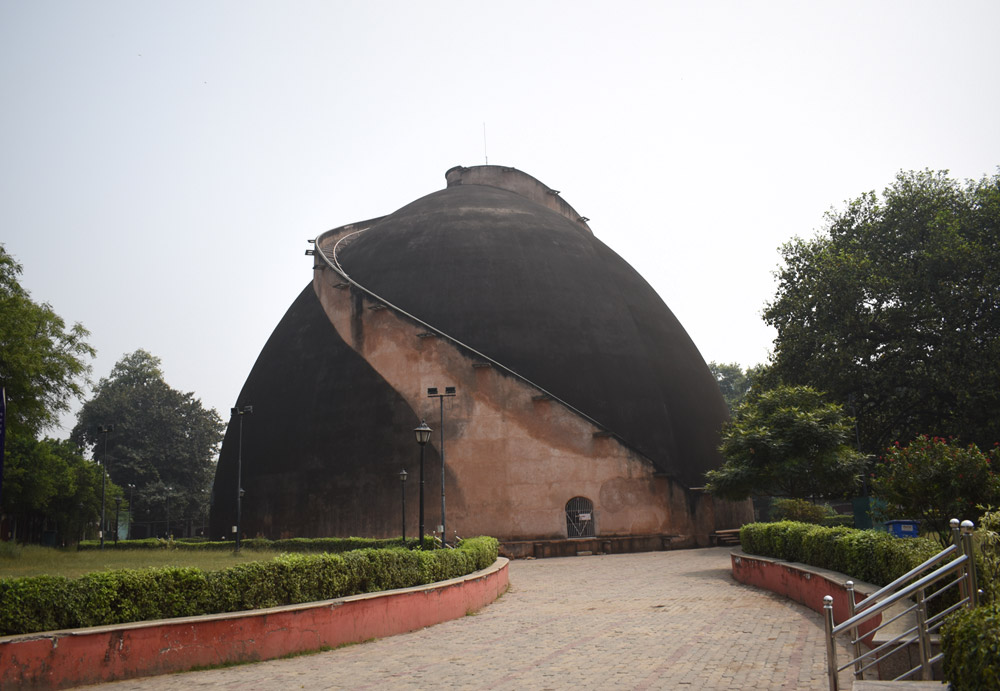
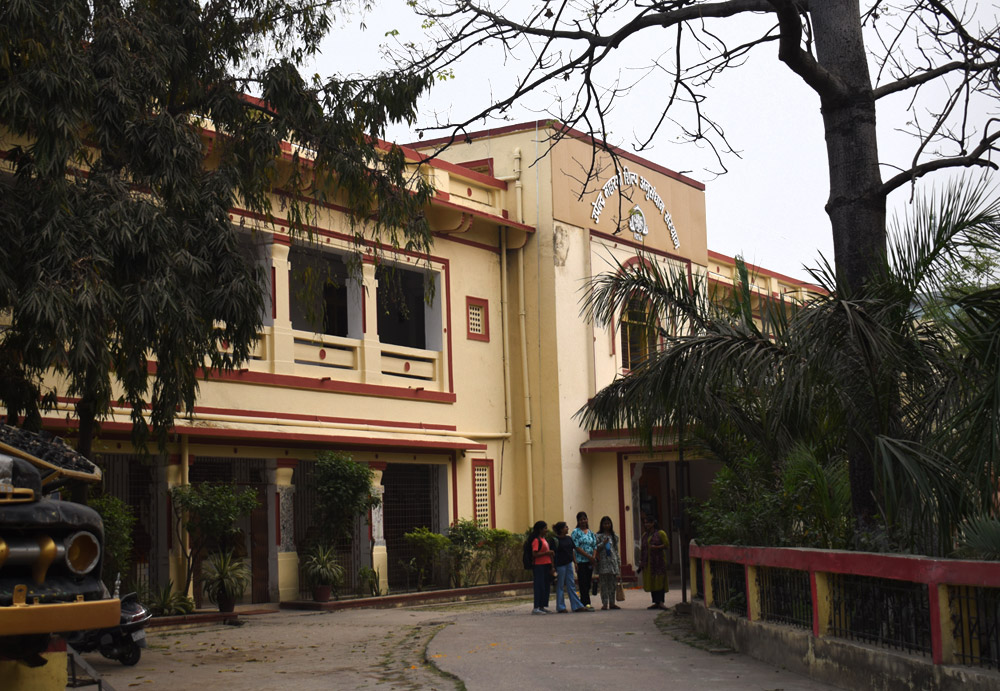
Patna’s culture is closely tied to local traditions, spiritual practices, and the performing arts. The city actively protects traditional Indian dance and music. The Bhartiya Nritya Kala Mandir is a dedicated institute that teaches and preserves these classical dance forms. Theatrical arts also play a major role in keeping cultural stories alive. The Kalidas Rangalaya and the Premchand Rangashala are key local centres that regularly host stage performances and traditional music to share these narratives.
Spiritual rituals and festivals deeply influence the local way of life. The most important and ancient festival is Chhath Puja, which is dedicated to the Sun God. During this festival, people observe strict fasts and offer prayers while standing in the water of the Ganga river. The city also celebrates other major religious and seasonal festivals throughout the year. Durga Puja brings large community gatherings in the autumn. Residents also come together to observe Eid, Holi, Saraswati Puja, and Makar Sankranti, reflecting a society built around shared cultural practices.
The people of Patna, often called Patnaites, come from many different backgrounds. Education is highly valued here; while the wider district has a steady literacy rate (around 70%), the urban capital is even more educated, with a literacy rate of over 83%.
The true local voice of the region is Magahi (or Magadhi). This native dialect is believed to be a descendant of the same language spoken by Gautama Buddha and the kings of the Mauryan empire. The community is deeply spiritual. Most of the population follows Hinduism, alongside a large Muslim community and smaller groups of Christians, Jains, Sikhs, and Buddhists living together.
Daily life looks very different depending on the region. In the rural villages of the district, farming is the heart of everyday life and dictates the rhythm of the year. Inside the busy capital city, people mostly work in local businesses, trade, and in the growing IT sector.
The way people dress perfectly shows Patna's blend of old and new. During cultural events, village fairs, and festivals, one can easily spot beautiful traditional clothing, like cotton saris for women and dhoti-kurtas for men. However, for everyday city life, most people prefer wearing modern Indian clothes, like the shalwar kameez, or comfortable western outfits.
Patna is famous worldwide for its deep ancient history and its long-standing role as a major trading centre.
Sites like Kumhrar and Agam Kuan hold the ancient ruins of Emperor Ashoka's city. The beautiful Didarganj Yakshi statue, found here, is a globally recognised example of ancient Mauryan art.
Patna is a major holy site for Sikhs. The Takht Sri Patna Sahib marks the exact birthplace of the tenth Sikh Guru, Guru Gobind Singh. There are also five other historically important Gurdwaras in the city.
Keeping its ancient tradition as a great centre of learning, the city is home to Patna University (founded in 1917, making it one of the oldest in the region) and the newly rebuilt Nalanda University nearby.
Historically known for the Patna Kalam painting style, the city is still a lively market for local crafts today. It serves as a key hub for anyone studying traditional arts, especially local textile traditions like Chaapa work and Sikki grass weaving.
Since the 1600s, Patna has been a premier trading market. It is well-known for exporting fine Patna rice and sugarcane, as well as historical goods like calico (cotton cloth) and saltpetre.
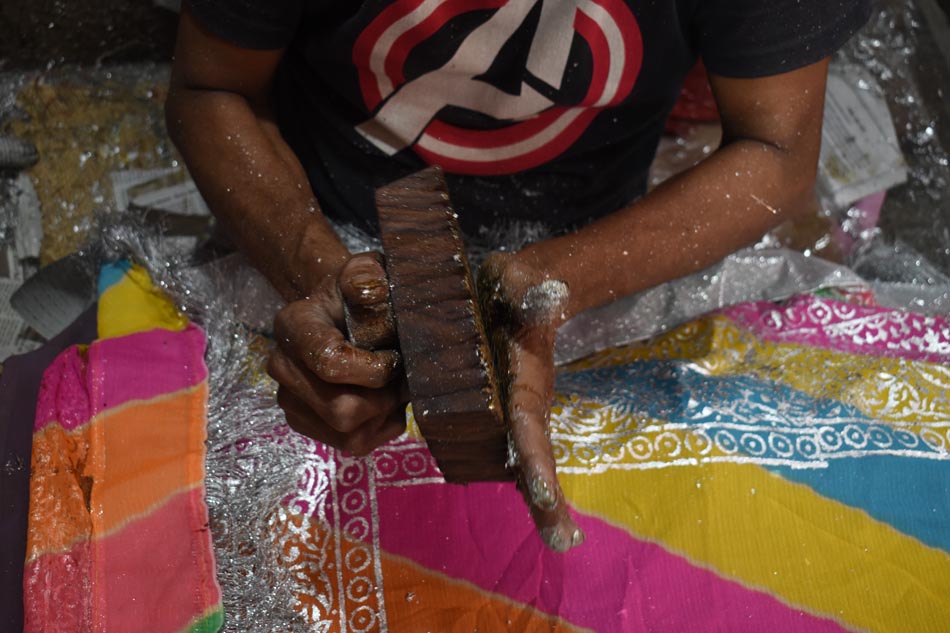
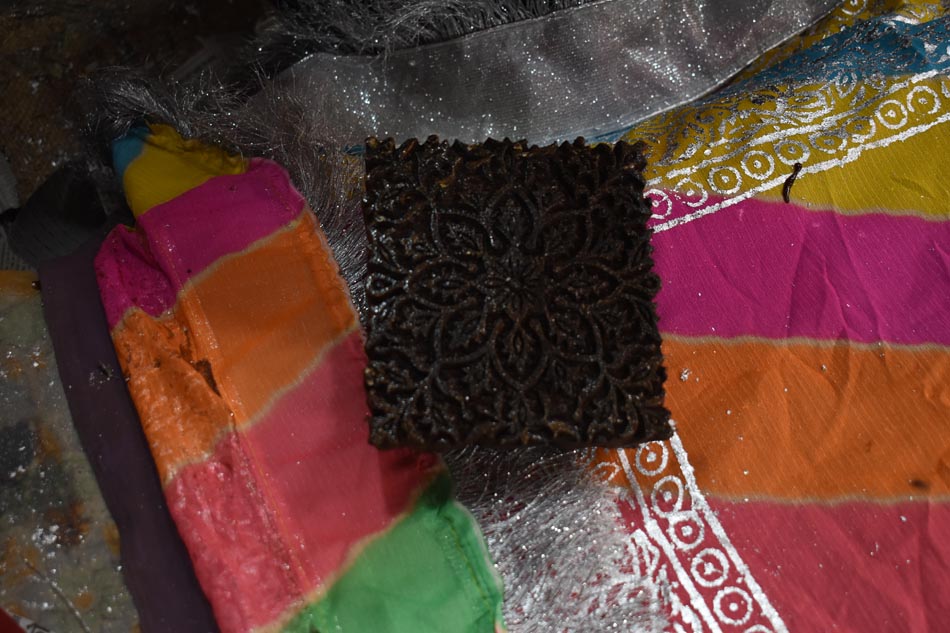
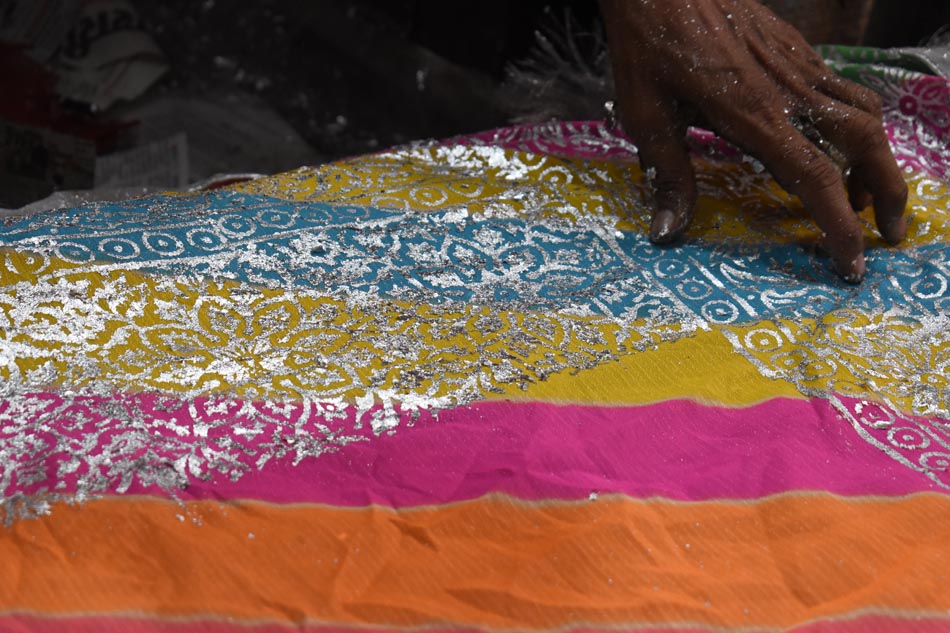
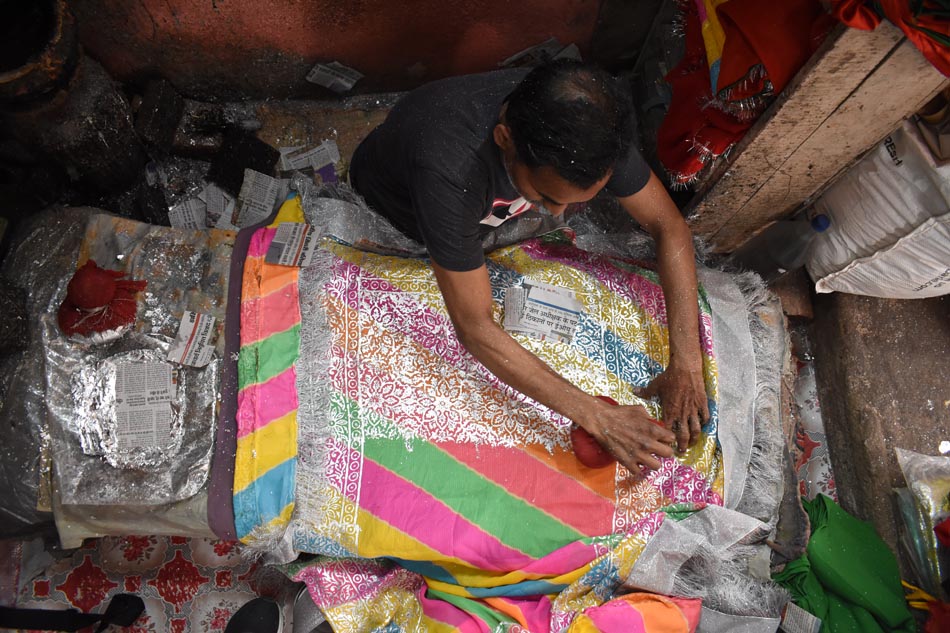
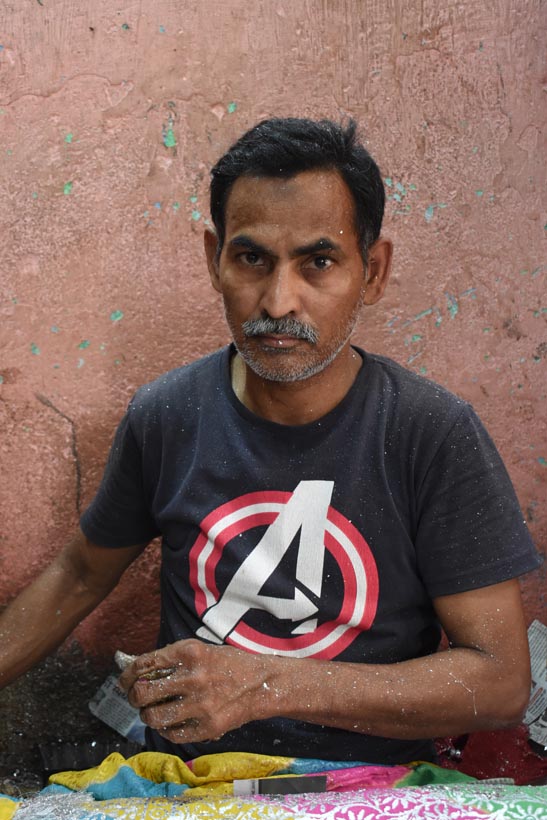
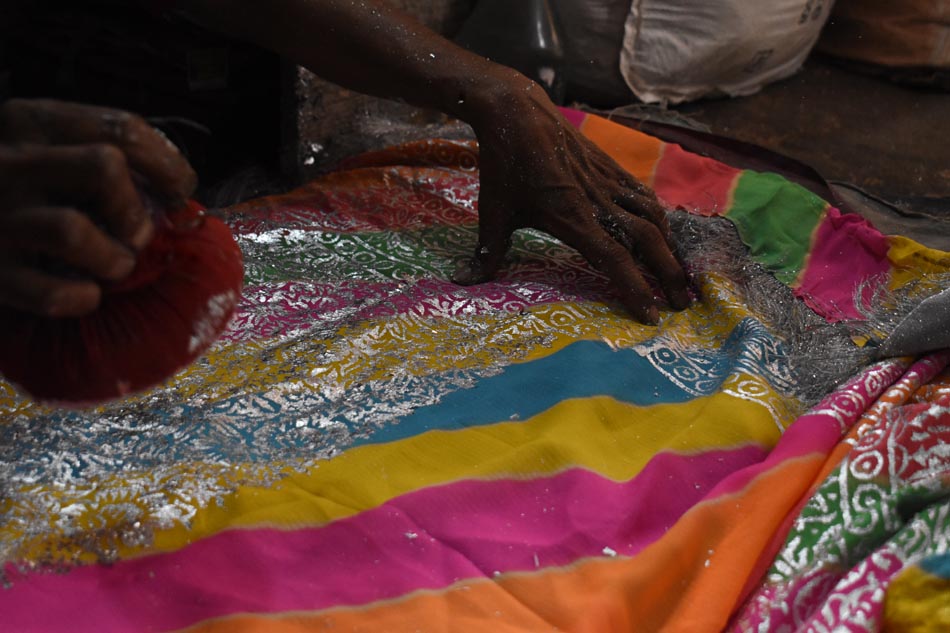
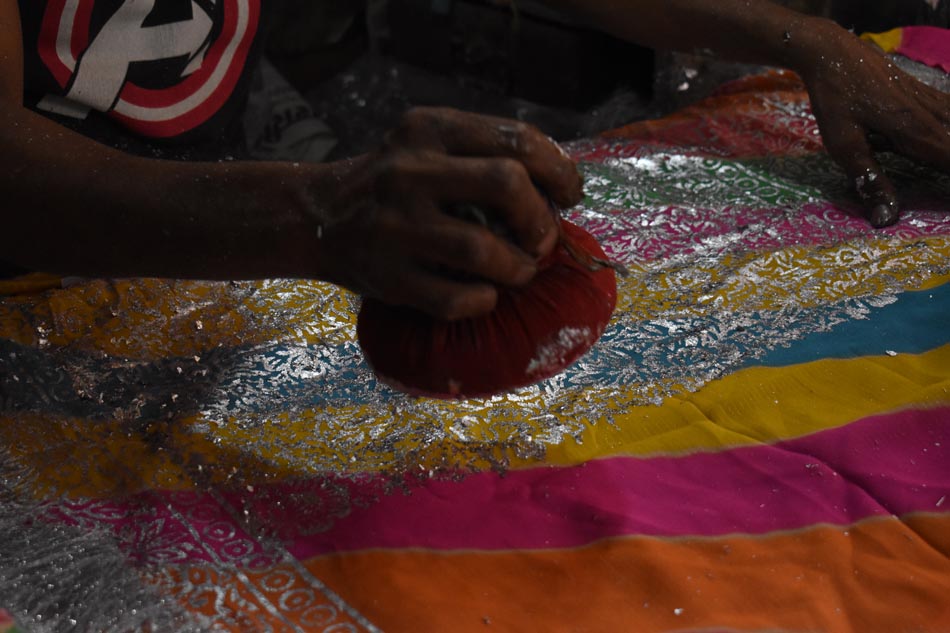
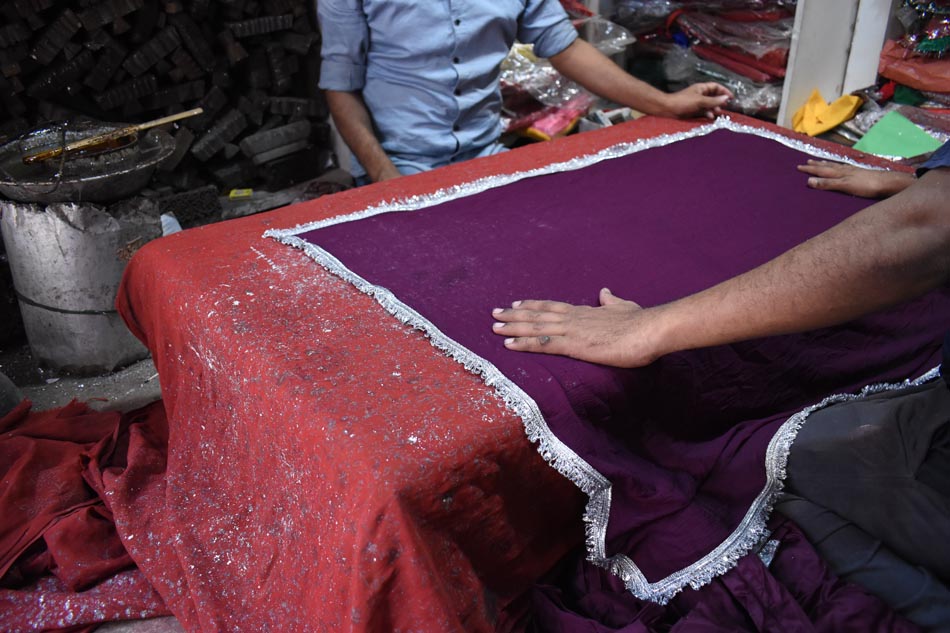
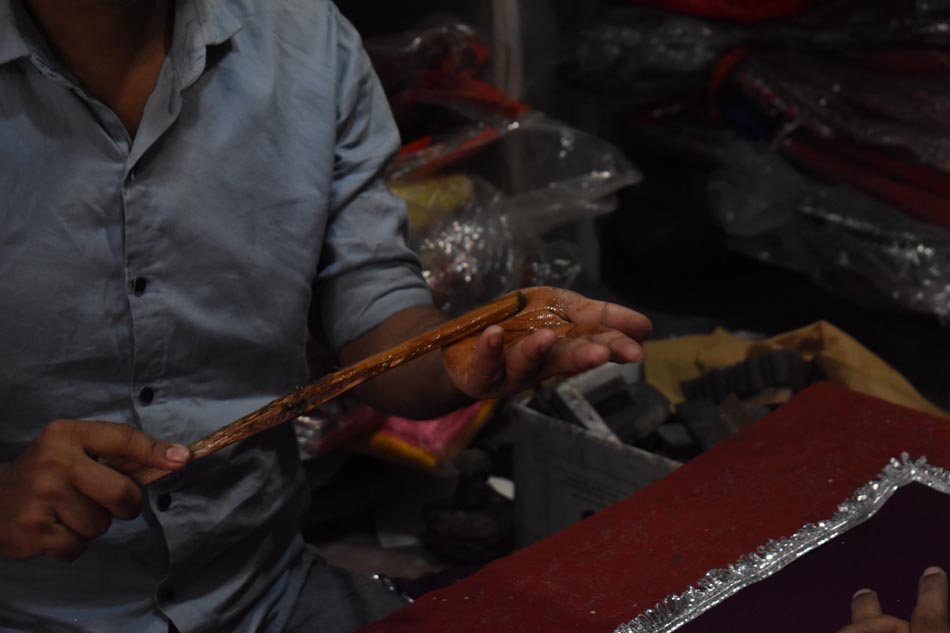
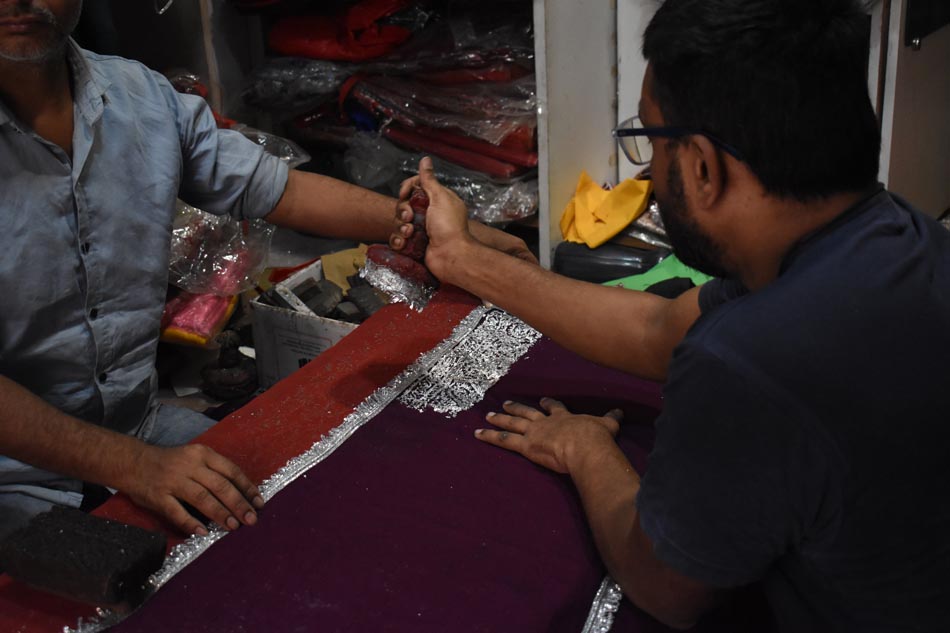
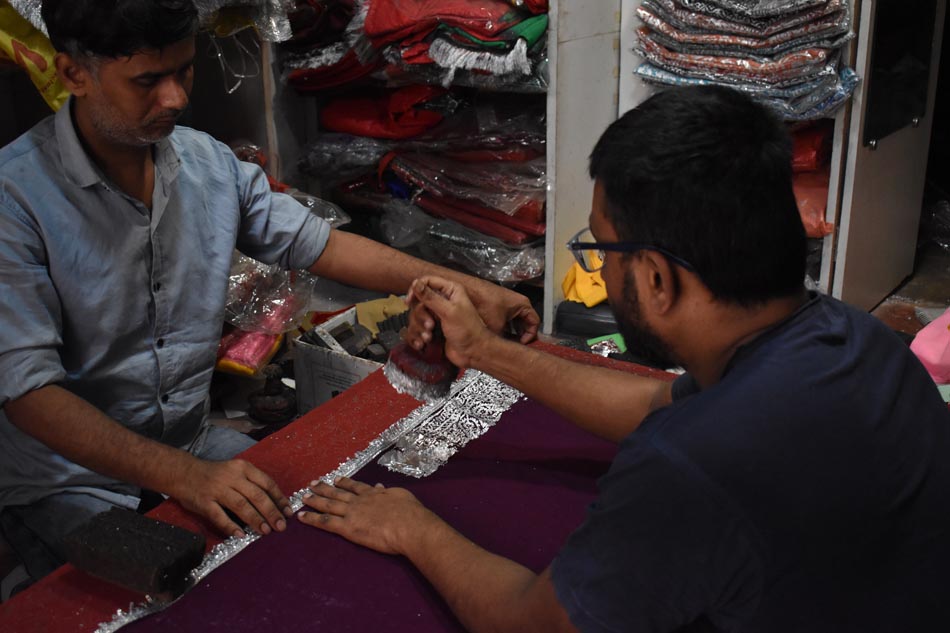
List of craftsmen.
Team Gaatha
Buchanan, Francis. Journal of Francis Buchanan (Afterwards Hamilton) Kept During the Survey of the Districts of Patna and Gaya in 1811–1812. Edited by V. H. Jackson, 2 vols., Bihar and Orissa Research Society, 1925.
Buchanan, Francis. An Account of the Districts of Bihar and Patna in 1811–1812. Bihar and Orissa Research Society, 1934.
Ashraf, Md Umar. “Behari Chaapa: A Timeless Cultural Dress Which Refuses to Retire.” Heritage Times, 8 Nov. 2021. Accessed 12 June 2026.
Fatima, Shaista. “Chappa Is a Must Have for a Bihari Bride.” Awaz The Voice, 22 Nov. 2021
Khosa, Aasha. “Bihar Muslim Bridal Look Is Incomplete Without Chappa Dress.” Awaz The Voice, 17 Nov. 2023
Moid, Mohammad. “The Art of ‘Chaapa’, the Unique Wedding Couture of Bihari Muslims.” Outlook India, 11 Nov. 2021
“Chaapa Dresses of Bihari Muslims.” Mpositive, 20 Feb. 2022
Ray, Umesh Kumar. “Bihar’s Chhapa Artisans: Wafer-Thin Margins.” People’s Archive of Rural India, 9 Jan. 2024
“Fading Imprints: Reviving the Timeless Art of Chaapa Work in Bihar.” Oaklores
Living the Secret Silver-Stamped Life of Karachi’s Elusive Bihari Chaapa.
