


Sujani Craft ~Bhusra...
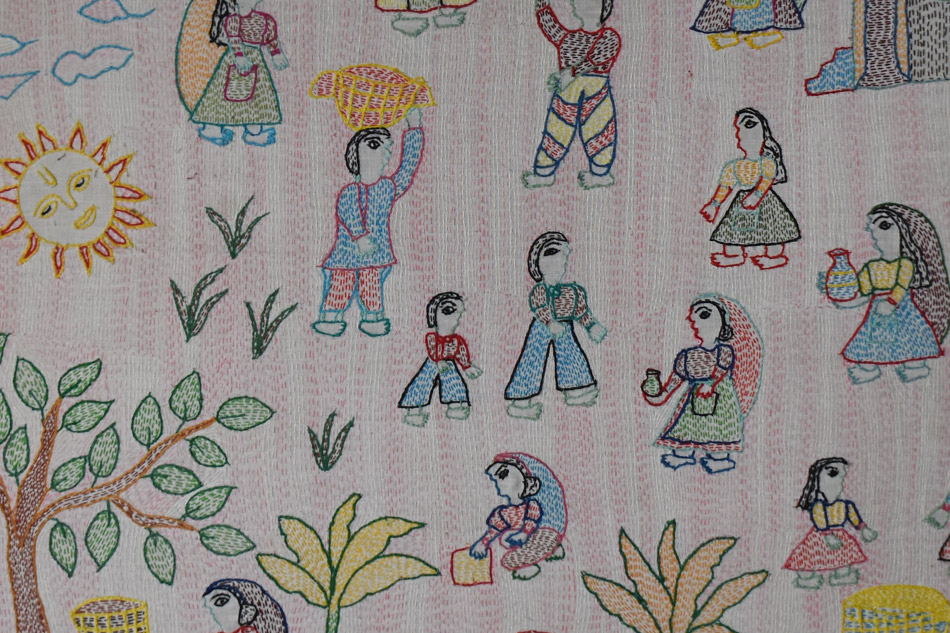
Sujani is a distinctive embroidery tradition of Bihar, particularly practised in Muzaffarpur district and surrounding villages.
Bhusra, Bihar, India...
 Bhusra, Bihar, India...
 Patna, Bihar, India...
 Magadh, Gaya, Bihar, India...
Sujani is a distinctive embroidery tradition of Bihar, particularly practised in Muzaffarpur district and surrounding villages.
Bhusra, Bihar, India...

Arani silk, also known as Arni silk, is a celebrated handloom tradition of Tamil Nadu, produced primarily in Arani, Tiruvannamalai.
Arani, Tamil Nadu, India...
Peruvemba, a village near Chittur-Thathamangalam in Palakkad district of Kerala, is known for a longstanding tradition of making leather-based percussion instruments.
Peruvemba, Kerala, India...
Let us talk… if you feel the same love for handmade, and would like to support us by sharing your research or by contributing financially to our documentation efforts.
Reach us at [email protected]
Lac has been a multipurpose material used for daily household items, furniture, toys, and most prominently, jewellery. For many women, the bangles function as markers of identity, memory and belonging. In tribal communities such as the Bhumij, Oraon, Munda and Santal groups, decorated lac bangles have historically formed part of everyday attire and ceremonial dress. Folk performers and dancers also wear Lahthi during regional dance traditions such as Jhijhian and Jat-Jatin. The cultural meaning of Lahthi extends into the broader visual language of Bihar. The bright colours, mirrored surfaces and intricate motifs reflect local aesthetic preferences rooted in celebration and ornamentation. Bridal sets, turmeric-coloured wedding bangles and heavily embellished festival bangles continue to preserve older ritual practices while adapting to changing fashion trends. At the same time, the craft has become a marker of Muzaffarpur’s regional identity. The Islampur Lahthi market is recognised not only as a commercial centre but also as a cultural landmark associated with the city’s artisanal heritage. Through weddings, festivals and intergenerational use, Lahthi continues to connect contemporary social life with inherited traditions.
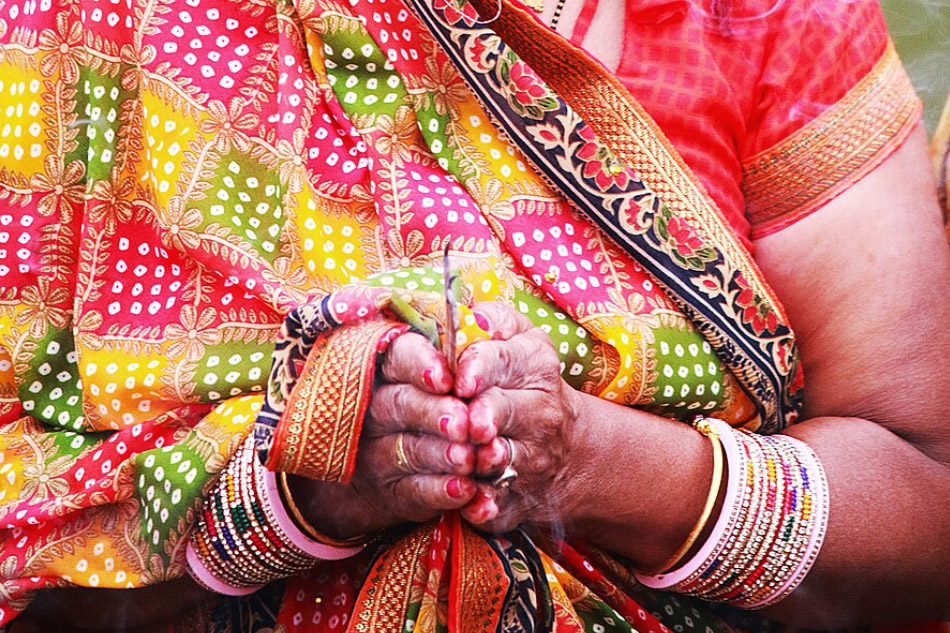
Local artisan Mohammad Afsar noted that Lahathi is highly used during the Chhath festival and sells heavily during Dussehra. He also mentioned that Muslim women generally do not wear Lahathi, yet Muslim artisans are heavily involved in the making process. The craft preserves hereditary knowledge, neighbourhood-based workshop systems and forms of collective labour that have survived across generations.
In the handicraft sector, lac is also used as a strong core or filling material inside other metal ornaments to help them hold their shape when setting precious stones, or as a base for repousse metal hammering.
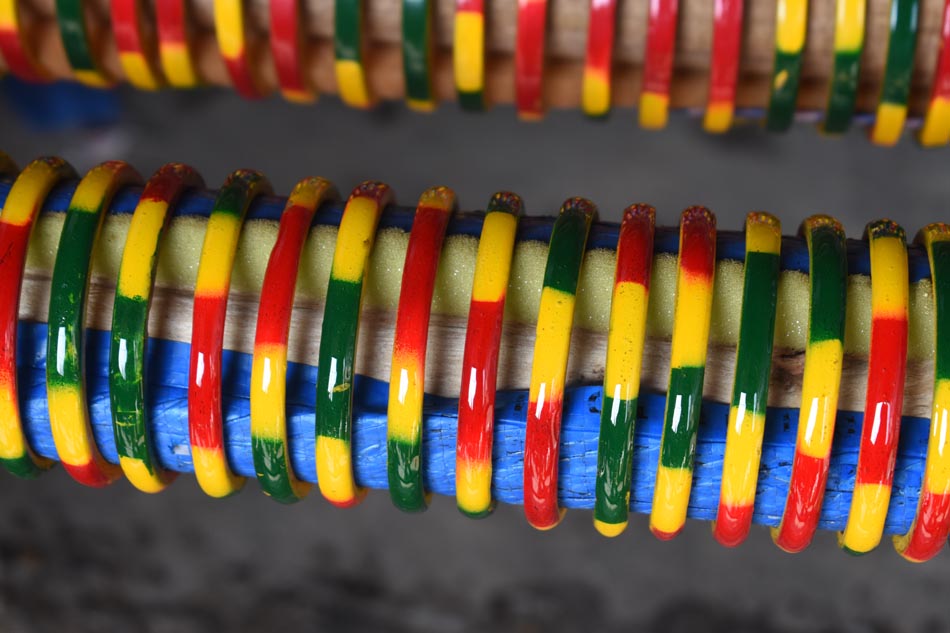
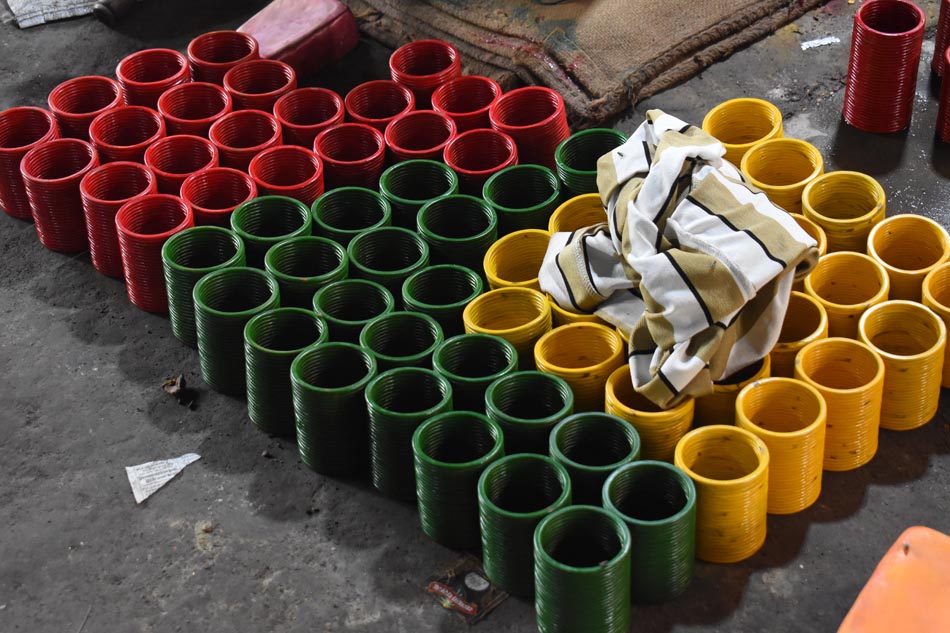
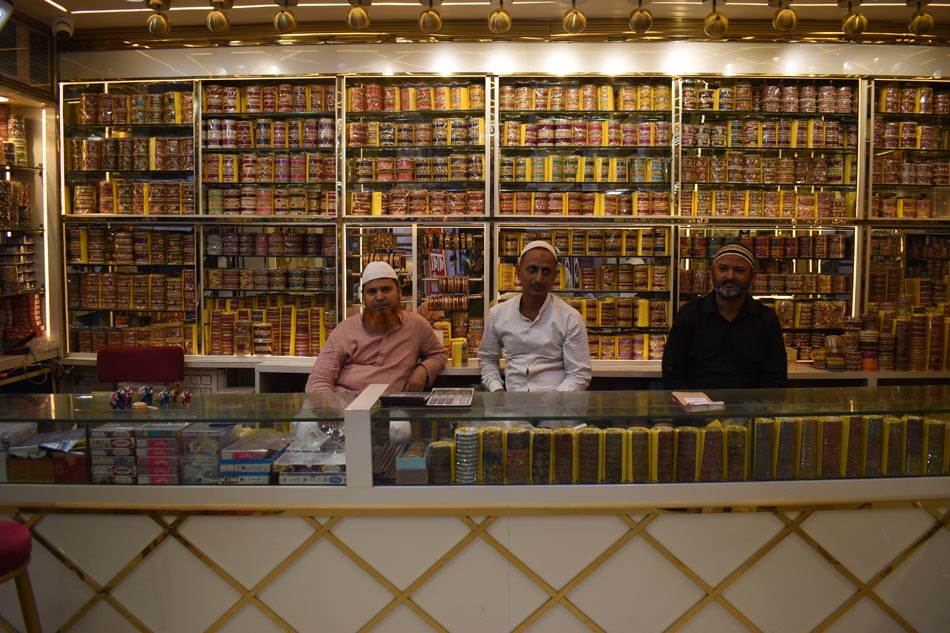
In Bihar, lac bangles function simultaneously as cultural symbols, ritual objects, economic resources and markers of regional identity. Their continued presence within weddings, festivals and everyday adornment reflects the deep connection between material culture and social life. The significance of Lahthi extends beyond ornamentation and craft production.
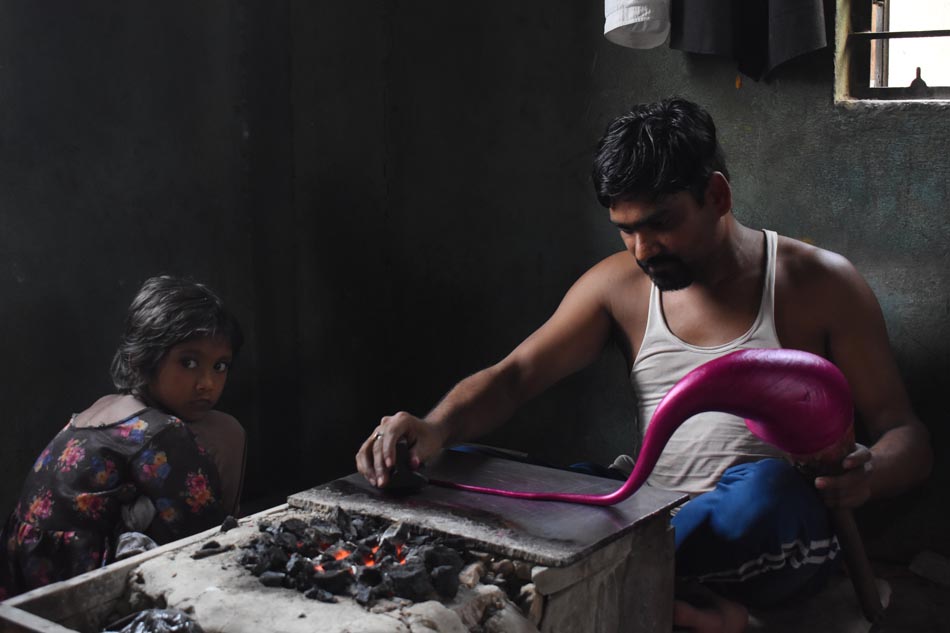
:: Social Significance- The Lahthi craft sustains strong intergenerational relationships within artisan communities. Knowledge is traditionally transmitted through observation, apprenticeship and participation within families. Children often begin learning basic techniques from a young age by assisting parents and relatives. The industry also creates social networks between artisans, traders, decorators and home-based women workers. In many neighbourhood clusters, production activities structure everyday community life and maintain shared occupational identities.
For women artisans in particular, Lahthi production provides an important source of economic participation within domestic spaces. Home-based embellishment work has enabled many women to contribute financially while balancing household responsibilities.
:: Cultural Significance- Lahthi occupies an important place in the cultural traditions of Bihar and neighbouring regions. The bangles are closely associated with marriage rituals, womanhood and ideas of prosperity. For many married women, wearing lac bangles symbolises suhag, fertility and the wellbeing of the household.
The craft also preserves older traditions of adornment rooted in local customs and mythology. Oral narratives linking lac bangles with Sita, Shiva and Parvati strengthen their ritual value and connect the object to broader religious memory. In tribal communities including the Bhumij, Oraon, Munda and Santal groups, decorated lac bangles have historically formed part of ceremonial dress and everyday attire. Through festivals, folk performances and seasonal rituals, Lahthi continues to function as a visible expression of collective identity.
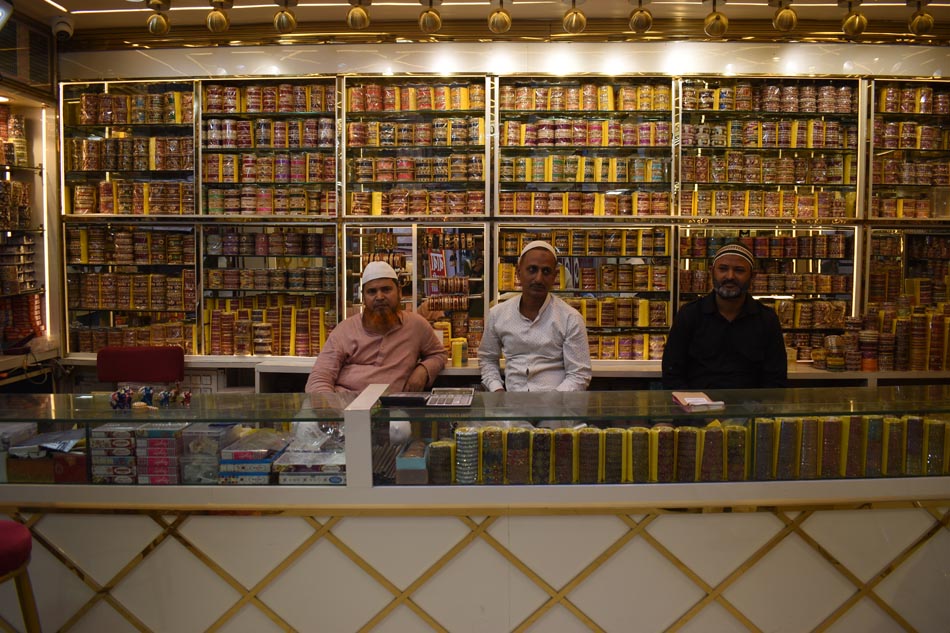
:: Economic Significance – The Lahthi industry forms one of the most important craft-based economies associated with Muzaffarpur. Beyond its ritual and cultural role, the craft supports thousands of livelihoods through networks of artisans, decorators, wholesalers, transport workers and market traders connected through informal production systems. The Rampur Bakhari cluster alone contributes nearly 55 percent of Bihar’s Lahthi production and around 45 percent of the national market, making it one of the country’s most significant lac bangle production centres. The Islampur Lahthi market functions as a major commercial hub supplying products to cities such as Delhi, Mumbai, Kolkata and Ahmedabad, while export networks extend to Nepal, Bangladesh, Canada and the United States.
Seasonal demand during marriages, Chhath, Teej and other festivals generates intense economic activity. Bridal Lahthi sets remain especially important within the wedding economy of Bihar where lac bangles are considered more auspicious than glass bangles during certain rituals. Despite its commercial success, the industry remains economically unequal. Artisans frequently report that wholesalers and shop owners receive the largest share of profits while workers involved in production continue to earn low wages despite long working hours and rising raw material costs.
Recent institutional interventions have attempted to address some of these structural challenges. Under the SFURTI scheme, implemented through organisations such as the Real Scholar Society, cluster development initiatives have provided artisans with improved infrastructure, training opportunities and market support. A Common Facility Centre established in Keshopur was designed to support around 829 artisans connected to the Lahthi industry. These initiatives have also expanded the social role of the craft, particularly for women in rural areas. Self Help Groups formed through cluster programmes have enabled women to earn independently without migrating for work. One example is the Rajnigandha Self Help Group formed by Mala Devi in Adhwara village with nearly thirty women artisans. Access to organised workspace and collective production networks helped revive fading skills while also contributing to household income, children’s education and women’s social standing within their families.
:: Ritual Significance- Lahthi occupies an important place within the ritual and cultural life of Bihar and neighbouring regions. More than a decorative ornament, lac bangles are widely understood as markers of marriage, fertility, prosperity and protection. Their continued use across generations demonstrates how material objects can carry emotional, social and spiritual meanings within everyday life.
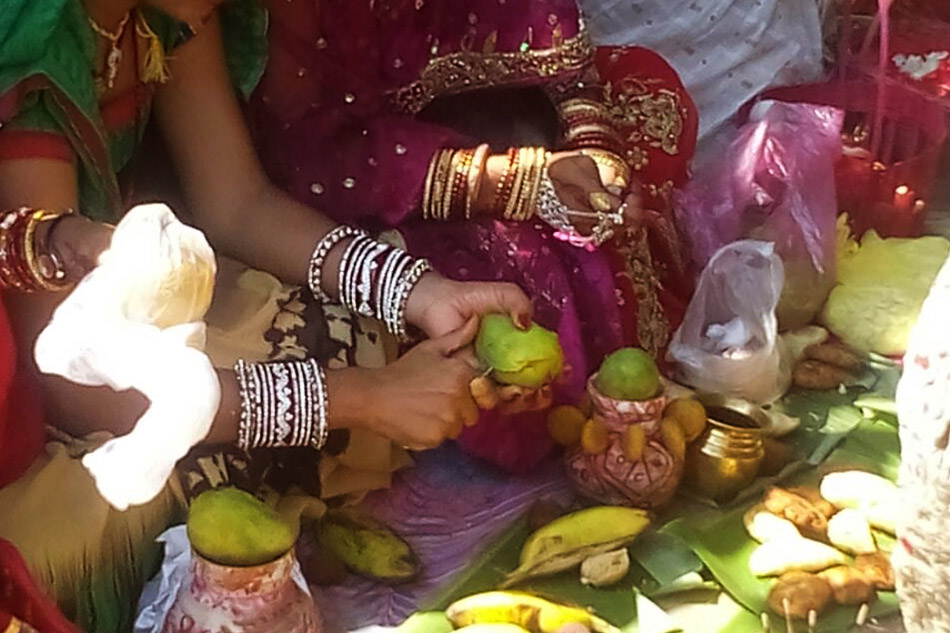
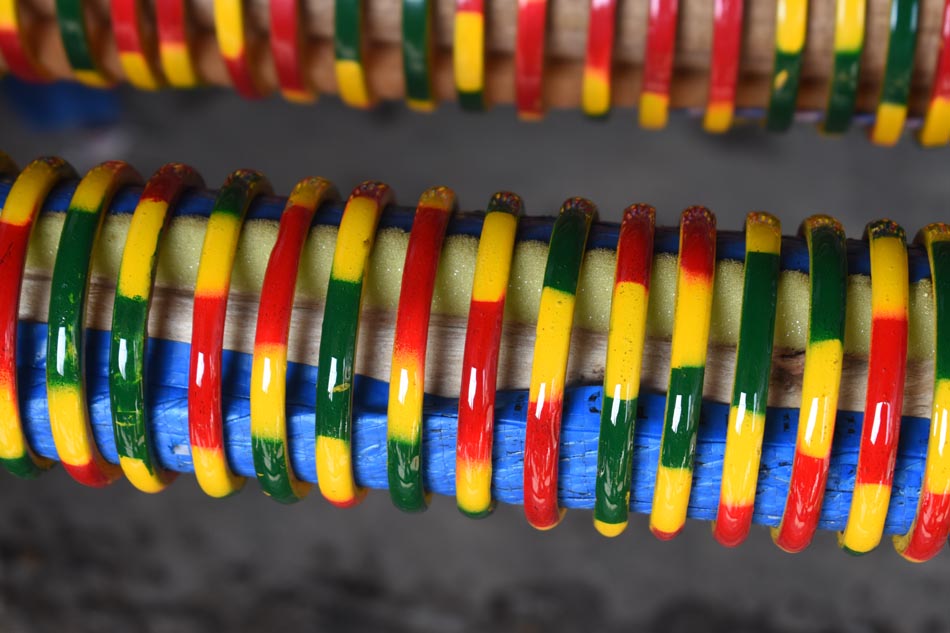
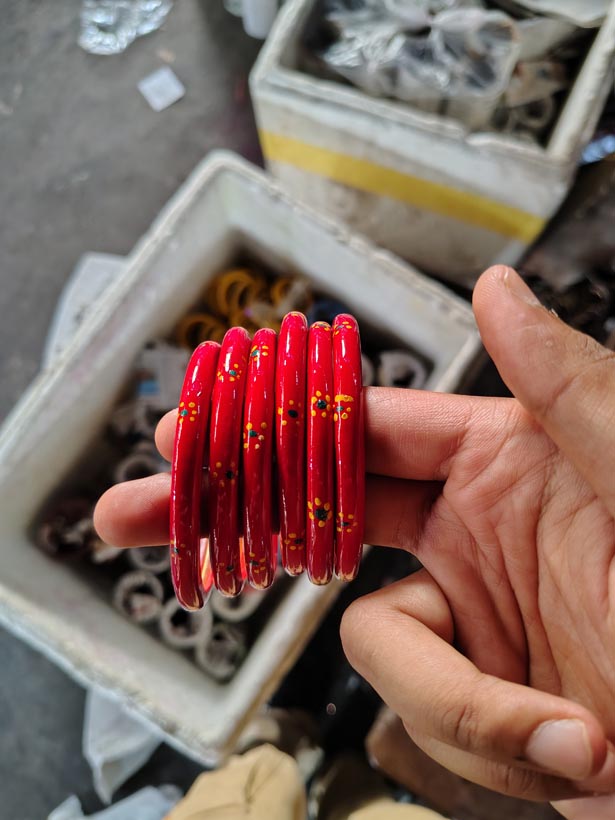
Among many communities in Bihar, especially in rural and semi-urban areas, married women traditionally wear lac bangles as a sign of suhag or marital wellbeing. Newly married brides are often expected to wear red and yellow lac bangles continuously for the first forty days after marriage, while some customs require women to wear only Lahthi during the first year of marriage. The sound of the bangles is believed to bring prosperity and positive energy into the household. The colours used in Lahthi also possess symbolic significance. Red represents fertility, marital devotion and passion, while yellow is associated with prosperity and auspiciousness. Green signifies growth and wellbeing, whereas black is sometimes used as a protective colour believed to ward off negative forces.
Lahthi remains deeply connected to major festivals celebrated in Bihar. During Chhath Puja, women often wear special sets of lac bangles while offering prayers to the Sun God. Many artisans state that pure lac bangles without metal cores are considered especially sacred during the festival. Lahthi is also worn during Teej, Karva Chauth and local marriage rituals. The demand for bangles rises sharply during wedding seasons and festive months, transforming markets like Islampur into intensely active commercial spaces.
The history of lac is ancient. References to lac appear in the Atharvaveda, the Mahabharata and the Shiva Purana. Ancient texts describe the lac insect, its habitat and the uses of the resin. The Sanskrit word “Laksha,” meaning one hundred thousand, refers to the large number of insects required to produce the resin.
Mythological narratives further strengthened the ritual importance of lac bangles. One legend connected to the Mahabharata describes the Lakshagraha or “House of Lac”, built by Duryodhana to trap the Pandavas. Although the narrative is associated with deception and political conflict, it demonstrates the historical familiarity of lac as a material within ancient Indian cultural memory.
Another popular narrative associate lac bangles with Lord Shiva and Goddess Parvati According to local belief, Shiva gifted lac bangles to Parvati during their marriage, after which the ornament became connected with married women and sacred marital bonds. The story is often invoked to explain why lac bangles are considered symbols of suhag, prosperity and long marital life. The ritual importance of Lahthi is deeply connected to mythological narratives and oral traditions that continue to circulate across Bihar and neighbouring regions. These stories strengthen the symbolic meaning of lac bangles by linking them with ideas of marriage, devotion, protection and feminine auspiciousness.
In Mithila traditions, another narrative connects Lahthi with Sita, who is believed to have worn lac bangles during her marriage to Rama. This association gives the ornament a special place within wedding rituals in Bihar where brides continue to wear red and yellow lac bangles as signs of devotion and continuity.
Beyond textual mythology, local oral traditions surrounding Lahthi often emphasise protection, prosperity and feminine wellbeing. In many households, the sound of bangles is believed to invite positive energy into the home while broken bangles are treated with ritual caution because they symbolise disruption within married life.
These myths and legends continue to shape the cultural imagination surrounding Lahthi. They transform the object from a decorative accessory into a sacred and emotionally charged symbol embedded within memory, ritual and inherited belief systems.
The use of lac in the Indian subcontinent dates back thousands of years. Ancient texts such as the Atharvaveda and Ayurvedic treatises mention lac for its decorative, medicinal and ritual uses. The Muzaffarpur Lahthi tradition, however, emerged much later as a distinct regional craft cluster with its own social and commercial history.
According to oral histories preserved by artisan families in Islampur, lac bangle making was introduced to Muzaffarpur in 1932 by Late Mohammad Ramzan Maniyar from Jhunjhunu and Late Mohammad Alauddin from Udaipur. They established the craft in the Islampur and Chhata Bazar areas, producing lac bangles mainly for Marwari women settled in the town. Demand remained limited during the early decades and many artisan families struggled economically. The trade slowly expanded after the 1940s. Around 1945, Haji Mohammad Munir Maniyar, son of Mohammad Ramzan Maniyar, entered the profession and later worked with Late Mohammad Jahur before establishing his own practice. During this period, members of the Laheri community in places such as Mahanar and Jhapaha were also engaged in bangle making. Their products were supplied to traders in Islampur, including one of the earliest wholesale dealers, Late Baldev Sah.
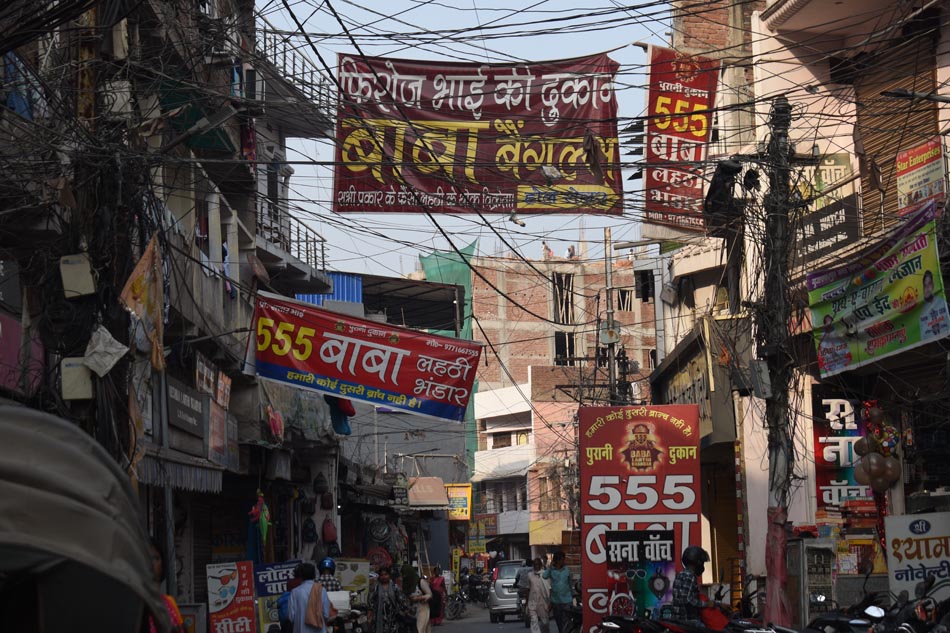
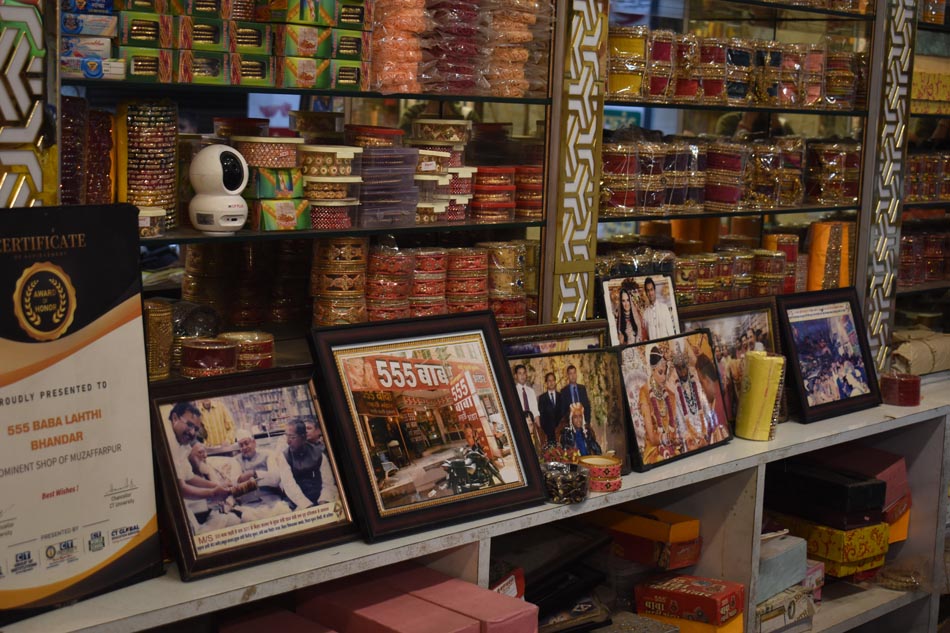
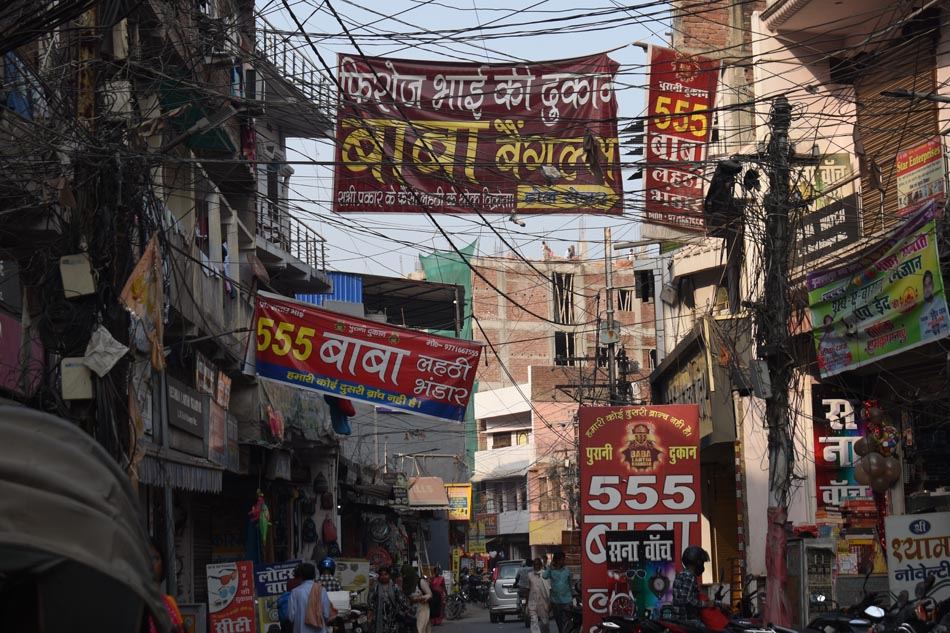
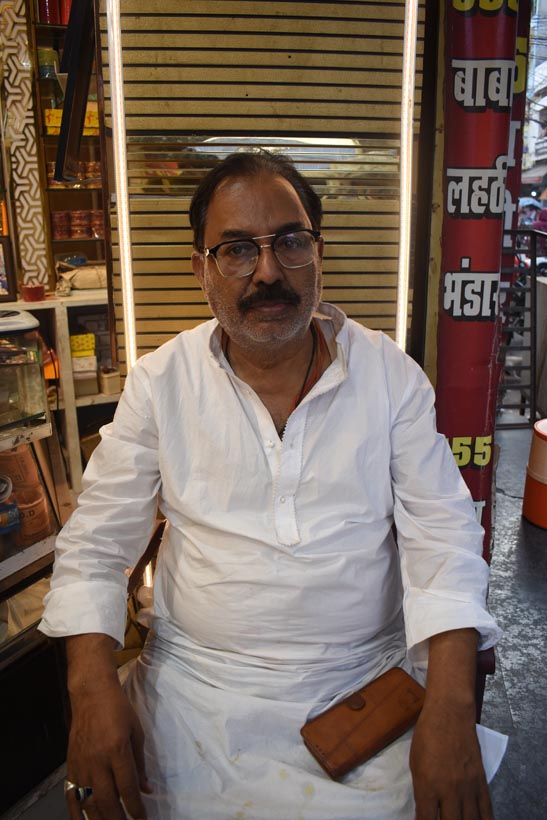
A major turning point came between the 1950s and 1970s. In 1965, Haji Mohammad Maniyar opened Baba Lahthi Bhandar in Islampur. To increase sales, artisan families began travelling door to door carrying baskets of bangles and introducing the craft to native Bihari women. What had once been associated largely with Marwari communities gradually entered broader local wedding traditions and everyday use.
The craft expanded rapidly during the late twentieth century. In 1978, Mohammad Usman and Mohammad Nur Maniyar started teaching the craft to people outside the traditional Laheri caste network. Early learners included Mohammad Rais, Late Mohammad Iliyas, Mohammad Saeed and Gufran Hasan ‘Munna’. By 1980, Muzaffarpur artisans had developed the technical skill to compete with lac bangles imported from Banaras and Jaipur. Local production increased steadily and by the mid-1980s lac bangles had largely replaced glass bangles in many Bihari wedding customs.
As demand grew, the craft spread from Islampur into nearby villages such as Chainpur, Rampur Bakhari and Atardah. Young artisans learned the trade in the city and carried the skills back to their villages, creating an extensive regional production network. Today, the Islampur Lahthi market contains hundreds of shops and is regarded as one of the largest lac bangle markets in India. The craft continues through hereditary transmission, with artisan families passing techniques and commercial knowledge from one generation to the next.
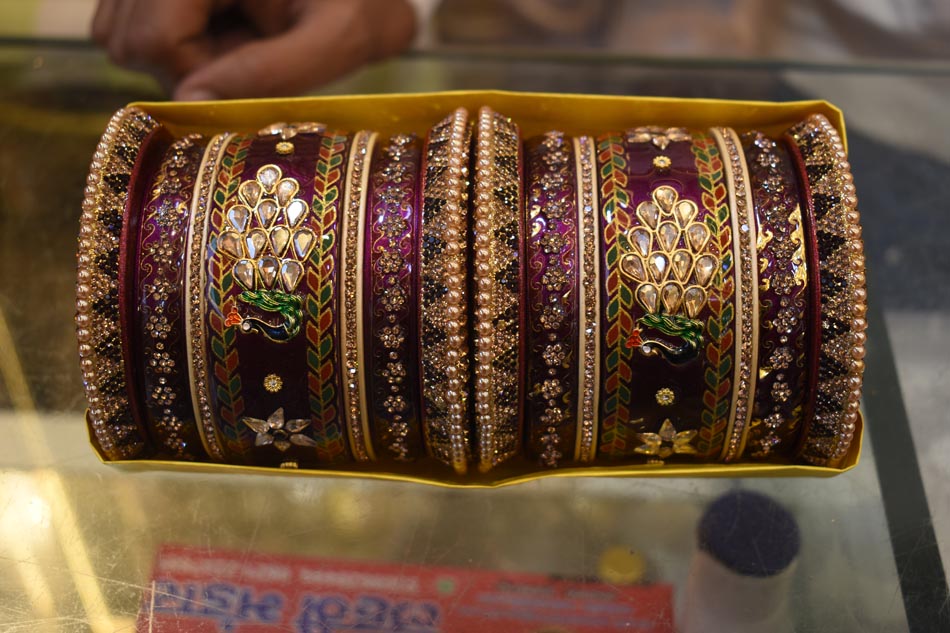
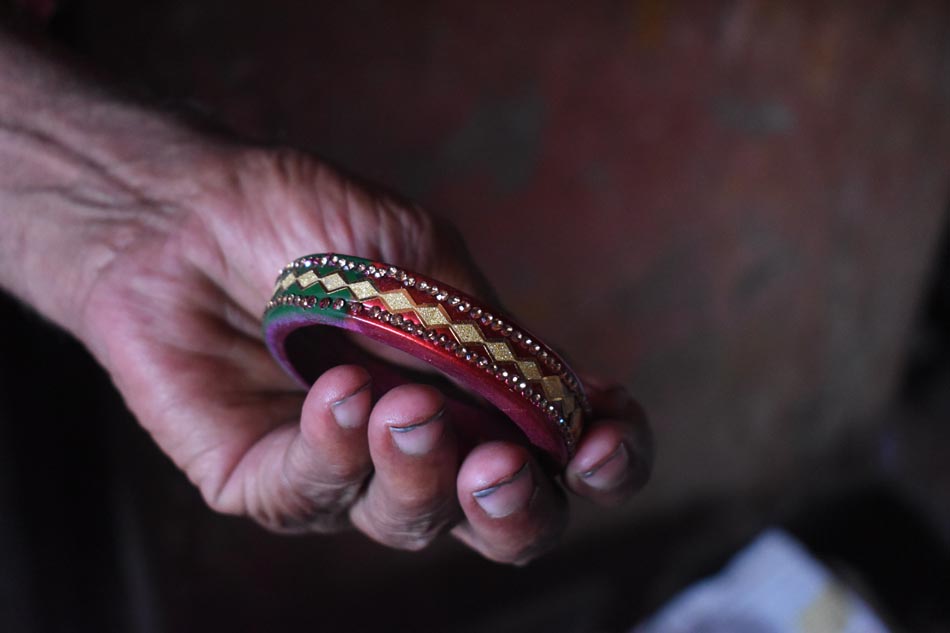
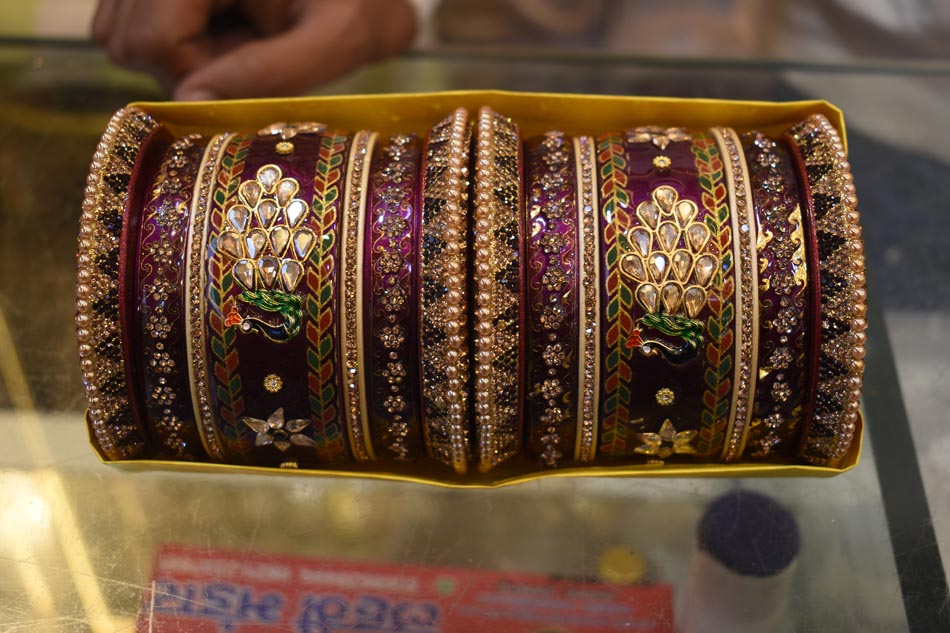
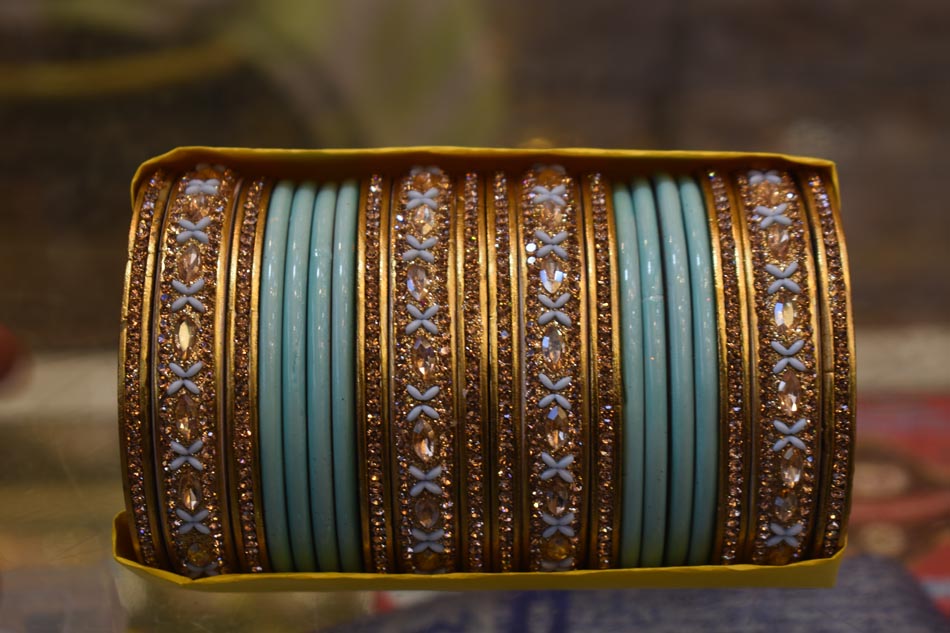
Traditionally, artisans produced plain bangles, Leheriya-patterned designs and bangles decorated with mirrors, glass pieces and semi-precious stones. Over time, the craft expanded beyond jewellery to include . The bangles themselves are designed for different social occasions and everyday use, including heavy dulhan sets for brides, festive party sets and lighter bala designs worn as office or daily wear.
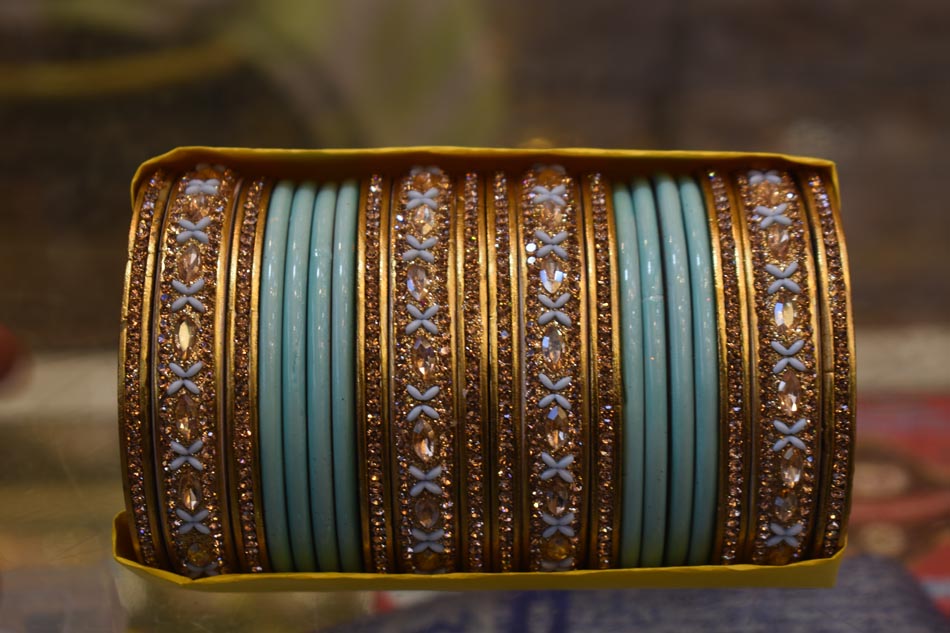
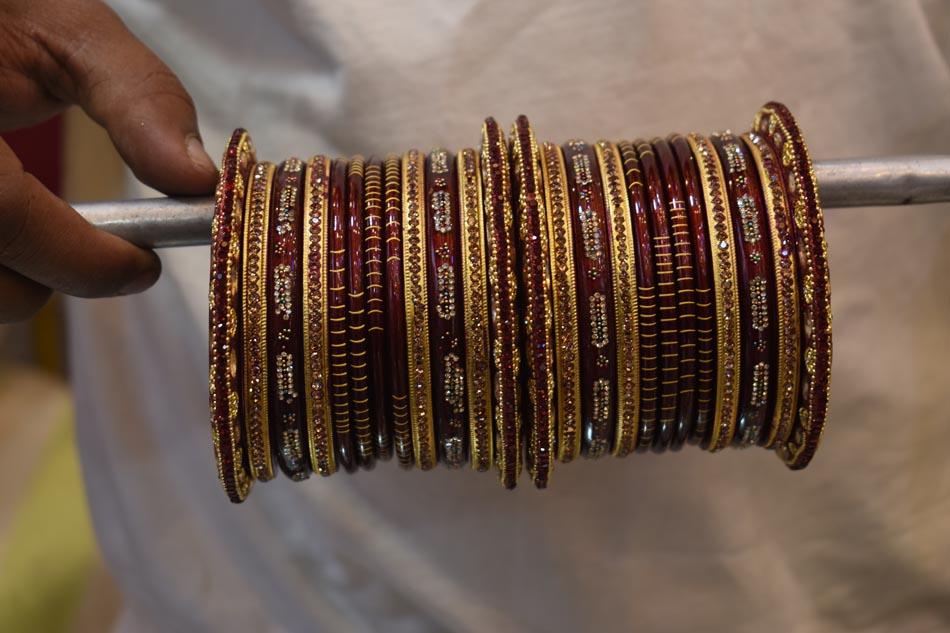
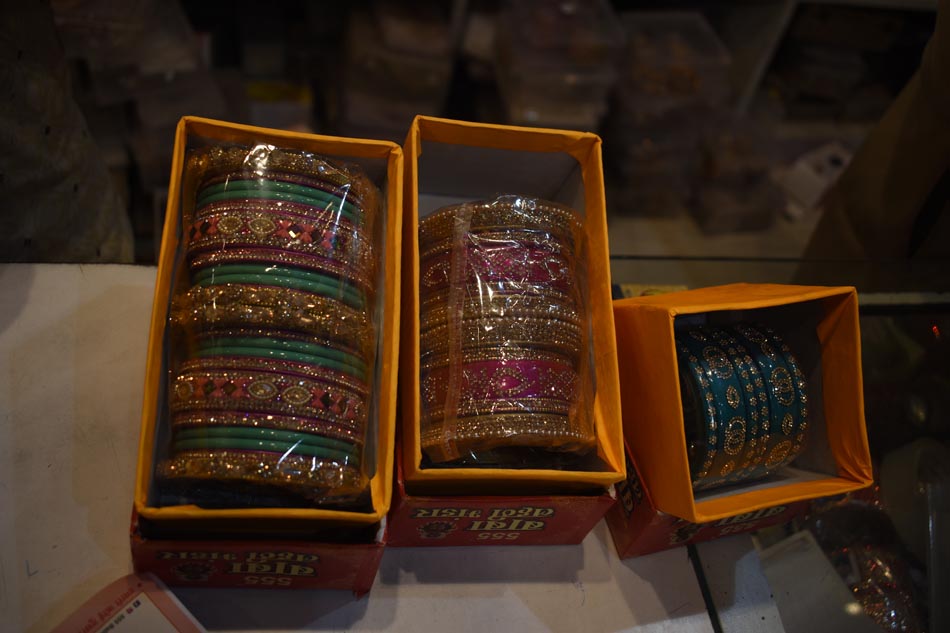
While the craft shares broader similarities with lac traditions from Rajasthan and other parts of India, the Muzaffarpur style developed a distinct regional character recognised for its heavier structure, bold colours and dense decorative surfaces. Traditional Lahthi bangles are usually thicker and more durable than the slimmer lac bangles associated with Jaipur. Today, the market demands bright shades like red (laal), pink (gulabi), turquoise (ferozi) and purple (jamuni). According to artisan, design keeps changing based on trends, and currently includes styles like Sona churi, bangri, tiranga, spray chundri, phool wala, and nagni seth. The decorative vocabulary of the craft combines local, regional and transregional influences. Floral motifs, geometric patterns and tribal-inspired forms remain common across many traditional sets. Over time, artisans also absorbed aesthetic influences from Rajasthan, Mughal decorative traditions and contemporary market trends. Shop staff Irfan mentioned that Rajwada sets are highly preferred by Rajputs, and they also make Madhubani-inspired designs. Bridal sets especially feature elaborate surfaces designed to appear festive and luxurious.
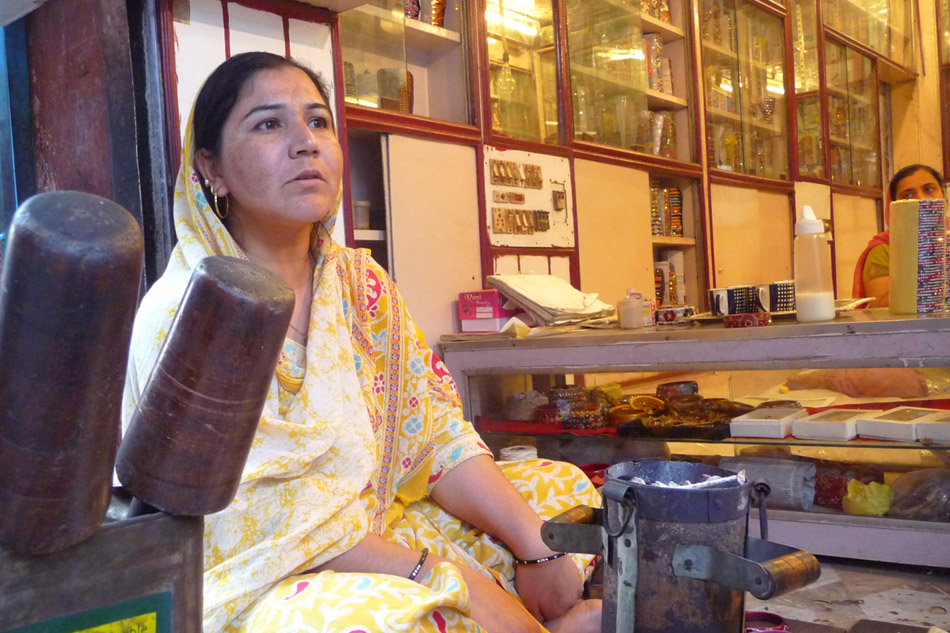
The embellishment process, which makes the designs pop, is mostly handled by women. The plain bangles are sent to women working from home who stick mirrors, glass, and beads onto the lac. This highly detailed process is called “Chipai,” and the women who do it are respectfully called “Chipai wali“.
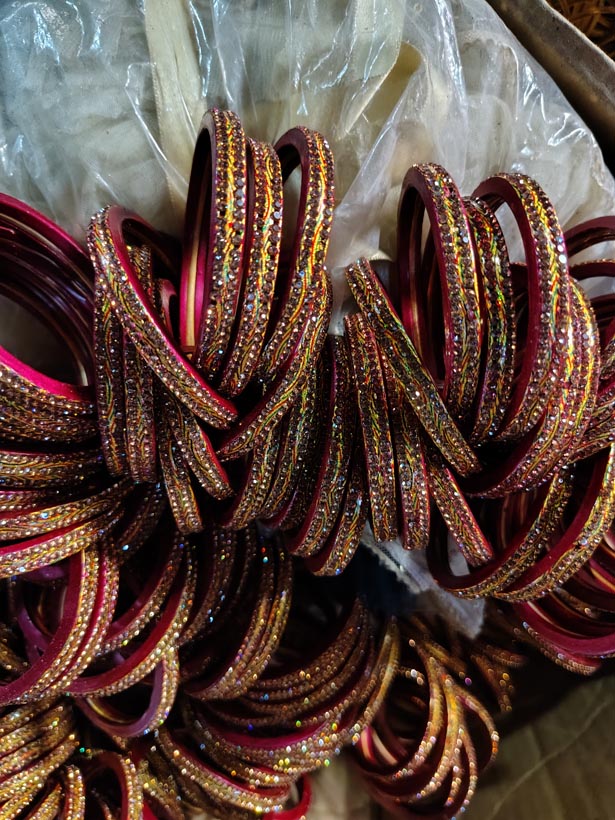
One of the most recognisable decorative forms is the Leheriya motif. Originally associated with the wave-pattern textile traditions of Rajasthan, Leheriya entered the Muzaffarpur craft tradition through migration, trade and cultural exchange. Artisans adapted the flowing diagonal pattern into lac surfaces by layering and embossing coloured strips to create rhythmic wave-like designs. Another important motif is the paisley or ambi design. The motif, shaped like a curved teardrop or almond form, traces its origins to Persian and Kashmiri decorative traditions. Historically associated with fertility, eternity and abundance, paisley motifs became linked with royal luxury and refined ornamentation. Muzaffarpur artisans adapted the paisley motif to the medium of lac through carving, layering and embossing techniques. Glitter, sequins, stones and mirrors are often added to emphasise the curved form and create visual depth.
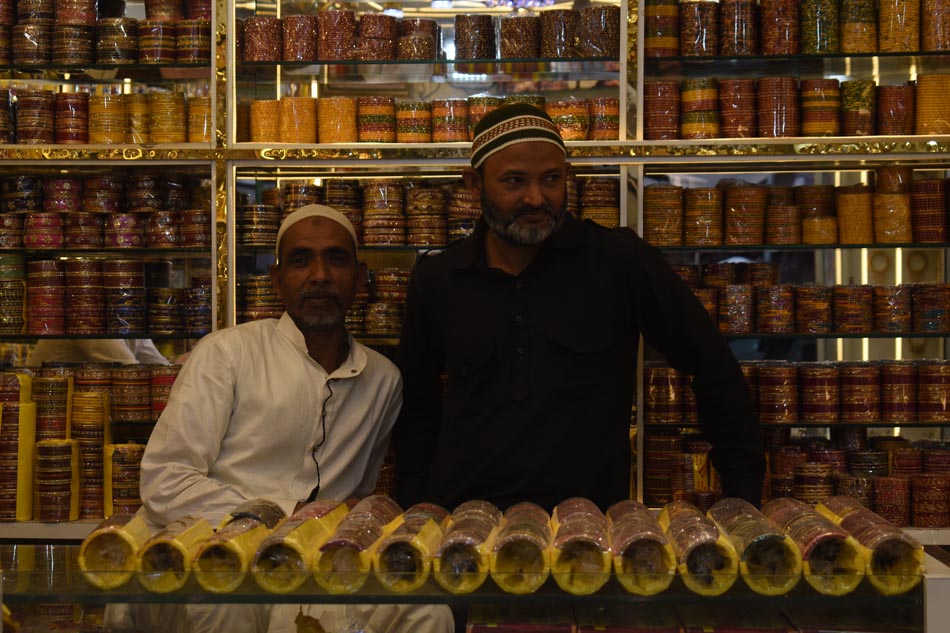
Contemporary artisans continue experimenting with changing consumer preferences. Modern styles include spray chundri patterns, sona churi, bangri and nagni sets. Some workshops also produce Madhubani-inspired motifs to connect Lahthi with Bihar’s broader visual culture. Shops like Baba Lahathi 555 (run by Haji Munir Sahab’s family) have been pioneers in creating new, unique designs, managing to give employment to thousands over the years. Modern social enterprises like Okhai are also stepping in to sell these traditional designs on modern e-commerce platforms. The craft’s aesthetic appeal lies not only in visual beauty but also in its relationship with ritual and celebration. Bridal Lahthi, festival bangles and ceremonial sets are designed to embody festivity, prosperity and social status through colour and ornamentation
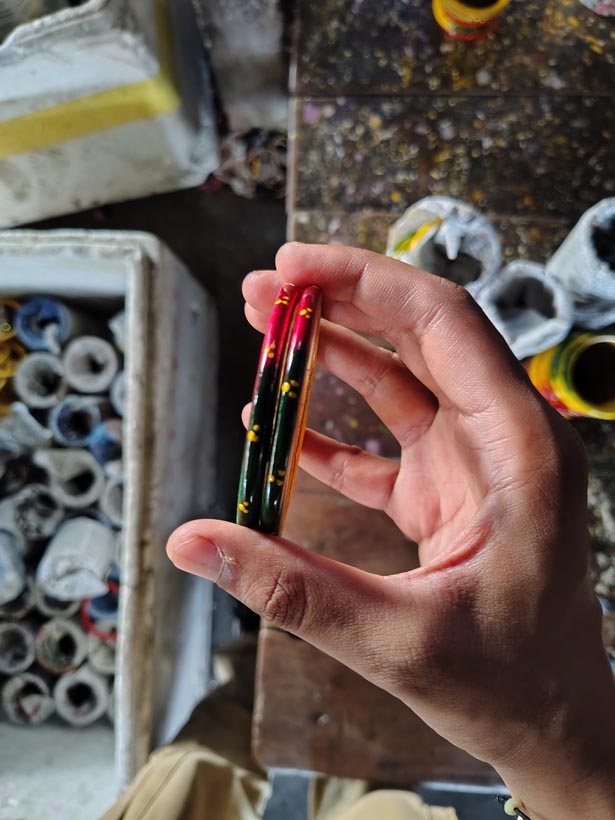
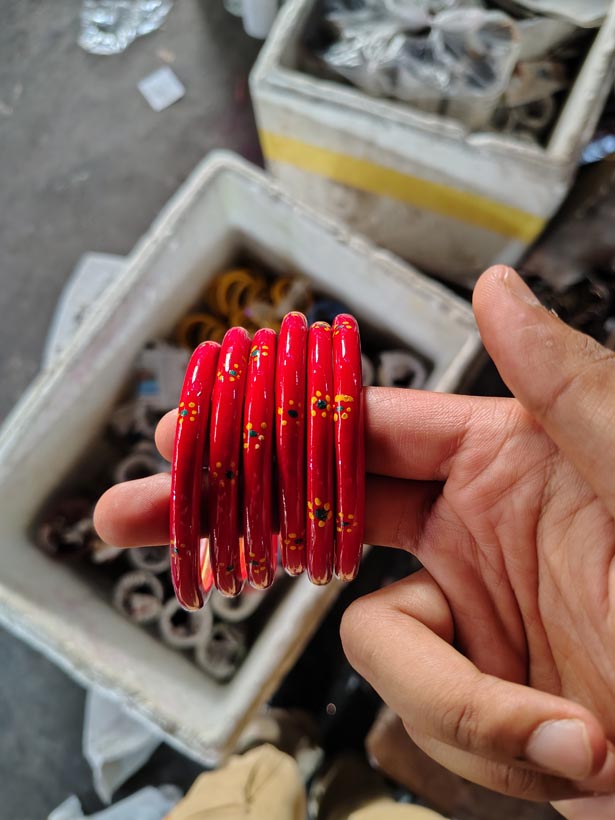
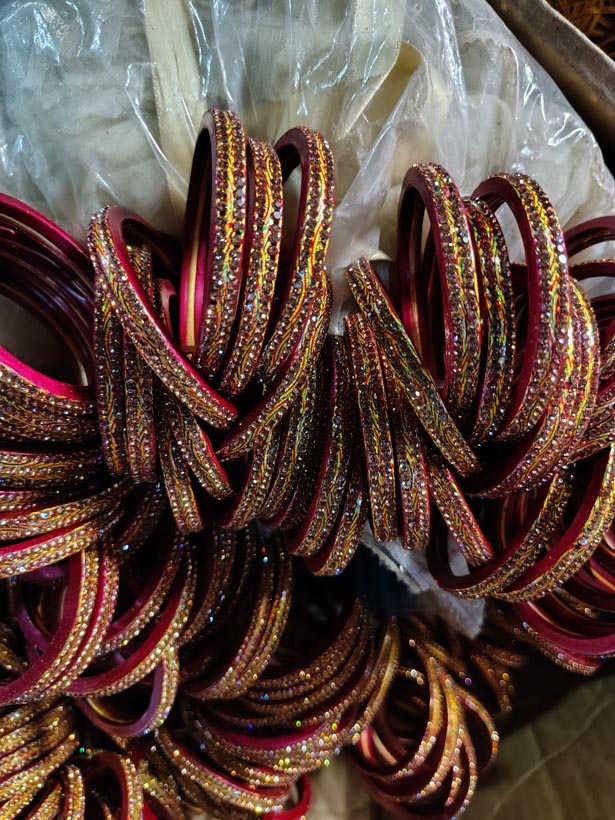
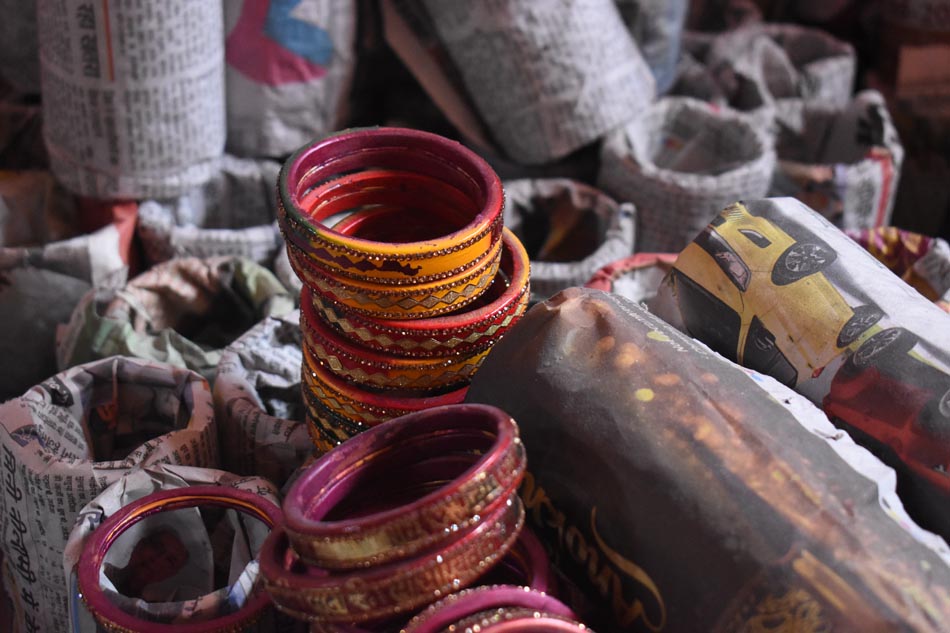
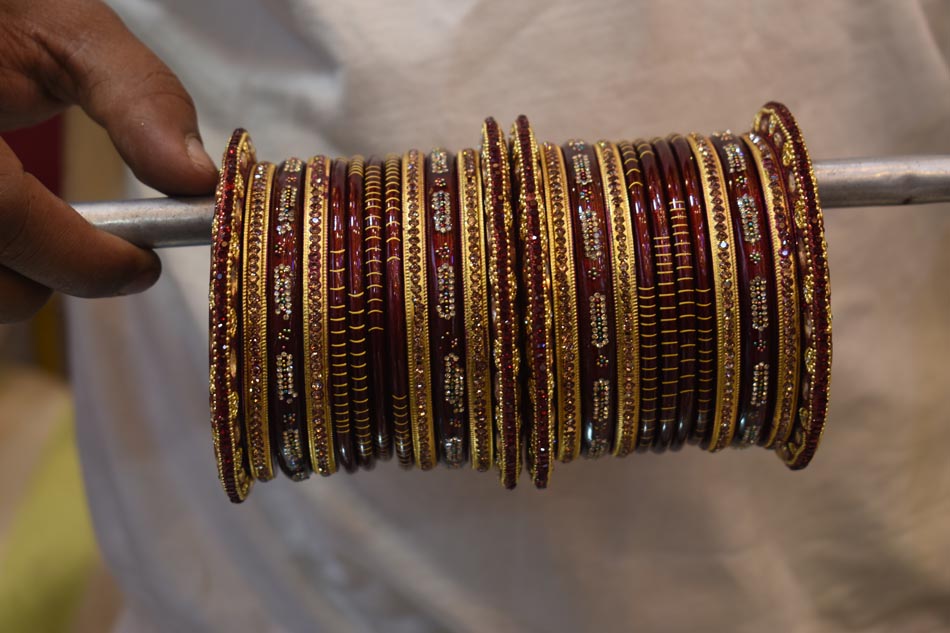
Despite its long history and cultural importance, the Muzaffarpur Lahthi industry is facing serious challenges that threaten both the livelihood of artisans and the continuity of the craft itself. Rising production costs, poor working conditions, low wages and weak institutional support have created a situation where many artisans struggle simply to survive.
:: Sourcing and Raw Materials- One of the biggest problems is the rising cost of raw materials. Artisans repeatedly point out that the price of lac has increased sharply over the years, while the market price of finished bangles has not risen at the same pace. Artisan Afroz Alam explained that lac material which once cost around Rs. 600 per kilogram now ranges between Rs. 1450 and Rs. 1750 per kilogram. Chemicals used for colouring, gloss and strengthening are even more expensive, costing nearly Rs. 3000 to Rs. 3500. Most artisans do not have the financial capacity or government support required to purchase raw materials directly from producing regions such as Uttar Pradesh, West Bengal and Chhattisgarh. Instead, they are forced to buy from middlemen and suppliers in Islampur at higher rates, which reduces already narrow profit margins. To cope with these costs, many workshops have started using cheaper scrap lac or lower quality substitutes, affecting both durability and finish.
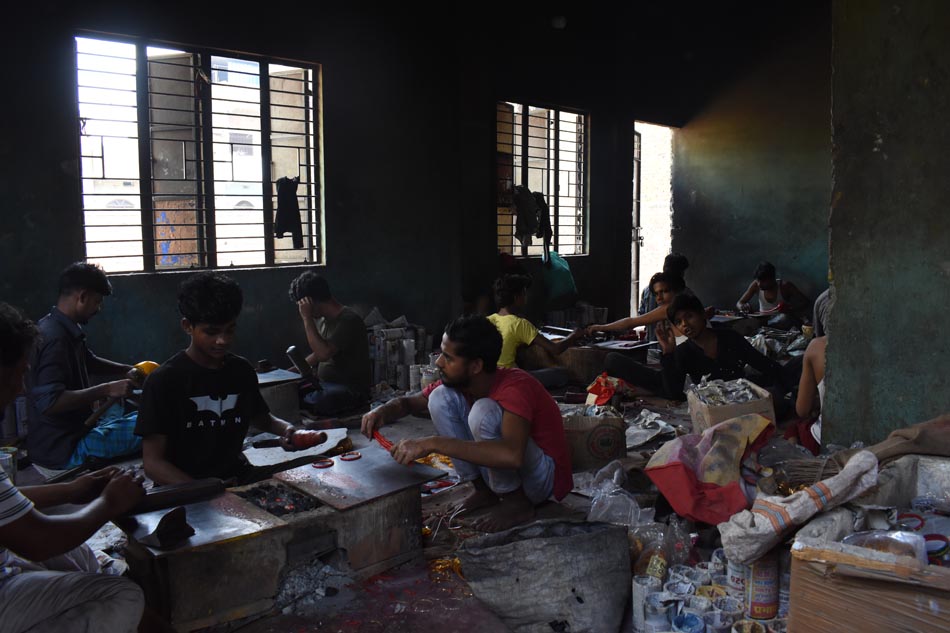
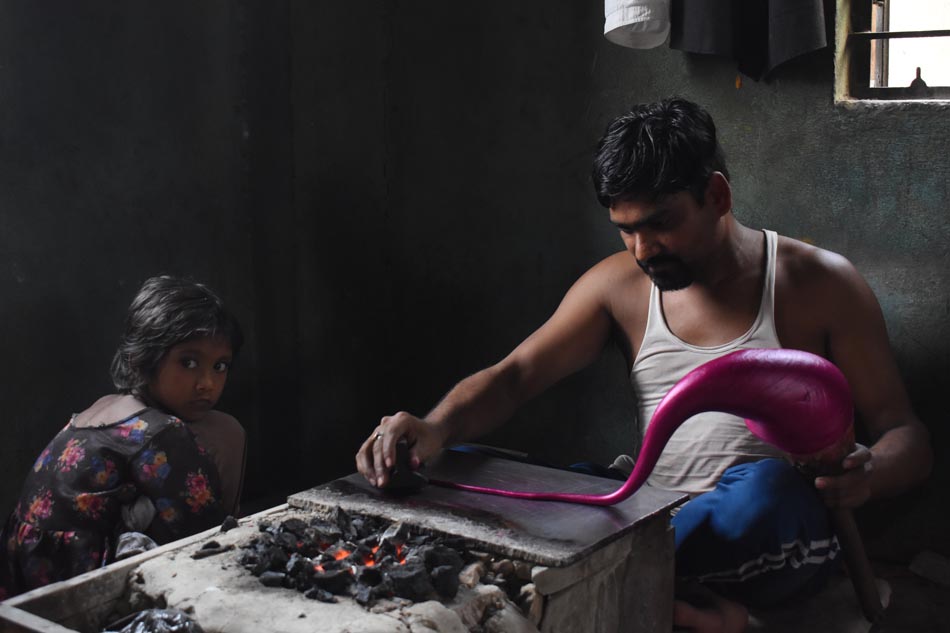
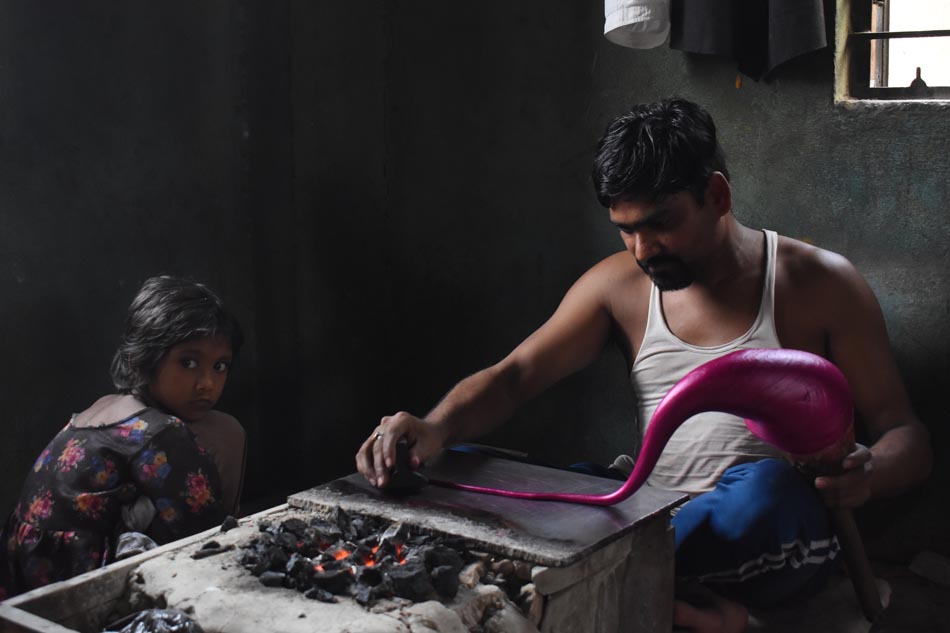
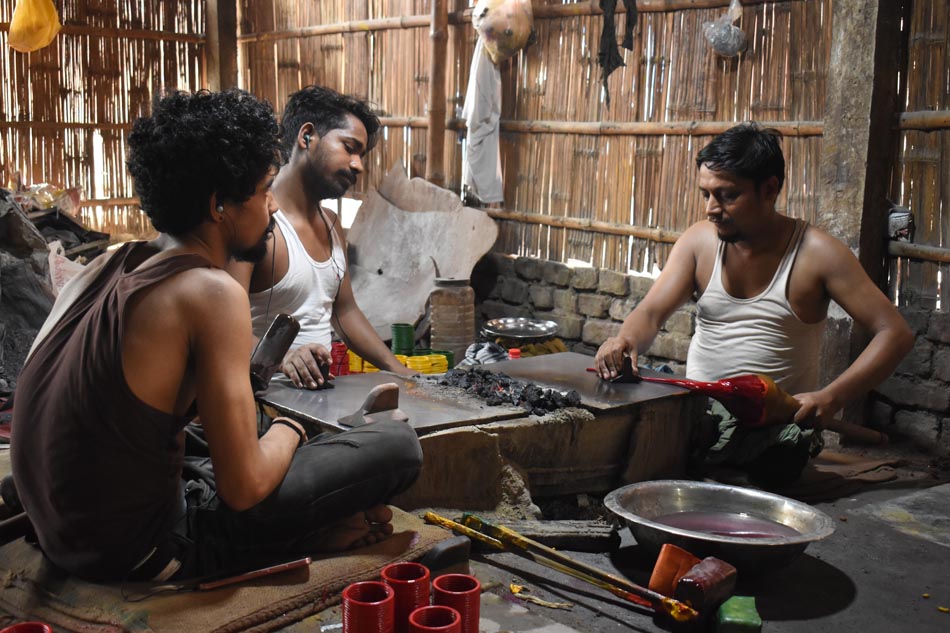
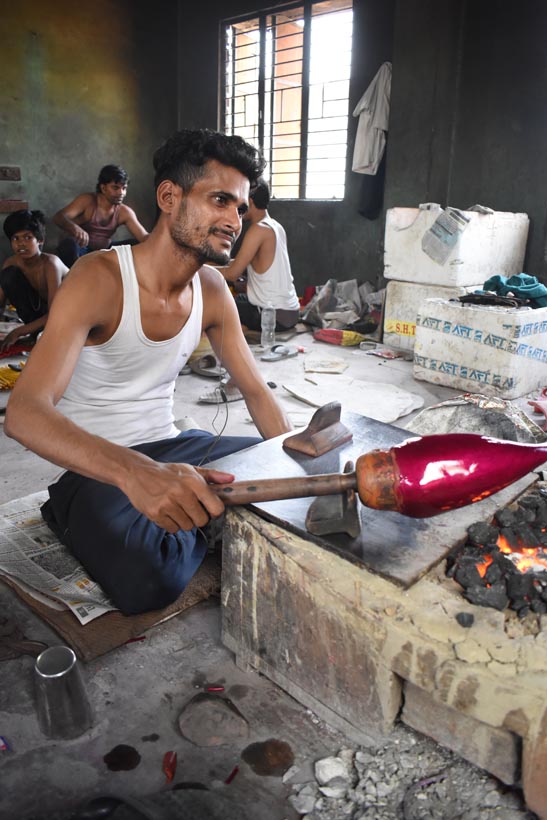
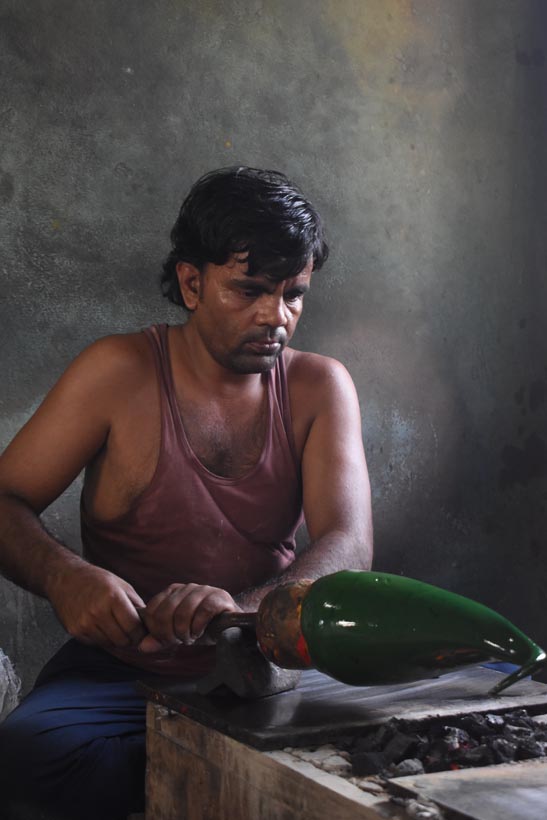
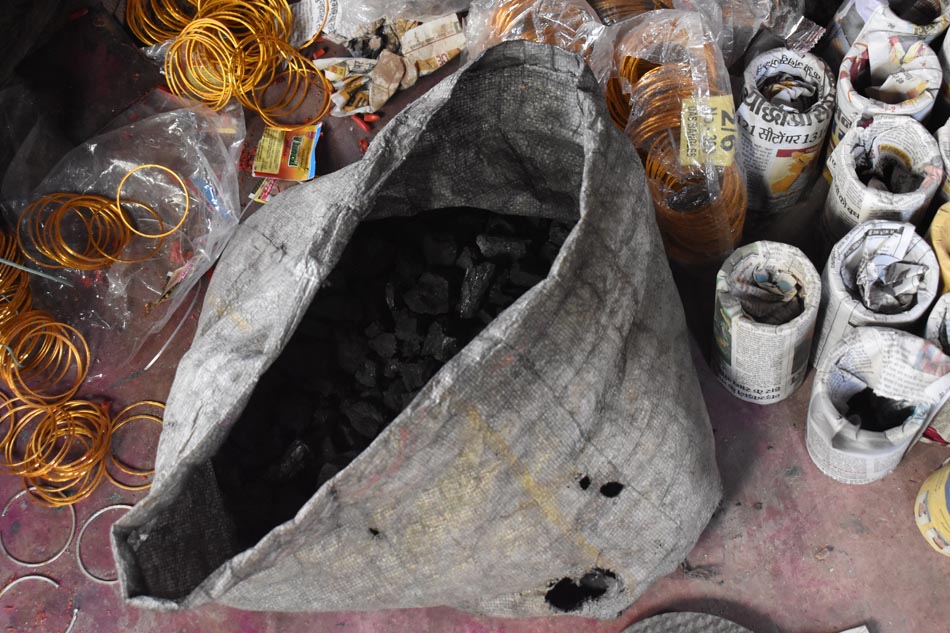
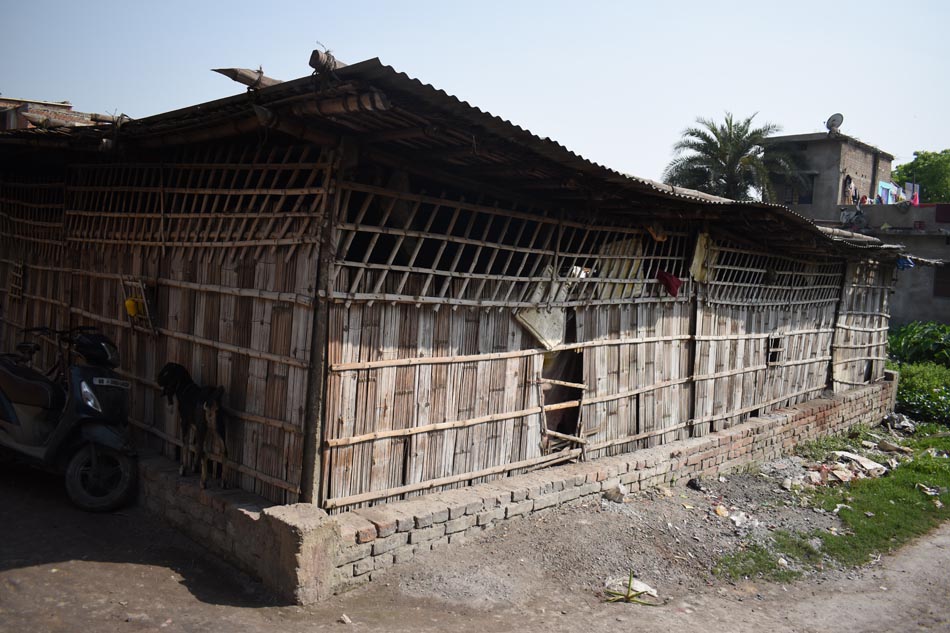
:: The Crafting Process and Working Conditions- The physical environment of the workshops is extremely harsh. The making of lac bangles depends on continuous exposure to heat from coal-fired bhattis, and most workshops operate in small enclosed rooms with poor ventilation. Mohammad Afsar, an artisan with nearly a decade of experience, described workdays that begin around seven in the morning and continue for twelve to fifteen hours. Many workshops lack fans, exhaust systems and proper lighting, forcing workers to sit for long periods beside intense heat. Mohammad Chhote, who has spent almost thirty years in the craft, stated that the conditions become almost unbearable during the summer months. Irfan, another artisan, observed that years of working near the furnaces gradually damage the body and weaken overall health. Constant exposure to smoke, heat and chemical fumes has become a normal part of everyday labour within the cluster.
The labour process itself is highly fragmented. Men generally handle the heating, shaping and base preparation of the bangles while women often work from home decorating and embellishing them with stones, mirrors and coloured designs. This division of labour allows production to continue at low cost but also hides much of the workforce from formal recognition and protection.
:: Selling, Wages and Debt- Although the Lahthi market in Islampur is one of the largest in India, the economic condition of many artisans remains poor. Traders and shopkeepers largely control the sale and pricing of the products, leaving the actual makers with very little bargaining power. Since wholesale prices are rarely increased, small workshop owners cannot afford expensive strengthening chemicals or improved infrastructure without taking financial losses. As a result, daily wages for artisans remain extremely low, usually between Rs. 400 and Rs. 600 despite the long hours and physically demanding labour. Several artisans described a cycle of debt that keeps them tied to workshop owners and traders. Loans are taken for survival, medical needs or marriage expenses, but low incomes make repayment nearly impossible. Many workers therefore continue under the same employers for years with little possibility of economic mobility. The industry also continues to face the hidden presence of child labour.
During field observations, children were seen participating in tasks such as melting lac waste or carrying unfinished bangles between workshops and home-based workers. Even though such involvement is often denied publicly, economic pressure forces many families to include children within the production chain.
:: Absence of Recognition Status- Despite being widely recognised as a cultural identity marker of Muzaffarpur, Lahthi has not yet received a Geographical Indication (GI) tag. This absence reveals a significant gap between the craft’s cultural importance and its official institutional recognition
The lack of GI status has affected both branding and protection of the craft. Many artisans believe that formal recognition could help prevent imitation products, strengthen market identity and improve economic opportunities for traditional makers. At the same time, the continued popularity of Lahthi across Bihar demonstrates that the craft retains strong cultural legitimacy even without official certification.
:: Government Support and Modern Adaptation- Government schemes such as SFURTI and the Chief Minister MSME Cluster Development Scheme were introduced with the promise of improving infrastructure, creating raw material banks and supporting artisan livelihoods. However, many artisans feel that these programmes rarely translate into practical benefits on the ground.
Afroz Alam recalled attempting to apply for assistance through a government scheme only for his documents to disappear within the administrative process. Frustrated by repeated delays and bureaucracy, he used the local phrase, “Pao ka chappal khiya jayega in sab ke chakkar me”, suggesting that one’s slippers would wear out simply from running after government offices. Similar complaints were raised by Md Mubarak and other artisans who argued that banks remain unwilling to provide affordable loans and that support rarely reaches smaller workers. At the same time, the craft is trying to adapt to changing markets. Local producers are experimenting with cheaper materials and faster production methods to compete with machine-made products and low-cost imports. Wholesalers have also started targeting export markets in Nepal and Bangladesh where demand for traditional lac bangles still exists. Yet without stronger institutional support, fair wages and improved working conditions, many artisans fear that younger generations may eventually leave the profession altogether.
Making Lahthi or lac bangles is a long and highly skilled process that depends on speed, coordination and careful control over heat. Turning raw tree resin into finished jewellery requires the labour of multiple artisans working across different stages of production. Traditionally, the physically demanding work of melting, heating and shaping the lac near the fire is done by men in workshops or small factory units. After the basic structure is completed, much of the decorative work is carried out by women, the chipai wali from their homes. Even today, the entire production cycle remains largely handmade and depends almost completely on inherited technical skill rather than mechanised systems.
The process begins with collecting and preparing a range of raw materials, many of which are sourced from outside Muzaffarpur district.
The foundational material is natural lac resin, locally called chapdi or chapra. Lac itself is produced through what artisans describe as keede ki kheti or insect farming. The resin is secreted by the Kerria lacca insect, which grows on host trees such as Kusum, Palash and Ber. According to artisan Mohammad Afsar, the raw lac usually arrives in the form of chapra and is mainly sourced from places such as Balrampur in Uttar Pradesh, Purulia in West Bengal, Jharkhand and Chhattisgarh.
Different qualities of lac are used for different stages of production. Shop worker Irfan explained that kachha lac, which costs around Rs. 60 to 80, breaks very easily because the processing method is different and less refined. Artisan Afroz Alam noted that ranjan and patti are used while preparing the base dough known as gawa, whereas the more expensive colour chapra is used for the outer coloured layer that gives the bangles their shine and brightness.
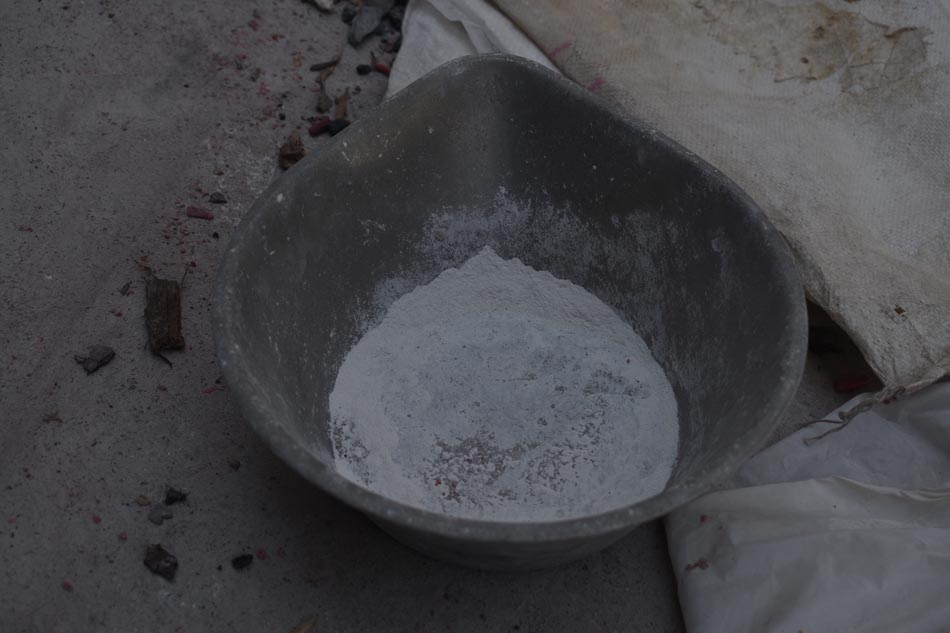
Because pure lac is naturally brittle, artisans mix strengthening materials into it. One important additive is beroza or pine resin, which improves flexibility and binding. Another essential ingredient is giya pathar, a special soapstone powder mixed into the lac to strengthen the structure. Irfan stated that this powder is sourced from Rajasthan and is necessary to give the bangles durability and prevent cracking.
Natural and synthetic pigments are used to create the vibrant colours associated with Lahthi. These include pevdi or yellow, safeda or lithophone white, mirgam or copper tones, green pigments and chamki or gold shimmer. In some stages, artisans spray additional colours over the surface to create layered designs such as spray chundri. This colour spraying helps build complex backgrounds before stones or mirrors are attached.
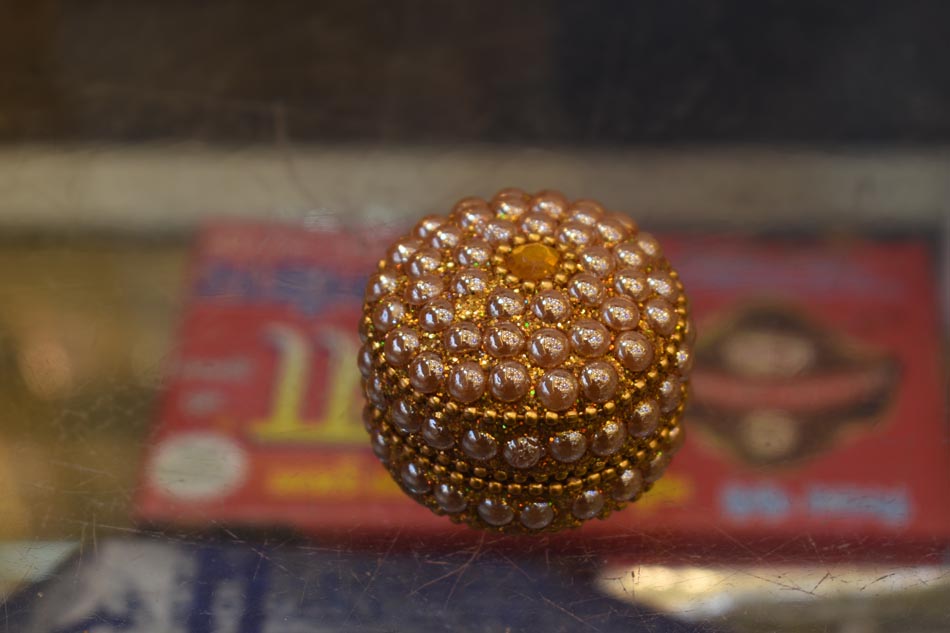
Decorative materials include stones, mirrors, sequins, beads, foil, faux pearls and semi-precious nag stones, many of which are sourced from Jaipur and parts of Uttar Pradesh. Modern production has also introduced sticker sheets that contain pre-glued stones fixed onto plastic strips for faster application. For heavy bridal and party bangles, metal or iron cores are inserted into the lac structure to increase durability and maintain shape.
In the final stage, artisans use an expensive chemical mixture of resin and hardener as a finishing coat. This coating costs approximately Rs. 3000 to Rs. 3500 and is brushed over the bangles to increase gloss, strengthen the surface and make the colours appear brighter.
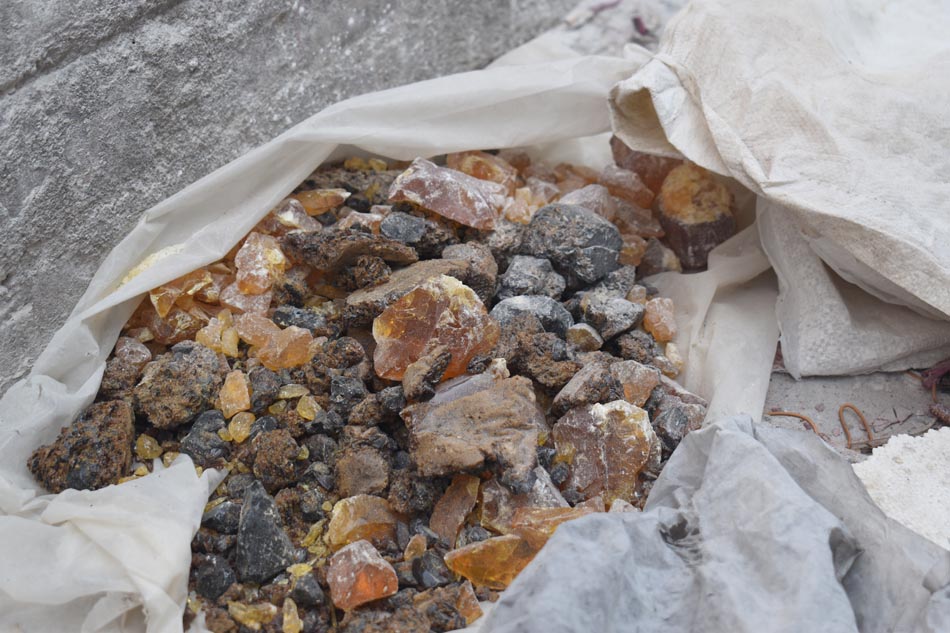
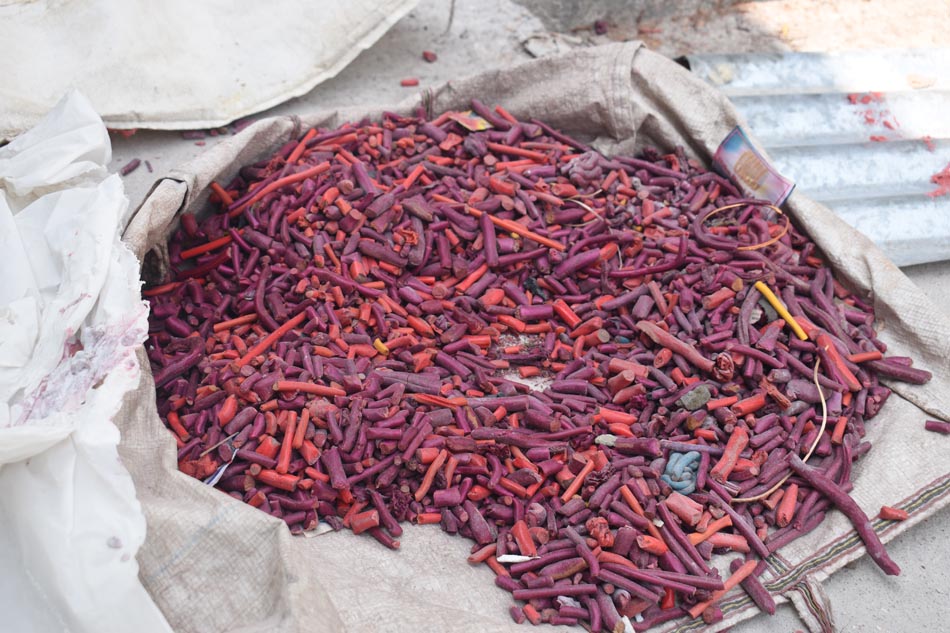
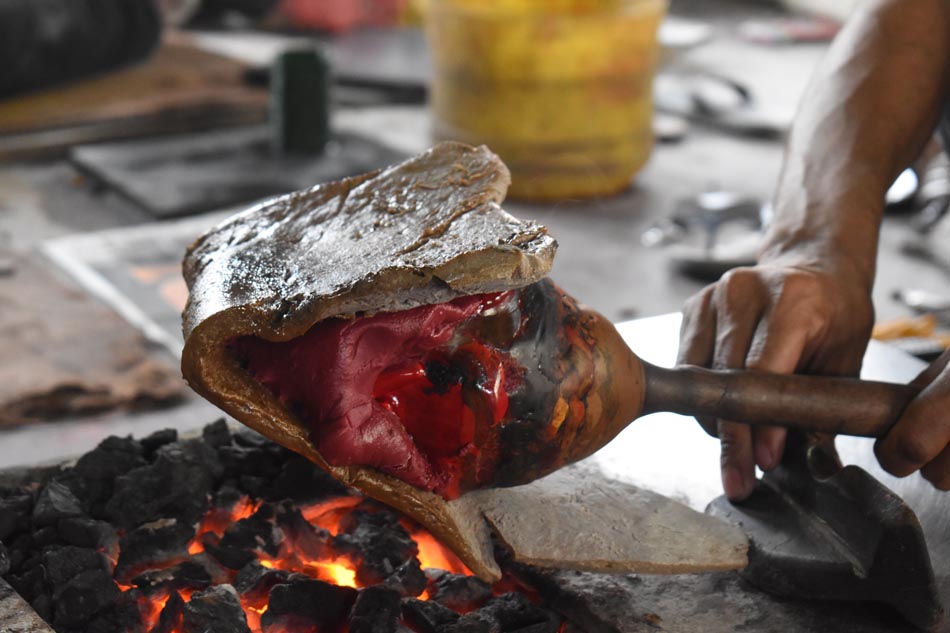
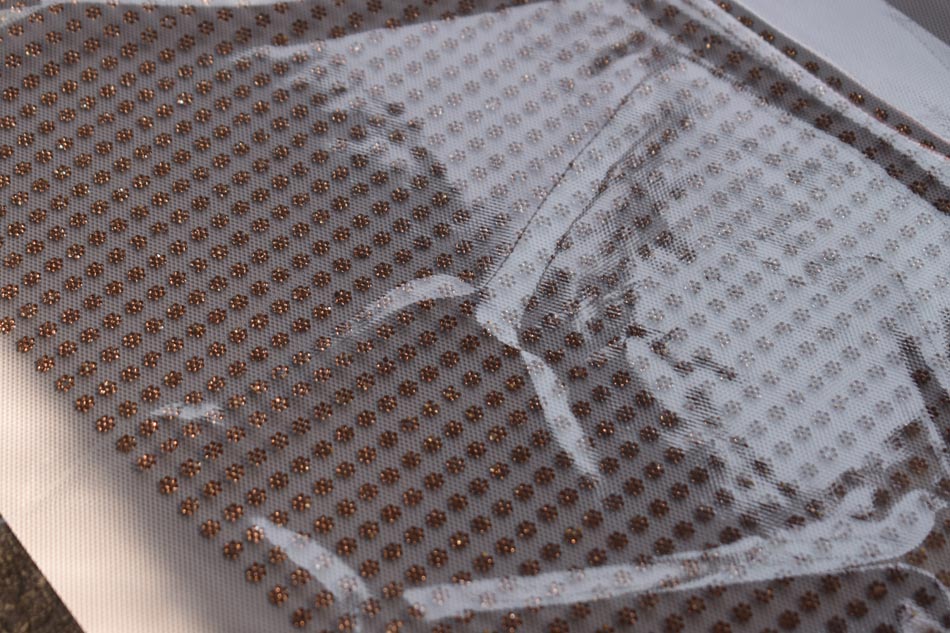
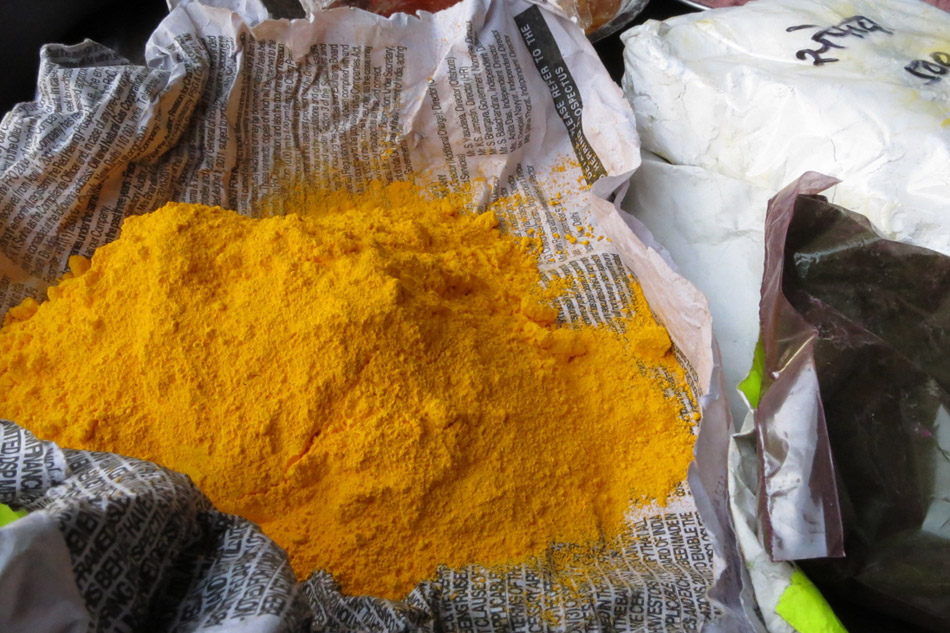
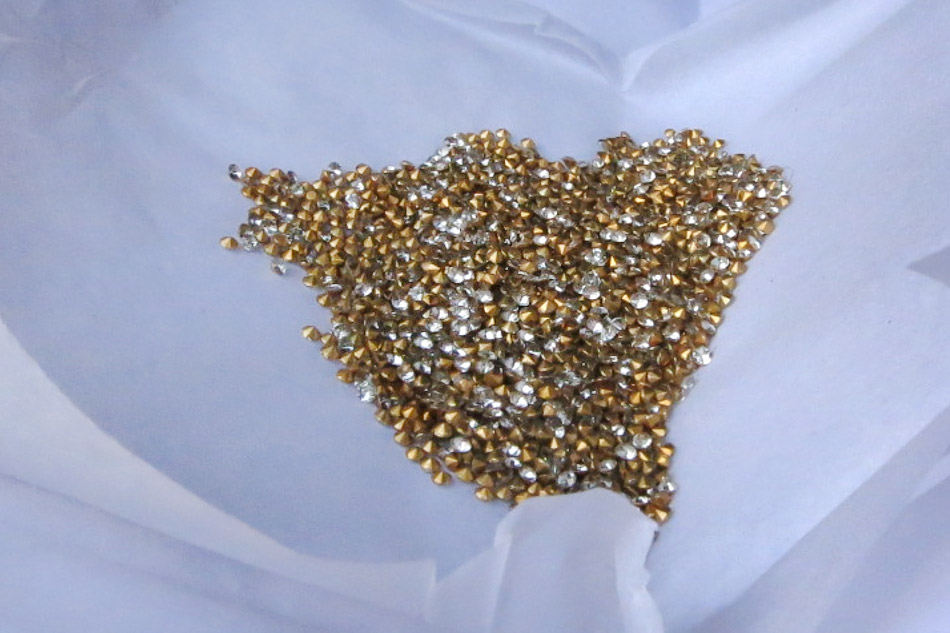
Lahthi production relies on simple hand-operated tools and coal-fired heating systems that have remained largely unchanged across generations.
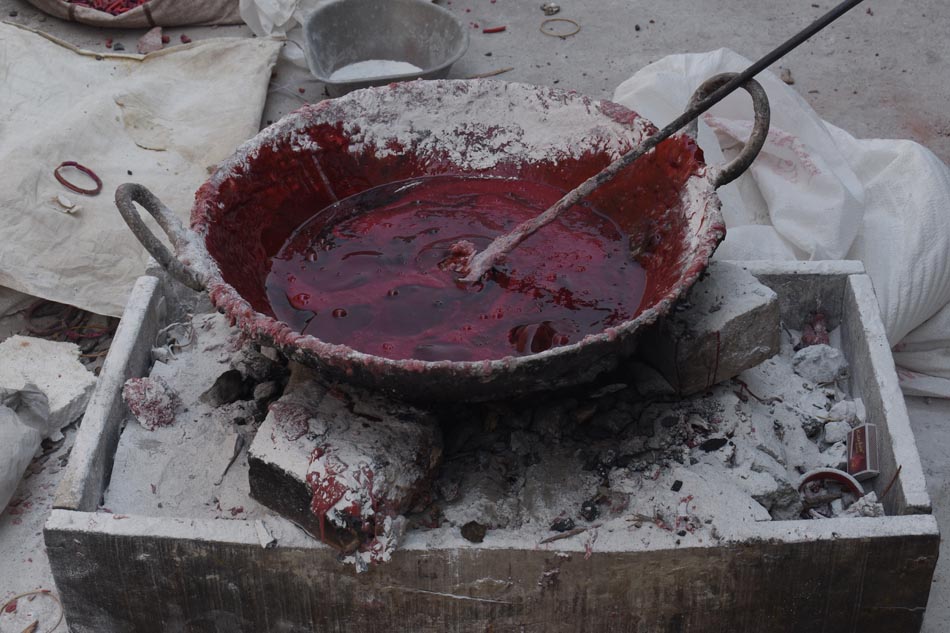
– The bhatti, angeethi or chulha is the traditional coal burner used to keep the lac in a molten and workable state throughout production. A flat steel or tin plate known as the silla is placed above the burner to heat lac and decorative stones. The initial melting and mixing of raw lac take place inside a shallow vessel called the kadhai.
– Cholni, A sieve known as the cholni is used to evenly mix soapstone powder into the heated lac.
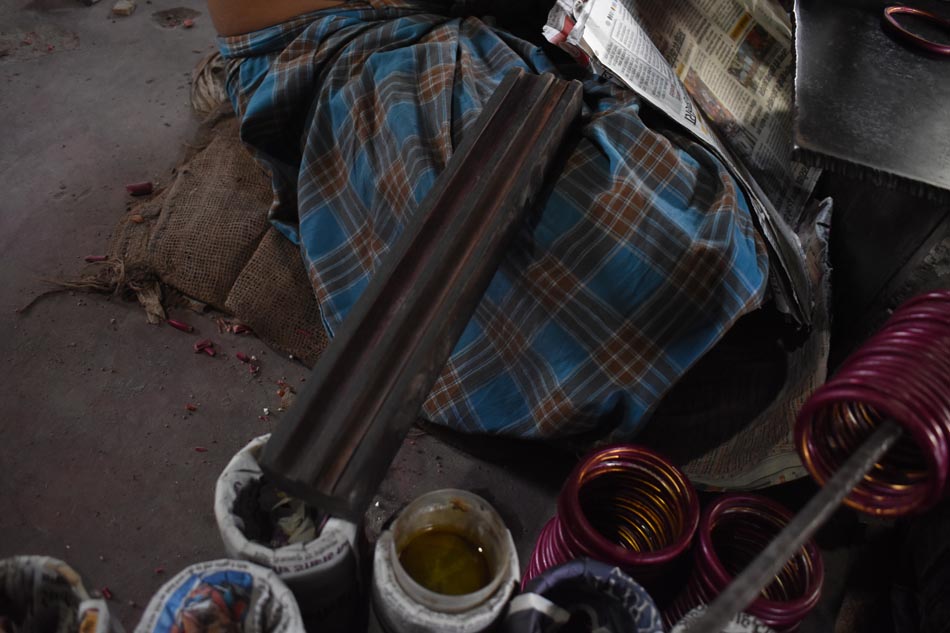
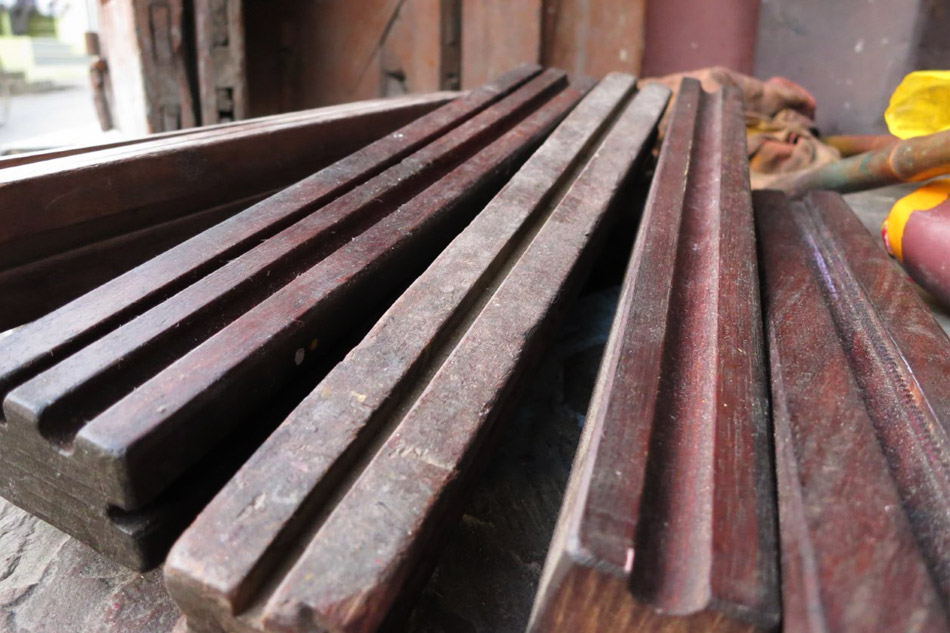
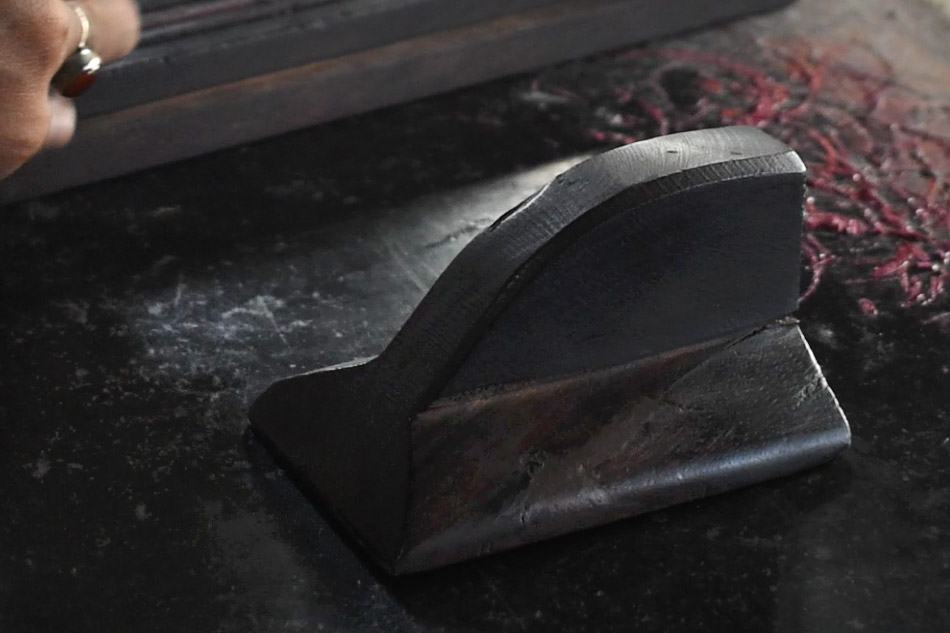
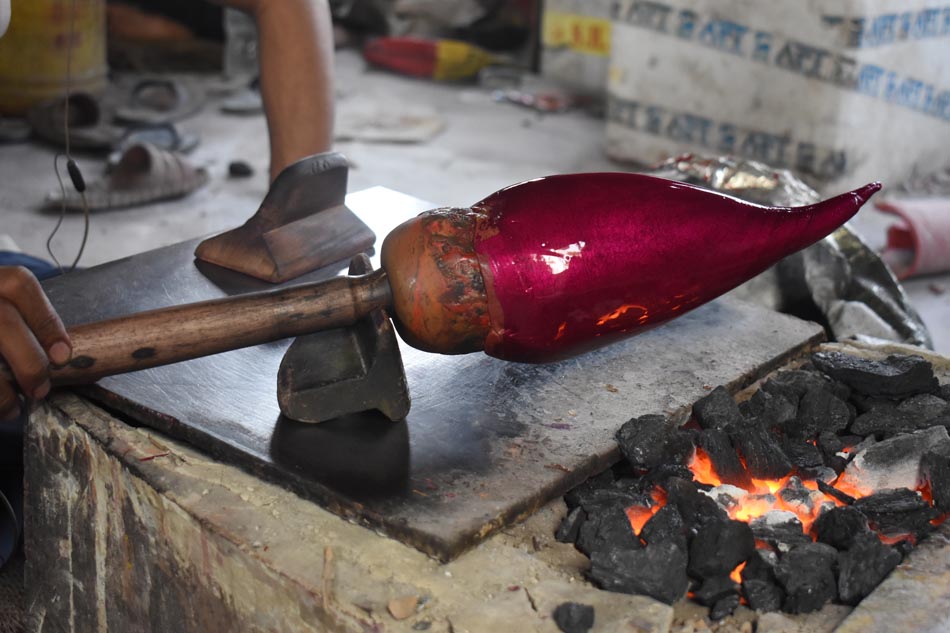
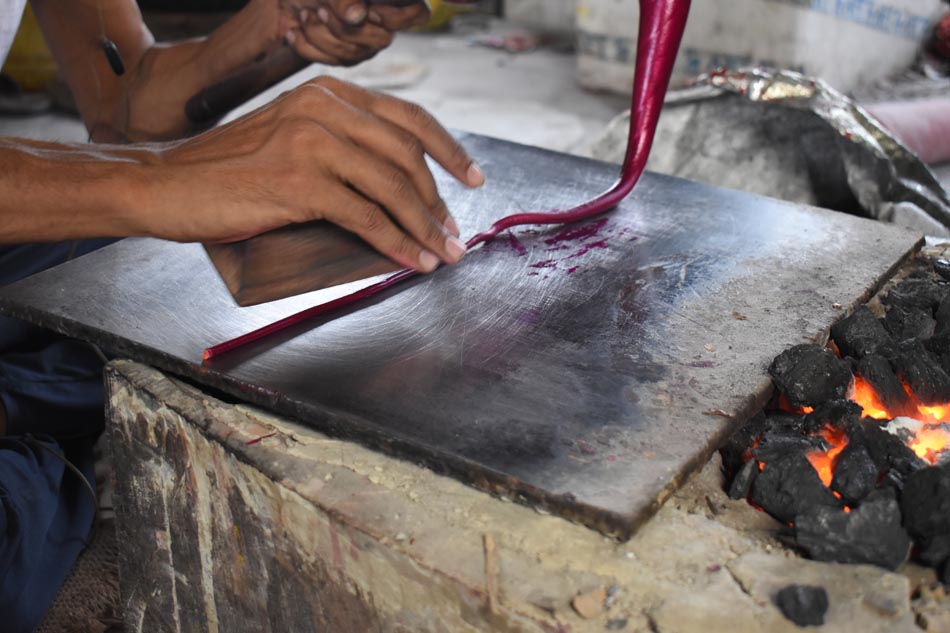
– Hattha. for shaping and pressing, artisans use the hattha, a flat teak wood paddle usually coated with mustard oil or ghee so the hot lac does not stick to it. This tool is used continuously to press, flatten and shape the softened material.
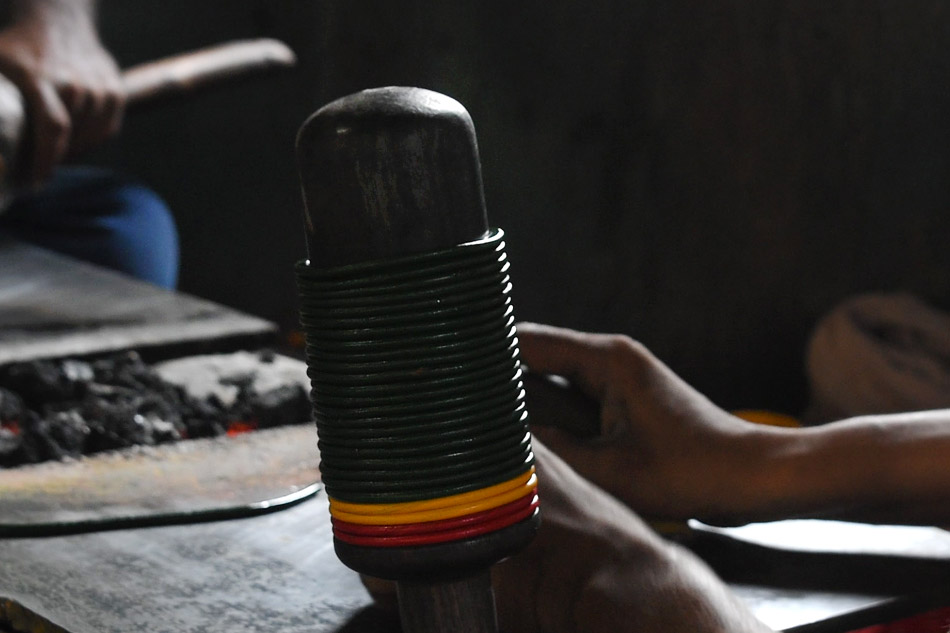
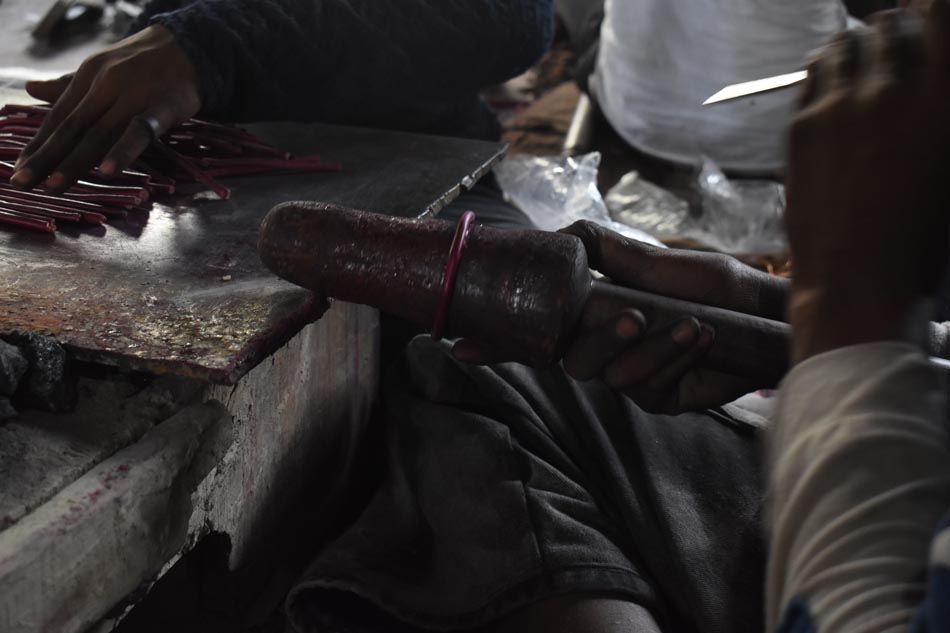
– Khali, The khali is a long wooden rod with a tapering end used for sizing and shaping circular bangles according to wrist dimensions.
– Haddi or hadda, For fine detailing, artisans use the haddi or hadda, a bone-shaped wooden tool used for pressing and shaping patterns.
Small tools such as chimti or tweezers and cutters help artisans pick up heated decorative pieces and cut lac coils cleanly.
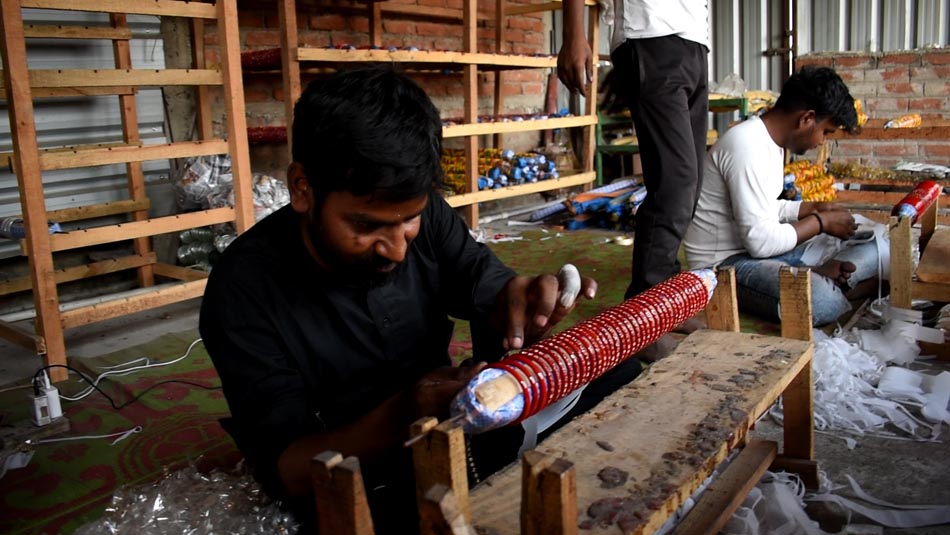
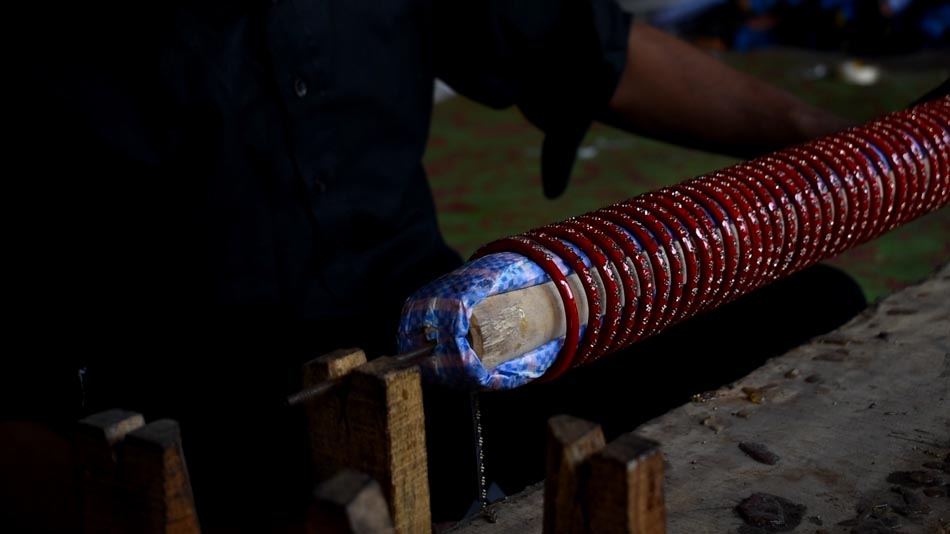
During modern finishing processes, rolling rods are used to rotate the bangles smoothly while applying chemical gloss or decorative sticker strips.
The production system still depends almost entirely on manual labour, physical experience and practical understanding of temperature control.
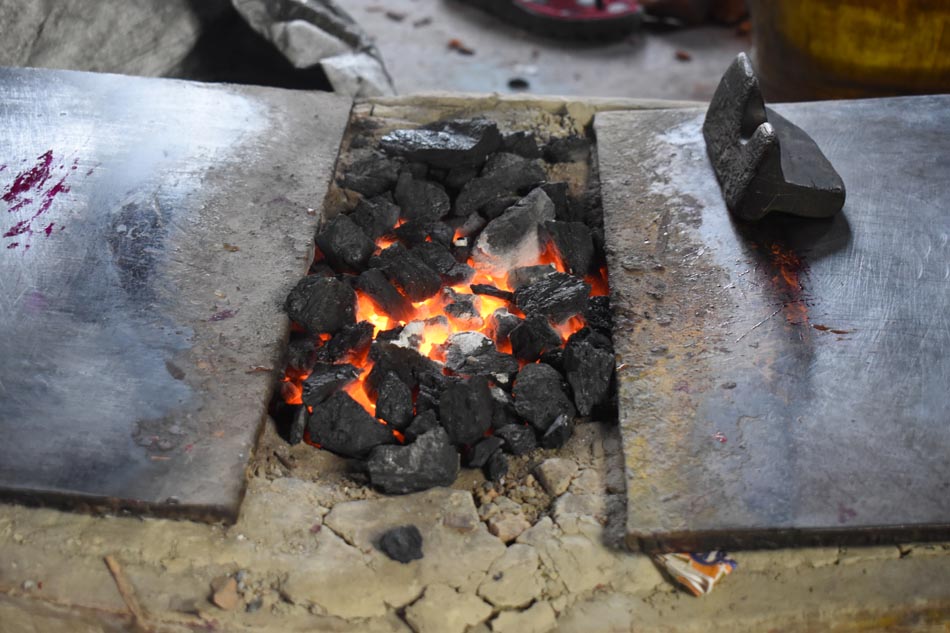
No rituals
The production of Lahthi follows a continuous cycle of heating, shaping, cooling and decorating. Every stage requires fast movement and precise judgement because lac hardens very quickly once removed from heat.
:: Preparing the Base Dough (Gawa) – The process usually begins early in the morning when the bhatti is fired up. Raw lac pieces or chapra are placed inside a shallow kadhai over the coal fire. As the lac softens into a semi-molten state, artisans gradually add giya pathar and beroza using the cholni sieve. The mixture is stirred continuously until it forms a thick workable dough known as gawa. This stage demands constant attention because temperature control determines the quality of the material. If the heat becomes too high, the lac burns completely and the entire batch is wasted.
:: Colouring the Lac- In a separate process, pigments are mixed into smaller heated portions of lac to create coloured lac sticks. These coloured sticks are later used to coat the plain base and provide the bright outer appearance of the bangles.
:: Shaping and Wrapping- The plain gawa is wrapped around a thick wooden rod and slowly heated over the bhatti. Using the hattha, artisans constantly smooth, stretch and press the softened material into long cylindrical forms. Once the base reaches the correct softness, the coloured lac sticks are lightly heated and rubbed evenly over the surface. The coloured layer wraps around the plain base and gives the bangle its outer brightness and shine. The thicker the pigment layer applied at this stage, the deeper and richer the final colour appears.
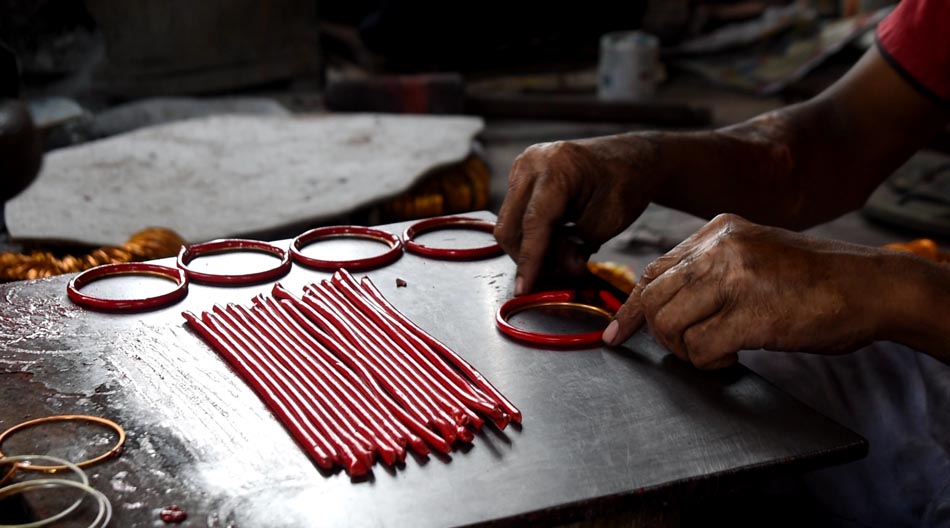
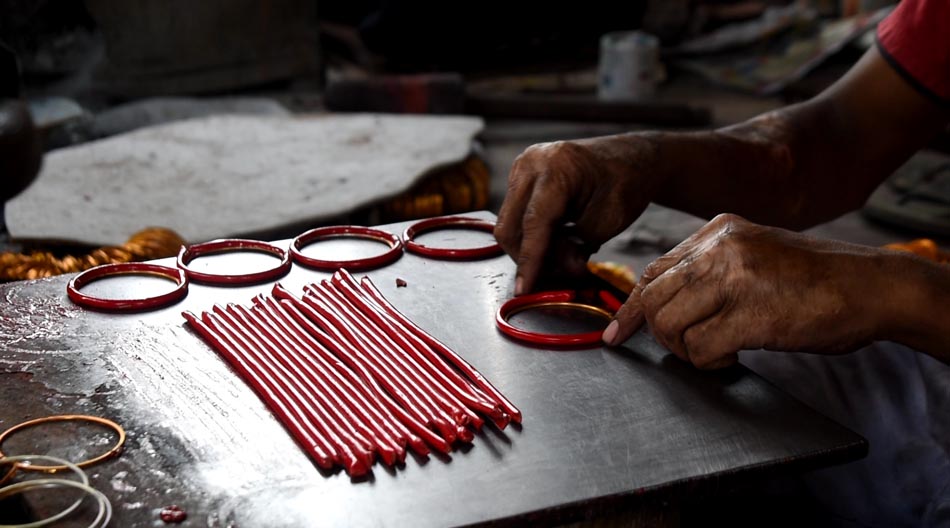
:: Coiling and Sizing- After colouring, the warm lac is rolled into long thin coils through repeated pressing with the hattha. Portions are then cut from the main coil and reheated before being bent into circular forms. The two ends are joined seamlessly through heat and pressure.
Immediately after joining, the bangle is slipped onto the wooden khali so the artisan can adjust the internal diameter and wrist size. If the product is a metal Lahthi, the hot lac is wrapped directly around an iron bangle base and shaped using the hattha at this stage to provide extra strength for bridal and heavy designs.
:: Patterning and Grooving- While the lac remains slightly warm and flexible, artisans create grooves, indentations and surface patterns using shaping tools. This grooving process is locally known as khari marna. Once the desired pattern is complete, the bangles are cooled using a damp cloth.
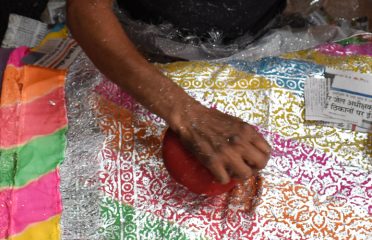
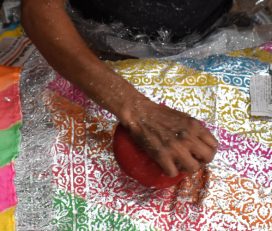
:: Chipai or Embellishment- The decorative stage is known as chipai and is one of the most important parts of Lahthi production. Much of this work is carried out by women working from their homes, though some men are also involved. The process requires immense finesse and has to be completed very quickly. Traditional decorative materials such as stones, sequins, micro-mirrors and beads are heated on tin foil over a small burner. Once heated, the pieces are quickly picked up with tweezers and pressed into the lac surface. In another method, artisans arrange stones into patterns and roll the warm bangle directly over them. The heat softens the lac surface just enough for the decoration to sink slightly into the material and become permanently fixed once cooled. This action often has to be completed within ten seconds.
Today, artisans increasingly use modern sticker strips containing pre-set nag stones. The sticker sheets are cut into narrow strips and applied while rotating the bangles with the help of rolling rods.
:: Final Finishing- The final stage involves polishing and sealing the surface. Artisans brush the expensive chemical mixture of resin and hardener over the bangles to deepen the colours, increase shine and strengthen the structure. This coating acts as a protective sealant before the bangles are packed and sent to wholesalers, particularly in markets such as Islampur.
Despite modern market pressures and the introduction of newer decorative materials, the production of Lahthi continues to depend heavily on hand skill, collective labour and inherited artisanal knowledge.
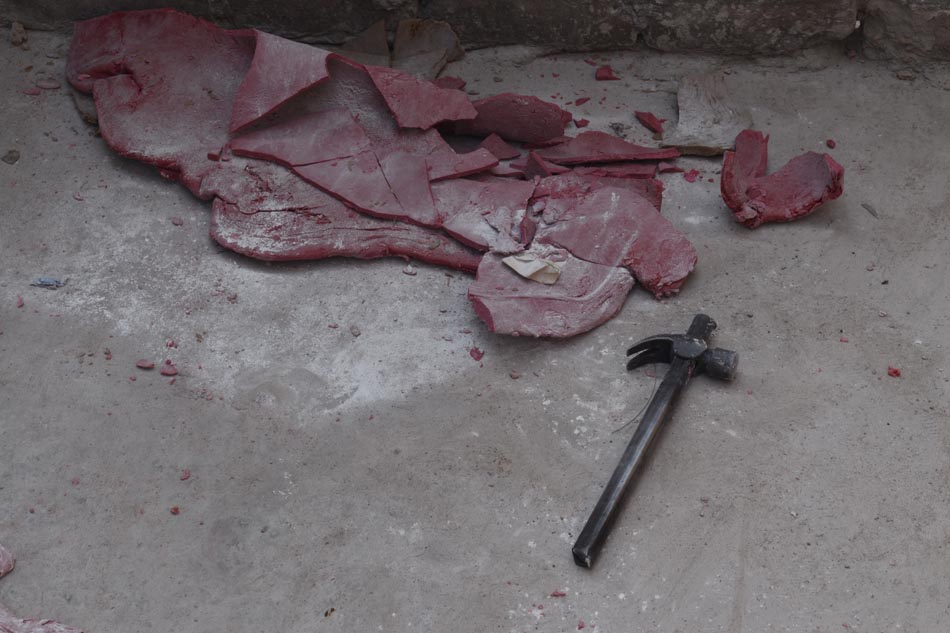
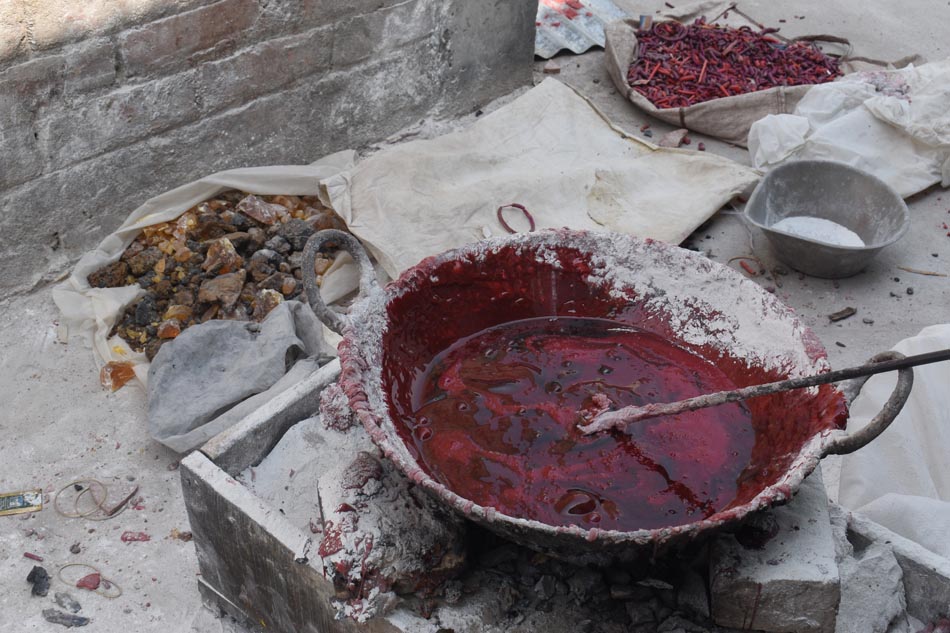
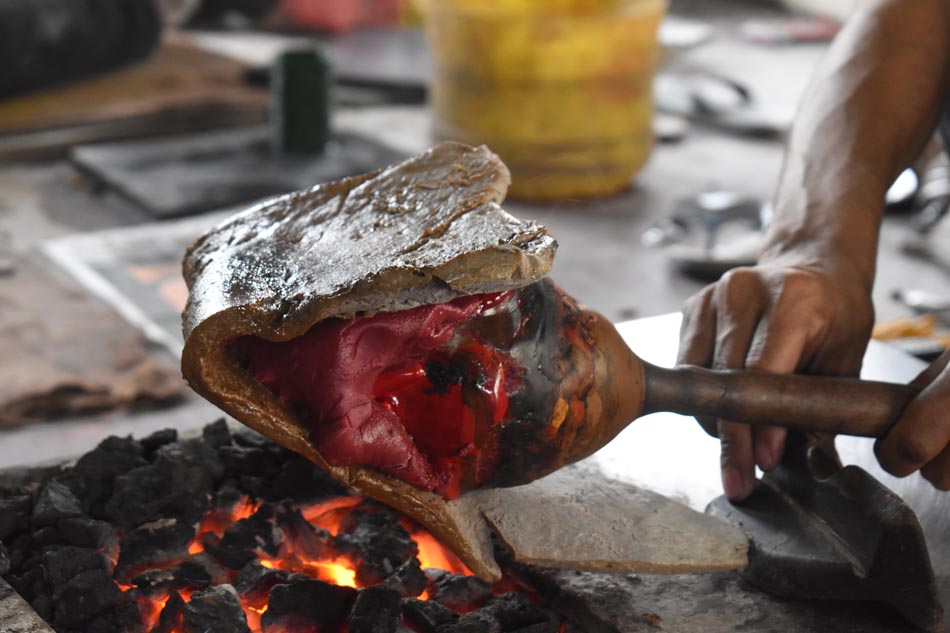
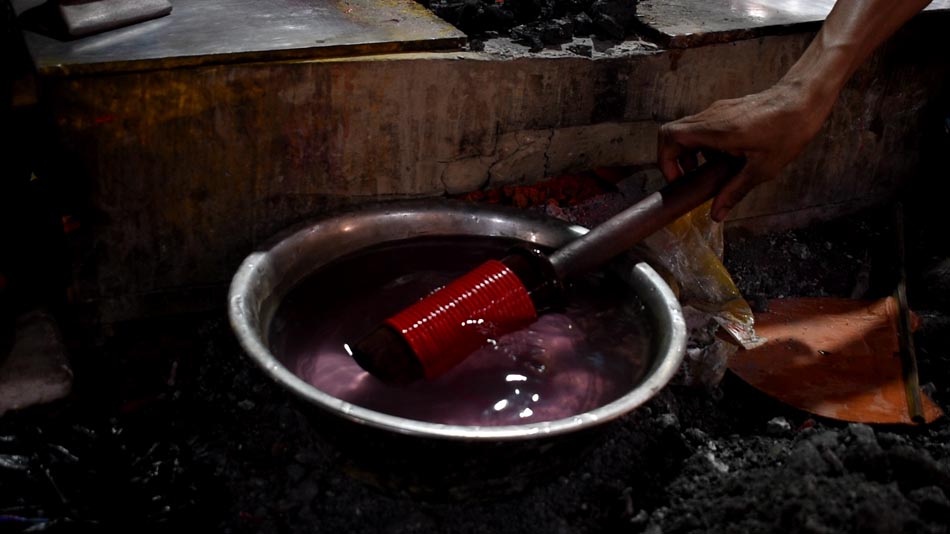
Waste management within the Lahthi industry operates through a combination of traditional reuse practices and informal recycling systems. Because lac is a thermoplastic material that softens when heated, artisans have historically developed methods to minimise wastage during production. During the shaping and rolling stages, leftover lac fragments, broken coils and unused pieces are rarely discarded immediately. These scraps are reheated, kneaded and mixed back into fresh lac batches for reuse. Small leftover pieces are often repurposed for children’s bangles, decorative strips or low-cost products.
Broken bangles returned from markets are also frequently recycled. Artisans heat damaged pieces, separate decorative elements such as stones and mirrors and reuse the lac base material wherever possible. This practice reduces material loss and helps workers manage rising raw material costs. The embellishment stage generates additional forms of waste including broken mirrors, damaged sequins, foil scraps and adhesive residue. In smaller workshops, these materials are usually collected manually and separated for partial reuse. However, large quantities of decorative waste still accumulate because most production units operate without organised waste disposal systems.
Coal-fired bhattis used during production create smoke, ash and carbon residue. Ash generated during heating is generally discarded locally without formal treatment. Prolonged exposure to smoke and fine particles also affects artisan health, particularly in poorly ventilated workshops.
The growing use of synthetic substitutes has further complicated waste management practices. Traditional natural lac is biodegradable and can be reheated repeatedly, but newer cold lac products made with epoxy resin, marble powder and chemical additives are less environmentally sustainable. These synthetic materials generate non-biodegradable waste and cannot always be recycled through traditional methods.
Despite these challenges, the Lahthi craft still retains several sustainable features when compared to mass-produced synthetic jewellery industries. Handmade production, material reuse and low-energy manual techniques continue to reduce waste within many traditional workshops.
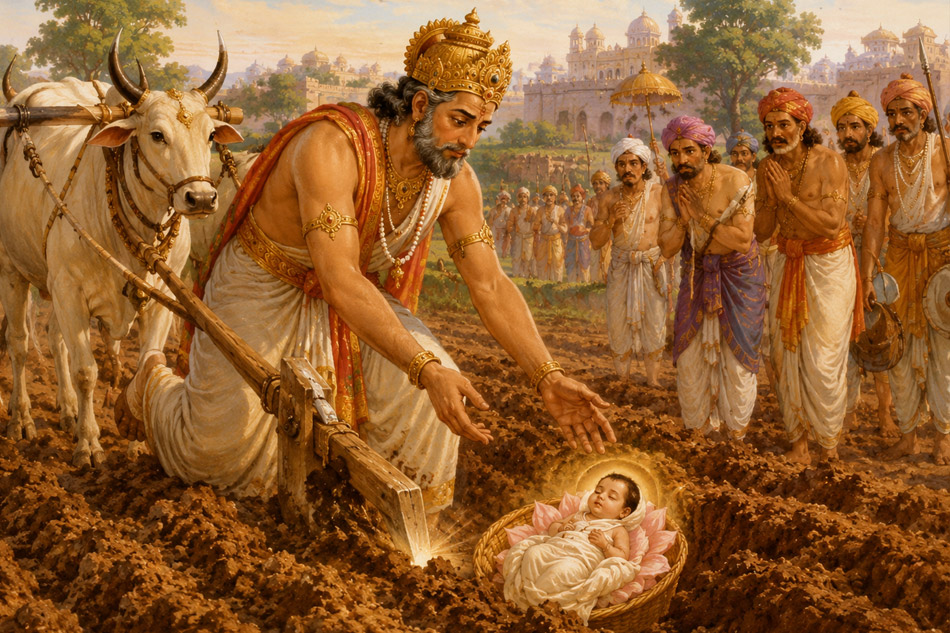
The history of Muzaffarpur and the broader Tirhut region is ancient, deeply rooted in Indian mythology, and heavily layered with democratic, spiritual, and revolutionary milestones. The story of this land traces back to the epic Ramayana. In ancient times, this area was part of the mythological kingdom of Videha, ruled by Rajarshi Janak. According to sacred Hindu legend, Sita (also known as Vaidehi, the Princess of Videha) sprang to life from an earthen pot while Janak was tilling the land in Sitamarhi, a nearby town that was historically part of the Muzaffarpur district. Vedic literature suggests that the Videhas, an Aryan stock, migrated eastwards and settled on the banks of the Gandak river. They cleared marshes to cultivate the fertile plains and established a progressive kingdom with a court that attracted scholars from across the subcontinent.
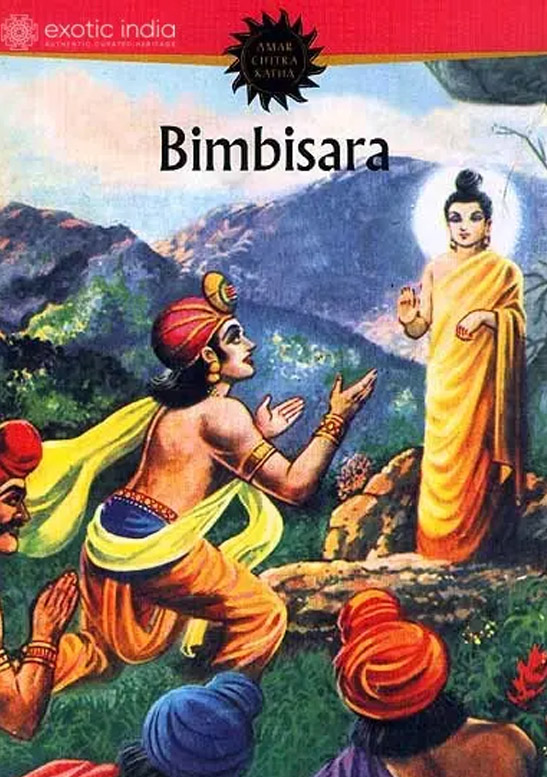
As the Videhan monarchy faded, the region witnessed the rise of the Vrijjan Republic between 725 and 484 B.C., marking the establishment of one of the first republican governments. The centre of political power shifted from Mithila to Vaishali. The Vrijjan Republic was a confederation of eight clans, led by the powerful and influential Licchavis. The Licchavis maintained a highly sophisticated democratic system. Their central legislature boasted 7,707 members, and disputes were settled using voting tickets known as "Salakas". Their society placed a high value on personal liberty, governed by a code of conduct known as the "Seven non-injuring ways" or "Satta Aparihanidhamma". The Licchavis were so powerful that Bimbisara, the founder of the Magadha empire, secured his borders through matrimonial alliances with them in 519 B.C. However, his son Ajatshatru eventually invaded Vaishali and built a fortress at the village of Patali (modern-day Patna) to keep a vigilant watch over the Licchavis across the Ganges. During this era, the region was a centre of religious renaissance. It is the birthplace of Mahavir, the 24th Jain Tirthankara, and was frequently visited by Lord Buddha.
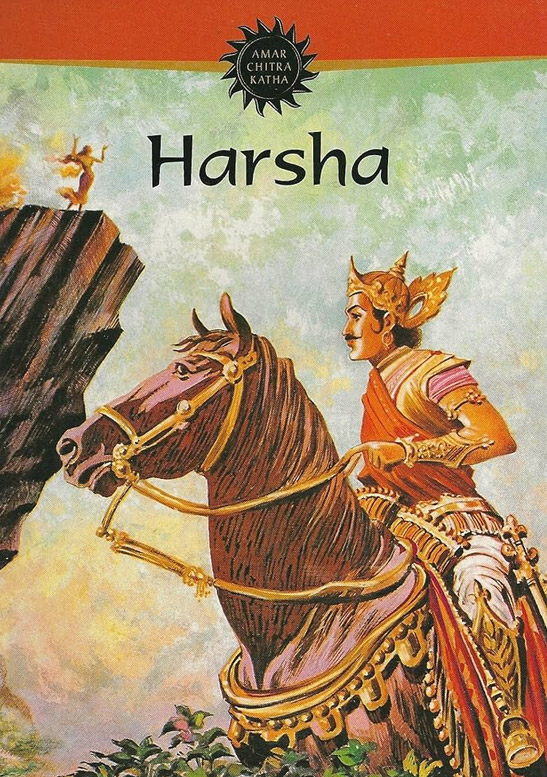
In the medieval period, following the reign of Maharaja Harsha Vardhan in the 7th century A.D., the district was governed by local chiefs before falling under the control of the Pala kings of Bengal and later the Chedi and Sena dynasties. The political landscape shifted dramatically in the 13th and 14th centuries. Ghais-u-ddin Iwaz, the ruler of Bengal, became the first Muslim invader of Tirhut between 1211 and 1226, though he only managed to extract tributes. Around this time, the Simraon dynasty was founded by Nanya Deva, who consolidated power over Mithila and Nepal and established a highly structured revenue administration system, dividing the kingdom into Parganas and Panchayats. One of his successors, Ramasimha, introduced the system of 'Patwaris' (village accountants) and patronised Vedic literature. This Hindu autonomy lasted until 1323, when Ghiyasuddin Tughlaq invaded Tirhut, forcing the last Simraon king to flee and placing the territory under the management of Kameshwar Thakur. Over the next few centuries, control of North Bihar oscillated between the Jaunpur kings, the Nawabs of Bengal, and the Delhi Sultanate, eventually becoming a part of the Mughal Empire after the decline of the Afghan king Daud Khan.
The modern identity of Muzaffarpur began to take shape during the British colonial era. After the East India Company's victory at the Battle of Buxar in 1764, the English established firm control over Bihar, though they faced border skirmishes with Gurkha troops from Nepal until a peace treaty was reached. The district of Muzaffarpur was officially created in 1875 by splitting the older Tirhut district for administrative convenience. It was named after Muzaffar Khan, an 18th-century Amil (revenue farmer). During this period, the district became a major hub for European indigo planters, who built imposing clubs and estates across the region.
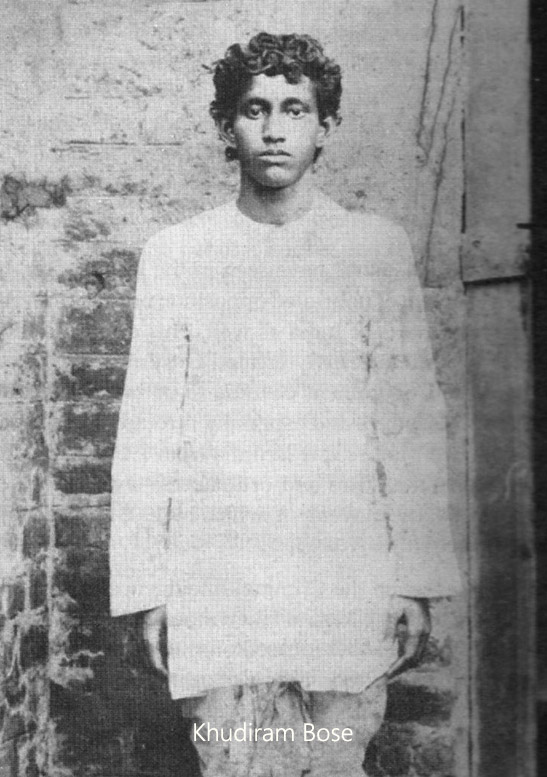
Muzaffarpur played a fiery and prominent role in India's struggle for independence. The 1857 rebellion saw the 12th Irregular Cavalry revolt, attacking the local treasury and administrative offices before being suppressed. In 1908, the town became the site of the infamous Muzaffarpur bomb case, a hallmark of militant nationalism. An 18-year-old Bengali revolutionary, Khudi Ram Bose, threw a bomb at a carriage, mistakenly killing Pringle Kennedy instead of the intended target, the harsh District Judge Douglas Kingsford. Bose was subsequently hanged, and a memorial still stands in the city to honour his sacrifice. The nationalist fervour deepened with Mahatma Gandhi's visits in 1918, 1920, and 1927, which profoundly awakened the political consciousness of the local population. Following independence, the district continued to evolve, eventually seeing Sitamarhi and Vaishali carved out as separate administrative districts in 1972. Today, Muzaffarpur stands as a unique frontier of cultural assimilation, blending ancient Hindu philosophy, Islamic culture, and colonial history into a vibrant, living heritage.
Muzaffarpur district is located centrally within the North Bihar plains and forms a crucial part of the Tirhut Division. Geographically positioned between 25°54' and 26°23' North latitude, and 84°53' and 85°45' East longitude, the district spans an expansive area of 3,172 square kilometres, accounting for roughly 3.4% of Bihar's total landmass. It shares its borders with Purba (East) Champaran, Sheohar, and Sitamarhi to the north; Vaishali and Saran to the south; Darbhanga and Samastipur to the east; and Saran and Gopalganj to the west.
The topography of Muzaffarpur is characterised by a vast, uninterrupted alluvial plain with an average elevation of 170 meters above sea level. This plain is the result of millennia of silt deposits brought down by a network of Himalayan rivers. The ground lacks high contours, resulting in a landscape dotted with chains of shallow marshes that act as natural drainage basins during periods of excessive rainfall. The soils here are highly calcareous and deeply fertile, categorised locally into types such as maltivari (a heavy, clayey soil ideal for paddy cultivation) and balsundari (a sandy loam perfectly suited for rabi crops and the region's famous orchards).
A defining, and often challenging, geographical feature of the district is its riverine system. Due to continuous, heavy deposits of silt over centuries, the beds of many rivers flowing through the district have risen higher than the adjoining agricultural lands. This geological quirk makes the north-east and south-east parts of the district highly susceptible to frequent and severe flooding during the monsoon season.
The land is watered by four primary rivers: the Gandak, the Burhi Gandak, the Bagmati, and the Baya, alongside numerous smaller streams.
● The Gandak: Originating in the mountains of Nepal (where it is known as the Sapt-Gandaki), it enters the district near Karnaul. Flowing in a south-easterly direction, it is referred to locally as the Narayani or Saligram and possesses vast potential for irrigation.
● The Bagmati: Also rising in Nepal, this river enters the district through the Minapur block. It carves a serpentine path almost parallel to the Burhi Gandak before eventually joining it in the neighbouring Darbhanga district.
● The Burhi Gandak: Known locally as the Sikrahna, it enters near the village of Ghosaut. The city of Muzaffarpur is situated on its southern bank. While fordable during the dry season, it becomes swift and deep during the rains. Historically, before the advent of the railway, this navigable river served as the primary trade route for the region.
● The Baya: Emanating from the Gandak just west of the district border, it flows parallel to its parent river, serving the local agrarian ecosystem before ultimately making its way to the Ganga.
This lush, river-fed geography not only dictates the agricultural rhythms of the district, sustaining its sprawling mango and litchi orchards. It also intimately shapes the material culture, settlement patterns, and craft traditions of the people who call the plains of Muzaffarpur home.
The environment of Muzaffarpur is heavily dictated by its position within the fertile, river-laced Gangetic plain. The district generally experiences a humid subtropical climate, punctuated by a distinctly dry and intensely hot summer season. The climate pattern is clearly divided: the winter season spans from November to February, the dry summer stretches from March to May, and the monsoon or rainy season dominates from June to September, with October serving as a brief transitional period. During the peak of winter in January, temperatures can drop to a chilly 4 to 5 degrees Celsius. Conversely, May is the harshest month, with maximum temperatures soaring up to 44 degrees Celsius, ushered in by dust storms and the scorching westerly winds known locally as the 'loo' in early April.
Water is the lifeblood of this environment. The district relies heavily on the monsoon, receiving almost 80 per cent of its total annual rainfall between June and September. The average annual rainfall varies significantly, recorded between 761.0 mm and 2,295.5 mm in recent decades. This heavy precipitation, combined with the silt-raised riverbeds of the Gandak and Bagmati, historically makes the district highly prone to flooding, transforming the shallow contour depressions into temporary marshes and water-logged zones.
Ecologically, the landscape has been drastically altered by centuries of human habitation and aggressive agricultural expansion. While it is a vast, green alluvial plain, the district is completely devoid of dense, natural forests today. The historical flora—once untamed—has been replaced by cultivated groves of mango, bamboo, babul, khajur (date palm), jack-fruit, pipal, tamarind, and the region's famous litchi orchards. In the marshy tracts situated between the Burhi Gandak and Bagmati rivers, babul trees stubbornly persist, while the vast stretches of land beyond the Bagmati are dedicated to feed crops and vegetables.
The fauna of Muzaffarpur has similarly transitioned. With the relentless clearing of land for agriculture, the magnificent wild buffalo, gazelles, deer, and tigers that once roamed this area have completely disappeared. Today, the wildlife is largely restricted to smaller, adaptable mammals like foxes, jackals, nilgai (blue bull), and wild pigs that take shelter in the tall, grassy diaras (river islands). The rivers, however, remain ecologically rich, teeming with various species of fish such as suiya, hilsa, reva, rehu, singhi, bachwa, tengra, and kewai, alongside occasional sightings of crocodiles in the Gandak river and poisonous snakes like the karait and gehuman in the fields.
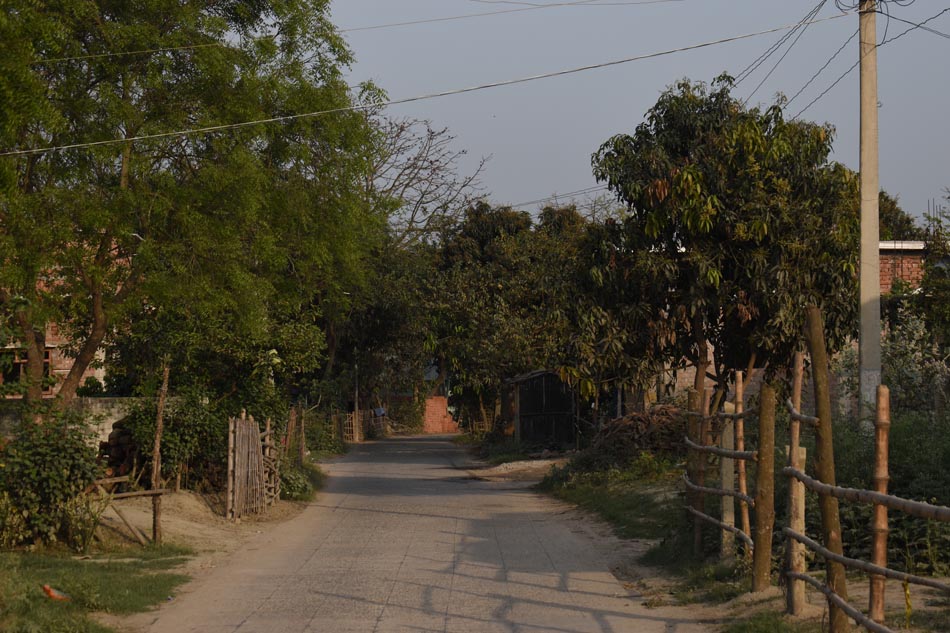
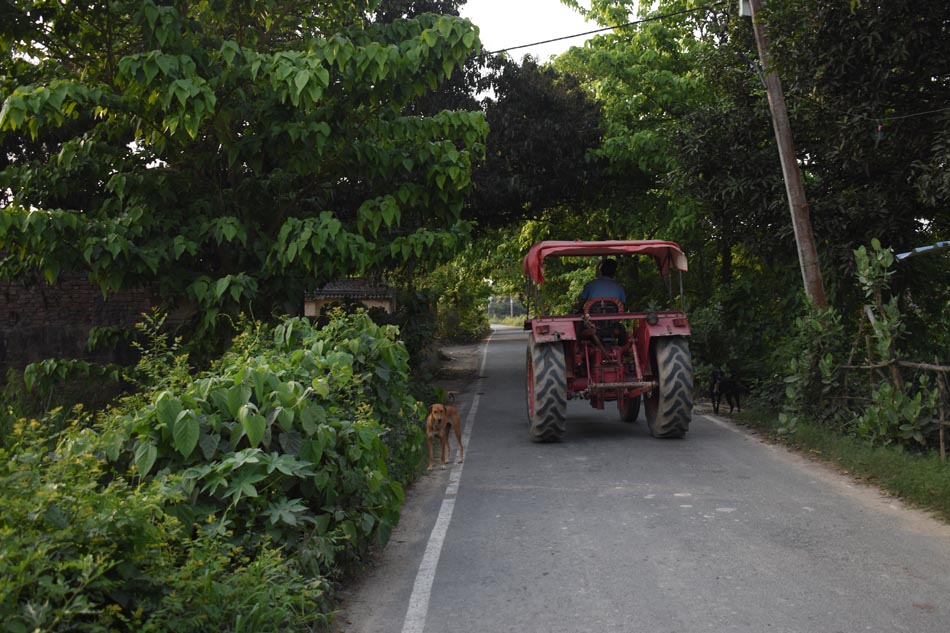
Over the past century, Muzaffarpur has evolved from a colonial administrative outpost into one of the most economically important and infrastructure-heavy districts in Bihar. As a city selected under the Government of India's Smart Cities Mission, it is currently undergoing significant urban transformation, overseen by Muzaffarpur Smart City Limited. This initiative focuses heavily on modernising the city through integrated traffic management, upgraded sewerage and drainage networks, smart road construction, and the implementation of digital governance systems.
Transportation infrastructure is a major cornerstone of the district's economy. Muzaffarpur is exceptionally well-connected by a dense network of roads, including several National Highways. NH 27, a crucial part of India's East-West highway corridor linking Gujarat to Assam, passes directly through the city. Additionally, NH 22, NH 122, NH 77 (connecting to Sitamarhi), NH 102 (connecting to Chhapra), and NH 28 deeply integrate the district with both national markets and neighbouring state hubs. For rail travel, Muzaffarpur Junction is a primary node on the East Central Railway network, offering daily and weekly direct train services to almost every major city in India, including New Delhi, Kolkata, Pune, and Ahmedabad. Looking toward the future, RITES has already completed surveys and route finalisations for a proposed Muzaffarpur Metro rail system, which awaits state approval. And the city's 102-acre airport is slated for future commercial development.
Commercially, the district is organised to support massive trade volumes. It boasts the Sutapatti market, one of the largest wholesale cloth markets in North India, which feeds retail networks across the entire region. To protect local farmers, the state operates substantial agricultural infrastructure, including Bazar Samitis in Muzaffarpur, Motipur, and Sahebganj, featuring massive marketing yards with dozens of stalls for commodity trading.
Energy and industrial infrastructure are robust. The district is powered primarily by the Kanti Thermal Power Plant, located just 14 kilometres from the town centre, which has facilitated widespread rural electrification across 1,632 villages and supports heavy agricultural power consumption. The industrial landscape is anchored by areas like Bela and Bariyarpur, and organised into the Motipur and Muzaffarpur Clusters under the Bihar Industrial Area Development Authority (BIADA), hosting manufacturing facilities, food processing plants, and a dedicated leather park.
Furthermore, Muzaffarpur is the educational headquarters of North Bihar. It houses Babasaheb Bhimrao Ambedkar Bihar University, 60 government colleges, the state's first government engineering college (Muzaffarpur Institute of Technology, established in 1954), and the Shri Krishna Medical College, providing a strong institutional foundation for the region's youth.
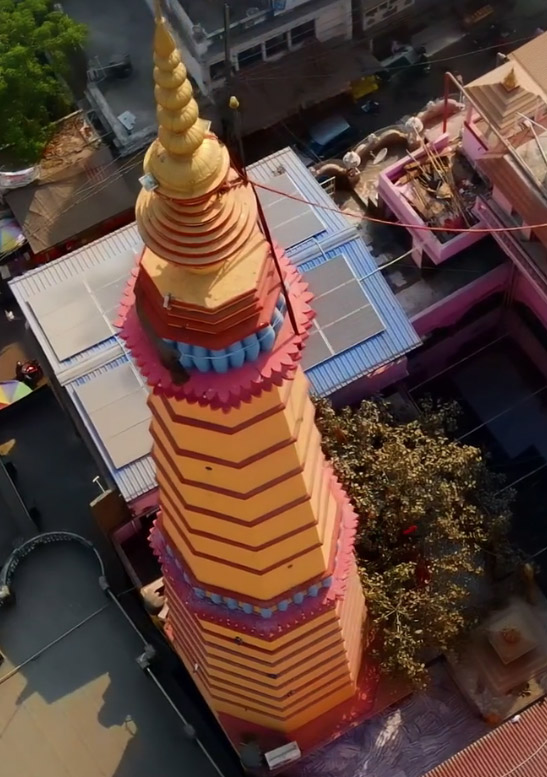
The architectural landscape of Muzaffarpur is a physical ledger of its history, reflecting a blend of ancient spiritual devotion and British colonial life, now giving way to rapid modern urbanisation. The temples found here are deeply tied to local legends. The most profound traditional architecture is found in its religious spaces. The Baba Garibnath Temple, arguably the most famous Lord Shiva temple in the region (often called the second "Baidhnath"), is rooted in folklore involving a sacred Banyan tree and an unearthed 'Shivling'. Another spiritual landmark is the Chaturbhuj Sthan Temple, built to house an idol of Lord Chaturbhuj discovered in the 13th century in the village of Turki. The Shri Ram Temple at 'Sahu Pokhar' stands out as a unique architectural gem; constructed by artists brought in from Rajasthan, it features a grand temple for Shri Ram and Mata Janaki, alongside a Mahadev temple housing what is reputed to be India's third-largest Shivling . Other notable spiritual sites include the Kali Mata Temple of Sikandarpur, built along the Gandak river by the Darbhanga Maharaj in 1932, and the Simri Mai Temple.
Beyond its temples, traces of colonial architecture still linger. During the early British Raj, Muzaffarpur was the epicentre for European indigo planters. They built expansive estates and grand recreational clubs. The debris and structural remnants of the grand planters' club can still be found near the railway lines and the Ramna compound, while historic roads like the old Planter's Club Road map out the colonial-era town planning. In stark contrast, modern Muzaffarpur is rapidly changing. It currently ranks third in Bihar for real estate investment, boasting over 102 ongoing projects and more than six large shopping malls with multiplexes, the highest number in the state. This contemporary cement-and-glass architecture is quickly swallowing the older, historical styles.
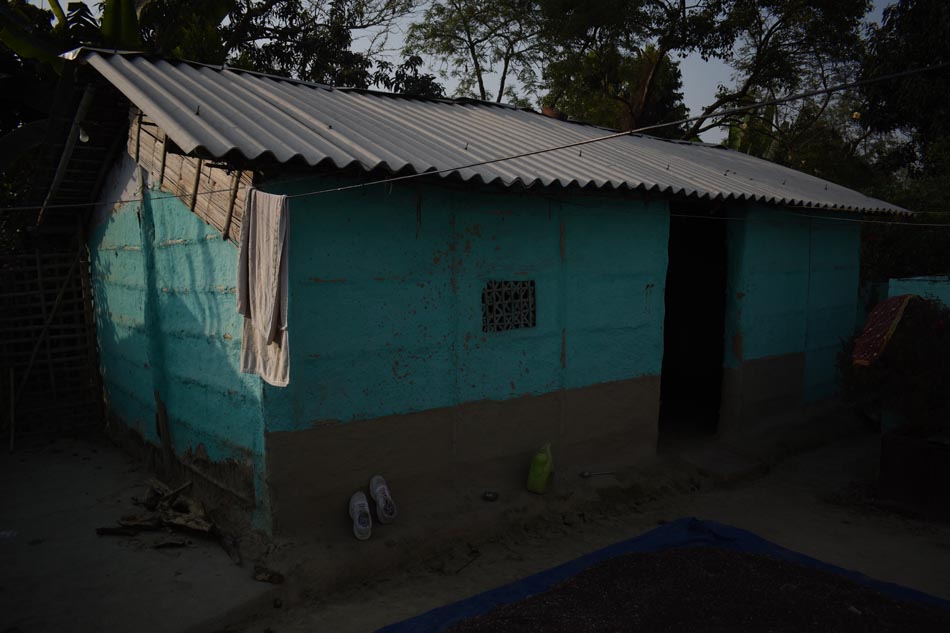
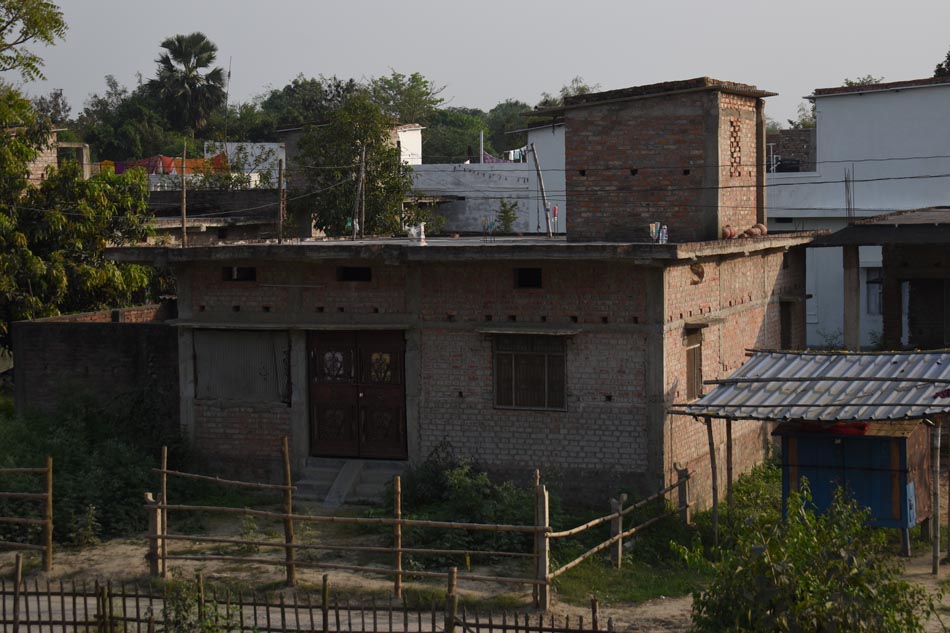
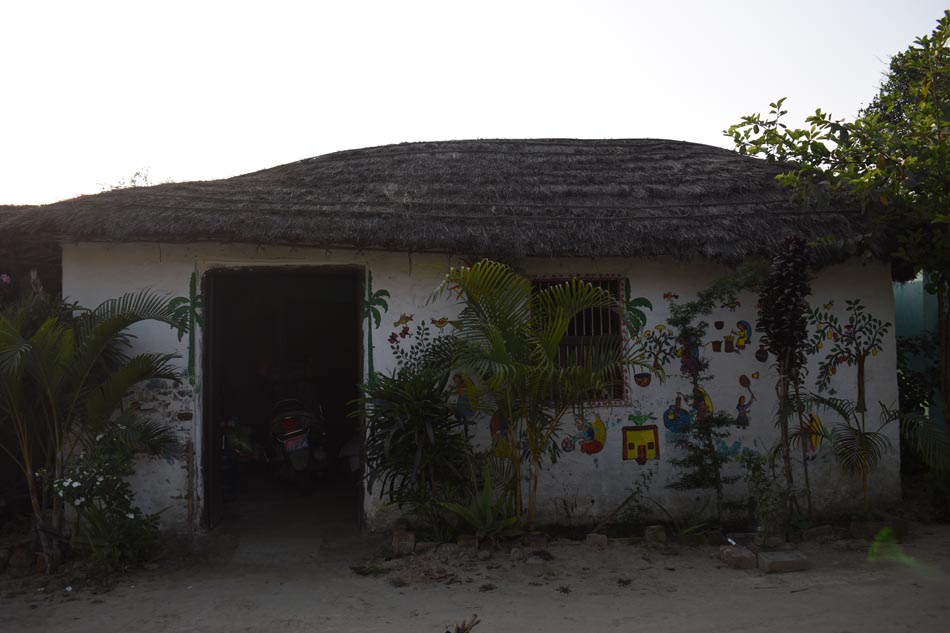
Muzaffarpur's culture is a vibrant, living tapestry woven from its unique position on the geographical and historical frontier between deeply rooted Hindu traditions and vibrant Islamic culture. This mutual assimilation of ideas has historically made the district a prominent centre of learning, philosophy, and political thought, frequently producing "towering geniuses" and serving as the birthplace for renowned political and literary figures.
The district's cultural calendar is driven by deep-seated religious faith and local mythology. It is a land where legends dictate practice. The origins of its most famous temples, such as Baba Garibnath and Chaturbhuj Sthan, are steeped in dreams and divine interventions experienced by local saints and landlords, bridging the gap between the ethereal and the everyday. The co-existence of these sacred spaces alongside historic mosques speaks to the syncretic lifestyle of the residents.
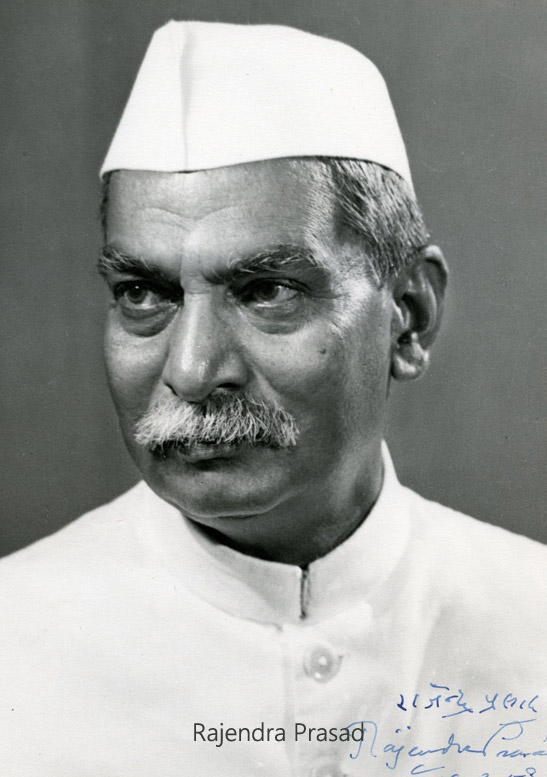
Political and intellectual culture is particularly robust in Muzaffarpur. The district has a legacy of fiercely independent thought, dating back to the world's first democratic republic of the Licchavis. In the modern era, it was a hotbed for the Indian independence movement. The culture of revolutionary fervour was cemented by the sacrifice of 18-year-old Khudi Ram Bose in 1908, and later galvanised by repeated visits from Mahatma Gandhi. Educational institutions like the Greer Bhumihar Brahman College (where India's first President, Dr. Rajendra Prasad, once taught) cultivated an environment of academic excellence and nationalist pride.
In the rural hinterlands, culture is deeply intertwined with the Panchayati Raj system. Unlike a purely top-down governance model, the village assemblies (Gram Sabhas) form the foundation of local culture, echoing the ancient democratic traditions of the Vrijjan Republic. Here, economic development and social justice are debated and executed at the grassroots level, making community participation a core aspect of the rural cultural identity.
According to the 2011 Census of India, Muzaffarpur district is home to a massive population of 4,801,062 people, comprising 2,527,497 males and 2,273,565 females. To put this immense human scale into perspective, the district's population is comparable to the entire nation of Singapore or the U.S. state of Alabama. Despite its growing urban centres, the heart of Muzaffarpur remains agrarian; an overwhelming 4,327,625 individuals (over 90%) live in rural areas, compared to just 473,437 in the urban sectors. The district is densely packed, with 1,514 persons per square kilometre across the district, and an astonishing 13,285 persons per square kilometre within the city corporation limits.
The social fabric is incredibly diverse. The population is predominantly Hindu (84%), with a substantial Muslim minority (15.53%), alongside tiny communities of Sikhs, Christians, Buddhists, and Jains. Scheduled Castes make up a significant 15.7% of the population, while Scheduled Tribes represent a very small fraction at 0.1%.
Linguistically, the people of Muzaffarpur are polyglots, reflecting the region's history as a trade and cultural crossroads. Hindi is the most widely spoken language (48.33%), closely followed by the native regional dialect, Bajjika (39.02%), which roots the people firmly in their local Mithila identity. Urdu (7.65%), Bhojpuri (3.54%), and Maithili (1.33%) are also widely spoken, creating a rich auditory landscape in the local markets and villages.
The people are resilient and progressively focusing on education. The district boasts an overall literacy rate of 63.43% (higher than the Bihar state average), with male literacy at 71.28% and female literacy at 54.67%. The gender dynamic shows an overall sex ratio of 900 females for every 1,000 males, with a slightly better child sex ratio of 915. For the majority of the rural populace, life revolves around the rhythms of the rivers and the soil, with agriculture serving as the primary occupation, supplemented by robust systems of animal husbandry, local trade, and deeply ingrained craft traditions.
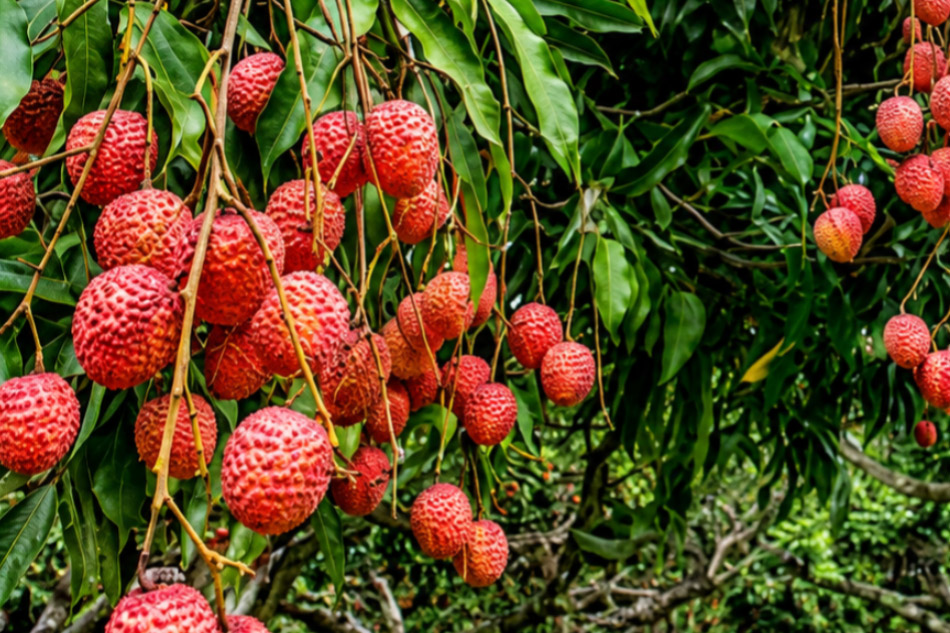
Globally and nationally, Muzaffarpur is unequivocally famous as the "Land of Litchi". The highly calcareous, well-drained sandy loam soil of the district is the perfect incubator for the Shahi and China varieties of this fruit, which are exported extensively and celebrated for their unmatched sweetness and flavour.
Economically, the district is renowned as a premier industrial and wholesale trading hub in North Bihar. The Sutapatti bazar is legendary across northern India as a massive clearinghouse for wholesale cloth, receiving textiles directly from mills and feeding smaller markets across the state. The city is also known for its heavy industries, most notably the manufacturing of railway wagons by Bharat Wagon and Engineering Ltd., alongside thriving agro-based industries, dairy production, and leather goods.
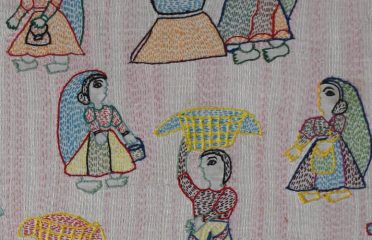
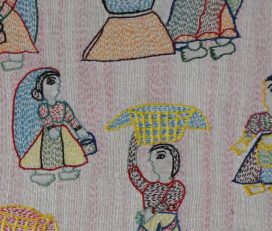
Muzaffarpur holds a subtler but equally vital fame for its crafts. The region is a vital centre for Lahthi (Lac) Bangles and Sujani Embroidery. The Lahthi craft is an intricate art form that requires master artisans to undergo a rigorous process of heating, shaping, and embellishing natural resin to create highly durable, culturally significant jewellery worn during weddings and festivals. Similarly, Sujani embroidery is a narrative textile tradition where women stitch together layers of old cloth, using vibrant threads to depict social issues, folklore, and daily life, transforming simple materials into profound storytelling canvases.
Finally, the city is famous for its historical and spiritual landmarks. It is remembered as the site of the Muzaffarpur bomb case of 1908, housing the memorial of the teenage martyr Khudi Ram Bose. Spiritually, it draws countless devotees to its ancient temples, including the Baba Garibnath Temple, the Chaturbhuj Sthan, and the Ram Temple with its colossal Shivling, marking the city as a quiet but vital node of Hindu pilgrimage.
List of craftsmen.
