


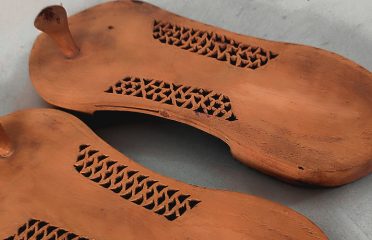
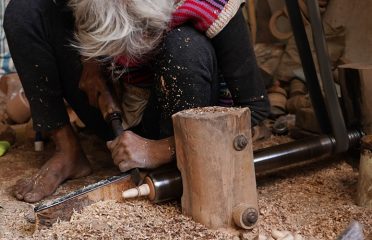
Wooden Lathe Toys ~ ...
The Lathe workers of Varanasi, make brightly-coloured lac coated toys, giving them the name Lacquerware toys.
Kashmiri Ganj, Khojwan, Bhelupur...
 Varanasi, Uttar Pradesh, India...
Kashmiri Ganj, Khojwan, Bhelup...
Varanasi, Uttar Pradesh, India...
Kashmiri Ganj, Khojwan, Bhelup...
The Lathe workers of Varanasi, make brightly-coloured lac coated toys, giving them the name Lacquerware toys.
Kashmiri Ganj, Khojwan, Bhelupur...
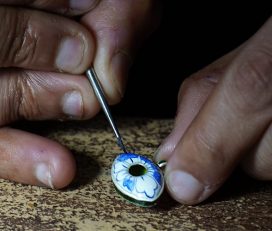
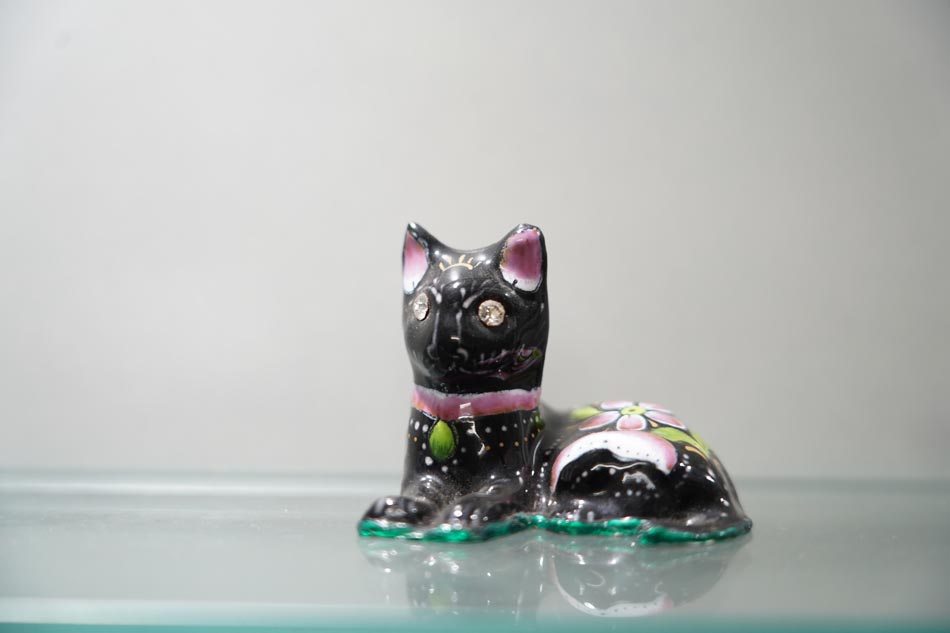
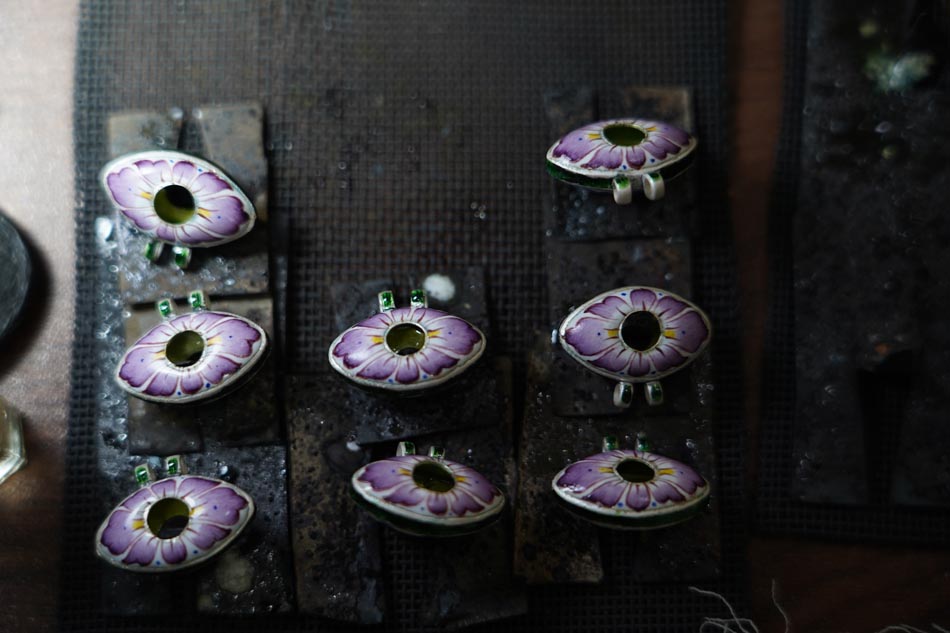
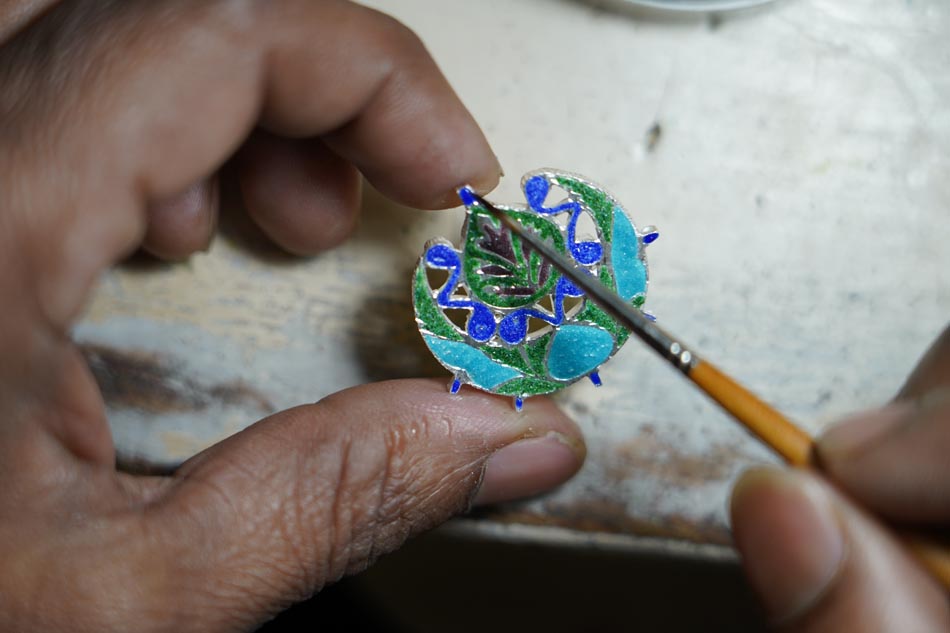
The art of Meenakari practised in the lanes of Varanasi is known as Gulabi Meenakari. The colour ‘Gulabi’ pink is a predominant colour used, taking its name from the craft.
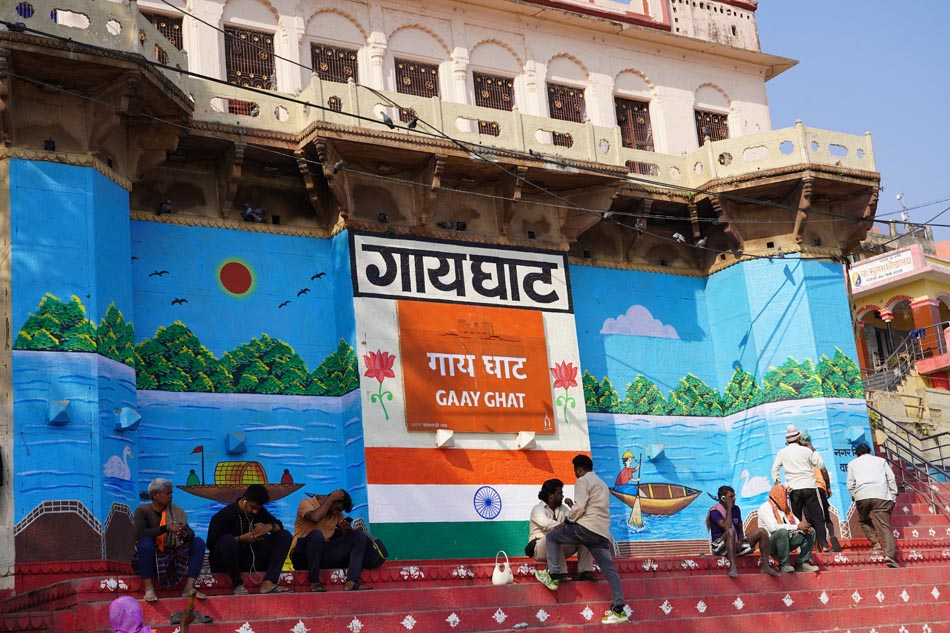
Gai ghat Varanasi, Gaighat, Ghas...
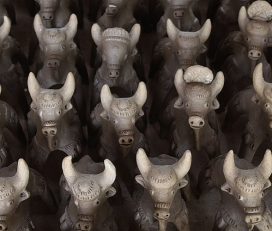
Kumhar Para, a small village near Kondagaon, is home to skilled terracotta artisans, where life flows in harmony with nature and craft is shaped by respect for the earth.
Kumhar para, kumhar para, Sonaba...
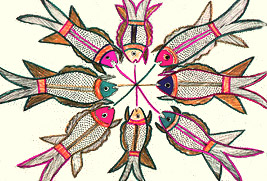
Let us talk… if you feel the same love for handmade, and would like to support us by sharing your research or by contributing financially to our documentation efforts.
Reach us at [email protected]

The work of Meenakari can be seen generally on jewellery, decorative items and show pieces. According to the artisan, in olden days, or to say the days of Royalty in India, the work of meenakari was also done on Palace walls, then came chairs, and over the course of time, it got limited to jewellery. As the buyers evolved, demand and need also changed, leading to a change in the products.
Originally, Meenakari began as an art form used to decorate the back of royal jewellery. The front of necklaces and bangles was adorned with precious jewels, whereas the reverse featured intricate Gulabi Meenakari work. This was done to further enhance the beauty of the piece and increase its overall value.
The primary product was Kundan Jadai jewellery, crafted on a silver base coated with 24-carat gold. The front was embellished with pearls and precious stones, while the reverse featured intricate Gulabi Meenakari. This tradition of applying Meenakari to Kundan jewellery dates back approximately 200 years and forms a part of the Solah Shringar (sixteen traditional adornments) of the royal family.
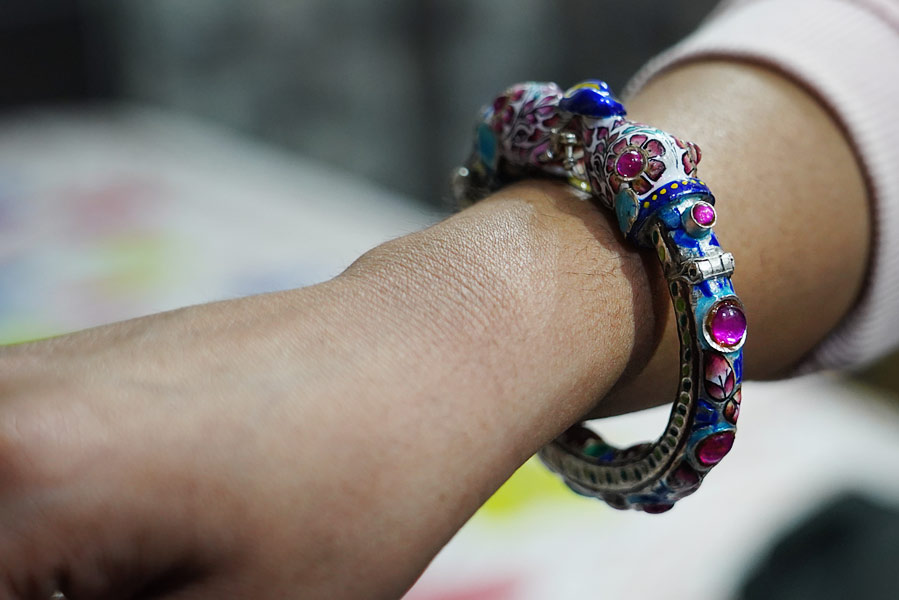
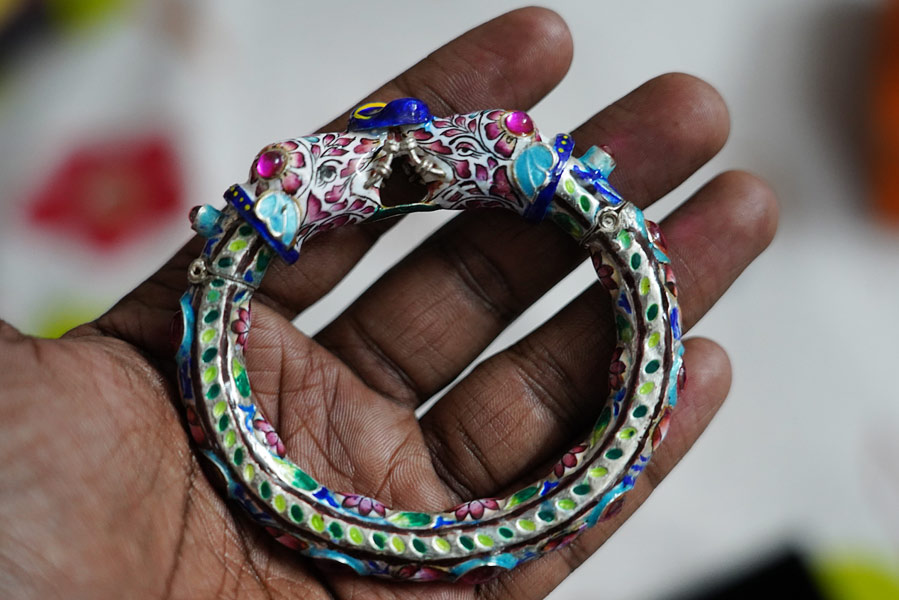
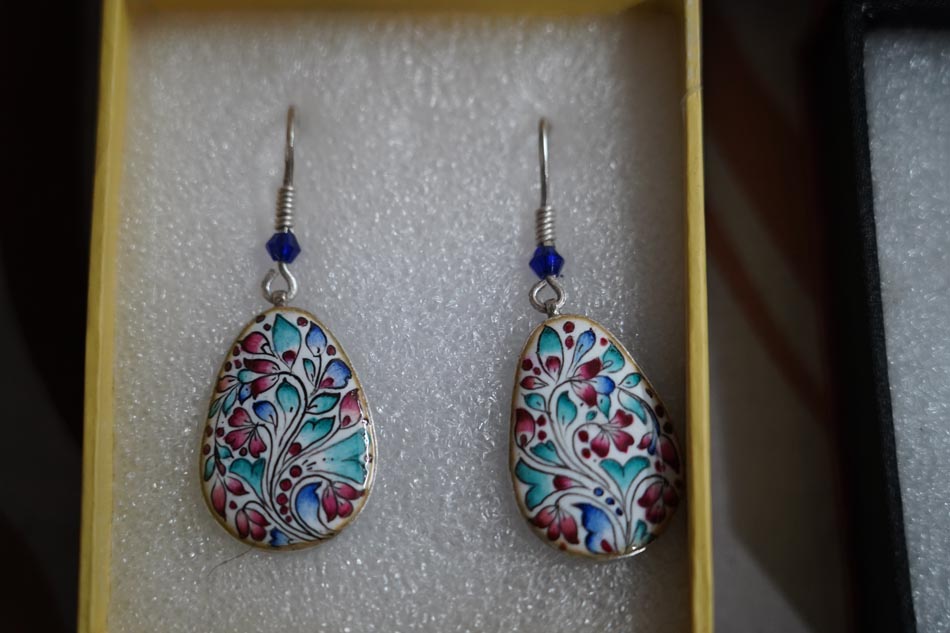
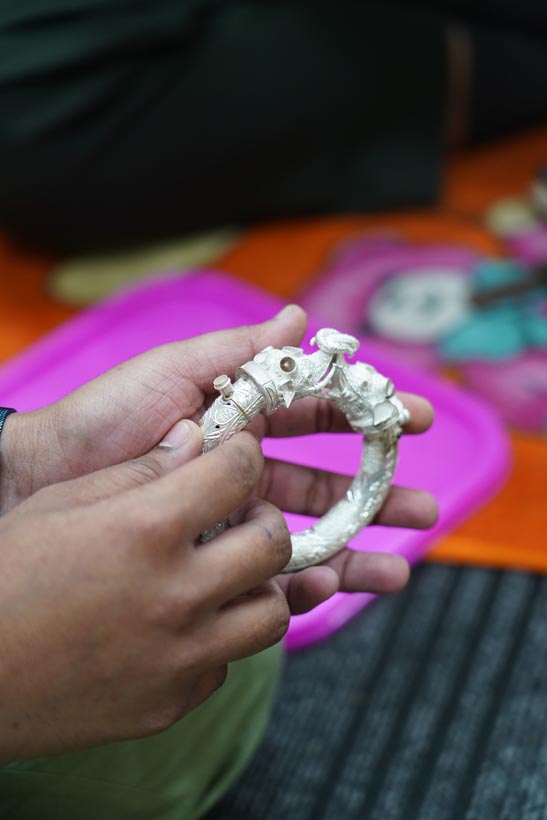
In the present times, Meenakari is done on both the front and back or only one side of the product as per the design. Some of the notable jewellery products include Necklaces, Rings, Earrings, Bangles, Cufflinks and Jewellery sets. The most renowned style of Bangle (kada) is the Hathi Muhan Kada, featuring two Elephants (Hathi) positioned face-to-face at the top of the bangle. In Hindu Mythology, these Kada are considered auspicious as elephants (Hathi) are linked to Gajalakshmi (Goddess of Wealth), symbolising wisdom, strength, stability, and good fortune. These Hathi Muhan Kada cost around 2,60,000 in gold and 1,80,000 in Silver.
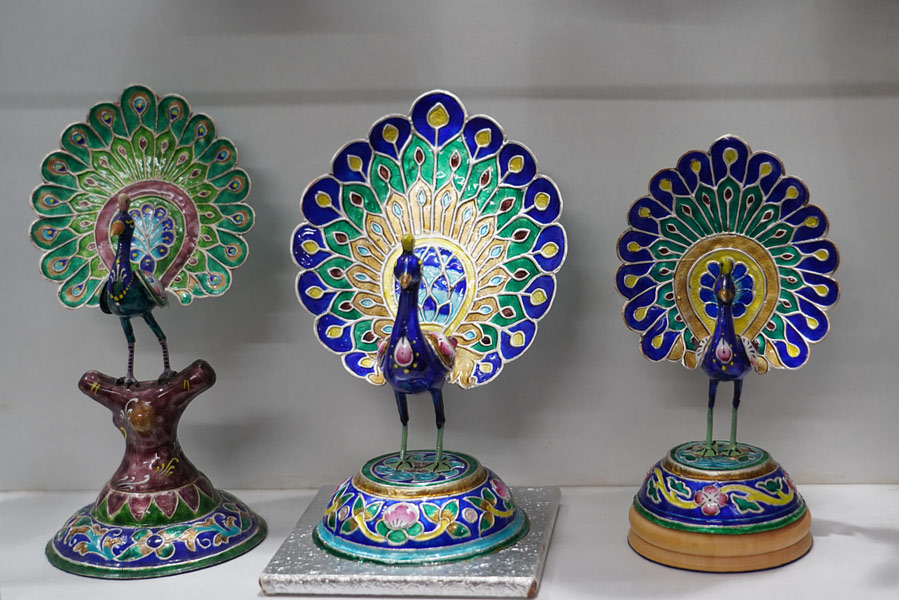
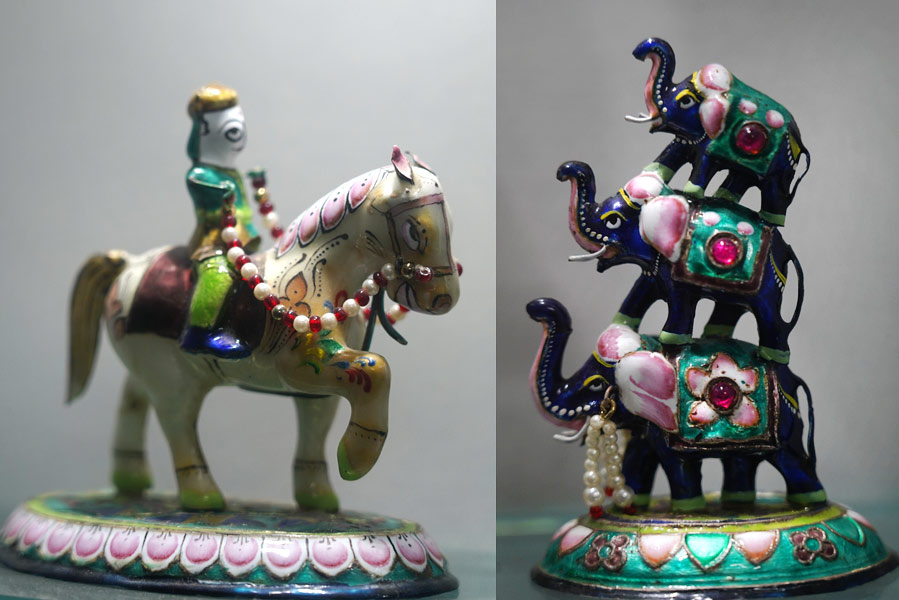
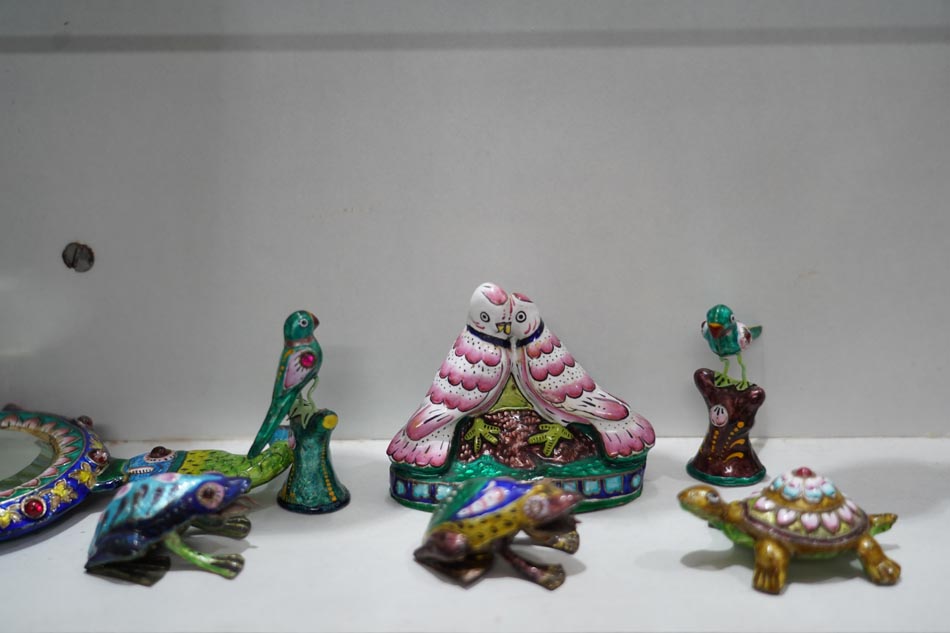
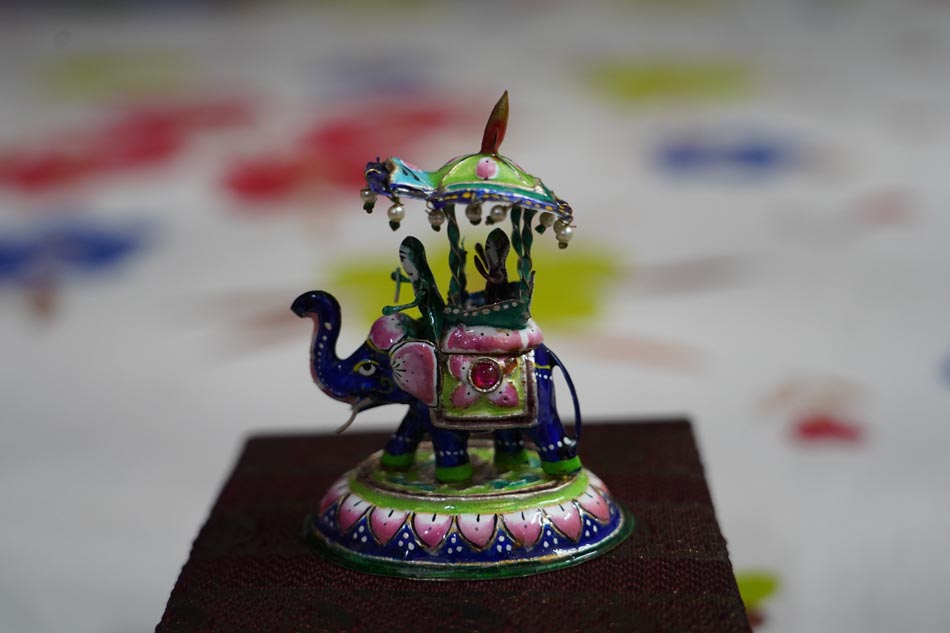
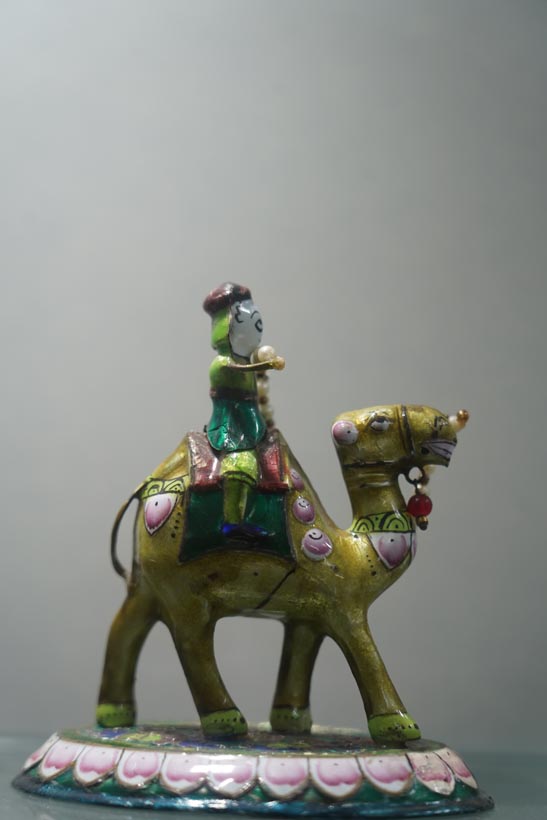
Besides Jewellery, decorative items and showpieces such as elephants, cats, frogs, birds, cows, rabbits, swans, a camel with a rider, Ganpati, Krishna, and even small decorative boxes are also made.
Silver meenakari dancing peacock and silver meenakari elephant and riders are the most famous meenakari idols. Small Silver boxes of different shapes, like square and hexagon, are beautifully adorned with the paintings of the king and queen on top. The pricing of these Gulabi meenakari products starts from Rs. 800 and goes upto Rs.2,60,000, depending on the weight of the silver, the intricateness and the time taken to make the product. These products are suitable for personal use, corporate gifts, home decor, weddings and other auspicious occasions. The meenakari artworks are also promoted through Government added Central Cottage Industries Emporium, Delhi.
Another significant advantage is that the enamel (Meena) and other pigments applied to the silver base can be entirely removed through a leaching process using a hydrochloric acid (HCl) solution. This allows the same silver piece to be reused for creating an entirely new design, making the process reusable, environmentally friendly, and sustainable.
Additionally, Silver is a liquid asset, which makes it less prone to Inflation. It also serves as a dependable store of value over time, providing financial security and is economically advantageous.
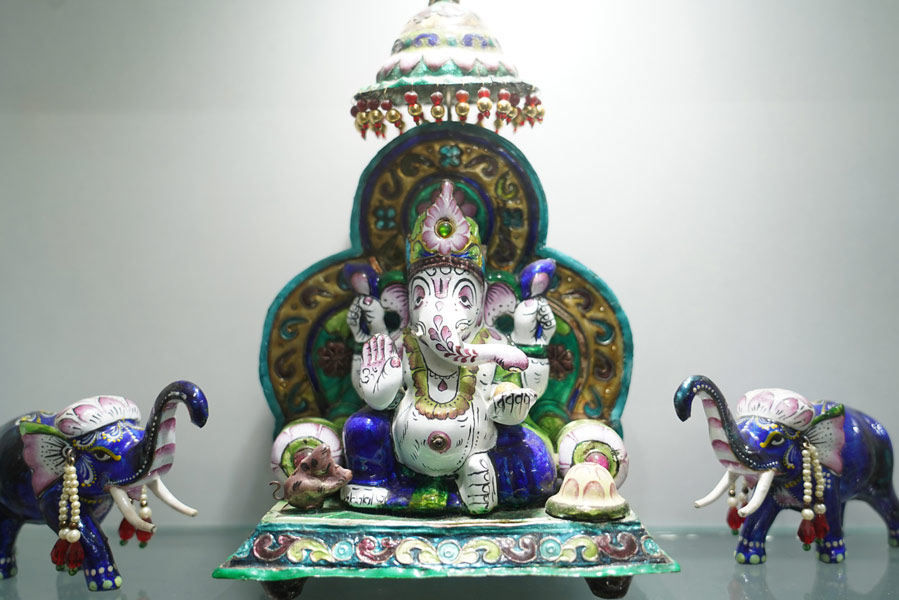
In the early days, Meenakari was done only on the reverse side of jewellery, while the front was adorned with precious stones. The back, however, was adorned with intricate handmade Meenakari to enhance and balance the overall beauty of the piece. For example, the inner surface of bangles (kada) and the reverse side of necklaces were beautifully adorned with meenakari.
In contemporary times, however, there is a growing preference for displaying Meenakari work on the front of the jewellery. To make the products more widely available and accessible, and to reduce their price point, Meenakari is now often executed only on the front. When the craft is applied to both the front and the back, the piece becomes more intricate and therefore more expensive.
The craft of Gulabi Meenakari from Varanasi, Uttar Pradesh, gained worldwide recognition after receiving the Geographical Indication (GI) tag in 2015. GI tag protects products that belong to a specific place and tradition, it ensures authenticity, preserves heritage and supports artisans. The craft has also significantly benefited from the One District One Product (ODOP) scheme, an initiative by the Government of India aimed at promoting balanced regional development by supporting at least one unique product from each district and transforming them into manufacturing and export hubs. These government initiatives have greatly contributed to the growth and promotion of the craft.
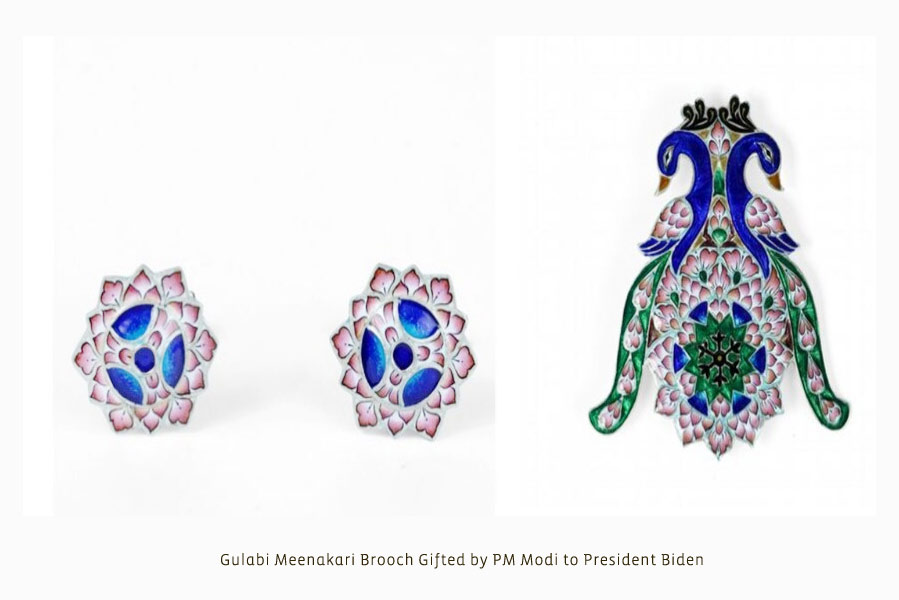
The work of Gulabi Meenakari was recently presented as a gift by the Honourable Prime Minister to distinguished global leaders, including Kamala Harris, Joe Biden, Shinzo Abe, Brigitte Macron, wife of Emmanuel Macron, among other eminent personalities. Such gestures help promote Indian craftsmanship on a global platform and contribute to building a distinct cultural identity for the craft.
Moreover, many leading jewellery brands undertake Meenakari work in their own workshops. However, for the specialised craft of Gulabi Meenakari, they rely on skilled artisans of Varanasi, as it is a delicate and intricate art form that only a few can practise with true expertise.
Additionally, research on silver has demonstrated its disinfectant and antimicrobial properties, making it effective in inhibiting the growth and reproduction of certain bacteria and viruses. In the Indian subcontinent, it is a prevalent cultural practice to feed newborns with a silver bowl and spoon and to gift silver ornaments. This tradition is rooted in the belief that silver helps eliminate microorganisms in the surroundings due to its protective properties. These attributes further enhance the value of Gulabi Meenakari crafted on a silver base, making it not only aesthetically significant but also culturally and functionally beneficial.

The word ‘Meenakari’ (Minakari) is derived from the words ‘Mina’ and ‘Kari’. In Persian, ‘Mina’ refers to paradise or heaven, and ‘Kari’ means to place something onto something else. Together, the word Mīnākārī means to place paradise onto an object. A more generalised etymology says that ‘Meena’ refers to Enamel and the word ‘Kari’ means art, thus referring to Meenakari as the art of Enameling.
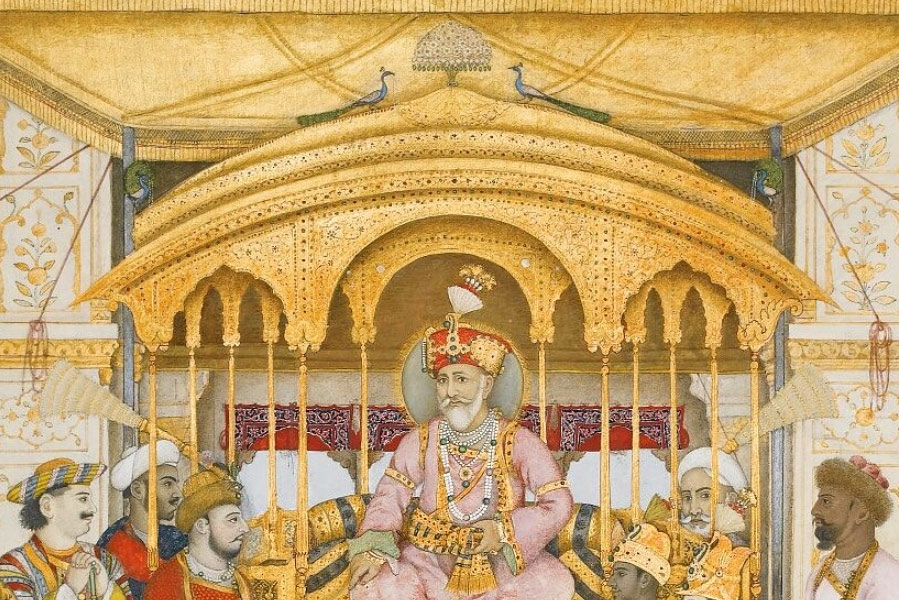
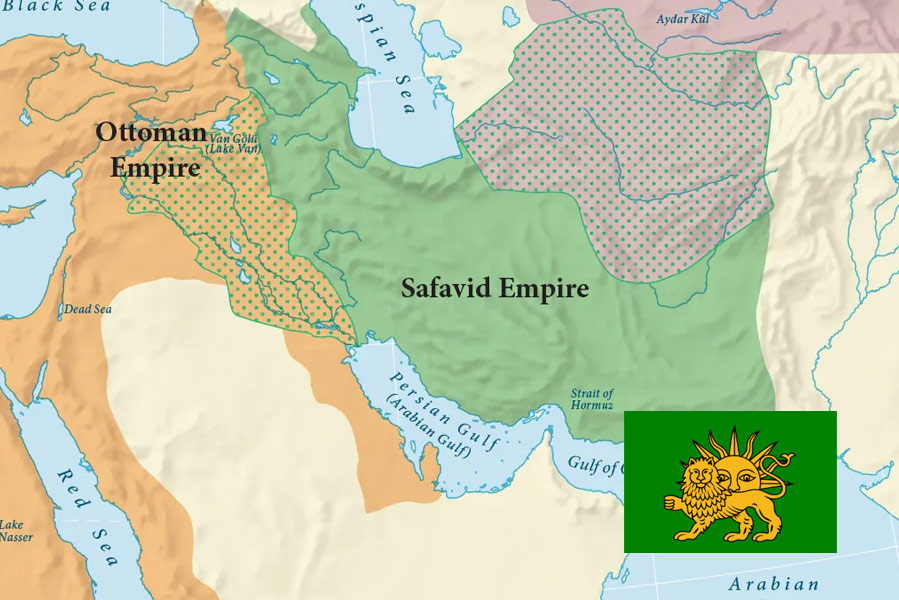
The art of Meenakari is said to have originated in Safavid Persia and was later brought to the Indian subcontinent by the Mughals. The craftsmen of Iran in the Sassanid era invented this art. In those times, Meenakari was done on walls, buildings and ceilings for decoration purposes; however, later on, due to a change in demand and by looking at its intricate details and design, it was limited to ornamentation. Since then, this art became an important part of jewellery, primarily done on Gold and Silver. In the present times, Meenakari is not just limited to traditional jewellery but has expanded into more modern products, including key chains, figures of deities and decorative showpieces.
According to a research scholar, the craft of meenakari may have existed during the Indus Valley civilisation period.
This craft came in the 17th century with the Persian enamellists, who travelled to India under the Mughal rule. The Mughals played a major role in introducing this unique craft to India, which was learned from Persian craftsmen who visited Lucknow.
The Indian subcontinent had numerous meenakari clusters such as Kangra, Pratapgarh, Lucknow, Rampur, Rajputana (Bikaner, Udaipur, Jaipur), Kutch, Kashmir and Hyderabad. Centuries ago City of Delhi also had clusters of meenakari, but they are not there anymore. It appears most of the artisans migrated from there to several other places, including Varanasi.
The three notable places where the art of meenakari is/ was practised are Jaipur, Varanasi, and Lucknow. Meenakari work done in Jaipur is known as Panchrangi meena (five colour enamelling), Meenakari of Lucknow, known as Awadhi Meenakari, which has vanished over time, and last but not least, the city of Varanasi is known for its work of Gulabi meenakari.
The work of Gulabi Meenakri is done on white meena, on silver as the base material. Earlier, it was done on gold, but in the present time, silver is a popular choice. This craft is said to have originated from a group of artisans of Meenakari who migrated to the city of Varanasi around the 17th century. Earlier, these artisans worked at the Delhi royal courts before they migrated to Varanasi, during the era when the Mughal Court was at its peak.
Gulabi Meenakri, also known as Pink painted enamel style, had attained the peak of perfection at the Persian Court at Isfahan during the Qajar dynasty (1795-1924). The present Meenakar at Varanasi comment that the state of art of meenakari was prosperous till about a hundred years ago. Today, only about two hunderd artisians in varanasi are said to be practising this craft of Menakari.
The craft of Gulabi Meenakari originated in the royal households (Rajgharana), where the royals were great admirers of this intricate art form. The queen’s jewellery (Rani ke jevar) were beautifully adorned with precious jewels on the front, while the backside of the jewellery was decorated with delicate Gulabi Meenakari work. This not only enhanced the beauty of the ornament but also increased its value. The backside, which would otherwise remain plain and empty, was transformed into a surface of intricate floral and ornamental designs.
Meenakari, which began as an art to decorate the reverse side of jewellery, gradually glorified and elevated the status of the craft itself. The main product being the Kundan Jadai Meenakari jewellery. It is primarily crafted on silver with a coating of 24 carat gold, and with a jadai of semi precious stone. The front is embellished with pearls and precious stones, while the backside features the distinctive Gulabi Meenakari work. This tradition of applying meenakari to Kundan jewellery is approximately 200 years old. It is also considered a part of the Solah Shringar (16 traditional adornments) of royal women.
This craft is practised in the narrow lanes of Varanasi near Gaya Ghat, where we met Mr. Ramesh Kumar Vishwakarma and his two sons. They belong to the sixth generation of their family practising this craft of Gulabi Meenakari. Ramesh ji shared how he began his journey in 1982, the year the Asian Games were held in Delhi. He was about 11 years old when he drew the Asian Games logo featuring an elephant, adapting it into a meenakari design. Since then, he has continuously practised this art form and has also encouraged his sons to carry forward the tradition of Gulabi Meenakari.
The artisans who practise this intricate craft are known as Meenakars. The meenakari tradition of Varanasi is especially distinguished by its delicate pink brushstrokes set against a white enamel base. This unique style came to be known as Banaras Gulabi Meenakari. Typically, three to five primary colours are used in the process, although artisans skillfully create additional shades by blending two or more colours.
The design of Meenakari products can broadly be divided into two main stages. The first stage involves preparing the base, where the artisan creates realistic forms using pure silver or lac-filled silver structures. Once the base is ready, it is meticulously decorated with enamel work. During the painting process, artisans primarily depict floral motifs such as flowers, leaves, and flowing foliage.
These motifs are deeply rooted in the visual culture of Varanasi. Common themes include the peacock, elephant, Ganesha, lotus, parrot, and other symbolic forms. Similar designs, including elephants and floral patterns, can be seen painted on the walls of houses in the narrow lanes of the city, as well as carved into wooden façades. The pink floral patterns used in Gulabi Meenakari are largely inspired by the lotus and the rose. The characteristic three-petalled flowers with graceful curves are frequently visible in the decorative vocabulary of Banaras, appearing on temple walls and traditional homes, sometimes engraved and sometimes painted.
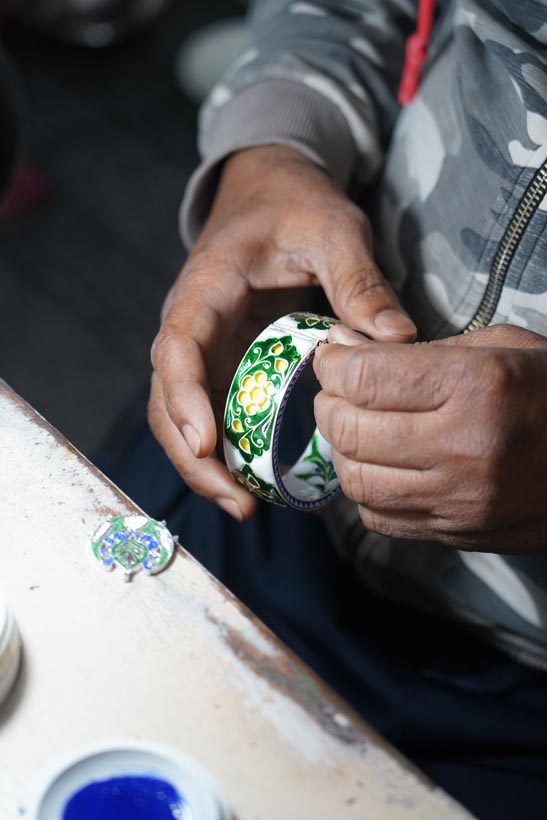
One of the prominent jewellery pieces in this tradition is the Hathi Muh Kada (elephant-faced bangle). This ornament is considered auspicious in Hindu tradition due to its association with Gajalakshmi, the goddess symbolising prosperity and abundance. These rounded bangles are intricately engraved in silver and are often filled with lac on the inside to provide strength and structural support.
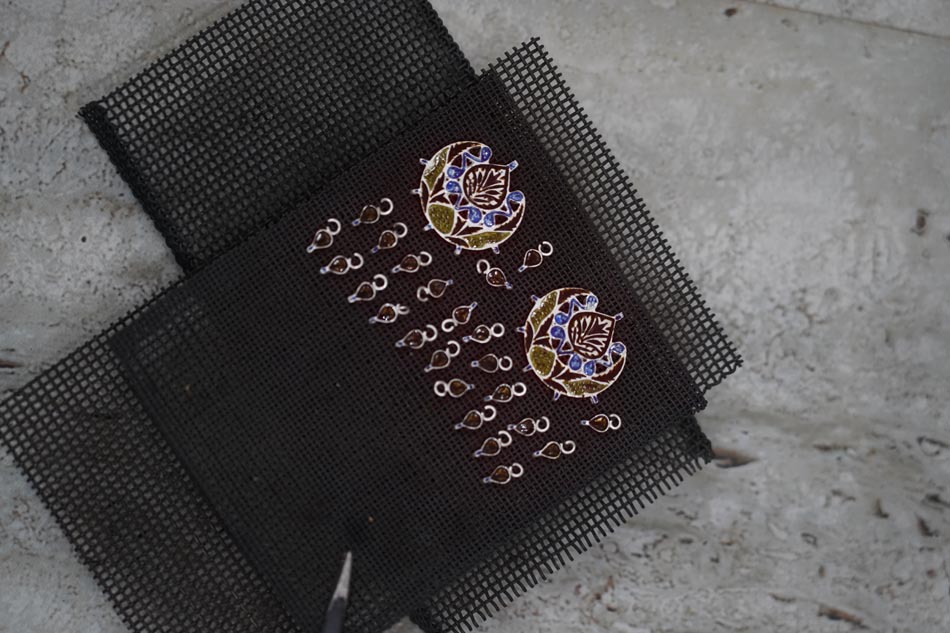
For more delicate jewellery, artisans craft several small components individually and later assemble them to create the final piece. This technique is especially common in necklaces and elaborately designed earrings, where multiple finely detailed elements are joined together to achieve a rich and ornate composition.
In contemporary practice, Meenakari is also executed on brass and copper. However, the authentic and traditional form of the craft is carried out on gold and silver. Each base metal reacts differently to enamel due to its distinct properties, influencing the final finish and durability of the piece. Although recent experiments have introduced Meenakari onto ceramic surfaces, the finest quality and brilliance of enamel are traditionally achieved on gold and silver.
Artisans generally prefer silver for Gulabi Meenakari, as it is relatively more affordable than gold and offers a luminous surface that enhances the vibrancy and brilliance of the enamel colours.
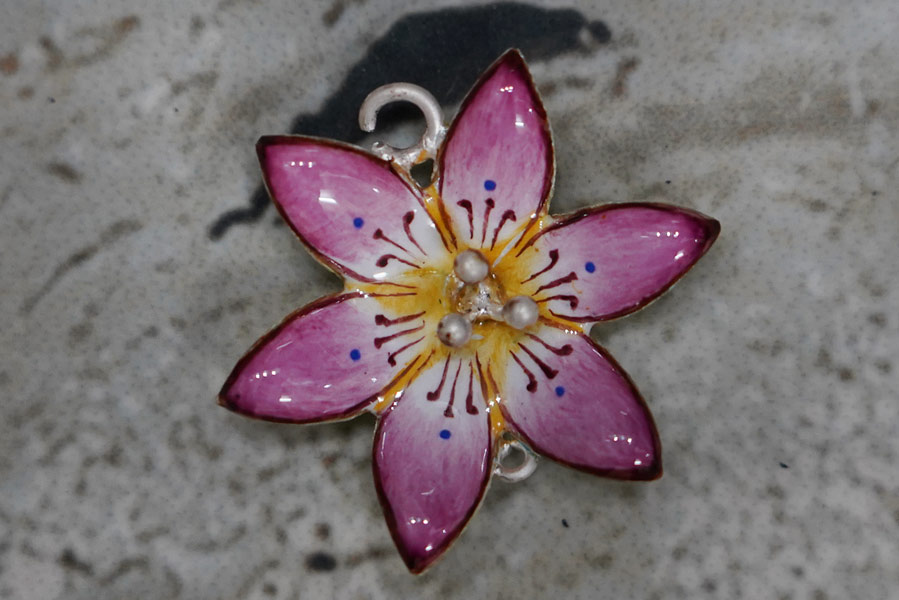
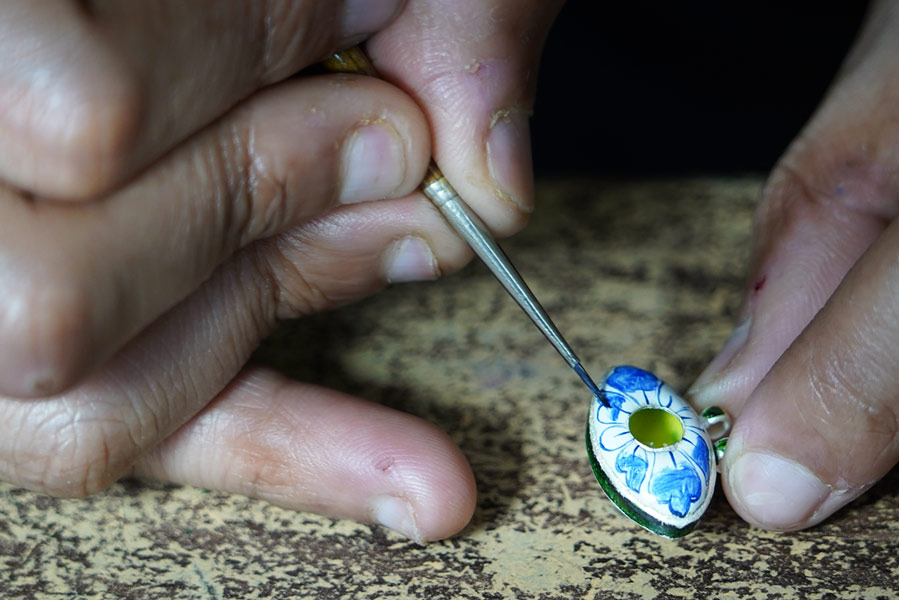
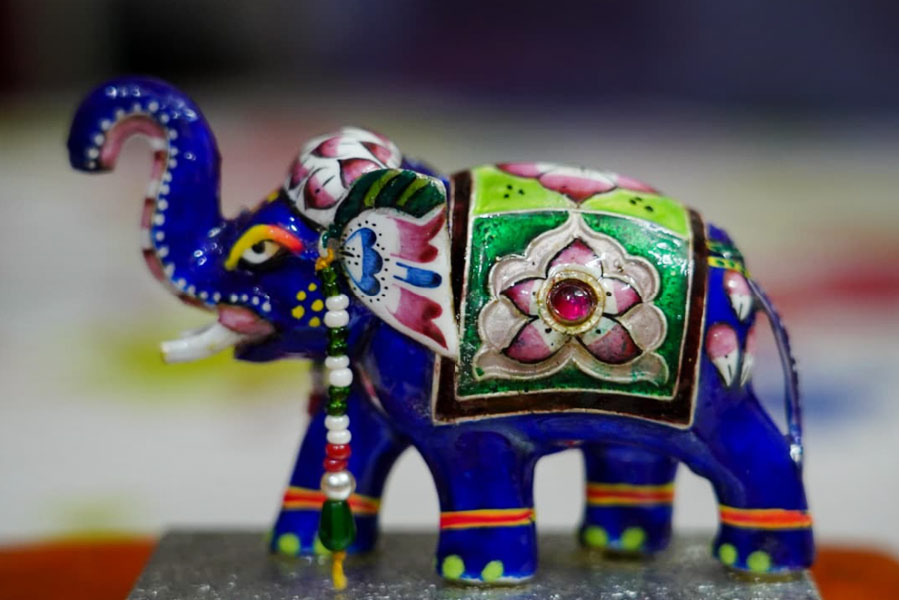
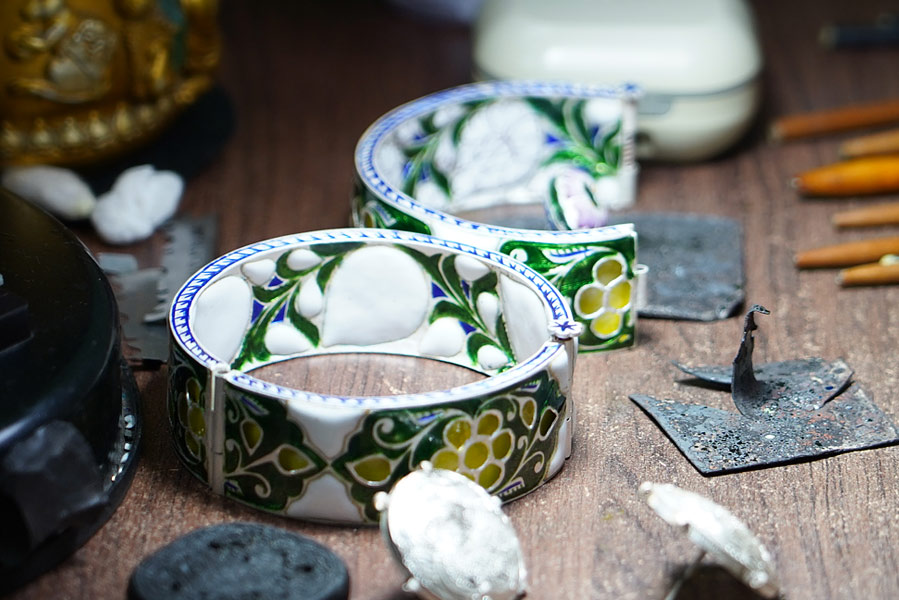
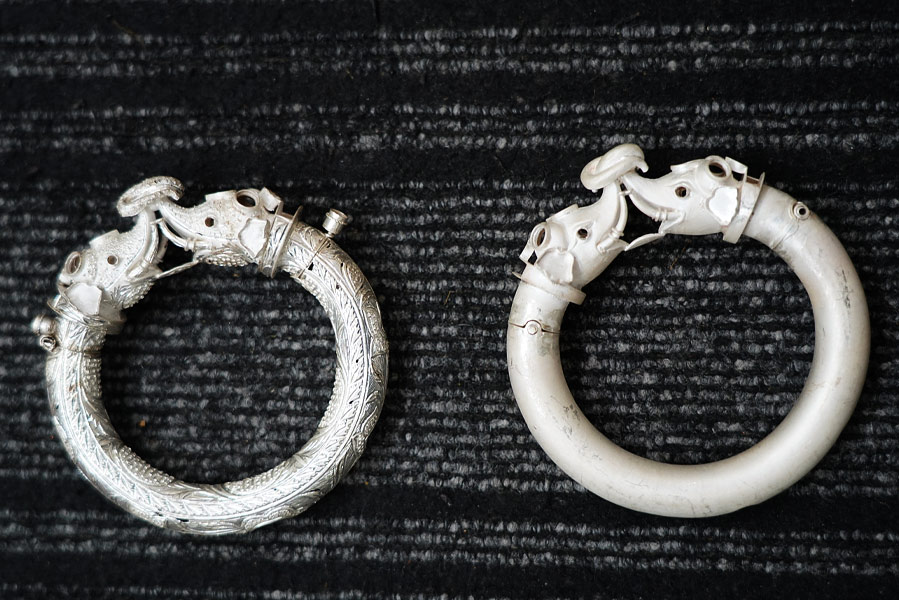
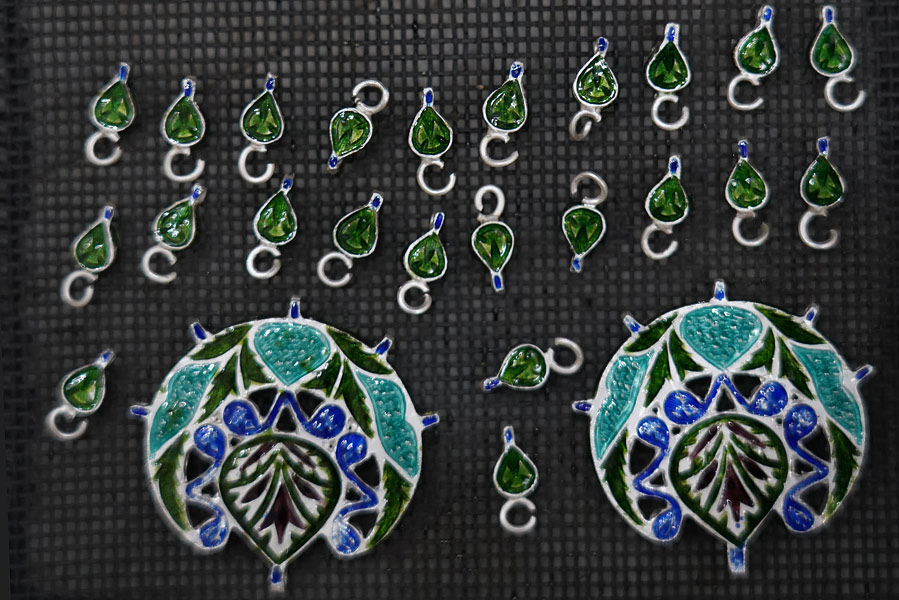
At present, there are approximately 200 artisans in Varanasi who are said to be practising this craft. However, this number has significantly decreased compared to earlier times, leading to a lack of employment generation.
Before 2009, nearly 22 artisans were working under Ramesh ji. This period marked a peak phase for the craft. The artisans made these Gulabi Meenakari products in Varanasi and went to sell them in Jaipur, as the primary buyers and market demand were located there. Gradually, craftsmen in Jaipur began copying their designs and selling replicas made from cheaper materials on footpaths at very low prices. This imitation led to the devaluation of authentic Meenakari work. Since the original pieces were crafted in silver and gold, they were naturally more expensive, whereas the imitated products were nearly ten times cheaper than the originals. As a result, the artisans were forced to return back to Varanasi, as there was no demand anymore. As a result, all twenty-two artisans lost their jobs and shifted to different professions for survival.
There was a phase when this craft almost vanished; there were very few or no buyers of this craft. Moreover, the practitioners of this craft had moved on to other professions and very few people practised.
As most of the Meenakari products were sold primarily in Jaipur, many people assumed that the art form originated in Jaipur, as they were unaware of its roots in Banaras. Back then people never thought this craft had any connections to the city of Varanasi. The craft of Gulabi Meenakari was so unknown that even neighbours (of Mr Ramesh Kumar Vishwakarma) were unaware that such intricate and remarkable work was being practised within the house adjacent to theirs.
It was in 2015 when this craft of Gulabi Meenakari received the Geographical Indication (GI) tag, it gave an official recognition to its origin in Varanasi. It then became widely known as Banarasi Gulabi Meenakari. The GI tag played a crucial role in protecting the identity of the craft and preventing it from fading into obscurity.
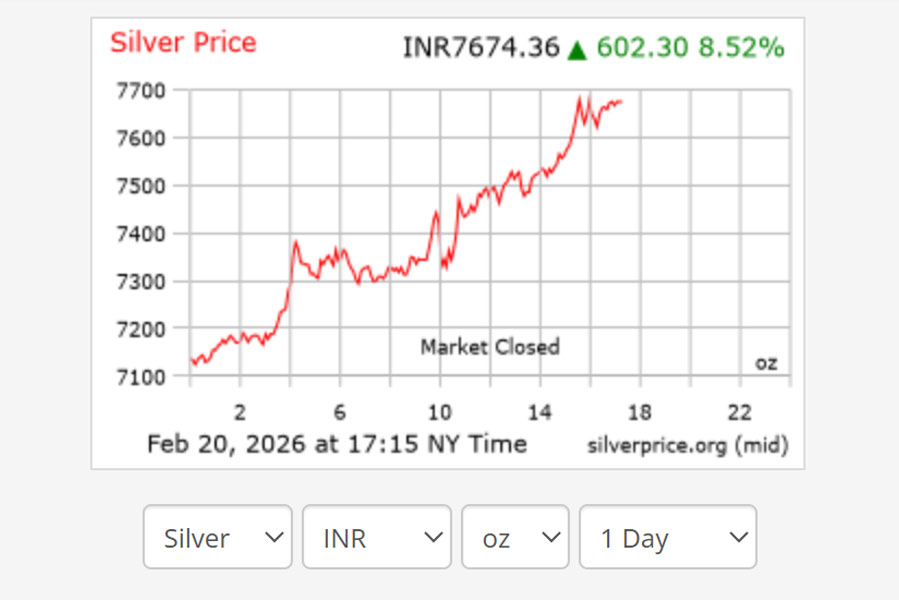
There was a time when even a small increase in the price of silver, created fear among artisans, who felt that Meenakari might not survive as customers would stop purchasing such expensive products. Despite these uncertainties, the art form has continued to endure. Today, the sector continues to struggle due to the rising prices of gold and silver, along with the influx of fake and inexpensive fibre-based products. These cheaper alternatives, at times, create intense competition, pushing authentic artisans into a crisis.
Fluctuation in the price of Silver in the market also creates a problem for the artisans, as they promise the customer to sell it at a certain price and then when they go to the market to buy silver the next day, and if the price of silver rises, they are at a loss. Especially, in the current time, with the price of Silver
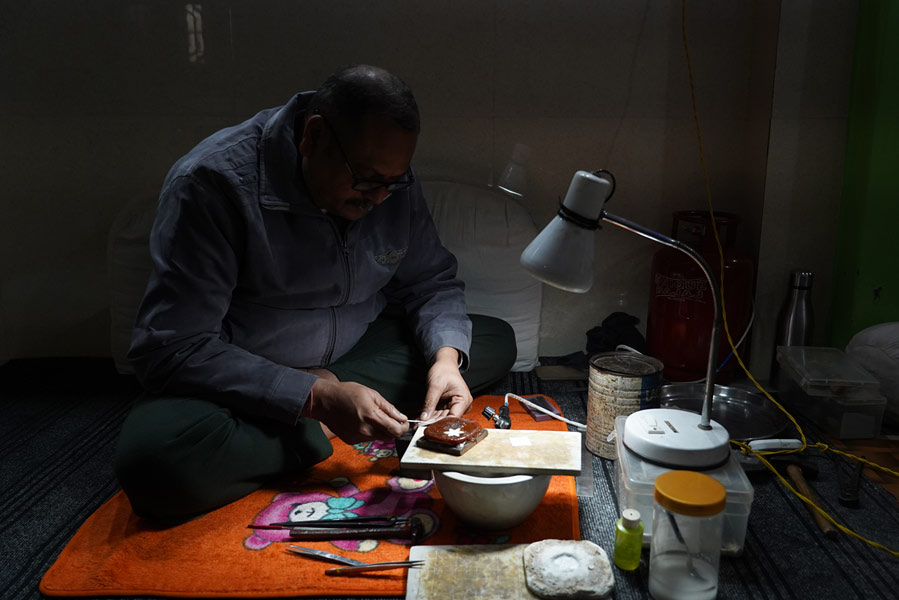
The craft of Gulabi Meenakari requires immense patience and precision. The process is Meenakari is divided into multiple stages, with each artisan contributing to a specific stage until the final piece is completed. The craft involves the creation of intricate surface ornamentation on silver and gold using enamel (Meena). The process of Gulabi Meenakari is technically demanding and complex; therefore, it requires skilled hands and a thorough understanding of the material and techniques involved.
Gold or Silver: They purchase gold or silver (with a purity of 99.99%) in brick form from the market and convert it into sheets or wires using a rolling machine. In some cases, ready-made gold or silver sheets are directly purchased for immediate execution of the design.
Lac – Used to fill the hollow portions of products to provide internal support and stability during engraving and shaping.
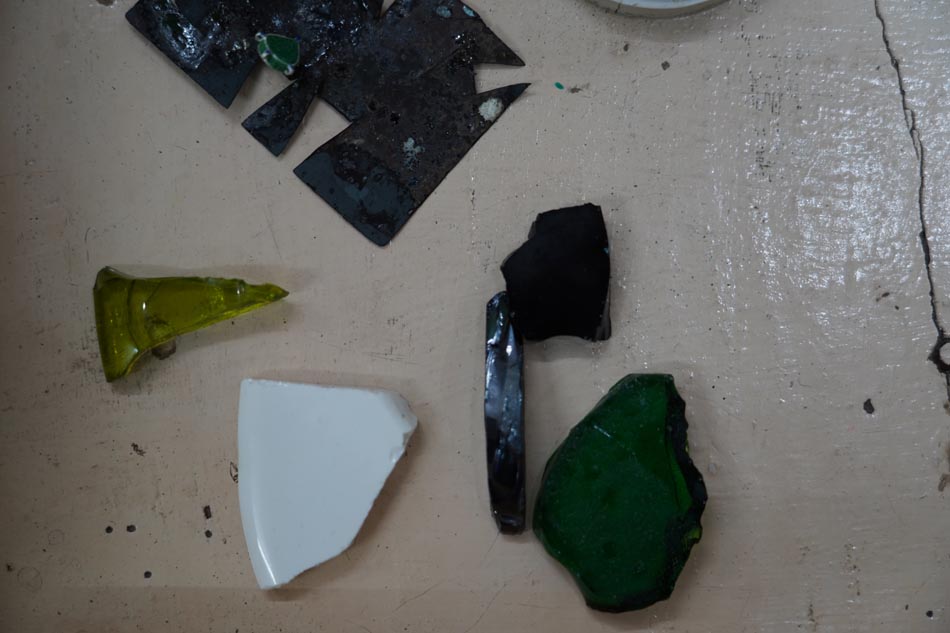
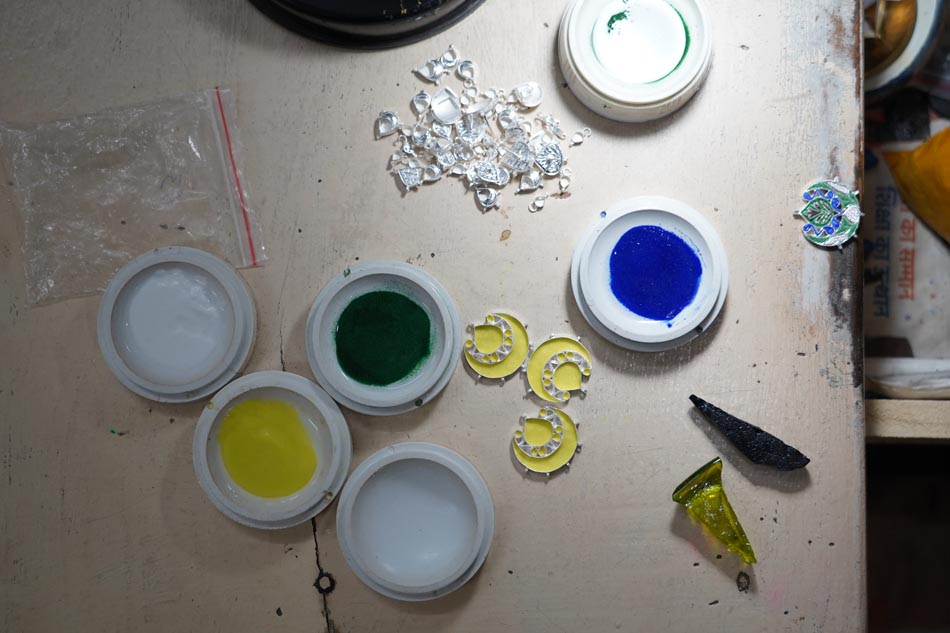
Glass Enamels (Meena) – Made from metal oxides; these enamel stones are sourced from Punjab and later crushed into fine powder for application.
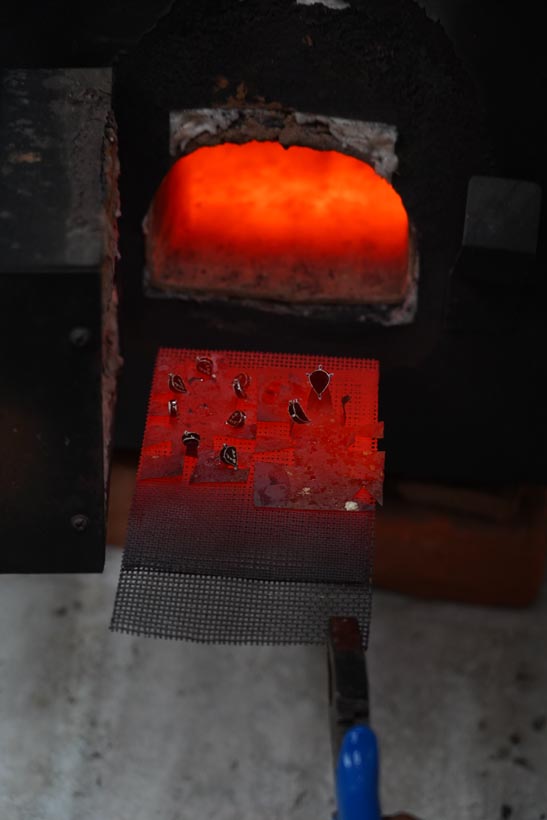
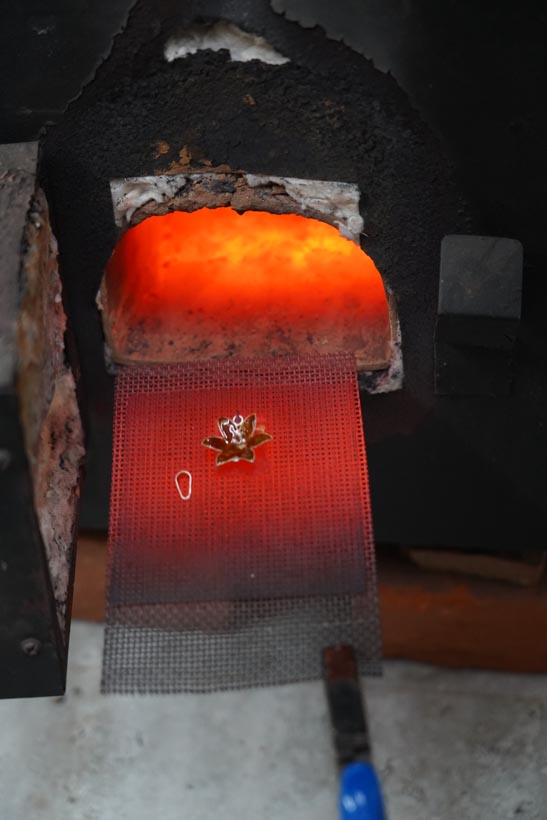
Furnace (Batti) / Electrical Furnace – Used for heating and solidifying the Meena. The furnace fuses the enamel with the metal surface at high temperatures.
Paint for Gulabi Meenakari – A special paint made from gold bhasma mixed with chandan (sandalwood) oil and other ingredients, used exclusively for the distinctive pink detailing in Gulabi Meenakari.
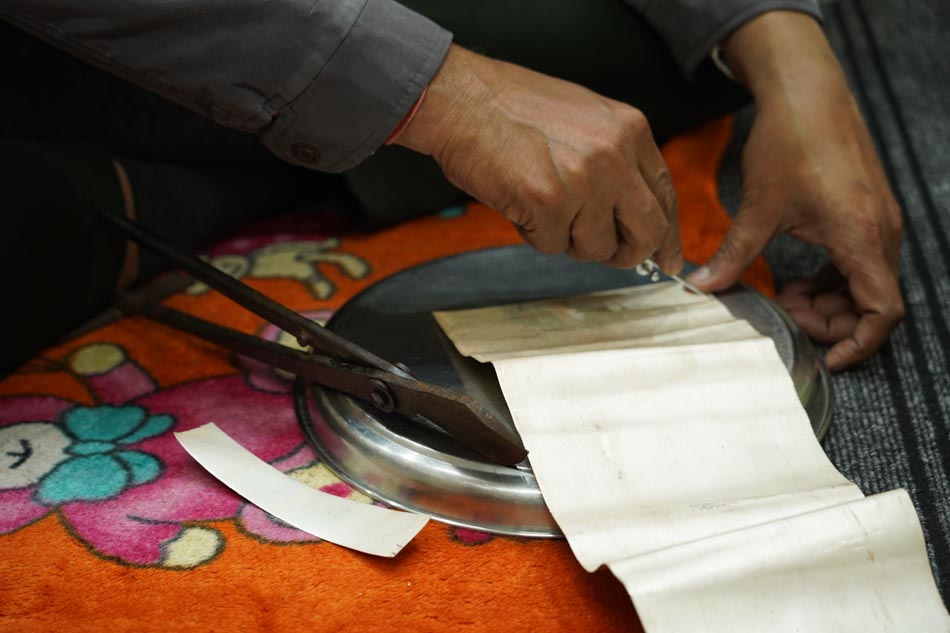
Cutter Tool – Used to cut metal sheets into required sizes.
Prakar (Divider) – Used for measurement and for drawing circular or symmetrical designs.
Thickness Gauge – Used to measure the thickness of silver sheets.
Pencil – Used for sketching and outlining designs on the metal surface.
Scissors – Used to cut the drawn design from the metal sheet.
Hammer – Used for flattening the sheet and shaping the metal into the desired form.
Engraving Tools – Available in multiple shapes and sizes, each with differently shaped tips for detailed carving and surface ornamentation.
Hand Gas Burner – Used for heating the metal sheet and for soldering processes.
Mortar and Pestle – Used to crush Meena (enamel) into fine powder.
Tweezers – Used for holding, shaping, and picking up small components.
Moulds – Used for metal casting and shaping specific forms.
Impression Tools – Used to emboss designs onto the metal sheet.
Jantri – Used to reduce the thickness of silver wire and create fine silver coils.
Taka (Solder) – Used for joining metal parts during soldering.
Suhaga (Sodium Borate) – Used as a flux in the soldering process.
Glass Wool – Used during soldering for support and heat control.
Tejab (Acid Solution) – Used to clean the metal and remove flux residue after soldering.
Fine Brushes (e.g., 000 size) – Used for intricate painting work.
Weighing Scale – Used to measure the weight of metal accurately.
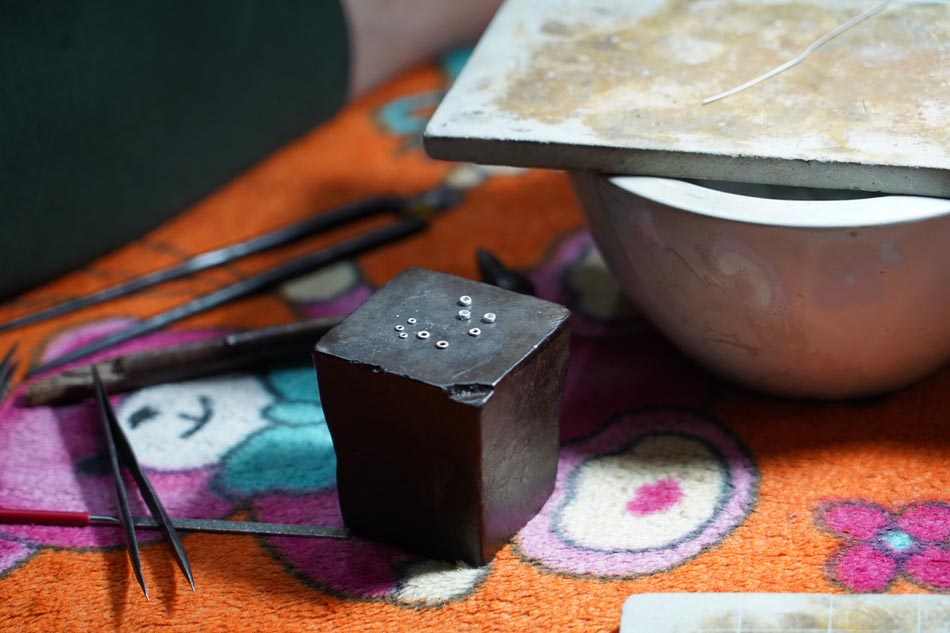
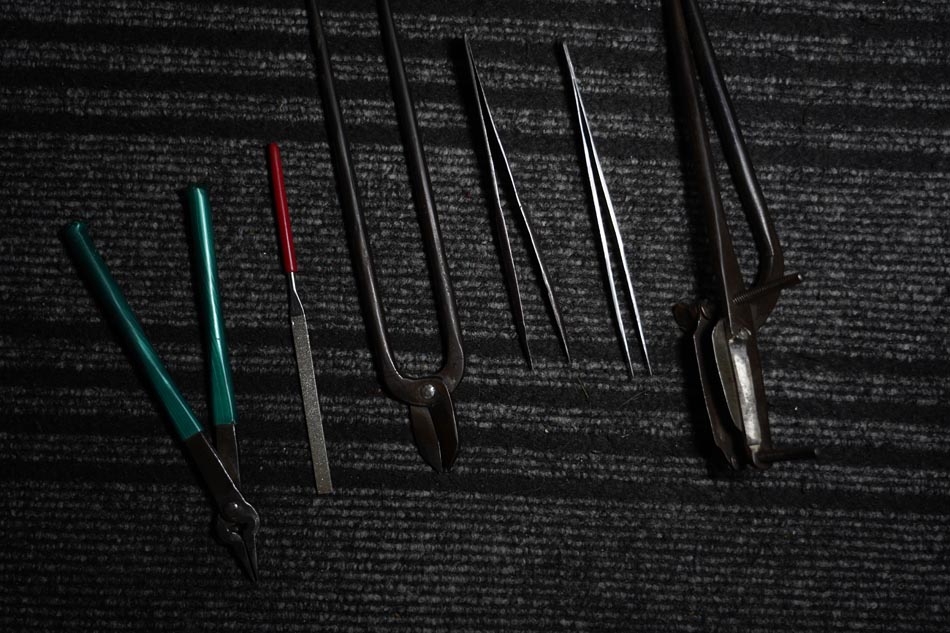
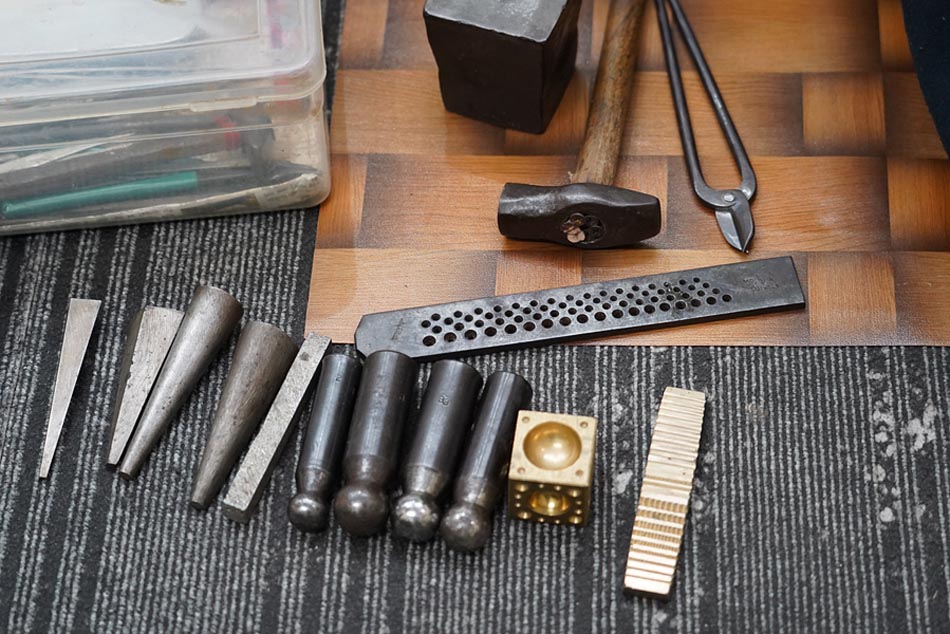
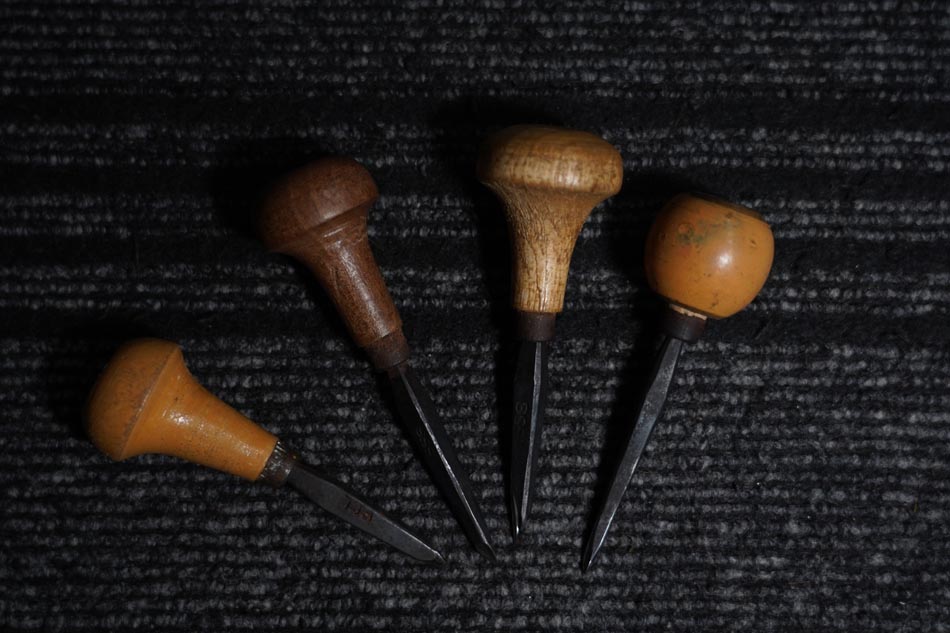
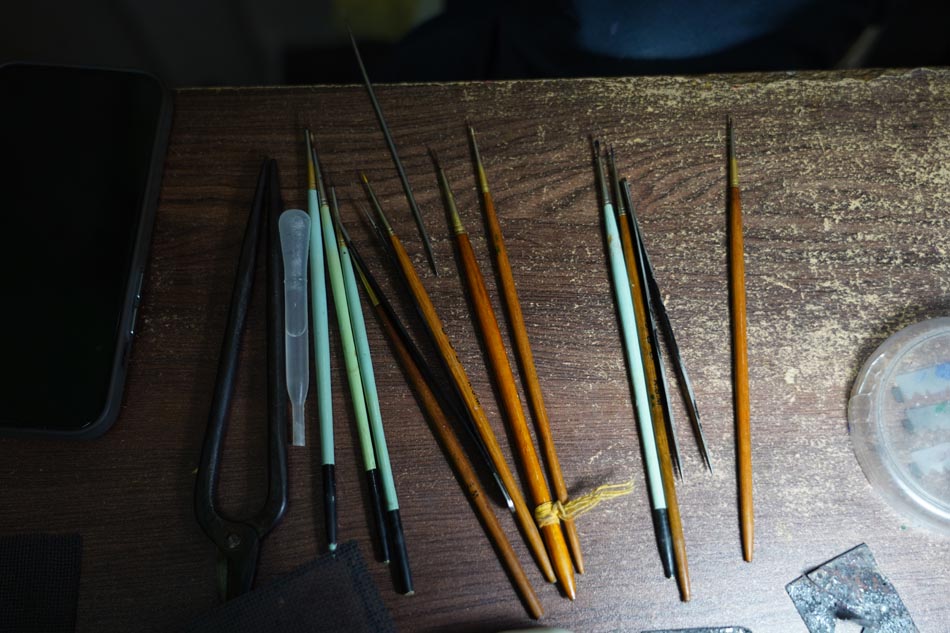
There are no specific daily rituals associated with the practice of this craft. However, on 17th September every year, on the occasion of Vishwakarma Puja, the artisans worship their tools as a mark of respect and gratitude. This ritual symbolises devotion to their craft and reverence for the instruments that enable their work.
Gold or silver bricks are purchased from the market and converted into thin flat sheets using a rolling machine. Some of the artisans have the rolling machine at their workplace, whereas most of them get this work done from the local market. The Silver sheets are prepared in different thicknesses depending on the requirements of the design and the product.
Once these Silver sheets are ready, a cutter tool is used to cut the sheets into equal strips. To maintain the same width and height of the strips, the measurements are taken using a Divider (Prakar). The cutter has a flat rectangular base at one end, which is placed under one leg to balance and support the cutter.
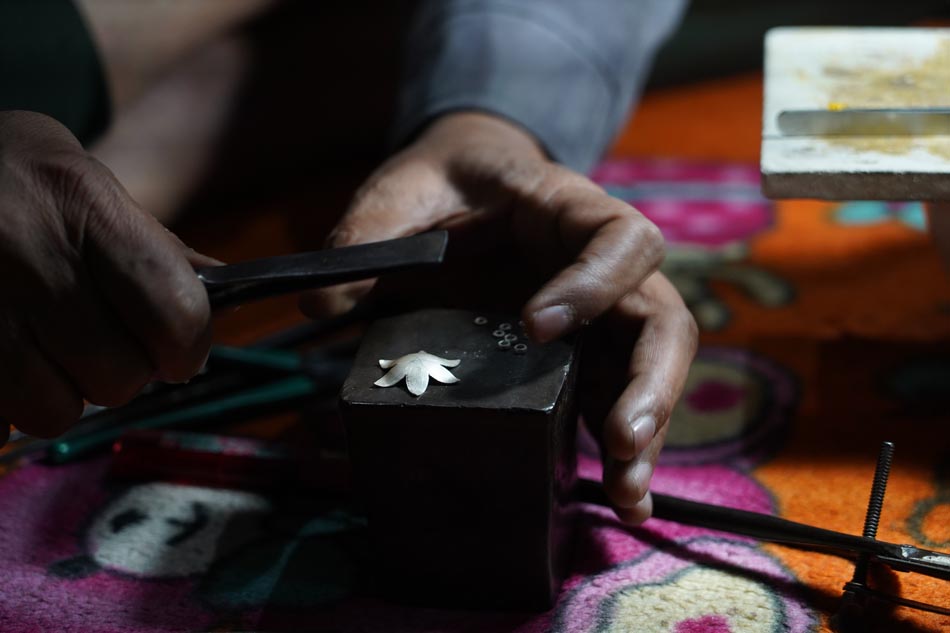
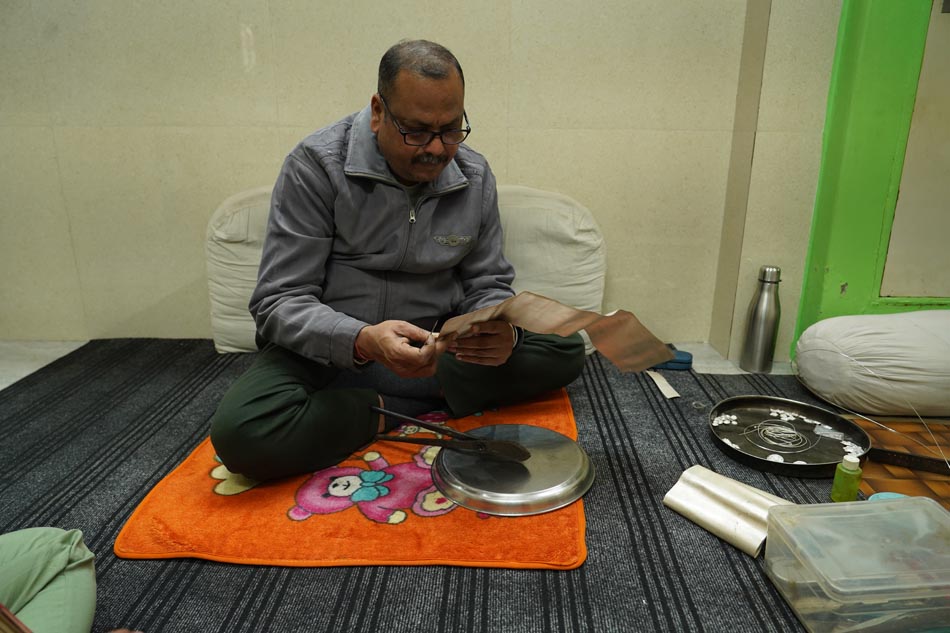
A thickness gauge is used to measure the thickness of the silver sheet accurately. The silver strips are then cut into small, equally sized segments as needed. The required design is drawn individually on each segment using a prakar or a pencil. Prakar is often used for constructing geometric shapes and floral motifs. The silhouette of the design is outlined with a pencil and then cut carefully using scissors. Scrap silver left after cutting is never wasted; it is collected and later melted to form new silver sheets. The piece created is then flattened by hammering it on a metal surface.
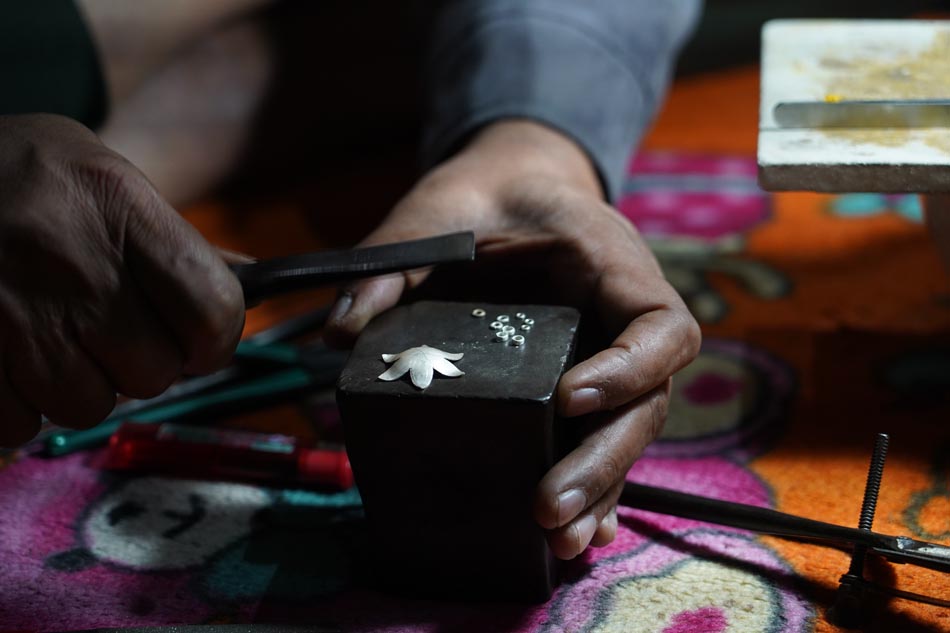
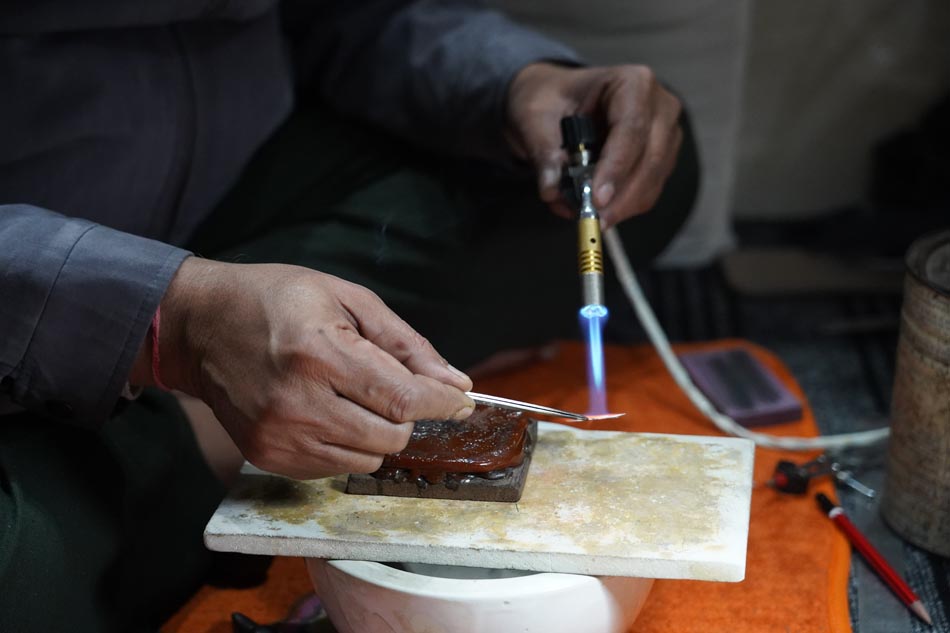
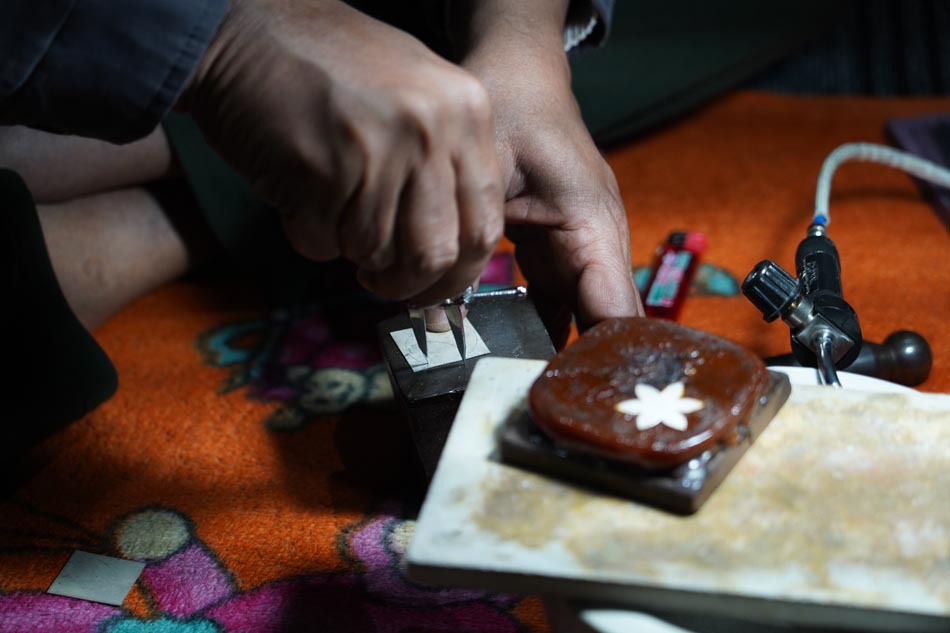
Then, the piece is placed on a square-shaped slab of lac, with a metal slab underneath to provide support for engraving. Engraving tools come with differently shaped tips designed for specific detailing and carving techniques. Once engraved, it is removed from the lac slab and is heated using a burner. The piece is heated to soften the metal so that it can be easily moulded into the desired shape. It is then placed face-down on a metal base, covered with plastic, and given the shape using a Pestle (a heavy, club-shaped tool used with a mortar) and Tweezers.
In certain products, such as idols and decorative showpieces, the designs are made using moulding and casting, by melting scrap silver to create an impression tool. The silver sheet is then placed between the metal mould and the impression tool and hammered to achieve the desired shape. The sheet is heated and then hammered again to refine and enhance the final form.
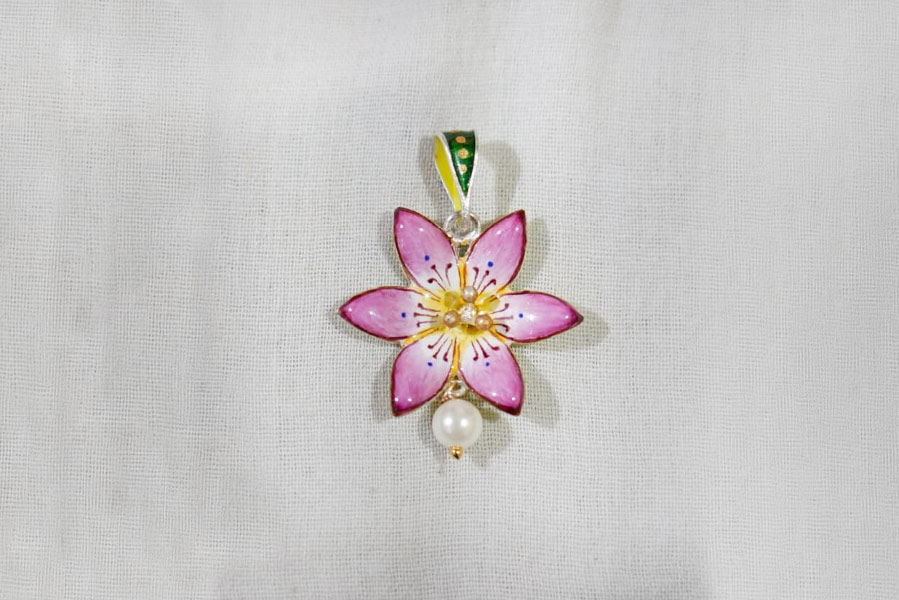
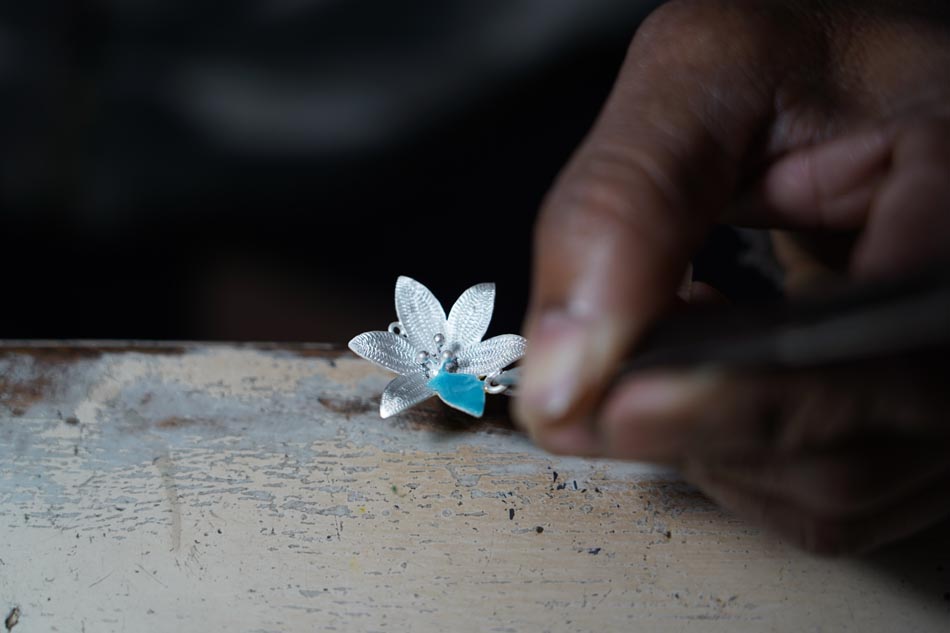
If there are any additional pieces, like the top part of the pendant through which the chain passes or the filament of the flower. They are made separately using silver wires. An important tool, known as a jantri (a plate with circles of different sizes), is used to create thin silver wires. Silver coils are repeatedly passed through the jantri to reduce their thickness.
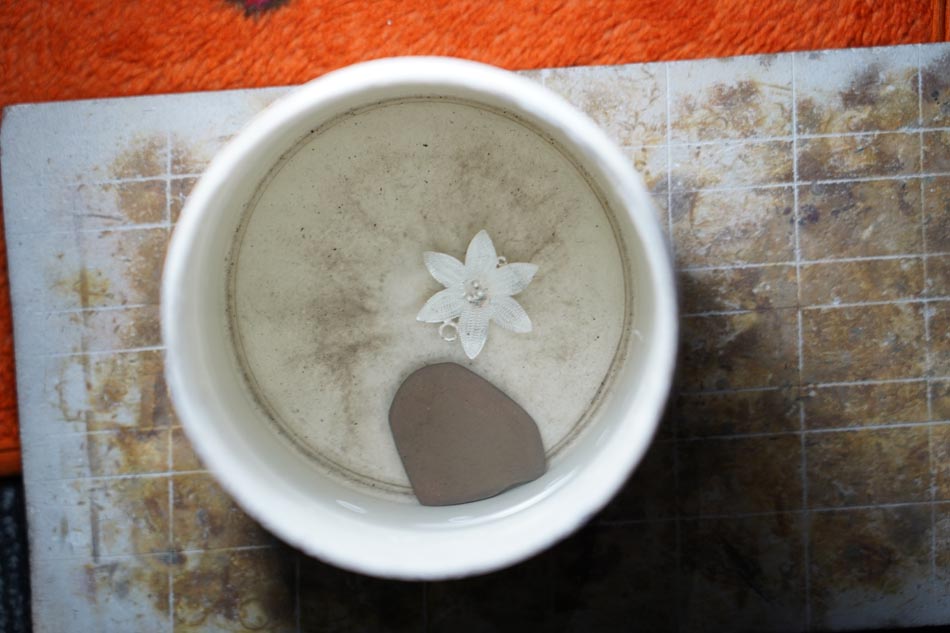
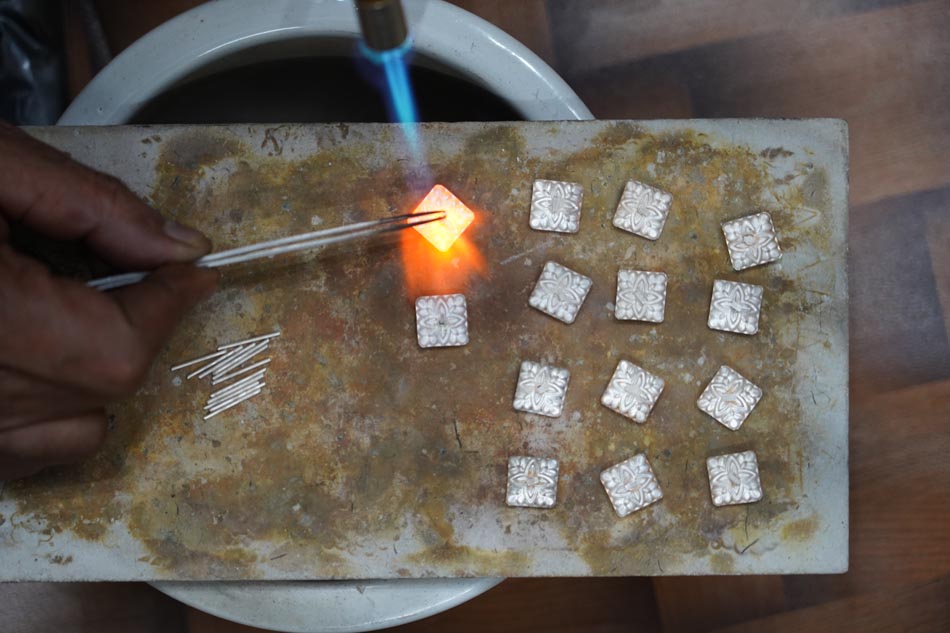
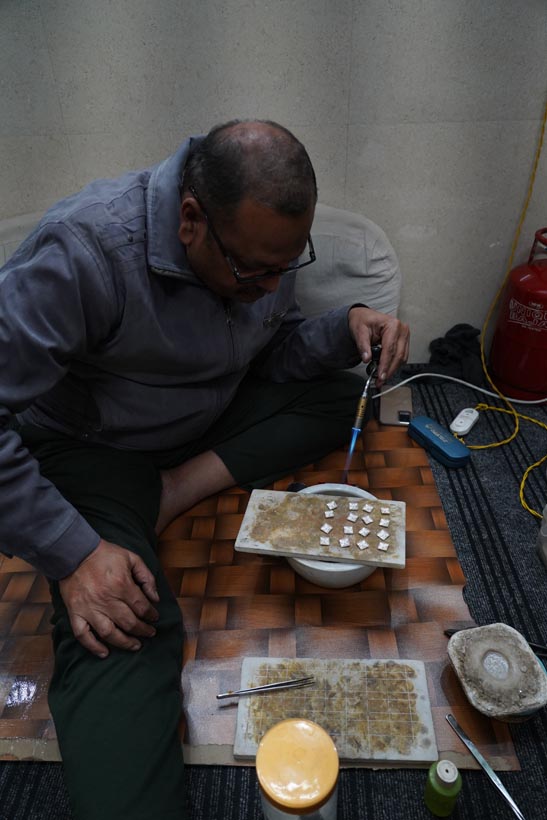
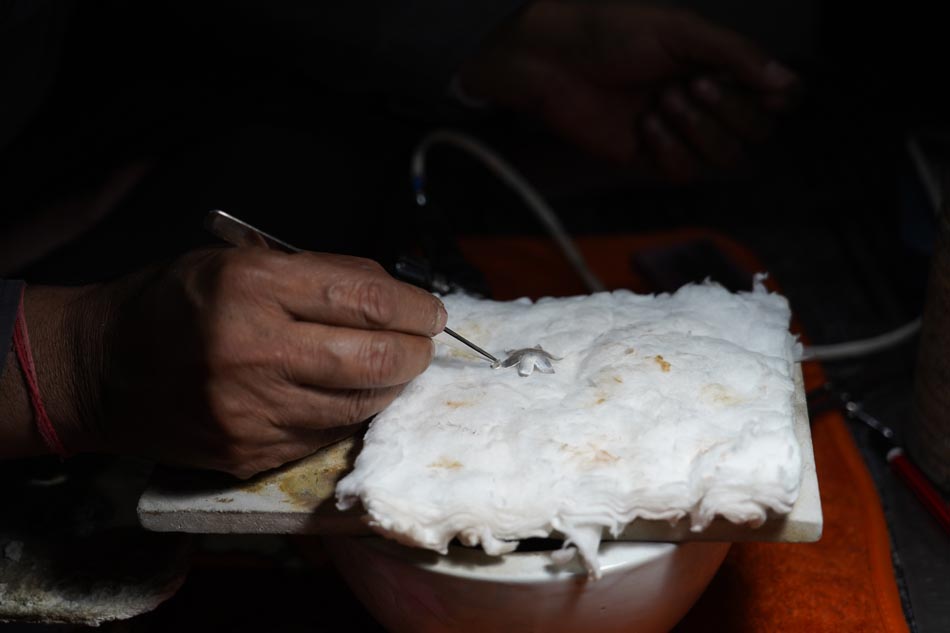
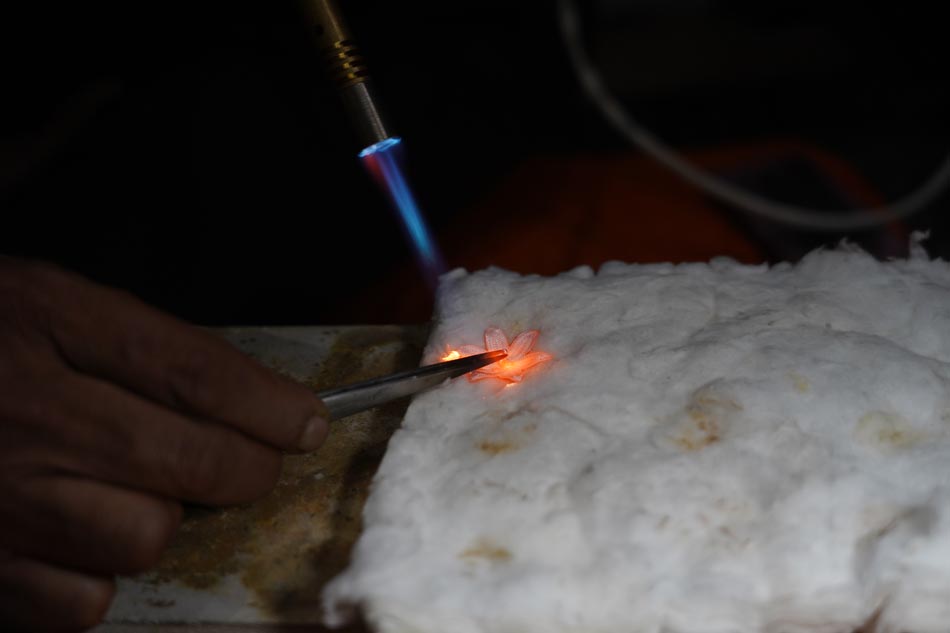
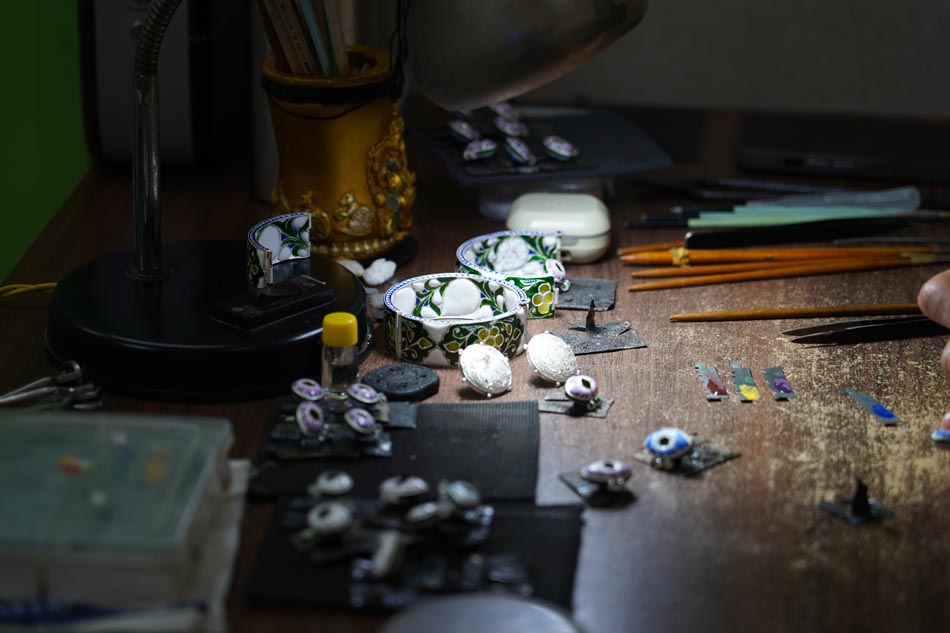
To attach the additional parts to the main piece, soldering is done. The silver component and the part to be attached are placed on a ceramic slab, which is supported by a ceramic bowl underneath. Ceramic is used because it absorbs heat and does not crack when exposed to high temperatures. For soldering, Solder (taka), Sodium Borate (Suhaga), and small silver pieces are mixed and applied to the joining areas. It is then exposed to the heat from the Burner to fuse the parts. These pieces are kept on Glasswool (fire-resistant fibre) when exposed to the heat. Earlier, when Glasswool was not available, soldering was done on mud. After soldering, the piece is immersed in a vessel filled with Acid Solution (Tejab) with a copper stone kept inside for about ten minutes to remove the residue of Sodium Borate (Suhaga).
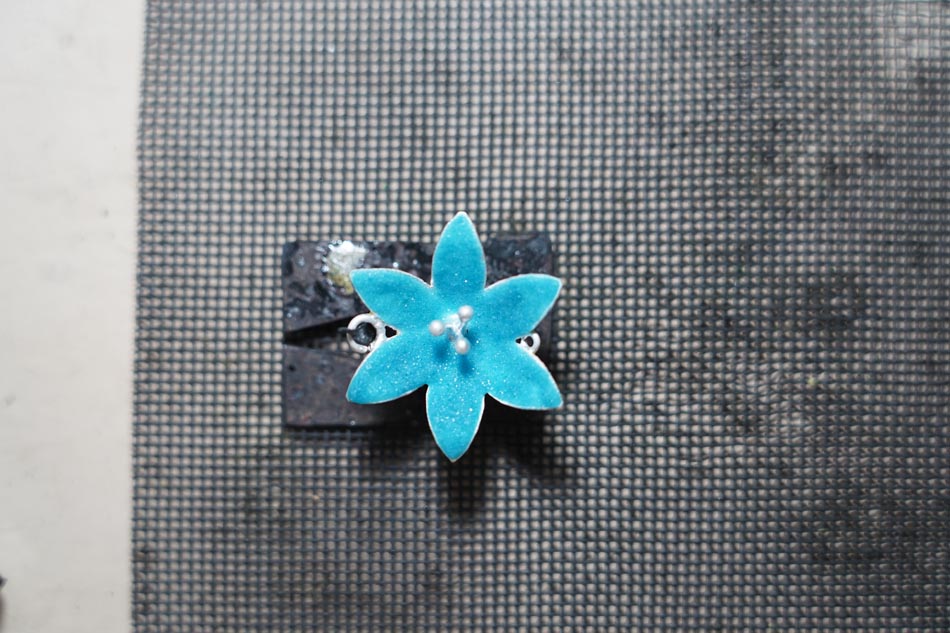
Once the piece is ready, it is prepared for enamelling. Different Enamels (Meena) are used for gold, silver, and copper. Meena oe Enamel is made from glass-like stones composed of metal oxides. All Meena colours used in Meenakari are vitreous glass enamels. These glassy enamels vary in opacity and may appear transparent, translucent, or opaque. The primary base material of these enamels is silica (Si), which is derived from quartz found in the earth’s layers.
Vitreous enamels (Meena) used in Meenakari are inorganic materials and are almost insoluble in water. Many of these enamels are amorphous in nature, meaning they do not have a fixed melting point due to their irregular internal structure. When heated in a furnace, they gradually soften into a semi-liquid state and fuse permanently with the metal surface. This semi-liquid stage allows the enamel to spread smoothly and settle into the engraved areas before hardening into a durable, glossy finish upon cooling. Earlier, these were sourced from Lahore before Partition; today, they are bought from Punjab and the local markets of Varanasi. These Meena or Enamels are crushed into a fine powder using a translucent mortar and pestle. The powdered enamel is mixed with water in a small bowl and then applied with a fine brush.
Solid base colours are first filled using meena. For example, yellow on the back, light blue as a base on the front, Green for leaves. The main precaution during this stage is cleanliness. Dust must not settle on the surface. In summer, artisans frequently wash their hands to avoid sweat stains.
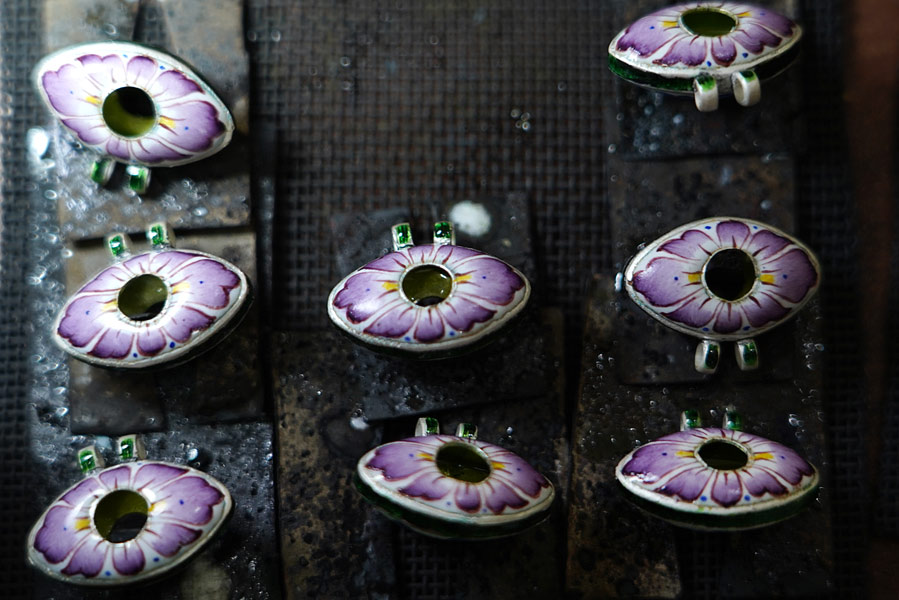
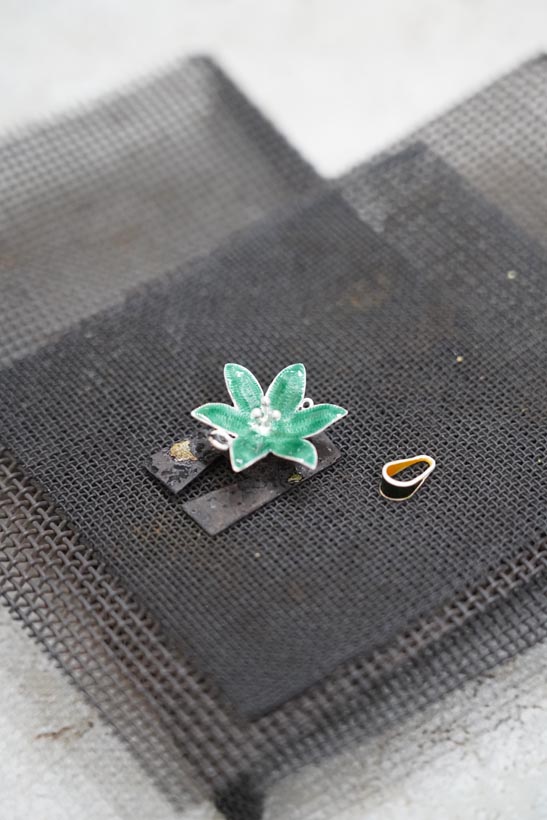
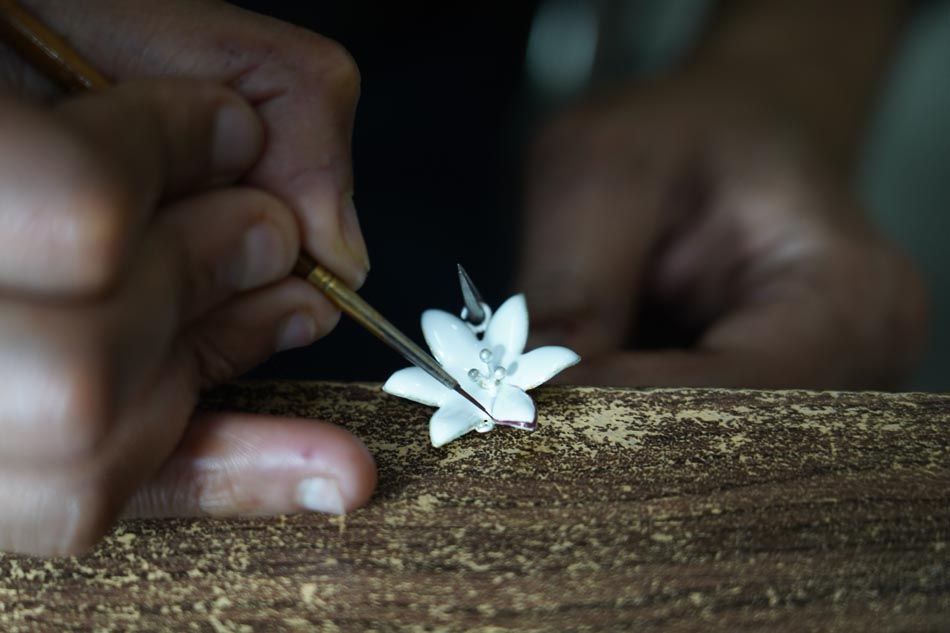
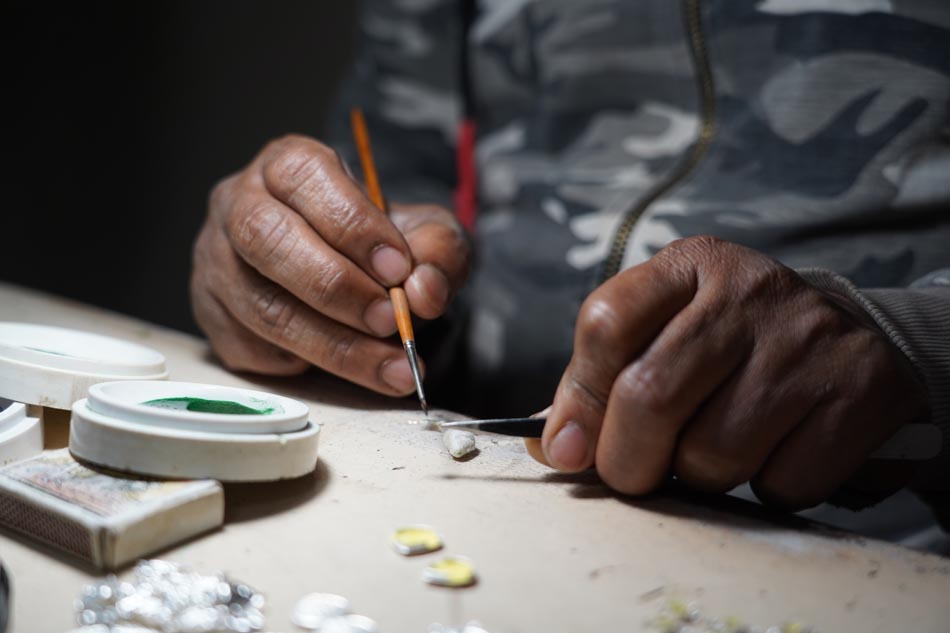
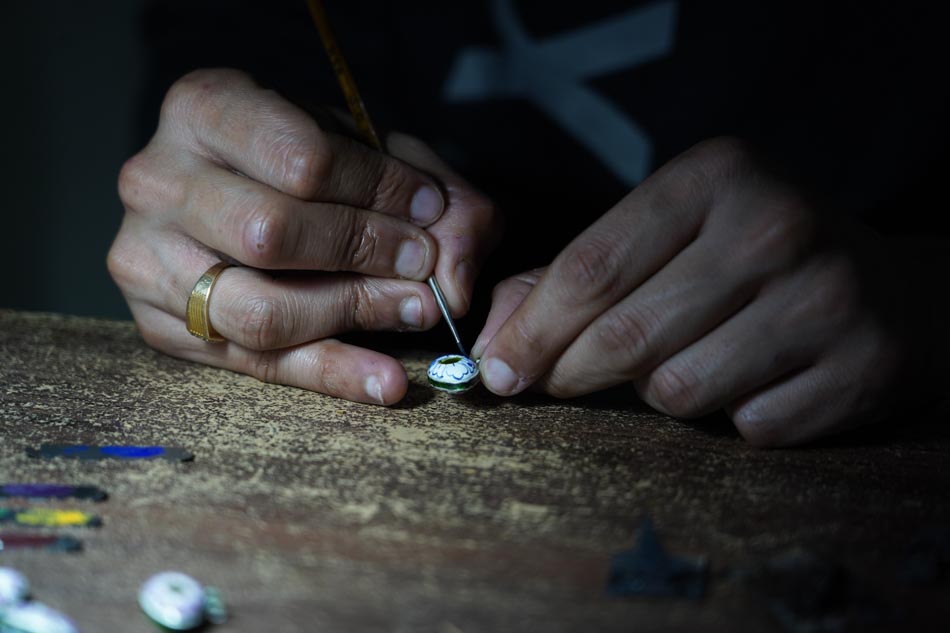
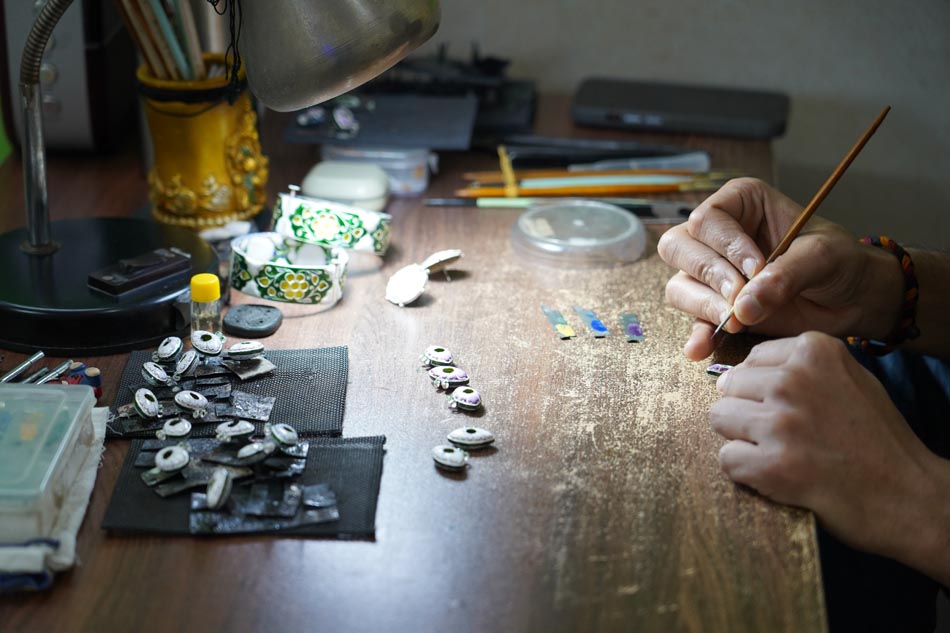
After applying coloured meena, the piece is heated in an electrical furnace (earlier, mud furnaces were used). It is heated for about five minutes at temperatures ranging approximately between 750°C to 850°C. The next process that follows is distinctive of Gulabi Meenakari, i.e. applying White Meena on top of light blue Meena. White meena is applied in 2–3 layers to create an embossed effect. Light blue meena is applied before white to create a proper base and prevent yellowing of the silver surface. The piece is heated in the furnace after applying each layer of White Meena to solidify the meena. Artisans prefer coating the surface with white Meena because the pink or “gulabi” strokes appear brighter and more vibrant against a white background. The next and most crucial stage is the painting, exclusive of Gulabi Meenakari of Varanasi. The paint is made from gold bhasma mixed with chemicals and sandalwood (chandan) oil. The artisans use a blade as a palette for the painting, as it is easy to store carefully and also prevents dust contamination. The colour Pink is mainly used; however, other colours like blue, yellow, gold and green are also used.
The colour may initially appear slightly purple, but after firing, it transforms into a vibrant pink. A 000 brush is used for fine detailing. The artisan first applies colour lightly and then uses a clean brush for shading. Small dots and fine strokes of gold or any colour are added for finishing. Brown is generally used for outlining motifs because it complements pink tones. Earlier, black was used, but it appeared too bold. The piece is exposed to heat in the furnace after each stage of the process, that is, after outlining the design and again after shading. The primary motifs include lotus, rose, leaves, birds, and animals. All designs are original and drawn from the artisan’s own skill and knowledge.
In some of the products that are hollow from the inside, like the peacock, Kada, or any other items lac is filled within to provide support and structural strength during the crafting process, after the process of meenakari is completed.
After the product is fully completed, Kundan stones are added to further embellish the artwork. Decorative pieces, such as a peacock, are often crafted in separate parts, for example, the body, feet, and feathers. These components are individually prepared, enamelled, painted, and fired in the furnace. Once all the stages are completed, the separate parts are carefully joined together using soldering to form the final piece.
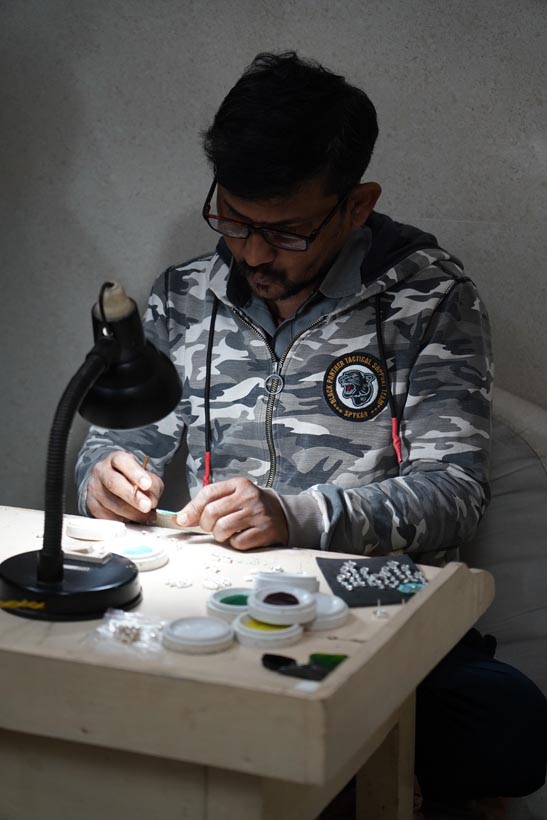
At the workshop we visited, four artisans were working, each assigned a specific role in the process. The work was clearly divided among them. Mr Ramesh Kumar Vishwakarma was primarily responsible for cutting the silver sheets, developing the design, and carefully cutting out the piece. Another artisan applied the base Meena on the silver surface, while the final stage of Gulabi Meenakari painting was carried out by a different skilled artisan.
The artisans use focus lamps while working to ensure clear visibility, as the pieces are small and often highly intricate. The directed lighting helps them maintain precision and attention to fine details throughout the process.
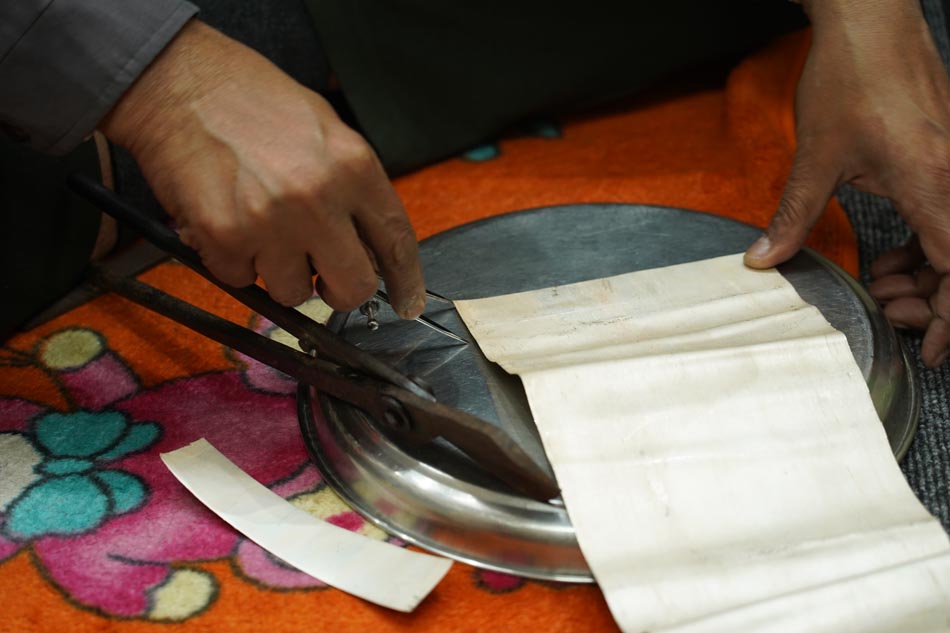
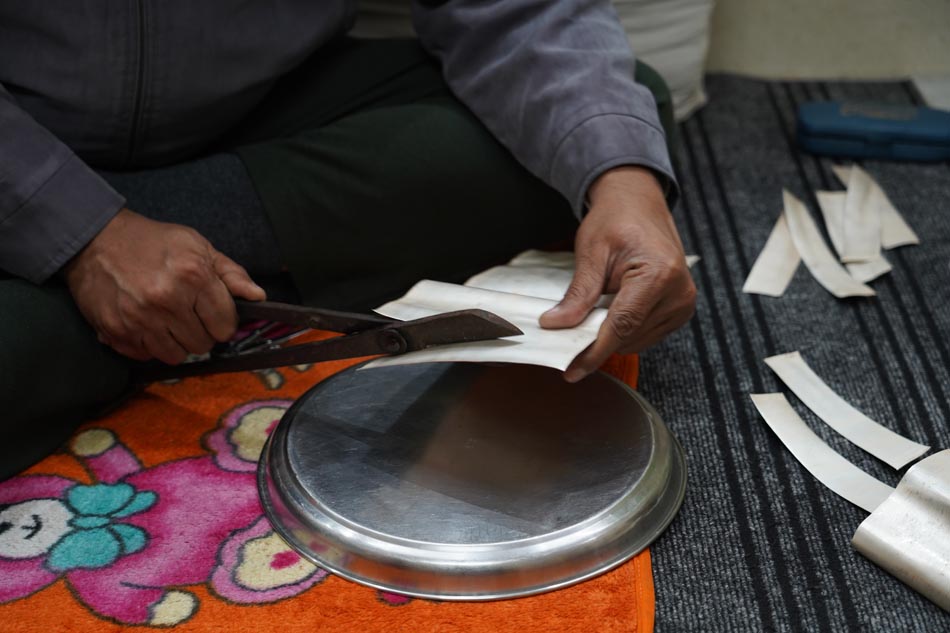
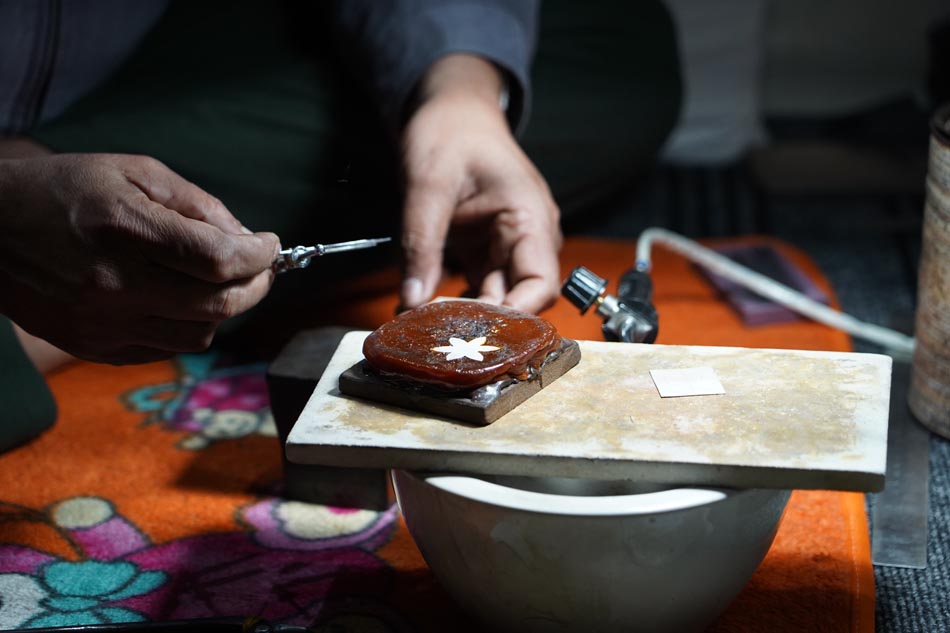
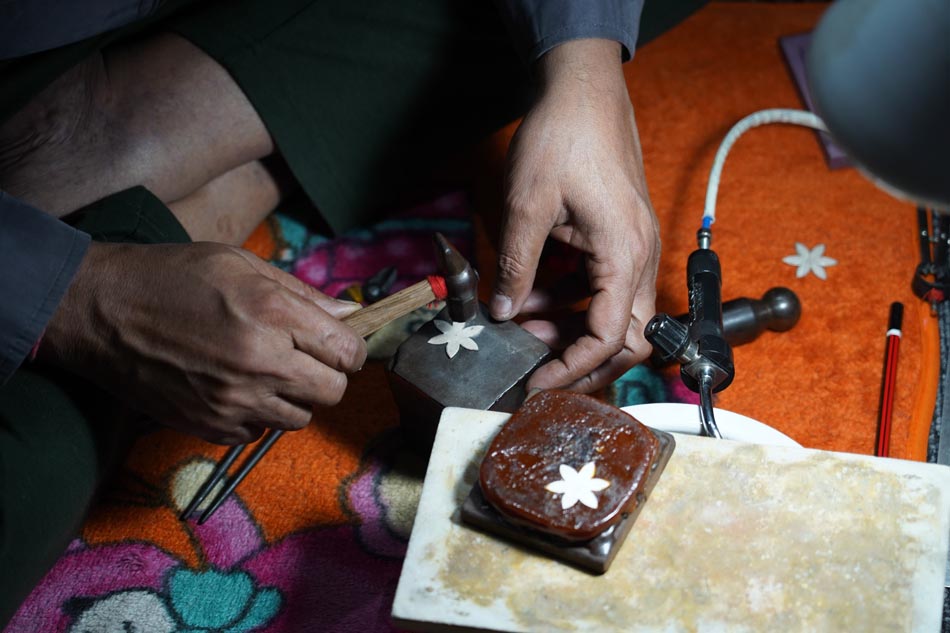
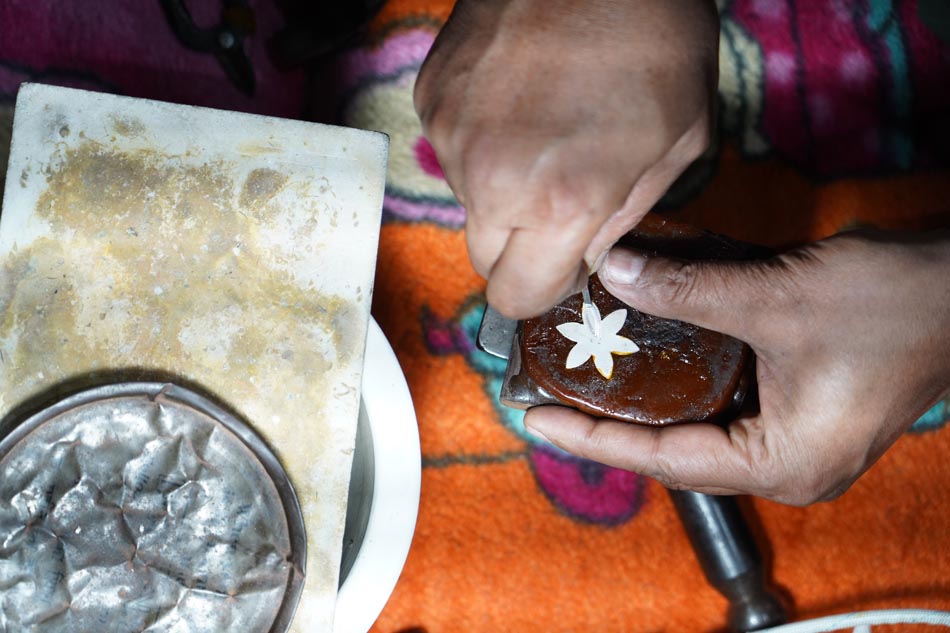
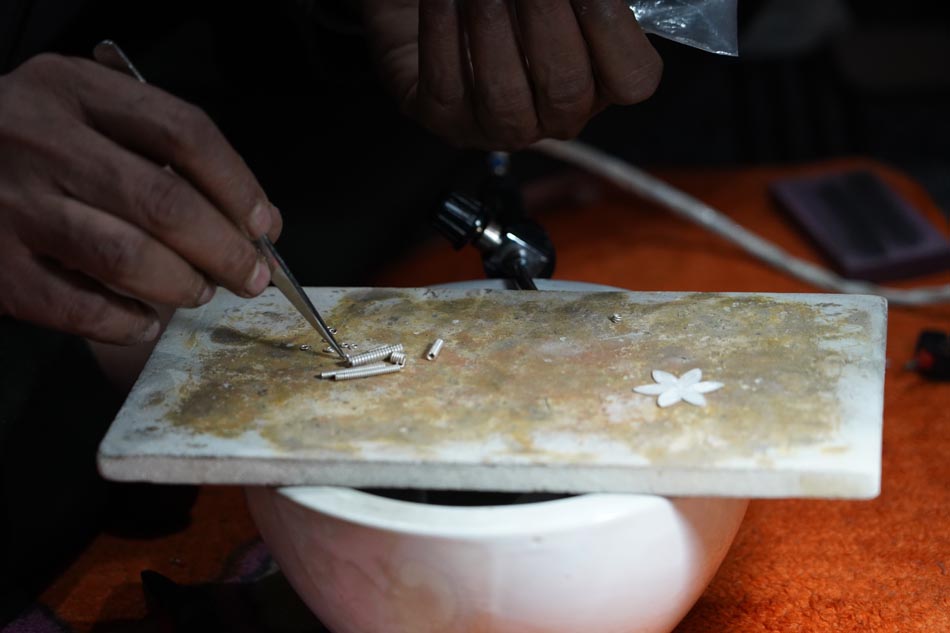
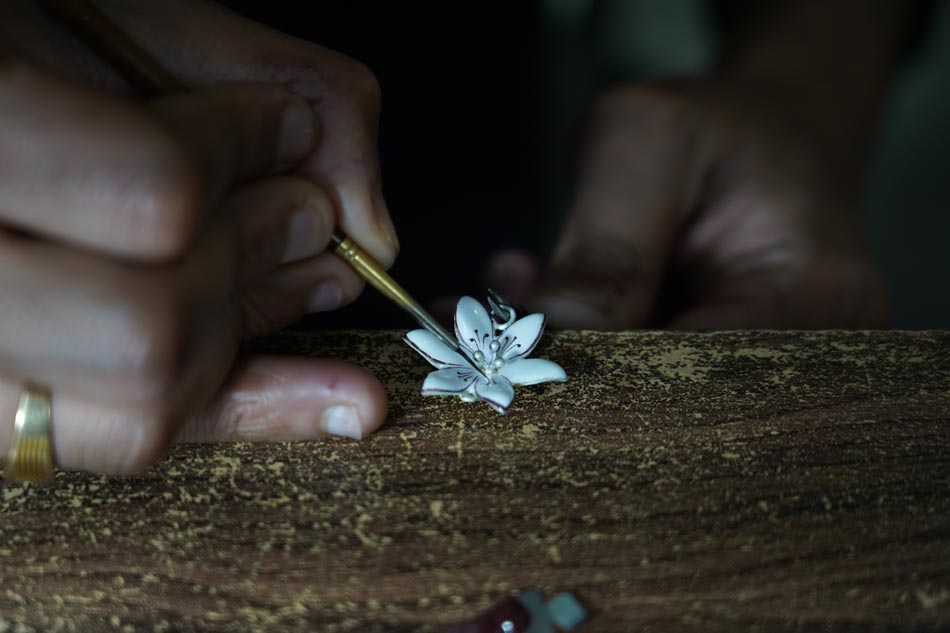
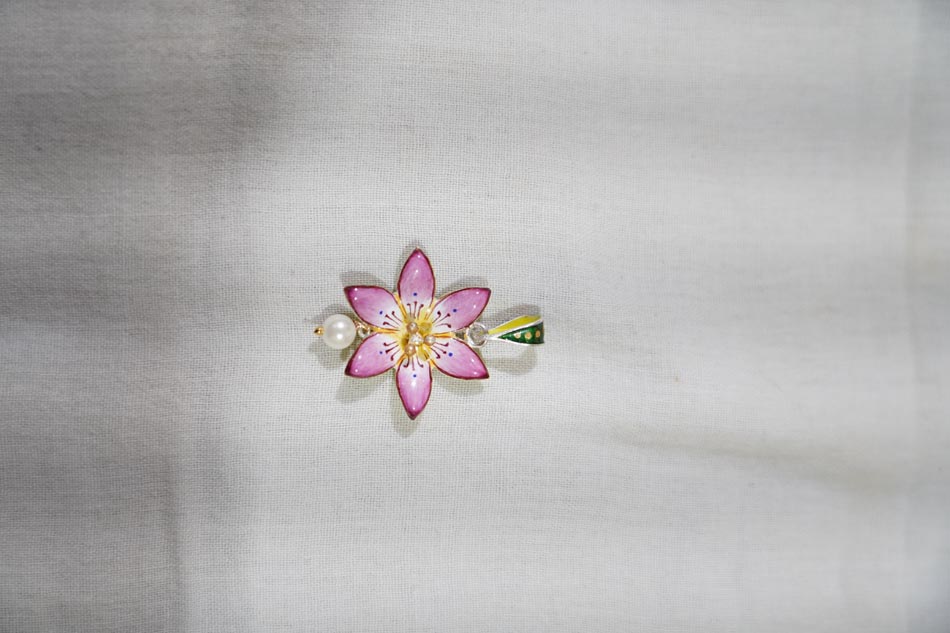
There is minimal or almost no waste generated in the craft of Meenakari. The leftover pieces of silver sheets after the cutting process are carefully collected in a box and later melted down to form new silver sheets. This ensures maximum utilisation of the raw material. Occasionally, a very small amount of silver may get wasted, such as tiny particles sticking to clothes or hands during the process.
Mark Twain once said, "Benaras is older than history, older than tradition, older even than legend and looks twice as old as all of them put together".
Known in different eras as Avimukta, Varanasi and Kashi, meaning “where the supreme light shinesâ€, this great north Indian center of Shiva worship has had more than 3000 years of continuous habitation.
To the Hindus, the Ganges is a sacred river and any town or city on its bank is believed to be auspicious. But Varanasi has a special sanctity, for it is believed, this is where Lord Shiva and his consort Parvati stood when time started ticking for the first time. The place also has an intimate connection with a host of legendary figures and mythical characters, who are said to have actually lived here. Varanasi has found place in the Buddhist scriptures as well as the great Hindu epic of Mahabharata. The holy epic poem Shri Ramcharitmanas by Goswami Tulsidas was also written here. All this makes Varanasi a significantly holy place.
Varanasi has been a symbol of Hindu renaissance. Knowledge, philosophy, culture, devotion to Gods, Indian arts and crafts have all flourished here for centuries. Also a pilgrimage place for Jains, Varanasi is believed to be the birthplace of Parsvanath, the twenty-third Tirthankar.
Historians have now ascertained that the Aryans first settled in the middle Ganges valley and by the second millennium BC, Varanasi became the nucleus of Aryan religion and philosophy. The city also flourished as a commercial and industrial center famous for its muslin and silk fabrics, ivory works, perfumery and sculptures.
From 1194, Varanasi went into a destructive phase for three centuries under the Muslim rule. The temples were destroyed and the scholars had to leave. In the 16th century, with the tolerant emperor Akbar's accession to the Mughal throne, some religious respite was restored to the city.
In the 6th century BC, Varanasi became the capital of the kingdom of Kashi. During this time Lord Buddha delivered his first sermon at Sarnath, just 10 km away from Varanasi. Being a center of religious, educational, cultural and artistic activities, Kashi drew many learned men from around the world; the celebrated Chinese traveler Hsüan Tsang, is one of them, who visited India around AD 635.
All that disappeared again in the late 17th century when the tyrannical Mughal ruler Aurangzeb came to power.
Skanda Purana by Kasikanda mentions the Kashi temple of Varanasi as Shiva's abode. It has withstood the onslaught of various invasions by Muslim rulers. The present temple was rebuilt by Rani Ahalya Bai Holkar, the ruler of Indore, in 1776. Then in 1835, the Sikh ruler of Lahore, Maharaja Ranjit Singh had its 15.5 m high spire plated in gold. Since then it is also known as the Golden Temple.
The 18th century again brought back the lost glory to Varanasi. It became an independent kingdom, with Ramnagar as its capital, when the British declared it a new Indian state in 1910. After India's independence in 1947, Varanasi became part of the state of Uttar Pradesh.
The land of Varanasi (Kashi) has been the ultimate pilgrimage spot for Hindus for ages. Often referred to as Benares, Varanasi is the oldest living city in the world.
Ayurveda is said to be originated at Varanasi and is believed to be the basis of modern medical sciences such as Plastic surgery, Cataract and Calculus operations. Maharshi Patanjali, the preceptor of Ayurveda and Yoga, was also affiliated with Varanasi, the holy city. Varanasi is also famous for its trade and commerce, especially for the finest silks and gold and silver brocades, since the early days.
In Hindu Kashi, it is said there are thirty-three hundred million shrines and a half a million images of the deities. Since a pilgrim would need all the years of his or her life to visit each of these shrines, it is considered wise to come to the holy city and never again leave. While this enormous number of shrines is perhaps a trifle exaggerated, Kashi does indeed have many hundreds of beautiful temples. Some of these temples are named after the great tirthas, or pilgrimage centers, in other parts of India - Rameshvaram, Dwarka, Puri, and Kanchipuram, for example - and it is said that merely by visiting Kashi one automatically gains the benefit of visiting all other sacred places. Most pilgrims make only short visits of days or weeks to Kashi, while others come to spend their remaining years in the holy city. Those who come to live in Kashi with the intention of dying there are called jivan muktas meaning those who 'are liberated while still alive'.
Kashi is also traditionally called Mahashamshana, 'the great cremation ground'. Hindus believe that cremation at the holy city insures moksha, or 'final liberation of the soul from the endless cycle of birth, death, and rebirth'.
A city like no other in the world, Varanasi has outstanding universal value, in that its architectural heritage is linked strongly, since centuries, to the living cultural and religious traditions of three of the major religions of the world- Hinduism, Buddhism, Jainism for whom the city is the most important religious pilgrimage destination. There are few cities in the world of greater antiquity and none have so uninterruptedly maintained their ancient celebrity and distinction.
Religious rituals, beliefs and traditional worship are still practised. It was in Banaras that Buddhism was first promulgated and in Banaras that Hinduism has had her home. The city has thus given vigour and support to the two religions that to this day spiritually govern half the world. Ancient meditative practises and studies are still pursued here. From the ceremony of shaving off the hair of the new-born (tonsure) to the immersion of ashes, the city still witnesses the rituals and sacraments that existed in the Vedic period. Varanasi is also considered to be a veritable jungle of fairs and festivals with respect to variety, distinction, time, sacred sites, performers, overseers and side-shows. The popular saying that 13 festivals happen in 7 days of a week, express this richness. "Every day is a great festival in Banaras" so says tradition.
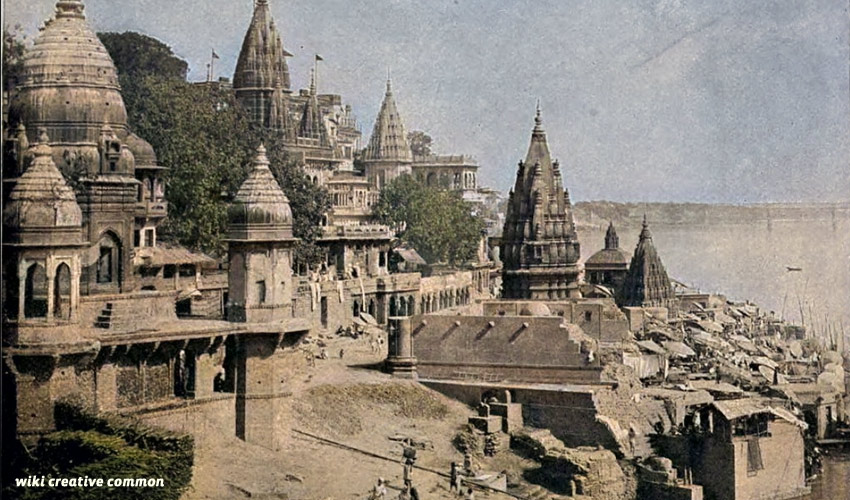
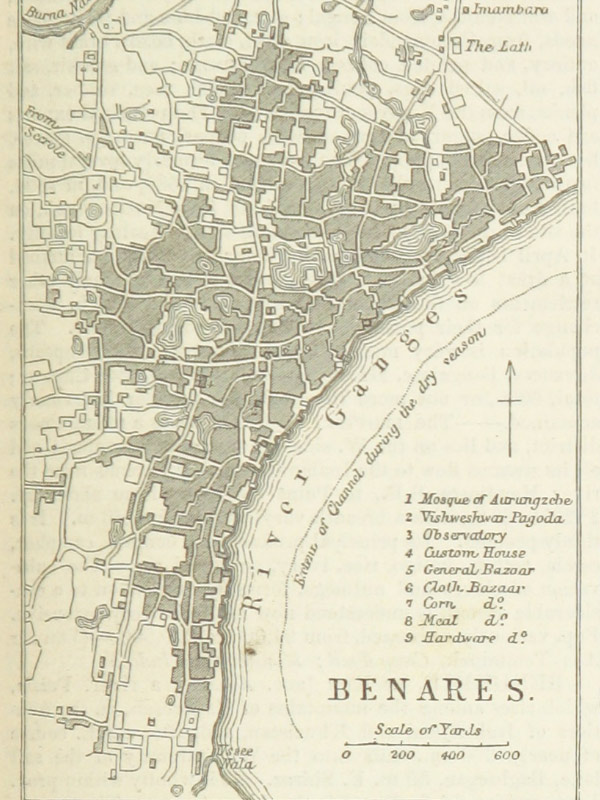
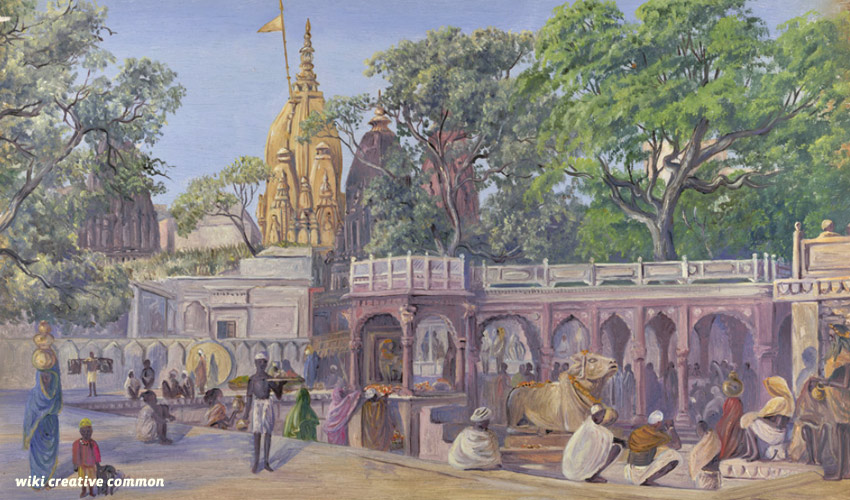
The city of Varanasi is located in the middle Ganges valley of North India, in the Eastern part of the state of Uttar Pradesh, along the left crescent-shaped bank of the Ganga, averaging between 50 feet and 70 feet above the river. It has the headquarters of the Varanasi district. Varanasi is located at approximately 25.3045° N latitude and 83.00395° E longitude, situated along the banks of the Ganges River. The city is a major cultural and religious centre. The "Varanasi Urban Agglomeration", an agglomeration of seven urban sub-units, covers an area of 112.26 km².
Being located in the Indo-Gangetic Plains of North India, the land is very fertile because of low-level floods in the Ganga that continually replenish the soil. Varanasi is situated between the Ganga confluences with two rivers: the Varuna and the Assi stream. The distance between the two confluences is around 4 kilometres.
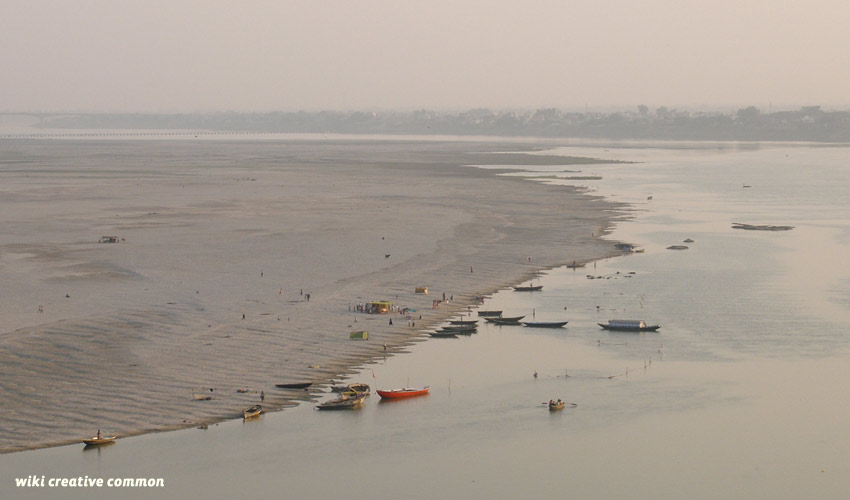
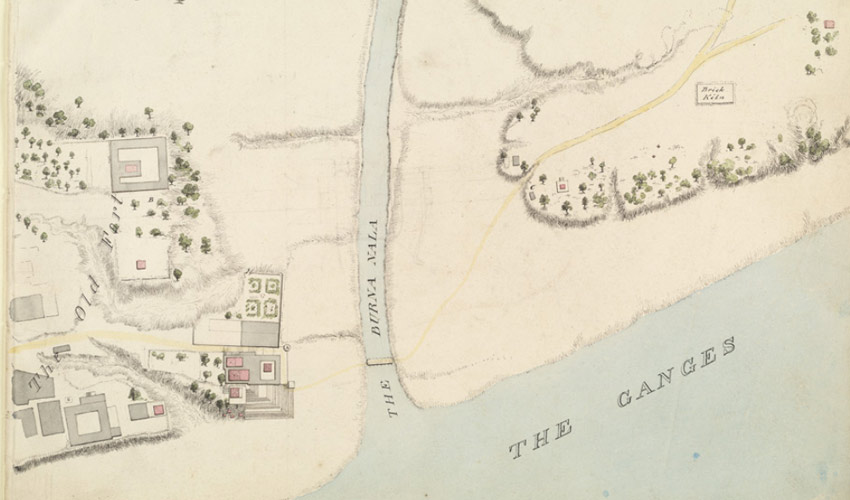
Today, a crowded, bustling, noisy, dirty city, Banaras was in antiquity an area of gently rolling hills, lush forests, and natural springs bordered by the magical waters of the river Ganges. A favoured hermitage site for many of India's most venerated sages - Guatama Buddha and Mahavira, Kabir and Tulsi Das, Shankaracharya, Ramanuja and Patanjali all meditated here - Banaras has been and continues to be one of the most visited holy places on the planet.
Varanasi experiences a humid subtropical climate with large variations between summer and winter temperatures. The dry summer starts in April and lasts until June, followed by the monsoon season from July to October. The temperature ranges between 22 and 46°C in summers. Winters in Varanasi see very large diurnal variations, with warm days and downright cold nights. Cold waves from the Himalayan region cause temperatures to dip across the city in the winter from December to February, and temperatures below 5°C are not uncommon. The average annual rainfall is 1,110 mm. Fog is common in the winters, while hot, dry winds, called loo, blow in the summers. In recent years, the water level of the river Ganga has decreased significantly; upstream dams, unregulated water extraction, and dwindling glacial sources due to global warming may be to blame.
Varanasi is well-connected by air, rail and road. One of the major factors in Varanasi's sustained existence as an inhabited city is its role as an established transportation hub between cities.
Railway- Varanasi Junction, commonly known as Varanasi Cantt Railway Station, is the city's largest train station; more than 3.6 lakh passengers and 240 trains pass through each day. The other railway stations in Varanasi include- Varanasi city sation and Banaras Station.
Road- Varanasi lies along National Highway 2, which connects it to Kolkata, Kanpur, Agra and Delhi. National Highway 29 connects Varanasi to Gorakhpur via Ghazipur to the northeast. National Highway 56 connects Varanasi to Lucknow via Jaunpur and Sultanpur, to the northwest. National Highway 7, the longest National Highway in India, is the most important road connecting Varanasi to southern India, passing through the cities of Hyderabad, Bangalore, Salem, Madurai, Tirunelveli and Kanyakumari.
Air Travel- Varanasi is served by Lal Bahadur Shastri International Airport, which is approximately 26 km (16 mi) from the city centre in Babatpur.
Due to the high population density and increasing number of tourists, the state government and international NGOs and institutions have expressed grave concern for the pollution and pressures on infrastructure in the city, mainly the sewage, sanitation and drainage components. The sewage problem is exacerbated by the role of the Ganges in bathing and in river traffic, which is very difficult to control. Varanasi's water supply and sewage system is maintained by Jal Nigam, a subsidiary of Nagar Nigam. Power supply is by the Uttar Pradesh Power Corporation Limited.
The city grew as a place for Authentic Ayurveda and Panchkarma treatment. Many Ayurvedic centres are located in Varanasi.
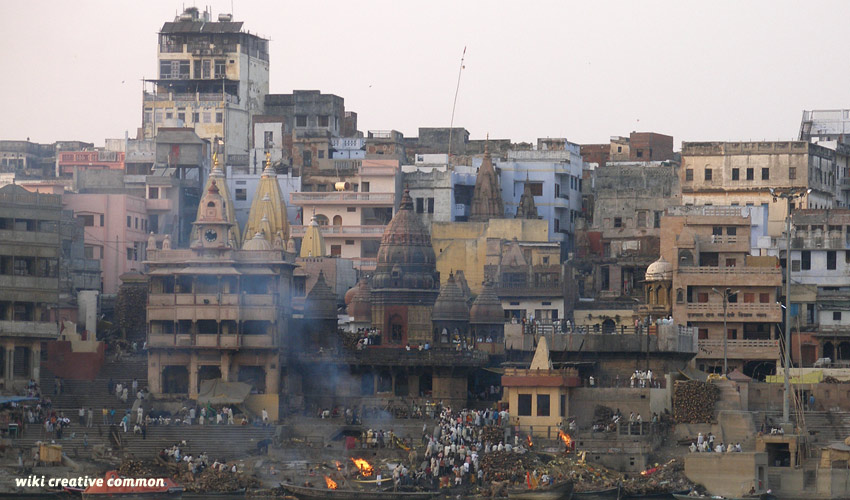
The architecture of Varanasi is a reflection of its ancient spiritual heritage and rich cultural history. As one of the world’s oldest continuously inhabited cities, it offers a unique urban landscape where religion, art, and everyday life merge seamlessly. The ghats along the Ganges River, particularly Dashashwamedh, Manikarnika, and Assi — are the most iconic architectural features, built as a series of steps leading to the sacred river. These ghats are flanked by a variety of temples, shrines, palatial havelis, and ashrams, often constructed in a blend of Rajput, Mughal, and Maratha styles, adorned with intricate carvings, stone latticework, and towering shikharas.
Winding through the heart of the city are narrow, lanes lined with centuries-old houses made of local sandstone, featuring carved wooden balconies, courtyards, and jharokhas (overhanging enclosed windows). Many of these homes serve as both residence and workspace for artisans, priests, and traders. The sacredness of space is deeply embedded in the city’s structure, temples are often tucked into corners, courtyards, and even along walls. Although few standing structures date back before the 16th century — due to waves of destruction by invading armies from the 11th century onward — the spirit of Banaras endured. Qutb-ud-din Aibak's forces alone were said to have destroyed more than a thousand temples in 1194. Over the centuries, the city’s architecture evolved, influenced by rulers, pilgrims, and craftsmen from across regions. Yet one thing remains unchanged — Banaras has never lost its "ras" (essence); no matter how much it transforms, it always remains Banaras.
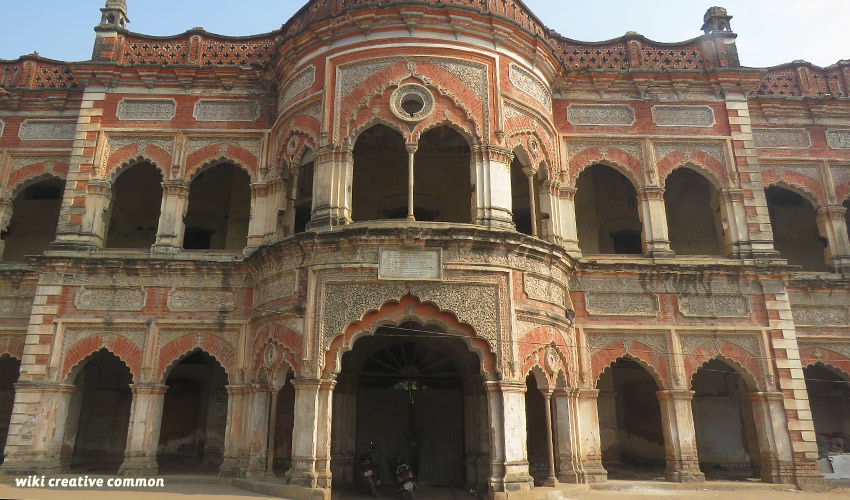
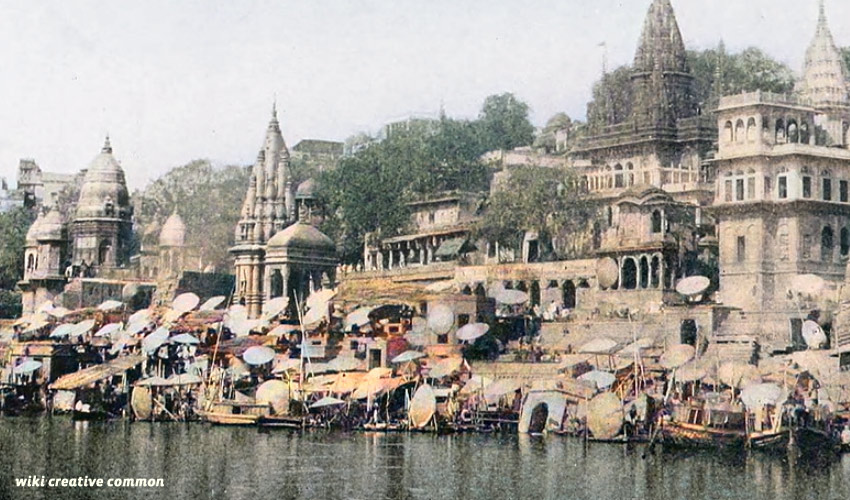
The city of Varanasi has an intimate connection with a host of legendary figures and mythical characters, who are said to have actually lived here. The city has found a place in the Buddhist scriptures as well as the great Hindu epic of the Mahabharata. The holy epic poem Shri Ramcharitmanas by Goswami Tulsidas was also written here. All this makes Varanasi a significantly holy place.
Varanasi has been a symbol of the Hindu Renaissance. Knowledge, philosophy, culture, devotion to Gods, Indian arts and crafts have all flourished here for centuries. Ayurveda is said to have originated in Varanasi and is believed to be the basis of modern medical sciences such as Plastic surgery, Cataract and Calculus operations. Maharshi Patanjali, the preceptor of Ayurveda and Yoga, was also affiliated with Varanasi, the holy city. Varanasi is also famous for its trade and commerce, especially for the finest silks, gold and silver brocades, since the early days.
Varanasi has been a great centre of learning for ages. It is associated with the promotion of spiritualism, mysticism, Sanskrit, yoga and the Hindi language and has honoured authors such as the famous novelist Prem Chand and Tulsi Das, the prominent saint-poet who wrote Ram Charit Manas.
Varanasi is also aptly called the cultural capital of India. The city has provided a platform for all cultural activities to flourish. Many exponents of dance and music have come from Varanasi. Ravi Shankar, the internationally renowned Sitar maestro, was born in this holy city, and Ustad Bismillah Khan (the famous Shehnai player) lived here for a major part of his life.
Vaishnavism and Shaivism have co-existed in Varanasi harmoniously. With a number of temples, Mrs. Annie Besant chose Varanasi as the home for her ‘Theosophical Society’ and Pandit Madan Mohan Malviya, to institute ‘Benares Hindu University, the biggest University in Asia.
Varanasi is also considered to be a veritable jungle of fairs and festivals with respect to variety, distinction, time, sacred sites, performers, overseers and side-shows. The popular saying that 13 festivals happen in 7 days of the week expresses this richness. "Every day is a great festival in Banaras", so says tradition.
Hindus believe that one who is graced to die on the land of Varanasi would attain salvation and freedom from the cycle of birth and re-birth. People of Benaras are known for being the exponents of literature, music, Vedic philosophy, arts, crafts and architecture. Socio-economic aspects of the city are highly influenced by the Ganges and on most of the Hindu festivals people can be seen using the bathing Ghats (river fronts) even before daybreak as an important part of their rituals. In Varanasi, the atmosphere is relaxed in general and we can see people chewing the famous 'paan' and chatting in a laid-back manner. That does not keep Varanasi behind, as is evident from the growing modern industries in the city. Varanasi is also the most ancient seat of education in India (Sarva Vidya ki Rajdhani) and Benaras Hindu University is still famous throughout the world for its scholars. The city is also a seat for Sanskrit and one can still see the Guru-Shishya tradition being followed here at certain places.
Several social and religious customs co-exist in the city and the caste system is still prevalent here. People wear 'Gamcha' (a cotton towel), as they go bathing in Ganga and drink Thandai (a coolant with milk as its base), which have become a part of the cultural identity of traditional ways of Varanasi. Music, drama and entertainment have found a place in the lives of the people. Its dance traditions and vocal and instrumental music is highly developed and one can catch the glimpses of folk drama in the 'Ramlila' organized before Dussehra. Traditional games and sports include 'Akharas', where wrestling or 'kushti' competitions are organized.
Varanasi is famous for its antique temples. The renowned Kashi Vishwanath Temple dedicated to Lord Shiva has a 'lingam' - the phallic icon of Shiva - that goes back to the time of the epics.
Varanasi is a veritable paradise for pilgrims, who throng the 'Ghats' of the Ganges for spiritual rewards like deliverance from sin and attainment of nirvana. The Hindus believe that to die here on the banks of the Ganges is an assurance of heavenly bliss and emancipation from the eternal cycle of birth and death. So, many Hindus travel to Varanasi at the twilight hour of their life.
The 8th century Durga Temple, situated on the Ramnagar Pandav road, is home to hundreds of monkeys that reside in the nearby trees. Another popular temple is the Sankatmochan temple dedicated to the simian-god Hanuman. Varanasi's Bharat Mata Temple is probably the only temple in India that is dedicated to the 'Mother India.' Inaugurated by Mahatma Gandhi in 1936, it has a big relief map of India carved in marble. Another relatively new temple is the Tulsi Manas Temple built in honor of Lord Rama in 1964 at the place where Tulsidas composed the Ramacharitmanas, the vernacular version of the epic of Ramayana. The walls of this temple adorn the scenes and verses depicting the exploits of Lord Rama.
Other significant places of worship include the Sakshi Vinayaka Temple of Lord Ganesha, the Kaal Bhairav Temple, the Nepali Temple, built by the King of Nepal on Lalita Ghat in Nepali style, the Bindu Madhav Temple near the Panchaganga Ghat and the Tailang Swami Math.
Foreign tourists love to ride horse-driven 'Ekkas' and cycle rickshaws that are still in use here.
The Manikarnika Ghat is one of the holiest cremation grounds among the sacred riverfronts, located on the banks of the River Ganga, in the city of Varanasi. Ancient meditative practises and studies are still practised in the city. From the ceremony of shaving off the hair of the newborn to the immersion of ashes, the city still witnesses the rituals and sacraments that existed in the Vedic period.
List of craftsmen.
