


Murti Kala ~Wooden c...
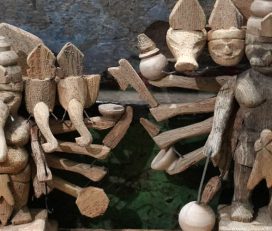
The wooden toys of Varanasi are widely known for their finely carved and painted wooden toys. Known as Murti Kala by the local artisans.
Kashmiri Ganj, Khojwan, Bhelupur...
 Varanasi, Uttar Pradesh, India...
 Gai ghat Varanasi, Gaighat, Gh...
The wooden toys of Varanasi are widely known for their finely carved and painted wooden toys. Known as Murti Kala by the local artisans.
Kashmiri Ganj, Khojwan, Bhelupur...
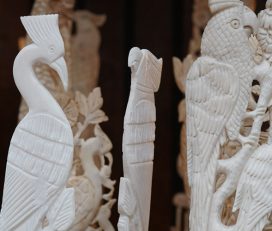
The craft of bone carving, which translates to ‘Haddi pe Naqqashi’, is a centuries-old practice that involves the intricate art of naqqashi (carving) on bone.
Muftiganj, Daulatganj, Lucknow, ...
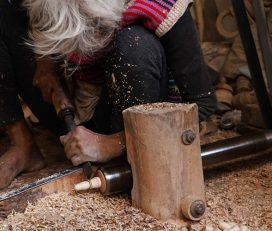
The Lathe workers of Varanasi, make brightly-coloured lac coated toys, giving them the name Lacquerware toys.
Kashmiri Ganj, Khojwan, Bhelupur...
Let us talk… if you feel the same love for handmade, and would like to support us by sharing your research or by contributing financially to our documentation efforts.
Reach us at [email protected]

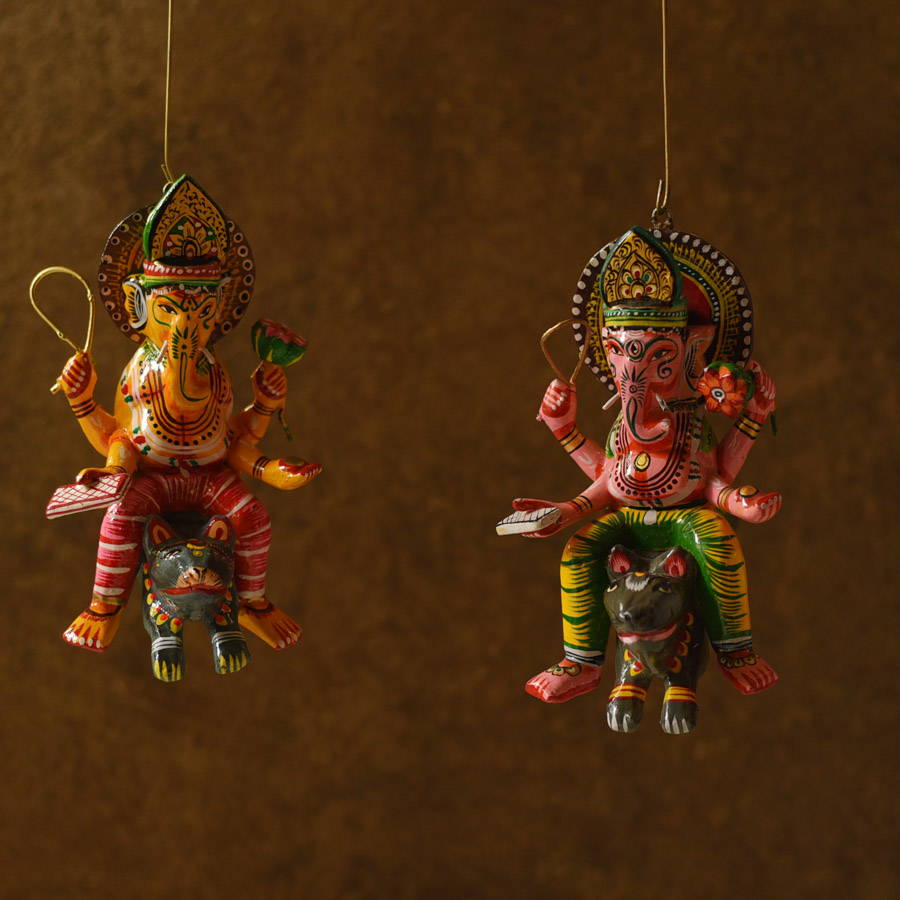
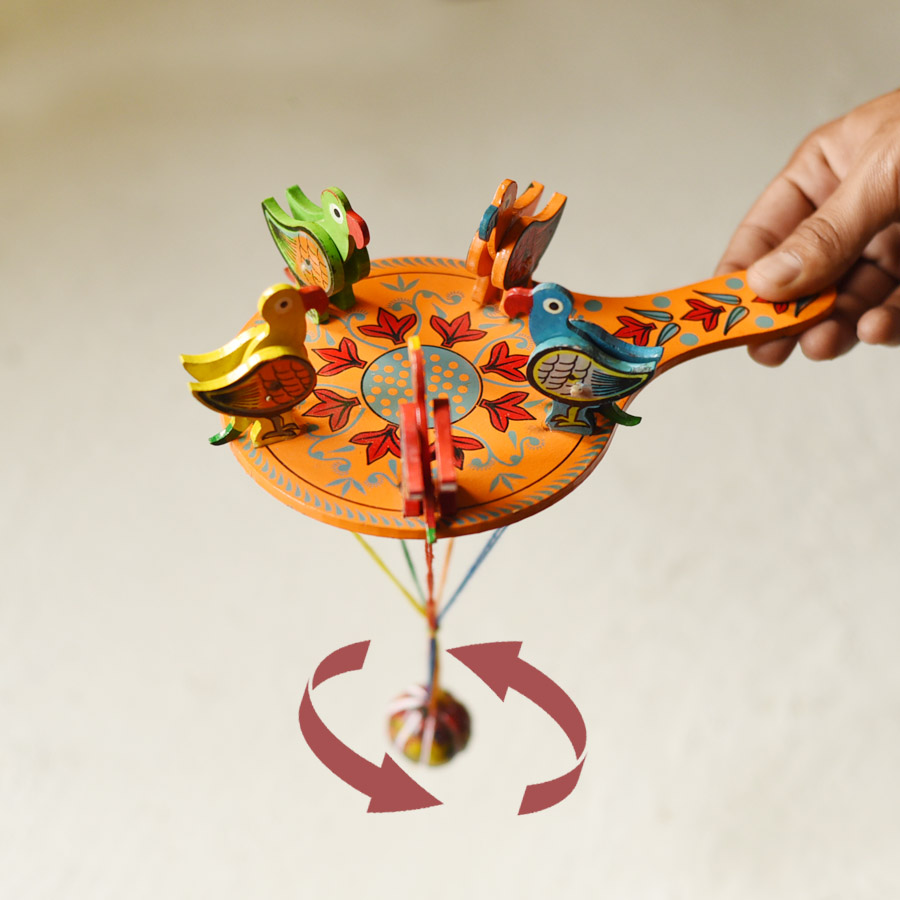
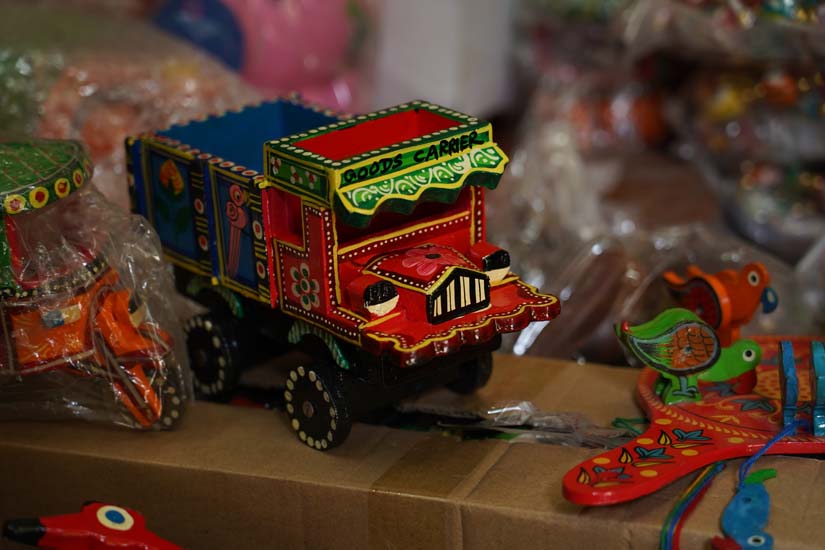
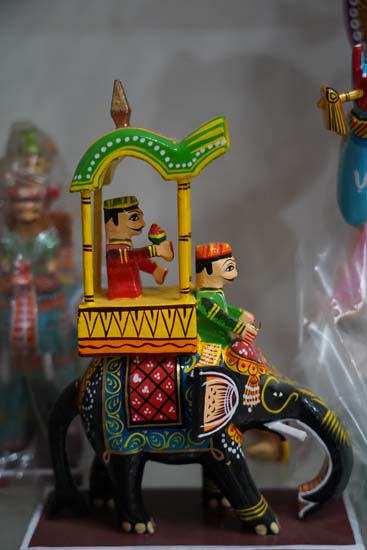
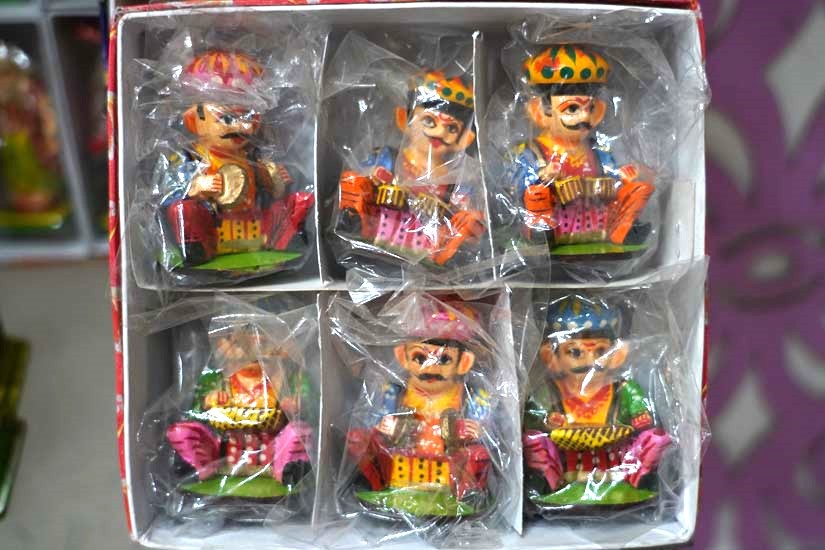
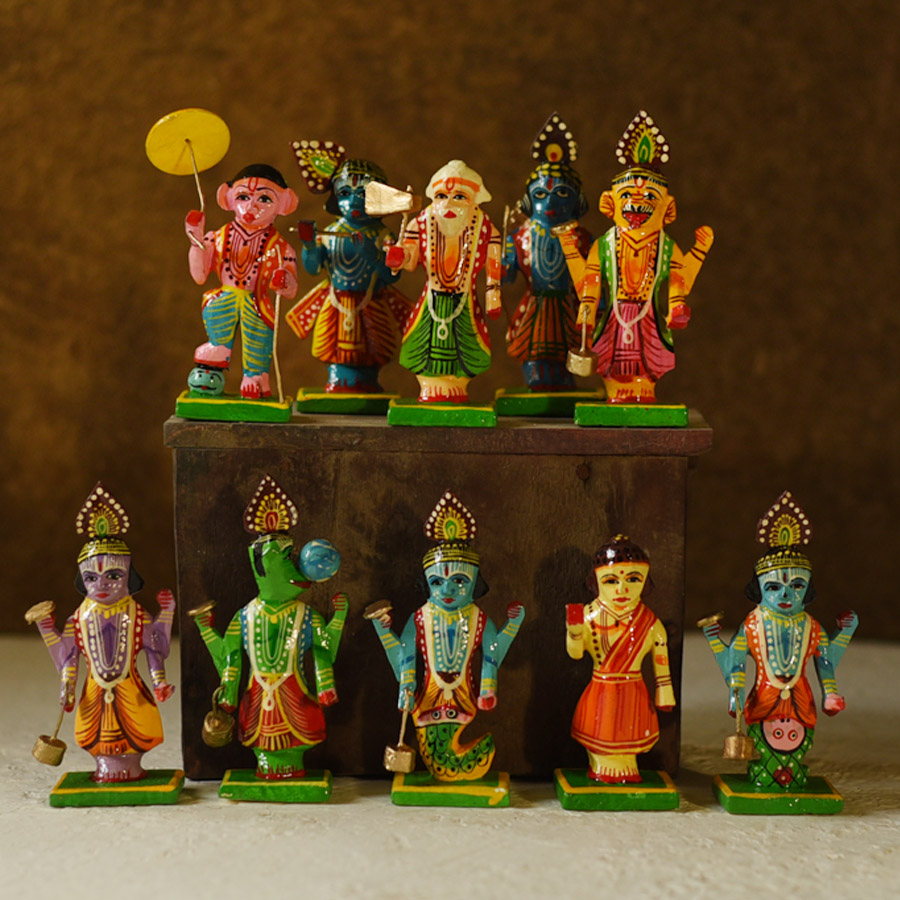
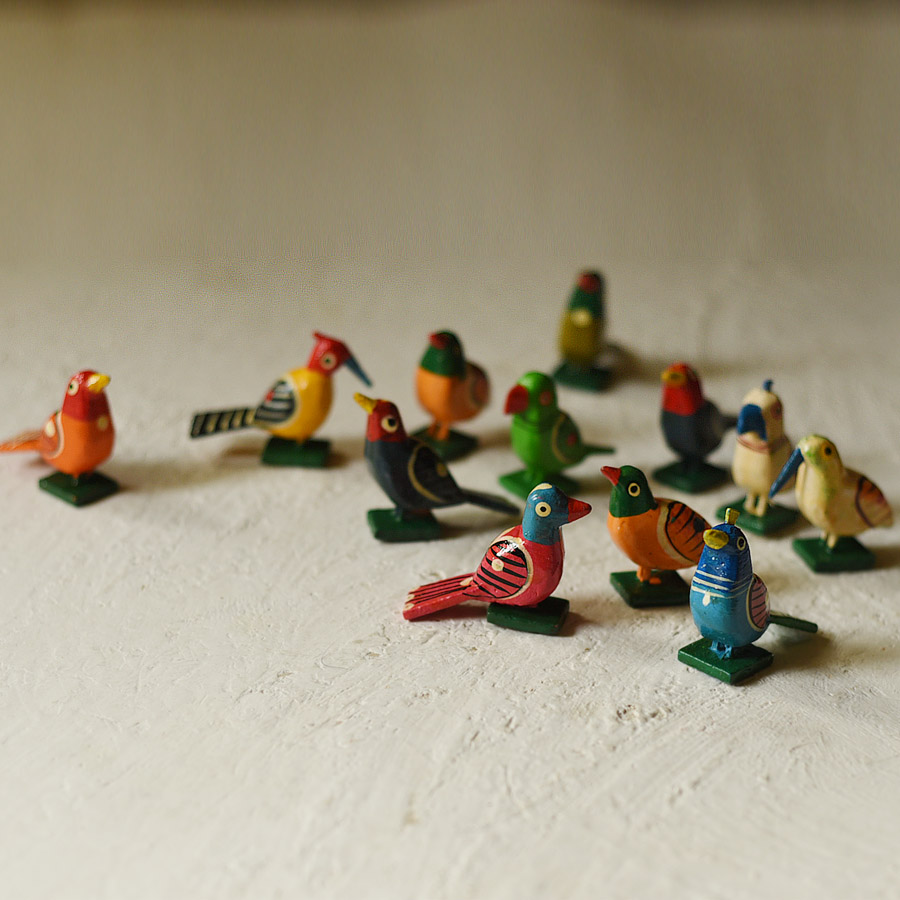
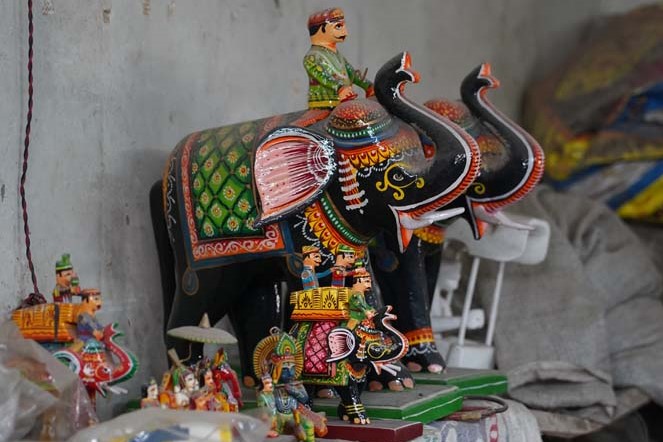
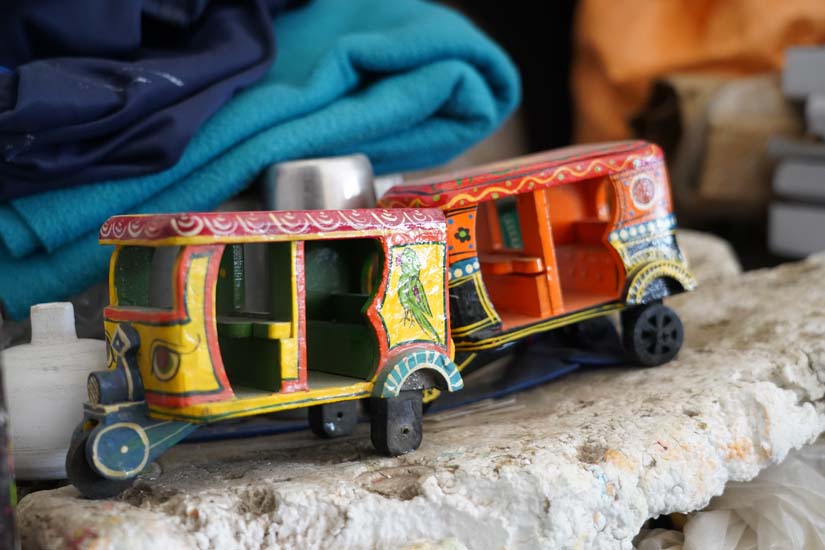
Some of the prominent wooden toys include Dana Chugni (Birds eating rice), Bawala Set (a set of six musicians playing instruments), Ramnagar ke Kashi Naresh Raja (the King of Banaras seated on an elephant), autos, rickshaws, bullock cart, a set of the ten avatars of Vishnu, Ambari Hathi (ceremonial elephant with a covered seat on its back for the rider) and sets of animals or birds. The town being a pilgrimage centre, the toys mostly represent deities from Hindu mythology.
Some toys like the wooden sugga (parrot) and charkhi (spinning wheel) are fixed on the marriage mandap (altar). Mandwa ka sugga is gifted to the newly married. A pair of parrots is often gifted to newly married couples, symbolising auspiciousness. These ceremonial parrots are typically painted in red, yellow, and green colours. The toys are intricately carved and usually made in small sizes, with a maximum height of about four inches. In certain cultures, during the Tilak ceremony, a small wooden toy of Lord Ganesha is placed next to sweets. In weddings in Varanasi, decorative wooden toys are commonly gifted to friends and family.
These wooden toys are mainly used for decoration and gifting, and are also enjoyed by children as playthings. The toys also serve as educational tools,teaching children about various stories of mythology. The craft is widely used for decorative items, mementos, hangings, and traditional and cultural purposes. The prices generally start from around ₹5o and can go up to ₹6,000, depending on the time, effort, and intricacy of the work involved. These toys are mainly sold at fairs and festivals.
The period from July to November is considered the peak season for this craft, when vendors set up stalls at fairs and markets. Sales are especially high during festivals like Krishna Janmashtami, when these toys are used to decorate tableau, and the Krishna Jhula is a popular item.
Many of the colourful items depict scenes from village life, including bullock carts, elephants, and women carrying pitchers. Miniature sets of wooden cooking vessels are also produced in large quantities. Traditional idol sets of gods and goddesses are in high demand during festive occasions.
There are around 1,500 families engaged in this craft in Varanasi. Of these, nearly 80% work on the lathe, mainly producing items such as Sindoora, which are commonly used in weddings, while the remaining 20% focus on carving and hand-painting toys.
As Varanasi is a major pilgrimage centre, many toys represent deities from Hindu mythology. India has a rich toy-making tradition dating back nearly 5,000 years, and these toys serve not only as play objects but also as cultural tools that introduce children to traditions, myths, and values. Figures of gods and goddesses help in understanding rituals, customs, and religious stories. These toys can be broadly categorized into religious, cultural, animal and bird, traditional, and modern types. Each category is crafted differently, religious toys are intricately hand-carved and brightly painted with Indian motifs, often depicting mythological stories, while cultural toys portray social classes, daily life, and traditional occupations of rural India.
Apart from miniature carving and painting, the artisan community also carries a deep understanding of iconography and the significance of colours in depicting religious characters, which are represented with great care. Within the community, men are generally involved in wood carving, while women contribute by painting and decorating the toys. These products are commonly sold at fairs and festivals and are especially popular among tourists.
Nearly 40% of the production is exported to other cities. The intricate detailing and fine finishing have made these toys popular both as children’s playthings and as collectible items, with designs reflecting the city’s rich religious and spiritual heritage.
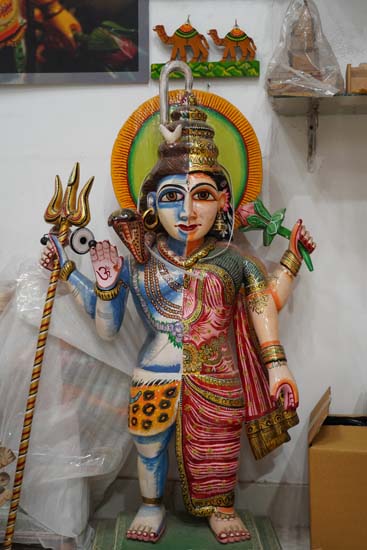
The craft itself is a form of storytelling, though there are no widely known or prominent myths directly associated with its origin. However, one interesting historical reference connects it to the tradition of wooden idols.
Ancient examples of this craft can be seen in the form of the chariots and idols of Lord Jagannath, Balram, and Subhadra at the Jagannath Temple. It is said that a priest from Puri, named Nityanand, had differences with the King of Puri. Around 1780, during his visit to Banaras, he established a Jagannath temple at Assi Ghat in Varanasi.
The idols of Jagannath (Krishna), Balram, and Subhadra in this temple are considered fine examples of wood craftsmanship. According to tradition, the original idols cannot be crafted locally due to ritual restrictions. However, the process of navakalebara, particularly the colouring and finishing of the idols—is carried out by artisans from Banaras.
Even today, the making and renewal of such idols is associated with specific artisan communities. In Varanasi, artisans from the Rajdarwaza area of Kashi are involved in the process, continuing this tradition and maintaining the connection between ritual practice and craftsmanship.
Kashi, or Varanasi, is one of the world’s most ancient cities and has long held unparalleled significance in terms of religious and cultural continuity. From the perspective of spiritual and cultural cohesion, Kashi has remained more influential than many other ancient cities across the world.
Owing to this deep-rooted importance, archaeological remains of idols made from clay, stone, and metal have been found in the region, dating back to around 1000 BCE. Important centers of this artistic tradition include Rajghat, Sarnath, and other parts of Kashi. During the Mauryan period, exemplified by Ashoka’s Lion Capital at Sarnath, and later during the Gupta period, known for the Buddha sculptures of Sarnath, the region was firmly established as a major center of art. This unbroken tradition of idol-making continued through the centuries, particularly between the 7th and 13th centuries, depicting deities such as Shiva, Vishnu, Surya, Shakti, Ganesh, Brahma, and others.
When it comes to toys, evidence from the Indus Valley Civilization (around 2500 BCE), one of the world’s earliest urban cultures, reveals that toy-making in India has ancient roots. Excavations at Harappa and Mohenjo-Daro have uncovered terracotta and wooden toys, including carts, animals with movable heads, and spinning tops. These findings suggest that toy-making was not merely a form of leisure but also served educational and cultural purposes, helping children understand farming, animals, transportation, and community life.
However, there is no definitive evidence establishing the exact age of wooden toy-making in Banaras. Due to the perishable nature of wood, ancient examples have rarely survived. Local belief suggests that the history of wooden craft and its use in toy-making in Kashi dates back approximately 400 to 600 years. It is commonly said that the wooden toy craft of Varanasi is around 500 years old. In its early stages, these toys were created primarily for royal households, with artisans working in the king’s court to produce playthings for royal children. Over time, under the patronage of the Raj Naresh (King) of Varanasi, the craft expanded and gained wider recognition and demand.
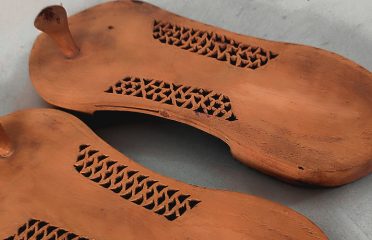
Another important aspect to consider is that Varanasi has always been a prominent center for spiritual practices. Various wooden objects such as khadau (wooden footwear), havan tools, and traditional X-shaped book holders have long been part of the cultural landscape. Pilgrims and visitors to Banaras often carried such items back to different parts of the country, contributing to the spread and recognition of wood craftsmanship.
It is also believed that some artisans associated with this craft were originally engaged in ivory carving, which received strong patronage during the Mughal period and later under British rule. Following the ban on ivory by the Government of India, many of these artisans transitioned to wood carving, adapting their skills to a more sustainable material.
Artisans from the Prajapati community are traditionally involved in painting these wooden toys. In earlier times, before the availability of acrylic paints and watercolours, natural dyes were used. Colours were derived from materials such as turmeric (haldi), henna (mehndi), and ratanjot, as well as from boiled flowers and leaves. These natural pigments were applied using cloth rather than brushes, giving the toys a distinct finish and character.
While the exact age of the craft may remain uncertain, what is evident is that it carries the full essence of Banaras, its spirituality, cultural depth, and living traditions—making it a meaningful expression of the city’s identity.
They represent Indian design and storytelling traditions in a vivid and tangible form. Varanasi’s wooden toys are celebrated for their intricate carving and vibrant painting, encompassing a wide range of forms such as finely detailed idols of gods and goddesses, movable toys, contemporary animal figures, and dolls in varied shapes and sizes. The designs can broadly be divided into the following main categories:
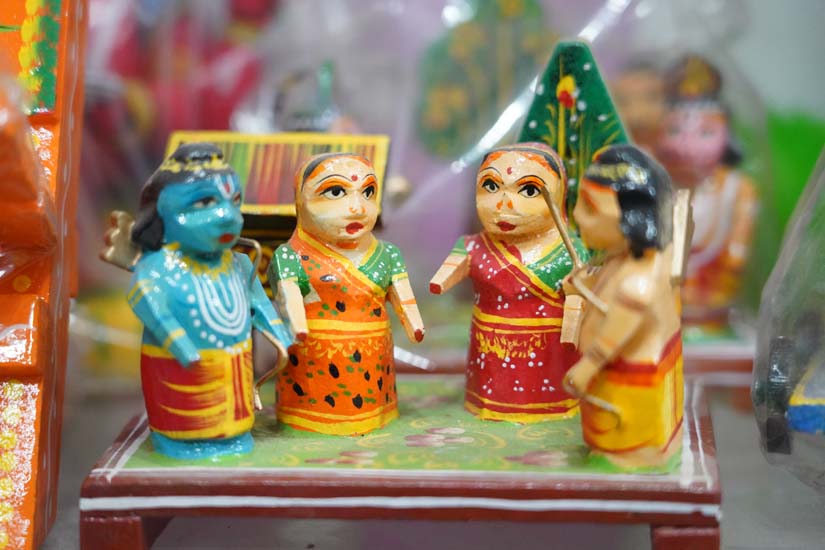
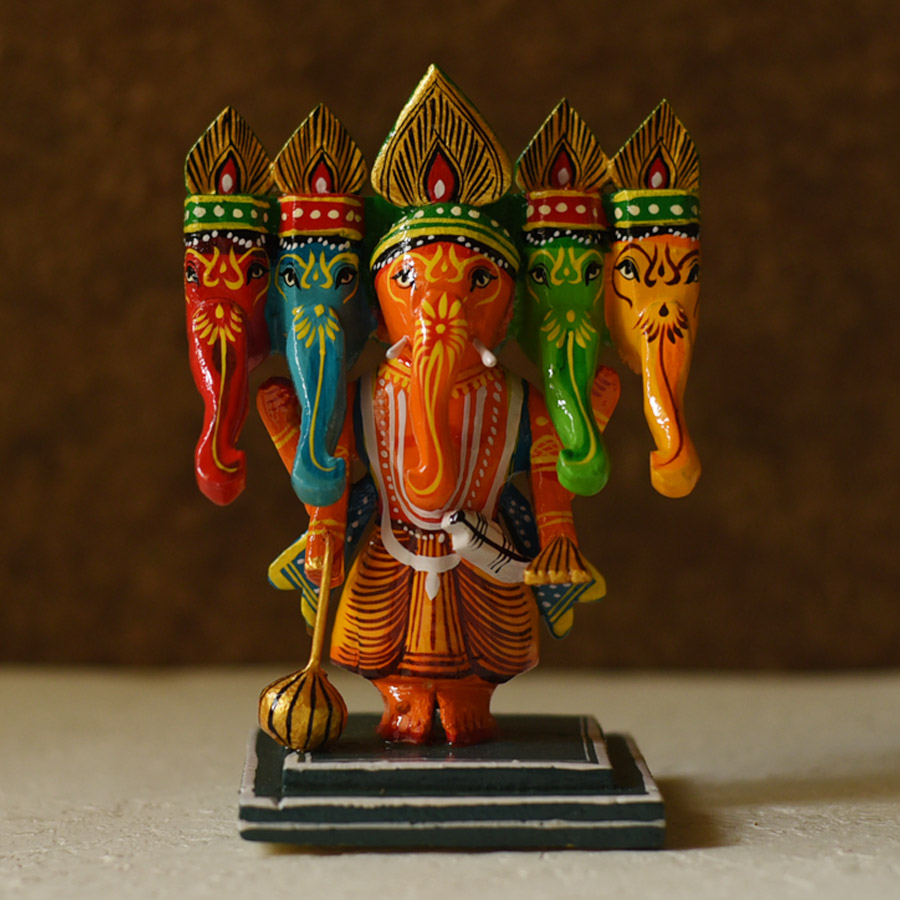
1. Religious Figures: Religious figures are carefully hand-carved and richly painted, often adorned with traditional Indian motifs and strong iconographic elements. These pieces frequently illustrate episodes from mythology, bringing stories from the Ramayana, Mahabharata, and other sacred narratives into visual form. Compositions such as Ram Durbar, Krishna Durbar, and other devotional groupings are especially notable for their intricate detailing and symbolic representation.
The range of products in this category is extensive and diverse. It includes figures such as the ten-headed Ravana, idols of Lord Ganesha, Goddess Durga, and Lord Hanuman, along with characters from the Mahabharata. These religious figures vary greatly in size, ranging from small pieces of about an inch to larger creations that can reach up to six feet in height. Larger pieces are produced in smaller quantities due to the complexity and effort involved. Being lightweight, artisans often add hooks or springs, allowing these pieces to be hung or displayed easily.
2. Decorative and Cultural Objects: Alongside religious figures, decorative and cultural toys depict scenes from everyday life, reflecting social structures, occupations, and traditions. These include portrayals of women drawing water from wells, men wrestling in the akhada, farmers at work, musicians performing in groups, and various modes of transport such as bullock carts, camel carts, and horse-drawn carriages. Each piece captures a moment of lived experience, translating it into a tangible artistic form.
Decorative objects such as pen stands, boxes, and ornamental items are also crafted with equal finesse. Animal and bird forms form another important category, featuring elephants, peacocks, cows with calves, fishes, and dynamic compositions such as tigers attacking elephants or riders. These compositions highlight the artisans’ ability to depict movement, storytelling, and drama through wood.
While deeply rooted in tradition, the craft has also adapted to changing tastes. Modern-themed toys such as kitchen sets, dining sets, and cricket sets have found their place alongside traditional forms, reflecting evolving consumer preferences without losing the essence of the craft.
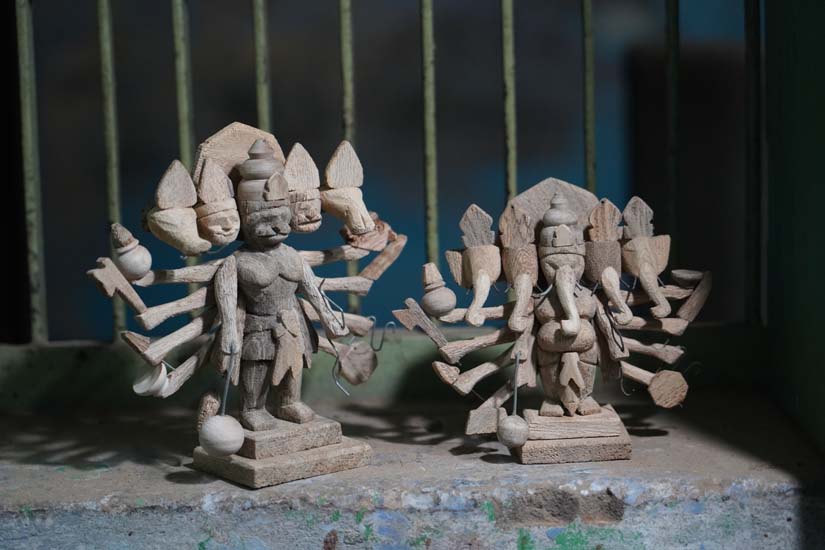
In terms of technique, some toys, such as small birds, are carved from a single piece of wood, while more complex figures, like Ravana, are made in multiple parts and then carefully assembled. Artisans also undertake custom work, creating pieces based on specific designs and requirements of clients.
Together, these toys reflect not only the artisans’ skill but also their deep understanding of mythology, culture, and everyday life, making each piece both decorative and meaningful.
Over time, new products such as photo frames have also emerged. These are often made using modern techniques like laser cutting, which has been in use for the past decade. Typically done on MDF, this method has increased production and made certain items more affordable, although handmade products remain more expensive due to their craftsmanship.
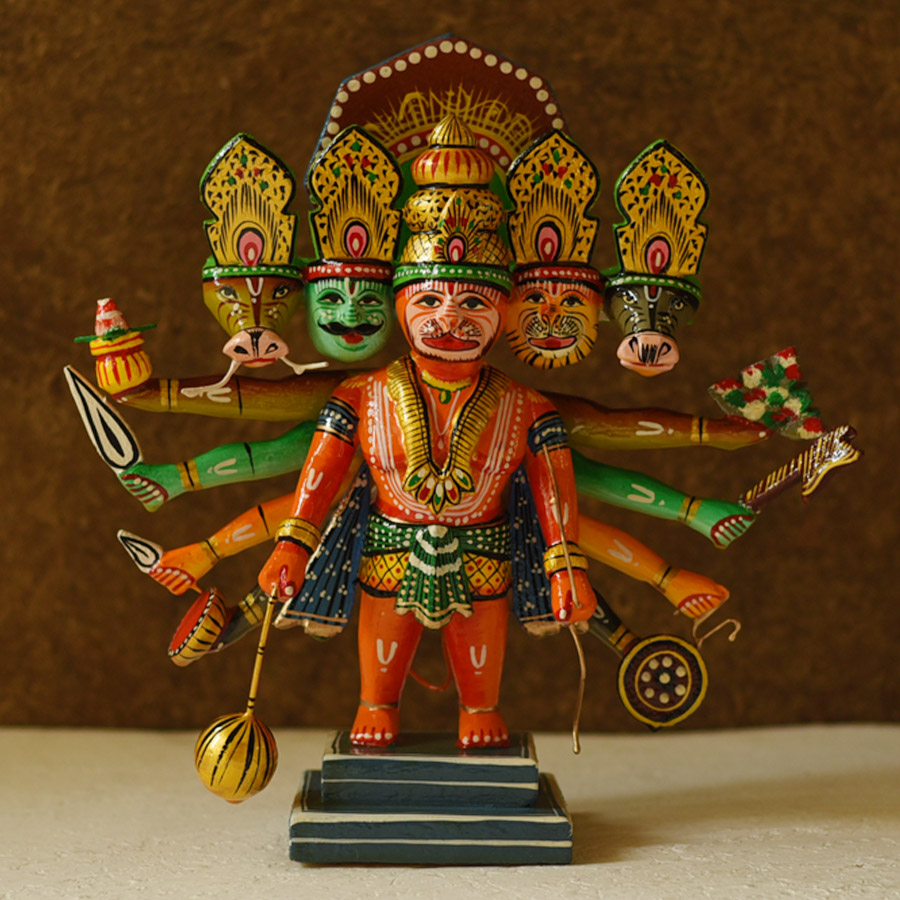
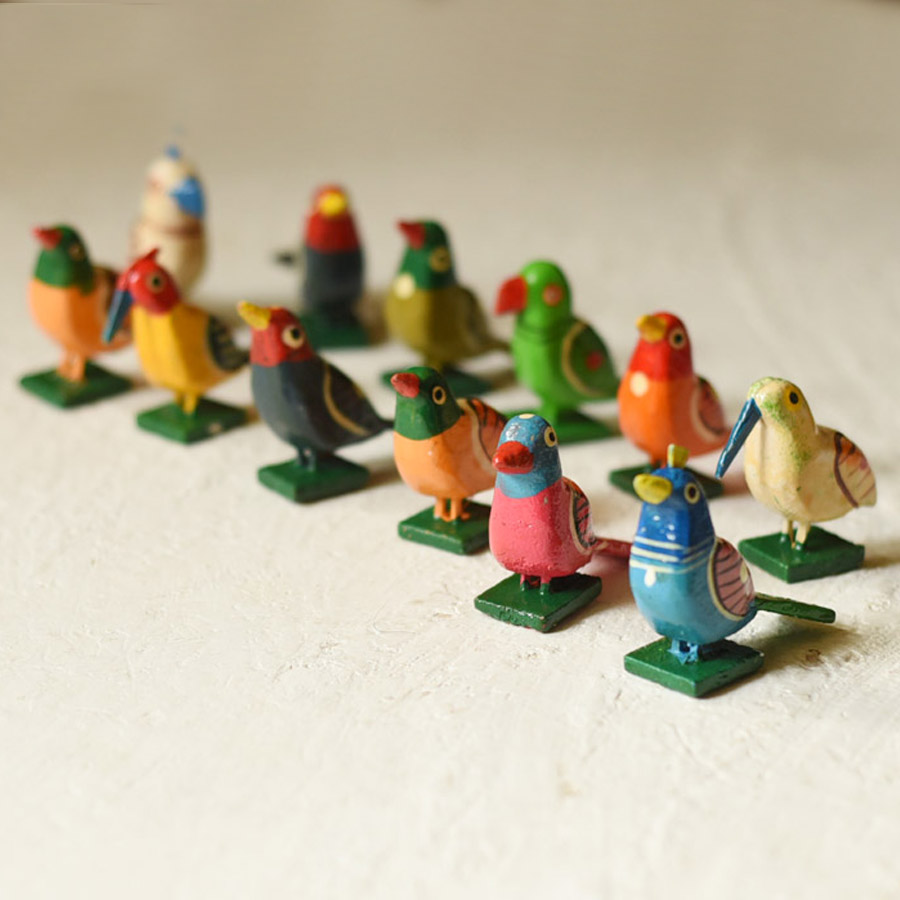
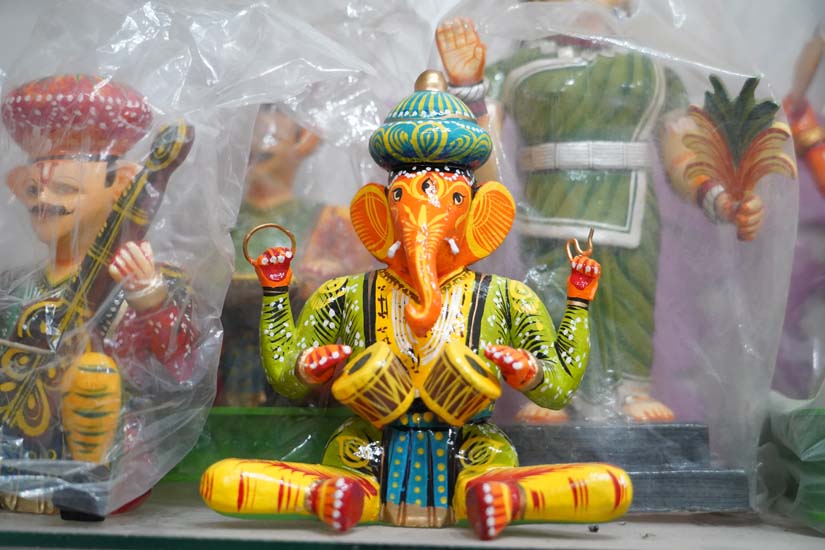
Craftsmen face significant challenges. Many artisans have been forced to sell their homes and take up jobs such as pulling rickshaws. The production costs of wooden toys continue to rise, with the prices of raw materials increasing sharply each year. A lack of financial support has further discouraged the trade. Additionally, the lack of awareness and appreciation for traditional crafts reduces demand, and younger generations are often willing to choose more stable professions, resulting in a gradual decline of this craft practitioners.
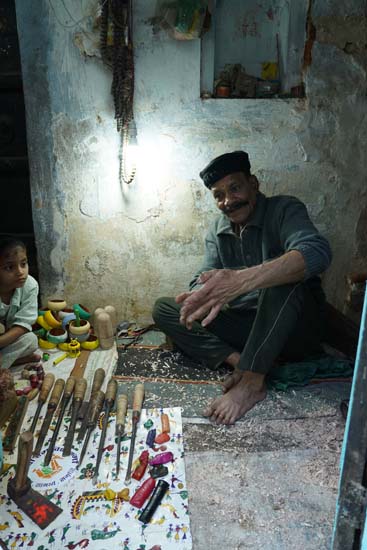
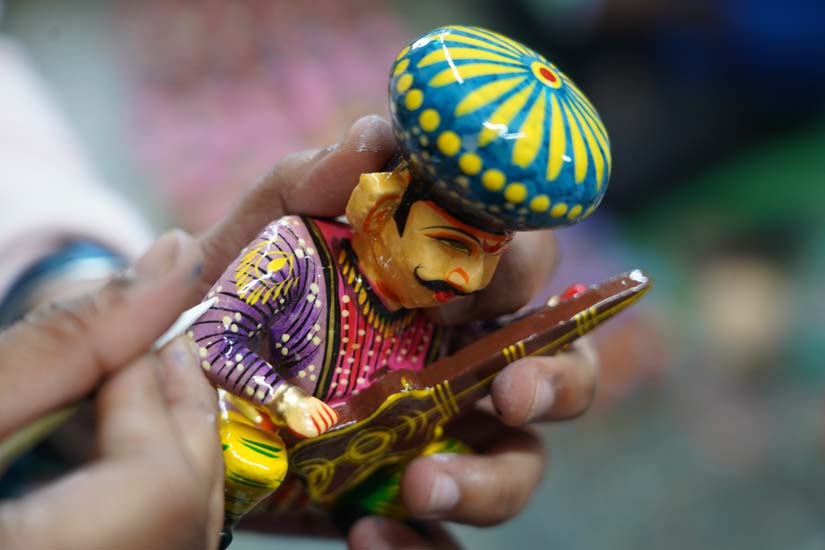
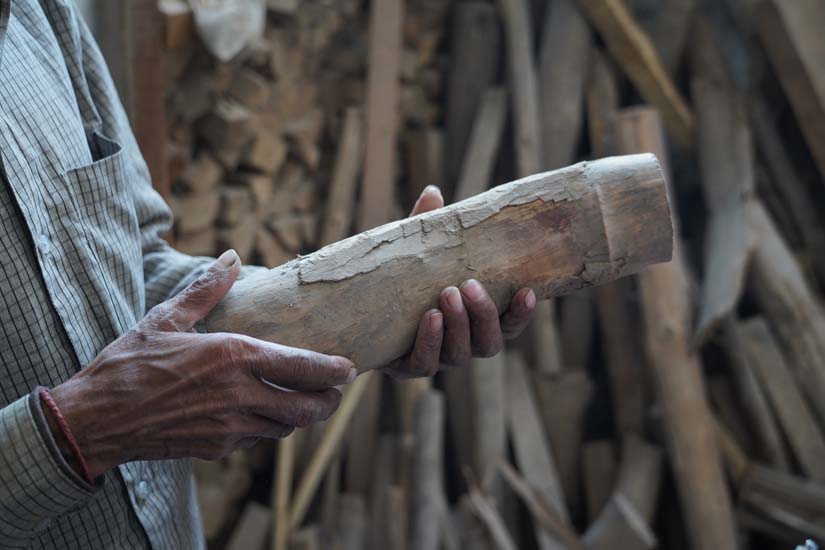
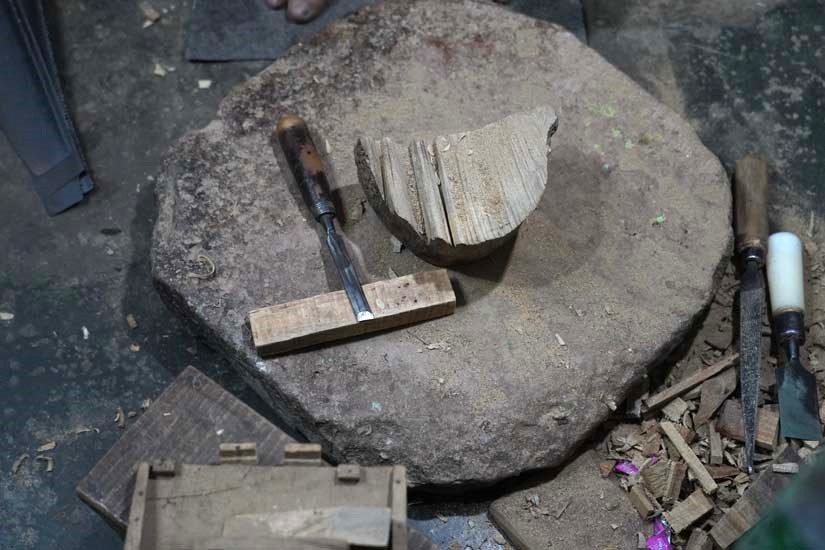
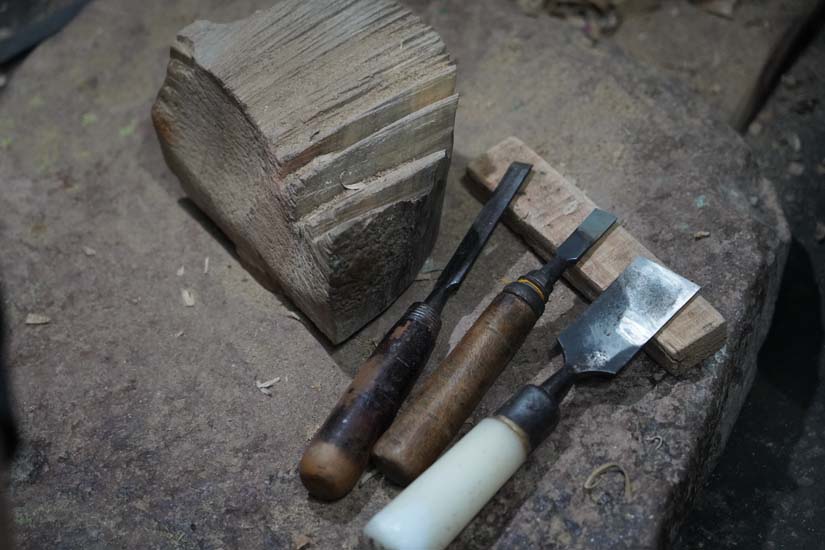
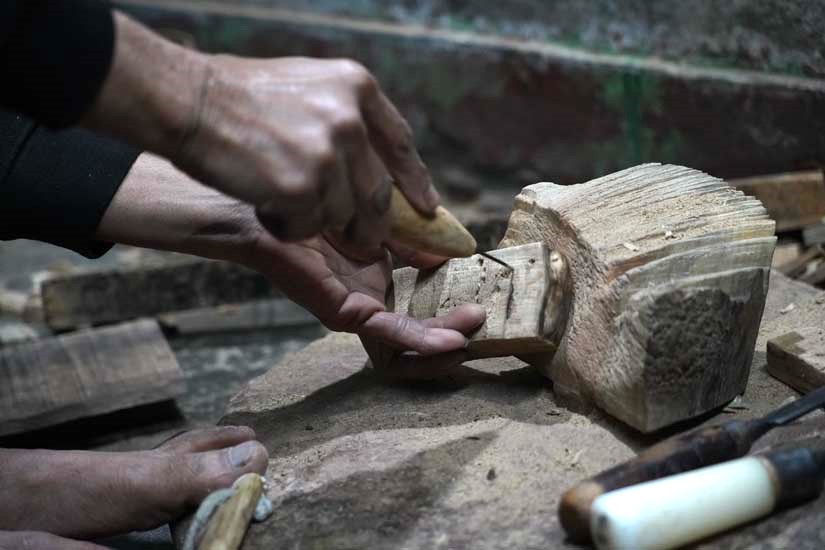
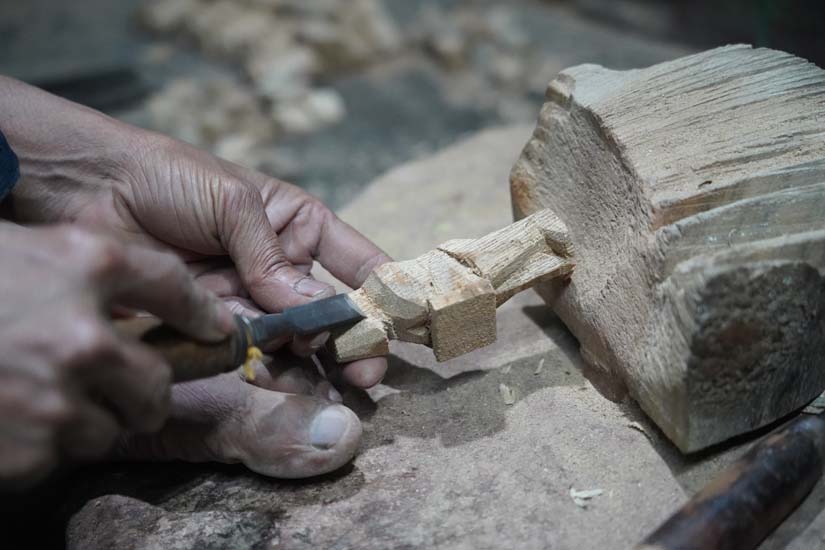
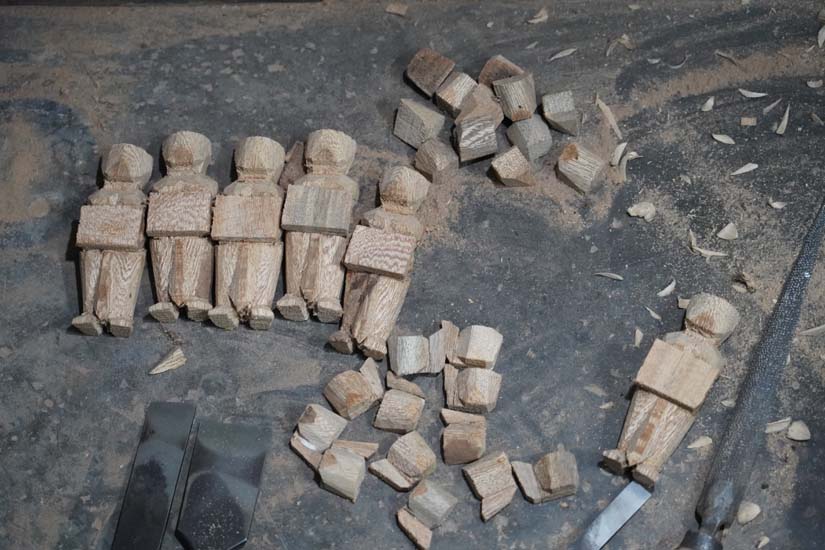
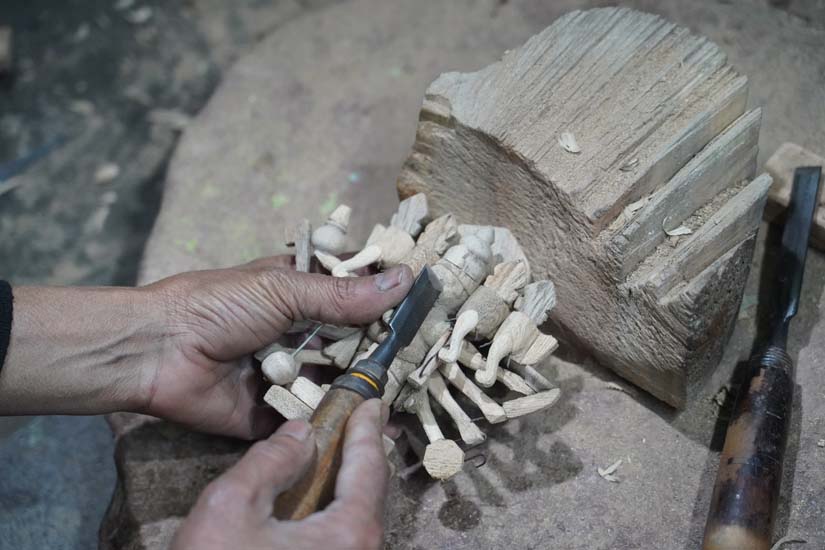
The artisans typically use Gular wood, however, Sheesham (Indian Rosewood) and Kadam wood, both known for their durability and fine grain, are also used at times. These wooden toys are crafted by hand carving, using chisels and other specialized tools. Different parts, such as the head, hands, legs, crown, and other accessories, are made individually and then assembled to create the finished piece.
The raw materials used are listed below
Gular Wood (Ficus racemosa) is best suitable due to its fine grain and low fibrous nature. It is soft, easy to carve, and allows to achieve smooth finishes and intricate shapes.
Sheesham (Indian Rosewood) and Kadam wood, both known for their durability and fine grain, are also used at times.
Metal wire/Nail
Acrylic paints are commonly used in the current times for creating colourful wooden toys. They dry quickly, adhere well to wooden and lacquered surfaces, and provide a durable finish.
Fevicol (Adhesive) is used for joining different parts of a toy. It ensures strong bonding when assembling components such as limbs, bases, or decorative elements.
Deco is applied on wooden surfaces, to create a smooth and even base before painting. This helps in better paint application and enhances the final appearance of the toy.
Varnish is applied at the end to give a high-gloss, smooth, and protective finish.
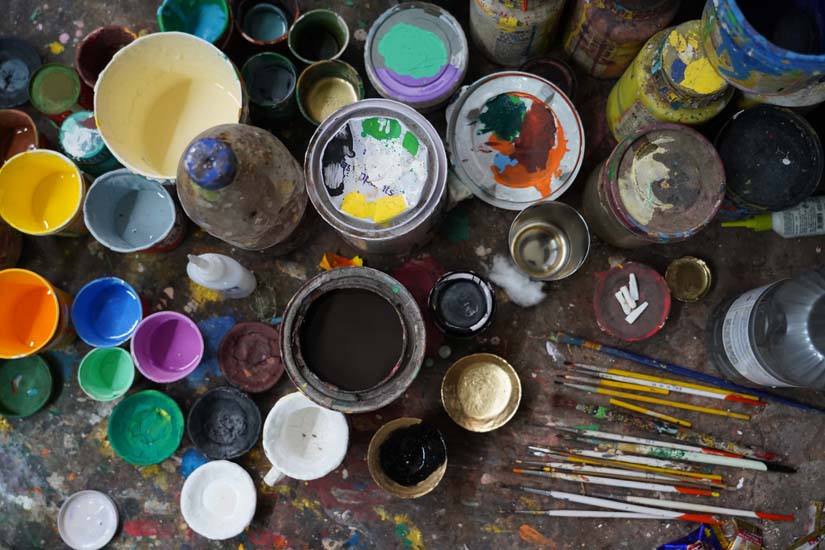
Brushes- used for painting, of various sizes
Aara Machine- used to cut heavy raw wood logs into smaller blocks (commonly in the market)
Pitha/Thokni– used to beat the wood
Rukhnai– used to peel or carve the wood
Rethi– used to shape the wood
Balu Kaagaj (sandpaper)- used to smooth and shape the surface
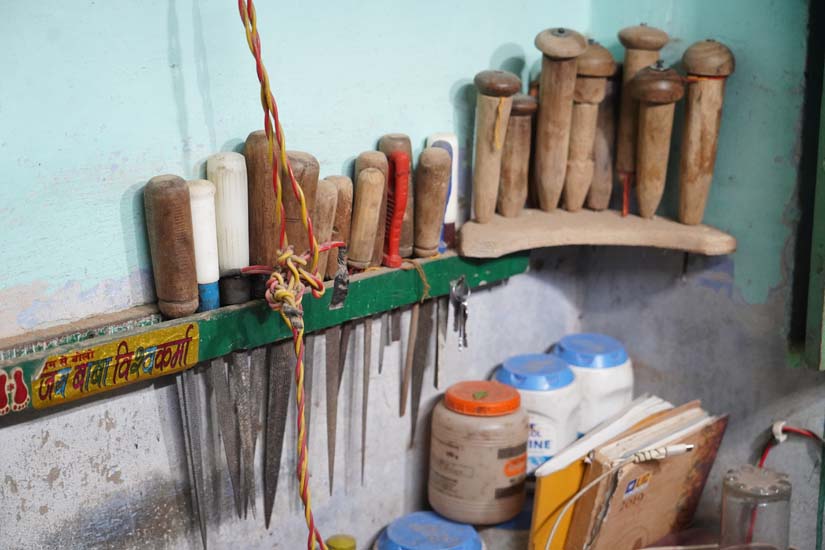
Kholiya- used to make rounded holes
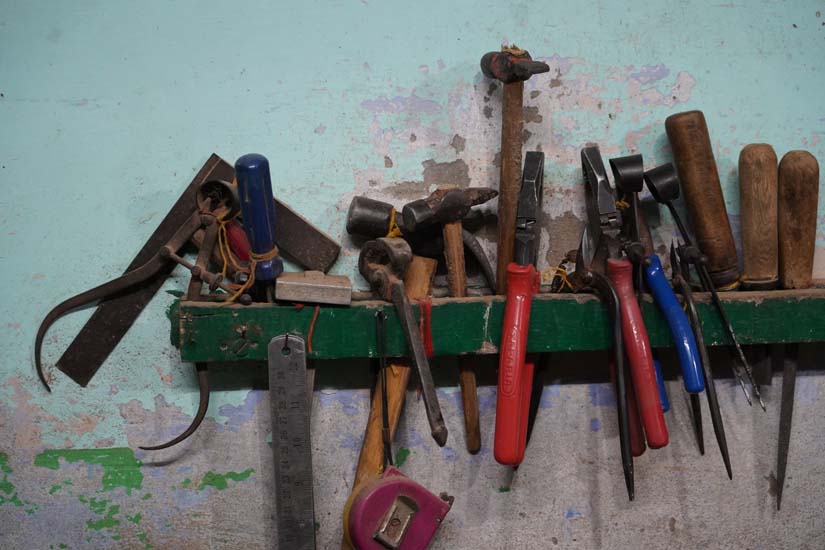
Prakar- used to take measurments
Pliers- used for gripping, bending, cutting, and twisting materials
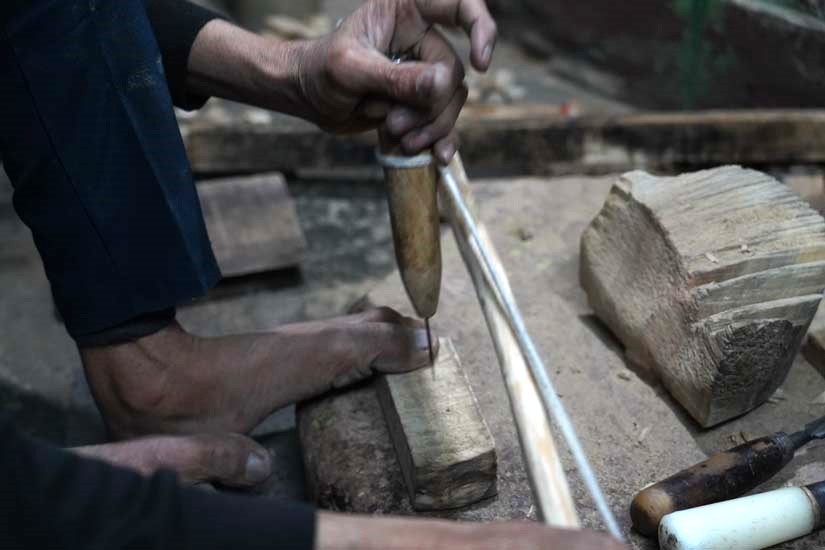
Burmi– used to make holes, available in various sizes
Kamancha-
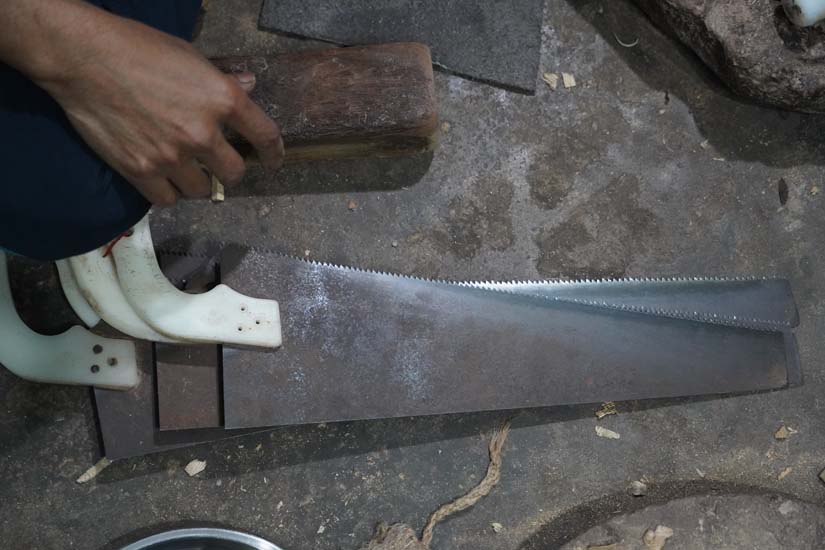
Aari (hacksaw)
Teendhara– used to sharpen the Aari
Saan (stone): used to sharpen tools; kept in water before use to prevent overheating and primarily used for chooka (sharpening)
Neem wood- used as a base while carving the wood
A pair of parrots is often gifted to newly married couples, symbolising auspiciousness. These ceremonial parrots are typically painted in red, yellow, and green colours. In certain cultures, during the Tilak ceremony, a small wooden toy of Lord Ganesha is placed next to sweets. In weddings in Varanasi, decorative wooden toys are commonly gifted to friends and family.
Wooden logs are purchased from nearby markets and stored by the artisans. These logs are got cut into the required sizes using an aara machine available in the local markets of Varanasi. This machine is quite large, occupying around 400 square feet of space, and is therefore not installed at the artisans’ workplaces.
The logs are then further, peeled, and then cut according to the size of the toy to be made. If the wood is hard, it is beaten using a Pitna or Thokni to make it apt for carving. Each wooden piece is cleaned and sanded to create a smooth and even surface. The design of the toy is drawn onto the wood, and any excess material is carefully removed. The outer edges are chiselled to achieve the desired shape, and the surface is further refined using a Rethi.
These toys are made in two ways, either carved from a single piece of wood or assembled from multiple individually carved parts. Once carving is complete, different components such as the head, hands, base, legs, and various accessories are joined together using Fevicol. For certain structural details, iron rods are also used to provide strength and support.
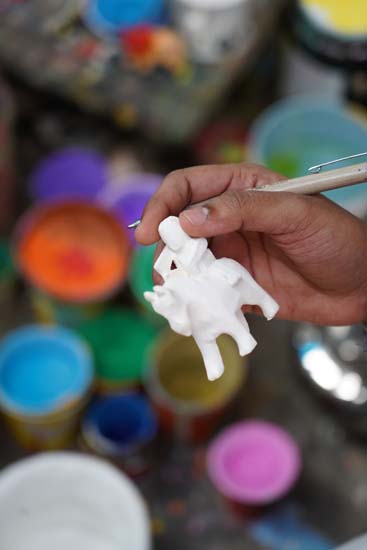
The completed toys are then sent for painting. First, they are coated with deco by dipping them into a bucket of Deco, usually twice to create a proper base before painting. For larger toys or murtis, primer or distemper is used instead of deco. Deco is preferred for smaller toys as it provides a smoother base, allowing the paint to appear more vibrant and polished.
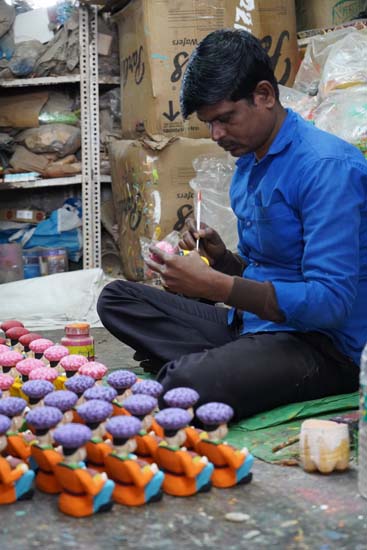
Before painting the final product, artisans often create a sample toy to finalize the colours beforehand. Acrylic colours are then used for painting. Only one colour is applied at a time, a batch of toys are painted with a single colour, allowed to dry, and then the next colour is applied. Painting is carried out step by step on batches of 50–100 toys,first the faces, then the body, clothes, and other details. A darker tone of the same colour is used for shading after the base layer. Fine details are added using small-sized brushes.
After applying flat colours, small features such as jewelry, shading, black outlines, and white dots are added. The white dots are created using a wooden stick with cotton wrapped at the tip. At time, if needed embossed details are made using Fevicryl 3D liner. Finally, a coat of lacquer is applied, giving the toy a glossy and protective finish.
The shade of each colour is decided by the artisan, while customer-specified colours are strictly followed for custom orders. Today, acrylic paints are widely used due to their durability and resistance to water. Earlier, natural paints made from kadia and gum were commonly used. It typically takes 5–6 days for a single painter to complete a batch of 60–100 toys from start to finish.
Over time, painting techniques have evolved, but the careful, step-by-step process continues to ensure the vivid and detailed appearance for which Varanasi wooden toys are known.
The main wastage from the craft comes from scrap wood generated during hand carving. The waste produced by the turning machine is typically used as fuel for burning.
Mark Twain once said, "Benaras is older than history, older than tradition, older even than legend and looks twice as old as all of them put together".
Known in different eras as Avimukta, Varanasi and Kashi, meaning “where the supreme light shinesâ€, this great north Indian center of Shiva worship has had more than 3000 years of continuous habitation.
To the Hindus, the Ganges is a sacred river and any town or city on its bank is believed to be auspicious. But Varanasi has a special sanctity, for it is believed, this is where Lord Shiva and his consort Parvati stood when time started ticking for the first time. The place also has an intimate connection with a host of legendary figures and mythical characters, who are said to have actually lived here. Varanasi has found place in the Buddhist scriptures as well as the great Hindu epic of Mahabharata. The holy epic poem Shri Ramcharitmanas by Goswami Tulsidas was also written here. All this makes Varanasi a significantly holy place.
Varanasi has been a symbol of Hindu renaissance. Knowledge, philosophy, culture, devotion to Gods, Indian arts and crafts have all flourished here for centuries. Also a pilgrimage place for Jains, Varanasi is believed to be the birthplace of Parsvanath, the twenty-third Tirthankar.
Historians have now ascertained that the Aryans first settled in the middle Ganges valley and by the second millennium BC, Varanasi became the nucleus of Aryan religion and philosophy. The city also flourished as a commercial and industrial center famous for its muslin and silk fabrics, ivory works, perfumery and sculptures.
From 1194, Varanasi went into a destructive phase for three centuries under the Muslim rule. The temples were destroyed and the scholars had to leave. In the 16th century, with the tolerant emperor Akbar's accession to the Mughal throne, some religious respite was restored to the city.
In the 6th century BC, Varanasi became the capital of the kingdom of Kashi. During this time Lord Buddha delivered his first sermon at Sarnath, just 10 km away from Varanasi. Being a center of religious, educational, cultural and artistic activities, Kashi drew many learned men from around the world; the celebrated Chinese traveler Hsüan Tsang, is one of them, who visited India around AD 635.
All that disappeared again in the late 17th century when the tyrannical Mughal ruler Aurangzeb came to power.
Skanda Purana by Kasikanda mentions the Kashi temple of Varanasi as Shiva's abode. It has withstood the onslaught of various invasions by Muslim rulers. The present temple was rebuilt by Rani Ahalya Bai Holkar, the ruler of Indore, in 1776. Then in 1835, the Sikh ruler of Lahore, Maharaja Ranjit Singh had its 15.5 m high spire plated in gold. Since then it is also known as the Golden Temple.
The 18th century again brought back the lost glory to Varanasi. It became an independent kingdom, with Ramnagar as its capital, when the British declared it a new Indian state in 1910. After India's independence in 1947, Varanasi became part of the state of Uttar Pradesh.
The land of Varanasi (Kashi) has been the ultimate pilgrimage spot for Hindus for ages. Often referred to as Benares, Varanasi is the oldest living city in the world.
Ayurveda is said to be originated at Varanasi and is believed to be the basis of modern medical sciences such as Plastic surgery, Cataract and Calculus operations. Maharshi Patanjali, the preceptor of Ayurveda and Yoga, was also affiliated with Varanasi, the holy city. Varanasi is also famous for its trade and commerce, especially for the finest silks and gold and silver brocades, since the early days.
In Hindu Kashi, it is said there are thirty-three hundred million shrines and a half a million images of the deities. Since a pilgrim would need all the years of his or her life to visit each of these shrines, it is considered wise to come to the holy city and never again leave. While this enormous number of shrines is perhaps a trifle exaggerated, Kashi does indeed have many hundreds of beautiful temples. Some of these temples are named after the great tirthas, or pilgrimage centers, in other parts of India - Rameshvaram, Dwarka, Puri, and Kanchipuram, for example - and it is said that merely by visiting Kashi one automatically gains the benefit of visiting all other sacred places. Most pilgrims make only short visits of days or weeks to Kashi, while others come to spend their remaining years in the holy city. Those who come to live in Kashi with the intention of dying there are called jivan muktas meaning those who 'are liberated while still alive'.
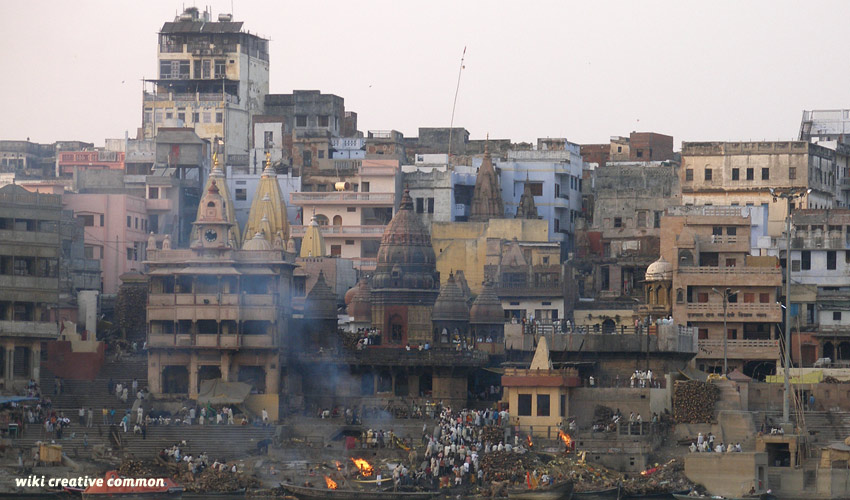
Kashi is also traditionally called Mahashamshana, 'the great cremation ground'. Hindus believe that cremation at the holy city insures moksha, or 'final liberation of the soul from the endless cycle of birth, death, and rebirth'.
A city like no other in the world, Varanasi has outstanding universal value, in that its architectural heritage is linked strongly, since centuries, to the living cultural and religious traditions of three of the major religions of the world- Hinduism, Buddhism, Jainism for whom the city is the most important religious pilgrimage destination. There are few cities in the world of greater antiquity and none have so uninterruptedly maintained their ancient celebrity and distinction.
Religious rituals, beliefs and traditional worship are still practised. It was in Banaras that Buddhism was first promulgated and in Banaras that Hinduism has had her home. The city has thus given vigour and support to the two religions that to this day spiritually govern half the world. Ancient meditative practises and studies are still pursued here. From the ceremony of shaving off the hair of the new-born (tonsure) to the immersion of ashes, the city still witnesses the rituals and sacraments that existed in the Vedic period. Varanasi is also considered to be a veritable jungle of fairs and festivals with respect to variety, distinction, time, sacred sites, performers, overseers and side-shows. The popular saying that 13 festivals happen in 7 days of a week, express this richness. "Every day is a great festival in Banaras" so says tradition.
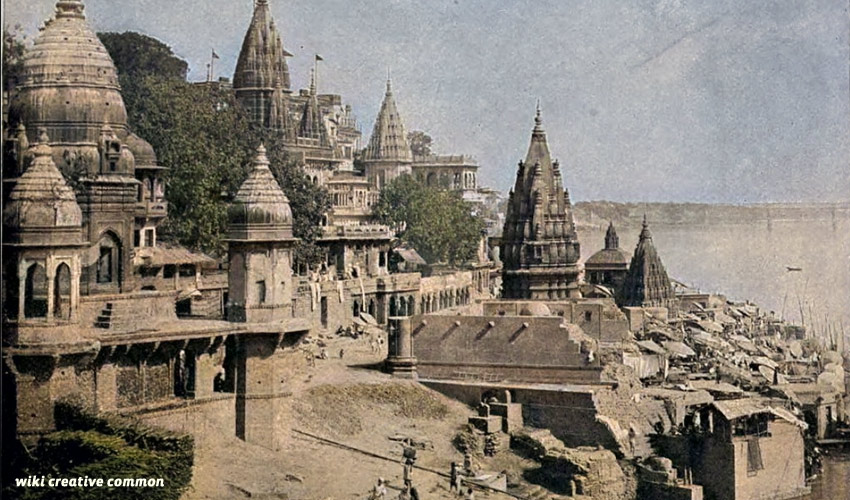
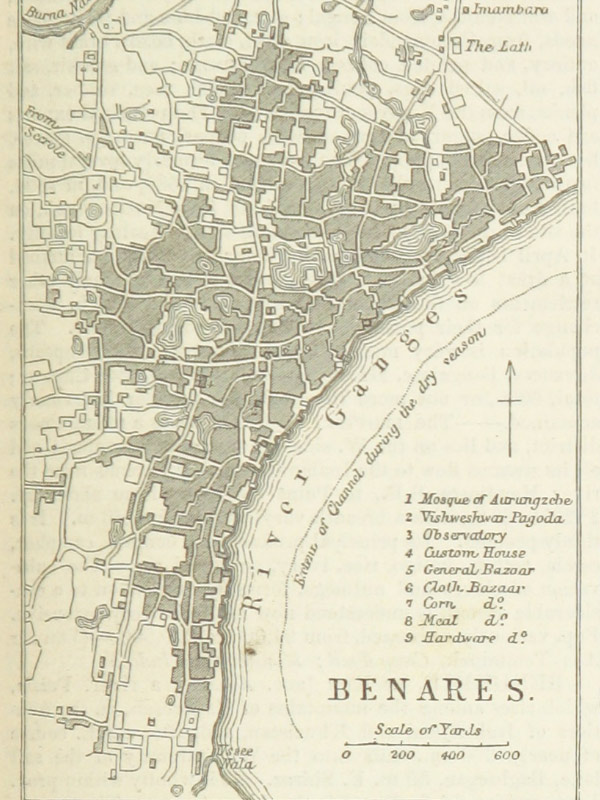
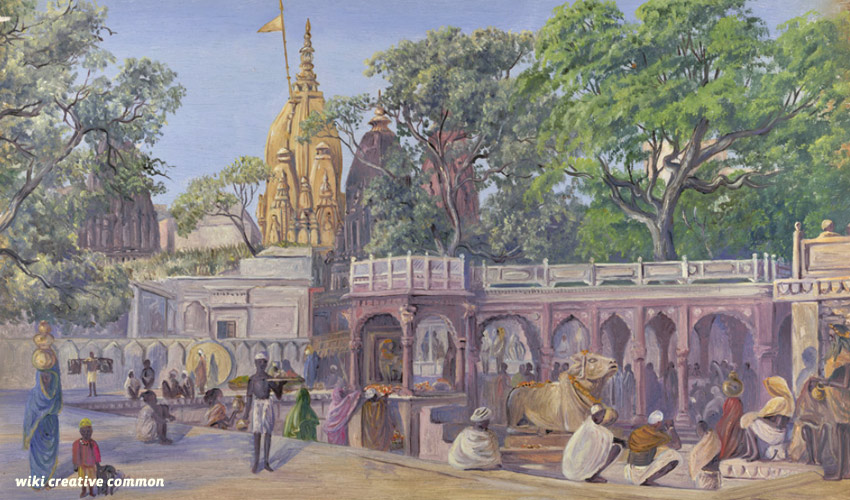
The city of Varanasi is located in the middle Ganges valley of North India, in the Eastern part of the state of Uttar Pradesh, along the left crescent-shaped bank of the Ganga, averaging between 50 feet and 70 feet above the river. It has the headquarters of the Varanasi district. Varanasi is located at approximately 25.3045° N latitude and 83.00395° E longitude, situated along the banks of the Ganges River. The city is a major cultural and religious centre. The "Varanasi Urban Agglomeration", an agglomeration of seven urban sub-units, covers an area of 112.26 km².
Being located in the Indo-Gangetic Plains of North India, the land is very fertile because of low-level floods in the Ganga that continually replenish the soil. Varanasi is situated between the Ganga confluences with two rivers: the Varuna and the Assi stream. The distance between the two confluences is around 4 kilometres.
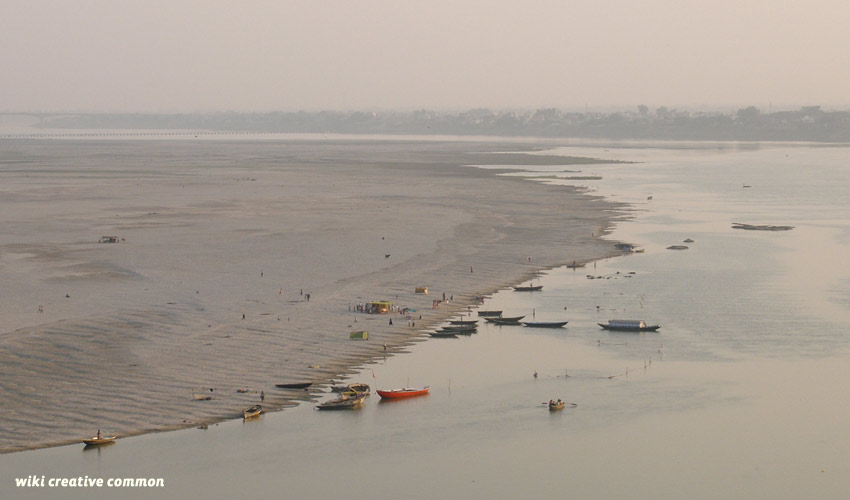
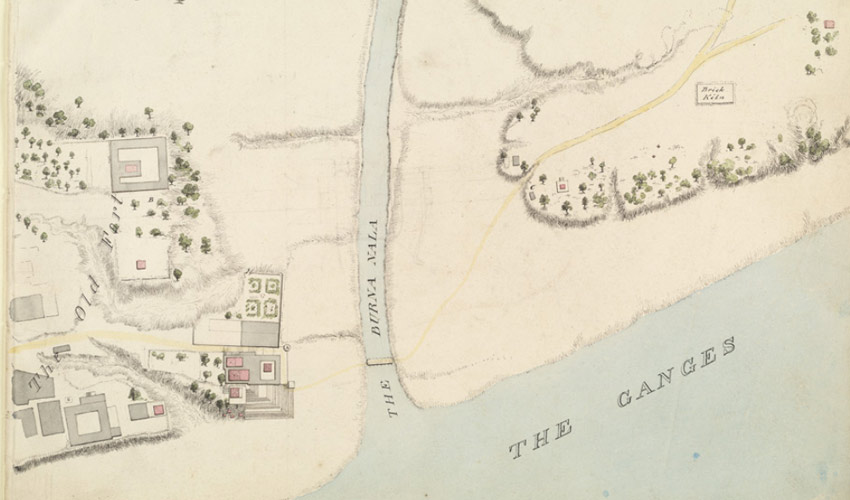
Today, a crowded, bustling, noisy, dirty city, Banaras was in antiquity an area of gently rolling hills, lush forests, and natural springs bordered by the magical waters of the river Ganges. A favoured hermitage site for many of India's most venerated sages - Guatama Buddha and Mahavira, Kabir and Tulsi Das, Shankaracharya, Ramanuja and Patanjali all meditated here - Banaras has been and continues to be one of the most visited holy places on the planet.
Varanasi experiences a humid subtropical climate with large variations between summer and winter temperatures. The dry summer starts in April and lasts until June, followed by the monsoon season from July to October. The temperature ranges between 22 and 46°C in summers. Winters in Varanasi see very large diurnal variations, with warm days and downright cold nights. Cold waves from the Himalayan region cause temperatures to dip across the city in the winter from December to February, and temperatures below 5°C are not uncommon. The average annual rainfall is 1,110 mm. Fog is common in the winters, while hot, dry winds, called loo, blow in the summers. In recent years, the water level of the river Ganga has decreased significantly; upstream dams, unregulated water extraction, and dwindling glacial sources due to global warming may be to blame.
Varanasi is well-connected by air, rail and road. One of the major factors in Varanasi's sustained existence as an inhabited city is its role as an established transportation hub between cities.
Railway- Varanasi Junction, commonly known as Varanasi Cantt Railway Station, is the city's largest train station; more than 3.6 lakh passengers and 240 trains pass through each day. The other railway stations in Varanasi include- Varanasi city sation and Banaras Station.
Road- Varanasi lies along National Highway 2, which connects it to Kolkata, Kanpur, Agra and Delhi. National Highway 29 connects Varanasi to Gorakhpur via Ghazipur to the northeast. National Highway 56 connects Varanasi to Lucknow via Jaunpur and Sultanpur, to the northwest. National Highway 7, the longest National Highway in India, is the most important road connecting Varanasi to southern India, passing through the cities of Hyderabad, Bangalore, Salem, Madurai, Tirunelveli and Kanyakumari.
Air Travel- Varanasi is served by Lal Bahadur Shastri International Airport, which is approximately 26 km (16 mi) from the city centre in Babatpur.
Due to the high population density and increasing number of tourists, the state government and international NGOs and institutions have expressed grave concern for the pollution and pressures on infrastructure in the city, mainly the sewage, sanitation and drainage components. The sewage problem is exacerbated by the role of the Ganges in bathing and in river traffic, which is very difficult to control. Varanasi's water supply and sewage system is maintained by Jal Nigam, a subsidiary of Nagar Nigam. Power supply is by the Uttar Pradesh Power Corporation Limited.
The city grew as a place for Authentic Ayurveda and Panchkarma treatment. Many Ayurvedic centres are located in Varanasi.
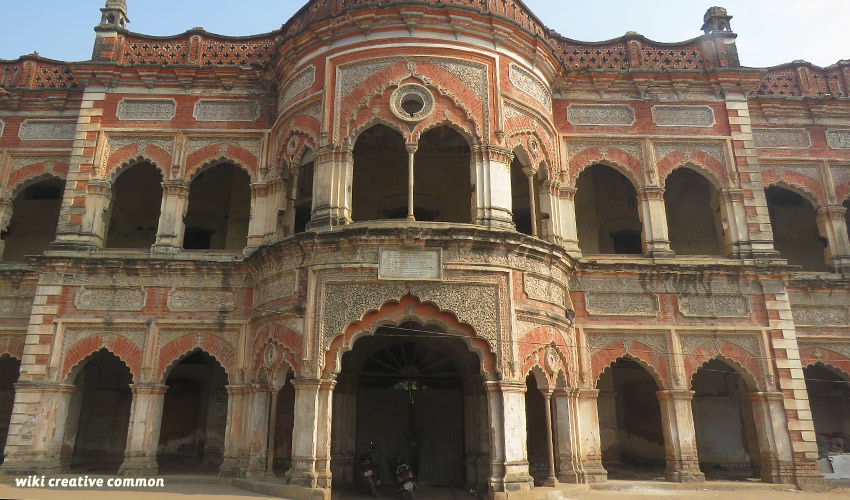
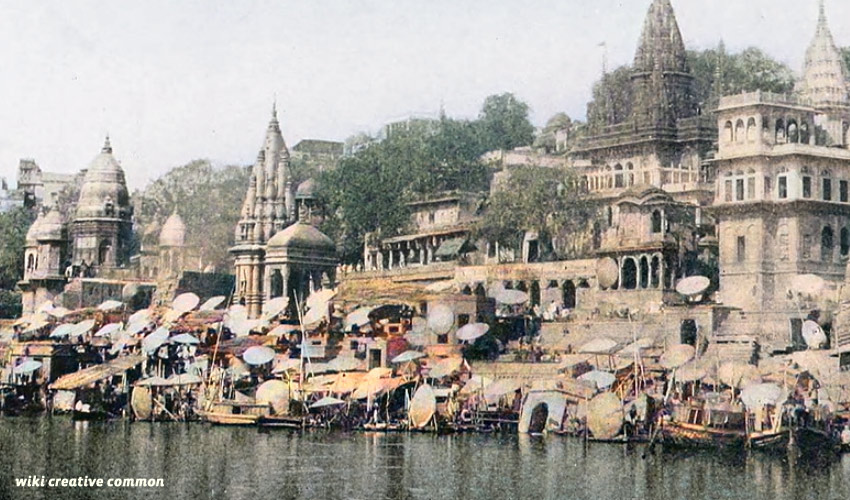
The architecture of Varanasi is a reflection of its ancient spiritual heritage and rich cultural history. As one of the world’s oldest continuously inhabited cities, it offers a unique urban landscape where religion, art, and everyday life merge seamlessly. The ghats along the Ganges River, particularly Dashashwamedh, Manikarnika, and Assi — are the most iconic architectural features, built as a series of steps leading to the sacred river. These ghats are flanked by a variety of temples, shrines, palatial havelis, and ashrams, often constructed in a blend of Rajput, Mughal, and Maratha styles, adorned with intricate carvings, stone latticework, and towering shikharas.
Winding through the heart of the city are narrow, lanes lined with centuries-old houses made of local sandstone, featuring carved wooden balconies, courtyards, and jharokhas (overhanging enclosed windows). Many of these homes serve as both residence and workspace for artisans, priests, and traders. The sacredness of space is deeply embedded in the city’s structure, temples are often tucked into corners, courtyards, and even along walls. Although few standing structures date back before the 16th century — due to waves of destruction by invading armies from the 11th century onward — the spirit of Banaras endured. Qutb-ud-din Aibak's forces alone were said to have destroyed more than a thousand temples in 1194. Over the centuries, the city’s architecture evolved, influenced by rulers, pilgrims, and craftsmen from across regions. Yet one thing remains unchanged — Banaras has never lost its "ras" (essence); no matter how much it transforms, it always remains Banaras.
The city of Varanasi has an intimate connection with a host of legendary figures and mythical characters, who are said to have actually lived here. The city has found a place in the Buddhist scriptures as well as the great Hindu epic of the Mahabharata. The holy epic poem Shri Ramcharitmanas by Goswami Tulsidas was also written here. All this makes Varanasi a significantly holy place.
Varanasi has been a symbol of the Hindu Renaissance. Knowledge, philosophy, culture, devotion to Gods, Indian arts and crafts have all flourished here for centuries. Ayurveda is said to have originated in Varanasi and is believed to be the basis of modern medical sciences such as Plastic surgery, Cataract and Calculus operations. Maharshi Patanjali, the preceptor of Ayurveda and Yoga, was also affiliated with Varanasi, the holy city. Varanasi is also famous for its trade and commerce, especially for the finest silks, gold and silver brocades, since the early days.
Varanasi has been a great centre of learning for ages. It is associated with the promotion of spiritualism, mysticism, Sanskrit, yoga and the Hindi language and has honoured authors such as the famous novelist Prem Chand and Tulsi Das, the prominent saint-poet who wrote Ram Charit Manas.
Varanasi is also aptly called the cultural capital of India. The city has provided a platform for all cultural activities to flourish. Many exponents of dance and music have come from Varanasi. Ravi Shankar, the internationally renowned Sitar maestro, was born in this holy city, and Ustad Bismillah Khan (the famous Shehnai player) lived here for a major part of his life.
Vaishnavism and Shaivism have co-existed in Varanasi harmoniously. With a number of temples, Mrs. Annie Besant chose Varanasi as the home for her ‘Theosophical Society’ and Pandit Madan Mohan Malviya, to institute ‘Benares Hindu University, the biggest University in Asia.
Varanasi is also considered to be a veritable jungle of fairs and festivals with respect to variety, distinction, time, sacred sites, performers, overseers and side-shows. The popular saying that 13 festivals happen in 7 days of the week expresses this richness. "Every day is a great festival in Banaras", so says tradition.
Hindus believe that one who is graced to die on the land of Varanasi would attain salvation and freedom from the cycle of birth and re-birth. People of Benaras are known for being the exponents of literature, music, Vedic philosophy, arts, crafts and architecture. Socio-economic aspects of the city are highly influenced by the Ganges and on most of the Hindu festivals people can be seen using the bathing Ghats (river fronts) even before daybreak as an important part of their rituals. In Varanasi, the atmosphere is relaxed in general and we can see people chewing the famous 'paan' and chatting in a laid-back manner. That does not keep Varanasi behind, as is evident from the growing modern industries in the city. Varanasi is also the most ancient seat of education in India (Sarva Vidya ki Rajdhani) and Benaras Hindu University is still famous throughout the world for its scholars. The city is also a seat for Sanskrit and one can still see the Guru-Shishya tradition being followed here at certain places.
Several social and religious customs co-exist in the city and the caste system is still prevalent here. People wear 'Gamcha' (a cotton towel), as they go bathing in Ganga and drink Thandai (a coolant with milk as its base), which have become a part of the cultural identity of traditional ways of Varanasi. Music, drama and entertainment have found a place in the lives of the people. Its dance traditions and vocal and instrumental music is highly developed and one can catch the glimpses of folk drama in the 'Ramlila' organized before Dussehra. Traditional games and sports include 'Akharas', where wrestling or 'kushti' competitions are organized.
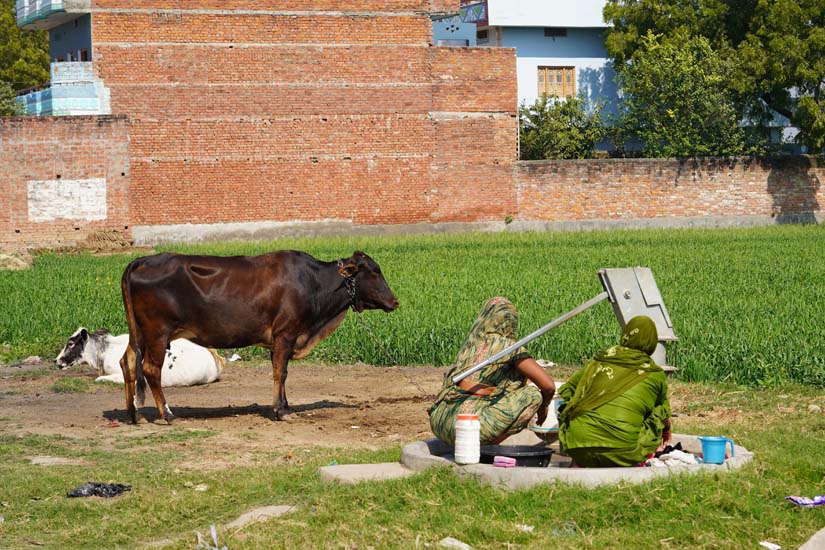
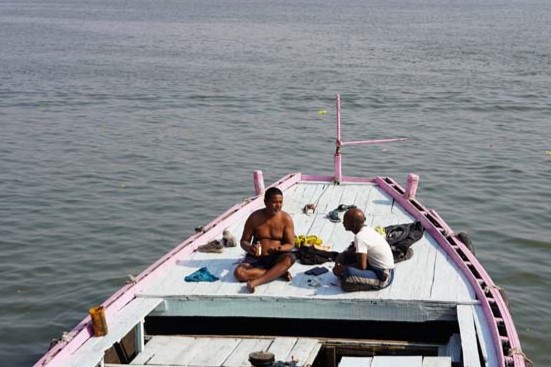
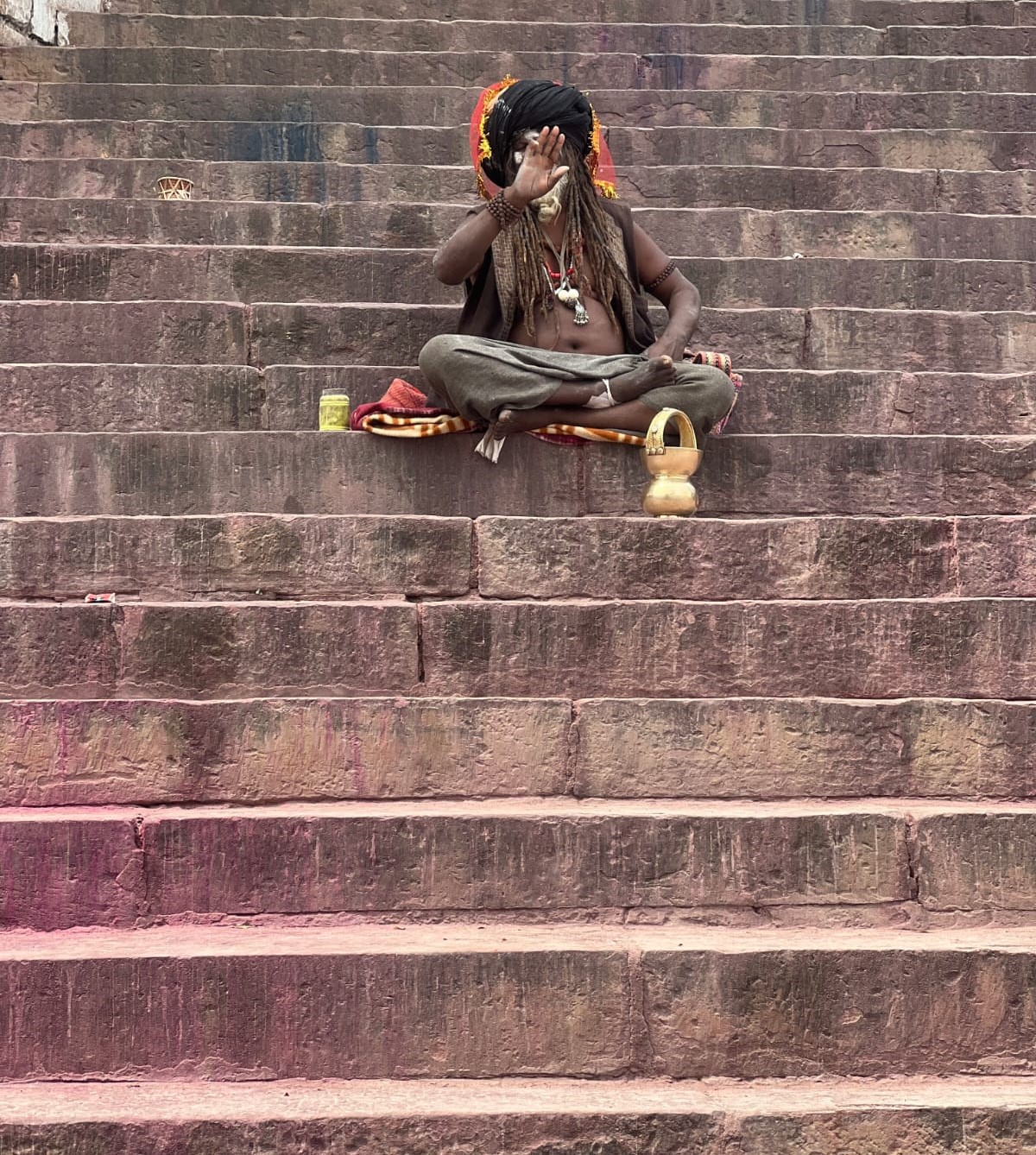
Varanasi is famous for its antique temples. The renowned Kashi Vishwanath Temple dedicated to Lord Shiva has a 'lingam' - the phallic icon of Shiva - that goes back to the time of the epics.
Varanasi is a veritable paradise for pilgrims, who throng the 'Ghats' of the Ganges for spiritual rewards like deliverance from sin and attainment of nirvana. The Hindus believe that to die here on the banks of the Ganges is an assurance of heavenly bliss and emancipation from the eternal cycle of birth and death. So, many Hindus travel to Varanasi at the twilight hour of their life.
The 8th century Durga Temple, situated on the Ramnagar Pandav road, is home to hundreds of monkeys that reside in the nearby trees. Another popular temple is the Sankatmochan temple dedicated to the simian-god Hanuman. Varanasi's Bharat Mata Temple is probably the only temple in India that is dedicated to the 'Mother India.' Inaugurated by Mahatma Gandhi in 1936, it has a big relief map of India carved in marble. Another relatively new temple is the Tulsi Manas Temple built in honor of Lord Rama in 1964 at the place where Tulsidas composed the Ramacharitmanas, the vernacular version of the epic of Ramayana. The walls of this temple adorn the scenes and verses depicting the exploits of Lord Rama.
Other significant places of worship include the Sakshi Vinayaka Temple of Lord Ganesha, the Kaal Bhairav Temple, the Nepali Temple, built by the King of Nepal on Lalita Ghat in Nepali style, the Bindu Madhav Temple near the Panchaganga Ghat and the Tailang Swami Math.
Foreign tourists love to ride horse-driven 'Ekkas' and cycle rickshaws that are still in use here.
The Manikarnika Ghat is one of the holiest cremation grounds among the sacred riverfronts, located on the banks of the River Ganga, in the city of Varanasi. Ancient meditative practises and studies are still practised in the city. From the ceremony of shaving off the hair of the newborn to the immersion of ashes, the city still witnesses the rituals and sacraments that existed in the Vedic period.
List of craftsmen.
https://search.ipindia.gov.in/IPOJournal/Journal/ViewJournal
Geographical Indications Journal. 64: 15–21. 28 November 2014. Retrieved 22 November 2016.
https://www.hilarispublisher.com/open-access/wooden-toys-of-varanasi-weakly-developed-the-isolated-sector-and-shortages-of-income-and-employment-opportunities-2151-6200-1000195.pdf
https://www.dsource.in/resource/wooden-toys-varanasi/introduction
