



Saree Weaving ~ Aran...
Arani silk, also known as Arni silk, is a celebrated handloom tradition of Tamil Nadu, produced primarily in Arani, Tiruvannamalai.
Arani, Tamil Nadu, India...
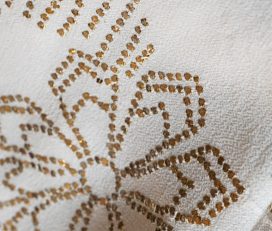
 Lucknow, Uttar Pradesh, India...
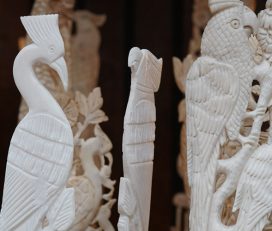 Muftiganj, Daulatganj, Lucknow...
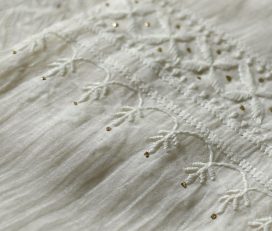 Lucknow, Uttar Pradesh, India...
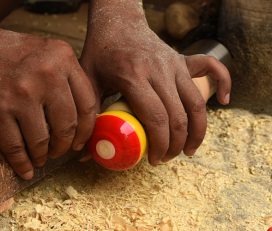 Chitrakoot, Uttar Pradesh, Ind...
Arani silk, also known as Arni silk, is a celebrated handloom tradition of Tamil Nadu, produced primarily in Arani, Tiruvannamalai.
Arani, Tamil Nadu, India...
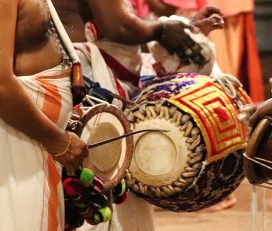
Peruvemba, a village near Chittur-Thathamangalam in Palakkad district of Kerala, is known for a longstanding tradition of making leather-based percussion instruments.
Peruvemba, Kerala, India...
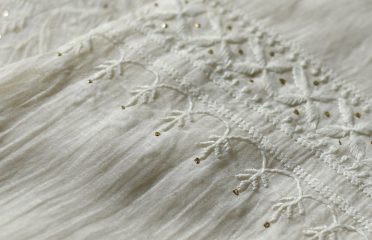
Chikankari embroidery from Lucknow is one of India's most renowned and refined needlework traditions
Lucknow, Uttar Pradesh, India...
Let us talk… if you feel the same love for handmade, and would like to support us by sharing your research or by contributing financially to our documentation efforts.
Reach us at [email protected]
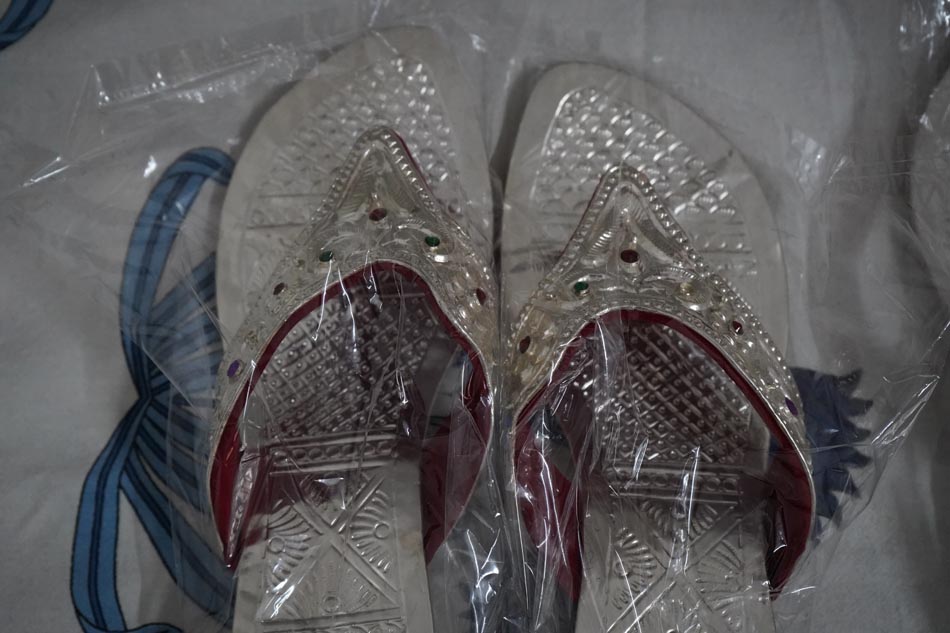
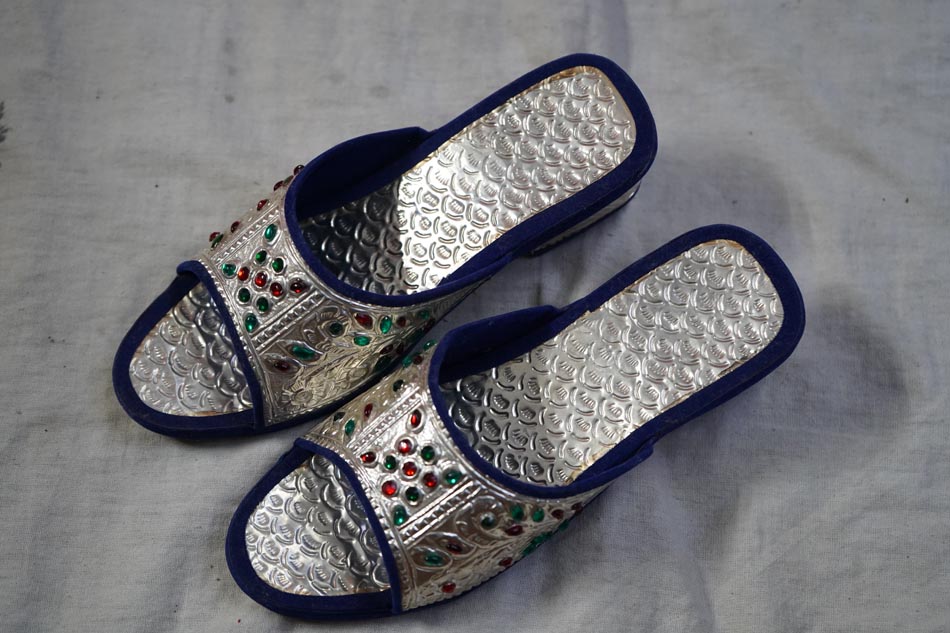
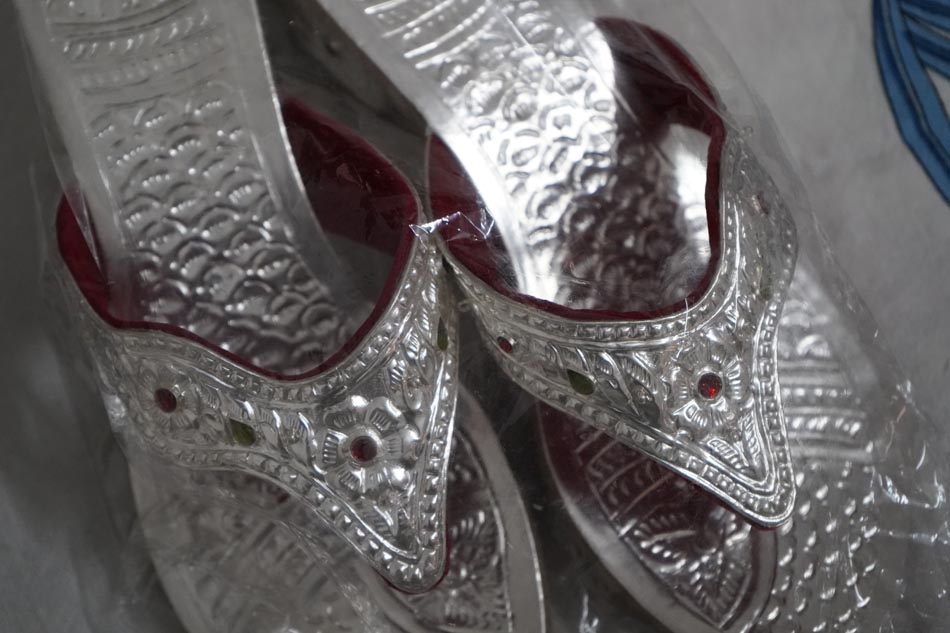
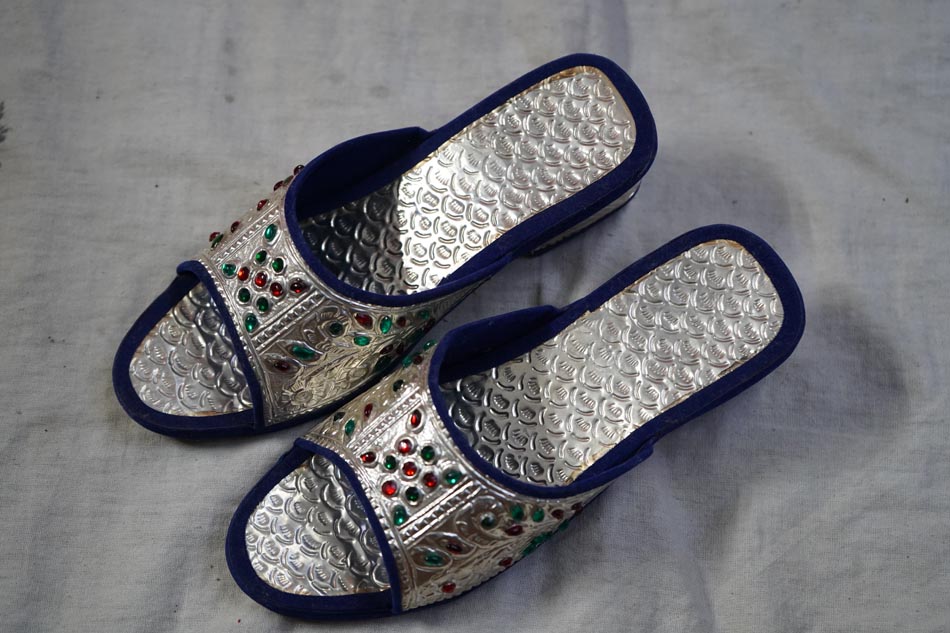
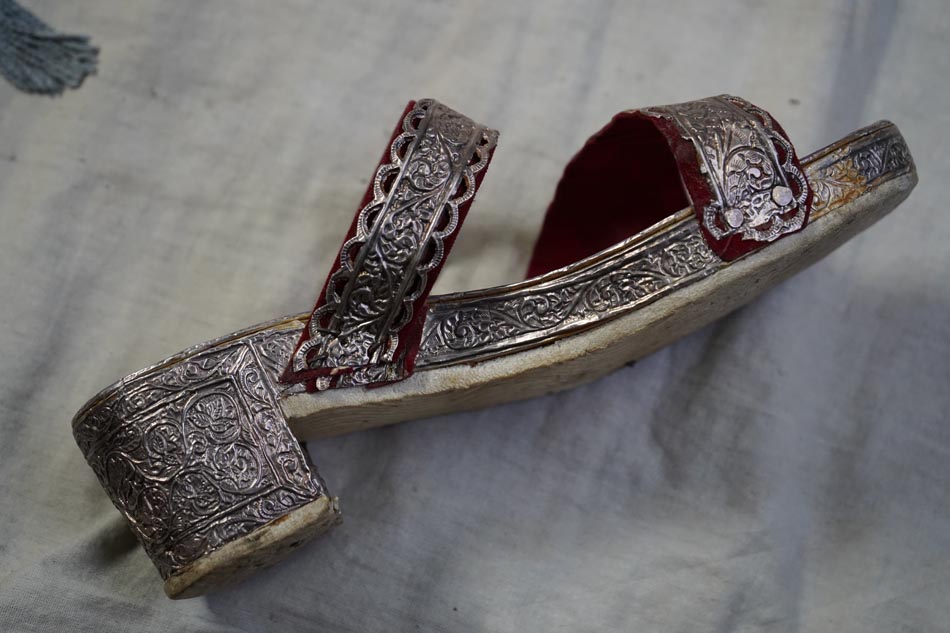
Silver chappals, adorned with intricate engravings and embellished with jewels, were traditionally worn by the Nawabs and are now a popular choice for weddings, especially for brides and grooms. In Lucknow, they hold particular cultural significance, where a bride’s look is often considered complete only with chandi ki chappal, making them an essential part of wedding attire today.
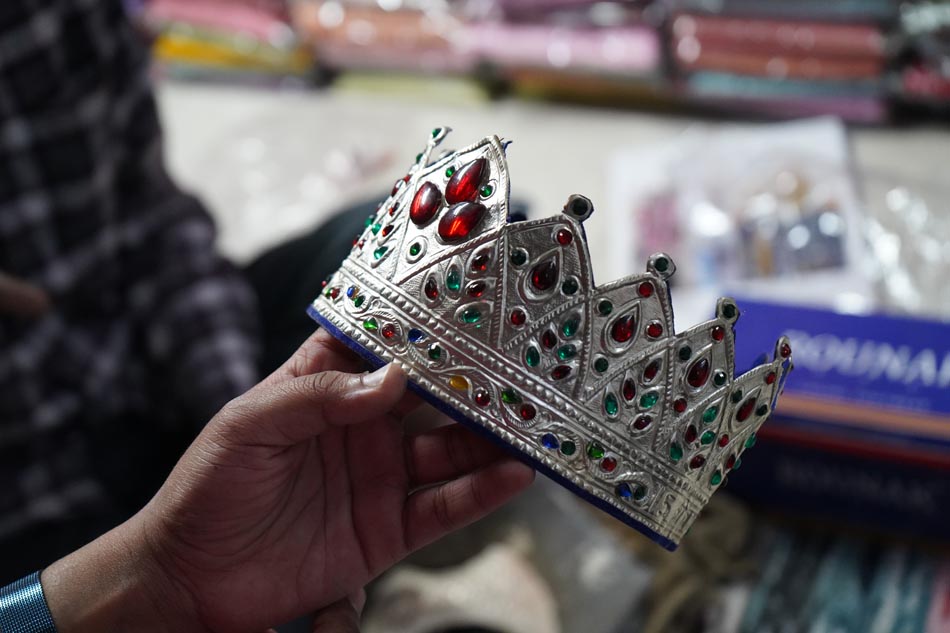
These chappals are available in a range of sizes, from children to adults, and are usually made to order, with each pair customised to individual size and design preferences. Currently, high-heeled silver chappals are in the greatest demand. They are commonly sold through jewellery shops in cities like Delhi, Kolhapur, and Kanpur, where jewellers often retail these pieces. Over time, artisans have also diversified into creating related products such as silver jewellery, mobile covers, visiting card holders, purses, and decorative items like taj crowns.
Silver holds deep cultural significance in Indian traditions and is commonly used in ceremonies like mundan (first head-shaving) and annaprashan (first feeding), where it symbolises purity, health, and prosperity. Silver bowls and spoons are often used for a child’s first meal, while items like anklets (payal) or bangles are gifted during mundan to bring protection and good fortune. Similarly, silver chappals (chandi ki chappal) are primarily associated with weddings and are widely valued as gifts for special occasions such as anniversaries and also mundan ceremonies. They are also gifted to children and worn as festive or party wear. According to artisans, the demand for chandi ki chappal has increased over the years, especially in Lucknow, where they are considered a meaningful and auspicious gift for newly-wedded brides as well as for ceremonial occasions.
The pricing of these chappals depends largely on the quantity of silver used; higher silver content results in a higher cost. With the sharp rise in silver prices, the cost of a pair has increased significantly, from around ₹26,000 to ₹80,000 in just the past two years, reflecting both material value and the labour-intensive craftsmanship involved. As a delicate craft, silver chappals require careful maintenance. They should not be wrapped or stored in paper, especially newspaper, as it can cause the silver to yellow. Instead, they should be gently cleaned using a soft cotton cloth and warm water, thoroughly dried, and stored in transparent, dry polythene. Exposure to moisture should be avoided, as water can cause the silver to blacken.
As a delicate craft, silver chappals require careful maintenance. They should not be wrapped or stored in paper, especially newspaper, as it can cause the silver to yellow. Instead, they should be gently cleaned using a soft cotton cloth and warm water, thoroughly dried, and stored in transparent, dry polythene. Exposure to moisture should be avoided, as water can cause the silver to blacken.
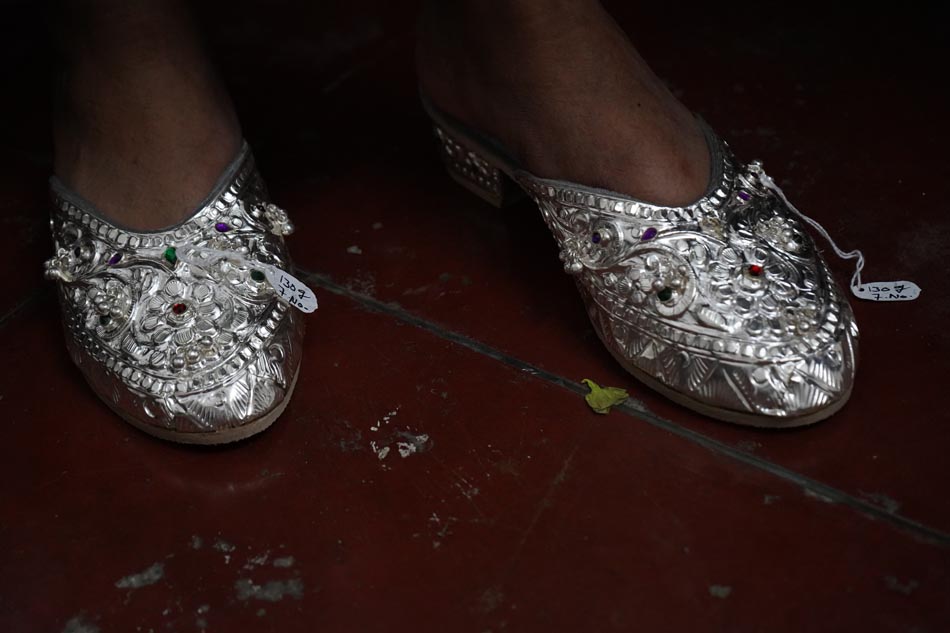
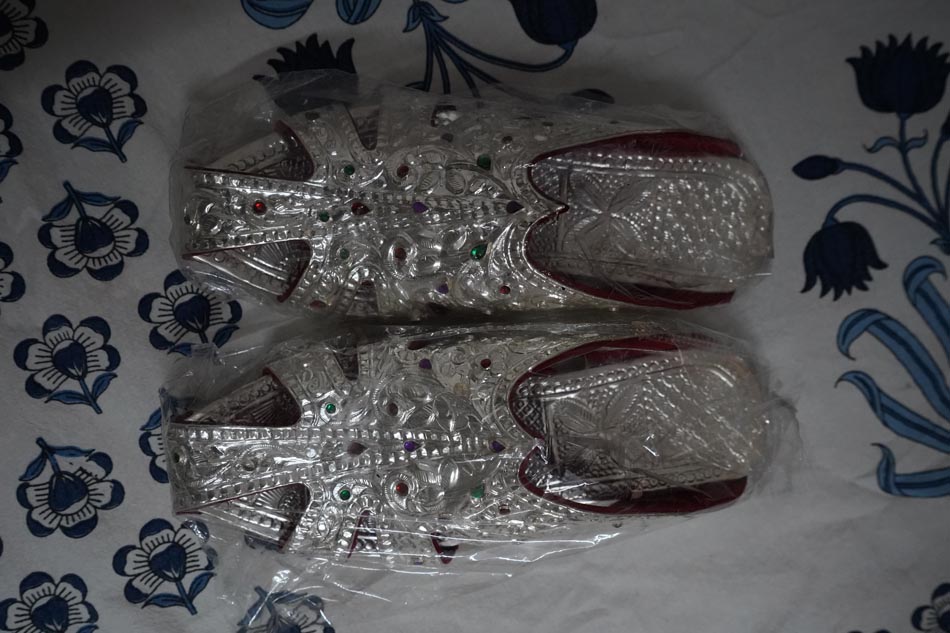
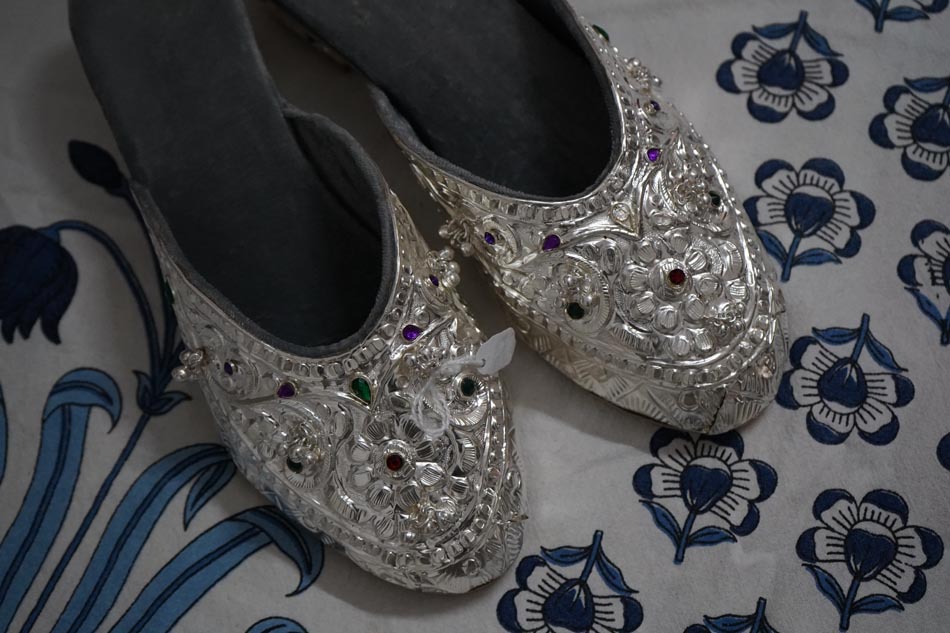
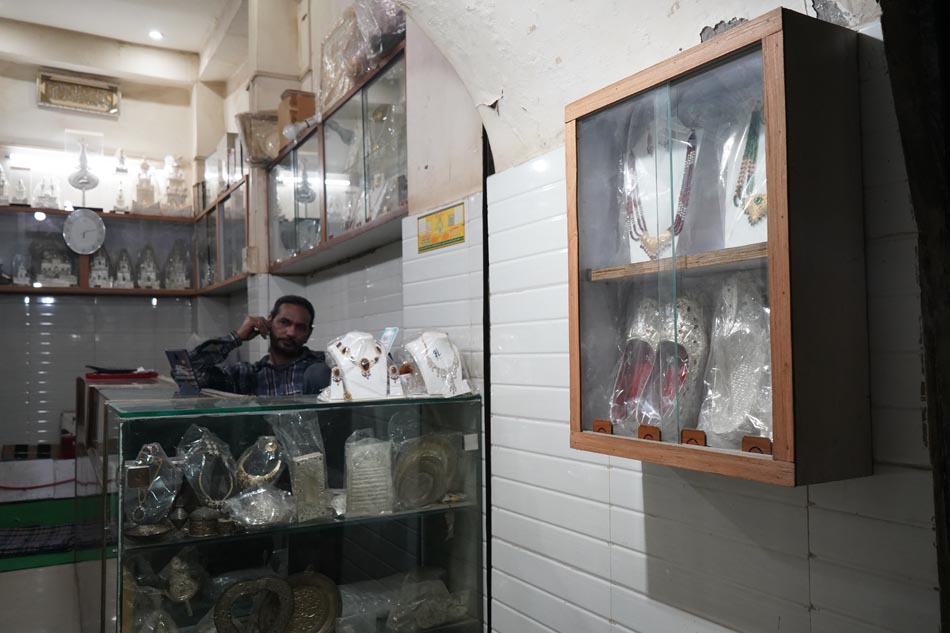
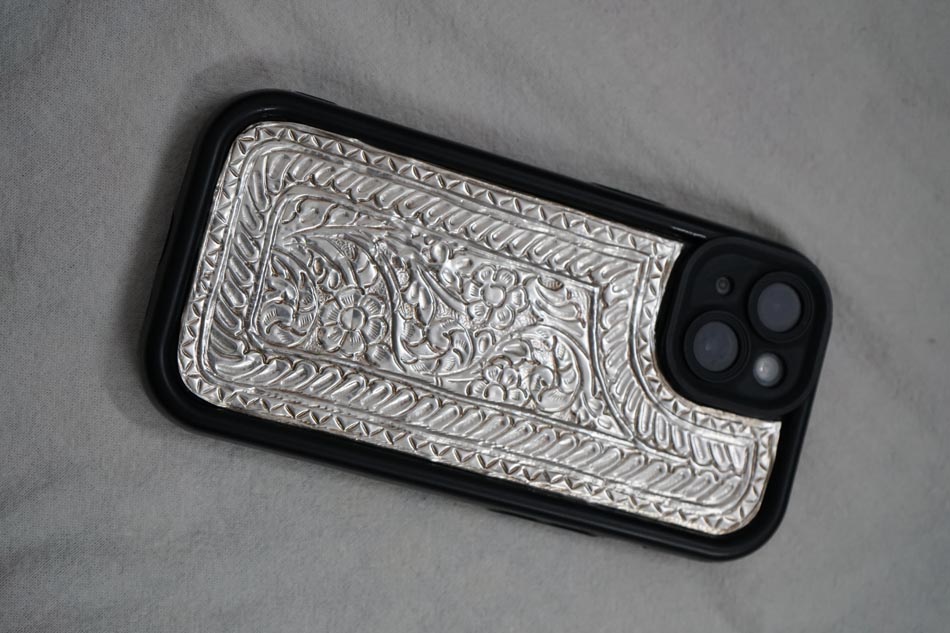
The use of silver and gold has been deeply rooted in the crafts of Lucknow, whether in the intricate naqqashi on silver utensils or in kamdani/mukaish embroidery, where fine gold and silver wires embellish textiles. Both the materials and the craftsmanship have long been symbols of refinement and cultural richness in the city. Silver chappals (chandi ki chappal) emerge from this legacy, where the art of naqqashi and the value of precious metals come together to create objects that reflect heritage and luxury.
Historically, these silver slippers were a strong marker of royalty, worn by Nawabs as a display of status, wealth, and power. They signified superiority and were accessible only to the elite. Today, although rare, they continue to carry this aura of exclusivity and are often chosen by brides for weddings. As a result, this craft forms an important part of Lucknow’s cultural heritage.
While traditionally reserved for special occasions, silver chappals are now being explored in contemporary fashion as statement pieces. Their metallic sheen and intricate detailing allow them to pair well with modern outfits, creating a fusion of tradition and modernity, similar to how other traditional footwear is styled today. This adaptability keeps the craft relevant in changing times.
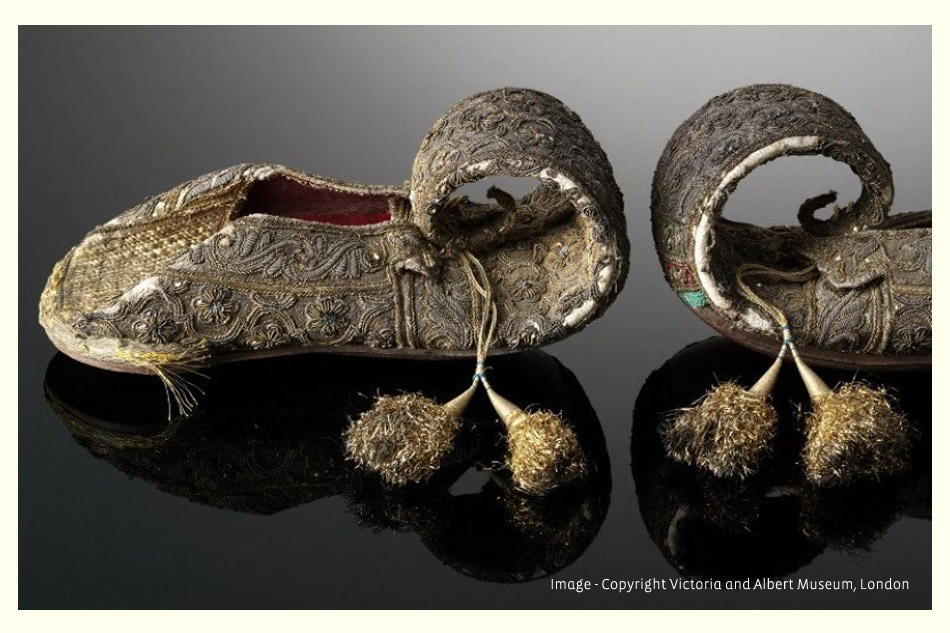
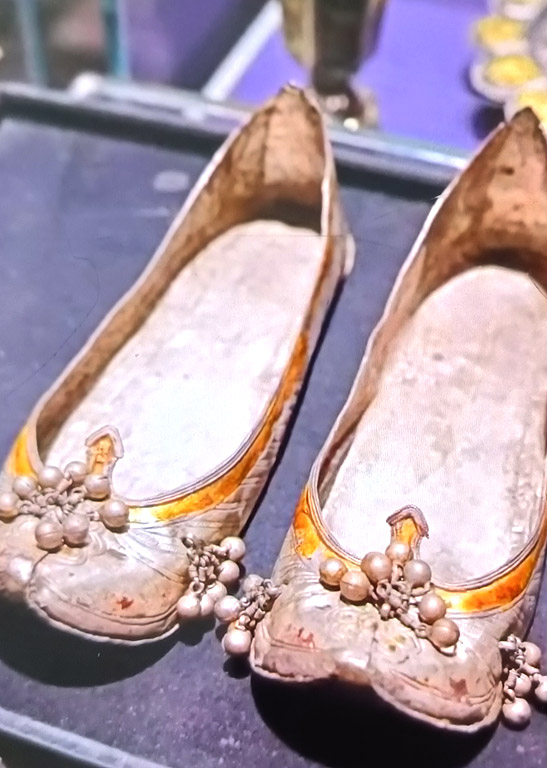
Culturally, the significance of footwear in India is layered and symbolic. The feet are considered sacred, with traditions of touching elders’ feet and revering the feet of deities and holy figures. Historically, India was often described as a “barefoot country,” where footwear was minimal and often associated with either ascetics or the wealthy. Ornate, silver-embroidered slippers were thus a privilege of the elite, reinforcing their association with luxury and status. A notable example of such heritage can even be found in collections like the Bata Shoe Museum, which houses historic footwear, including silver-adorned pieces.
In addition to its economic and aesthetic value, silver holds cultural and traditional significance in daily life. It is widely used in food as a vark to decorate sweets and paan, adding a sense of luxury while being safe for consumption. In traditional Ayurvedic practices, silver is believed to possess natural cooling properties that help calm the body and mind while balancing the body’s energy. It is often associated with reducing excess Pitta and promoting a sense of physical and mental well-being. Silver utensils and therapeutic practices such as massage using silver or kansa bowls have long been valued for their restorative qualities.
Ayurveda also attributes several beneficial properties to silver, including Sheeta Virya (cooling nature) and Rasayana qualities associated with rejuvenation and longevity. It is believed to support physical strength, enhance taste perception, improve intelligence and mental clarity, and help regulate immunity and blood pressure. Silver is also traditionally associated with purifying the blood, supporting digestive health, balancing Kapha dosha, and maintaining youthful vitality. Wearing silver jewellery and using silver utensils continue to hold cultural and therapeutic significance in many Indian traditions.
Thus, silver chappals are not merely footwear; they embody a confluence of material value, cultural symbolism, historical legacy, and evolving design, making them a unique and meaningful craft. Traditionally, the craft has been male-dominated, with women contributing to the process but rarely being recognised as lead artisans. Originally designed for men, silver chappals today are predominantly worn by women, accounting for nearly 90% of sales, with only 10% catering to men.
Because these chappals are made of silver, they are considered precious items. Their movement, especially for international export, is restricted, and even domestic transport involves strict regulations and insurance considerations due to their high value. Silver itself has long been regarded as a store of wealth and a form of currency, valued for thousands of years.
Not Found
In many cultures and religions across the world, bare feet are associated with humility, respect, and devotion. Rituals such as washing another person’s feet are often seen as acts of surrender and reverence. In India too, walking barefoot carries deep cultural and spiritual meaning. Even today, it is customary to remove footwear before entering homes, temples, and sacred spaces, as shoes are traditionally considered impure.
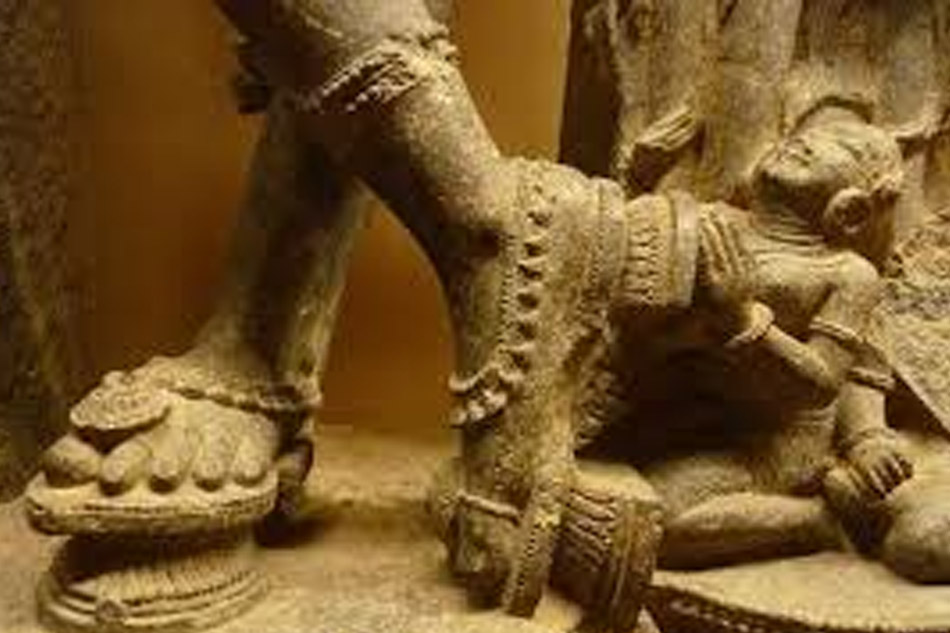
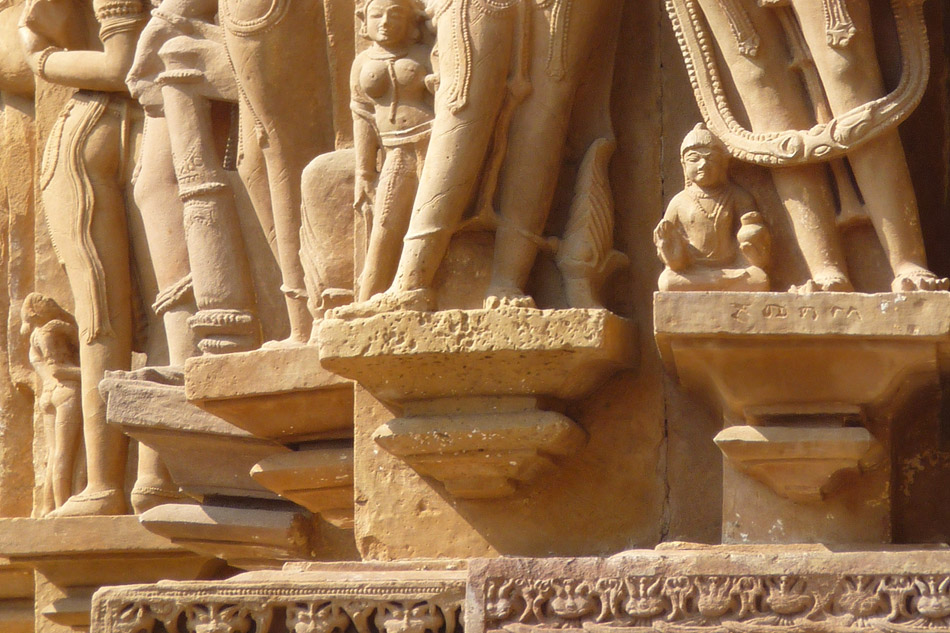
Many people believe that the widespread use of fashionable footwear became common in India only after the arrival of Vasco da Gama in 1498. However, historical evidence suggests that the idea of decorative footwear existed much earlier. The sculptures at the Konark Sun Temple depict women wearing elevated footwear resembling high heels while carrying mirrors and ornaments. This indicates that while footwear may not have been part of everyday life for common people, ornate and symbolic forms of footwear certainly existed in royal and elite circles.
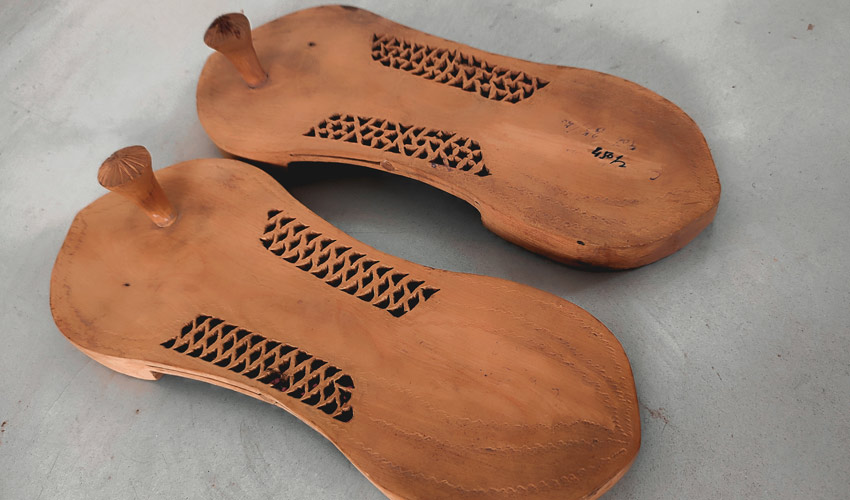
The ancient Indian form of footwear is known as Paduka. When loosely translated, Paduka can mean the “Footprints of the Gods.” These are considered among the oldest forms of Indian sandals and were traditionally crafted from wood with a central knob placed between the toes for grip. Over time, Padukas became symbols of status and spirituality. Simpler versions were worn by saints and ascetics, while elaborate pairs made from ivory, silver, and richly decorated materials were used by royalty and nobility. Even today, Padukas continue to hold religious importance among Hindu, Jain, and Buddhist traditions.
The tradition of wearing silver on the feet is also deeply rooted in Indian culture. Since ancient times, silver ornaments such as toe rings, anklets, and foot jewellery have held both decorative and symbolic value. Ayurveda and traditional beliefs associate silver with cooling and healing properties. It is believed that the nerve connected to the second toe is linked to the uterus and passes towards the heart. For this reason, married women traditionally wear silver toe rings on the second toe, as it is thought to strengthen reproductive health and help regulate the menstrual cycle. Wearing toe rings in pairs also became a cultural sign of marriage in many Indian communities.
Against this larger cultural backdrop emerged the remarkable tradition of silver slippers, or Chandi ki Chappal, from Lucknow. The craft is believed to have originated during the 17th century under the patronage of the Nawabs of Awadh, who were known for their refined taste, luxury, and love for intricate craftsmanship. Seeking alternatives to conventional footwear, royal patrons commissioned artisans to create elaborate slippers using precious metals such as gold and silver. In many cases, both metals were combined within a single pair, transforming footwear into objects of status and grandeur rather than mere utility.
The origins of this craft may also be connected to the long history of metal engraving traditions in India. During the Mughal period, naqqashi or intricate engraving techniques are believed to have arrived from Iran. Initially practised on architecture, wooden doors, utensils, and decorative objects, these techniques were later adapted onto precious metals by skilled goldsmith communities known as Sunaars. However, India already had a rich legacy of metal craftsmanship dating back thousands of years. Historical evidence visible in museums, temples, and royal collections reveals the extensive use of carved silver and gold in crowns, temple umbrellas (chatra), jewellery, ceremonial objects, and royal accessories. Silver slippers may have emerged from this larger ecosystem of luxury metal craftsmanship.
Early silver slippers were often extremely heavy and elaborate. Some pairs weighed nearly 700–800 grams, while specially commissioned royal pieces could weigh up to 1.5–2 kilograms. These slippers were less about comfort and more about displaying wealth, prestige, and craftsmanship. Over time, however, changing lifestyles and the rising cost of silver transformed the craft. Contemporary silver slippers are now lighter, more wearable, and generally use around 80–250 grams of silver.
Like many traditional crafts, the silver slipper tradition faced a severe decline during the 1980s. Demand reduced drastically, and for nearly 12–15 years the craft almost disappeared. Many artisans shifted towards silver jewellery production in search of more stable livelihoods. Earlier associated only with royalty and elite patrons, silver slippers slowly found acceptance among wider audiences, which eventually contributed to their revival. In recent years, social media platforms such as Instagram have also played a major role in bringing visibility and renewed appreciation to this rare craft tradition.
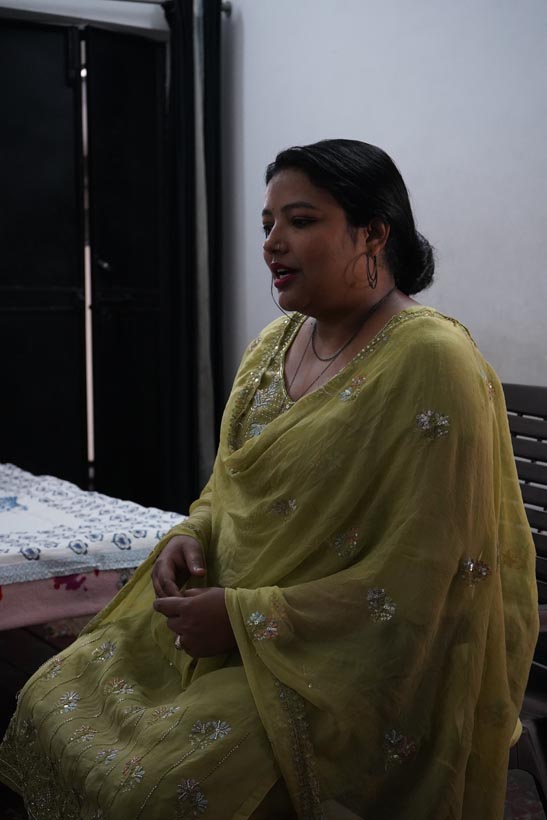
Today, only a handful of original practitioners continue this legacy. Among them is Hafiz Muhammed Ashfaq, popularly known as “Chandi ke Chappal wale Hafizji,” a fourth-generation artisan from Lucknow whose ancestors once worked for the Nawabs. Although the family originally specialised in gold and silver jewellery, silver slippers gradually became their signature craft. Their work gained wider recognition through the efforts of his daughter, Aafiya Khan, who began promoting the craft through social media and digital platforms. Until recently, their products were largely sold through jewellers, often without fair returns to the artisans themselves. Since 2020, however, the family has shifted towards direct customer sales, helping improve both visibility and economic sustainability for this rare and extraordinary tradition.
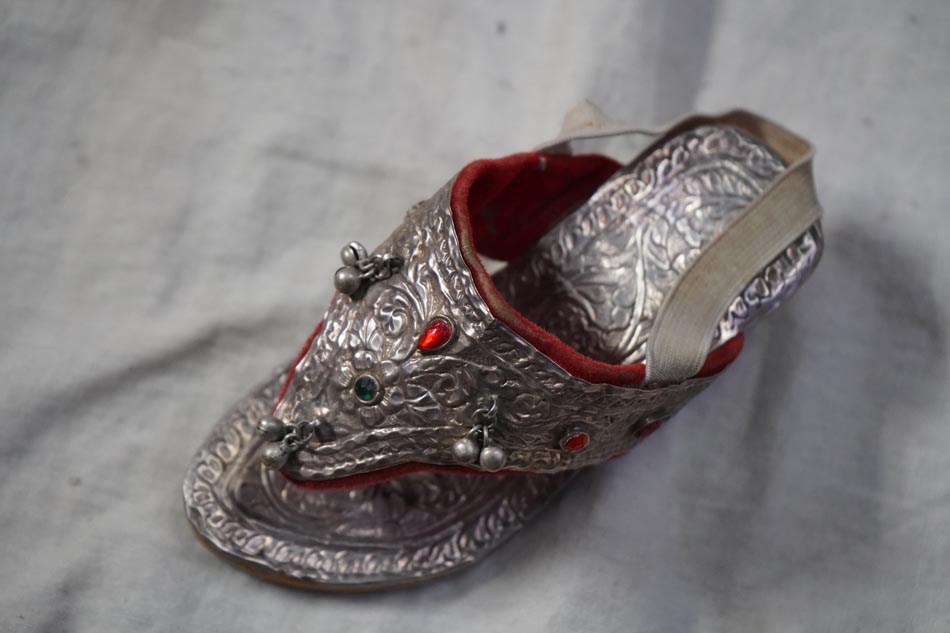
Contemporary silver chappals (chandi ki chappal) are much lighter and more wearable compared to earlier versions. Today, a single pair typically uses between 80 to 200 grams of silver, with a maximum of around 250 grams for heavier designs like jutti. While intricate techniques such as Jali work can also be incorporated, they require greater efforts and skill. The pricing of the chappals depends largely on the detailing. Larger, less intricate naqqashi (engraving) is relatively more affordable, whereas fine, highly detailed work demands more labour and is therefore more expensive.
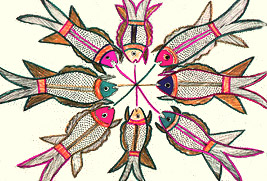
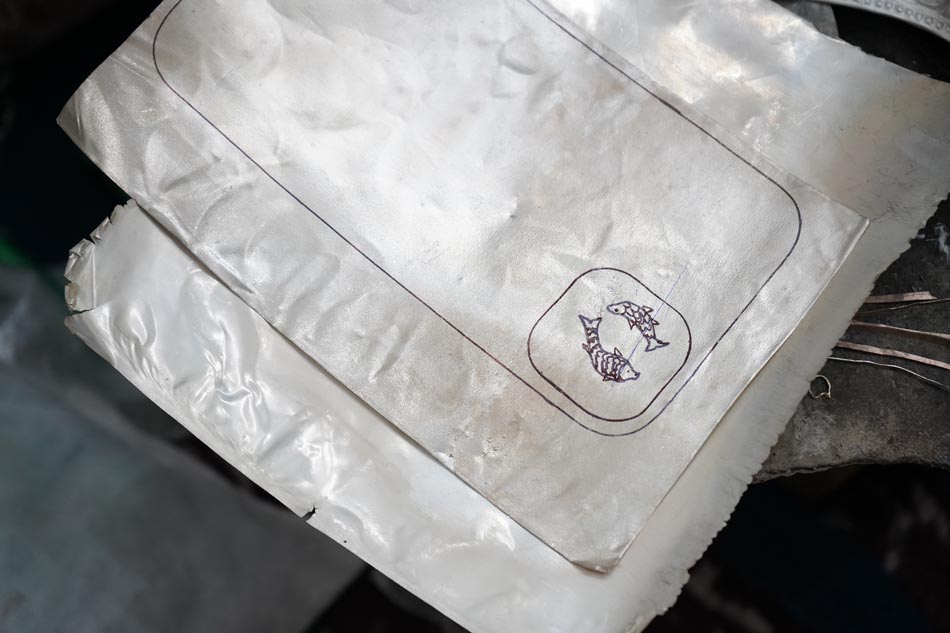
The designs often feature traditional motifs inspired by nature and culture, such as phool (flowers), patti (leaves), ghumeri, tilkadi, tepatiya (three-leaf forms), kamal (lotus), mor (peacock), hathi (elephant), and machli (fish). The fish motif holds particular importance in Lucknow, where it is commonly seen in historic architecture and is considered a symbol of prosperity and good fortune.
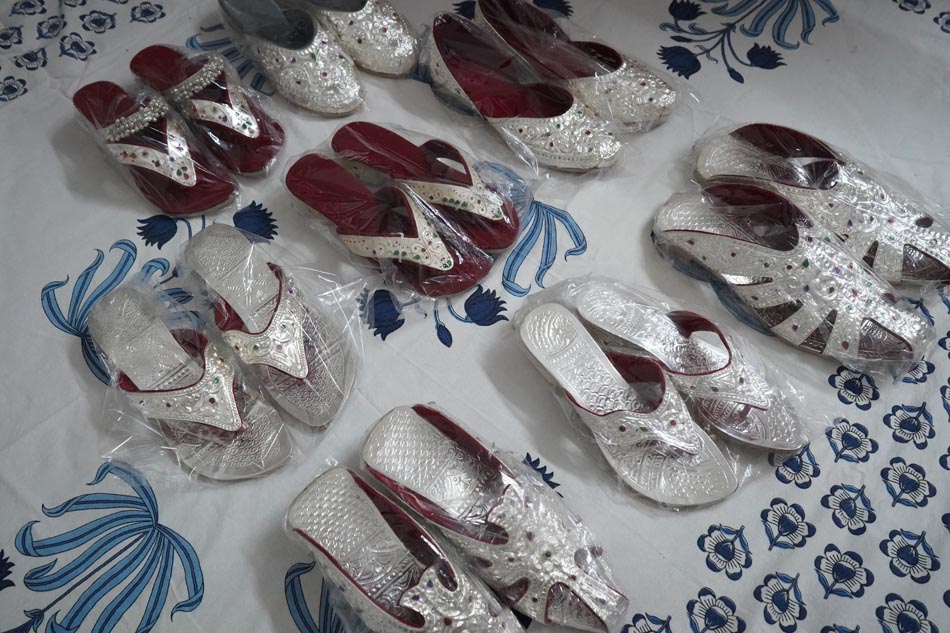
Modern adaptations have also introduced innovative elements. Some chappals feature embedded lights instead of traditional nagina (gemstones), which illuminate as the wearer walks, adding a decorative and contemporary touch. Over time, a wide variety of styles have developed, around 12 to 13 types, including jutti, mojari, slippers, high heels, flats, low heels (around 1 inch), V-shaped Hawai chappals, gents’ nagra, gents’ mojaris, and even Kolhapuri-style chappals. Historically, Nawabs were known to wear nagra chappals, which were especially popular in earlier times, while today high-heeled variants are in the greatest demand.
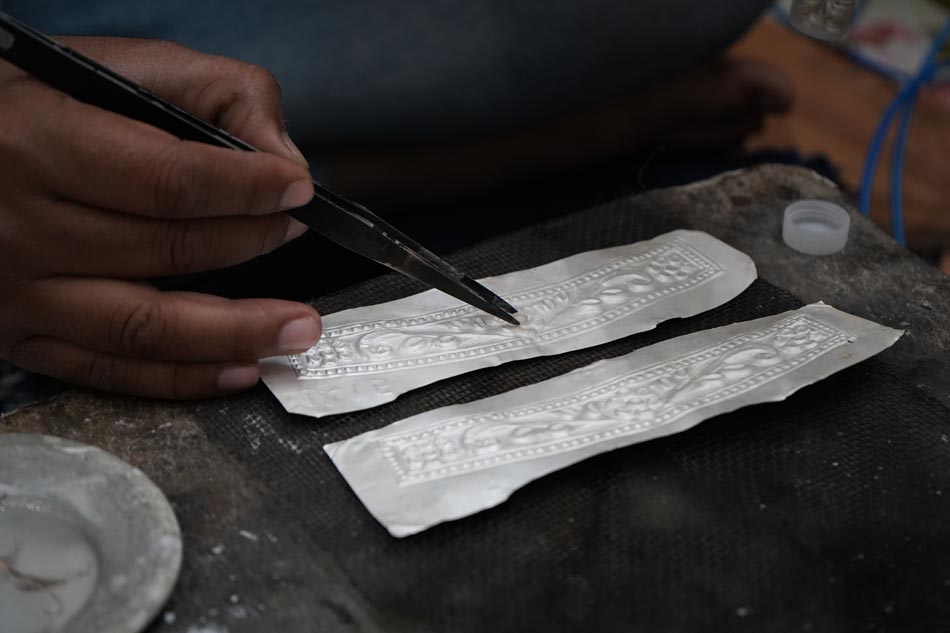
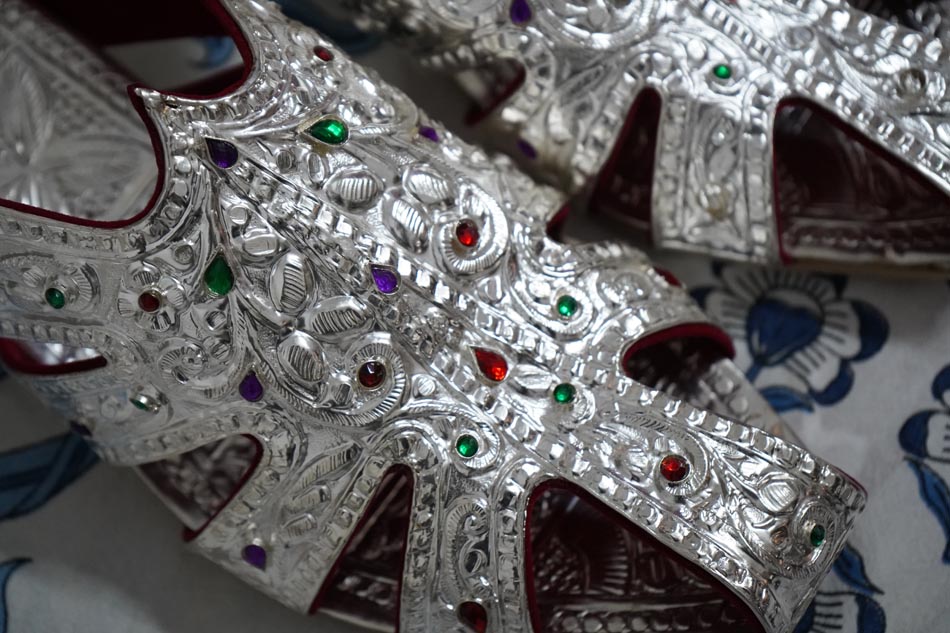
The naqqashi work can be done on both the strap and the sole of the chappal. Interestingly, engraving on the sole does not cause discomfort; instead, it provides a better grip to the foot. There are two primary techniques of naqqashi: one is entirely hand-engraved using fine tools, and the other is tappe wali naqqashi, where patterns are created using blocks, allowing for multiple similar pieces to be produced more efficiently. If the same design is repeated using this block technique, artisans can produce around 12–15 similar pairs in a month.
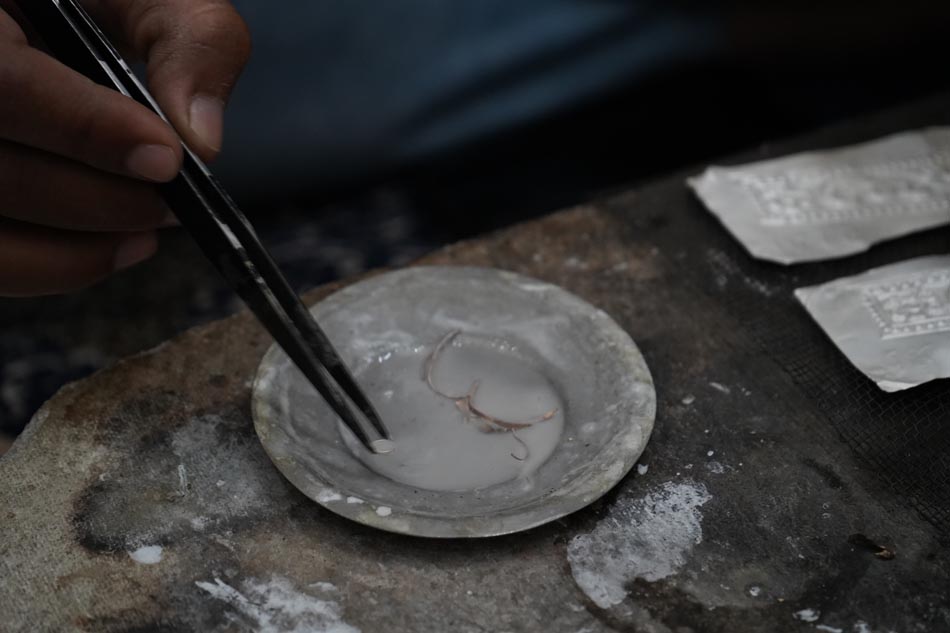
The process involves applying lac (a natural resin) to the back of the silver sheet, which acts as a soft base during engraving and prevents the metal from tearing. This traditional technique ensures precision and durability without the use of chemicals. On average, crafting a single pair weighing around 200 grams can take up to 20 days from start to finish, highlighting the time-intensive nature of the craft. Overall, the designs continue to draw inspiration from nature and the artisans’ surroundings, blending tradition with evolving aesthetics.
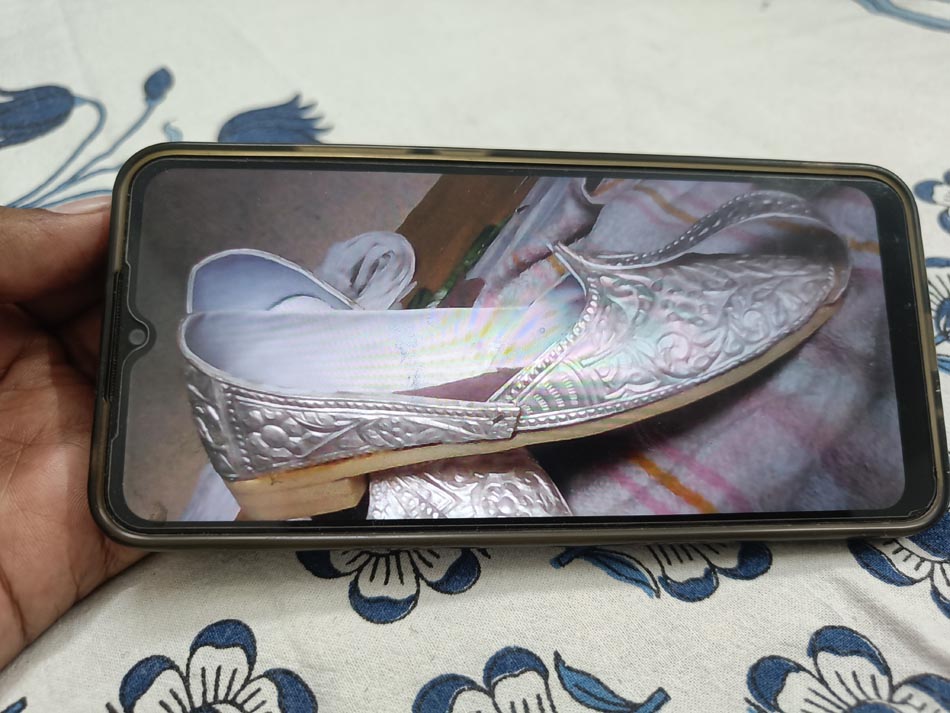
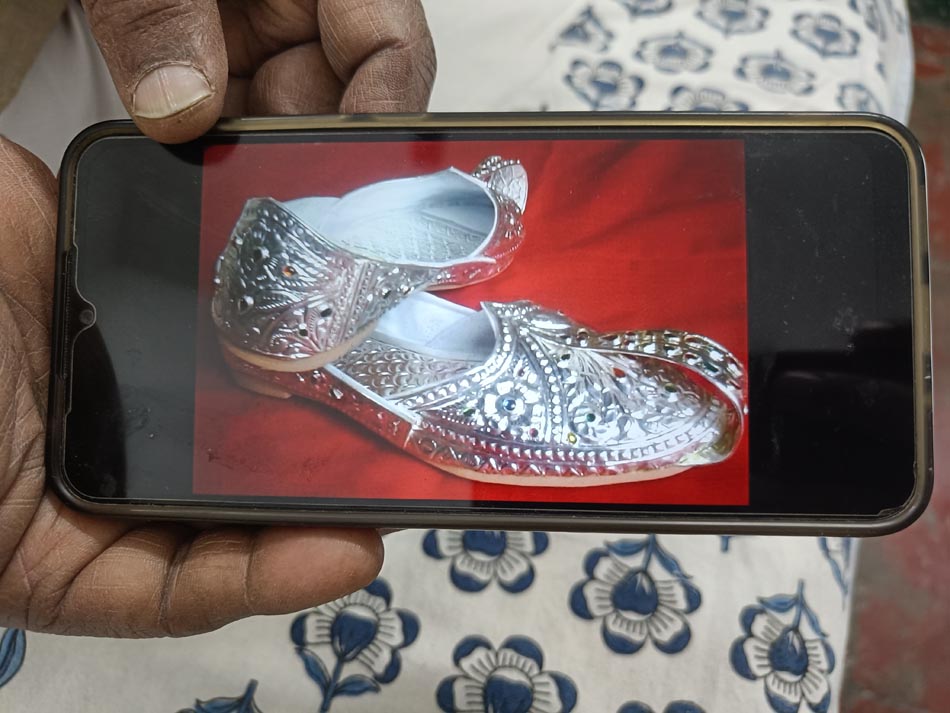
The craft of silver chappal (chandi ki chappal) today faces several critical challenges that threaten its survival. One of the most pressing issues is the drastic decline in skilled artisans; very few practitioners remain who are capable of executing intricate naqqashi work, largely due to the lack of stable and sufficient income. Production is highly limited and not done in bulk; instead, it depends on occasional, specialised orders, often from jewellery stores, making the market niche and inconsistent.
The working conditions of artisans are physically demanding and often unsafe. They spend long hours sitting on the floor, meticulously hammering and engraving silver, usually in dimly lit workshops and relying on natural daylight. The process involves risks such as cuts from sharp silver edges, burns from molten metal, and injuries while joining pieces using gas burners. Due to frequent exposure to such hazards, artisans often require regular medical precautions like tetanus injections. Additionally, the fine and detailed nature of naqqashi puts considerable strain on their eyesight.
The craft is also highly time-sensitive and unforgiving. Any mistake during cutting or engraving can ruin the piece entirely, forcing artisans to restart from scratch, leading to material loss and wasted effort. External factors such as power cuts can halt essential processes like converting silver bricks into sheets, delaying production timelines. Fluctuating silver prices further add to the uncertainty; if artisans purchase silver at a higher rate and the market price drops by the time they sell the product, they incur losses.
Another challenge lies in communication gaps between artisans and customers. Since most chappals are made to order, incorrect size specifications or unclear design expectations can lead to dissatisfaction, especially when the product is intended as a gift.
Moreover, with the continuously increasing price of silver, low financial returns, and difficult working conditions, many artisans are reluctant to pass this craft on to the next generation, accelerating its decline. Together, these challenges highlight the fragile state of this traditional craft and the urgent need for fresh design interventions, support, and sustainable solutions.
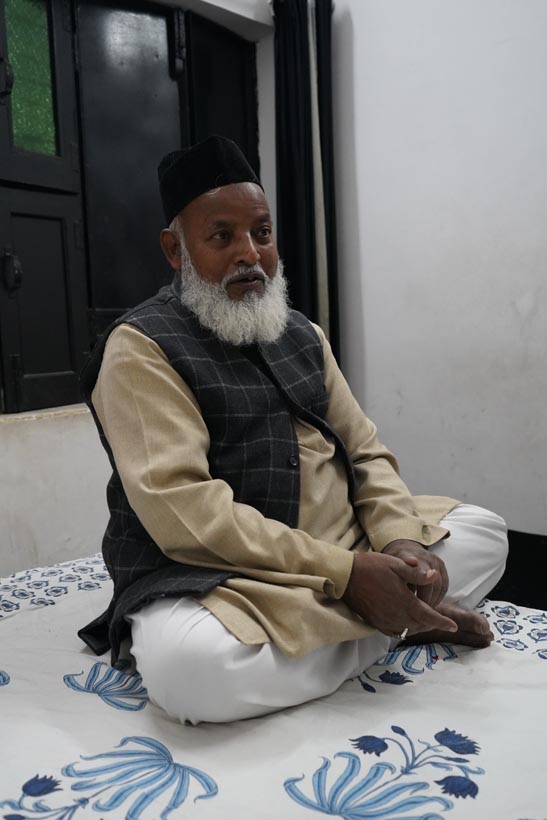
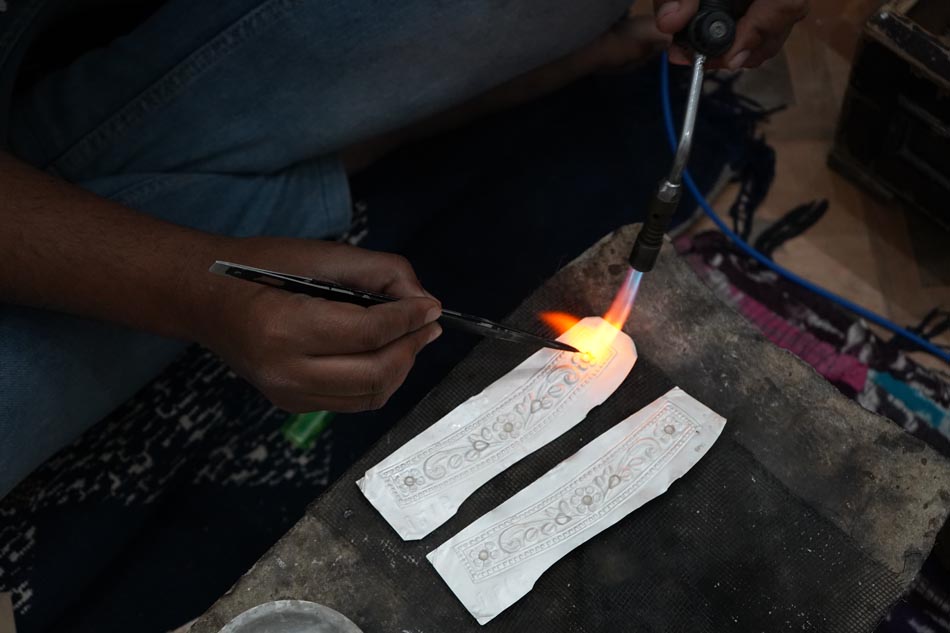
The making of silver chappals (chandi ki chappal) is a collaborative process that involves multiple stages. It is not a one-person job. First, the silver is cut into sheets using machines, then skilled craftsmen carry out the intricate naqqashi (engraving), and finally, the pieces are assembled into the finished chappal. Production is not done in bulk; instead, each pair is made based on demand. Most orders are typically placed by large jewellery stores, although at times, individual customers also approach the artisans directly out of curiosity or for custom-made pieces.
The primary raw materials used in making silver chappals (chandi ki chappal) include
silver sheets (locally called patta) – which form the main structure and surface for naqqashi (engraving);
Velvet– which is used for the sole to provide comfort and a rich finish; and
Gemstones (nagina) – which are sometimes added as embellishments to enhance the decorative appeal of the chappals.
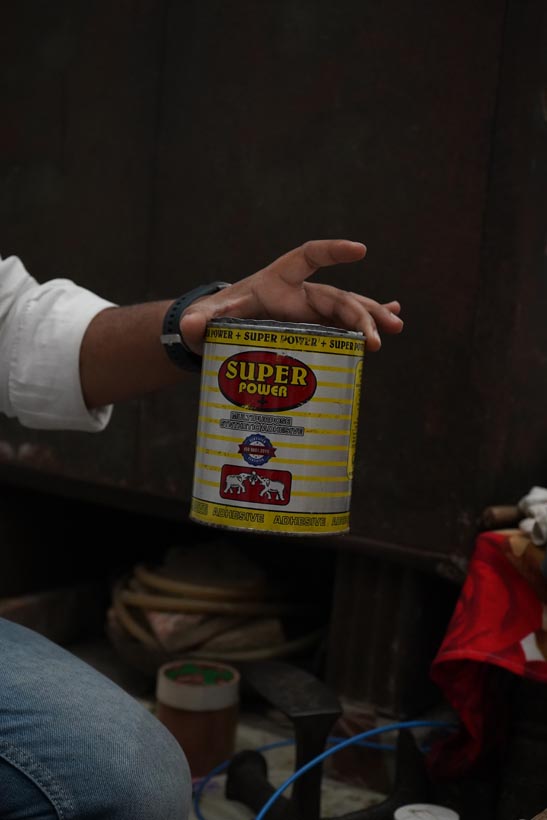
Glue (chappal solution) – used for assembling different parts of the chappal
Rubber sheet – used in the sole for grip and support
Banver sheet (Dafati / cardboard) – used for internal structuring and layering
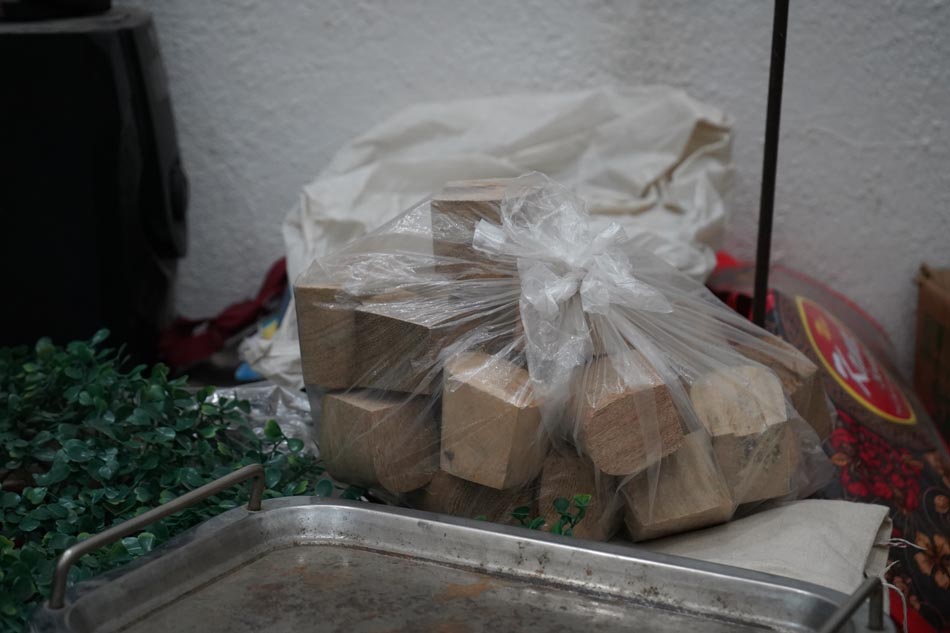
Wood (Gutka) – used to make the heel of the chappal
Gas – used for soldering
Borax (Suhaga or Tanka) – which is the essential flux used in silver soldering and brazing.
Lac – Used as a base material during the carving process.
Reetha and Shikakai – Natural materials used for cleaning silver.
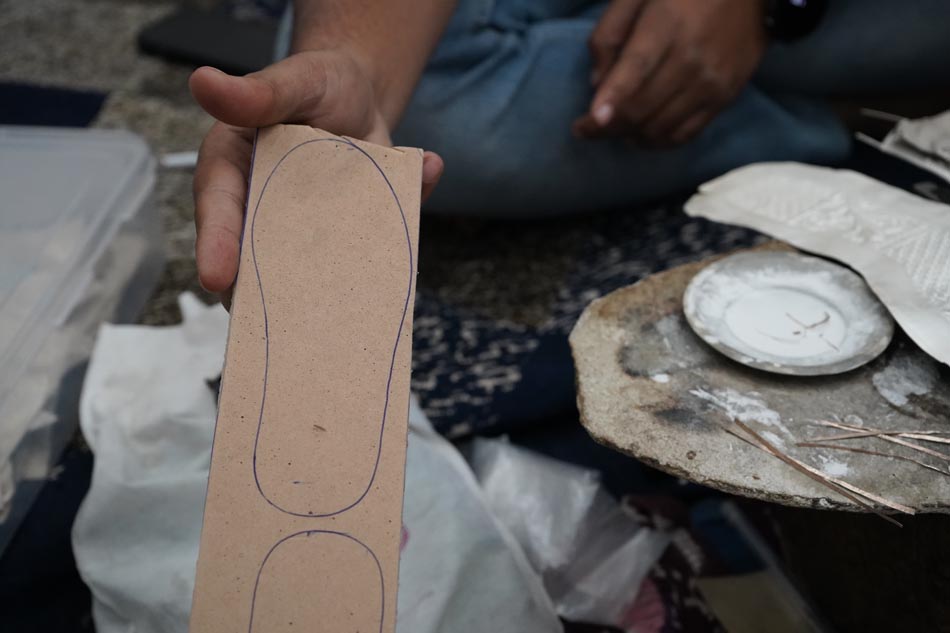
Furma / Farma – foot-shaped mould or frame (available in different sizes) to give structure to the chappal
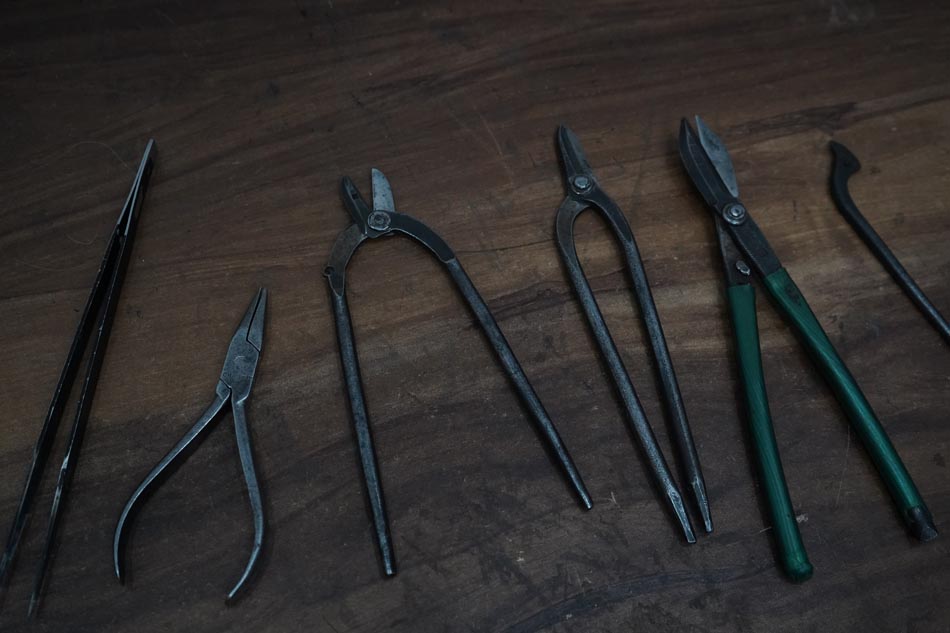
Chimti (tongs) – used to hold heated or small components
Plas (pliers) – used for gripping and bending materials
Katrani (cutter) – used for cutting materials precisely
Colet – ring setting used to fix gemstones (nagina)
Zangut – a tool used to pull wire
Jantri – used to flatten metal wire
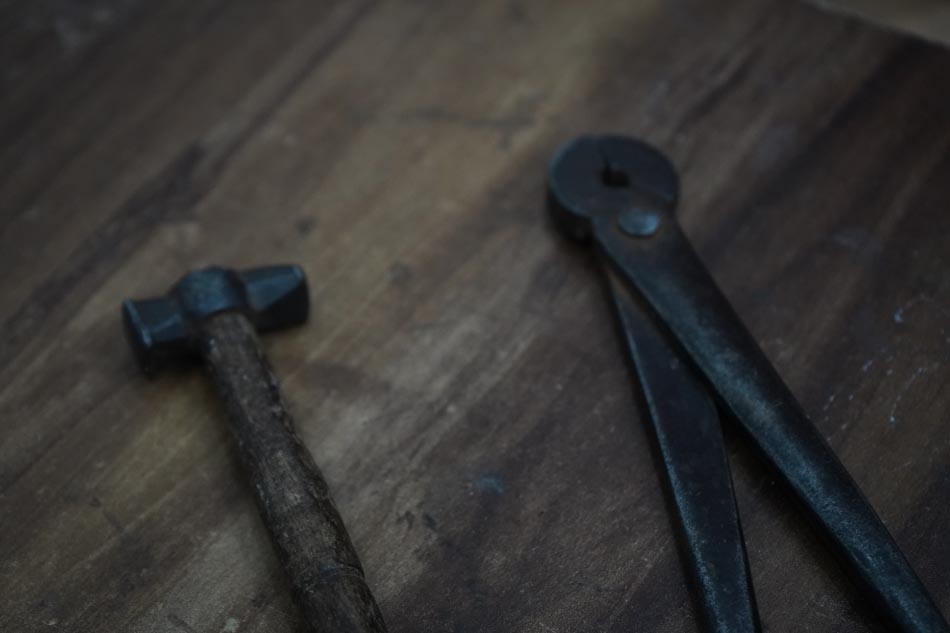
Nihai (anvil) – used to hammer and thin the silver sheet
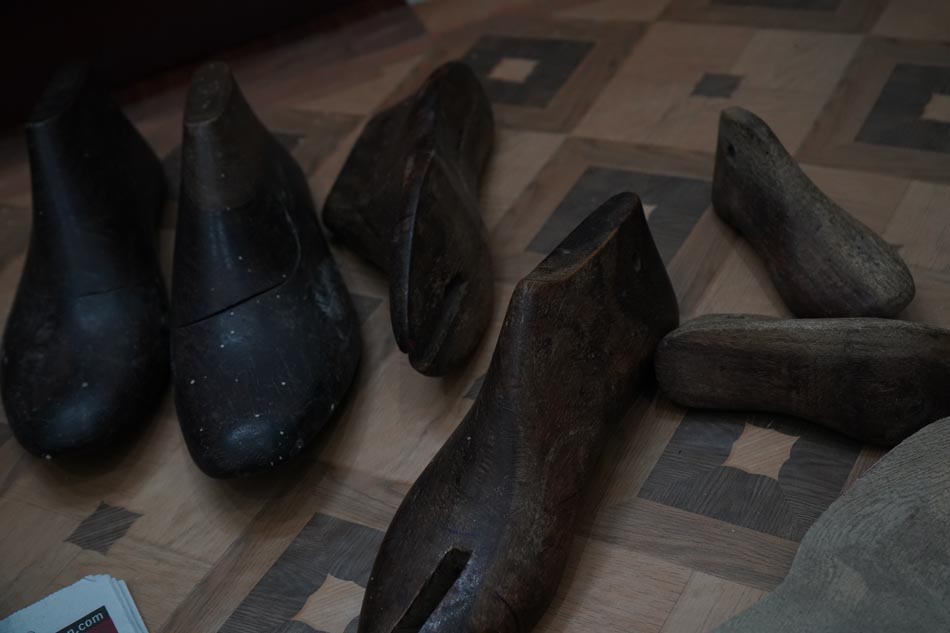
Paudaan / Shoe lasts – used to shape the chappal accurately
Block (Tapha) – block used for creating repeated impressions in tappe wali naqqashi
Gas burner – used for soldering
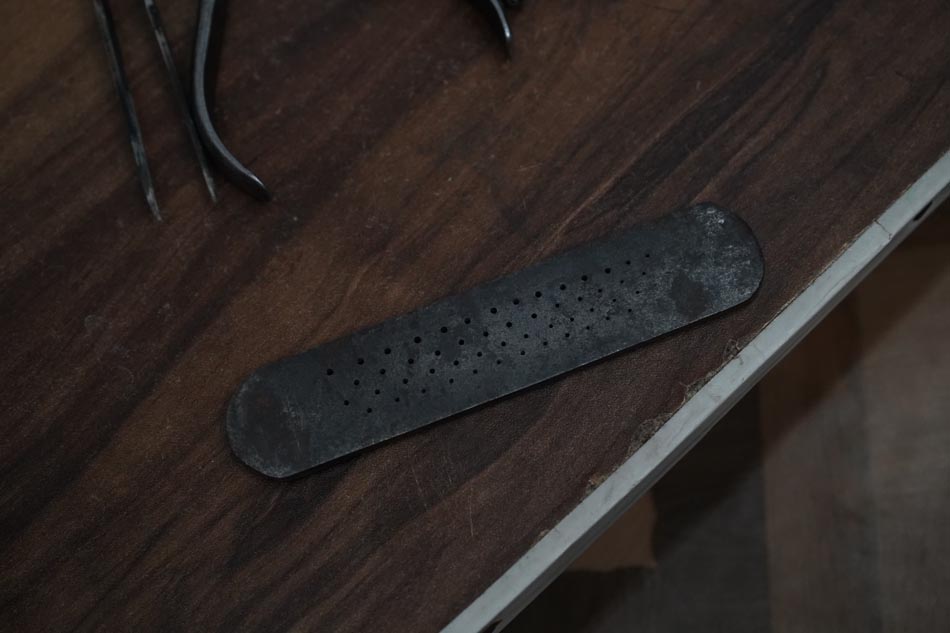
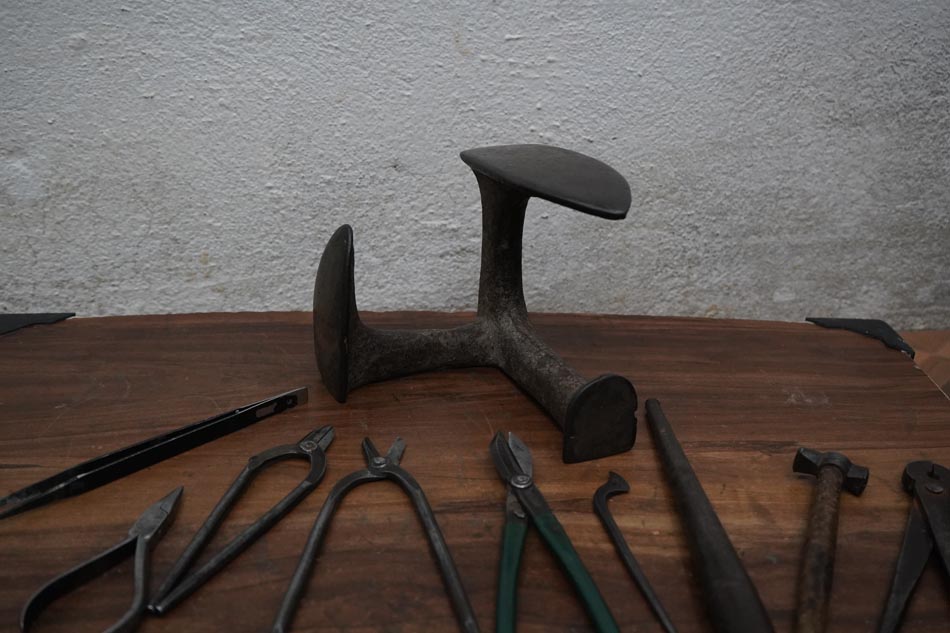
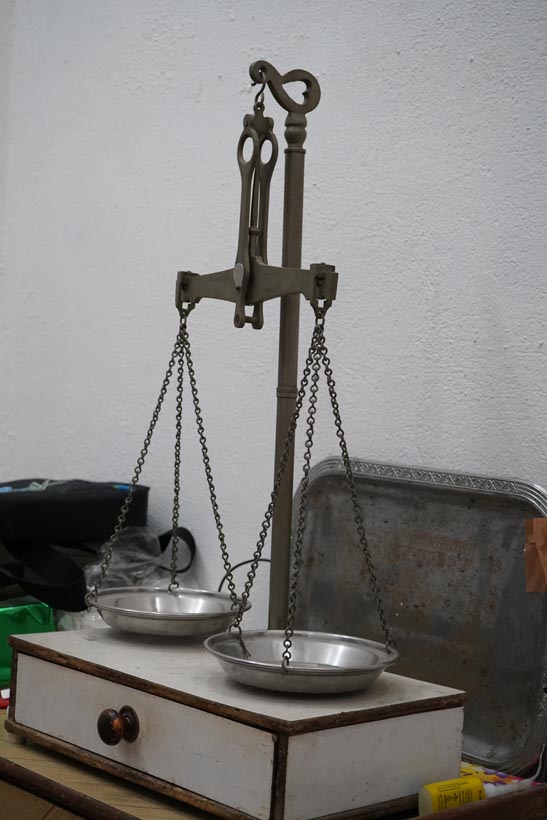
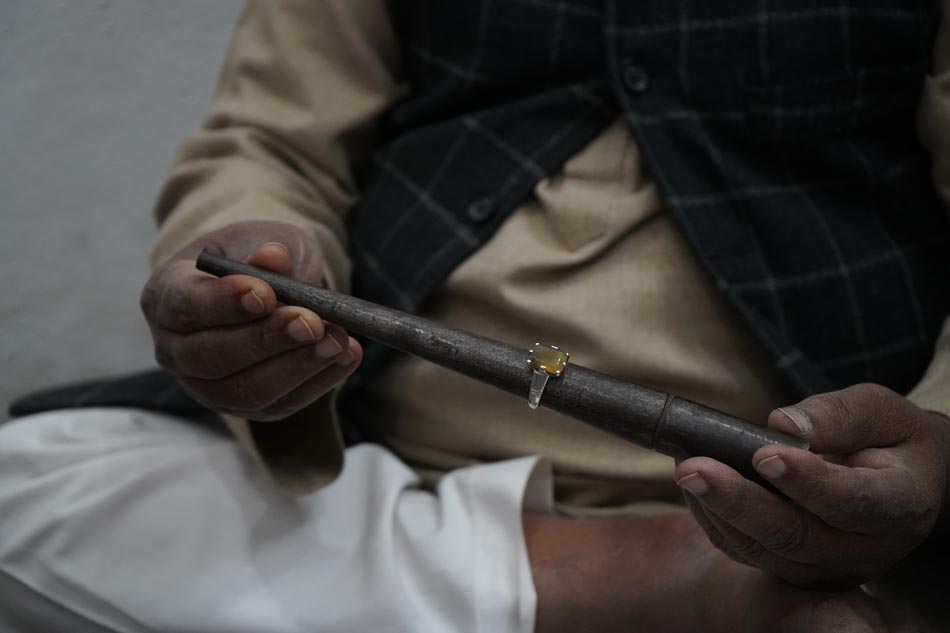
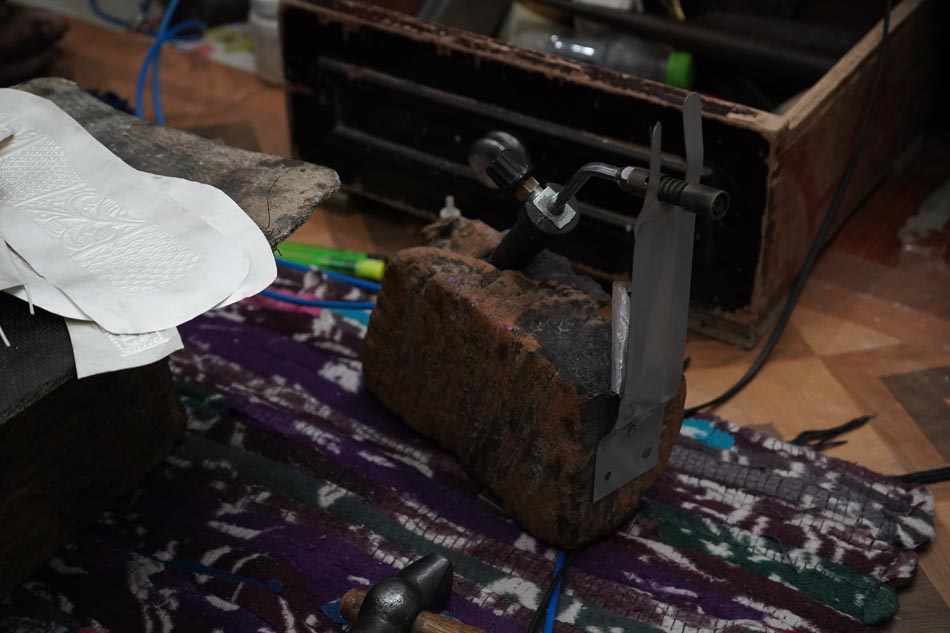
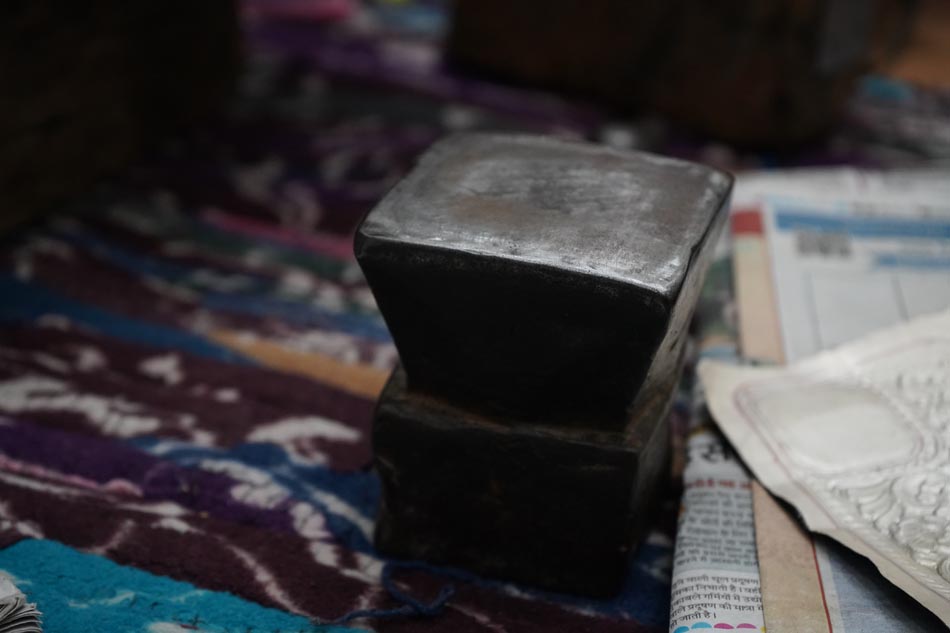
Not Found
The process of making silver chappals (chandi ki chappal) begins with the purchase of silver bricks from the market. Traditionally, these bricks were melted in a furnace (bhatti), but today artisans often get them machine-rolled into sheets in areas like Chowk. These silver sheets are available in various sizes and thicknesses depending on the product. The sheets are then cut into the required shape and heated using a gas burner to remove any moisture that may interfere with the process.
Once prepared, the design (naqqashi) is carried out on the silver sheet. A basic outline is first drawn using a pencil and prakar (compass), after which artisans engrave intricate patterns by rhythmically hammering tools onto the surface. In some cases, artisans outsource the naqqashi work to specialised craftsmen. The designs on these chappals often feature traditional motifs inspired by nature and culture.
To strengthen and clean the piece, the silver is treated and polished. A natural solution made from reetha and shikakai is used for cleaning and enhancing shine, often applied with a tar brush. The sheet is also sometimes treated with mild chemicals (tejab) to remove impurities and achieve brightness. The use of lac (a natural resin) as a base during engraving helps support the metal and prevent tearing; it is later removed by heating.
The crucial stages of dalhai (fitting and shaping) follow, where the engraved silver sheet is moulded into the form of a chappal using a furma (foot-shaped mould). The silver sheet is then layered onto a banver (cardboard) base for strength and further attached to a rubber sheet for the sole. Velvet is commonly used for the base and inner lining of the strap to provide comfort and prevent injury, replacing the earlier use of leather and nails.
The final touch involves setting gemstones (nagina) or sometimes applying meena (enamel work) for added decoration. The process is commonly known as judaai (joining), which involves soldering different parts using a gas flame. Small silver elements are also attached to create a base for setting gemstones, using suhaga and taka in the soldering process. These form colet (small circular rings) where nagina (gemstones) are fixed; in some designs, ghungroo (kunda) are also added for embellishment.
Some items, like jewellery or mobile covers, can be made from a single piece without the judaai process. Once completed, the chappal is weighed on a scale (tarazu), and its price is determined based on the amount of silver used.
Overall, the craft is a labour-intensive, multi-step process requiring collaboration between artisans, from silver cutting to engraving and final assembly. It involves long hours of meticulous work, combining traditional techniques such as naqqashi, jaali (filigree), and gemstone setting, resulting in a product that reflects both precision and heritage craftsmanship.
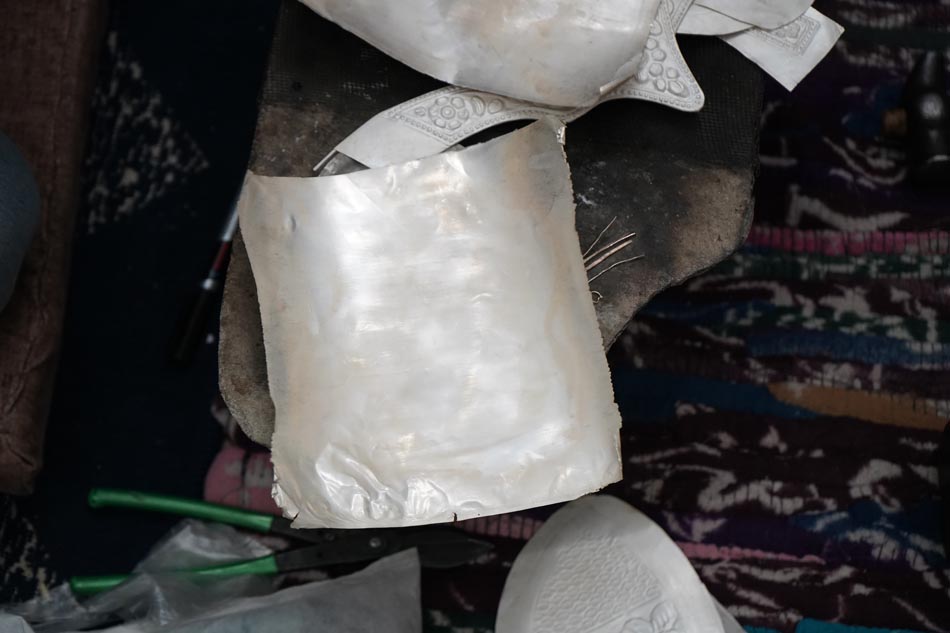
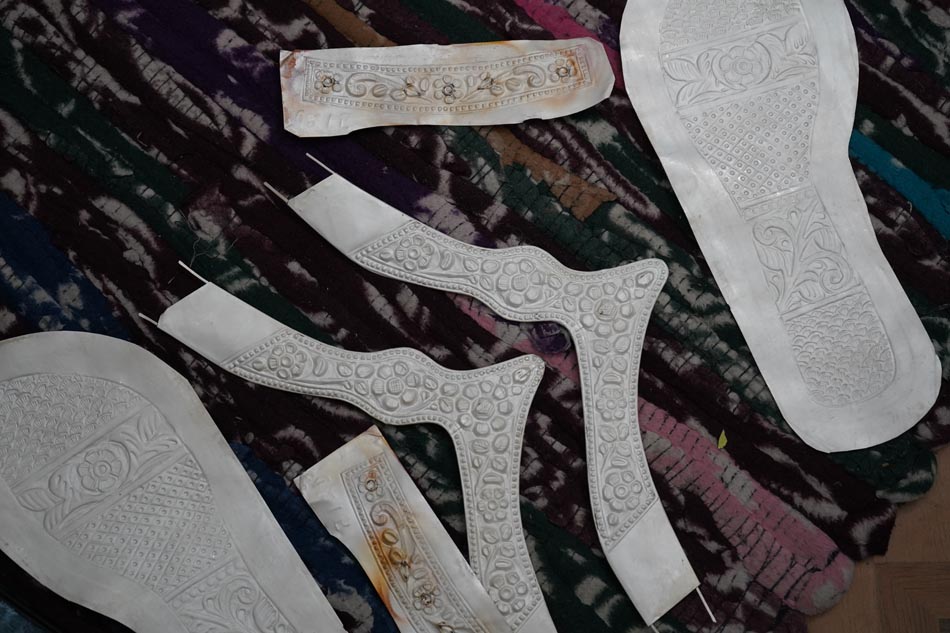
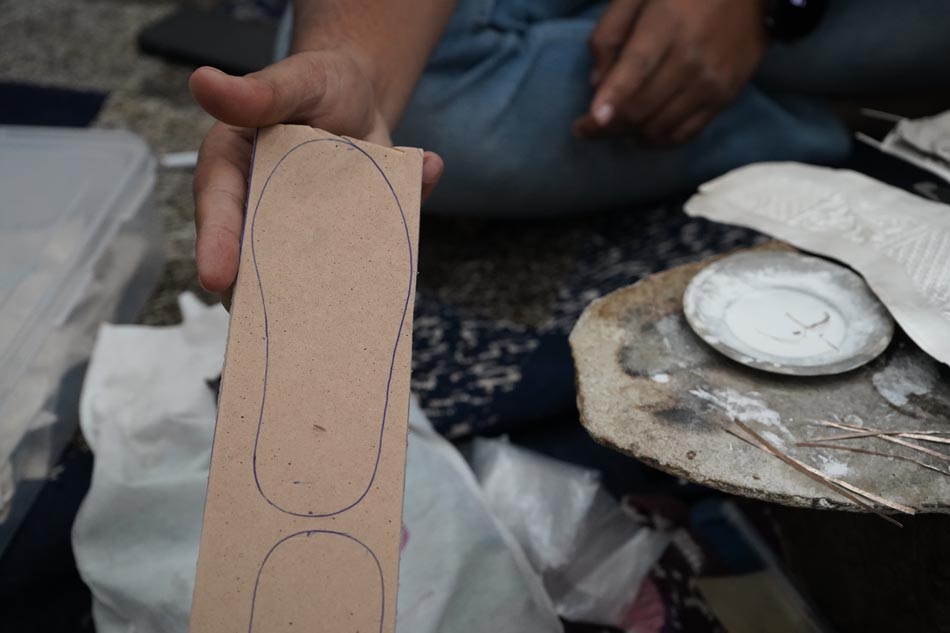
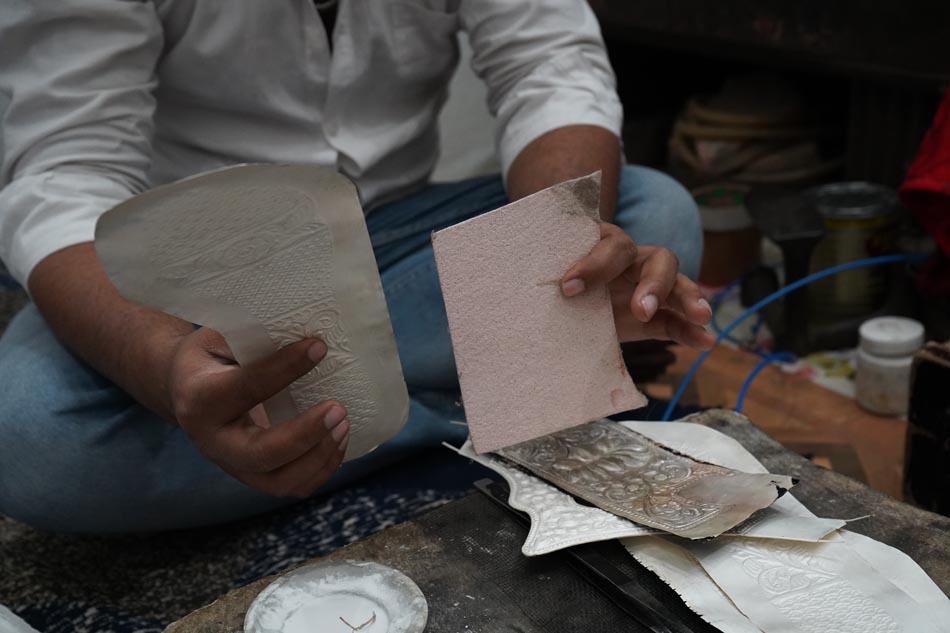
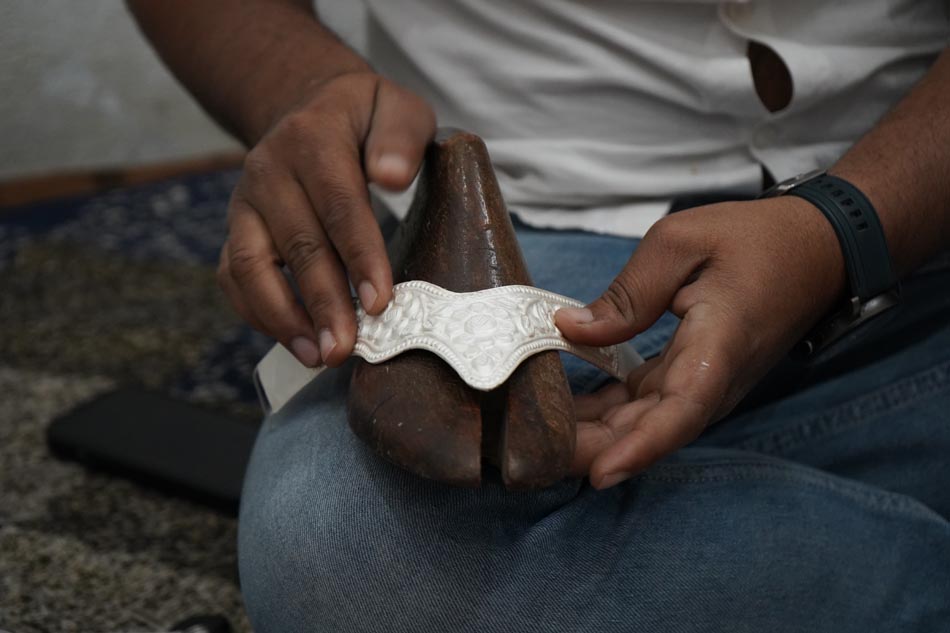
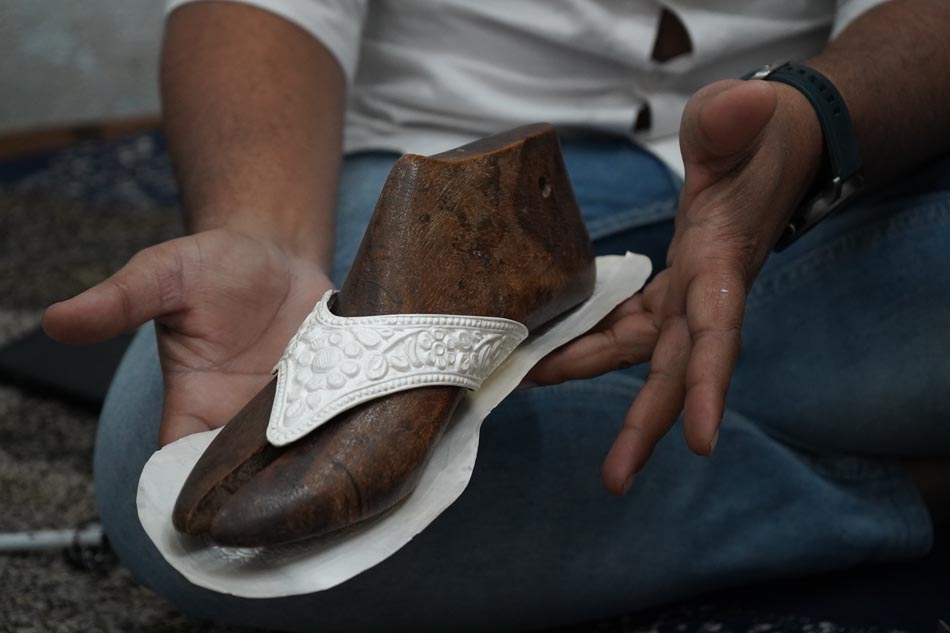
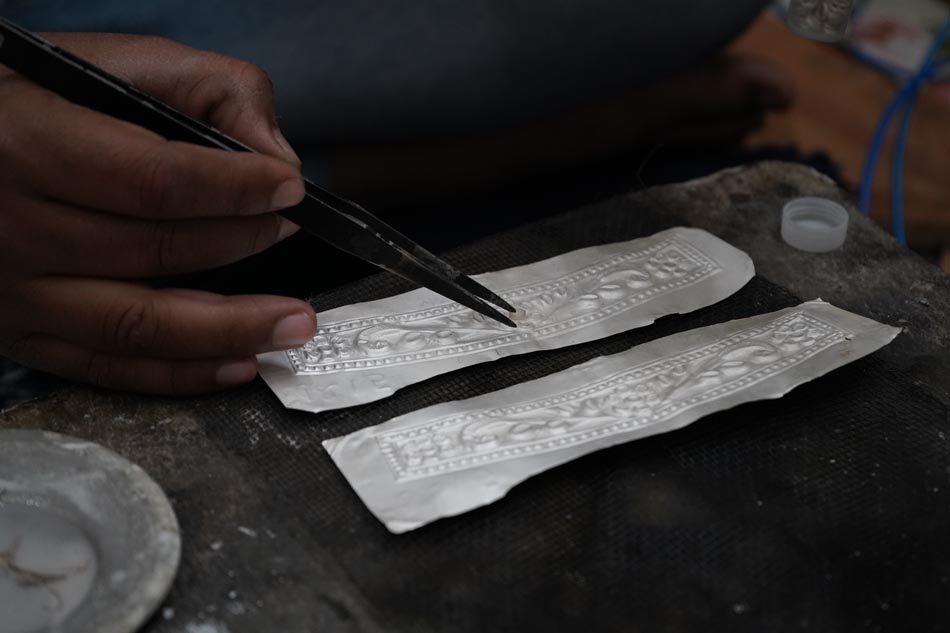
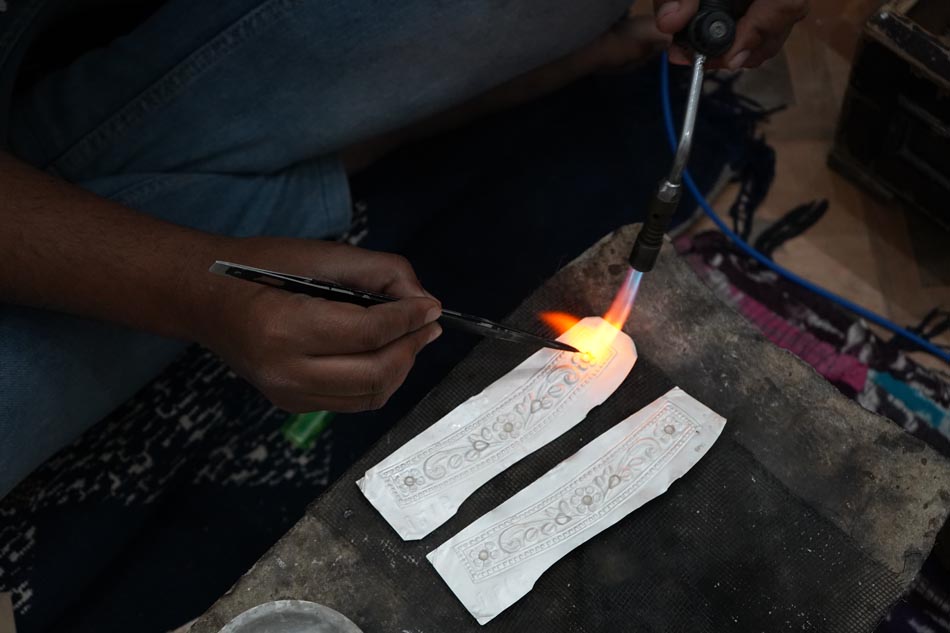
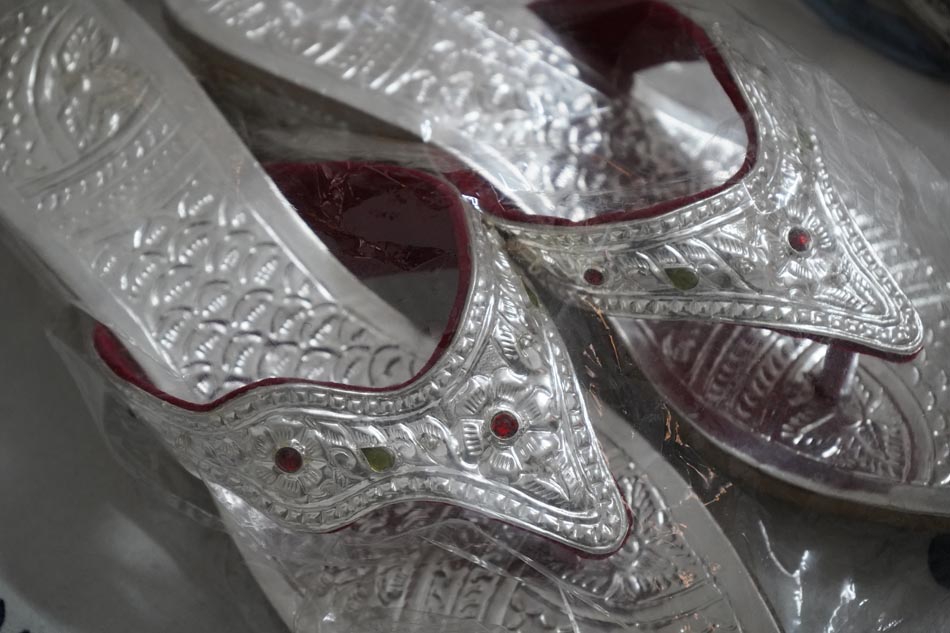
During the making of silver chappals (chandi ki chappal), small leftover pieces and scraps of silver are carefully collected and melted down to form silver bricks again, ensuring minimal material loss. Artisans follow precise measurements throughout the process to reduce wastage as much as possible. However, despite these efforts, a small amount of silver, approximately 10 grams per kilogram of silver, may still be lost as tiny particles, which can get misplaced or stick to clothes and tools during the crafting process.
The history of Lucknow, is a rich and layered narrative that traces back to ancient times. It is believed to have been a part of the Kosala Mahajanapada, ruled by the Suryavanshi (Ikshvaku) dynasty. This
ancient history intertwines with the legendary tales of the Ramayana. According to popular tradition, after the conquest of Sri Lanka, Ramchandra gifted this territory to his devoted brother, Lakshmana, leading to the city's original name being referred to as Lakshmanpur or Lachmanpur, which later evolved into its present name, Lucknow. While legends suggest that the entire population of Ayodhya departed following Rama’s ascent to heaven, leaving Lakshmanpur as a suburban outpost, the region remains a significant link to the historical sites of Ayodhya and Shravasti.
From the 14th century onward, Lucknow came under successive rulers, including the Delhi Sultanate, the Mughals, the Nawabs of Awadh, and later the British. However, its true prominence grew during the Mughal period, especially after Emperor Akbar established the province of Oudh (Awadh) in 1580. The archives of Akbar’s reign mark a definitive shift in the city's status. Its modern history begins in 1732 when the Persian adventurer named Mohammed Amin, better known as Saadat Khan, was appointed the Governor of Awadh. His descendants, who came to be known as the Nawab Wazirs, gradually asserted their independence from the declining Mughal authority, setting the stage for Lucknow to become a sovereign cultural capital.
A defining moment in the city’s history occurred in 1775 when Nawab Asaf-ud-Daulah relocated the capital from Faizabad to Lucknow. This move ushered in an era of unprecedented architectural splendor and cultural refinement. Under the Nawabs, Lucknow flourished as a hub of art and literature, drawing artists and craftsmen from declining Mughal centers. This migration shaped the city’s unique identity of "Tehzeeb" (courtly etiquette) and artistic excellence. Magnificent structures like the Bara Imambara, the Rumi Darwaza, and the Chhota Imambara were constructed during this time, reflecting a sophisticated blend of Mughal, Persian, and emerging European influences.
However, this period of autonomy slowly eroded as the Nawabs became increasingly dependent on British support and succumbed to mounting political pressures. The mid-19th century brought a tumultuous turning point when the British East India Company, under Lord Dalhousie, annexed Awadh in 1856. This ended the Nawabi rule and led to the virtual imprisonment and exile of the last Nawab, Wajid Ali Shah, to Calcutta. The annexation sparked significant unrest, culminating in the Indian Rebellion of 1857. During this fight for freedom, Begum Hazrat Mahal, one of Wajid Ali Shah’s wives, played a prominent role in leading the resistance against British forces.Despite the resistance, Awadh was firmly incorporated into British India, signaling the end of an era and the beginning of a new chapter in the region's history. The legacy of Awadh, characterized by its rich cultural heritage and tumultuous past, continues to resonate in
modern-day India.
Today, Lucknow stands as a vibrant, cosmopolitan city that balances its historic heritage with modern development. Known for its architecture, cuisine, and manners (tehzeeb), it remains a significant cultural and urban centre where tradition and modernity coexist seamlessly.
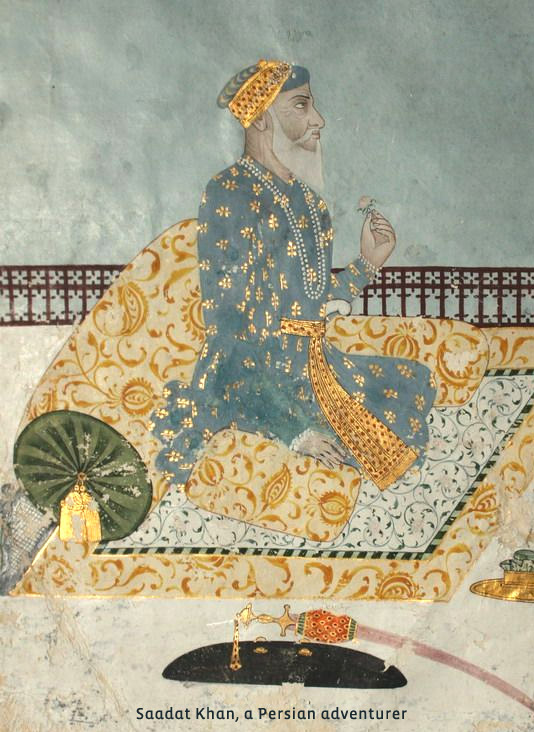
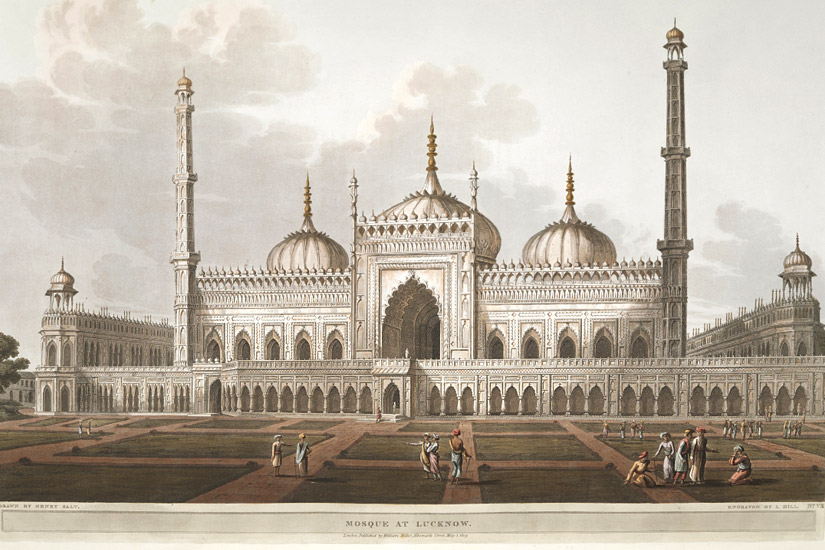
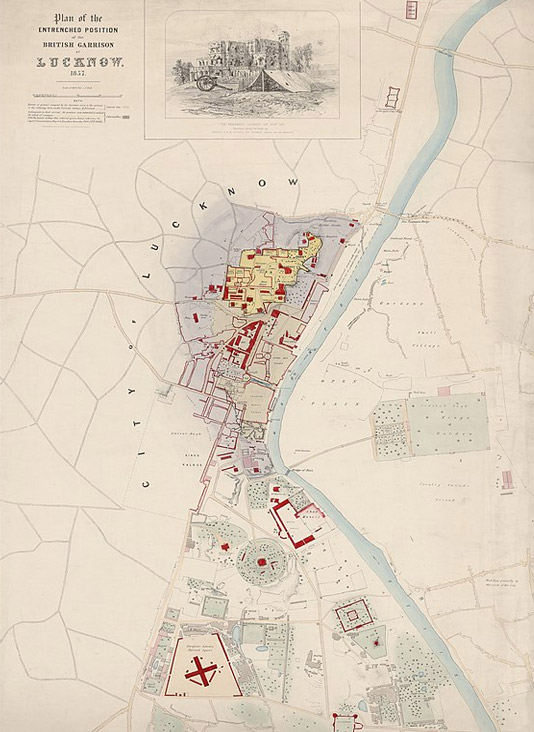
Lucknow, the capital of Uttar Pradesh, is located in the northern Gangetic plains of India at approximately 26.50° N latitude and 80.50° E longitude, with an average elevation of about 123 metres above sea level. The city lies along the Gomti River, its primary geographical feature, which flows through Lucknow.
Situated in the heart of the Indo-Gangetic Plain, Lucknow is surrounded by towns and districts such as Malihabad, Kakori, Mohanlalganj, Gosainganj, Chinhat, and Itaunja. It is bordered by Barabanki to the east, Unnao to the west, Raebareli to the south, and Sitapur and Hardoi to the north.
Morphologically, the city can be divided into three zones: the central business district (including Hazratganj, Aminabad, and Chowk), a middle residential zone, and an outer zone comprising newly incorporated villages.
Lucknow experiences a varied climate with extreme summers and winters, influenced by its geographical location. Its strategic position also makes it well-connected by air, rail, and road, contributing to its growth as a major urban centre.
Lucknow features a humid subtropical climate, characterised by hot summers, cool winters, and a distinct monsoon season. Being a landlocked city in the Indo-Gangetic plains, it experiences a continental climate with significant seasonal variations. The city experiences a continental weather pattern, which leads to significant variations in temperature and humidity throughout the year.
Summers in Lucknow are notably intense, typically lasting from March to mid-May. During this period, the weather is extremely hot and dry, with average maximum temperatures soaring into the high 30s. At the peak of summer, temperatures frequently range between 38°C and 45°C, occasionally
spiking to 46°C during severe heat waves. This dry heat creates a challenging environment before the arrival of the seasonal rains.
The monsoon season provides a critical transition, occurring between June and October. This period accounts for more than nine-tenths of the city’s annual precipitation, with roughly 75% to 90% of the rain falling specifically between June and September due to the southwest monsoon winds. While the average annual rainfall is approximately 827.2 mm (about 32.57 inches), it can vary between 800 mm and 1000 mm. This season is marked by a significant increase in humidity and persistent cloud cover.
As the rains recede, the city moves into a cool and dry winter, which extends from mid-November through February. During these months, temperatures range from a pleasant maximum of 25°C to chilly minimums between 3°C and 7°C. A defining feature of Lucknow's winter is the dense fog that
commonly blankets the city from mid-December to late January. Occasionally, the city may also receive light frontal rainfall in January, driven by the northeast monsoon. Overall, Lucknow’s climate is defined by these extreme temperature ranges and a heavy reliance on the monsoon cycle.
Lucknow stands as a pivotal infrastructure and economic powerhouse in Northern India. As a major transportation hub, the city is seamlessly linked to the rest of the country via an extensive network of national highways, including NH-30, NH-27, and NH-24. This road network is further strengthened by expressways like the Agra–Lucknow Expressway and the Purvanchal Expressway, which have drastically reduced travel times to Delhi and eastern Uttar Pradesh. Complementing these roads is a
robust railway system centred at the Charbagh Railway Station. Renowned for its stunning Indo- Saracenic architecture, Charbagh is one of the busiest stations in North India, connecting the city to every major Indian metro, while suburban stations like Bakshi Ka Talab and Kakori cater to local
commuting needs.
The city’s internal and international reach is further expanded through advanced air facilities. The Chaudhary Charan Singh International Airport in Amausi serves as a vital gateway, offering domestic flights to major cities like Mumbai and Bengaluru, as well as international routes to Dubai, Muscat, and Bangkok. Within the city, the Lucknow Metro, inaugurated in 2017, has revolutionized urban travel by providing a fast, efficient link between key locations like Munshipulia and the airport. This is supported by an integrated public transport system comprising CNG low-floor buses operated by LCTSL, auto-rickshaws, and modern app-based commute services, ensuring smooth mobility for its growing population.
Beyond its role as a transit hub, Lucknow has evolved into a diversified centre for industry, defence, and education. It is an emerging destination for IT, software, and automobile sectors, while also serving as the strategic Headquarters of the Central Command of the Indian Army. The city’s intellectual landscape is equally prestigious, housing elite institutions such as IIM Lucknow, IIIT Lucknow, and the Central Drug Research Institute (CDRI). This blend of modern industrial growth and academic excellence is anchored by a deep-rooted cultural identity. Recently designated as a City of Gastronomy by UNESCO, Overall, Lucknow's well-developed infrastructure plays a vital role in facilitating mobility, commerce, and connectivity, contributing to the city's growth and development.
Lucknow, the seat of the Nawabs of Awadh, is renowned for its rich architectural heritage, showcasing a distinctive blend of Indo-Islamic, Mughal, Persian, and European styles, often termed as Awadhi-European or Indo-Saracenic.
The Nawabi era was marked by an architectural "Golden Age" where traditional aesthetics merged with emerging Western influences. The city’s identity is defined by its use of lakhauri bricks, lime plaster, and delicate stucco work. Religious structures such as imambaras and mosques stand alongside secular wonders like baradaris (pavilions), enclosed baghs (gardens), and taikhanas (underground chambers). A unique symbolic motif found throughout the city is the fish, an auspicious
emblem used on gateways and royal buildings.
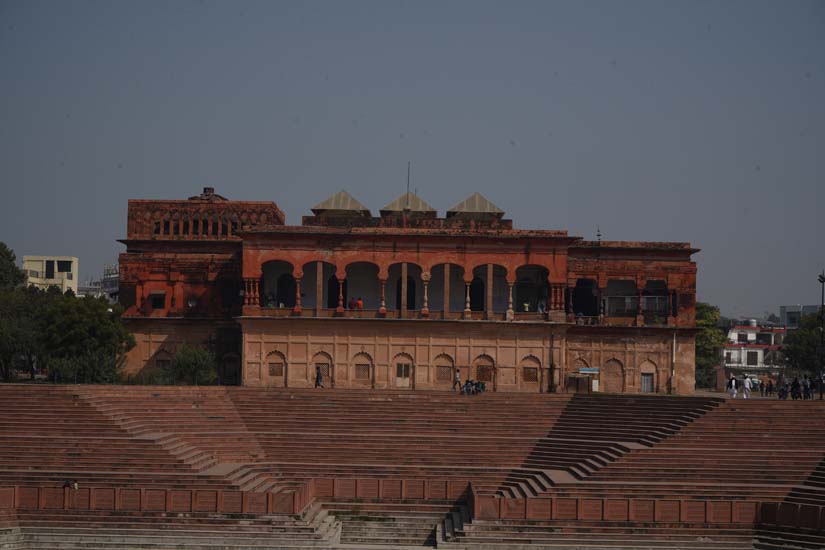
Among the city’s most iconic landmarks is the Bara Imambara, built in 1784 by Nawab Asaf-ud-Daula. It is a structural marvel, featuring Asia's largest vaulted hall constructed without any external pillars or beams. Nearby stands the Rumi Darwaza, a 60-foot-tall gateway inspired by the Sublime Porte in Istanbul, which serves as a grand entrance to the old city. The Chhota Imambara, with its intricate calligraphy and chandeliers, further exemplifies the "Nawabi fusion" of Mughlai and Turkish styles.
As the British influence grew, the architectural landscape expanded to include English Baroque and Neo-Classical styles. The Dilkusha Kothi remains a prime example of English Baroque design, while La Martiniere College is a unique blend of Italian and Indian aesthetics. Later, the Indo- Saracenic Revival style became prominent in civic structures like the Charbagh Railway Station and the Uttar Pradesh Vidhan Sabha building, which combine European structural concepts with
Indian domes and arches.
Today, Lucknow’s architecture continues to evolve, seamlessly blending the old with the new. In the central hub of Hazratganj, Victorian-era lamp-posts and colonial-style facades stand alongside contemporary multi-level parking lots and modern offices. This coexistence shows the city’s historical grandeur and urban development.
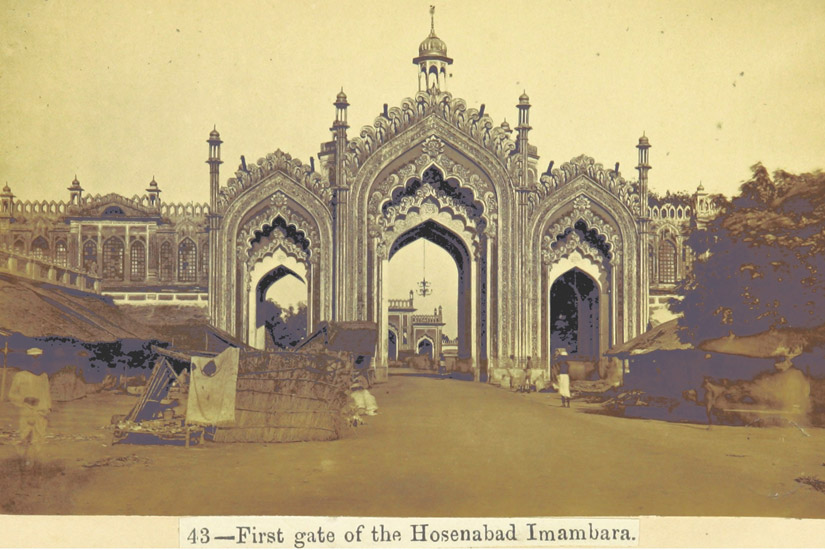
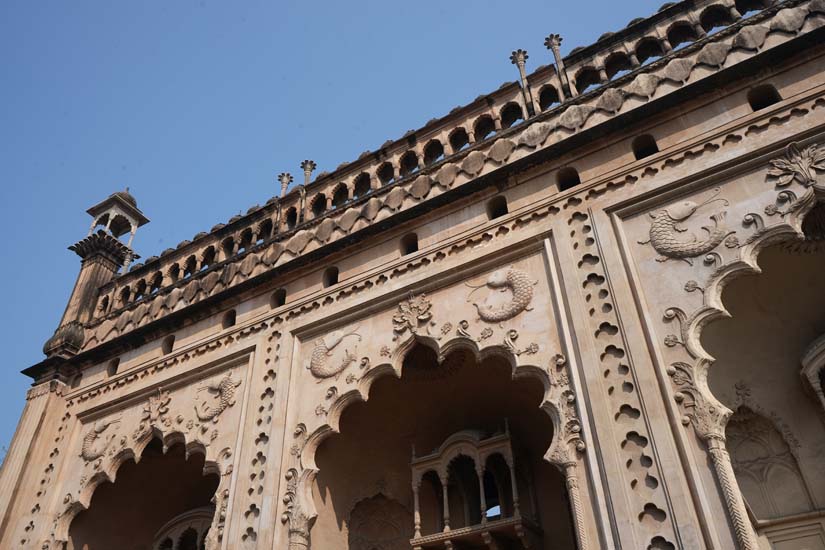
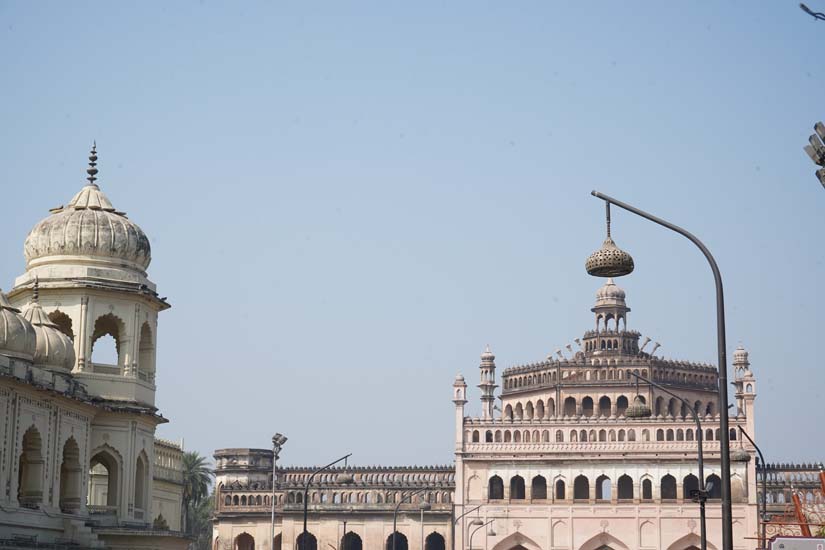
The city of lucknow is defined by Lucknowi Tehzeeb,a sophisticated composite culture rooted in harmony, elegance, and warmth. The city owes much of its cultural richness to the Nawabs of Awadh, who fostered secular and combined traditions. Central to this identity is the concept of Adab (refined courtesy) and Mehman-nawazi (hospitality), traits that remain deeply ingrained in the city’s native people. Even today, the polished manner of speaking, the distinct Lakhnavi boli,serves as a hallmark of its residents, who proudly identify as Lakhnavis.
Language plays a pivotal role in Lucknow's culture, with colloquial Hindustani being the most commonly spoken tongue, alongside Hindi and Indian English. The Urdu language, deeply ingrained in Lucknavi culture, is used in poetry, literature, and by affluent families, adding to the citys linguistic diversity. Additionally, Awadhi, a local dialect, continues to be spoken in Lucknow's rural areas and by its urban populace.
Prominent for its literature, the city has produced legendary poets like Mir Babar Ali Anis and Mirza Dabeer, masters of poetry. The city's influence extended to revolutionary figures like Ram Prasad
Bismil, who immortalized Lucknow in his poetry.
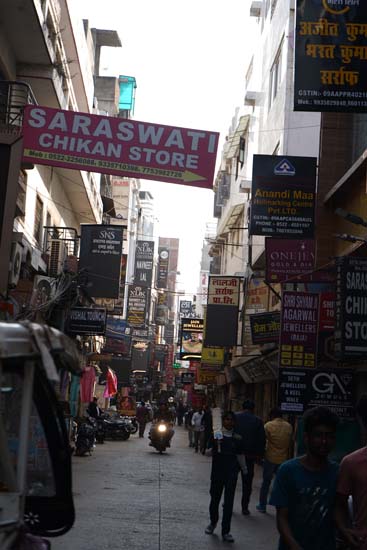
Additionally, the city’s culture is celebrated through oral traditions like Ghazals and Sher-o-shairi, and through the rhythmic elegance of Kathak dance, specifically the Lucknow Gharana, which was represented by masters like Pandit Birju Maharaj. The bustling lanes of Chowk and Aminabad remain the city's cultural heart. These historic bazaars
are the epicentre of Lucknow’s artistic heritage and the best places to witness its living traditions.
The city’s rich textile legacy is most evident here, particularly in the traditional Gharara an exquisite women's outfit featuring pleated trousers and intricate embroidery that originated in the Nawabi courts.
These markets also hum with the energy of traditional artisans and the spirit of unique local pastimes such as Patangbazi (kite flying), Kabutarbazi (pigeon racing), and Baterbazi (quail fighting). Overall, Lucknow&'s cultural tapestry is a testament to its inclusive ethos and enduring legacy as a cradle of art, literature, and tradition.
The people of Lucknow reflect a rich cultural diversity, with major religions including Hinduism and Islam, along with other communities living harmoniously. The city is known for its refined social culture, often referred to as Lucknowi Tehzeeb, which emphasises politeness, hospitality, and graceful conduct. Traditional attire for women includes sarees and salwar-kameez, often adorned with chikankari embroidery, while men traditionally wear kurta-pyjama or sherwani. Today, the urban population blends these traditions with contemporary fashion.
Lucknow has also been home to many prominent personalities across various fields. Notable figures include Birju Maharaj, a legendary exponent of the Lucknow gharana of Kathak, Javed Akhtar, known for his contribution to Hindi cinema and poetry, Anup Jalota, famous for devotional music, Naseeruddin Shah, a celebrated figure in Indian theatre and film, and Atal Bihari Vajpayee, a respected political leader. These individuals highlight Lucknow’s strong cultural, artistic, and intellectual legacy.
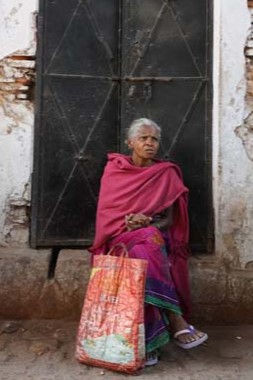
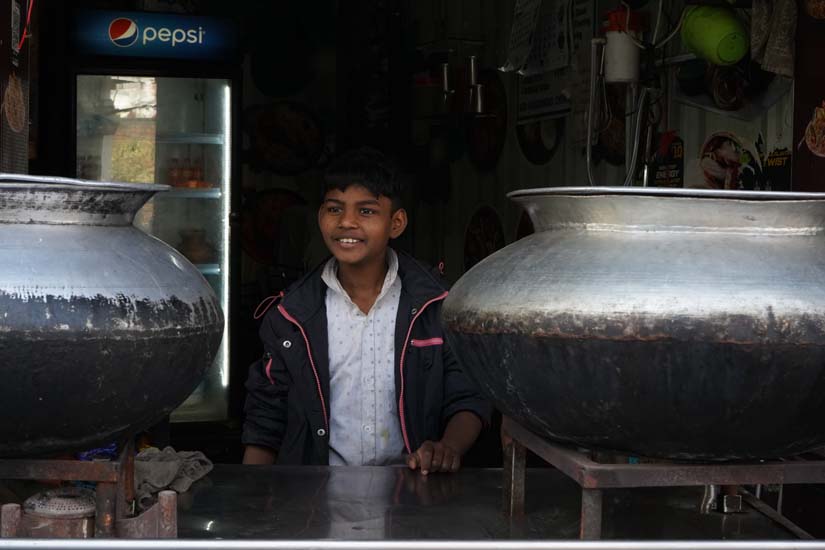
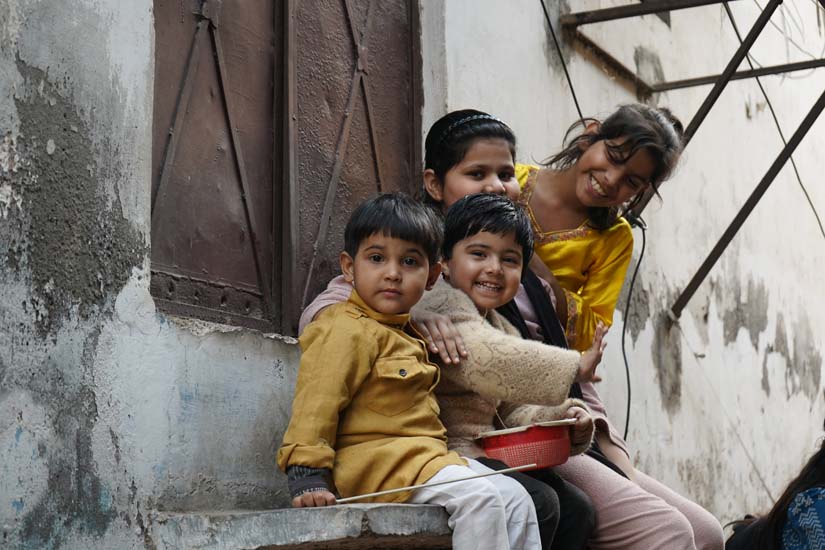
Lucknow is world-renowned for its "Ganga-Jamuni Tehzeeb," a unique syncretic culture defined by refined manners (Adab), warm hospitality (Mehman-nawazi), and a sophisticated lifestyle. This heritage is most vibrant in the historic Chowk area, a bustling hub for artisans and traders. The city’s cultural calendar reflects this inclusive spirit, featuring the solemn and grand Muharram processions alongside the festive Bada Mangal celebrations, where city-wide community meals (Bhandaras) showcase Lucknow's harmonious social fabric.
The city is a global leader in traditional craftsmanship, particularly its exquisite Chikankari and Lakhnawi Zardozi embroidery, which form the backbone of its local economy. Lucknow’s artistic contributions extend to the performing arts as the birthplace of the Lucknow Gharana of Kathak, championed by legends like Thakur Prasad and Pandit Birju Maharaj. Its musical legacy is equally prestigious, having nurtured icons like the "Queen of Ghazal" Begum Akhtar, legendary composer Naushad, and even pop star Sir Cliff Richard. Institutions like the Bhatkande Music Institute and Bhartendu Academy of Dramatic Arts continue to cultivate this rich creative lineage.
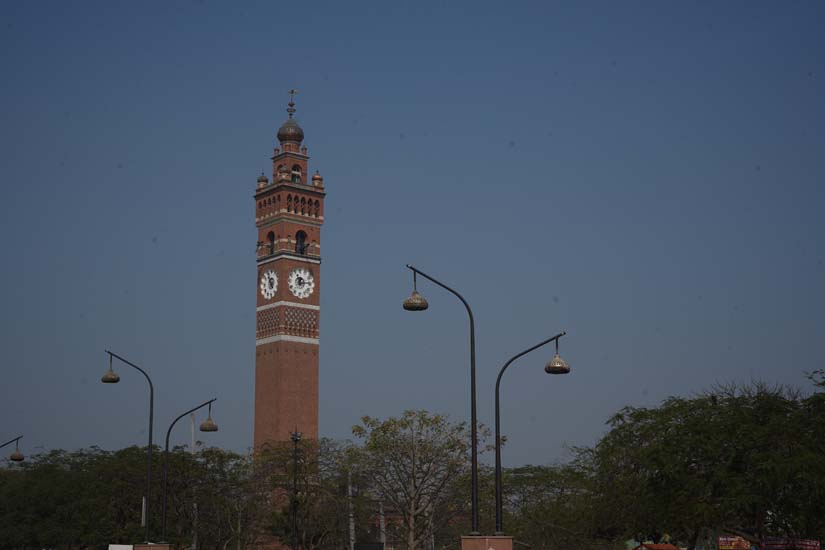
Architecturally, Lucknow is a treasure trove of Nawabi grandeur and colonial history. The Bara Imambara is a global engineering marvel, housing the world’s largest arched hall built without external supports, while the 60-foot Rumi Darwaza serves as an iconic ornamental gateway to the city. Other landmarks like the portrait-filled Chhota Imambara, the soaring Husainabad Clock Tower, and the historic British Residency, a silent witness to the 1857 Rebellion.
Beyond monuments and arts, the city is a paradise for food lovers and nature enthusiasts. It is the heart of Awadhi cuisine, famous for its melt-in-the-mouth kebabs, fragrant biryanis, and the world-renowned Dussehri mangoes. With its lush gardens, prominent educational institutions like LaMartiniere College, and living traditions like Patangbazi (kite flying), Lucknow remains an elegant city where historical attributes and modern vitality coexist seamlessly.
List of craftsmen.
Team Gaatha
Naqqashi Work and the art of making the ‘Chaandi ki Chappal’
