



Saree Weaving ~ Aran...
Arani silk, also known as Arni silk, is a celebrated handloom tradition of Tamil Nadu, produced primarily in Arani, Tiruvannamalai.
Arani, Tamil Nadu, India...
 Muzaffarpur, Bihar, India...
 Magadh, Gaya, Bihar, India...
Arani silk, also known as Arni silk, is a celebrated handloom tradition of Tamil Nadu, produced primarily in Arani, Tiruvannamalai.
Arani, Tamil Nadu, India...
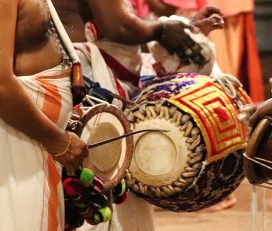
Peruvemba, a village near Chittur-Thathamangalam in Palakkad district of Kerala, is known for a longstanding tradition of making leather-based percussion instruments.
Peruvemba, Kerala, India...
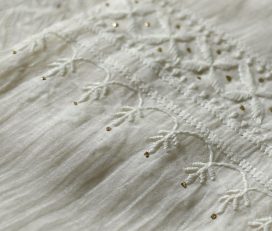
Chikankari embroidery from Lucknow is one of India's most renowned and refined needlework traditions
Lucknow, Uttar Pradesh, India...
Let us talk… if you feel the same love for handmade, and would like to support us by sharing your research or by contributing financially to our documentation efforts.
Reach us at [email protected]

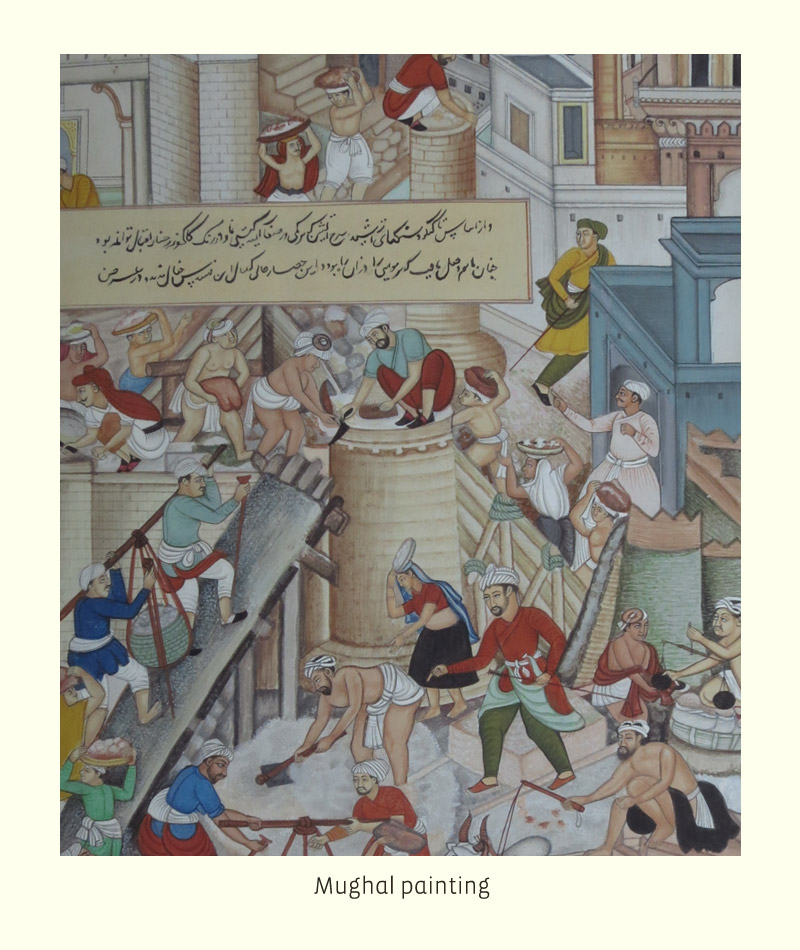
The usage of Patna Kalam has undergone significant transformations over the course of its history, reflecting changing systems of patronage, commercial demands and artistic functions. Unlike Mughal miniature painting, which was primarily produced within imperial ateliers for emperors, nobles and courtly elites, Patna Kalam emerged within an urban commercial environment where paintings circulated as commodities among diverse groups of patrons. As artists migrated from declining Mughal centres to Murshidabad and later Patna, they adapted their artistic practice to new markets that included merchants, zamindars, local aristocracy, East India Company officials and European travellers. This shift fundamentally altered both the purpose and audience of painting.
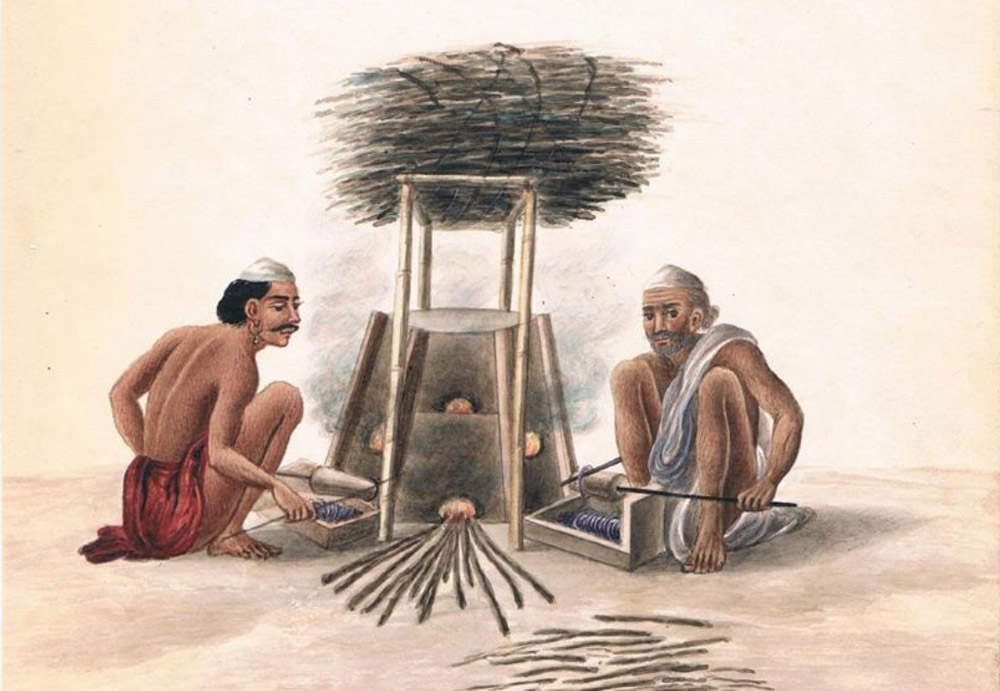
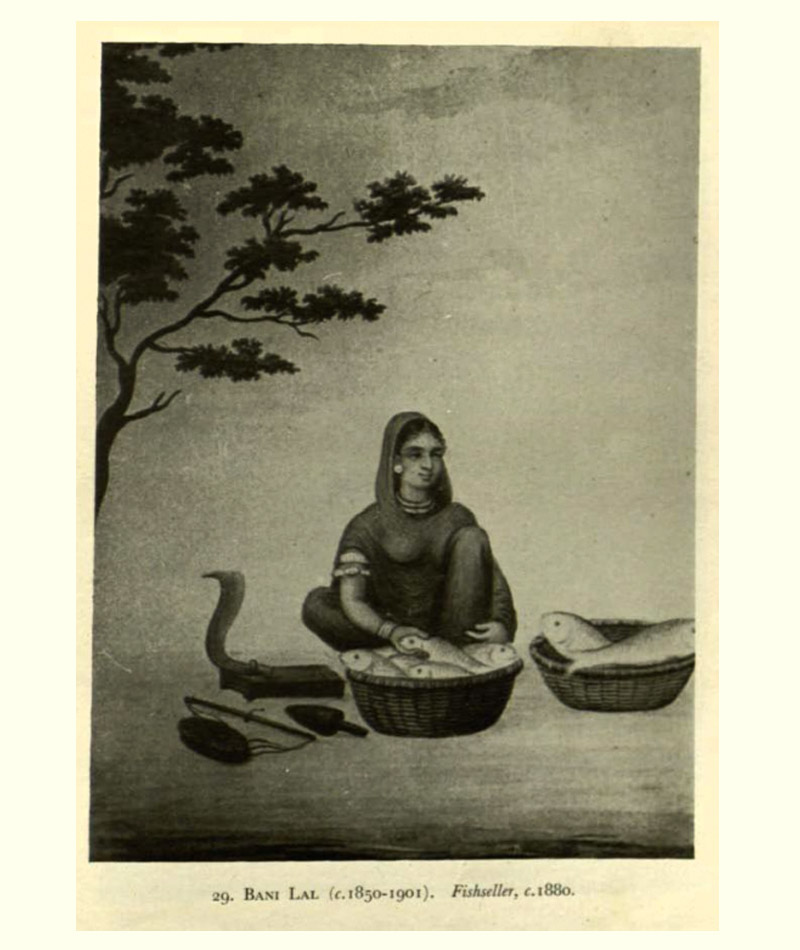
During the late eighteenth and nineteenth centuries, Patna Kalam functioned primarily as a documentary and commemorative art form. British administrators, military officers, merchants and travellers sought visual records of the unfamiliar society in which they lived. Rather than commissioning grand historical scenes or dynastic portraits, colonial patrons preferred images that depicted occupations, customs, festivals, modes of dress and everyday activities. Patna artists responded by producing paintings of washermen, fish sellers, blacksmiths, basket makers, toddy vendors, musicians, sweetmeat sellers, brass workers and numerous other occupational groups. These works, often referred to as firka paintings, circulated individually and in albums, serving as ethnographic records, souvenirs and visual catalogues of Indian society. Their miniature scale made them portable and easily transportable, allowing many works to travel to Britain and other parts of Europe.
The paintings also fulfilled important functions within local society. Merchants, zamindars and urban elites commissioned portraits, ceremonial scenes and family records that continued older traditions of Indian patronage. Wedding processions, religious festivals and social gatherings formed another important category of production. Such works preserved significant social occasions while simultaneously demonstrating the artist’s skill in capturing costume, gesture and collective activity. Unlike many courtly traditions that celebrated rulers and military achievements, Patna Kalam frequently focused on the rhythms of everyday life, making ordinary people worthy subjects of artistic representation.
The practical uses of Patna Kalam extended beyond paper paintings. Artists worked on a variety of surfaces including handmade paper, mica sheets (abhrak) and small ivory discs. Mica paintings were particularly popular because their translucent quality created striking visual effects when illuminated. Such works were often used for decorative purposes and displayed in domestic settings. Ivory miniatures became especially sought after among European patrons who commissioned portrait likenesses for private collections and personal keepsakes. These paintings occupied a space between fine art, decorative object and social memory, demonstrating the versatility of the tradition.
The documentary value of Patna Kalam remains one of its most significant functions. Today, historians, art historians and cultural researchers rely upon these paintings as visual archives of nineteenth-century eastern India. The works preserve detailed information about occupations, tools, clothing, market practices and urban social life that are often absent from written colonial records. Through their careful observation of labour and everyday activity, Patna painters produced a visual record of social groups that rarely appeared in elite textual sources. In this sense, the paintings continue to function as important historical documents long after the disappearance of the original workshop tradition.
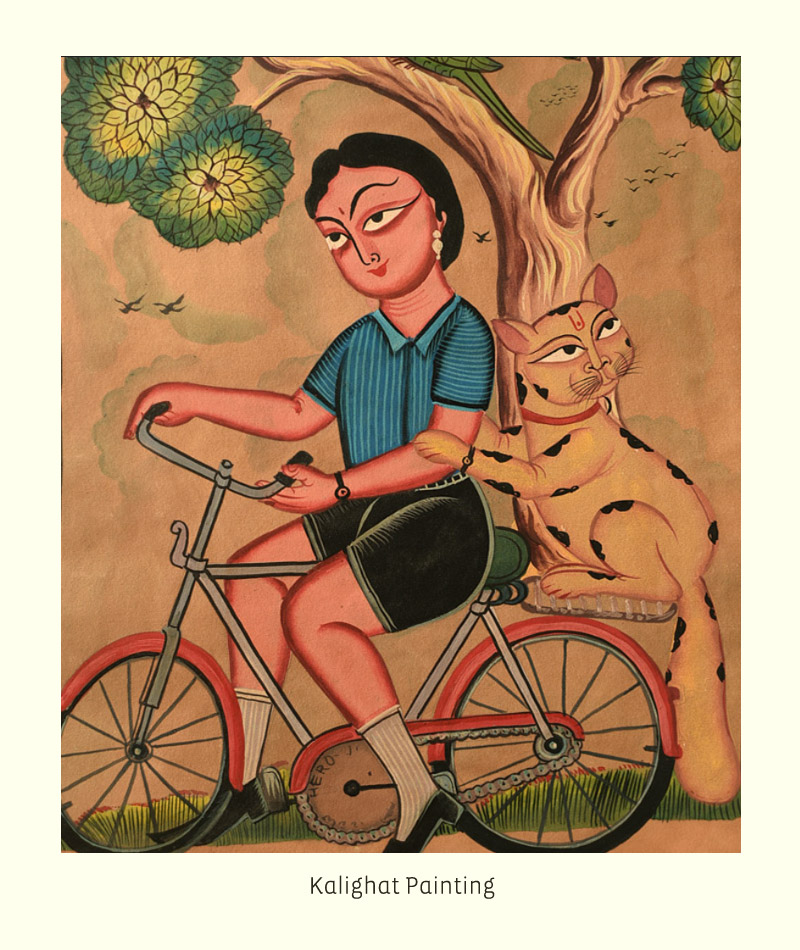
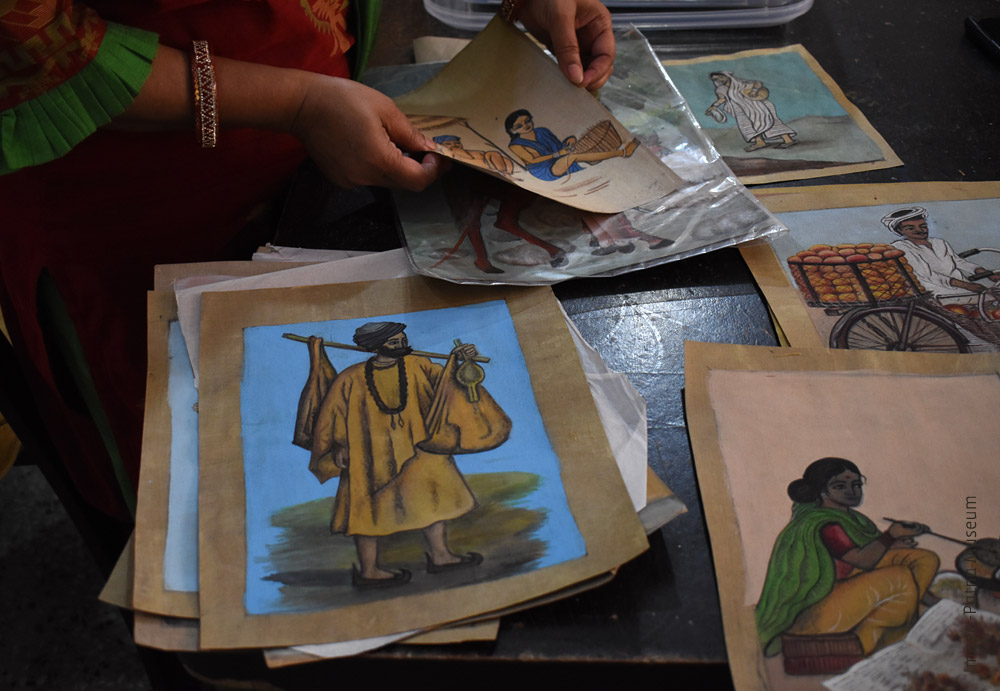
In contemporary times, the context of usage has changed considerably. With the decline of hereditary workshops and the disappearance of traditional patronage systems, Patna Kalam is no longer produced as a documentary medium for colonial officials or local elites. Contemporary practitioners such as Smita Parashar have adapted the style to modern artistic markets by depicting present-day urban scenes, street vendors, cyclists and domestic life. Paintings are now primarily created for exhibitions, private collections, cultural institutions, gifts and interior decoration. Artists have also expanded the range of surfaces used, including silk plates and other contemporary materials. While the function of the paintings has shifted from documentation to heritage preservation and artistic revival, they continue to maintain the visual language that made the tradition distinctive.
Thus, the usage of Patna Kalam reflects a remarkable journey from Mughal-derived workshop practice to colonial documentation, from bazaar commodity to museum object and from everyday visual record to a celebrated symbol of Bihar’s cultural heritage. Its enduring value lies not only in its artistic refinement but also in its capacity to preserve the social worlds, occupations and experiences of ordinary people across generations.
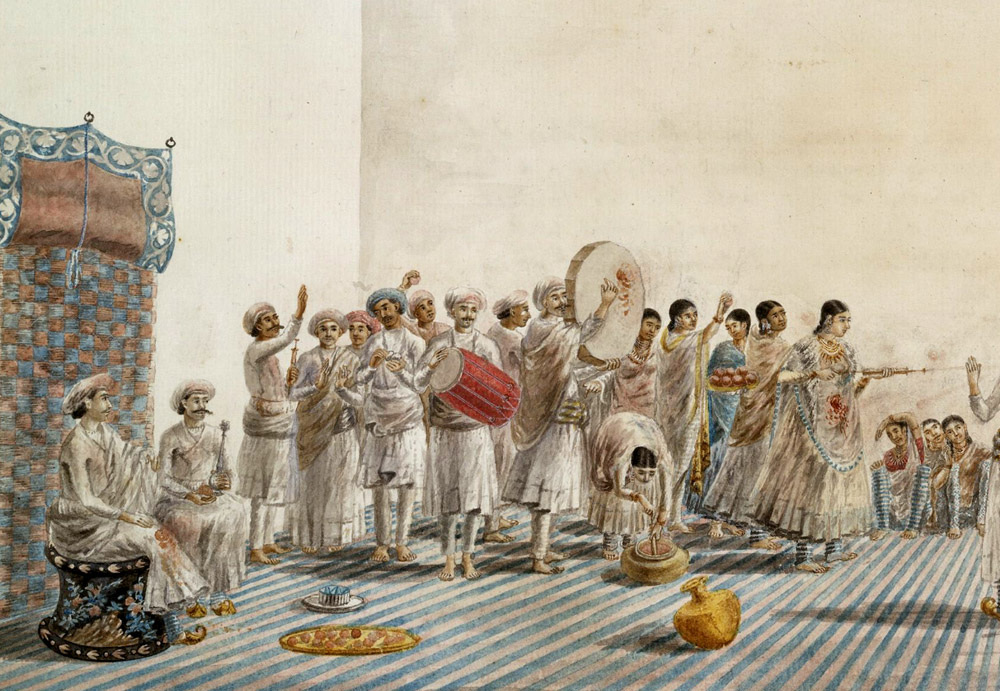
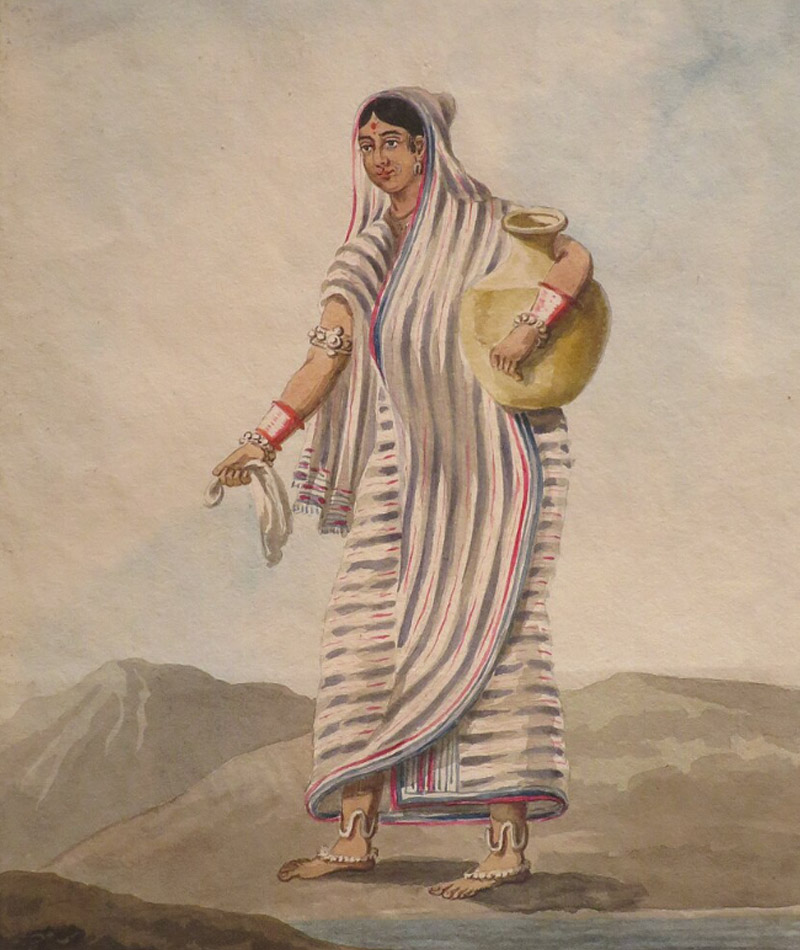
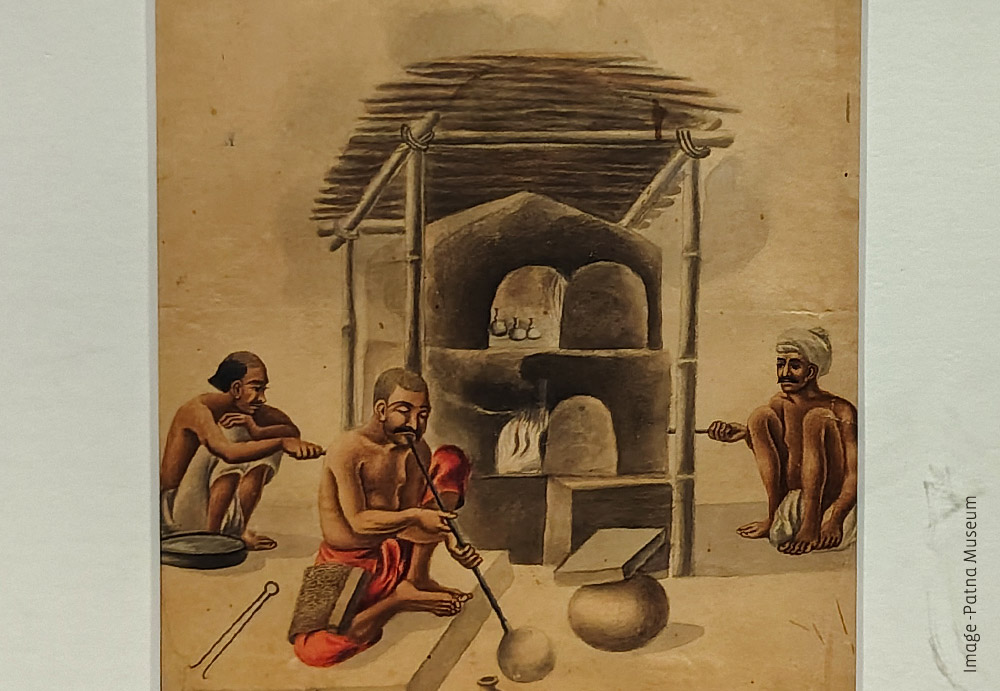
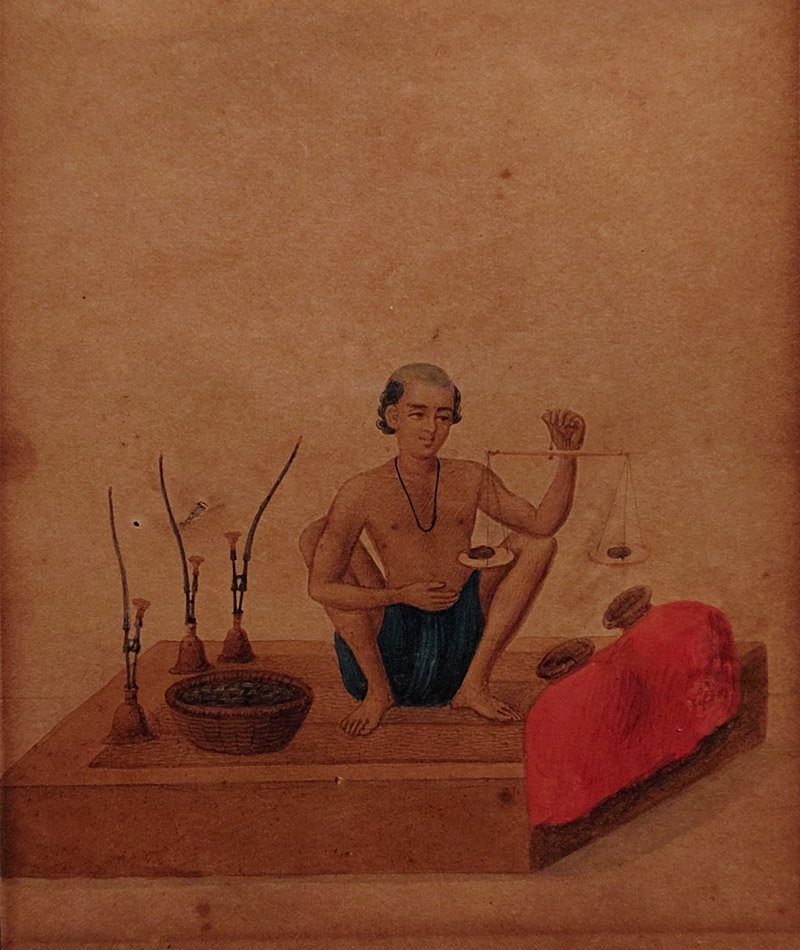
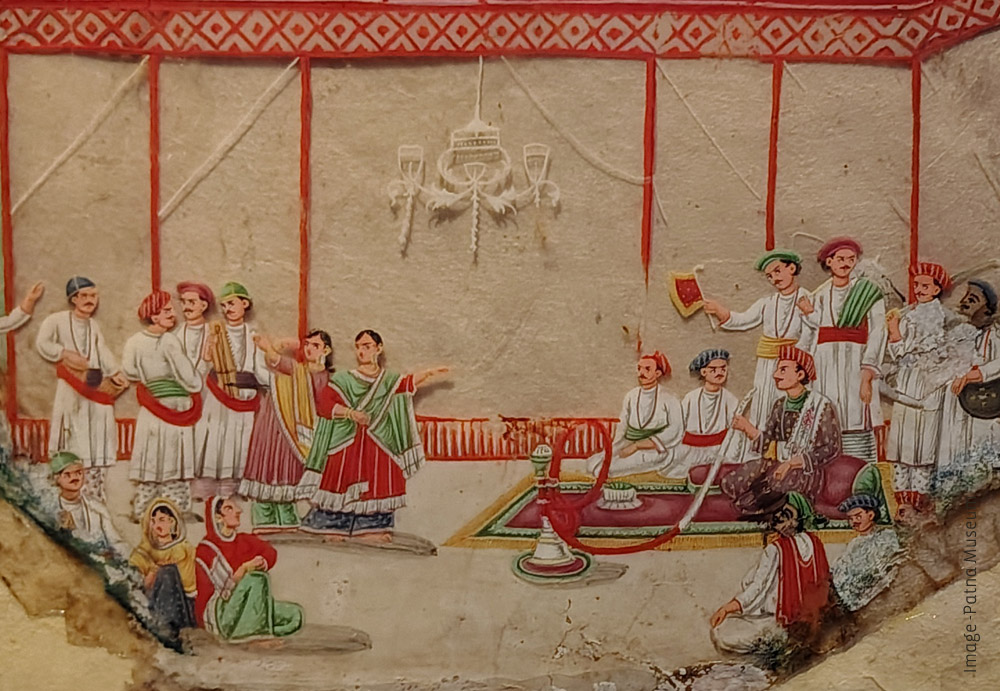
Patna Kalam occupies a unique position within the artistic and cultural history of South Asia because it represents one of the earliest sustained attempts to document ordinary life through painting. At a time when most major artistic traditions remained centred on rulers, courts, mythology and aristocratic culture, Patna painters shifted their attention towards artisans, labourers, traders, servants and urban communities. This transformation marked a significant departure from earlier modes of representation and produced a visual archive of social life that remains unparalleled in nineteenth-century Indian painting. The school’s significance therefore lies not merely in its aesthetic qualities but in the social worlds it chose to preserve.
1. The Rise of Patna Kalam
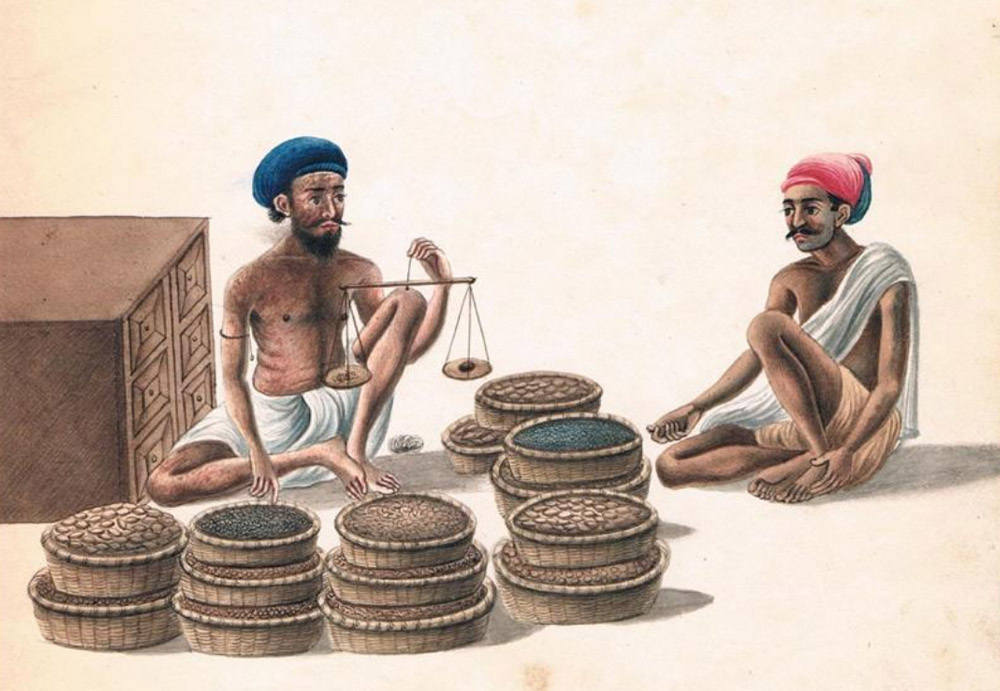
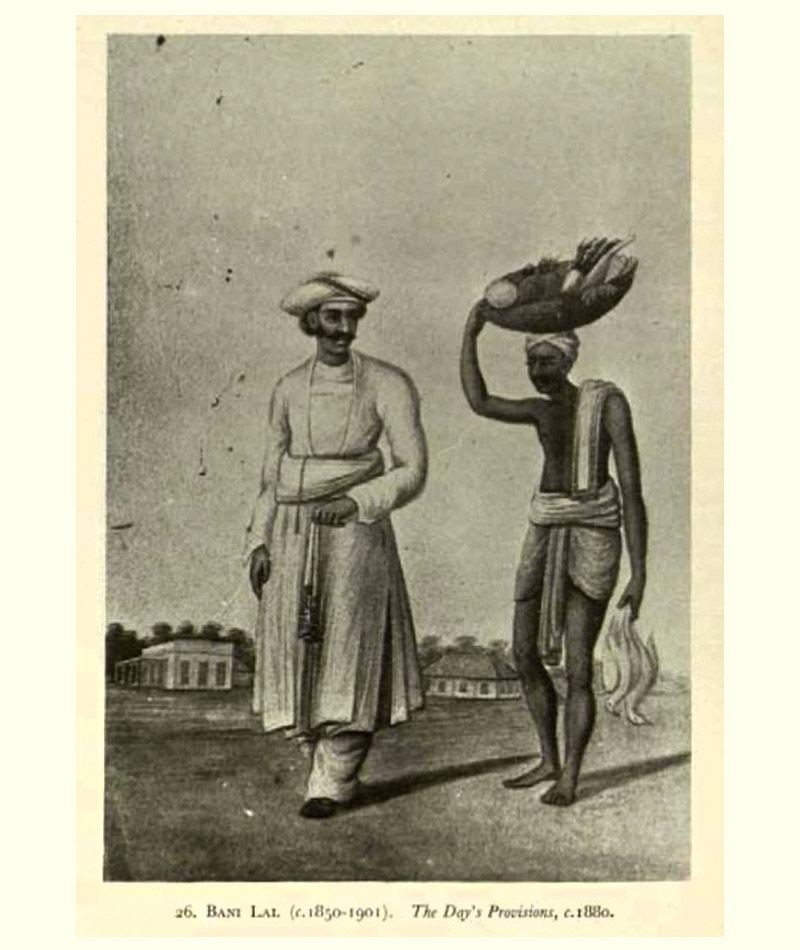
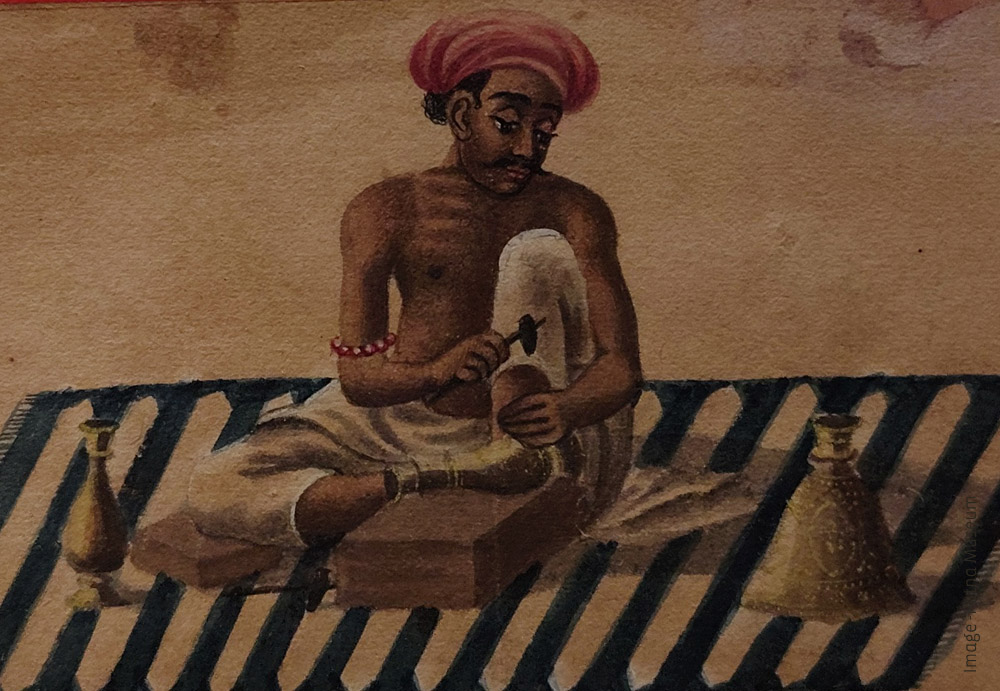
(i) The Subject- One of the defining features of Patna Kalam was its sustained attention to occupational life. Unlike Mughal painting, where workers usually appeared as secondary figures within courtly scenes, Patna painters made labouring bodies central subjects. The artists sketched lifelike representations of everyday folk in the city, producing a visual record of bazaar and urban work. Basket makers, palanquin bearers, blacksmiths, nautch girls, vegetable sellers, washermen, musicians and carpenters appeared as independent pictorial types. This repertoire expanded to include bazaar tradesmen such as pedlars, bangle sellers, butchers, fish sellers, basket makers, carpenters, distillers, toddy sellers, candle makers, sweetmeat sellers, water carriers, brass workers, thread makers and blacksmiths. Figures from European compounds also entered this visual field, including washermen, butlers, tailors and sweepers shown exercising dogs. These works, commonly known as firka paintings, became among the most commercially successful productions of the school. Similar occupational sets appeared in Calcutta, Murshidabad and Tanjore, but Patna Kalam developed an especially sustained engagement with scenes of labour and bazaar life.
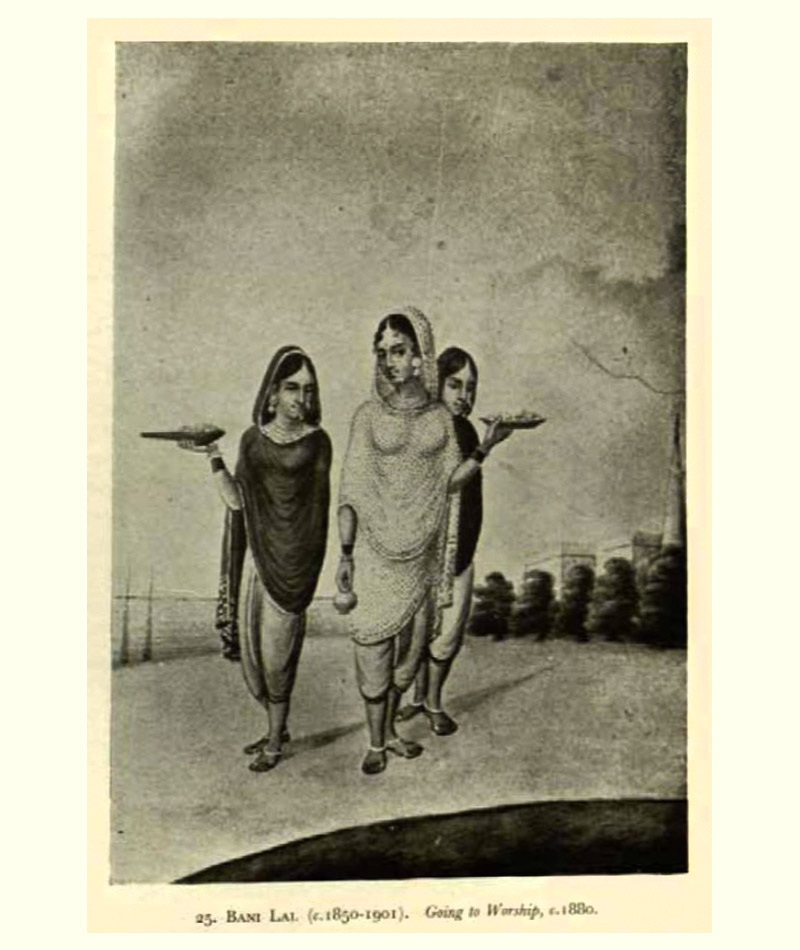
Human figures were drawn with slender, graceful and naturalistic proportions. Faces were rendered with specific physiognomic detail including pointed noses, deep set or sunken eyes, heavy moustaches, prominent eyebrows and lean, haggard facial structures. Clothing was depicted with close attention to textile texture but without excessive ornamentation. Women occupied an important place within these paintings as vendors, textile workers, performers and musicians. Their depiction complicates colonial assumptions of passive femininity, though the images also catered to European fascination with costume and bodily display. Nautch girls especially occupied an ambiguous position between ethnographic documentation and oriental spectacle. Patna painters, however, generally avoided excessive theatricality and overt sensualisation.
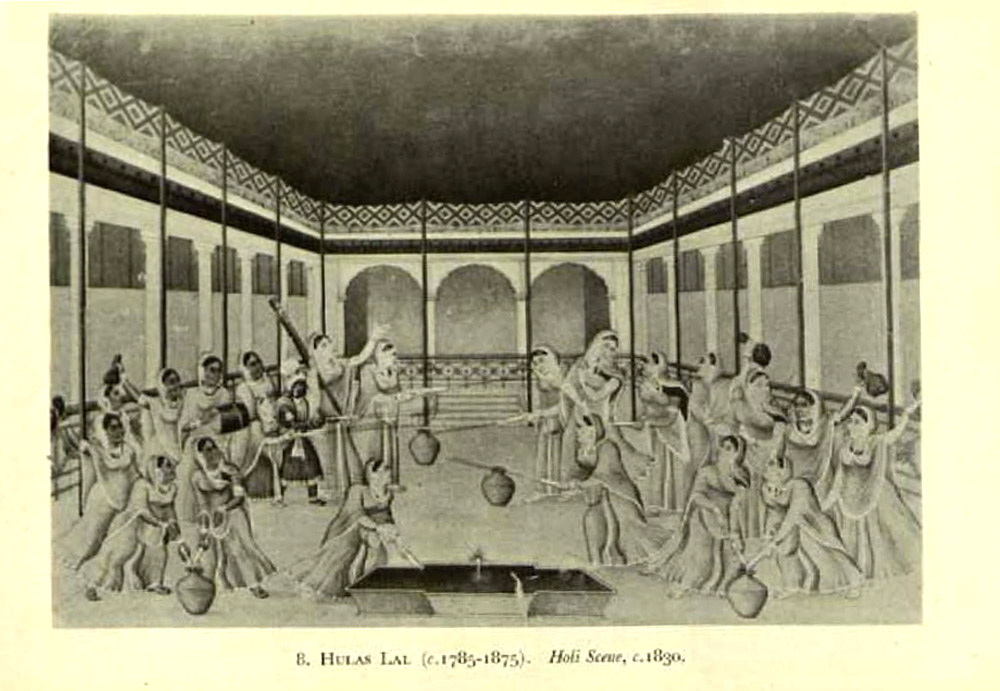
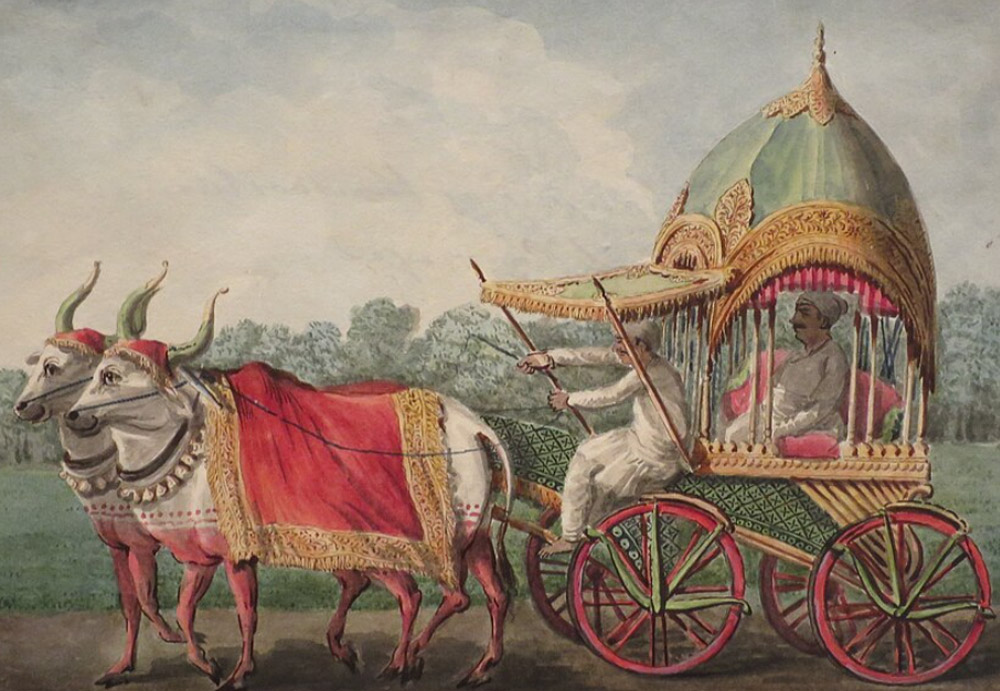
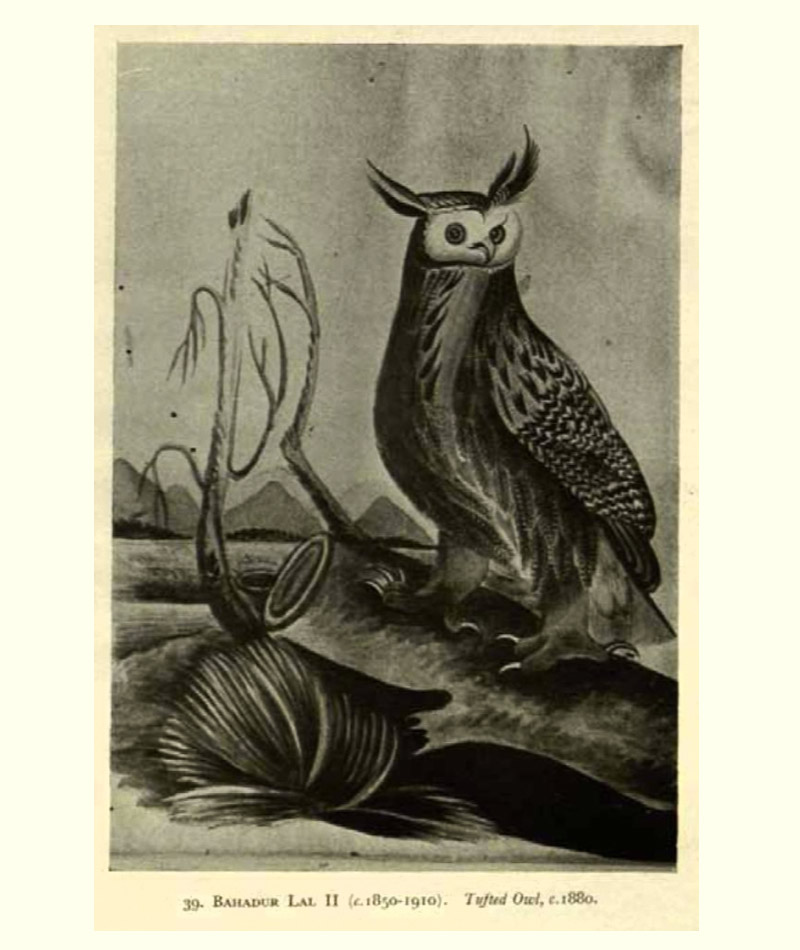
Bullocks, elephants, horses and birds frequently appeared alongside handlers or traders. Painters such as Hulas Lal adapted Mughal natural history traditions to colonial demand while retaining miniature precision and observational detail.
(ii) Patna Kalam and Other Contemporary Art Traditions- Comparison with Calcutta is especially significant in understanding Patna Kalam’s distinct position within colonial visual culture. Calcutta developed a more institutionalised artistic environment closely linked to colonial administration, print culture and academic training. In contrast, Patna Kalam remained rooted in bazaar production and hereditary workshop practices, maintaining artisanal continuity even while responding to colonial demand. Kalighat painting, while sharing Patna’s engagement with urban life and commercial circulation, diverged sharply in style and intent. It employed bold contours, exaggeration and satire to critique colonial mimicry, shifting gender norms and emerging bourgeois sensibilities. Patna Kalam, by contrast, remained restrained and observational, privileging miniature discipline, compositional control and subtle rendering over theatrical effect.
A useful parallel can also be drawn with the Tanjore Moochy tradition, where Charles Gold documented South Indian painters producing caste portraits and European-style miniatures for colonial patrons. Yet Tanjore painting retained decorative richness, gold ornamentation and devotional intensity, whereas Patna Kalam favoured subdued tonality, reduced backgrounds and compositional economy.
Patna Kalam also differed significantly from British academic realism, which emphasised illusionistic depth, anatomical precision and monumental scale. Patna artists engaged with European painting conventions selectively, adopting elements of shading and spatial suggestion while retaining contour-based drawing, flattened composition and decorative rhythm. European techniques were therefore absorbed pragmatically, not as replacements for miniature traditions but as limited adjustments within an already established visual system.
(iii) Influence of Print and its Adaptation- As Mildred Archer notes, colonial households frequently contained imported prints and illustrated reproductions rather than major European paintings. This mattered because prints relied upon contour, tonal variation and compact composition, making them easier to integrate into miniature traditions.
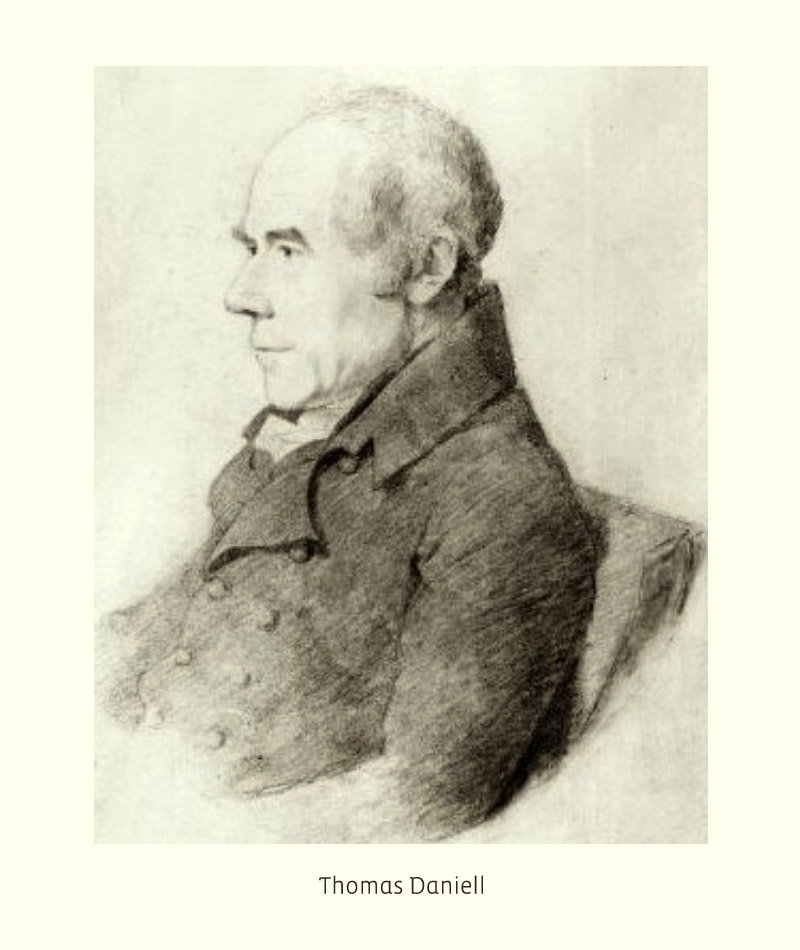
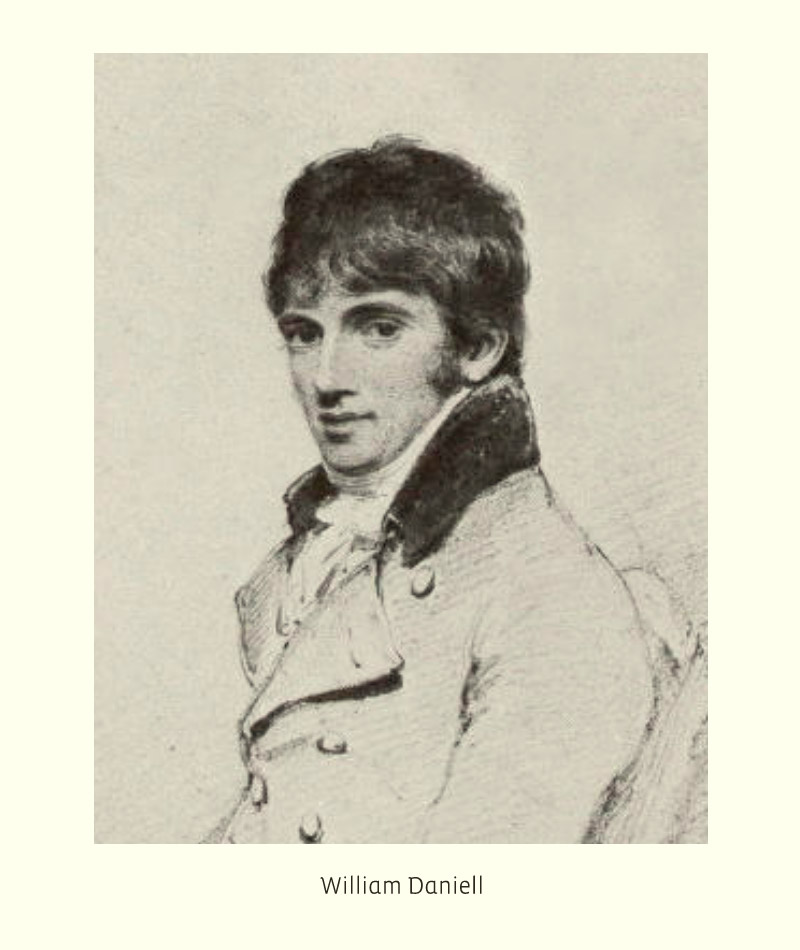
The aquatints of Thomas Daniell and William Daniell were especially influential. Their picturesque landscapes circulated widely in colonial India and shaped visual motifs later visible in Patna works such as wispy clouds, low horizons, clustered foliage and atmospheric recession. Yet these devices remained subordinate to miniature surface organisation and linear control. European print culture also altered colour palettes. Mughal miniatures had relied on saturated reds, blues and gold ornamentation whereas colonial prints employed subdued sepias, pale greens and muted blues. Patna painters gradually adopted these restrained tonal schemes particularly in works intended for European buyers. The muted palette reinforced the documentary atmosphere of occupational scenes and market studies.
Lithography further shaped visual technique. Later Patna works employed dense stippling methods resembling lithographic grain and copper engravings. Archer distinguishes between earlier Chataiyal stippling and later Java stippling, which approximated printed textures while remaining hand painted. This adaptation reflected both aesthetic experimentation and economic pressure as mechanical reproduction increasingly threatened artisanal painting.
European realism also transformed spectatorship. Colonial patrons preferred images appearing factual and descriptive, encouraging greater attention to costume, tools and bodily posture. Portraiture became one of the clearest sites of adaptation. Mughal portraiture traditionally privileged profile views and idealised stillness, while European portraits emphasised likeness and three-quarter views. Patna painters incorporated these conventions particularly in ivory miniatures commissioned by colonial patrons. Archer notes that some became technically comparable to European miniatures in finish and modelling. Even so, the figures retained restrained expression and compositional stillness inherited from Mughal painting. Perspective remained inconsistent and often subordinated to compositional balance, with space continuing to function as a decorative surface rather than an illusionistic field.
(iv) Patronage and the Bazaar Economy- Painters worked simultaneously for colonial officials, travelling Europeans, merchants, zamindars and urban elites. Paintings no longer functioned solely as luxury objects tied to dynastic prestige but as commodities moving through urban markets. Occupational studies, costume sets, festival scenes and portraits could be purchased as souvenirs, ethnographic curiosities or decorative keepsakes. Workshops increasingly produced paintings speculatively for sale to changing clientele rather than for singular ceremonial commissions.
European patrons played a major role within this economy. Colonial officials and travellers commissioned images documenting occupations, festivals, caste groups and local customs. Such works satisfied administrative curiosity as well as picturesque fascination with Indian social life. European demand reshaped the thematic scope of the school. Colonial patrons sought visual documentation of Indian society, the Firka sets depicting washermen, carpenters, basket makers, goldsmiths, palanquin bearers and vendors became especially popular.
Rebecca Brown argues that these figures are represented not merely as static social types but through the performance of labour itself. Workers are shown spinning, cutting, weaving, carrying and polishing. Gesture becomes central. This distinguishes Patna Kalam from both Mughal portraiture and later colonial photography, which often reduced caste and occupation to rigid ethnographic classification. Albums containing occupational studies or costume sets circulated easily because of their portable miniature format. Patna painters adapted colonial demand through existing artisanal frameworks. Mughal compositional logic continued structuring images through disciplined contour, decorative balance and miniature precision. Realism, shading and perspective were incorporated as necessary.
Local patronage remained equally important. Merchants, zamindars and urban elites commissioned portraits, wedding scenes and ceremonial works, ensuring continuity with earlier Indian traditions. The economics of bazaar production also encouraged compositional simplification. Elaborate Mughal backgrounds and ornamental borders gradually disappeared. Figures were isolated against pale grounds, allowing quicker production while maintaining visual clarity and miniature precision.
2.Domestic Space and Representation of Women
(i) The Domestic Space in Urban Visual Culture- The representation of women within Patna Kalam occupies an ambiguous yet revealing position in the visual culture of the school. Unlike Mughal painting, where elite women commonly appeared within romantic or aristocratic settings, Patna painters situated female figures within the grounded social world of domestic labour, ritual activity and urban life. Women in these paintings rarely function as ornamental presences; instead, they appear within networks of work, ceremony and everyday interaction that illuminate gender relations in nineteenth-century urban society.
This shift reflected the school’s broader movement away from courtly spectacle toward social observation. As male occupational labour became a major pictorial subject, women’s domestic work also entered the visual archive. Women are shown grinding grain, carrying water, preparing food, arranging garments or participating in festivals and wedding rituals. Household labour appears disciplined, repetitive and materially grounded rather than sentimentalised, revealing the rhythms of everyday life with unusual directness. At the same time, female visibility remained shaped by patriarchal structures of patronage. Since many paintings were produced for male patrons, especially European officials and collectors, women were represented through masculine modes of observation. The paintings therefore reveal not women’s lives transparently but the visual conditions through which femininity became legible within colonial urban culture.
The domestic interior acquired particular importance within these representations. Scenes of women seated together preparing betel leaves, dressing for ceremonies or participating in weddings depict a gendered social sphere separated from the masculine world of bazaar. Wedding scenes became especially significant because they allowed artists to represent collective female presence within ritual space. Paintings such as Muslim Wedding by Shiva Lal organise women around textiles, vessels and musical instruments.
(ii) Construction of the Feminine- European officials often commissioned portrait miniatures of Anglo-Indian women and elite Indian women, encouraging painters to adopt conventions such as three-quarter poses, softer modelling, and greater facial realism. Some ivory miniatures from Patna were so refined that they closely resembled European portrait miniatures, showing both technical adaptability and the influence of colonial ideas of femininity and domestic intimacy. It was associated with refinement and private display, and women in these works were often removed from occupational settings and placed within controlled domestic interiors. Adornment is a central visual concern. Jewellery, textiles, and grooming are rendered with careful attention, reflecting both European interest in Indian costume and the social importance of material culture in marking status, identity, and ritual belonging. Ornamentation functions as a social indicator rather than mere decoration.
While the historical record largely under-documents female authorship in Patna Kalam, making male attribution dominant in surviving sources, this silence is complicated by figures such as Sona Bibi and Daksho Bibi. Their presence suggests that women did participate within family-based workshop systems, even if their contributions were rarely formalised or consistently recorded in the archival tradition.
The significance of Patna Kalam ultimately extends beyond the boundaries of art history. It serves as a record of labour, a reflection of colonial encounter, a repository of regional memory and a testament to the creativity of artists who transformed ordinary life into a subject worthy of artistic representation. Through its images of work, trade, community and everyday experience, the school preserves aspects of the past that might otherwise have disappeared from historical memory.
3. Legacy and Continuing Relevance
(i) Collections in Museums- Although active production declined, Patna Kalam survived through circulation in colonial and postcolonial collections. Works entered museums, libraries, and private archives in India and abroad, forming the basis for later reconstruction of the tradition.
Institutions such as the Patna Museum, Victoria and Albert Museum, British Library, Khuda Bakhsh Library, and the College of Arts and Crafts at Patna University played a crucial role in preserving these works. However, this preservation was selective. Only certain paintings were acquired and catalogued, while many others were lost, dispersed, or destroyed. The surviving archive therefore reflects curatorial priorities as much as historical production
Display practices further shaped interpretation. Museum catalogues and exhibitions often emphasised the documentary value of occupational imagery, treating the works as visual anthropology rather than as complex artistic systems embedded in bazaar culture. Private collecting and auction markets added another layer to this afterlife, transforming inexpensive bazaar works into collectible artefacts valued for rarity, craftsmanship, and colonial nostalgia. This process both preserved and detached the works from their original social contexts.
Twentieth-century art history initially marginalised bazaar schools, privileging courtly traditions such as Mughal and Rajput painting. Scholars like Ananda Coomaraswamy emphasised spiritual and classical aesthetics, leaving little space for hybrid, market-oriented forms. From the late twentieth century onward, however, researchers such as Mildred Archer and Rebecca Brown reinterpreted Patna Kalam as a product of colonial modernity rather than a degraded offshoot of Mughal art, shifting attention toward labour, circulation, and visual culture.
(ii) Contemporary Revival- Today, Patna Kalam is increasingly understood as a hybrid visual language shaped by colonial encounter, market demand and technological change rather than as a linear narrative of decline. Contemporary artists continue to engage with its idiom while adapting it to present-day contexts. Artists such as Smita Parashar have reinterpreted the tradition by depicting modern urban life, including street vendors, cyclists, and everyday domestic scenes. The style is now used across new surfaces such as silk plates and is primarily produced for decorative purposes, gifts, and private collections. While this ensures visibility, it also reflects a shift from archival documentation to market-driven artistic production.
Institutional and organisational efforts have played a significant role in revival. The Patna Museum, Bihar Museum and organisations such as INTACH have initiated workshops, exhibitions, and educational programmes to sustain interest in the tradition. Events such as “Patna Kalam: Ek Virasat” have attracted public engagement, while hands-on workshops have introduced the style to new generations of artists. Patna Kalam holds considerable cultural significance as a visual record of Bihar’s artistic heritage and the working-class life of nineteenth-century urban society. Its imagery of occupational labour provides rare documentation of everyday economic activity in colonial India.
However, preservation has also involved selective institutional framing. Museums have replaced workshops as the primary sites of encounter, transforming living traditions into archival objects. Despite this, the paintings continue to retain interpretive power precisely because they preserve forms of labour, visual practice, and urban experience often absent from official colonial archives.
Unlike many traditional Indian crafts and artistic traditions, Patna Kalam is not associated with a rich corpus of myths, sacred narratives or origin legends. This absence is itself historically significant and reflects the unique social and cultural environment in which the school emerged. While several Indian art forms derive legitimacy through connections with deities, epic traditions, local saints or ritual practices, Patna Kalam developed within the secular world of Mughal ateliers, commercial workshops and urban marketplaces. Its origins lay not in religious institutions or hereditary ritual communities but in professional groups of painters whose artistic identity was shaped primarily by patronage, technical skill and workshop training. The absence of mythological narratives is closely related to the subjects chosen by Patna painters themselves. Unlike traditions that illustrated episodes from the Ramayana, Mahabharata, Puranas or local religious folklore, Patna Kalam concentrated on occupations, markets, festivals, domestic activities and urban life. The painters were less concerned with divine intervention than with the visual documentation of human activity. Basket makers, fish sellers, blacksmiths, musicians, vendors and artisans became the principal protagonists of the paintings. This emphasis on the ordinary and the observable created a visual culture grounded in social reality rather than sacred storytelling.
Historical accounts preserved by Ishwari Prasad Varma and later recorded by scholars such as Mildred Archer focus almost entirely on migration, artistic inheritance and patronage networks rather than mythological foundations. The history of the school is remembered through movements of artists from Udaipur to the Mughal court, from Delhi and Agra to Murshidabad and eventually to Patna. In this sense, its collective memory is rooted in historical experience rather than sacred legend. Oral traditions describing the movement of painters from Mughal courts to Murshidabad and later to Patna have acquired an almost legendary status within the history of the school. These stories are repeatedly invoked in scholarly writings and local accounts because they explain how a courtly artistic tradition transformed itself into a unique urban school of painting. Although not mythical in the conventional sense, these narratives serve an important cultural function by connecting present-day understandings of Patna Kalam to its historical origins.
Nevertheless, traces of older artistic traditions occasionally survived within workshop practice. Some artists, particularly those associated with family ateliers such as that of Shiv Lal, produced paintings depicting mythological themes alongside occupational studies and portraits. These works, however, never became central to the identity of the school. They remained secondary to the broader artistic focus on urban society and everyday life. As a result, religious narratives did not generate a shared body of legends capable of shaping the collective memory of the tradition.
Another reason for the absence of myths lies in the nature of patronage itself. Patna Kalam evolved within a commercial environment where paintings were produced for merchants, zamindars, colonial officials and travellers. The success of an artist depended less upon ritual authority and more upon the ability to satisfy market demand. Paintings functioned as commodities, souvenirs, records of occupations and visual representations of local society. In such a context, artistic legitimacy derived from craftsmanship and observational skill rather than sacred association. The identity of the painter was linked to the workshop and the marketplace rather than to a religious institution.
The absence of myths and legends should therefore not be interpreted as a lack of cultural depth. Rather, it highlights the distinctive character of Patna Kalam as a secular artistic tradition shaped by migration, commerce and urban experience.
(i) Origin of Patna Kalam
The emergence of Patna Kalam coincided with a period of political fragmentation and economic realignment across northern and eastern India. Following the death of Aurangzeb in 1707, Mughal authority weakened steadily, imperial workshops dissolved and artists who had depended upon royal commissions sought alternative markets. This produced several regional schools of painting, including the Pahari ateliers and the various forms of Company painting associated with British settlements. According to oral traditions preserved by Ishwari Prasad Varma, the ancestors of the Patna painters belonged to a Kayasth family from Partabgarh in Udaipur and around 1585 CE migrated to the Mughal court during Akbar’s reign, likely during the expansion of the imperial karkhana at Fatehpur Sikri and Agra. Under Jahangir, the Mughal karkhanas(ateliers) thrived where painters worked collectively with emphasis on delicate line, refined brush control, miniature scale and carefully balanced compositions.
The later movement of artists from Delhi toward Murshidabad in the early eighteenth century reflected broader shifts in political and commercial power. Murshidabad had emerged as a major mercantile centre linked to expanding trade routes and European commercial activity. The city offered favourable conditions precisely because it lacked an established court school while functioning as a prosperous commercial hub connected to the Hooghly trade network. Here, artists adapted to more flexible systems of patronage involving nawabs, merchants and members of the growing European community. The eventual migration to Patna around 1750–60 occurred amid political instability in Bengal following the Battle of Plassey (around 1757 CE). Mir Jaffar’s son, Miran (also known as Mohamed Sadiq Khan or Nasir-ul-Mulk, Ala-u-Dowlah), drove the Hindu artists out of the region. and the increasing intervention of the East India Company in revenue administration. Although Patna itself experienced uncertainty during the mid eighteenth century, its strategic location along the Ganges and its expanding role within Company administration transformed it into an important commercial and military centre. Revenue offices, judicial institutions and the nearby cantonment at Dinapore produced a substantial European population of officials, merchants and soldiers who generated new forms of artistic demand.
This colonial urban environment altered the structure of patronage fundamentally. Unlike Mughal emperors or regional nawabs, Company officials did not seek images affirming dynastic legitimacy. Instead, painters settled particularly around Lodi Katra, Diwan Mohalla and Mughalpura where workshops functioned simultaneously as homes, studios and commercial spaces. They desired portable visual records of the land and society they inhabited temporarily. Occupational studies, costume sets, festivals, flora and fauna became highly marketable forms of imagery. British fascination with Indian customs and labour produced a market for paintings that documented everyday life. Travellers such as Fanny Parkes and Charles Gold recorded local scenes through diaries and illustrated travel accounts, while artists responded by producing paintings of washermen, fish sellers, blacksmiths, basket makers, toddy vendors and craftsmen engaged in work. Rebecca Brown argues that these firka paintings focused not merely upon occupational identity but upon the performance of labour itself. Figures are shown working rather than posing passively, transforming labour into visual spectacle and ethnographic display simultaneously.
(ii)Artists of Patna Kalam
Mildred Archer identifies Sevak Ram as one of the earliest major painters associated with the formation of the school. Workshop practice remained hereditary. Training occurred within family structures where younger artists learned pigment preparation, brushwork and compositional methods through observation and repetition. They functioned as living archives preserving embodied technical knowledge across generations. The term “Kalam,” meaning pen or brush, reinforced continuity with Persianate and Mughal artistic vocabulary, emphasising disciplined manual skill rather than European academic categories of fine art. Paintings often circulated without signatures because workshop identity mattered more than individual authorship. Artistic continuity depended upon communal inheritance rather than singular originality. Artists such as Sewak Ram, Hulas Lal, Fakirchand Lal and Shiv Lal developed reputation within the bazaar economy. Hulas Lal became known for bird and animal studies recalling Mughal natural history painting, while Fakirchand Lal contributed drawings to colonial ornithological publications associated with Christopher Webb Smith and Sir Charles D’Oyly. Women also participated in workshop production, though historical records remain limited. Daksho Bibi and Sona Bibi, associated with Shiv Lal’s family atelier, were particularly linked to mythological painting.
(iii)Patna Kalam Beyond Company Painting
The category of “Company Painting” has often obscured the distinctiveness of Patna Kalam by grouping diverse regional traditions under a single colonial framework. Unlike the more institutionalised Company schools of Calcutta, Patna Kalam remained tied to bazaar production and hereditary workshop systems, preserving artisanal continuity even while adapting to colonial demand. Earlier scholars frequently overstated European influence, treating realism and perspective as imported innovations, yet Patna painters adopted such conventions selectively. Mughal compositional logic remained central through disciplined contour, decorative balance and miniature precision. Patna Kalam occupied a complex position between Mughal aesthetics and colonial documentary culture. The school’s most striking feature was its sustained attention to ordinary labour. Washermen, basket makers, smiths and vendors emerged as central subjects, shifting artistic attention away from imperial spectacle toward the rhythms of urban life. Sparse backgrounds and controlled compositions detailed gesture and bodily movement. Bodies bend, weave, carry and carve. Crowded markets and ceremonial scenes retain restraint and compositional control. Figures are isolated within sparse settings where gesture and bodily movement matter more than dramatic narrative. Such qualities distinguish the school from both Mughal grandeur and Victorian spectacle. Its muted palettes, abbreviated backgrounds and disciplined compositions reflect an art shaped by artisanal economy and commercial circulation rather than monumental display.
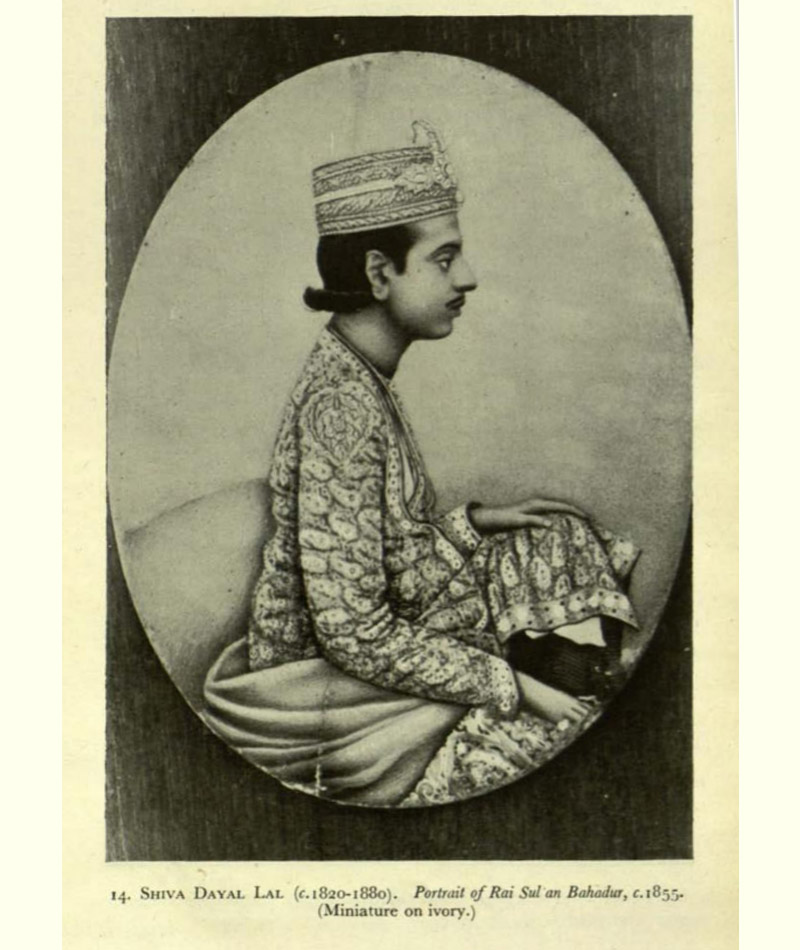
Patna Kalam directed its artistic attention towards ordinary people and everyday life. Its painters developed a distinctive visual language characterised by disciplined line work, muted colours, sparse compositions and remarkable attention to occupational activity. The resulting paintings occupied a unique position between art, documentation and social observation. Although frequently grouped under the broader category of Company Painting, Patna Kalam retained a strong connection with hereditary workshop traditions and Mughal artistic discipline, giving it a distinct identity within the history of South Asian art.
1.Backgrounds and Composition
One of the most distinctive features of Patna Kalam is its treatment of space and composition. Unlike Mughal paintings, which frequently employed elaborate architectural settings, gardens and courtly interiors, Patna Kalam adopted a remarkably restrained approach to background detail. Landscapes, decorative borders and ornamental elements were either minimised or omitted entirely. Figures were often placed against plain washes of colour or lightly suggested settings, ensuring that attention remained focused on the central subject.
This compositional economy reflected more than aesthetic preference. It was closely connected to the documentary function of the paintings. By eliminating unnecessary visual distractions, artists directed the viewer’s gaze towards occupations, gestures and social interactions. The result was a visual language in which human activity assumed primary importance. A basket maker weaving reed, a fish seller arranging goods or a blacksmith shaping metal becomes the focal point of the entire composition. The surrounding space serves only to support the action being depicted.
Patna artists frequently produced works for commercial circulation. Simpler backgrounds enabled artists to maintain clarity and precision while responding to market demand. Even the most modest occupational study reveals careful organisation, balanced proportions and disciplined use of space. Figures are positioned with deliberate attention to visual rhythm, creating compositions that remain aesthetically controlled despite their apparent simplicity.
The influence of European visual culture is also visible within compositional practices. Through engravings, aquatints and lithographs circulating within colonial India, Patna artists encountered new methods of organising space and suggesting depth. However, they adopted these conventions selectively. Perspective remained limited and was generally subordinated to compositional balance. Space continued to function primarily as a decorative and organisational surface rather than as a fully illusionistic environment. In this respect, Patna Kalam retained the essential logic of miniature painting while incorporating selected aspects of colonial realism.
2.Motifs and Subjects
The subjects chosen by Patna painters represent one of the most radical departures from earlier artistic traditions. Whereas Mughal, Rajput and Deccani schools devoted considerable attention to rulers, aristocrats, military campaigns and religious narratives, Patna Kalam directed its gaze towards ordinary people. The school became famous for its depictions of artisans, traders, labourers and service providers who formed the economic backbone of urban society.
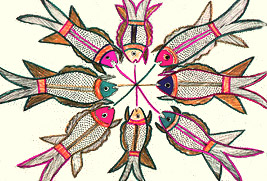
Among the most common subjects were fish sellers, basket makers, blacksmiths, carpenters, bangle sellers, sweetmeat vendors, toddy sellers, water carriers, brass workers, thread makers, candle makers and distillers. These occupational studies became particularly popular among colonial patrons and often circulated as firka paintings. European officials and travellers sought visual records of Indian society, creating a market for images that documented professions, costumes and social practices. Patna artists responded by producing detailed representations of occupational life that combined documentary observation with artistic refinement.
Rebecca Brown argues that these paintings should not be understood merely as representations of occupational categories. Rather, they depict labour itself as a performed activity. Workers are shown weaving, cutting, carrying, polishing, forging and selling. Movement becomes central to the visual experience. The paintings therefore reveal not only what people did but how they did it. Through posture, gesture and bodily action, artists transformed labour into a legitimate subject of artistic representation.
Women also occupied an important place within Patna Kalam. They appear as vendors, musicians, performers, domestic workers and participants in ritual and ceremonial activities. Nautch girls became especially popular subjects, reflecting both local cultural life and European fascination with performance traditions. Yet Patna artists generally avoided excessive theatricality and sensationalism. Even when depicting performers, they retained the observational restraint characteristic of the school.
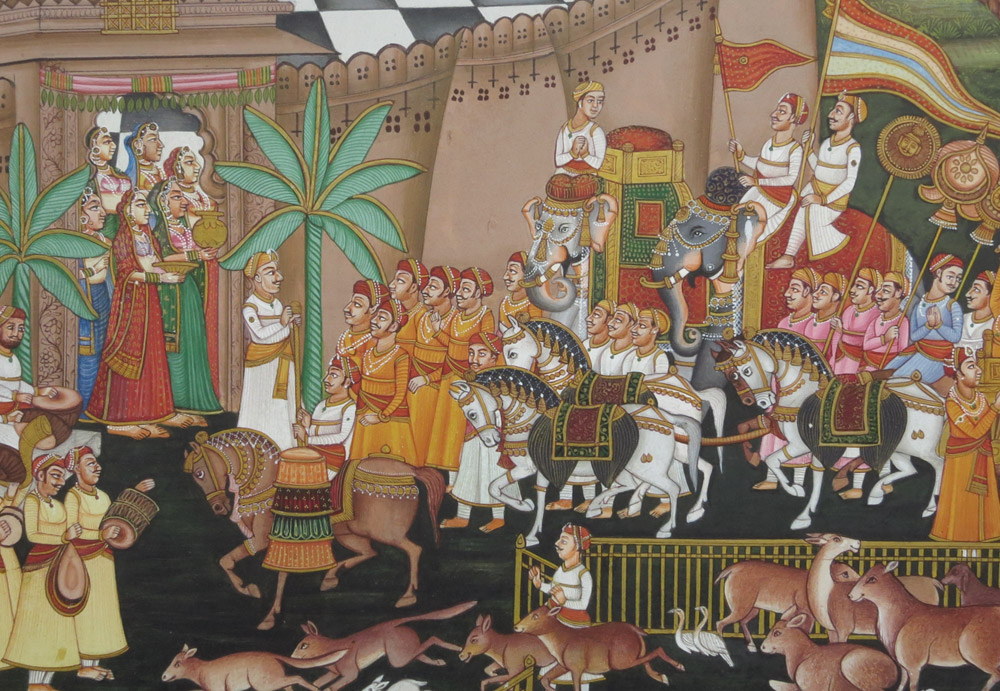
Festival scenes, wedding processions and domestic gatherings formed another significant category of production. Such works documented important social occasions while simultaneously preserving information about clothing, material culture and community practices. The paintings therefore functioned as valuable visual archives of nineteenth-century urban society.
Natural history studies constituted an additional area of artistic achievement. Artists such as Hulas Lal became renowned for their depictions of birds and animals. These works continued the Mughal tradition of observational natural history associated with artists like Ustad Mansur while responding to European interest in scientific documentation. Birds, horses, elephants, cattle and other animals were rendered with remarkable precision, demonstrating the versatility of Patna painters beyond occupational subjects.
3.Human Figures
Human figures form the heart of Patna Kalam. The school’s most distinctive achievement lies in its ability to transform ordinary individuals into subjects worthy of artistic attention. Unlike court paintings where labourers appeared only as supporting characters within larger narratives, Patna Kalam placed workers at the centre of the composition.
The figures are generally slender and elongated, reflecting conventions inherited from Mughal miniature painting. Faces often display recurring characteristics including pointed noses, deep-set eyes, prominent eyebrows, heavy moustaches and lean facial structures. These features reveal the influence of workshop conventions, where artistic knowledge was transmitted across generations through repetition and adaptation.
Yet the significance of these figures lies not primarily in their facial appearance but in their bodily movement. Patna painters displayed remarkable sensitivity to posture and gesture. A basket maker bending under a load, a blacksmith striking metal or fish seller balancing goods becomes instantly recognisable through physical action. The body communicates occupation through movement. As Rebecca Brown suggests, labour itself becomes visible through the performance of work rather than through symbolic markers alone.
The representation of movement also distinguishes Patna Kalam from many contemporary forms of portraiture. Figures are rarely static. They bend, carry, weave, hammer, walk and trade. This attention to bodily action gives the paintings a sense of vitality and immediacy while simultaneously reinforcing their documentary value. Through these figures, Patna Kalam preserved visual records of occupations and working practices that are often absent from written historical sources.
1.Factors Leading to Loss of Patronage
The decline of Patna Kalam in the late nineteenth and early twentieth centuries cannot be attributed to a single cause. It resulted from the combined impact of technological change, shifting patronage, colonial art education, and evolving aesthetic hierarchies. Together, these forces gradually dismantled the workshop ecosystem that sustained the tradition.
(i) The prosperity of Patna Kalam was closely tied to the patronage networks that emerged in eighteenth and nineteenth-century Patna. Merchants, zamindars, local elites, East India Company officials and European travellers provided a steady market for occupational studies, portraits, festival scenes and natural history paintings. Unlike Mughal painters who depended upon royal commissions, Patna artists successfully adapted to a broader commercial clientele. This flexibility enabled the school to flourish even after the decline of imperial patronage. As demand declined due to changing tastes and economic instability, younger generations began leaving hereditary workshops, disrupting apprenticeship systems and weakening the transmission of techniques such as pigment preparation, brushwork and compositional design.
(ii) The arrival of the lithography press in Patna in 1829 marked a decisive turning point, enabling cheap reproduction and undermining the market for original paintings. From the mid-nineteenth century, lithography and print culture transformed visual production in colonial India. Cheap mass-produced images replaced hand-painted works such as firka sets, while photography further intensified this shift by offering faster and seemingly more “objective” documentation of people, occupations, and urban life. These media gradually displaced the practical demand for miniature occupational painting.
(iii) Institutional art schools in Calcutta, Madras, and Bombay reinforced this decline by promoting European academic realism. Their emphasis on oil painting, perspective, anatomy, and life drawing positioned miniature and bazaar traditions as outdated. Within colonial art discourse, hybrid forms like Patna Kalam were often marginalised as neither fully classical nor fully modern.
2.Market Pressure
By the twentieth century, technological innovations such as photography delivered the final structural blow to Patna Kalam, replacing painted documentation entirely. The death of Ishwari Prasad Verma in 1949 is often considered the end of the continuous hereditary lineage of the tradition. Even before its disappearance, the tradition had entered a phase of contraction. Artists worked within shrinking markets and changing cultural environments, continuing established styles while adapting to reduced demand. The breakdown of workshops meant that painting increasingly survived in dispersed and individualised forms rather than as a sustained collective practice.
Contemporary revival efforts face significant economic constraints. Authentic Patna Kalam depends on natural pigments and handmade brushes that require time-intensive preparation and cannot be stored for long periods. Individual paintings often take several days to complete, while modern markets demand faster production and lower costs. As a result, contemporary practitioners frequently adapt by using commercial materials such as watercolours or poster paints to remain viable within current demand structures.
3.Decline of Workshop Traditions
The organisational structure of Patna Kalam depended heavily upon family-based workshops where artistic knowledge passed from one generation to the next. Skills such as pigment preparation, paper burnishing, brush making, composition and Kajli Seahi drawing were learned through observation and prolonged practice. These workshops functioned not merely as places of production but as repositories of collective memory and technical expertise.
As patronage declined and alternative career opportunities emerged, younger members of artistic families increasingly abandoned the profession. The hereditary transmission of knowledge became fragmented and many specialised techniques gradually disappeared. The deaths of major artists accelerated this process. The passing of Shiva Dayal Lal in 1880 and Shiv Lal in 1887 led to the closure of important workshops that had long served as centres of artistic production. Without stable patronage or institutional support, the continuity of the tradition became increasingly difficult to maintain.
Ishwari Prasad Verma, often regarded as the last major representative of the hereditary lineage, relocated to Calcutta in the early twentieth century. His death in 1949 is frequently considered the symbolic end of the continuous family tradition associated with Patna Kalam. With the disappearance of hereditary workshops, many aspects of the craft survived only through surviving paintings, museum collections and scattered documentation.

As Mildred Archer observes, Patna painters remained committed almost exclusively to the miniature format and did not transition into oil painting or large-scale academic composition. This persistence of scale is crucial as works were designed for intimate viewing within albums, private collections and commercial sale, rather than for public institutional display.
Figures, objects, and architectural elements are defined through steady, controlled line work, while shading plays a secondary role, mainly to adjust form rather than create it. Even when tonal variation is used, it is carefully limited so that structure is never lost in illusionistic depth. The colour palette is generally subdued and earthy, interrupted at intervals by measured touches of crimson, indigo, and saffron, maintaining a balanced visual economy rather than excess.
European influences are most clearly seen in ways of shadowing and modelling. Mughal techniques such as pardah (fine stippling for depth) provided a basis for tonal gradation, which Patna artists expanded using softer washes influenced by watercolour prints. In later nineteenth-century workshops, especially after 1850 under Shiv Lal, with heavier stippling and textured shading that resemble lithographic tonal effects, this becomes more pronounced. These changes came through print culture rather than formal academic training. Lithographs and engravings circulating in colonial North India introduced new ways of handling shading, perspective and surface texture, which Patna painters adapted selectively.
At a time when colonial modernity increasingly preferred print technology and mechanical reproduction, Patna painters continued to depend on highly specialised manual processes. Unlike nineteenth-century European academic artists who used commercially produced materials, Patna painters still prepared most pigments themselves from minerals, plants and other organic sources.
Base Materials: In the early days, artists manufactured their own paper using cotton or rags, a material locally known as tulat. Later on, they shifted to using bansaha, which was a type of handmade paper sourced from Nepal made out of jute or bamboo saplings. Pieces of mica (abhrak) and small ivory disks were also common surfaces. Artist Smita Parashar notes that handmade paper from Nepal and mica bases were highly favoured because mica provides its own natural shine to the artwork. By the 18th century, European machine-made drawing paper was also introduced. Today, artists like Parashar have adapted the craft by painting on silk plates as well.
Colour Pigments: Extracting colours was a massive task. Pigments were derived from readily available natural sources like flowers, stones, vegetables, and animal products. Based on historical infographics and insights from documentary maker Manoj Bachhan, the traditional pigment palette included:
Safaida (White): Extracted from a particular kind of earth brought from Kashghar or cowrie shell.
Seahi (Black): Produced using burnt ivory or the collected burnt soot from an oil lamp wick.
Sayravan (Yellow): Derived from gamboge, hartala (orpiment) or yellow gum resin.
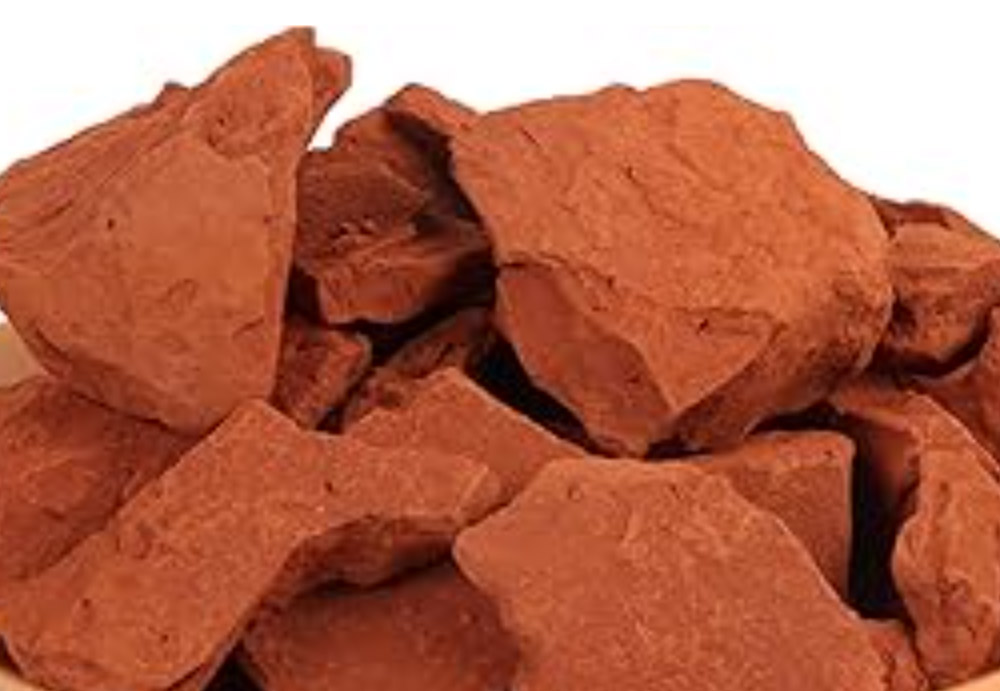
Geru (Indian brick red): Sourced from natural red earth located near Kanpur.
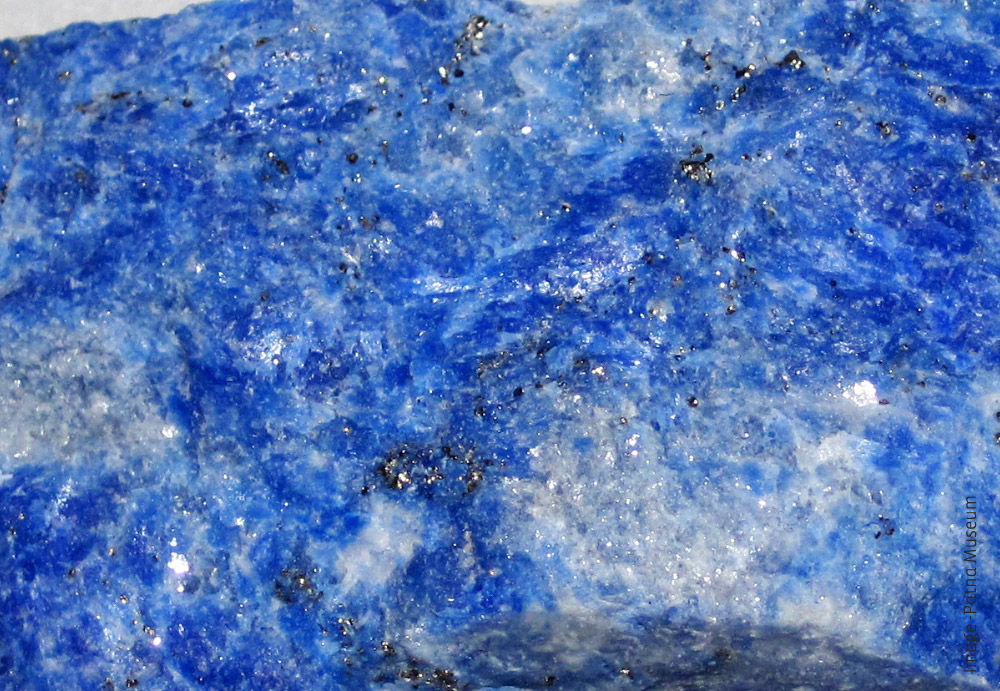
Lajvard (Blue): Created by crushing Lapis Lazuli stones.
Shanjarf (Vermillion): Made from cinnabar or a mercury ore sourced from China.
Sabz (Green): Formulated by mixing gamboge and neel.
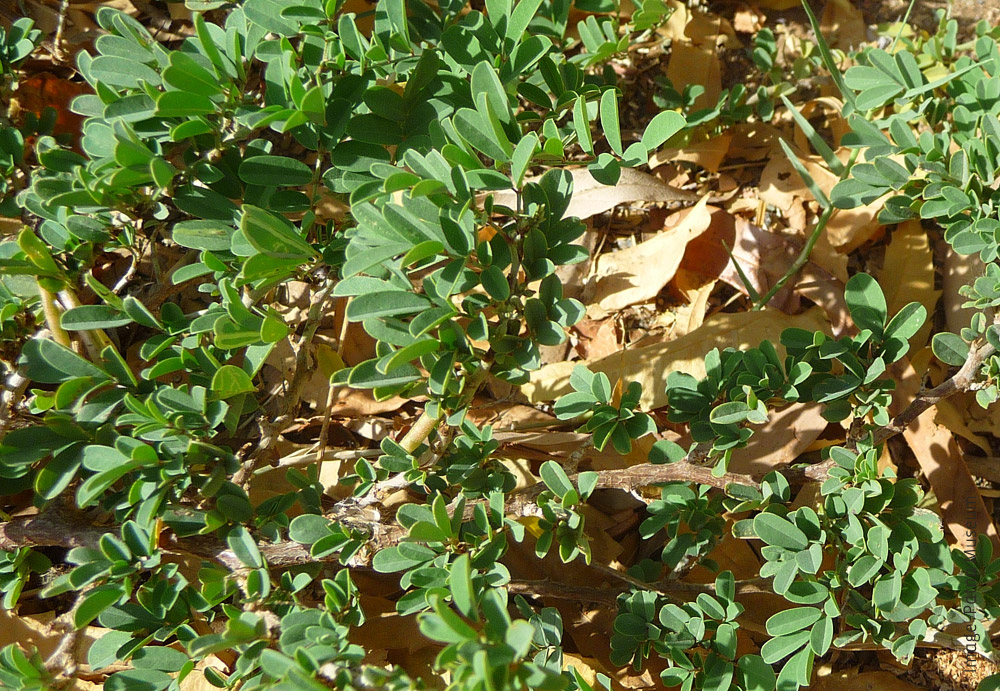
Neel (Blue): Extracted directly from the Indigo plant.
Magenta: Sourced from the roots of a specific tree.
Gulabi (Pink to carmine): Specially prepared from shellac.
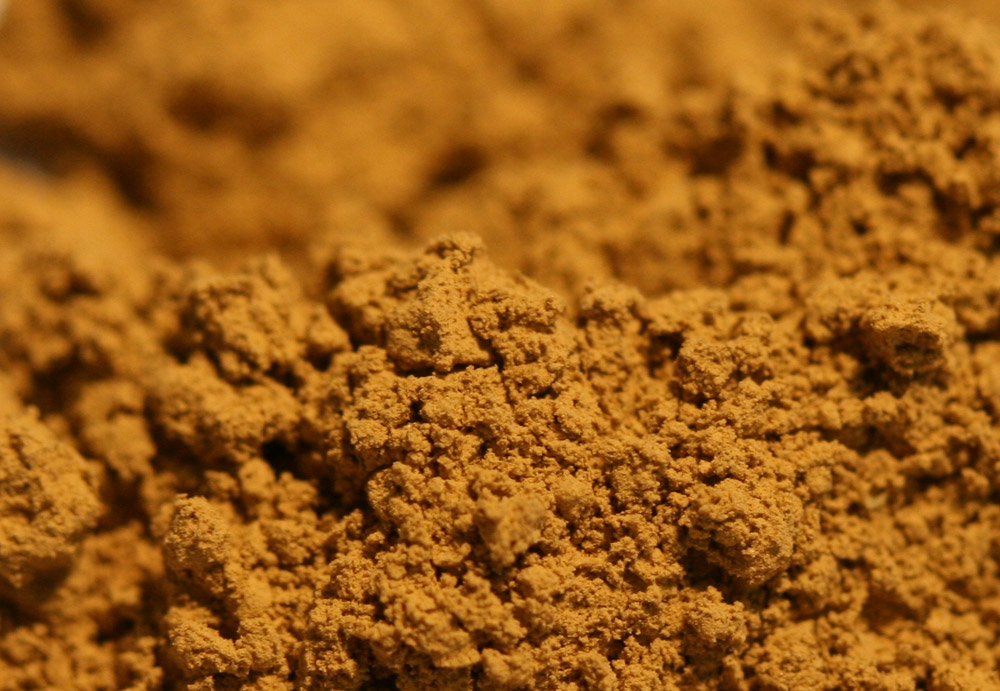
Abrang (Pale brownish-yellow): Extracted from yellow ochre found near Mathura.
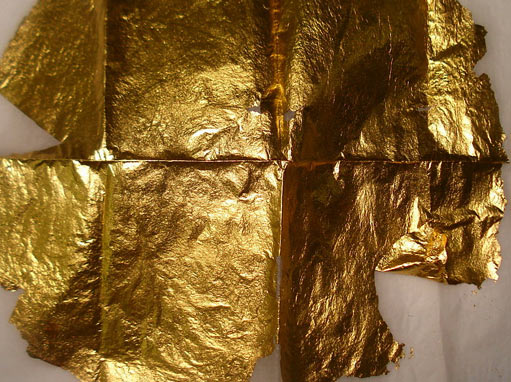
Gold: Prepared by beating gold leaf fine and mixing it with honey and water.
Binders: To make these natural powders stick to the paper, babool gond (acacia glue) or gum arabic was added to all pigments before use. Smita Parashar mentioned that egg white was also frequently mixed into the paint. This gave the final dried paint a distinct, glossy shine.

Kalam (Brushes): The defining tool of the craft was the brush, locally called kalam. Making these natural brushes required a lot of effort. For highly detailed and very fine work, artisans used hair taken from a squirrel’s tail. Parashar explains that these brushes could be tied as thin as a single hair to capture minute facial features. For bolder strokes and background filling, artists used hair from a goat’s tail, a hog’s neck, or a buffalo’s neck. These thicker animal hairs were quite rough, so they were first boiled in water to soften them before being tied into a brush.
Rubbing Stones: Heavy, round stones were essential tools used to physically rub the paper or silk surfaces to make them smooth enough for fine painting.
No riruals
While researching and meeting people, we could not find a single active workshop where this art is still being practised. As a result, we were unable to document the actual process firsthand. The process described here has been pieced together from conversations with a few experts and references from old documents.
1.Preparation of the Surface
The handmade quality of Patna Kalam distinguished it sharply from lithography and photography, both of which expanded rapidly during the nineteenth century. Mechanical images lacked the tactile density and visible labour embedded within handmade miniatures.
In its early phase, Patna Kalam artists prepared their own painting surfaces, often using cotton or rag-based handmade paper locally known as tulat. Over time, this gave way to bansaha, a handmade paper imported from Nepal, typically made from jute or bamboo saplings. Handmade paper was polished with stones or shells to create smooth surfaces capable of sustaining fine detail. These burnishing compressed fibres and produced the soft luminosity characteristic of miniature painting. Because the works were intended for intimate viewing, colour density, brush pressure and surface texture required precise balance within limited space.
Mica sheets (abhrak) and small ivory panels were also used as painting surfaces, valued for their smoothness and natural sheen. As Smita Parashar notes, Nepalese handmade paper and mica were especially preferred because mica lent a distinctive natural lustre to the finished work. By the eighteenth century, European machine-made drawing paper began to circulate in the region, and in contemporary practice, artists have further adapted the tradition, including painting on silk plates.
2.Preparation of the Colour Pigments
The colour pigments used in Patna Kalam was derived from an extensive range of natural sources, reflecting both ingenuity and close engagement with the environment. Colours were extracted from minerals, plants, stones, and animal-based materials. Whites (safaida) were prepared from earth brought from Kashghar or from cowrie shells. Yellow (sayravan) came from gamboge or orpiment, and the familiar Indian red (geru) was sourced from local red earth near Kanpur. Lapis lazuli was ground to produce the deep blue (lajvard), while vermillion (shanjarf) was obtained from cinnabar, often sourced through trade with China. Greens (sabz) were created by blending gamboge with indigo (neel), which itself was derived from the indigo plant. Other tones included magenta from tree roots, pinks from shellac, pale ochres from Mathura soil and gold prepared from finely beaten gold leaf mixed with honey and water. Black pigment known as Kajli Seahi held particular importance. Prepared from collected soot mixed with binding agents and repeatedly ground to achieve density, it enabled the sharp contouring essential to miniature work.
These pigments were bound together using natural adhesives such as babool gum (gond) or gum arabic, often enriched with egg white, which imparted a subtle gloss to the final surface.
3.Preparation of the Kalam
Brushes, locally called kalam were handmade from squirrel, camel or goat hair, allowing microscopic precision in contouring and stippling. Archer repeatedly emphasises the extraordinary delicacy of line retained even within rapidly produced bazaar works. The brush was handled through controlled wrist movement rather than broad gestural strokes associated with European oil painting.
Extremely fine detailing was achieved using squirrel tail hair, sometimes reduced to a single strand for rendering facial features and intricate ornamentation. Coarser brushes made from goat, hog, or buffalo hair were used for broader strokes and background work; these hairs were typically boiled to soften them before being tied into brushes. Drapery folds, jewellery, fingers and facial features reveal this disciplined manual economy.
4.Seasonal Nature of the Art Practice
According to artist Smita Parashar, the artists engaged in a season-specific workflow because of the local environment. During the summer months, the air in Patna was filled with heavy dust. Since this dust would easily ruin wet paint, the artists strictly limited their work to only drawing the outlines using kajli seahi, often drawing directly with the brush without preliminary sketches. When winter arrived, the air finally cleared. Winter was the designated time for gathering fresh flowers and vegetables to create natural colour pigments, making the actual filling of colours exclusively a winter activity. At this stage, pigments mixed with gum arabic were applied in thin, transparent layers over the summer outlines. Instead of heavy shading, artists employed delicate dotting techniques to suggest light and volume. Final embellishments, including touches of gold, were added with extremely fine brushes. Depending on the complexity of the composition and the number of figures, a single painting today can take anywhere between three and fifteen days to complete.
5.Experimentations in Patna Kalam
Patna artists also experimented with alternative surfaces including mica and ivory. Mica painting, inherited partly from Murshidabad traditions associated with Muharram decorations, became commercially significant in Patna. Transparent mica sheets were painted for decorative lampshades, processions and illuminated displays. When placed before light, the surfaces produced luminous effects that animated colours and figures dramatically. These works occupied an ambiguous position between painting, decorative object and spectacle. Ivory portrait miniatures formed another important branch closely tied to European patronage. The translucent ivory surface allowed delicate tonal gradation suitable for realistic likenesses. Archer notes that certain Patna ivory portraits became nearly indistinguishable from European miniatures in finish and modelling.
6.The Techniques of the Art and Its Subtleties
The treatment of the human body in Patna Kalam reflects its broader position between Mughal inheritance and the pressures of colonial-era visual culture. Figures are neither idealised in the Mughal manner nor constructed through European academic realism. Instead, the bodies are often slightly elongated, firmly outlined and built through restrained contouring and minimal shading. Within this system, certain facial conventions recur across workshops i.e. pointed noses, defined jawlines, and stylised moustaches suggesting a degree of serialisation shaped by workshop practice and repeated visual templates. One of their most distinctive qualities lies in the careful observation of bodily action in everyday work. Basket makers bending under load, fish sellers balancing their goods, or metalworkers absorbed in their tools are rendered with close attention to posture and physical effort. As Rebecca Brown argues, what emerges here is not simply occupational identity but the “performed” nature of work itself. The body becomes legible through movement, through the angle of a back, the tension of a hand, rather than through anatomical accuracy.
Alongside these scenes of labour, bird, animal and plant studies formed an important strand of production, continuing the Mughal interest in natural history associated with artists like Ustad Mansur. These studies were particularly appealing to European patrons who sought visual records of Indian flora and fauna, yet they retained the refinement of miniature practice. Delicate line work and subtle tonal shifts allowed these subjects to be observed and classified without losing the aesthetic restraint characteristic of the tradition.
No Waste
The history of Patna is rich with ancient empires, spiritual growth, and trade. The city was originally founded by Ajatashatru, the king of Magadha. He built a fort at the village of Pataligrama in 490 BCE to fight the Licchavis of Vaishali. He chose this spot because of its strategic location on the banks of the river Ganga.
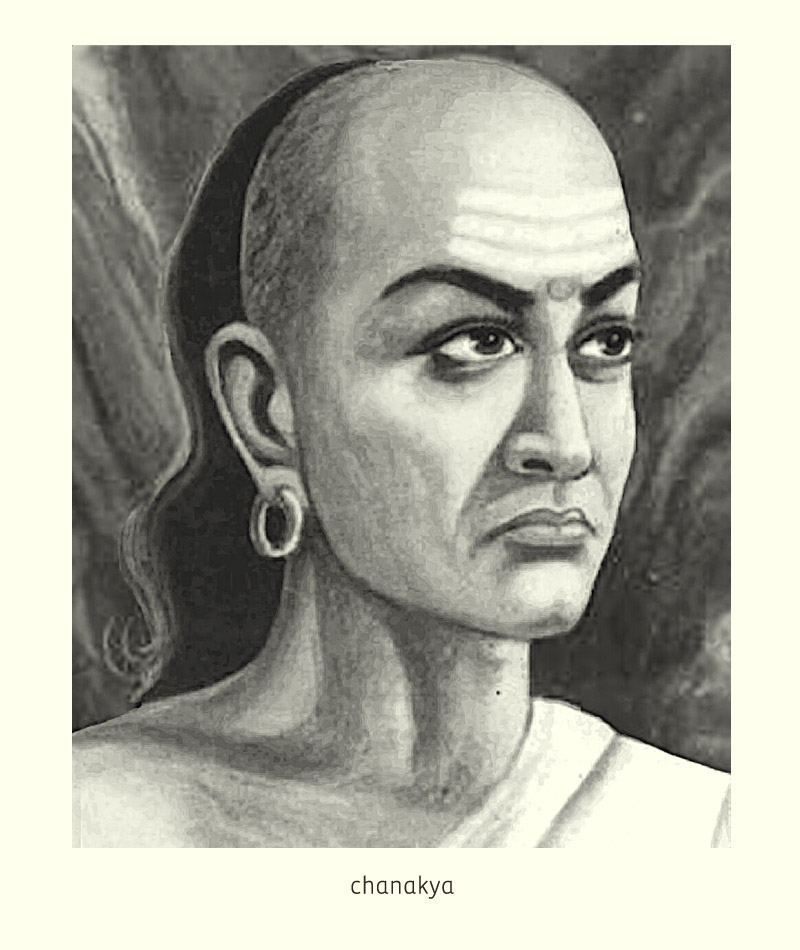
Around 300 BCE, during the Mauryan period, the city was called Pataliputra. It became the main centre of power for the Indian subcontinent and had about 400,000 people. Megasthenes, a Greek ambassador, called it the greatest city on earth. It was a huge centre for education, home to famous scholars like Aryabhata and Chanakya. Emperor Ashoka greatly improved the city's buildings, adding stone walls and structures. He also made it a main base for spreading Buddhism. The city stayed successful during the Gupta Empire. In 400 CE, the Chinese traveller Fa-Hien wrote about its wealthy society and free hospitals for the poor.
During the Medieval Period, the city faced many changes. After several invasions and a time of decline, the Afghan emperor Sher Shah Suri revived Patna in the 16th century and got a fort constructed there. Later, in the early 18th century, the Mughal prince Azim-us-Shan served as the local governor. He worked to make the capital a beautiful and great city, second only to the imperial capital, Delhi. He got permission from Emperor Aurangzeb to change Patna’s name to Azimabad. However, the local people continued to call it Patna.
When European powers arrived, Patna became a very important centre for global trade. In 1620, the English East India Company set up a factory here to trade silk and calico cloth. The area became famous worldwide for saltpetre (an ingredient used in gunpowder), which was shipped down the Ganga river. Patna also played a major part in the 1857 war for Indian Independence. Local leaders, like the bookseller Pir Ali, planned actions to fight against British rule. This made the district a key area for the freedom struggle. Finally, when the Bengal presidency was split in 1912, Patna regained its status as a capital for the new province of Bihar and Orissa.
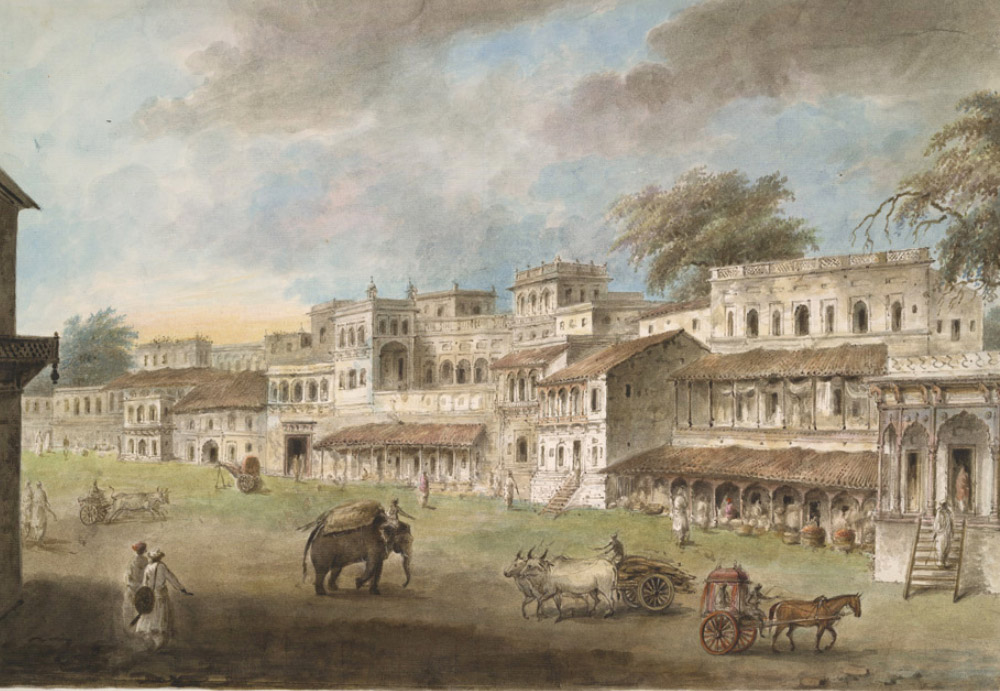
Patna’s geography is mostly flat and defined by its many rivers.
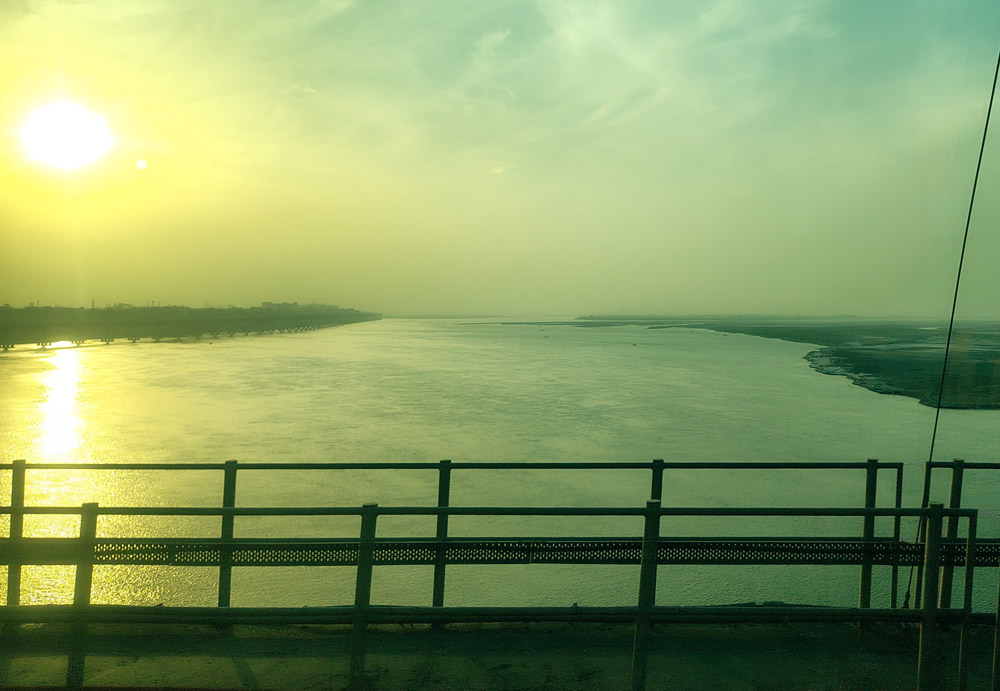
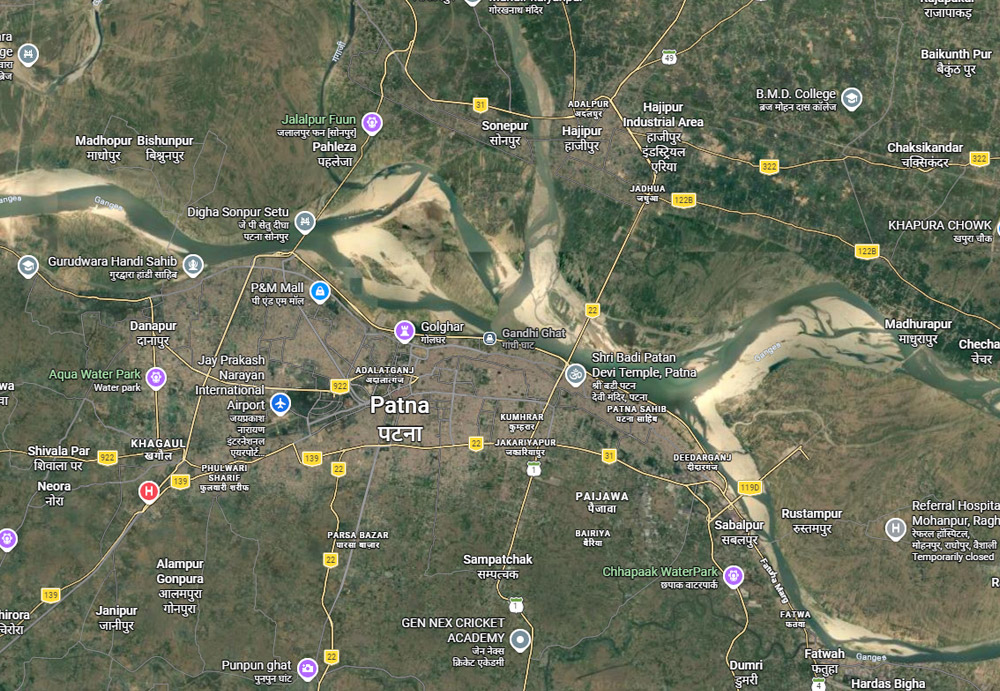
The city of Patna sits on the southern bank of the river Ganga, right where major rivers like the Sone, Gandak, and Punpun meet. The total area of Patna is 250 km2. The city is about 35 kilometres long and 16 to 18 kilometres wide. The city's land is shaped somewhat like a saucer and sits about 53 meters above sea level.
During the British era, Patna was part of the massive Bengal Presidency. Its modern borders took shape much later. The whole district covers 3,202 square kilometres. The land here can be split into two main parts. First, there is a narrow, raised strip of very fertile land along the Ganga that is about 8 kilometres wide. Second, there are huge, flat farming plains that make up the rest of the area. In 1976, the Nalanda district was separated from Patna. After the creation of the new district, there are no hills or forests anywhere in the Patna. Geographically, Patna sits in India's Seismic Zone-IV. This means it is vulnerable to large earthquakes, although major ones have been very rare in recent times. Due to its flat, river-heavy landscape, the area is also at high risk for floods and cyclones.
Patna’s weather changes drastically with the seasons, which deeply affects how local people live and work. The region has a humid, subtropical climate that follows three main seasons:
- Summer: The hot, dry summer starts in April and peaks in May and June. During this time, a harsh, hot wind called the loo blows across the plains. Temperatures can get extremely high, once reaching a record 46.6°C.
- Monsoon: The rains arrive in late June and last until September, bringing much-needed relief from the heat. The area gets about 80% of its yearly rain (around 1,110 mm) during these months. Sometimes, heavy rains cause the Ganga river to overflow and flood the nearby riverbank areas.
- Winter: From November to February, the weather turns cold. The nights are chilly, and temperatures can drop as low as 1.1°C. The days are usually sunny or foggy, but thick winter smog often causes delays for flights and trains. It is followed by the arrival of spring, which brings the weather to a full cycle.
Flora and Fauna: Because most of the land in the wider Patna district is used for farming, there are no large forests left. The rich, flat farming lands produce crops like rice, sugarcane, and other grains. In the fields right next to the river, specific wild water plants grow naturally. Closer to the villages, one can easily spot bamboo clusters, date palms, and mango orchards. Across the district, some of the most common native trees are the neem, bel, siris, jackfruit, and the red cotton tree. Because of the heavy farming, there is not much wildlife, but a few small animals like jackals, foxes, and wild cats can still be found.
While the district relies on farming, the capital city faces problems from fast modern growth. Dust from construction, along with heavy smoke from cars and factories, has made the air quality dangerously poor. This severe pollution heavily affects public health and causes breathing problems for many residents in the city.
Patna's infrastructure is a mix of ancient trade routes that have grown into modern transport networks.
The Patna Municipal Corporation (PMC) manages basic city needs, like water and drainage, across 75 wards. The city gets most of its water from the ground, pulling it up through 98 tube wells. While the city's original sewer system is very old (from 1936), new efforts like the Nirmal Ganga project are upgrading waste treatment plants to stop dirty water from flowing into the river. In terms of technology, Patna took a big step by setting up a 20-kilometre free WiFi zone, one of the longest in the world, stretching from NIT Patna to Danapur.
The district acts as a massive hub for travel and transport:
- Roads: Several National Highways cross the region. The famous Mahatma Gandhi Setu, built over the Ganga river in 1982, connects Patna to Hajipur. Today, a newer six-lane bridge runs right next to it to help with heavy traffic.
- Railways: The main railway line runs along the river. The Digha-Sonpur Bridge, which is India's second-longest bridge for both trains and cars, makes crossing the river much easier. The new Patna Metro has made travelling inside the city even faster.
- Waterways: The Ganga river serves as National Waterway-1. It passes right through Patna, acting as a major water route for cargo ships travelling from Allahabad to Haldia.
- Farming Infrastructure: In the rural villages, the government provides tube wells and modern water pump systems. Farmers also use restored pynes (traditional water channels) to help water their fields and support the local farming economy.
Patna’s buildings tell the story of its long history and the different empires that once ruled it.
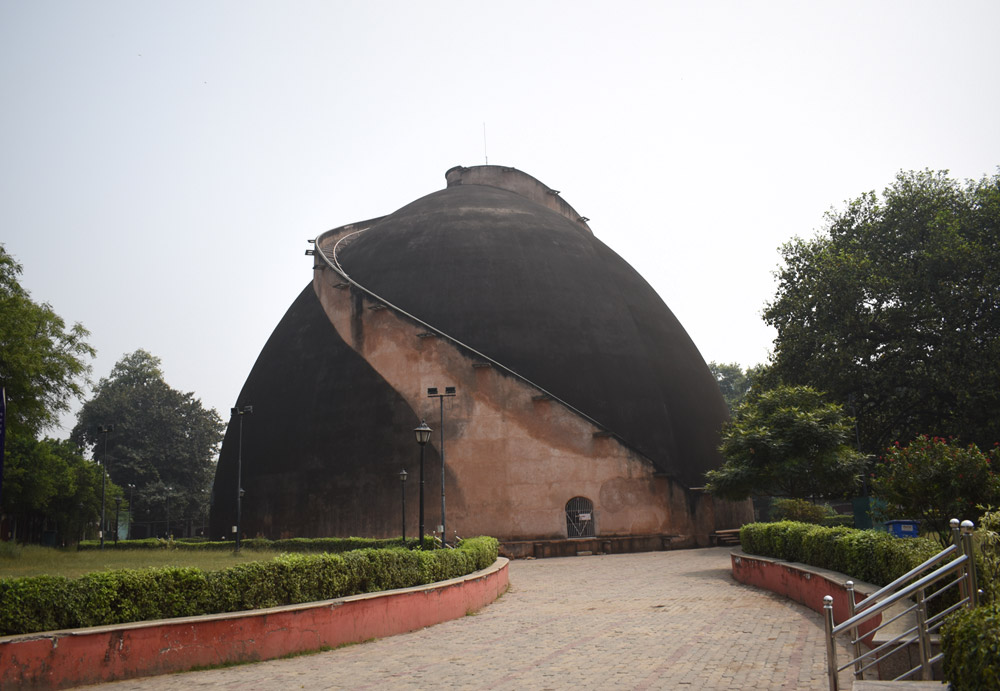
In the capital city, British colonial styles are very visible. A major landmark is the Golghar. It is a huge, dome-shaped building made by the East India Company in 1786 to store grain after a terrible famine. Another famous building is the Old Secretariat. Completed in 1917, it has a beautiful blend of Indian and Islamic styles and features a tall 184-foot bell tower. Other important historic structures include the Padri Ki Haveli and the Sultan Palace.
The city is also home to many beautiful Indo-Islamic structures, like the Pathar-ki-Masjid, built by the Mughal Prince Parwez Shah in 1626. Outside the city, in the rural villages of the district, people traditionally built houses using mud and brick. This helped them stay cool in the hot climate. Today, however, modern cement houses are quickly replacing these traditional village homes.
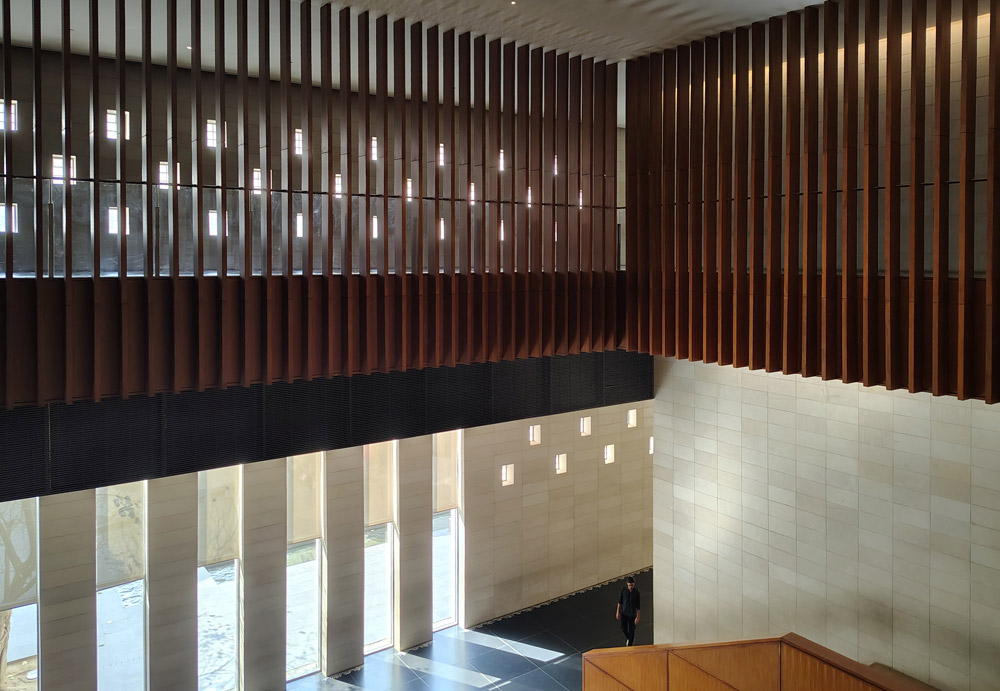
In recent years, impressive modern buildings have been added to the capital. The Sabhyata Dwar (Civilisation Gate), built in 2018, is made of red sandstone in an ancient Mauryan style to honour the city's roots. The Samrat Ashok International Convention Centre is a modern engineering marvel built with a massive amount of steel. Finally, the new Bihar Museum, designed by a Japanese architecture firm, is a world-class, modern landmark spread across nearly 14 acres.
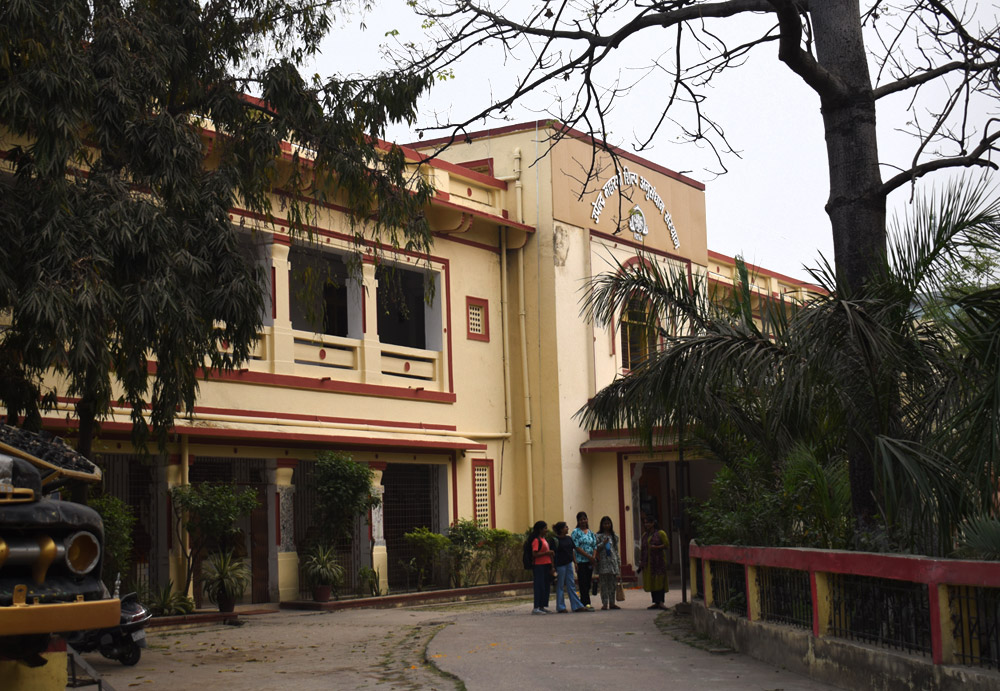
Patna’s culture is closely tied to local traditions, spiritual practices, and the performing arts. The city actively protects traditional Indian dance and music. The Bhartiya Nritya Kala Mandir is a dedicated institute that teaches and preserves these classical dance forms. Theatrical arts also play a major role in keeping cultural stories alive. The Kalidas Rangalaya and the Premchand Rangashala are key local centres that regularly host stage performances and traditional music to share these narratives.
Spiritual rituals and festivals deeply influence the local way of life. The most important and ancient festival is Chhath Puja, which is dedicated to the Sun God. During this festival, people observe strict fasts and offer prayers while standing in the water of the Ganga river. The city also celebrates other major religious and seasonal festivals throughout the year. Durga Puja brings large community gatherings in the autumn. Residents also come together to observe Eid, Holi, Saraswati Puja, and Makar Sankranti, reflecting a society built around shared cultural practices.
The people of Patna, often called Patnaites, come from many different backgrounds. Education is highly valued here; while the wider district has a steady literacy rate (around 70%), the urban capital is even more educated, with a literacy rate of over 83%.
The true local voice of the region is Magahi (or Magadhi). This native dialect is believed to be a descendant of the same language spoken by Gautama Buddha and the kings of the Mauryan empire. The community is deeply spiritual. Most of the population follows Hinduism, alongside a large Muslim community and smaller groups of Christians, Jains, Sikhs, and Buddhists living together.
Daily life looks very different depending on the region. In the rural villages of the district, farming is the heart of everyday life and dictates the rhythm of the year. Inside the busy capital city, people mostly work in local businesses, trade, and in the growing IT sector.
The way people dress perfectly shows Patna's blend of old and new. During cultural events, village fairs, and festivals, one can easily spot beautiful traditional clothing, like cotton saris for women and dhoti-kurtas for men. However, for everyday city life, most people prefer wearing modern Indian clothes, like the shalwar kameez, or comfortable western outfits.
Patna is famous worldwide for its deep ancient history and its long-standing role as a major trading centre.
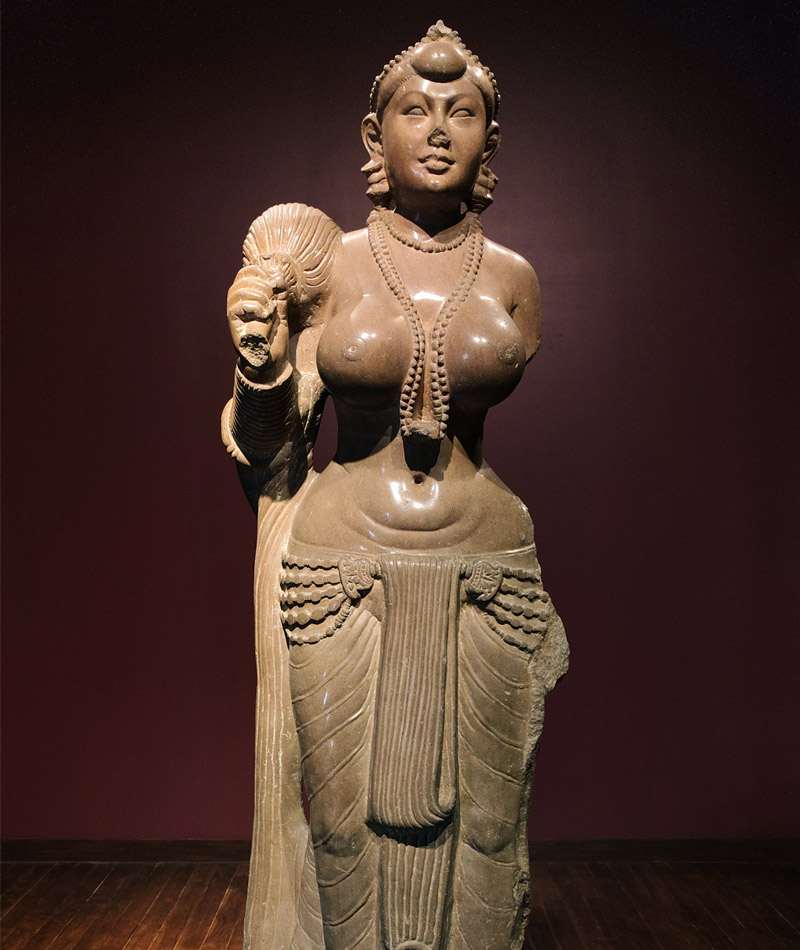
Sites like Kumhrar and Agam Kuan hold the ancient ruins of Emperor Ashoka's city. The beautiful Didarganj Yakshi statue, found here, is a globally recognised example of ancient Mauryan art.
Patna is a major holy site for Sikhs. The Takht Sri Patna Sahib marks the exact birthplace of the tenth Sikh Guru, Guru Gobind Singh. There are also five other historically important Gurdwaras in the city.
Keeping its ancient tradition as a great centre of learning, the city is home to Patna University (founded in 1917, making it one of the oldest in the region) and the newly rebuilt Nalanda University nearby.
Historically known for the Patna Kalam painting style, the city is still a lively market for local crafts today. It serves as a key hub for anyone studying traditional arts, especially local textile traditions like Chaapa work and Sikki grass weaving.
Since the 1600s, Patna has been a premier trading market. It is well-known for exporting fine Patna rice and sugarcane, as well as historical goods like calico (cotton cloth) and saltpetre.
List of craftsmen.
Team Gaatha
Archer, Mildred. Patna Painting. Royal India Society, 1947.
Brown, Percy. Indian Painting under the Mughals, A.D. 1550–A.D. 1750. Clarendon Press, 1924.
Das, Rai Krishna. Bharat Ki Chitrakala. Nagari Pracharini Sabha, Banaras, 1939.
Gold, Charles. Oriental Drawings. London, 1806.
Havell, E. B. Indian Sculpture and Painting: Illustrated by Typical Masterpieces with an Explanation of Their Motives and Ideals. John Murray, 1908.
Sharma, Manoj Kumar. Patna Kalam. Bihar Hindi Granth Academy, n.d.
Journal Articles
Brown, Rebecca M. “Colonial Polyrhythm: Imaging Action in the Early Nineteenth Century.” Visual Anthropology, vol. 26, no. 4, 2013, pp. 269–297.
Ghosh, Aditi. “Techniques and Materiality in Company School Painting.” Journal of Indian Art History, vol. 18, no. 2, n.d.
Manuk, P. C. “The Patna School of Painting.” Journal of the Bihar Research Society, vol. 39, 1943, pp. 143–169.
“Discovering the Timeless Beauty of Patna Kalam Art.” Art and Designer, https://artanddesigner.in/blogs/news/discovering-the-timeless-beauty-of-patna-kalam-art. Accessed 27 May 2026.
Gauri, Divya. “Patna Kalam: The Patna School of Painting from Dawn to Dusk.” Sahapedia, Oct. 2021, https://www.sahapedia.org/patna-kalam-the-patna-school-of-painting-from-dawn-to-dusk. Accessed 27 May 2026.
Hadi, Abid. “Patna Kalam: Its Glory and Saga.” Folkartopedia, https://www.folkartopedia.com/archive/patna-kalam-its-glory-and-saga-sk/. Accessed 27 May 2026.
“ICH Begusarai (PDF Document).” Gyan Ganga, https://gyanganga.ai/admin//fileupload//ICH%20Begusarai.pdf. Accessed 27 May 2026.
“Patna Kalam Artists.” The Heritage Lab, https://www.theheritagelab.in/patna-kalam-artists/. Accessed 27 May 2026.
“The Forgotten Art of Patna Qalam.” Live History India, https://www.livehistoryindia.com/story/art-history/the-forgotten-art-of-patna-qalam. Accessed 27 May 2026.
“Reviving Patna Kalam: Our Collective Responsibility.” The Times of India, https://timesofindia.indiatimes.com/city/patna/reviving-patna-kalam-our-collective-responsibility/articleshow/128382475.cms. Accessed 27 May 2026.
“Efforts Intensify to Revive Patna Kalam Art Form.” The Times of India, https://timesofindia.indiatimes.com/city/patna/efforts-intensify-to-revive-patna-kalam-art-form/articleshow/128382693.cms. Accessed 27 May 2026.
YouTube Videos
“Patna Kalam: Ek Chitra Shaily.” YouTube, uploaded by Manoj Kumar Bachchan, https://youtu.be/bZM8hDfh6xI?si=d698cXBrS4Wczdaa. Accessed 27 May 2026.
“Patna Kalam: Ek Chitra Shaily 2.” YouTube, uploaded by Manoj Kumar Bachchan, https://youtu.be/EohwFvMREuw?si=4n3OMBLBt0iafVyw. Accessed 27 May 2026.
