


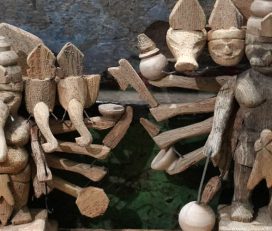
Murti Kala ~Wooden c...
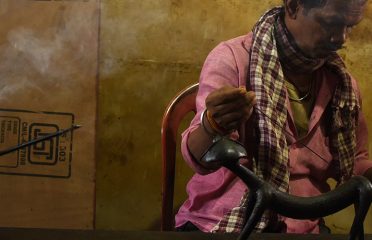
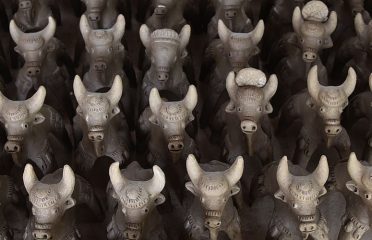
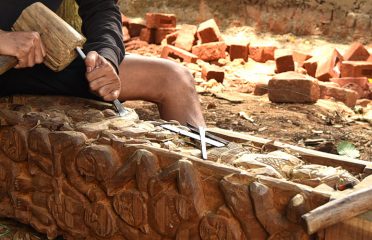
The wooden toys of Varanasi are widely known for their finely carved and painted wooden toys. Known as Murti Kala by the local artisans.
Kashmiri Ganj, Khojwan, Bhelupur...
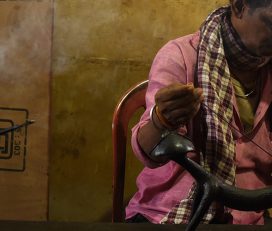
 Kondagaon, Chhattisgarh, India...
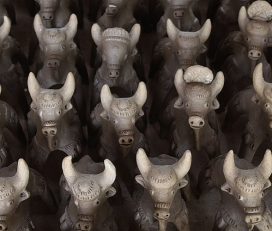 Kumhar para, kumhar para, Sona...
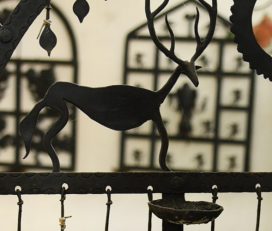 Kondagaon, Chhattisgarh, India...
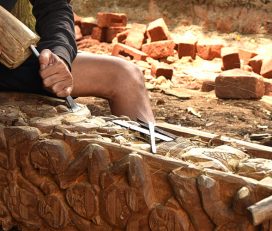 Gadhbengal, Chhattisgarh, Indi...
The wooden toys of Varanasi are widely known for their finely carved and painted wooden toys. Known as Murti Kala by the local artisans.
Kashmiri Ganj, Khojwan, Bhelupur...
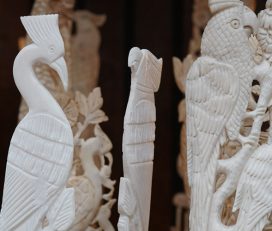
The craft of bone carving, which translates to ‘Haddi pe Naqqashi’, is a centuries-old practice that involves the intricate art of naqqashi (carving) on bone.
Muftiganj, Daulatganj, Lucknow, ...
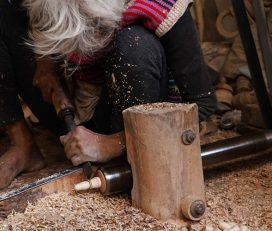
The Lathe workers of Varanasi, make brightly-coloured lac coated toys, giving them the name Lacquerware toys.
Kashmiri Ganj, Khojwan, Bhelupur...
Let us talk… if you feel the same love for handmade, and would like to support us by sharing your research or by contributing financially to our documentation efforts.
Reach us at [email protected]

Humans have come a long way from carving the walls of the caves to using colourful pigments on canvas in order to communicate with others. Art compels humans to look beyond their mere survival in life and truly live it. It allows people to communicate their ideas, emotions, and record their day-to-day observations. One such art form was Muria Bhitti Chitra or Muria Wall Paintings, which emerged in the Bastar region of Chhattisgarh. This art form began with adorning the mud walls of the Ghotuls and later shifted to depicting stories on paper and canvas. It has been used as a means to preserve and convey cultural and historical narratives, as well as to beautify public spaces and bring a sense of joy and harmony to the surrounding community (Sharma). However, this does not mean that the practice has faded into oblivion.
The Muria have an age-old tradition of erecting pillars for the dead. This practice, called Gudi, is still prevalent in the Southern Bastar, where a sharp stone, usually 6 to 7 feet high, is placed above the grave. These dead pillars are marvelously painted with images. It is noted here that these paintings do not follow a particular theme; rather, they are made according to the wishes or desires of the deceased.
In 2012, two renowned Muria painters, Meheru and Vinod Muria, created beautiful murals at the Crafts Museum, New Delhi. The artists painted the tribal life of Bastar, depicting scenes of hunting, festivities like Dusshera, worship at a shrine, or devotees carrying different types of mobile shrines. Figures of men and women, along with the flora and fauna, are painted with precision, lending an aesthetic appeal to the murals. In an interview with Mushtaq Khan, Meheru Muria reveals, “I painted various aspects of Bastar tribal culture and tribal life, such as puja rituals, Dev-Dhami, Madai, marriage, dance, hunting, Anga, Doli, Bairakh, Viman, Gutal, Kolha, Chhatra, Kalash, and agriculture. Hundreds of schoolchildren and local and foreign visitors visited daily to watch me paint. I took Vinod Muria, a boy from my village, with me; he also painted.”
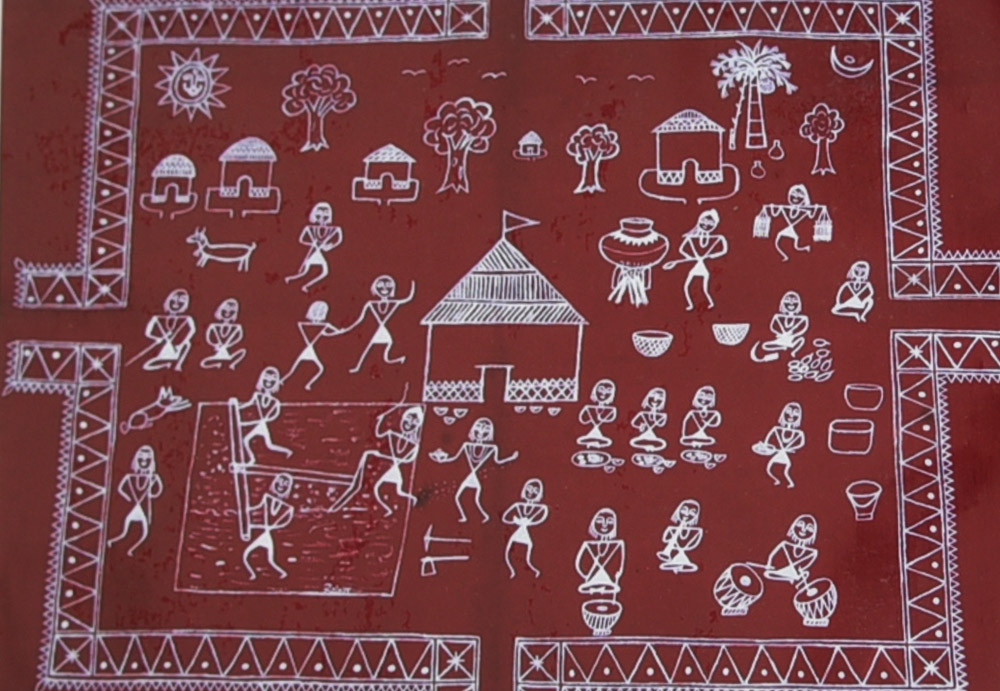
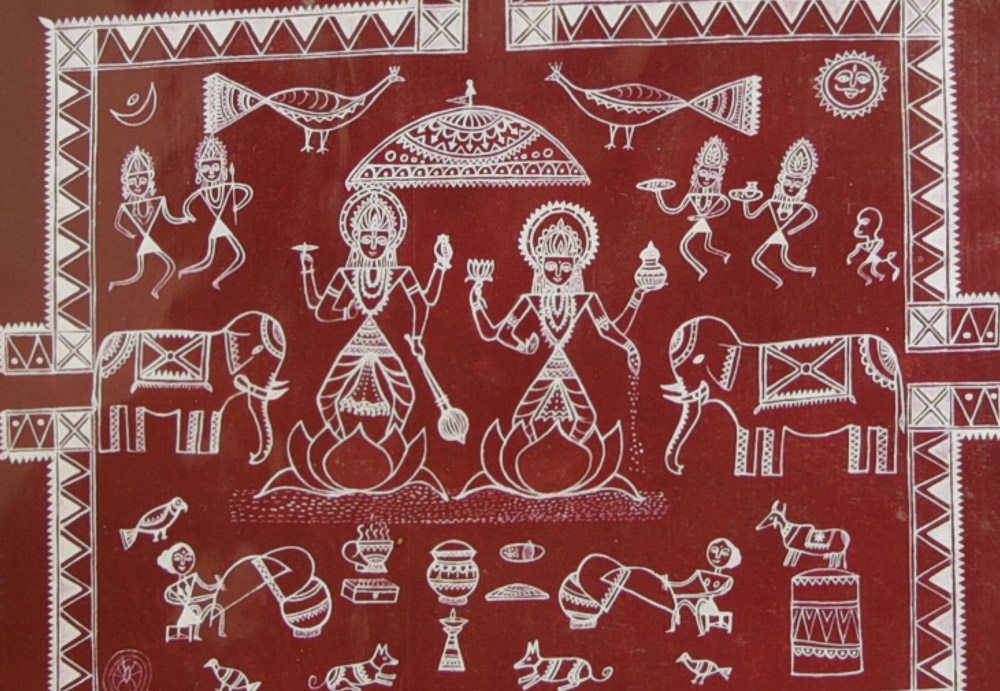
Wall paintings help preserve the identity of tribal communities by allowing them to pass down their stories and traditions in an artistic form. Whether it is the Dussehra procession or a marriage ritual, each scene becomes a visual archive that keeps collective memory alive for future generations. These artworks also serve as representations of deities, created to pray for protection and prosperity for households and villages.
When we spoke with local artists, they shared that both Muria paintings and Jagar paintings fall under the same category of bhitti chitra. But on closer observation, we found a clear distinction, Muria art is primarily for decorating the space, while Jagar paintings are created specifically for religious ceremonies. The details below explain this further.
Painting at the Ghotul:
As Verrier Elwin once observed, “The ghotul is the very soul of the Muria.” In the same spirit, Muriya Bhitti Chitra becomes the soul made visible, a tradition that shows how art is woven seamlessly into daily life.
The Ghotul in the Muria tribe is a traditional youth dormitory and an important social and cultural institution. It is a place where unmarried boys and girls gather in the evenings to learn discipline, community values, songs, dances, craft skills, and tribal customs. Under the guidance of senior members, the Ghotul teaches cooperation, respect, and responsibility while creating a strong sense of belonging among the youth. It also plays a key role in preserving oral traditions, festivals, and rituals, making it essential for Muria identity and cultural continuity.
Many books describe the Ghotul as a space where young people also learn about relationships and sexuality in an open and accepting environment. For the Muria, the sexual aspect of marriage is relatively unimportant compared to the desire to have children, build a stable home, and form a lasting partnership. Every Muria contrasts the free and joyful life in the Ghotul with the responsibilities of married life. Locally, it is said that “the home is for work and the Ghotul is for fun.”
Traditional songs express this contrast, capturing the happiness of youth spent in the Ghotul and the nostalgia that comes with leaving it after marriage. They describe daily routines — cleaning the Ghotul, decorating it, and taking pride in maintaining it.
O the kingdom of the unmarried !
You will never see that kingdom more.
Of housework you know nothing.
You went wandering in the fields.
Looking like a sarus crane.
Early morning you would go
Evening you’d come home again.
O that beautiful ghotull Every day you went to clean it.
The road was like a jackal’s tail.
You used to go along that road.
In your left hand was a winnowing-fan,
In your right hand a broom.
At sunset you would go there.
You will never see that Raj again.
Now you are going to your husband’s house.
Now your pleasure will be work in the house.
You have got no sense at all.
Your husband will curse you,
Your mother-in-law will cmse you.
Holding your forehead you will weep.
You wiU remember the days of youth.
Then you will know what hardship is.
You have got no sense at all.
Because of its importance in Muria life, young people try their best to make the Ghotul a memorable place. The Ghotul has also inspired artistic creativity, especially in personal adornment, wall painting, and woodcarving. These artworks represent their daily life, values, activities, and traditions, reflecting the spirit of the Muria community.
Jagar Painting:
Though the Bastar region celebrates many festivals, the influence of the Bastar kings is still visible in the rituals practiced by local communities. Among these, four major festivals are closely associated with painting traditions: Lakshmi Jagar, Bali Jagar, Aathe Jagar, and Teeja Jagar. The ritual sequence follows this order.
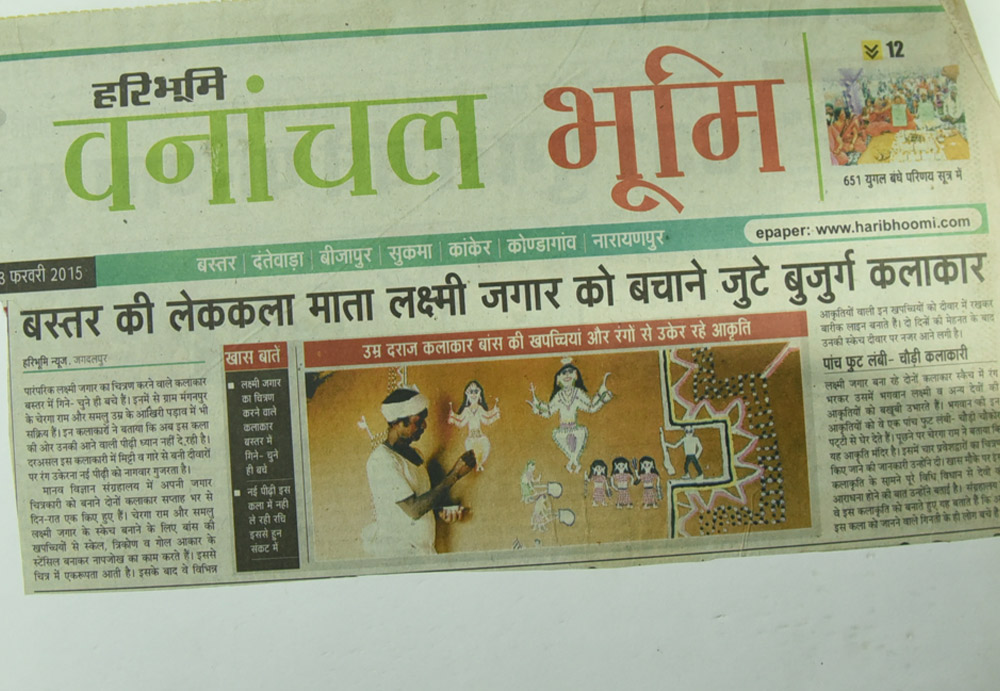
Lakshmi Jagar is performed after Diwali, once the paddy crop has been harvested. Even today, this ritual is mostly practiced in the regions around Jagdalpur and Kondagaon. Lakshmi Jagar is essentially the wedding ceremony of Lord Vishnu and Goddess Lakshmi, represented in the form of paddy. Depending on tradition, the ceremony may last three, five, or eleven days.
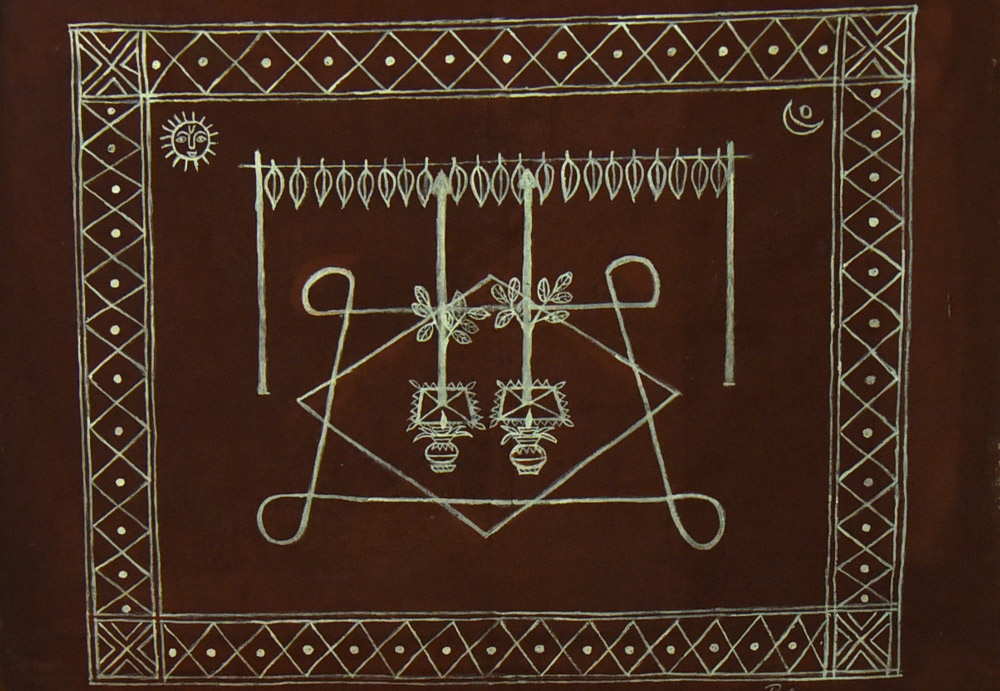
On the final day, when King Vishnu’s wedding procession departs toward the paddy fields, family members paint the Lakshmi Jagar mural on the wall behind the ritual space. This painting is called Ghad Likhna, and it must be completed before the wedding procession returns. Usually, only two to three hours are available to complete the mural.
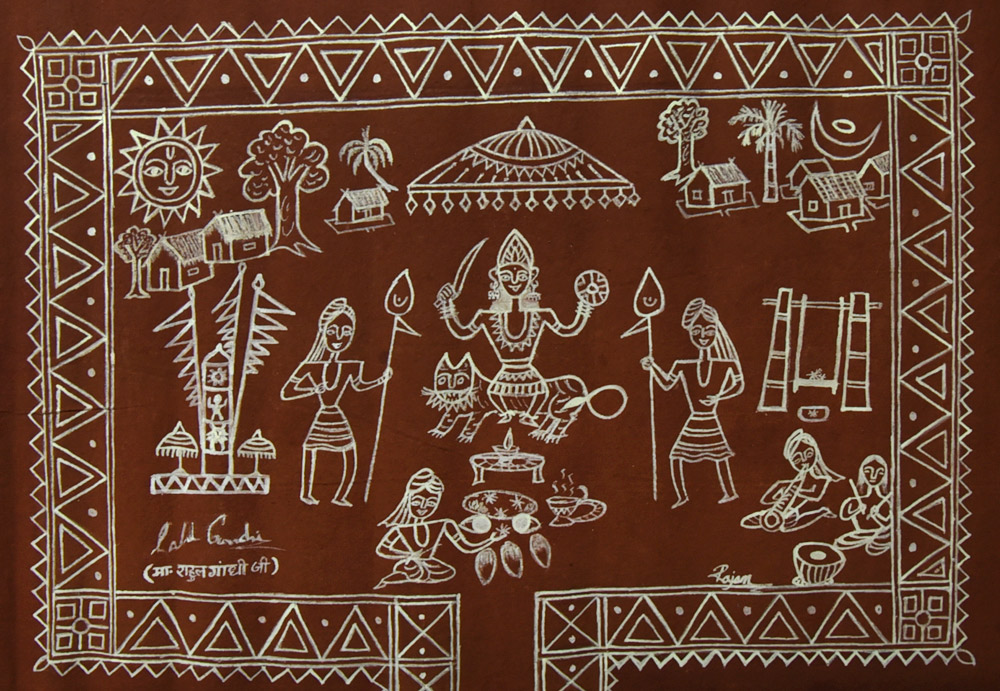
In this tradition, the painting’s elements hold more importance than the style. Anyone available may participate in creating the mural, either individually or collectively. What matters is following the ritual guidelines — depicting the required characters, symbols, and narrative elements. In these paintings, a prominent border is created resembling a courtyard, with the open side symbolizing a doorway. The main subject is placed at the center, with other important elements organised around it.
When we compare both the works, we understand that the Muria Ghotul art is more ancient. We also see special paintings during weddings, and we know that bhitti chitra has always been an integral part of tribal culture. Similar forms appear in thousand-year-old cave paintings, including hand impressions that continue to be found on house walls today.
But when it comes to jagar subject paintings, they are newer compared to ghotul subjects. Some researchers suggest that the influence of different kings who ruled the region is also evident here. Communities living closer to towns, rather than deep in the interiors, often adopted cultural practices associated with the king. Dussehra is one such festival where this connection becomes visible.
As this art form enters urban galleries and curated collections, it carries with it a whisper from the past. It is not just paint on a surface; it is the continuation of a way of life. The Muria do not paint for beauty alone. They paint to remember, to share, and to belong.
The region is wrapped in myths, legends, and stories that flow through its villages just like its rivers. One of the most fascinating stories explains how the name Bastar came into existence. Many people often get confused between the region, the town, and the kingdom, but the tale behind the name is as poetic as the land itself.
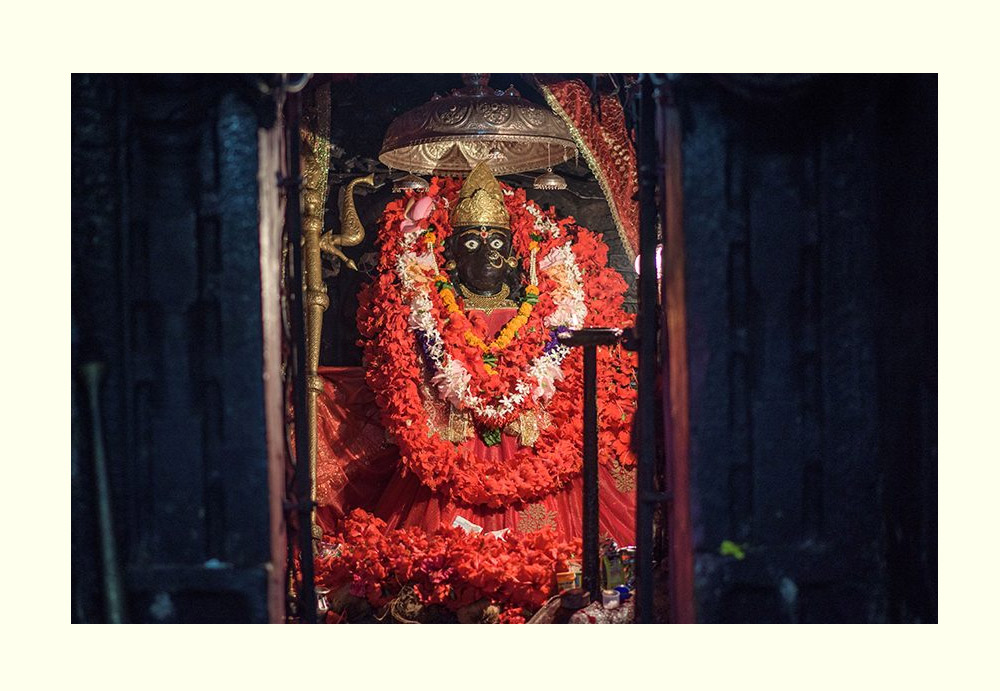
Long ago, there lived a king from Chakrakot. He was known not for his power or wealth, but for his deep devotion to Goddess Danteshwari. The region is home to the famous Danteshwari Temple, one of the ancient Shakti Peethas. It is believed that one of Sati’s teeth had fallen here and that is how this sacred Shakti Peeth was formed.
The story goes that the king’s devotion pleased the Goddess. She appeared before him and blessed him. She told him to start walking and said that she would follow him. The land he covered would become his kingdom. But there was one condition. Once he started walking, he must not turn back.
The king began his journey and the Goddess walked behind him. As he moved forward, he listened carefully to the gentle sound of her anklets. The rhythmic payal told him she was still with him.
After several days of walking, something unusual happened. The Goddess’s foot got stuck in the soft mud of a riverbank and the sound of the anklets stopped. The king, worried that she might no longer be behind him, turned and asked, “Bas itno ne tar?” meaning “Is this much land enough for my kingdom?”
By turning back, he unknowingly ended the journey, but the Goddess blessed him with the land he had already covered. And from the king’s simple question, “Bas itno ne tar”, the name Bastar was born.
A story so beautiful that it reflects not just the creation of a kingdom but also the simplicity and innocence of the people who still live on this land.
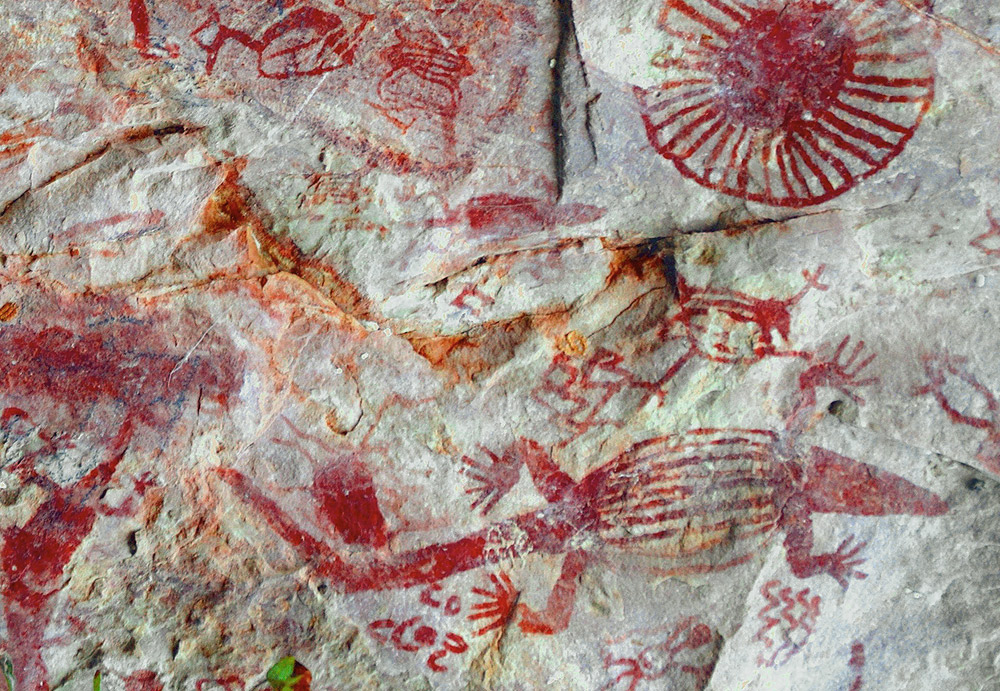
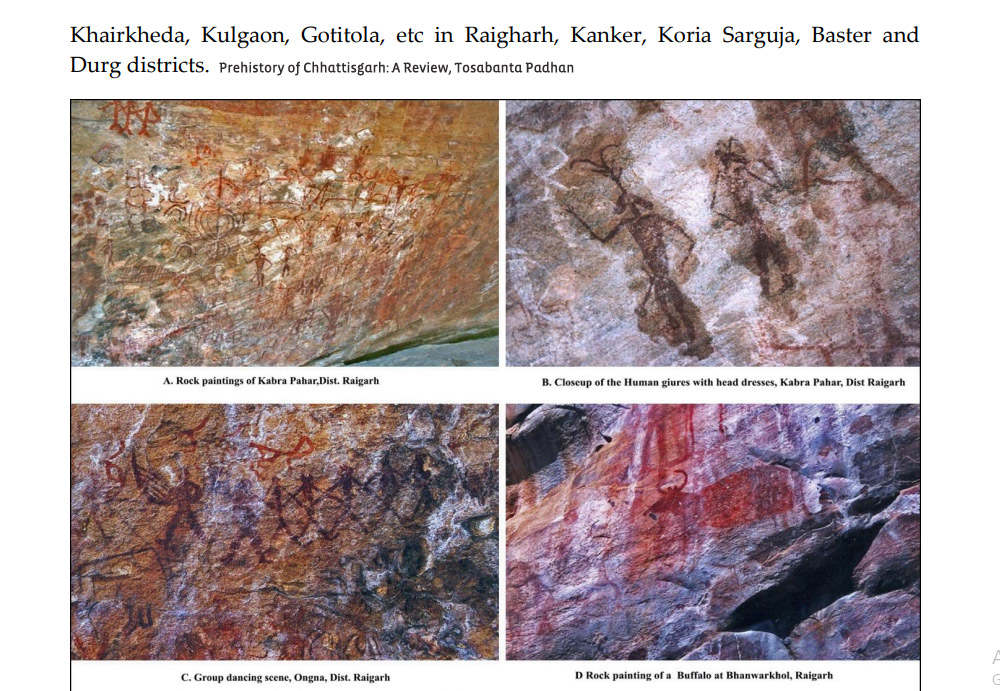
Bhitti Chitra traces its roots back to prehistoric rock art traditions in the caves of Bastar, where 178 sites dating to the Mesolithic Age (8,000–10,000 years ago) have been found. The discovery of microliths from the Chitrakot Falls on the Indravati River was first reported by the Archaeological Survey of India (Krishnaswamy, 1953). Later, V. S. Wakankar visited Bastar district and recorded microliths and rock paintings in the limestone caves at Gupansar and Chitrakot. Painted rock shelters belonging to the Neolithic–Chalcolithic periods were discovered on Linga Sahai hill near Alor, about 7 km from Faresagaon. Another important rock art site, Edka, located 12 km from Narayanpur, revealed early historic motifs.
During the 1990–91 surveys, the Prehistory Branch of the Archaeological Survey of India, led by A. K. Sharma and S. B. Ota, discovered a group of rock shelters west of the village Khiarkhera. Another shelter with paintings was found on the right bank of the Mutekadka River near the Bhandarpal Khadan bauxite mine. These paintings, created using red ochre pigment, depict animals, palm and footprints, and geometric motifs.
The caves primarily feature human and animal figures such as bison, bulls, stags, deer, does, and blackbucks. Humans are shown carrying bows and arrows, hunting, dancing in rows, or engaged in daily activities. Chhattisgarh’s rock art includes thousands of motifs, animals, humans, plants, trees, fish, reptiles, snakes, birds, insects, and both geometric and non-geometric patterns. Natural motifs like the sun, moon, stars, and mountains also appear frequently. These paintings provide rich information about daily life in prehistoric times, documenting hunting, gathering, herding, dancing, feeding animals, domestication, and other activities. The paintings were executed mostly in red and its shades—chocolate, brown, and pink—while black, yellow, and green appear rarely. Overall, the rock art of Chhattisgarh forms an extension of the Central Indian rock art tradition exemplified at Bhimbetka.
Since these cave paintings belong to different periods, they show that the caves were inhabited for long stretches of time. However, as communities transitioned from nomadic to settled life, their art forms also evolved. from paintings in caves to wall paintings on mud-plastered houses and Ghotuls. Today, little evidence of tribal Bhitti Chitra remains. One reason is that, unlike cave rock art, Bhitti Chitras were created on mud houses, making them more fragile and prone to decomposition.
Bhitti Chitra, or “wall painting,” is renowned in states such as Odisha, Rajasthan, and Chhattisgarh, where walls become vessels of history. Mud houses and temples are adorned with paintings that are largely religious or mythological. Each region has its own style, yet the essence remains the same: hand-painted murals made with natural pigments, depicting deities, epics, and local legends.
Among the quiet forests and red earth of Chhattisgarh lives a tradition of art as old as the people themselves—Muriya Bhitti Chitra, or Muriya wall painting. What began centuries ago as markings on cave walls evolved into paintings on mud houses and eventually adorned the very heart of tribal youth culture: the Ghotul.
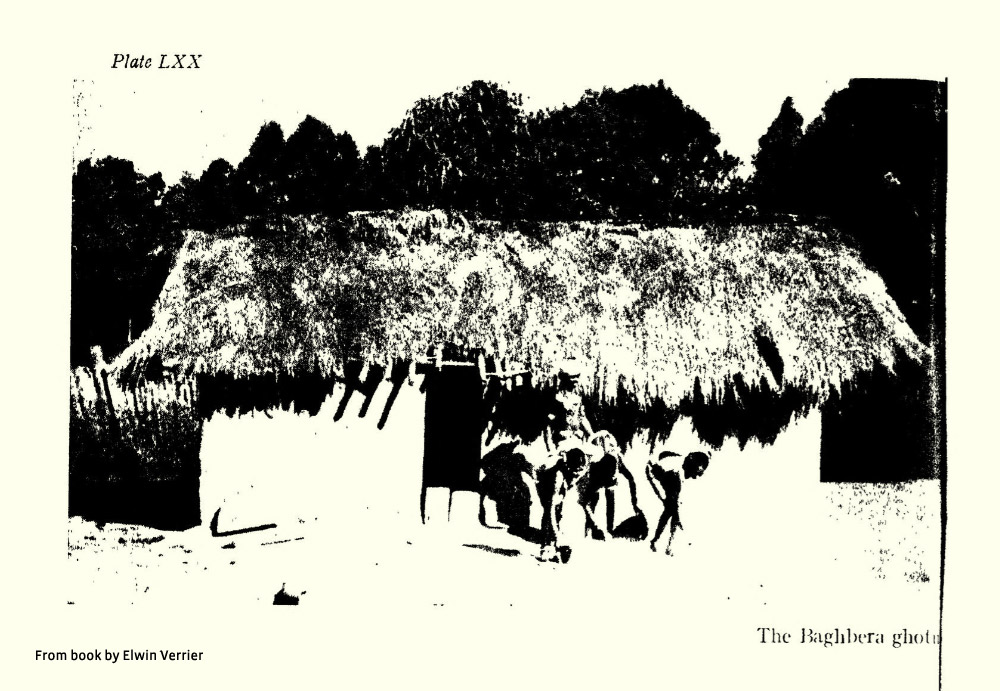
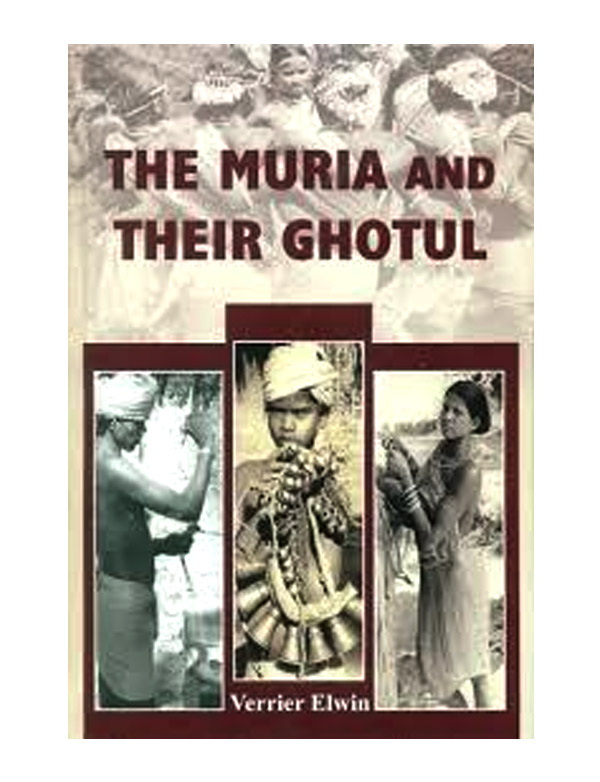
As anthropologist Verrier Elwin describes in The Muria and Their Ghotul, the Ghotul was more than a dormitory. It was a vibrant social, cultural, and religious centre where unmarried Muria boys and girls learned responsibility, discipline, and the values of their community. Each person held a rank and specific duties. Here they practiced song, dance, craft, and the subtleties of human relationships. Within these earthen walls, painting also thrived. not merely as decoration, but as an expression of memory and meaning.
Today, this tradition has moved from mud walls and Ghotul spaces onto canvases, carrying with it the heartbeat of tribal life. Each brushstroke becomes a living record of tradition, narrating joyful and solemn occasions: birth, marriage, death, festivals, and community gatherings.
Despite the long-standing existence of Muria paintings, their creators remained unknown for centuries. It was only in 1982 that the first individually recognized Muria artists from Bastar came into the spotlight, Belgur Muria, Shankar Muria, and Pishadu Muria, who participated in an artist camp organized by Bharat Bhawan and exhibited their works in museum galleries.
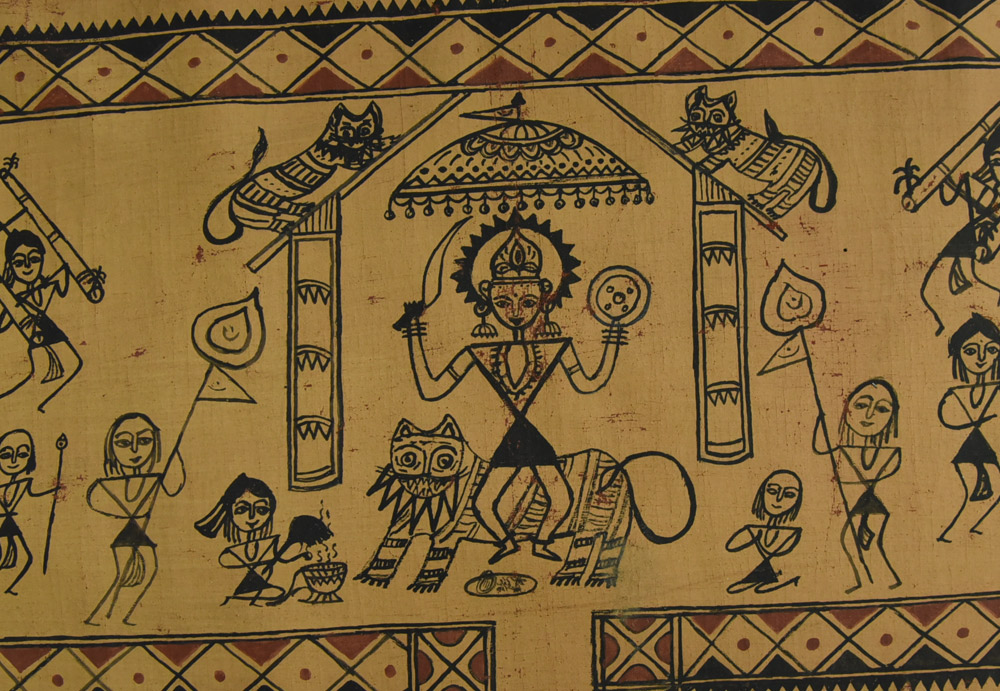
In this tradition, the subject and elements matter more than artistic style. The main focus is on what activity is happening, and each scene holds profound meaning. Faces are rarely detailed, but gestures and movements are unmistakable, whether it is a drummer beating his instrument, a woman carrying grain, or dancers moving in unison. It is action, not ornament, that defines the form. These paintings show a resemblance to Warli and Saura art forms. The paintings were usually made within a stylized border called “paana kheecha“. These borders often featured geometric patterns such as straight lines or triangles. Such patterns enhance the aesthetic appeal by adding rhythm and structure. The figures are flat, without any three-dimensional effect.
The art flourishes in three distinct styles, each deeply rooted in cultural life:
A. Festive Jagar Style – The word Jagar comes from Jaagran, when people stay awake the whole night to perform pooja or bhajan. In this region, the practice is associated with a women-led oral epic tradition passed down for centuries. Its singers, called Gurumaay, perform different types of Jagars during auspicious occasions to invoke deities. These Jagars act as a Yagya or a Jagran. There are three unwritten folk epics, namely Teeja Jagar, Laxmi Jagar, and Bali Jagar, along with a short poem called Aathe or Astami Jagar. While all Jagars aim to invoke the deity, each has a distinct purpose, such as marriage, fertility, agricultural prosperity, or blessings.
In these designs, people create a border called bada, decorated with geometric patterns. At the center, they paint the main deity in a larger size, and around it they depict important elements. For example, in Laxmi Jagar they draw the Salpi tree, Supa, Padam Makdi (spider), Kudmi, and Kaina friends of the goddess.
B. Marriage Jagar – This is similar to Festive Jagar. It is painted outside the house during weddings. Here, too, they make a border and decorate it with different lines (paana kheechna). The family places their kuldevi or kuldevta at the center, such as Danteshwari or Jhitku-Mitki. Common elements include the mahua tree, the sun, the moon, and dance.
C. Ghotul Style – This style is more personal. Inspired by the life of the Ghotul, these paintings depict everyday activities and surrounding elements. They brim with tribal dance, music, and social interactions. They are dynamic and filled with rhythmic lines that echo the beat of the mandar drum or the swaying of dancers under the moonlight.
The walls of the Ghotul were traditionally decorated with such drawings. They showed different activities of the chelik (boy member) and motiari (girl member). One example was recorded by anthropologist Verrier Elwin at Urdabera, where both the chelik and motiari were seen riding a horse. Boys, girls, the vagina, bow and arrows, the sun, and the moon have all been depicted in several Ghotuls.
What makes Muriya Bhitti Chitra remarkable is that it cannot be replicated without understanding the culture. Each painting tells a story, and each story is part of the community’s shared memory. To an untrained eye, the art may appear basic or lacking in realism, but for those who know, it is layered with meaning. Many local artists are trying to preserve the knowledge of this symbolism while also creating new designs rooted in the culture. We had the chance to meet artist Rajendra Rao, who paints scenes from the famous 75-day Dussehra of Bastar. When you speak with them, you feel their energy and dedication, yet their art and design are not widely appreciated by locals.
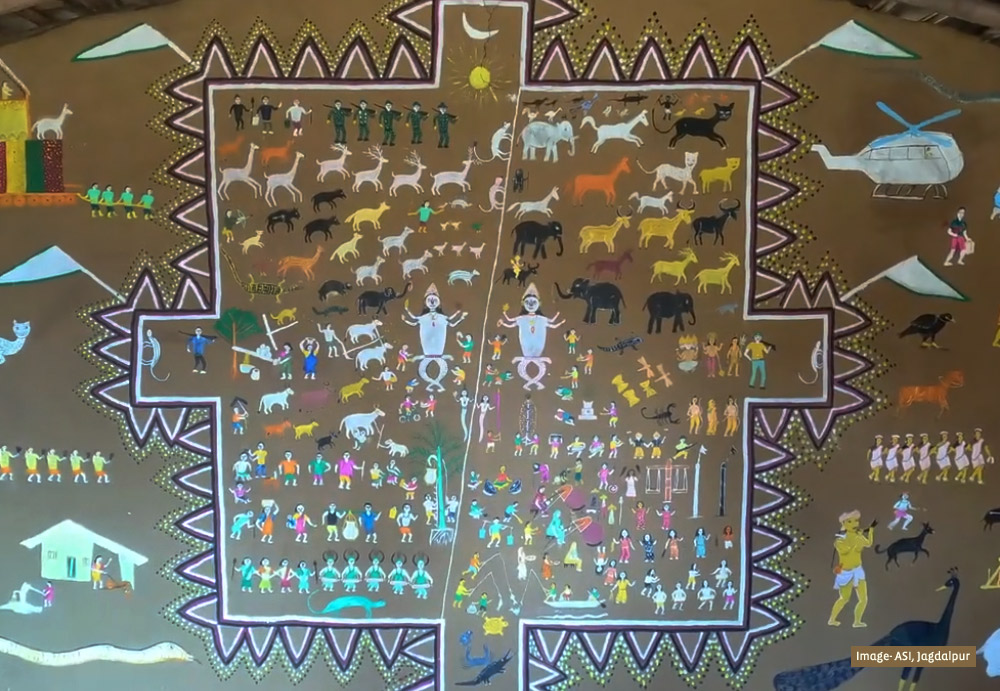
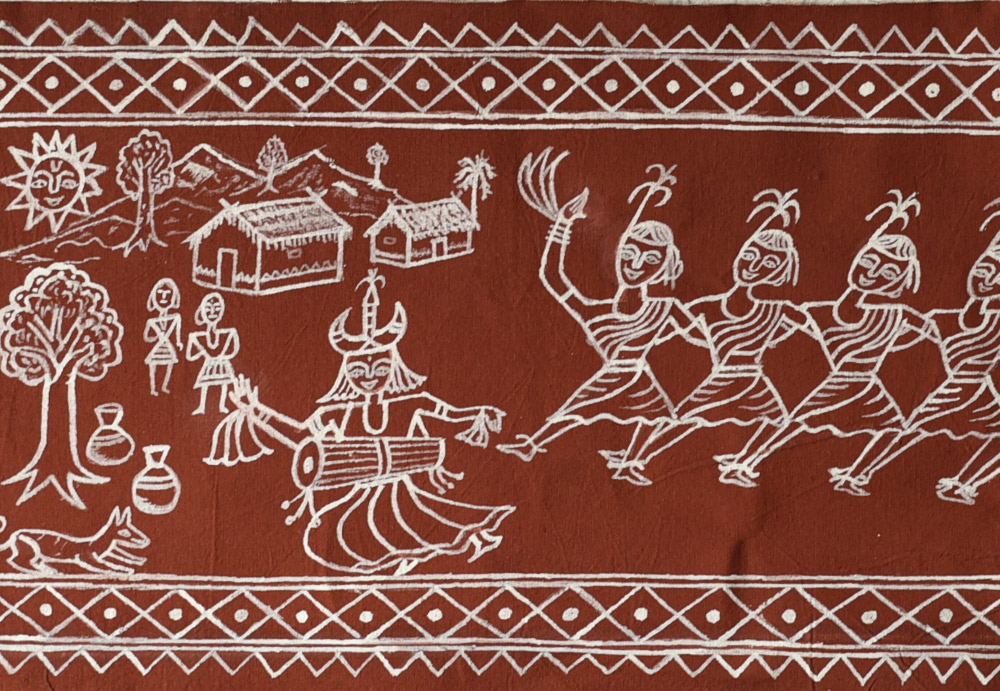
J. Swaminathan, in his book, ‘The Perceiving Fingers’, points out that, ‘The Muria used to make paintings on the walls of their Ghotul, as noticed by Elwin. However, the tradition, if any, has decayed and almost vanished with the decay of the institution of the Ghotul’. Today, the young Muria tribal artists create their works on paper and canvas, moving away from traditional or ritual themes to showcase various aspects of their lives and culture. Mandavi believes that the encroachment of school education and mobile phone addiction are some of the reasons that led to the decline of this art form. The ever-increasing burden of studies compelled youth to move away from songs and dances, which were often organised in the Ghotuls after sundown. As part of Chhattisgarh’s living heritage, both the Ghotul system and Muria art are on the verge of extinction and, therefore, are in dire need of attention and preservation.
Due to modern houses made of cement and concrete, vernacular architecture is also changing. These modern houses do not feature such artwork and do not consider it modern either. It is heartbreaking that we are not valuing our own traditional knowledge and the rich variety in construction, and are turning the country into the same box-like houses that have no character.
The only hope for such art now is a few festivals, when people still create paintings on their walls. We do not know how soon a digital screen may take that space on the wall.
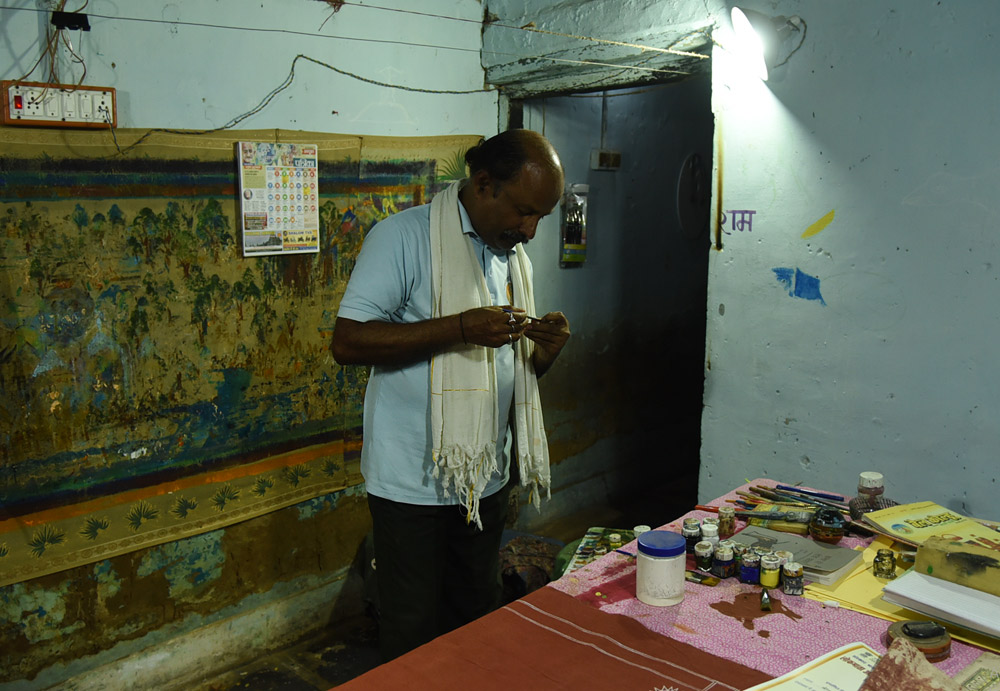
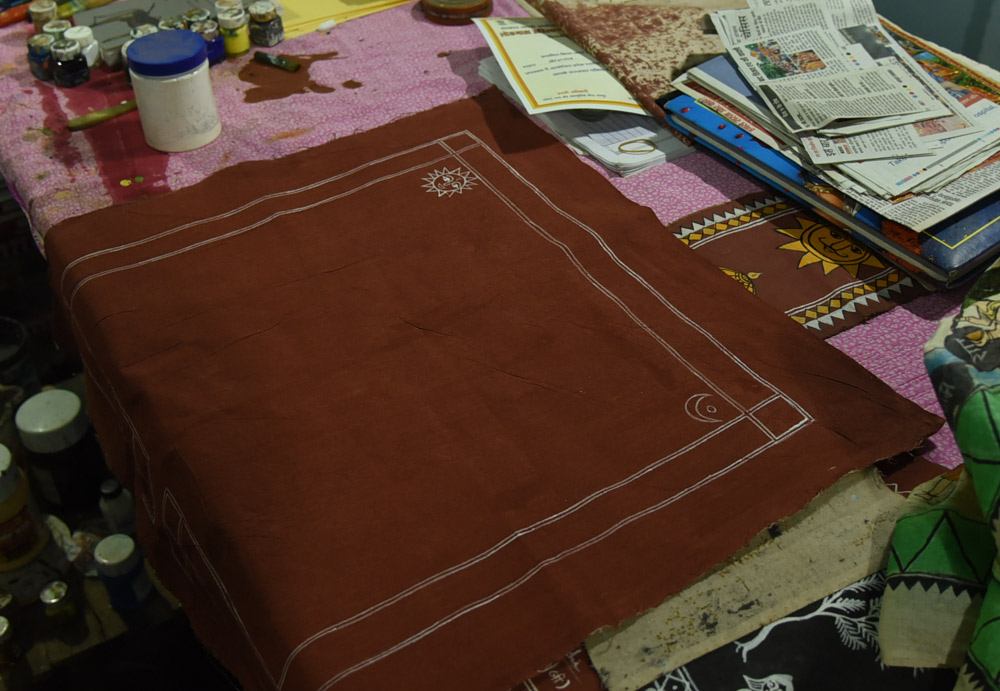
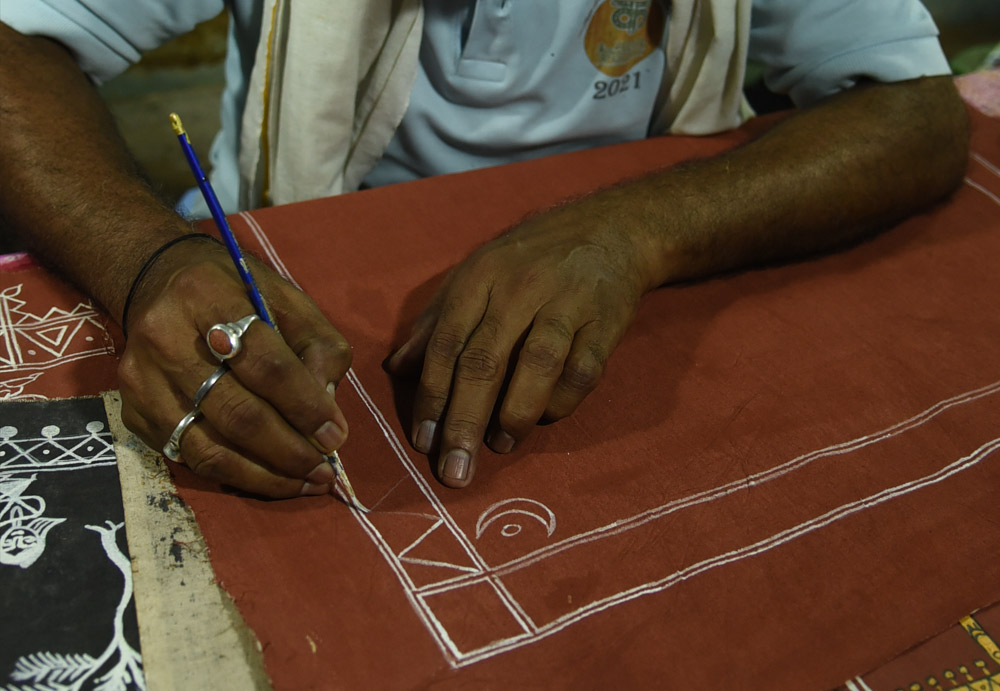
The process of making these paintings is simple. After applying a base coat, the artist begins painting directly on the surface. Sometimes they plan the basic concept on paper, and then paint it directly using a brush.
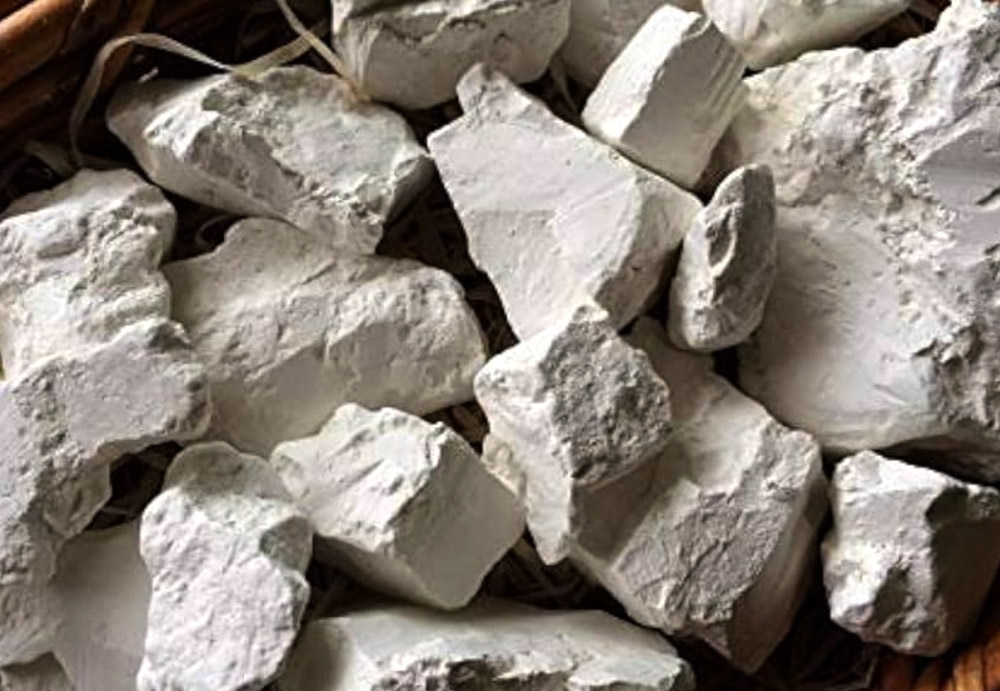
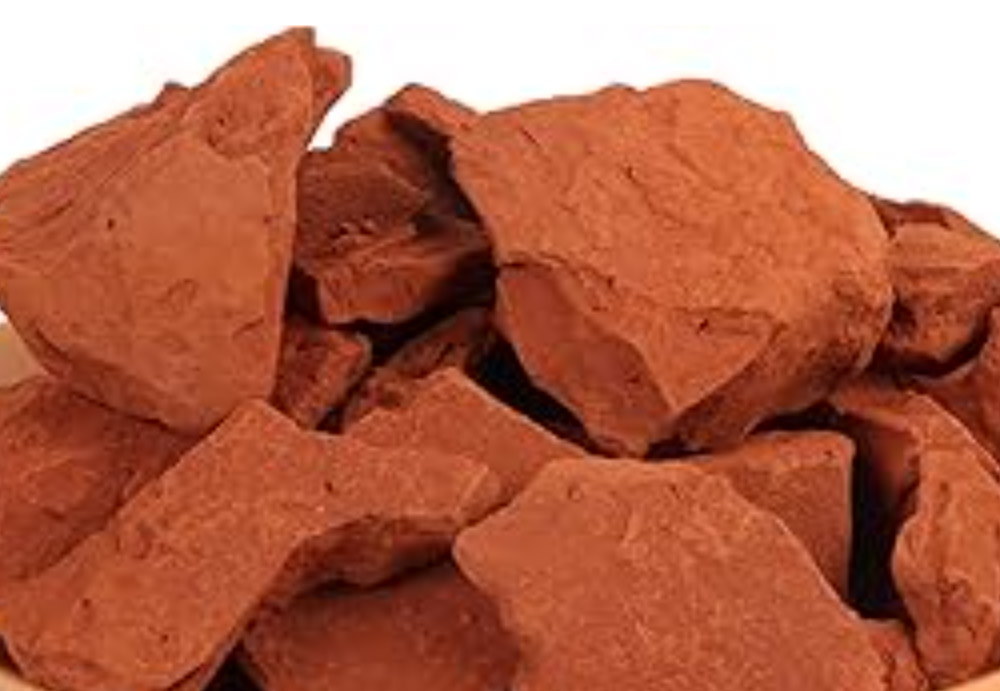
The Murias traditionally used natural ingredients to derive pigments for their wall paintings. These included soil, stones, minerals, plants, and other organic sources. Today, they often use a more colourful palette for their depictions.
Geru – A reddish-brown clay soil known as red ochre, rich in iron oxide. In Ayurveda, geru is called Gairika and, after purification, is used for its cooling properties and for treating ulcers, vomiting, and certain skin ailments.
Chui Mitti – A type of soft white clay traditionally used for house and wall plastering. In some contexts, chui mitti also refers to edible, roasted clay that people consume for its taste, commonly known as khane wali mitti.
Charcoal – Used to obtain a deep black colour.
Gond – A natural gum traditionally mixed with colours to make the paint thicker and more adhesive.
Today, people also purchase ready-made colours from the market to make the paintings more vibrant.

The artists used their fingers, twigs, bamboo brush or brushes made from animal hair, as well as readymade brushes available in the market, to paint on the wall surfaces. For preparing colours, they used any available bowls, coconut shells, or similar containers. There are not many tools associated with this art form, as it relies mostly on simple, naturally available materials.
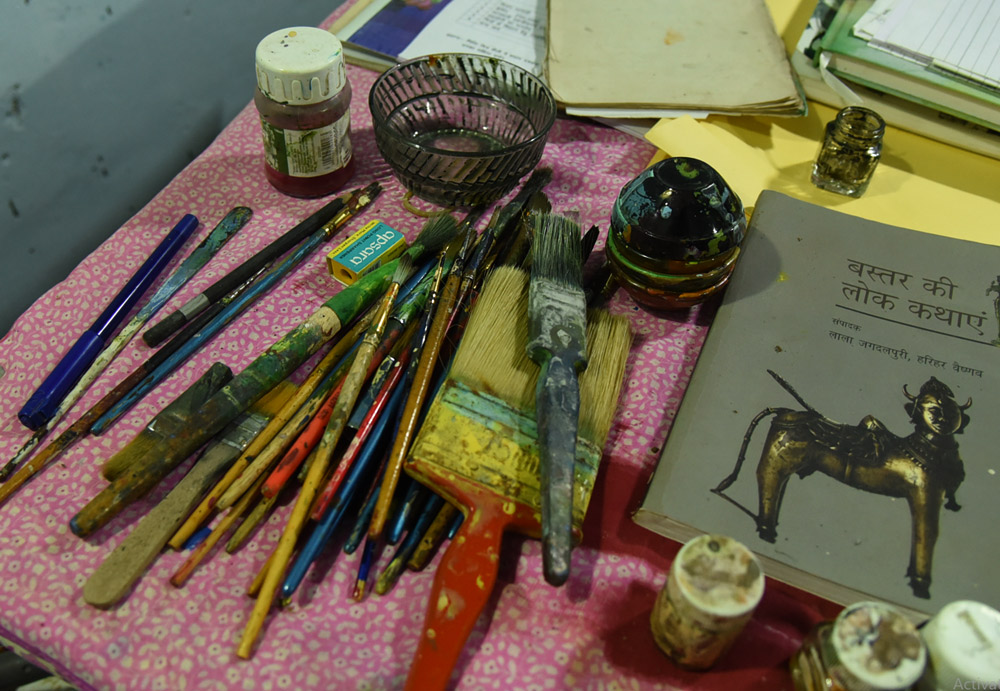
Paintings belonging to this region reflect a free cultural expression, as tribal communities do not follow any strict timelines. The canvas can be anything available in rural areas, a mud wall, a surface coated with natural pigments, or even a cow-dung–plastered wall. Artists paint in a freehand style, applying pigments directly onto the wall without preparing any special base. They first define the space by creating a border, then place different elements inside it. Depending on the subject, they add various motifs such as humans, animals, trees, and daily activities, often placing the main figure in the center if required.
In small towns, where paintings are associated with rituals, artists still follow the same freehand approach. In some areas, we also find the use of many colours to make the paintings more vibrant. In this process, the artist first draws the outline of the form and then fills it with colour. This style often includes fine detailing, especially in clothing, jewellery, and ornamentation.
Interestingly, these paintings consistently incorporate a narrative structure, visually capturing stories, experiences, and collective memories.
No waste.
The ancient name of Kondagaon was Kandanar or Kondanar. According to local legend, the settlement originated when the chief of the Marar community received a divine vision. Their carriage had become entangled in vines, forcing them to rest in the area. It is said that the goddess instructed them to settle there, and the fertile land encouraged the foundation of a village.
In the Gondi language, the word Kondanar translates to “village of horses,” a name that reflects both the tribal roots of the region and its rich local folklore.
Kondagaon’s development accelerated after the construction of the Keshakal Valley road in 1905, which connected it with Jagdalpur and surrounding areas, encouraging trade, migration, and new settlements.
The town’s importance was formally recognized in 2012, when Kondagaon was declared a district headquarters, highlighting its growing administrative and cultural prominence within Chhattisgarh.
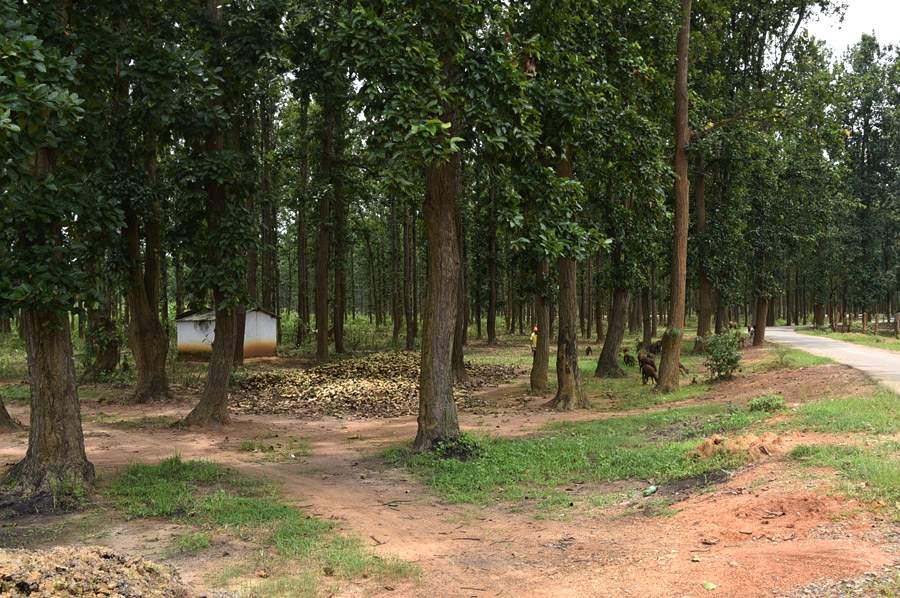
Kondagaon is set in the southern part of Chhattisgarh, within the heart of the Bastar plateau, where forests, hills, and rivers define both the landscape and the life of its people. Dense stands of sal, teak, bamboo, and other minor forest produce form a natural abundance that has long sustained local communities. Seasonal rivers like the Indravati and its tributaries nourish fertile plains, while the forests provide lac, honey, and raw materials that have historically supported craft-based livelihoods. This rich ecological setting is more than a backdrop, it actively inspires the artistry of Kondagaon’s famed bell-metal (dokra), terracotta, iron and wood carving traditions, where patterns and motifs often mirror the flora, fauna, and rhythms of the land.
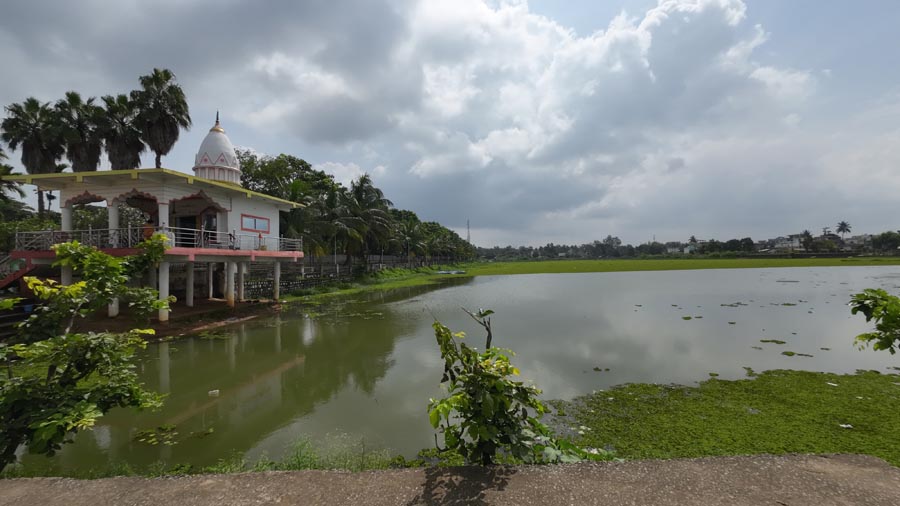
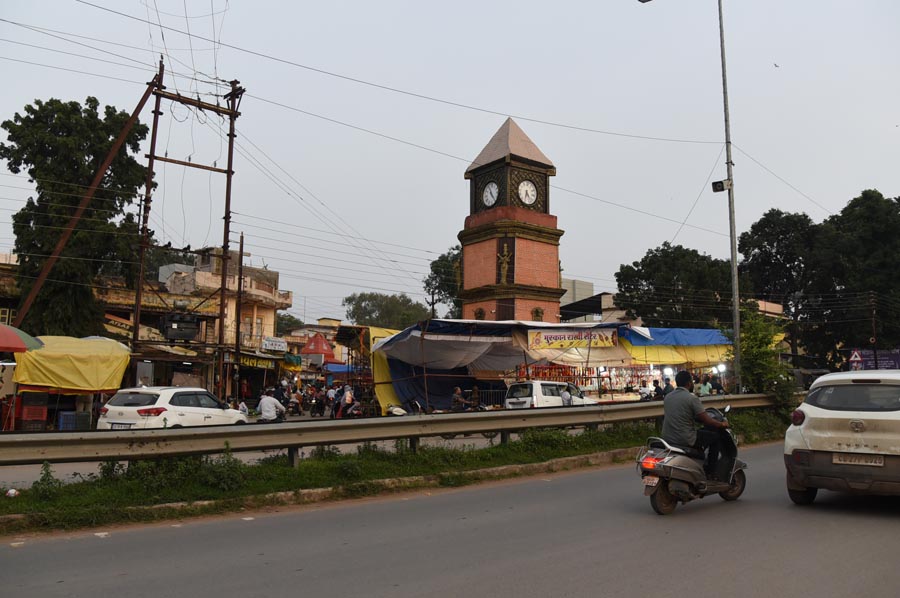
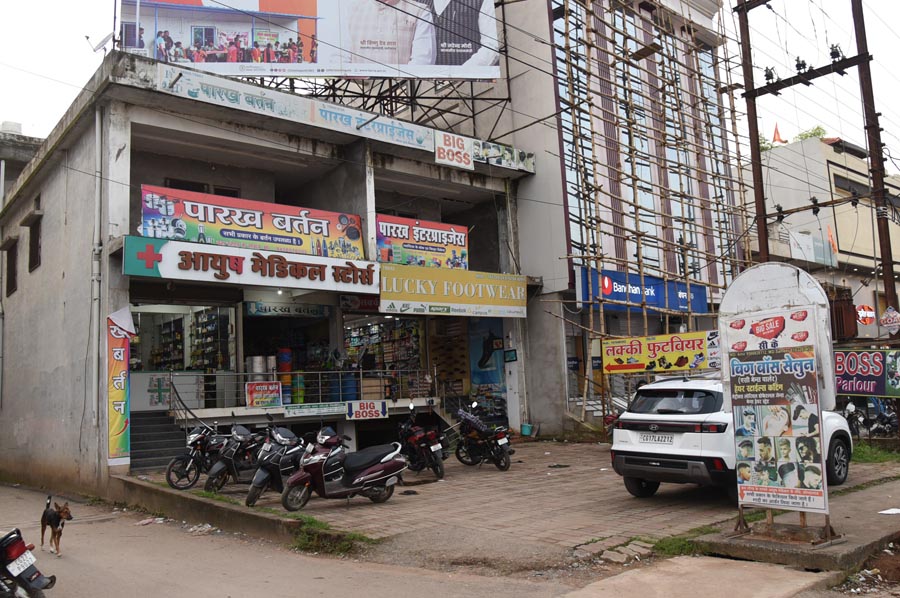
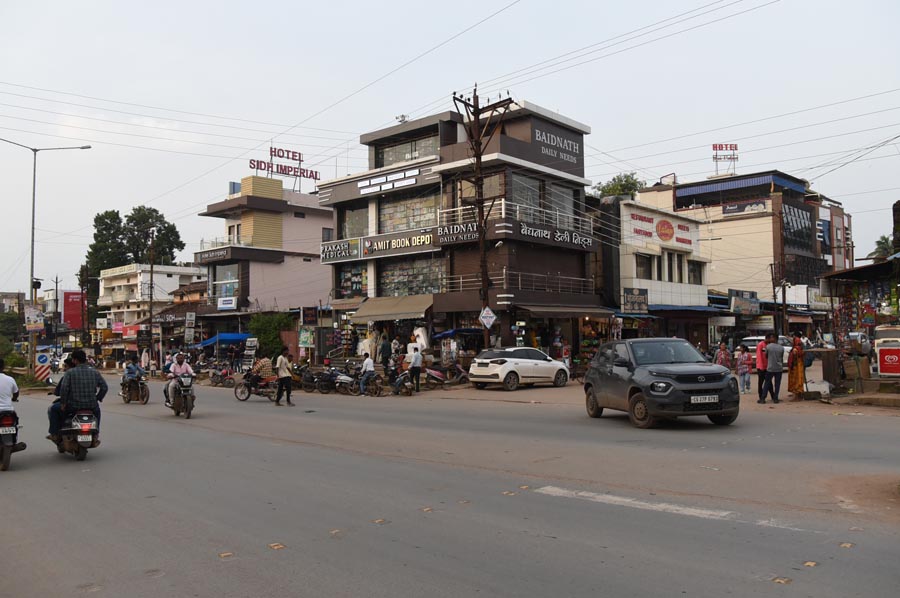
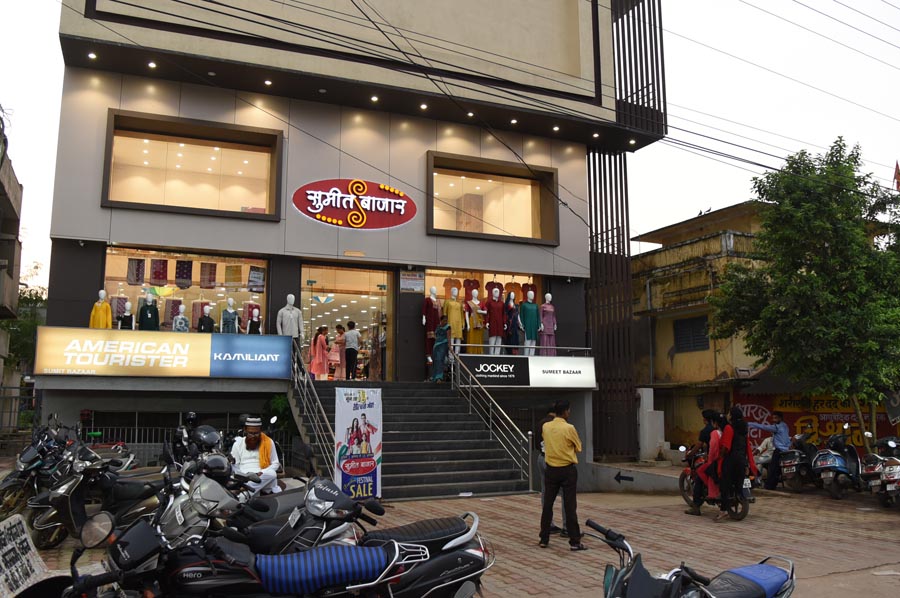
Kondagaon is a small town where the main road cuts through the center of the city. The atmosphere along this road is lively and bustling, lined with a variety of shops and businesses. As a district headquarters, people from surrounding villages frequently visit for official work, trade, or shopping.
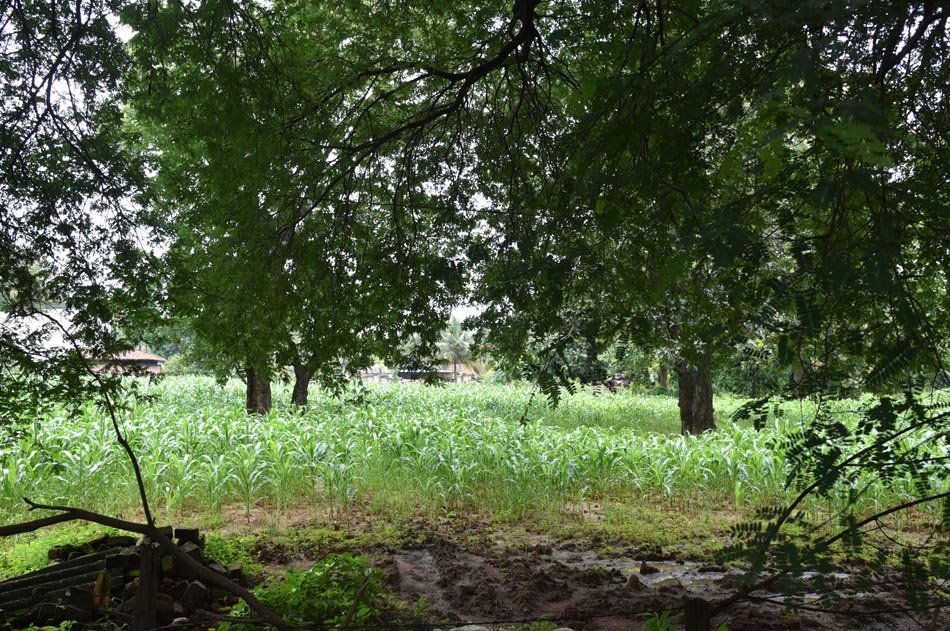
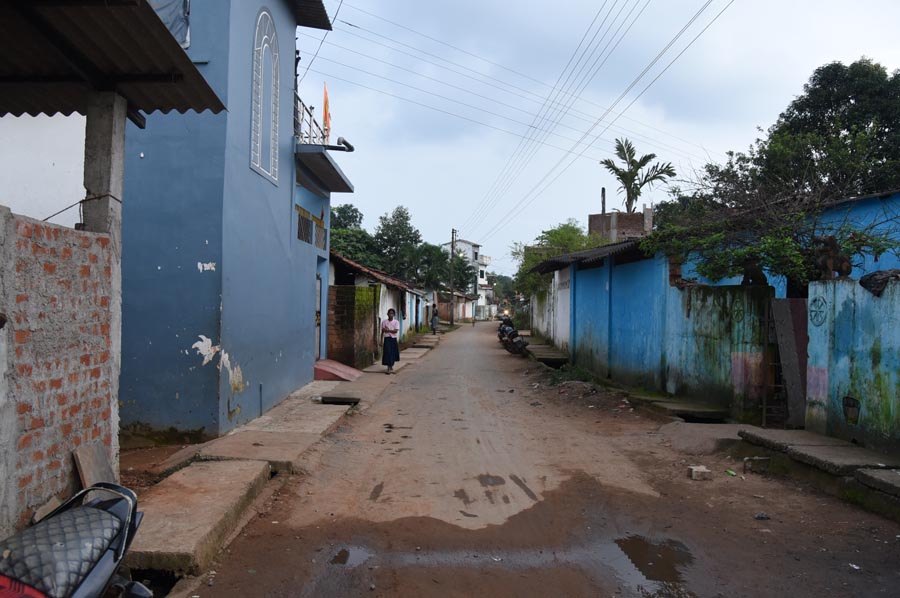
However, once you step away from the main road, the town quickly transforms into a peaceful landscape filled with greenery. The air feels noticeably fresher and calmer in the inner areas, offering a stark contrast to the busy marketplace.
On the main road, small eateries and tea stalls are common, where people can be seen enjoying samosas and cups of chai. The locals are generally warm and welcoming, rarely interfering but always curious to know more about outsiders.
The town comes alive during the weekly haat bazaar on Sundays, when villagers from nearby areas gather to buy essentials and exchange news, filling the streets with energy and color.
By night, usually after 8 or 9 p.m., Kondagaon becomes quiet and serene. Most shops close down, with the exception of a few stalls near the bus stand, which remain open to serve late-night travelers.
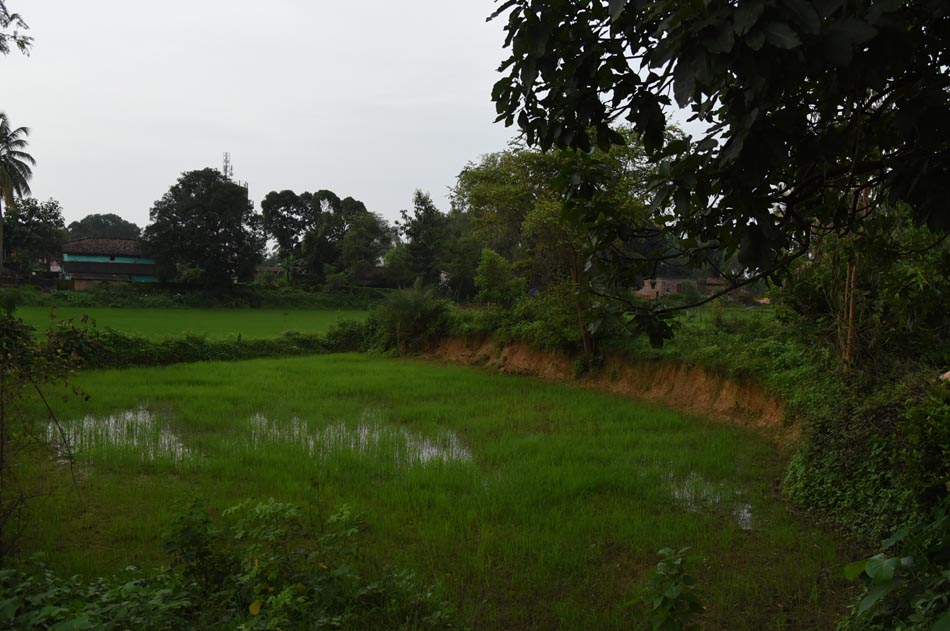
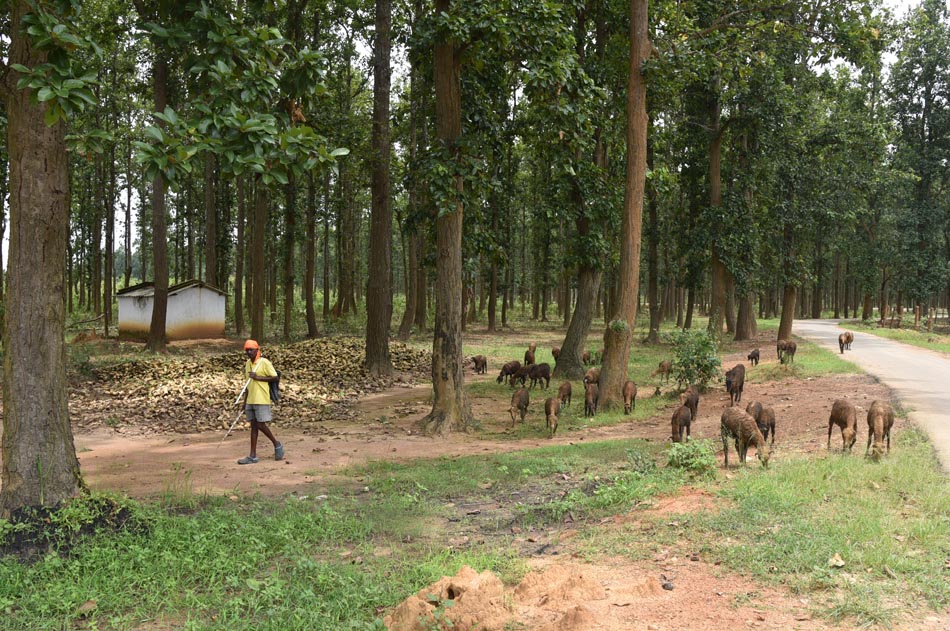
Over time, Kondagaon has grown into a recognized craft hub of Bastar, with infrastructure that bridges its deep-rooted traditions and modern market demands. The town is located along National Highway 30, giving artisans access to Raipur and Jagdalpur, while retaining strong rural linkages. Craft-specific institutions form the backbone of the artisan ecosystem here: Shilpgram, a dedicated craft village, provides space for artisans to live, work, and showcase their creations; the Bastar Art Centre serves as a state-supported platform to train, innovate, and market crafts; and local cooperative societies help artisans pool resources, standardize production, and access wider markets. Organizations like Saathi Samaj Sevi Sanstha also play a vital role by supporting artisans with training, design development, and market linkages, helping them adapt their traditional skills to contemporary opportunities. Small-scale foundries and household workshops continue to dot the villages, while initiatives like the Kondagaon Craft Park and government training centers offer structured support for design, marketing, and entrepreneurship. Together, these nodes of infrastructure ensure that Kondagaon’s artisans remain connected to both tradition and opportunity, crafting objects that travel far beyond the forests that first inspired them.
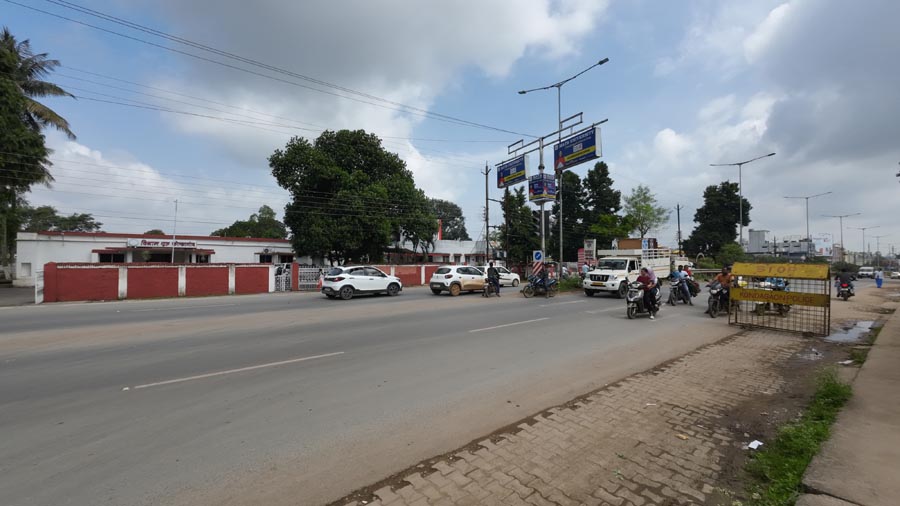

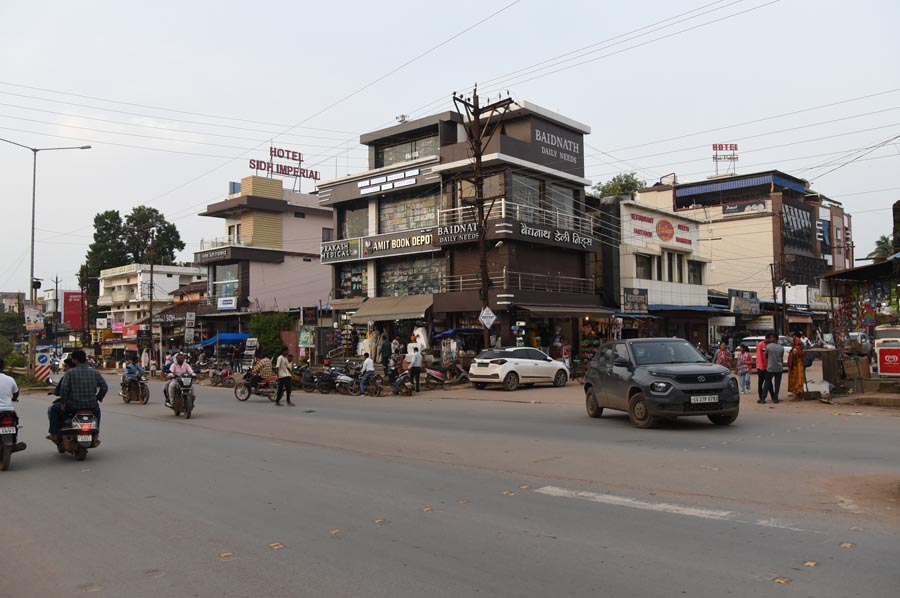
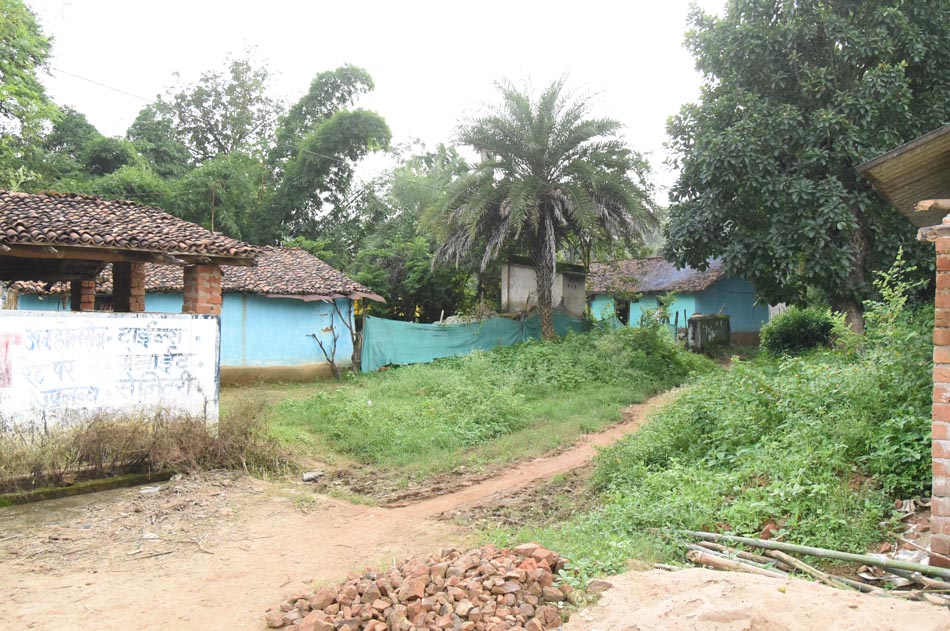
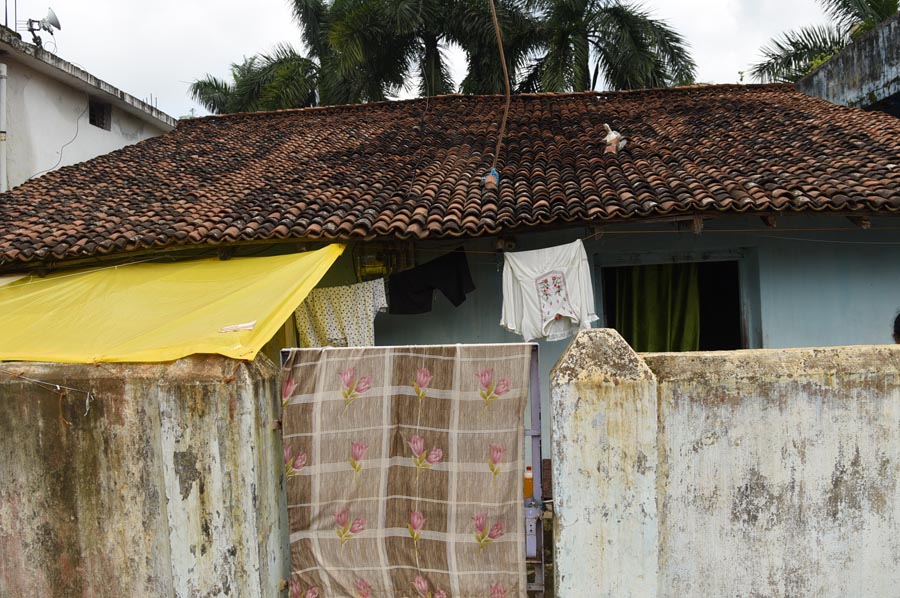
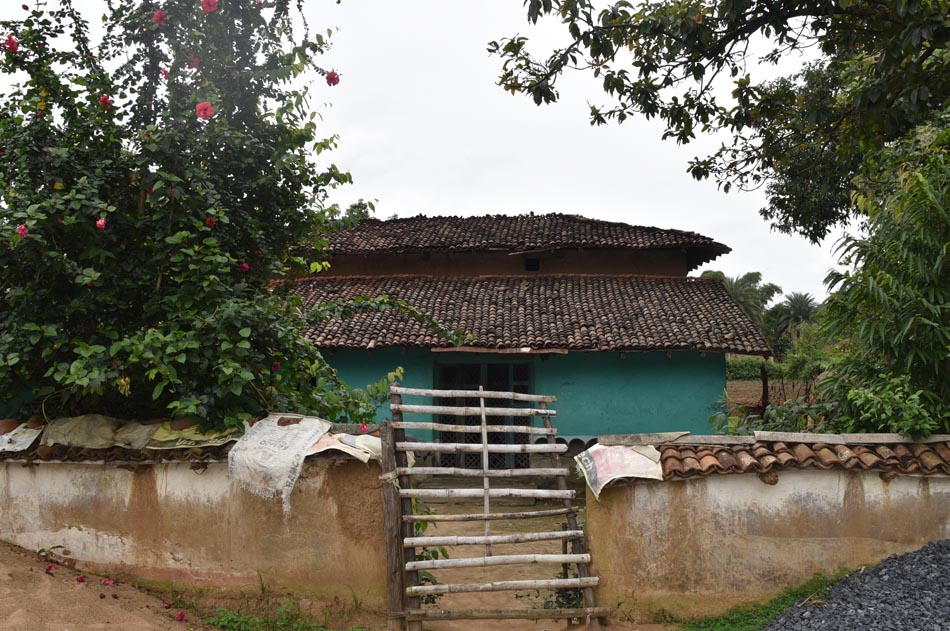
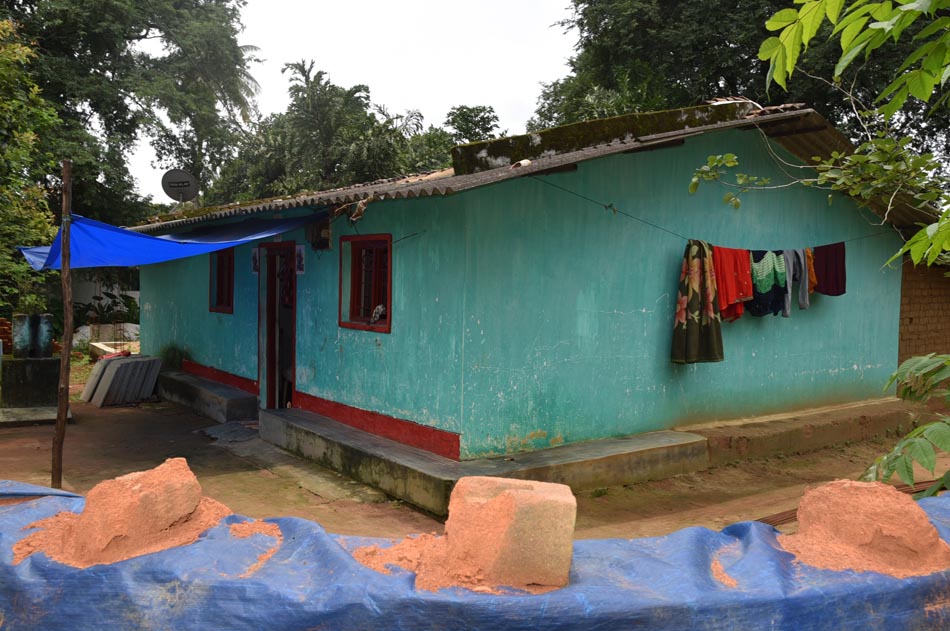
Kondagaon is no longer a village; it has grown into a bustling town. Its architecture has changed with time, today it is difficult to spot the old houses with sloping roofs and clay tiles. Almost all houses have now been replaced with brick and cement structures, a change brought about by urban influence and improved financial conditions.
Unfortunately, most new constructions do not follow the local aesthetic. Buildings look almost identical, making Kondagaon visually uniform and less distinctive in terms of architecture. For those wishing to explore authentic traditional houses, one must take turns off the main road leading into the city, where older settlements still preserve the original styles.
Broadly, Kondagaon’s built environment can be divided into three categories:
Traditional Architecture: Tribal villages feature mud houses with thatched or tiled roofs, often decorated with local motifs and symbolic patterns.
Modern Infrastructure: The district now has educational institutions (some dating back to the 1930s), healthcare centers, government offices, and artisan clusters, reflecting its gradual urban growth.
Industrial Profile: Kondagaon is also home to timber mills, small-scale industries, and thriving handicraft clusters, particularly those centered on bell metal (Dhokra) and woodcraft.
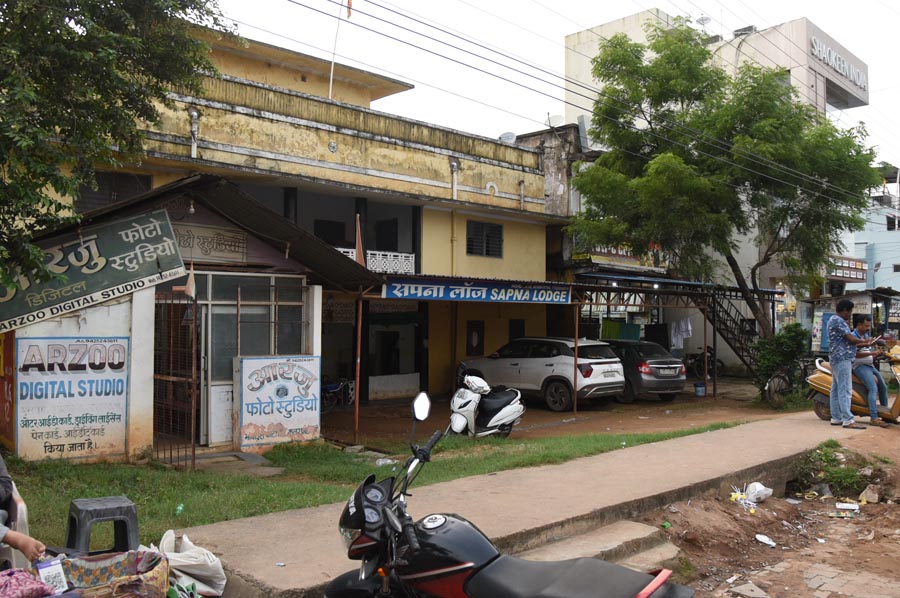
Kondagaon carries within it the vibrant pulse of Bastar’s living traditions, where festivals, rituals, and everyday practices reflect a seamless weave of community, art, and belief. The cultural calendar is alive with celebrations such as the Goncha Festival, Bastar Dussehra, Hareli, and Pola, among many others. In the local Halbi language, the words Jagar and Jatra describe these communal gatherings, where villages come together in color and rhythm. Men and women don their traditional tribal attire and join in dances that echo through the night, accompanied by a rich orchestra of indigenous instruments: the Mandar (double-headed drum), Dhapra and Nishan (large drums), Nagara, and Dholak, alongside wind instruments like the Tudburi, Mohri-Shehnai, Bansuri, and the Todi, a tribal trumpet. The soundscape extends to unique instruments rarely found elsewhere, the Surai Baja, an earthen pot instrument, and the Dhankul, crafted with a large pot, bow, and a frame, producing a distinctive resonance. Adding to the spectacle is the Tupki Barrel Gun, a harmless but loud instrument fired during festivities, mimicking the crack of a gun to heighten excitement.
Beyond the festivals, Kondagaon’s culture also speaks through its rituals of remembrance. In graveyards, families raise carved and painted memorial pillars to honor the departed, depicting scenes from the person’s life, their desires, passions, or objects they cherished most. These strikingly personal monuments stand as both markers of memory and vibrant expressions of the community’s philosophy, where life, art, and afterlife remain deeply intertwined. Together, such practices embody the unique cultural fabric of Kondagaon, a living heritage that nourishes and inspires its celebrated crafts.
Kondagaon, as a town and district headquarters, is home to a diverse mix of communities. On the main streets, you’ll find Marwari families running food shops, Punjabis engaged in the automobile trade, and Jains managing hotels and businesses. At first glance, it is difficult to distinguish people by appearance, most residents dress in modern clothing similar to any other Indian town.
However, during the weekly haat bazaar, the diversity of the region becomes more visible. Kondagaon and its surroundings are home to several tribal communities, including the Gonds, Baigas, and Halbas, who have preserved their distinct traditions, languages, and vibrant cultural expressions for centuries. While clothing styles in town have become increasingly uniform, tribal identity can sometimes still be recognized through physical build, traditional tattoos, or ornaments.
Overall, Kondagaon has a mixed social fabric, shaped by traders, settlers, and tribal groups alike. The architecture and appearances may have modernized, but in conversations and interactions, one can still feel the true essence of the region, its warmth, resilience, and deep cultural roots.
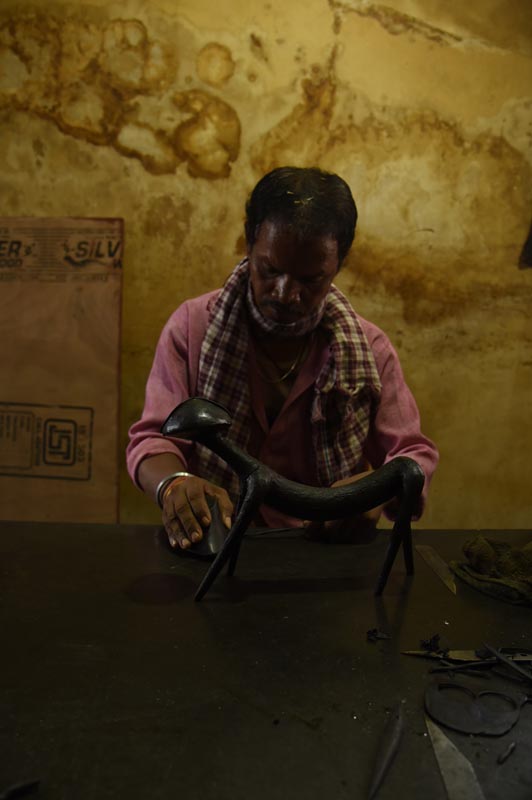
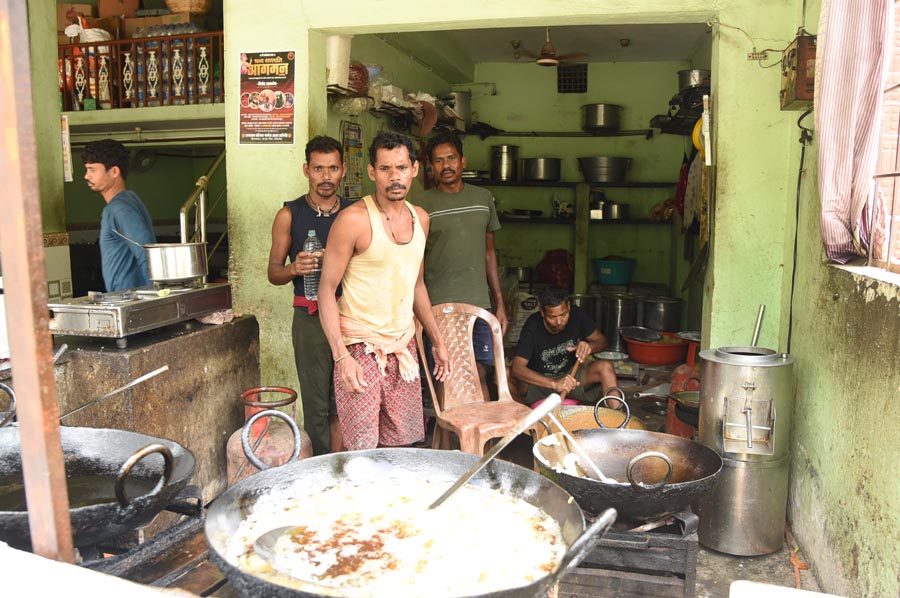
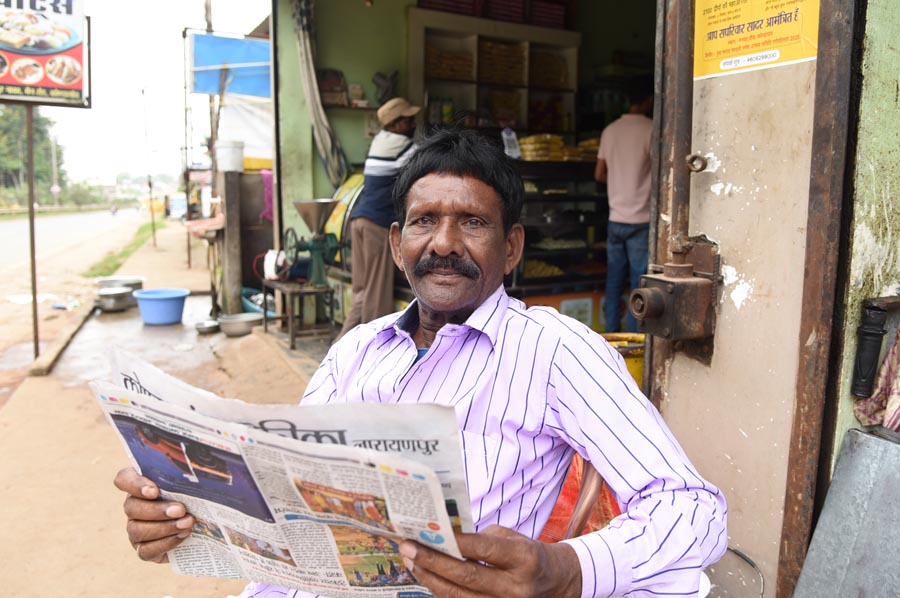
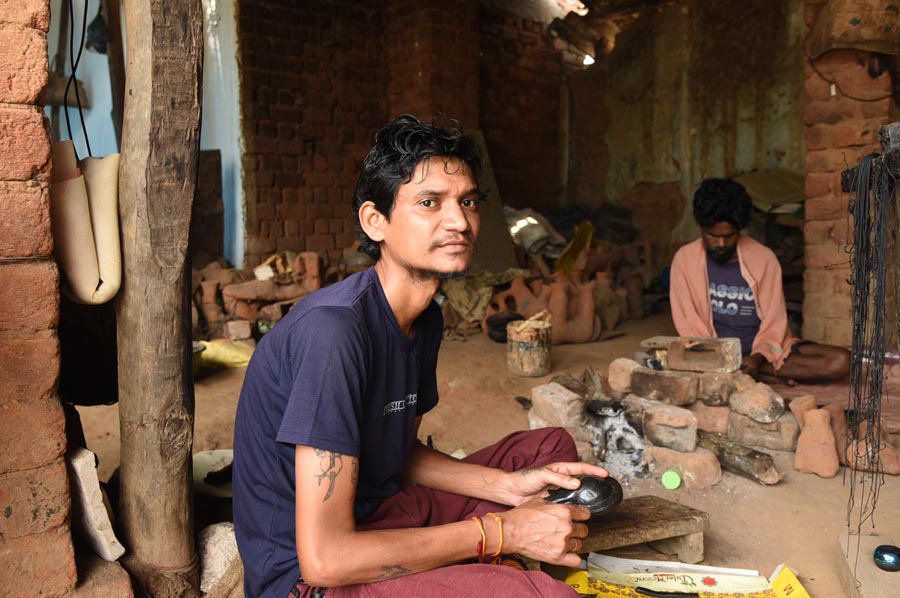
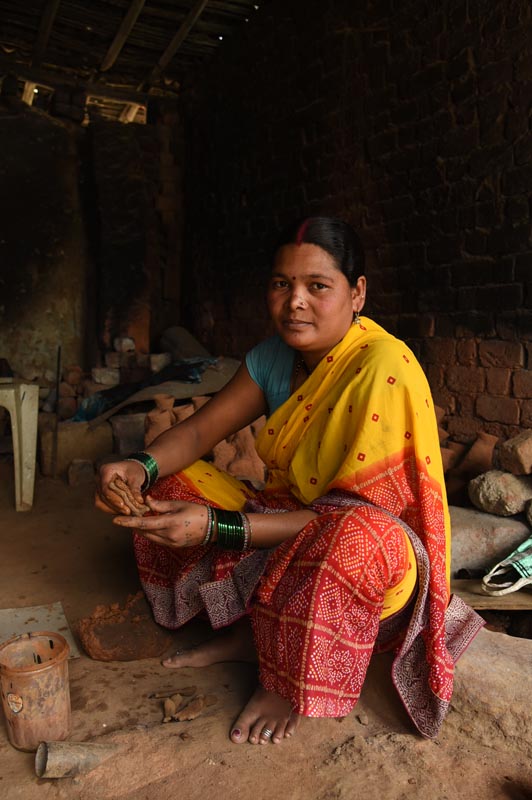
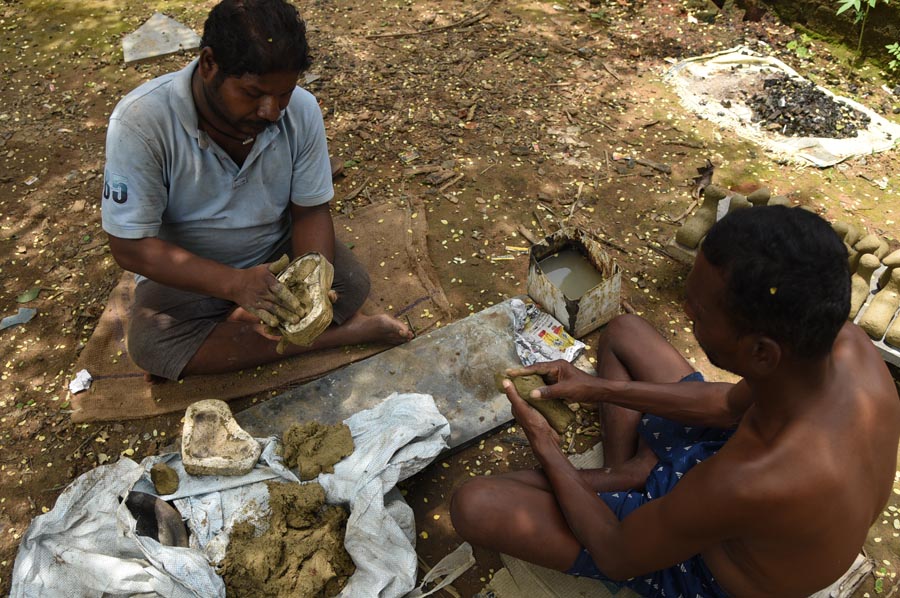
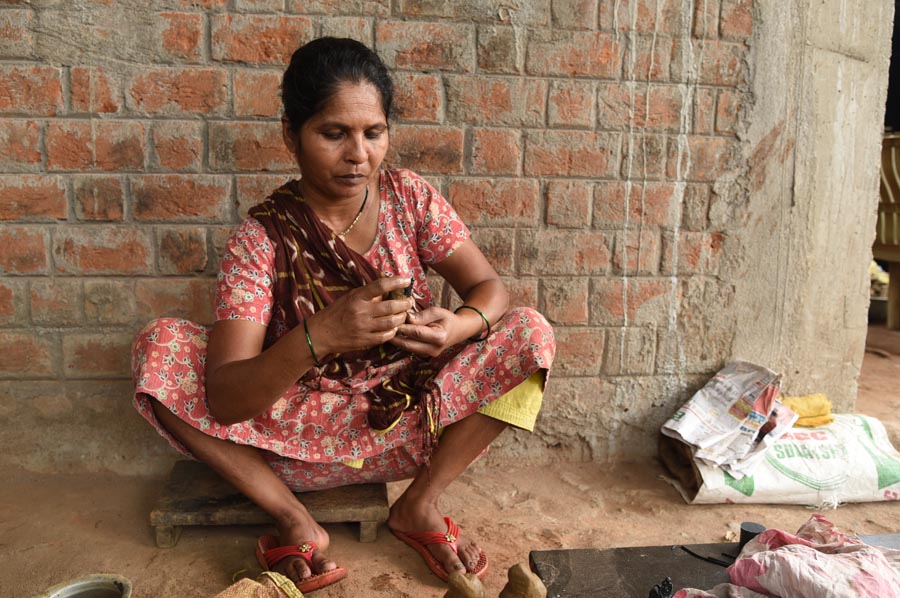
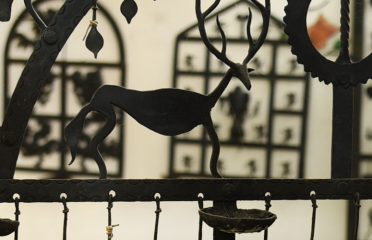
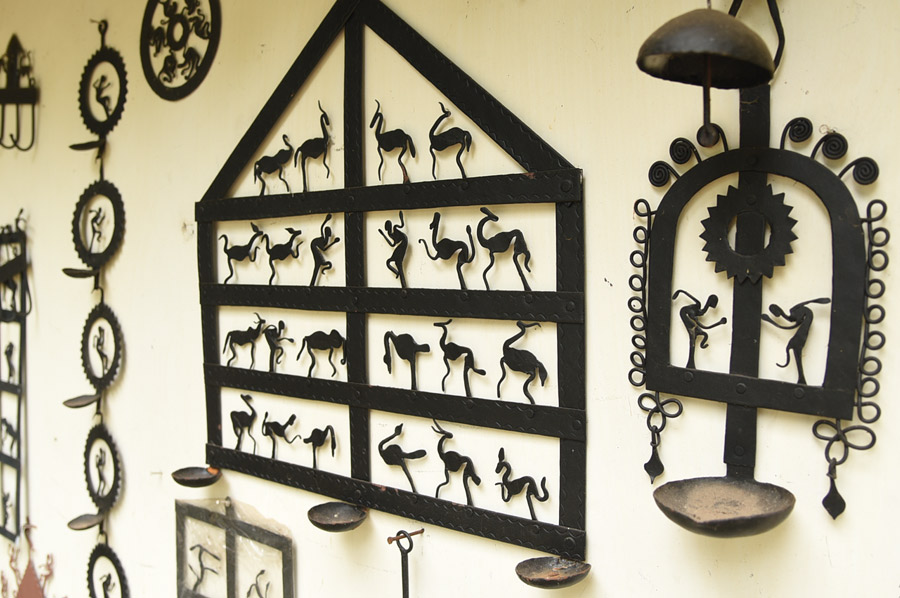
The main occupation around Kondagaon is farming, with rice being the primary crop. While traveling through the region, one can easily spot numerous rice mills along the way. However, the town is best known for its Dhokra craft, a traditional lost-wax metal casting technique practiced by the Ghadwa community, and for its distinctive wrought iron work.
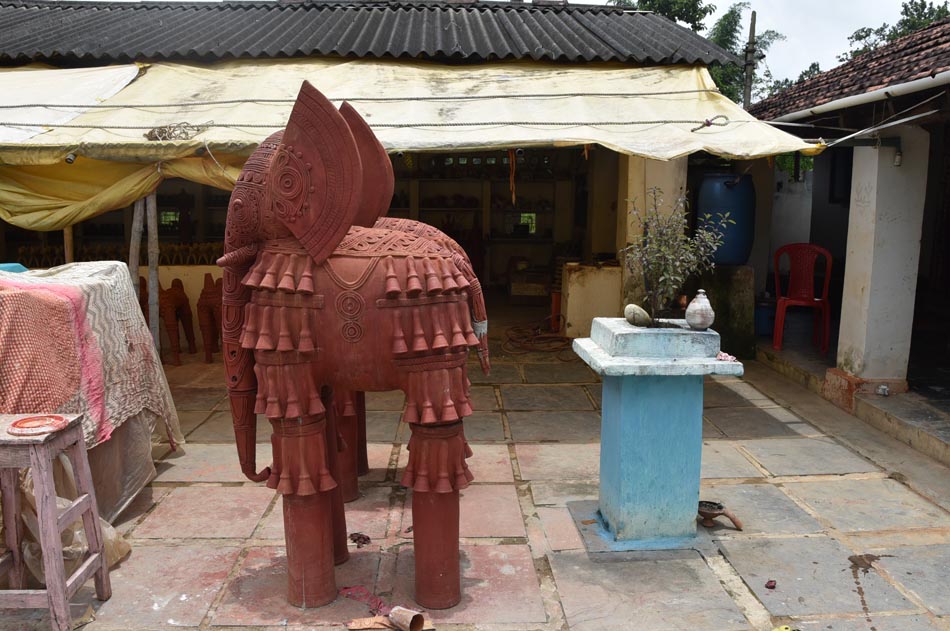
Rich in tribal culture, the region also nurtures other crafts such as wood carving, bamboo work, and terracotta. Together, these diverse traditions contribute to Kondagaon’s reputation as the “Craft City” of Chhattisgarh.
List of craftsmen.
Team Gaatha
. Interview – Rajendra Rao
. The Muria And Their Ghotul : Elwin Verrier
. Prehistory of Chhattisgarh: A Review Tosabanta Padhan1
. https://www.udanti.com/2008/11/blog-post_2325.html
· Khan, M. (n.d.). Muria Painting. Retrieved November 22, 2025
· Sharma, T. (n.d.). Assessing the Effectiveness of Geographical Indications in Chhattisgarh and Safeguarding Traditional Knowledge: A Hybrid Study. Raipur.
· https://neetissud.com/bhitti-chitra-the-living-walls-of-chhattisgarh/
· https://www.sahapedia.org/maeharau-naetaama-mauraiyaa-samakaalaina-mauraiyaa-caitarakaarain-words-meheru-netam-muria
· https://mapacademy.io/article/muria-ghotul-painting/
· https://www.bradshawfoundation.com/india/chhattisgarh_state/index.php
