


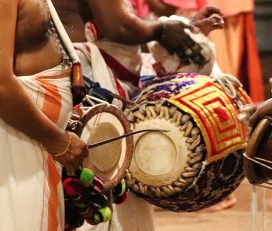
Peruvemba Musical In...
Peruvemba, a village near Chittur-Thathamangalam in Palakkad district of Kerala, is known for a longstanding tradition of making leather-based percussion instruments.
Peruvemba, Kerala, India...
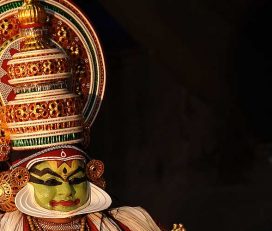
 Vellinezhi, Palakkad, Kerala, ...
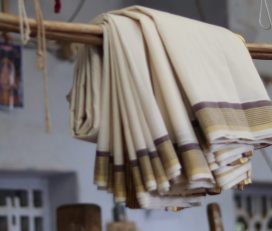 Kuthampully Handloom centre, S...
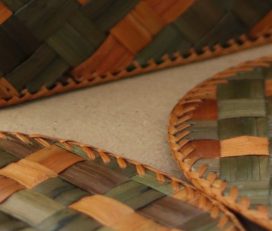 Kodungallur Screw pine Craft C...
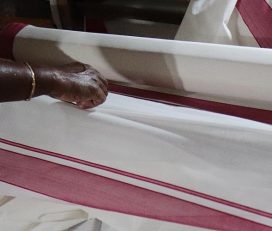
Peruvemba, a village near Chittur-Thathamangalam in Palakkad district of Kerala, is known for a longstanding tradition of making leather-based percussion instruments.
Peruvemba, Kerala, India...
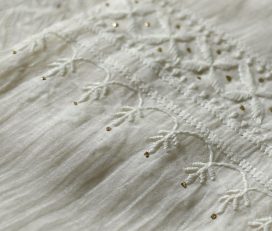
Chikankari embroidery from Lucknow is one of India's most renowned and refined needlework traditions
Lucknow, Uttar Pradesh, India...
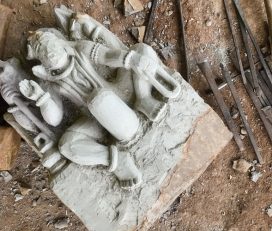
The stone carving tradition of Bastar occupies a distinctive position within the artistic heritage of central India, representing one of the oldest surviving forms of indigenous sculptural practice in the region.
Bastar, Chhattisgarh, India...
Let us talk… if you feel the same love for handmade, and would like to support us by sharing your research or by contributing financially to our documentation efforts.
Reach us at [email protected]

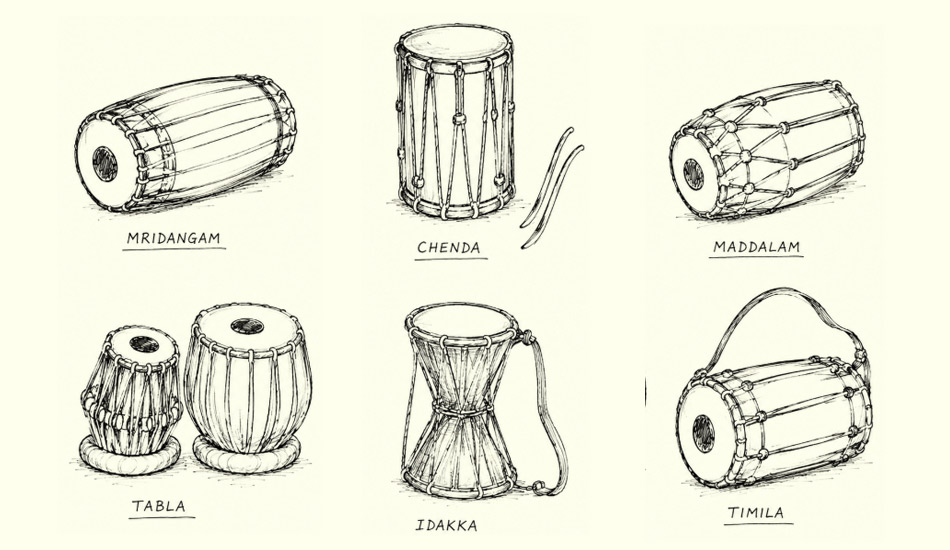
The instruments made in Peruvemba serve a range of musical practices in Kerala, with temple music and Carnatic music forming the two principal spheres of their use. The village produces several kinds of percussion instruments, including the mridangam, maddalam, chenda, tabla, timila and idakka, each associated with particular musical settings and performance traditions. Their use therefore extends from classical concert platforms to temple courtyards, processions and traditional performance forms.
The mridangam is closely associated with Carnatic music, where it functions as the principal rhythmic accompaniment to vocal and instrumental performances. Peruvemba’s makers produce these instruments according to the requirements of individual musicians rather than as standardised commercial products. Musicians from Kerala as well as established Carnatic centres such as Chennai and Thanjavur have travelled to the village to have instruments made and fine-tuned. The relationship between maker and performer is particularly important, because the finished instrument has to meet the musician’s expectations of pitch and tonal response.
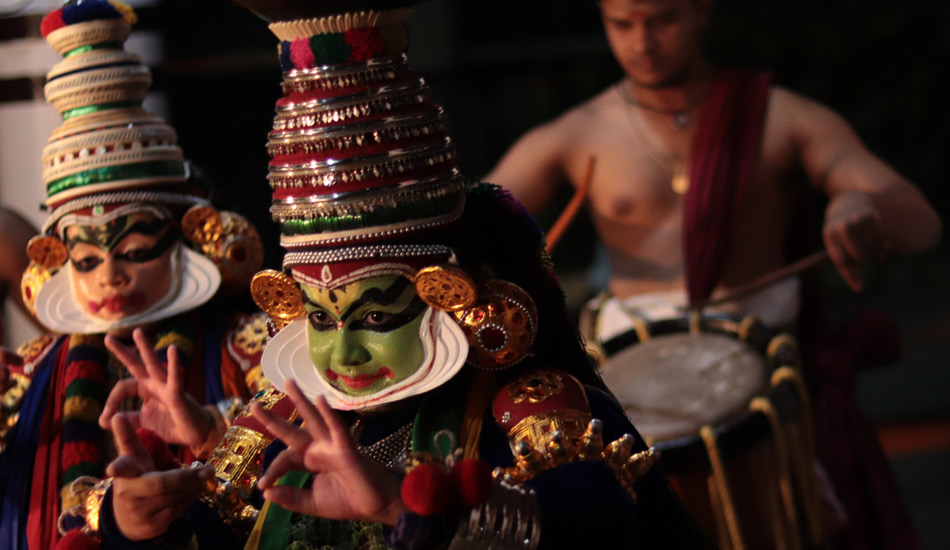
The maddalam occupies a different place within Kerala’s performance traditions. It is used in panchavadyam and is particularly important to Kathakali, besides its association with Krishnanattam and other traditional forms. The instrument is worn around the waist and played with the hands. Kerala Kalamandalam describes the maddalam as a hollow wooden drum covered with leather at both ends, while Kerala Tourism places it within the five-instrument panchavadyam ensemble alongside the thimila, idakka, ilathalam and kombu.
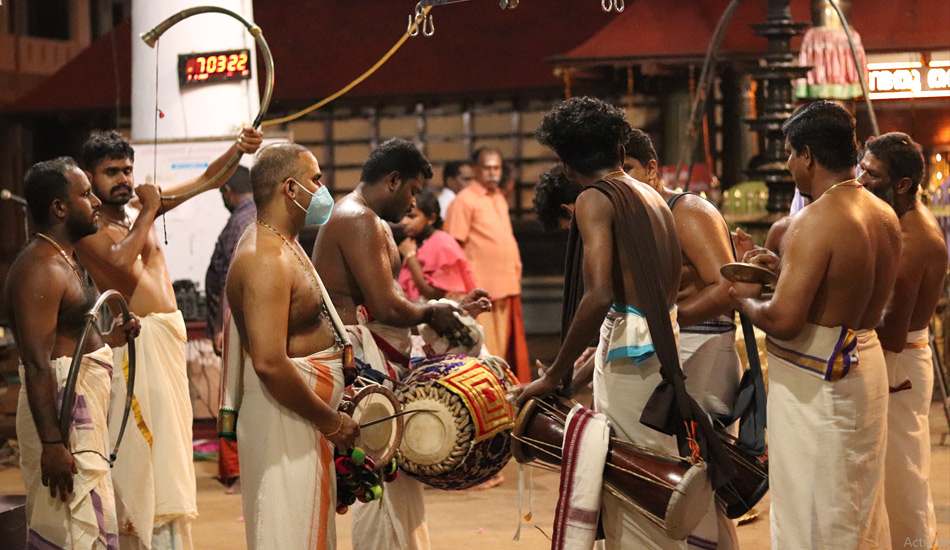
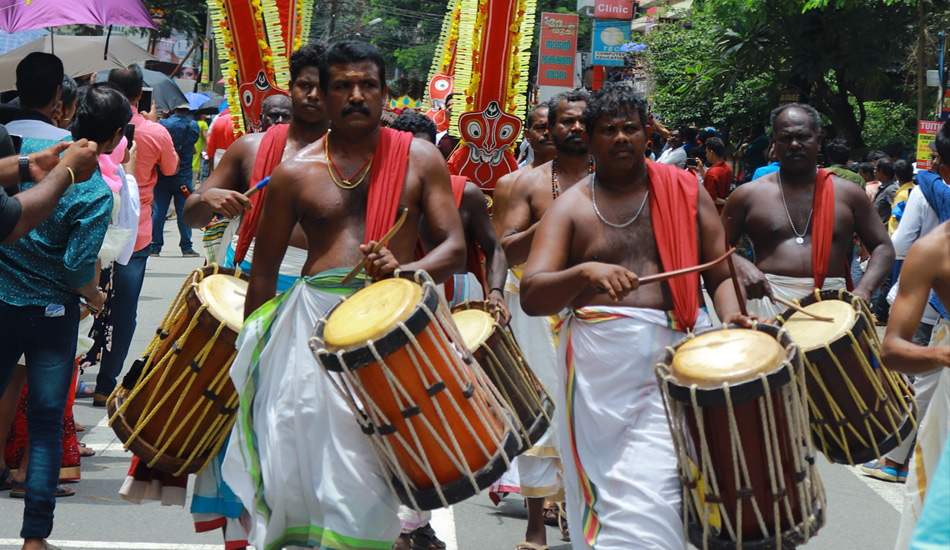
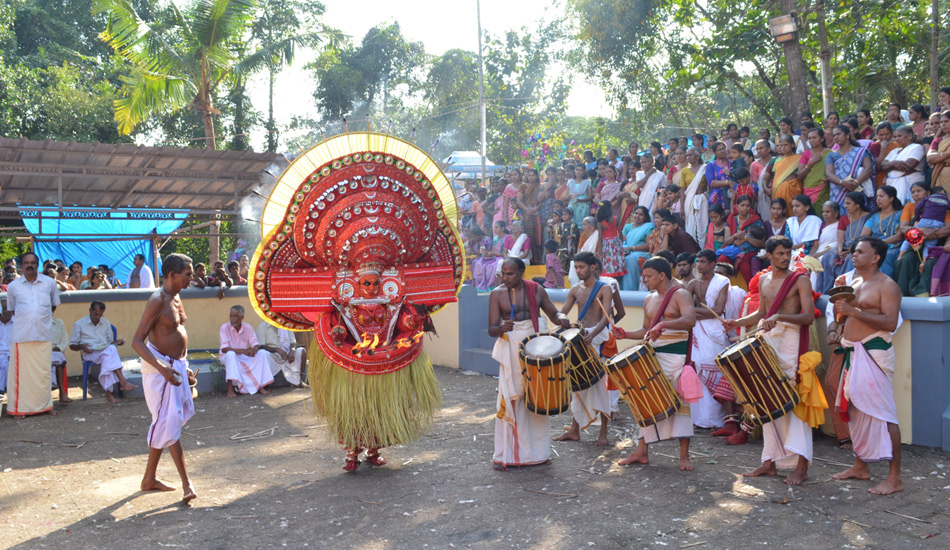
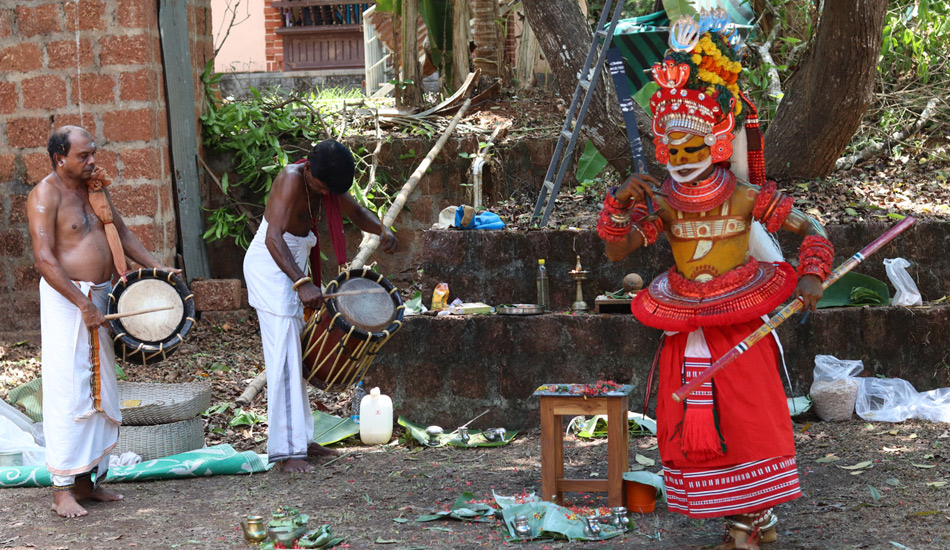
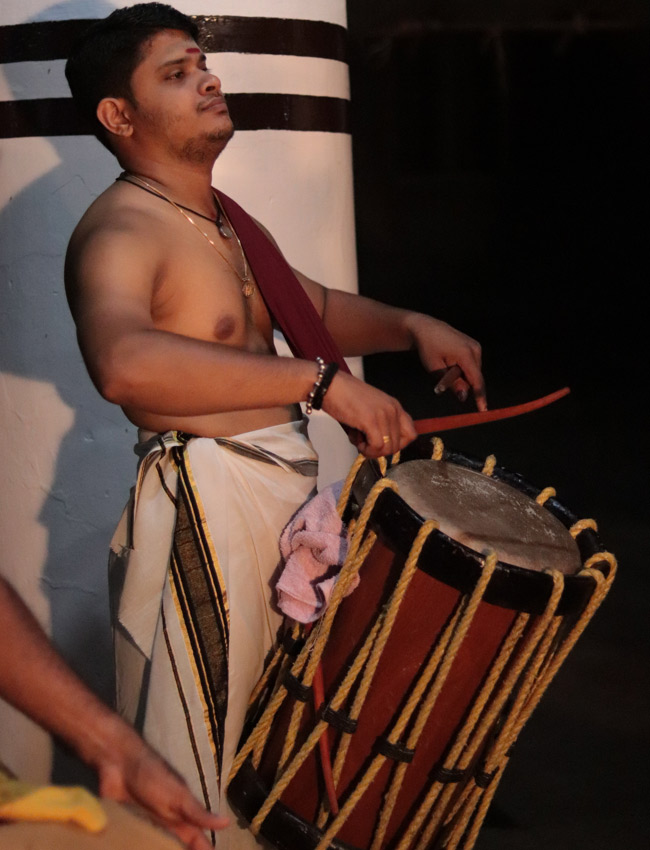
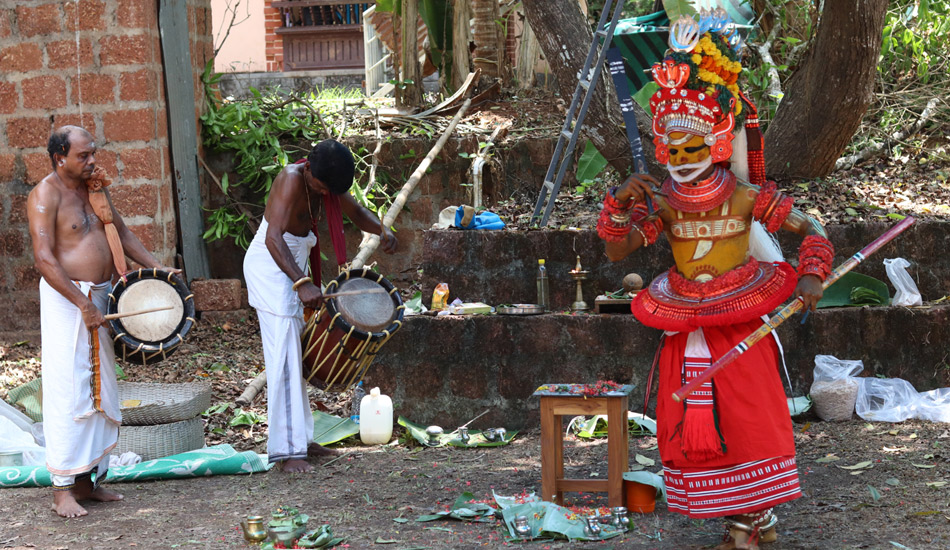
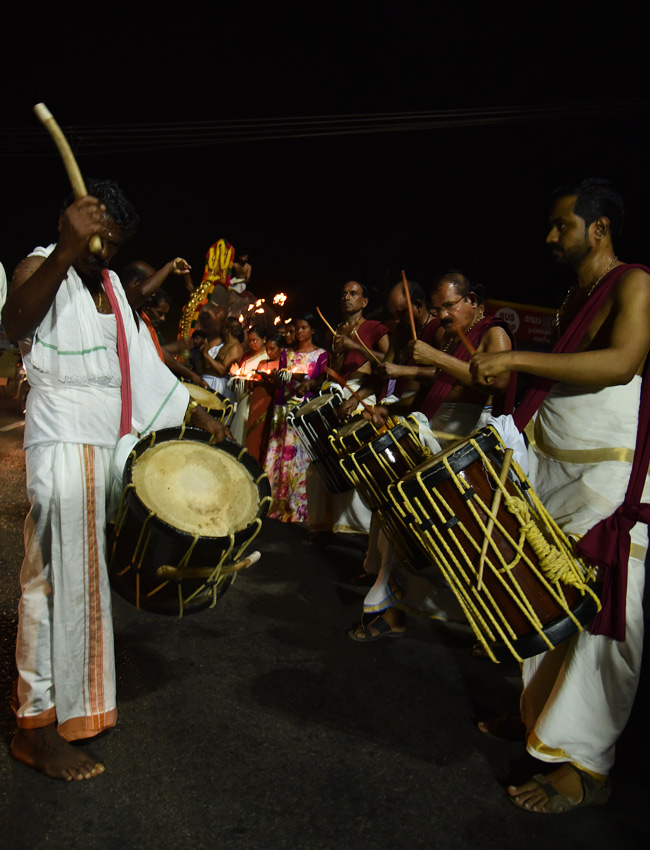
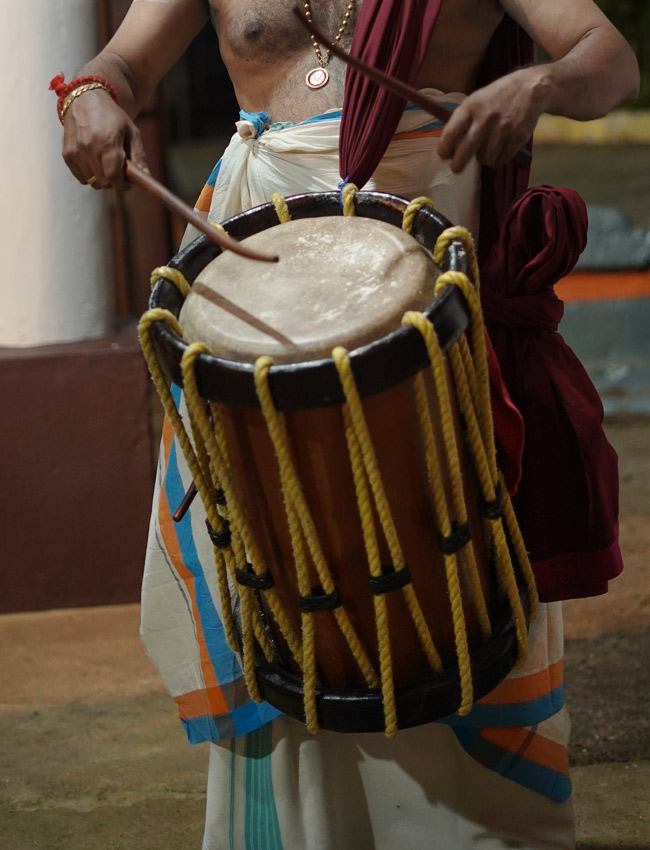
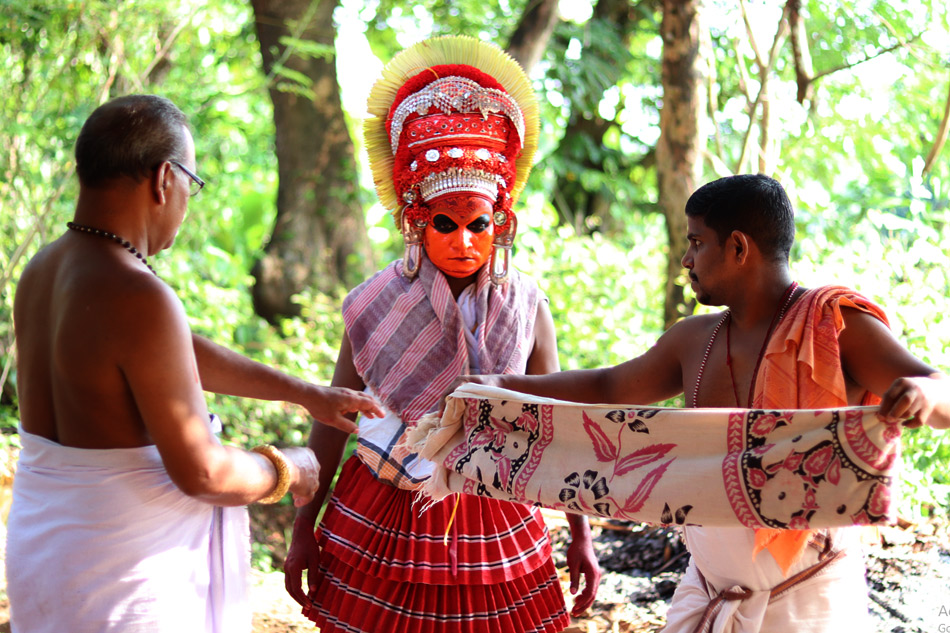
The chenda has an especially prominent role in Kerala’s temple and performance culture. It is used in temple festivals and percussion ensembles such as chenda melam, as well as in performance traditions including Kathakali, Theyyam and thayambaka. In festival settings, the instrument forms part of large percussion ensembles in which rhythm accompanies processions and other ceremonial events. The importance of the chenda to Peruvemba’s production is reflected in the village’s sales figures: before the Covid-19 lockdown, it was among the principal instruments produced there, with 112 chendas sold in 2019.
The thimila and idakka are likewise connected to Kerala’s temple traditions. The thimila is an important component of panchavadyam and is used during temple rituals and ceremonial processions such as seeveli. The idakka is an hourglass-shaped drum whose tension can be altered during performance, and is used in temple music and also accompanies forms including Kathakali, Koodiyattam and Mohiniyattam. Its ability to produce variations in pitch makes it particularly suited to musical contexts where rhythmic and tonal expression are closely connected.
The instruments made at Peruvemba consequently participate in both sacred and performative settings. Temple festivals can involve large ensembles of percussionists performing for extended periods, while instruments such as the mridangam circulate through the concert networks of Carnatic music. The village’s makers also undertake repair and restoration, allowing instruments already in use to remain part of these musical traditions. During the Kerala festival season, which traditionally brings increased activity around temples and performance venues, demand for new instruments as well as repair work rises considerably.
Usage also extends beyond Kerala, with Peruvemba becoming a destination for musicians from other parts of India and, according to accounts of the village, from abroad. Instruments are generally commissioned directly from makers and customised according to the requirements of performers. This has allowed the village to maintain a reputation not simply as a place where percussion instruments are manufactured but as a specialist centre where instruments are made, adjusted and maintained for continued musical use.
The significance of Peruvemba’s instrument-making tradition extends beyond the production of musical objects. The craft is embedded in the social organisation of the village, transmission of specialised knowledge within artisan families, and musical culture of Kerala.
Instrument making in Peruvemba has traditionally been a family-based occupation. Knowledge is acquired through prolonged observation and participation rather than through a short period of formal instruction. The craft is commonly learnt within the household, with younger members gradually taking on individual tasks as they acquire the necessary dexterity. Accounts from Peruvemba describe children beginning to assist with the work from an early age, while particular members of a family may become especially skilled in one stage of production.
In the Kasumani family, for instance, different members developed particular strengths, with one specialising in mashiyidal, the application of the black paste to the drumhead, while another concentrated on shaping the wooden body. This division of specialised knowledge allows the making of an instrument to remain a collective family activity rather than the skill of a single individual.
The household itself often functions as both workplace and training ground. Instrument making takes place in spaces attached to or situated alongside family homes, allowing production to be incorporated into everyday domestic life. Women participate particularly in the washing, drying, scraping and preparation of hides, while men are more commonly involved in shaping the wooden bodies and assembling the instruments. This division of work means that the finished instrument embodies the labour of several members of a household.
The craft has also contributed to a distinct occupational identity among the Kadachi Kollan families of Peruvemba. The continuity of the profession across generations has given the village a collective identity closely associated with instrument making. Kerala Tourism records that around 74 families continue the tradition. The knowledge of making, repairing and tuning instruments therefore operates not simply as an individual livelihood but as a shared body of knowledge through which families maintain their connection to the village’s occupational history.
Peruvemba’s importance is inseparable from Kerala’s musical and performance traditions. Its instruments accompany temple rituals, festivals, classical and traditional performance forms, making the craft part of the material foundation of Kerala’s musical culture. The chenda, thimila, idakka and maddalam are closely associated with temple ensembles and performance traditions, while the mridangam connects the village to the wider world of Carnatic music.
The maddalam provides a particularly clear example of this relationship between craft and cultural practice. It is used in Kathakali, panchavadyam and keli and has been recognised as a Geographical Indication product of Palakkad since 2008. The GI documentation describes the instrument as a traditional percussion instrument associated with Kerala’s temple arts and records its continued manufacture from a single piece of jackfruit wood.
The craft tradition in Peruvemba consequently contributes to the preservation not only of an object but also of the performance practices, tonal knowledge and artisanal techniques required to sustain it.
The cultural value of the craft is also evident in the relationship between makers and musicians. Peruvemba became particularly well known among Carnatic musicians after the mridangam maestro Palghat T. S. Mani Iyer began encouraging musicians from Madras to visit the village. His own instruments were made there by Krishnan Maruthalaparambu, establishing a relationship between a prominent performer and a local maker that helped bring Peruvemba’s instruments to a wider musical public. The village thus became part of a larger network connecting artisan knowledge with professional musicianship.
The cultural significance of Kerala’s temple percussion traditions is also deeply rooted in the relationship between music, ritual and the sacred. Temple music in Kerala is primarily associated with Bhāva and Nāṭya, elements that are prominently expressed in theatre, folk performance traditions and temple observances. These practices are closely connected with the ritual invocation (Āvāhanam) and withdrawal (Udvāsanam) of the deity’s presence, from the sanctum and back into it. Different deities and ritual contexts are associated with specific Tāḷa-s, including Pañcāri (6 beats), Muri-aṭanta (5 beats), Aṭanta (14 beats), Cempata (8 beats), Tripuṭa (7 beats) and Ēkam (4 beats), which structure the rendering of these ritual compositions. The temple percussion instruments, or Kṣētra Tāḷa Vādya-s, are likewise understood to possess a divine origin, with their rhythmic sounds often associated with sacred words and concepts. The two syllables, “Ta–Tom,” produced on the Timila, for instance, are traditionally understood as reflecting the sacred phrase “Tat Tvam”, giving the instrument and its sound a deeper spiritual significance within Kerala’s temple music tradition.
There is also a more immediate cultural dimension within the village itself. The sounds of instruments being tested, tuned and played form part of everyday life in Peruvemba. Workshops situated beside houses become spaces where the distinction between production and musical practice is difficult to maintain. The village is not merely a place where instruments are manufactured and then sent elsewhere; musical sound remains present within the process of making itself.
Instrument making has historically provided an important source of livelihood for the artisan families of Peruvemba. The makers operate largely through commissions, producing instruments according to the requirements of individual musicians rather than manufacturing large quantities for general retail. This system gives the craft a specialised market based on reputation, technical ability and the quality of individual instruments.
Musicians from different parts of India continue to visit the village to commission instruments and seek repairs or maintenance. The economic importance of the craft is also reflected in the collective organisation developed by the makers themselves. In 2007, artisans formed the Kerala State Thukal Vadyopakarana Nirmana Sanghom, a collective of manufacturers of leather-based musical instruments. The collective established common rates for instruments, repairs and restoration and sought to distribute work among its members.
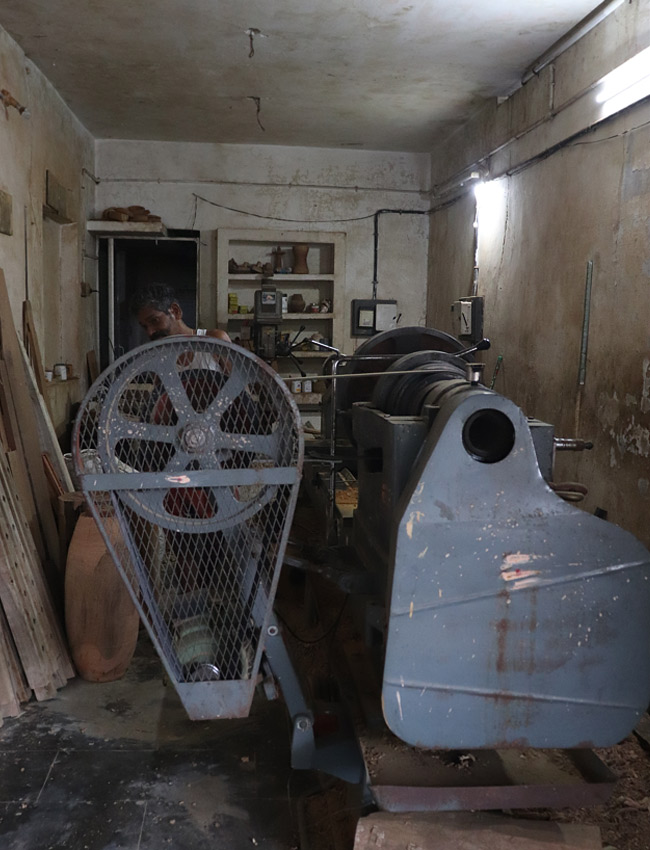
Institutional interventions have also recognised the economic potential of the craft. NABARD supported a cluster development programme in Peruvemba that sought to strengthen the traditional industry through training, raw material availability, credit support and improved production facilities. The programme also encouraged artisans to produce miniature instruments for exhibitions and other forms of market exposure. A lathe supplied through government support reduced some of the physical labour involved in shaping the wooden bodies of instruments.
The economic significance of Peruvemba therefore rests on a specialised form of production in which livelihood, family occupation and cultural reputation remain closely connected. The value of the craft is generated not through mass production but through the accumulated skill of makers whose instruments are judged by musicians themselves. This has allowed a small village to acquire a reputation extending well beyond Palakkad, while also making the survival of the craft dependent upon whether this specialised knowledge can continue to provide a viable livelihood for the families who possess it.
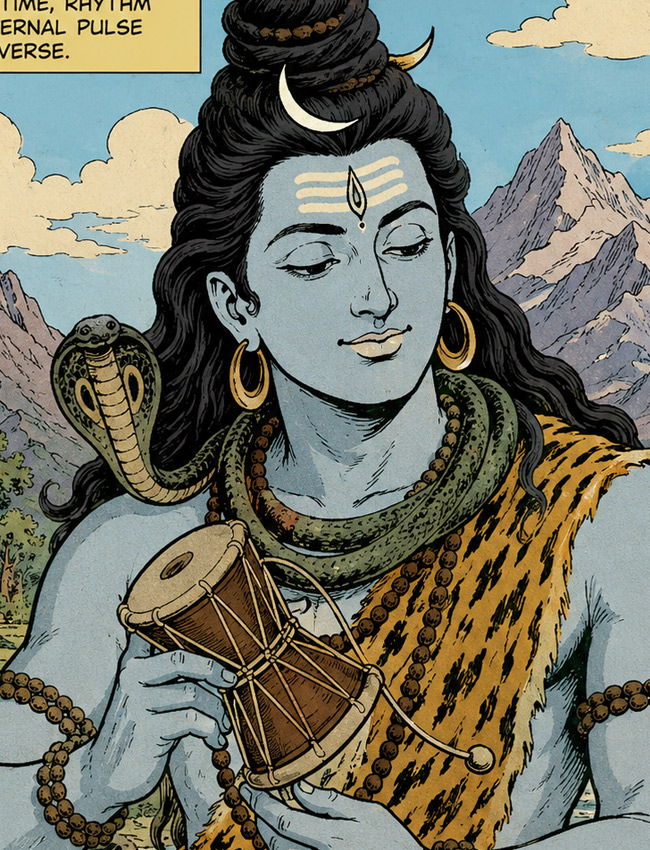
Unlike the history of Peruvemba’s instrument-making families, which is preserved through occupational memory and accounts of individual craftsmen, the available sources do not record a substantial body of myths specifically concerning the village or its makers. The traditions surrounding the instruments themselves, however, place several of them within a wider sacred imagination in which percussion instruments are associated with divine music, temple worship and the mythology of Shiva.
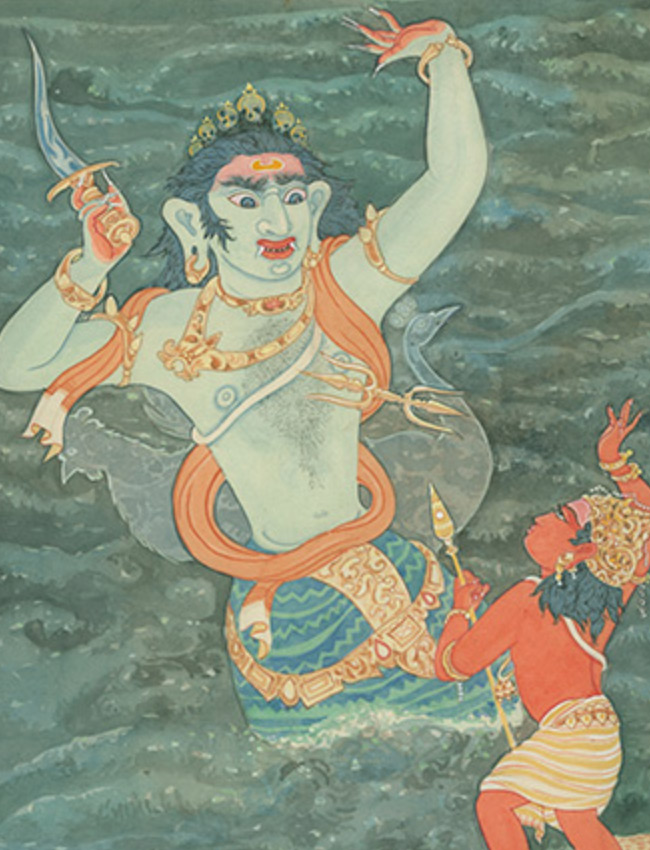
One of the clearest examples is the tradition surrounding the thimila. According to the story, the demon Shurapadma sought the object associated with the rhythm of Shiva’s cosmic dance. Shiva refused to give it to him and instead suggested that he construct an instrument resembling it. Shurapadma fashioned an instrument with leather stretched across both ends, but it produced no sound. In anger, he threw it towards Shiva. Shiva caught it and made an opening in its centre, referred to as Karnadvaram or Jivadwara. The modification allowed the instrument to produce sound, after which its rhythm was associated with the syllables Tha and Thom. Shurapadma then danced to its sound.
The legend gives the thimila a distinctly sacred genealogy. The instrument is described as a deva vadya despite being fashioned, within the story, by an asura. This unusual association places the instrument within a larger Hindu conception of music in which sound can have a cosmic as well as a ritual function. The story does not explain the historical development of thimila making in Peruvemba. Rather, it belongs to the religious and oral traditions through which the instrument has acquired meaning within Kerala’s temple culture.
The idakka also carries a sacred association in Kerala’s musical tradition. The instrument is regarded as a deva vadyam and is connected in local belief with Lord Shiva. Its name has been associated with the Malayalam word idakku, meaning centre, while another traditional explanation connects it to the dakka, an instrument said to be associated with Shiva’s trisula. The instrument is treated with particular reverence in temple settings. It is traditionally suspended near the sanctum when not in use rather than being placed directly on the ground.
The shankhu, although not a leather percussion instrument made in Peruvemba, provides another example of the sacred understanding of musical sound within Kerala’s temple tradition. References to the conch occur in Hindu Puranic literature, and its sound forms part of temple worship from the waking of the deity through the closing of the sanctum. Its use during abhisheka, kalasha rituals and other forms of worship demonstrate how instruments in Kerala can function within ritual sequences rather than merely accompanying musical performances.
The makers produce objects that enter an established world of temple ritual, performance and religious symbolism. The sacred meanings attached to particular instruments are therefore not necessarily claims about their material origins. They are part of the cultural knowledge surrounding their use and help explain why instruments such as the thimila, idakka, maddalam and chenda occupy a position extending beyond ordinary musical equipment.
The instruments made in Peruvemba do not share a single standardised form. The village produces several types of percussion instruments, each shaped according to its musical function, method of playing and tonal requirements. Mridangam, maddalam, chenda, tabla, thimila and idakka differ considerably in their proportions and construction, although jackfruit wood and animal hide form the principal materials across much of the tradition.
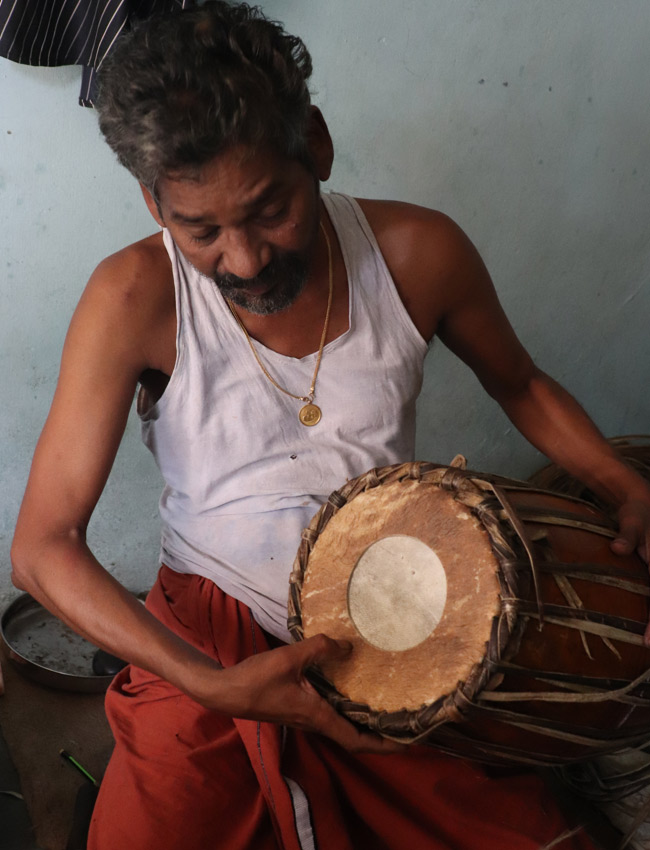
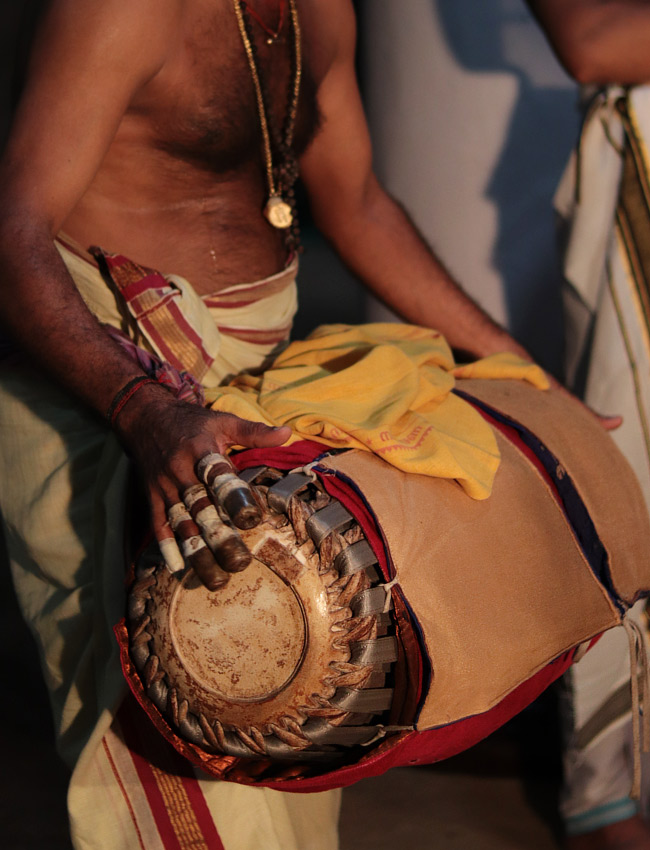
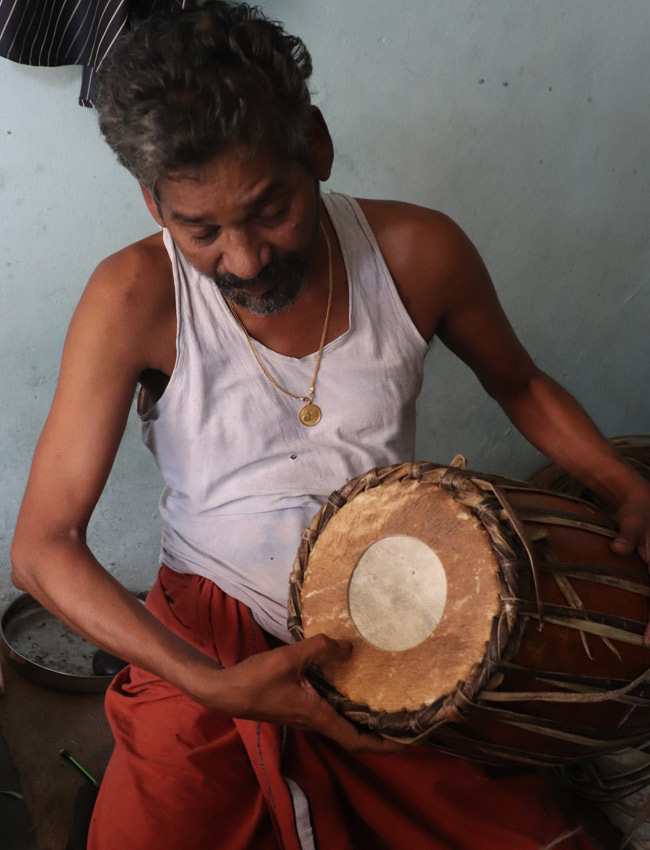
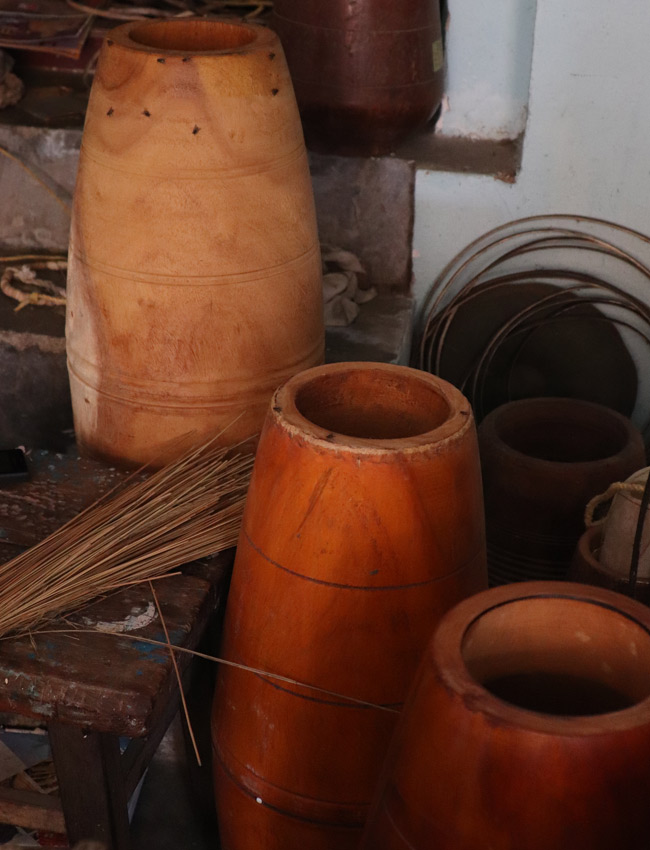
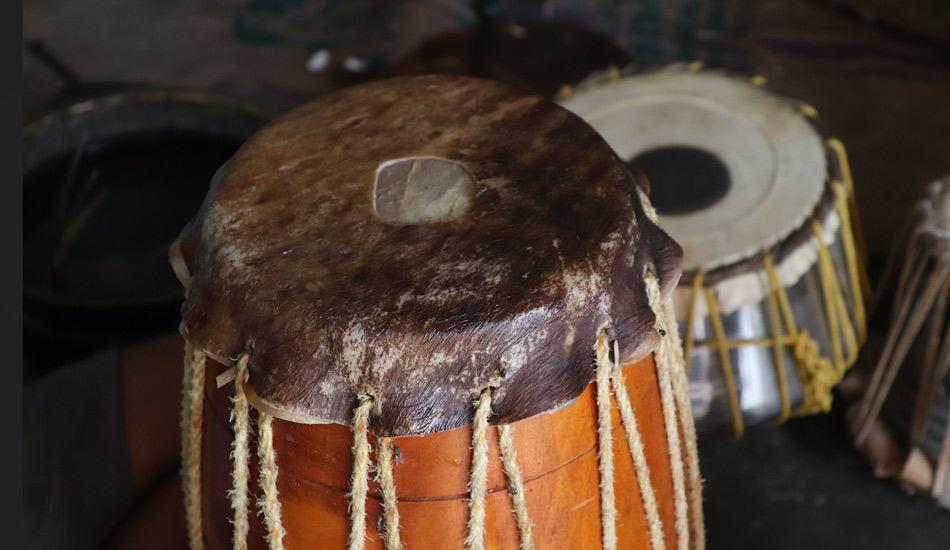
The mridangam has a characteristic elongated, barrel-like body with two drumheads of different sizes. The wooden shell is hollowed from a single piece of timber and the two ends are covered with layered leather membranes. Leather straps running along the body hold the two heads in tension and allow the maker to regulate the instrument’s sruti. The asymmetry between the two heads enables the instrument to produce contrasting tonal registers. In Peruvemba, the final dimensions and tonal qualities are adjusted according to the requirements of the individual musician. The village’s makers also produce two types of mridangam, known as Ech and Thag. The Ech is associated with a higher pitch, while Thag is associated with a lower pitch.
The maddalam is larger and heavier than the mridangam and has a broad, barrel-shaped body made from jackfruit wood. Its two ends produce different sounds and are constructed using different arrangements of leather. The Swar Sindhu account records three layers on the valam thala, with cow leather forming the upper layer and goat skin used for the inner ring. A dark paste known as soru is applied to the inner skin of the valam thala. This is prepared from powdered kittan stone mixed with cooked rice and contributes to the instrument’s tonal character. The exterior is fitted with leather straps and iron rings that help maintain tension.
Two forms of maddalam are recognised in the Kerala tradition: suddha maddalam and thoppi maddalam. The former is the larger and more commonly used form, while thoppi maddalam is a smaller version associated with particular performance contexts. The physical form of the maddalam is also shaped by the manner in which it is played. It is suspended horizontally around the player’s waist, allowing both hands to strike the two heads while the performer remains standing.
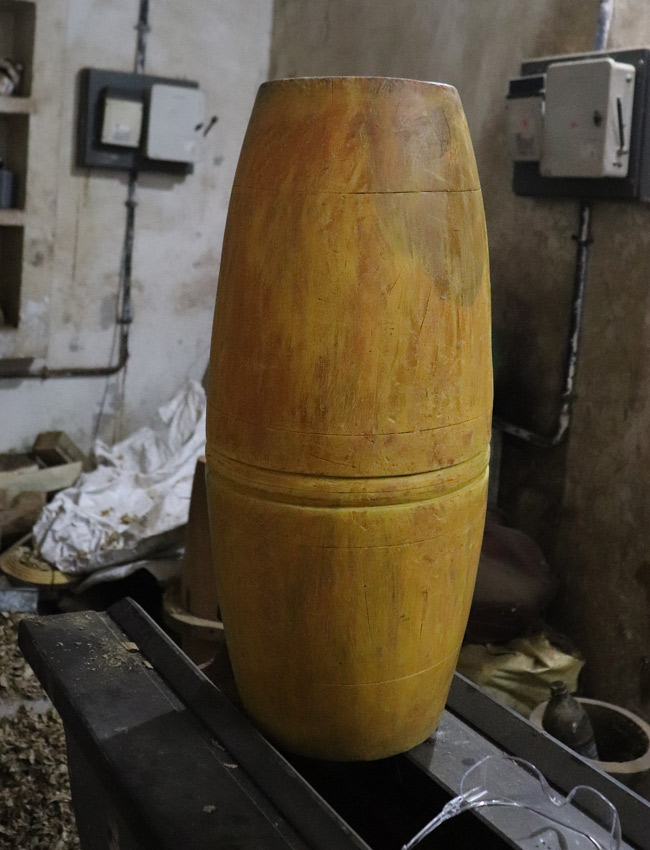
The chenda has a markedly different design. It is a cylindrical drum with a relatively uniform body rather than the tapering or barrel-shaped form of the mridangam and maddalam. Peruvemba makers traditionally use jackfruit wood for its body, although kanikonna or golden shower wood is also recorded in accounts of the village. The wooden shell is hollowed and smoothed before the leather heads are attached. The leather is stretched across circular frames and secured firmly so that the required tension can be achieved.
The thimila is slender and elongated, with a narrower body than the maddalam. Kerala Kalamandalam describes it as a hollowed jackfruit-wood drum with animal skin stretched across both ends. Its high-pitched sound and compact form are suited to its role in panchavadyam. Traditional makers used several types of wood, including jackfruit, kumizh, arali and konna, although jackfruit became the preferred material.
The idakka differs still further in form. It is an hourglass-shaped drum, smaller and more compact than the thimila. Its two heads are stretched over circular wooden rings and connected by a system of tensioning straps. Unlike a drum whose pitch remains relatively fixed once the heads have been tightened, the tension of the idakka can be altered while it is being played. This construction allows the performer to produce changes in pitch and contributes to the instrument’s distinctive place within Kerala’s temple music.
The use of different skins is an important part of the design of these instruments. Peruvemba makers do not treat leather as a single interchangeable material. Cow, buffalo and goat skins are selected in different combinations according to the instrument and the part of the drum being made. The mridangam, for example, requires goat skin in its construction, while cowhide is particularly important to the chenda and maddalam. The variation in skin thickness, elasticity and placement contributes directly to the different sounds produced by each instrument.
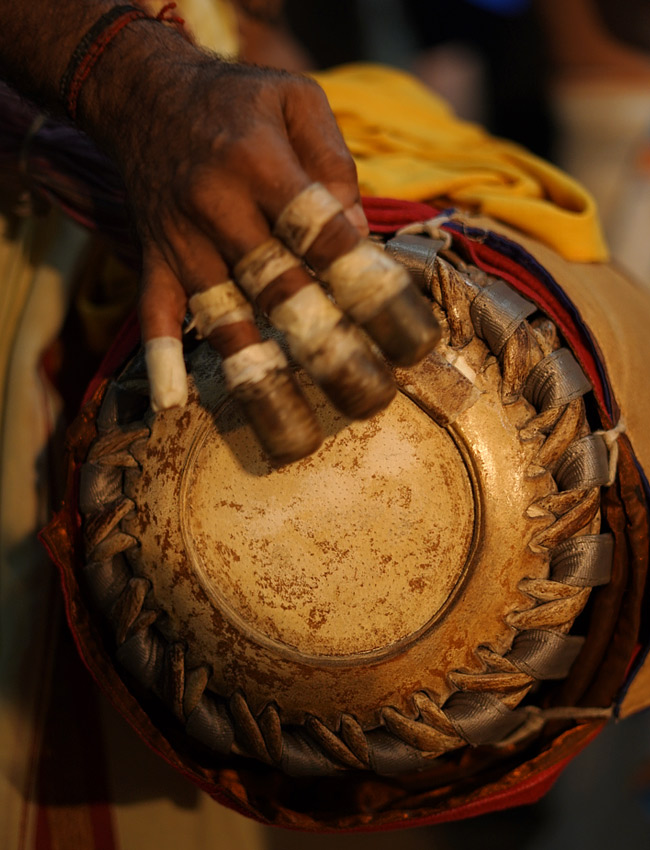
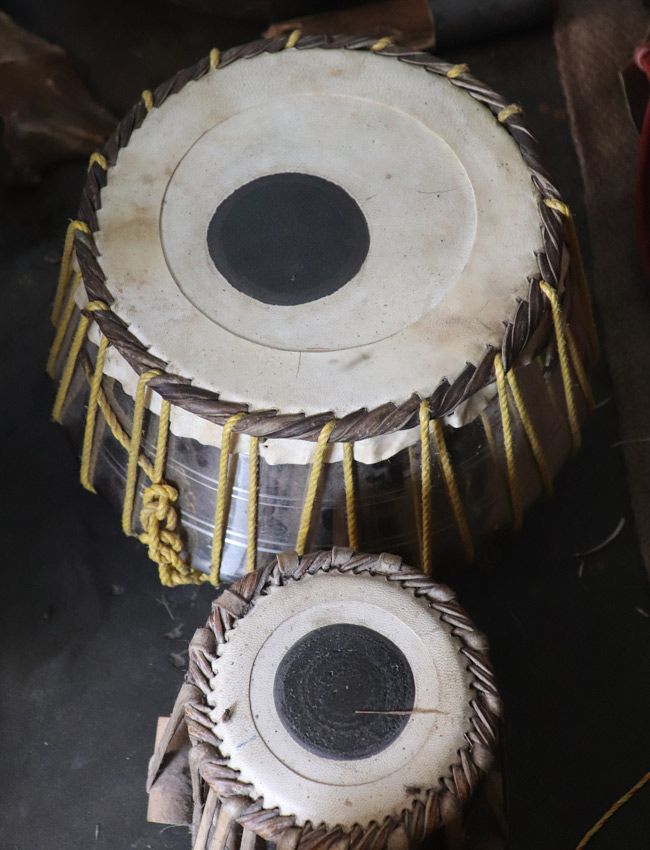
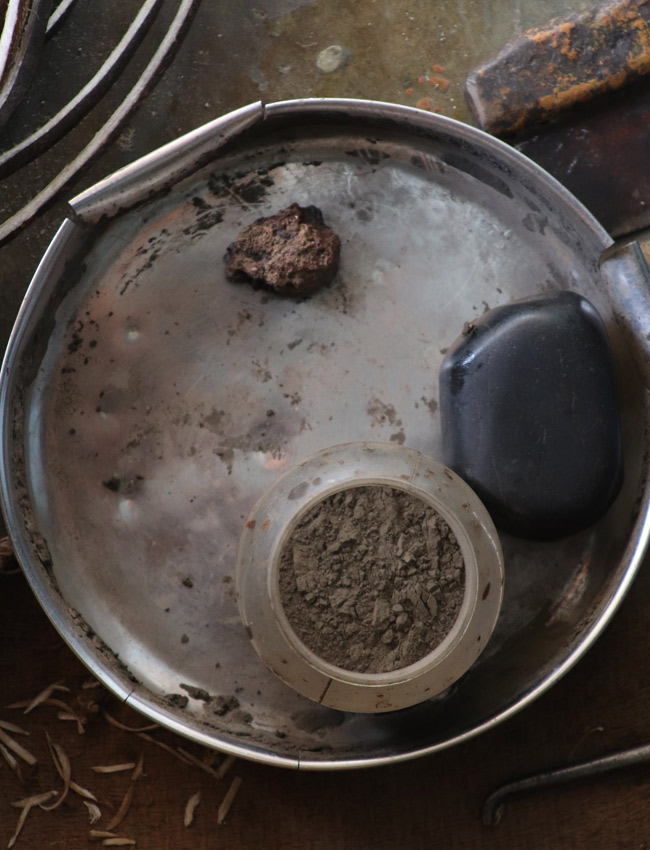
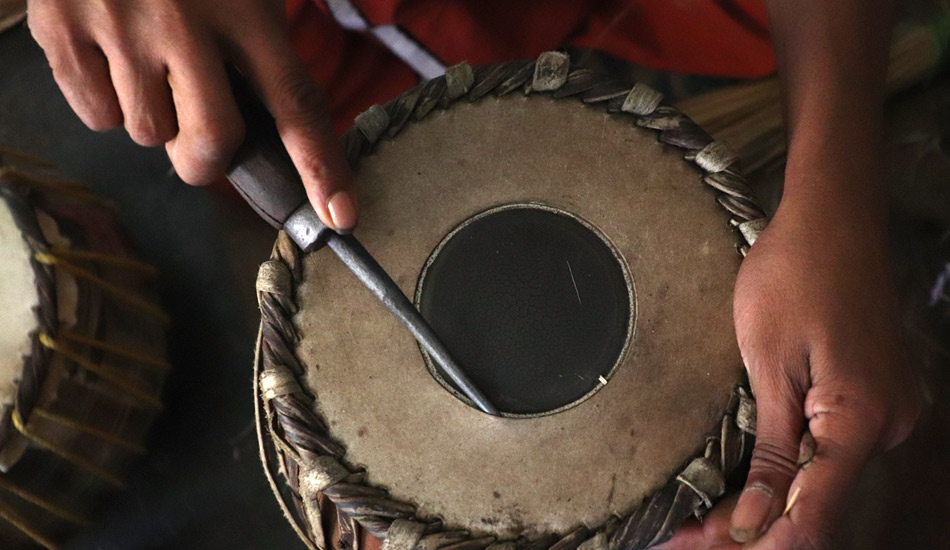
The black central patch found on several of these instruments is another important feature of their design. Known as mashiyidal in the Peruvemba accounts, it is made by grinding a locally available black stone, known as puranakkallu, and mixing the powder with boiled rice. The resulting paste is applied carefully to the drumhead. Its placement and thickness affect the resonance of the membrane, making its application a matter of considerable precision rather than mere surface decoration.
Design in Peruvemba is therefore inseparable from sound. The proportions of the wooden body, the selection and layering of skins, the tension of the straps and the placement of the central paste all contribute to the tonal properties of the finished instrument. The makers work with these elements according to the requirements of particular instruments and performers. What appears externally as a simple combination of wood and leather is consequently the result of a highly controlled relationship between material, form and acoustics.
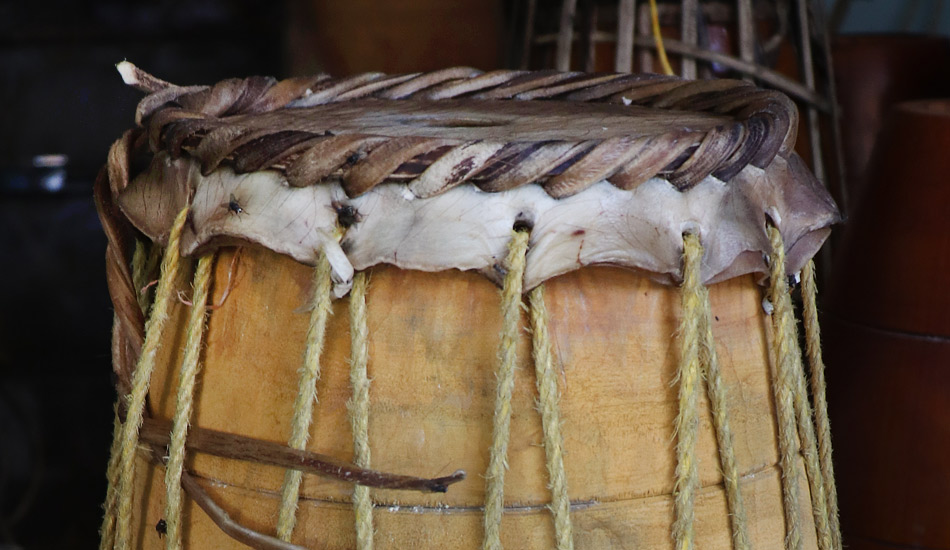
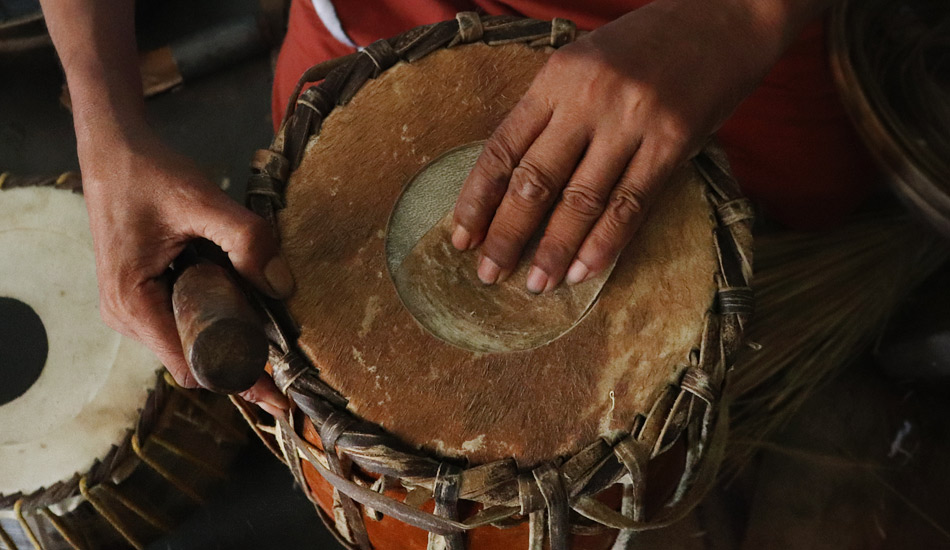
The survival of Peruvemba’s instrument-making tradition is affected by problems that extend from the procurement of raw materials to the changing economic position of the artisans themselves. The craft requires materials that are becoming increasingly difficult to obtain, considerable physical labour and long periods of production. At the same time, the market for traditionally made instruments is closely tied to musicians, festivals and institutions whose demand can fluctuate sharply.
The availability of suitable animal hide has become one of the most serious difficulties faced by Peruvemba’s instrument makers. Cowhide is required in the construction of almost every instrument made in the village, while buffalo and goat hide are used in different combinations according to the instrument.
Restrictions affecting the transportation and sale of cattle have disrupted traditional hide supply networks. Artisans reported that the supply of cattle hide from abattoirs in Coimbatore had stopped and that makers increasingly had to depend on the meat market at Puthunagaram, near Peruvemba.
The problem is not simply the availability of hide but its quality. Makers require skins with particular physical properties because variations in thickness and fat content affect drying, tension and ultimately the sound of the instrument.
The cost of hide has also increased. In 2021, Peruvemba craftsmen reported paying around Rs. 4,000 for the hide of a single cow. Since cowhide is needed across the range of instruments, fluctuations in its availability and price directly affect the cost of production.
Jackfruit wood, the principal material for the instrument bodies, presents a different set of difficulties. The timber has to meet particular requirements of age, density and condition before it can be used. Makers have also reported changes in the quality of jackfruit timber associated with shifts in the monsoon, with delays in the northeast monsoon affecting the condition of the wood and traditional drying process.
Instrument making requires considerable physical effort. The production of a single instrument may take between two and three months, and several stages involve strenuous manual work.
Preparing the hide, cutting leather, stretching the membranes and tightening the straps require substantial physical force. Wood must be seasoned before it can be hollowed, while animal skins need to be washed, stretched and dried properly. The quality of the finished instrument depends upon these preparatory stages, meaning production cannot simply be accelerated without potentially compromising the material or sound.
The division of labour within artisan households further reveals how much work remains behind the finished instrument. Women commonly undertake the washing, drying, scraping and smoothing of animal hides, while men are more frequently involved in shaping the wood and assembling the instruments.
The physical demands of the occupation have also contributed to its declining appeal among younger people. The craft requires patience, prolonged apprenticeship and considerable manual effort, while the financial return is uncertain.
The makers’ dependence on a specialised market makes the craft vulnerable to disruptions in musical activity. Peruvemba artisans generally produce instruments after receiving orders from musicians and institutions rather than manufacturing large stocks for commercial retail.
The Covid-19 lockdown exposed this vulnerability sharply. The festival season in Kerala, normally a major period of demand, was severely disrupted in 2020. Only 23 instruments from Peruvemba were sold that year before the lockdown, compared with 380 in 2019. Of the 2019 sales, 112 were chendas, an instrument closely associated with the temple festival circuit.
Before the pandemic, families engaged in the craft were reported to earn between Rs. 17,000 and Rs. 40,000 a month. During the lockdown, this income largely disappeared.
The economics of individual instruments also remain difficult. A new maddalam was reported to sell for around Rs. 25,000, while a chenda cost approximately Rs. 12,000–15,000. Yet the reported profit margin was only around 8%.
Another difficulty arises when middlemen purchase instruments from artisans and subsequently sell them under their own names. This limits the visibility of artisan labour and prevents the maker’s reputation from translating fully into economic recognition.
The continuation of the craft depends upon younger members of artisan families choosing to enter the profession. Traditionally, children learned through participation in household production and eventually entered the occupation after completing school. This pattern is becoming less secure.
Younger members now have access to higher education and other forms of employment and many are reluctant to undertake a profession that demands long apprenticeship and substantial physical labour without guaranteeing a stable income.
The Kasumani family provides an example of a different possibility. Rajesh K., despite holding a postgraduate degree, chose to continue his family’s mridangam-making tradition and expressed his intention to preserve the knowledge for the next generation.
The problem is therefore not simply that younger people have stopped valuing the craft. The occupation competes with educational and professional opportunities that offer more predictable incomes and less physically demanding work. For the craft to continue as a viable occupation, cultural attachment alone cannot compensate for economic insecurity.
Peruvemba’s artisans have also faced difficulties in securing sustained institutional support. The makers formed the Kerala State Thukal Vadyopakarana Nirmana Sanghom in 2007 to address common problems and strengthen their collective position. The organisation helped determine prices for instruments and repairs and sought to distribute work among its members.
NABARD, in association with Vision India Charitable Trust, implemented a cluster development project intended to support the artisans through improved technology and marketing. A lathe was introduced to reduce the physical labour involved in shaping the wooden shells.
The position of the Kadachi Kollan community within the state’s classification system has also affected access to government support. The community was moved from the Scheduled Tribes list to the Other Backward Classes list in Kerala in 2019. Artisans interviewed for the article stated that this change had resulted in the loss of forms of state assistance they had previously received.
The challenges facing Peruvemba are therefore interconnected. Difficulties in obtaining suitable hide and timber increase production costs, while the long and physically demanding nature of the work makes the profession less attractive to younger people. Irregular demand limits income, and weak recognition of individual makers can reduce the economic value attached to their specialised knowledge.
The craft has survived these pressures through family transmission, collective organisation and institutional intervention, but its continuation cannot be assumed simply because the tradition is old. Its future depends upon whether instrument making can remain both technically sustainable and economically viable for the community that has preserved it.
The making of percussion instruments in Peruvemba is a prolonged process in which the preparation of each material is closely tied to the acoustic requirements of the finished instrument. The work is divided among several stages, beginning with the selection and seasoning of the wood and the preparation of animal hide and continuing through the shaping of the shell, attachment of the membranes, application of the central black compound and final tuning. Although machinery has been introduced for some of the heavier stages of woodwork, the process remains dependent on the judgement and manual skill of the maker. Kerala Tourism estimates that an instrument can take between two and three months to complete.
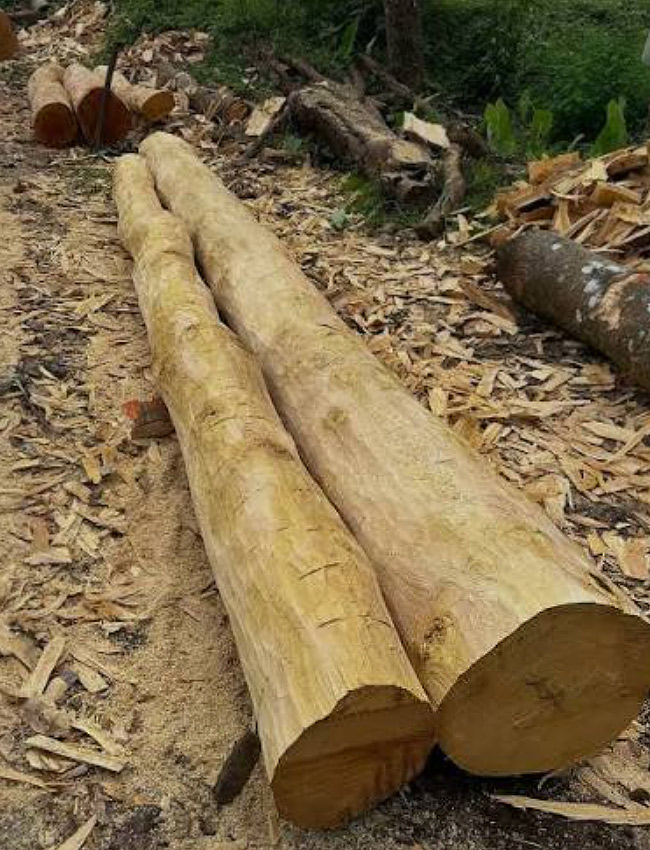
Wood: Jackfruit wood is the principal timber used by the Peruvemba makers. It grows abundantly in Palakkad and is valued for the strength and acoustic qualities required of a drum shell. The makers obtain timber from local farmers and traders, while some specialist families source jackfruit wood from outside Kerala. The Kasumani family, for example, has sourced jackfruit from Panruti in Tamil Nadu and selects trees that are at least thirty years old.
The age and condition of the tree matter because the shell must withstand the pressure created when the leather membranes are tightened around it. The wood is not worked immediately after it is obtained. It is first allowed to dry, with accounts of Peruvemba makers describing approximately one month of drying before the timber is hollowed. The Kasumani family follows a longer drying period of nearly two months for the middle and lower portions of the jackfruit trunk. Proper seasoning is necessary because excess moisture can lead to cracking or deformation once the wood is hollowed. The quality of the timber consequently affects both the durability of the instrument and its eventual sound.
Animal Hide: Animal hide forms the other principal material of the instruments. Cow, buffalo and goat skins are used in varying combinations depending on the type of drum and the particular membrane being prepared. Peruvemba makers obtain hides from abattoirs and meat markets. Cowhide is particularly important for the chenda and maddalam, while goat skin is used prominently in the mridangam. Thin cow intestine is traditionally used for the membrane of the idakka.
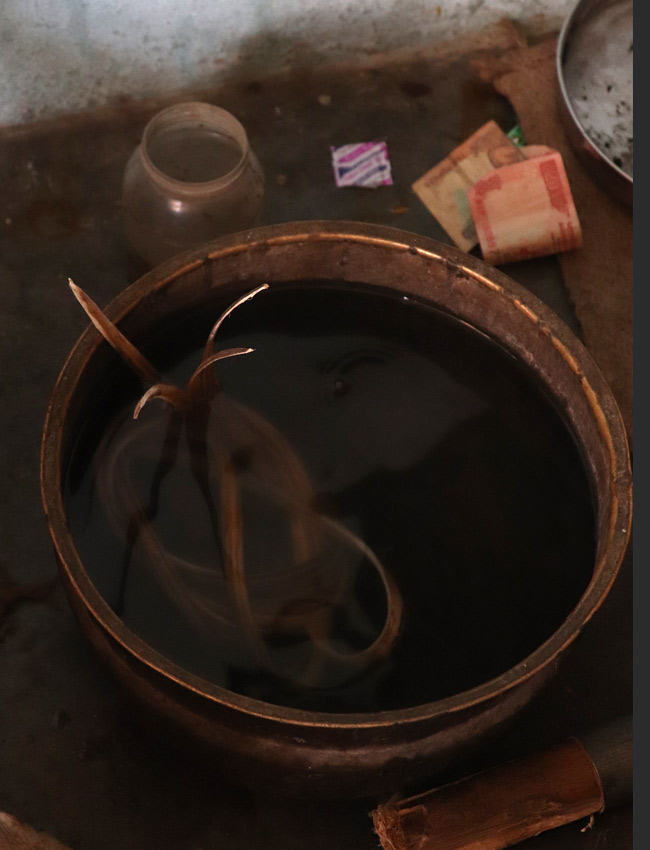
The hide undergoes substantial preparation before it can become part of an instrument. The skins are washed, stretched and secured to small poles or pegs placed in the ground and left to dry in sunlight. Once sufficiently dry, they are scrubbed and smoothed to obtain the thickness and surface required for the particular instrument. The condition of the hide is crucial because differences in thickness, elasticity and fat content can affect the ability of the membrane to vibrate properly.
Puranakkallu and the Black Paste: A locally available black stone known as puranakkallu is used in preparing the black central compound applied to the drumhead. The stone is ground into a fine powder and mixed with boiled rice to produce the paste known in Peruvemba accounts as mashiyidal. The application of this compound is not ornamental. Its mass and distribution alter the vibration of the membrane and contribute to the characteristic tonal quality of instruments such as the mridangam.
Technical accounts of the mridangam similarly identify the black central area, variously called karanai, syahi or mashi, as an important acoustic component.
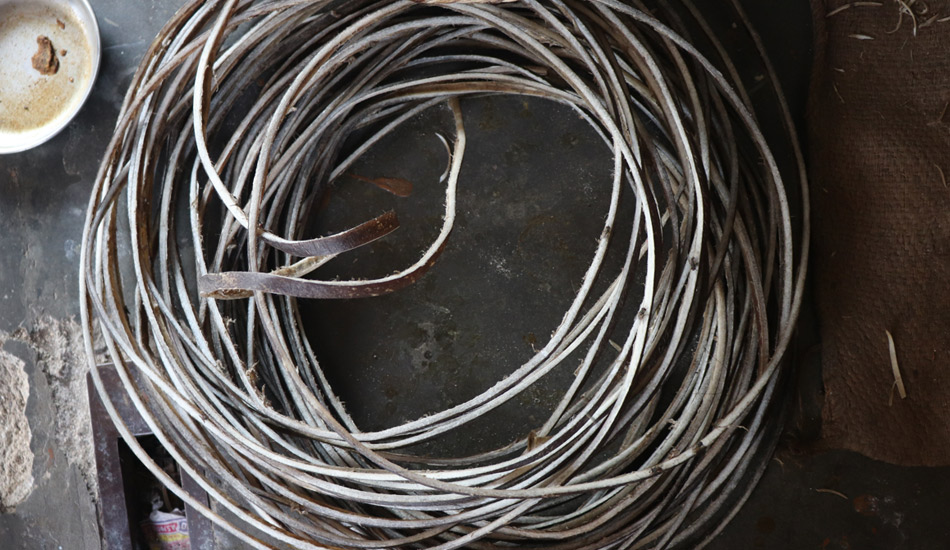
Leather Straps and Bindings: Leather is also used to bind the drumheads to the wooden shell. Long strips are passed around the body and tightened so that the membranes remain under the necessary tension. In instruments such as the mridangam and maddalam, this binding system is integral to tuning because changes in tension alter the pitch of the membranes. Peruvemba makers therefore treat the leather straps as a functional part of the instrument rather than merely as fasteners.
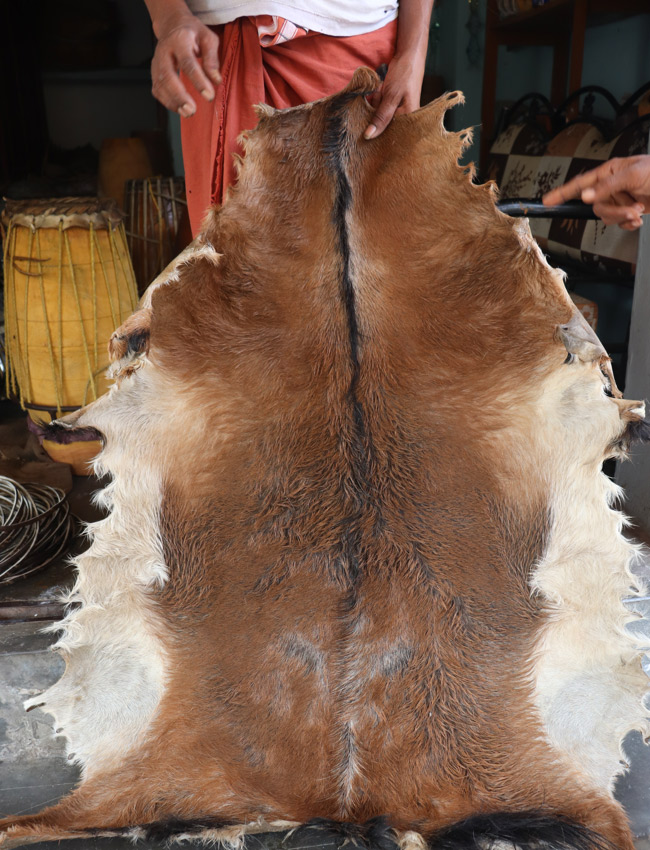
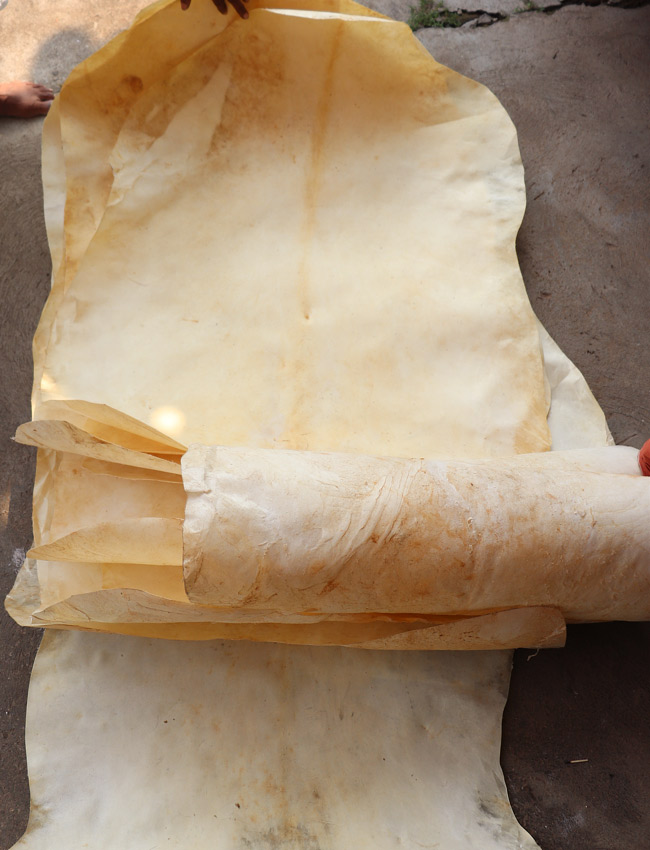
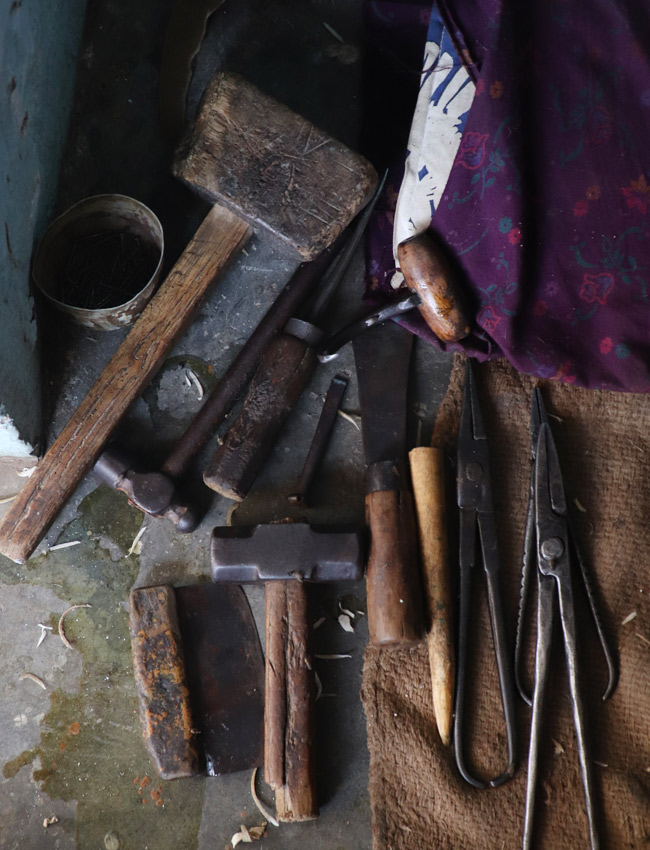
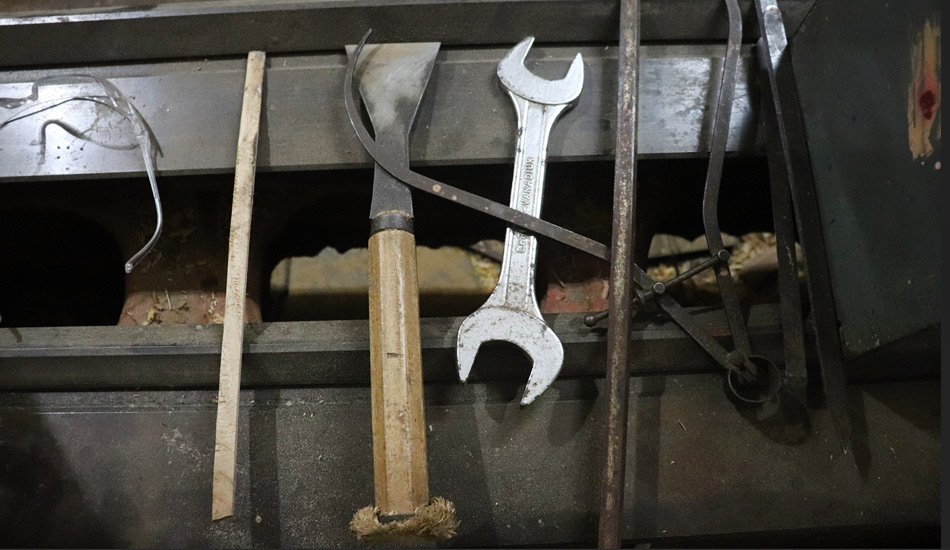
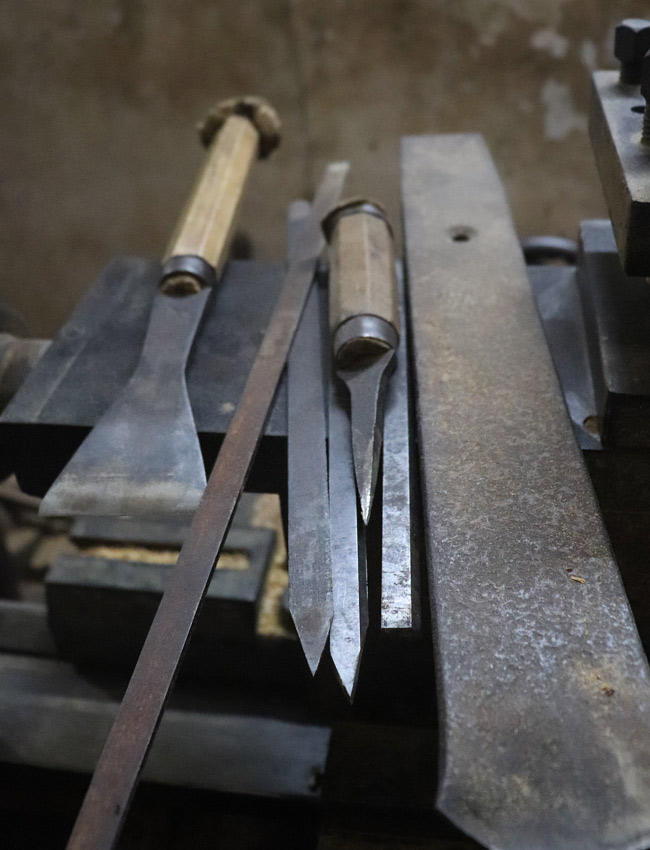
The makers traditionally construct and maintain many of their own tools. The range includes chisels, knives, blades, reamers and clamps, which are used for shaping the wood, cutting and preparing the hide and securing different components during assembly.
The chisel is used to shape and hollow the wooden body. Earlier production relied heavily on manual chiselling, whereas mechanical equipment is now used to remove much of the wood from the centre of the shell. Kerala Tourism records that selected timber is dried and then hollowed with a machine. The introduction of a lathe through NABARD’s cluster-development efforts similarly reduced the amount of strenuous manual work required from the makers.
Knives and blades are used in preparing the hide. They allow makers to remove unwanted portions, cut the skin to the required dimensions and refine its thickness. Reamers are used for making or enlarging holes where necessary, while clamps help hold components securely during assembly.
The process also employs implements for preparing and applying the black compound. The stone used for mashiyidal is ground on a hard surface before the powder is mixed with boiled rice. The resulting paste is applied by hand in carefully controlled layers. Makers must judge the thickness and placement of the compound because an uneven application can alter the sound of the finished instrument.
The lathe has made the hollowing and shaping of wooden shells faster, but the preparation of hide, fitting of the membranes, application of mashiyidal and final adjustment of tension continue to require close manual attention. The craft remains dependent upon the maker’s ability to judge the relationship between material, form and sound at each stage.
The ritual significance of the instruments made in Peruvemba is rooted primarily in their place within Kerala’s temple traditions. Percussion instruments are not simply accompanying sounds within these settings. They form part of the ceremonial structure of temple worship, festivals, processions and performance traditions in which music, movement and devotion are closely connected. The chenda, thimila, idakka and maddalam are among the principal instruments used in temple contexts and placed within the broader category of Kshetra Vadyangal, or temple instruments.
The chenda has a particularly important ritual presence. It is used in temple festivals and in performance traditions such as thayambaka, panchari, Kathakali and Theyyam. Its powerful volume makes it particularly suited to large outdoor gatherings, processions and ceremonial performances. In Kerala’s temple culture, chenda ensembles can accompany festivals in which musicians and performers gather in substantial numbers, making the instrument part of the public soundscape of religious celebration.
The thimila is similarly embedded in temple ritual. It forms an essential component of panchavadyam, the traditional five-instrument temple ensemble, and is used during ceremonies including seeveli, in which the deity is taken in procession around the temple, as well as sreebhoothabali and sreebali. Its rhythmic function is therefore inseparable from ritual movement through temple space. The instrument is not merely played during a ceremony but participates in structuring the ceremony itself.
The idakka occupies a more explicitly sacred position within this musical system. It is described as a deva vadyam and is regarded as one of the more revered percussion instruments of Kerala. Its use extends across panchavadyam, Kathakali, Koodiyattam, Krishnanattam and Mohiniyattam, while its association with temple ritual gives it a particular status. The practice of suspending the instrument near the sanctum when it is not being played rather than placing it on the floor further reflects the reverence accorded to it.
The maddalam also participates in ritual and temple performance. It is used in keli, panchavadyam, Kathakali and Krishnanattam and is classified in the Swar Sindhu study as a deva vadya. Its physical form is adapted to its performance context: the barrel-shaped instrument is suspended around the player’s waist and played with both hands. The instrument is particularly important to Kathakali and panchavadyam, linking the work of Peruvemba’s makers to both temple ritual and Kerala’s classical performance traditions.
The larger ritual setting in which these instruments operate is the temple festival calendar. Kerala’s temple festivals bring together music, processions, dance and ritual observance, with percussion ensembles providing much of the sonic framework. The festival season is also economically significant to Peruvemba’s makers because demand for instruments and repair work increases when performers prepare for these events. The relationship between ritual practice and craft production is consequently reciprocal: temple traditions sustain the demand for instruments, while the makers sustain the material objects through which these traditions are performed.
The association between the instruments and ritual also extends to the makers themselves. An account on Peruvemba describes craftsmen beginning their working day by invoking Saraswathy, the goddess associated with knowledge, music and the arts. Although this practice is not documented in the more formal studies of Kerala’s temple instruments, it provides an insight into how the act of making may itself be situated within a religious understanding of artistic labour.
The makers do not simply supply drums to temples. Their work produces instruments that become part of processions, festivals, ritual ensembles and performance traditions through which religious and cultural life is enacted. The sacred significance belongs to the wider practices in which the instruments participate, while the makers provide the material and technical conditions that allow those practices to continue.
The making of a Peruvemba instrument proceeds through a sequence of stages in which the wooden body, animal hide and tonal components are prepared separately before being brought together. Although the exact procedure differs between instruments, the accounts of mridangam, maddalam, chenda and idakka show a common concern with controlling the thickness, tension and condition of the materials. The finished instrument is judged by its sound, so the maker continually tests the work during production rather than treating tuning as something that begins only after the object has been completed.
The process begins with the selection of suitable timber. Jackfruit wood is the principal material used by Peruvemba makers, and the wood is selected for its strength and acoustic properties. In the Kasumani family’s mridangam making tradition, trees of at least thirty years of age are preferred. The required portion of the trunk is cut and kept aside for seasoning before the body is shaped. The timber is allowed to dry for a considerable period. Accounts from Peruvemba describe approximately one month of drying, while the Kasumani family allows the relevant sections of the trunk to dry for nearly two months. The purpose is to reduce excess moisture and allow the wood to stabilise before it is hollowed. The drying stage is particularly important because insufficiently seasoned wood can crack or change shape after the shell has been worked.
Once the timber has been adequately seasoned, it is cut to the approximate dimensions required for the instrument. The bark is removed and the outer surface is shaped before the interior is hollowed. Earlier makers carried out much of this work manually with chisels. Mechanical equipment is now used for the heavier stages of hollowing and shaping. The Kasumani family, for example, moved from shaping the jackfruit body by hand to using a rotating machine that can complete the basic shaping much more quickly.
The shape of the shell depends upon the instrument being made. A mridangam requires an elongated barrel-shaped body with openings of different sizes, while a maddalam has a larger barrel-shaped shell. The chenda requires a cylindrical body, while the idakka has an hourglass form. The maker therefore determines the external and internal contours according to the acoustical requirements of the instrument rather than simply hollowing out a uniform wooden block.
The wooden body must also be sufficiently smooth before the leather is fitted. Uneven surfaces can interfere with the proper seating of the membranes and can affect the tension of the leather once it has been tightened. The final shaping of the shell is consequently a stage in which the maker begins to establish the acoustic characteristics of the instrument.
The animal hides are obtained separately and undergo their own preparation. Cow, buffalo and goat skins are used in different combinations depending upon the instrument. The hides are first washed to remove dirt and other unwanted material. They are then stretched and pegged to poles or stakes in the ground so that they can dry in the sun. Once sufficiently dry, the skin is scrubbed and smoothed.
This stage requires careful judgement because the skin cannot simply be treated as a uniform sheet. Different sections possess different thicknesses and qualities and must be prepared according to their eventual position on the instrument. The makers cut the hide into pieces of the required dimensions and thickness.
For the mridangam, several layers are combined, while the chenda and maddalam use different arrangements of cow, buffalo and goat hide. The quality of the hide is particularly important to the final sound. Peruvemba craftsmen have noted that cattle raised under different conditions can produce hides with different amounts of fat. Excess fat makes the skin more difficult to dry and can affect the tonal quality of the finished instrument. The makers therefore have to assess the material before deciding how it can be used.
After the hide has been prepared, it is cut into pieces appropriate to the instrument. In a mridangam, the drumheads consist of several layers of leather, a three-layer construction involving buffalo, cow and goat leather. The layering is not merely intended to strengthen the membrane. Each layer contributes to the way the drumhead vibrates. Differences in thickness and material affect the pitch, resonance and tonal clarity.
The maker therefore has to place and secure each layer carefully before the head is tightened over the shell. In the maddalam, the two ends are constructed differently because they produce different registers. The leather is cut to cover the openings and additional strips are prepared for securing the heads. The chenda uses a comparatively simpler cylindrical construction, while the idakka requires membranes fitted to its two smaller circular openings.
The prepared membranes are placed over the openings of the wooden shell and secured with long leather strips. The straps are passed around the instrument and tightened so that the heads remain firmly stretched. This is one of the more physically demanding parts of the process. Makers use both their arms and legs to pull and secure the leather sufficiently tightly.
The degree of tension has to be carefully controlled. If the leather is too loose, the membrane will not produce the required tone. If it is excessively tight, the sound can become unsuitable and the material may be damaged. The maker therefore listens and tests while tightening the straps. This is particularly important in instruments such as the mridangam, where the two heads must produce complementary tonal ranges.
In the maddalam, the leather fastening is reinforced with iron rings and straps, which help maintain the tension of the drumheads.
One of the most technically sensitive stages is the preparation of the black compound applied to the drumhead. In Peruvemba this is referred to as mashiyidal or mashi. The compound is prepared by grinding a locally available black stone, puranakkallu, into a fine powder and mixing it with boiled rice.
The paste is applied to the appropriate portion of the drumhead in controlled layers. Each application has to be sufficiently even because variations in thickness affect the vibration of the membrane. In the mridangam, the central black area is crucial to the production of its characteristic tone. The makers therefore apply and test the paste repeatedly until the desired response is obtained.
The work demands considerable experience. The Kasumani family notes that mashiyidal is one of the tasks at which particular family members become highly skilled, with customers specifically seeking instruments because of the quality of this work.
Tuning is not an isolated final operation but takes place throughout the making process. Once the membranes have been attached and the black compound has been applied, the maker tests the instrument repeatedly to determine whether the desired sruti has been achieved.
The tension of the leather straps can be adjusted to raise or lower the pitch, while the thickness and distribution of the central compound influence the resonance and tonal response. The final tuning of a mridangam requires particular attention to the right-hand head. Makers use an oval-shaped hammer to make fine adjustments to the tone. Female drums may receive additional coats of the black compound to achieve the desired pitch. The instrument is tested repeatedly until it responds evenly and produces the required resonance. The final test is therefore also a test of the maker’s knowledge.
A finished instrument is not considered satisfactory simply because all its physical components are correctly assembled. It must produce the sound expected by the musician. Some makers are willing to discard an instrument altogether if it does not meet their standards. The Kasumani family, for instance, has described rejecting defective mridangams rather than selling them as lower-quality instruments.
The maker’s ear remains involved throughout the process. It is this continual assessment of material and sound that allows the Peruvemba craft tradition to produce instruments suited to individual musicians and particular performance traditions.
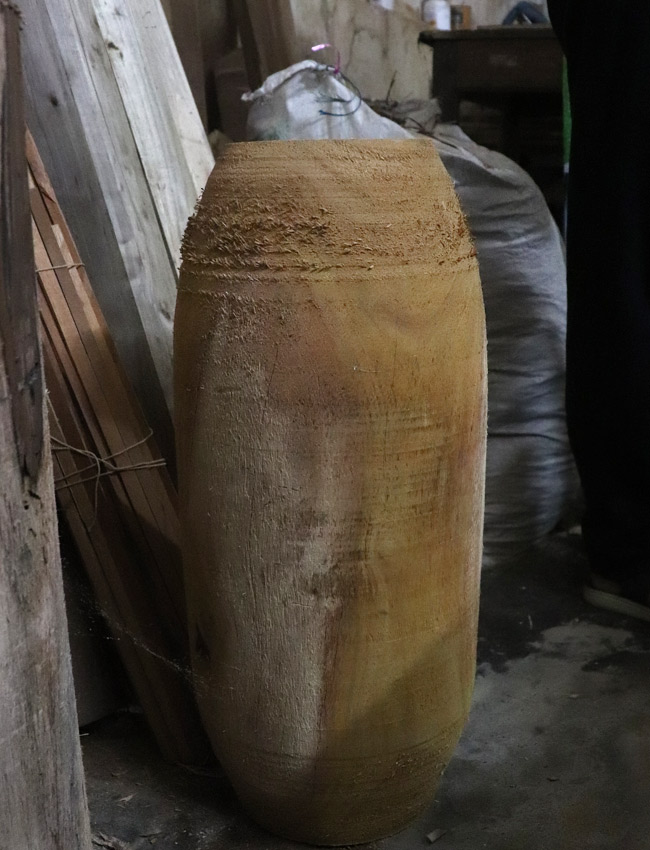
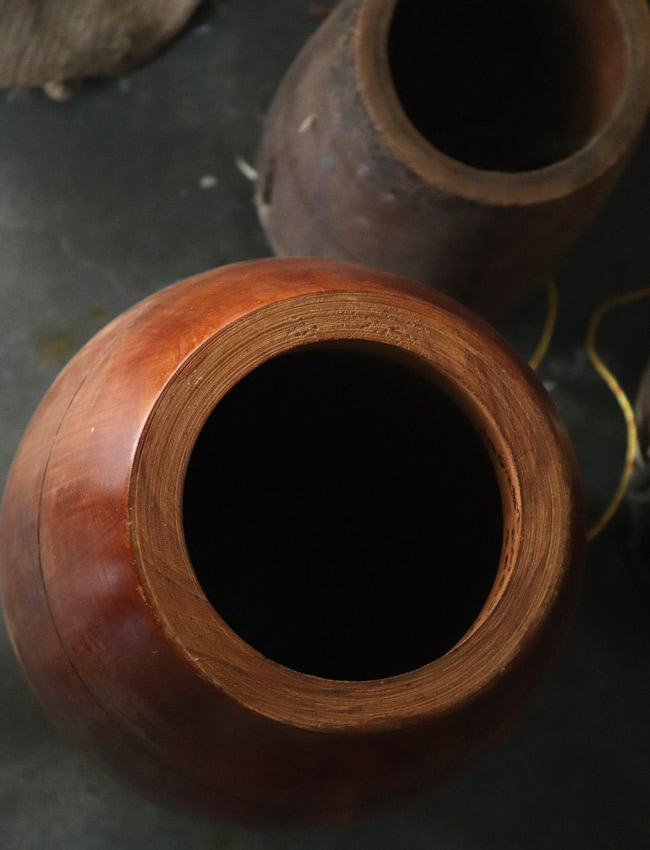
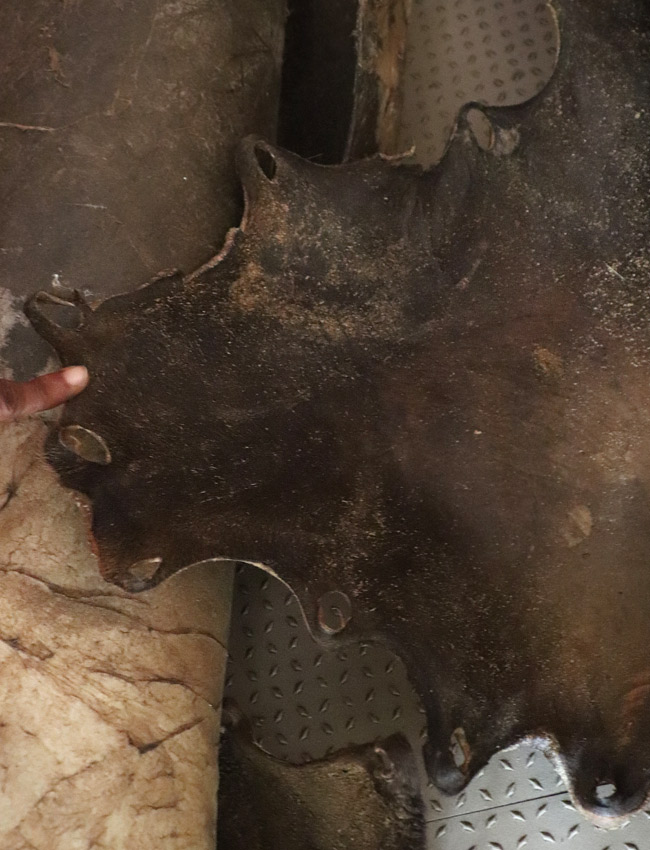
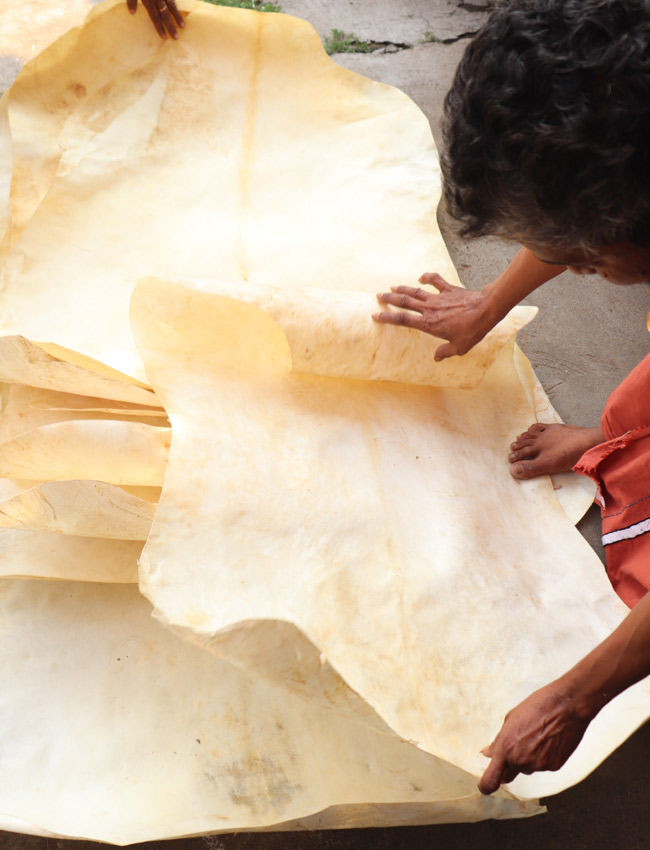
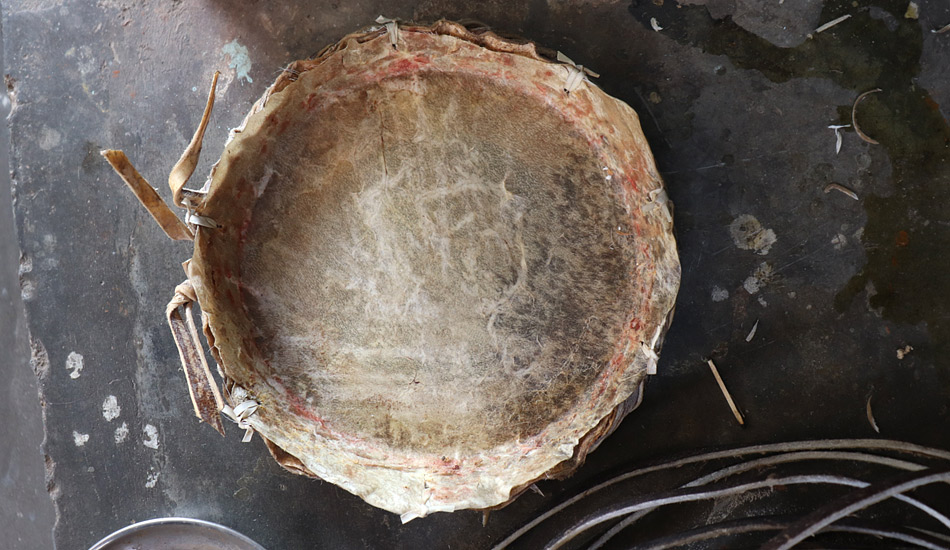
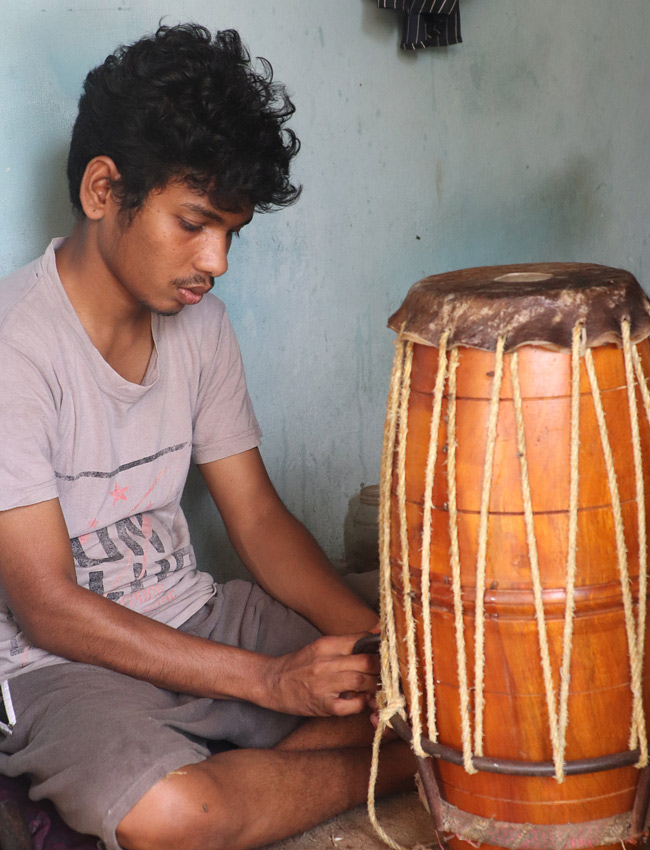
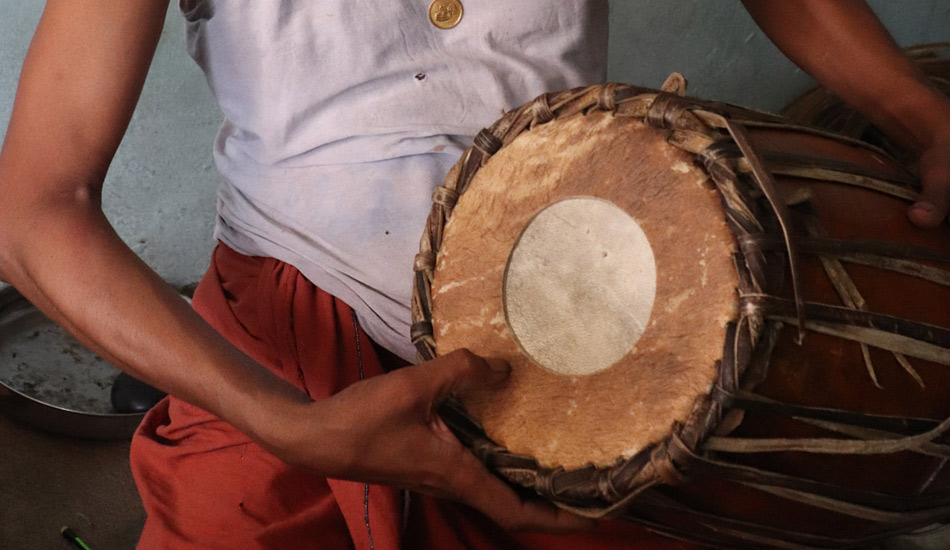
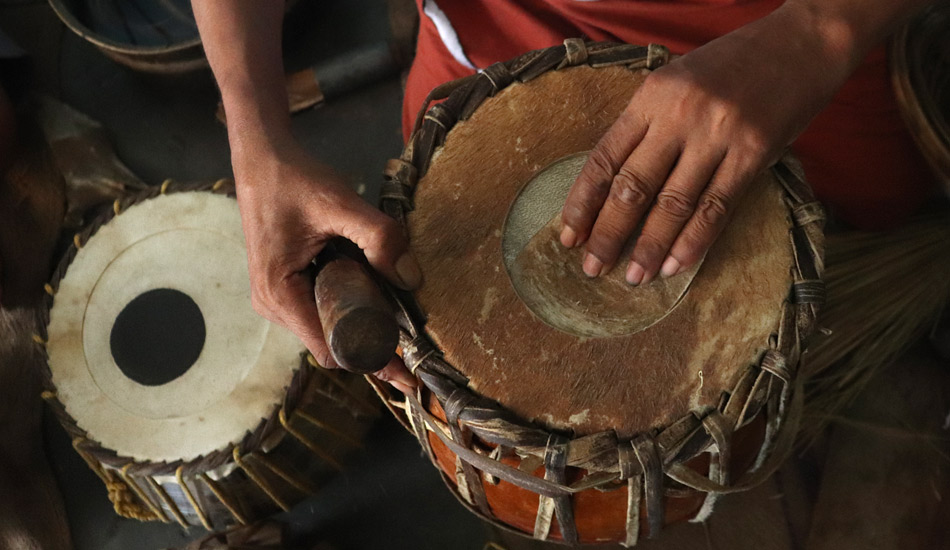
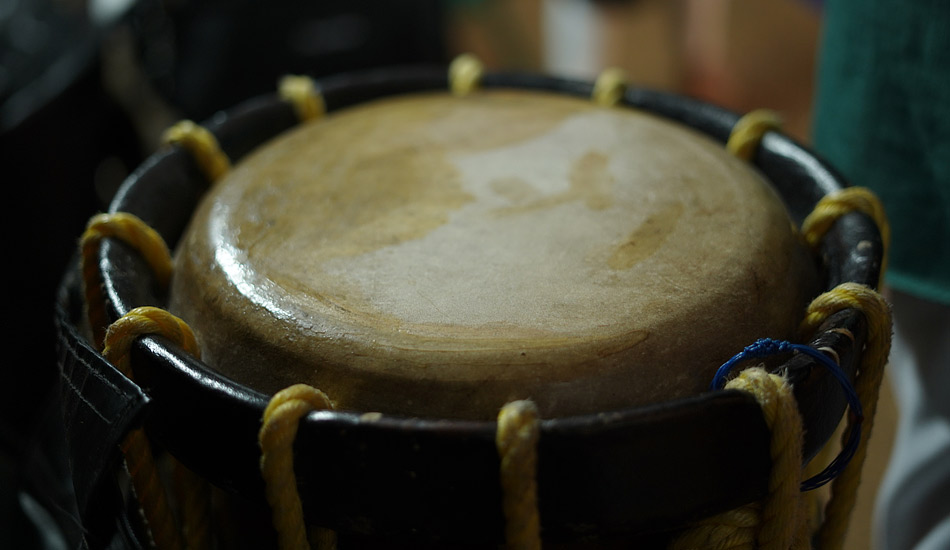
Wastage in Peruvemba’s instrument-making tradition is closely tied to the preparation of wood and animal hide. Woodworking produces unavoidable material loss when the outer surface of the timber is shaped and the interior is hollowed to form the body of the instrument. The makers begin with a single piece of timber and remove material until the required thickness and internal form are achieved. Earlier, this was done by hand with chisels, while machines are now used for much of the hollowing. The remaining wood is therefore a by-product of shaping rather than material deliberately discarded at the end of production.
The preparation of leather similarly involves cutting the hide to the dimensions required for particular drumheads. Peruvemba makers work with cow, buffalo and goat skins in different combinations, and the skin is washed, dried, scraped and smoothened before being cut and fitted to the instrument. The preparation is therefore also a process of selection in which portions that do not meet the requirements of a particular membrane are removed. The sources, however, do not provide evidence of a specific system through which these leather remnants are reused or recycled.
The craft’s emphasis on precision also limits the amount of material that can simply be accepted as usable. The quality of the leather affects the tone of the instrument, while the condition of the wood affects its structural stability and acoustic properties. A maker cannot therefore treat every piece of available material as suitable merely to reduce waste. Material that fails to meet the required standard may have to be rejected because using it could compromise the finished instrument.
This is particularly evident in the Kasumani family’s approach to mridangam making, where instruments that fail their quality tests may be discarded rather than sold as inferior products.
There are also materials used in the construction of the instruments that have changed over time. Earlier accounts from Peruvemba record the use of natural gum made by pounding green arecanuts. More recently, synthetic adhesive such as Fevicol has been used instead. This change illustrates that material wastage cannot be understood only in terms of the amount of wood or leather discarded. It also concerns the materials introduced into the production process and the changing relationship between traditional and commercially available substances.
Repair and restoration provide another way in which the useful life of materials is extended. Peruvemba’s makers do not restrict their work to the manufacture of new instruments. They also replace worn membranes, tighten bindings and undertake restoration work. During periods when new orders decline, repair work remains an important part of the artisans’ occupation.
Restoring an existing instrument allows its wooden body and other components to remain in use rather than requiring complete replacement. This is particularly important for instruments whose wooden bodies can remain functional even when their leather components have deteriorated. Replacing the damaged skin or tightening the bindings can return the instrument to use. The makers therefore contribute to a form of material conservation through repair, even though the sources do not describe it in the language of formal recycling or sustainability.
At the same time, it would be misleading to describe Peruvemba’s traditional production as entirely waste-free. The making of a percussion instrument necessarily involves removing portions of wood and leather, and the available documentation does not establish how all such remnants are disposed of.
What can be established is that the craft places considerable value on careful material selection, skilled preparation, repair and quality control. These practices reduce the likelihood of valuable materials being used in an unsuitable instrument and extend the working life of instruments that can be repaired.
The question of wastage in Peruvemba therefore remains closely connected to the larger material economy of the craft. Wood and animal hide are both becoming more difficult and expensive to obtain, making efficient use of suitable material increasingly important. Yet the available evidence does not support claims of a formal waste-recycling tradition. What is more clearly visible is a culture of careful selection, repair and prolonged use, shaped by the high cost of materials and the technical demands of instrument making.
According to one legend, the Palghatcherry dynasty began with a Kshatriya prince from the Cochin royal family who entered the Kuthiran hills in search of lost elephants. With the help of local hill tribes, he recovered the elephants and fell in love with a tribal woman. After being excommunicated by his royal family, he married her and, with the support of the tribal communities, established a new kingdom. He is believed to have founded the Palghatcherry dynasty.
Historically, it is suggested that the Pallavas of Kanchi may have entered the Malabar region during the 2nd or 3rd century, with Palakkad possibly serving as one of their centres. Later, Malabar came under the rule of the Perumals and was eventually divided among several local rulers. In the Palakkad region, the prominent rulers included the Valluvakonathiri of Valluvanad, the Kollengode Raja of Vengunad, and the Sekharivarma Raja of Palakkad.
In 1757, when the Kozhikode Samoothiri invaded Palakkad, the Palakkad Raja sought the help of Hyder Ali of Mysore. Hyder Ali defeated the Samoothiri's forces and subsequently brought Palakkad and its territories under Mysore's control. The region remained under Hyder Ali and later Tipu Sultan until the Anglo-Mysore wars. Following the Treaty of 1792, Tipu Sultan's territories in Malabar were ceded to the East India Company and became part of the Malabar District of the Madras Presidency.
Palakkad Municipality was established on 1 November 1866, making it one of the earliest modern municipalities in present-day Kerala. The present Palakkad district was formed on 1 January 1957, initially comprising Palakkad, Perinthalmanna, Ponnani, Ottapalam, Alathur and Chittur. Over time, administrative boundaries changed, including the formation of Mannarkkad taluk and, in 2013, Pattambi taluk after the bifurcation of Ottapalam taluk.
Located between 10°46′ and 10°59′ North latitude and 76°28′ and 76°39′ East longitude, Palakkad district shares its borders with Malappuram district to the north and northwest, Thrissur district to the south, and Coimbatore district of Tamil Nadu to the east.
The highest peak in the region is Anjinad, rising to approximately 2,386 m. Other prominent peaks include Karimala, Karimala Gopuram, Kalladikkode, Nellikkotta (Padagiri), and Vellachimudi.
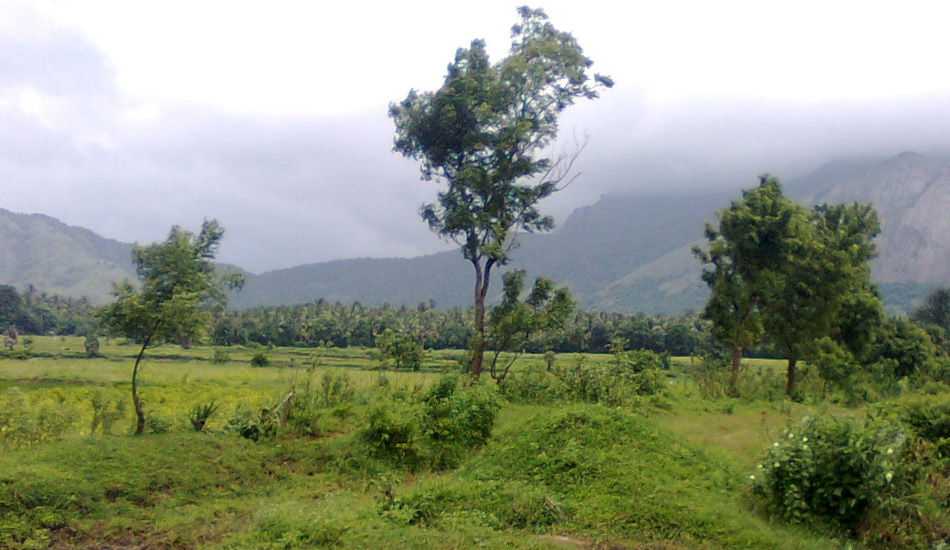
The region is believed to have once been covered by dense forests rich in Pala trees (Alstonia scholaris). The abundance of these trees is associated with the name Palakkad, commonly interpreted as “forest of Pala trees.” Situated at the meeting point of Kerala and Tamil cultural influences, Palakkad has a distinctive cultural and natural landscape.
A significant stretch of the Bharathapuzha, Kerala's second-longest river, flows through the district. The region is also home to the Silent Valley National Park, one of its most significant natural landmarks.
Palakkad experiences a tropical wet and dry climate, with generally moderate temperatures throughout the year. March and April are typically the hottest months. The district receives substantial rainfall, mainly from the Southwest Monsoon.
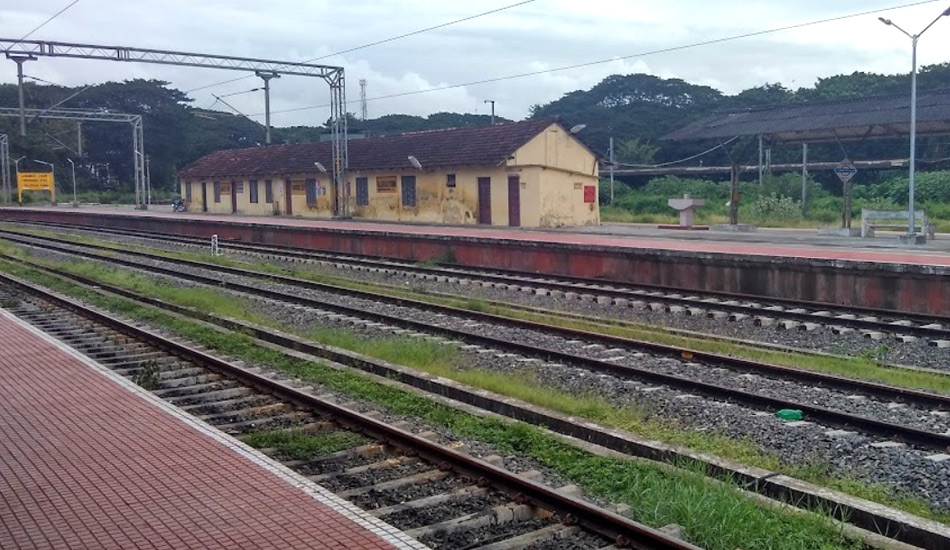
Due to its strategic location, Palakkad has historically been an important economic and trading hub. The railways played a significant role in the development and growth of the city. The Palakkad Railway Division was established on 4 August 1956, making it one of the oldest railway divisions in India.
Palakkad also has a well-connected road network linking it to several major cities. NH 544, connecting Salem and Ernakulam, passes through the city, while NH 966 runs from Ramanattukara in Kozhikode and joins NH 544 at Chandranagar, one of the city's suburbs.
The presence of the Palakkad Gap and its proximity to Coimbatore have further contributed to the region's economic importance. Kanjikode, an industrial area near Palakkad, is one of Kerala's major industrial centres. It is home to several industries, including Indian Telephone Industries (ITI), Instrumentation Limited, Fluid Control Research Institute (FCRI), Saint-Gobain India, and Patspin India. BPL Group was also founded in Palakkad in 1963.
Palakkad has a strong network of educational institutions offering education across various levels. The district is home to IIT Palakkad, the only Indian Institute of Technology in Kerala. Other prominent institutions include Government Victoria College, Government Engineering College Sreekrishnapuram, NSS College of Engineering, Government Medical College Palakkad, and Chembai Memorial Government Music College, along with several other higher-education institutions.
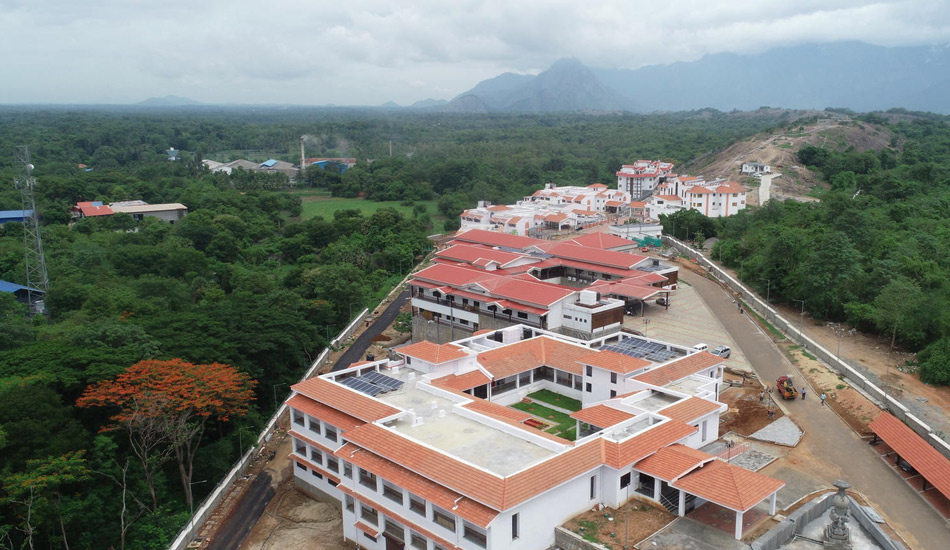
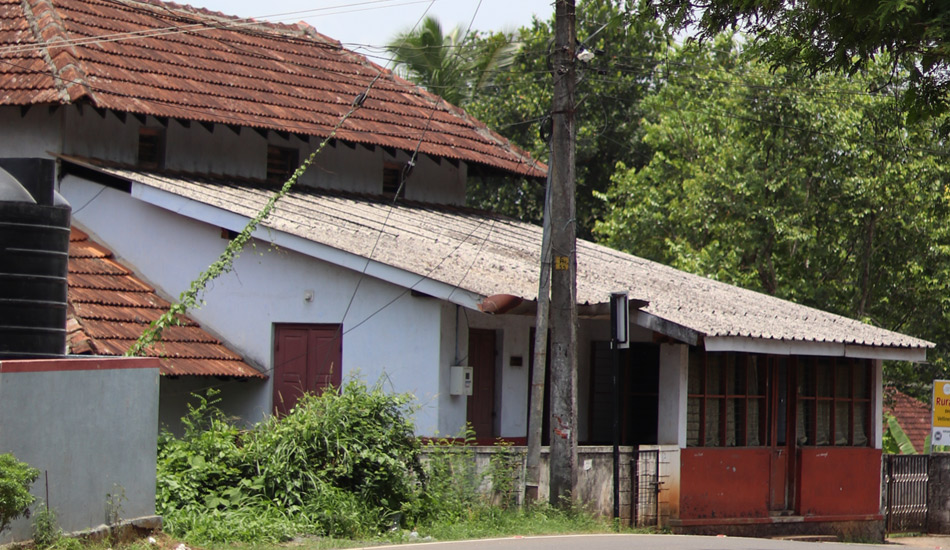
The architecture of the Palakkad region contributes, in its own distinctive way, to what is broadly classified as Dravidian architecture. The traditional houses are mostly single-storey structures, often arranged in connected rows and oriented towards a common road or street. Their construction reflects a strong relationship with locally available materials. Laterite stone, timber such as rosewood and teak, and bamboo have traditionally been used in different elements of construction.
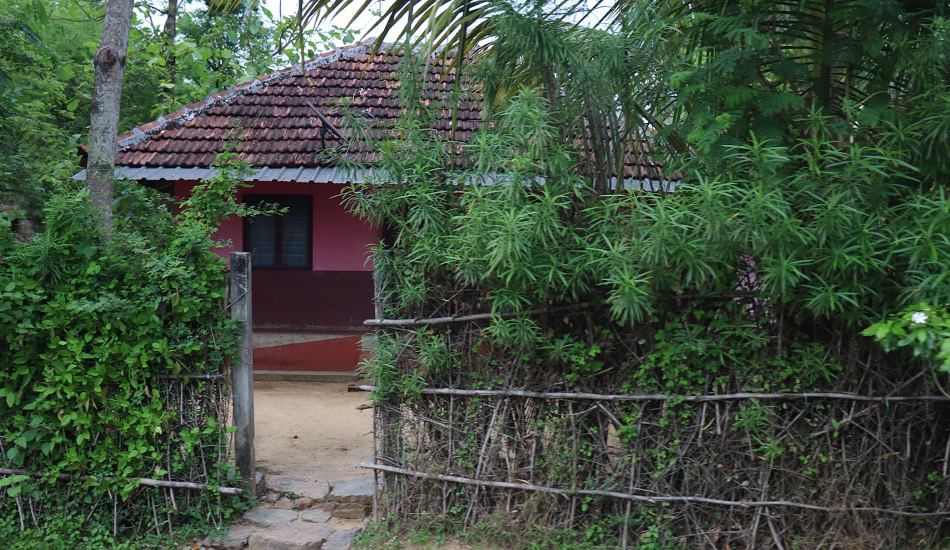
Roof tiles are one of the most characteristic features of the vernacular houses in the region. Mangalore tiles are commonly seen, while in the surrounding villages, traditional locally made tiles can still be found. These traditional tiles are often more economically feasible and, importantly, their construction and repair do not require specialised technical skills. The tiled roof also allows individual tiles to be replaced easily, making the houses relatively simple to maintain and repair.
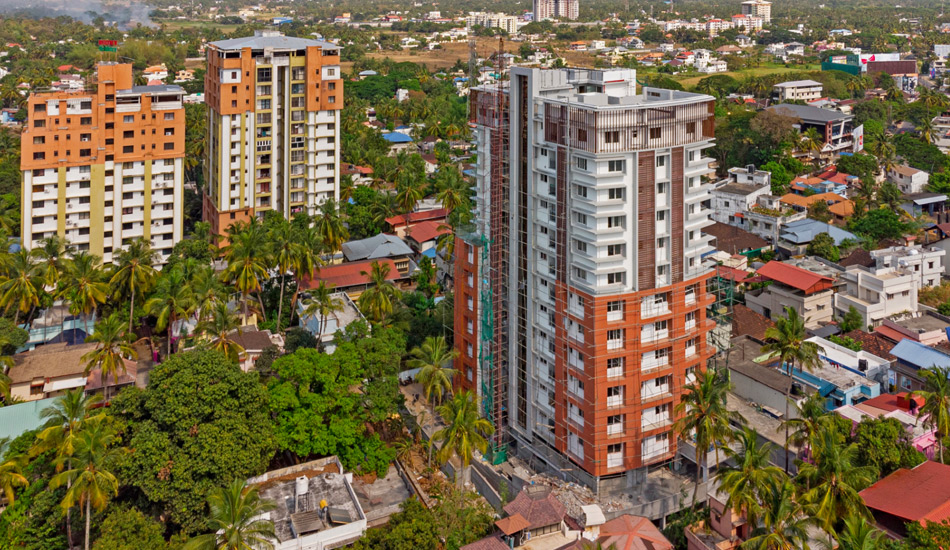
Today, however, when we look at the architecture of Palakkad town, we find a growing prevalence of contemporary urban construction, particularly buildings constructed with RCC (reinforced cement concrete). As a result, it has become increasingly difficult to distinguish the architectural character of Palakkad from that of other small and medium-sized towns in the region.
At the same time, Palakkad's historical position as a centre of economic and cultural exchange has contributed to the evolution of its built environment. Its architecture has been shaped not only by the local climate and available materials but also by interactions with various trading communities and external cultural influences. Historical accounts point to influences associated with Arab, Chinese and European traders, which contributed to the gradual evolution of architectural practices in the region. Thus, the architectural character of Palakkad can be understood as an outcome of the interaction between local climate, materials, vernacular building practices and wider networks of trade and cultural exchange.
Palakkad offers a distinctive cultural landscape shaped by its geographical location and the close interaction of diverse communities. Often regarded as a meeting point between Kerala and Tamil Nadu, the district has evolved through the coexistence of Malayali communities, Tamil Brahmins, and indigenous tribal groups such as the Kurichiyars and Mudugars. This cultural plurality is visible in its food, festivals, rituals, performing arts, and everyday traditions, where influences from both Kerala and Tamil Nadu come together.
The cultural character of Palakkad is sustained by an interconnected ecosystem in which literature, performing arts, ritual practices, craft and community life continue to influence one another. The district has a strong literary tradition, having produced writers, poets and scholars who have contributed significantly to Malayalam literature through poetry, prose and drama. Alongside this literary heritage, traditional performance traditions such as Palakkad Kathakali, Ottamthullal and Koodiyattam continue to form an important part of the region's cultural identity.
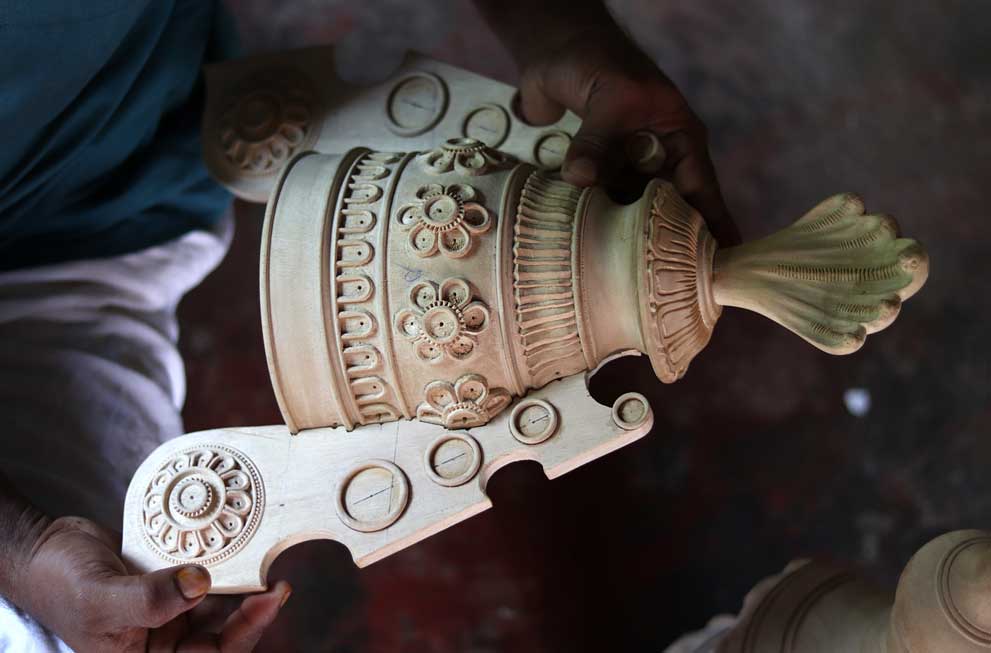
This cultural ecosystem is further supported by a living tradition of craftsmanship. Artisans, musicians, performers and other practitioners contribute to sustaining the material and intangible dimensions of Palakkad's heritage. Their knowledge, skills and practices are not isolated traditions but are embedded within the larger social and cultural life of the region. It is this continued interaction between communities, artistic practices, craftsmanship and cultural institutions that gives Palakkad its distinctive character.
For thousands of years, the Palakkad Gap has served as a natural passage between the western and eastern sides of the peninsula, connecting present-day Kerala with Tamil Nadu. This geographical corridor has not only facilitated the movement of people, goods and ideas but has also shaped Palakkad as a region of considerable cultural diversity. Over generations, communities with distinct languages, occupations, belief systems and cultural practices have settled and interacted here, creating a layered social landscape.
The Malayali population includes traditional communities such as the Nairs, Ezhavas and Ezhuthachans, alongside Namboothiris, the Brahmins of Kerala, and artisan communities such as the Asaris, traditionally associated with carpentry, and Thattans, traditionally associated with goldsmithing. Each community has contributed to the material and cultural life of the region through its own knowledge systems, occupations, rituals and artistic practices.
Palakkad is also home to a significant Tamil Brahmin community, particularly concentrated in traditional Agraharams, or Brahmin street settlements, most notably in Kalpathy. Many of these communities migrated from Tamil Nadu several centuries ago and have retained distinctive elements of Tamil language and culture while becoming deeply rooted in the social life of Palakkad. Their influence is particularly visible in the region's Carnatic music traditions, temple practices, food and linguistic culture, including distinctive Tamil-influenced forms of Malayalam.
The district's cultural landscape extends further through its Muslim and Christian communities, which are integrated into the social and economic fabric of the region. Muslim communities are particularly prominent in areas towards the Malappuram border and have developed strong connections with the Gulf through migration and trade. Christian communities, too, form an established part of Palakkad's diverse social landscape.
This diversity is further enriched by Palakkad's indigenous tribal communities. The district has two major tribal regions, Attappady and Parambikulam, among the seven tribal zones identified in Kerala. Eight major tribal communities inhabit different parts of the district: Eravallans, Irulars, Kadars, Kurumbars, Malamalasars, Mudugars, Malasars and Muthuvans. Several of these communities, including the Irulars, Kurumbars, Mudugars, Malasars and Muthuvans, have traditionally practised shifting cultivation and depended on the collection of Non-Timber Forest Produce (NTFP) for their livelihoods.
Together, these communities form a complex cultural landscape in which migration, trade, agriculture, forest-based livelihoods, ritual practices, music, craftsmanship and everyday life have continuously intersected. The Palakkad Gap, therefore, is more than a geographical passage; it has also been a conduit through which people, knowledge and cultural practices have moved and taken root, shaping the distinctive character of the district.
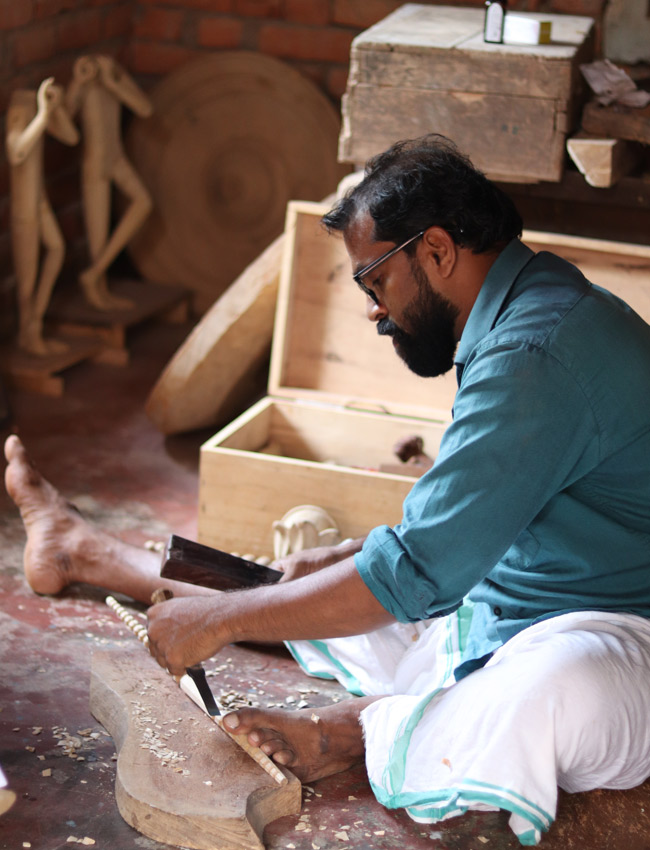
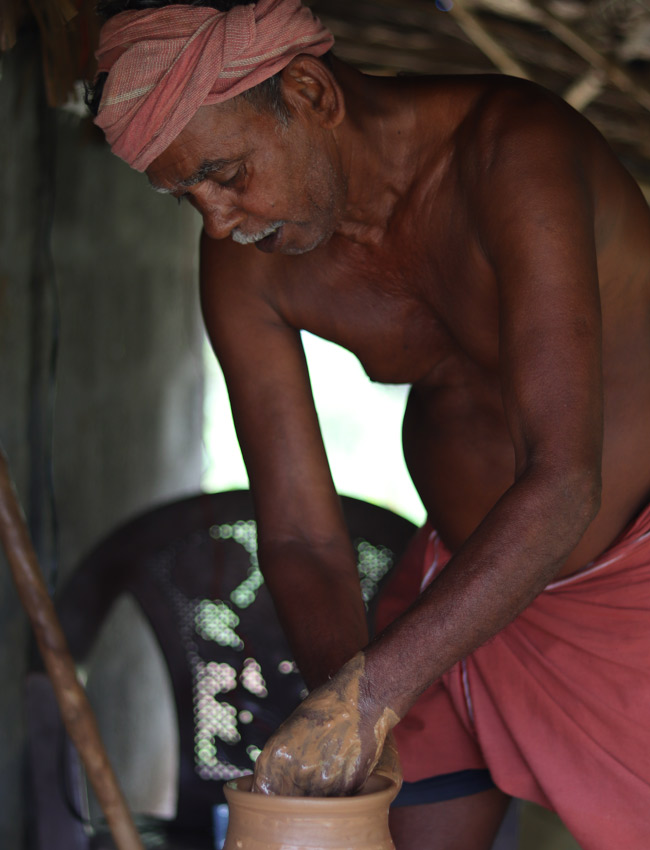
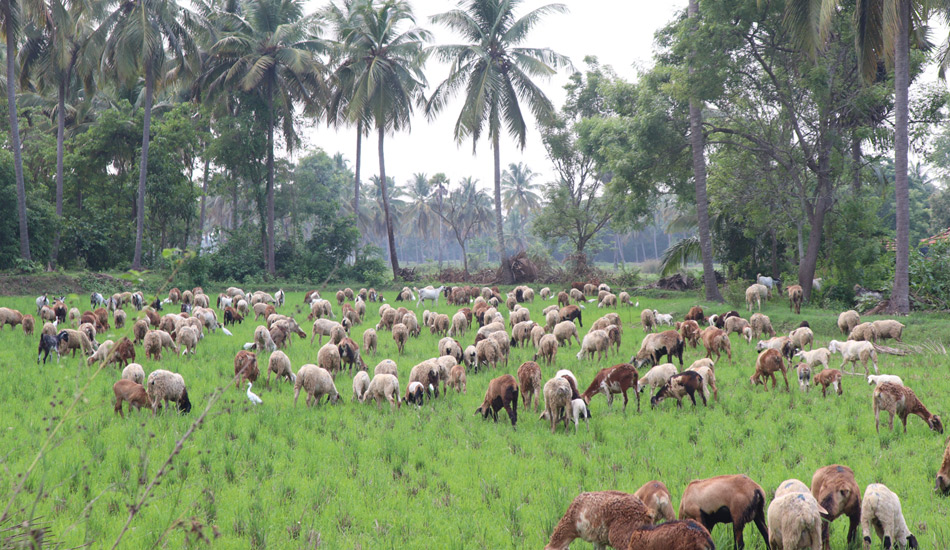
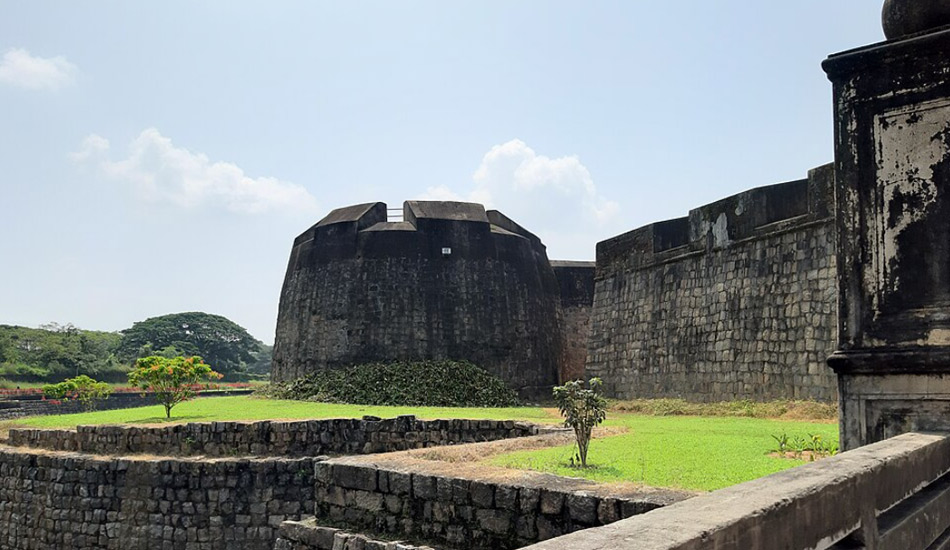
Palakkad is often known as the “Rice Bowl of Kerala” for its extensive paddy fields. The region is also known for the historic Palakkad Fort, the strategically important Palakkad Gap, and its unique cultural character, reflected in a cuisine that blends traditional Kerala food with Tamil Iyer (Pattar) vegetarian traditions.
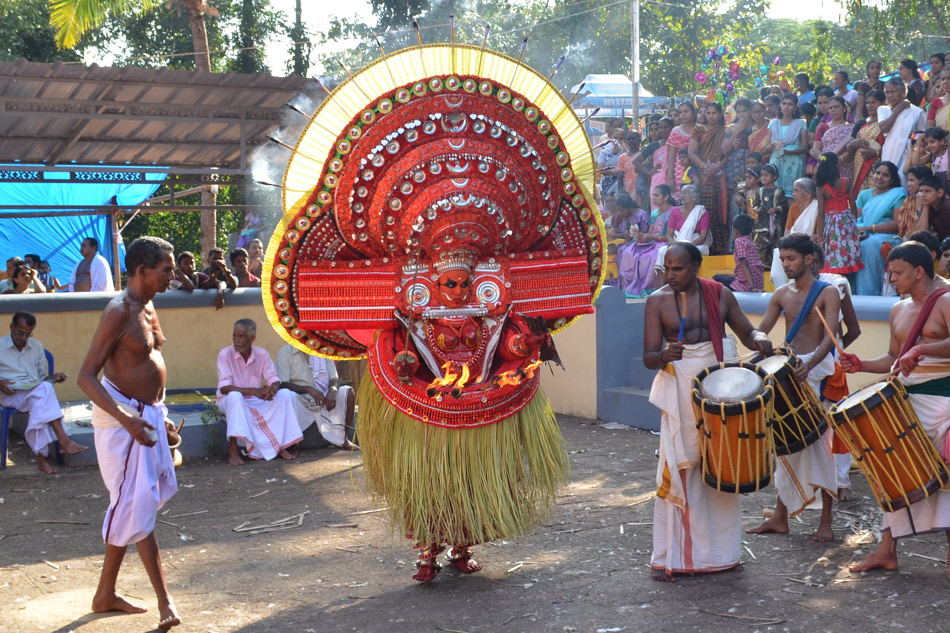
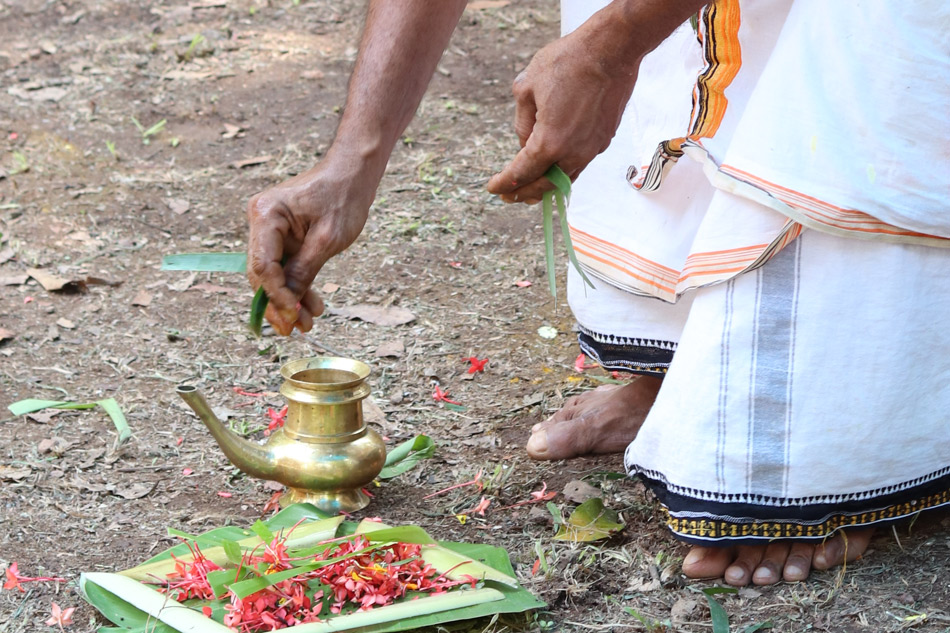
List of craftsmen.
Team Gaatha
P. V., Sruthi. “Temple Musical Instruments of Kerala and Its Makers.” Swar Sindhu: A Pratibha Spandan Journal, vol. 13, no. 2, July–Dec. 2025, pp. 251–255.
Varma, Latha. Musical Instruments of Kerala Temples. Akshara Offset, 2005.
Rajagopalan, L. S. Temple Musical Instruments of Kerala. D. K. Printworld, 2010.
Sambamurthy, P. History of Indian Music. The Indian Music Publishing House, 1960. Journal Articles
“Peruvemba, Palakkad.” Kerala Tourism, Newsletter Issue No. 352, Dec. 2022,https://www.keralatourism.org/kerala-article/2022/peruvemba-palakkad/1250. Accessed 21 July 2026.
Shaji, K. A. “Peruvemba: Struggling to Retain Its Rhythm.” People’s Archive of Rural India, 19 Jan. 2021, https://ruralindiaonline.org/article/peruvemba-struggling-to-retain-its-rhythm. Accessed 21 July 2026.
Karelia, Gopi. “Musicians Across India Rely On This Kerala Family’s 200-YO Legacy of Mridangams.” The Better India, 26 Apr. 2021, https://thebetterindia.com/253401/kerala-peruvemba-mridangam-carnatic-music-instrument-kasumani-indian-musicians-family- legacy-history-tradition-culture-india-gop94/. Accessed 21 July 2026.
“Palakkad’s Peruvemba Village: A 200-Year Legacy in Percussion.” Onmanorama, 12 Sept. 2018, https://www.onmanorama.com/lifestyle/news/2018/09/12/palakkad-peruvemba-village- percussion-instruments-200-years.html. Accessed 21 July 2026.
“Maddalam of Palakkad.” Office of the Development Commissioner (Handicrafts), Ministry of Textiles, Government of India, https://handicrafts.nic.in/crafts/All_Crafts/Craft_Categories/Miscellaneous/Music_Instrument
s/Maddalam_of_Palakkad/MaddalamofPalakkadWebPage.html. Accessed 21 July 2026.
“Palakkad Maddalam.” Geographical Indications, Industries Department, Government of Kerala, https://www.gikerala.in/products/maddalam-of-palakkad. Accessed 21 July 2026.
“A ‘Musical Village’ Losing Its Rhythm.” The New Indian Express, 20 Nov. 2012,
https://www.newindianexpress.com/states/kerala/2012/Nov/20/a-musical-village-losing-its-rhythm-426356.html. Accessed 21 July 2026.
