


Madhubani/Mithila Pa...
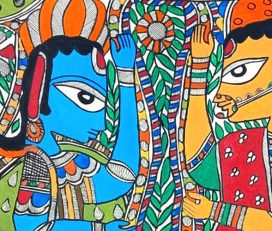
Mithila painting, is a vibrant and deeply symbolic folk art tradition originating from the Mithila region of Bihar, India, and adjoining parts of Nepal.
Madhubani, Bihar, India...
 Bhusra, Bihar, India...
 Muzaffarpur, Bihar, India...
 Patna, Bihar, India...
Mithila painting, is a vibrant and deeply symbolic folk art tradition originating from the Mithila region of Bihar, India, and adjoining parts of Nepal.
Madhubani, Bihar, India...
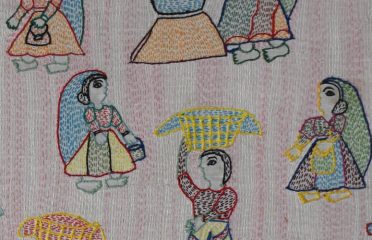
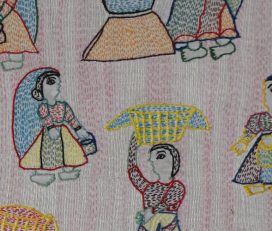
Sujani is a distinctive embroidery tradition of Bihar, particularly practised in Muzaffarpur district and surrounding villages.
Bhusra, Bihar, India...

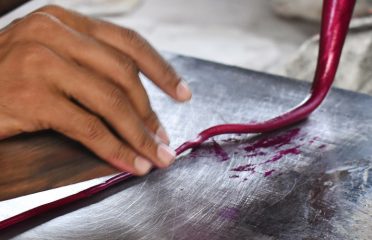
Arani silk, also known as Arni silk, is a celebrated handloom tradition of Tamil Nadu, produced primarily in Arani, Tiruvannamalai.
Arani, Tamil Nadu, India...
Let us talk… if you feel the same love for handmade, and would like to support us by sharing your research or by contributing financially to our documentation efforts.
Reach us at [email protected]

Historically, Madhubani painting was an integral part of the daily lives, rituals, and domestic spaces of women in the Mithila region. Rather than being produced primarily as an art form for commercial display, it functioned as a ritual and decorative practice, closely associated with important occasions and rites of passage. Women traditionally painted on the freshly plastered mud walls and floors of their homes, a practice locally associated with Bhitti-shobha or Bhittichitra (wall paintings) and Aripan (floor paintings).
According to artisan Mithilesh Jha, traditional mud walls were prepared by collecting and moistening mud, followed by the application of a layer of lep, a mixture traditionally incorporating cow dung. A layer of geru (red ochre/red earth) was then applied to the surface. These murals were created to mark significant life events, sanctify domestic spaces, and invoke auspiciousness for the household. Aripan floor designs are closely associated with the life-cycle rituals of the Mithila community, extending from Chathiyari, observed on the sixth day after childbirth, through various stages of life and associated ceremonies. In the nuptial chamber, known as the Kohbar ghar, specific paintings are created as auspicious symbols associated with marriage, fertility, prosperity, and continuity of lineage.
Today, the use of Madhubani painting has expanded far beyond the mud walls of rural Bihar. The movement towards portable surfaces such as handmade paper and canvas gained momentum during the twentieth century, particularly from the 1960s onwards, creating new avenues for artisans to earn an income from their work. Artisans now create paintings across a wide range of surfaces, including paper, textiles, canvas, and walls. The art form has also entered contemporary fashion, lifestyle, and home décor, appearing on sarees, salwar suits, dupattas, stoles, T-shirts, tableware, stationery, and other everyday objects.
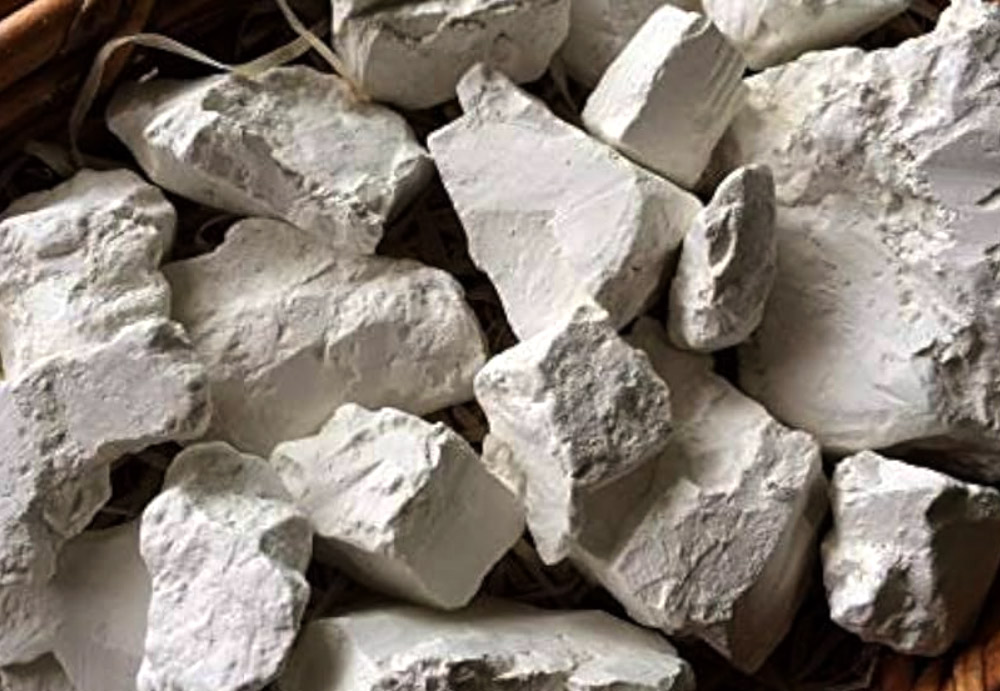
Today, another distinctive art form practised in Bihar is Madhubani painting on paper-mâché objects, an extension of the region’s traditional mask-making techniques used in dance performances. The process involves a mixture of pulped paper, Multani mitti, methi powder, and a wheat-flour-based adhesive. Paper is soaked in water for a week and then broken down into a pulp, while the Multani mitti is soaked separately for 24 hours. These materials are combined with the adhesive and methi powder to form objects in different shapes and sizes. Each piece is shaped by hand, dried, and painted to achieve a smooth finish. A distinctive feature of this practice is the use of three-dimensional paper-mâché forms decorated with Madhubani motifs, bringing together sculptural forms and the region’s characteristic painted patterns. These handcrafted pieces are popular as table and wall décor, offering a contemporary expression of Bihar’s artistic traditions.
Despite its wider commercial and global circulation, Madhubani painting continues to retain its ritual significance within Mithila communities. Families who have migrated to metropolitan cities may continue to incorporate Madhubani paintings into wedding and other ceremonial spaces, using works on paper or cloth to decorate venues while maintaining a connection with Mithila’s visual traditions and cultural practices.
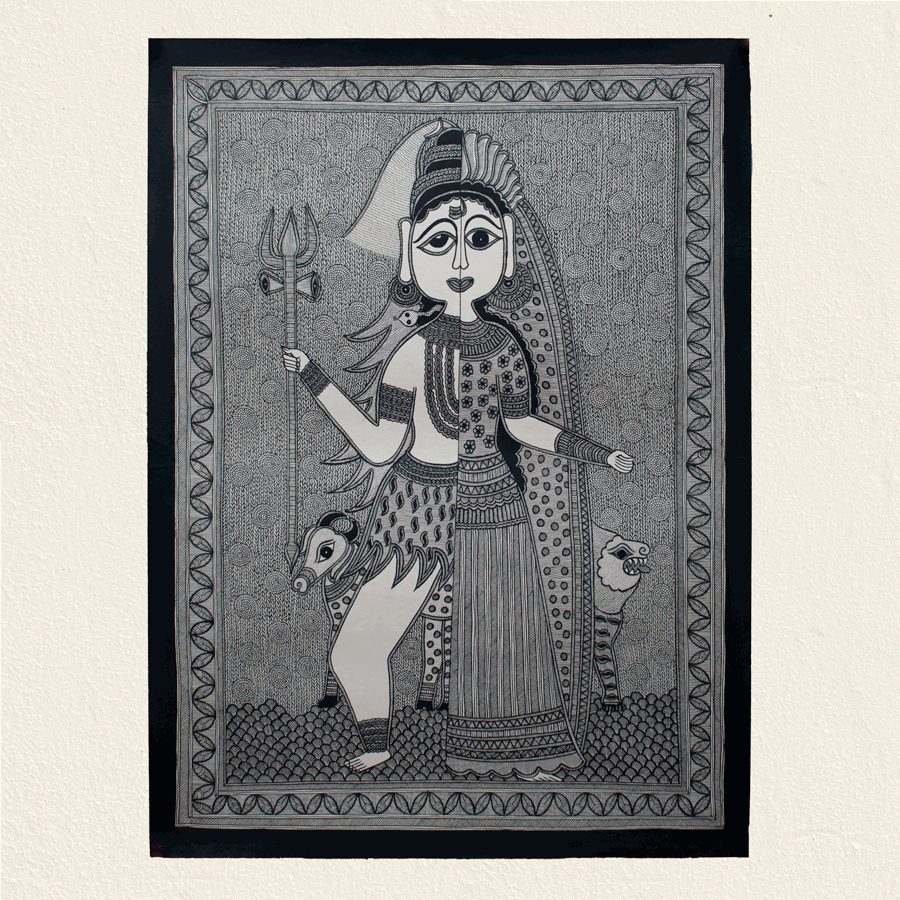
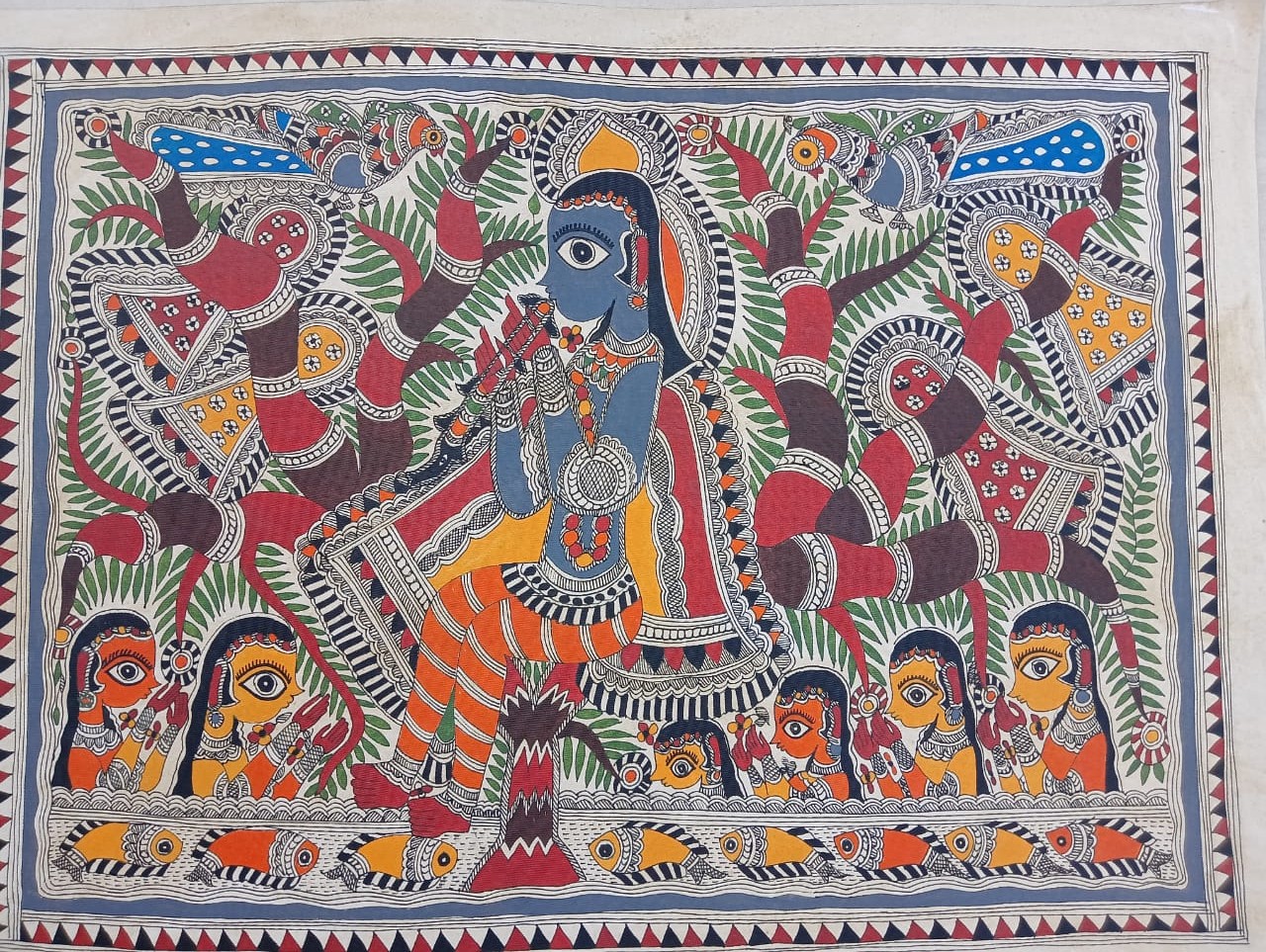
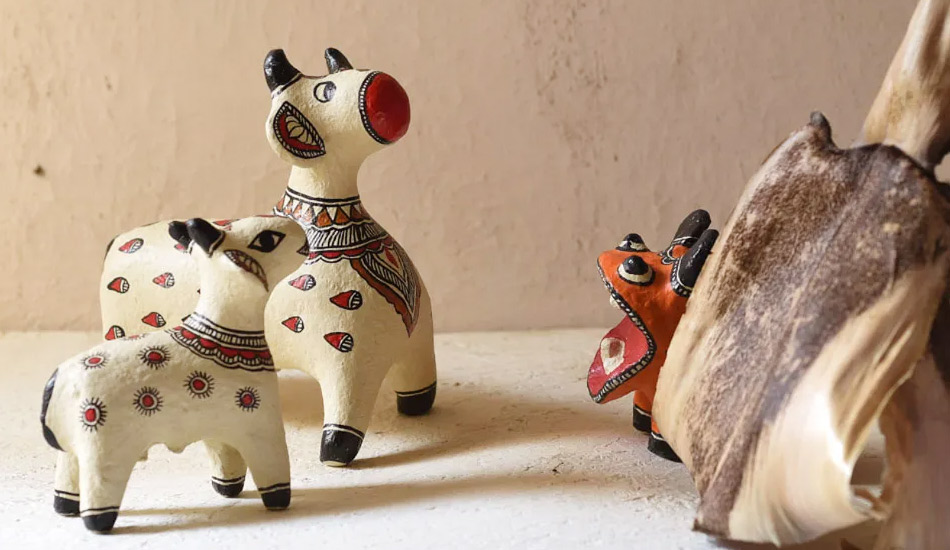
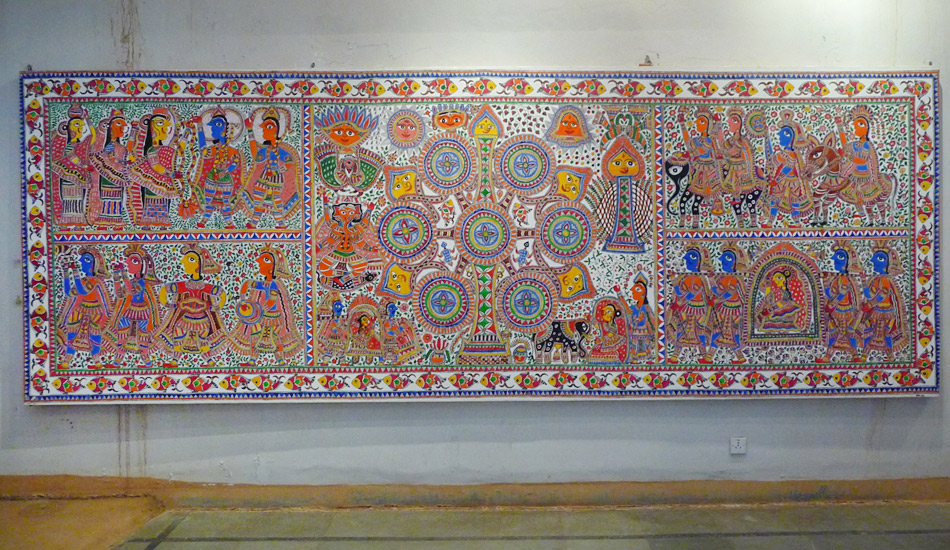
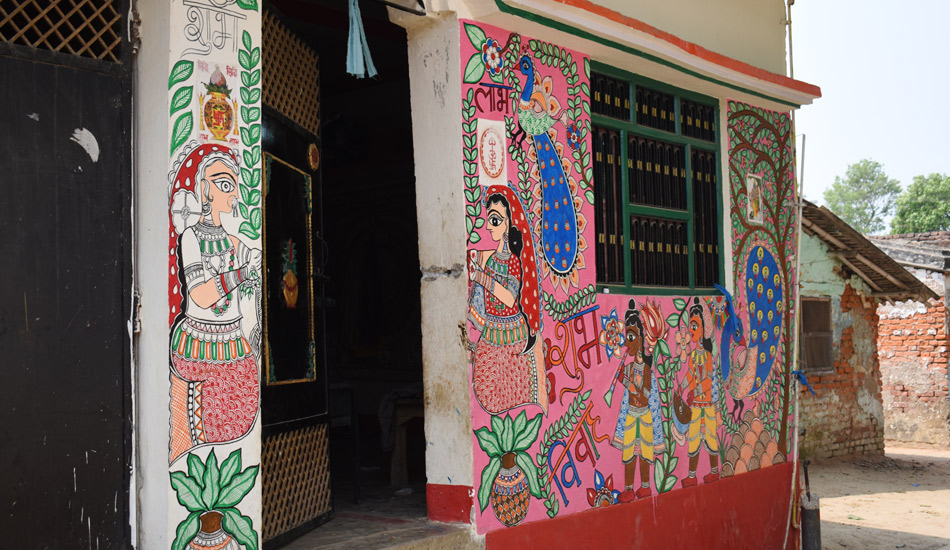
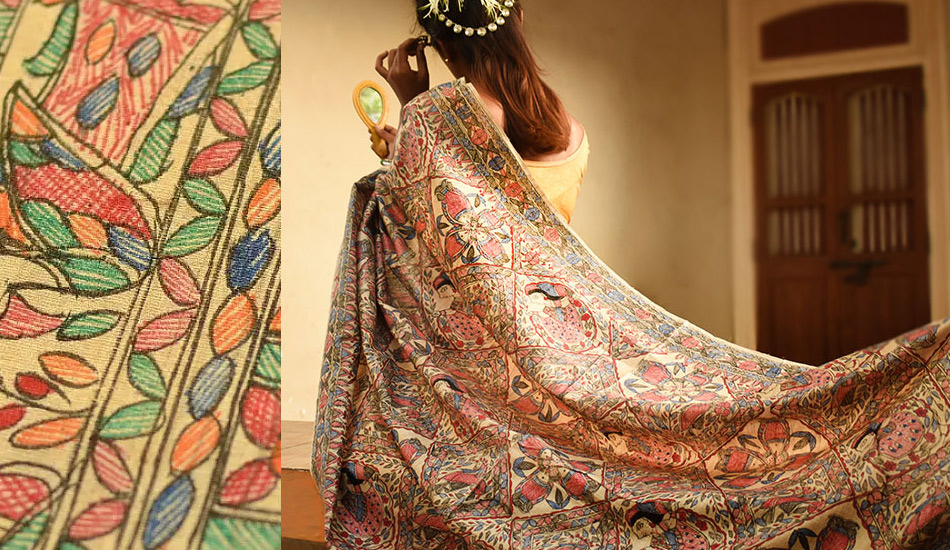
Humans have long expressed their secular and religious beliefs, feelings, and emotions through art. Folk art is closely associated with everyday life and reflects the traditions, customs, and cultural identities of specific communities, societies, castes, and religions. Often practised as part of rituals and social customs, it is sustained collectively within a community and passed down through generations. In the Mithila region, the local geographical and cultural conditions contributed to the development of a distinctive artistic tradition that reflected the people’s beliefs, perceptions, and conventional ways of life. Madhubani painting emerged as a unique form of expression, portraying everyday experiences, religious beliefs, and social practices through characteristic styles and techniques. The study of this folk art reveals a deep relationship between art and culture that extends beyond aesthetic considerations. Despite various economic constraints, artists continued to create wall paintings during religious ceremonies and social occasions, preserving the tradition through changing times. From a socio-economic and socio-cultural perspective, it is particularly significant that Madhubani painting developed and was sustained largely under the influence and stewardship of women artists of the Mithila region, who played a central role in transmitting its techniques and traditions across generations.
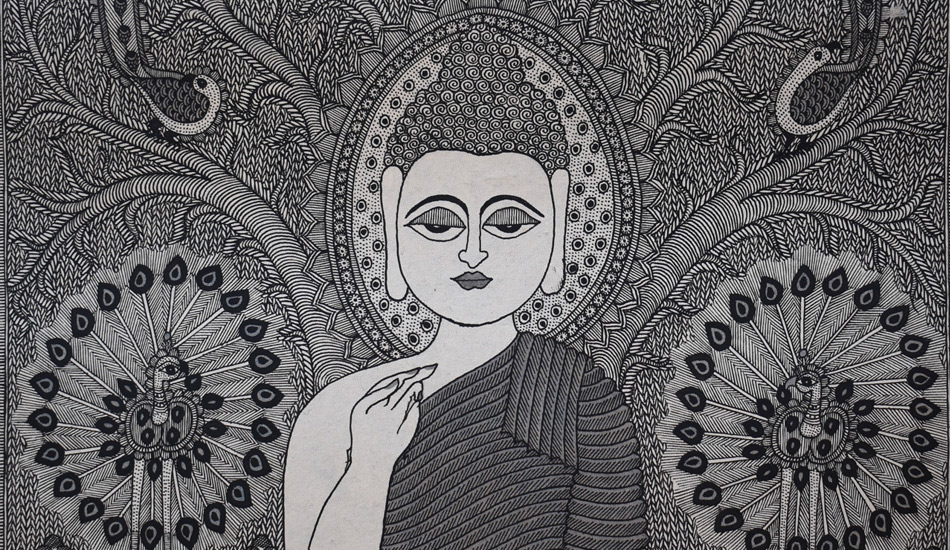
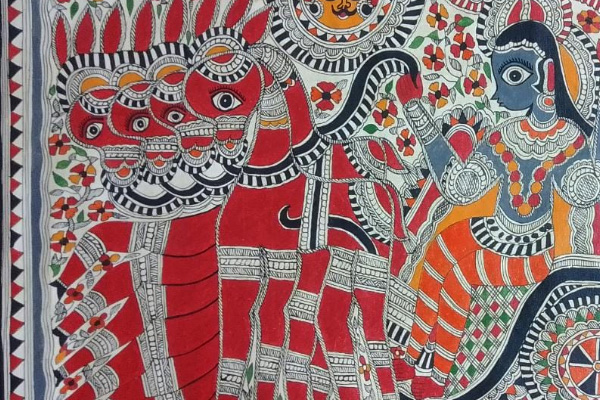
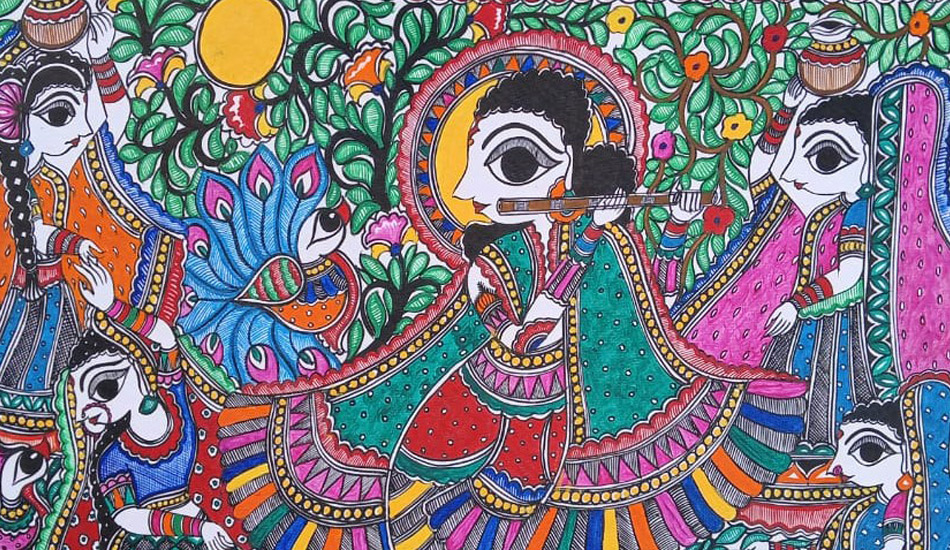
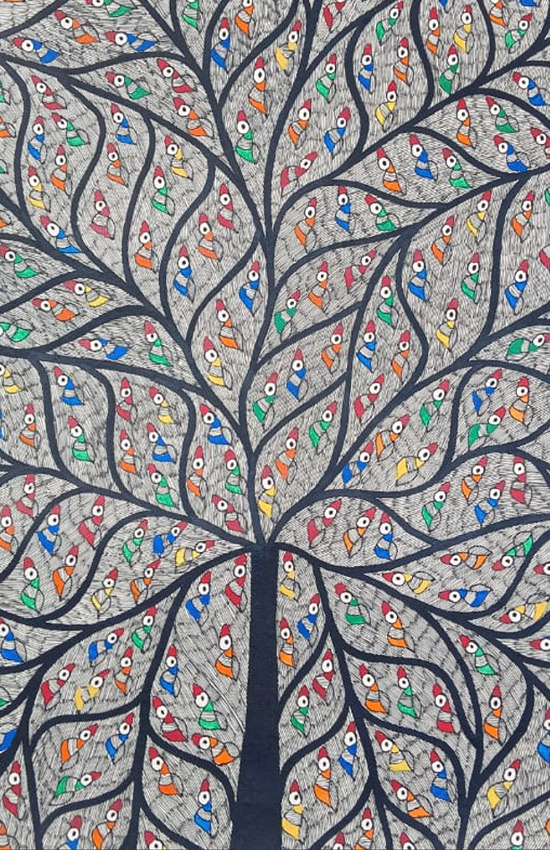
An interesting aspect of Madhubani painting is that, although it is often considered a single art form today, it has evolved over time into distinct styles associated with different caste communities. In their paper, Suraj Prasad and Anjan Sen observe that “The villages of the different parts of the region are dominated by different communities or castes, and thus their cultural practices have been reflected on their artwork.” Traditionally, Madhubani painting was practised by women from the Brahmin community. Sita Devi, a Brahmin woman, was a pioneer in developing the Bharni style, characterised by the use of rich colours on paper and canvas to depict stories from traditional mythology, including the Ramayana, the Mahabharata, and other narratives from ancient Hindu literature. Later, women from the Kayastha community also became involved in the tradition. Their distinctive style, known as Kachni painting, is characterised by monochrome or limited-colour compositions in which forms are filled with intricate lines, patterns, and fine hatching rather than solid areas of colour. Ganga Devi, from Raseedpur village in Madhubani district, was a prominent pioneer of this style. By the mid-1960s, women from Dalit communities also began practising the art, challenging the dominance of upper-caste painters and contributing to the emergence of another genre within Madhubani painting, referred to in the source as the Harijan style. This style is primarily associated with two forms: Gobar, which incorporates cow-dung-based techniques, and Godhana, inspired by traditional tattoo patterns. Together, these community-specific styles demonstrate how Madhubani painting has developed through diverse social and cultural influences, with each contributing distinct techniques, motifs, and forms of artistic expression.
The distinct regional identity of Madhubani painting was formally recognised when it received the Geographical Indication (GI) tag in 2003 (with further registrations and discussions noted in 2007). The GI tag officially ties the authenticity of the art to the Mithila region, meant to protect the heritage and safeguard the artisans from cheap imitations. However, the implementation of this tag remains deeply flawed. The applicant for the tag was the Director of Industries, Government of Bihar, rather than a community artists’ association. Currently, only 51 authorised users are listed in the GI registry, despite hundreds of households practising the craft in villages like Jitwarpur alone.
The cultural significance of Madhubani painting extends beyond its visual aesthetics, functioning historically as a mechanism for social change and female empowerment. In the patriarchal society of rural Bihar, women were predominantly confined to their domestic spaces, lacked access to formal education, and observed the traditional practice of remaining behind a veil (ghunghat). However, the practice of this craft offered them a vital outlet for economic, spiritual, and artistic agency. Despite these physical and social confines, the women relied on a profound inner imagination to conceptualise detailed divine forms, including Lord Vishnu, Goddess Kali, and Goddess Durga. Working without external visual references, they developed the distinctive technique of painting side-profile faces, demonstrating an innate and highly advanced artistic capability.
In 2012, Madhubani art played a direct role in environmental protection. When frequent deforestation threatened the state, the NGO Gram Vikas Parishad led an initiative to paint the trunks of over 100 trees with images of Hindu deities like Radha-Krishna and Rama-Sita. Because of the religious paintings, people stopped cutting the trees down.
The art form has also been used for public welfare, such as during the Swachh Bharat mission, where hundreds of local artists volunteered their labor (shramdaan) to decorate a Bihar railway station with traditional motifs.
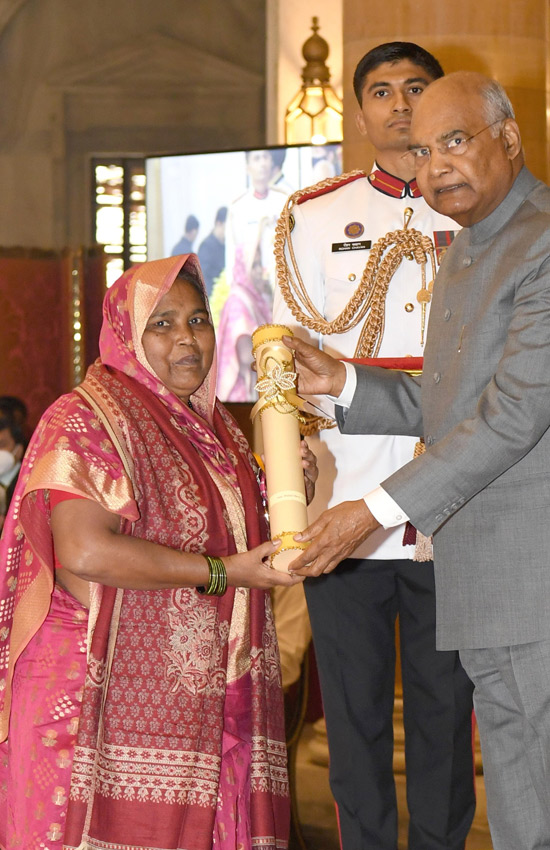
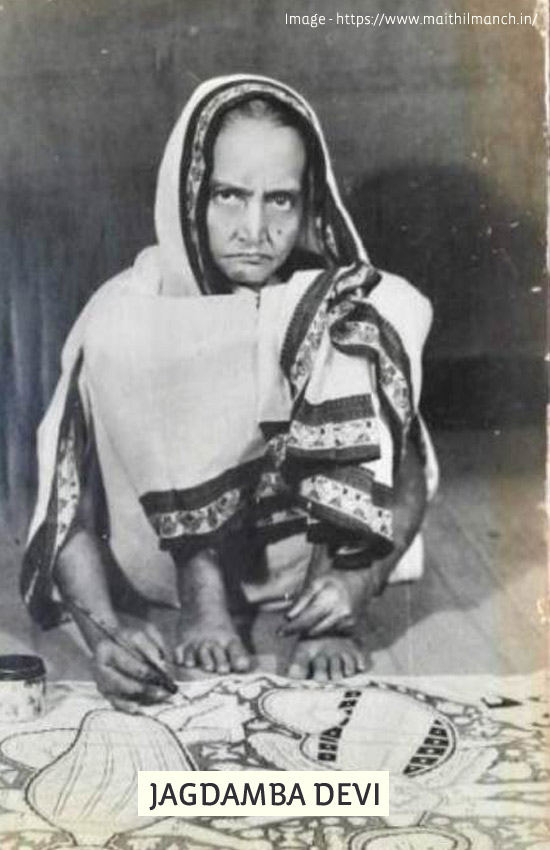
The brilliance of these women has been heavily recognized by the Indian government. Over the last 50 years, numerous Madhubani artists have received the prestigious Padma Shri award. Notable female awardees include Jagdamba Devi (1975), Sita Devi (1981), Ganga Devi (1984), Mahasundari Devi (2011), Baua Devi (2017), Godawari Dutta (2019), and Dulari Devi (2020).
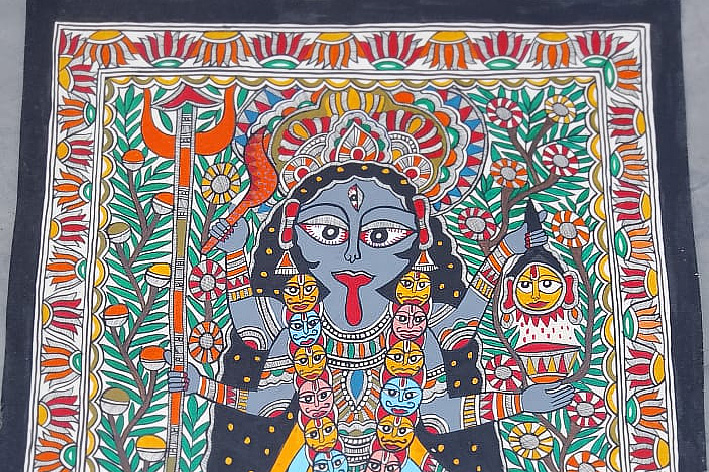
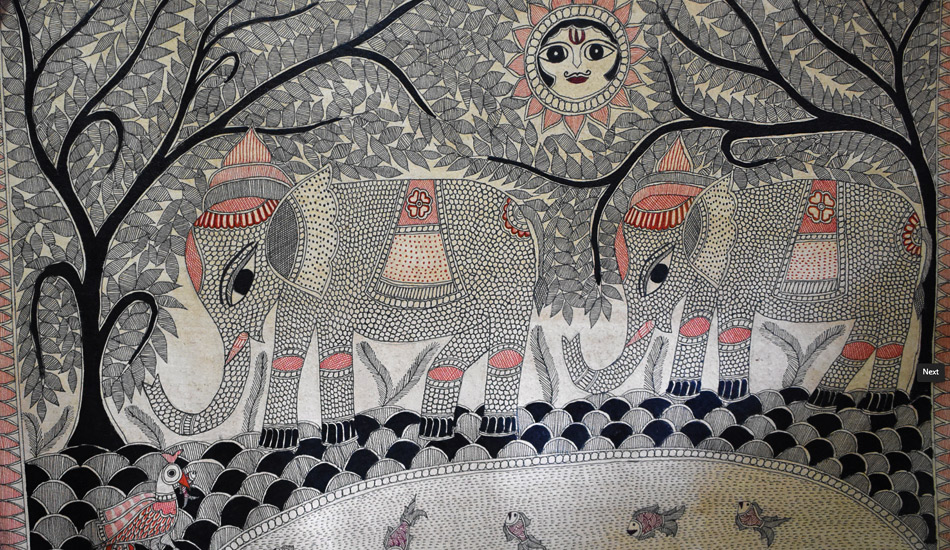

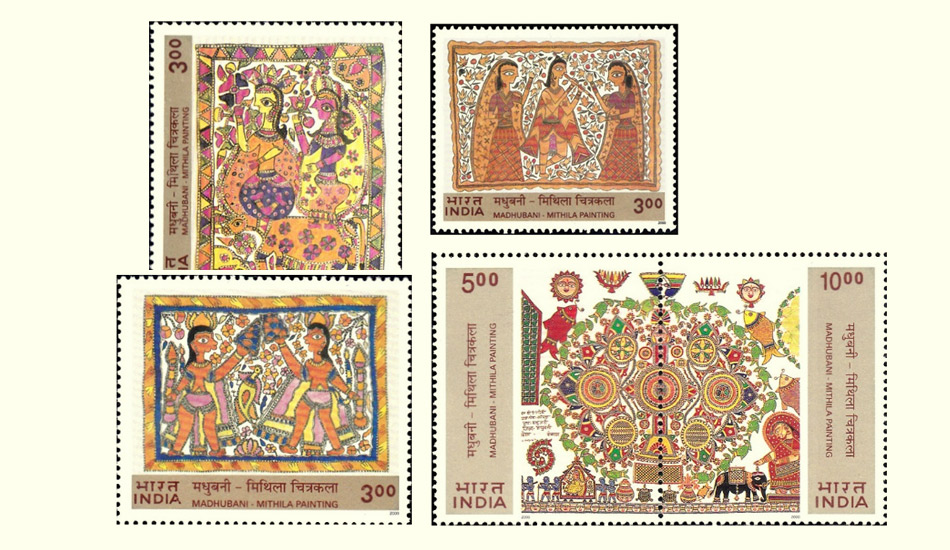
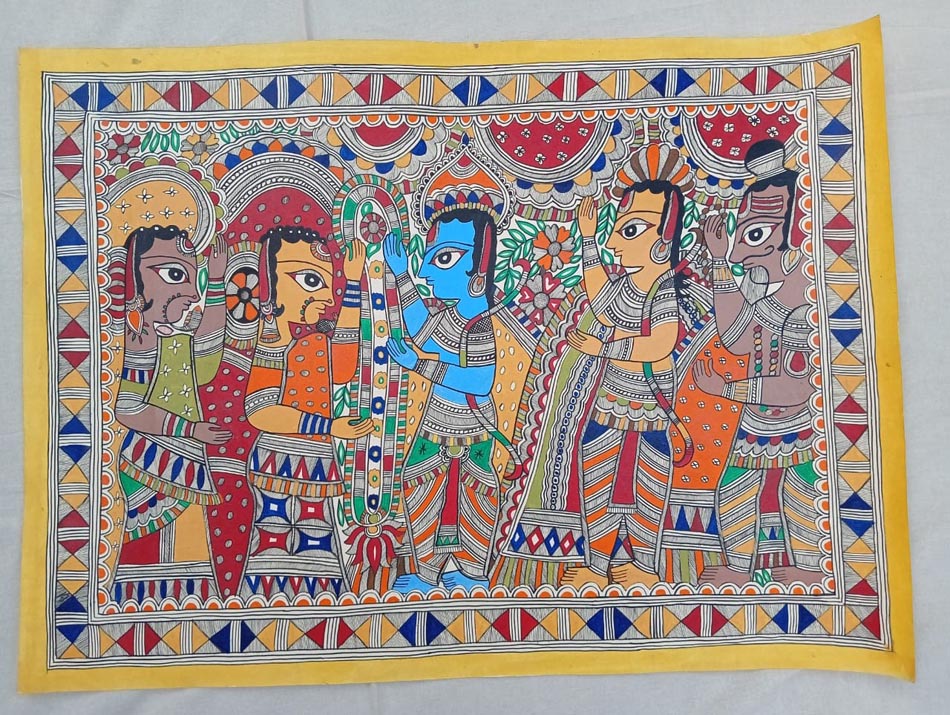
The most prominent legend dates back to the Ramayana period. It is said that King Janaka, the ruler of Mithila and father of Sita, commissioned the most skilled artists in his kingdom to decorate the walls of the city and the palace with vibrant paintings to celebrate the wedding of Sita to Lord Rama. Mithilesh also notes this legend, emphasizing that these initial celebratory artworks were entirely drawn as bhittichitra (wall paintings).
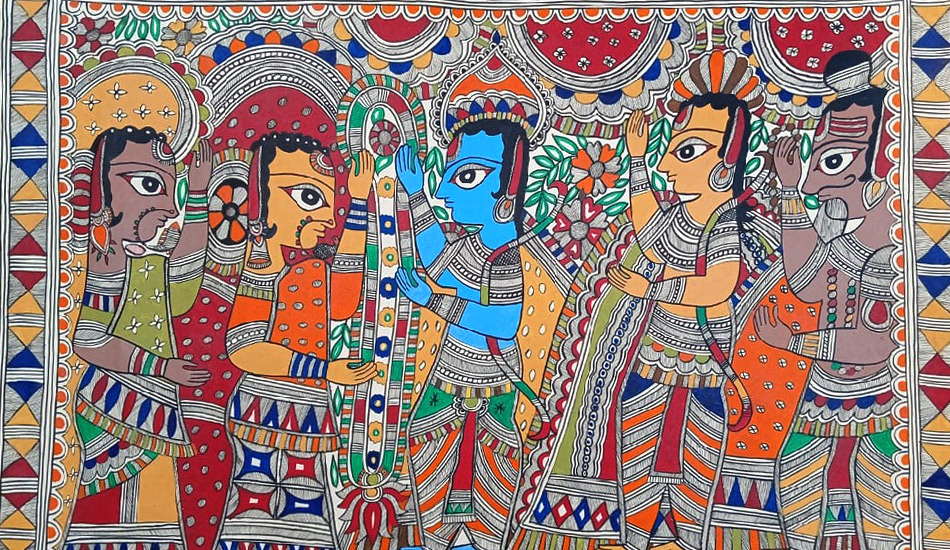
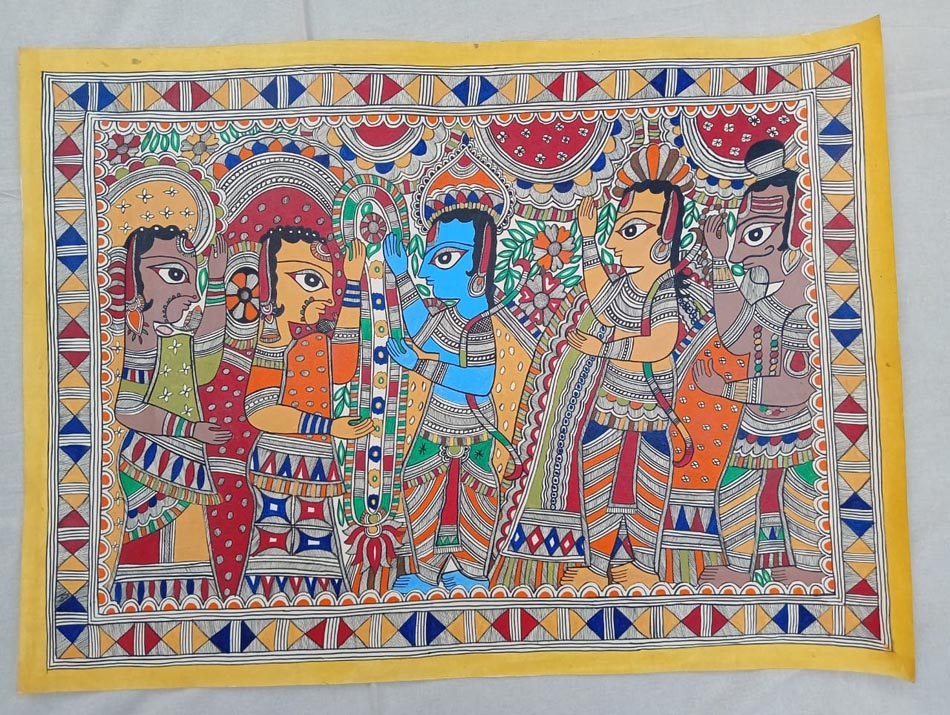
Rama and Sita Wedding – According to the Ramayana, Sage Vishvamitra received an invitation from King Janaka of Mithila to attend the Sita Svayamvara Sabha, where the princess Sita was to choose her husband. Accompanied by his disciples, Rama and Lakshmana, Vishvamitra travelled to Mithila, and after several days, they arrived at the kingdom where preparations for the grand ceremony were underway.
Yet, before the gathering at the royal court, it is said that Rama and Sita first saw one another in the palace garden. Amidst the flowering trees and the quiet beauty of the garden, their eyes met, marking the beginning of a love that would become one of the most celebrated stories of Indian tradition. In the Ramcharitmanas, Tulsidas beautifully captures this moment of unspoken admiration and shyness:
“देखि सीय सोभा सुखु पावा। हृदयँ सराहत बचनु न आवा॥”
Beholding Sita’s beauty, Rama felt immense joy and praised her in his heart, though words failed him.
Sita, too, was captivated by Rama. As Tulsidas describes:
“लोचन मग रामहि उर आनी। दीन्हें पलक झँपि बर बानी॥”
Drawing Rama into her heart through the path of her eyes, Sita closed her eyelids in shyness and reverence.
When the day of the Svayamvara arrived, Rama entered the royal assembly not as a suitor seeking a bride, but as a guest accompanying his guru, Vishvamitra. The challenge set by King Janaka was to lift and string the mighty bow of Lord Shiva. Many powerful kings had attempted and failed. At Vishvamitra’s instruction, Rama stepped forward and lifted the bow with ease. As he attempted to string it, the mighty bow broke with a resounding sound, fulfilling King Janaka’s condition and establishing Rama as the destined husband of Sita.
The breaking of Shiva’s bow led to the wedding celebrations, which culminated in the sacred marriage of Rama and Sita on Vivah Panchami, the fifth day of the bright fortnight of the month of Margashirsha. The ceremony was conducted according to Vedic traditions, with Sage Vasishtha, Rama’s family priest, performing the sacred rituals and invoking divine blessings upon the couple. King Janaka, delighted by the union, gave his daughter Sita in marriage to Rama, celebrating the coming together of two noble families.
The wedding of Rama and Sita was more than a royal celebration. Rama is revered as an incarnation of Vishnu, the embodiment of dharma, while Sita is worshipped as an incarnation of Lakshmi, symbolising abundance, grace, and devotion. Their marriage represents the union of complementary divine principles and an enduring ideal of love, duty, and commitment. Thus, Vivah Panchami commemorates not merely a sacred wedding from the epic tradition, but a divine union that continues to hold profound spiritual and cultural significance.
Another enduring myth involves Urmila, the wife of Rama’s brother, Lakshmana. When Lakshmana accompanied Rama and Sita into their 14-year forest exile, Urmila remained behind. Legend says she painted an image of her husband on her wall and worshipped it daily as a mark of her devotion.
Madhubani art also heavily features Tantric themes, which are tied to local folklore like the story of Manasa Debi (the mind-born daughter of Lord Shiva and goddess of snakes). According to the myth, a wealthy merchant named Chandu Saudagar refused to worship her. In retaliation, Manasa killed his six sons. Later, she killed his seventh son, Lakhinder, on his wedding night with his bride, Bihula. The devoted Bihula floated on a raft down the river Ganges with her husband’s corpse, eventually reaching the heavens. Through her devotion and a mesmerizing dance, she pleased the gods. Manasa Debi agreed to resurrect Lakhinder and the other sons, provided Chandu Saudagar finally worshipped her. This myth is actively narrated during local festivals and influences the Tantric motifs painted by the women.
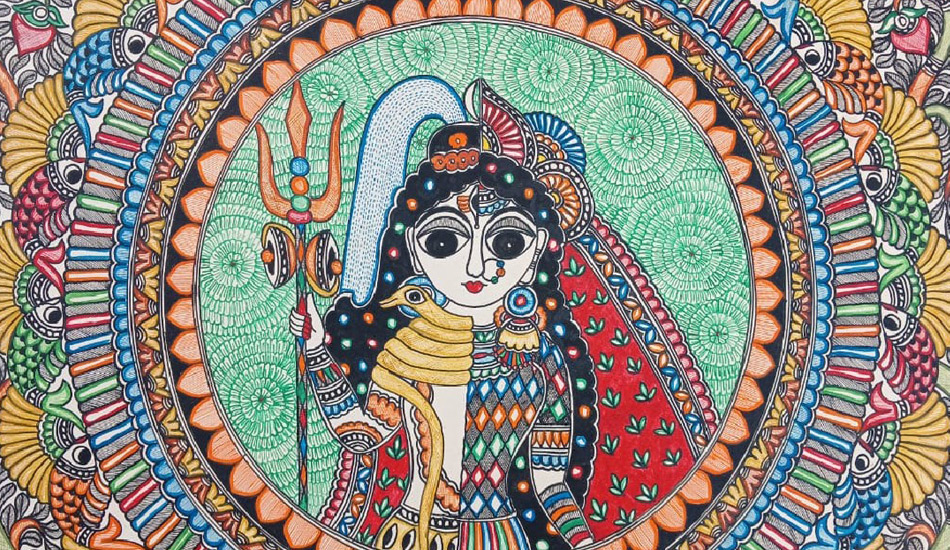
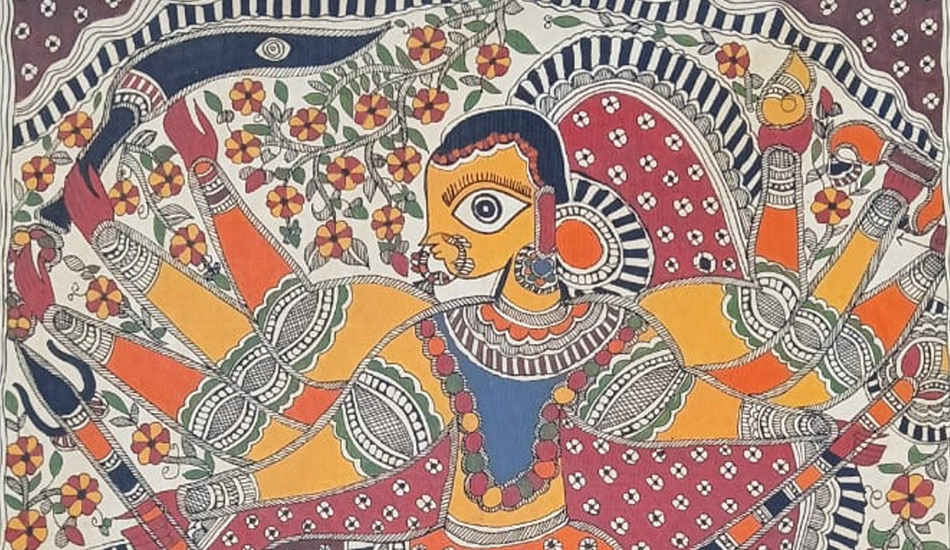
The historical evolution of Madhubani painting can be traced across three distinct time periods: the pre-colonial era deeply rooted in mythology, the colonial period of external discovery, and the post-colonial era of commercialisation and global recognition.
The origins of Madhubani art carry a thousand-year-old cultural memory, tracing back to the ancient kingdom of Mithila, located in present-day Janakpur, Nepal, and the Madhubani district of Bihar. According to local legends, the art form began in the Ramayana period, when King Janaka commissioned artists to decorate the city walls for the wedding of his daughter Sita to Lord Rama. It is believed that the Madhuban Forest is where Rama and Sita first laid eyes on one another. The name Madhubani is derived from Madhu-Van. Simultaneously, another narrative suggests that Urmila, the wife of Lakshmana, painted a mural of her husband and worshipped it daily during his 14-year exile. While factual accuracy remains debated, these narratives confirm the profound antiquity of the craft. For centuries, the art survived the innumerable vicissitudes of history because of the rigid social organisation of the Mithila village communities. The skills were strictly passed down from mother to daughter. To ensure the continuity of the tradition, young women created paper patterns of the designs to take with them to their new husbands’ homes after marriage, where they would add new stylistic elements. Artisan Mithilesh Jha explains that the art was originally called bhittichitra, as bhitti translates to “wall” in the local Maithili dialect.
Historically, Madhubani painting was an exclusive ‘Kulin’ art, developed and refined primarily by the privileged castes. Artisan Bibhutinath Jha notes that the Brahmins were the first to make these paintings, followed by the Kayasthas, and much later by the Harijan communities. Brahmin women practiced the highly vibrant Bharni style, heavily focusing on religious themes and gods. Kayastha women developed the intricate, monochrome, or duo-tone line work known as the Kachni style. Women from the marginalised Harijan communities, such as the Dusadhs and Chamars, traditionally focused on utilitarian crafts or agricultural labour. However, influenced by the upper castes, they entered the painting sphere in the 1980s, pioneering the Godna, or tattoo, style. Mithilesh notes that master artist Sita Devi actively advised the Harijan women to draw based on their own distinct customs and deities, like Raja Sailesh or Buddha, rather than painting in Brahmin styles, which allowed them to carve out their own unique artistic identity. The evolution of the craft was highly concentrated in a few specific villages, most notably Jitwarpur, Ranti, and Rasidpur. Jitwarpur remains a primary hub, housing Mahapatra Brahmanas, Karna Kayasthas, and Harijan communities. Currently 300 to 400 artisans are actively working in Jitwarpur alone. Ranti, known as Ranti Deorhi, was the zamindari of Shrotriya Brahmanas and is predominantly populated by Karna Kayasthas. Other notable historical centers include Rajnagar, which houses the white marble Kali Mandir and the earliest extant wall paintings of Madhubani.
The art form remained a private, domestic ritual until the arrival of the British colonial administration. On January 15, 1934, a disastrous 8.4 magnitude earthquake ravaged the Madhubani subdivision. While conducting relief operations, British colonial officer and Sub-Divisional Officer William G. Archer discovered brilliant wall murals inside the damaged homes of high-caste Brahmin and Kayastha families. Archer began a serious study of the art in 1937 while posted as the Collector of Purnea, and continued his research in 1940 as the Provincial Census Superintendent. In 1949, he published an article titled “Maithil Painting” in Marg magazine. Archer drew comparisons between Madhubani and Western masters like Picasso and Chagall. However, researchers note that his colonial perspective over-fetishised the “orient,” highlighting tantrism and erotic love poetry without actually interacting directly with the women who painted the murals. His wife, Mildred Archer, later published Indian Popular Painting in 1977 based on these interpretations. Despite these records, artisan Mithilesh firmly contests the colonial narrative, stating that Britishers actually had no real role in the active promotion, survival, or commercial success of the craft.
The true commercial turning point for Madhubani painting was driven by a crisis of survival. In the 1950s and 1960s, the Mithila region suffered severe, consecutive droughts that left the local population heavily impoverished. In 1965, the Government of India launched a drought relief program aimed at reviving the painting tradition to provide an alternative source of income for women. Pupul Jayakar, the then chairperson of the Handloom Handicrafts Export Corporation, was the driving force behind the project, having read W.G. Archer’s previous articles. Bhaskar Kulkarni, the officer in charge of the relief program, and Upendra Maharathi, a Gandhian artist and designer, visited the villages. Kulkarni provided the women with handmade paper and artificial colours free of cost, prompting the historic shift from ephemeral mud walls to portable paper. Mithilesh notes that political leaders like Lalit Narayan Mishra, a minister from Bihar, and Prime Minister Indira Gandhi also took a personal interest, significantly contributing to the craft’s national promotion during this era. This transition allowed the women of the Mithila region to earn independent livelihoods and marked the moment Madhubani entered the global commercial market.
Following its transition to paper, the craft attracted numerous international scholars whose interventions shaped its contemporary history. French journalist and filmmaker Yves Vequaud, known locally as Vicco Franci, arrived in Jitwarpur in 1976 and lived there for a year, according to Mithilesh. His book, The Women Painters of Mithila, and his accompanying film brought worldwide popularity to the art, despite facing criticism for false ethnographic reporting. German anthropologist and folklorist Erika Moser produced 19 short films on the paintings and played a pivotal role in encouraging the evolution of the Dalit Godana painting style. American anthropologist Raymond Lee Owens arrived in Mithila in 1976 on a Fulbright scholarship and founded the Master Craftsmen’s Association of Mithila in 1977. He later established the Ethnic Arts Foundation in 1980 to purchase artworks directly from painters and return the profits to them. After his death, his funds were used to establish the free Mithila Art Institute in Madhubani in January 2003. David Szanton, a cultural anthropologist and President of the Ethnic Arts Foundation, continued Owens’ work, organising international exhibitions and writing extensively on the transformation of Mithila art from folk art to fine art. Tokio Hasegawa, a Japanese art lover who visited in 1989, established the Mithila Museum in Japan. He concentrated on the acquisition and research of the art, eventually housing over 850 paintings, and facilitated visits for master artisans like Ganga Devi and Mahasundari Devi to Japan to produce unique works. Through these interventions, Madhubani evolved from a localised ritual into a celebrated fine art, leading to official recognition in 1969 when Sita Devi received a State Award, followed by Jagdamba Devi becoming the first woman to receive a National Award in 1970 and a Padma Shri in 1975.
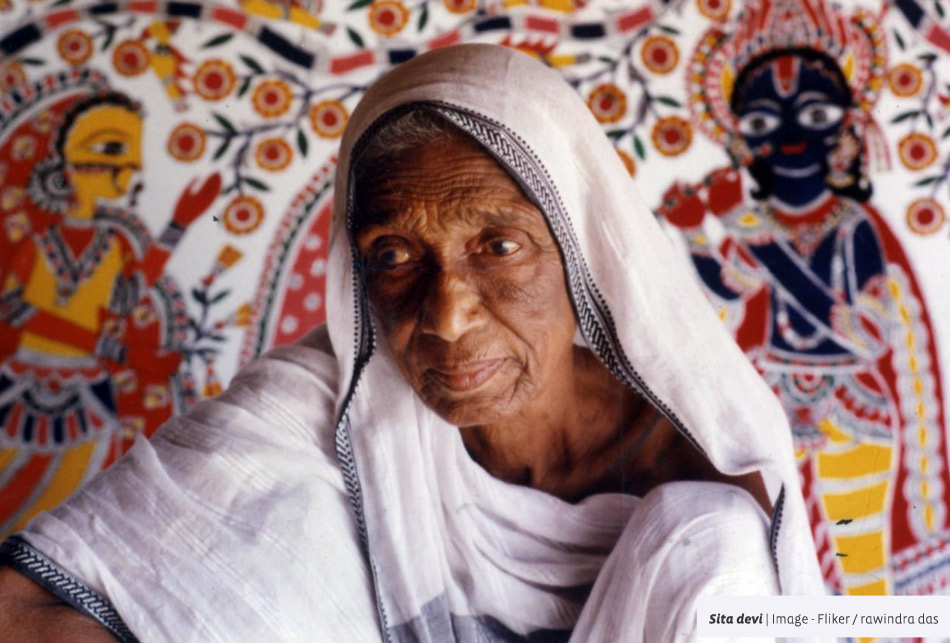
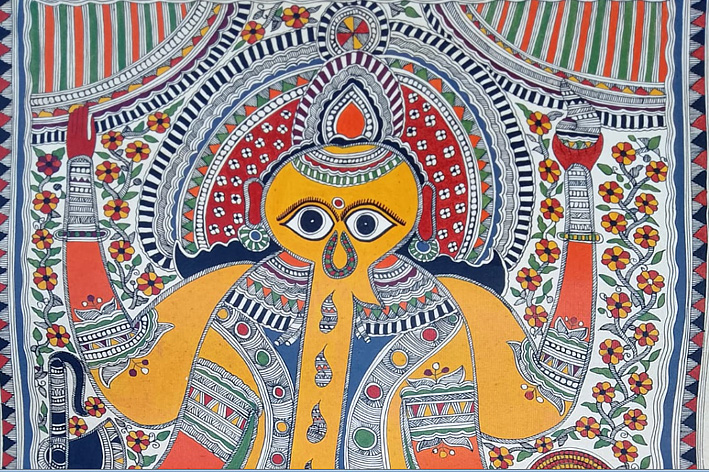
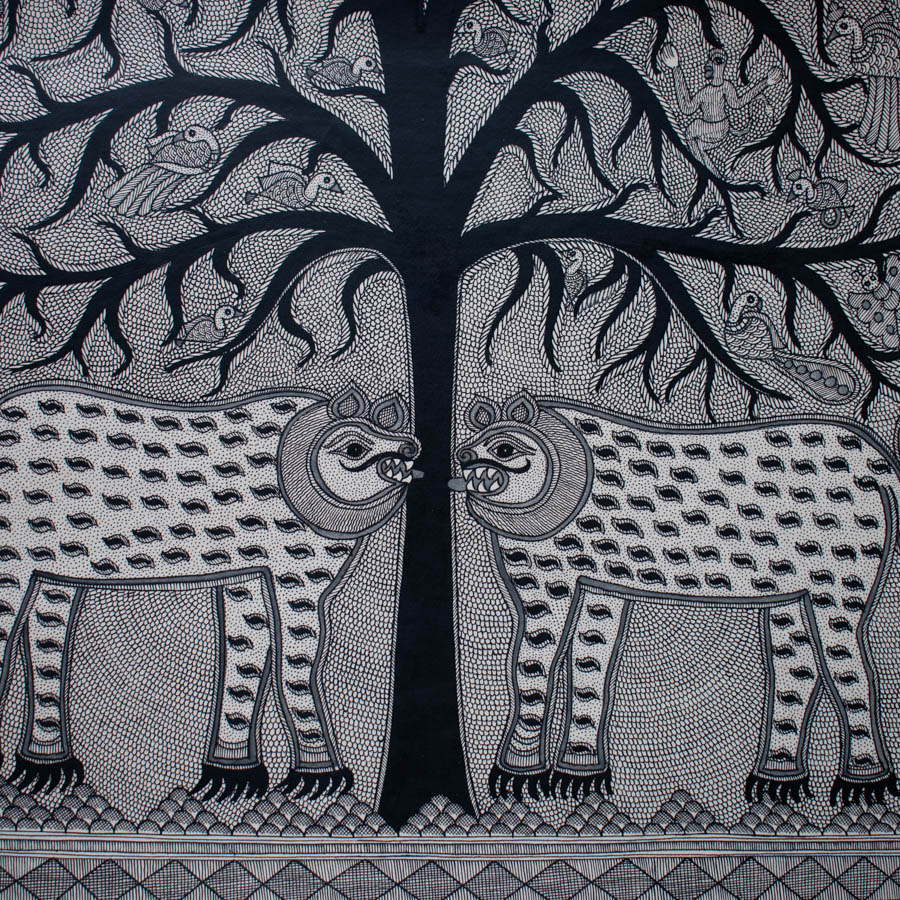
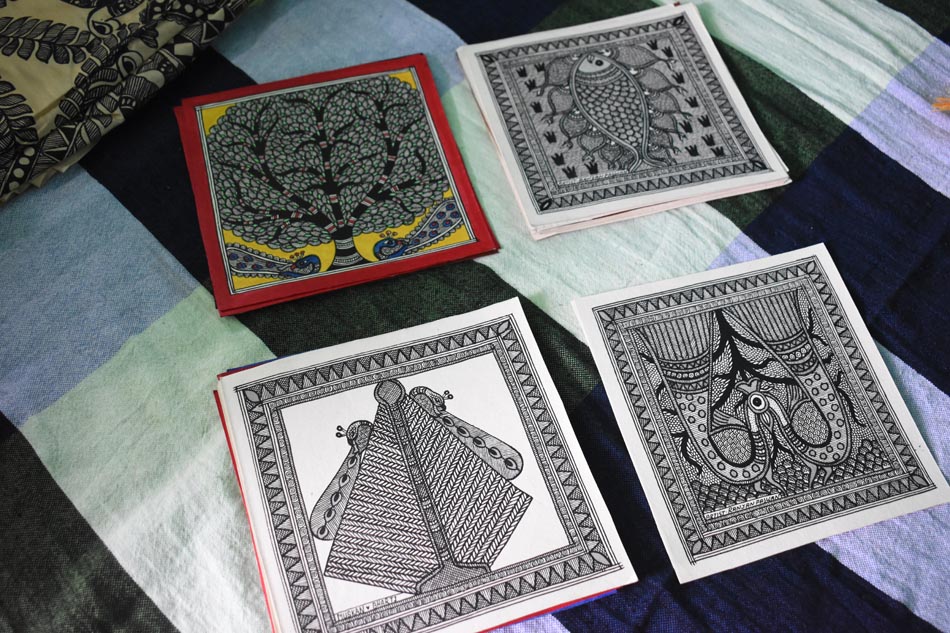
The visual vocabulary of Madhubani painting is profoundly characterized by its dynamic energy, geometric distortion, and a complete absence of negative space, as artisans meticulously fill every gap with secondary motifs. This intricate visual language is historically categorized into five primary styles. The Bharni style, traditionally practiced by Brahmin women, translates to “filling” and features bold black outlines filled with vibrant, flat colors to predominantly depict Hindu deities and epic tales. In contrast, the Kachni style, traditionally practiced by Kayastha women, translates to “line” and relies heavily on intricate monochrome or dual-tone line work, utilizing hatching and stippling rather than filled colors. Pioneered by Harijan communities such as the Dusadhs, the Godna style mimics tribal tattoos using small stick-like figures, concentric circles, and repetitive motifs that are often painted in black ink. The Tantrik style is utilized strictly for spiritual meditation and religious rituals, featuring complex mandalas, yantras, and fierce deities like Goddess Kali. Finally, the Kohbar style is exclusively painted for weddings to invoke blessings of fertility and love, beautifully combining multiple styles and deeply auspicious symbols.
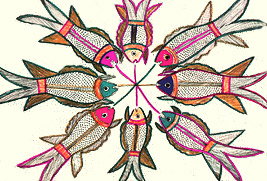
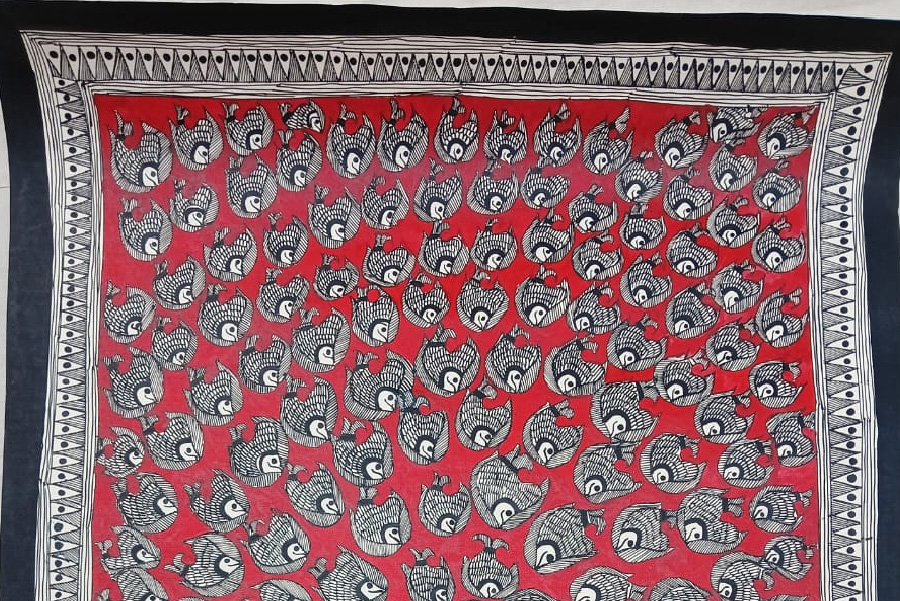
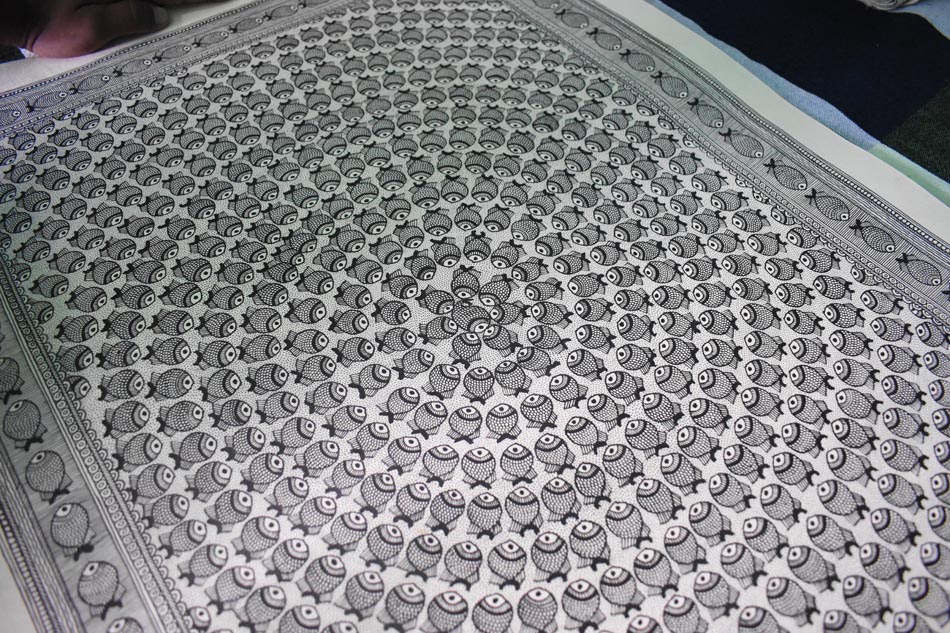
Every single element within a Madhubani painting carries deep, specific symbolism, transforming the canvas into a rich narrative tapestry. The fish is a universally auspicious motif that symbolizes fertility, prosperity, and good fortune. Artisan Bibhutinath specifically mentions that the fish represents playfulness, or chanchalta, while Mithilesh adds that seeing a fish before traveling is considered a sign of a safe journey. The peacock represents beauty, grace, love, and eternity, while parrots are widely seen as love birds. Expanding on this, Mithilesh notes that the parrot possesses a pure essence, culturally relating it to Suka, a devoted follower of Radha. The elephant motif represents strength, wisdom, and, due to its long gestational period, healthy procreation, which Bibhutinath simply equates with overall good luck. Symbolizing longevity and the union of lovers—specifically water and earth—the turtle holds great significance. Mithilesh poetically explains that just as a turtle can lift a heavy physical burden, depicting it in art ensures that the newly married couple can bear life’s heavy burdens together. The snake represents protection from evil and the power of regeneration, which Mithilesh interprets as a resilience to poison that translates to enduring life’s inevitable sufferings.
Flora and celestial bodies hold equally profound meanings within this artistic tradition. The lotus symbolizes female sexuality, purity, and resilience. In the context of Kohbar paintings, Mithilesh highlights the specific use of the purain ka patta, or lotus leaf, noting that throwing a single leaf into a lake causes multiple offshoots to grow, thereby symbolizing rapid and abundant family growth. Conversely, bamboo represents male lineage, stability, and masculine vitality. Mithilesh explains that placing one bamboo shoot in the soil causes multiple shoots to grow without the need for extra seeds, representing the effortless expansion of a family’s lineage. The sun and moon represent masculine and feminine energies, optimism, and the eternal preservation of life, while the Tree of Life motif, according to Bibhutinath, brings prosperity and peace to the household. Even the colors themselves denote specific traits; for example, Bibhutinath points out that yellow is traditionally used to depict fair skin, while blue is utilized to depict dark skin, such as the complexion of Lord Krishna.
While traditional themes like the Radha-Krishna romance and the Ram-Sita Swayamvar remain heavily requested, contemporary artisans are continuously innovating to meet modern market demands. Bibhutinath notes a remarkably high demand for nature themes, as these universally appealing subjects attract buyers from all backgrounds, regardless of their religious affiliation. He also points out that modern artisans now frequently mix traditional boundaries, combining the colorful, filled aesthetic of Bharni with the intricate, detailed line-work of Kachni to create highly complex pieces. Furthermore, feminist artists like Shalinee Kumari and Rani Jha are boldly using the traditional Madhubani style to paint modern social issues, addressing topics such as women’s empowerment, female education, and the nuances of household diaries. This thematic expansion is so vast that Padma Shri awardee Baua Devi even painted pieces surrounding the tragedies of the 9/11 World Trade Center attacks. Today, the product range spans immensely, from large-scale custom artworks—with Bibhutinath recalling his most expensive work being an 8 x 12 feet canvas depicting the entire city of Bombay, which sold for three lakh rupees—to accessible, everyday commercial items like printed sarees, bags, mousepads, and laptop sleeves.
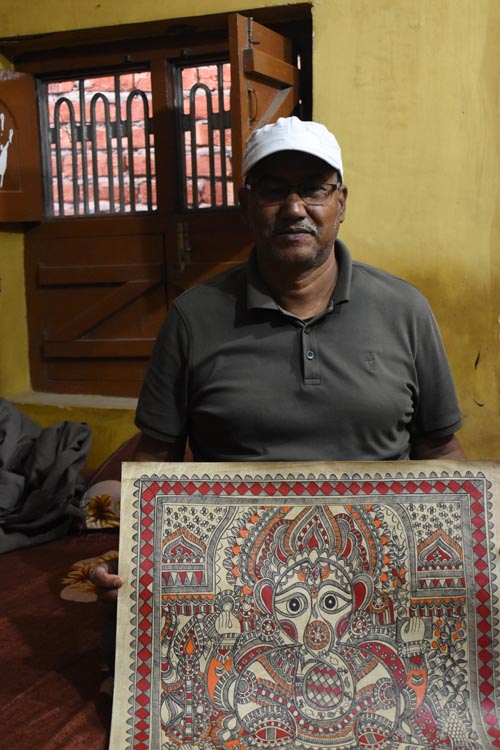
Despite its global fame, the traditional artisans of Mithila face severe structural, market, and cultural challenges today. The commercialisation of the craft has led to exploitation by middlemen who strictly control access to the market. According to artisan Mithilesh, middlemen frequently give artisans bulk orders with extremely tight, unreasonable deadlines. To meet these heavy demands and earn a living wage, artisans are forced to divide the labour among their family members. In this rushed assembly-line process, one person makes the outline, another does the hatching (kahna), and another fills in the colour. While the painting is completed much faster, Mithilesh laments that this forced division of labour severely reduces the overall quality and the innate soul of the artwork. An average authentic piece takes an individual artisan 5 to 6 hours, and sometimes up to 8 hours, of continuous, focused work, while larger pieces take Bibhutinath up to 10 days to finish. However, Bibhutinath offers a contrasting perspective regarding corporate buyers. He states that he faces no exploitation from brands, as they approach him directly at his home, allowing him to successfully bypass the traditional middlemen.
A major cultural loss for the Madhubani tradition is the near extinction of authentic Tantric painters. Bibhutinath explains that there are almost no authentic Tantric painters left today. Creating a true Tantric painting requires absolute perfection and a profound, scholarly knowledge of the dharamshastras, or Hindu scriptures. Mithilesh echoes this sentiment, recalling a deceased Tantric priest named Batohi Jha from Harinagar who used to make them with complete accuracy. Today, no one in the region possesses that high level of scriptural knowledge. Both artisans agree that making even a slight error in a Tantric painting brings severe negative impacts and spiritual wrath upon both the painter and the eventual owner. Because the true experts are gone and the risks are so high, the authentic practice has largely faded into history.
Furthermore, the Geographic Indication (GI) tag system is currently failing the grassroots artists it was designed to protect. While thousands of individuals paint daily in the villages, only 51 are officially registered as authorised users. The global market is also flooded with mechanically reproduced, mass-manufactured items and cheap digital prints claiming to be authentic Madhubani, heavily undercutting the prices and value of traditional, hand-painted works. Interestingly, Bibhutinath remains unbothered by fake Madhubani paintings. He confidently states that they do not create a problem for his business because true art buyers can easily recognise the vast difference between a flat fake print and a textured original piece.
Finally, artisans struggle against a severe digital divide and ongoing institutional neglect. While overseas digital platforms and urban startups profit immensely by selling Madhubani goods online, the rural women who actually create the art lack internet literacy, smartphones, and digital marketing skills, effectively keeping them at the bottom of the economic chain. Furthermore, local institutions sometimes actively sideline the master artisans. Bibhutinath expresses deep frustration that government training institutes, such as UMSAS, bring in urban artists from Patna to teach the craft rather than inviting the deeply experienced, National Award-winning artisans from the actual villages to pass on their authentic, generational knowledge.
The crafting process of Madhubani painting is a highly disciplined and time-consuming practice that requires immense patience, a steady hand, and absolute mental clarity. At its core, the process bridges the gap between raw, earthly materials and profound spiritual storytelling. Over the past few decades, the medium has shifted significantly from temporary rural wall murals to long-lasting paper and fabric. However, the fundamental spirit of the craft-spontaneous, freehand drawing without the aid of modern instruments—remains completely intact.
The raw materials used in authentic Madhubani art are deeply connected to the local environment and natural resources of Bihar.
Base Materials:
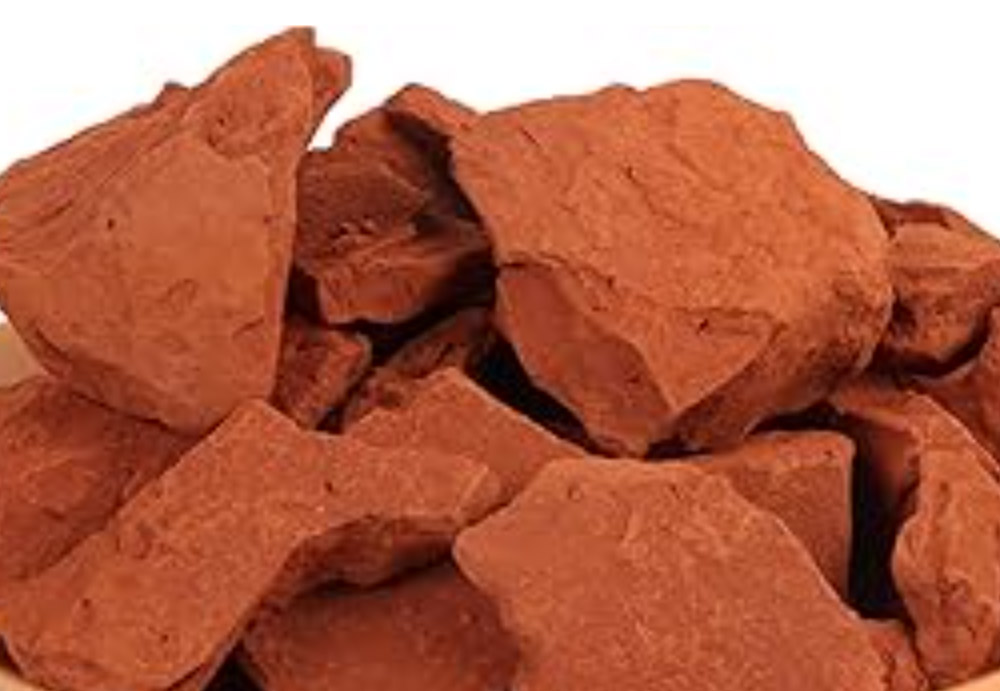
Traditionally, paintings were done directly on the mud walls of village huts, a practice locally known as bhittichitra. Artisan Mithilesh Jha explains that these walls were prepared using locally collected mud, which was wetted and coated with a lep, or layer, of fresh cow dung. Over this base, a layer of geru, a specific red mud sourced from Kurukshetra, was applied to create a smooth, auspicious canvas. Today, artisans predominantly work on handmade paper, canvas, and cloth. Bibhutinath Jha notes that artisans highly prefer handmade khadi paper, stating that a single sheet of good quality khadi paper currently costs about 40 rupees. For modern wall decorations and murals in urban spaces, artisans now frequently use commercial enamel paint, as it provides a much brighter shine and longevity compared to natural mud.
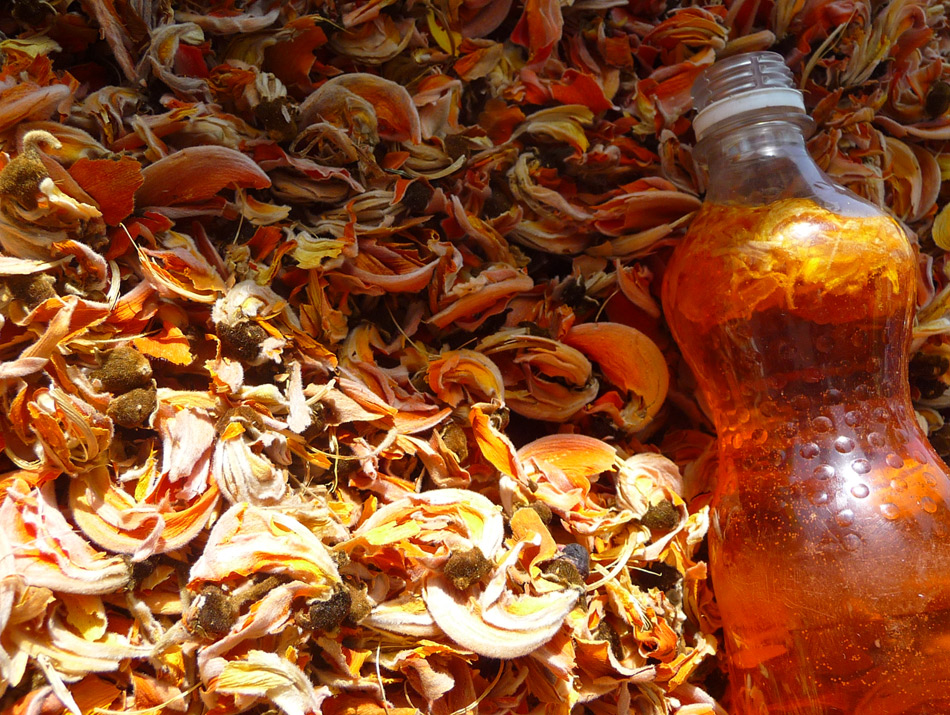
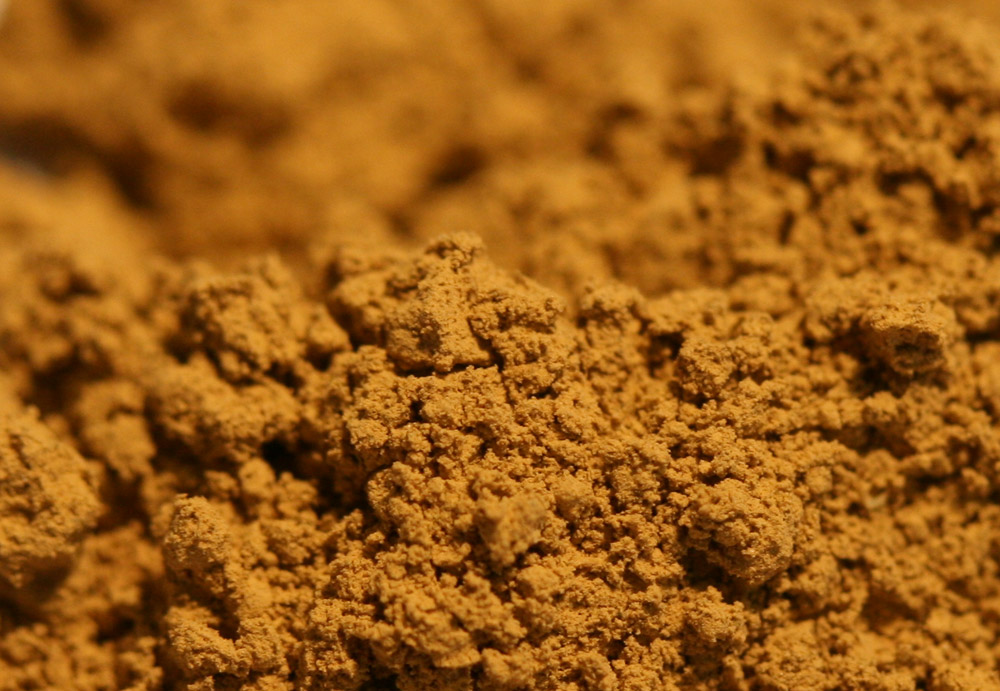
Colors and Pigments: Traditionally, every color is extracted from the natural flora and fauna of the region. Mithilesh points out that extracting natural colors is an incredibly tedious and time-consuming task. Because artisans are fully dependent on this craft for their daily livelihood, and the government offers little to no premium for naturally dyed works, many are forced to use synthetic acrylic or poster colors to meet strict market deadlines.
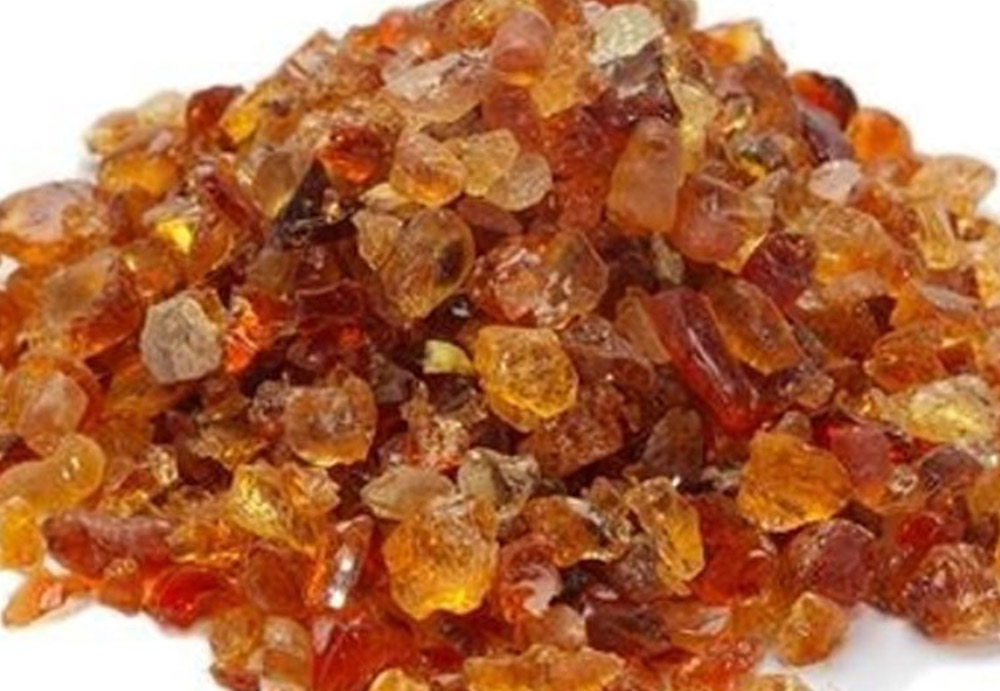
However, the traditional organic color palette is prepared as follows:
Binders: To ensure that these natural pigments adhere permanently to the walls or khadi paper, natural binders must be added. Artisans traditionally use gond (gum from the acacia or babool tree) or goat’s milk. Bibhutinath highlights the importance of adding gond to the colors to prevent the dried paint from flaking off the paper.
Nowadays, most artists use poster colours for their paintings. The selection of colours reflects the influence of traditional natural pigments, with artists favouring bright shades such as orange, red, yellow, blue, and green.
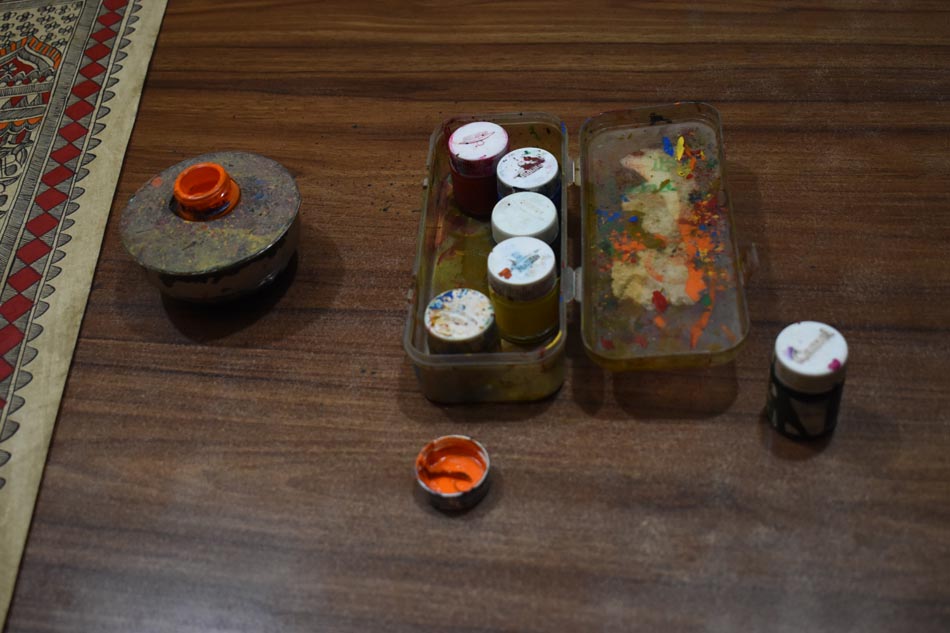
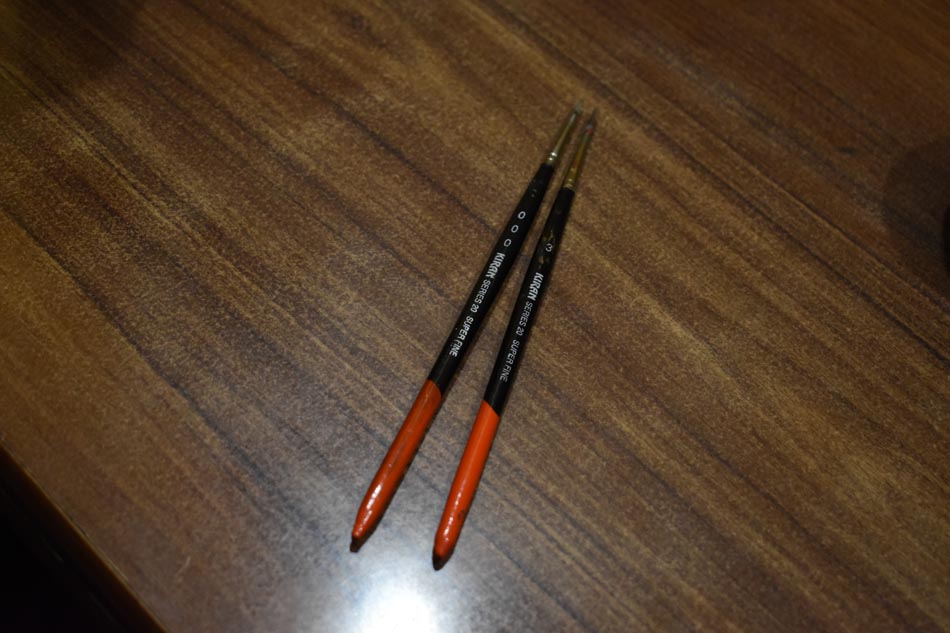
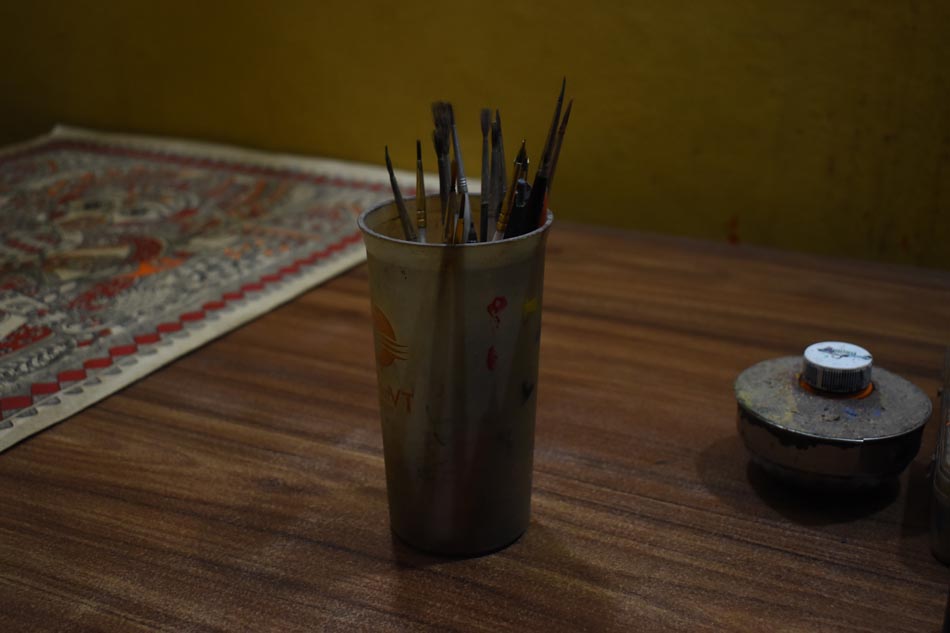
The tools used in this craft are remarkably simple, often improvised from basic household and natural items.
For broader floor designs (Aripan) or preparing the base wash of the canvas, women traditionally use their bare fingers.
The practice and context of Madhubani painting are heavily intertwined with rituals, serving both the community at large and the artisans creating the work. Functioning as a visual blessing, this art form is deeply embedded in almost every major social and religious event across the Mithila calendar. During weddings, the art plays its most crucial and sacred role. The Kohbar, or nuptial chamber, is meticulously painted with elaborate symbols of fertility, culminating in the bride leaving a turmeric-dipped handprint on the completed artwork. Similarly, the Gowna ritual, which depicts the bride departing in a traditional palanquin, remains a popular and poignant theme in these paintings.
Beyond marriages, specific festivals demand dedicated artistic and ritualistic engagement. Madhu Shravani, a thirteen to fifteen-day festival for newlyweds celebrated during the rainy month of Savan, involves women singing tantric songs in a falsetto tone while decorating the space with ritual paintings. Through these creations, they pray to snake deities to grant protection to the groom. Paintings are also explicitly created to celebrate pivotal rites of passage, such as a child’s Moondan (head-shaving ceremony) and Upanayan (the sacred thread ceremony, representing a spiritual baptism). The art even documents unique social customs like the Saurath Sabha, an annual gathering under trees where Maithil Brahmins negotiate marriages with the assistance of genealogy chroniclers, an event frequently depicted in the vibrant artworks.
Furthermore, traditional floor and wall paintings are considered mandatory for a wide array of other regional festivals. These include Vat-Savitri, where women pray for their husband’s long life, and Chaurchan, a festival dedicated to the worship of the moon. The paintings are also integral to Jitiya, which involves fasting for the longevity of offspring, as well as Kojagara, a night dedicated to worshipping Goddess Lakshmi. Other significant festivals requiring these visual blessings are Chhath, where devotees worship the sun god while standing in a river, alongside Sama Chakeva and Bhai Dooj. Highlighting the intersection of art and daily faith, artisan Mithilesh Jha emphasizes that essential local offerings like Paan (betel leaf), Machh (fish), and Makhan (fox nut) are considered highly auspicious and are integrated into almost every worship ritual in the region, including the veneration of Goddess Bhagwati.
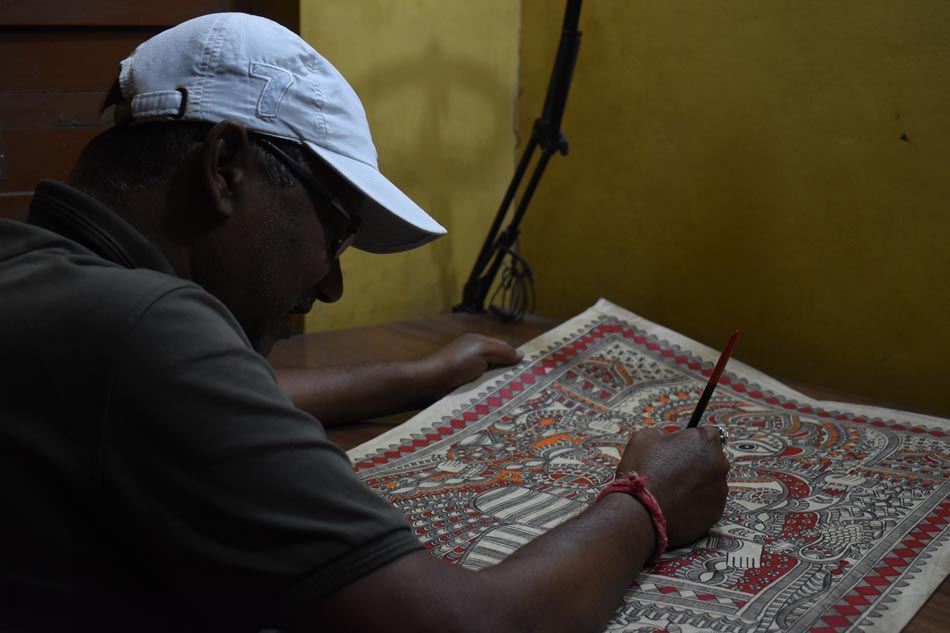
The act of painting itself serves as a profound social and crafting ritual for the artisans. Traditionally, the creation of Madhubani art is a communal activity where women gather together to paint, often accompanied by younger girls who assist and learn the craft through direct observation. While painting, these women sing folk songs and share stories, deeply connecting the artistic process to their shared communal identity. Furthermore, mental purity and freehand execution are considered defining rituals of authentic Mithila painting. Artisan Mithiles notes that the art is drawn entirely freehand without the use of tracing, models, or rulers. The artists rely solely on their minds to conceptualize the subject and begin painting it directly onto the surface. Because of this spontaneous, unmeasured approach, none of the lines are perfectly identical, which ultimately gives the artwork its distinct, organic beauty. Highlighting the strict discipline and focus involved in this process, artisan Bibhutinath points out that established artisans never use pencils to sketch; pencils are strictly reserved for complete beginners in the learning stage. Instead, they directly make their outlines with permanent paint. Consequently, a strict rule of their crafting process is the complete lack of erasure. They cannot afford to make mistakes, and if an error does occur, the entire piece must be discarded and redone from scratch.
Preparing the Surface: Whether working on a wall or paper, the surface must be treated first to mimic the sacred aura of the village home. For khadi paper, Bibhutinath describes a very specific preparation technique: artisans take fresh cow dung, mix it thoroughly with water, and then filter the mixture through a piece of fabric. This filtered cow dung water is then painted over the khadi paper as a light base wash. This not only gives the paper a traditional, earthy brown tint but also acts as a natural preservative.
Freehand Outlining: The defining characteristic of an authentic Madhubani painting is that the artist relies purely on mental visualization. Mithilesh emphasizes that nothing is ever traced, and rulers or compasses are strictly prohibited. The artist looks at the blank space, imagines the complex narrative (such as a Kohbar scene or a deity), and begins painting the outlines directly. Bibhutinath confirms that pencils are never used by established artisans; they are only permitted for young children who are in the very early learning stages. Outlines are drawn using the double-line technique, where the artist draws two parallel black lines and fills the narrow gap between them with tiny cross-hatches or dots. Because no mechanical tools are used, the lines are never geometrically perfect, which is exactly what gives the painting its distinct, human character.
Hatching and Filling (Kahna and Bharni) : Once the structural outlines are established and dry, the spaces inside the figures are filled. In the Kachni style, the spaces are filled with dense, repetitive line work and hatching. In the Bharni style, the pihua or brush is used to drop vibrant, flat colors into the outlined boundaries. The artists follow a strict rule of leaving zero negative space on the canvas; any empty background areas are immediately filled with secondary motifs like lotuses, fish, or geometric spirals.
The Modern Division of Labor: Traditionally, a single woman would quietly conceptualize and complete a piece from start to finish. However, the harsh realities of the modern market have forced a shift in the process. Mithilesh explains that middlemen often exploit artisans by placing large bulk orders with impossible delivery deadlines. To survive, the crafting process has become a family assembly line. Bibhutinath shares that his entire family is now involved: his wife will quickly draw the initial line art and sketches, and he will follow behind her to fill in the colors. Mithilesh adds that in some households, one person handles the main outlines, a second person does the kahna (hatching details), and a third fills the color. While this allows them to earn money faster, Mithilesh candidly notes that this rushed, divided process noticeably reduces the artistic quality and soul of the final piece.
The creation of these artworks demands immense dedication and time. An artisan typically dedicates roughly 5 to 6 hours, and sometimes up to 8 hours, of continuous, focused work per day on a painting. Depending on the scale and the level of detail required, a large intricate piece can take up to 10 days of exhaustive labour to fully complete. However, massive custom orders require immense dedication, requiring weeks of exhaustive labor to complete.
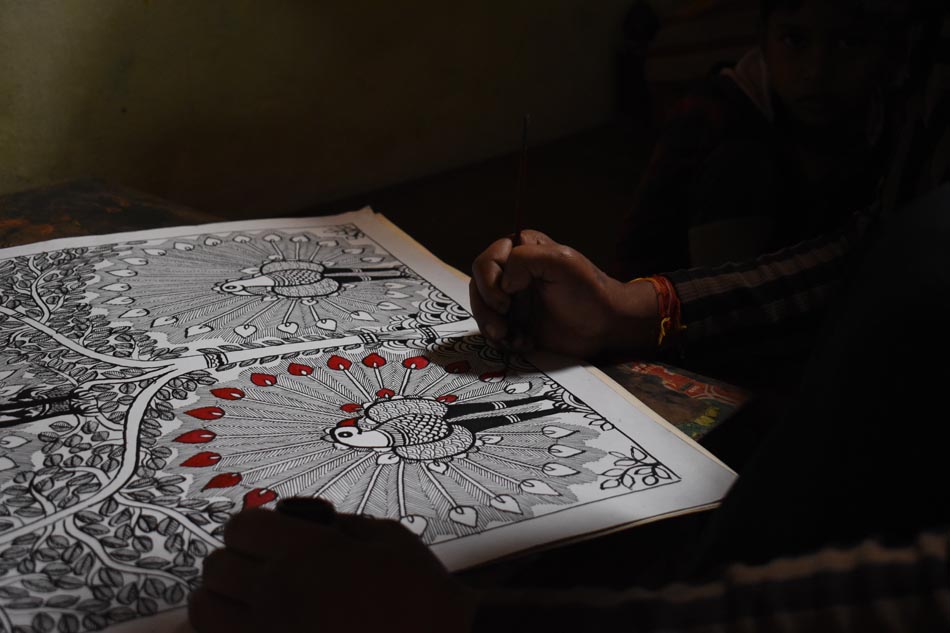
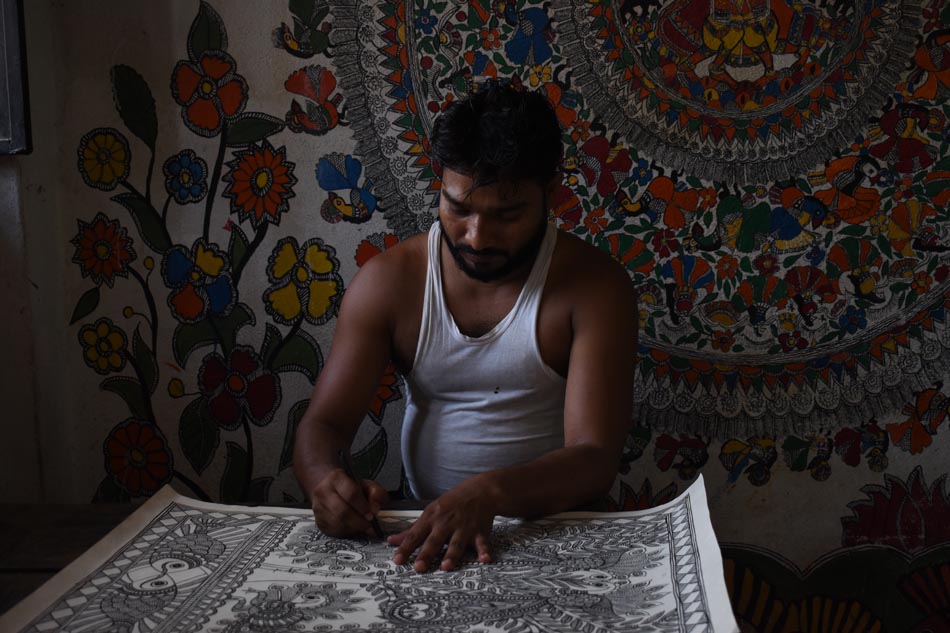
Waste management and error handling in Madhubani painting are governed by a severe, unforgiving philosophy of perfection.
Unlike modern oil or acrylic painting where an artist can simply paint over a mistake, Madhubani artists have no facility for erasure. Because they draw directly onto the paper or fabric with permanent black paint or ink, any misstep is fatal to the artwork. Bibhutinath states clearly that an artisan simply cannot make a mistake. If they happen to slip up or draw an incorrect line, they cannot fix it. They are forced to completely discard the ruined paper or fabric and restart the entire grueling process from the very beginning.
Consequently, any damaged piece during production is treated as total waste. This high-stakes environment forces artisans to work with extreme focus and slow, deliberate hand movements. Because they are so highly practiced, actual mistakes are quite rare. Regarding the raw materials, any leftover cow dung, mud, or natural floral dye is entirely biodegradable and is simply returned to the earth, making the traditional crafting process highly sustainable with zero toxic byproducts.
The historical narrative of the Madhubani cluster is deeply intertwined with ancient Indian epics, classical philosophy, and successive dynastic shifts that shaped the cultural fabric of northern Bihar. Archaeological evidence indicates that while the district lacks prominent prehistoric or palaeolithic tool sites, it preserves traces of some of the earliest aboriginal inhabitants of the Indo-Gangetic plain. William Wilson Hunter, in A Statistical Account of Bengal, documented the long-standing presence of the Tharu community within the old boundaries of northern Madhubani. Alongside the Tharus, the Bhars were historically present in the north-eastern sectors, where they retained pockets of influence into the fifteenth century. Linguistic and historical research by Dr. Suniti Kumar Chatterji in Kirata-Janapada-Kirti also associates the region with the Kiratas, supported by references to Kirata culture in the Mahabharata.
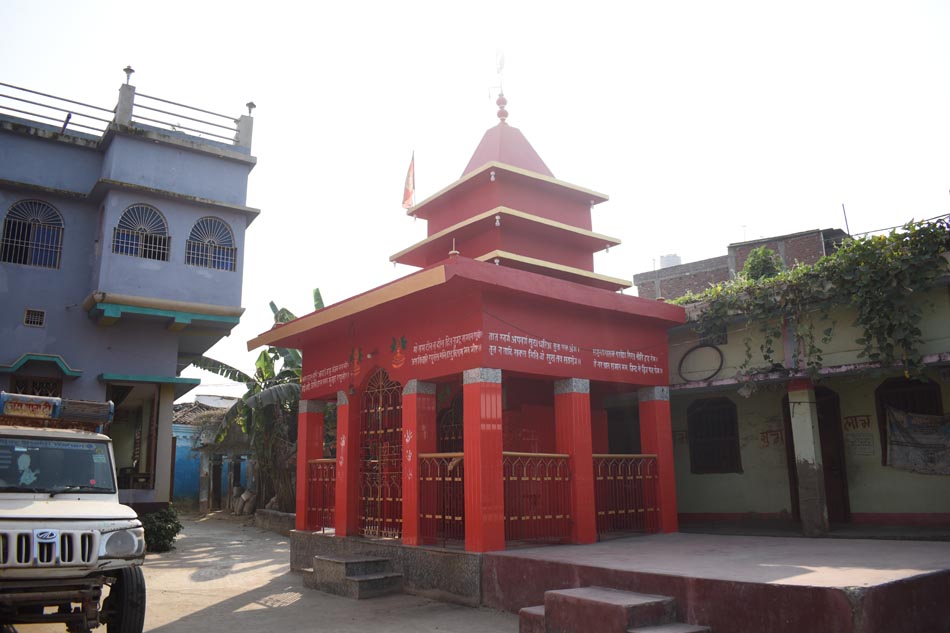
Prior to the Aryanization of northern Bihar, Madhubani was dominated by indigenous populations, among whom Shaivite worship was prominent. As culture advanced into Mithila, local traditions suggest that it blended with existing Shaivite practices. During the epic period, much of modern Madhubani formed part of the ancient Kingdom of Videha, ruled by the successive Janakas. Local traditions associate several sites with the major Indian epics. Pandaul is traditionally believed to have sheltered the Pandavas during their exile, while Phulhar, near Benipatti, is linked with the story of Sita and Rama. Its temple dedicated to Devi Girija is traditionally identified as the place where Sita first met Rama before their marriage.
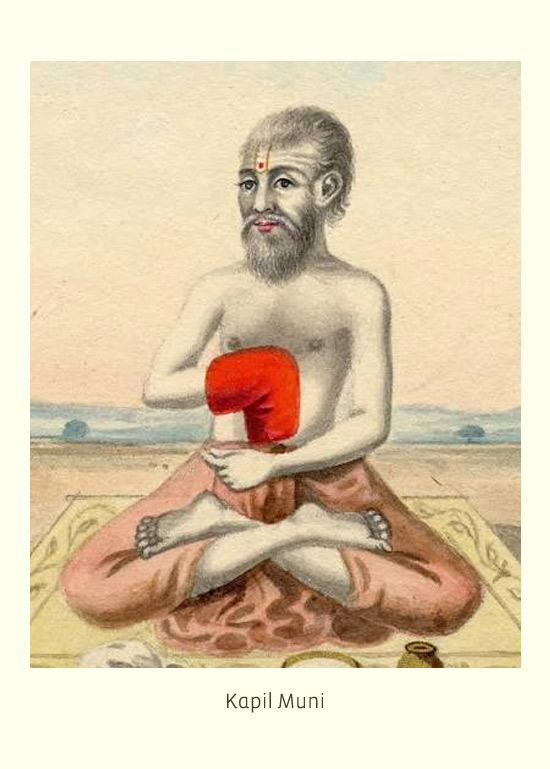
Madhubani is also associated with ancient Indian intellectual and philosophical traditions. Kakraul is linked to the sage Kapil and the Samkhya school of philosophy; Ahiari with Ahilya, wife of Gautama; Bisaul with Vishwamitra; and Jagban with the philosopher-sage Yajnavalkya, one of the prominent intellectual figures associated with ancient Mithila. Historically, Videha formed part of the Vrijian Confederacy, one of the major republican formations existing before Gautama Buddha. The Lichchhavis, whose administrative centre was at Vaishali, exercised influence over parts of modern Madhubani. Their conflict with the expanding Kingdom of Magadha, particularly under Bimbisara and Ajatashatru, eventually resulted in the conquest and incorporation of Mithila into the Magadhan Empire.
The political lineage of the Lichchhavis continued in different forms until the rise of the Guptas. Their northward migration contributed to the movement of people and political traditions between North Bihar and Nepal, with Madhubani serving as an important geographic corridor along routes connecting the Gangetic plains to Nepal. During the sixth century B.C., the region participated in the religious and cultural transformation associated with Mahavira and Gautama Buddha. Jain and Buddhist traditions connect Mithila and the Videha region with both religious teachers. Ancient Jain canonical texts and Buddhist Pāli literature contain references to the socio-political conditions of Mithila and neighbouring territories.
Historical records between the decline of the Kushan Empire and the rise of the Guptas are comparatively sparse. Local Maithil tradition associates Andhra Tharhi with the Andhra Satavahana dynasty, while the Bharasiva clans have been linked with the indigenous Bhars of North Bihar. Under the Gupta period, the region experienced a cultural revival marked by the development of Sanskrit literature and philosophy. The temple site at Uchchaith is traditionally associated with the poet Kalidasa, although there is no definitive epigraphic evidence establishing him as a native of Mithila.
After periods of political fragmentation, Madhubani came under the Oinwara dynasty, also known as the Kameshwara, Thakura, or Sugauna dynasty. These Hindu rulers maintained considerable autonomy despite the expansion of Muslim political power across Bihar. When Haji Ilyas of Bengal divided Tirhut into two administrative zones, the Oinwara rulers shifted their capital to Sugauna, near present-day Madhubani town, strengthening the area's role as a political centre.
During the Mughal period, Madhubani formed part of the Mughal Subah of Bihar and experienced relative administrative stability. With the decline of Mughal authority in the eighteenth century, Afghan settlers attempted to establish independent territories in the region. Alivardi Khan, the Nawab of Bengal and Bihar, defeated the insurgents and restored order.
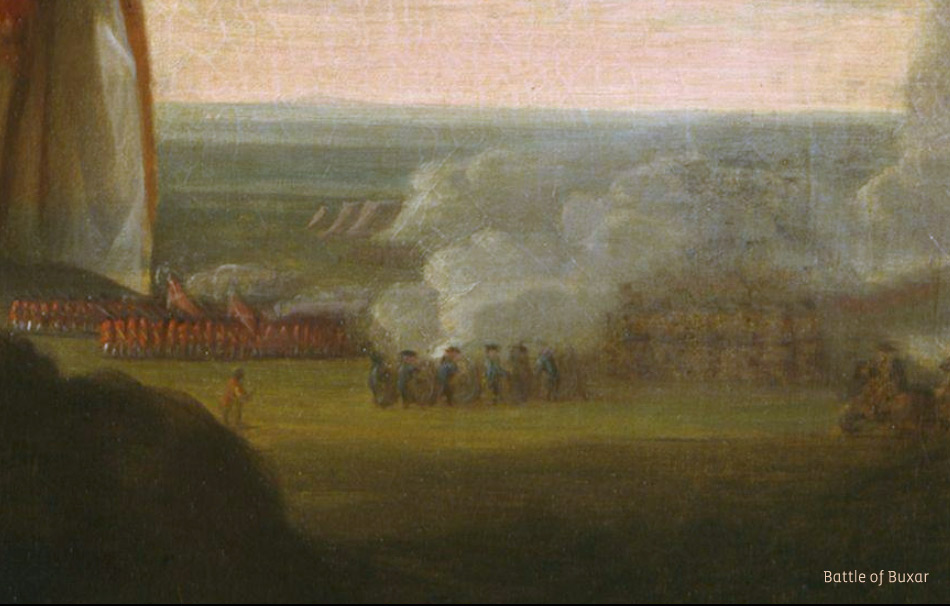
The modern historical era began with the Battle of Buxar in 1764, after which the British East India Company gained fiscal and administrative control over Bengal and Bihar. Madhubani consequently came under British colonial rule. Colonial administrators dealt with agrarian unrest and military tensions along the Nepalese frontier, which eventually contributed to the Anglo-Nepalese War. Following the Treaty of Sugauli, the region experienced a period of relative stability until the 1857 Uprising, when anti-colonial resistance spread across Bihar.
In the twentieth century, the Non-Cooperation Movement led by Mahatma Gandhi received strong support in Madhubani. Local nationalist leaders and volunteers participated in Satyagraha campaigns, while Khadi spinning and handloom weaving became closely associated with nationalist activity. A dedicated Khadi production and training centre was established in Madhubani town.
Khadi spinning subsequently spread widely among rural households, making Madhubani an important centre of Khadi production in eastern India. The household industry provided economic self-reliance while also becoming a means of political mobilisation and nationalist participation. This intersection of textile craft, economic self-determination, and anti-colonial activism became an important part of Madhubani's modern history.
The physical landscape of the Madhubani cluster is defined by its location within the fertile, low-lying alluvial plains of northern Bihar, directly within the geographic influence of the Himalayan Terai region. The district extends between 25°59′ and 26°39′ North latitude and 85°43′ and 86°42′ East longitude. Madhubani Town, the administrative headquarters, lies at approximately 26.37° North and 86.08° East.
The district has a roughly parallelogram-shaped form, with its east-west breadth slightly greater than its north-south length. Its total area is 3,501 square kilometres, with an average elevation of around 80 metres above sea level, while Madhubani Town lies at approximately 56 metres.
Topographically, the cluster consists of a vast, flat, low-lying plain crossed by streams, hill torrents, and waterlogged depressions known locally as chaurs. Subtle upland ridges occur across parts of Benipatti, Madhubani Sadar, Jainagar, Ladania, Laukaha, and southern Phulparas, providing relatively higher ground that remains less vulnerable to seasonal waterlogging.
The soil is predominantly calcareous new alluvium, continuously deposited by rivers descending from the mountains. It consists mainly of fine clay and river sand. The dominant agricultural soil is the heavy clay known as matiari, which has very little sand and a high water-retention capacity, making it particularly suitable for paddy cultivation.
The hydrological system is highly complex, with numerous rivers flowing broadly from north to south from the Nepal Himalayas and carrying heavy monsoon water and silt. Major rivers include the Little Bagmati, Kamala, Karai, Balan, Little Balan, and Tiluga. The Little Bagmati enters the district near Bishanpur Ugarpati and is joined by the Dhaus River near Bankuta before flowing south-east. The Kamala River crosses the centre of the district and is highly dynamic, frequently changing course and leaving behind paleochannels and old sandy riverbeds. The Balan and Little Balan lie to its east, while the Tiluga River forms part of the eastern boundary.
The Madhubani cluster has a humid subtropical climate, divided into a cold winter, hot dry summer, and heavy monsoon season. Winter generally lasts from November to February, with temperatures occasionally falling to around 5°C during December and January. From March, dry westerly winds and dust storms become common, while May is the hottest month, with temperatures reaching around 42°C. The monsoon arrives by mid-June and continues until late September or mid-October.
Madhubani receives high annual rainfall, generally ranging between 1,000 and 1,500 mm, with an average of around 1,273 mm. The heaviest rainfall occurs between the second half of July and the first half of August, while minor winter showers in January support standing winter crops.
Historically, the wider Tirhut region supported dense sub-Himalayan forests and diverse wildlife. However, intensive agriculture, population growth, and expanding road and rail networks have greatly reduced forest cover, eliminating larger mammals such as wild buffaloes, tigers, elephants, and leopards from the landscape. Birdlife remains diverse, particularly around the marshy chaurs, with quails, partridges, wild ducks, snipes, cranes, and storks commonly found.
The district retains a rich aquatic ecosystem, supported by its rivers and wetlands. Madhubani was identified as Bihar's largest fish-producing district in 2022. Common freshwater varieties include rohu, bachwa, tengra, katla, singhi, and boan, while hilsa is occasionally caught in larger river channels.
The historic land-use pattern has changed significantly over the past two centuries. Colonial records describe large areas of land as uncultivated scrubland, partly due to demographic decline following the famine of 1770 and economic pressure on farmers under the zamindari system. From the mid-nineteenth century, systematic reclamation expanded cultivation to more than three-fifths of the district. However, significant areas remain permanent swamp, marsh, and waterlogged chaur.
The landscape is also marked by thousands of old mango groves, particularly along riverbanks and towards the Nepal frontier. Many were historically planted by local communities for religious and ancestral reasons. Because much of the agricultural land remains dependent on seasonal flooding, it traditionally produces one major crop each year. The local matiari clay requires continuous cultivation; when left fallow, it hardens under the sun, field boundaries (ails) deteriorate, and traditional irrigation channels become blocked by dry silt.
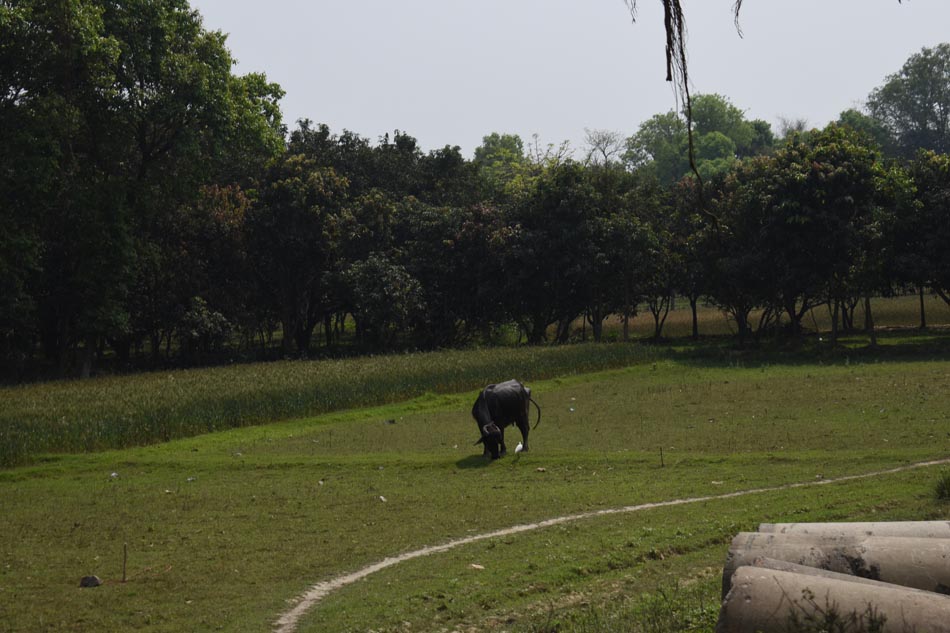
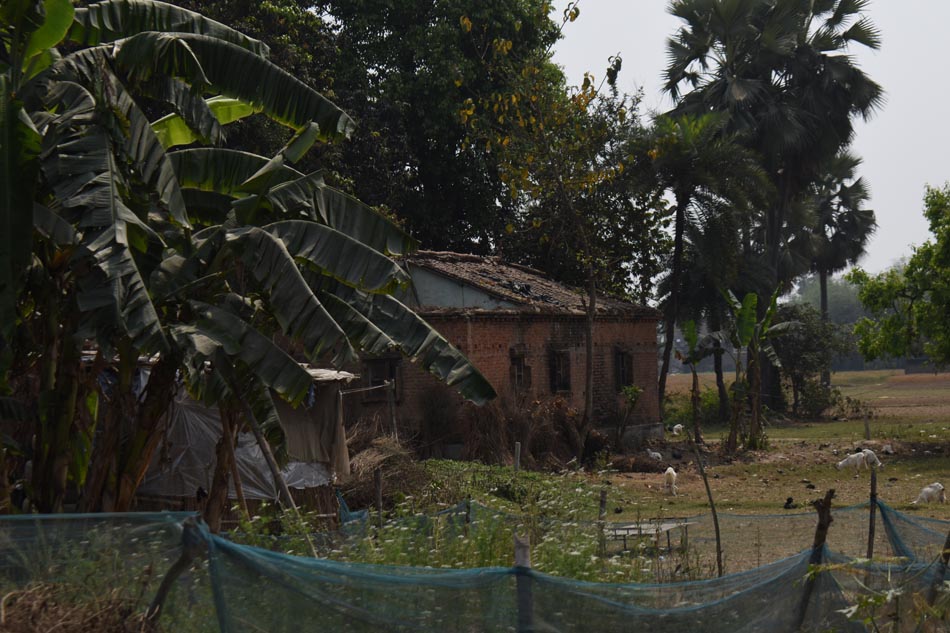
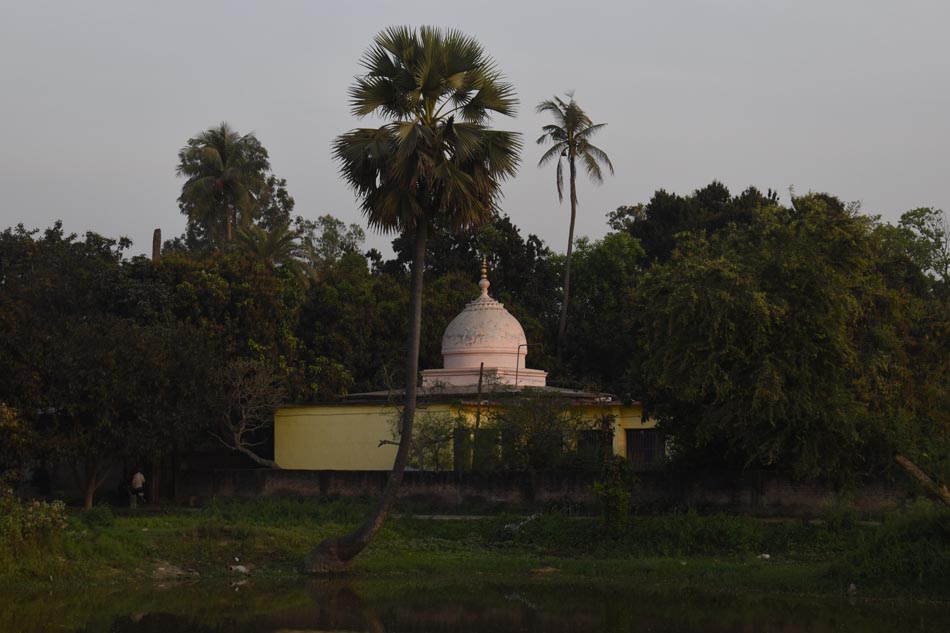
The broader environmental reality of the Madhubani cluster is defined by a delicate balance between abundant natural water resources and seasonal climatic extremes (Bihar Disaster Management Authority, 2017). The region experiences a humid subtropical climate with significant seasonal variation. The dry summer season from April to June sees temperatures reaching 42°C, causing the heavy matiari clay soils to harden and crack. April is typically the driest period, with relative humidity around 39.92%. The arrival of the monsoon in mid-June transforms the landscape, with September humidity reaching 84.08% and July receiving the highest rainfall, averaging over 27 rainy days.
Flooding is a defining environmental feature of Madhubani, shaping its ecology, agriculture, and daily life. The district lies within the flood basin of North Bihar, where approximately 73.63% of the landmass is susceptible to severe flooding. Much of the floodwater originates from heavy monsoon rainfall in the Himalayan catchment areas of Nepal, which causes rivers to swell and discharge large volumes of water onto the flat plains of Madhubani.
Flooding can be further intensified by water releases from upstream infrastructure, particularly the Koshi Barrage in Nepal. Since India's independence, repeated floods have damaged agricultural cycles and caused extensive economic losses across the region. Government initiatives such as the Western Koshi Canal Project have attempted to strengthen flood protection through embankments, but the landscape remains environmentally vulnerable. The region's former sub-Himalayan forests and wildlife habitats have largely disappeared, replaced by an intensely cultivated but flood-prone agrarian landscape.
The infrastructure profile of the Madhubani cluster reflects a region working to modernize while facing historical deficits and recurring flood damage (Ministry of Panchayati Raj, 2006). Rural connectivity has improved through initiatives such as the Pradhan Mantri Gram Sadak Yojana (PMGSY) and Mukhyamantri Gram Sadak Yojana, which have helped connect remote artisan villages to major roads. The district is traversed by NH 27, NH 227, NH 227J, NH 227L, NH 527A, and NH 527B, linking Madhubani with urban centres such as Darbhanga and Patna. The East-West Corridor has also strengthened regional logistics.
Public transport includes a Bihar State Road Transport Corporation bus depot at the district headquarters, alongside private buses serving interior routes. The railway network forms a major part of regional transport, with lines connecting Darbhanga–Jainagar, Darbhanga–Nirmali, and Darbhanga–Laukaha. Conversion of narrow-gauge lines to broad gauge, particularly on the Samastipur–Jainagar route, has improved passenger and freight capacity. At Laukaha, a Land Customs Station operates alongside the corresponding Nepalese customs office at Thadi, supporting cross-border trade.
Industrial and civic infrastructure remains comparatively limited. Madhubani has 1,704 registered micro and small-scale units, concentrated mainly in the industrial areas of Pandaul (28.71 hectares) and Jhanjharpur (2.34 hectares). The district has no large-scale public sector undertakings, reflecting its predominantly small-scale industrial base.
Basic civic infrastructure continues to expand but shows a rural-urban divide. Rural electrification efforts have brought power to 693 villages. Agricultural infrastructure combines modern and traditional irrigation, including tube-wells, artesian wells, and traditional pynes—earthen irrigation channels—particularly around Benipatti, where channels draw water from the Kamala River. Local tanks also support winter rice cultivation. Healthcare and veterinary facilities remain dispersed, serving the needs of the district's largely agrarian economy.
The architectural vocabulary of the Madhubani cluster is dualistic, divided between the traditional mud architecture of rural artisan communities and the stone and brick remnants of its aristocratic and religious past. Traditional village homes consist of mud and clay huts with sloping thatched roofs. Their freshly plastered walls and earthen floors served as the original canvas for Madhubani or Mithila paintings. Although brick and cement houses are increasingly replacing these structures, the traditional spatial layout—with inner courtyards used for painting and rituals—remains important to the local built environment.
Contrasting with these dwellings are the district's monumental religious structures. The Kapileshwar Temple in Rahika is a prominent landmark, with an ancient Shiva Linga traditionally associated with the sage Kapila. The complex includes a sacred pond, shrines to Parvati and Hanuman, and historical stone sculptures, reflecting layers of religious patronage.
Other important religious sites include the Somnath Mahadev Temple at Saurath, Bhagwati Temple at Uchaitha, and Ugaranath Temple at Bhawanipur. The district also contains remnants of palatial architecture, particularly the Rajnagar Palace, whose ornate ruins reflect the architectural traditions of regional nobility.
A distinctive architectural feature of the Madhubani cluster is its “Dihs”—elevated earthen mounds and structural remains associated with ancient and medieval academies and ashrams. Sites such as Kalidas Dih, Vachaspati Mishra Dih, Ayachi Mishra Dih, Kumarila Bhatta Dih, Bisfi Vidyapati Dih, and Musaharniya Dih serve as physical markers of Mithila's history as a centre of Sanskrit literature and philosophical learning. Rather than monumental structures, these mounds preserve the archaeological and cultural footprint of the region's scholarly traditions.
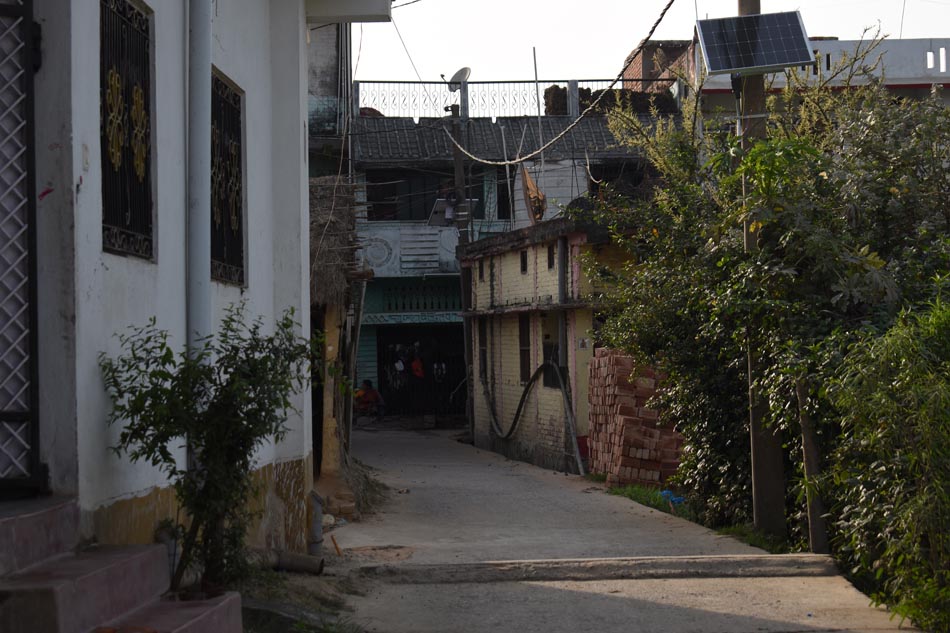
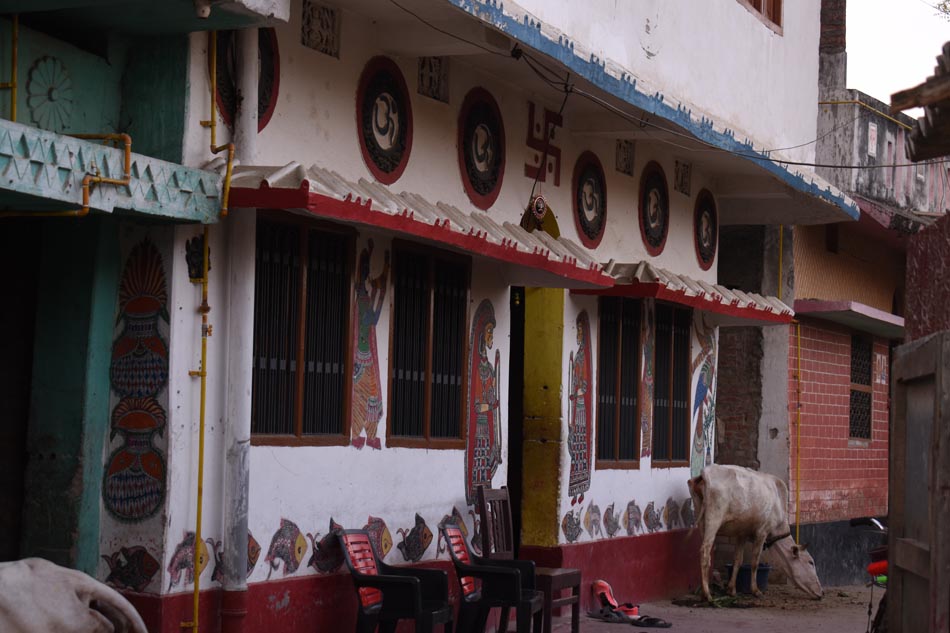
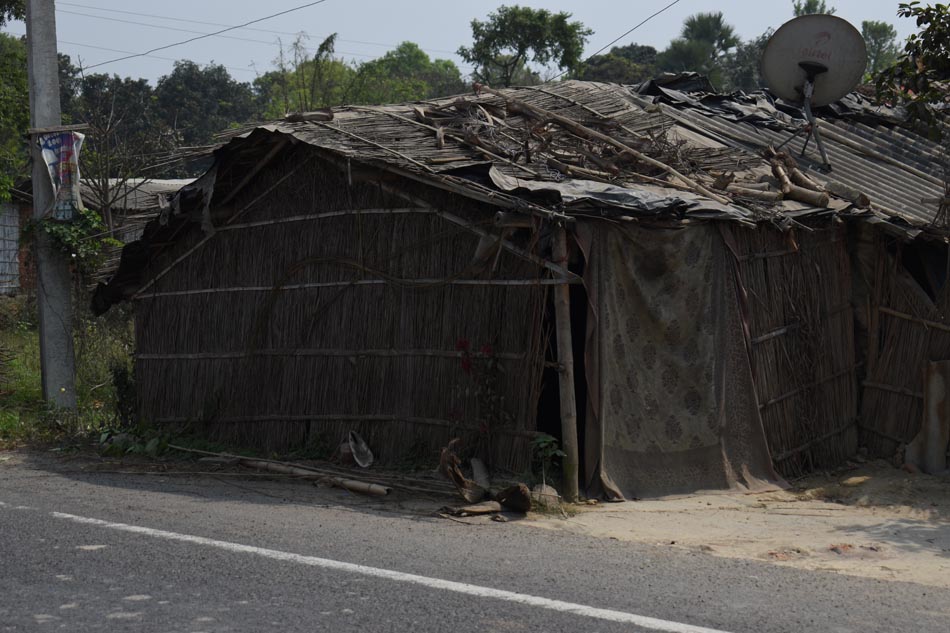
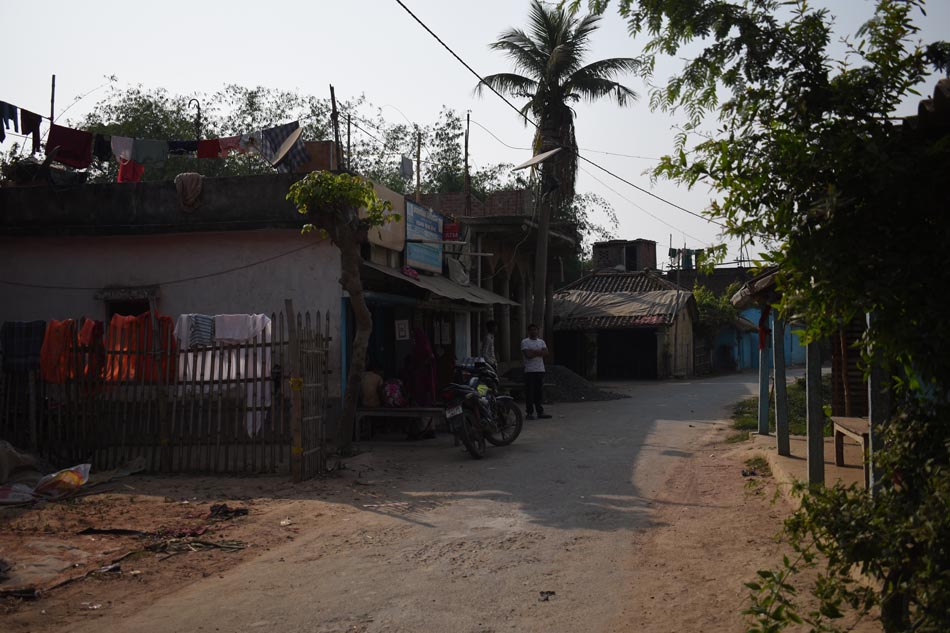
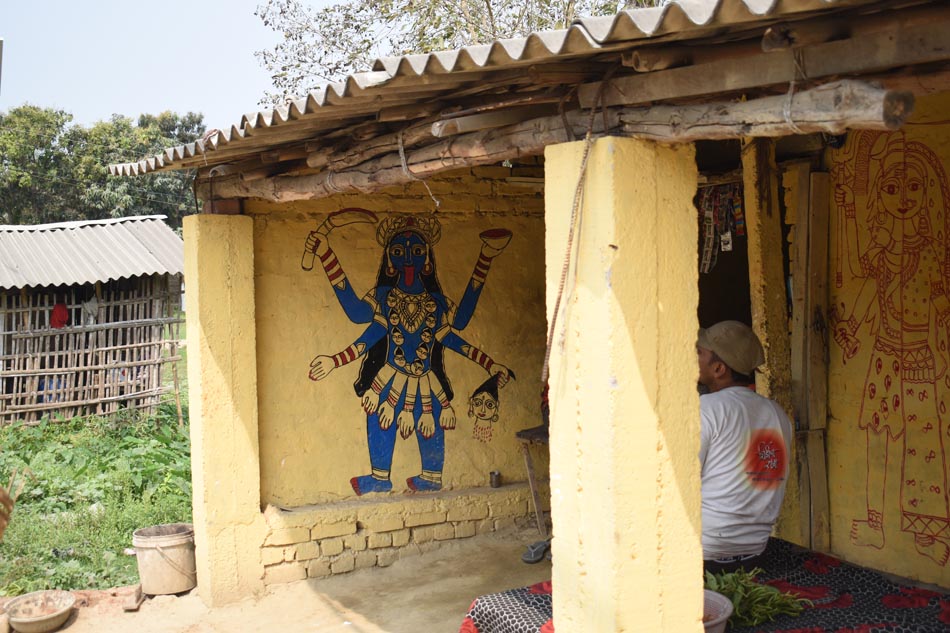
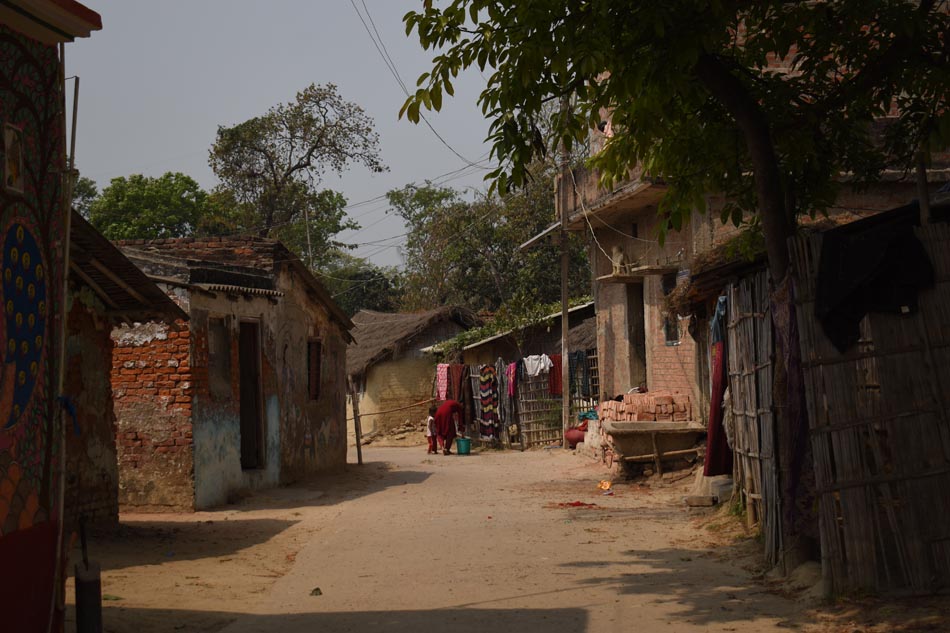
The culture of the Madhubani cluster is synonymous with the broader identity of the ancient Mithila region, characterized by its traditions of philosophy, genealogy, and symbolic visual arts. The mother tongue of the majority is Maithili, a language strongly associated with classical literature and the poet Vidyapati. During the medieval period, villages across the district served as centres for the study of Indian philosophy, particularly Nyaya Shastra (logic) and Vaisheshika Sutra.
Social life remains deeply rooted in ancestral customs. A notable tradition is the annual Sabha at Saurath, where thousands of Maithil Brahmins gather in the village's mango groves to negotiate marriages. The gathering is overseen by Panjikars, traditional genealogists who maintain detailed family records to regulate kinship and marriage alliances. Major festivals include Holi, Durga Puja, Maha Shivaratri, and Chhath Puja (Surya Shasti), with Durga Puja being particularly associated with Gandhwari.
Madhubani District Administration
The region's most internationally recognized cultural expression is Madhubani or Mithila art. Local tradition associates its origin with King Janaka's preparations for the marriage of Sita and Rama. Historically, the art was a female-led domestic and ritual practice, passed through generations within different communities. Women painted the walls and floors of their homes to invoke divine blessings during births, marriages, festivals, and other ritual occasions, including Kohbar paintings.
Traditionally, artists used fingers, twigs, matchsticks, and simple nib-pens, applying natural dyes and plant- and mineral-derived pigments. The art is distinguished by two-dimensional imagery, strong outlines, dense patterns, and minimal empty space. Its core motifs and aesthetics have remained distinctive over generations, contributing to its Geographical Indication (GI) status. In recent decades, Madhubani painting has expanded from domestic mud walls to handmade paper, cloth, and canvas, transforming a primarily ritual practice into an important source of livelihood for women artisans.
To understand the demographic and social reality of the Madhubani cluster, one must look at the hard statistics alongside the lived realities of an agrarian society (Census of India, 2011). According to the 2011 national census, the district supports a population of 4,487,379 people, making it the 37th most populous district in India. The demographic density is 1,282 inhabitants per square kilometer. The population is overwhelmingly rural; only 3.60% live in urban areas, while 96.40% reside in rural areas. The social fabric is diverse but primarily composed of the Hindu majority (81.39%), followed by a Muslim population of 18.25%. Linguistically, Maithili is spoken by 84.07%, followed by Urdu at 12.86% and Hindi at 2.92%.
The gender dynamics and literacy rates highlight ongoing developmental challenges. The average sex ratio is 938 females per 1,000 males. The total literacy rate is 58.62%, with a reported gender divide in the broader district averages. Scheduled Castes make up 13.08% of the population, while Scheduled Tribes represent 0.09%.
Economically, the people of Madhubani remain deeply connected to agriculture. Roughly 80% of the active workforce relies directly or indirectly on agriculture. However, land fragmentation, peasant landlessness, low agricultural output, and recurring floods have placed significant pressure on rural livelihoods. This has contributed to extensive out-migration, with more than 55% of the male population reported to migrate in search of low-wage labour in urban centres across Delhi, Maharashtra, Punjab, Haryana, and West Bengal.
This exodus of men has significantly altered village social structures, leaving women to manage households, marginal farming, and cultural traditions. Within this socio-economic context, women have transformed their traditional, ritualistic wall paintings into a vital commercial enterprise. The commercialization of Madhubani art has empowered women as preservers of cultural identity and increasingly important economic providers for their families.
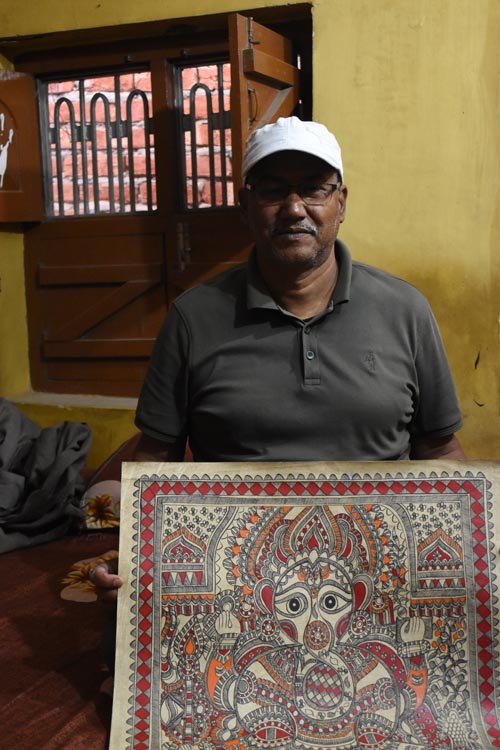
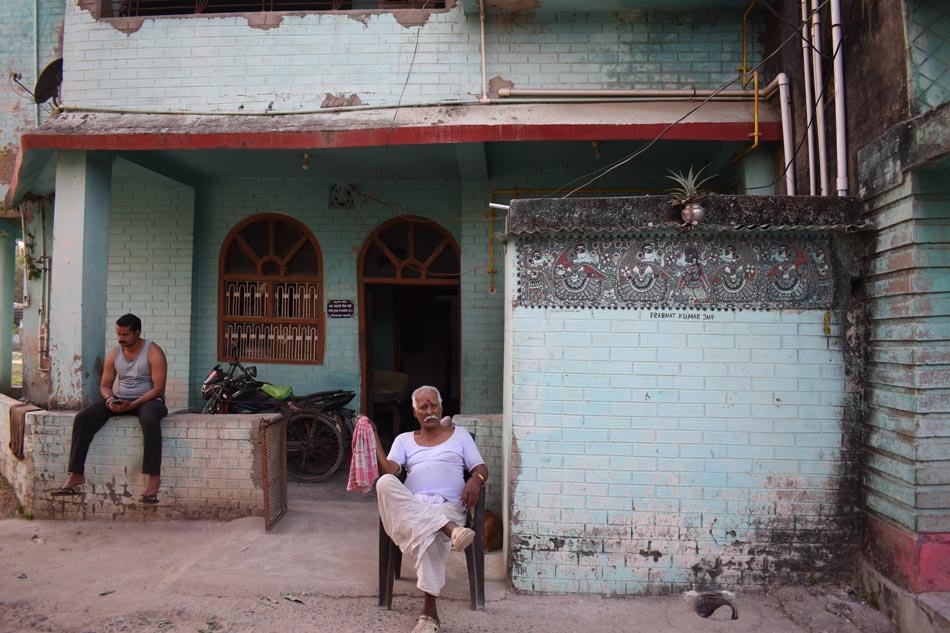
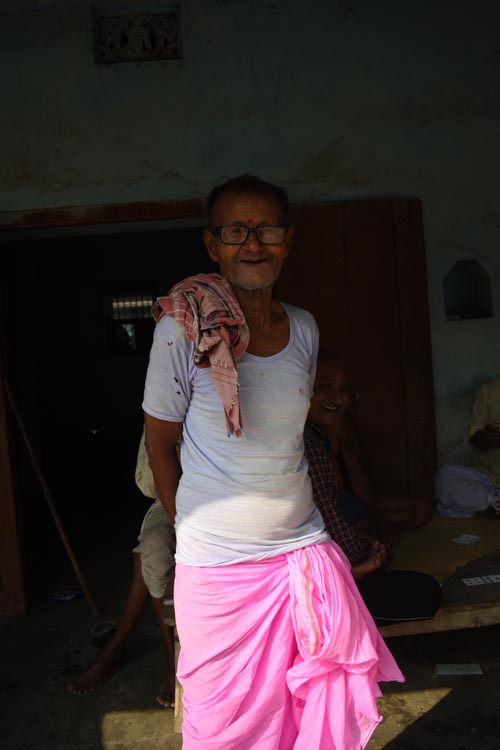
Globally, the Madhubani cluster is most famous for its namesake Madhubani or Mithila Painting, a striking, geometric folk art traditionally practiced by the women of the region. Recognized with a Geographical Indication (GI) tag, this art form uses natural plant-derived dyes, lampblack, and ochre, applied with twigs, matchsticks, and fingers, originally on freshly plastered mud walls and now on paper and canvas. It is a major export item and a powerful symbol of the region's living heritage.
Beyond the canvas, the district is historically renowned for its exceptionally fine Khadi weaving and spinning. Originating as a political tool during the freedom struggle under Mahatma Gandhi, the Khadi Gramodyog Centre in Madhubani Town became famous for producing extremely fine yarn, with local Maithil women traditionally said to spin sacred thread (Janaul) fine enough to fit inside a cardamom pod.
Agronomically and economically, the district is known for its vast wetlands supporting Makhana (fox nuts / water lilies) cultivation and specialized aquaculture. Madhubani is a major producer of Makhana, with significant potential for food processing. Its rivers and marshy chaurs also supported its emergence as Bihar's largest fish-producing district in 2022, producing varieties such as rohu, katla, and bachwa.
The district is also known for its spiritual and philosophical heritage, including the Kapileswarsthan Shiva Temple, Saurath Sabha, and numerous ancient Dihs associated with Vedic sages and classical scholars such as Kalidasa and Vidyapati. The region is also home to Mithilahaat, an urban Haat established at Araria Sangram and inaugurated in January 2023, serving as a dedicated marketplace celebrating the art and culture of Mithila.

List of craftsmen.
AuthIndia. Types of Madhubani Painting. Available at: https://www.authindia.com/types-of-madhubani-painting/
AstaGuru. Notable Woman Madhubani Painting Artists. Available at: https://www.astaguru.com/blogs/notable-woman-madhubani-painting-artists-605
Contemporary Tribal & Folk Arts of India (2006). Batohi Jha: Mithila Painting. Available at: https://contemporary-tribal-folk-arts-india.blogspot.com/2006/09/batohi-jha-mithila-painting.html
Down To Earth. Authenticity in question: Why Madhubani art deserves better protection. Available at: https://www.downtoearth.org.in/governance/authenticity-in-question-why-madhubani-art-deserves-better-protection
D’Source. Madhubani Paintings, Bihar. Available at: https://dsource.in/sites/default/files/resource/madhubani-paintings-bihar/downloads/file/Resource-madhubani-paintings-bihar_Final.pdf
EaseMyPrice. Madhubani Painting. Available at: https://easemyprice.com/madhubani-painting
Hindustan Times. Fake brigadier nabbed after army sting operation in Shahjahanpur cantonment. Available at: https://www.hindustantimes.com/cities/lucknow-news/fake-brigadier-nabbed-after-army-sting-operation-in-shahjahanpur-cantonment-101781290143219.html
Indira Gandhi National Centre for the Arts (IGNCA). Mithila Paintings. Available at: https://ignca.gov.in/PDF_data/Mithila_Paintings.pdf
KMGC Badalpur. Madhubani Art. Available at: https://www.kmgcbadalpur.org/wp-content/uploads/2019/10/3.3.4-138.pdf
Natriel. Madhubani Art: A Timeless Treasure of Bihar’s Soul and Culture. Available at: https://www.natriel.com/blogs/news/madhubani-art-a-timeless-treasure-of-bihar-s-soul-and-culture
Sahapedia. The Congruence of Tradition and Art Making in Mithila. Available at: https://www.sahapedia.org/the-congruence-of-tradition-and-art-making-mithila
Upendra Maharathi Shilp Anusandhan Sansthan (UMSAS). Madhubani Painting Details. Available at: https://umsas.org.in/madhubani-painting-details/
