



Banarasi Sarees ~ Va...
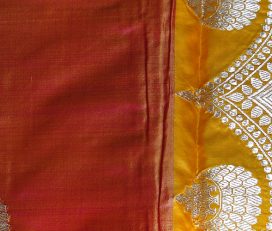
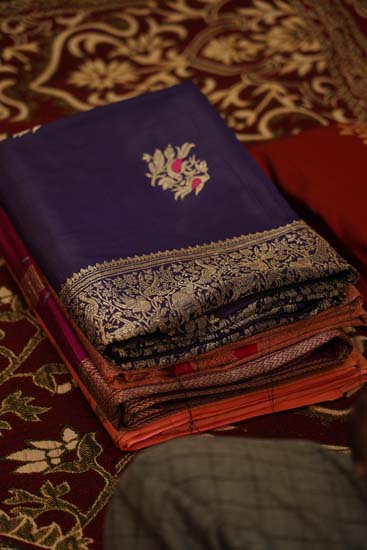
Banarasi sarees get their name from Varanasi, a city known for its rich tradition of handwoven textiles and intricate designs.
Varanasi, Uttar Pradesh, India...
 Gai ghat Varanasi, Gaighat, Gh...
 Varanasi, Uttar Pradesh, India...
 Kashmiri Ganj, Khojwan, Bhelup...
 Kashmiri Ganj, Khojwan, Bhelup...
Banarasi sarees get their name from Varanasi, a city known for its rich tradition of handwoven textiles and intricate designs.
Varanasi, Uttar Pradesh, India...
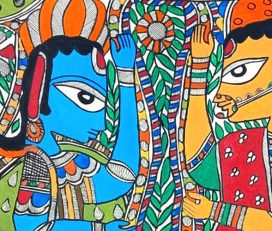
Mithila painting, is a vibrant and deeply symbolic folk art tradition originating from the Mithila region of Bihar, India, and adjoining parts of Nepal.
Madhubani, Bihar, India...
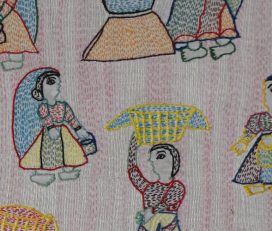
Sujani is a distinctive embroidery tradition of Bihar, particularly practised in Muzaffarpur district and surrounding villages.
Bhusra, Bihar, India...
Let us talk… if you feel the same love for handmade, and would like to support us by sharing your research or by contributing financially to our documentation efforts.
Reach us at [email protected]

Today, the charm of Banarasi sarees is at its peak, especially during the wedding season. Deeply rooted in Indian heritage, Banarasi sarees are an essential part of the wedding trousseau in most parts of India. Considered grand and auspicious, at least one Banarasi saree is traditionally worn by the bride during wedding celebrations. For many North Indian and Bengali brides, it serves as their bridal saree, while for others, it may be a reception saree or a special drape received as a gift from their in-laws as shagun (an auspicious wedding gift).
Due to their quality and intricate designs, Banarasi sarees never lose their charm. Even 50-year-old Banarasi sarees continue to carry a fresh appeal. This is why buyers also consider them a good investment.
Banaras has always been a prominent centre of art and music. The Banaras Kathak Gharana has also developed a unique identity. Kathak is popular among both Hindu and Muslim communities, and its dance costumes combine elements of both cultures. There are two traditional styles of clothing for Hindu women. One includes a saree with a distinctive drape, a choli or blouse, and a scarf. Another consists of a long skirt paired with a transparent odhni and a contrasting choli. Muslim dancers wear long coats covering their arms and upper bodies, fitted trousers known as churidars or pyjamas, and skirts. Scarves and elegant jewellery complete the ensemble. Banarasi fabrics add their own charm to these traditional costumes.
Historically, Banaras was famous for its cotton weaving, but gradually silk weaving became more prominent. Pure silk is essential for making an authentic Banarasi silk saree. Today, however, Banarasi textiles are also available in different materials, including Cotton, Tussar, Georgette and Crepe.
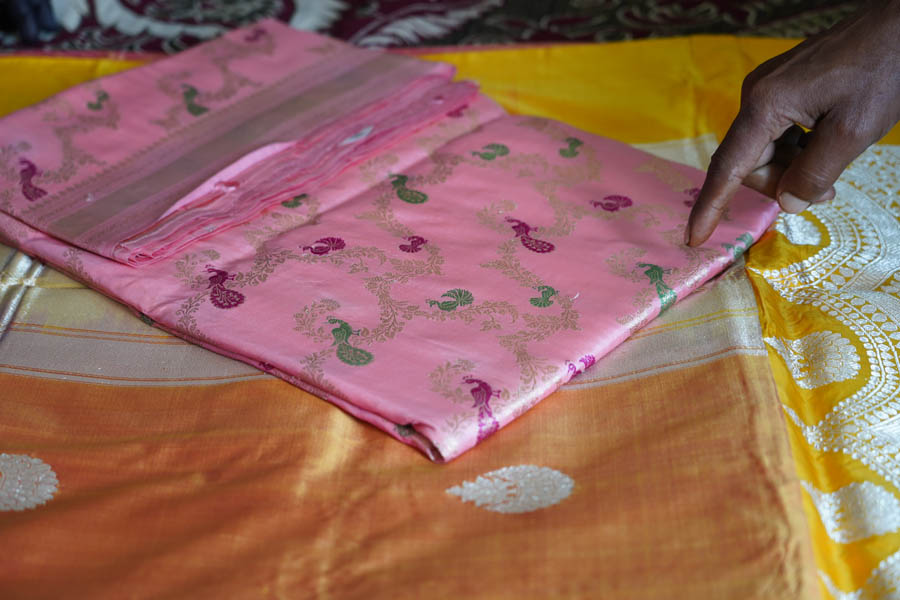
Some of the well-known varieties of Banarasi sarees include Banarasi Silk Jamdani, Jangla, Jamawar, Tanchoi, Tissue, Cutwork and Butidar sarees. Today, Banarasi weavers also create a wide range of other products, including silk dhotis, stoles, scarves, mufflers, mats, dress materials, wall hangings, curtains, cushion covers, table covers, napkins, runners and other home furnishings.
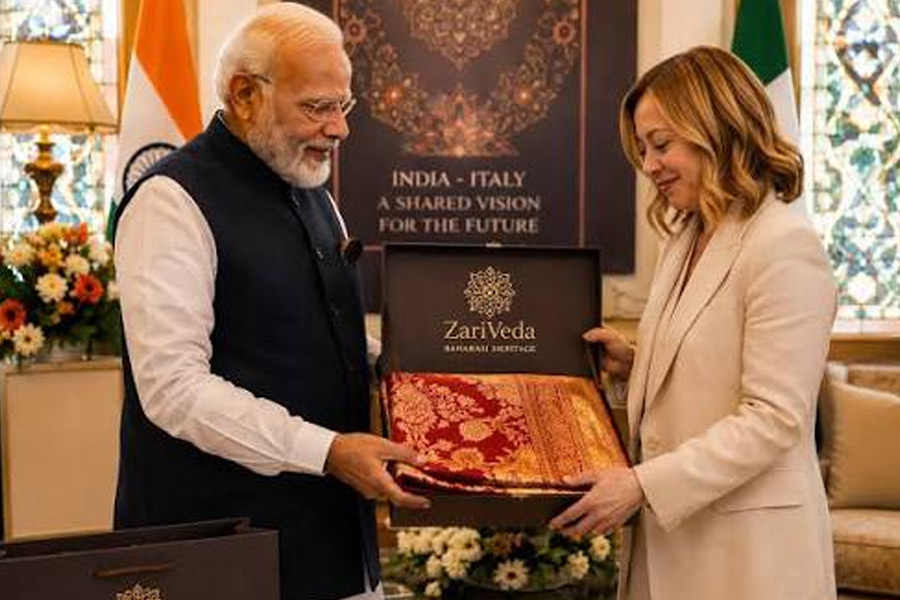
Today, Banarasi sarees and fabrics have acquired an iconic stature globally. They have become an ethnic symbol that has truly travelled across the world. From international celebrities to political leaders and fashion icons, everyone seems to be enamoured by this magnificent Indian textile. Prime Minister Narendra Modi famously gifted a bespoke, handmade Kadhua Banarasi silk saree to former US First Lady Michelle Obama and Prime Minister of Italy, Giorgia Melonivisit to India. Many Indian and international designers are also incorporating Banarasi fabrics into their collections. With growing demand, Banarasi sarees continue to enjoy popularity, while the fabric is finding new directions through contemporary designs and applications.
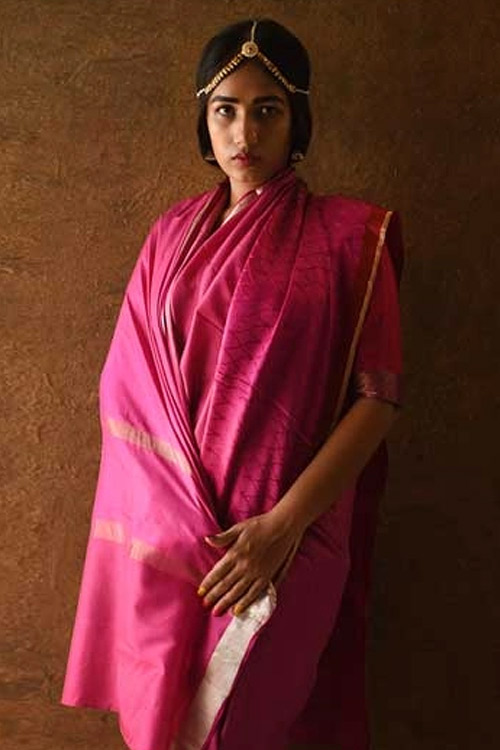
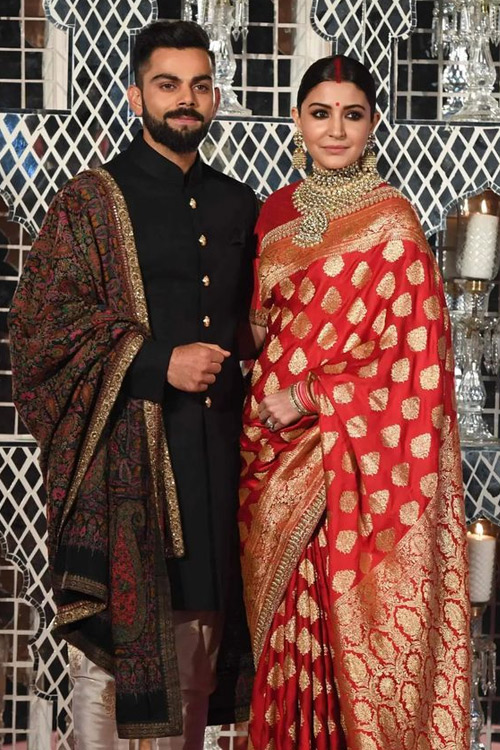
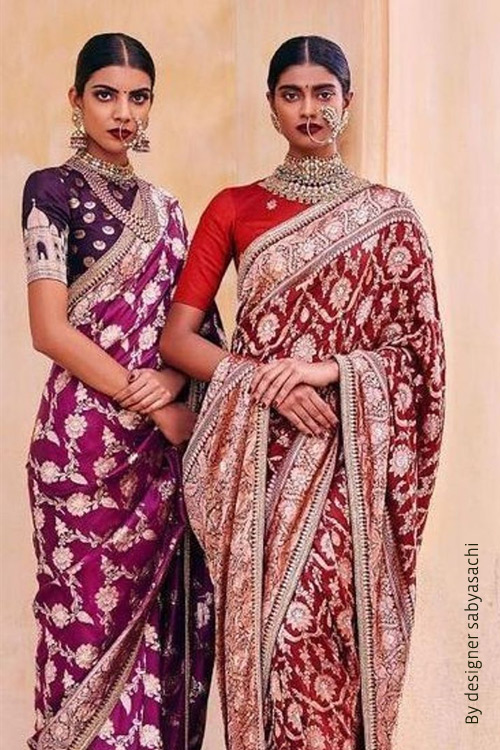
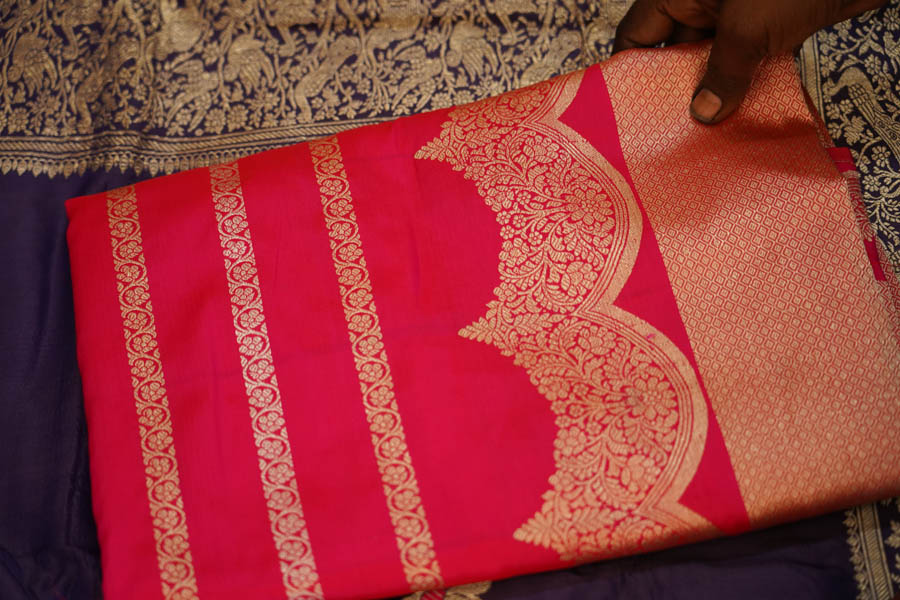
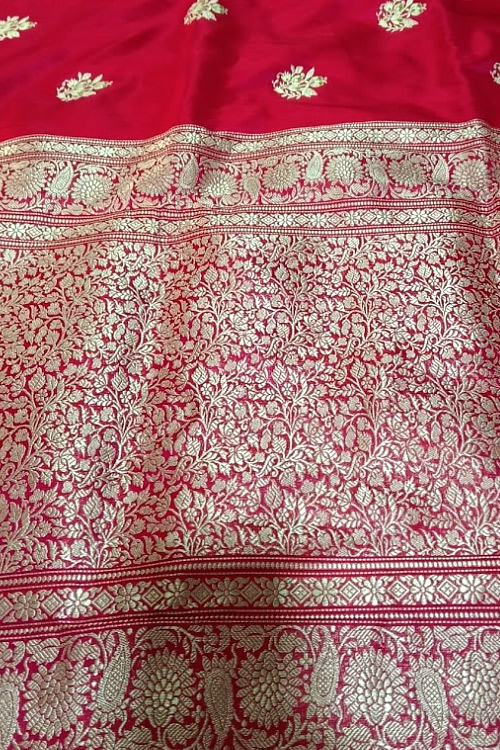
Today, Banarasi sarees have become an important symbol of Varanasi. They are highly sought after by tourists and visitors, and shops selling Banarasi sarees can be found throughout the city, from the airport and marketplaces to areas around the ghats and temples. The sarees are produced both in Varanasi and in the villages surrounding the city. While the high demand has led to the widespread production of powerloom sarees, handloom sarees made in the villages are often recognised for their finer detailing, richness, and craftsmanship.
Cultural Significance: Age-old crafts like Banarasi saree weaving are a testament to the creativity, traditions and values of past generations. They form an important part of our cultural identity and connect present generations to their roots. Learning and practising traditional crafts ensures that these skills are not lost with time, keeping historical practices alive for future generations.
We cannot look at these sarees merely as products; they are also documents that tell us stories of evolution. Through them, we can understand how changing influences, social conditions and lifestyles have shaped materials, designs and their usage over time.
Perhaps their greatest value lies in the fact that we still have skilled weavers who can create these sarees while retaining the quality, aesthetics and techniques of an earlier era.
Culture does not always live in museums. In Varanasi, it is still alive and can be experienced in its streets, workshops and weaving lanes, where generations of artisans continue to practise and carry forward this tradition.
Economic significance: Banarasi sarees received the Geographical Indication (GI) tag in 2009. The craft is primarily practised in and around Varanasi (Banaras) and Mubarakpur. Banarasi sarees are distinguished by their fine weaving (Bunnai), intricate designs, and traditional weaving techniques using warp threads (Tana).
Most Banarasi sarees are six yards long, and weaving a single saree can involve around 5,000 threads. Traditionally, these sarees are woven on handlooms, taking approximately 14–15 days to complete. This makes the process both time-consuming and labour-intensive. With growing demand, powerlooms have become increasingly common, allowing multiple sarees to be produced in a single day. However, handloom sarees have a distinct look and finish compared to those made on powerlooms.
Banarasi saree weaving is not limited to the city of Varanasi; many nearby villages are also engaged in producing handloom sarees. One such village is Garasara, located in the Cholapur area, approximately 25 km from Varanasi. The village has more than 150 looms, while Varanasi has an estimated 400–500 looms in total. Many looms in the main city are powerlooms, whereas Garasara continues to have a strong handloom tradition.
Around 100 families in the village are involved in this craft, providing employment to a large number of people. During our visit to Garasara, we met Alauddin ji, a fourth-generation Banarasi weaver who has around 50 artisans working with him. His work reflects the generational knowledge and skills that continue to sustain this craft.
Historically, Banarasi sarees were so expensive that only royalty and wealthy families could afford them. Some sarees featured real gold and silver threads, adding to their richness and value. Even today, the price of a Banarasi saree varies depending on its fabric, weaving technique, design and the use of threads. Prices generally range from approximately ₹12,000 to ₹1,56,000. The artisan’s profit margin is around 10–15% per saree, although this may vary depending on the product.
Today, Banarasi saree weaving supports an entire ecosystem, with many people involved at different stages, from sourcing raw materials and weaving to trading and selling. The main markets for Banarasi sarees include Chowk and Gol Ghar in Varanasi. Alongside sarees, the craft is also being adapted into contemporary products such as shawls, jackets, suits, scarves and dupattas.
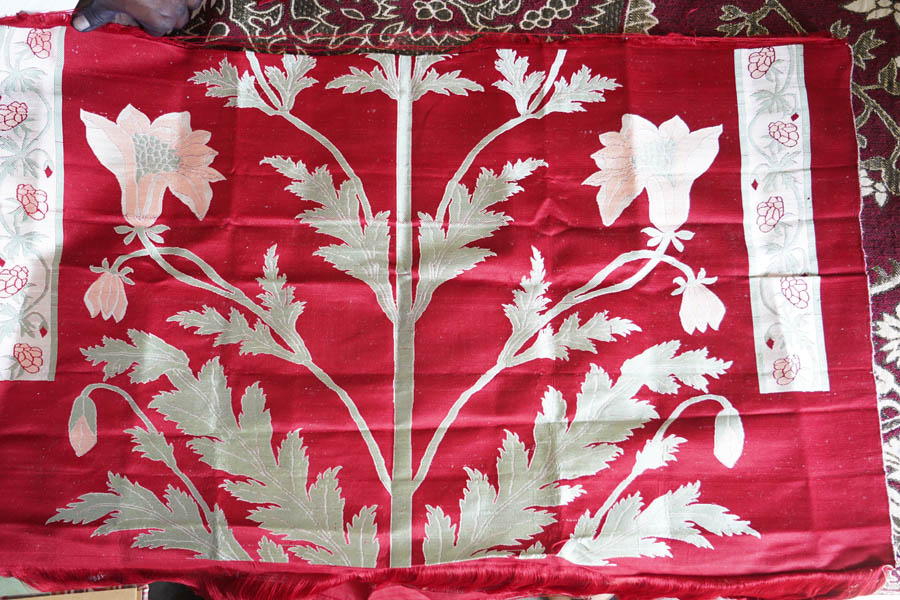
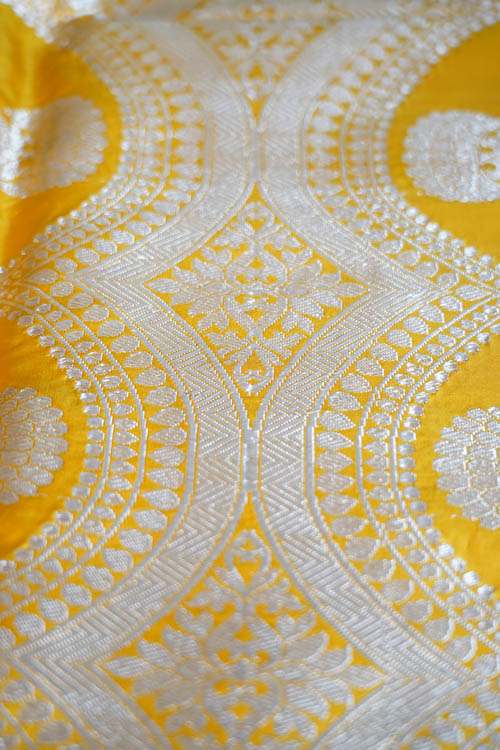
Artistic significance: From an artistic perspective, Banarasi weaving represents one of the most sophisticated examples of extra-weft weaving found in eastern India. The technique requires remarkable precision, as each motif is created by inserting additional threads into the fabric structure. The artistic potential of this technique has also allowed artisans to move beyond repetitive patterns and explore a rich vocabulary of designs.
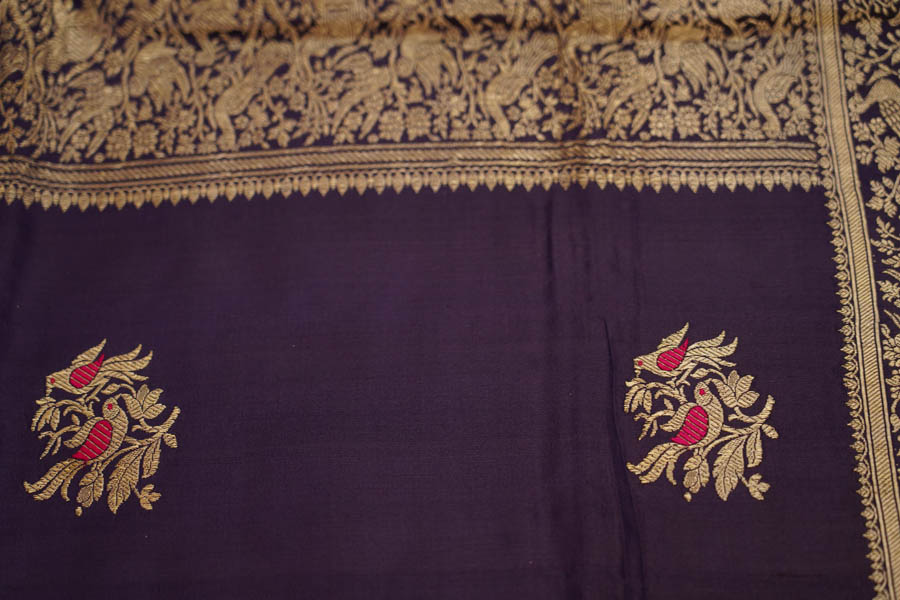
The motifs found in Banarasi sarees are unique to the visual vocabulary of Banaras and have evolved over generations. Today, weavers have developed an excellent understanding of motif dimensions, proportions and placement within the fabric. With the introduction of Jacquard looms, new possibilities have opened up for weavers, allowing them to explore designs beyond traditional floral motifs, including architectural elements such as the iconic Ghats of Banaras.
However, the use of Jacquard does not necessarily make the weaving process easier. The Jacquard mechanism lifts specific threads according to the design, but handling fine silk threads, maintaining tension and ensuring the quality of the weave still require considerable skill and experience.

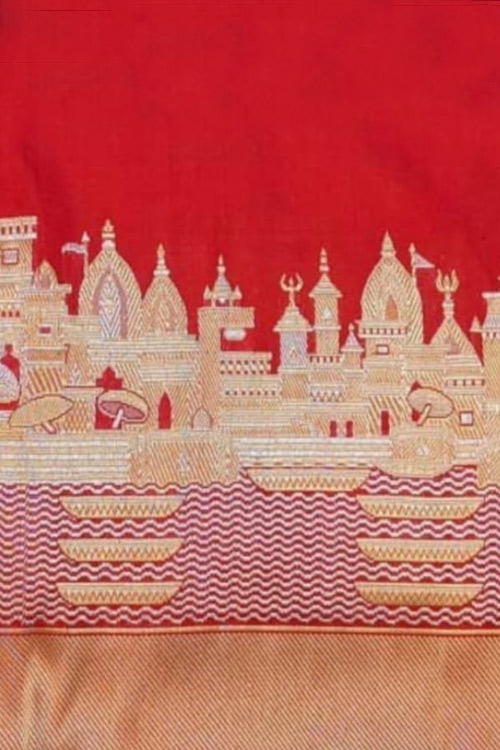
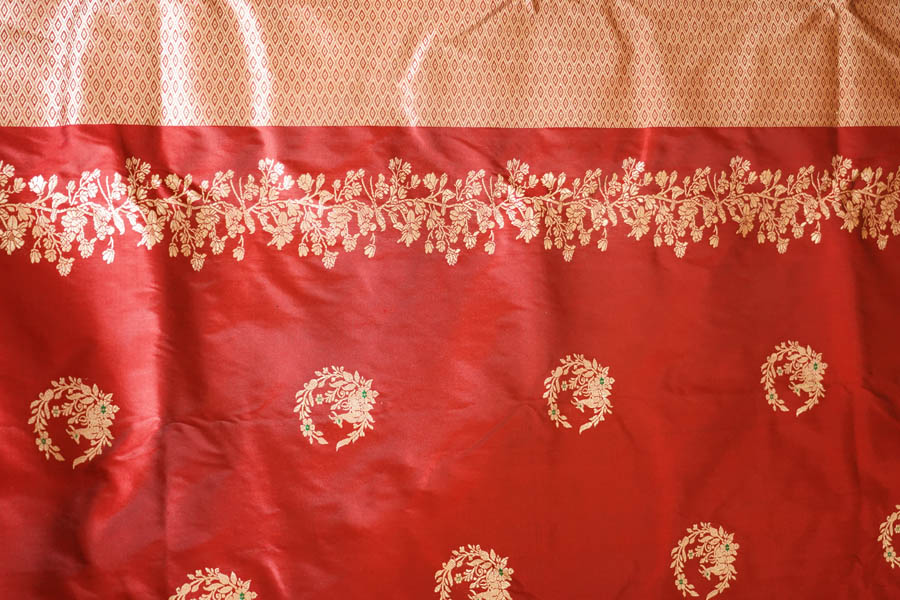
Bengali cinema played a significant role in popularising the red-and-gold Banarasi sari as an essential element of bridal attire. Particularly from the 1940s onwards, films frequently portrayed Bengali brides in richly woven Banarasi saris, associating the garment with bridal splendour, prosperity and the emotional dimensions of marriage. The sari gradually became a powerful cinematic symbol, representing not only the joy and anticipation of married life but also yearning, unfulfilled love and marital disappointment. Its repeated portrayal on screen helped reinforce its cultural importance, making it an iconic choice for Bengali brides during their principal wedding ceremonies
The cultural recognition of the Banarasi sari extended beyond India through its representation in international popular culture. Mattel’s Indian-themed Barbie dolls featured traditional Indian bridal aesthetics, including the iconic red-and-gold sari associated with Banarasi textiles. The choice reflected the garment’s strong association with Indian weddings, luxury and traditional femininity. Through this representation, the Banarasi aesthetic became part of a globally recognised image of Indian cultural identity, demonstrating how a regional textile tradition could transcend geographical boundaries through popular consumer culture.
The Mughal period, particularly during Emperor Akbar’s reign (1556–1605), contributed to the flourishing of India’s luxury brocade traditions. Royal patronage and the exchange of artistic influences encouraged the development of elaborate textile designs, incorporating Persian-inspired floral patterns, intricate foliage, jali motifs and hunting scenes. Banarasi brocades became particularly valued for their fine silk, elaborate weaving and the use of gold and silver zari. These luxurious textiles found favour among royal courts and aristocratic households, becoming associated with wealth, refinement and imperial taste.
Banarasi brocades were highly valued among India’s royal and aristocratic communities, including the Maratha nobility. Their intricate craftsmanship, fine silk and gold and silver zari made them expensive luxury commodities, often associated with wealth, social standing and ceremonial prestige. Fine textiles also played an important role in royal gift-giving and diplomatic exchanges, where they were presented as symbols of respect, honour and political relationships. Their circulation among influential households reflected the importance of Banarasi brocades as markers of economic value and aristocratic status.
To understand Banarasi saree weaving, we must first understand the history of the place and its cultural significance. Banaras is considered one of the oldest pilgrimage centres for Hindus. Its ancient name, Kashi, is now known as Varanasi. Mark Twain described it beautifully: “Benares is older than history, older than tradition, older even than legend and looks twice as old as all of them put together.” (Twain, 1897).
Hindus believe that it is a land of salvation, where one can attain freedom from the cycle of birth and rebirth. The River Ganga is believed to have the power to wash away the sins of human life. Its importance is mentioned in ancient texts, and Banaras has long been a renowned centre of learning.
As banaras was a center for knowledge and culture, many art, craft and litractureer also evolved here and weaving was one of many. The present form of Banarasi sarees is not the result of an overnight evolution; it has developed over thousands of years. Understanding the history of these sarees is not easy, as it cannot be traced through a simple linear timeline. If we look at as a material first, the history of silk production in India goes back to thousands of year. a recent study of artefacts recovered during one of the excavation seasons at Harappa in 1999 revealed the presence of silk. The silk was not degummed but contained sericin-coated, twinned brins, or filaments of fibroin. Micromorphological studies indicated that it belonged to wild silkmoth species rather than Bombyx Mori. More recent excavations near Sinauli have also provided insights into the advanced material culture and technologies that existed around 4,500 years ago.
Cotton Weaving– In many old document many different word comes for cotton like ‘Karpasa’ , ‘Pichavya‘ (Patanjali), ‘tula’ etc. In the Jatakas, Karpasa is mentioned many times. Many area like Madhura , Aparantakam , Kalinga , Vanga , Kausambi, banaras was famous and best p;ace for cotton tectile. According to the Tundrila Jataka, there were cotton fields (kappasakhetta) in the neighbourhood of Banaras. The women looked after the proper upkeep of such fields and were known as “kappa sarakkhika”.
During the Mauryan and subsequent periods, cotton was in great demand for textile production. The cloth of Kasi was highly renowned and exported to foreign countries.
Kautilya gives a full account of the textile industry and notes to many cotton growing places including Kashi. Same time many more Historical references to the textiles of Kasi include terms such as ‘Kasikavattham‘, ‘Kasikam‘ and ‘Kasikasucivatthara‘.
Many Buddhist literature is full of references to the cloth of Kasi. Varanasi is a very important centre for textile. These references also highlight the exceptional quality of the fabric. Its fine structure was said not to absorb oil. Literature also mention that, the women spinners and weavers were highly skilled, and the water used for bleaching was soft and suitable.
It is also mentioned that banarasi cotton was not only famous to the region but local merchant was exporting to europian market too. During greek civilization main textile was wool and cotton was unique experience for them. they were unfamiliar with how cotton was produced and believed it to be wool growing on trees.
Silk Weaving: According to Valmiki, When Rama and his brother came home after their marriage, the women cf the household ‘ ‘eager to embrace their beauteous daughters, received the happy Sita, the far-famed Urmila and the two daughters of Kushadhvaja, all sumptuously dressed in silk and entertaining each other with agreeable conversation to the temples of the gods to offer incense.”
In Vedic literature, we also find references to several kinds of textiles, including cloth woven with gold threads, known as Hiranaya. Gods, in their resplendent grandeur, are described as wearing such textiles while travelling in their magnificent chariots. Hiranaya cloth has often been interpreted as an early equivalent of present-day zari work or Kimkhab brocades.
For silk too many different terms come in different books like Panini mentions the term ‘Kauseya‘, Jain Acharahga Sutramention “patta”, in Mahabharata word ‘kitaja’. The term Kauseya is associated with silk produced from cocoons, and although other silk-producing insects were also known, the word was specifically used for silk cloth.
Kautilya – Chanakya also describes four varieties of silk cloth: (i) yellow (Pita), produced on Naga-Vriksha; (ii) wheat-coloured, produced on Likucha (Artocarpus Likucha); (iii) white, produced on Vakula; and (iv) butter-coloured, produced on Vatu.
The The Odyssey (750–700 BCE) is an ancient Greek epic poem attributed to the poet Homer, accurately describes a Banarasi kinkhab of the shikargah (hunting ground) design.
Atheneacus in A.D. 230 quotes from Duris (285-247 B.C.) description of a cloak worn by Demetrius (330 B.c.) into which were woven stars and the twelve signs oi the Zodiac representing the heavens. This was the design of an Indian kinkhab called Chand tara (moon and stars). Same time Buddhist literature also mentions Kauseya. In the Mahavagga, Buddha permitted monks to wear silken garments, referred to as ‘Kauseya Pravara‘.
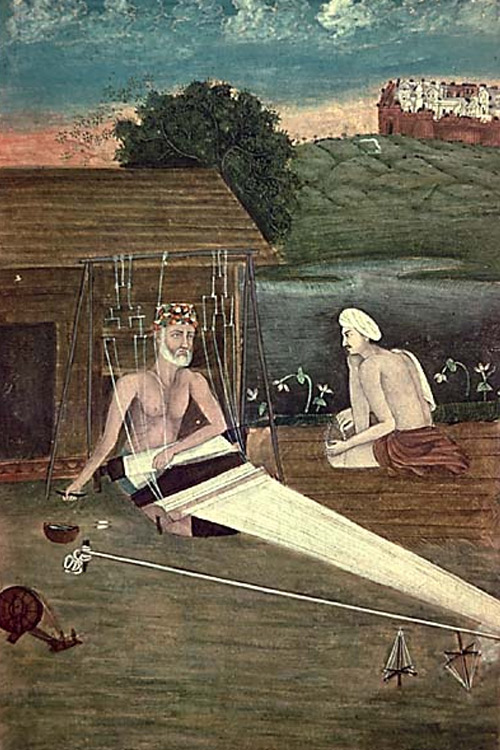
During the 15th century, Kabir, who was also a weaver, became an important figure during the Bhakti movement. Several accounts mention that he practised cotton weaving.
Here is one of his numerous songs inspired by the craft of weaving:
I weave your name on the loom of my mind,
To make my garment when you come to me.
My loom has ten thousand threads
To make my garment when you come to me.
The sun and moon watch while I weave your name;
The sun and moon hear while I count your name.
These are the wages I get by day and night
To deposit in the lotus bank of my heart.
I weave your name on the loom of my mind
To clean and soften ten thousand threads
And to comb the twists and knots of my thoughts.
No more shall I weave a garment of pain.
For you have come to me, drawn by my weaving,
Ceaselessly weaving your name on the loom of my mind.
According to some accounts, silk weaving got more flourished in Varanasi between the 16th and 18th centuries, during the Mughal period. Weavers incorporated real gold and silver threads into silk garments, making them luxurious textiles that only India’s wealthiest and most influential families could afford. From Akbar’s time onwards, we find a more continuous visual record of zari work and brocades in Mughal and Rajasthani paintings. It is believed that the weaving of these elaborate textiles developed further during this period, with influences from Persian and Mughal design traditions.
Some of the earliest well-documented descriptions of Banarasi textiles come from British travellers who visited Banaras during colonial rule. George Viscount Valentia (1770–1844), in his travel account, writes that the prosperity of the people of Banaras largely depended on brocade and zari manufacturing and trade, as these textiles were popular export items in Europe.
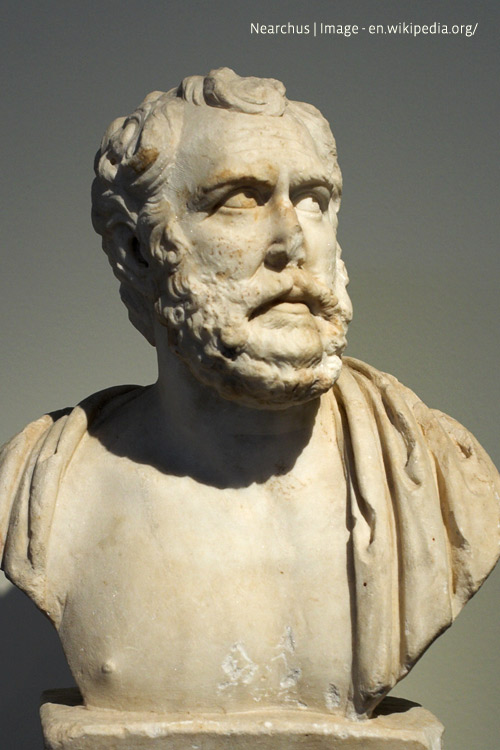
Garments of banaras– its also important to understand that banaran is not always famous for saree. It is also important to understand that historically what earlier people use to wear. Early record suggest that people generally wore two separate garments: one covering the lower body and another covering the upper body. Nearchus (360–300 BCE) describes Indian clothing as follows: “They wear an under garment of cotton which reaches below the knees half way down to the ankles, and also an upper garment which they throw partly over their shoulders, and partly twist in folds round their head.” These garments are commonly associated with the Antariya and Uttariya.
There were also several other forms of clothing, such as Aprapadina (dhoti), Ardhoruka (skirt), Nevi (a garment worn around the waist), Pataka (the front portion of the Nevi) and Kaftchuka (coat), among others.
History is vast. Many kingdoms have risen and disappeared yet, like the River Ganga, the weaving tradition of Banaras has continued to flow through time and has never left the city.
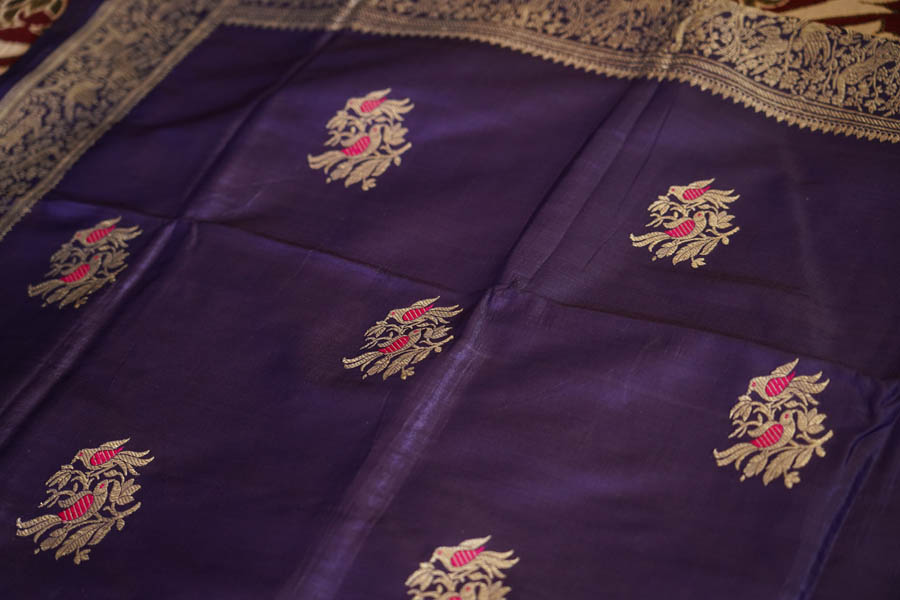
Some of the most famous sarees of Banaras are Banaras Silk Jamdani, Jangla Saree, Jamwar Tanchoi Saree, Tissue Saree, Cutwork Saree and Butidar Saree.
Banaras Silk Jamdani is considered to be one of the finest products to come out of the Banarasi loom. The silk fabric is brocaded with cotton and rarely with zari threads. Traditional motifs of Jamdani include Chameli (Jasmine), Panna hazar (Thousand emeralds), Genda buti (Marigold flower), Pan buti (Leaf form), tircha (diagonally striped), etc. The most attractive design feature of the Jamdani sari is Konia, or a corner motif having a floral mango buta.
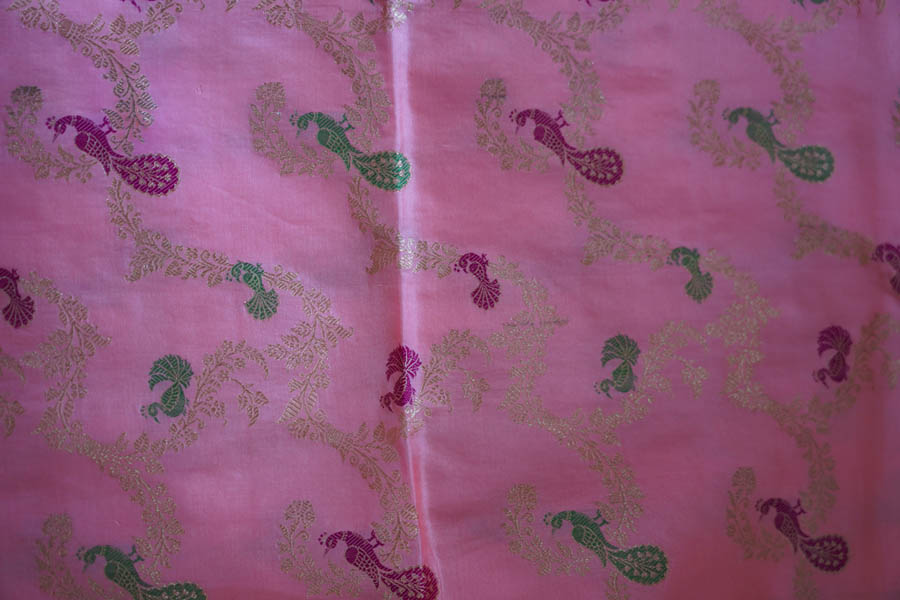
Jangla Saree has colourful silk threads amidst the usual gold and silver motifs. The saree is an example in which munga motifs have been laid. Jangla, a wildly scrolling and spreading vegetation motif, is among the oldest in Banaras brocades.
Jamwar Tanchoi sarees are woven using colourful extra weft silk yarn for patterning. This variety is known as Tanchoi.
The Tissue sarees of Varanasi are unbelievably delicate, combining the use of gold and silver metallic threads. The renowned zari brocade weavers of Banaras have evolved a technique of weaving tissue material, which looks like golden cloth.
Cutwork Saree is prepared by cut work technique on plain ground texture after removing the floated thread which are not woven (design) during the weaving process which provide good transparent look. Cutwork is the cheaper version of the Jamdani variety. In cutwork, the pattern is made to run from selvedge to selvedge, letting it hang loosely between two motifs and the extra thread is then cut manually, giving the effect of jamdani.
The Butidar saree is a rich kind of the Banaras Saree in high traditional pattern motif of the design locally popularized such as Angoor Bail, Gojar bail, Luttar Bail, Khulta Bail, Baluchar Bail, Mehrab Bail, Doller Butti, Ashraffi butti, latiffa butti, resham butti, jhummar bhutti, jhari butta, kalma butti, patti butti, lichhi butti, latiffa butta, kairy kalangathakka anchal and mehrab anchal with the use of real gold and silver zari and katan silk in the weft.
The word Buti denotes a small stylized flower or any single disconnected motif whether floral or not. The term Buta denotes a large buti, like the buti Buta is also an integration of flowers, leaves and creepers.
Different forms and flowers give name to the motifs (butas) used in the Banarsi Saree. Some popular examples are pan, i.e. heart shaped buti (betel), fardi (the effect is produced by dots), keri (mango), tara (star), chandbuti (moon-shaped), ashrafi (circular, coin-shaped), and so forth. The butis (smaller motifs) are given the names of flowers called phul (flower) butis, such as chameli (jasmine), champa, guldaudi (chrysanthemum), genda (marigold), gulab (rose) and parijat. The number of petals used in a buti also gives it its name, like tinpatia (three-petalled), panchpatia (five-petalled), satpatia (seven-petalled). If these butis are woven in a bel (creeper pattern), it is called genda bel, guldaudi bel, gulab bel and so forth.
The classification of Design by the weavers of Banaras are:
Doriya: Stripes running vertically (warp ways)
Salaidar: Stripes running horizontally (weft ways)
Ada doriya: Diagonal stripes
Khanjari or Laharia: Wavy or angular lines
Charkhana: Checks (square or rectangular)
Ilayecha: Small lozenge-shaped figures formed by diagonal lines running in opposite directions
Bulbul chashm: Small lozenge-shaped figures with dots at the centres
Mothra: Double lines containing a simple or running pattern inside. Used as borders or divisions between different portions of a complex pattern
Bel: A generic term for borders, but it is more applicable to running or floral scrolls
Ada Bel: When the running floral scrolls appear diagonally
Jaladar: Jal is the filling space between butis. The mesh may have first been developed from a simple check or diamond pattern which gradually modified its side into vines and enriched these with interspersed flowers
Kona: It is a cone shaped form (Kalanga) which appears at the right angle of the border and pallav and is placed diagonally.
Phulwar running pattern: Of leaves and flowers all over the groundwork
Jhardar pattern: Of sprays
Patridar pattern: Of leaves
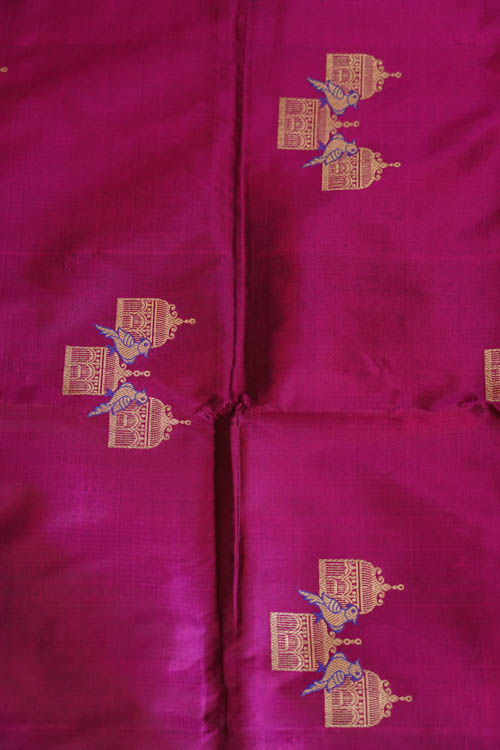
Other traditional patterns include Shikargah (hunting scenes and animals) like Triple Pinjra, which uses a repeated cage-like geometric structure; and Scallop designs, which are commonly used along the borders.
The pallu is usually one of the most heavily decorated sections of a Banarasi saree, featuring elaborate motifs and woven patterns. A standard saree generally uses around 5.5 metres of fabric, with an additional 1 metre often used for the blouse.
The intricacy of designs in the textiles of Banaras has earned much fame over the years. Earlier the weaving technique that was used was Jala loom, The Getwa preceded it, and today the Jacquard is taking over. The Jala weaving technique has enabled the Banaras craftsmen to produce their exquisite designs because of its vast capacity to manipulate different weaving orders. Jala is not and was not the only technique of weaving prevalent in Banaras.
The intricate designs of Banarasi textiles have earned them recognition over the years. The weaving techniques used in Banaras have also evolved with time. Traditionally, the Jala loom was widely used, followed by the Getwa technique, while the Jacquard system is more commonly used today.
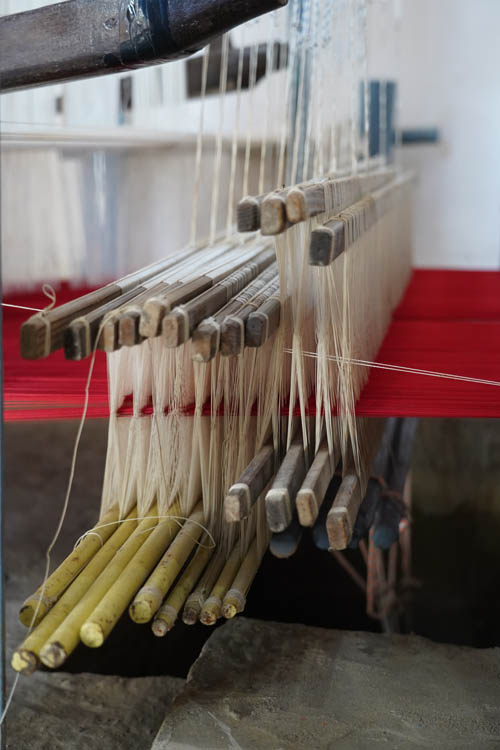
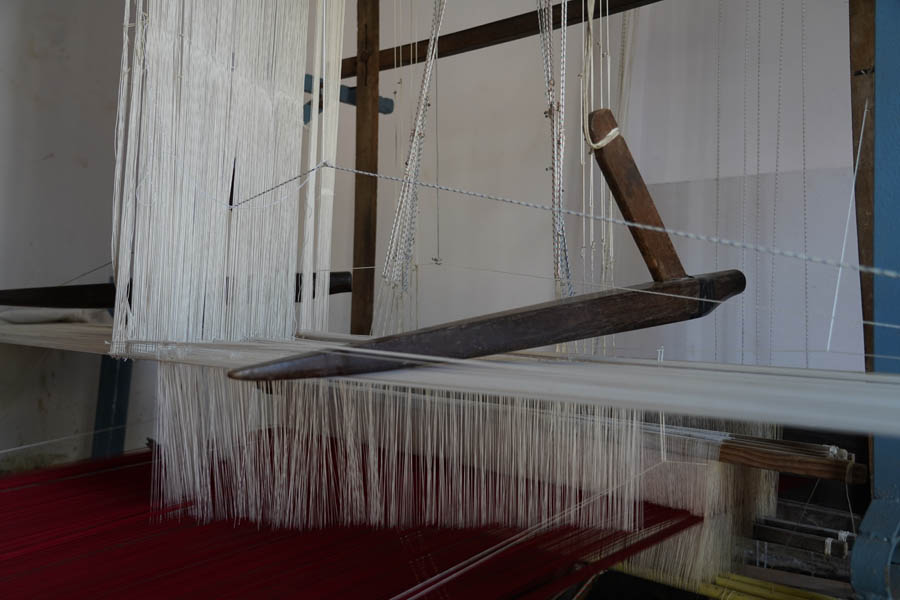
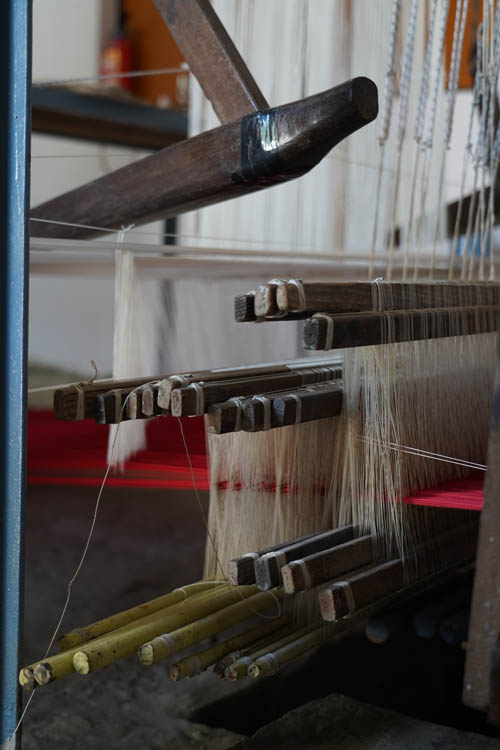
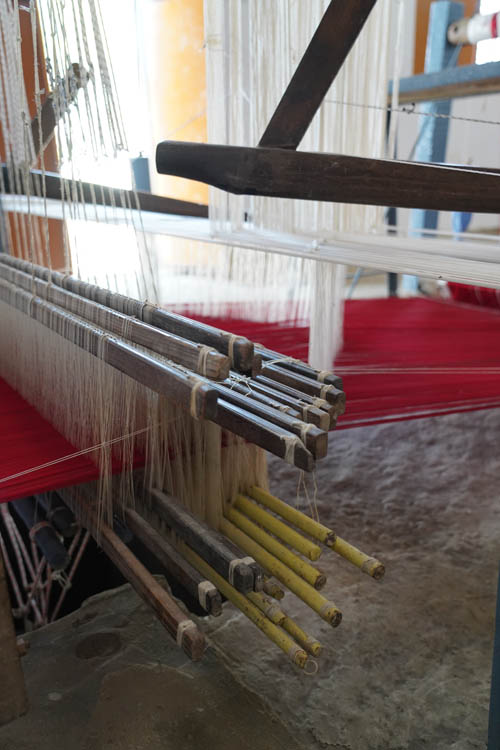
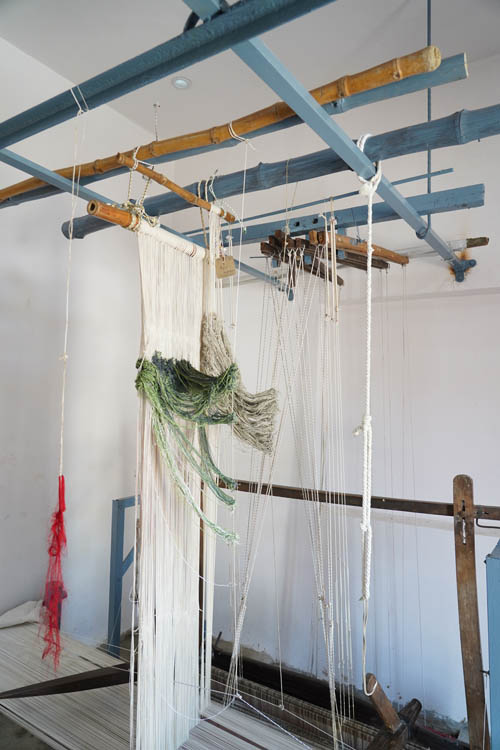
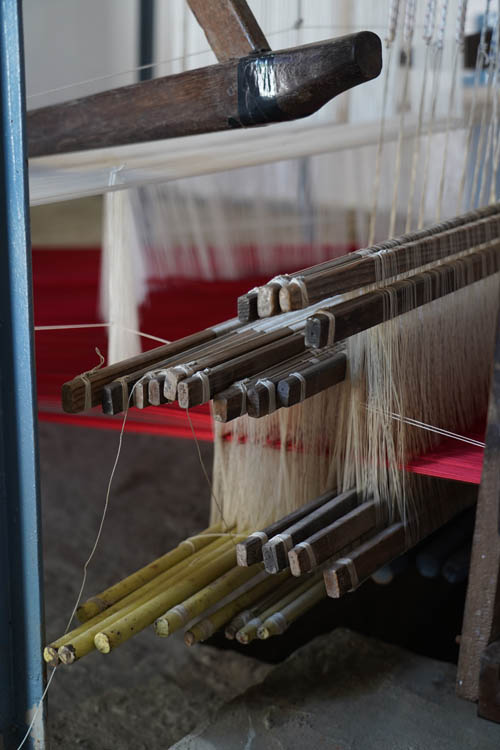
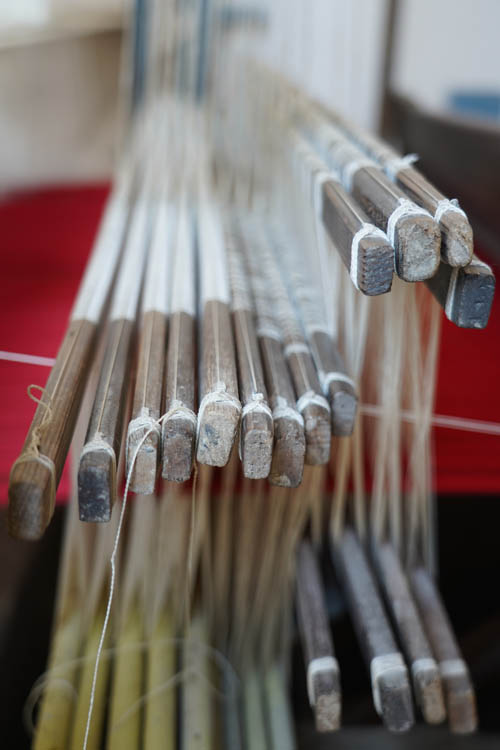
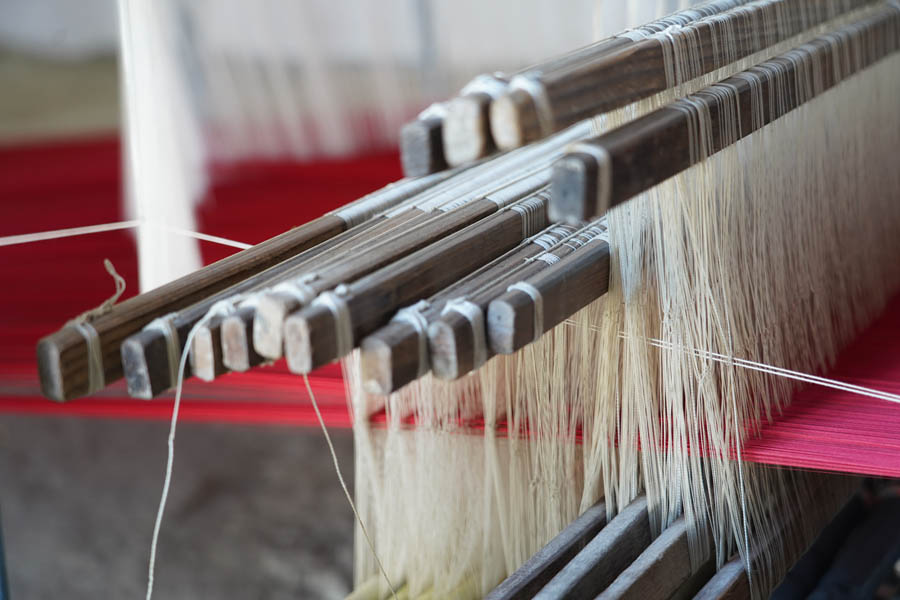
The Jala is an attachment atop a loom consisting of threads which contain the complete series of lifting orders for an intricate design. These threads are attached to their corresponding ends on the warp below. When each of the jala thread is raised, its corresponding combination of warp ends also gets raised, forming a shed through which weft is passed. The making of jala is a lengthy process.
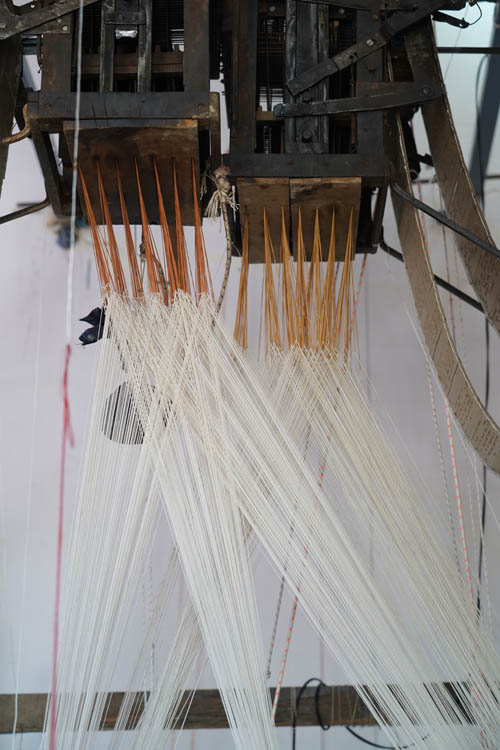
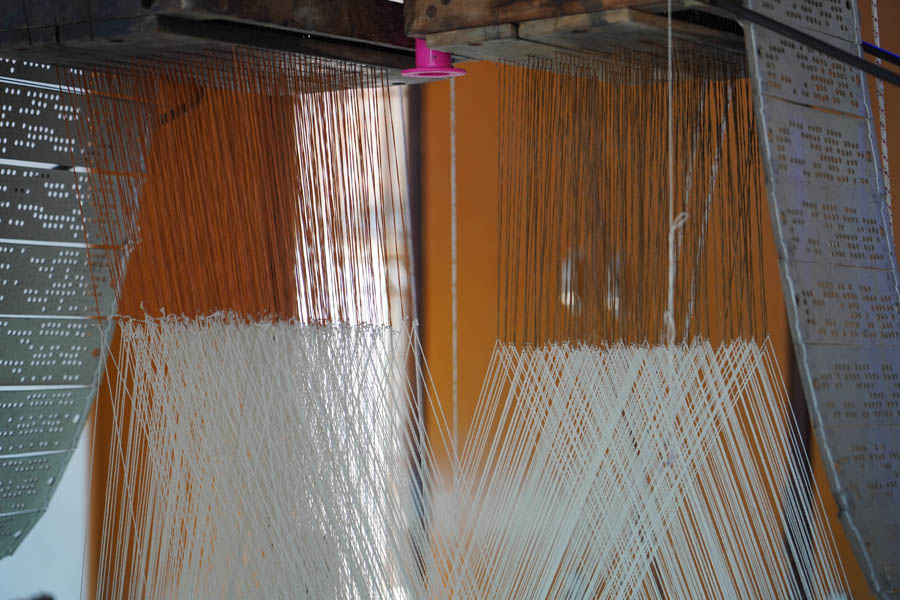
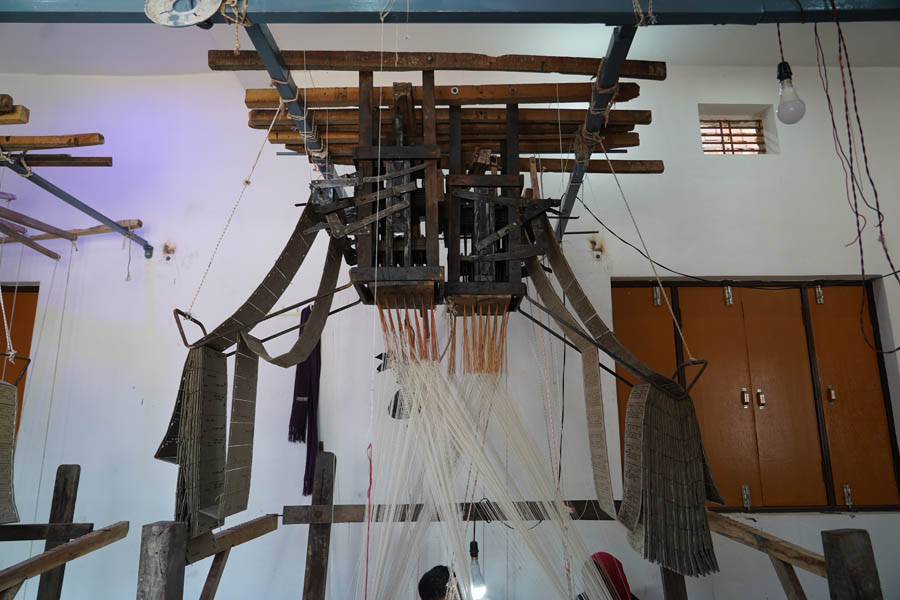
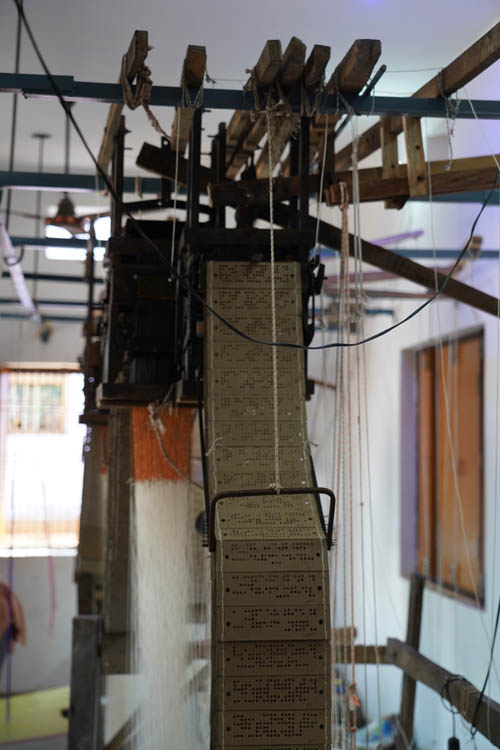
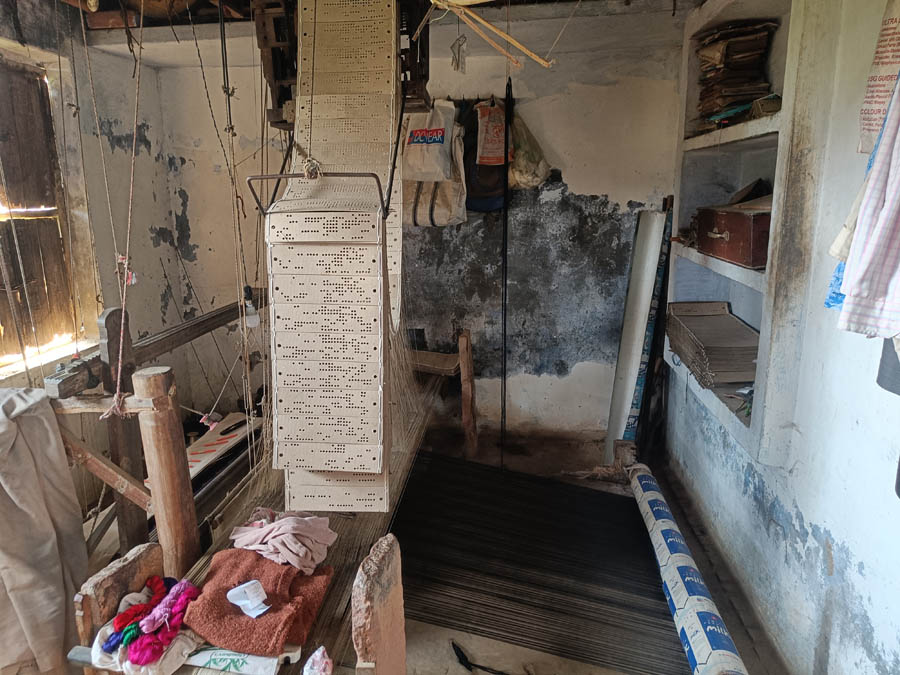
Jacquard is a special mechanism situated over the loom. It is constructed such that each and every warp end can be raised or lowered at will to form intricate motifs or design.
The Jala technique allowed Banarasi weavers to create highly detailed patterns by giving them greater control over the arrangement of threads. However, the Jala loom requires greater precision and skill; therefore, over time, several weave structures and techniques evolved.
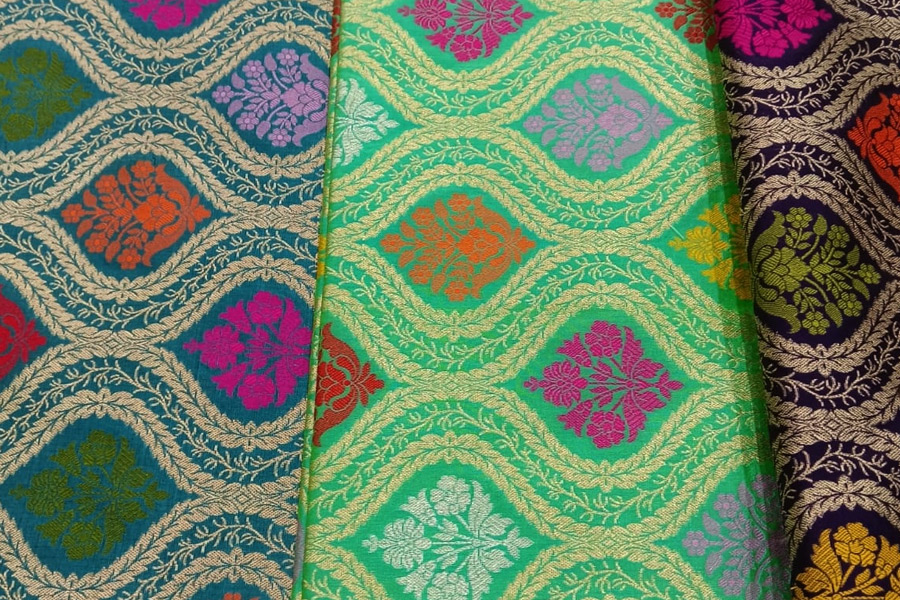
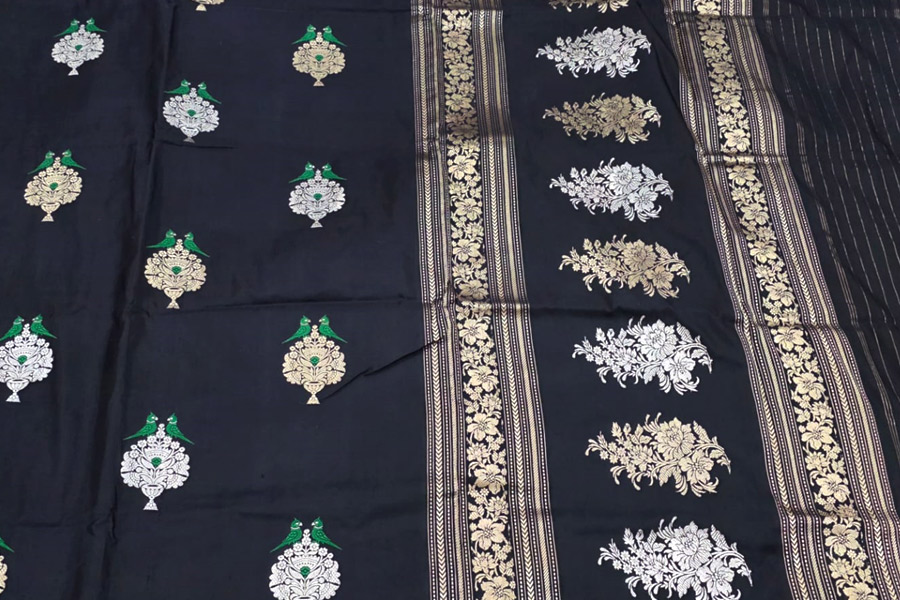
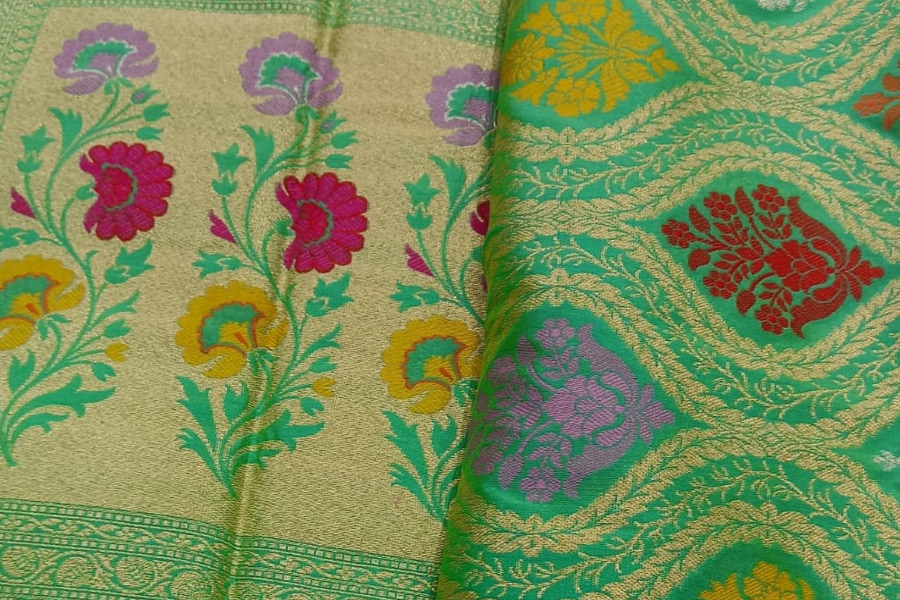
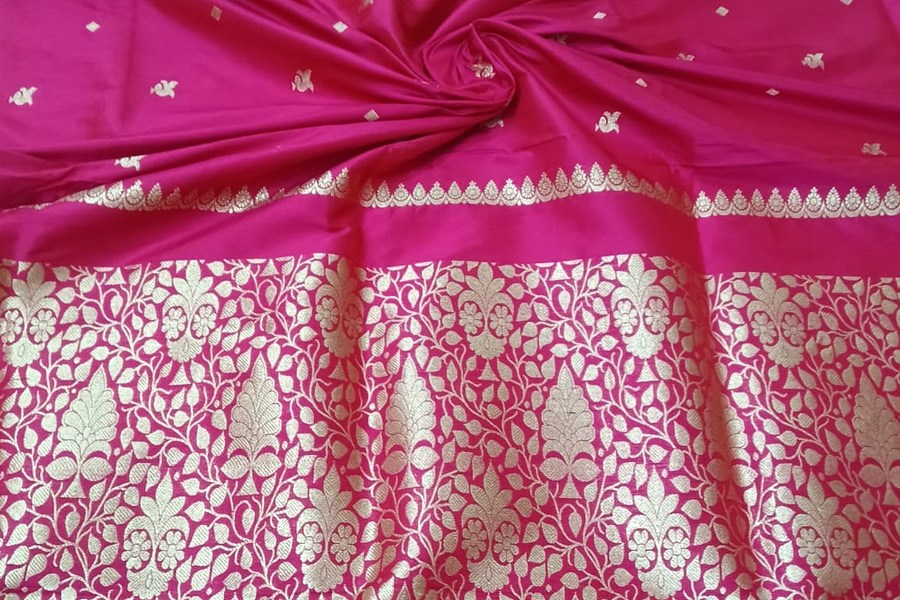
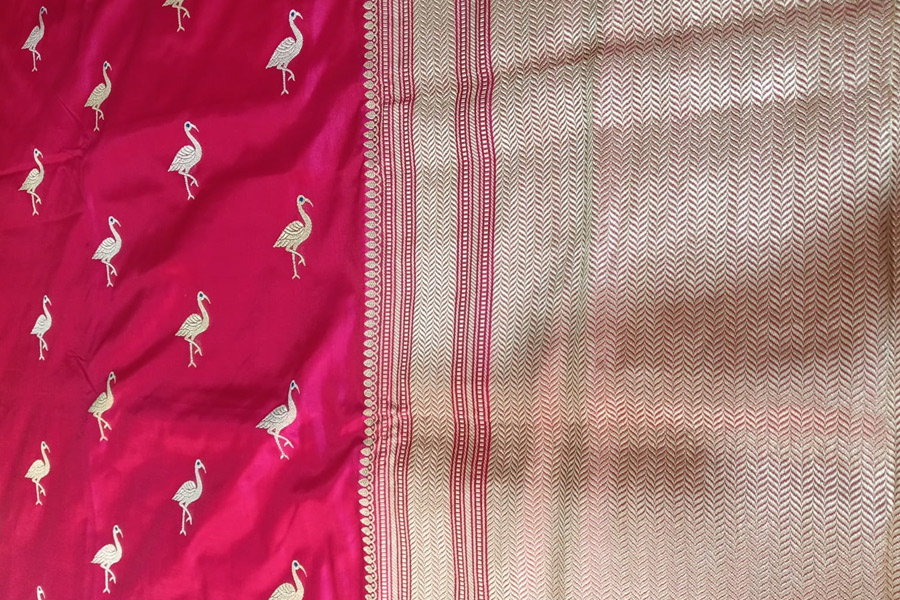
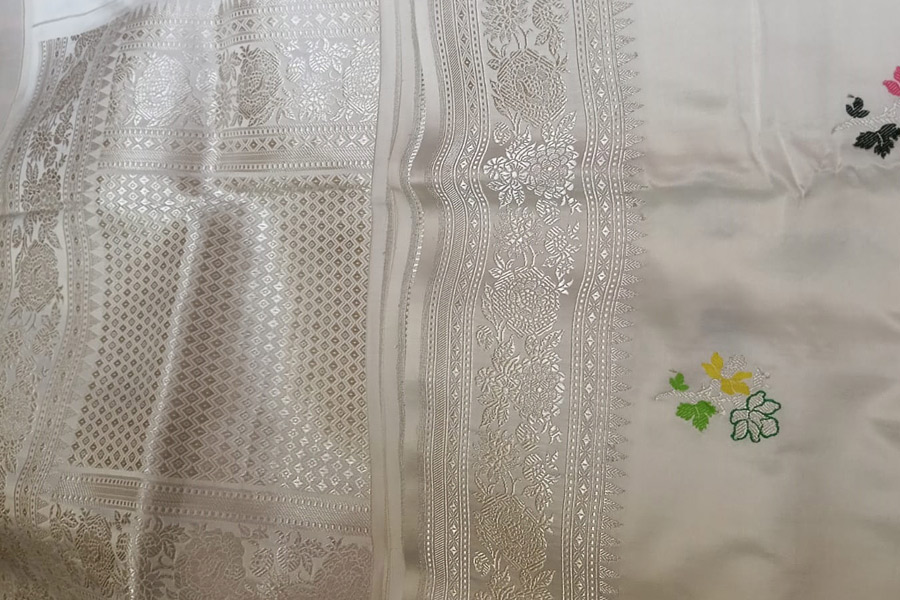
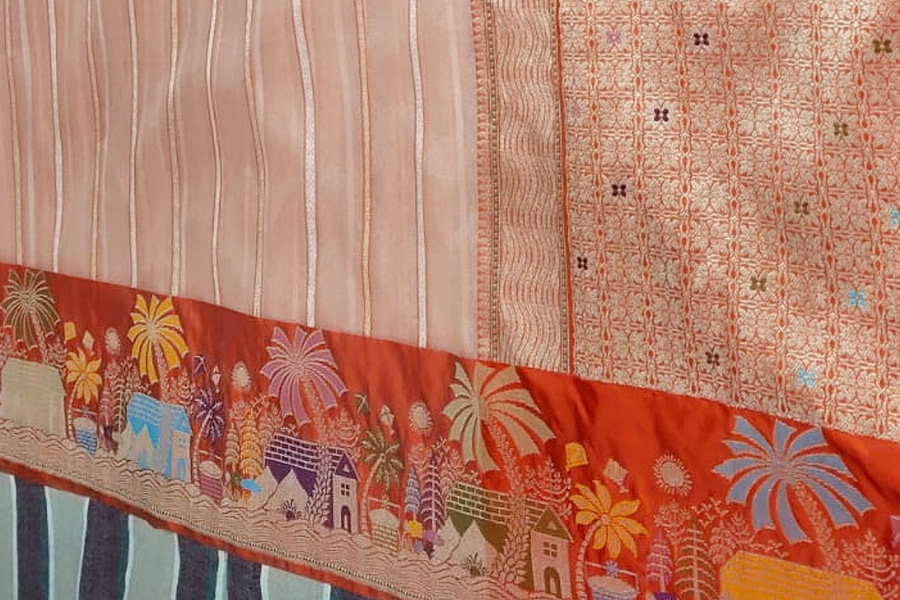
Handloom Banarasi sarees require considerable time, skill, patience, and labour. A single saree can take around 14-15 days to complete, making the process much slower than powerloom production. As demand for Banarasi sarees has increased, many weavers have shifted towards powerlooms, which can produce multiple sarees in a day. As a result, the number of artisans continuing to work on traditional handlooms has declined.
Another challenge is the increasing availability of replicas and powerloom sarees in the market. Cheaper versions of traditional Banarasi designs are often produced on powerlooms and may sometimes be sold as handloom sarees, particularly in tourist markets. In some cases, art silk and other synthetic materials are also used as alternatives to pure silk, making the sarees more affordable but different from traditionally woven silk sarees.
For artisans, handloom weaving can also involve greater financial risk. According to the information collected during the field visit, an artisan’s profit from a saree may be around 10–15%. Handwoven sarees also require careful handling, and significant damage or staining can make them difficult to repair or sell.
The growing preference for faster and cheaper production has therefore created a challenge for the survival of traditional handloom weaving. While powerlooms have helped meet market demand, they have also contributed to the decline of certain traditional weaving practices and skills.
Most Banarasi sarees are around six yards long and require nearly 5,000 threads to weave a single saree. The process is detailed and time-consuming, often taking around 15–20 days to create a saree with a filled (bharwa) design.
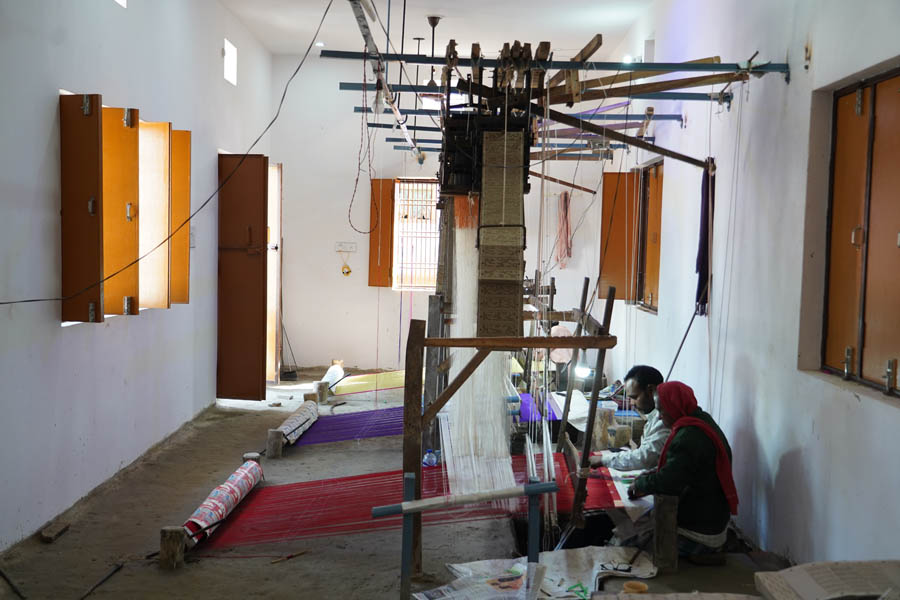
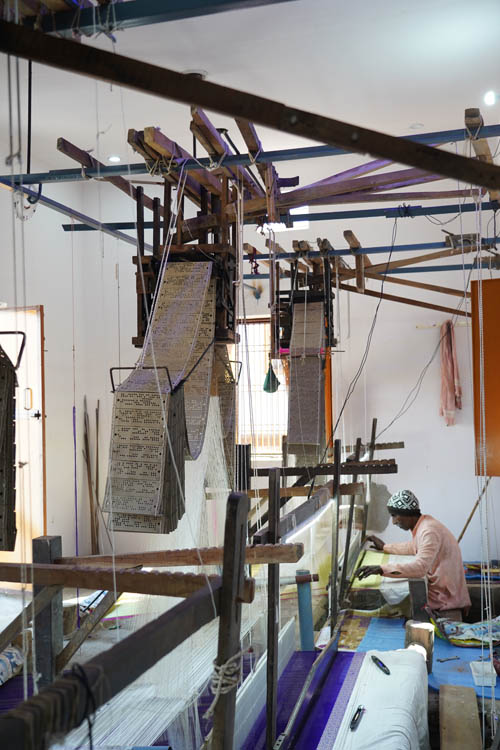
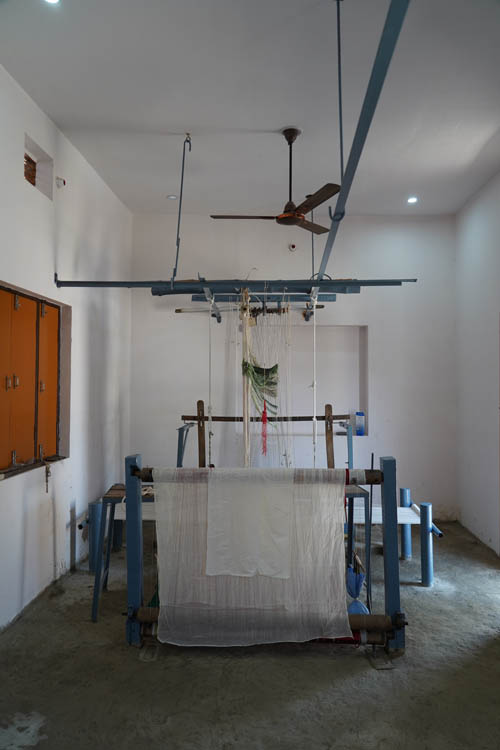
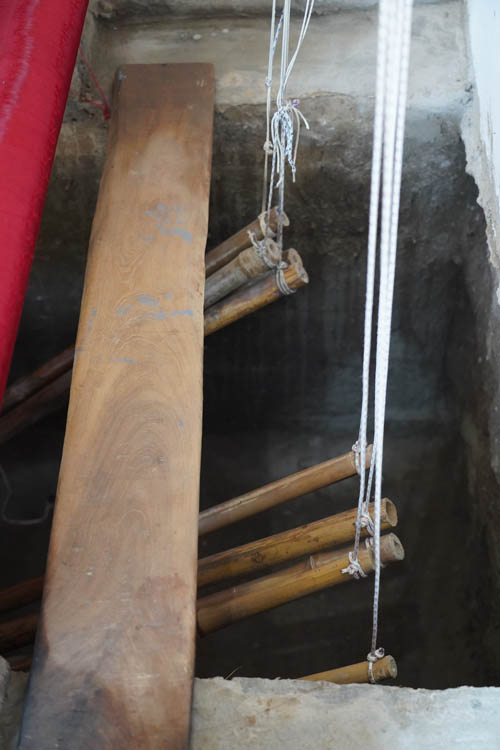
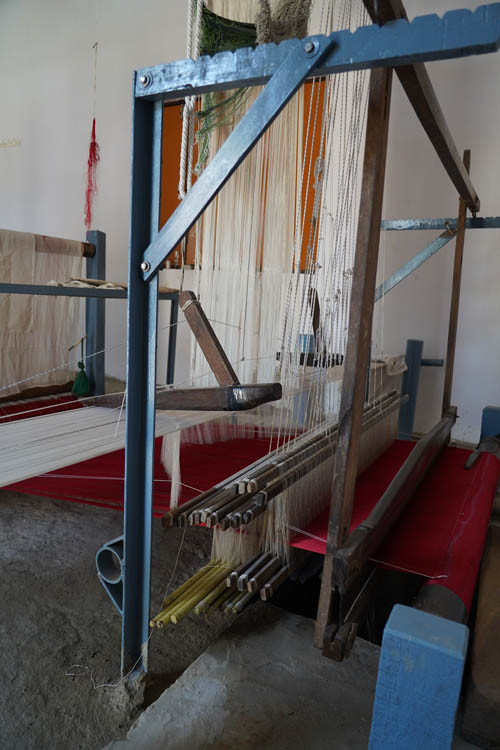
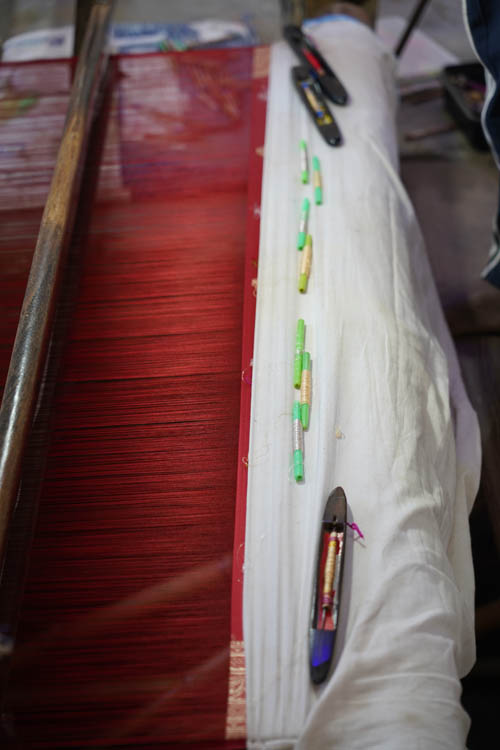
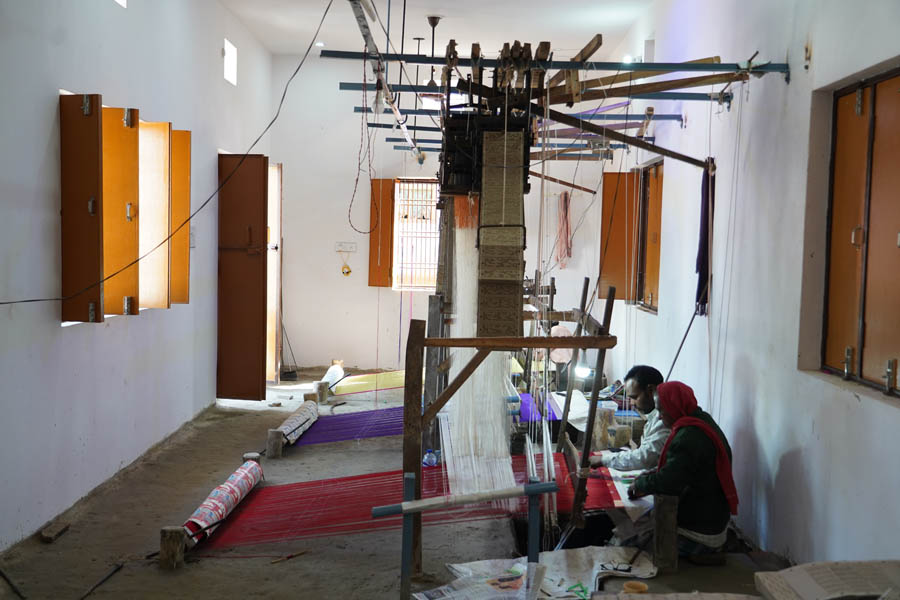
Banarasi weavers traditionally use pit looms to weave the sarees. Weaving on these looms requires the coordinated use of both hands and feet, making it a highly skilled craft that takes years of practice to master.
Mulberry silk is one of the principal raw materials used in the weaving of Banarasi silk sarees. It is a natural protein fibre produced by the domesticated silkworm (Bombyx mori), which feeds exclusively on mulberry leaves. The silk is characterised by its fine, smooth, continuous filaments, natural lustre, strength and softness, making it suitable for the intricate weaving and detailed brocade patterns of Banarasi textiles. The silk yarn is processed, dyed and prepared for weaving, where it forms the base fabric and is often combined with metallic zari threads to create elaborate designs.
Sourcing: Mulberry silk yarn used in Banarasi weaving is largely procured from silk-producing regions outside Varanasi, particularly Karnataka (including the Mysuru and Bengaluru regions), as well as other silk-producing centres. The yarn reaches Varanasi through suppliers and local textile markets, where it is processed and prepared for weaving.
Other materials include cotton yarn and zari (gold- or silver-coloured metallic thread). Depending on the type of saree, fabrics and yarns such as tussar, georgette, and crepe may also be used.
The materials are generally sourced from local markets and suppliers in Varanasi, including Bundi Bazaar, which is known for textile-related materials.
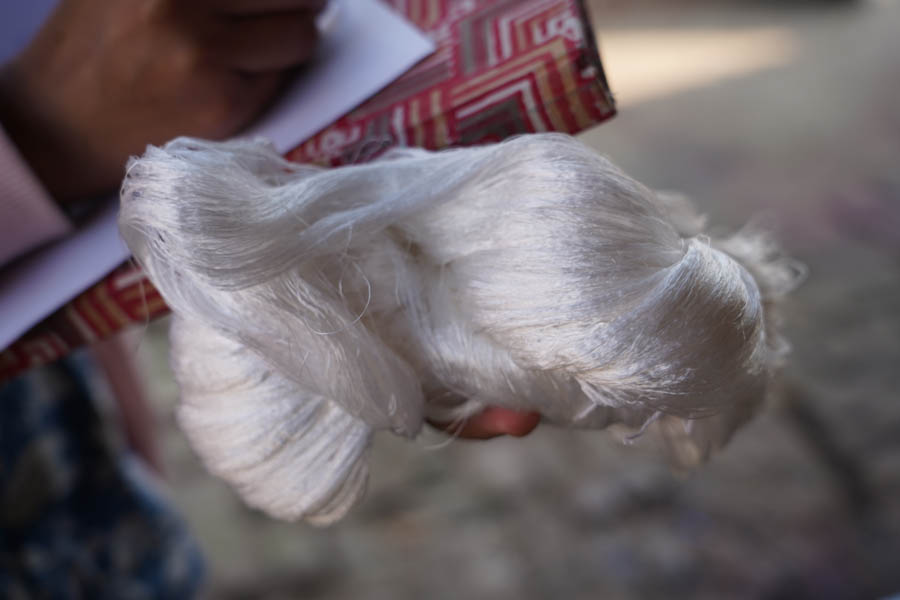

Main tools used include-
Handloom / Pit Loom – The main equipment used to weave the saree
Reed – Holds and spaces the warp threads evenly
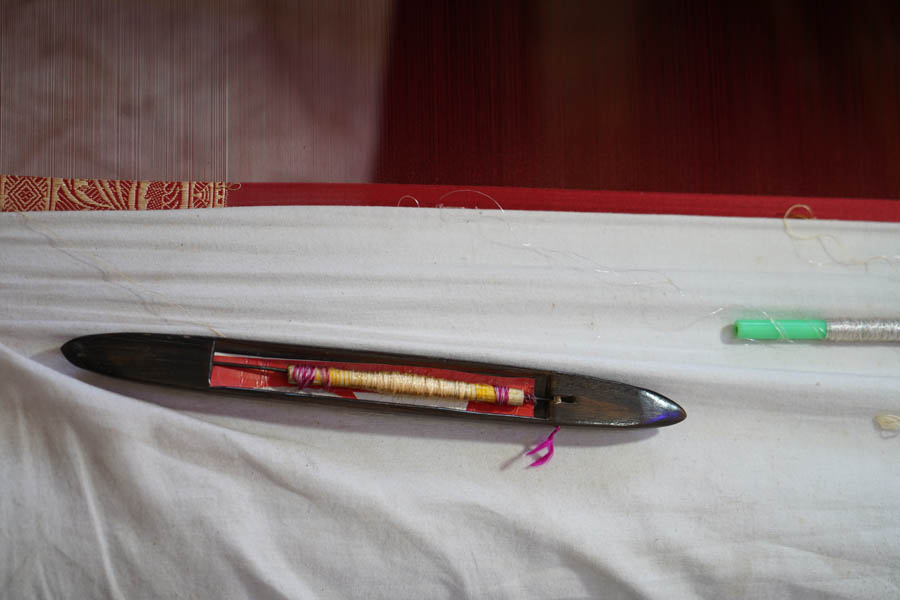
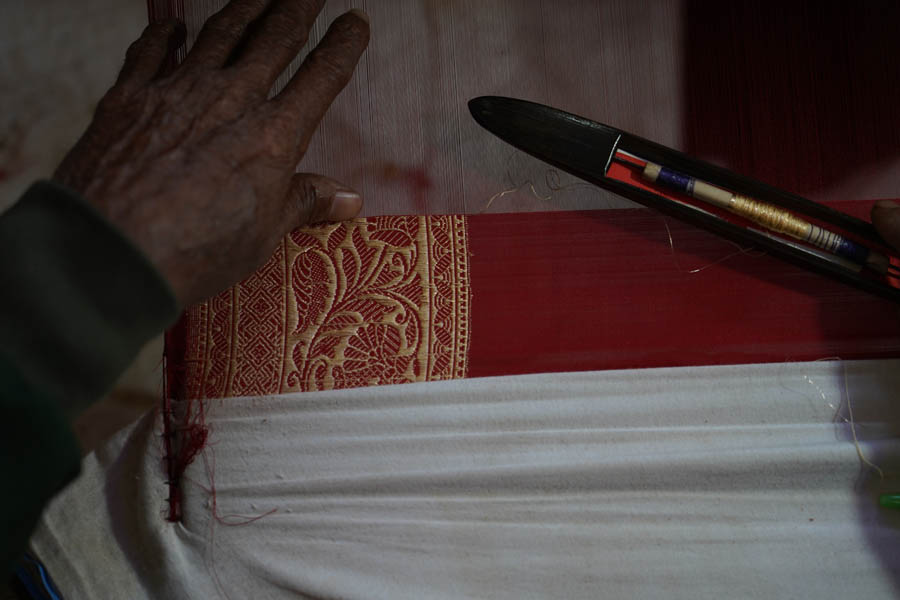
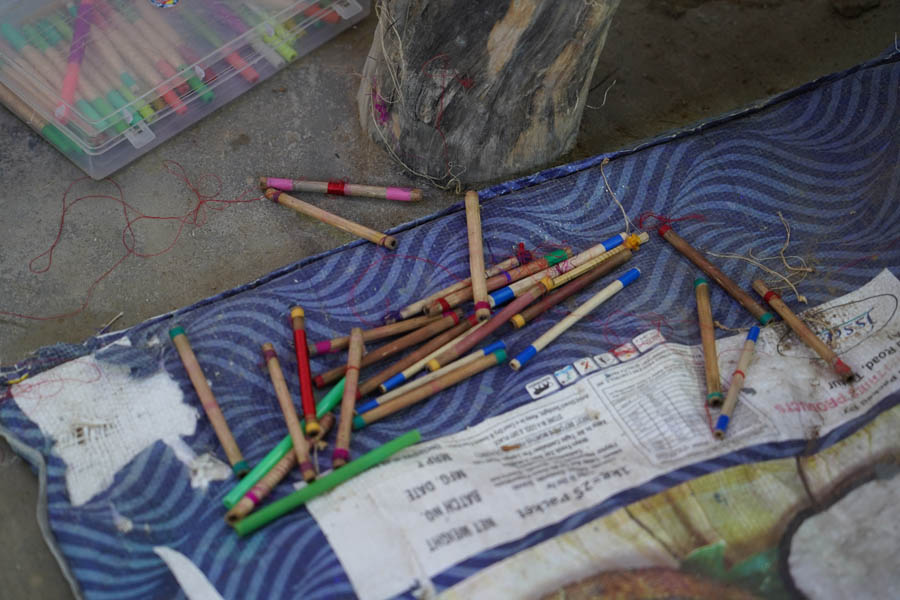
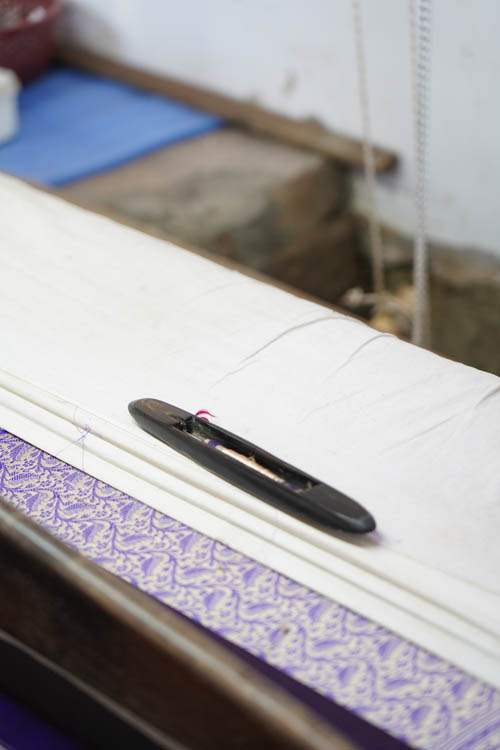
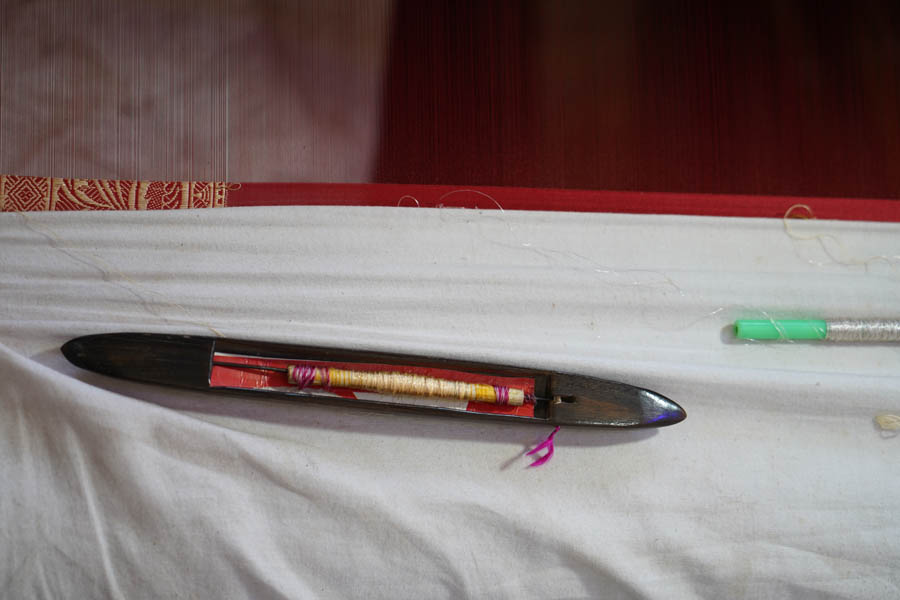
Shuttle (Dharki) – Carries the weft yarn through the warp threads
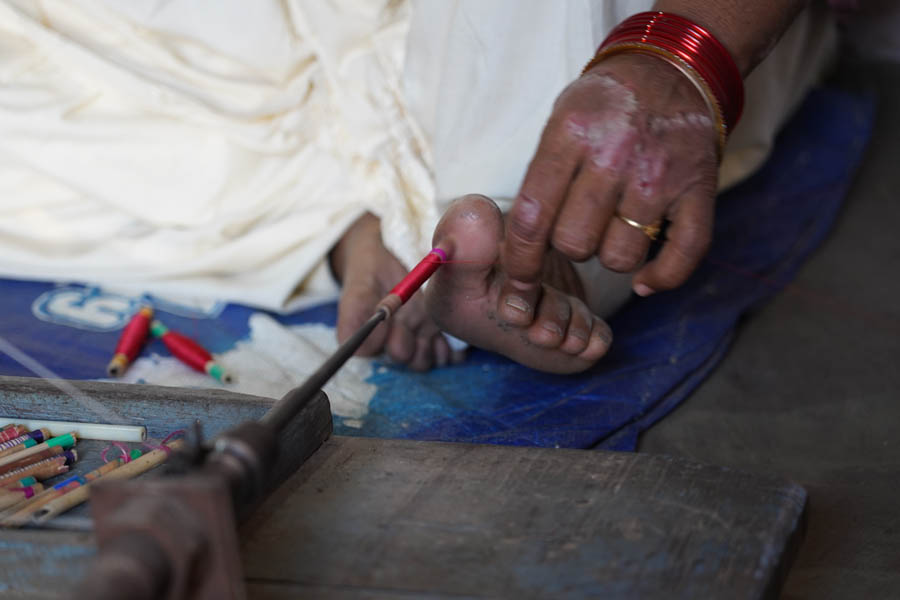
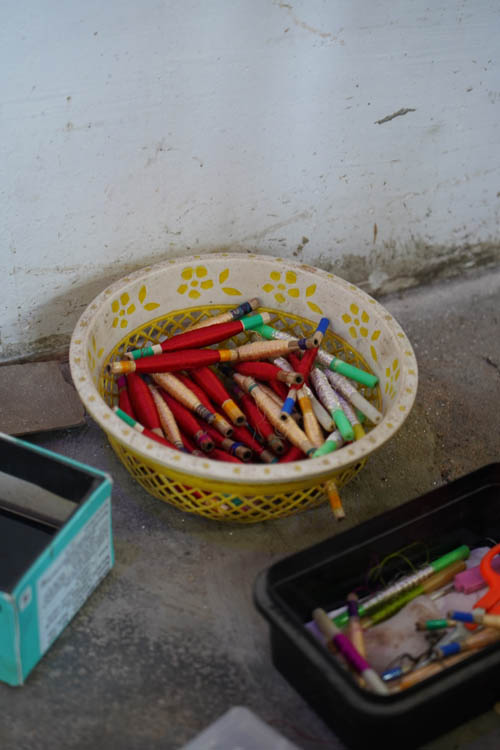
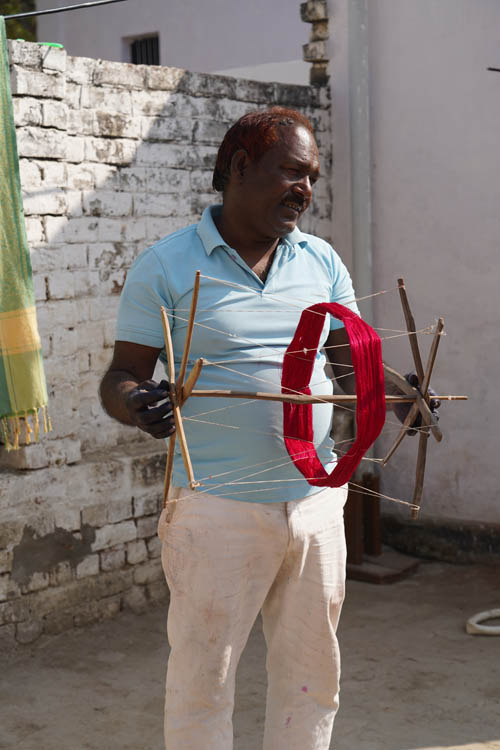
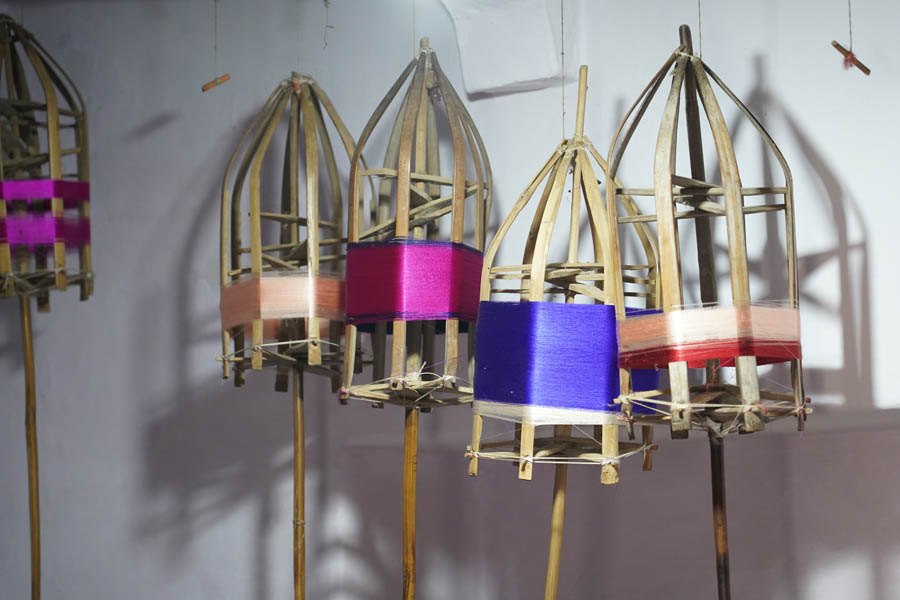
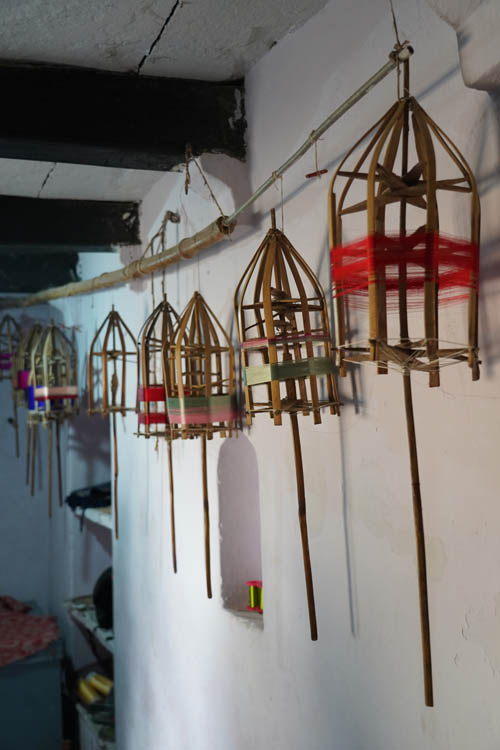
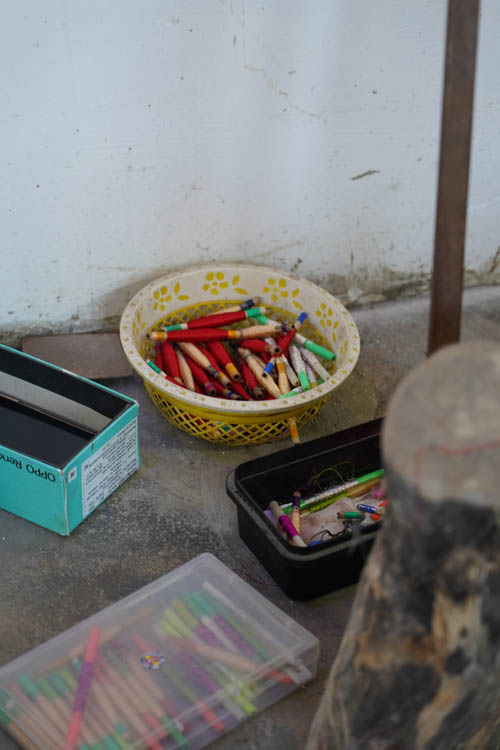
Parita – A bobbin like device on which silk is wound from the hands
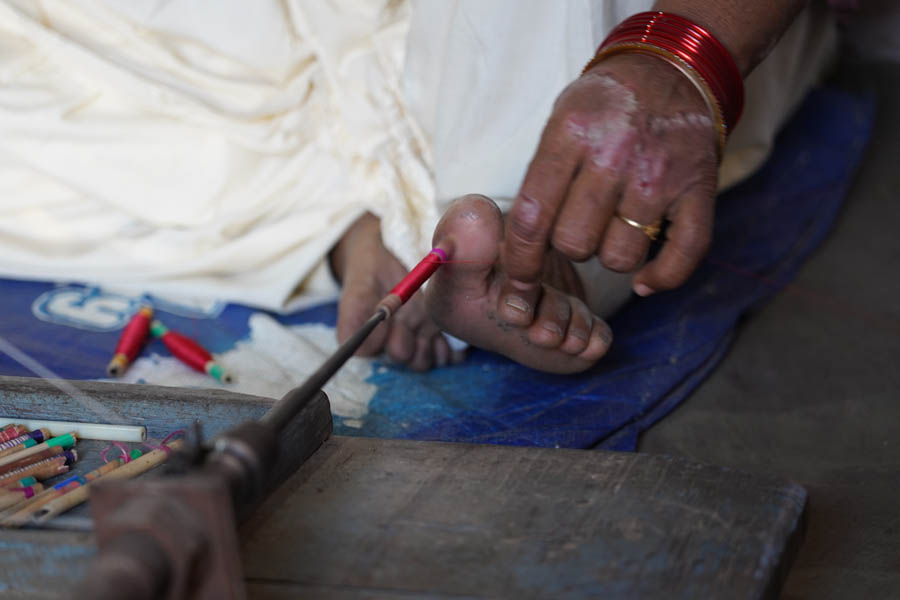
Naari (Teeli) – A small component associated with the movement and handling of the threads during weaving
Jacquard Mechanism – Used to create motifs by controlling individual warp threads
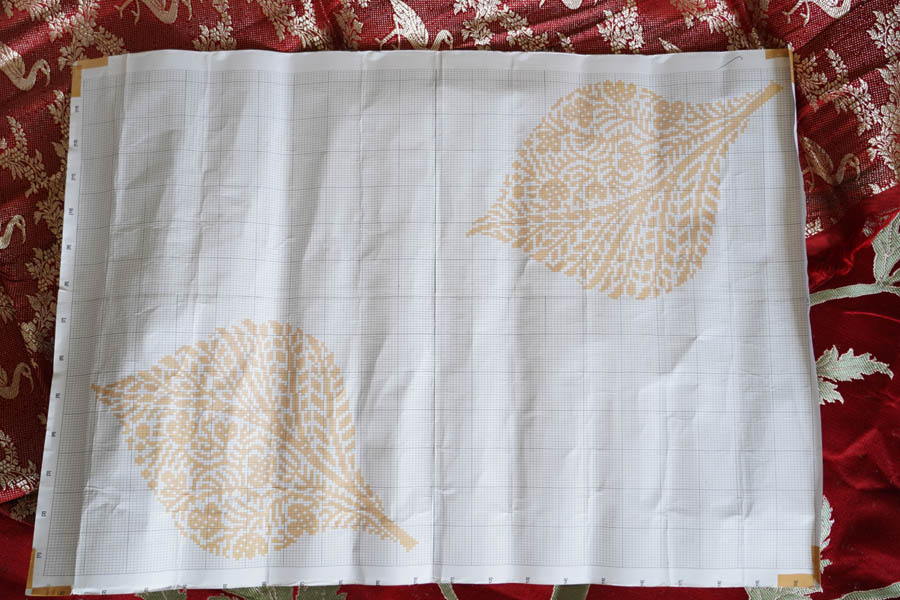
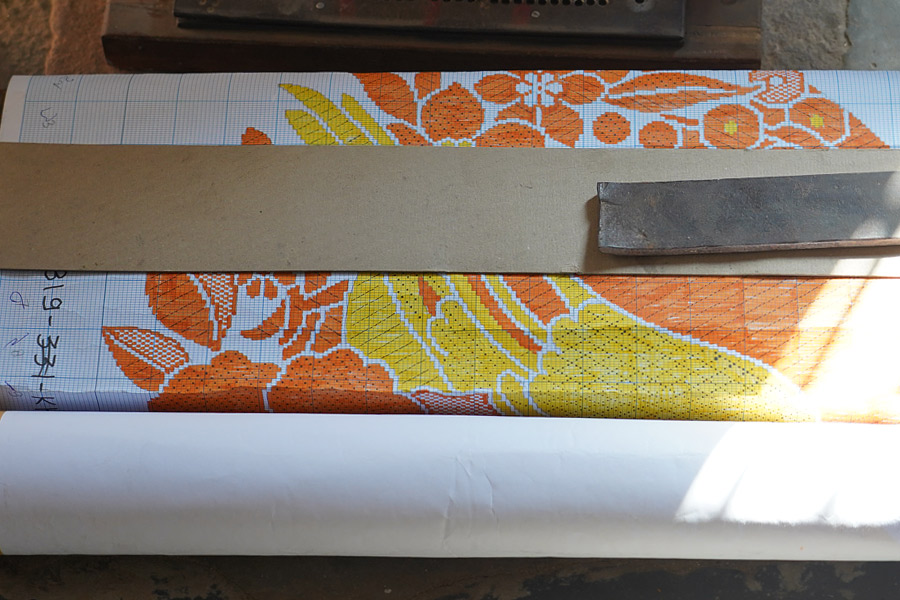
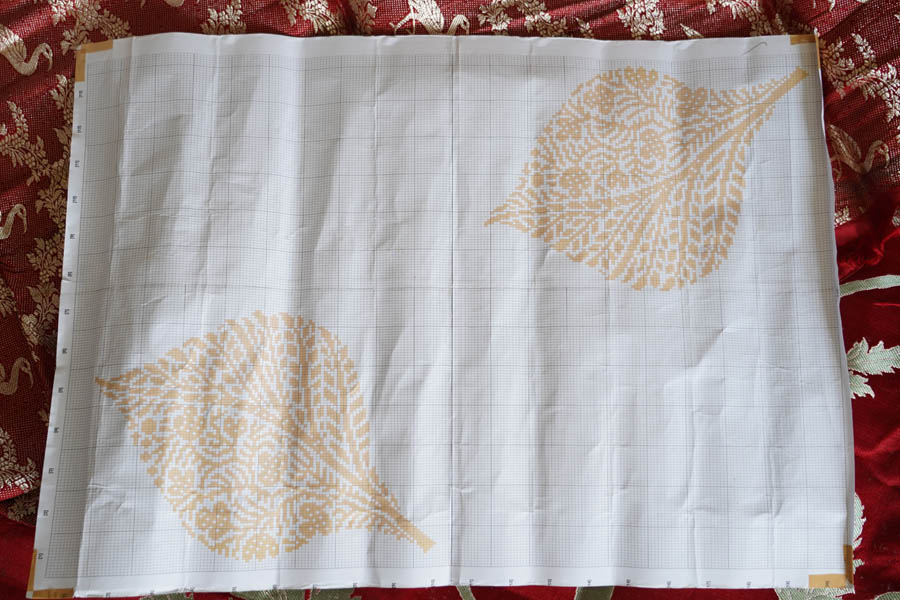
Graph Paper / Design Sheets – Used to plan and map the motifs
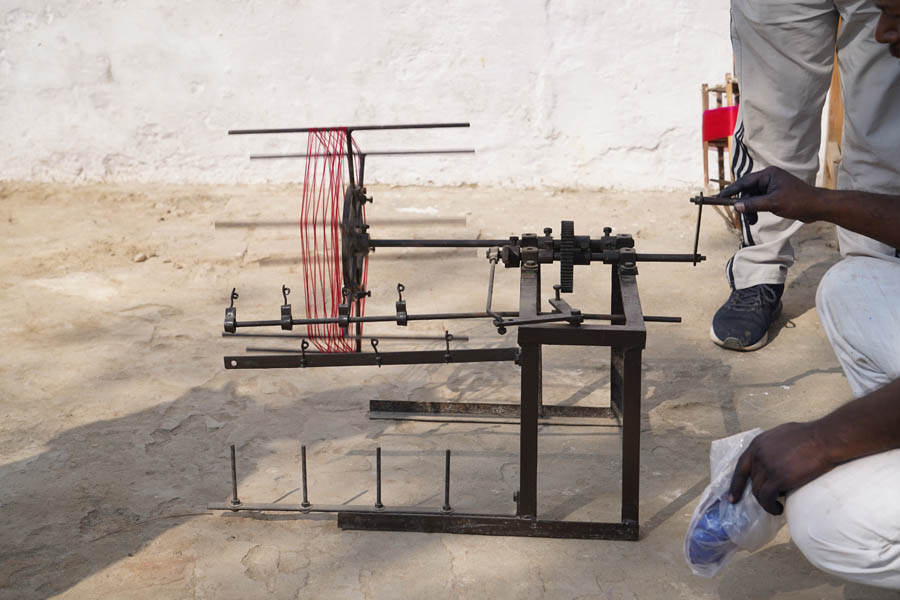
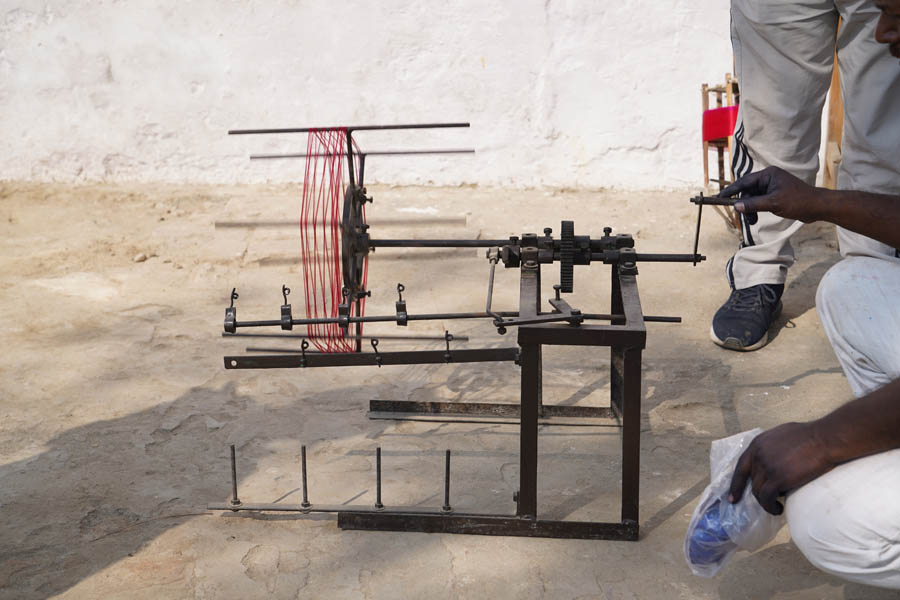
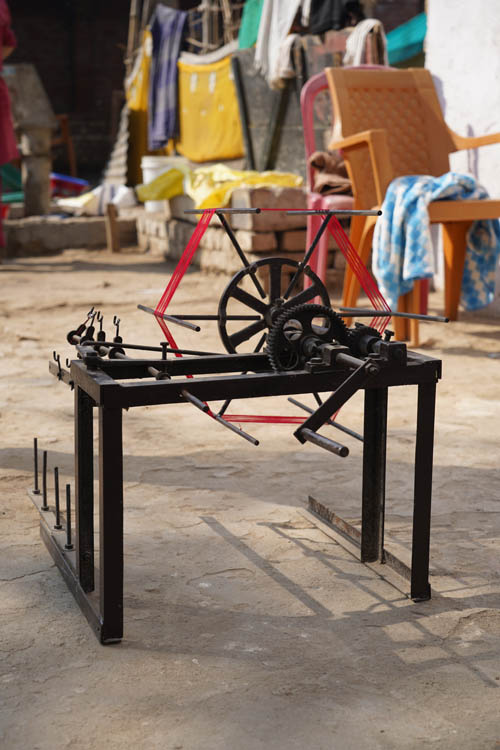
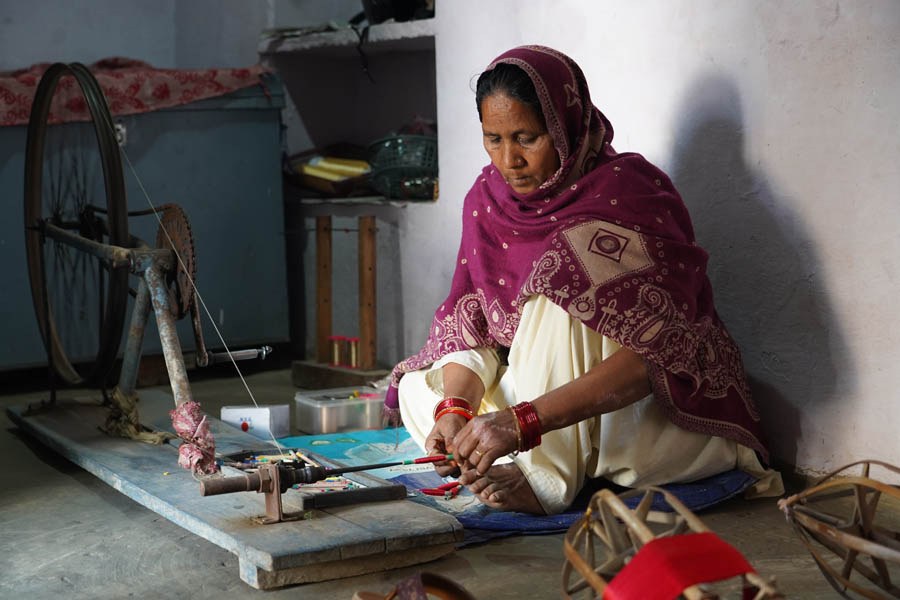
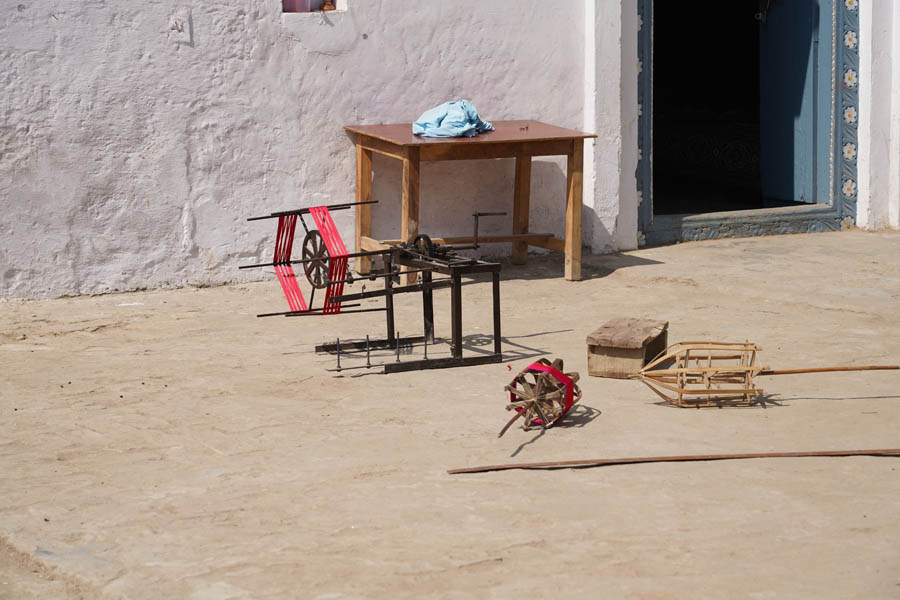
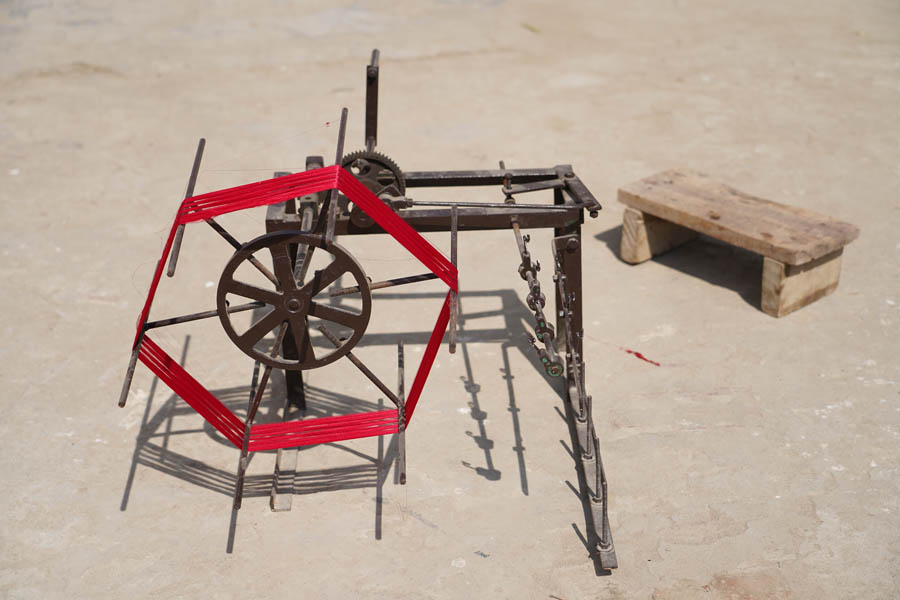
Charkha / Spinning Wheel – Used for winding or preparing yarn.
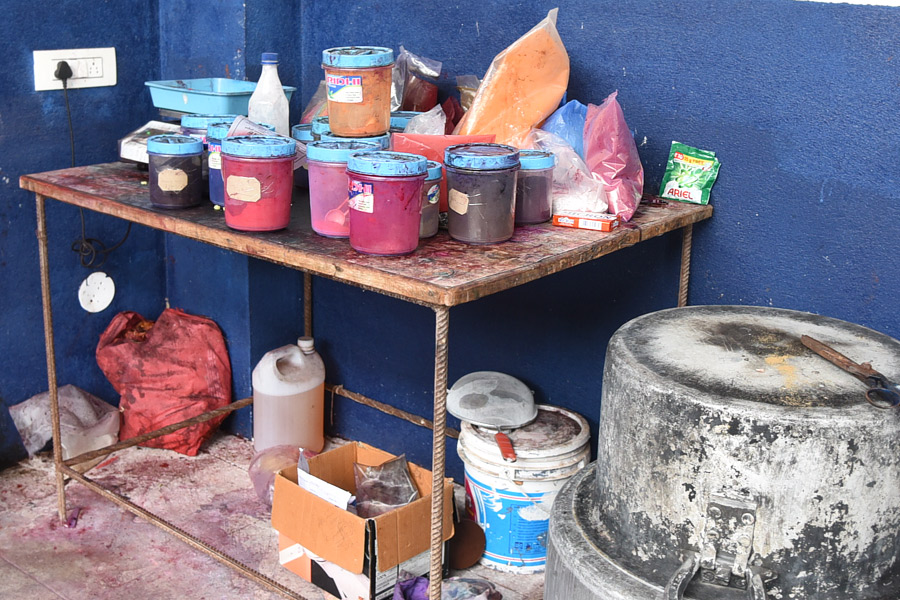
Dyeing– Different dyes are used depending on the type of yarn and fabric being dyed. Silk, georgette, and other fabrics require different dyeing processes and materials. Dark shades such as black and royal blue may cost more than lighter shades, depending on the type and quality of the dye.
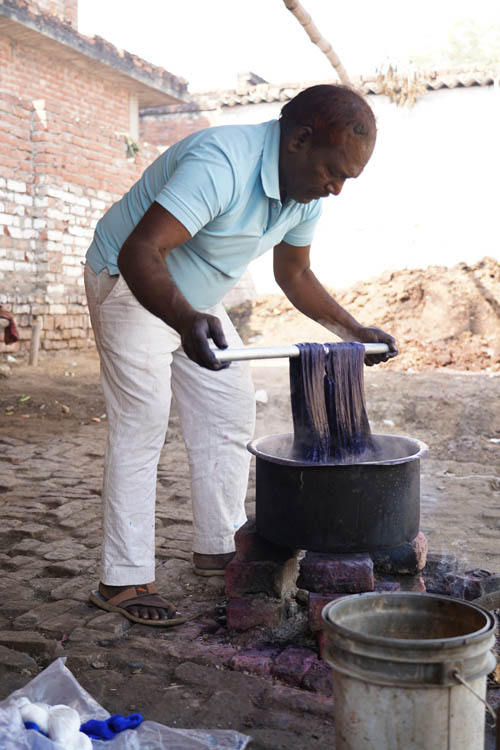
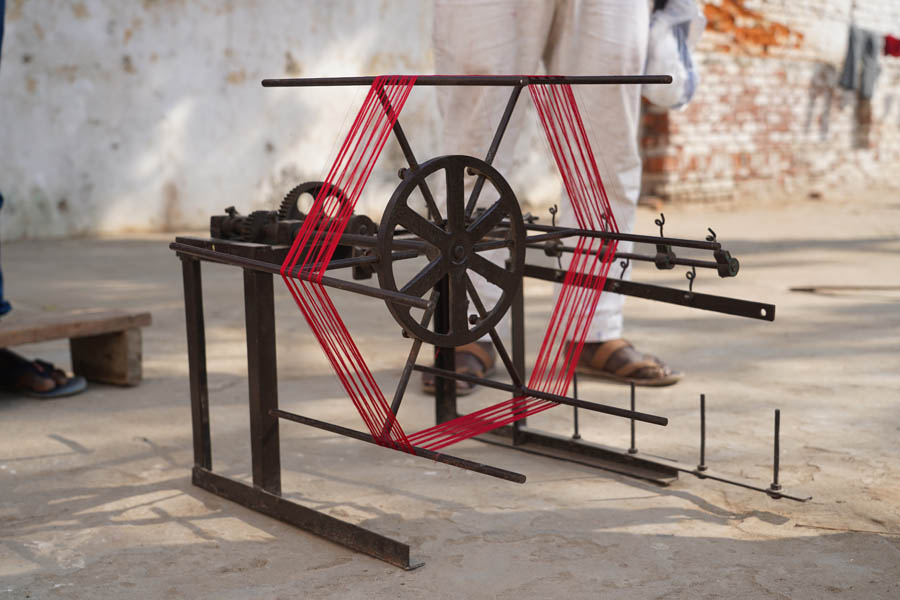
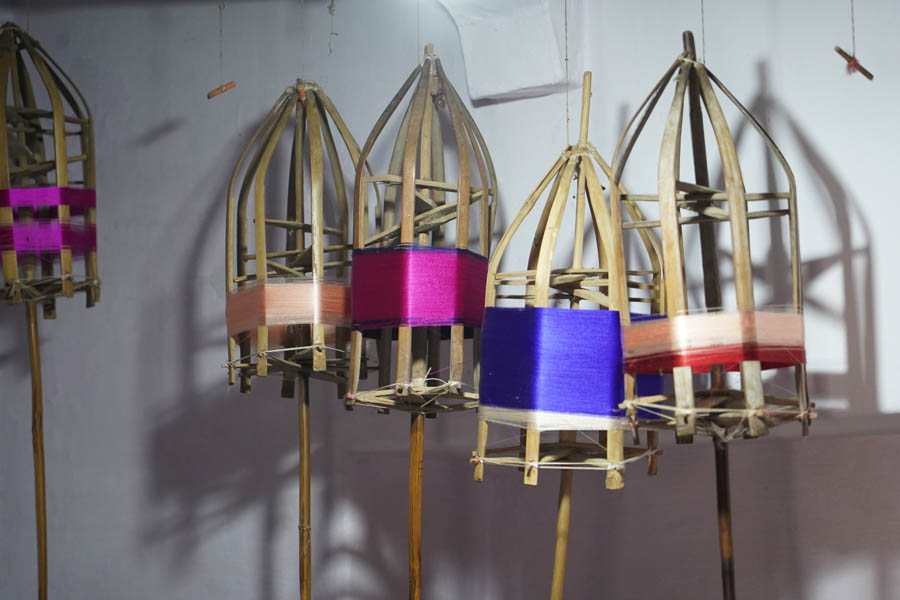
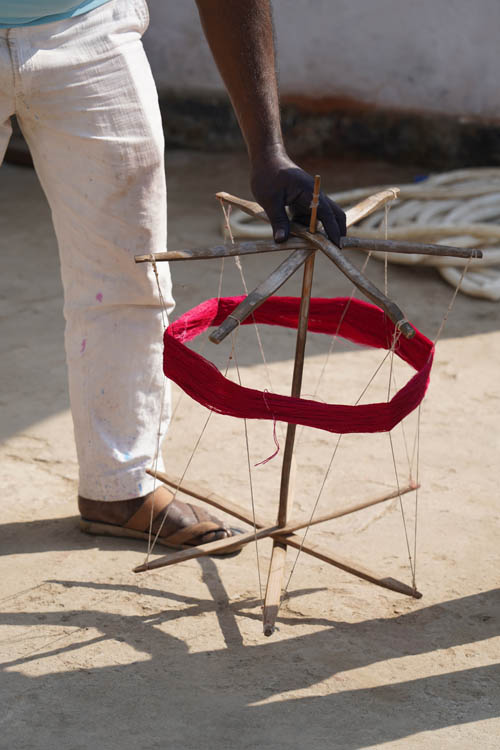
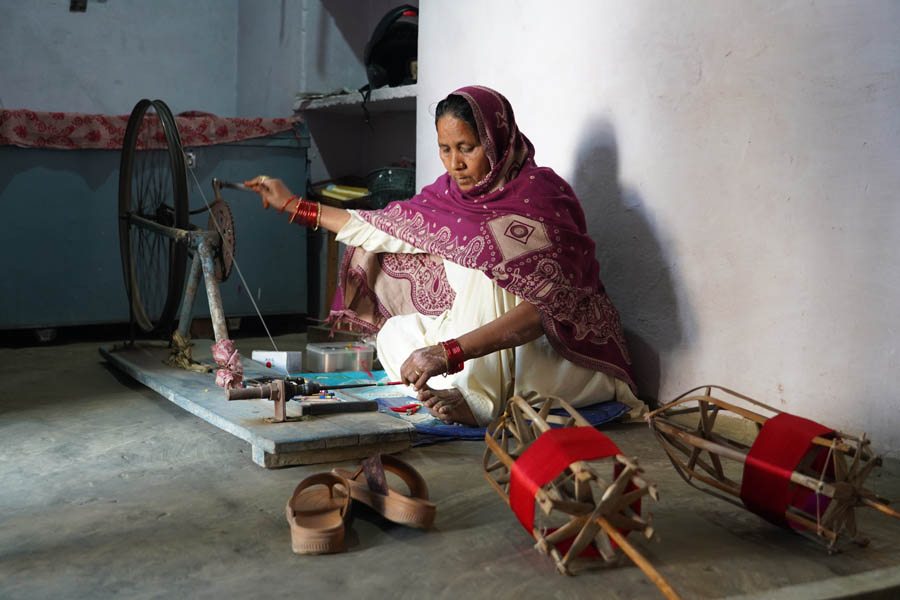
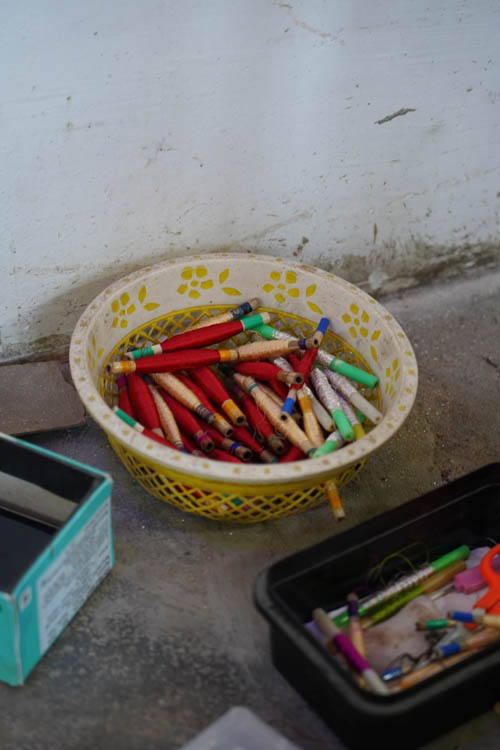
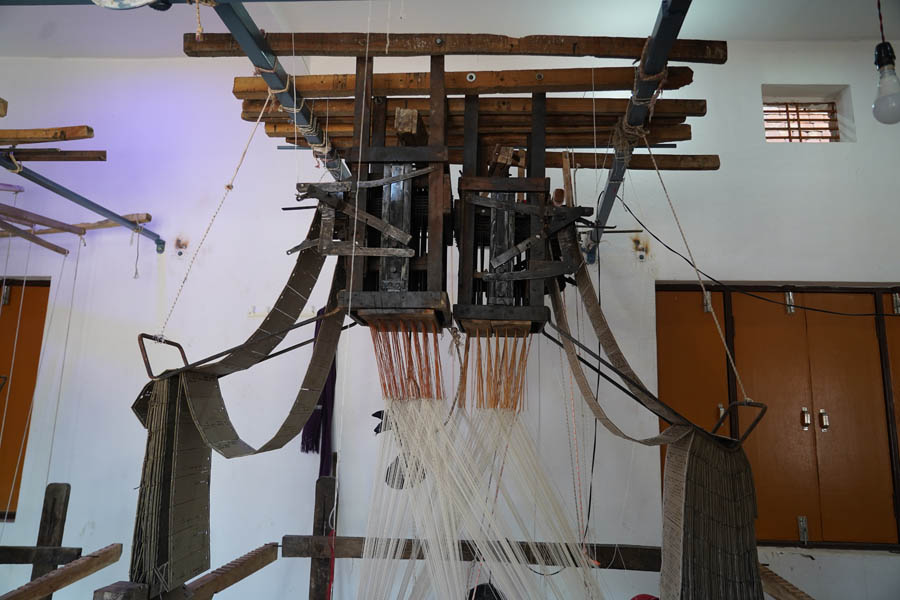
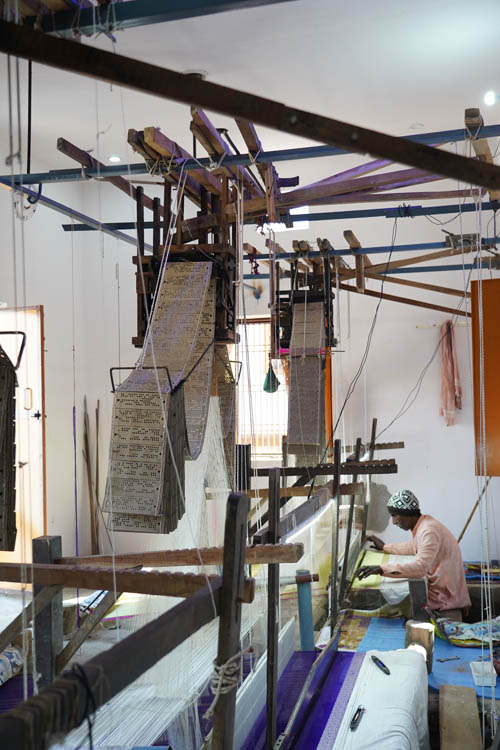
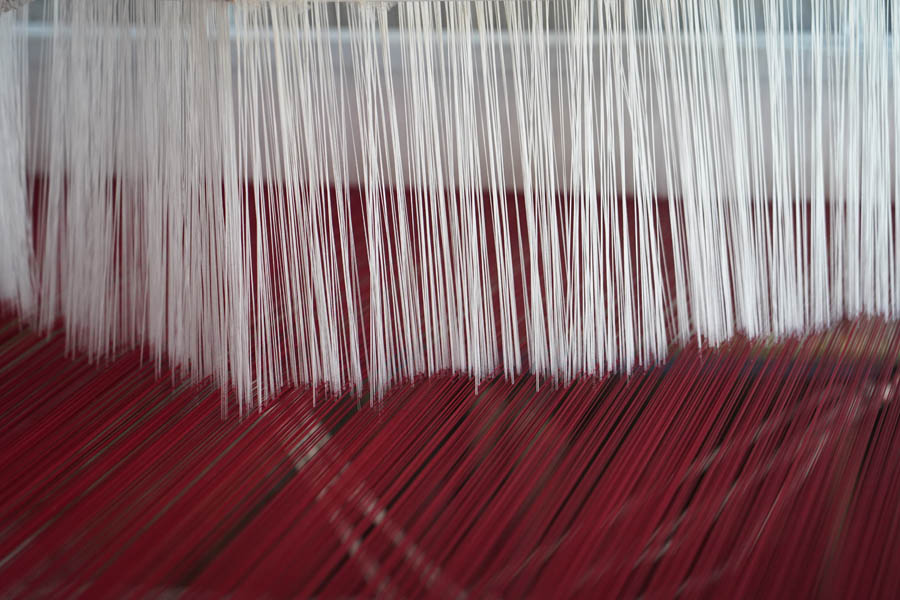
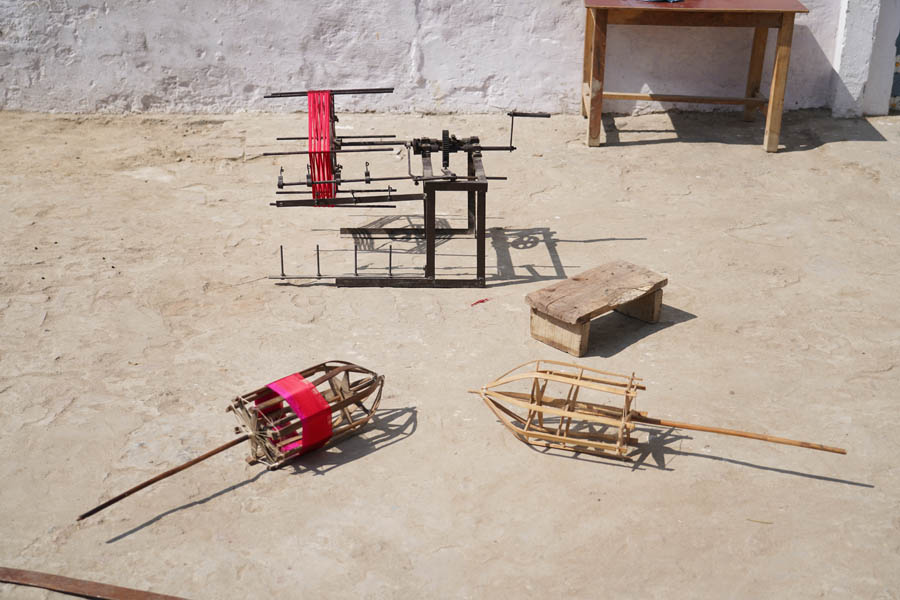
The process of making a Banarasi saree is a detailed and time-consuming process involving several stages, from preparing and dyeing the silk yarn to designing, weaving, and finishing the final saree. The process involves the work of several skilled artisans, each specialising in a particular stage.
Selection & Preparation of Yarn
The process begins with the selection of yarn. Yarn of different qualities is purchased from the market. Mulberry silk is commonly used for Banarasi sarees. 1 kg of silk costs around ₹7200.
Sometimes the silk yarns are twisted without undergoing further processing. If the thread is intended to be dyed, it is done after this degumming and bleaching process, as otherwise the colouring matter will not penetrate the fibres of the thread and the colour from the fabric will always come off with moisture.
Before dyeing, the silk yarn is washed to remove its natural gum, impurities, and stiffness. The yarn is placed in water heated to around 95°C and mixed with soap. It is then washed with clean water and dried, often in the sun. The weight of the silk reduces considerably after this process because the natural gum is removed. Approximately 1 kg of silk reduces to 700 g after washing and drying.
Dyeing
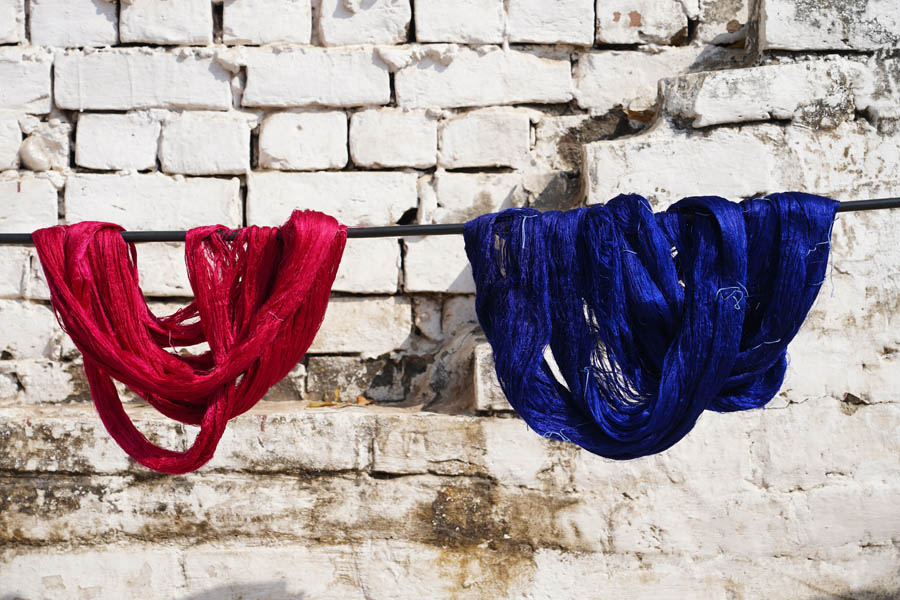
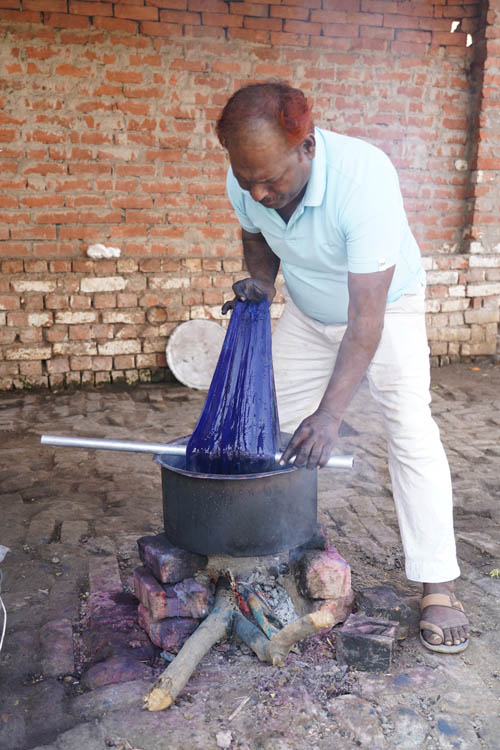
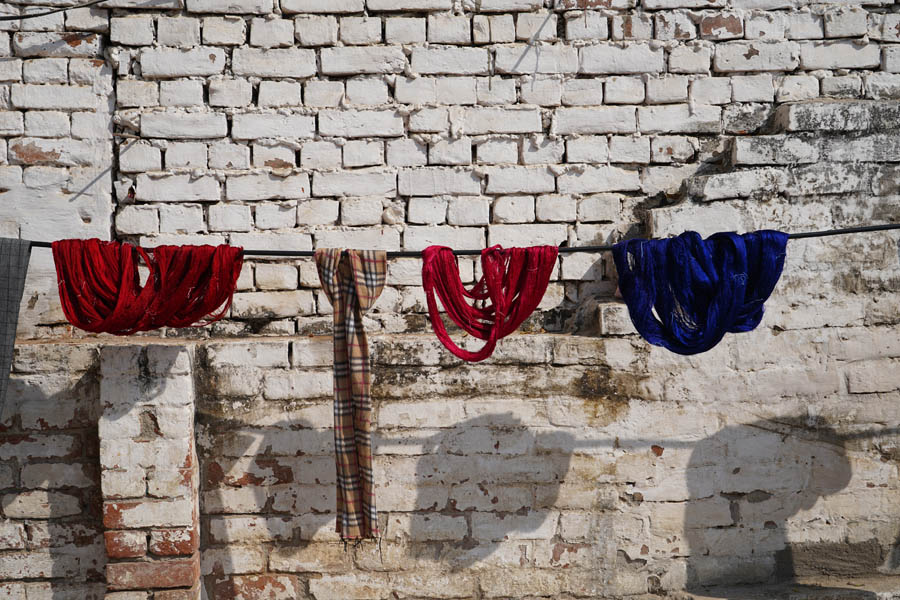
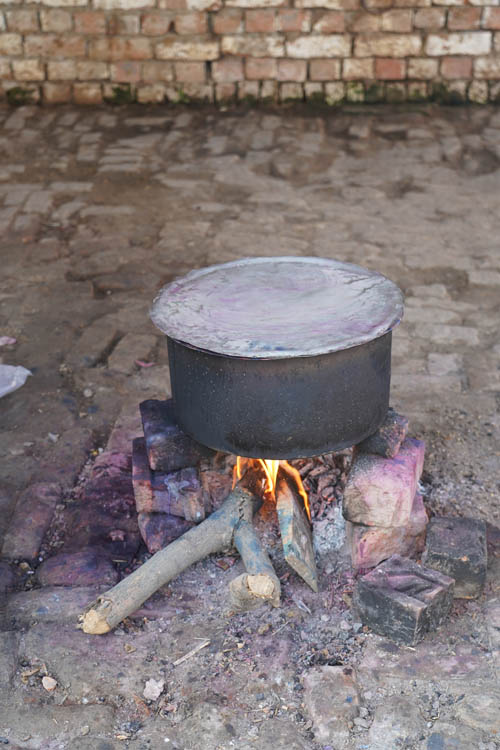
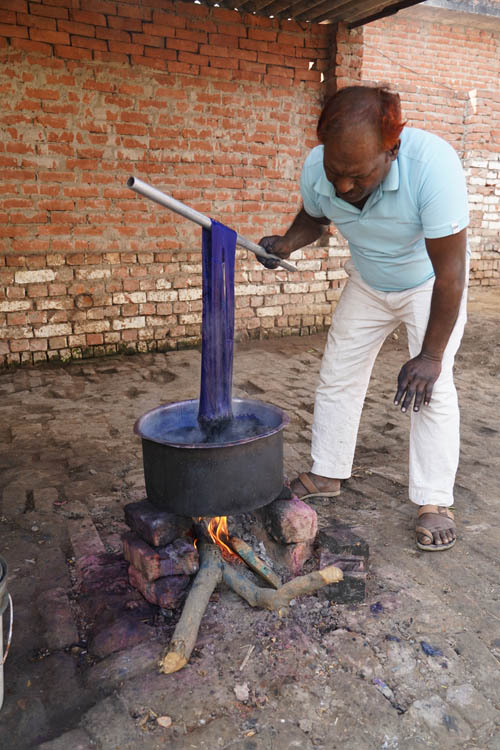
After washing and drying, the yarn is dyed according to the required colour. Traditionally, natural dyes made from materials such as turmeric, rose, and onion peels were used. Today, chemical dyes, particularly acid dyes, are more commonly used. The warp for saris is usually taken from 5- 6 sari lengths, and each sari length is dyed in a different colour for the sake of variety.
The yarn is placed in the dye water at around 75°C. It is kept in the coloured water for around 15–20 minutes, depending on the desired shade. Dyed using acid dye, vim soap is also added to make the colours spread equally in all threads. Safeed acid is also added. Adding acid makes the colour permanent; it will not go away even after washing. Acid is added even for plain white yarns, needed for plain white sarees.
The quantity of dye depends on the weight of the silk and the intensity of the colour required. Darker shades require more dye than lighter shades. For 400 gm of silk, 15 g of dark colour likeroyal blue, rani, gold are used. For lighter colours like pista, grey, light pink, 1- 2 g of colour are used. The yarn may be dyed multiple times to achieve an even and consistent colour. The silk threads are dyed 3 to 4 times as needed to maintain the same colour throughout. The hardest colour to be dyed is blue.
Preparing the Thread
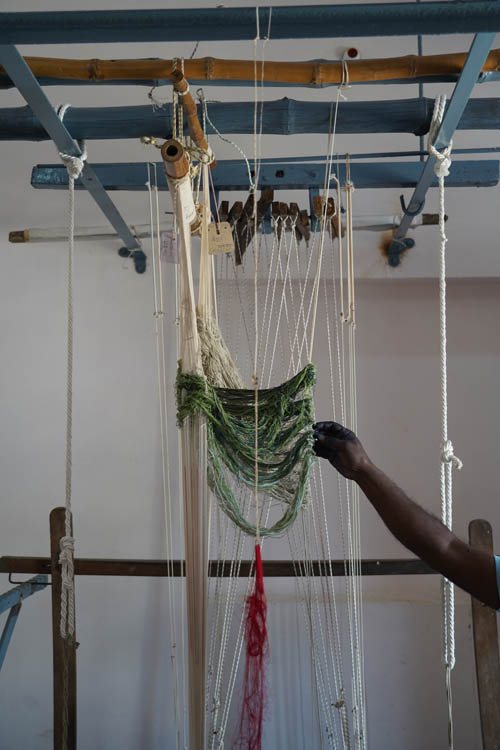
After dyeing, the silk threads are put to dry by hanging them up on a horizontal bar.
After that, the silk is converted into individual threads and prepared for weaving. A tool locally referred to as Digmi/Karahia is used for making the thread bunch into single threads.
The threads are then placed on a Natawa, a bamboo structure used for handling the yarn. The Parita is used to rotate and separate the threads. Several parita can be used together to form bundles of thread.
The thread is then transferred from the Parita onto a Nari, also known as a Teeli or Teeliyan, using a charkha. The nari holds the yarn in a form that can be directly used on the loom. Zari threads, including gold- and silver-coloured threads, are also wound onto the teeli using the charkha.
Design Development
Following this, the design process begins before the actual weaving. The designer or naqshaband first develops the design on paper. This stage is known as likhai or naqsha preparation.
The design is transferred onto graph paper, where each square represents a specific part of the woven structure. Traditionally, designs were drawn manually, while digital tools are also used today. The graph acts as a guide for preparing the Jacquard punch cards.
Making the Punchcards
This punchcard-making process is done at a different place, by a different artisan.
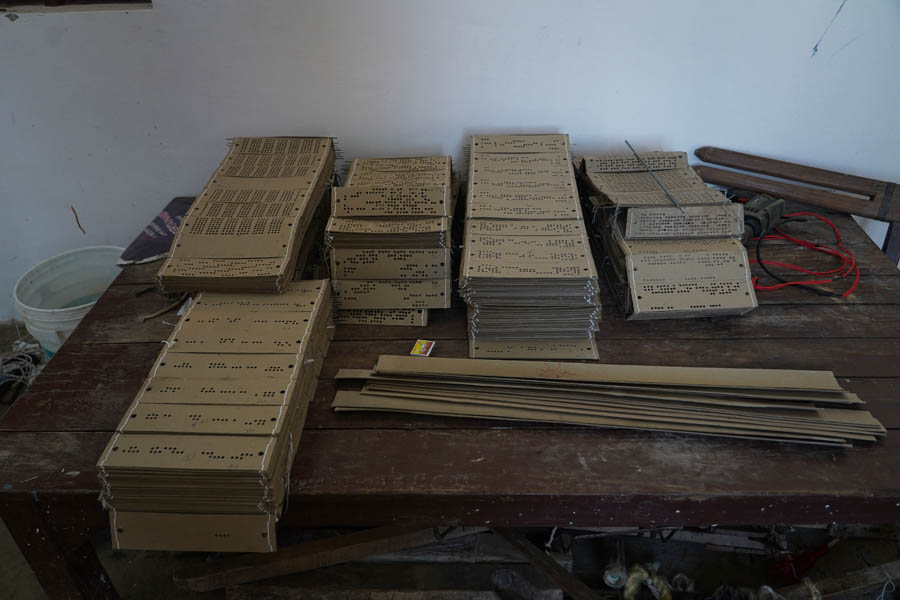
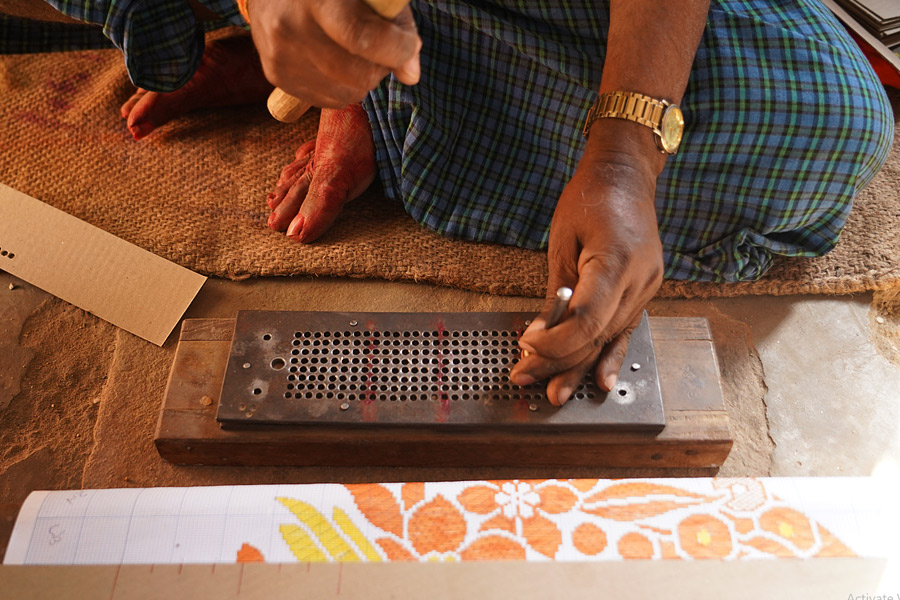
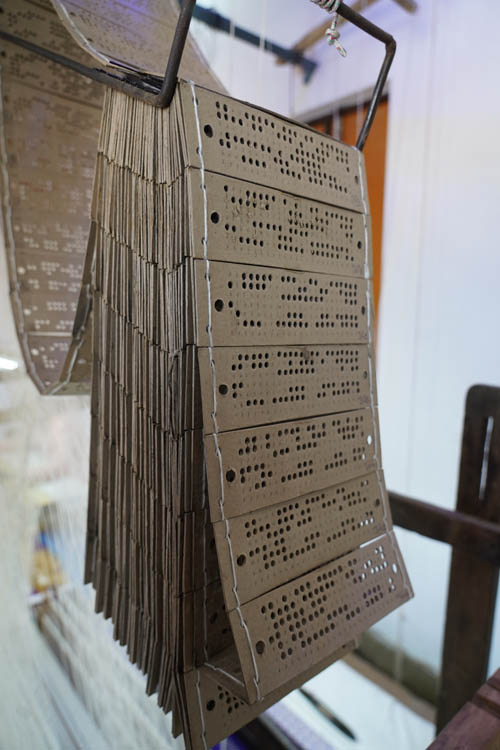
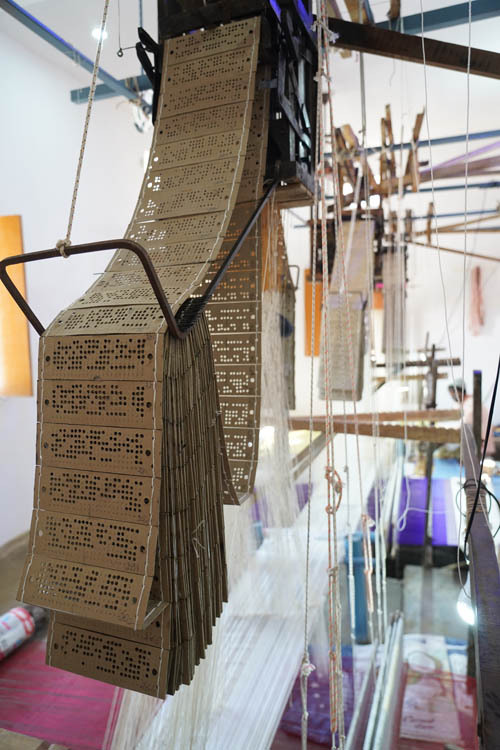
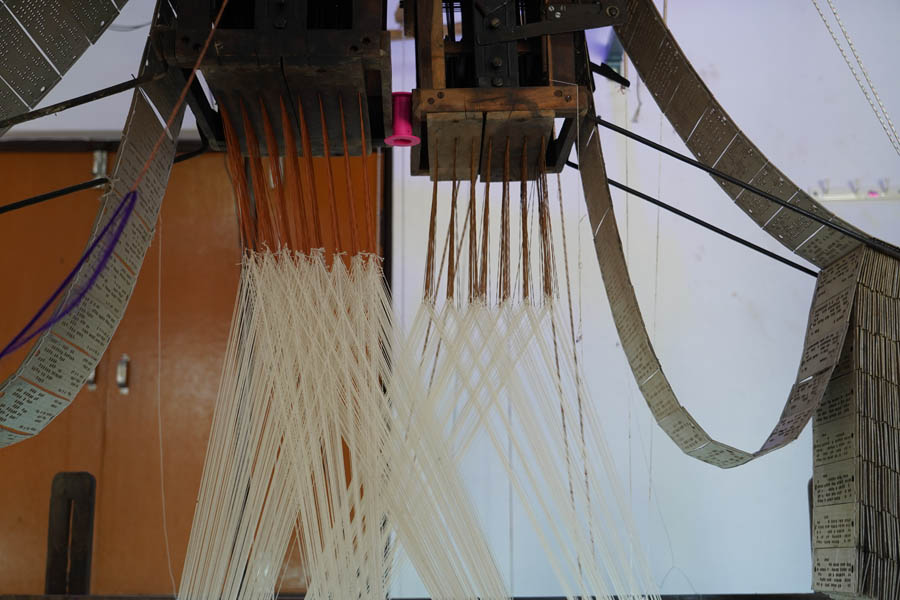
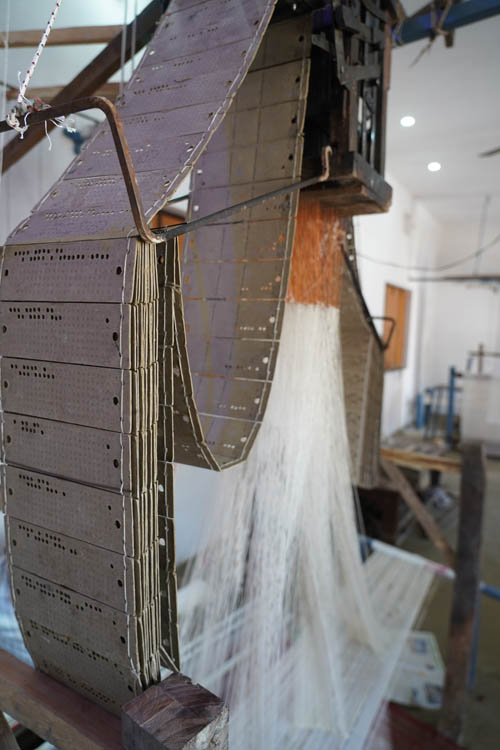
The graph-paper design is converted into a series of punch cards for the Jacquard machine. Thick cardboard, locally called dafti, is cut into the required size and placed on a Panchkal plate. A Panchkal plate has 240 small holes, 400 big holes and 3 holes on both sides (for attaching to the Jacquard machine).
The design is marked on the cardboard according to the graph, and holes are punched using a small punching tool and hammer. Each colour in the design is made on a separate set of cards. Around 520 punchcards are used in one saree.
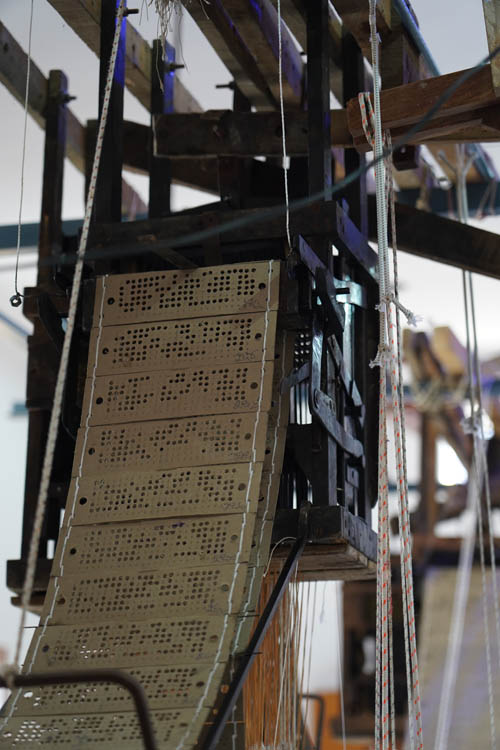
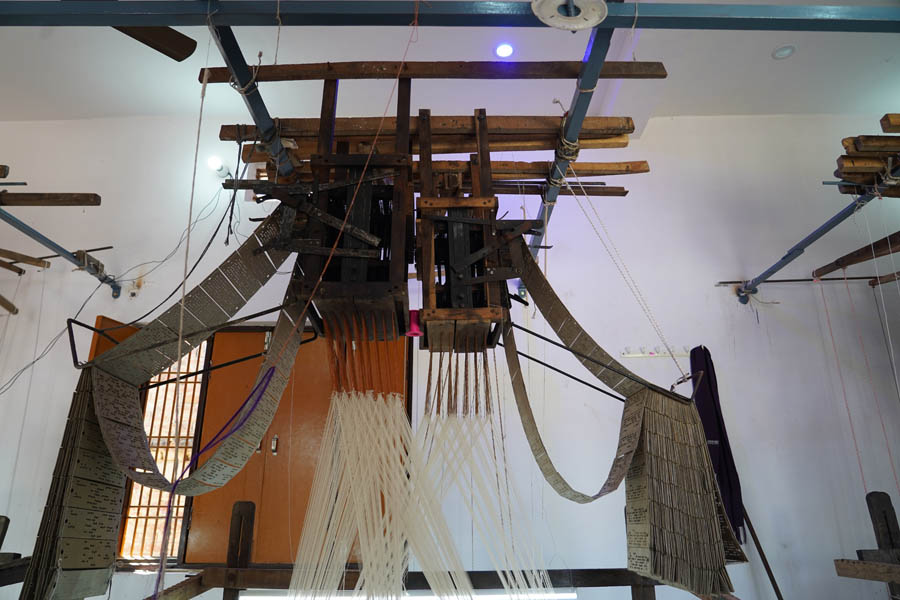
These punched cards are arranged in sequence and tied together before being attached to the Jacquard machine. These cards control which warp threads are raised during weaving and allow the intricate motifs to be created. Jacquard mechanism is used to make designs in both the body and border of the saree.
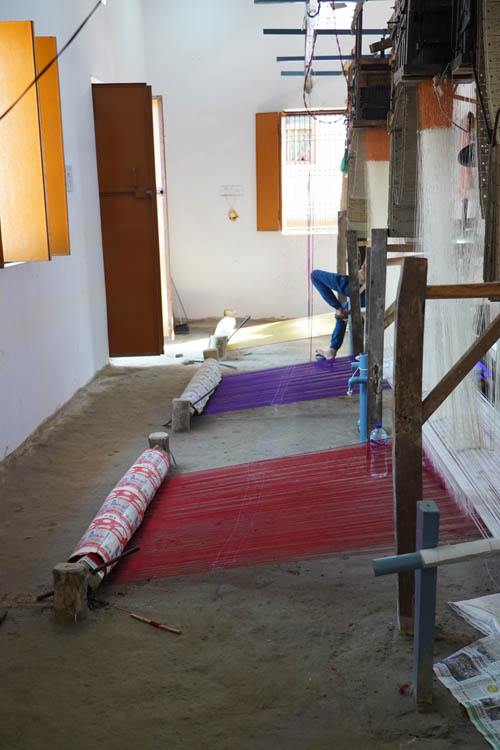
Preparing Warp and Weft
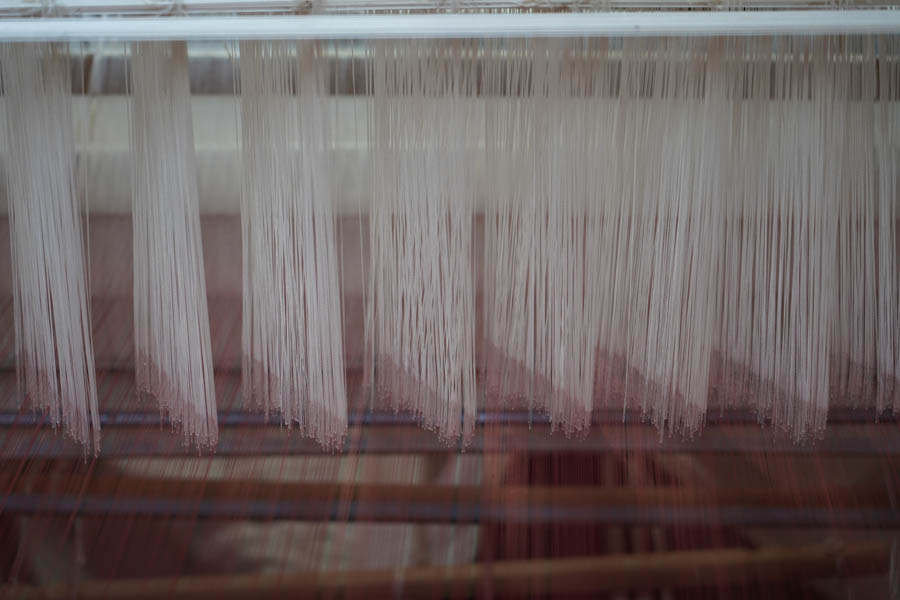
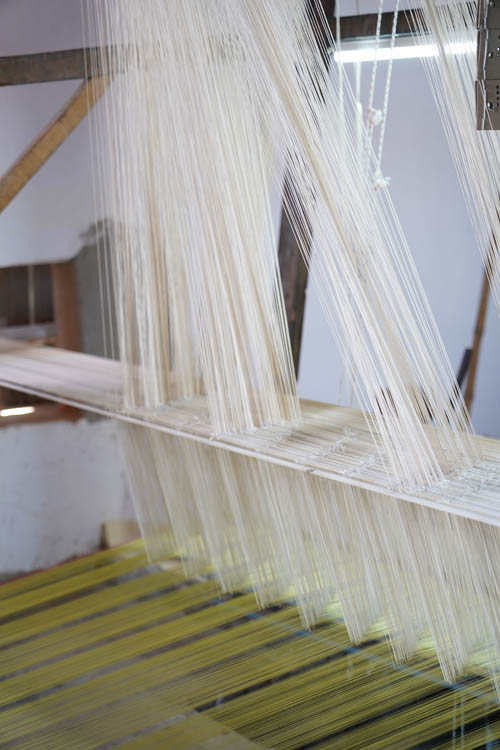
The warp (tana) consists of the threads running vertically along the length of the saree, while the weft (bana) runs horizontally across it.
The warp threads are arranged parallel to each other and wound onto a beam before being fixed to the loom. The weft yarn is wound onto bobbins or spools using a charkha and is later placed inside the shuttle. Around 16 thread strands make 1 thread in the saree
Zari and additional threads of gold or silver may also be prepared separately for creating decorative motifs.
Setting up the Loom
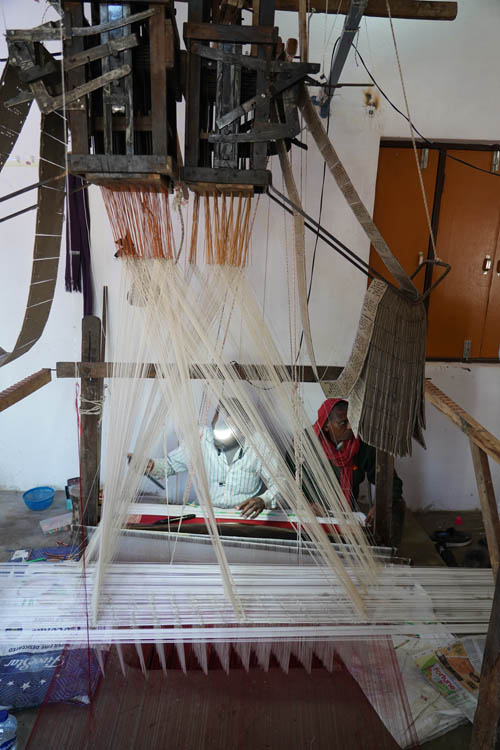
In Banaras, Pit looms are used. Pit Looms are those in which pedals are used for lifting the shafts and changing sheds; they are foot- operated and are located in a depression in the ground (the pit). The weaver sits with his feet resting on the pedals and operating them as required. These looms also have overhead beams to accommodate the jala/ Jacquard.
The reed controls the spacing of the warp threads and helps beat the weft into place. Reed numbers indicate the density of the threads.
Weaving
Once the loom is prepared, the actual weaving begins. The weaver coordinates the movement of the pedals, shuttle, and Jacquard mechanism.
How the Handloom operates..
The jacquard machine (which is run by a weaver moving a pedal) has a rectangular block on which the chain of punch cards runs. These cards have different patterns of holes. When the block is struck against a set of needles, it pushes the requisite hooks backwards. The needles where the card is punched remain unaffected, while the other needles are pressed and the hooks associated are withdrawn, leaving the threads in the background. Thus, the threads in the hooks whose needles are not pressed by the cylinder due to the hole in the punch card come forward to be a part of the weft, and the rest remain as they are, allowing for the complicated designs on the fabric. The weaver himself sits on the ground, with his feet in a hollow dug underneath the loom, which is in level with the ground.
In a simple fabric, the crossing of the network of warp and weft threads is simple. The weft thread passes alternately under one warp thread and over another; on its return it traverses the former and over the latter. But if a pattern has to be produced, the arrangement is not quite so simple.
For decorative designs, additional coloured silk or zari threads may be inserted into the weave. The body and border of the saree can be controlled through the Jacquard system. The weaving process requires considerable skill and concentration. Depending on the complexity of the design, a handwoven Banarasi saree can take several weeks or longer to complete.
Finishing
Once the saree is completely woven, it is cut from the loom. Loose and excess threads, particularly on the reverse side, are trimmed manually. The saree is then inspected for weaving defects and uneven threads. The process ends with pressing and folding of the final products.
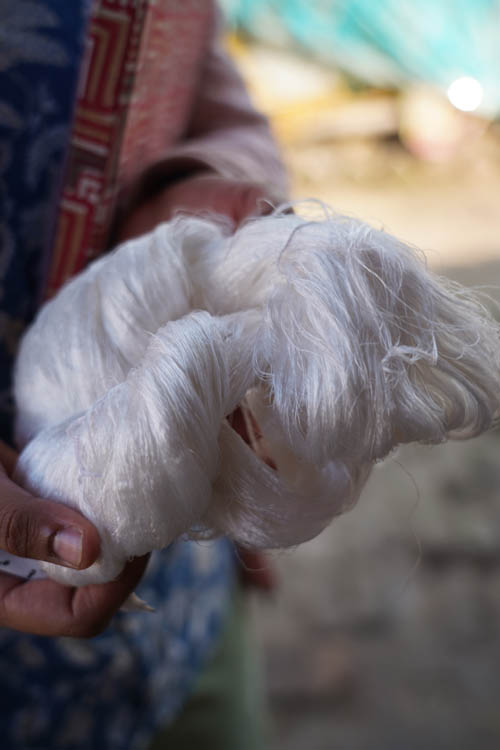
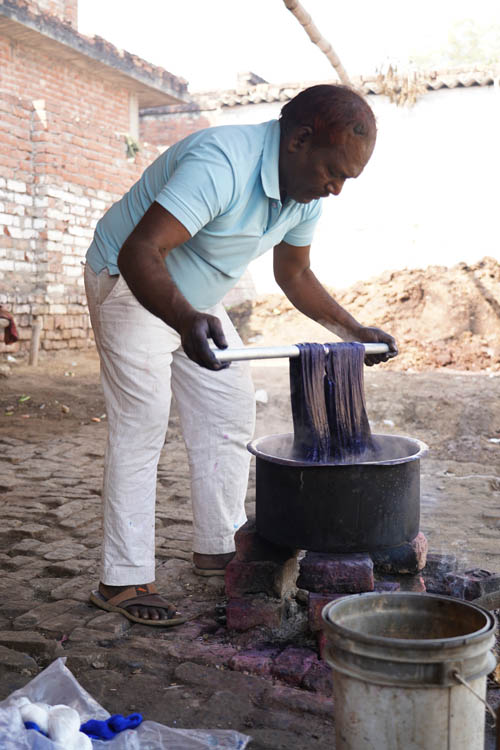
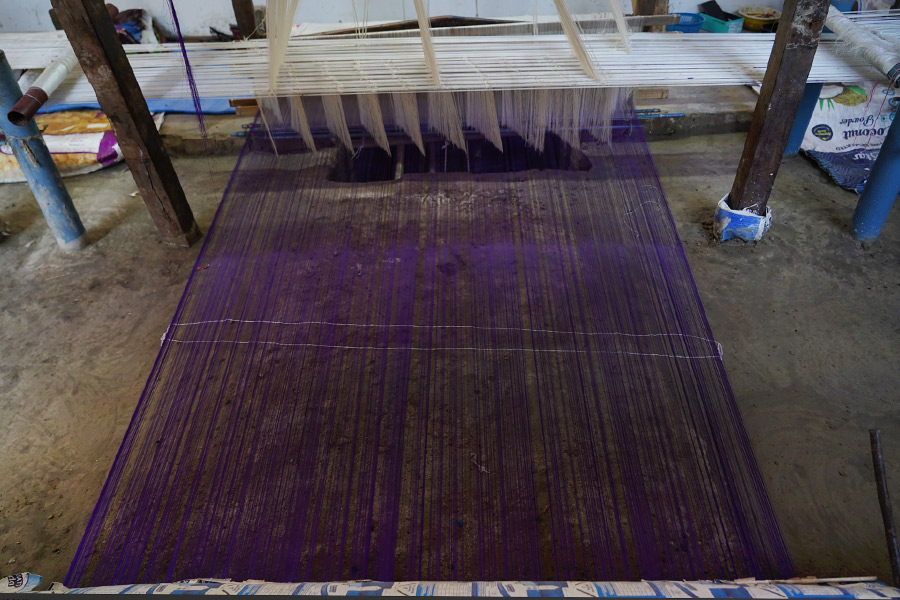
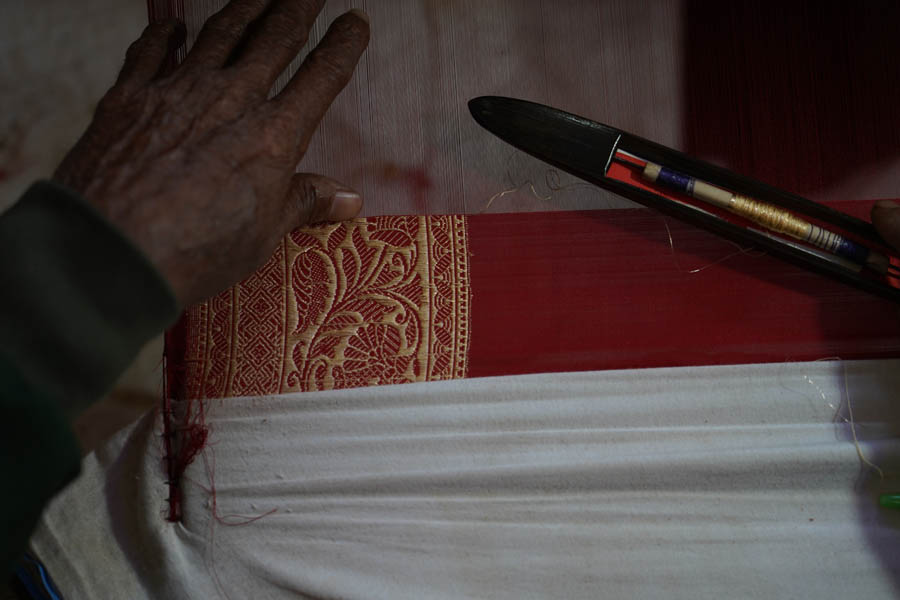
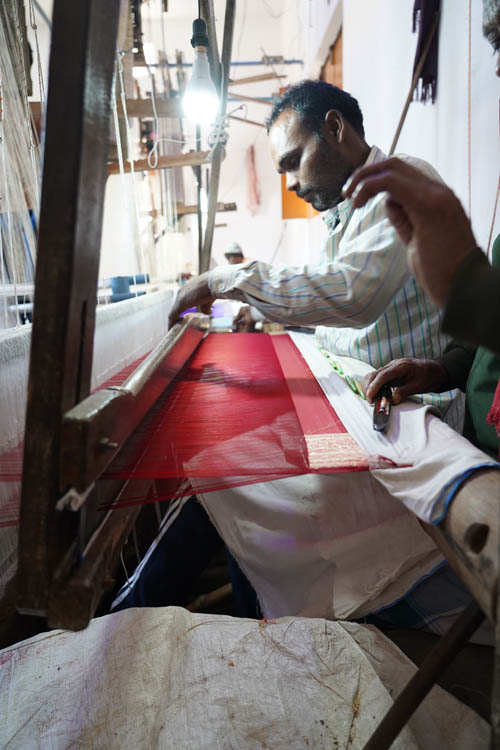
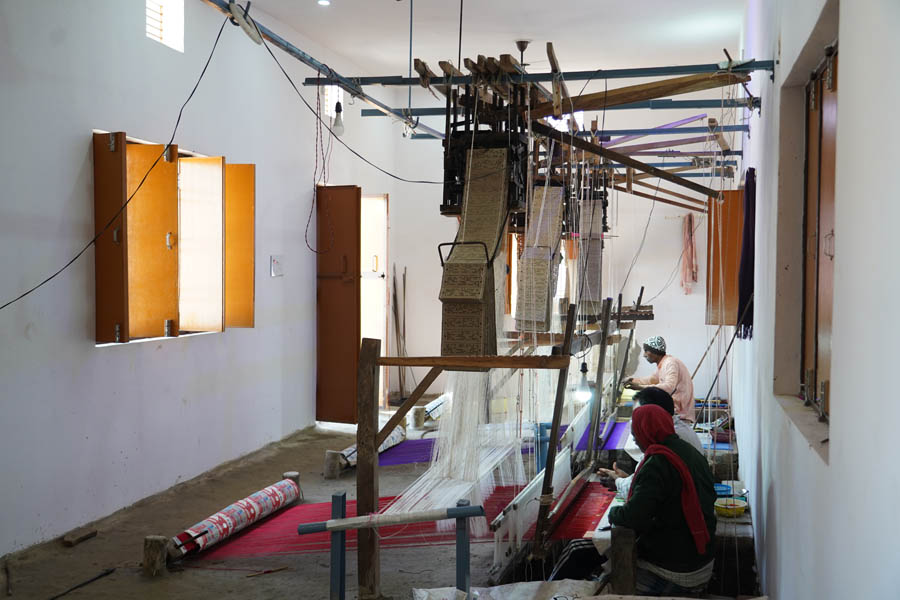
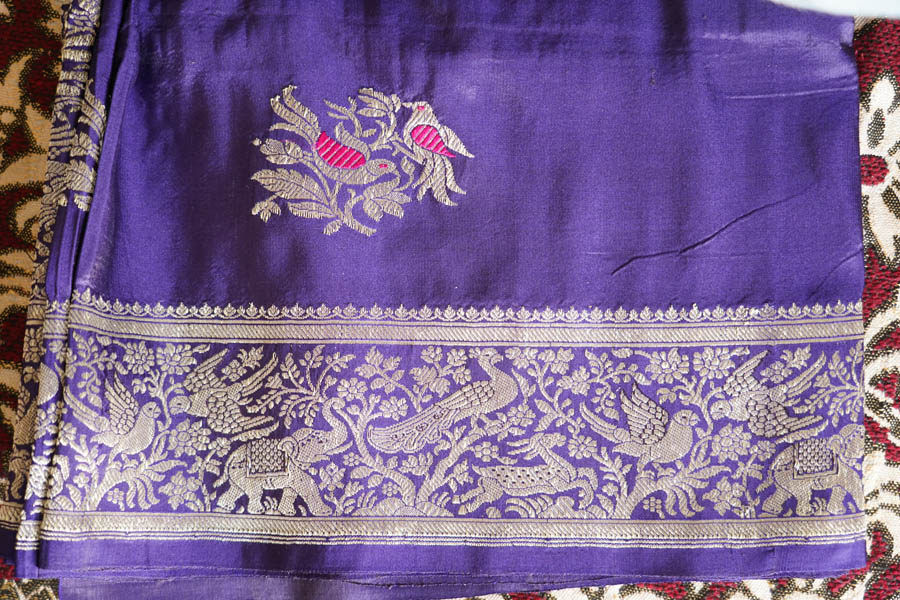
The making of a Banarasi saree generates a small amount of textile waste. Around 50–100 grams of waste may be produced per saree.
The main types of waste include:
Leftover threads and yarn – Small pieces of silk, cotton, or other yarn left after weaving.
Zari waste – Small amounts of unused or damaged zari may be generated during the weaving process.
Dyed water – Water used during the dyeing process becomes wastewater and may contain leftover dyes and chemicals.
Punch cards – In Jacquard weaving, punch cards used for a particular design may become waste when the design is no longer required or reused.
Mark Twain once said, "Benaras is older than history, older than tradition, older even than legend and looks twice as old as all of them put together".
Known in different eras as Avimukta, Varanasi and Kashi, meaning “where the supreme light shinesâ€, this great north Indian center of Shiva worship has had more than 3000 years of continuous habitation.
To the Hindus, the Ganges is a sacred river and any town or city on its bank is believed to be auspicious. But Varanasi has a special sanctity, for it is believed, this is where Lord Shiva and his consort Parvati stood when time started ticking for the first time. The place also has an intimate connection with a host of legendary figures and mythical characters, who are said to have actually lived here. Varanasi has found place in the Buddhist scriptures as well as the great Hindu epic of Mahabharata. The holy epic poem Shri Ramcharitmanas by Goswami Tulsidas was also written here. All this makes Varanasi a significantly holy place.
Varanasi has been a symbol of Hindu renaissance. Knowledge, philosophy, culture, devotion to Gods, Indian arts and crafts have all flourished here for centuries. Also a pilgrimage place for Jains, Varanasi is believed to be the birthplace of Parsvanath, the twenty-third Tirthankar.
Historians have now ascertained that the Aryans first settled in the middle Ganges valley and by the second millennium BC, Varanasi became the nucleus of Aryan religion and philosophy. The city also flourished as a commercial and industrial center famous for its muslin and silk fabrics, ivory works, perfumery and sculptures.
From 1194, Varanasi went into a destructive phase for three centuries under the Muslim rule. The temples were destroyed and the scholars had to leave. In the 16th century, with the tolerant emperor Akbar's accession to the Mughal throne, some religious respite was restored to the city.
In the 6th century BC, Varanasi became the capital of the kingdom of Kashi. During this time Lord Buddha delivered his first sermon at Sarnath, just 10 km away from Varanasi. Being a center of religious, educational, cultural and artistic activities, Kashi drew many learned men from around the world; the celebrated Chinese traveler Hsüan Tsang, is one of them, who visited India around AD 635.
All that disappeared again in the late 17th century when the tyrannical Mughal ruler Aurangzeb came to power.
Skanda Purana by Kasikanda mentions the Kashi temple of Varanasi as Shiva's abode. It has withstood the onslaught of various invasions by Muslim rulers. The present temple was rebuilt by Rani Ahalya Bai Holkar, the ruler of Indore, in 1776. Then in 1835, the Sikh ruler of Lahore, Maharaja Ranjit Singh had its 15.5 m high spire plated in gold. Since then it is also known as the Golden Temple.
The 18th century again brought back the lost glory to Varanasi. It became an independent kingdom, with Ramnagar as its capital, when the British declared it a new Indian state in 1910. After India's independence in 1947, Varanasi became part of the state of Uttar Pradesh.
The land of Varanasi (Kashi) has been the ultimate pilgrimage spot for Hindus for ages. Often referred to as Benares, Varanasi is the oldest living city in the world.
Ayurveda is said to be originated at Varanasi and is believed to be the basis of modern medical sciences such as Plastic surgery, Cataract and Calculus operations. Maharshi Patanjali, the preceptor of Ayurveda and Yoga, was also affiliated with Varanasi, the holy city. Varanasi is also famous for its trade and commerce, especially for the finest silks and gold and silver brocades, since the early days.
In Hindu Kashi, it is said there are thirty-three hundred million shrines and a half a million images of the deities. Since a pilgrim would need all the years of his or her life to visit each of these shrines, it is considered wise to come to the holy city and never again leave. While this enormous number of shrines is perhaps a trifle exaggerated, Kashi does indeed have many hundreds of beautiful temples. Some of these temples are named after the great tirthas, or pilgrimage centers, in other parts of India - Rameshvaram, Dwarka, Puri, and Kanchipuram, for example - and it is said that merely by visiting Kashi one automatically gains the benefit of visiting all other sacred places. Most pilgrims make only short visits of days or weeks to Kashi, while others come to spend their remaining years in the holy city. Those who come to live in Kashi with the intention of dying there are called jivan muktas meaning those who 'are liberated while still alive'.
Kashi is also traditionally called Mahashamshana, 'the great cremation ground'. Hindus believe that cremation at the holy city insures moksha, or 'final liberation of the soul from the endless cycle of birth, death, and rebirth'.
A city like no other in the world, Varanasi has outstanding universal value, in that its architectural heritage is linked strongly, since centuries, to the living cultural and religious traditions of three of the major religions of the world- Hinduism, Buddhism, Jainism for whom the city is the most important religious pilgrimage destination. There are few cities in the world of greater antiquity and none have so uninterruptedly maintained their ancient celebrity and distinction.
Religious rituals, beliefs and traditional worship are still practised. It was in Banaras that Buddhism was first promulgated and in Banaras that Hinduism has had her home. The city has thus given vigour and support to the two religions that to this day spiritually govern half the world. Ancient meditative practises and studies are still pursued here. From the ceremony of shaving off the hair of the new-born (tonsure) to the immersion of ashes, the city still witnesses the rituals and sacraments that existed in the Vedic period. Varanasi is also considered to be a veritable jungle of fairs and festivals with respect to variety, distinction, time, sacred sites, performers, overseers and side-shows. The popular saying that 13 festivals happen in 7 days of a week, express this richness. "Every day is a great festival in Banaras" so says tradition.
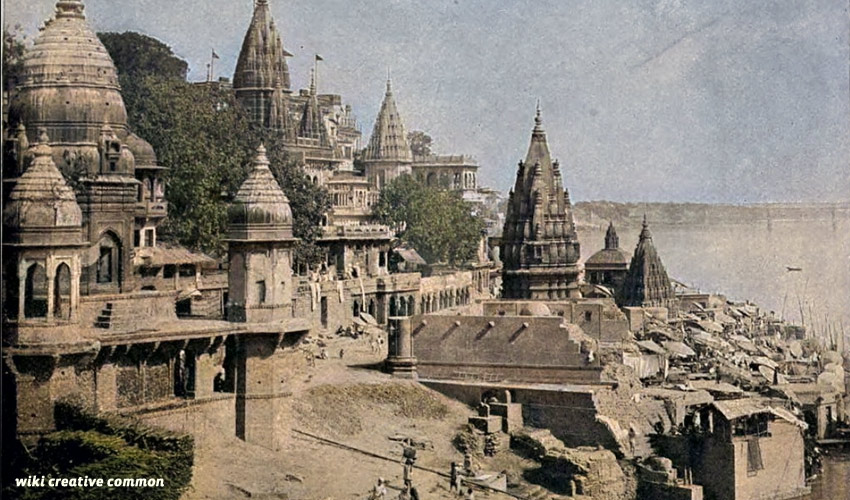
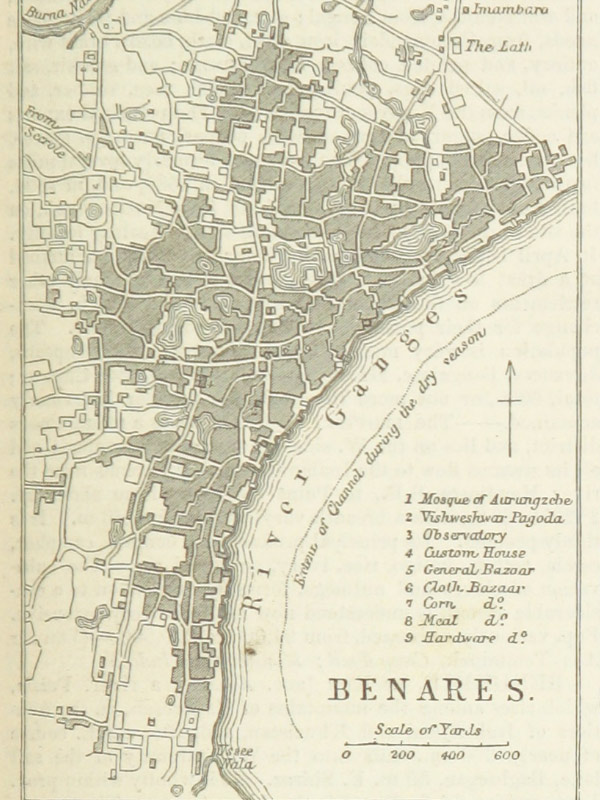
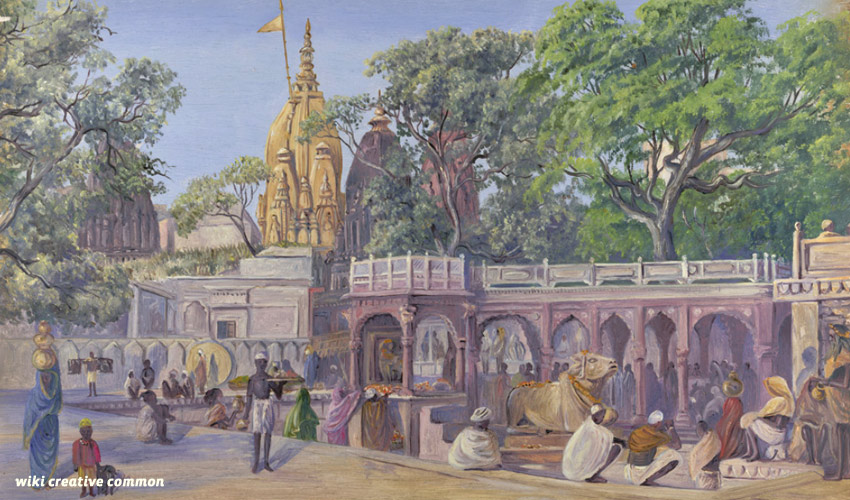
The city of Varanasi is located in the middle Ganges valley of North India, in the Eastern part of the state of Uttar Pradesh, along the left crescent-shaped bank of the Ganga, averaging between 50 feet and 70 feet above the river. It has the headquarters of the Varanasi district. Varanasi is located at approximately 25.3045° N latitude and 83.00395° E longitude, situated along the banks of the Ganges River. The city is a major cultural and religious centre. The "Varanasi Urban Agglomeration", an agglomeration of seven urban sub-units, covers an area of 112.26 km².
Being located in the Indo-Gangetic Plains of North India, the land is very fertile because of low-level floods in the Ganga that continually replenish the soil. Varanasi is situated between the Ganga confluences with two rivers: the Varuna and the Assi stream. The distance between the two confluences is around 4 kilometres.
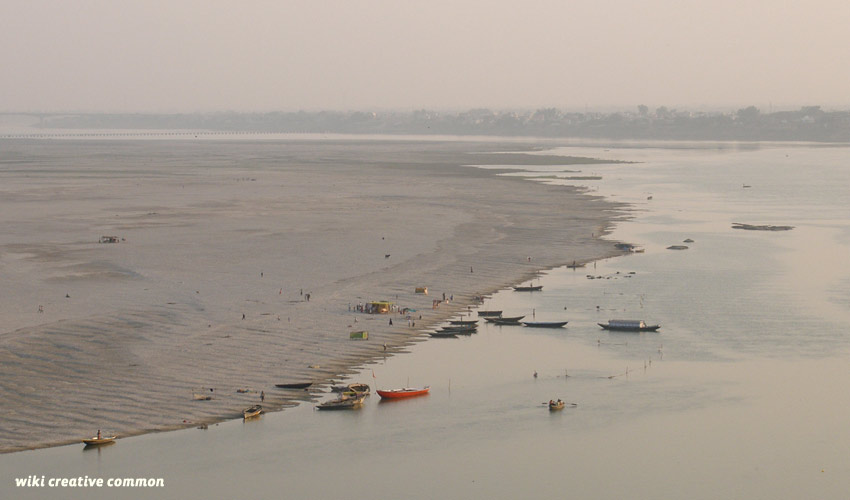
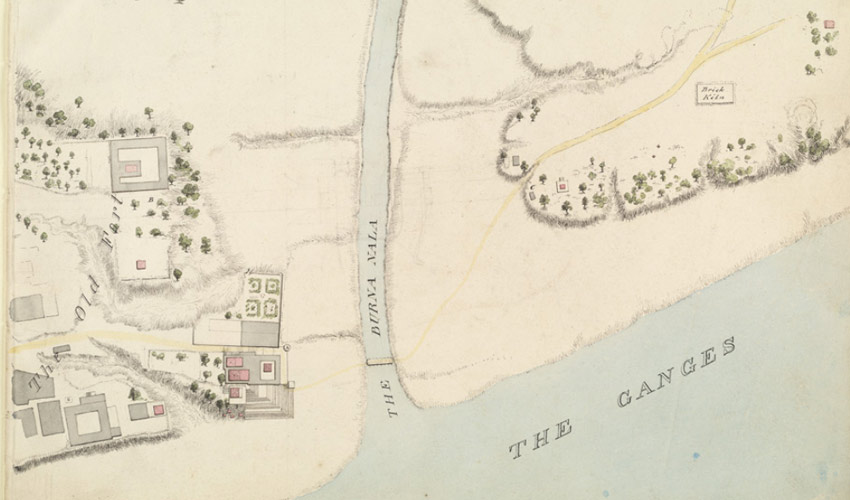
Today, a crowded, bustling, noisy, dirty city, Banaras was in antiquity an area of gently rolling hills, lush forests, and natural springs bordered by the magical waters of the river Ganges. A favoured hermitage site for many of India's most venerated sages - Guatama Buddha and Mahavira, Kabir and Tulsi Das, Shankaracharya, Ramanuja and Patanjali all meditated here - Banaras has been and continues to be one of the most visited holy places on the planet.
Varanasi experiences a humid subtropical climate with large variations between summer and winter temperatures. The dry summer starts in April and lasts until June, followed by the monsoon season from July to October. The temperature ranges between 22 and 46°C in summers. Winters in Varanasi see very large diurnal variations, with warm days and downright cold nights. Cold waves from the Himalayan region cause temperatures to dip across the city in the winter from December to February, and temperatures below 5°C are not uncommon. The average annual rainfall is 1,110 mm. Fog is common in the winters, while hot, dry winds, called loo, blow in the summers. In recent years, the water level of the river Ganga has decreased significantly; upstream dams, unregulated water extraction, and dwindling glacial sources due to global warming may be to blame.
Varanasi is well-connected by air, rail and road. One of the major factors in Varanasi's sustained existence as an inhabited city is its role as an established transportation hub between cities.
Railway- Varanasi Junction, commonly known as Varanasi Cantt Railway Station, is the city's largest train station; more than 3.6 lakh passengers and 240 trains pass through each day. The other railway stations in Varanasi include- Varanasi city sation and Banaras Station.
Road- Varanasi lies along National Highway 2, which connects it to Kolkata, Kanpur, Agra and Delhi. National Highway 29 connects Varanasi to Gorakhpur via Ghazipur to the northeast. National Highway 56 connects Varanasi to Lucknow via Jaunpur and Sultanpur, to the northwest. National Highway 7, the longest National Highway in India, is the most important road connecting Varanasi to southern India, passing through the cities of Hyderabad, Bangalore, Salem, Madurai, Tirunelveli and Kanyakumari.
Air Travel- Varanasi is served by Lal Bahadur Shastri International Airport, which is approximately 26 km (16 mi) from the city centre in Babatpur.
Due to the high population density and increasing number of tourists, the state government and international NGOs and institutions have expressed grave concern for the pollution and pressures on infrastructure in the city, mainly the sewage, sanitation and drainage components. The sewage problem is exacerbated by the role of the Ganges in bathing and in river traffic, which is very difficult to control. Varanasi's water supply and sewage system is maintained by Jal Nigam, a subsidiary of Nagar Nigam. Power supply is by the Uttar Pradesh Power Corporation Limited.
The city grew as a place for Authentic Ayurveda and Panchkarma treatment. Many Ayurvedic centres are located in Varanasi.
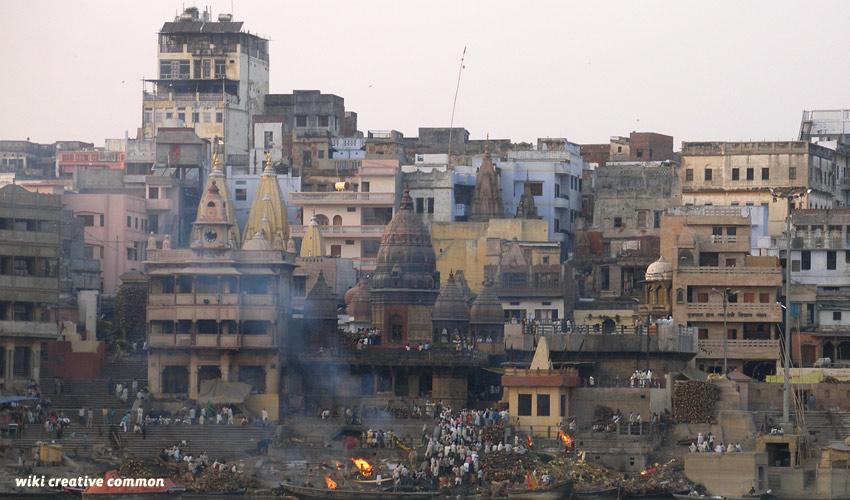
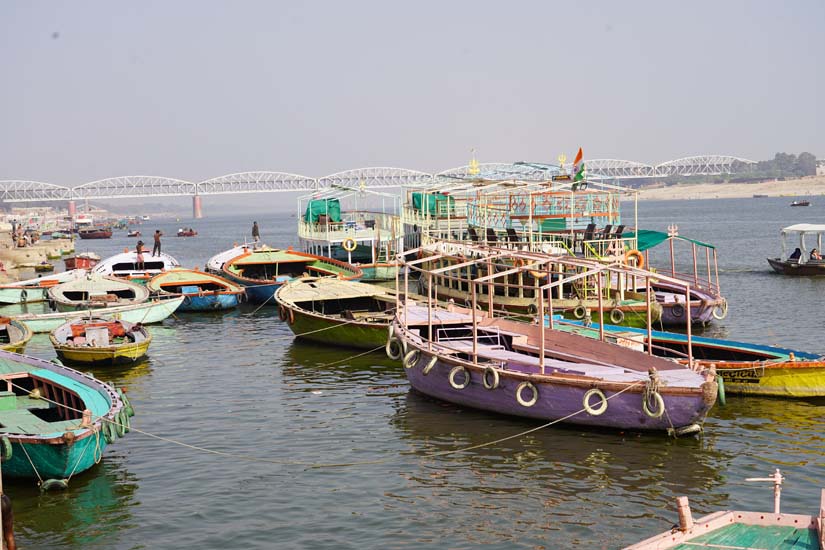
The architecture of Varanasi is a reflection of its ancient spiritual heritage and rich cultural history. As one of the world’s oldest continuously inhabited cities, it offers a unique urban landscape where religion, art, and everyday life merge seamlessly. The ghats along the Ganges River, particularly Dashashwamedh, Manikarnika, and Assi — are the most iconic architectural features, built as a series of steps leading to the sacred river. These ghats are flanked by a variety of temples, shrines, palatial havelis, and ashrams, often constructed in a blend of Rajput, Mughal, and Maratha styles, adorned with intricate carvings, stone latticework, and towering shikharas.
Winding through the heart of the city are narrow, lanes lined with centuries-old houses made of local sandstone, featuring carved wooden balconies, courtyards, and jharokhas (overhanging enclosed windows). Many of these homes serve as both residence and workspace for artisans, priests, and traders. The sacredness of space is deeply embedded in the city’s structure, temples are often tucked into corners, courtyards, and even along walls. Although few standing structures date back before the 16th century — due to waves of destruction by invading armies from the 11th century onward — the spirit of Banaras endured. Qutb-ud-din Aibak's forces alone were said to have destroyed more than a thousand temples in 1194. Over the centuries, the city’s architecture evolved, influenced by rulers, pilgrims, and craftsmen from across regions. Yet one thing remains unchanged — Banaras has never lost its "ras" (essence); no matter how much it transforms, it always remains Banaras.
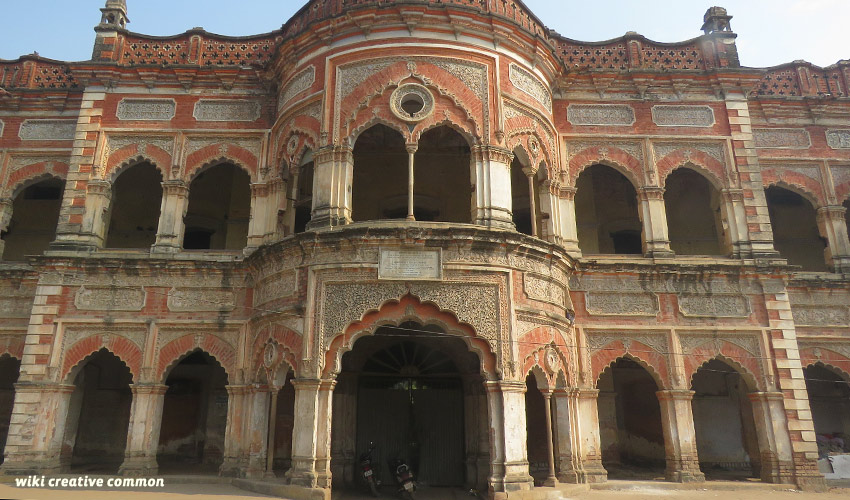
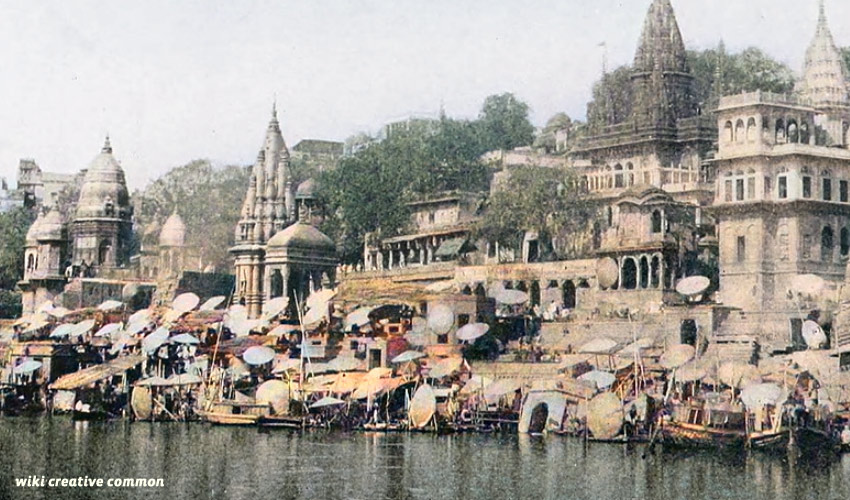
The city of Varanasi has an intimate connection with a host of legendary figures and mythical characters, who are said to have actually lived here. The city has found a place in the Buddhist scriptures as well as the great Hindu epic of the Mahabharata. The holy epic poem Shri Ramcharitmanas by Goswami Tulsidas was also written here. All this makes Varanasi a significantly holy place.
Varanasi has been a symbol of the Hindu Renaissance. Knowledge, philosophy, culture, devotion to Gods, Indian arts and crafts have all flourished here for centuries. Ayurveda is said to have originated in Varanasi and is believed to be the basis of modern medical sciences such as Plastic surgery, Cataract and Calculus operations. Maharshi Patanjali, the preceptor of Ayurveda and Yoga, was also affiliated with Varanasi, the holy city. Varanasi is also famous for its trade and commerce, especially for the finest silks, gold and silver brocades, since the early days.
Varanasi has been a great centre of learning for ages. It is associated with the promotion of spiritualism, mysticism, Sanskrit, yoga and the Hindi language and has honoured authors such as the famous novelist Prem Chand and Tulsi Das, the prominent saint-poet who wrote Ram Charit Manas.
Varanasi is also aptly called the cultural capital of India. The city has provided a platform for all cultural activities to flourish. Many exponents of dance and music have come from Varanasi. Ravi Shankar, the internationally renowned Sitar maestro, was born in this holy city, and Ustad Bismillah Khan (the famous Shehnai player) lived here for a major part of his life.
Vaishnavism and Shaivism have co-existed in Varanasi harmoniously. With a number of temples, Mrs. Annie Besant chose Varanasi as the home for her ‘Theosophical Society’ and Pandit Madan Mohan Malviya, to institute ‘Benares Hindu University, the biggest University in Asia.
Varanasi is also considered to be a veritable jungle of fairs and festivals with respect to variety, distinction, time, sacred sites, performers, overseers and side-shows. The popular saying that 13 festivals happen in 7 days of the week expresses this richness. "Every day is a great festival in Banaras", so says tradition.
Hindus believe that one who is graced to die on the land of Varanasi would attain salvation and freedom from the cycle of birth and re-birth. People of Benaras are known for being the exponents of literature, music, Vedic philosophy, arts, crafts and architecture. Socio-economic aspects of the city are highly influenced by the Ganges and on most of the Hindu festivals people can be seen using the bathing Ghats (river fronts) even before daybreak as an important part of their rituals. In Varanasi, the atmosphere is relaxed in general and we can see people chewing the famous 'paan' and chatting in a laid-back manner. That does not keep Varanasi behind, as is evident from the growing modern industries in the city. Varanasi is also the most ancient seat of education in India (Sarva Vidya ki Rajdhani) and Benaras Hindu University is still famous throughout the world for its scholars. The city is also a seat for Sanskrit and one can still see the Guru-Shishya tradition being followed here at certain places.
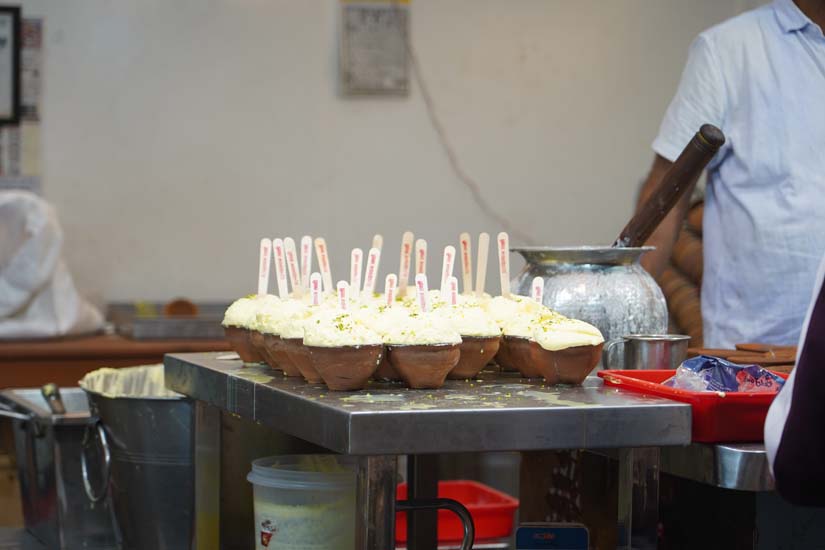
Several social and religious customs co-exist in the city and the caste system is still prevalent here. People wear 'Gamcha' (a cotton towel), as they go bathing in Ganga and drink Thandai (a coolant with milk as its base), which have become a part of the cultural identity of traditional ways of Varanasi. Music, drama and entertainment have found a place in the lives of the people. Its dance traditions and vocal and instrumental music is highly developed and one can catch the glimpses of folk drama in the 'Ramlila' organized before Dussehra. Traditional games and sports include 'Akharas', where wrestling or 'kushti' competitions are organized.
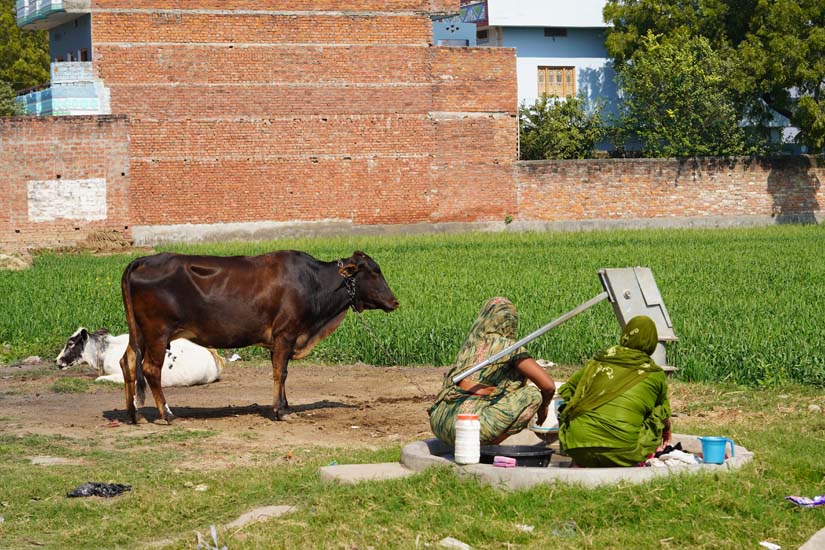
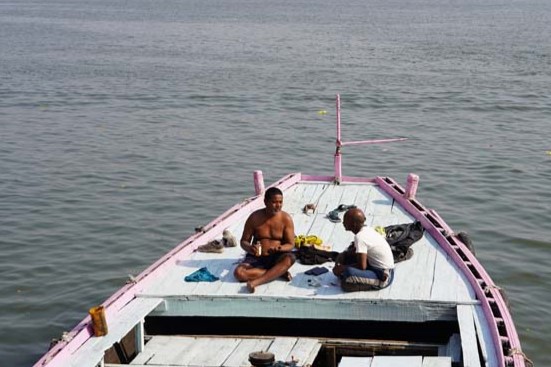
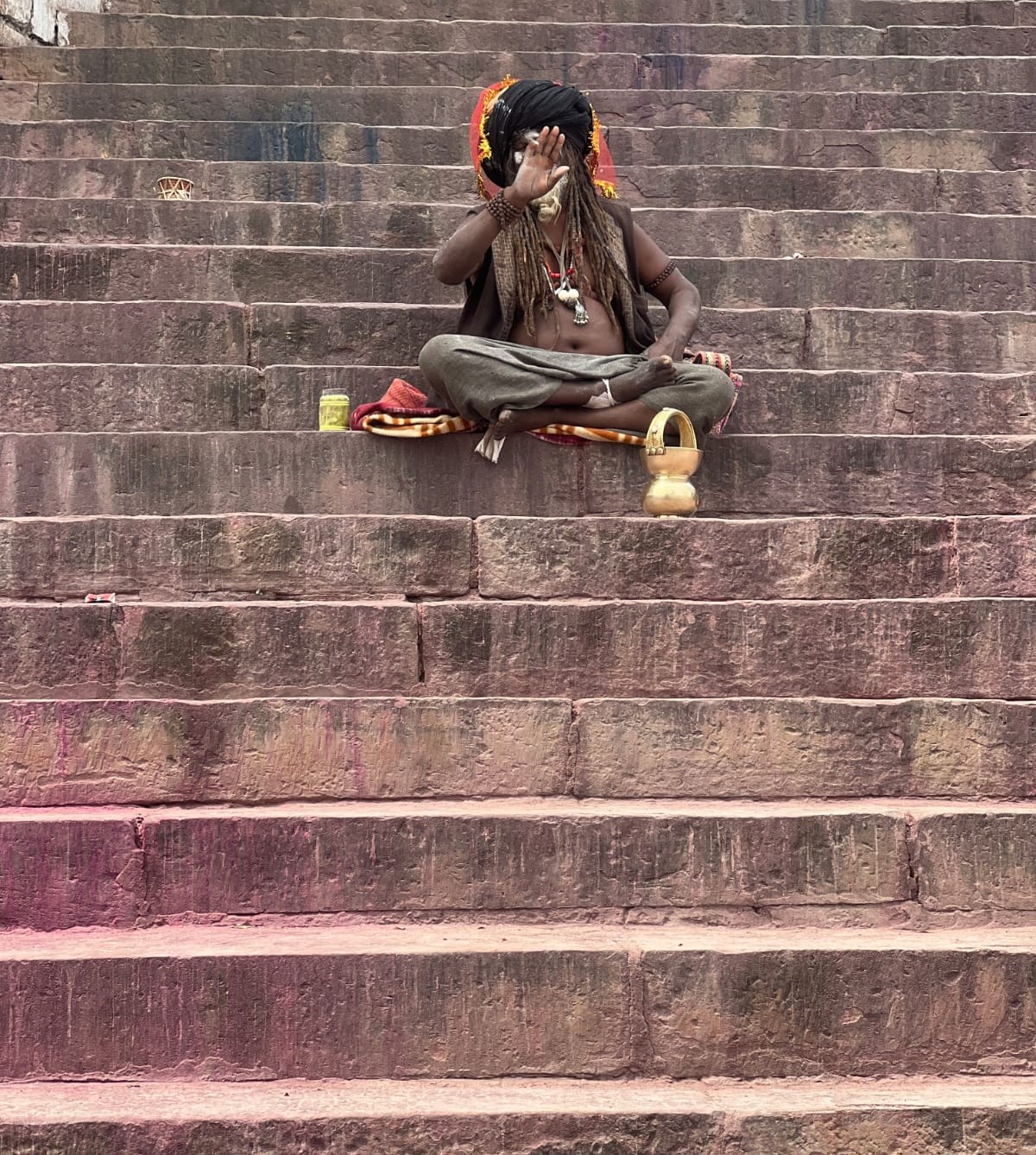
Varanasi is famous for its antique temples. The renowned Kashi Vishwanath Temple dedicated to Lord Shiva has a 'lingam' - the phallic icon of Shiva - that goes back to the time of the epics.
Varanasi is a veritable paradise for pilgrims, who throng the 'Ghats' of the Ganges for spiritual rewards like deliverance from sin and attainment of nirvana. The Hindus believe that to die here on the banks of the Ganges is an assurance of heavenly bliss and emancipation from the eternal cycle of birth and death. So, many Hindus travel to Varanasi at the twilight hour of their life.
The 8th century Durga Temple, situated on the Ramnagar Pandav road, is home to hundreds of monkeys that reside in the nearby trees. Another popular temple is the Sankatmochan temple dedicated to the simian-god Hanuman. Varanasi's Bharat Mata Temple is probably the only temple in India that is dedicated to the 'Mother India.' Inaugurated by Mahatma Gandhi in 1936, it has a big relief map of India carved in marble. Another relatively new temple is the Tulsi Manas Temple built in honor of Lord Rama in 1964 at the place where Tulsidas composed the Ramacharitmanas, the vernacular version of the epic of Ramayana. The walls of this temple adorn the scenes and verses depicting the exploits of Lord Rama.
Other significant places of worship include the Sakshi Vinayaka Temple of Lord Ganesha, the Kaal Bhairav Temple, the Nepali Temple, built by the King of Nepal on Lalita Ghat in Nepali style, the Bindu Madhav Temple near the Panchaganga Ghat and the Tailang Swami Math.
Foreign tourists love to ride horse-driven 'Ekkas' and cycle rickshaws that are still in use here.
The Manikarnika Ghat is one of the holiest cremation grounds among the sacred riverfronts, located on the banks of the River Ganga, in the city of Varanasi. Ancient meditative practises and studies are still practised in the city. From the ceremony of shaving off the hair of the newborn to the immersion of ashes, the city still witnesses the rituals and sacraments that existed in the Vedic period.
List of craftsmen.
Dream of Weaving: Study & Documentation of Banarasi Sarees and Brocades
A project of Ministry of Commerce & Industry UNCTAD & DFID
Banarasi Silk Saree – History, Present & Future of the Most Exquisite Fabric
https://khinkhwab.com/
