




Ikat Weaving ~ Janga...
Jangaon is part of Telangana’s wider Ikat tradition, historically linked to Telia Rumals and the Pochampally weaving region.
Jangaon, Telangana, India...
 Siddipet, Telangana, India...
 Warangal, Telangana, India...
 Pochampally, Telangana, India...

Jangaon is part of Telangana’s wider Ikat tradition, historically linked to Telia Rumals and the Pochampally weaving region.
Jangaon, Telangana, India...
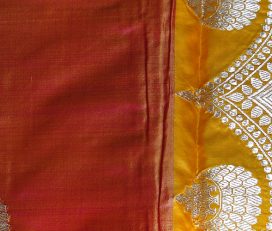
Banarasi sarees get their name from Varanasi, a city known for its rich tradition of handwoven textiles and intricate designs.
Varanasi, Uttar Pradesh, India...
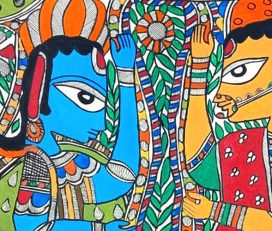
Mithila painting, is a vibrant and deeply symbolic folk art tradition originating from the Mithila region of Bihar, India, and adjoining parts of Nepal.
Madhubani, Bihar, India...
Let us talk… if you feel the same love for handmade, and would like to support us by sharing your research or by contributing financially to our documentation efforts.
Reach us at [email protected]
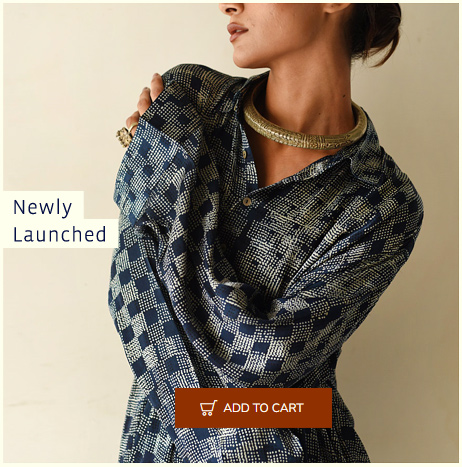
Jangaon Ikat belongs to a longer tradition of Telangana Ikat in which textiles have been made for both everyday use and more formal or occasion-based purposes. An important earlier form of this tradition was the Telia Rumal, a relatively small cotton textile that could be worn or used in several ways, including as a head covering, shoulder cloth, loincloth or lungi. Its compact size and lightness made it suitable for regular use, while the treatment of its yarn gave the cloth a distinctive texture and handling quality. Although the Telia Rumal represents an earlier stage of the regional Ikat tradition rather than the principal product of present-day Jangaon weaving, it is useful for understanding how the technique was initially applied to practical textile forms. Over time, Ikat production moved increasingly towards larger garments, particularly sarees, as weaving centres in Telangana responded to changing patterns of consumption and wider markets. The development of silk weaving during the twentieth century further expanded the possibilities of Ikat, allowing weavers to produce richer and more elaborate sarees alongside cotton textiles. The saree provided a much larger surface on which calculated arrangements of colour and geometric pattern could be displayed across the body, border and pallu. These designs were not applied to the completed textile but emerged from the prior resist-dyeing of the yarn and its careful alignment during weaving.
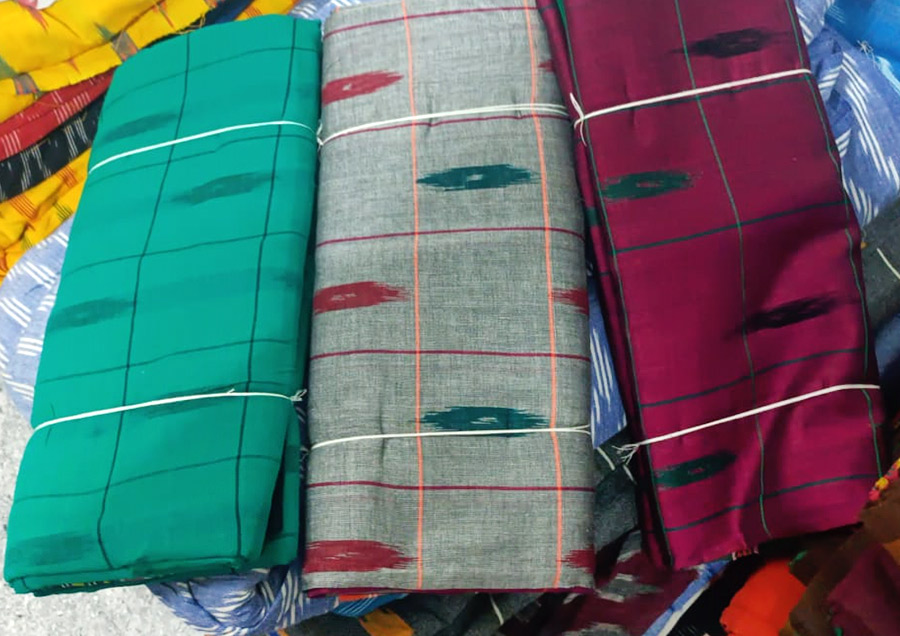
The range of Jangaon Ikat products is not limited to sarees. Ikat is also produced in the form of dress materials, dupattas and furnishing fabrics, allowing the technique to enter both clothing and domestic spaces. Such diversification has been important as weaving households have had to respond to changing consumer preferences and market conditions. The same basic process of preparing the yarn, calculating the design, tying and dyeing the threads and subsequently weaving them can be adapted to different products without fundamentally changing the technical character of the craft. Sarees with more elaborate patterns require greater preparation and labour because the resist-dyed sections of both warp and weft have to be brought into correspondence during weaving. Simpler cotton products involve fewer stages and can serve more everyday requirements. Product form is therefore closely connected to the amount of labour invested in the textile, the materials used and the complexity of the design. This also affects the circumstances in which different products are purchased and used, with more elaborate textiles often carrying greater material and economic value.
The changing range of products nevertheless has to be understood alongside the economic difficulties faced by Jangaon weaving households. The expansion from traditional compact textiles to sarees and other contemporary products has allowed Ikat to respond to new markets, but diversification by itself has not secured the survival of handloom production. The Jangaon weaving cluster has experienced a substantial decline in the number of active looms, indicating that the ability to produce a wider range of textiles has not necessarily translated into stable livelihoods for weavers.
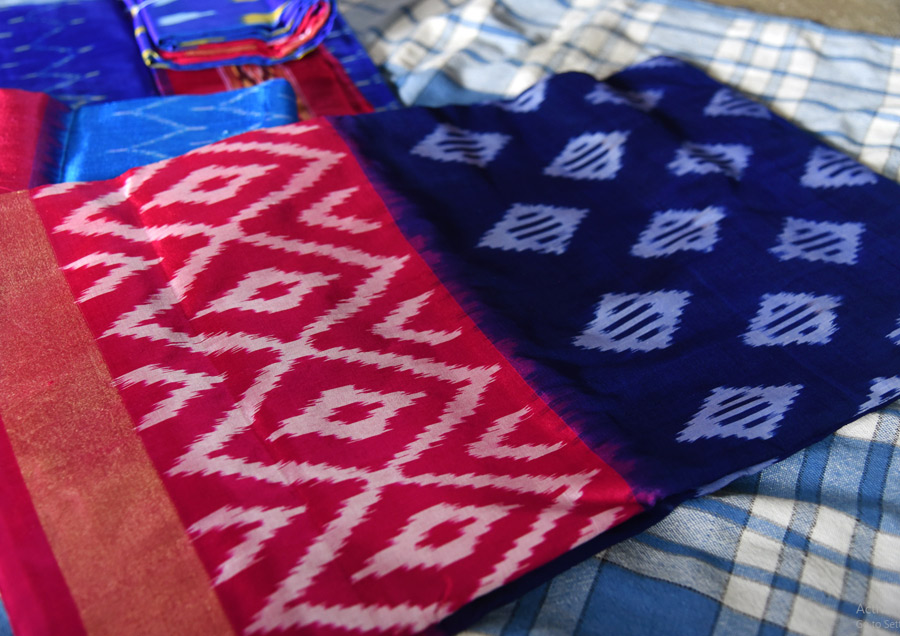
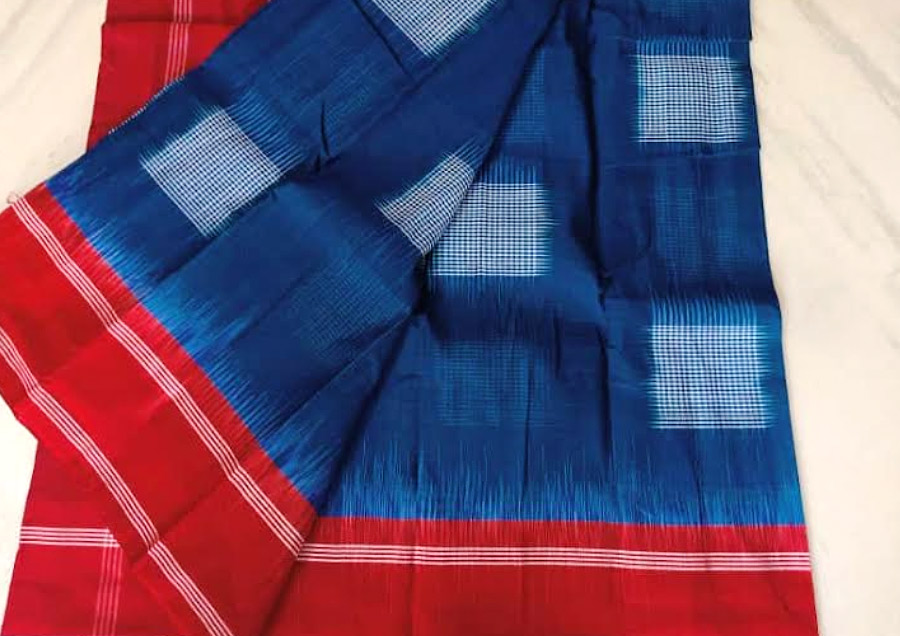
The significance of Jangaon Ikat lies in the specialised knowledge, labour and community practices through which the textile has been produced and sustained. Its significance cannot be understood simply through the appearance of the finished cloth. The design is created through a complex sequence of yarn preparation, pattern calculation, resist tying, dyeing and handloom weaving, requiring the weaver to anticipate the position of each coloured section before the fabric exists. The resulting pattern is therefore a material record of the technical decisions made during production. Slight variations in the alignment of dyed threads can produce the softened edges characteristic of Ikat, making the visual appearance of the textile closely connected to the processes through which it is made. In Jangaon, this accumulated technical knowledge forms an important part of the cultural value of the craft, as it depends upon skills that are acquired through prolonged practical experience rather than through the operation of the loom alone.
The cultural significance of Jangaon Ikat is also closely connected to its household-based system of production. Knowledge of yarn preparation, resist application, colour sequencing, pattern calculation, warping and weaving is transmitted through participation in the work of the household. Different members may contribute to different stages of production, meaning that the finished textile represents collective labour rather than the work of the individual seated at the loom alone. This system also allows specialised knowledge to be gradually acquired across generations. The craft therefore functions as a form of embodied knowledge, in which understanding the behaviour of yarn, the precision required in tying and dyeing and the adjustments necessary during weaving develops through repeated practice. The significance of Jangaon Ikat consequently lies not only in the textile as an object but also in the community of practitioners and the production system through which this knowledge continues to exist.
At the same time, the cultural continuity of Jangaon Ikat is increasingly affected by the economic difficulties of handloom production. The substantial decline in the number of active looms in the Jangaon cluster indicates a weakening of the social conditions through which specialised knowledge can be maintained. When weaving becomes difficult to sustain as a livelihood, younger members of weaving households may choose other occupations even when they remain familiar with the craft. This makes the survival of Jangaon Ikat dependent upon more than the preservation of designs or techniques. Its continued cultural significance requires the maintenance of the households, skills and livelihoods through which the tradition is practised. The adaptation of Ikat to different products, including sarees, dress materials and furnishing textiles, has helped the craft respond to changing markets while retaining its fundamental technical principles. Jangaon Ikat can therefore be understood as a living textile tradition whose cultural value rests on the continued relationship between technical knowledge, household labour and the ability of weaving communities to sustain their practice.
The history of Ikat weaving in Telangana is accompanied by community traditions that explain the origins of weaving through sacred ancestry rather than through a documented chronology. These narratives are particularly associated with the Padmasali or Padmasale weaving community, which has historically played an important role in the region’s handloom economy. They should be understood as community traditions and origin narratives rather than as verifiable accounts of the historical emergence of Ikat in Telangana.
According to one tradition recorded among the Padmasales, the community traces its ancestry to the sages Bhrigu and Markandeya. The name Padmasale itself is explained through the Sanskrit-derived words Padma, meaning lotus, and Shale, associated with weaving. In this account, Bhavana Rishi, identified as the son of Markandeya, had 101 sons who became weavers. Their first textile was said to have been woven from the fibres of the lotus, providing the legendary explanation for the community’s name.
A second and more elaborate version of the origin story appears in the Baramahal Records. According to this narrative, the other weaving communities were expected to offer a piece of cloth each year to the sage Markandeyulu. On one occasion, they failed to make the offering at the appointed time, angering the sage. He consequently performed a yagya or havan and, through the power of his mantras, brought forth a man from the sacrificial fire. This man was named Padma Saliwarlu and was instructed to weave cloth for the sage. The story continues with Padma Saliwarlu asking the sage whom he should worship and how he might attain moksha. Markandeyulu instructed him to worship the sage himself. Within the logic of the narrative, therefore, weaving is not represented merely as an inherited occupation. It becomes a divinely sanctioned vocation, established through the intervention of a sacred figure and given a moral and spiritual dimension.
These traditions are significant because they locate the identity of the weaving community within a sacred genealogy. The craft is represented as something bestowed upon the community rather than simply adopted as an occupation. The association with Markandeya and the lotus also gives weaving a symbolic vocabulary through which the Padmasales explain their collective identity and distinguish their occupational heritage from other social groups. The narratives should not, however, be used as evidence that Ikat itself originated with the Padmasali community or that the legendary events describe the historical beginning of tie-and-dye weaving in Telangana. The documented history of the regional technique points instead towards the earlier Telia Rumal tradition of Chirala and the subsequent movement of Ikat knowledge to Pochampally and neighbouring weaving centres. The earliest documented regional Ikat textiles are associated with Telia Rumals dating from the nineteenth century, while the development of Pochampally Ikat as a major weaving tradition belongs to a later period. Documentation of the Padmasali tradition records hereditary offices such as the Setti or Gaudu, who functioned as community headmen, assisted by an Ummidi Setti or Ganumukhi. Such institutions formed part of the social organisation through which communal responsibilities, festivals and other collective matters were managed.
For an understanding of Jangaon Ikat, these legends are therefore valuable not because they establish a literal history of the technique, but because they reveal how weaving communities have understood themselves and their occupation. The craft exists simultaneously within two different registers: one is the documented history of yarn-resist weaving, its movement between centres and its adaptation to changing materials and markets; the other is the community memory through which generations of weavers have given their occupation an ancestral and sacred meaning. The coexistence of these two forms of knowledge is itself part of the cultural history of Ikat. The historical record can establish when particular textiles and techniques become visible, while oral and community traditions preserve ideas about why weaving matters to the people who practise it. In the case of the Padmasalis, the stories of Markandeya, Bhavana Rishi, Padma Saliwarlu and the lotus provide a framework through which weaving becomes part of collective ancestry.
The history of Jangaon Ikat is best understood within the longer development of tie-and-dye weaving in the Telugu-speaking region. The technique did not originate in Jangaon itself. Its earlier history in the region is associated with Chirala, where cotton Telia Rumals were produced using resist-dyed yarns. These textiles, characterised by bold geometric designs in red, black and white, were used as kerchiefs, loincloths, lungis and turbans and entered overseas markets by the early twentieth century. By the 1930s, such textiles were being exported in considerable quantities to Burma, the Middle East and East Africa, where they became known as Asia Rumals. The connection between Chirala and the later Telangana tradition is important because it explains how a technique centred on the preparation and resist-dyeing of yarn gradually became established in new weaving settlements. Accounts of Pochampally describe the ikat technique as having been introduced from Chirala, although there are differing accounts of whether weavers migrated to Pochampally or travelled there to learn the technique. The early production in Pochampally remained closely associated with cotton and simpler single-ikat patterns before the craft underwent significant changes in the middle decades of the twentieth century.
A major transformation occurred in the 1950s and 1960s, when Pochampally weavers began experimenting with silk alongside cotton. Two weavers from Pochampally were selected by the All India Handloom Board to receive training in silk weaving in Banaras, after which silk ikat entered the local market. This development substantially expanded the range and value of the textiles being produced. The earlier rumal tradition could now be adapted to sarees and other larger textiles, while the greater possibilities offered by silk encouraged the development of more elaborate patterns and colour arrangements. The technical vocabulary of the region expanded alongside these changes. The Telangana tradition came to include single ikat, compound or combined ikat and double ikat. In single ikat, either the warp or the weft is resist-dyed. Compound ikat involves resist-dyed warp and weft sections that contribute to different areas of the design, while double ikat requires both sets of threads to be prepared so precisely that their patterns meet during weaving. The growing importance of double ikat helped establish the reputation of the region for technically demanding geometric textiles. Pochampally subsequently became the principal centre through which this regional tradition gained wider recognition. The chowkra, a diamond enclosed within a square and its variations, became one of the most recognisable designs. Unlike a printed geometric motif, however, the chowkra is distributed across resist-dyed threads and only becomes fully legible when the prepared warp and weft are brought together on the loom. The edges remain characteristically diffused rather than mechanically sharp, giving the pattern its particular visual quality.
Jangaon belongs to this wider network of production rather than representing a completely separate technical tradition. Current documentation identifies the Jangaon district headquarters as one of the areas where Pochampally Ikat is produced, alongside fifteen mandals in Yadadri Bhuvanagiri and eight in Nalgonda. This distribution indicates the extent to which the technique developed beyond its principal centre and became embedded within a larger regional handloom economy. The growth of these weaving centres also coincided with the formation of cooperative structures. In the 1950s, cotton weaving was already an important occupation in the Pochampally region, and a Handloom Cooperative Society was established at Koyyalagudem before a branch was opened at Pochampally in 1952. The Pochampally Handloom Weavers Cooperative Society became independent in 1955. Such institutions were intended to provide a more organised framework for procurement, production and marketing at a time when handloom communities were attempting to negotiate changing markets and the increasing costs of production.
The subsequent expansion of ikat did not, however, produce uniform prosperity across the weaving region. Jangaon became one of the important handloom clusters in Telangana, with around 1,000 looms reportedly operating in the early 2000s. By the late 2010s, estimates suggested that fewer than half remained active. The decline was accompanied by a growing movement away from weaving among younger workers and by the increasing mechanisation of textile production. For families whose specialised knowledge remained concentrated in handloom weaving, however, leaving the occupation was not always a viable alternative. The history of Jangaon Ikat thus reflects a broader movement from the older Telia Rumal tradition towards a diversified regional handloom industry. Skills associated with resist dyeing, pattern calculation and loom preparation were adapted to new materials and products, while the expanding network of production linked Pochampally with neighbouring weaving settlements including Jangaon. Its history is therefore not one of a single point of origin but of the gradual movement, adaptation and consolidation of technical knowledge across the Telangana handloom landscape.
The visual character of Telangana Ikat is closely connected to the mathematical organisation of its dyed yarns. Unlike embroidery or surface printing, where motifs can be added after the basic structure of the textile has been established, Ikat designs have to be calculated before weaving begins. The position of each resist-bound section determines where a particular colour will appear on the finished cloth. The design therefore exists simultaneously as a plan, as an arrangement of tied yarn and finally as a woven pattern. This relationship between calculation and material execution is central to the appearance of Jangaon Ikat.
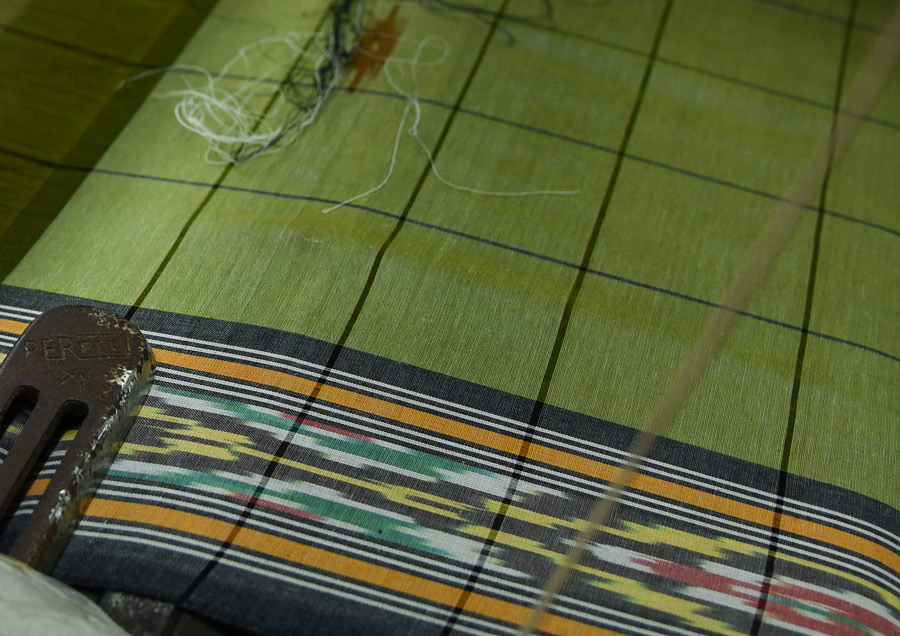
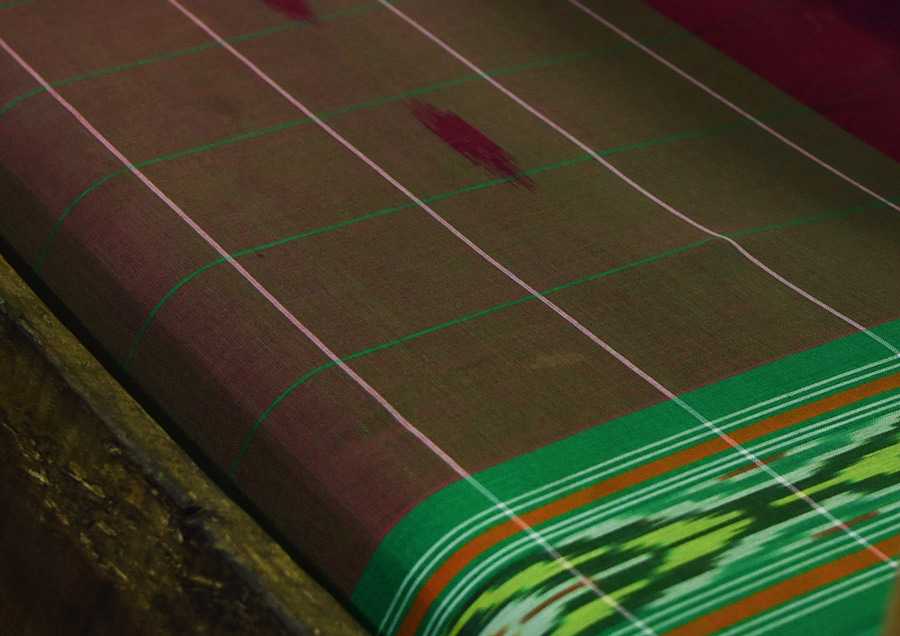
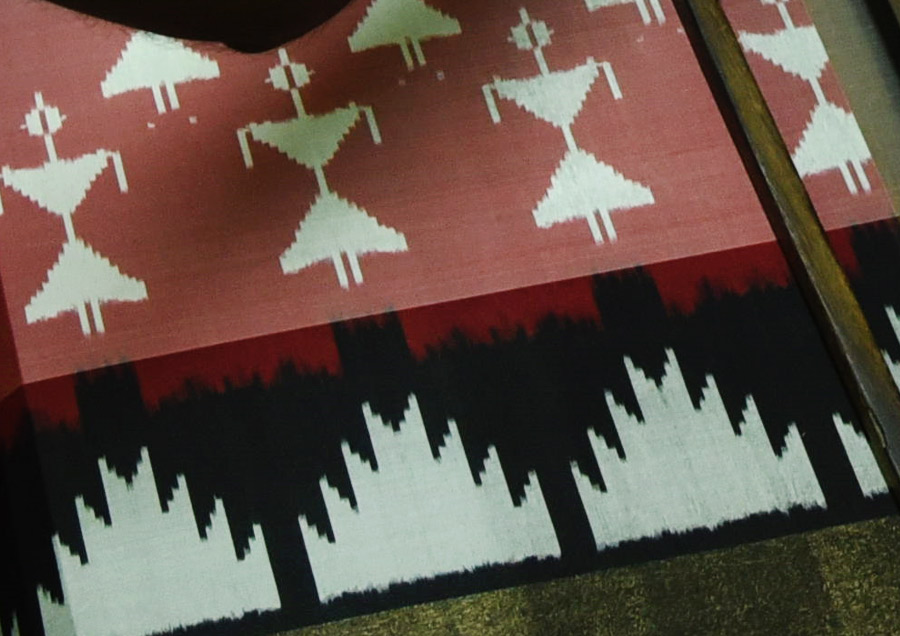
If we broadly classify the designs, we can identify two main categories of sarees. The first consists of plain sarees with a one- to two-inch Ikat border. In some cases, the pallu is also plain, while in others, it features Ikat patterns. Such sarees are commonly worn by women as everyday attire and carry a distinct identity rooted in Telangana’s cultural tradition.
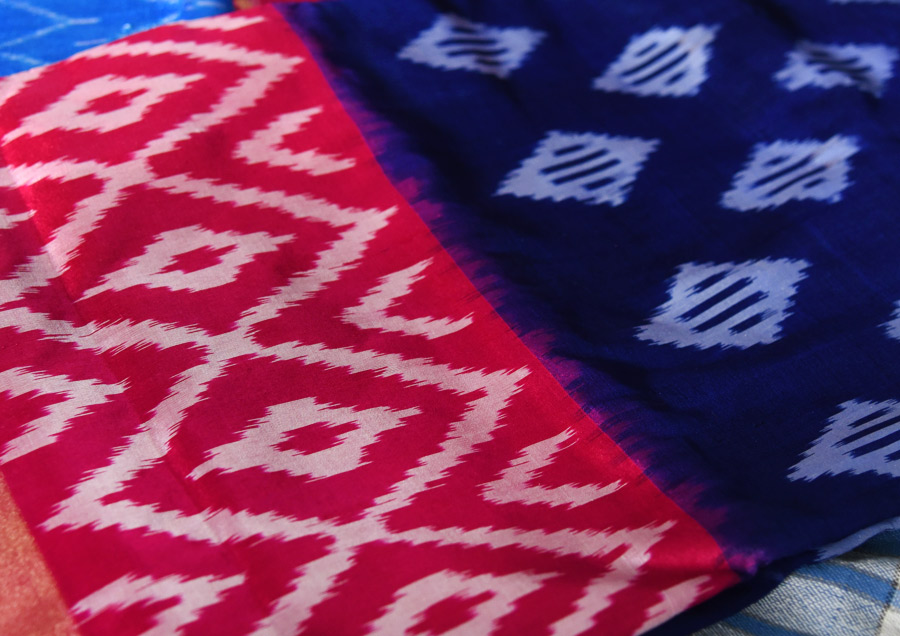
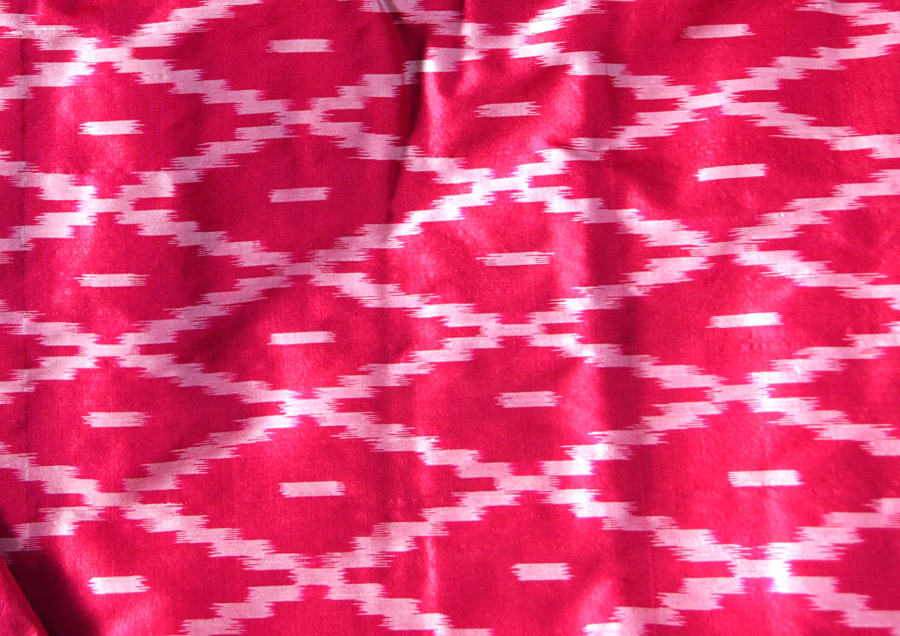
The second category comprises sarees in which the entire body is filled with intricate patterns. Geometric forms dominate this aspect of Telangana’s Ikat tradition. Squares, diamonds, stripes, checks and stepped forms are repeated across the length and breadth of the textile, producing patterns that appear highly ordered when viewed from a distance.
The Chowkra, one of the best-known Pochampally designs, consists essentially of a diamond contained within a square. This basic form can be developed into numerous variations through changes in scale, colour and repetition. Such patterns are particularly suited to Ikat because they can be divided into measured sections across the warp and weft and reconstructed through the alignment of resist-dyed yarns.
During our research, we also came across sarees locally known as Rajkot designs. According to local weavers, around 50–55 years ago, a common workshop was established where local Ikat weavers and Patola artisans worked together. Through this interaction, local weavers were exposed to the complex pattern-making techniques of Patola and gradually adopted and developed the skills required to weave intricate Ikat patterns using silk yarn. This oral account offers an interesting insight into the exchange of knowledge and techniques between weaving traditions and the evolution of design in the region.
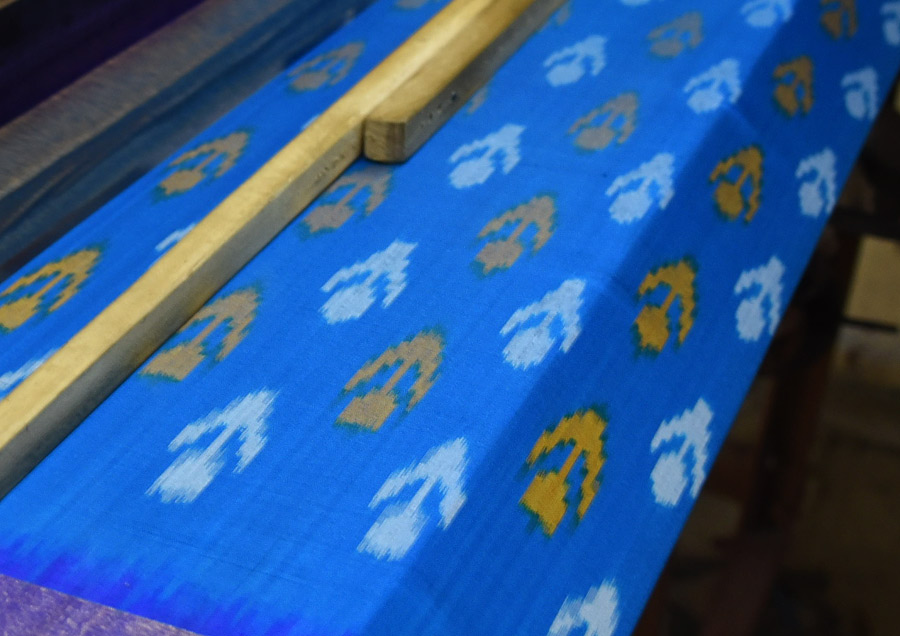
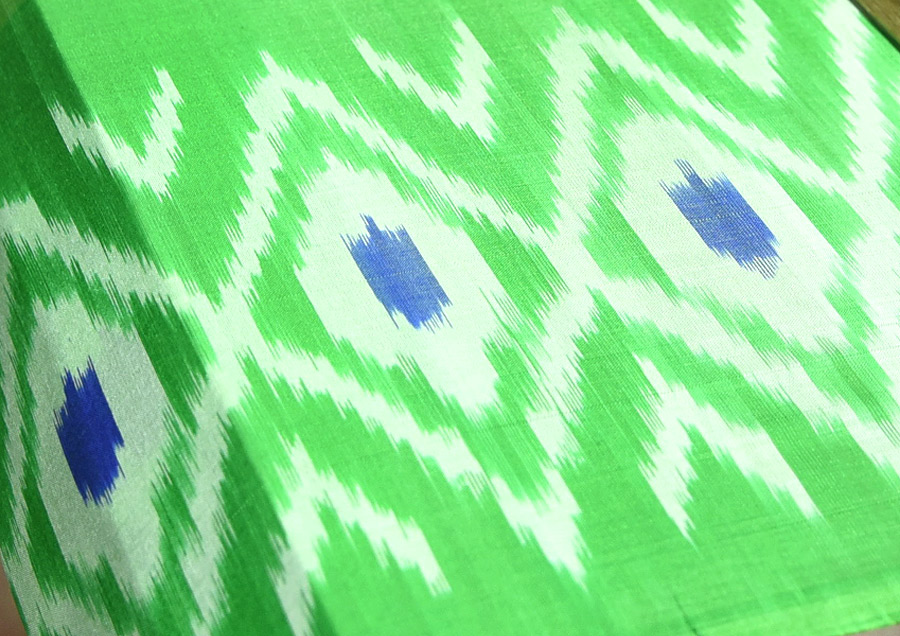
The characteristic softness of Ikat patterns is also a direct consequence of this process. The edges are rarely as mechanically precise as those of a printed design because the resist-dyed threads may shift slightly during preparation and weaving. Even a small displacement can alter the meeting point of coloured sections. Rather than eliminating this quality, Ikat weaving has developed a visual language in which the slight diffusion of the pattern is accepted as part of the textile. The blurred boundary is therefore a material trace of the process through which the design has been made.
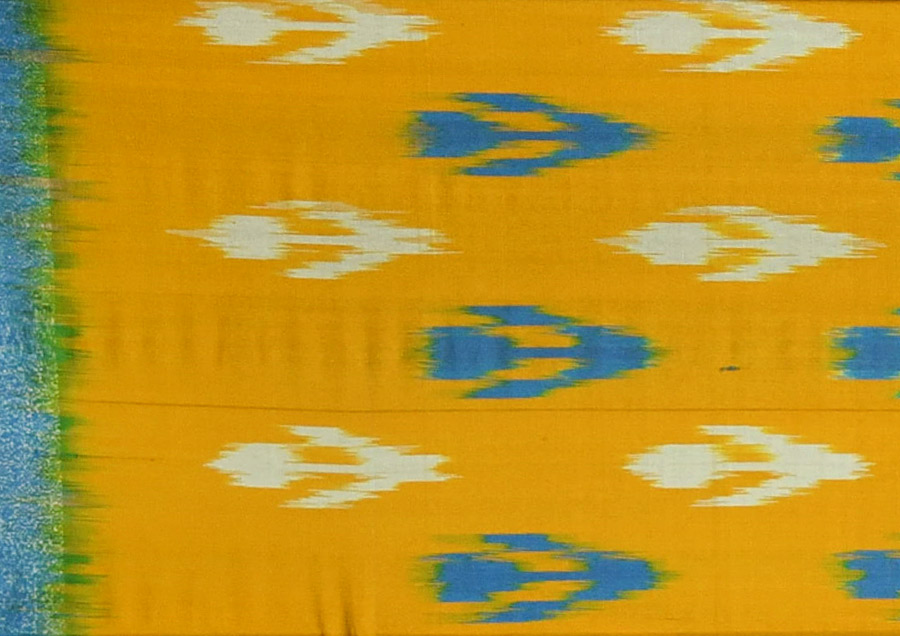
Colour plays an equally important role in distinguishing different Ikat designs. The technique permits the same geometric structure to appear radically different through changes in colour sequence. Traditional Telangana Ikat is particularly associated with combinations of strong contrasting colours, while contemporary production has expanded the palette in response to changing markets. The introduction of synthetic dyes allowed weavers to work with a considerably wider range of shades than was possible with some of the earlier dyeing practices. The resulting designs could therefore retain familiar geometric structures while acquiring new colour identities. The number of colours used also affects the complexity of the production process. Each additional colour may require another stage of tying and dyeing, since portions of the yarn that have already acquired one colour have to be protected before another dye is introduced. A multicoloured design is consequently more labour-intensive than a simple two-colour arrangement. The visual richness of an Ikat textile thus corresponds directly to the number of technical operations required to produce it.
The relationship between motif and textile structure becomes particularly visible in the saree. Designs may be distributed across the main body of the textile, while borders and pallu provide separate areas for variation. The repeated geometric pattern can be enlarged, reduced or reorganised according to the available width of the fabric. This allows the same basic vocabulary to generate numerous compositions rather than requiring every saree to have a completely different design. Ikat also permits considerable variation within repetition. The same geometric unit can be manipulated through changes in proportion, colour and spacing, producing designs that remain recognisably part of the regional tradition while responding to contemporary preferences. This flexibility has been important to the survival of the craft because it allows weavers and designers to introduce new combinations without abandoning the technical knowledge associated with the older patterns.
The visual language of Jangaon Ikat should therefore not be reduced to the presence of a few recognisable motifs. Its identity lies in the relationship between geometric design and the resist-dyed structure of the yarn. The softened edges, repeated units, colour transitions and occasional irregularities all disclose the method of production. What appears on the surface of the finished textile is inseparable from the calculations and manual operations that preceded it. This is particularly significant in distinguishing genuine Ikat from textiles on which an Ikat-like design has been printed. Since the pattern in authentic Ikat is embedded in the dyed yarn, it appears on both faces of the fabric rather than existing as a separate surface decoration. The reverse of the textile consequently retains the relationship between the coloured sections of yarn, providing one useful indication of the difference between yarn-resist Ikat and imitation printed fabrics.
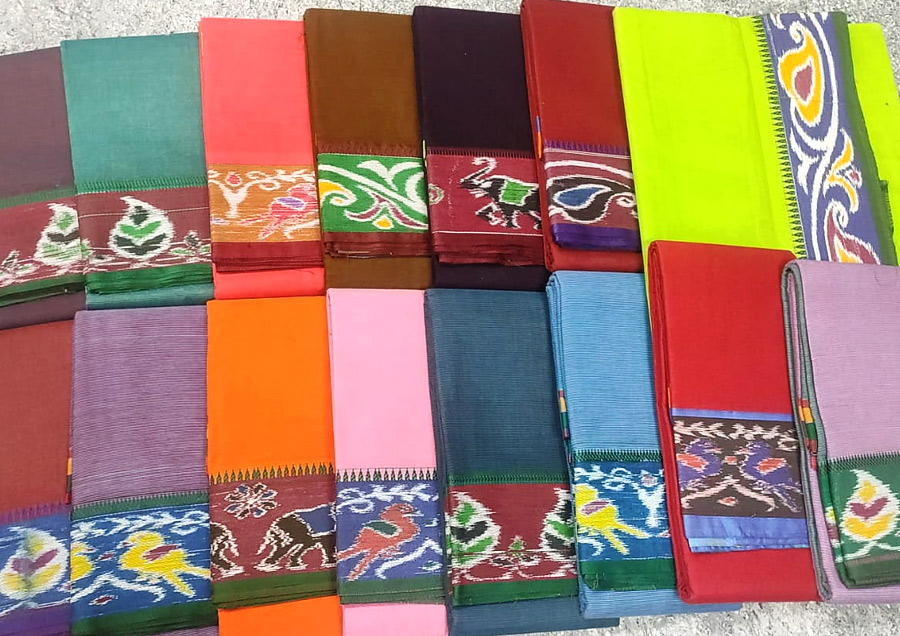
Jangaon Ikat faces challenges at several levels of production and circulation. The technical complexity of the craft makes production highly labour-intensive, while rising input costs, declining returns, competition from mechanised textiles, dependence on intermediaries and declining loom numbers have weakened its economic foundation. These pressures also affect the transmission of specialised knowledge because younger members of weaving households may be familiar with the craft while nevertheless choosing not to enter weaving as a livelihood.
The Jangaon weaving cluster has experienced a substantial decline in the number of functioning looms. Approximately 1,000 looms had operated in the region during the early 2000s, while by the late 2010s the number had fallen to fewer than half. This decline was associated with the growing perception that weaving was no longer sufficiently lucrative or sustainable to support a household. The decline in loom numbers is significant because it reflects more than a reduction in production. It indicates a contraction in the community of people actively practising the technical knowledge required to produce Ikat. The disappearance of a loom from a household can therefore represent the interruption of an entire chain of skills extending from yarn preparation and design calculation to tying, dyeing and weaving.
The cost of Jangaon Ikat production has increased as the prices of silk and cotton yarn, dyes and other inputs have risen. Research on the regional Ikat sector identifies rising raw-material costs, declining wages and dependence upon intermediaries as persistent problems. The difficulty is particularly acute in Ikat because considerable labour has to be invested in the yarn before weaving can even begin. The technical nature of the craft limits the possibility of reducing production time without affecting its defining processes. Repeated tying and dyeing must be completed before weaving, while the final textile still requires sustained handloom labour. Production costs therefore accumulate across a long sequence of operations, making it difficult for weavers to maintain adequate returns when input prices increase.
The economic value of a finished saree can obscure the amount of labour contributed by the household. Several stages, including yarn preparation, design calculation, tying, dyeing, winding and warp preparation, may be undertaken by family members without being separately remunerated. The payment received for the finished textile consequently does not necessarily represent the full amount of skilled labour invested in its production. One Jangaon weaver, Lavanya, reported that she and her husband worked for long hours but earned approximately Rs.18,000 per month as a household. She expressed concern that their generation might be among the last to remain in weaving, despite the fact that her children continued to observe the craft within the home. Her experience illustrates the contradiction between the considerable skill and labour required to produce Ikat and the limited income that weaving households may receive from it.
Individual Jangaon weavers often lack the resources to reach consumers directly and consequently depend upon dealers and intermediaries to connect household production units with larger markets. This arrangement can provide orders and immediate payment but can also mean that the producer receives only a portion of the final value of the textile. The problem is therefore not merely whether Ikat has a market but whether the household that performs the most labour is able to participate adequately in the value generated by that market. Dependence on intermediaries can limit the bargaining power of individual weavers and make their livelihoods vulnerable to fluctuations in orders and prices.
Mechanisation has intensified the economic pressure on handloom Ikat. Powerloom and mill production can reproduce some visual characteristics of handwoven textiles at considerably greater speed and volume. This creates a difficult market for artisans whose textiles depend upon lengthy preparation and manual skill. Although the alignment of resist-dyed threads and the variations produced through handloom weaving distinguish genuine handwoven Ikat from mechanically produced imitations, these differences do not always translate into a sufficiently high price for the artisan. Consumers may recognise the appearance of Ikat without recognising the additional labour involved in producing it by hand. The resulting competition places pressure on weavers to maintain prices even when production costs and labour requirements remain high.
The economic difficulties of weaving have affected younger generations. Many young people grow up surrounded by the craft and become familiar with its processes, but this familiarity does not necessarily lead them to choose weaving as an occupation. The inadequate and uncertain income available from handloom production creates an incentive to seek alternative employment.The experiences of individual Jangaon weavers demonstrate that leaving weaving does not always result in more secure employment. Gonne Narender attempted occupations including selling soap and working in a local grocery shop before returning to weaving. His household earned approximately Rs.12,000 a month, with different members contributing through different forms of work. Bikshapati Enagandula similarly left weaving to work as a carpenter in Hyderabad before returning to his original occupation. Such cases demonstrate the difficult relationship between specialised skill and employment opportunity. The loom may provide inadequate income, but it remains practically accessible because the household already possesses the necessary skills, equipment and working environment.
The dependence of Jangaon households on external orders makes them vulnerable to fluctuations in demand. The COVID-19 lockdowns exposed this vulnerability particularly clearly. Weavers who depended upon orders from dealers in larger cities experienced interruptions in demand, including disruption to orders normally received before the Bathukamma and Dussehra seasons. The problem illustrates the vulnerability of a household-based production system whose income depends on the continuous movement of goods between the weaving centre, dealers and consumers. When this movement is interrupted, production cannot simply be redirected into another occupation. Periods of reduced demand can therefore have immediate consequences for household income.
Government support includes yarn subsidies, Mudra loans for purchasing looms and pension support for older weavers. Such schemes can encourage artisans to remain in weaving, but access can be complicated by considerable paperwork. The existence of support therefore does not automatically eliminate economic vulnerability. The effectiveness of a scheme depends partly upon whether individual households can understand, access and successfully complete the procedures required to receive assistance. Institutional support consequently needs to be accompanied by accessible procedures if it is to benefit individual weaving households effectively.
Pochampally Ikat received Geographical Indication registration in 2004, establishing an association between the textile and its designated geographical region, within which Jangaon forms part of the wider production landscape. However, GI recognition does not automatically determine the price received by individual Jangaon weavers. Recent research identifies limited registration of weavers as authorised users, inadequate awareness of GI provisions and weak enforcement against imitation products. There is therefore a distinction between protecting the geographical identity of a textile and protecting the economic interests of the producers whose labour sustains its production. For Jangaon weavers, the value of geographical recognition depends on whether it can be translated into greater recognition of authentic handwoven production and improved economic returns.
The circulation of imitations presents another difficulty for Jangaon Ikat. Mechanically produced textiles can reproduce certain visual features of Ikat without undergoing the same sequence of yarn preparation, resist tying, dyeing and handloom weaving. Consumers who cannot distinguish between these products may choose less expensive imitations, placing further pressure on handwoven production. The problem is particularly relevant to geographical recognition because such recognition is meaningful only when genuine products can be distinguished effectively from imitations. When visual similarity allows mechanically produced textiles to compete directly with handwoven products, the specialised labour involved in Jangaon Ikat becomes more difficult to translate into market value.
Digital platforms have created new possibilities for Jangaon artisans to reach consumers without depending entirely upon local traders. Direct access can potentially allow weavers to retain a greater share of the final selling price while also communicating the labour and technical knowledge involved in handwoven Ikat. At the same time, digital commerce has increased the visibility of counterfeit and low-quality imitations. Online access therefore needs to be accompanied by mechanisms through which authenticity can be established and the labour involved in producing genuine handwoven Ikat can be communicated to consumers. Without such mechanisms, expanding digital markets may increase visibility without necessarily improving the economic position of the producer.
The central challenge facing Jangaon Ikat is ultimately the relationship between specialised labour and viable livelihood. The craft possesses an established design vocabulary and a long regional history, but these attributes cannot guarantee continuity if weaving households cannot earn sufficiently from their work. Preservation therefore requires more than maintaining the loom or documenting the design. It requires conditions in which younger members of weaving households can regard the craft as an economically viable occupation. Fairer remuneration, reduced dependence on intermediaries, direct market access, effective geographical recognition, protection against imitation products and accessible institutional support are therefore central to the continued transmission of Jangaon Ikat. The survival of the craft depends not simply on preserving its techniques but on sustaining the households and skilled practitioners through whom those techniques remain a living tradition.
The continuity of Jangaon Ikat depends fundamentally on the weaving communities that have preserved its techniques across generations. The craft is sustained not by the loom alone but by specialised knowledge of yarn preparation, resist tying, colour sequencing, pattern calculation and weaving. In the Telugu-speaking weaving regions, the Padmashali community has historically played an important role in handloom production, including the development and continuation of Ikat traditions.
Craft knowledge in Jangaon is primarily acquired through household practice. Children growing up in weaving families are exposed from an early age to looms, yarn and the various activities involved in textile production. Learning begins through observation and participation, with younger members gradually assisting older family members in tasks appropriate to their experience. Over time, these activities develop into specialised skills. The transmission of Ikat therefore involves more than learning a sequence of technical operations. It requires an understanding of yarn, colour, tension, pattern and the behaviour of materials that develops through prolonged practical experience. Such knowledge is difficult to acquire through written instructions alone and is sustained through repeated participation in the production process.
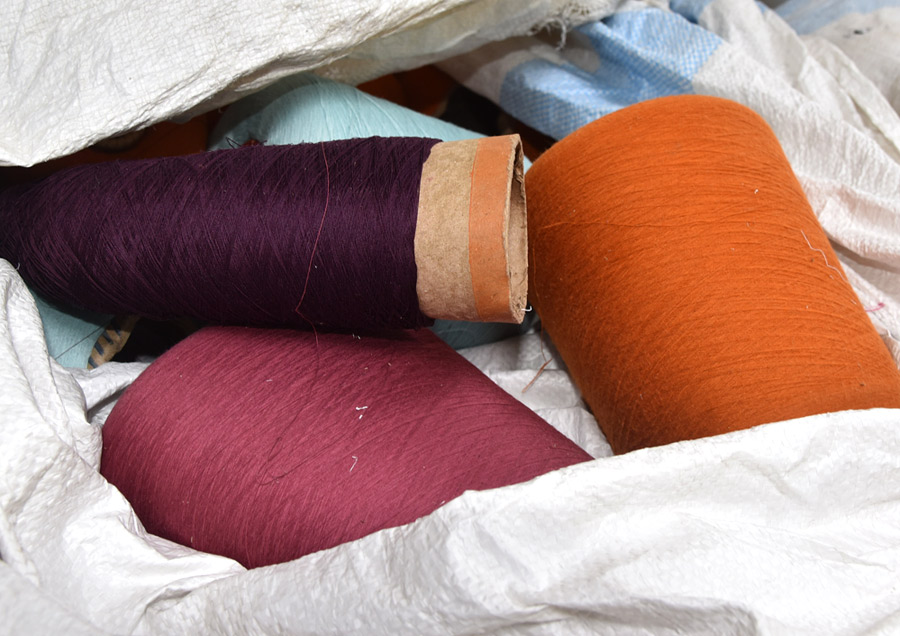
Cotton Yarn: Cotton yarn (40s & 60s count) is the primary material used in Jangaon’s cotton weaving, forming both the warp and weft of the fabric. During the Ikat dyeing process, selected sections of the yarn are carefully tied with cotton thread to resist the dye, allowing portions of the original yarn to retain their colour. These dyed and undyed sections come together during weaving to create the characteristic patterns of Ikat.
The cotton yarn is sourced from Banagiri (Mangalagiri), Andhra Pradesh, a region known for its fine handloom cotton and closely woven fabrics. We also observed that the warp yarn is generally procured in coloured form, while the weft yarn is dyed locally according to the required colour combinations and design patterns.
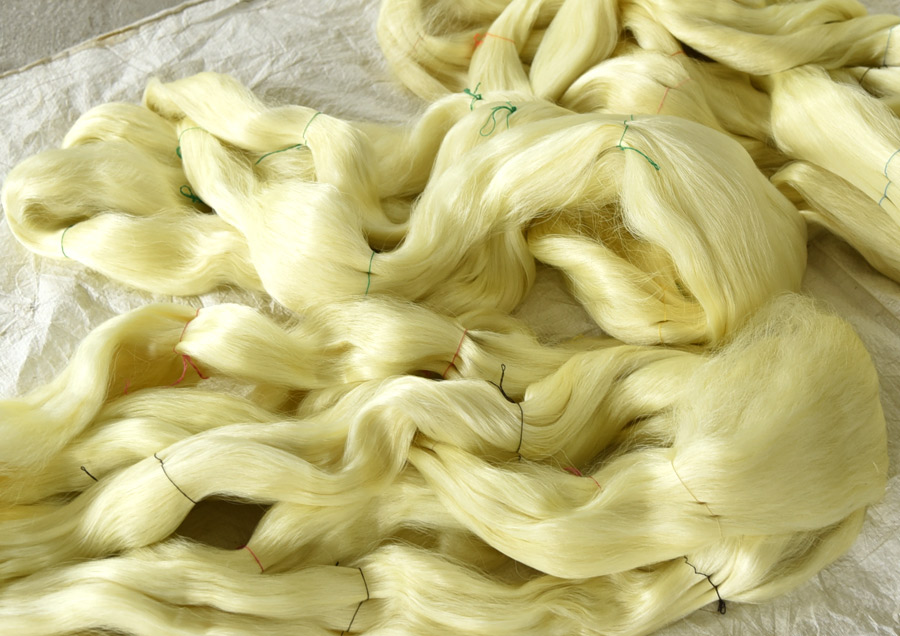
Silk Yarn: Silk yarn, primarily four-ply mulberry silk, is used by Jangaon’s Ikat weavers to produce silk sarees. It is mainly sourced from Bengaluru, Karnataka. This variety of silk is obtained from the cocoons of silkworms that feed on mulberry leaves. Four individual silk strands are twisted together to create a stronger, more substantial yarn while retaining the natural lustre and smooth texture of silk.
Once procured, the silk yarn is prepared for dyeing according to the design and colour combinations. The warp is generally dyed in a single colour, while the weft undergoes the resist-dyeing process to develop the required Ikat patterns.
Zari: Zari is a metallic thread sourced from Surat and is occasionally incorporated into Jangaon’s silk sarees to add a subtle shimmer and decorative detail. It is generally made by wrapping a fine metallic wire, often gold- or silver-plated, around a textile core.
Unlike silk yarn, which forms the foundation of the fabric, zari is used sparingly, primarily to accentuate specific elements such as the borders and pallu. Its use is not extensive across all sarees but depends on the design and the weaver’s preference. It adds a touch of richness to the textile without overpowering the characteristic Ikat patterns.
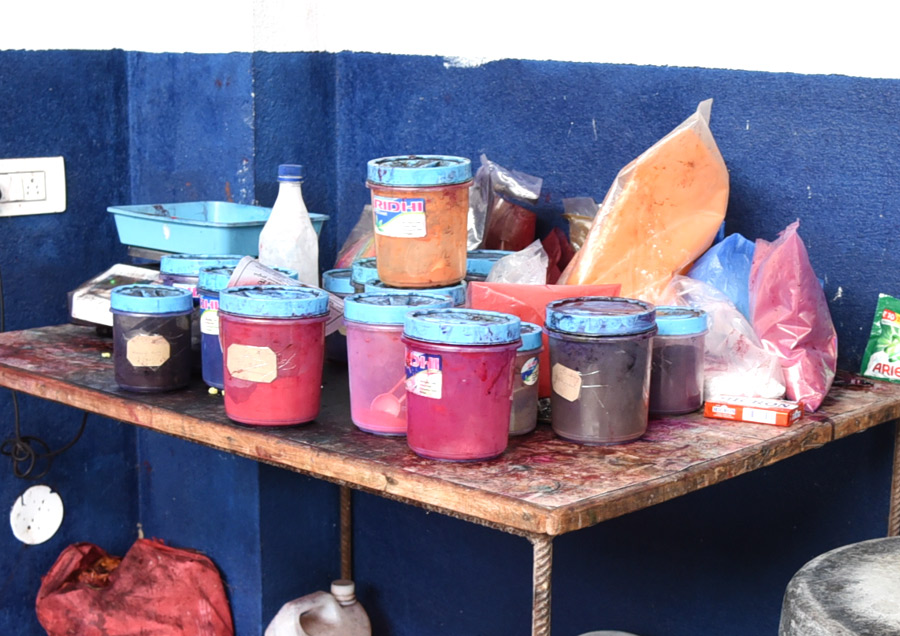
Dye: Wet dye is used for coloring the silk yarn.
Rubber: Artisans source old bicycle rubber tubes to tie the yarn during the dyeing process.
Wood/Gas: Wood or gas is used to boil water with dye during the dyeing process.
Gum: Rice water and coconut oil are used during the warping process.
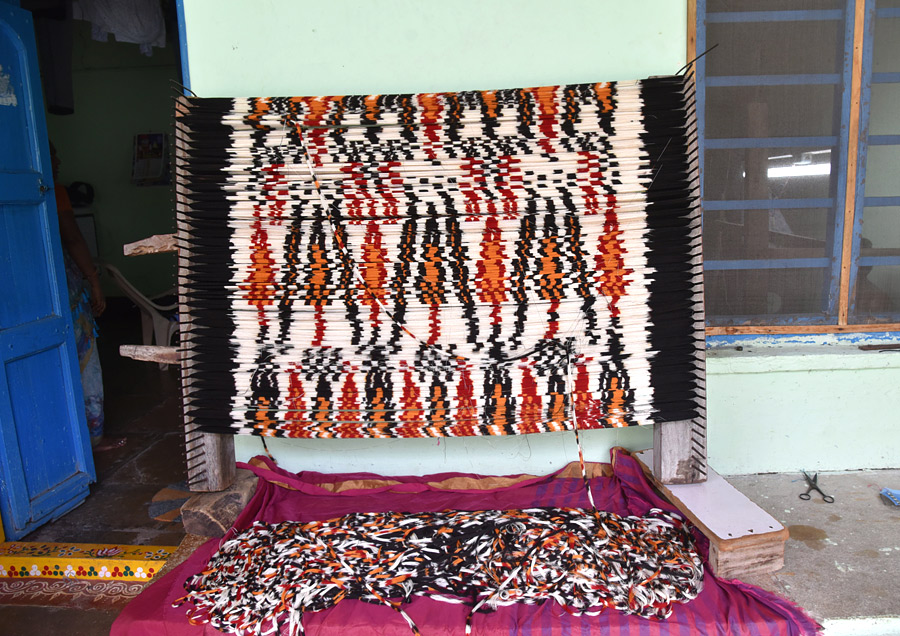
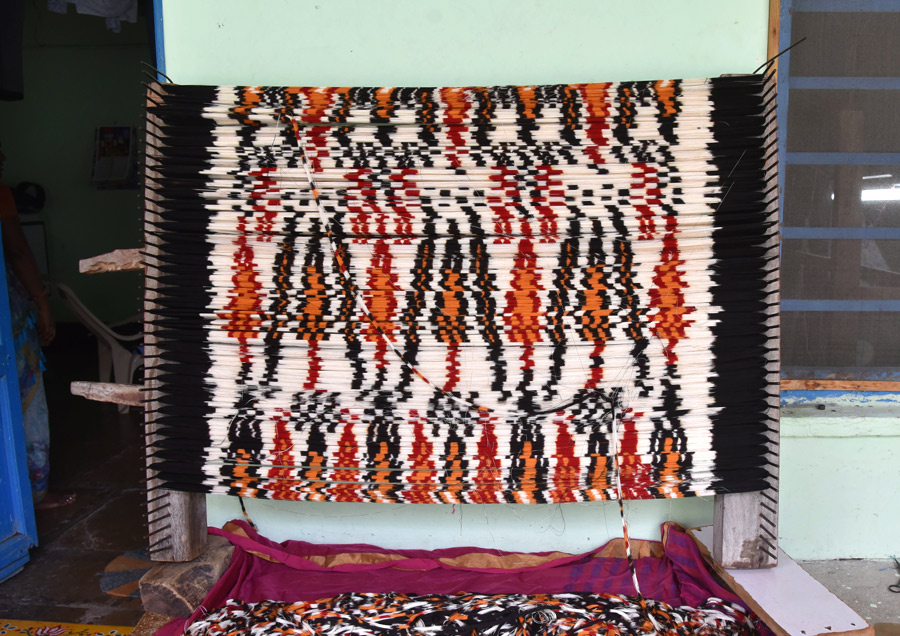
Chitkasu (Curved or vertical tying frame): Chitkasu is a curved wooden frame fitted with pegs, used particularly for preparing weft Ikat. The yarn threads are arranged over the pegs in the required sequence and tied together before dyeing. It helps maintain the arrangement of the yarn bundles and makes it easier to reproduce the planned resist pattern.
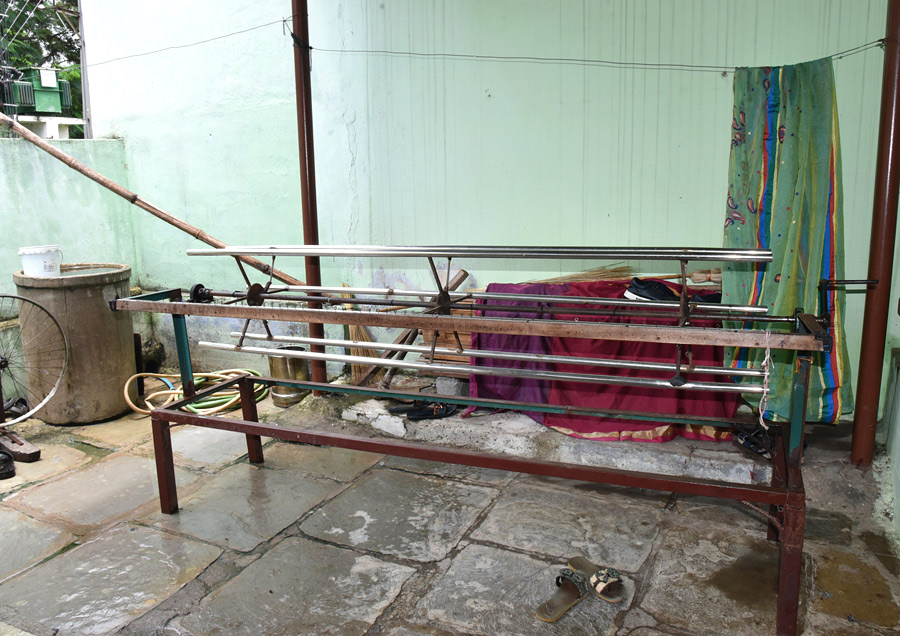
warping machine: A simple hand operated warping machine used to arrange and wind yarns in parallel lengths to prepare the warp for weaving.
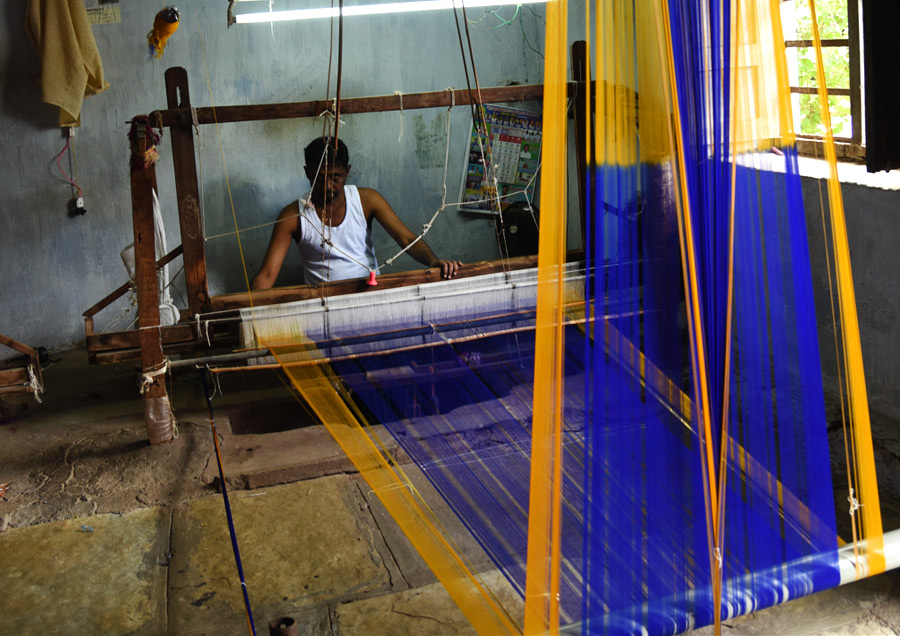
Handloom (Maggam): Jangaon’s weavers use different types of handlooms, including pit looms, frame looms and looms fitted with jacquard attachments. These looms are used to interlace the prepared warp and weft yarns, gradually bringing the Ikat patterns to life in the finished fabric. The type of loom and attachments used may vary depending on the design and complexity of the textile.
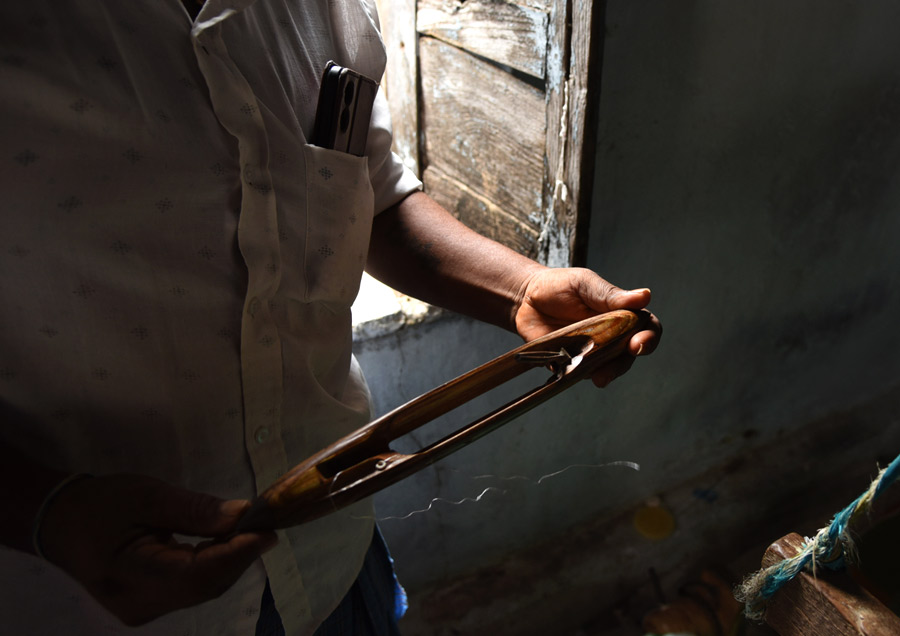
Pirn (Pikas): A pirn is a small tube or bobbin onto which the weft yarn is wound. It is placed inside the shuttle, allowing the yarn to unwind smoothly as the shuttle moves across the loom during weaving.
Shuttle (Nada): The shuttle carries the weft yarn across the width of the fabric, passing through the space between the warp yarns. As it moves back and forth, it interlaces the weft with the warp, gradually building the fabric.
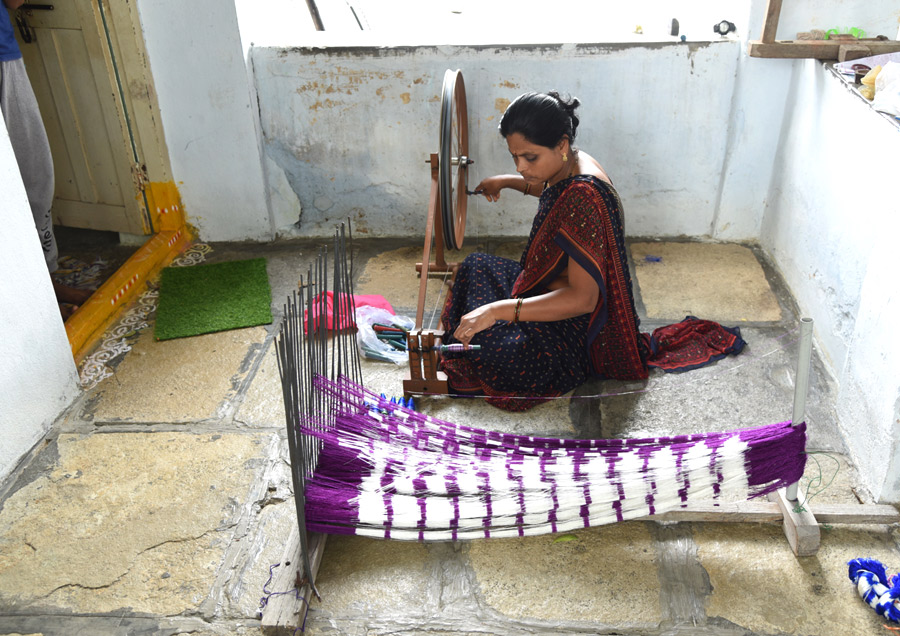
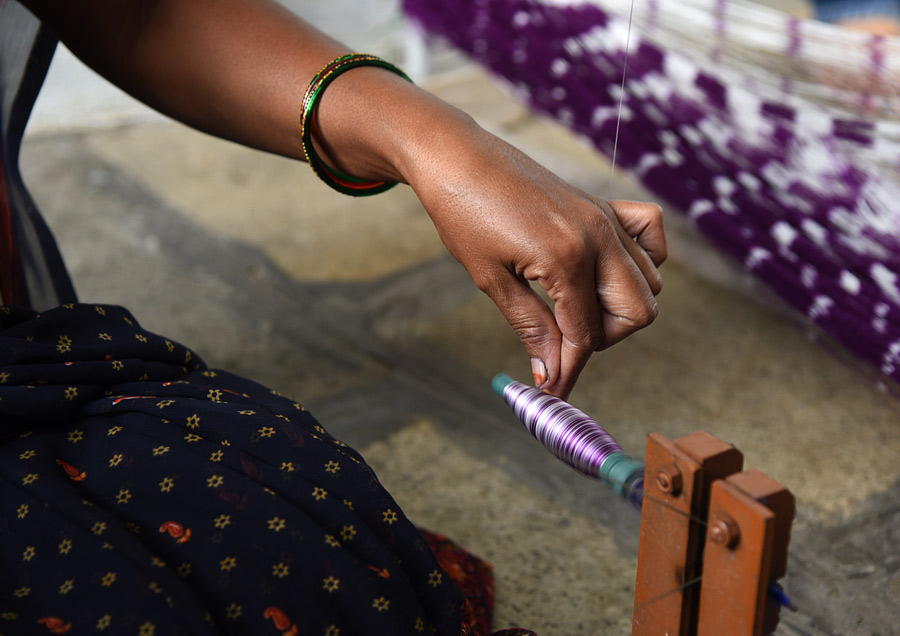
Charkha (Ratnam): The charkha is used to wind yarn onto a spindle or pirn in preparation for weaving. The wound yarn is then placed inside the shuttle, ensuring a steady supply of weft thread as the fabric is woven.
Reed (Panni): The reed is a comb-like component fitted into the loom’s beater. It guides and maintains the spacing of the warp threads while also pushing each newly inserted weft yarn firmly into place, ensuring an even and closely woven fabric.
Bobbin (Gurkal): Locally referred to as Gurkal, the bobbin is used to hold yarn during the winding and preparation stages. It helps organise the yarn and makes it easier to transfer onto the pirn or other weaving equipment.
Metal Utensils: Metal vessels of different sizes are used during the dyeing process. Dyers prepare and heat dye solutions in these vessels before immersing the yarn, allowing the colour to penetrate the fibres. The size of the vessel depends on the quantity of yarn being dyed.
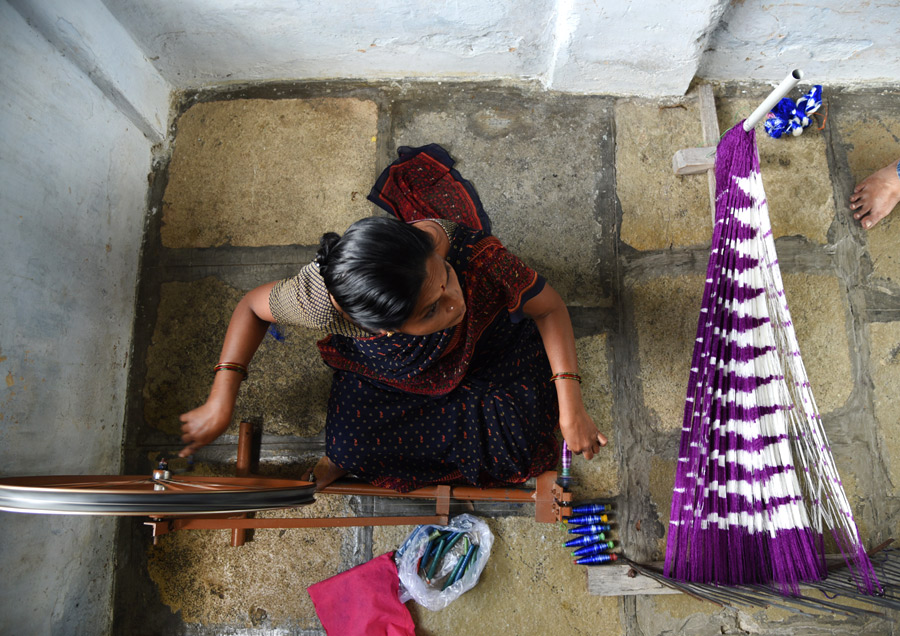
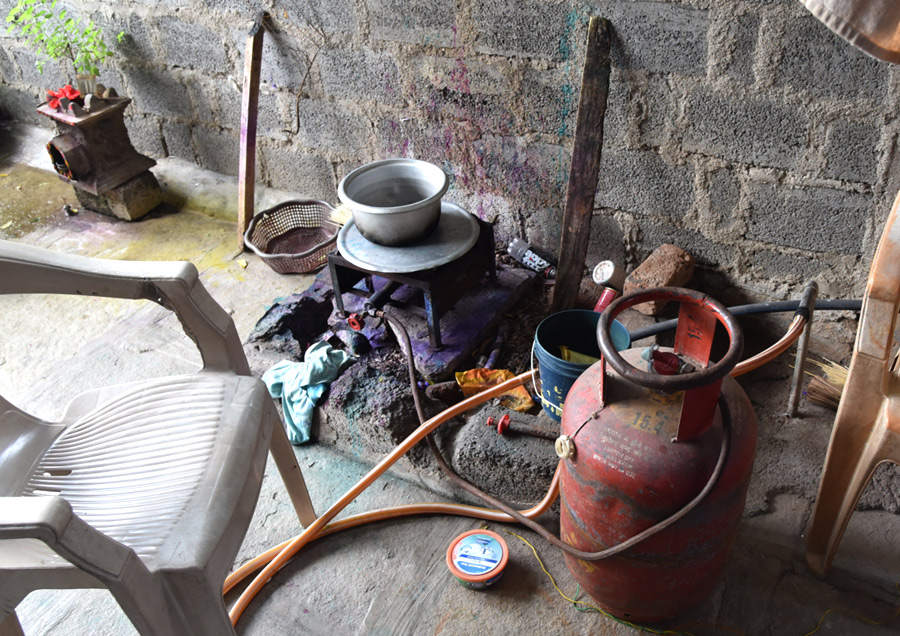
The ritual significance of Jangaon Ikat lies in the relationship between weaving, community identity and religious life among the Padmashali weaving community of Telangana. Jangaon is an important handloom centre where Ikat forms a major part of local production, and the craft continues within a social world shaped by inherited occupational traditions and religious observances. Among Padmashali communities, weaving is traditionally associated with Bhavana Rishi, regarded as the divine progenitor of the weaving community. This sacred genealogy gives the occupation a significance extending beyond livelihood, situating the practice of weaving within a framework of inherited community identity and devotional belief. The association is also reflected in traditions of Bhavana Rishi observance, during which traditional weaving implements are worshipped. The loom and other tools of production thus acquire a symbolic value beyond their practical function, becoming material expressions of occupational heritage and continuity.
The religious significance of weaving is further evident in the wider role of textiles within ceremonial and devotional life. Across South Indian traditions, woven cloth has historically been used in temple contexts, offerings, adornment and religious ceremonies, allowing textiles produced by hereditary weaving communities to acquire meanings beyond their material and commercial value. In Jangaon, the relationship between textiles and the ceremonial calendar is also reflected in the continuing importance of festivals such as Bathukamma and Dussehra. A contemporary account of a Jangaon weaver notes that these festivals generate increased demand for textiles, demonstrating how weaving remains connected to occasions of collective celebration even within a largely commercial handloom economy. Festival demand, however, should not be equated with the production of ritual textiles: contemporary Jangaon Ikat serves everyday, ceremonial, fashion and commercial purposes, and not every woven object possesses a specifically religious function.
The ritual dimension of Jangaon Ikat is therefore best understood as part of the wider cultural environment in which weaving is practised. The transmission of Ikat knowledge preserves not only technical processes such as yarn preparation, resist tying, dyeing and weaving but also an occupational heritage associated with community traditions, sacred ancestry and the material culture of the loom. At the same time, these inherited meanings coexist with changing markets and contemporary patterns of consumption. Ritual significance consequently does not reside inherently in every Jangaon Ikat textile but emerges through the relationships among the weaver, the tools of production, the community, the ceremonial calendar and the circumstances in which a textile is used. Jangaon Ikat thus represents more than a technique of resist-patterned weaving: it forms part of a living cultural tradition in which material production, occupational identity and religious life continue to inform one another.
The making of Jangaon Ikat is a yarn-first process in which the design is established before the cloth is woven. Unlike printed textiles, where a design is applied to a completed surface, Ikat requires the intended pattern to be anticipated, calculated and encoded into the yarn itself. Cotton and silk constitute the principal fibres used in the tradition.
The production process begins before the yarn reaches the loom. Yarn is first cleaned and prepared before being wound into an arrangement suitable for measuring, marking and tying. In the case of silk, degumming is an important preliminary operation because the natural gum present on the fibre has to be removed before the yarn can absorb dye effectively. The prepared yarn is then arranged in measured lengths and wound onto a frame. The accuracy of this arrangement is fundamental because it determines how the planned design will subsequently be transferred onto the yarn. Yarn preparation constitutes a substantial proportion of the labour involved in producing an Ikat saree in Jangaon. The yarn must be counted, separated and aligned carefully so that it does not become tangled and so that the intended pattern can be maintained. The separation of silk threads and zari before they are taken to the loom is itself an important operation. Any unevenness or error introduced at this stage can subsequently affect the surface and quality of the finished saree.
Before the yarn is tied, the intended design must first be calculated and transferred onto the yarn. The design is organised into measured sections corresponding to the pattern that will eventually emerge in the woven textile. Graphing forms an important part of this preparatory work. The account of a Jangaon weaver, who initially specialised in separating threads, preparing yarn and working with graphs, demonstrates the importance of this stage within household production.
During this process, the yarn is stretched and wrapped around a series of metal hooks mounted on a specially designed tool known as Chitkasu. This tool consists of a frame that can be arranged in curved, vertical or horizontal configurations, depending on the requirements of the design. By arranging the yarn in this manner, the weaver creates a visual canvas of the weft, making it easier to understand, calculate and visualise how the patterns will emerge in the finished textile.
The design cannot be treated as a freehand decorative intervention. The placement of each resist section must correspond precisely to the position that the coloured section will occupy once the yarn is woven. The process is therefore governed by careful calculation and alignment. An error in the initial marking may remain unnoticed until weaving begins, by which point correcting it can be extremely difficult or even impossible.
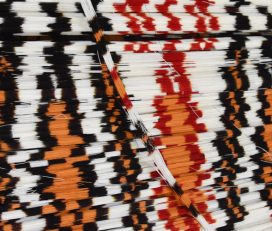
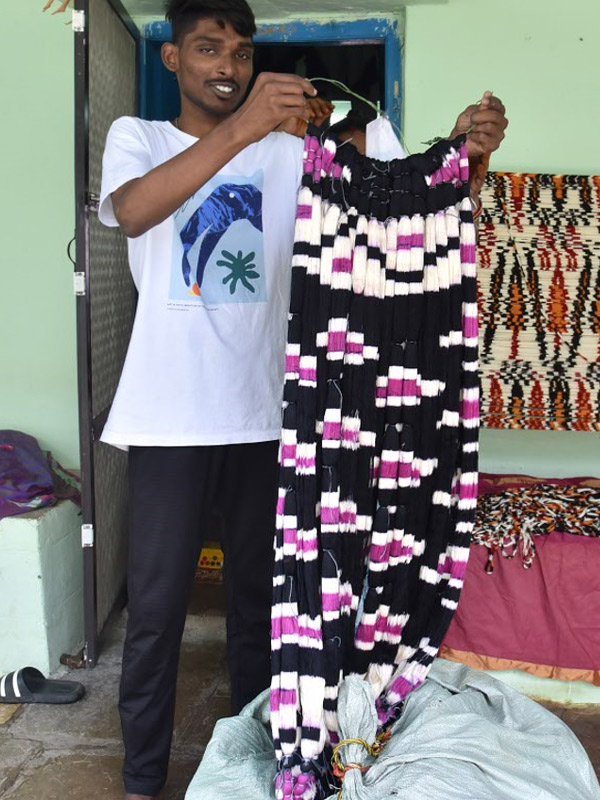
Once the design has been established, bundles of threads are tied at predetermined points so that the protected portions do not absorb the dye. The exposed sections absorb the dye while the tightly bound sections retain the colour of the undyed yarn. The tying operation has to be carried out with considerable precision because the position of each resist section determines the eventual placement of the motif. After one colour has been applied, the ties are removed and new sections are bound before another colour is introduced. The process is repeated according to the number and complexity of colours required by the design. This repeated tying and dyeing is one of the most demanding aspects of Ikat production. The artisan must preserve the relationship between the resist sections and the final design throughout several successive operations.
Colour is introduced progressively rather than simultaneously. Following each dyeing operation, the yarn is dried, and portions that need to retain their previous colours are protected before the next colour is applied. Lighter colours are generally established before darker ones so that subsequent dyeing does not obscure the earlier stages of the design. The number of tying and dyeing cycles depends on the complexity of the pattern. A relatively simple or monochrome design requires fewer operations, while a multicoloured design may involve several rounds of binding, dyeing, drying and re-binding. The preparation of a complex Ikat textile therefore involves a sequence of cumulative operations before the yarn reaches the loom.
The history of the Telangana Ikat tradition also records changes in dyeing materials. The older Telia Rumal tradition involved particular treatments of the yarn using oil and ash, while alizarin and other traditional dyes were used in earlier production. Synthetic dyes were subsequently adopted in Ikat weaving, enabling a wider range of colours and facilitating production for changing markets.
Dyeing Process in Silk Sarees: In silk saree production, the warp and weft yarns undergo separate dyeing processes. The plain warp yarns, as well as the weft yarns prepared with resist-tied sections, are submerged in hot dye vats using high-grade synthetic or acid dyes. The two processes are carried out independently, allowing the weaver to control the colours and patterns of each set of yarns.
Generally, weavers dye sufficient warp yarn for approximately six to seven sarees in a single colour. They then experiment with different weft colours and Ikat patterns to create multiple colour combinations using the same warp. This approach offers flexibility in design development and allows several variations to emerge from a common warp preparation.
Dyeing Process in Cotton Sarees: The process differs somewhat in the production of cotton sarees. The warp yarn is generally sourced in coloured form, while the weft yarn is dyed locally according to the required design and colour combinations. The distinctive Ikat patterns are primarily developed through the resist-dyeing of the weft yarn, making this stage particularly important in determining the visual character of the saree.
Sourcing the warp in an already dyed form reduces the need for additional dyeing operations at the weaving centre. This helps minimise labour, time and production costs while allowing weavers to concentrate their efforts on the more intricate process of weft preparation and pattern development.
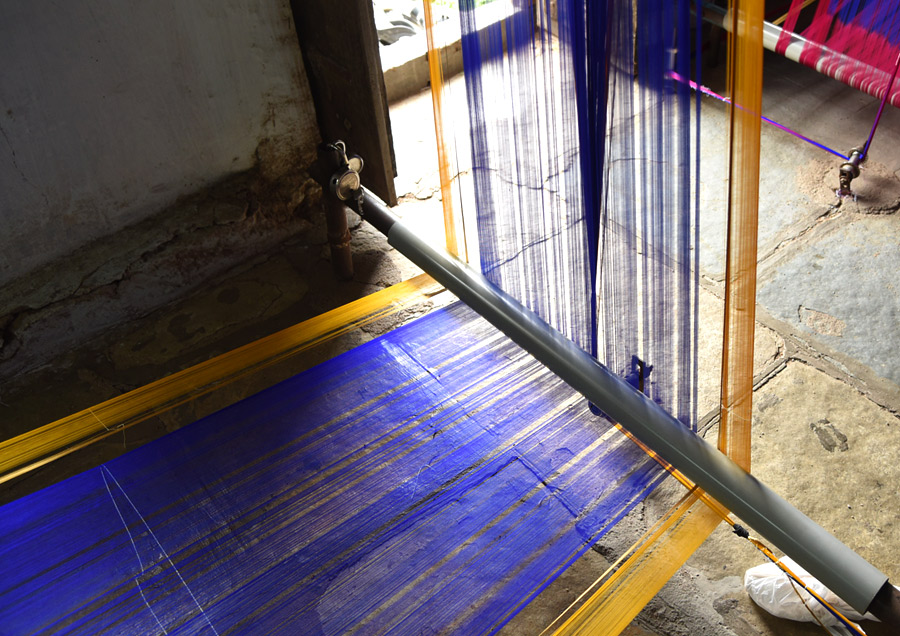
Once the dyed yarn has dried and the resist ties have been removed, the threads are inspected for breakages and arranged in the correct order. To strengthen the yarn, it is dipped in a solution of water, rice starch and coconut oil. The warp is then stretched to its full length, either in an open space or inside a room using a drum warping machine. This is a simple, hand-operated machine particularly used for preparing cotton warp.
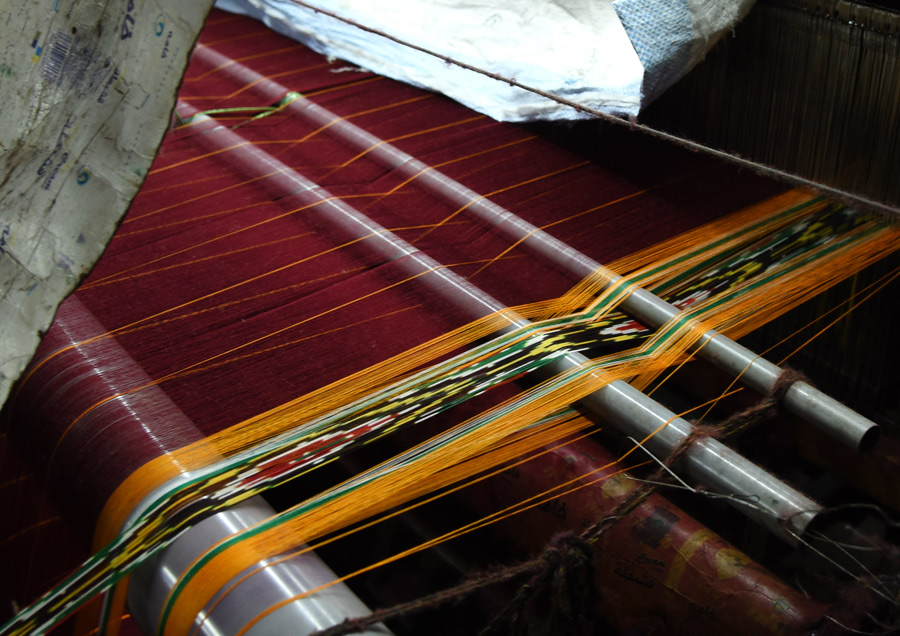
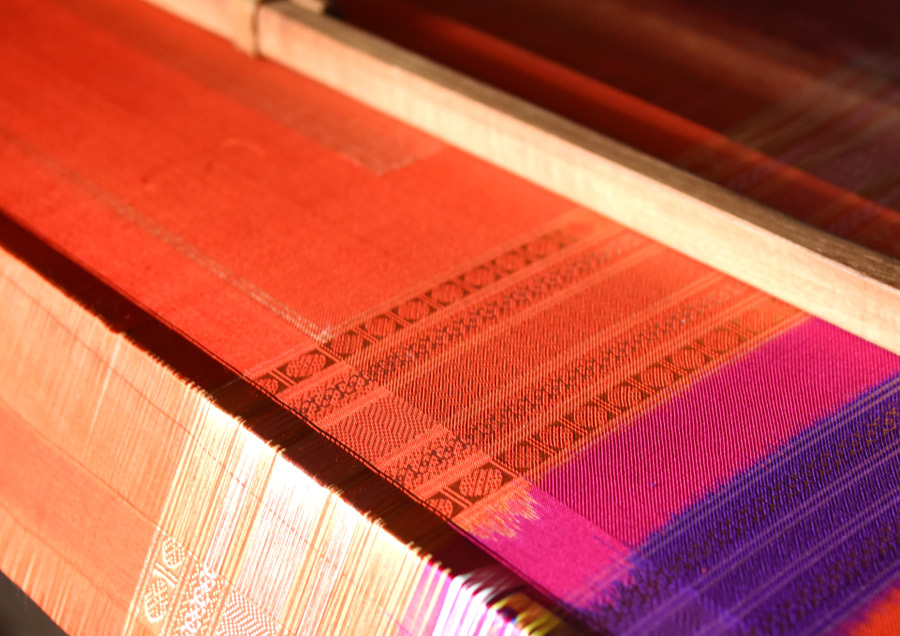
If the saree has an Ikat border or zari detailing, careful alignment of the threads becomes especially important. Unlike plain weaving, where the appearance of the textile can be progressively adjusted during weaving, Ikat requires the weaver to maintain precise relationships between sections of yarn that have been predetermined during the earlier stages. Warp preparation therefore serves as the bridge between yarn-based design and loom-based construction.
Once prepared, the warp threads are attached to the reeds and stretched before being connected to the loom.
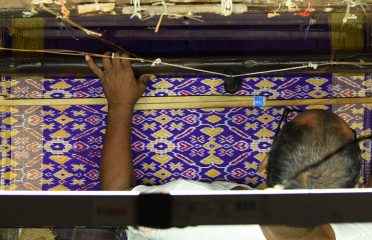
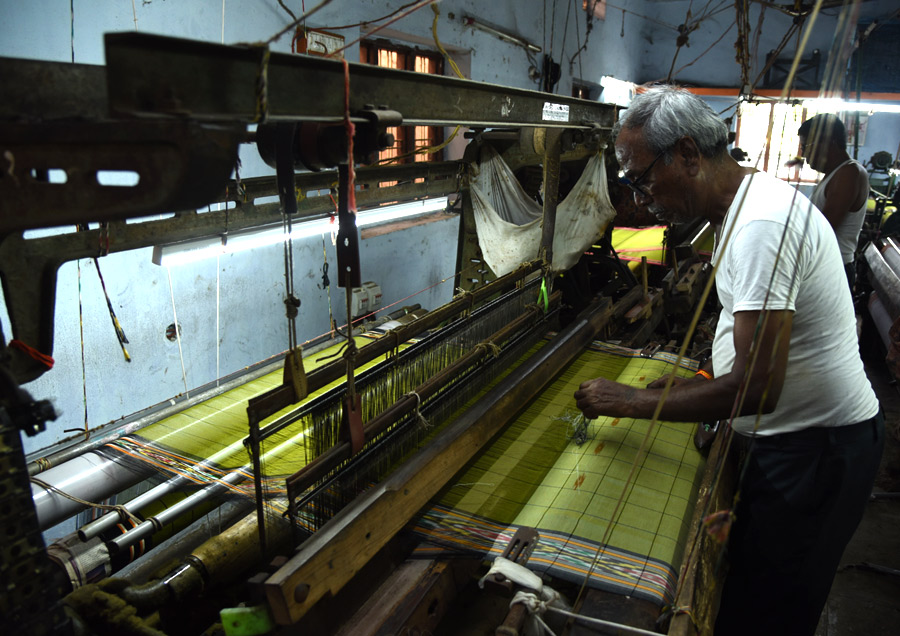
Jangaon Ikat is woven on handlooms, including pit looms and frame looms. In a pit loom, the lower portion of the loom is positioned below floor level, allowing the weaver to operate the pedals and other components from a seated position.
An important aspect of loom setting is the selection of the appropriate reed and the adjustment of the picks per inch according to the material being woven. The specifications differ considerably between cotton and silk. For cotton sarees, the pick density is generally around 56–60 picks per inch, whereas silk sarees may have more than 100 picks per inch. These variations determine the density and fineness of the woven fabric.
To mount a new warp, weavers use a joining technique in which the new warp threads are connected to the existing threads and carefully pulled through the reed. This process ensures that the threads are correctly aligned and that the new warp is ready for weaving.
Using a charkha, the tied-and-dyed Ikat yarns are transferred onto bobbins, a task mostly carried out by women. This process requires considerable care and attention, as the sequence in which the yarns are arranged determines the pattern that will emerge on the loom. Therefore, each thread must be transferred in the correct order to maintain the intended design.
The final weaving operation brings together the separate systems established during the earlier stages. The weaver interlaces the prepared warp and weft while preserving the alignment of the dyed sections. In double Ikat, the loom becomes the point at which two independently prepared systems of resist-dyed yarn have to correspond precisely. The technical character of Jangaon single Ikat consequently lies in the continuity between preparation and weaving. The loom does not introduce the design. Instead, it completes a design that has already been encoded into the yarn. The weaver’s skill lies in preserving this encoded information while managing tension, rhythm, shed formation and the placement of the weft.
The production process in Jangaon is embedded within household labour. Men and women may divide the different stages between them, with yarn preparation, pre-loom work and weaving forming part of an interconnected sequence. One family may collectively produce a limited number of sarees in a month, with different members contributing to different stages. The finished textile therefore represents accumulated household labour rather than simply the work of the person seated at the loom. The movement from pre-loom preparation to weaving can also involve gradual acquisition of specialised knowledge. A person may initially learn to separate yarn, prepare designs and organise threads before acquiring the additional skills required to operate the loom. Such knowledge includes understanding tension, rhythm, shed formation and the placement of the weft. In family-based production, members may become proficient in different operations before eventually mastering several stages of the process.
The considerable amount of labour invested before weaving explains the relatively long production period of a handloom Ikat saree. Contemporary accounts from Jangaon indicate that one family may require at least two to three days for the weaving of a saree after the yarn has already undergone its preparatory treatment. The preparation of yarn and colours takes place separately before this weaving period begins. Another Jangaon weaving household described working collectively for approximately eight to ten hours a day, while a family working with additional workers could produce around ten to twenty sarees in a month. These figures demonstrate the scale of labour involved in household production and the importance of distributing different operations among several people.
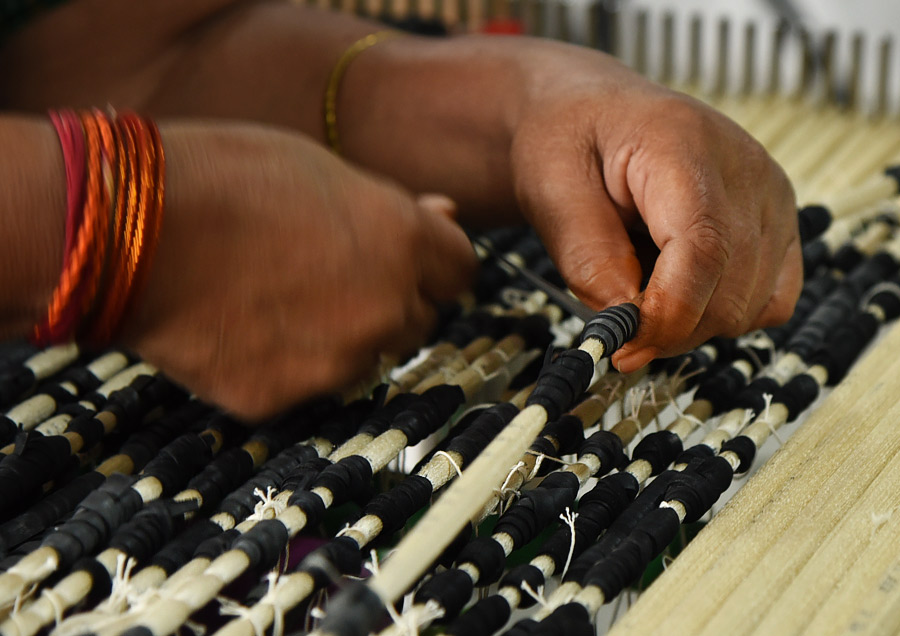
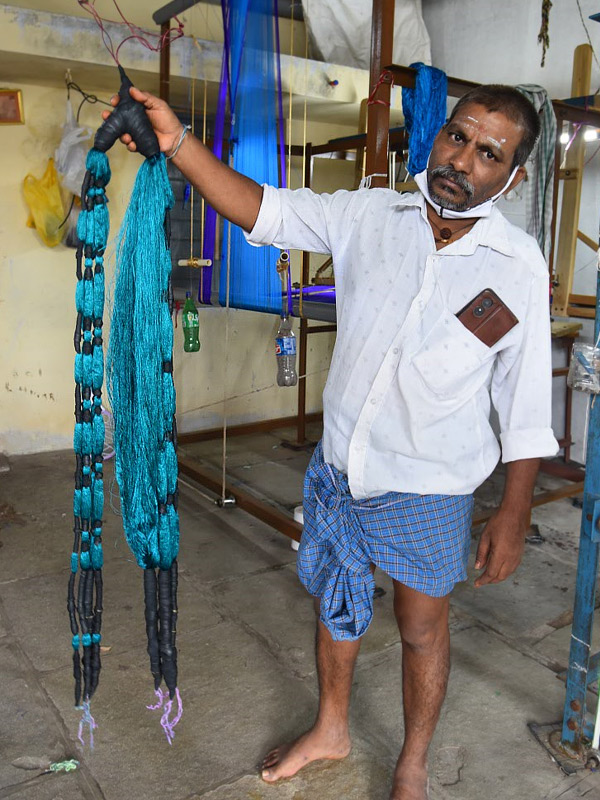
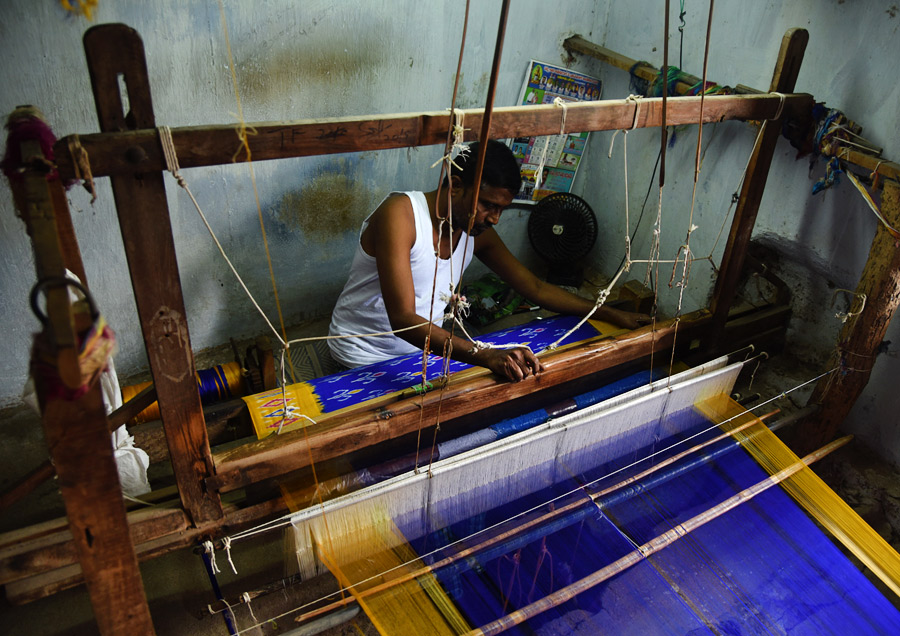
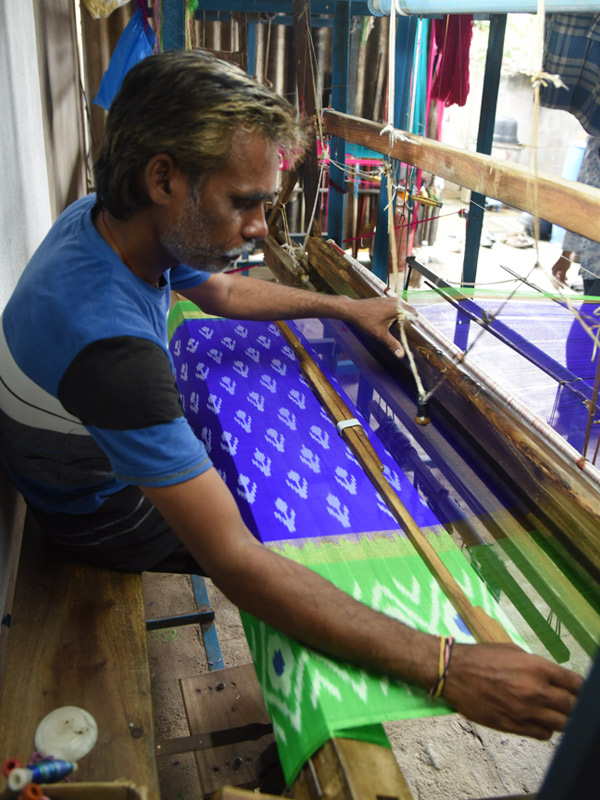
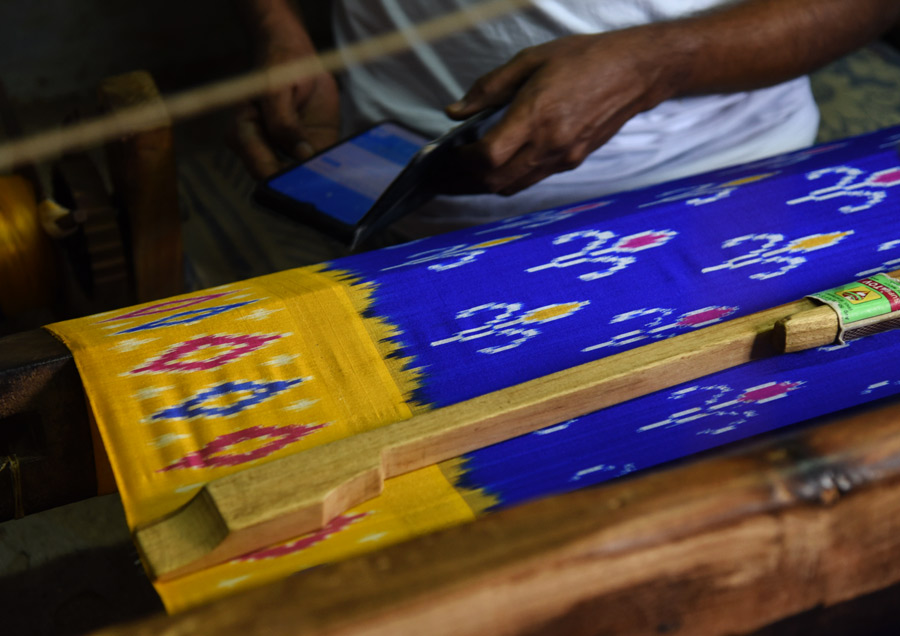
Controlled Preparation of Yarn
The production of Ikat requires yarn to be measured, separated, aligned and organised before dyeing and weaving. The yarn is arranged in measured lengths and wound onto a frame, while bundles are subsequently separated according to the planned design. Such careful organisation is necessary to prevent tangling and maintain the intended pattern. The importance of this preparation also means that errors can have consequences beyond the immediate stage in which they occur. Unevenness in separating or arranging threads can affect dyeing and ultimately the surface of the finished textile. Material management is therefore embedded in the technical requirements of the craft.
Repeated Dyeing and Material Consumption
The number of dyeing cycles increases according to the complexity of the design. Multicoloured Ikat may require several rounds of binding, dyeing, drying and re-binding. More elaborate designs therefore involve greater repetition of the same material operations before the textile reaches the loom.
Yarn Inspection and Prevention of Loss
Before the prepared yarn is mounted on the loom, the dyed threads are inspected for breakages and arranged in the correct order. This inspection is particularly important because the design has already been established through resist dyeing. Breakages or misalignment at this stage can affect the final textile. The emphasis on inspection demonstrates the importance of preventing errors before weaving.
Material Efficiency within Household Production
Ikat production is distributed across household members, with different people contributing to yarn preparation, design work, tying, dyeing, warp preparation and weaving. This arrangement means that the household has a direct interest in maintaining the yarn carefully throughout the production process because considerable labour has already been invested before the loom is operated. The cumulative nature of the process makes material errors costly. A problem at the yarn-preparation stage can compromise later dyeing, while an error in tying can distort the final design. The careful sequencing of operations therefore functions as a form of material control.
Jangaon's history can be traced back to ancient times, with archaeological findings suggesting the presence of Jainism in the region. The town's name is believed to have originated from the words Jain Gaon.
Jain Tirthankara sculptures discovered during excavations near the town indicate the historical presence of Jainism in the region. Jangaon is also believed to have been an important centre during the rule of the Kalyani Chalukyas in the 11th century. Following the decline of the Nayaka rule, the region came under the Kakatiya dynasty (1195–1323), before passing into the control of the Delhi Sultanate under Alauddin Khalji. Subsequently, it became part of the Bahmani Sultanate and, in 1512, came under the rule of the Qutb Shahi dynasty of Golconda.
In 1687, the Mughal emperor Aurangzeb conquered Golconda, bringing the region under the Mughal Empire. In 1724, Qamar-ud-din Khan, also known as Asaf Jah I, declared independence from Mughal authority and established the Asaf Jahi dynasty. The Jangaon region subsequently became part of the princely state of Hyderabad under the Nizams.
In 1854, the Jangaon area formed part of the administrative region known as the Bhongir (Bhuvanagiri) Circar. The town is also mentioned as Zungaon in a map dating to 1854.
Following India's Independence, Jangaon underwent several administrative changes before becoming a separate district of Telangana on 11 October 2016.
Jangaon is located in the central-eastern part of Telangana, approximately 85–90 kilometres from Hyderabad and 60 kilometres from Warangal. Spread across approximately 2,188 square kilometres, the district forms part of the Deccan Plateau and is characterised by gently undulating terrain, agricultural plains and scattered rocky formations. Agriculture is an important part of the local economy, with paddy, cotton, maize and pulses being among the major crops cultivated here.
Jangaon lies within the semi-arid landscape of the Deccan Plateau, characterised by gently undulating terrain, open agricultural fields and scattered rocky formations. The region experiences hot summers, seasonal monsoon rainfall and relatively mild winters. Agriculture shapes much of its natural environment, with paddy, cotton, maize and pulses being widely cultivated. Small patches of forest and vegetation occur across the district, although much of the land is used for farming and settlements.
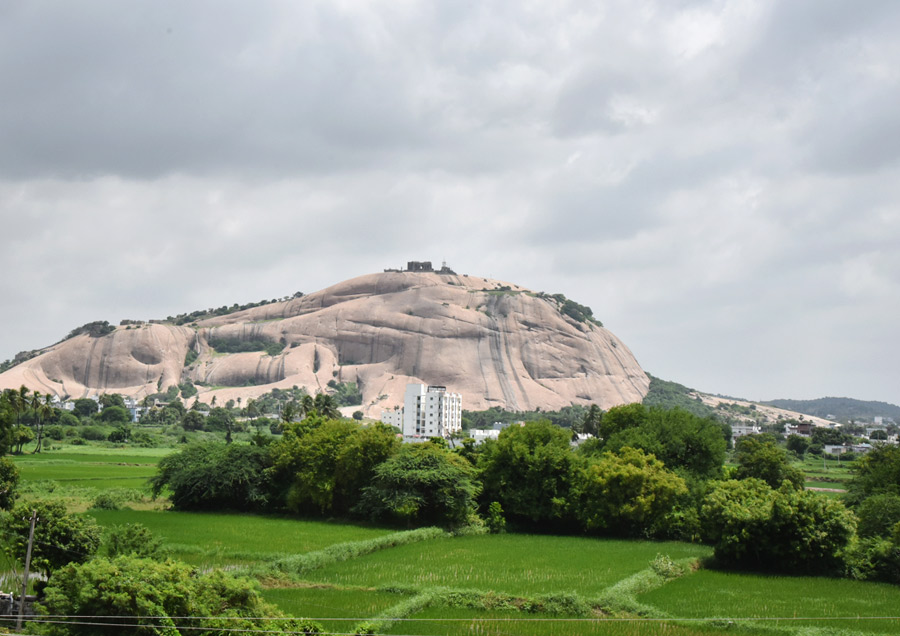
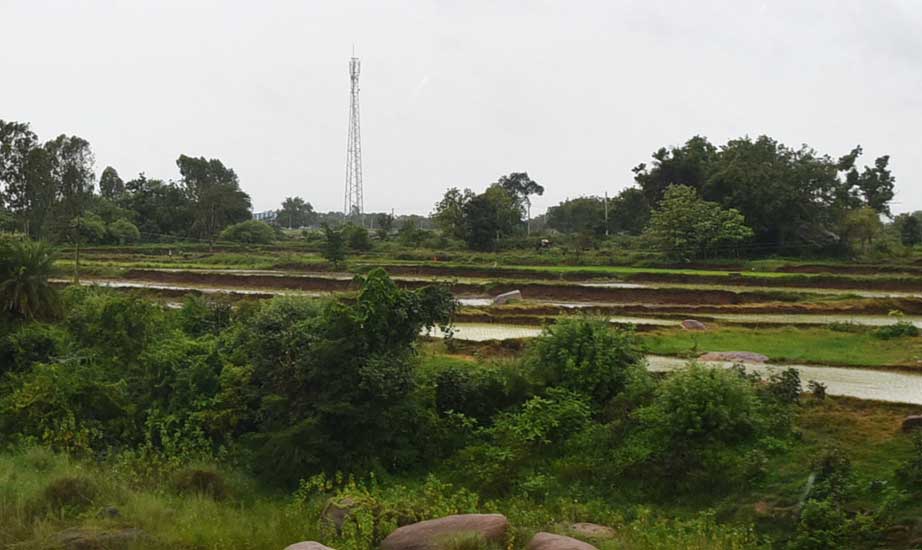
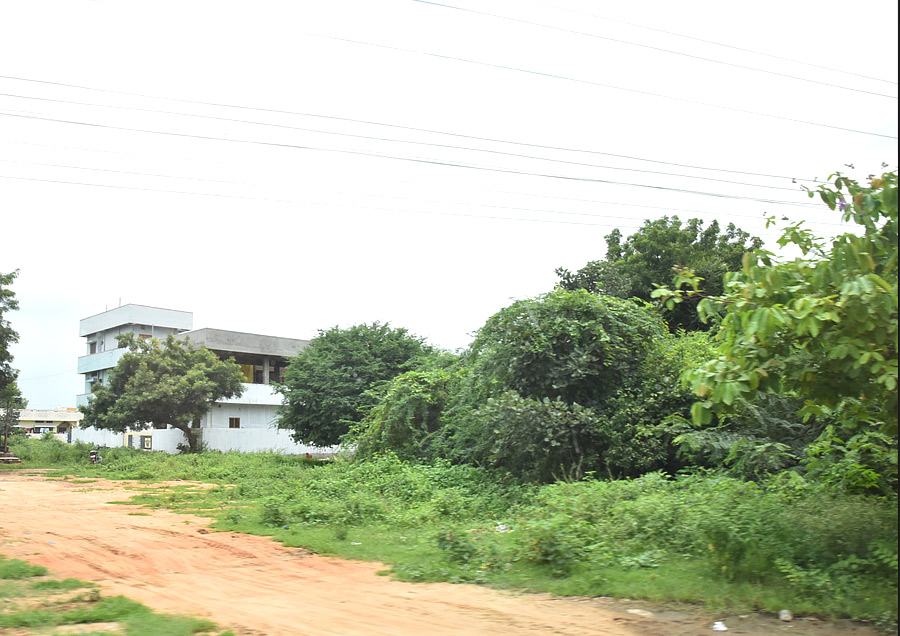
As a district headquarters, Jangaon serves as an important commercial and administrative centre for the surrounding villages. The town is connected to nearby cities through road and railway networks, while buses and auto-rickshaws support everyday local travel. It has government and private hospitals, schools, colleges, markets, banks and public offices. The district also has agricultural markets and basic civic facilities, supporting the needs of its predominantly rural population.
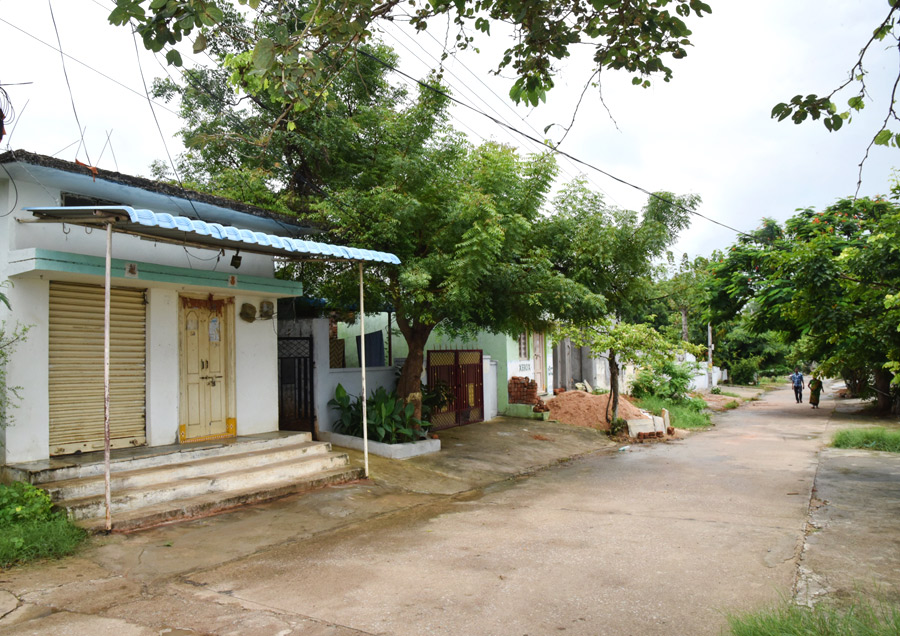
During our local enquiries, residents guided us to a neighbourhood known as Weavers' Colony, where a large part of the weaving activity takes place. The colony has well-maintained, cemented roads and access to basic amenities such as street lighting and water supply. The concentration of weaving households in this locality makes it an important area for understanding the region's weaving practices and the everyday lives of its artisan community.
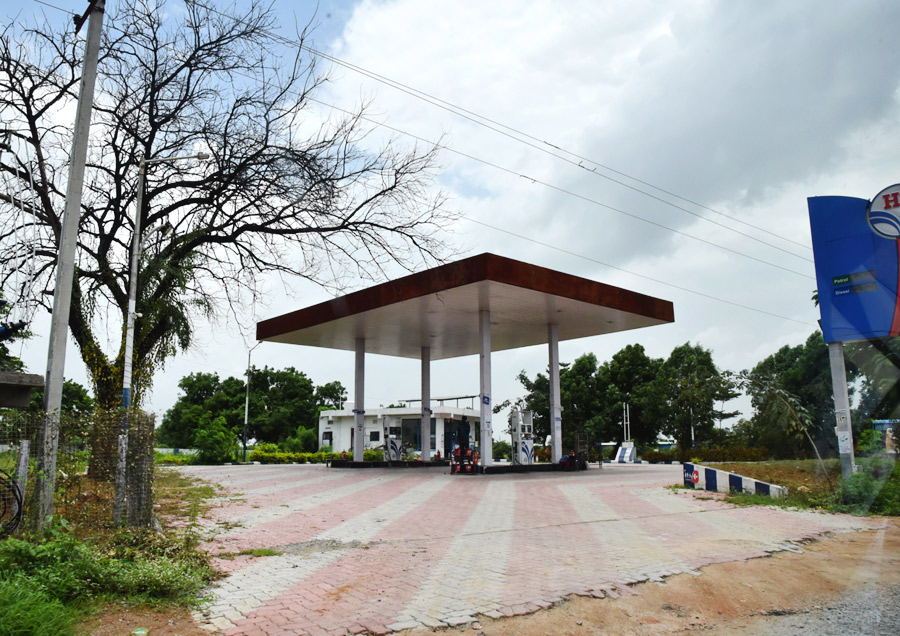
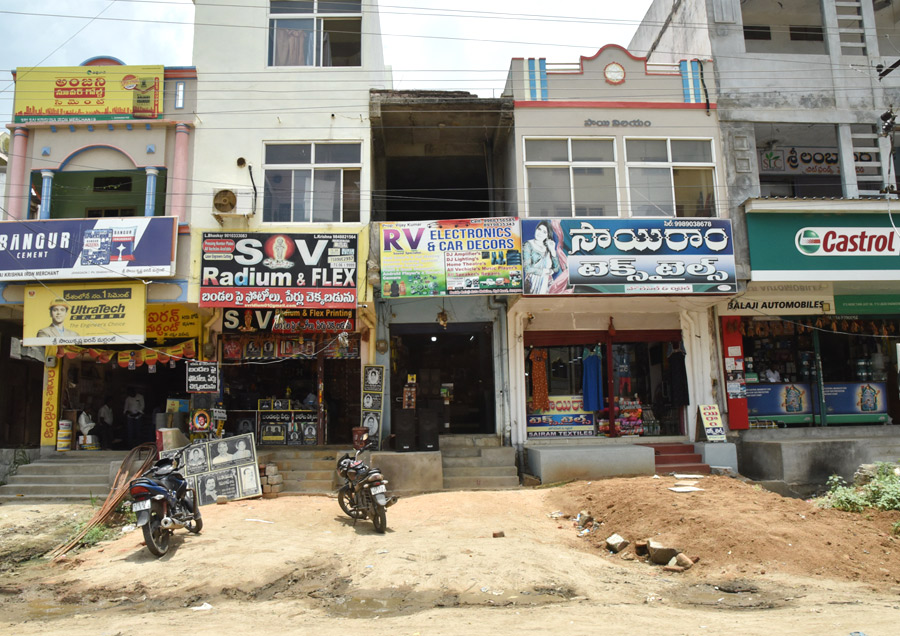
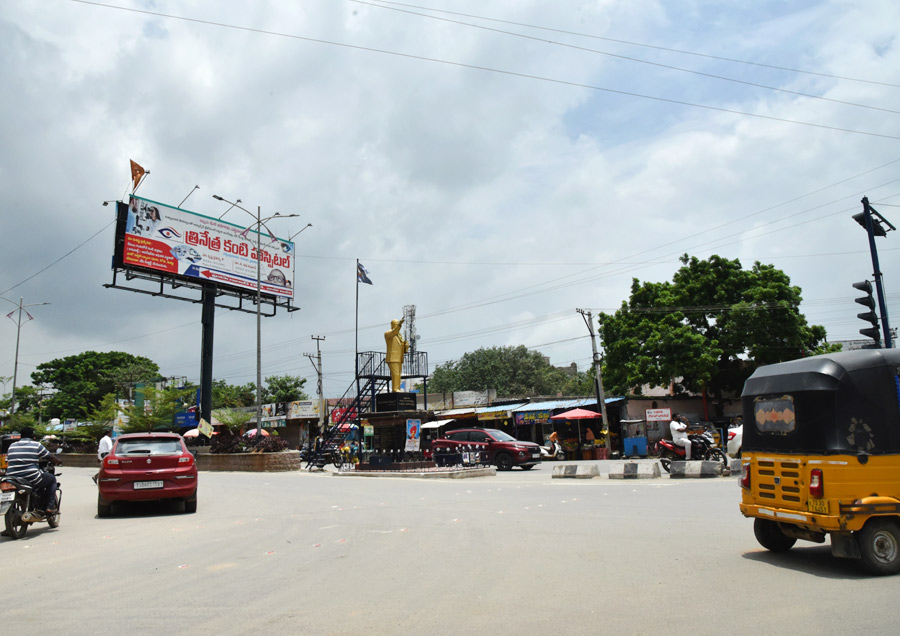
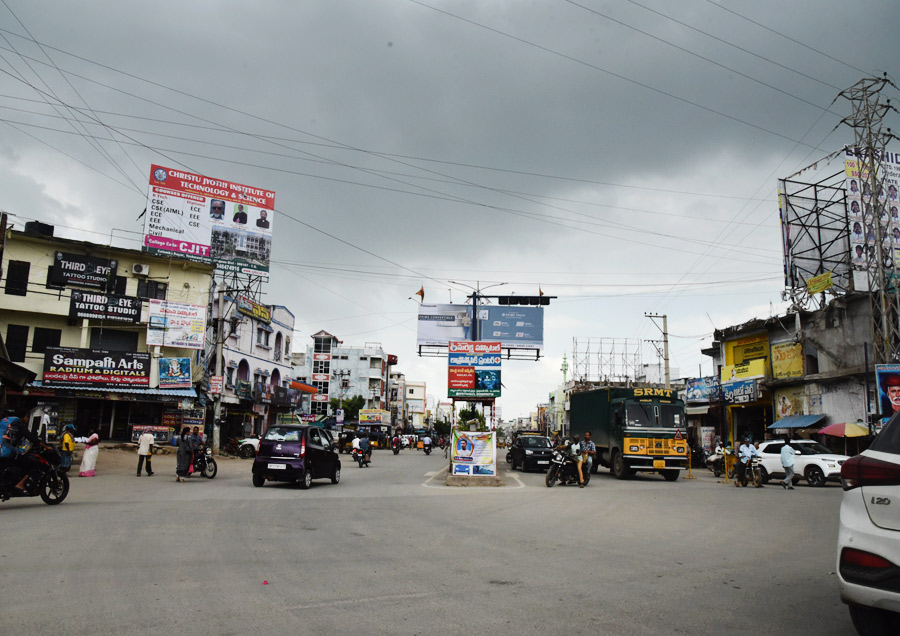
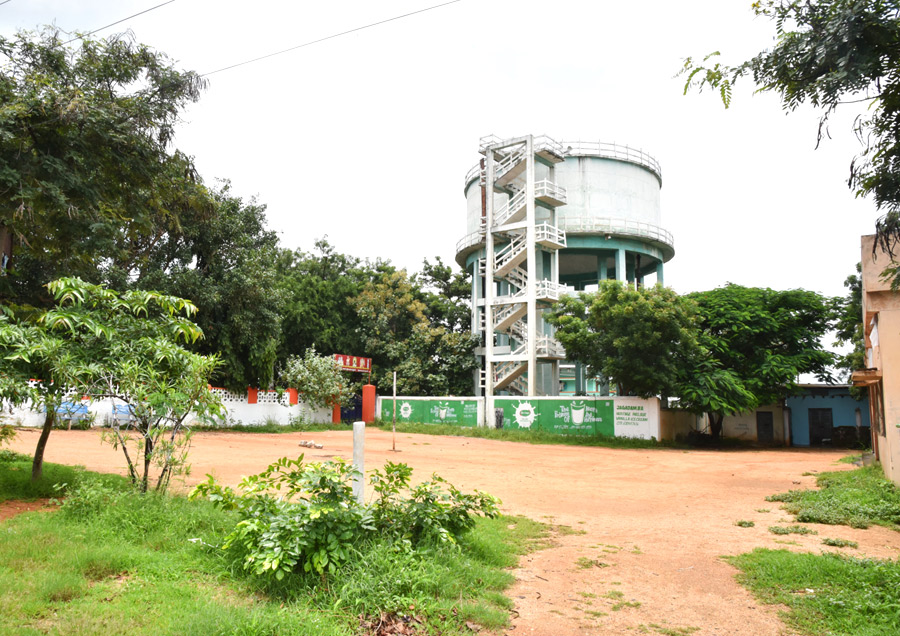
Jangaon's architectural landscape reflects the influence of the Chalukya and Kakatiya periods, particularly through its historic temples and stone structures. Traditional temple architecture features carved pillars, stone sculptures, ornamental entrances and intricate religious motifs. The Palakurthi Someshwara Temple, set against a rocky hillock, is an important example of the region's historic religious architecture.
Alongside its older structures, Jangaon has gradually developed modern concrete buildings and commercial establishments, much like any other growing town. These buildings generally lack a distinct local architectural character, with the use of the local language on signboards being one of the few visible markers of regional identity.
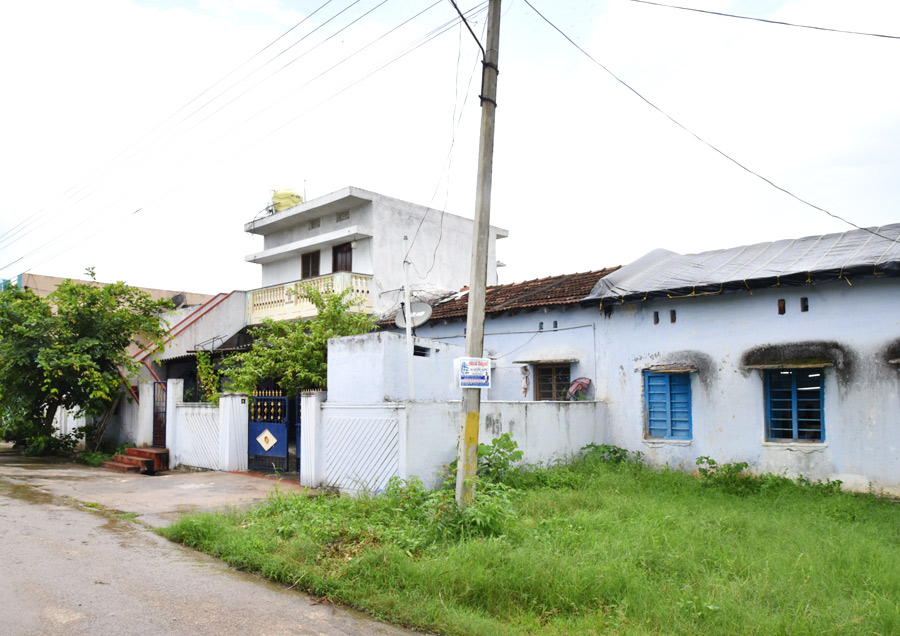
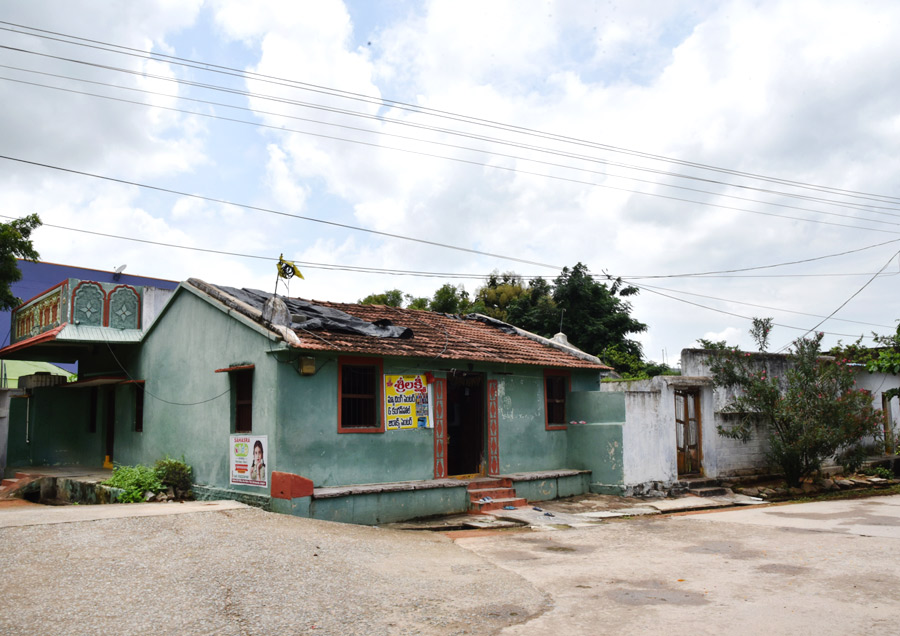
In terms of residential architecture, we observed a similar pattern. Most houses are constructed using conventional brick-and-mortar techniques, while only a few vernacular structures with sloping roofs and traditional lime plaster can still be found.
In Weavers' Colony, most houses are single-storey, with the main room often serving as the weaving workspace. The front doors of these houses open directly onto clean, cemented roads, reflecting the close relationship between domestic spaces and household-based weaving activities.
As in many other towns across Telangana, we also observed a preference for relatively subdued exterior colours. Most houses are finished with white lime colour rather than bright colours. Apart from its simple appearance, this traditional white finish is also well suited to the region's hot climate, as it helps reflect sunlight and keeps the interiors relatively cool.
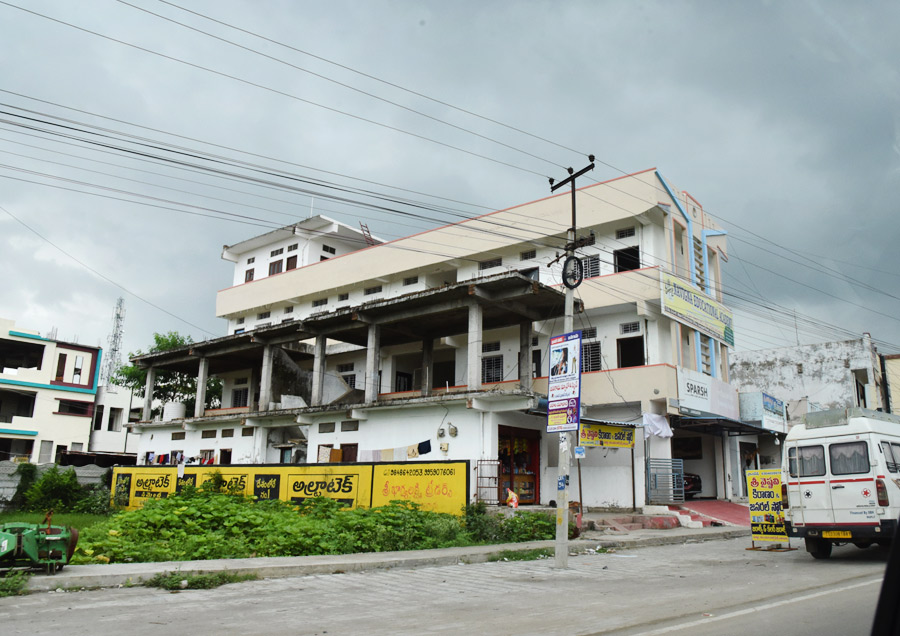
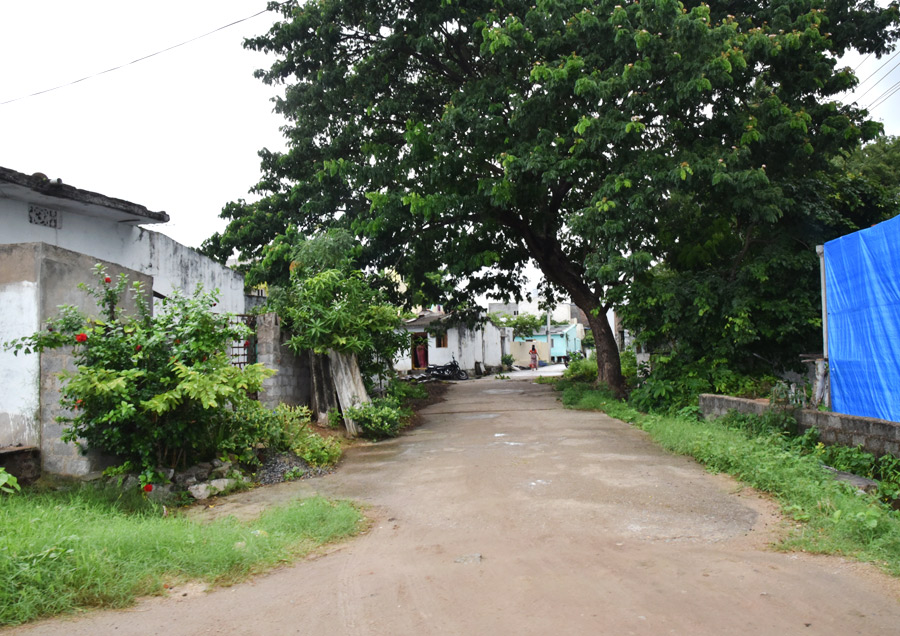
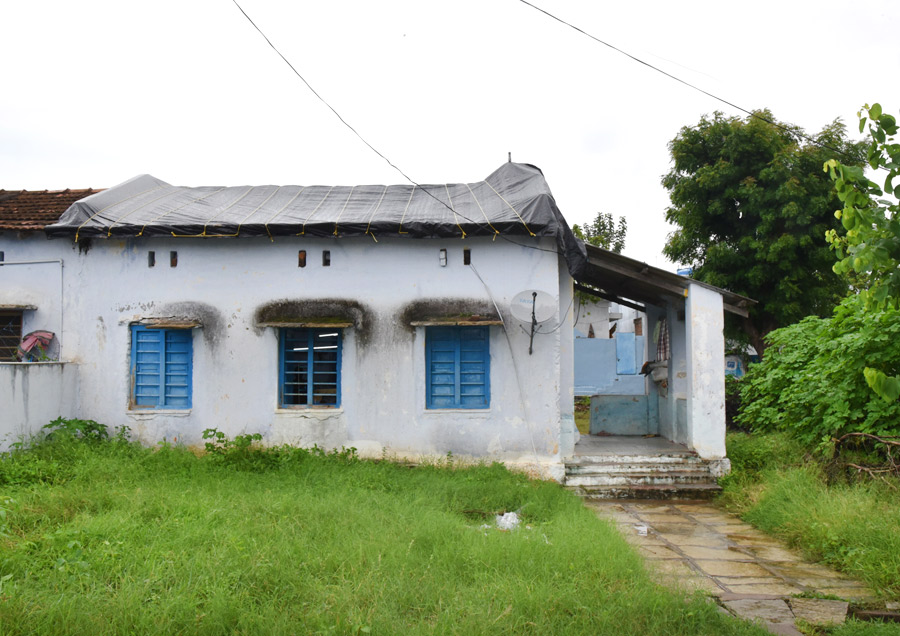
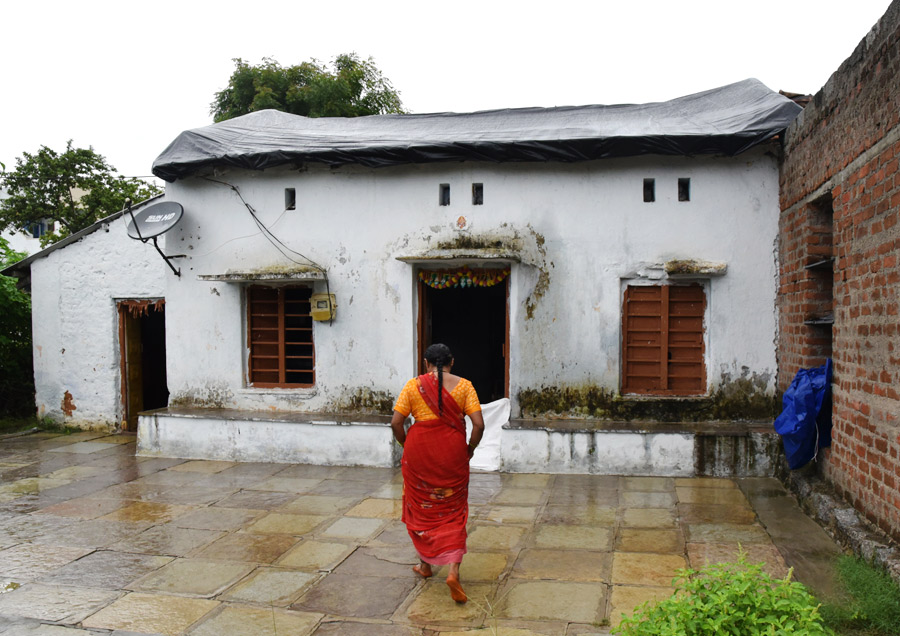
Jangaon's cultural identity is deeply rooted in Telugu traditions, religious celebrations, folk practices and community life. Festivals such as Bathukamma, Bonalu, Sankranti, Ugadi and Dussehra are celebrated with enthusiasm, alongside Eid and other Muslim festivals. The region also has a strong literary heritage, being associated with celebrated Telugu poets such as Bammera Pothana and Palkuriki Somanatha. Traditional folk music, dance, local fairs and temple gatherings continue to bring communities together, reflecting the region's strong connection to its cultural roots.
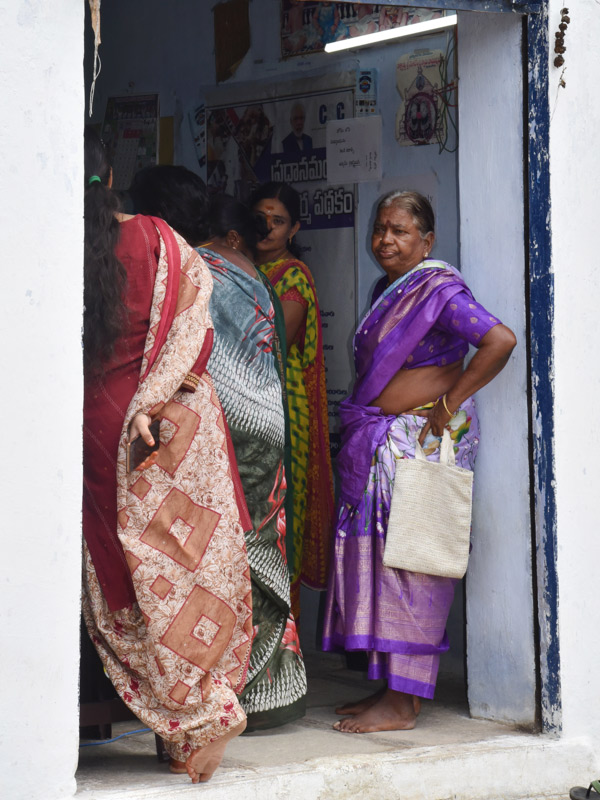
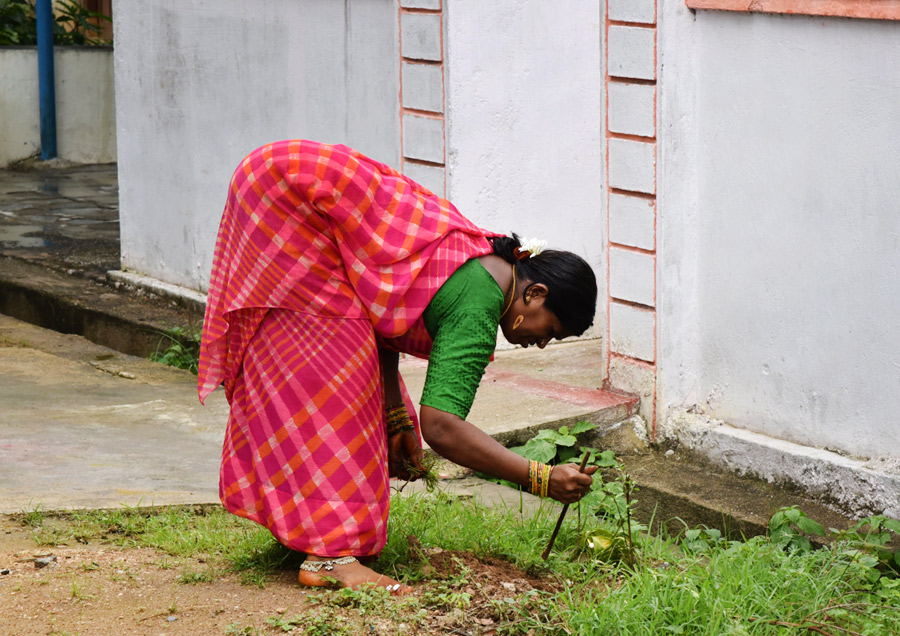
The people of Jangaon are predominantly Telugu-speaking, with Hindu and Muslim communities forming an important part of its social fabric. A large section of the population lives in rural settlements and depends on agriculture and allied activities for their livelihood. Farming, agricultural labour, small businesses, trading and handloom-related occupations contribute to the local economy. The people maintain strong community ties, with festivals, local fairs and religious gatherings playing an important role in everyday life.
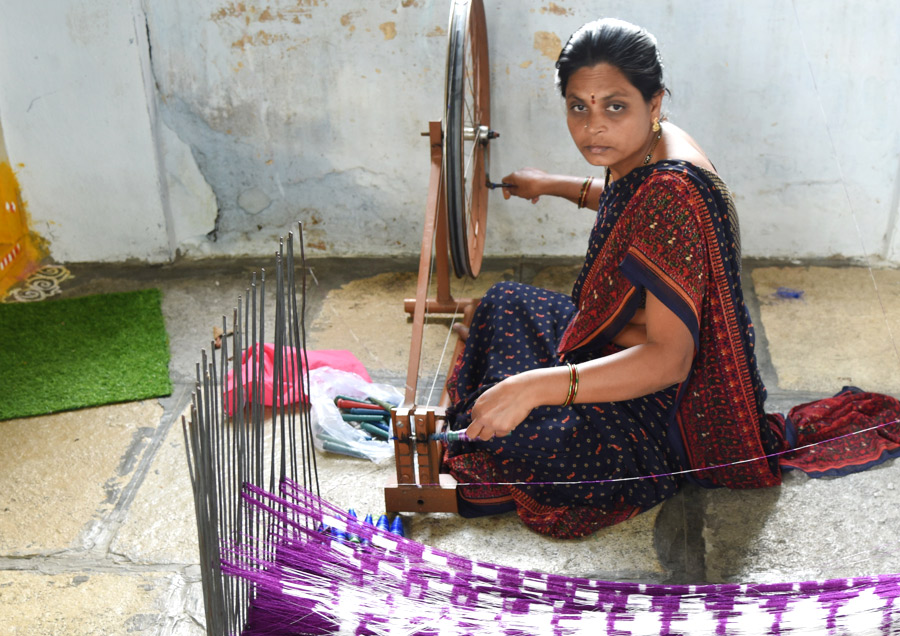
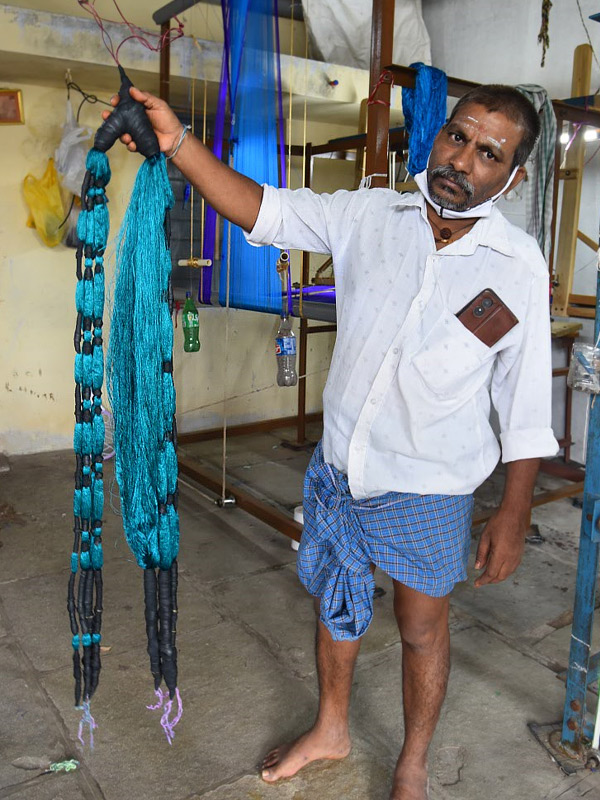
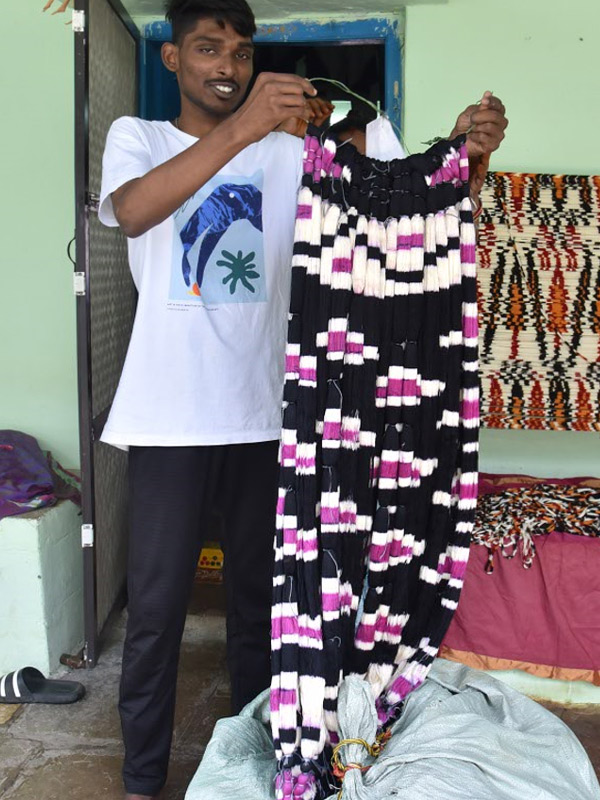
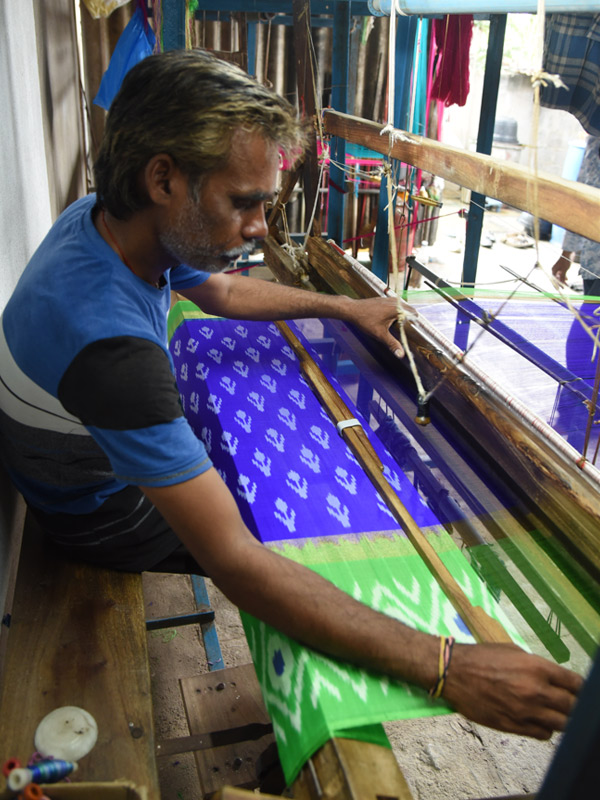
Jangaon is known for its rich handloom and textile traditions, particularly its silk and cotton Ikat weaving, which supports generations of local weaver communities, many belonging to the Padmashali community. The region also has a significant sericulture industry, involving mulberry cultivation, silkworm rearing and silk production. Beyond textiles, Jangaon's economy is rooted in agriculture, with paddy, cotton and maize being major crops. The district is also home to Pembarthi's traditional brass and sheet-metal craftsmanship, stone carving and leather-related industries. Its cultural identity is further shaped by its historical temples, Telugu literary heritage, folk traditions and festivals such as Bathukamma and Bonalu.
List of craftsmen.
Team Gaatha
“Pochampally Ikat: Woven Elegance.” Incredible India, Ministry of Tourism, Government of India. Accessed 23 July 2026.
https://www.incredibleindia.gov.in/en/telangana/pochampally-ikat “Jobless India.” Business Today, 15 Dec. 2019. Accessed 23 July 2026.
https://www.businesstoday.in/magazine/the-hub/story/jobless-india-239864-2019-11-25, “Pochampally Ikat.” Intellectual Property India, Geographical Indications Registry, Government of India. Accessed 23 July 2026.
https://search.ipindia.gov.in/GIRPublicSearch/Application/Details/4
Das, Manoj Kumar. “Cultural Symbolism and Handicrafts of Traditional Artisans of India:Case Studies from Padmashali Weavers and Jaapi Artisans.” International Journal of Research Culture Society, vol. 5, no. 5, 2021, pp. 39–44.
